Literary Blog Hop Winners!


I am delighted that two readers will soon be turning the pages of these wonderful books:

Carrots and Jaffas, an insightful imagining of a period in the life of identical twin boys when they become separated and;

The Blue Room a stunning translation of Norwegian Literature, a book that spans a day in the life of a young woman locked in her bedroom by her mother.

Thank you to everyone who participated in the Literary Blog Hop and thanks again to Judith at Leeswammes for organising it. I’ve had lots of visitors here and a few new followers.

The Winner of  Carrots and Jaffas is….

AMB wins

A.M.B!

who writes about books, writing, and the law at The Misfortune of Knowing

The Winner of The Blue Room is…..

Madness

 Elizabeth who writes about love, self acceptance and confidence at ChubbyMadness

I hope you enjoy the books,  I would love to hear your thoughts on them and thank you to everyone else for participating, you are all winners really!

Happy Reading!

Literary Blog Hop Book #Giveaway

From today until Wednesday June 25th I am participating along with many other international bloggers in a Literary Blog Hop Giveaway hosted by Judith at Leeswamme’s Blog, an avid reader and reviewer from the Netherlands.

literarybloghop

Comment below to win the books I am offering and visit the other blogs to enter their offers.

I am offering two books, recent reads and not the usual thing you find in a bookshop. Both titles are literary gems, one an award-winning Norwegian translation, the other a riveting, thought-provoking glimpse into a cross cultural family that thanks to blogging and twitter connections I became aware of. They are fabulous reads, but do check out my reviews first to find out if they sound like something you might enjoy.

You can enter for one title only or for both, one comment puts you in the draw for both books, unless you tell me you are only interested in one of the titles. Ok, here they are:

COMMENT to WIN A COPY of

The Blue Room by Hanne Ørstavik translated by Deborah Dawkin – read my review here.

“a gripping portrayal of a mother-daughter relationship that will send a chill down your spine.”

OR

Carrots and Jaffas by Howard Goldenberg – read my review here.

 “a glimpse into the heart of an ancient land and a fractured family, through the story of a stolen child.”


BlogHop Button

To enter the giveaway, open worldwide to anyone whether you have a blog or not, just leave a comment below to be entered in the draw.

Follow my blog Word by Word to get two chances to win and mention it in your comment.

Follow the blog Word by Word and @clairewords on twitter to have three entries in the draw.

If you are already following, make sure to remind me in your comment.

Good Luck and enjoy visiting the other blogs listed here, just click to visit:

Linky List:

  1. Leeswammes
  2. The Misfortune of Knowing
  3. Bibliosue
  4. Too Fond
  5. Under a Gray Sky
  6. Read Her Like an Open Book (US)
  7. My Devotional Thoughts
  8. WildmooBooks
  9. Guiltless Reading
  10. Fourth Street Review
  11. Nishita’s Rants and Raves
  12. Word by Word
  13. Words And Peace (US)
  14. Ciska’s Book Chest
  15. Falling Letters
  16. Roof Beam Reader
  17. Readerbuzz
  18. The Relentless Reader (US)
  19. Mom’s Small Victories (US)
  20. Daily Mayo (US)
  1. The Emerald City Book Review (US)
  2. A Lovely Bookshelf on the Wall
  3. Lost Generation Reader
  4. Booklover Book Reviews
  5. Bay State Reader’s Advisory
  6. River City Reading (US)
  7. Books Speak Volumes
  8. Words for Worms
  9. Wensend
  10. Bibliophile’s Retreat
  11. Readers’ Oasis
  12. The Book Musings
  13. My Book Retreat (N. Am.)
  14. Books on the Table (US)

Baileys Women’s Prize for Fiction 2014 Winner

It seems like a very long time since we learned of the short list.

My blog post about the shortlist is here, and it gives a one sentence summary about each of the books, the only book I have read and reviewed, so of course it is my favourite is Chimamanda Ngozi Adichie’s Americanah which I reviewed here.

Here are the six novels that were shortlisted for the prize:

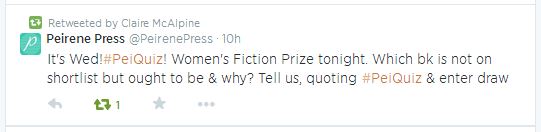
Today Peirene Press are running their weekly quiz using the hashtag #PeiQuiz and their question is:

PeiQuiz

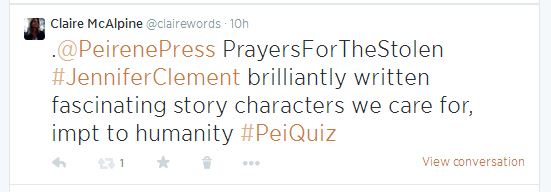
My answer to the quiz was:

PeiQuiz2

a book I read recently, which was not only a great story, but one you won’t be able to stop thinking about and one I gave a rare 5 stars to. You can read the review here if you missed it.

But back to the Baileys Prize!

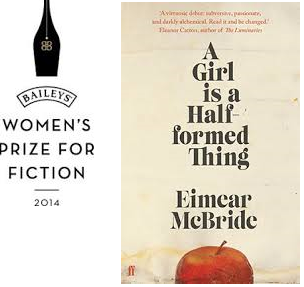
The winner of the Baileys Women’s Prize for Fiction in 2014 is….


Baileys 2014 winner

Congratualtions to Eimear McBride and Galley Beggars Press, a fabulous result for a novel that was written in six months and took 10 years to find its place in the world, proof if ever there was for writers to continue to persevere!

Further Reading

Review Eric Karl Anderson at Lonesome Reader, who read them all and accurately picked the winner, he writes excellent reviews, I recommend following

Review Anne Enright’s review of A Girl is a Half-Formed Thing in The Guardian.

Before I Go to Sleep by S J Watson

SleepChristine wakes up in the morning and doesn’t recognise the man sleeping in the bed next to her. Nor do the photos posted in the bathroom assist her, they refuse to evoke any memories. Every day she wakes with the same feeling, she remembers nothing of the past 20 years and is surprised to find herself middle-aged and wonders who is in the bed beside her.

Her doctor suggests she begins to write things into a journal that she can read each morning, promising to call her in the morning to tell her where the journal is, so she can quickly bring herself up to date with what she has leaned the previous day.

He also suggests she keeps it to herself, that she not share it with her husband. Can she trust her doctor, can she trust her husband? The journal both helps and confuses her, until ultimately it reveals what she needs to know and the incredible facts that have been kept from her.

Before I Go To Sleep by S.J.Watson is an award-winning crime/thriller novel, a best seller when it came out – however it is not the kind of book I would usually choose to read, which probably best explains why it was an okay read for me and not one that I can say too much about.

It’s a suspense novel, however because a large portion of the novel is taken up with reading Christine’s journal, (about two-thirds of the novel) the suspense is delayed (in my opinion) until the last 50 pages and that middle section is more one of mild intrigue. It can get a little repetitive as each day she must go through the same thing, slowly learning more about what happened to her to cause her amnesia and what has happened in the last twenty years. A very long time.

The reader becomes increasingly suspicious despite Christine’s best intentions to convince us that everything is okay. S.J.Watson is good at withholding any clue to what will eventually be revealed, however some of these absences felt inauthentic, as if Christine wasn’t really interested in finding out more about the people around her and why there only appear to be two people in her life, her husband and her doctor. It might have been more intense if she’d been more curious and insistent to know the truth and challenged those she is in contact with about the inconsistencies.

One of the measures of a great book for me is to highlight passages throughout a book, sentences and paragraphs that make me want to reread, that create an image, that evoke something, they are the literary gems. This is not that kind of book, but I am happy that it was suggested by the book club, we had a very interesting discussion about it and the idea of losing one’s memory or another sense.

And for fans of the book, it looks like there is a film in the making, with Nicole Kidman as Christine:

Sleep Tweet

And in another thread on twitter S.J.Watson admits that he has finished his long-awaited, next book.

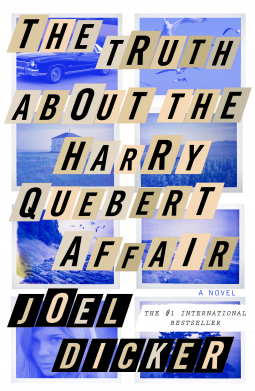
TruthAboutHarryAnd even though I say it’s not my genre, I am about to read another, knowing that it too probably won’t offer much in terms of literary highlights, but this thriller is a French translation that is taking the world by storm.

It has already become a bestseller in France with over 2 million copies sold in Europe and was part of a heated auction for the English publication rights. It has to be read if one wants to contribute to the conversation after all.

So watch out for The Truth about the Harry Quebert Affair, the debut novel by 28-year-old Swiss author Joël Dicker, likely to be a popular read this summer.

Interview in The Observer Joël Dicker: ‘I lost a bit of control of my life’

Signed, Sealed, Delivered – Celebrating the Joys of Letter Writing by Nina Sankovitch

Signed SealedHow could I not pick this book up, a non-fiction tribute to the dying art of letter writing. A pastime that makes the young at heart feel like they have entered old age, because so few people do it any more, it has become old-fashioned!

I am a letter writer from so far back that I didn’t realise how early it began until reacquainting with people from the past via Facebook resulted in some reminding me of letters I had written when I was younger than 10-years-old.

I know I wrote letters when I was at boarding school (from 13), we all did, it was a matter of survival and a tactic to avoid that dreadful feeling at midday as we lined up the staircase waiting to retrieve our lunch to take outdoors, listening to the boarding school mistress read aloud the names of those who had received a letter today, and when your name wasn’t read out – inevitable really – it invoked a sense of disconnect, reminding you that you didn’t live at home, that you couldn’t just visit a friend, a neighbour, your family whenever you wanted, you had to wait for them to write a letter to be in contact.  Four years of listening to names being read out is enough of a sentence to instill a habit of letter writing into anyone surely.
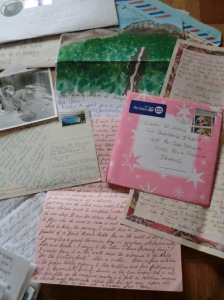
LettersNina Sankovitch has a more romantic view of letters and letter writing and the word joy in the title is a clue. She doesn’t speak of the suffering of not receiving letters, she speaks of the joys of connection.

She gives her son a table and pen and he pens his first postcard letter at thirteen months old, fast forward to the present when he is eighteen and off to Harvard, now she is hankering for more than the brief text messages, tweets and occasional telephone calls, this more disposable form of communication that dominate life today but do not endure. She wants a letter and that desire makes her wonder what it is about a letter that means so much.

Will she convince her son to write to her, the kind of letters she has appreciated herself? Whether she does or not, that desire and the discovery of an old trunk containing letters dating back to the 1800’s that she inherits when she and her husband buy a new house, the seller wanting nothing to do with an old rotting trunk or its contents, send her on a quest of her own through the history of letters and her own personal correspondence, to discover and celebrate what is special about the handwritten letter.

“There have been times when I have needed the reassurance that I am not floating out there alone in the universe, that I am tethered to people who will keep me secure. The letters offer that reassurance. Even if those people are gone, the bond endures through the tokens of connection we passed back and forth, the written manifestation of our relationship.”

The author lost her oldest sister to a fast and brutal bile duct cancer, she has photos and memories of the times they shared, but it is the letters, postcards and birthday cards that keep her most alive within, just as the hundreds of letters written by James Bernheimer Seligman that she inherited in that trunk, a young man she never knew, but came to know through his correspondence created in her imagination, a vision of a person that almost seemed real.

From the ancient Egyptians to the medieval lovers Abelard and Heloise, from the letters received by President Lincoln after his son’s death to the correspondence of Edith Wharton and Henry James, Nina Sankovitch attempts to divine the allure of the letter. She takes us on journey through a stack of published letters that have been preserved and published, introducing those interested in letters and the epistolary form, to a long list of references that speak of great love, erotic fantasy, a mother’s love, a son’s last words from the front and much more.

I enjoyed the book and its introduction to some of the great literary correspondences, including the one found in her own backyard. I did find it overly sentimental in parts and despite the great introduction to those letter writers in history, there were too many examples of short encounters with little depth that had the effect of being easily forgotten.

It may have been better to highlight fewer, more memorable examples than some of the less engaging examples that pad out the book. On the other hand, readers have varied interests. I know I could easily have been swept away by a more in-depth discovery of fewer pairs of letter writers.
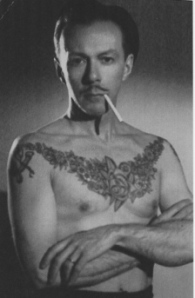
Samuel Steward 1957 Source: Wikipedia

Samuel Steward 1957
Source: Wikipedia

The relationship between Gertrude Stein, Alice B.Toklas and Samuel Steward (a poet and novelist I had never heard of) was one of the sets of correspondence that stood out for me. Steward wrote a letter to Gertrude Stein that was to become the beginning of a lifelong friendship, (interspersed with trips to Paris to see the two women), much of it conducted through letters and when Gertrude died he and Alice continued to write for another 20 years until her death.

Steward also wrote a journal, religiously writing notes every evening of all that had happened during the day, from which he penned his memoir Dear Sammy. A character in his own right, Steward left the world of academia to become a tattooist and pornographer remaining committed to the lifelong friendship he developed with Gertrude and Alice.

Ultimately, by referring to so many pairs of correspondence, we find something here for everyone, whether it hails from the present, our more recent history, or medieval characters like Heloise, the cloistered nun writing to her lover Abelard in the early 1100’s.
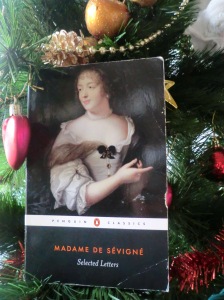
Madame Sévigné3I have moved Madame De Sévigné’s Selected Letters to within reach and feel inspired to become acquainted with one of the world’s greatest correspondents, a prominent figure in French society and literary circles in the 17th century, her letters continuing to enchant readers 300 years after they were written.

And do I still write letters? Absolutely, I just wrote one last week to an Irish poet!

So when did you last write a letter?

A timely and nostalgic reference to a dying form of communication and literary art form.

*

Note: This book was an Advance Reader Copy (ARC) kindly provided by the publisher via NetGalley.

Nagasaki by Éric Faye

Thanks to Gallic Books, another recent English translation of a French literary work is being published in 2014, Nagasaki, a slim novella inspired by a newspaper cutting of real life events.

Belgravia Books

Belgravia Bookshop offering Gallic Books and other translations

Shimura Kobo lives alone in a quiet suburban street, by day he works as a meteorologist, he rarely socialises with his colleagues, nor does he see family much, his life causes fewer ripples in Nagasaki than the weather he forecasts for it.

“There comes a time when nothing happens any more. The ribbon of destiny, stretched too wide, has snapped. There’s no more. The shockwave caused by your birth is far, oh so far, behind you now. That is modern life. Your existence spans the distance between failure and success. Between frost and the rising of sap.”

Recently there have been a few barely detectable disturbances to his inanimate way of living. A container of fruit juice seems to have lost a few centimetres, and isn’t there one yoghurt pot less than was there this morning? He begins to take extra care securing his home, yet still has the feeling of something not being quite right.

Nagasaki (2)He sets up a webcam in his home and sits at work watching his kitchen as if studying the meteorological charts, waiting to detect any sign of disturbance.

It is a brief story where the revelation comes early, its slow residual effect only beginning in the aftermath. About halfway the narrative shifts, adding to the mystery of how the revelation impacts Shimura, as we no longer have access to his thoughts.

That it is based on a true story is enough to haunt the reader, but the way Eric Faye narrates it, contributes to the way this story inhabits the mind as we read. Like the best stories, it stays with you long after reading and invites discussion with others about how such a thing could happen in our society.

And it will make you check your door locks more carefully.


Note: Thank you to Gallic Books for providing a copy of the book.

The Invention of Wings by Sue Monk Kidd

Although Sue Monk Kidd will be a name familiar to many, it was only a few years ago that her book The Secret Life of Bees was recommended to me by a dear and special friend who always went out of his way to visit and spend a few days with us when making his 10 yearly pilgrimage to Rome. We always had wonderful discussions about books, about life, the situation in Palestine, our mutual family connections and much more. So when I saw that the author had published another novel, I wanted to read it, to remember that stories continue to be told and memories passed on, even when those who told them and recommended them are no longer with us. He would have loved this story I am sure.

Invention of WingsThe Invention of Wings is a work of historical fiction, inspired when the author came across their names at an exhibit at the Brooklyn Museum. The discovery of two sisters Sarah and Angelina Grimké, abolitionists whose story was little known outside academic circles was all the more poignant for Sue Monk Kidd, when she learned they came from Charleston, South Carolina, the town she was living in at the time.

The story is a work of fiction, but the work of Sarah Grimké and her sister was real and her writing and achievements are receiving the recognition they deserve, representing as they did, an era when even a life of privilege did not give women the right to express a public opinion and especially one that challenged the status of individuals in a society.

In her novel, Sue Monk Kidd tells a story of two girls growing up in an urban slave-holding family in Charleston, South Carolina. Sarah is the daughter of a wealthy, aristocratic family and Hetty, or Handful as she is referred to, is gifted to her on her 11th birthday, an event that Sarah actively attempts to reject and does so in writing. She is refused her request, just as she is also denied and mocked for her desire to pursue a professional career, her punishment to be banned from her father’s library and from reading books.

For many years she accepts her fate, although as retribution and in response to a promise made to Charlotte (Handful’s mother), she teaches Handful to read, not only a forbidden act, but against the law. Certain events eventually shake off her complacency and after one particular episode, despite the risk of rejection and ostracism by her family and community she becomes wedded to her new vocation and dares not only to voice her outrage but with the support of her sister begins to take a more active and dangerous role in standing against slavery and advocating equal rights for women.

WingsThe slave Hetty also possesses a rebellious streak, more dangerous in someone of her stature, where any small infraction can result in violent and damaging consequences, as she will discover. Denied an education, she and her mother Charlotte become talented seamstresses, Charlotte narrating her life story through the quilted squares she creates in her own time, each one representing a significant event in her life, images that speak the words she could not read or write, a reminder of who they are, where they have been, stories continually passed from mother to daughter. It was a way to subvert the system and to preserve her story.

In a sense both Sarah and Hetty are enslaved and Hetty articulates it in a scene that haunts Sarah long after.

“I’m twenty-seven-years old, Handful, and this is my life now.” She looked around the room, up at the chandelier, and back at me. “This is my life. Right here for the rest of my days.” Her voice broke as she covered her mouth with her hand.

She was trapped same as me, but she was trapped by her mind, by the minds of people around her, not by the law. At the African church, Mr Vesey used to say, Be careful, you can get enslaved twice, once in your body and once in your mind.

I tried to tell her that. I said, “My body might be a slave, but not my mind. For you, it’s the other way round.”

Wings are a metaphor for freedom from oppression but they also represent the ability to soar, not only to be able to choose what we want to do and how to live a life, but to do it to the best of one’s ability, to step beyond the expectations of family, community, society.

Sarah Grimké (1792-1873)

Sarah Grimké (1792-1873)

I thought this book was excellent and I like it all the more for having understood subsequently how it came about. The female characters are particularly vivid, especially Handful and her mother Charlotte and though Sarah took time to come to terms with her own vocation and to shed the trappings of her upbringing, she is an incredibly courageous character given society had rather dismissed her given her disappointment in not being able to pursue a career or attracting the right kind of husband.

When asked about writing from the perspective of an enslaved character, Sue Monk Kidd mentioned that while writing this book she read an interview with Alice Walker in which she says “She was all over my heart, so why shouldn’t she be in literature”, exactly how she felt about Handful.

I also wondered about the author’s reasons for embracing such a story, her own connections to America’s history in the South and in the links below is a Reader’s Guide in which she speaks of her own upbringing in the South in the fifties and sixties, where she was witness to many terrible racial injustices and divides, which has had the effect of drawing her towards writing about them.

“I’ve been drawn to write about racial themes because they are part of me, and also because they matter deeply to me. I can’t help but feel a social responsibility about it as a writer. Racism is the great wound and sin of the South and indeed, the great wound and original sin of America. Two hundred and forty-six years of slavery was an American holocaust, and its legacy is racism. I don’t think we’ve fully healed the wound or eradicated the sin. For all the great strides we’ve made, that legacy still lingers.” Sue Monk Kidd

Additional Links

A Readers Guide – Q & A with Sue Monk Kidd

Interview with Oprah – Sue Monk Kidd chats with Oprah and takes Reader’s Questions

Note: This book was provided by the publisher Viking, an imprint of the Penguin Group.

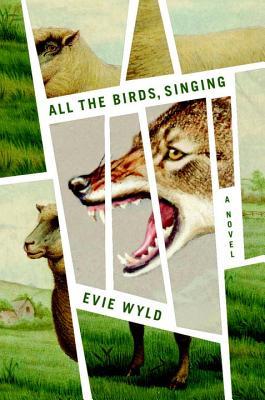
All the Birds, Singing by Evie Wyld

All the BirdsAn Australian woman named Jake Whyte has bought a farm on an unnamed remote island somewhere off the coast of England and although she has lived there alone for years, it is as if she has only just arrived, there is reticence, suspicion, distrust, an unwillingness to engage, to form new relationships or retain old ones.

In the opening paragraphs she visits a farm shop and we don’t get any sense that they know each other, there is no acknowledgment of neighbourly acquaintance. She is suffering from the violent loss of yet another of her 50 sheep that she farms with the help of her dog, Dog.

As the present day narrative progresses towards the mystery of the creature that is mauling her flock of sheep, alternate chapters reveal her past in Australia, from a point some years ago when she was working in a shearing gang back through a year or so living in remote countryside with a man, to her adolescent years and the significant event that caused her to run the first time. Is she a fugitive?

I was intrigued by the references to farm life and her stint working in a shearing gang, experiences I am familiar with. I grew up on a large sheep farm, and remember the job of ‘rousie’ (a wool handler) as we call it in New Zealand, not only working during school holidays helping out at home, but I spent a summer when I was 17 working for a local shearing gang on other farms in the area, although it did not involve handing the sheep to the shearer and I couldn’t quite get my head around how anyone could do that for four shearers without getting in the way.

Being a rousie was the most physically demanding job I have ever had (more so than the summer picking pumpkins, another in a vegetable patch, the kiwifruit orchard and that unforgettable summer job in a large freezing works/slaughterhouse).

Working in a shearing gang can feel a little like qualifying for an Olympic event, because while the rousie, responsible for removing the wool off the floor out of the way of the shearer as it falls from the sheep, separating the clean from the dirty wool, is paid by the hour, the shearer is paid by the sheep/lamb.

The more sheep they can shear, the more they will earn and there are indeed big competitions and world records (see David Fagan below) for those who can shear a sheep the fastest, without nicking or cutting them –something the farmer keeps an eye on when he releases the shorn sheep from the pen, there’ll be a few harsh words to any shearer increasing his rate at the expense of bloodying those precious ewes.

The photos below are taken from a visit to my father’s farm three years ago, now that he has retired, he created this one stand woolshed by converting part of an old cowshed.  The shearer shears, while Grandpa explains to the children what happens.

This slideshow requires JavaScript.

The female narrator of Evie Wyld’s novel is tough, to be a female sheep shearer is as rare as Scottish sumo wrestling and not for the faint-hearted. Gender demarcation lines in the shearing shed haven’t changed much over the last century.

“The shed smells good. Sweat and dung, lanolin and turps. I can’t imagine being away from it.”

Ironically for all her distrust, she does allow a complete stranger to take up residence for the few days over which the story is told. He is something of a metaphor for her tendency to succumb to the one impulsive act that in her past has lead her astray and required an escape.

In that respect it could be a coming-of-age story, but there is much in terms of her character that is stunted, damaged, unresolved, that I am not sure she has transformed much, if at all by the end of the novel. It shows how an unresolved past will continue to haunt the present, if not healed.

It was an interesting read though somewhat unfulfilling for me, I had read quite a lot about it so perhaps I had higher expectations or maybe it was because I was less tolerant of the controlled narrative, I don’t mind the presence of a narrative framework as long as it doesn’t impose too much on the reading experience.

The writing was excellent and often that can be enough when the threads of a narrative don’t tie up as we want them to and certainly I am interested in reading more of her work, she is a talented writer and was worthy candidate for the Baileys Women’s Prize, though sadly this title did not make it to the shortlist.

Further Viewing

The History of Sheep Shearing in New Zealand – a wonderful short film from the NZ archives demonstrating the shearing technique.

The Golden Shears – the Olympics of Sheep Shearing – David Fagan, world record holder, 14 seconds.

Note: This book was an ARC (Advance Reader Copy) kindly provided by the publisher via NetGalley.

Of Mice and Men by John Steinbeck

A book that has been read by so many and is such a tour de force that I wasn’t sure if I had anything to add to the millions of words already said and written and of much more critical depth than I plan to cover, so I waited until I was sitting in the airport yesterday and just decided to write whatever came to mind.

CIMG5356Steinbeck narrates a simple story that reads like a play, which it did indeed become. It was a time when Steinbeck believed the novel to be dead and his work seemed to sit on the cusp of genre, able to swing both ways.

“The work I am doing now, is neither a novel nor a play but it is a kind of playable novel.”

Lennie likes to keep a mouse in his pocket, he gains pleasure from the soft caress of fingers on a smooth pelt, the feel of silky hair, new-born puppies. He is a simple man and a hard worker, however his strength is fallible and his appreciation of the sense of touch incompatible with it.

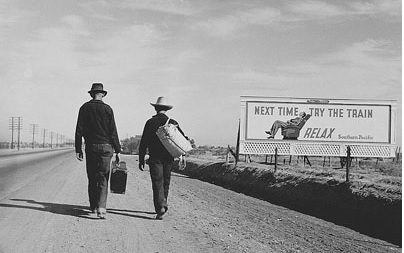
The story is a short but life-changing episode in the lives of two friends George and Lennie, itinerant labourers on the Californian seasonal workers trail, trying to avoid trouble and dreaming like others of one day having their own plot of land, a few animals, vegetables, a working life yes, but one that would not be lived at the beck and call of those who claim superiority.

They meet others like them, they meet sceptics, they meet a man who would never have dared dream of what they pine for and they encounter those who have it already. Without needing to tell or describe, Steinbeck presents through sparse narrative and dialogue: friendship, cruelty (with and without intention), jealousy, indifference and fear. He uses the colloquial language of men of the time giving it a raw, frank boldness that requires no embellishment (the book was written in 1937, though perhaps inspired by his own experiences in the early 1920’s).

Crooks interrupted brutally.

“You guys is just kiddin’ yourself. You’ll talk about it a hell of a lot, but you won’t get no land. You’ll be a swamper here till they take you out in a box. Hell, I seen too many guys. Lennie here’ll quit an’ be on the road in two, three weeks. Seems like ever’ guy got land in his head.”

Candy rubbed his cheek angrily.

“You God damn right we’re gonna do it. George says we are. We got the money right now.”

Steinbeck himself spent time working as an itinerant agricultural worker in the Salinas Valley for nearly two years in the 1920’s after dropping out of university, so had first-hand observations of the kinds of men whose lives were entrenched in these routines and their familiar aspirations.

“Lennie was a real person” he told a New York Times reporter in 1937.

MenHis own experiences, observations, his compassion, perhaps born of a certain humbleness having left the hi-brow corridors of Stanford University where he would have brushed shoulders with another kind of person, lend the narrative authenticity and empathy.

An exceptional novella, told mostly through dialogue where every word is made to count without losing its beauty or power. We sense the inevitability of the outcome which unnerves the reader while we encounter a brilliant, sensitive portrayal of two friends with a similar dream, who if the world was a kinder place, should have been able to achieve it with the genuine camaraderie and work ethic they possessed .

Previous Steinbeck Reviews – A Pearl

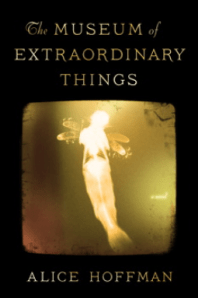
The Museum of Extraordinary Things by Alice Hoffman

Alice Hoffman

Alice Hoffman

Alice Hoffman is a prolific and engaging storyteller known for the occasional touch of magical realism and an ability to transport her reader into the worlds she creates.

She wrote one of my favourite books Blackbird House, referred to by some as a collection of short stories, the connecting thread running through each story being an old Massachusetts house, the narrative tracing the lives of its various occupants over a span of 200 years. The house bears witness to change through each family’s loved ones and the lives they live inside Blackbird House.

Since that haunting book I have kept an eye out for her work and when I read the premise of this new novel, The Museum of Extraordinary Things, I was more than intrigued. It is set in 1917 New York, when things of a freakish nature fascinated and amusement parks were becoming bigger and bolder in their scope, trying to outdo each other with what they offered the public.

Museum of Extraordinary Things

Professor Sardie is an eccentric French scientist and magician, who came to America seeking his fortune and when we meet him, he has opened a museum of extraordinary living oddities in a room connected to his home on Coney Island, New York. He lives there with his daughter Coralie and Maureen, the woman he has hired to take care of his daughter, herself an extraordinary being, a loving and devoted carer and the victim of disfiguring burns over her face and body.

In addition to the museum, he is constantly thinking up new exhibits and working on bizarre projects in the basement cellar, a den that no one but he has access to.

The story has a dual narrative, firstly from the point of view of his daughter Coralie who becomes part of her father’s exhibit alongside performers including the Wolfman, the Butterfly Girl, and a one-hundred-year-old turtle. She has been trained since a small girl to withstand extreme cold and secretly swims along the Hudson River to build up her strength.

The second narrative is from the perspective of a young Russian-Ukrainian immigrant, Eddie Cohen, who has drifted away from his father and the Lower East Side Orthodox community where they lived, having fled persecution in their homeland. Leaving his job as a tailor’s apprentice, he first works for a psychic investigator finding missing people and then attaches himself to a photographer leading eventually to work for a newspaper. He too has a fascination with the Hudson River and it is here that Coralie will catch her first glimpse of the young man, she will become fascinated by.

“A motherless boy is hardened in many ways yet will often search for a place to deposit his loyalty and devotion. Eddie had found this in the city he saw as one great and tormented beauty, one ready to embrace him when all others turned away.”

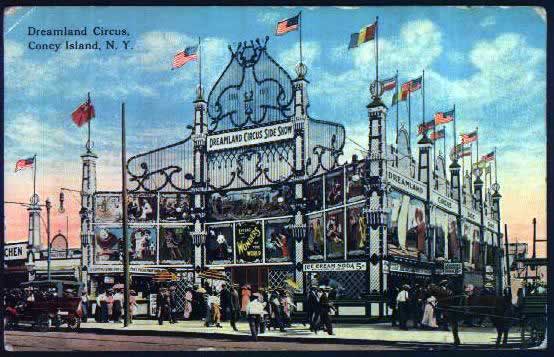
Dreamland Circus, Coney Island, New York  1917

Dreamland Circus, Coney Island, New York 1917

Hoffman writes the story of the lives of these two characters and others, eventually bringing them together, while sharing two significant tragic events in New York’s history in 1911. During one of these events a young woman goes missing and it is this mystery that will ultimately bring the young couple together.

The city and the river are themselves like characters, struggling to live in harmony, with the knowledge that one will eventually encroach on the other and destroy its peaceful surrounding. For now the river is like a refuge and the city a menace that threatens to overthrow its flanks, bringing dark elements to its shores.

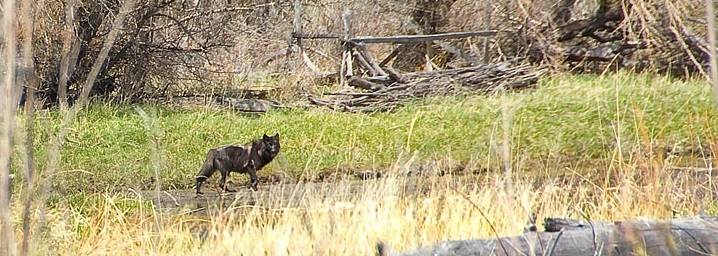
Wolf Hudson

The Museum of Extraordinary Things brings New York City and the conditions of 1911 alive. The river, the streets and the changing landscape between them are sketched using all the senses as we step into the lives of characters living on the edge of society trying to survive. We observe those for whom it comes naturally to exploit the weak while witnessing the compassionate few who will risk everything including life itself to do the opposite.

It is a riveting read, transporting us to an era when fantasy and the imagination were sought as a literal means of escape and we look behind the scenes of an extraordinary, freakish world. Spellbinding!

Note: This book was an Advance Reader Copy(ARC) provided by the publisher via NetGalley.