The Enchanted April by Elizabeth von Arnim

CIMG7226As soon as I learned that Elizabeth von Arnim’s The Enchanted April was to be reissued as a Penguin classic, I jumped at the chance to read it. Elizabeth and her German Garden was such an engaging and entertaining read and I recall in the comments of that review so many mentions of The Enchanted April as a must read.

Elizabeth wrote The Enchanted April in a castello (an eleventh-century fortress with Roman foundations overlooking the Ligurian Sea) in Portofino, Italy, in April 1921. She had rented the place to get away from her own (sixteen bedroom) chalet in Switzerland… an extract from the Introduction by Brenda Bowen

Brenda Bowen has written a work of fan fiction, published in June 2015, one that mirrors von Arnim’s work, set in contemporary Brooklyn and Maine featuring four ladies who will rent a cottage (not castle) on Little Lost Island, Maine.
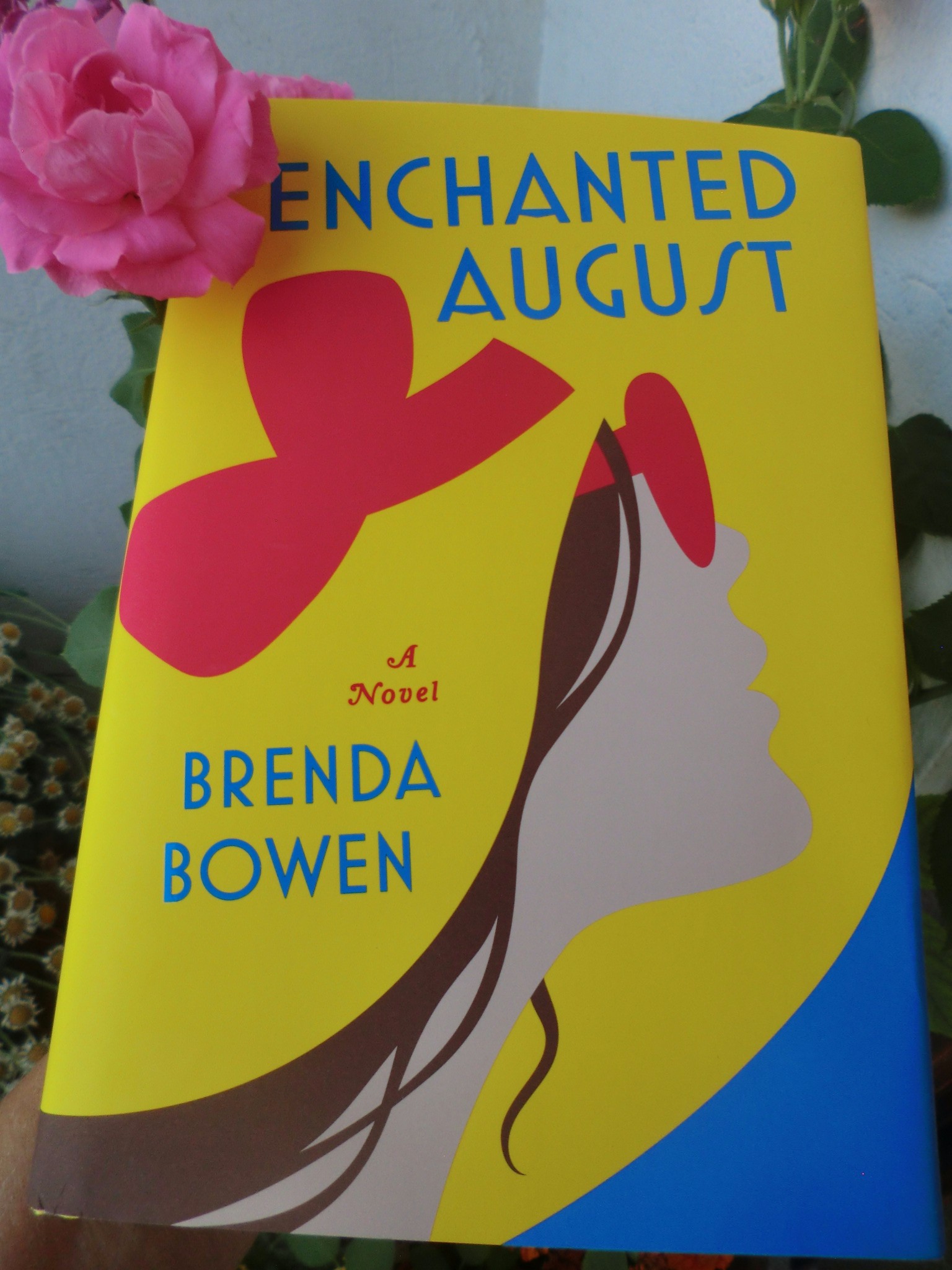
Enchanted August

One to Watch Out For, Fan Fiction

Enchanting indeed, not just the month of April, but all that made this original classic so; the villa San Salvatore (inspired by the Castello Brown pictured below) on the cliffs of Portofino overlooking the sea, the blooming buds and flowers of Spring, four weeks stretched out in front of four unaccompanied women with no social obligations, no cooking, cleaning, nothing to do but enjoy the gardens, the villa, the seascape and one minor challenge, to tolerate each others company.

They are four women who remind me of the semi-autobiographical and coolly calculating character of Elizabeth, in von Arnim’s Elizabeth and her German Garden, for though the four women in this novel sought company for this séjour on the Ligurian coast of Italy, it was purely for financial reasons, most certainly not for companionship, the first hint of von Arnim’s well-known and often quoted attitude towards visitors.

Being with strangers, they each hoped to leave that part of themselves that must always meet the expectations of others behind. Mrs Wilkins  from Hampstead was the first to see the advertisement in The Times while visiting her London club.

To Those Who Appreciate Wisteria and Sunshine. Small mediaeval Italian Castle on the shores of the Mediterranean to be Let furnished for the month of April. Necessary servants remain. Z, Box 1000,

The Times.

Mrs Wilkins was certain another woman her age was reading the same ad and having a similar response to it, so true to her nature (though not typical of society’s expectation of a response) she seized the initiative suggesting they rented the place together.

Her initial reluctance overcome, once the two women realised it was possible, they needed only a solution to the expense which Mrs Wilkins solved by suggesting they place another ad to attract another two like-minded female souls, thus we are introduced to the beautiful, ever charming even when she is trying not to be, Lady Caroline Dester and the somewhat disagreeable and much older Mrs Fisher.

Once ensconced in their lodgings, the four women interact and are given a well-portrayed and at times humorous glimpse into their individual characters, made all the more interesting by the fact that these women were most unlikely to have ever encountered each other within their existing social circles.

Enchanted April

Mrs Wilkins and Mrs Arbuthnot are pleased to have escaped their husbands, though they each harbour an underlying sadness for how things were when they were newly married. They are not aged, in their thirties, they have more the air of self-accepting middle age. However, they hadn’t reckoned on the effect of a stay at San Salvatore.

Lady Caroline just wants to be left alone, unmarried and disinclined, she detests the attention her beauty and natural charm attract. The formidable Mrs Fisher appears malcontent for no more reason than that she’s been on Earth at least twice as long as the younger women, having lost what youthful exuberance she may ever have had long ago.

‘Mrs Fisher doesn’t seem happy – not visibly anyhow,’ said Mrs Arbuthnot, smiling.

‘She’ll begin soon, you’ll see.’

Mrs Arbuthnot said she didn’t believe that after a certain age people began anything.

Mrs Wilkins said she was sure no one, however old and tough could resist the effects of perfect beauty. Before many days, perhaps only hours, they would see Mrs Fisher bursting out into every kind of exuberance. ‘I’m quite sure, said Mrs Wilkins, ‘that we’ve got to heaven, and once Mrs Fisher realises that’s where she is, she’s bound to be different. You’ll see. She’ll leave off being ossified, and go all soft and able to stretch, and we shall get quite – why, I shouldn’t be surprised if we get quite fond of her.’

Things are about to change, as the castle San Salvatore, though solid and immovable, works its way into their psyches and each will fall under the spell of the charming fortress and its healing environment over the course of their four-week stay.

I thought The Enchanted April a wonderful, evocative read and witty insight into its very English characters, enjoyable for its sense of place and the lush season it evokes, von Arnim’s natural, subtle humour that she never ceases to inject into her narratives, in this novel there is no trace of the slight cynicism of her earlier work; she has allowed her four women to indulge this fantasy through to its natural conclusion.

And oh how fulfilling that can be for the reader, I know this little stretch of Italy and it invoked pleasant memories and incited future dreams of a possible return – with three women ‘bien sûr’!

Countess Elizabeth von Arnim

Born Mary (May) Annette Beauchamp in 1866, Elizabeth von Arnim was Australian by birth, English by upbringing, German and English through marriage, Swiss and French by choice and finally American by emigration. She published 21 books in her lifetime,  books where the central female character(s) were often witty and unreserved, possessing an unusual outlook on life. A number of them, including The Enchanted April were made into films.

An appearance of the novel Elizabeth and her German Garden in a recent episode of Downton Abbey, sparked renewed interest in the works of the author. That novel was so popular when first published, it was reprinted 21 times within a year of publication.

She was the cousin and contemporary of the New Zealand/English writer Katherine Mansfield. She died in Charleston, South Carolina in 1941.

KM logoElizabeth von Arnim Conference – In an extraordinary coincidence that I just discovered, the Katherine Mansfield Society is to hold an Elizabeth von Arnim Conference, at Lucy Cavendish College, University of Cambridge on Sept 13th 2015!

My review of Brenda Bowen’s Enchanted August.

Note: This book was an ARC (Advance Reader Copy) kindly provided by the publisher.

Baileys Women’s Prize for Fiction 2015 Winner

British author Ali Smith has won the 2015 Baileys Women’s Prize for Fiction with her sixth novel How to Be Both.

“Ancient and modern meet and speak to each other in this tender, brilliant and witty novel of grief, love, sexuality and shape-shifting identity.”

Shami Chakrabarti, Chair of Judges

Ali Smith


How to Be Both is a novel all about art’s versatility. Borrowing from painting’s fresco technique to make an original literary double-take, it’s a fast-moving genre-bending conversation between forms, times, truths and fictions. There’s a renaissance artist of the 1460s. There’s the child of a child of the 1960s. Two tales of love and injustice twist into a singular yarn where time gets timeless, structural gets playful, knowing gets mysterious, fictional gets real – and all life’s givens get given a second chance.

The winning title was also chosen by the Shadow Jury, who made their announcement yesterday, see some of their reviews here:

How To Be Both

– reviewed by Eric at The Lonesome Reader

– reviewed by Naomi at The Writes of Women

lbaileyslogo

Reader for Hire by Raymond Jean tr. Adriana Hunter

CIMG7184From the 2015 theme Chance Encounters: Meeting the Other comes another novella from Peirene Press, translated from French, Reader for Hire (La Lectrice) by Raymond Jean, translated by Adriana Hunter.

The first book in the series was Finnish author Aki Ollikainen’s White Hunger, a chilling tale of the necessity of abandonment to survive, when leaving behind what seems like certain death is replaced by a journey towards what is a less certain but equally probable demise, trying to escape the famine of 1867 Finland, heading for St Petersburg on foot through the snow.

This second book Reader for Hire tells the story of thirty-four year old Marie-Constance who is married, childless and unoccupied. She still regularly visits one of her literature professors at the university where she failed to complete her studies, but otherwise appears to possess little motivation to change her life or find a job.

One day a friend makes a suggestion that she at first considers outlandish, however with nothing better to do, the idea sticks and despite her general lethargy for being proactive, acts on it.

“You have a wonderful voice, it’s silly not to do something with it. A woman really needs an occupation these days…When we were at the Conservatoire you showed such talent… Why don’t you put an ad in the papers offering to read to people in their own homes?”

The man at the newspaper agency tries to discourage her, attempting to enlighten her as to what she may be exposing herself to, without being so direct to describe his exact misgivings, wishing to warn her of the kind of response she might attract, suggesting she remove the words ‘young woman’ and replace them with ‘person‘, a recommendation she rejects vociferously and thus proceeds with the advert offering her services as a reader.

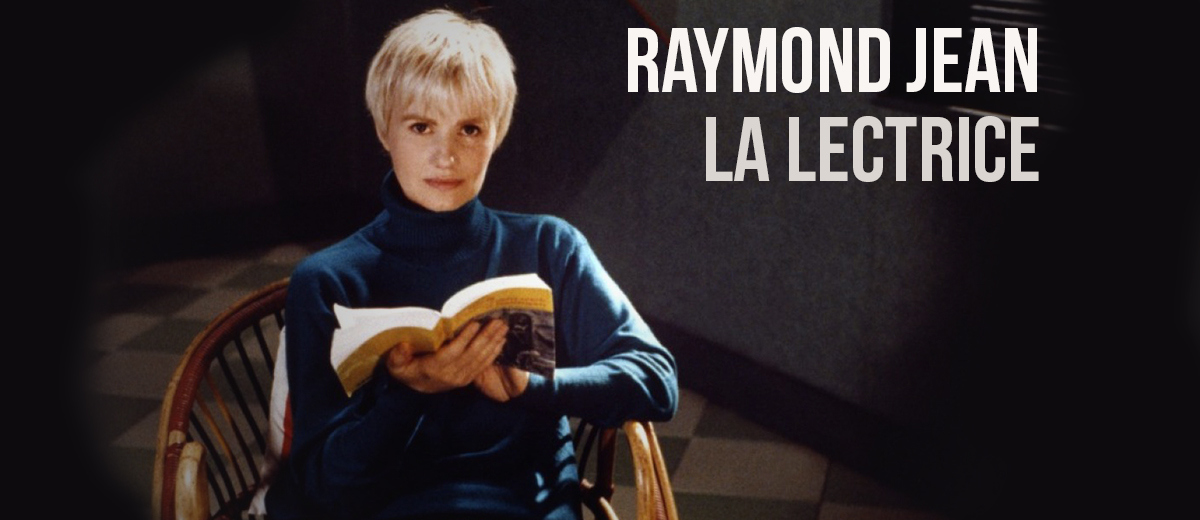
Miou-Miou in the film, La Lectrice

Miou-Miou in the film, La Lectrice

It’s a social satire that attempts to celebrate the joy of reading aloud, willing it to be the life changing experience it could be, that clearly is not. Instead, it reveals just how much loneliness, desperation and depravity exists in our society and how many are looking for something that might quell the symptoms, even if that means corrupting something else offered. Despite the obvious need to use her to fulfil their empty lives, Marie-Constance is determined to turn her fantasy into a viable profession and talks of it as if it already is.

“…I mustn’t lose the few ‘regulars’ I’ve managed to hook. In fact I’m on my way to my managing director today. He’s more hooked than anyone else, we’ve all grasped that, but by something other than reading. I’ve made my decision and I’m ready. But I might still try and bring him around to literature.”

A wheelchair bound adolescent, a six-year-old girl who wants to go to the fair, not stay at home and be read to, the aging, demented communist wife of an ex General, the depressed Managing Director and the elderly magistrate, they come in all forms and guises and like a Doctor choosing the right medicine, Marie-Constance will select Maupassant, Marx, Claude Simon, de Perec and others in her quest for the best bookish match. She thinks only in terms of literary solutions, seeking out the company of her old professor for guidance, though he too appears to have other intentions.

I enjoyed most of the book, particularly while there was still some mystery and intrigue around the characters and their motivations, however I wanted the fantasy to endure, for Marie-Constance to  find more of the genuine kind and less of the erotic, sadly the fictional reality, as depicted by Raymond Jean seems to illustrate that depravity is more in abundance and women will continue to allow it.

The book was originally published in French in 1986 and was made into a film two years later starring the French actress affectionately known as Miou-Miou, a name given to her on her acting debut by French comedian Coluche, a reference to her ‘petite voix douce miaulante’ soft voice.

Contemporary European Fiction via Peirene Press

Contemporary European Fiction via Peirene Press

Frankenstein, or the Modern Prometheus by Mary Shelley

I had always intended to read Mary Shelley’s classic in 2015, however I hadn’t expected to come across it in so many forms before I picked it up in its traditional one, the book.

Captain R Walton and the scientist Victor Frankenstein, Arctic  Source: BBC Learning English

Captain R Walton and the scientist Victor Frankenstein, Arctic
Source: BBC Learning English

With the advanced English conversation class I teach, we began to listen to weekly episodes of Frankenstein via a BBC adapted audio drama, written for learners of the English language. Condensed to 10 episodes of about 7 minutes each, it introduces new vocabulary and a classic of English literature to learners, while keeping them entertained.

Midway through the audio drama, I heard that there was to be a relayed broadcast of the London National Theatre production of Frankenstein, starring Benedict Cumberbatch and Jonny Lee Miller, cast as the Creature and Victor Frankenstein, directed by Danny Boyle.

Throughout the season, the actors switched roles on alternate nights, Creature and Creator, inhabiting each others skin, developing each others mannerisms and tendencies, drawn together and repelled simultaneously. The version I saw showed Cumberbatch as the Creature, a stunning and visceral performance beginning with the birth-like slump onto the stage, the first stages of development and observation of the enigma of man.

Creature_birth

A Creature is Born, National Theatre London

After these two modern-day introductions, I was even more intrigued to read the original text and learn about the origin of a book that was itself born via 18-year-old Mary Godwin (later Shelley) telling ghost stories one cool June summer evening in 1816 at Lake Geneva with companions Lord Byron, the physician John Polidari, Percy Shelley and her stepsister Jane.

FrankensteinThe book starts out with letters written by a Captain R Walton, who is in St Petersburg preparing to leave for an excursion of discovery to the North Pole, to his sister Margaret in London.

Like Victor Frankenstein, the young scientist he will rescue from an ice floe in the Arctic and whose story he will listen to day after day while trapped in the ice, Walton has a thirst for knowledge and an agitated spirit that pushes him forward in his quest. He wishes to make his mark on the world and make a difference. Like Frankenstein he has immersed himself in studies of logic and now desires to achieve something of magnitude, having already failed to become a significant poet.

His prose is now dedicated only to his sister Margaret, through whose letters we will learn of Walton’s failed voyage and the story Victor Frankenstein will narrate to him, as he too gives up his pursuit of the Creature that was to be his mark upon the world, one that had already made a difference, though in ways he never dreamed of and lived to regret.

Upon hearing the voyager’s naive hopes, Victor Frankenstein shares his own story in an effort to try to thwart Walton from following his ideals  into what may become yet another foolhardy madness.

“Unhappy man! Do you share my madness? Have you drunk also of the intoxicating draught? Hear me; let me reveal my tale, and you will dash the cup from your lips!”

The story he tells is of his own youthful thirst for knowledge, his fascination with science, alchemy and existence itself. His obsession with creating life above all else, with no forethought of the consequence of such an act, his fear and neglect of that which he created and the terrible consequences wreaked upon him, his family and those closest to him as a result.

“You may easily perceive Captain Walton, that I have suffered great and unparalleled misfortunes. I had determined at one time that the memory of these evils should die with me, but you have won me to alter my determination. You seek for knowledge and wisdom, as I once did; and I ardently hope that the gratification of your wishes may not be a serpent to sting you, as mine has been. I do not know that the relation of my disasters will be useful to you; yet, when I reflect that you are pursuing the same course, exposing yourself to the same dangers which have rendered me what I am, I imagine you may deduce an apt moral from my tale, one that may direct you if you succeed in your undertaking and console you in case of failure.”

Victor Frankenstein grew up in the countryside of Switzerland, in a kind of reverie, with his adopted sister Elizabeth whom he always viewed as a gift, initially from his mother who brought her into the family and eventually as his future bride. But first he wished to fulfil his destiny, that alchemy of existence, he wanted to create a sustainable life-form.

He pursued it with zeal, neglecting all else, only to run in fear of what he had done, until it pursued him, confronting him. The Creature forced him to listen and hear of the curse he had inflicted on him, by making him in such a way that all humanity would abhor him, sentencing him to a life without love, without friends, unknown.

“I expected this reception,” said the daemon. ” All men hate the wretched; how, then, must I be hated, who am miserable beyond all living things! Yet you, my creator, detest and spurn me, thy creature, to whom thou art bound by ties only dissoluble by the annihilation of one of us. You purpose to kill me. How dare you sport thus with life? Do your duty towards me, and I will do mine towards you and the rest of mankind. If you will comply with my conditions, I will leave them and you at peace; but if you refuse, I will glut the maw of death, until it be satiated with the blood of your remaining friends.”

Victor Frankenstein listens to the Creature and is moved from the desire to kill his creation to consider creating another, a companion, the only chance he may have to live in harmony in this world, for to be alone has driven him to madness, murder and mayhem.

The book, while framed at both ends by the letters from the explorer to his sister, the middle part is split into three, the first and latter parts as told by and from the perspective of Victor Frankenstein, while the middle part recounts the Creature’s tale of exile and in doing so gives voice to the creature.

Benedict-Cumberbatch-Jonny-Lee-Miller

Benedict Cumberbatch and Jonny Lee Miller

It is in this section we have the most honest view of his creation and it is in this part that the theatre screenplay written by Nick Dear really excels.  It takes as the starting point, the metaphor of birth and Cumberbatch’s Creature slips from an embryonic web to the floor, resembling something more amphibian like than human, flaying its limbs about spasmodically as it tries to master them, this body with no instruction, no parent, a man with the gestures of a newborn.

Throughout his years of exile, his interactions with others teach him to survive, to communicate and slowly to understand the capacity and flaws of humanity. With understanding comes grief, he knows what is possible, that which will always be unreachable for him, a creature that thinks and is capable of acting as one of humankind but who will always be hated, rejected and worse, hunted to extinction.

“I cannot describe to you the agony that these reflections inflicted upon me; I tried to dispel them, but sorrow only increased with knowledge. Oh, that I had forever remained in my native wood, nor known nor felt beyond the sensations of hunger, thirst, and heat!”

An astounding read and such a pleasure after the introduction I had via the theatre and audio play. It’s true I’m not a great reader of the classics, but when they are given an alternate context and serve as inspiration in the way this creation has, I can’t help but read in awe the achievement that continues to inspire such great works in themselves.

A five star read for me!

For a glimpse of that theatre sensation, watch this one minute trailer, with extracts from the live production in London.

Danny Boyle’s Frankenstein with Benedict Cumberbatch

The Man Booker International Prize 2015 Winner #MBI2015

Lydia Davis

Lydia Davis

Man Booker IntlToday the winner of The Man Booker International Prize was announced.

This prize recognises one writer for his or her achievement in fiction. It is awarded every two years to a writer whose work has been published in English or is generally available having been translated into English.

Unlike the Man Booker Prize for Fiction, there are no submissions from publishers, it is a decision left solely to the judging panel, who must consider a writer’s body of work and not just their latest novel.

The 2013 winner was short story writer and translator Lydia Davis (America).

The finalists for 2015, alongside a quote made by one of the judges were:

Alain Mabanckou (Republic of Congo) ‘His voice is vividly colloquial, mischievous and … outrageous’

Amitav Ghosh (India) ‘In Ghosh’s hands the contemporary historical novel is transformed’

César Aira (Argentina) ‘A performance on page’

Fanny Howe (US) ‘[her] care for words matches her care for characters’

Hoda Barakat (Lebanon) ‘The unrivalled bride of the Mediterranean

László Krasznahorkai (Hungary) ‘What strikes the reader above all are extraordinary sentences’

Marlene van Niekerk (South Africa) ‘The author of two immense masterpieces

Mia Couto (Mozambique) ‘His pages are studded with startling images’

Maryse Condé (Guadeloupe) ‘A monumental body of work that acts against forgetting’

Ibrahim al-Koni (Libya) ‘Reading al-Khoni is a transcendental experience’

Finalists

The Guardian interviewed all 10 finalists in this excellent article, asking each of them:

  • to describe their work to someone unfamiliar with it
  • which of their books they’d recommend to a first time reader
  • whether as a writer,  they felt a distinction between local and international readers
  • who their literary heroes were
  • whether it was the duty of a novelist to engage with the political issues of the day
  • to share something new about themself

After reading this article, I could tell immediately that I would love to read the work of Guadeloupean author Maryse Condé. I have ordered a few of her books already. I recommend reading it if you are interested in knowing which of these authors might appeal to you.

One of the judges, New York Review Classics editorial director Edwin Frank had this to say:

“It would be pretentious to say we wanted to survey the world, but we wanted to be mindful of the wider world of literature. For me, I’ve learned all sorts of things about authors I’d never read especially in Arabic literature, which is still woefully underrepresented in English. And we have various writers from Africa, writing in very different languages and literary traditions.”

And so the winner of the Man Booker International Prize 2015 is…..

Winner 2015

The Gracekeepers by Kirsty Logan

GracekeepersThe Gracekeepers by Kirsty Logan is a book I picked up at random purely based on the blurb. A light fantasy escape read for the upcoming holiday. I listened to an interview with the author just to be sure (linked below), liked what I heard and decided to read it. And it turned out to be the perfect holiday read just as predicted.

Set in an imagined world where the ocean has flooded most of the earth, most people now live permanently at sea. They are referred to as damplings and those that remain on land, who have an air of self-imposed superiority and suspicion of others are known as landlockers.

‘We shouldn’t welcome damplings like this,’ murmured Callanish’s mother. ‘And at night-time, too, when good people should be ticked up safe in their houses! What are those circus folk hiding in the dark, hmm?’ She patted Callanish’s hands, making sure the gloves were on. ‘Some islands don’t even let damplings come above the blackshore. If they want to perform, they can do it in the daytime with waves lapping at their ankles like they’re meant. Those people belong in the water. They’re dirtying the land.’

Most of the story takes place at sea, with the floating circus Excalibur and seen through the eyes of one of its performers, North, whose parents died when she was young. North performs a captivating dance act with her bear, her closest companion, though she is afraid for him, for though he would never harm her, his instinct to protect is strong and dangerous.

The circus moves from place to place, floating between the scattered archipelagoes that are all that remain of earth; they perform to survive, the only way they can eat, although their leader, the ringmaster Red Gold, has alternate plans for North and his son, to try to change that, to establish a presence on land, one that neither youth is particularly enthralled about and that his wife Avalon has become obsessed over.

‘North never felt comfortable with her feet touching land. She didn’t trust its steadiness, its refusal to move or change in the honest way of the sea.’

Callanish is the gracekeeper, graces are small, fragile birds kept by her and used in a grieving ritual as part of her job in the Graceyard, they serve as a reminder of the duration of the mourning period, they are starved and their death signals the end of that period.

gracekeeperShe is the sea equivalent of a funeral home, living isolated in her small house with only the birds and sea-life for company, tending graces and watery graves along the equator. People bring their dead to her for Resting, she performs the ritual and then lays them to rest at the bottom of the ocean in a shroud, tied to the birdcage containing the grace. We don’t know quite how or why she came to be doing this job, only that it was due to something she believes her mother might never forgive her for, penance for a mistake she made long ago.

‘For one adult Resting she was paid a mix of food, supplies and tradable goods: ten eggs, a thick wedge of bacon, a hank of fabric for letter-writing, a lump of copper the size of her thumbnail.’

When the Excalibur is forced to visit the gracekeeper, she meets North and is immediately drawn towards her, it causes a restlessness in her that sees her make some changes and seek resolution to the questions that plague her daily.

It is an interesting story about these two girls, the strange worlds they inhabit and the circumstances that are thrust upon them, forcing them to either accept or rebel. Accept what others want for them or rebel to lead a life that better represents who they really are and to follow their instinct.

There is a whole section about another group of sea-dwellers called the revivalists, which didn’t really fit into the story for me, they were a kind of evangelical group, where Callanish meets a former performer from the Excalibur, and tries to find out how to find the floating circus.

birdcageIt’s an intriguing read that reminded me of The Night Circus, in the same way that there is something magical we sense about this world that is left to the reader’s imagination, Kirsty Logan provides all the elements and introduces the characters but doesn’t inhabit them in such depth to create a solid picture, there remains an element of mystery and curiosity. For example, I didn’t know the meaning of the word coracle, but once I looked it up, that one word alone created a whole new exercise of imagination to understand how they might have fitted behind the circus ship Excalibur.

It would make an excellent picture story book, I found myself wanting to see exactly how the author visually imagined this world.

Further Reading

Review by Susan at A Life in Books – The Gracekeepers: A rattling good tale, beautifully told

Interview with Kirsty Logan at Edinburgh International Festival

Note: This book was an ARC (Advance Reader Copy) kindly provided by the UK publisher via NetGalley.

A Spool of Blue Thread by Anne Tyler

Anne Tyler is an author that is well-known to many and A Spool of Blue Thread is her 20th published novel, said perhaps to be her last.

If like me you haven’t read Anne Tyler before (am I the only one?), you can get an idea of what she’s about from this succinct, sound-bite like feature 10 Things you Need to Know about Anne Tyler by Shelley Marks via The Pool, a hip, online writing, audio and video resource for women, that launched just before Easter. Click on the image below to visit.

The Pool

Anne Tyler writes about family and domestic life in suburban America (Baltimore) and this new novel opens with something of an anti-drama when Abby and Red Whitshank receive a confusing telephone message from their son Denny, who has left home but not exactly settled into whatever it is he intends to do. Abby swings between wanting to just leave him be and being over-anxious to find out what’s going on.

A SpoolThe novel dwells on certain periods when members of the family return home, the four children are all adults in the opening pages and as the back story is filled in, we observe petty grievances, old resentments, current mysteries and a family coming to term with changes as their parents age and may need to move on from the family home.
The book is separated into four parts, starting with Abby and Red in their later years in 1994, sliding back to 1954 just before they began dating, and then even further back to the period when the family home was built by Red’s father Junior, the most intriguing chapters of the book for me, where we hear about how he and his wife Linnie met, the book then returns to the present in Part Four.

The family home could almost be considered a character in itself, the novel concerning the minutiae of family life and events related to that house that was originally built by Red’s father Junior Whitshank, a home he constructed for Mr and Mrs Brill, but one he tended with a love and obsession to detail one would normally reserve for one’s own home. For deep inside, he knew he was building it for himself, he would just have to wait the necessary years – a patience he knew well, and sure enough the opportunity came around when he would indeed reclaim it.

“It was nothing but an architect’s drawing the first time he laid eyes on it. Mr. Ernest Brill, a Baltimore textile manufacturer, had unfurled a roll of blueprints while standing in front of the lot where he and Junior had arranged to meet. And Junior glanced first at the lot and then down at the drawing of the front elevation, which showed a clapboard house with a gigantic front porch, and the words that popped into his head were ‘Why, that’s my house!’ “

Over the years and generations that followed, that home became the repository of memories, events and upbringings whose recollections were as present as the fixings that held the structure together, every inch of the house infused with the presence of family past and present. It is not until we arrive at Part Three that we really understand the significance of the house and what it meant for Junior to have arrived there, thus allowing the next generations to live as they do, in blissful ignorance of their past.

This narration of the present before the past adds an unexpected surprising element to what is otherwise a fairly straightforward domestic saga, the Whitshank’s don’t know much about their origins and the reader too won’t learn what the family will never know until later in the book. It reminds us not to make assumptions about people, not to judge a family by the size of their porch, a book by its cover, and so many other outward appearances that make it easy to create a false image of what lies within.

Spool Blue ThreadA Spool of Blue Thread reminded me in some ways of Jonathan Franzen’s The Corrections, I guess that is the book that comes to mind, when I try to recall if I’ve read anything similar to this.

Ironically, after finishing this book, I read Anne Tyler’s Ladder of Years to get more of a feel for her work and about two-thirds the way through, came across another spool of blue thread, which although a causal reference, did make me wonder if this story had been gestating a long time.

A Spool of Blue Thread is long listed for the Baileys Women’s Prize for Fiction 2015.


Literary BlogHop Book #Giveaway

blog-hop

Leave a comment, win a book… Open internationally

The literary bloghop hosted by  Melanie at My Book Self offers the chance to win a book at Word by Word and visit other blogs offering books, vouchers and bookish accessories. Anyone can enter, anywhere in the world, you don’t have to have a blog or follow anything, just leave a comment,

To be in to win a copy of:

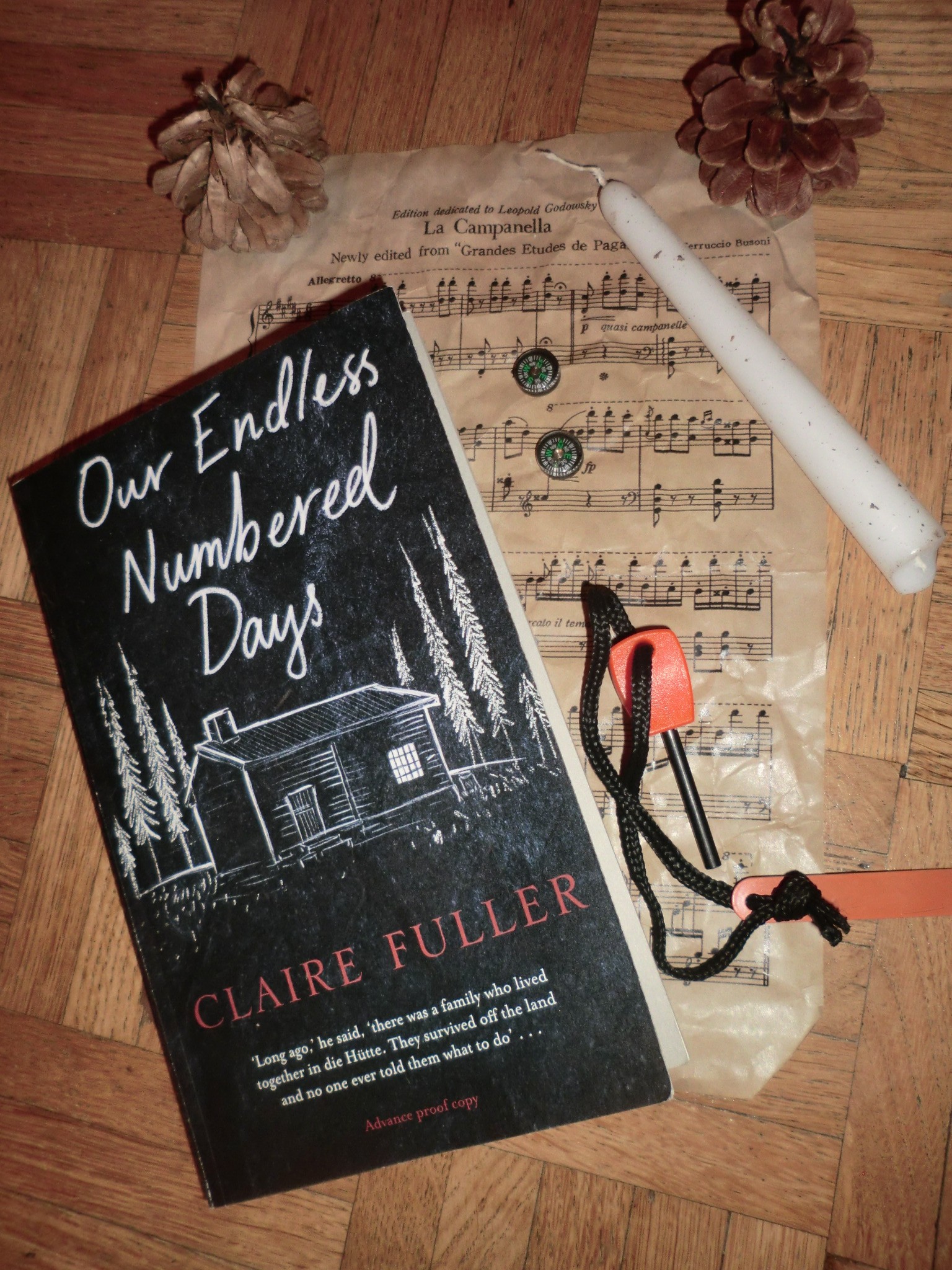
Endless

Our Endless Numbered Days

by Claire Fuller

– read my review here

Peggy Hillcoat is 17 years old and has been back in her family for 2 months now, everything is familiar and strange at the same time. Her father is no longer there, but in his place is an 8-year-old brother Oskar, she hadn’t known of until her return. He is the same age now that she was when she and her father disappeared, for nine years, without trace. – extract from Claire’s review

a) Leave a comment below with your email address (1 entry)

b) Follow me on twitter @clairewords  and ReTweet the offer (1 entry)

c) Follow Word by Word (1 entry)

Click Here to visit other participating blogs…

Thank you for stopping by at Word by Word and Happy Blog Hopping!

N.B. The giveaway closes 12 April, 2015. The winner will be notified by email.

This giveaway is now closed.

Bailey’s Women’s Prize for Fiction Longlist 2015

lbaileyslogoTwenty books have now been selected that make up the 2015 long list for the Bailey’s (previously The Orange) Prize for Fiction. They will be reduced to six on April 13 and the winner announced at the Royal Festival Hall on 3 June 2015.

Previous winners include Eimear McBride for A Girl is a Half-formed Thing (2014) and A.M. Homes for May We Be Forgiven (2013), Madeline Miller for The Song of Achilles (2012) and Téa Obreht for The Tiger’s Wife (2011).

Shami Chakrabarti, Chair of judges, had this to say about this year’s selection:

“The Prize’s 20th year is a particularly strong one for women’s fiction.  All judges fought hard for their favourites and the result is a 2015 list of 20 to be proud of – with its mix of genres and styles, first-timers and well-known names from around the world.”

From the list of 20, I have read only one and it was absolutely brilliant, Laline Paull’s The Bees and I am currently just over half through Anne Tyler’s A Spool of Blue Thread which reminds me of the experience of reading Jonathan Franzen’s family saga The Corrections.

So here it is, the list of twenty books long listed for the Baileys Women’s Prize for Fiction:

Rachel Cusk: Outline

Lissa Evans: Crooked Heart

Patricia Ferguson: Aren’t We Sisters?

Xiaolu Guo: I Am China

Samantha Harvey: Dear Thief

Emma Healey: Elizabeth is Missing

Emily St. John Mandel: Station Eleven

Grace McCleen: The Offering

Sandra Newman: The Country of Ice Cream Star

Heather O’Neil: The Girl Who Was Saturday Night

Laline Paull: The Bees

Marie Phillips: The Table of Less Valued Knights

Rachel Seiffert: The Walk Home

Kamila Shamsie: A God in Every Stone

Ali Smith: How to be Both

Sara Taylor: The Shore

Anne Tyler: A Spool of Blue Thread

Sarah Waters: The Paying Guests

Jemma Wayne: After Before

PP Wong: The Life of a Banana

The prize is being shadowed by a group of excellent bloggers, including one of my all time favourites Eric at Lonesome Reader, organised by Naomi at The Writes of Women.

They will be reading all the books and many of them have read at least five or six already, that’s where I’ll be heading to decide which books might appeal to me and where I recommend you look for some of the best reviews.

So which books have you read, or plan to read?

The Tusk That Did the Damage by Tania James

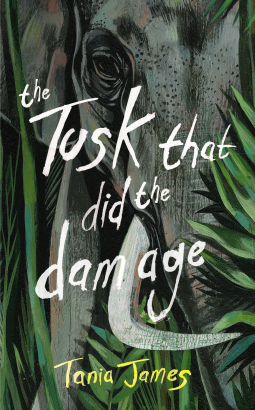
Elephants Ivory Poaching India Environmental LiteratureTania James’s The Tusk That Did the Damage is a story about a couple of very young American film-makers who travel to a  Keralan wildlife park in South India to make a documentary about a veterinarian they’ve heard of, who rescues orphaned elephants. One of those orphaned elephants is now on the loose and is being pursued by poachers.

The young elephant orphaned after the brutal death of its mother, initially seized as a baby by poachers earns the name Gravedigger after developing a reputation for covering his human victims with leaves and dirt after death. Having escaped captivity he is being pursued by poachers, a significant price on his head.

Manu is the younger brother of a poacher, disturbed by what he discovers his brother is up to and the lies he tells his wife to cover for his absences. For the sake of his mother, who pleads with him to watch over her eldest son, he follows his brother on this last deadly pursuit, to try to ensure his safety; he knows the danger very well as his best friend was one of the victims of Gravedigger, but he hopes to keep his brother out of danger and trouble.

It is a story of a tribe of elephants in South India, who have lost their ability to roam freely and live as their nature intended, forever changed by their interactions with humans, it is also about those who wish to care for and protect elephants, those who are willing to exploit them and outsiders looking for a sensational story to bolster their careers.

Remembering India

Remembering India

It is a clash of cultures, of people and species who have forgotten how to live in harmony and are having to live with the consequences of their behaviours.

The narrative follows the elephant they name Gravedigger, the film maker Emma and Manu, the younger brother of the ivory poacher.

“Fresh out of college, we’d been looking for a subject for our first documentary feature when I learned about Ravi from an inflight magazine. The photos of fuzzy elephant calves hooked me for the usual cutesy reasons; the description of the veterinary doctor glowed with dramatic potential.”

The story moves between the three narratives, following their lives, looking back at the events that have shaped them until now, leading them towards each other and the inevitable confrontations that beckon.

“The trouble began when my mother found a pouch of bullets in Jayan’s cabinet – thick and crude as if sawed from a steering rod – and thrust the pouch at my father. She felt it a father’s duty to straighten out a wayward son even if the father himself was wayward past hope.”

There is an authenticity to the narrative of the younger brother that has the effect of drawing the reader deep into the lives of his family and neighbours, that his story involves more than just himself may be one of the reasons I was captivated by these sections.

The insights into the perceptions from the elephants point of view are sensitively if briefly handled, I wished this narrative voice could have been even stronger.

“I had never stood in such intimate company with a wild bull elephant or felt its breath steaming upon my face, had never watched the ground beneath my feet fall away until all that remained was the small patch on which I stood trembling. How could a man survive such a thing unchanged? How could he glimpse that unholy omen, a warning as ancient as the oldest of fables, as obvious as a black-bellied cloud, and ignore it?”

An Outsiders Perspective

The film-makers felt unnatural in the environment, lacking understanding, empathy and not spending sufficient time to learn anything, they were the major weakness in the narrative for me. It is interesting having recently read Yasmina Khadra’s The African Equation, that both authors depict a similar stereotype of the Westerner entering into a foreign culture for a short period of time, insufficient to be able to able to understand it from the inside and this case, perhaps not wishing to see it in any other way that a sensational one.


It might be time for me to read  Tété-Michel Kpomassie’s An African in Greenland, brought to my attention by Ann Morgan, in her A Year of Reading the World project.

The author ran away from his native Togo, to avoid having to be initiated into a snake cult and after reading a children’s book about a place called Greenland that had no snakes, he made that his destination. For the next twelve years, he travelled overland working his way towards his destination, sharing his observations and experiences. Not just an adventure, his book published in 1977 in France won a literary prize and since Ann Morgan read and reviewed it, the story has been picked up by a film producer.

*

Note: The Tusk That Did the Damage was an ARC (Advance Reader Copy) provided by the publisher via NetGalley.