NW, life’s passage via the Kilburn High Road

The back cover of Zadie Smith’s novel NW, recently long-listed for the Women’s Prize for Fiction 2013 mentions This Is The Story Of A City, the north-west corner of city, however that’s not how I think of it. London is something else, as is The City of London.

NW is a community, a fluid changing community, one of London’s many pulses; for some it is a stepping stone to the next stage, for others it is home. It has been a thoroughfare into London since the days of the Romans and in more recent times, the resting place for Irish immigrants fleeing their country for one reason or another, sometimes dramatic, sometimes not. And following the Irish are the many other groups who found NW their starting point to a life in London, that city of promise and unending challenge. NW is the same, the faces that pass through it, indicative of the era we are living within.

NWNW the novel is experimental, its structure changes with each section and after starting the second part which focuses on Felix, I realised that the narrative voice was being used as a metaphor for the state of mind of the character, a brave step or a risk on the authors part by commencing with Leah, who thoughts are all over the place and is suffering from that anxiety of a young, married woman with a successful career and a husband who loves her, who doesn’t understand why she is not content, or why she can’t admit that she isn’t ready to start a family.

So we start with the staccato stream of conscious thoughts of a woman who would benefit from therapy and/or meditation to still that rampant inner chatter, planting the reader in the midst of prose that is challenging for some and uneasy for those listening to the audio version. Not when chapter 7 is shaped like a tree, though that is one of the least challenging pages, one of beauty in fact.

But once we get to Felix’s section, things calm down, Felix’s major life troubles are behind him, the reading is easy and the pace picks up.  Although he’s not entirely immune to temptation, he seems to have moved on from his more despondent days, he’s been clean for 2 years and plans to stay that way. To me, he is the only character who shows real signs of moving on, however he has not moved out of NW,  his mistake perhaps is in staying and trying to convert those around him.

The other female character Keisha, changes her name to Natalie when she becomes a lawyer, an attempt to outgrow her past; she marries and has two children. She and Leah have been friends since their school days and their connection provides the one strong thread throughout the novel. Natalie, like Leah has risen above her past, but can’t seem to resist undermining it, with her strange behaviour, in what was for me, one of the least believable parts of the novel, in part because the author keeps us from knowing exactly what Natalie is up to online and offline, before she gets caught and flips out. I was hoping she might be more influenced by the role model of  Theodora Lewis-Lane, who tries to advise her.

“The first lesson is: turn yourself down. One notch. Two. Because this is not neutral.”  She passed a hand over her neat frame from her head to her lap, like a scanner. “This is never neutral.”

NW6For me personally, it was in part a nostalgic read, Zadie Smith’s writing comes alive when she evokes place and it is a neighbourhood I lived in and around for many years, NW is the most complete and yet complex character of all, embracing so much diversity, inviting everyone in without prejudice and yet claiming some in the harshest terms possible. There are as many reasons to hate it as there are to love it and anyone who has lived there will likely never forget it.

NW is a melancholic novel about four characters trying to escape their past and leaves the reader with few signs of hope for the future, or at least that future is left for us to imagine. Those who focus on the uniqueness of the writing or who have some experience of /interest in these communities may enjoy it, while those looking for the traditional transformation of character, or any kind of escape may be disappointed.

Despondency is the norm and we will not be rescued from it, it merely lessens with time if we survive.

Howard’s End is on the Landing, A Writer’s Reading Journey

There is much to love in books about a reading journey, just as there is in an exhibition of a well-known painter’s own personal collection, especially when those collections include the work of their friends and personal anecdotes.

Susan Hill certainly comes up with many personal anecdotes of interactions with some of her favourite writers as well as some ‘I almost met…’ which made me laugh because with each of those non-encounters, she says the same thing, that most likely she would have had nothing to say anyway. I am sure that would not have been the case, being so widely read, she would be able to find common ground with almost any great writer, though ever humble a writer be of their own work perhaps in the presence of an idol.

Susan Hill Reading YearHoward’s End is On The Landing is Susan Hill’s account of a year spent reading from home, her collection easily the size of a small library from the way I read it, one bookshelf alone contains 743 books and this a country house of many rooms where books have snaked their way up the stairs across the walls and had bespoke shelves made to measure for hard to fit nooks and crannies.

At the end of the book, she includes a list of the final forty; it’s a page I refer back to often as her journey of short chapters includes picking up an author’s many works and often struggling to decide which one should go on the list. She loves her Victorians, perhaps more than anything, so Charles Dickens, Thomas Hardy, Anthony Trollope, George Eliot and Emily Bronte are all there.

I have spent a long time among the Victorians this winter but the year is on the turn, the first spring crocuses are pushing up through the grass. It is not yet warm, there are no leaves on the trees but just perceptibly the nights are drawing out.

I am restless for the twentieth century again. Upstairs then, to the landing. Why Forster sits next to Graham Greene, or Anita Brookner is tucked in beside V.S. Naipaul, let alone why they are interspersed with odd volumes of the Finn Family Moomintroll, is one of the mysteries of the reading life.

It doesn’t really matter whether I have read the books or not, it is not only recognition of similar books we may read, it is as much about sharing the joy of reading, its ability to provoke, to uplift, to question. It is the consequence of reading and the confirmation of how different we all are in these observations that continues to prove the reality, that somewhere out there that same book will have been both adored by one person and despised by the next.

Just this morning I read a passionate review by Vishy the Knight of Nicole Brossard’s Yesterday, At the Hotel Clarendon in which he describes the effect of reading prose that to him was sublime, lush, delightful, transcendent, luscious, intoxicating. Well, I don’t know about Brossard’s prose, but I was enjoying Vishy’s. He went on:

After reading a particular passage and falling in love with it, I thought that this was it. Now Brossard will get back to business and get on with the story. And then followed another intoxicating passage. And then another. And another. It was the kind of intoxication that one gets while listening to classical music, the kind which is pleasurable but on which one never gets drunk. Nicole Brossard is also a poet and it shows in her prose. I want to read this novel again just for Brossard’s prose.

Then, at the end of his review, he mentions he was able to find two other reviews of the book in Canadian literary magazines and only one review on Goodreads, which said “I just can’t stand this book anymore.”  Just like films, the only way to really know is to see or read it yourself! And as I alluded to in my previous post, books and reading tell us and others who we really are. As for me, I trust Vishy’s judgement, I love lyrical prose.

Susan Hill’s book is very much influenced by the English tradition and I feel compelled to balance that a little by mentioning another book in a similar vein which I adored, Pat Conroy’s A Reading Life.

Conroy Reading LifeI have only read one of Pat Conroy’s books, The Prince of Tides, but would not hesitate to read more, especially as a summer read –they do tend to be big, bold, compelling books, great for a summer read. His reading life unfolds by the chapter in a mesmerising, delightful way, his storytelling and anecdotes within the book are captivating.

He is loyal to certain influential bookish people in his life and they often reappear throughout the chapters. The chapter on the influence of his mother and references to both the book and film of Gone With the Wind is a great story in itself. But my favourite chapter and one that has stayed with me in the years since I first read this, was Chapter Eleven A Love Letter to Thomas Wolfe, because he is so honest and appreciative, ignoring intellectual snobbery and sharing what he describes as a pivotal event of his life – his reading of Look Homeward, Angel and though not knowing it at the time, entering into “the home territory of what would become my literary terrain”.

I have read very good reviews of Will Schwalbe’s book The End of Your Life Bookclub and know that one day I will venture into its pages, but have been warned, this one is a real tearjerker, so timing is important. There is no rush, just many future reading pleasures that will lead to even more.

And the one stand out book from Susan Hill’s reading year, that made me decide I must have a copy? Well, it’s not even on the list, but that’s because it seems to be permanently at her beside and I see Persephone Books have reissued a copy of it as well. It was Virginia Woolf’s A Writer’s Diary.

I have never exhausted  A Writer’s Diary, and never will.It gave me what I needed at 16, and it continues to give.

Have you read any of these books, or do you have another favourite book of a writer’s reading journey?

Canada by Richard Ford

A recommendation from my like-minded, book loving Aunt, I was fortunate to pick this up at our library, a wonderful facility, though only a few bookshelves dedicated to works in English, so to find a recently published book was a real find.

Bibliotheque Mejanes, Our Library in Aix-en-Provence

Bibliothèque Méjanes,
The Entrance to our Library in Aix-en-Provence

Richard Ford is a familiar name for many, a Pulitzer prize-winning author for his book Independence Day, however he is an author I was not thus far acquainted with.

Canada is a coming of age novel written from the perspective of Dell, a 15-year-old twin, whose sister Bernie is on the verge of asserting her independence, something she is ready to do, unlike Dell, who is more of a ‘wait and see’ type of individual, though even this more submissive attitude doesn’t occur without serious consideration of all the alternatives. Regardless of whether he is ever likely to pursue those thoughts, he considers them before watching them pass, pondering how they may have changed the course of events, though rarely if ever acting on them.

The course of these siblings’ ordinary lives is altered drastically when their father, aided by their mother, decides to rob a bank to pay a supplier when his middleman status finds him stuck in between having delivered the goods and not having been paid as agreed.

The first part of the book is Dell’s recollection of the events of those weeks surrounding ‘the event that would change their lives’ with a little of the wisdom of hindsight and the knowledge he has gained from subsequently reading his mother’s journal (fifty years later).

Saskatchewan Ghost Town by R Smith @ominocity

Saskatchewan Ghost Town by R Smith @ominocity

In Part Two, Dell is at the mercy of his mother’s plan for the children to go to Canada, while the parents are in prison, only Dell departs alone; he believes he is going to stay with the brother of his mother’s friend Mildred and so begins his life ‘after the event that changed his life’.

No longer attending school, he assists a man named Charley with preparations for goose hunting and cleaning rooms at the hotel owned by Mildred’s brother, while living in an almost ghost town somewhere in Saskatchewan.

Richard Ford is an adept writer, a straight forward storyteller and reading his work reminds me a little of Jonathan Franzen’s way of writing. His use of language is plain, spare and as a consequence there are few sentences or paragraphs that I have highlighted, few metaphors, except perhaps the title, though perhaps being one word it is more of a symbol than a metaphor. Canada is the frontier, another country, another life, another citizen.

Canada1While he doesn’t coat his words with poetic language, Ford in the literary tradition, delves deep into the mind and thoughts of his protagonist, sharing events in a stream of consciousness narration. Dell methodically dissects everything that happens around him referencing the recent past in relation to what happens, the things he may have realised with hindsight but didn’t. It is a psychological journey into the mind of a 15-year-old sharing thoughts of himself and others around him leading up to and during those two events that changed everything.

I can’t make what follows next seem reasonable or logical, based on what anyone would believe they knew about the world. However, as Arthur Remlinger said, I was the son of bank robbers and desperadoes, which was his way of reminding me that no matter the evidence of your life, or who you believe you are, or what you’re willing to take credit for or draw your vital strength and pride from–anything at all can follow anything at all.

As such, not much happens, but the storytelling remains compelling, as he comes to understand the motivations of those around him and who they really are, preparing himself for what they are about to do. In the first part the bank robbery, preparing him for what will happen when he crosses the frontier.

The more we read, the more we come to understand what our preferences are, what we adore, what we find difficult to tolerate and as a result it could be said our reading narrows with age, because we come to know ourselves and our inclinations better, we become a better judge of whether a book is likely to meet that desire or not. That is one of the reasons a book-club can be so interesting, often forcing us to read outside our comfort zone and showing us the many responses to the same book, all equally valid. I know I don’t just read for pleasure, I am often curious to read outside my preferred style of book, and across cultures and language not wishing to be limited to only that which is written in the English language or tradition.

I enjoyed Richard Ford’s Canada and look forward to reading more of his work.

Life after Life after Life…

It was suggested to Kate Atkinson, that the above might be a more apt title for her book, as the lives relived by the protagonist Ursula in Life After Life are many. In this book, the author has written something unlike anything that precedes it, a return perhaps to the kind of books she was writing before she started on her crime series featuring the fictional detective Jackson Brodie.

life after lifeLife After Life presents numerous versions of Ursula’s life story, a life whose course sometimes changes when her response to an event or an encounter is different to how she responded previously. It is not a conscious change, although she does possess a sense of déjà vu at times, however she is more propelled by instinct than any knowledge of having already lived, or perhaps she is responding to the ever strengthening morphic fields (see link below), that ability to tap into our own and the collective consciousness of remembered events, that link across time between the past and the present, which inevitably become stronger in someone who keeps returning, preparing them for future events.

The story begins (or does it end?) in 1930 before going back to her birth in February 1910. Her earliest lives pass quickly, birth at that time being as traumatic as, if not more difficult to survive than war. When the doctor can make it through the snowstorm and unwrap the umbilical cord from around her neck, she will have a better chance of surviving.

St Paul's during the Blitz

St Paul’s during the Blitz

Ursula’s story for its many stops when darkness falls and restarts, takes place predominantly between 1910 and 1941 in England and Germany, with much of the narration taking place during the war, in particular the 57 consecutive nights of bombardment in London from September 1940, “the blitz”, when more than one million homes were destroyed and over 40,000 civilians killed with many more injured.

There are significant turning points in her adolescence connected with the lecherous friend of her brother and a passing stranger with insidious intent, otherwise she makes it to an independent life in London during the second world war in scenes that Atkinson brings alive in unimaginable ways, a city where nowhere is safe from the nightly bombs that will fall, their paths of destruction unpredictable, those who survive, forever changed by that traumatic experience.

WWII_London_Blitz_East_LondonIn the same way that one never knows which choices will lead to life and which to certain death as bombs rain down on London, so too as readers, do we turn each page with similar trepidation, never quite sure when darkness may fall again and our story begin over. Unpredictable, because subsequent experiences don’t necessarily guarantee a longer life, Life After Life has a simple structure, yet leaves the reader aware of the countless possibilities that could manifest.

The BBC interviewer asked a question I had been pondering, suggesting that for a writer, there are numerous outcomes possible when plotting a story and in a sense this book is like stringing together several drafts, however Atkinson says that although you could consider it like that, it is not her method to write like that, it seems that she set out with this structure in mind, that she always knew how it was going to end, although I am unsure whether this story can ever end, you can see how it might go on forever.

BlitzaftermathThe appeal of the story for me is intricately tied to that structure and in fact I find it hard to think only about the story itself, which begs the question, which version of the story is the story? This is not a typical tale of transformation of a protagonist, while we recognise Ursula’s character in the many lives she lives, the story shows just how different our lives could become, based on even insignificant choices we make as well as the random events that can interrupt that path and change its course indelibly.

Life After Life is also a turning point for Kate Atkinson who says she won’t be writing another Jackson Brodie novel for a very long time, having felt some relief at being set free from the intricate plotting involved in crime writing and enjoyed getting back to just writing. She mentioned two possibilities for her next novel, either a companion novel to this one about Ursula’s younger brother Teddy, called A God in Ruins, or an homage to Agatha Christie, about a group of people stranded in a countryside hotel in a snowstorm during a murder mystery weekend called Death at the Side of the Rook.

It is clear that Kate Atkinson refuses to be bound by genre, labels or form, preferring freedom in her approach, she resists categorisation which makes her an exciting and unpredictable writer, even if she risks occasionally losing her readers as she embarks on a course to suit her own writerly desire and imagination and not the expectations of any particular audience. That I truly admire.

So let’s see how the judges of the Women’s Prize for Fiction 2013 respond, this title having just made the long list.

Additional Resources

Morphic Fields & Morphic Resonance – Rupert Sheldrake interviewed by Mark Leviton in The Sun Literature Magazine Feb 2013

Interview – Meet the Author – Nick Higham of the BBC speaks to Kate Atkinson.

Note: This book was an Advance Reader Copy (ARC) provided by the publisher via NetGalley.

Not the Orange Women’s Prize for Fiction Longlist

Womens prize logoThere may not be a new sponsor yet, however 20 books appear on the long list for the international Women’s Prize for Fiction and although there are certain predictable inclusions, such as Hilary Mantel’s Bring Up the Bodies, Barbara Kingsolver’s Flight Behaviour and Zadie Smith’s NW, it is great to see such a diverse range of excellent books.

life after lifeI have managed to read a few already, here are links to my reviews of Elif Shafak’s HonourM.L.Stedman’s The Light Between Oceans and Kate Atkinson’s Life after Life. I enjoyed all three books, but won’t be trying to guess the winner, it’s much too subjective to choose, read the reviews and see what appeals to you. I am sure there is something for everyone.

There is an interesting article in The Guardian today with links to a synopsis and reviews for all of the books. They include reader reviews as well as journalist reviews. The Guardian Bookshop is an interesting alternative for buying new books in the UK, particularly as they don’t charge an additional delivery charge for every book.

The Women’s Prize for Fiction 2013 is awarded for the best novel of the year written by a woman. Any woman writing in English of any nationality, country of residence, age or subject matter is eligible. The shortlist will be announced on April 16. Happy Reading!

The Longlist of 20 novels

Womens-Prize-longlist

Kitty Aldridge A Trick I Learned From Dead Men

Kate Atkinson Life After LifeHonour

Ros Barber The Marlowe Papers

Shani Boianjiu The People of Forever are Not Afraid

Gillian Flynn Gone Girl

Sheila Heti How Should A Person Be?

A M Homes May We Be Forgiven

Barbara Kingsolver Flight Behaviour

Deborah Copaken Kogan The Red Book

Hilary Mantel Bring Up the Bodies

Bonnie Nadzam Lamb

Emily Perkins The Forrests122012_0454_TheLightBet1.jpg

Michèle Roberts Ignorance

Francesca Segal The Innocents

Maria Semple Where’d You Go, Bernadette

Elif Shafak Honour

Zadie Smith NW

M L Stedman The Light Between Oceans

Carrie Tiffany Mateship with Birds

G. Willow Wilson Alif the Unseen

Honour by Elif Shafak

US edition cover

US edition cover

Elif Shafak comments in her essay on identity The Happiness of Blond People about the stereotyping or tendency of books written by or about women from the East, that they often sport covers with an image of a veiled woman.

It is something that makes her other books stand out, because they don’t do that. The Bastard of Istanbul and The Forty Rules of Love (at least the editions that I read) have enticing covers that invite you to enter another world, depicting vibrant, warm colours and referencing stunning forms of Eastern architecture, curves, arabesques, spires and sparkling elements.

When I first spied the UK cover of her new book Honour I thought ‘Oh no’, not one of those books – I was disappointed as it looked like it belonged to that genre, the misery tale of a woman’s lot in a society where the veil is used as a symbol of varying degrees of oppression. That was before I read and reviewed the essay I refer to above, in which she cites those books with similar disdain.

It was some comfort to see that the US edition has nothing like that cover, preferring the safe symbolism of the open arches, inviting us in to take a look within its pages, no veils, no dark colours, no fear, no buying into outdated stereotypes. It would be interesting to know which cover  attracts the most readers.

Honour

UK edition cover

There is a plethora of lifestyles among Muslims, a variety of personal stories to consider; and yet only some of these stories come to the fore. They almost always happen to be the most problematic ones: we seldom hear about happy Muslims, in particular about happy Muslim women. Honour killings, female circumcision, child brides, the veil, gender segregation, lack of freedom… Gender is the number-one topic where the so-called Clash of Civilisations is manifest and crystallized. It is no coincidence that a considerable number of books related to Islam have female images on their covers, and in many, if not most cases, these females appear to be sad, silenced, secluded or suffering. Women with their mouths covered, or eyes peeking out from behind their hijab, or heads bowed miserably down… Elif Shafak, The Happiness of Blond People

Book covers aside, this is a very credible story, one that many women who have uprooted their lives and brought up or given birth to children in a foreign culture may relate to. Narrated by her daughter Esma, the story centres around the life of Pembe, identical twin to Jamila and one of eight educated daughters of a family raised in a Kurdish village, the desire and constant striving for a son eventually taking the mother in childbirth.

Life here is a precarious path for young woman, where one wrong step can easily lead to condemnation. One of the twins dreams of a life far away, the other seeks to learn from those around her, from nature and experimentation. Love is the sacrifice that will enable them to attain their so-called dreams.

Their adult lives are lived far from each other, Jamila becoming a renowned village midwife and Pembe, fulfils that desire to live elsewhere, travelling further than she ever dreams, her husband Adem, from Istanbul, brings her to live in East London where they will raise their three children Iskander, Esma and Yunis.

To her the future was a land of promises. She had not been there yet, but she trusted it to be bright and beautiful. It was a place of infinite potential, a mosaic of shifting tiles, now in a seamless order, now in mild disarray, for ever re-creating itself.

To him the past was a shrine. Reliable, solid, unchanging and, above all, enduring. It provided insight into the beginning of everything; it gave him a sense of centre, coherence and continuity.

Through the story, which alternates between 1940’s Kurdistan and 1970’s London, we come to know each of these family members and begin to understand how their individual and collective experiences has moulded them, Pembe and Jamila in their traditional village with its elders, family, traditions, superstitions; Adem with an alcoholic father and angst-ridden mother who eventually abandons her children, unable to cope with the Jeckyll and Hyde character of her husband. Each has been in some way touched by the repercussions of a ‘loss of honour’.

Iskander is raised in London with memories of his early life elsewhere, carrying memories of disappointment like molten rock deep within. He is sensitive to a vibe between his parents he doesn’t understand, something that makes him want to act. When his father leaves home and it becomes clear that his mother is moving on, the pressure of that molten rock within him causes him to explode.

RumiHonour touches on many great themes and then excels in sharing all the familial details, the interactions between its characters, the people and culture around them, to the point where we identify with each character as we spend time seeing things from their perspective and then experience a sense of anxiety knowing that these perspectives are likely to clash and the outcome will not be good.

And then there is Zeeshan, a character who arrives unexpectedly, but one I recognise instantly, knowing of Shafak’s interest in Sufism and the work of the 13th century poet and philosopher Rumi; Zeeshan is a gift and offers a lifeline to Iskender representing hope.

Elif Shafak is a writer with an interesting perspective, as she herself says, she has one foot in Istanbul and the other travels and makes connections in cities around the world.

Writing that crosses cultures and observes characters doing the same invokes a sense of empathy, she is a writer whose work I will be following and whose city I look forward to visiting in May this year.

Elif Shafak speaking in Sophia, Bulgaria Photo courtesy of Tayna Tzvetkova

Elif Shafak speaking in Sophia, Bulgaria
Photo courtesy of Rayna Tzvetkova

Note: This book was an Advance Reader Copy (ARC) provided by the publisher via NetGalley.

The Romantics, A Novel

RomanticsAfter so much non-fiction and short stories, from my sick-bed this last week, I was trying to think what I had on the shelf that I could just sink into, a good novel and I thought briefly about Amitav Ghosh’s The Sea Poppies, which I know is there somewhere, but too high on the shelf, too heavy in hardback and so my arm reached out and landed instead on Pankaj Mishra’s  The Romantics.

This wasn’t just about needing to lose myself in a story, I wanted to escape to somewhere exotic but familiar and Mishra offered a view from a rooftop apartment in Benares (Varanasi) India, that instantly awakened pleasant memories, but did so via a young Indian protagonist whom I knew would give me another perspective to life there.

The Romantics is a story about a lost young Brahmin, Samar, whose family for centuries followed the same traditions, having been favoured by a sixteenth-century Mogul emperor who granted them land, passing on their legacy with little thought to the past or the future, tending their land at the foothills of the Himalayas somewhat oblivious to the subsequent twists and turns of history.

My own knowledge of the past went only back as far as my great-great-grandfather, in the last century, but I can’t imagine his own ancestors deviated much from the well-worn Hindu grooves in which he and his son and grandson spent their own lives: studentship in Benares, adulthood and marriage, late-middle-age detachment and then the final renunciation followed by retreat to the Himalayas.

CIMG2125

The Ganges, Benares

With India’s independence this well-trodden familial cycle was thrown into disarray, lands and accumulated wealth lost, his father became just another citizen seeking employment. Samar has finished his studies but faces an uncertain future after the premature death of his mother and his father’s announcement that he wishes to spend his last days in Pondicherry.

Samar makes Benares his home and befriends Miss West, an English expatriate, and others who are ‘passing through’, idealist Americans, Buddhist contemplatives and the young Frenchwoman Catherine whom he falls in love with, despite her living with a young local sitar player, whom she imagines she will transition to Paris with.

The reality of my position was made more apparent by Debbie’s reply when I asked her what she was doing in Benares. ‘Passing through,’ she had said, and the words had stayed with me. They had suggested a kind of perpetual journeying through the world, a savouring of life in a way I had no means of knowing, the life itself seeming – as it did in the pictures in Miss West’s room – unimaginably adventurous.

He also makes the acquaintance of Rajesh, a fellow Brahmin, whom he suspects of being involved in shady political or criminal dealings; Samar passes his days between these two cultural thresholds, participating fully in neither, observing himself and others yet not quite able to stop himself from complicating his life unnecessarily, not so different from them all.

CIMG3772Through Samar, Mishra writes with a quiet equanimity which permits us interesting insights into the lives of all the characters,  though his insights do little to prevent him making similar mistakes. Eventually he leaves, after an extended visit to his sick father and finds himself a job in Dharamshala where he will settle, until something reminds him of the past and once again, he will give in to a baser instinct.

The perfect escape novel and always interesting to read about the stayers, young people who went to visit India or any other country vastly different from their own, who end up for one reason or another staying.

A Winter Book by Tove Jansson

Too many days have passed in a fog and even this is hard to write, because I had already written and lost it, so peeking out from the blur of la grippe (flu), I hope I find the inspiration that assisted me first time round.

A Winter BookI came across a review for Tove Jansson’s A Winter Book after spending an evening reading Katie Metcalfe’s sublime poetry here.

Metcalfe is a young contemporary poet from Teesside, in the North of England, who churns out poetry at an astonishing rate and has an abundant talent for getting to the heart of it, all of it, any of it, whatever it is she chooses to write about in that heart-felt way that only poetry can do.

Inspired by the Arctic and snowy landscapes, it was no wonder a book like Jansson’s would appeal to her. And something about it appealed to me too, a collection of tales to read in winter, semi-autobiographical bite sized vignettes of another creative spirit.

The Moomin Family

Tove Jansson (1914-2001) was not known to me, but will be known to many as she was the author of the children’s fantasy Moomin books. The Moomins are a family of pale, rotund trolls with large snouts, resembling hippopotamuses. Sniff, Snufkin, Moominmamma, Moominpapa and more, they live in Moominvalley in the forests of Finland and have lots of adventures.

Jansson was awarded the Hans Christian Andersen Award for her lasting contribution to children’s literature in 1966.

Her first collection of stories for adults The Summer Book was published in 1972, and this more recent collection spans her writing career, like seaside keepsakes gathered over the years. I now have The Summer Book, but shall make that a seasonal read as well.

The daughter of creative parents, her father a sculptor and her mother an illustrator, Jansson’s own imagination has been given full rein and it comes out in her first stories, which are told from the perspective of a girl, whom I am sure was the author herself. In fact all through the book, I was left more with a feeling of reading non-fiction than anything else. This selection draws from five collections presenting the best of her short fiction.

In one story entitled Snow, she writes of a girl and her mother being snowed in, the light slowly disappearing as the windows are covered up and expresses her delight in having escaped the outside world, warm in the safe and secure presence of her cheerful mother.

“..we have gone into hibernation. Nobody can get in any longer and no one can get out!”

I looked carefully at her and understood that we were saved. At last we were absolutely safe and protected. This menacing snow had hidden us inside in the warmth for ever and we didn’t have to worry a bit about what went on there outside.

Jansson spent every summer living and working on a tiny island off the coast of Finland, returning to Helsinki for the more difficult months and clearly spent many summers in boats and on the island during her childhood. Another memorable story was The Boat and Me, she is given her first boat at twelve-years-old and wastes no time in asserting her new-found independence, taking the boat out along the coast to look at her favourite spots from another perspective, with little regard for the hours that pass by or the hearts that might be fretting.

I go slowly, hugging the shore, into each creek and out round each headland; I mustn’t miss anything out because it’s a ritual. Now I’m about to see my territory from the sea for the first time, that’s important.

I pulled up the anchor-stone and rowed straight out into the path of the moon. Of course the moon’s path is lovely as a picture in calm weather, but when it’s rough, it’s even more beautiful, all splinters and flakes from precious stones like sailing through a sea set with diamonds.

And at that very moment Dad turned up…

Tove SquirrelBut my favourite story has to be the one that follows, in a section entitled Travelling Light, signifying the latter years, where annoyance is more likely the emotion of choice to greet uninvited guests in place of the enthusiasm or delight of her more youthful years. Even when that guest is an island-hopping squirrel.

Either I am incredibly gullible or this story will teach you something new about the intelligence of squirrels, as a reader I was right there with squirrel and hoping for the best, while Jansson was lining up his escape options, ill inclined to do anything to encourage the lonesome animal to stay.

She didn’t care about squirrels, or fly fishermen, or anyone, but just let herself slip down into a great disappointment and admit she was disappointed. ‘How can this be possible?’ she thought frankly. ‘How can I be so angry that they’ve come at all and then so dreadfully disappointed that they haven’t landed?’

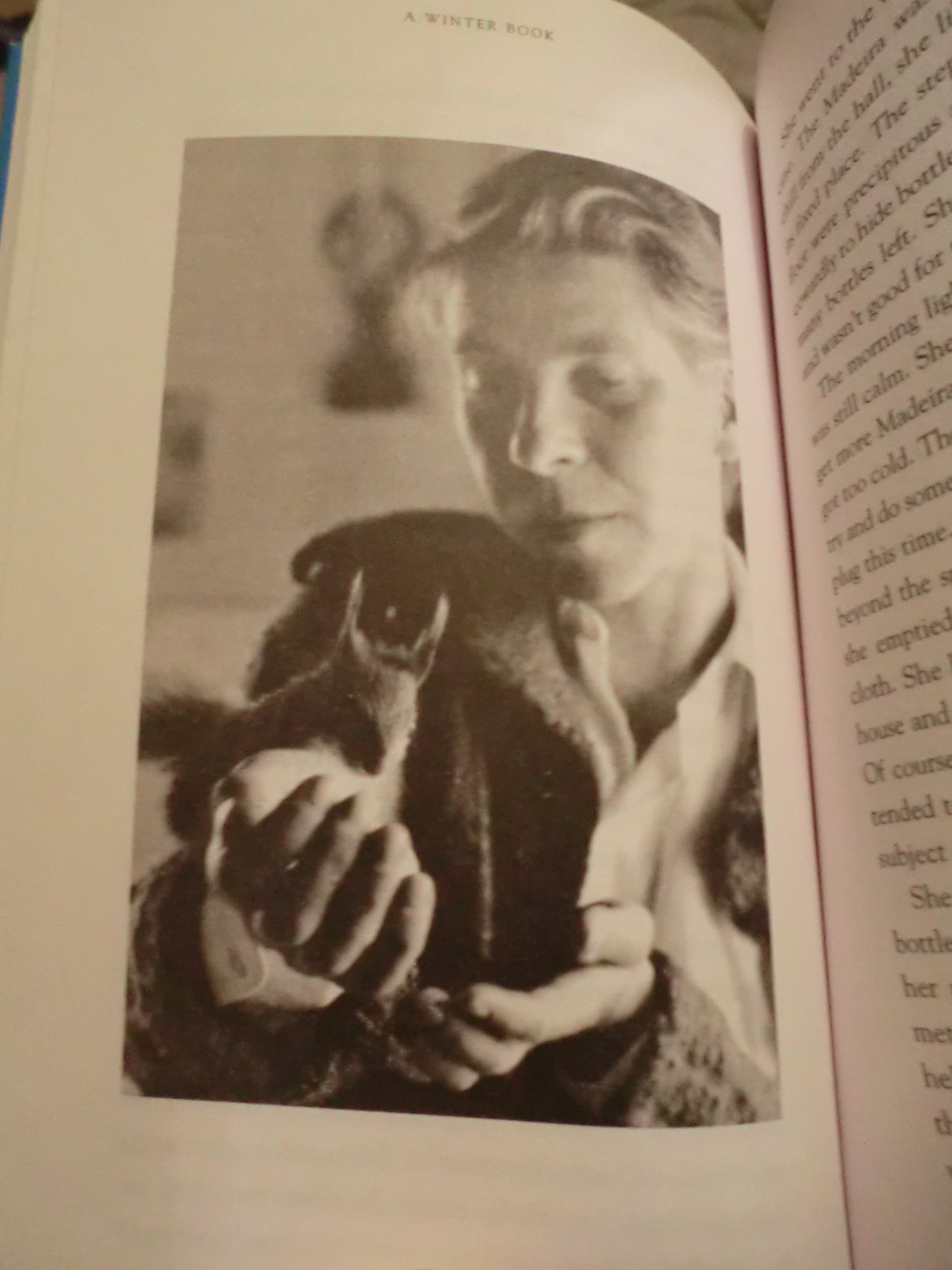
Not just a quiet, honest collection of stories, but containing wonderful black and white photos that add to the atmosphere the author evokes and make us feel the heaviness and significance of that final story, Taking Leave, the last visit, when the nets have become too heavy to pull, the boat too difficult to handle, the sea too unpredictable for two aging women. It is with a quiet sadness but knowledge that many happy hours were spent, that we turn the last page on that final visit.

Elizabeth and her German Garden, Elizabeth von Arnim

Elizabeth von ArminStaying overnight with friends in England just before Christmas, this book by Elizabeth von Arnim was placed on my bedside table and though there was no chance I would finish it, I was captivated and charmed by Elizabeth’s garden right from those first few pages.

May 7th – I love my garden. I am writing in it now in the late afternoon loveliness, much interrupted by the mosquitoes and the temptation to look at all the glories of the new green leaves washed half an hour ago in a cold shower. Two owls are perched near me, and are carrying on a long conversation that I enjoy as much as any warbling of nightingales. The gentleman owl says, and she answers from her tree a little way off,, beautifully assenting to and completing her lord’s remark, as becomes a properly constructed German she-owl. They say the same thing over and over again so emphatically that I think it must be something nasty about me; but I shall not let myself become frightened away by the sarcasm of owls.

I left without the book, only for it to land on my doorstep late January on my birthday, and in these cold harsh months when the comforts of a garden are not so easy to find, when I have been finding solace instead in the nature essays of Kathleen Jamie and the short stories of Tove Jansson (review to come), this novel was a welcome respite.

Elizabeth von Arnim

Elizabeth von Arnim

It is fiction, though reads very much like an autobiography and was initially published anonymously in 1898. The author (a cousin of Katherine Mansfield) is said to have been born in Sydney, in NZ and in England, I’m not sure about any of that, but her parents did leave Sydney and return to England where she was raised (while her father’s brother and family remained in New Zealand).

Katherine Mansfield

Katherine Mansfield

It seems likely that Katherine Mansfield spent time with these relations when she moved to England herself, I found one reference confirming this, a comment by the journalist (and relation of the two) Louise Ahearn, who is currently researching Elizabeth’s life and it is mentioned in the book that Katherine visited her cousin at the home she built Chateau Soleil, in Switzerland.

On a tour of Europe, while in Rome with her father when she was 23-years-old, her talented piano playing was overheard by Il Conte the German Graf Henning August von-Armin-Schlagenthin, who was travelling to help get over the death of his wife and child the previous year. After a persistent courtship they were married and soon settled into upper-class life in Berlin, where she gave birth to three girls in quick succession.

Nassenheide Schloss, the family estate by Alexander Duncker ex wikipedia

Nassenheide Schloss, the family estate by Alexander Duncker ex wikipedia

Not happy in Berlin and homesick for England, in 1896 she was introduced to the family estate Nassenheide, ninety miles north of Berlin in Pomerania. A seventeenth century-schloss, located at the time near the German border (now in Poland), it had been a convent and had not been lived in for more than 25 years, surrounded by an unkempt, rambling, derelict garden which Elizabeth immediately fell in love with. She insisted on living there and it seems she got her way (at least for the summer months), much to the chagrin of her husband, whom she affectionately refers to in the novel as the Man of Wrath.

The book captures many moments of appreciation of this unorthodox wilderness the character Elizabeth is so content within, and equal moments of candour at the annoyance of those who dare impose themselves to visit. She has difficulty keeping the gardener who often hands in his notice while she somehow convinces him to stay, until events dictate that drastic action is necessary to get rid of him.

The gardener has been here a year and has given me notice regularly on the first of every month, but up to now has been induced to stay on. On the first of this month he came as usual, and with determination written on every feature told me he intended to go in June, and that nothing should alter his decision. I don’t think he knows much about gardening, but he can at least dig and water, and some of the plants he plants grow, besides which he is the most unflaggingly industrious person I ever saw, and has the great merit of never appearing to take the faintest interest in what we do in the garden. So I have tried to keep him on, not knowing what the next one may be like, and when I asked him what he had to complain of and he replied “Nothing,” I could only conclude that he has a personal objection to me because of my eccentric preference for plants in groups rather than plants in lines. Perhaps, too, he does not like the extracts from gardening books I read to him sometimes when he is planting or sowing something new.

The author is at her best when describing her longing for the garden and the simple pleasure it brings her, though equally adept are her recounts of conversations with city ladies of her social standing, capturing their inability to comprehend that it is by her own choice that she spends so much time in this savage wilderness, they are convinced they must feel sorry for her and that she has been deposed there, belonging as they do to that breed of women who absolutely require the regular company of their peers and the invitations to social occasions, something Elizabeth does her best to avoid.

Content with the book, inspired by but lacking the garden, we instead take a drive and a stroll around a much closer abandoned ruin, appreciating its beauty among the weeds.

CIMG3742

Ruins of L’oppidum de la Quille, Puy Sainte Réparade

CIMG3751

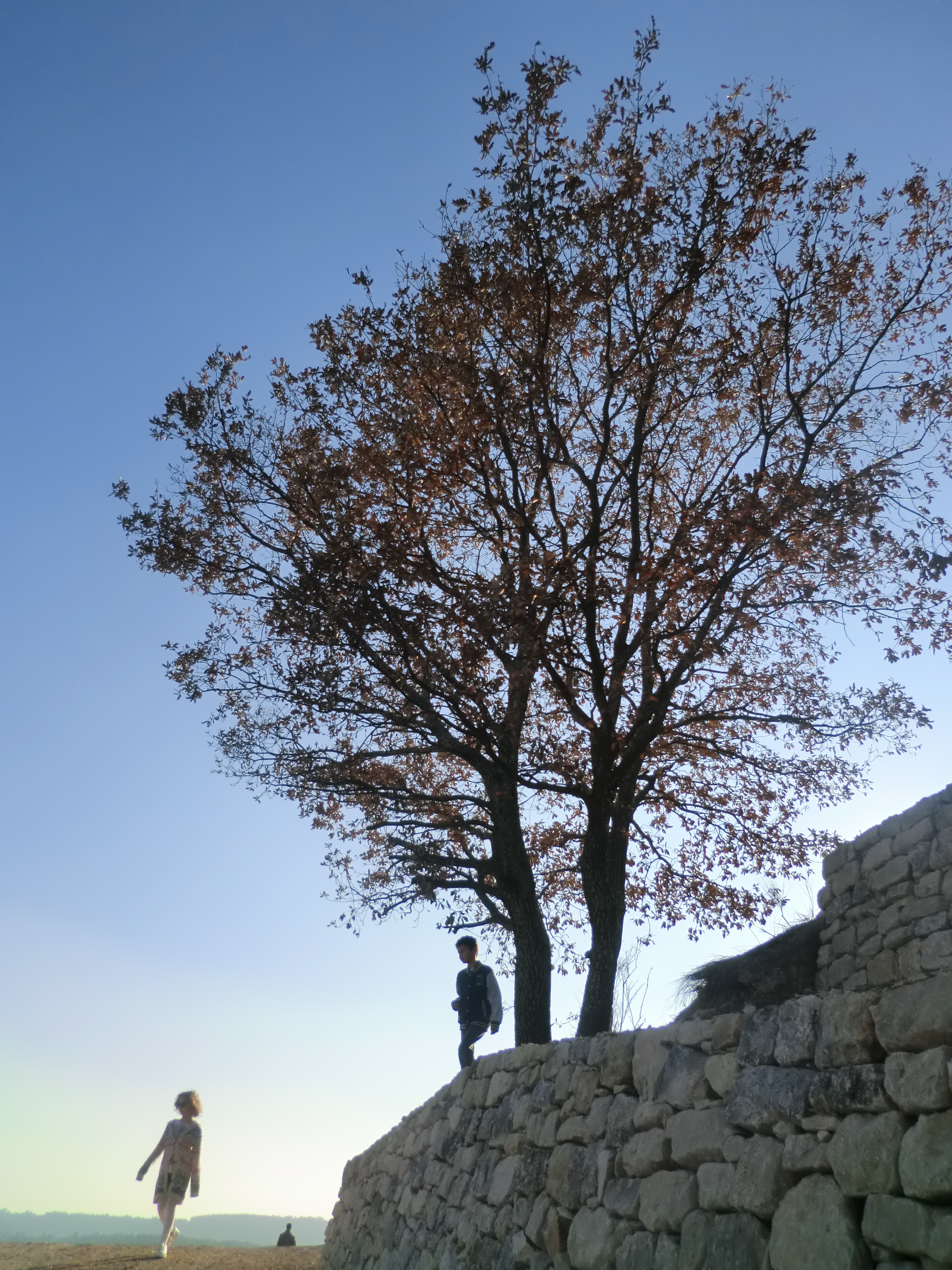
The fading winter light of Provence, Puy Sainte Réparade

What We Expect When We Don’t Expect Much From Love: Stories by Ludmilla Petrushevskaya

LudmillaThere Once Lived A Girl Who Seduced Her Sister’s Husband, And He Hanged Himself. The title itself is intriguing, though if you have read the author before, you will recognise the tendency, she is the bestselling author of There Once Lived A Woman Who Tried To Kill Her Neighbour’s Baby.

I took the book with me on a recent visit to London, as my alternative to the kindle, since I have been caught out a couple of times with that little machine dying on me even though the battery wasn’t run down. I have since discovered the 20 second rule. When the kindle fails to come to life when it should, hold it in the on position for 20 seconds to reboot it. Like many gadgets today I’m not sure these things are designed to last, not as long an old-fashioned book anyway. And I have Penguin to thank for sending me a bona-fide book!

The blurbs quote Chekov, Poe, Beckett, Tolstoy and various others to entice you in, making promises that will no doubt encourage dissent; it is a tall order to be compared to literary greats. I haven’t read all those greats, but there is one collection I am reminded of, not because she writes like him, but because the voice is clear from story to story and at the end I am left with the notion that “there is consistency in that voice” and “she says it how it is”.

Carver LoveIf Ludmilla Petrushevskaya reminds me of any writer, it is Raymond Carver and his collection what we talk about when we talk about love. Ironically, when pulling this volume off the shelf, I also find tucked in its last page, a boarding card for a flight from Marseille to London, dated June 2008.

So back to the book.

Seventeen episodes of attempts at love or connection with another, in all their dysfunction, set within the context of post revolutionary Russia when private ownership of housing was forbidden and many family apartments were divided and sub-divided and the space people came to occupy diminished, along with many of their hopes and expectations of each other.

By 1972, when Petrushevskaya published her first story, Moscow was ringed with concrete buildings containing these overcrowded units where the majority of these love stories take place.

Born in 1938 in Moscow, Ludmilla Petrushevskaya never knew family life. Evacuated with her mother to Kuibyshev during the war, she was left there in the care of her aunt and grandmother while her mother returned to Moscow to attend college. Members of the family of “an enemy of the people”, they were treated as pariahs – and were slowly starving. At age eight, Petrushevskaya began to run away from her temporary home and spend summers as a street beggar. Her mother returned after four years and brought her back to Moscow, where they were officially homeless. As a young girl there, Petrushevskaya and her mother lived under a desk in her insane grandfather’s room, while occasionally renting cots in nearby communal apartments. It was an unsettled, unhappy childhood, one experienced without the consolation of siblings.” Extract from Introduction by translator Anna Summers

The stories are collected into four sections, the first A Murky Fate contains stories of characters who consider entering relationships that are flawed or doomed, in readiness for a chance at that diminished flutter of something that may resemble love. It is not to be moved by these circumstances that we read these stories, it is to bear witness to another’s reality. They are uncomfortable, fatalistic and near-true.

She’ll wait for his long-distance call in a phone booth at the post office. For ten prepaid minutes they’ll become one soul again, as they did over the twenty-four prepaid days of their vacation. They’ll shout and cry across thousands of miles, deceived by the promise of eternal summer, seduced and abandoned.

As we read the stories, our own expectations are so low for these women, that it is possible to experience our own small pleasure in expecting nothing and finding delight in an obscure change in their fortune, even if only for a short period.

I mentioned to a friend that it was as if I was sitting across the table from the writer listening to an oral narration of people she knew, that it reminded me of other tables I have sat at, listening to stories of other women from different cultures and how they found themselves living in this or that country or city, so often lead by the allure of love or the promise of an improved lifestyle.

dollsEach community, era, culture has its stories to share, it disappointments to shed and its eternal hope for future generations, that they may do better. Reading these stories is like reading another chapter in the evolution of humanity and reminds us that we have a long way to go before arriving near any kind of nirvana.

…the day is burning its last, and Milgrom, eternal Milgrom, sits in her little pensioner’s room like a guard at the museum of her own life, where there is nothing at all but a timid love.

Note: This book was kindly made available by the publisher.