The Yellow Rain by Julio Llamazares tr. by Margaret Jull Costa

A village high in the Pyrenees, mostly in ruin, houses one last ageing male resident who imagines those who will eventually discover him and all that has passed.

“Yes, that is probably how they will find me, still dressed and staring straight at them, much as I found Sabina amid the abandoned machinery in the mill. Except that, then, the only other witnesses were the dog and the grey moan of the mist as it caught and tore on the trees by the river.”

CIMG6791Julio Llamazares The Yellow Rain is an elegy to a forgotten village, a way of life, for a man who meets death long before it invites him to join it.

Ainielle is a village in the Spanish Pyrenees that has become abandoned and derelict, no one lives there any longer except this one man who refuses to let go of the past and will experience his last years, months, days in a kind of slow, yellowing reality.

“Solitude, it is true, has forced me to come face to face with myself. But also, as a consequence, to build thick walls of forgetting around my memories. Nothing so frightens a man as another man especially if they are one and the same – and that was the only way I had of surviving amid all this ruin and death, the only way of withstanding the loneliness and the fear of madness.”

A snake bite almost relieves him of his solitary existence, but even then he can’t help but fight against death’s shadows of invitation that sit uninvited next to his bedside.

“The panic and cold of death have long since ceased to frighten me. Before I discovered its black breath inside me, even before I was left all alone in Ainielle, like one more shadow amid the shadows of the dead, my father had already shown me by his example that death is only the first step on that journey into silence from which there is no return.”

Throughout the book, images of yellow and yellowing pervade, as everything succumbs to oblivion, a consequence of time passing and soon we are not sure if it is merely nature or the natural deterioration of an old man’s eyes, tainting everything he sees.

Source: Melancholy Morning by Vizibil

Source: Melancholy Morning by Vizibil

“But suddenly, at around two or three in the morning, a gentle breeze came up the river, and the window and the roof of the mill were suddenly covered by a dense, yellow rain. It was the dead leaves from the poplars falling; the slow, gentle autumn rain was returning once more to the mountains to cover the fields with old gold and the roads and the villages with a sweet, brutal melancholy. The rain lasted only a matter of minutes. Long enough, though, to stain the whole night yellow, and, by dawn, when the sunlight fell once more on the dead leaves and on my eyes, I understood that this was the rain which, autumn after autumn, day after day, slowly destroyed and corroded the plastered walls, the calendars, the edges of letters and photographs, and the abandoned machinery of the mill and my heart.”

Written in the future, the past and the present, in a lyrical style that for me never depresses though we might think it bleak, this ode to a changing landscape that is reverting back to its true nature is haunting, gripping, colourful and soul destroying all at the same time.

Even as it gets a little repetitive towards the end, it is all part of the slow degeneration of mind, body, house, village, life, with no witness but himself, the last inhabitant. Another 5 star read for me.

The author Julio Llamazares, was born in the now vanished town of Vegémian, which he left at the age of 12 to go to a boarding school in Madrid.  He is one of Europe’s most celebrated writers. Hundreds of these villages have disappeared in recent decades as their inhabitants leave for the cities.

Maria Barbal’s Stone in a Landslide tells a similar story, only she traverses the entire life of her female protagonist Conxa, while Llamazares focuses on the end and on one who refused to leave.

Under the Tripoli Sky by Kamal Ben Hameda tr. by Adriana Hunter

We are in the city of Tripoli, bordering the Mediterranean in the 1960’s, though this is no seaside idyll.

Tripoli SkyThe narrative follows in the footsteps and the mind of a boy named Hadachinou who prefers the company of his mother, her friends, great-aunt’s and escorting girls sent on errands who are not yet kept indoors, bound by the shackles of marriage, in a society where a river of seething discontent courses through the veins of many, where the sexes barely tolerate each other and anyone who seems to have escaped the marriage trap is resented their so-called freedoms.

Hadachinou is privy to the thoughts, gossip and attitudes of women, a witness to their interior lives, he listens to their stories and absorbs their repressed desires as his own begin to awaken.

The tea ceremony was the only part of the day when my mother and her friends could live their lives in real times and tell their own stories. At last they could talk about dreams, longings and anxieties , all in the same breath and their bodies were at peace.

I sometimes wondered how these women who were all so different were able to spend hours at a time, each talking about her own god, her own people and thoughts, free to be wildly outspoken but without provoking any true conflict. It was because they had no power to preserve and no possessions to watch over. That was for the people on the other side of the wall: the men, the sheikhs, the governors and their hunting dogs! Scheming and calculating, diplomacy and power struggles were their domain.

Here with the women, my guardian angels, there were just words, spoken openly and easily, flitting and whirling about, a life force in themselves. Without these moments of trusting abandon, they would have dried up with sorrow. Or imploded as they toiled over their cooking pots.

Taynal Mosque

Taynal Mosque Source: wikipedia

While the men are at work, or at the mosque or in the coffee houses, the women finish their work and make time to see each other.

Here, great-aunt Nafissa has had enough of the women bad mouthing his mother’s childhood friend Jamila, words they only speak when his mother leaves the room, venomous remarks spiralling into bitterness about what they perceive as her secret life; flushed with rage, aunt Nafissa rails against them:

‘Leave Jamila alone,’ she cried. ‘Let her live her life. Its only because you’re jealous that you see evil in everything. She and her friends allow themselves freedoms you don’t have, freedoms you envy because your husbands keep you on a tight leash. What would you have her do? Stay at home like you, sitting on cushions and sucking on loukoums while you wait for men who never come home? You think those women are living bad lives? You make me laugh! But you don’t know when to hold your tongues, that’s for sure, and you’re full of spite. And, anyway, it’s not as if any of this has ever stopped you taking their money!’ she added, always ready to speak out against injustice.

OldTripoli

Old Tripoli Source: wikipedia

It is not easy to read about a repressed patriarchal society without much glimmer of hope, a slice of life narrative set in a pre-Gaddafi society on the verge of change.

I found it a sombre read, left wondering if this boy will be changed by virtue of his proximity to the women folk, or whether that might become a reason for his need to escape, lest he not fit in.

Looking out to sea, I remembered what Hadja Kimya had said: ‘Hadachinou, keep yourself busy doing simple things that delight you. Give yourself a goal. The soul of life is the little things, the minor events no one notices… That’s where life is, the pleasure of being alive, otherwise there’s just this vast blueness casting its shadow over us. Go on, keep yourself busy, do something, and then you might find yourself one day.’

This is cultural insight beyond the normal bounds of the English language, thanks to the translation of Adriana Hunter and the passion of Peirene Press in bringing these kinds of stories into the mainstream.

Those Who Leave and Those Who Stay by Elena Ferrante tr. Ann Goldstein #FerranteFever

Those Who StayThis is the third book in Elena Ferrante’s Neapolitan tetralogy about two friends Elena and Lila, growing up in an impoverished neighbourhood of Naples.

It follows on from Book One, My Brilliant Friend and Book Two, The Story of a New Name (click on the titles to read earlier reviews).

Lila has married, had a child, reformed her husband’s business, strayed and finally separated from her husband and moved to another area outside the neighbourhood to live with Enzo, a childhood friend. She gets a job in a sausage factory, working under oppressive conditions that attract the interest of social activists and harsh threats from the ‘fascists’.

“Can you imagine what it means to go in and out of refrigerated rooms at twenty degrees below zero, and get ten lire more an hour – ten lire – for cold compensation? If you imagine this, what do you think you can learn from people who are forced to live like that?”

In Pisa, Elena has remoulded herself, no longer referring or comparing herself to Lila. She observes how people from her type of neighbourhood and class are perceived outside it, among the bourgeois, those raised within the milieu of intellectuals and achievers, those with access to money, social connections, many of whom are gifted with a presence she can only dream of. Elena finishes her university studies and becomes engaged to Pietro, who was raised within that other world; coming from a well-known academic family, he too will become a university professor, teaching and writing academic works like his father.

As she is concluding her studies, Elena writes a fictional story drawn from aspects of her past, though never admitting it is anything but fiction. She gifts the story to Pietro on an impulse, hoping he will read it. He passes the manuscript to his well-connected mother Adele, thus Elena treads the path laid in front of her, towards becoming an author. Adele introduces her to contacts that will result in her first book being published, establishing her career as a writer.

“I spoke of the necessity of recounting frankly every human experience, including – I said emphatically – what seems unsayable and what we do not speak of even to ourselves.”

Though Elena does her best to avoid it, Pietro finally meets her family and though he insists on a civil ceremony for their marriage, a decision that stuns and terribly disappoints her mother, he wishes to do the traditional thing by asking her father for her hand. Her father is calm and accepting, however her mother’s thoughts insist on an airing and she lectures the young professor unabashedly.

  “When at last she was silent, he said that he knew very well how precious I was and that he was grateful to her for having brought me up as I was.”

Through marriage, Elena succeeds in elevating herself above her roots, though finds herself stranded in not quite belonging to either her future role or her past. They are like roles she assumes outside herself, taking care not to stand out when she returns to the neighbourhood and paying attention to how she should behave in her new role as the wife of a professor.

“As soon as I got off the train, I moved cautiously in the places where I had grown up, always careful to speak in dialect, as if to indicate I am one of yours, don’t hurt me.”

However, marrying the young professor, writing the story that turns into a successful novel, moving to Florence and becoming a mother leave her little time to play any other role than that of housewife.

Lila leaves the neighbourhood, escaping her marriage and taking on a job in a sausage factory owned by a friend of Nino Sarratore, whom the girls met one summer. Her job leaves her little time to spend with her son. Unwillingly, she becomes connected with worker’s rights activists and discovers the dirty arm of the neighbourhood loan sharks who are leaning on her employer, while continuing to try to lure her back into their realm.

Lila and Elena’s worlds drift further apart and although they are aware of the need to share with the other, they each possess the instinct to soldier on without admitting their struggle or need for support or encouragement. Elena will receive both her mother-in-law and her mother at different times so that she can write and Lila will return to the neighbourhood to ease her difficulties. Both have opportunities within their reach, yet both are susceptible to self-destruction.

“Too many bad things, and some terrible, had happened over the years, and to regain our old intimacy we would have had to speak our secret thoughts, but I didn’t have the strength to find the words and she, who perhaps had the strength didn’t have the desire, didn’t see the use.”

Those Who Leave and Those Who Stay is a compelling story of the lives of two women and those around them, and a penetrative observation on the creation and consequence of decisions women make, how they live with those decisions and the often destructive way they bring about change. It narrates a journey of moving away from one’s origins and the sacrifice the attainment of that desire requires.

Elena leaves her past and a life she didn’t want, behind her, however in attaining a new life, she loses sight of who she really is and what drives her. She is just coming to the point of realising that when her world spins out of control. And thankfully for us all the fourth book is being translated. I expect the wheel may come full circle.

Italian Screenwriter Francesco Piccolo

Italian Screenwriter Francesco Piccolo

Note:  It has been announced that My Brilliant Friend will be made into a television series in Italy. The author/screenwriter Francesco Piccolo, winner of the esteemed Italian literary Strega Prize 2014 (with his bittersweet memoir of life on the Italian Left, ‘Il desiderio di essere come tutti’ (The Desire To Be Like Everyone) will work on the screenplay.

Next Book in the Series: The Story of the Lost Child

Literary Blog Hop … Book #Giveaway

From now until Wednesday November 5th Word by Word is participating along with other international bloggers in a Literary Blog Hop Giveaway hosted by Judith at Leeswamme’s Blog, an avid reader and reviewer from the Netherlands.

literarybloghopnovember

The blog hop offers you the opportunity to win a book here and you can visit other blogs listed below, each one offering a book of literary merit as a giveaway.

Just leave a comment below to enter the draw and on Thursday 6 November I will notify the winner.  And seriously,  even if you don’t win, you must read this book!

The book is Elena Ferrante’s My Brilliant Friend and the giveaway is open worldwide.

Win a copy of

My Brilliant Friend!

My Brilliant Friend

This entire series is definitely one of my Top Reads of 2014.

Elena Ferrante is an Italian author from Naples, where the books are set. We know little about her as she doesn’t accept interviews and uses a pen name, however that hasn’t prevented her books from becoming a word of mouth sensation. You can read my review of My Brilliant Friend here.

My Brilliant Friend is the story of two friends Elena and Lila growing up in an impoverished neighbourhood of Naples and their efforts to escape the inevitability of their fate, as members of a lower class community.

I found it a compelling read and loved the second book The Story of  New Name (reviewed here), as much as the first.

There are three books available in English (I’m reading Book 3 ) and a fourth book due out in 2015. (It was published in Italian on Oct 29 2014).

To Enter:

1. Leave a comment and tell me whether you have ever read a book in a language other than English, or a translated book. If you have, do you have a favourite? (1 entry)

2. Follow this blog. Mention in the comments if you already do. (2 entries)

3. Follow @clairewords on twitter (3 entries)

Then click on the links below to visit other blogs participating in the giveaway.

Make sure to visit the author Juliet Greenwood, whose two books Eden’s Garden and We That Are Left are excellent reads and also reviewed here at Word by WordClick on the titles to read the reviews.

Linky List:

  1. Leeswammes
  2. Read Her Like an Open Book (US/CA)
  3. My Book Self (N. Am.)
  4. The Book Stop
  5. My Book Retreat (US)
  6. Books in the Burbs (US)
  7. Guiltless Reading
  8. Word by Word
  9. Juliet Greenwood
  10. BooksandLiliane
  11. Words for Worms (US)
  12. The Relentless Reader
  13. The Misfortune of Knowing
  14. The Friday Morning Bookclub (US)
  15. Readerbuzz
  16. Lavender Likes, Loves, Finds and Dreams
  17. The Emerald City Book Review
  18. Wensend
  1. Laurie Here
  2. A Cup Of Tea, A Friend, And A Book (US)
  3. Moon Shine Art Spot (US)
  4. I’d Rather Be Reading At The Beach (US)
  5. Lost Generation Reader
  6. Books Speak Volumes
  7. Mom’s Small Victories (US)
  8. Books on the Table (US)
  9. Orange Pekoe Reviews
  10. Lavender Likes, Loves, Finds and Dreams
  11. Words And Peace (US)
  12. Booklover Book Reviews
  13. Inside the Secret World of Allison Bruning (US)

Note: Thank you to Daniela at Europa Editions for organising a copy of the book.

Nora Webster by Colm Tóibín

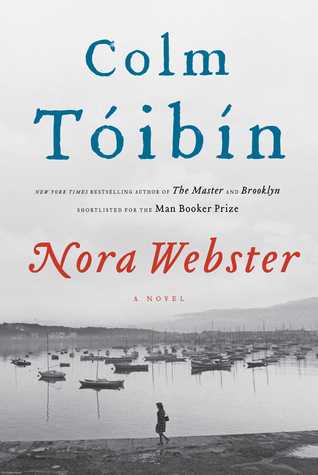
Nora WebsterSomething about the promise of Colm Tóibín’s new novel Nora Webster pulled me in right from the beginning, the cover with its familiar Irish landscape of boats moored against a grey sky, the less conspicuous protagonist, a 40-year-old housewife who doesn’t become the mother of a prophet, an oversensitive woman who rarely gives voice to the many thoughts that race through her mind as she tries to cope with the aftermath of her husband’s untimely death and the shift in relations with her four children.

We know little of her life with her husband Maurice, she doesn’t wallow in pity, though we know she neglected all else, including visiting her sons who were living with her Aunt, one of whom develops a stutter as a result, during those last months when he was dying.

“In these months, she realised, something had changed in the clear, easy connection between her and them, perhaps, for them, between each other. She felt that she would never be sure about them again.”

Nora Webster is a complex character whom few on the outside really understand, including her siblings, who despite their sister’s loss, well, according to Nora – seem to want to avoid her. Even when invited, she senses they wish her gone so they can talk about her. She behaves in a way to provoke them, ensuring they will have something to talk about, deliberately avoiding helping out, resolving not to do any washing up or to help in the kitchen.

“She wondered if she would ever be able to have a normal conversation and what topics she might be able to discuss with ease and interest.”

Set in a small town outside Dublin, in 1960’s Ireland, the novel charts a short period of time after her husband’s death in which Nora makes some important decisions such as selling the beach house and going back to work. She gets her hair dyed and joins the Gramophone Society. She takes singing lessons and following the advice of her Aunt puts her son into boarding school. She begins to create a life that would have been unimaginable in the past and becomes a woman she is comfortable with but surprised by, almost in spite of herself.

Colm Tóibín uses a particular narrative device that has a significant effect on how we see things. By writing in the third person limited perspective, we only ever see things from Nora’s point of view, there is little opportunity to see events in any other way, with the exception of the occasional insightful dialogue. This is the only time we hear what people have to say about Nora.

POVThe narrative perspective creates a narrow, introspective insight into her thinking, but also raises doubts as to whether what she thinks actually reflects reality, as she so rarely expresses her questioning thoughts and prefers to let them lie unstated, preferring to deal with the consequence of her silence. It made me want to shout  “Speak your mind Nora!”

She visits her sister who doesn’t offer them food after a long journey, Nora knows the boys are hungry and wonders if her sister believes they had already eaten, but says nothing.

“What was strange, she noticed, was that Catherine did not give her any opportunity to mention food; instead she spoke to her as though she were not really there. Once she noticed this, she found that she could notice nothing else….she had created an atmosphere in which Nora could have nothing to say.”

Nora has such powerful equanimity, that she rarely speaks, it is as if she lives continuously outside herself, observing herself and others in the situation and wondering many things that she will never utter. It is part of her character, accentuated by grief. To the point that when she does act and we see what she is capable of, it is a shock, it seems out of character. She is quite a force after all.

“She had trained herself not to ask any of the children too many questions. If she came home with a parcel of any kind when she was growing up, her mother would need to know what was in the parcel, or if a letter came for her, her mother would need to know who it was from and what news it contained. Nora had found this constantly irritating, and tried with her own children not to intrude.”

Nora Webster is a perplexing character and Colm Tóibín a masterful creator of character, deliberately using a narrative device that prevents the reader from feeling comfortable with her observation of reality, while forcing us to accept it. We too are trapped inside Nora’s mind, just as she is trapped inside her grief. We feel the need to escape, to shout, to ask someone what is really happening here.

“They did not have her way of watching every scene, every moment, for signs of what was missing or what might have been.”

I found the novel a compelling, albeit at times annoying read. I turned the pages hungry for more and found myself resenting the authorial control over the narrative perspective. I wanted to read a companion novel, the one written from the point of view of her son Donal or her daughter Fiona, I didn’t trust Nora Webster’s interpretation of people’s motives and although she knew people gossiped behind her back, I really wanted to know what it was they were saying and not just her wild, over analytic guess at what was passing through the minds of members of her family and community.

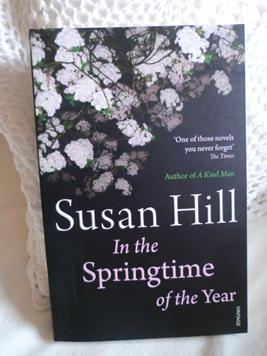
042512_1611_IntheSpring1.jpgNora’s grief is unique in that she very rarely dwells on the past and we aren’t sure whether the way she is now, is how she always was or how much of it is the result of her grieving.

One of the best novels I have read portraying a widow’s grief was Susan Hill’s astonishing, In the Springtime of the Year, which I highly recommend, her protagonist is equally displaced by grief and experiencing an existential crisis provoked by the untimely death of her young husband.

Note: This book was an ARC (Advance Reader Copy) kindly provided by the publisher via NetGalley.

Very Inspiring Book Blogs

The Very Inspiring Blogger Award is flying like an angel around the blogosphere, touching down on many of the dedicated and inspiring people out there dedicated to books and writing and sharing the word on literature.

very-inspiring-blog-award-logo

So congratulations to the following for being nominated, you are all an inspiration to me and I thank you most kindly for nominating Word by Word.

Thank you:

  1. Lizzi at These Little Words – Thoughtful considered reviews,she reads a mix of contemporary recent publications and favourites from the shelf waiting to be read.
  2. Sandra Danby Author of Ignoring Gravity – a new blog for me, but I am soon to read her book, so watch this space.
  3. Jacqui at Jacqui Wine’s Journal – Long-time reader and tweeter, new recruit to blogging, excellent shelf of reads with a penchant for translated fiction and a connoisseur of wine! Also part of the Shadow Jury for IFFP – see Stu below.
  4. Nancy at Ipsofactodotme – Out of The Comfort Zone Reading more like it, Nancy is Inspiration extraordinaire, taught herself to read in French through reading classic French literature, with a cat and a Heineken for company, while living in the Netherlands, I love the eccentricity and achievements of inspirational bloggers!

The award has the following rules:

  • Thank and link to the person who nominated you.
  • List the rules and display the award.
  • Share seven facts about yourself.
  • Nominate 15 other amazing blogs and comment on their posts to let them know they have been nominated.
  • Optional: display the award logo on your blog and follow the blogger who nominated you.

Seven Things About Me You May Not Know:

  1. Golden Plover - the other life...

    Golden Plover – the other life…

    The first time I went on a date I had to ride 6 kilometres across farmland on my horse to get there.

  2. I learnt to drive on a Massey Ferguson tractor with no second gear.
  3. I was once an extra in a film called ‘Bedlam Britannica’ a documentary about how the British treated their mentally ill. My role was a lunatic, part of a patient’s hallucination.
  4. When I was travelling in India, someone asked me if I was Japanese.
  5. Now people ask me “Vous êtes Anglais?”
  6. I once attended two weddings in subsequent weekends; the first was in Beirut, the second in Lagos.
  7. I love the sea and sometimes wonder how life might have unfolded had I said yes to that job on a tall ship sailing around the world.

So Fifteen Book Bloggers That Inspire Me Today:

  • The Lonesome Reader – I will read anything and everything he reviews, whether I like the book or not, Eric is an inspirational and aspirational reviewer, one of the best. His reviews read like compelling essays and I know Col (see below) is a big fan of his too.
  • Vishy The Knight – Diligent reader, lover of books across genre, the most comprehensive reviews ever & the kindest, most attentive blog commenter in history.
  • The Only Way Is Reading – When Col gives a 10 (check out his awesome rating system) I absolutely have to read the book, introduced me to Primo Levi.
  • The Writes of Women – Reviews of Books By Female Writers, Influential Opinion Maker on Books @Frizbot
  • Winstons Dad – Stu is the Super Champion of Translated Fiction and Chair Person of the Shadow Jury for IFFP (International Foreign Fiction Prize), a Translation Activist who reads around the world!
  • HeavenAli – Unearths and Rediscovers Forgotten Books, has read more Persephone Books than Anyone I know!
  • My Writing Life – Julia Hones, a creative spirit writing, reading and sharing insightful and compassionate pearls of wisdom, a place to rest a while.
  • A Life In Books – Susan is an ex bookseller and knows what’s coming out, writes informed reviews and contributes to the conversation.
  • Book to the Future – SteJ reads books with the weirdest covers ever, he thrives on finding the literary bizarre and his reviews and blogs are compelling and original. Blogging shines a bright light out from under the bushel for this one.
  • KimberlySullivan – Kimberly is based in Rome but travels a lot and writes amazing short stories and she goes to the Matera Women’s Fiction Festival every year!! One day I’m going to meet her there! She is total inspiration and gets out there and achieves her dreams and reads and blogs and juggles kid stuff.
  • Thinking in Fragments – Alex is a thinker, a reader and comes to blogging having left the academic world which we are all the richer for having her valued presence and contribution to our virtual world.
  • Books and Reviews – Elena, Spanish Feminist, I came across her wonderful blog when we both read Carmen LeForet’s Nada at the same time, inspirational indeed!
  • ReadEng. Didi’s Press – Well Deidre is up there in the North of France and I’m down here in the South and one day we’ll meet in the middle, I love her, love her blog and A D O R E her Youtube channel! She’s evolved into a SuperStar BookTuber, Go Girl! Love all her recommendations, and she’s great to listen to. More on Youtube than the blog these days. I’m sure we knew each other in a previous life. J
  • Mes étagères en franglais – What dedication, reading in French and English, she puts up her reviews in both languages, dedication to books and reviewing and the French/English languages. Bravo I say!
  • Biblioglobal – Another champion of reading around the world, across cultures, translated fiction and fiction written by those who live or come from other cultures, always love visiting here.

Wow, that was hard work! And sorry for those I missed, there are too many to choose from, so many great blogs by writers as well as readers, I hope you enjoy the selection and find someone new to visit and follow. Just click on the title to go there. And of course, no obligation to those nominated to participate.

After all that, I need a little inspiration from Matera!

Literary Blog Hop Winners!


I am delighted that two readers will soon be turning the pages of these wonderful books:

Carrots and Jaffas, an insightful imagining of a period in the life of identical twin boys when they become separated and;

The Blue Room a stunning translation of Norwegian Literature, a book that spans a day in the life of a young woman locked in her bedroom by her mother.

Thank you to everyone who participated in the Literary Blog Hop and thanks again to Judith at Leeswammes for organising it. I’ve had lots of visitors here and a few new followers.

The Winner of  Carrots and Jaffas is….

AMB wins

A.M.B!

who writes about books, writing, and the law at The Misfortune of Knowing

The Winner of The Blue Room is…..

Madness

 Elizabeth who writes about love, self acceptance and confidence at ChubbyMadness

I hope you enjoy the books,  I would love to hear your thoughts on them and thank you to everyone else for participating, you are all winners really!

Happy Reading!

The Expedition to the Baobab Tree by Wilma Stockenström

Baobab Tree CoverI came across this book by chance, first published as Die kremetartekspedisie in its original Afrikaans in 1981, it was translated into English by Nobel Prize winner J.M. Coetzee, initially in 1983 and again in 2014.

I had never heard of Wilma Stockenström, but after a little digging, I find:

“For the past four decades Wilma Johanna Stockenström has been enriching Afrikaans literature with her satirical, obstinate and compassionate voice. Along with Elisabeth Eybers, Sheila Cussons, Ina Rousseau and Antjie Krog, she remains one of the most important women writers in Afrikaans.” © Johann de Lange

After recently reading Sue Monk Kidd’s The Invention of Wings, a story narrated by a female slave, I was interested to read this more literary novel, set in the harsh interior of South Africa.

It is a quiet, compelling, stream of consciousness narrative of a slave woman who finds refuge in the hollow of a baobab tree, attempting to survive following the death of her third master, finding herself abandoned in an often hostile wilderness.

“I was sold off a second time on the square near the sea where even then the raggedy castor-oil trees were standing. Was sold secondhand. I was a damaged plaything, my bundle of baby and myself bid for separately and disposed of separately. Simply playthings. Useful, certainly. My owner thought he had wasted his money.”

The Baobab Tree

The Baobab Tree

Embracing this newfound freedom of her body, mind and time, she thinks back over the years, reflecting on what her existence thus far has meant, the role of her three masters, moments shared with a friend, the loss of her children and the inclinations of man, something she has witnessed both in captivity and in this solitary freedom, where she finds a kind of disturbed though preferable peace.

“I know the interior of my tree as a blind man knows his home, I know its flat surfaces and grooves and swellings and edges, its smell, its darknesses, its great crack of light as I never knew the huts and rooms where I was ordered to sleep, as I can only know something that is mine and mine only, my dwelling place into which no one ever penetrates. I can say: this is mine. I can say: this is I. These are my footprints. These are the ashes of my fireplace. These are my grinding stones. These are my beads. My sherds.”

She is viewed by a tribe of small people who make a pilgrimage to the tree and recognise her as some kind of deity. It is their generosity and ritual of giving alms that aids her survival.

She notices everything, she appreciates her surroundings and tunes into small changes and disturbances in it. She becomes it.

Haunting, lyrical, this work is unlike any other narrative of the life of a slave woman I have ever encountered.


Note: This book was an Advance Reader Copy (ARC) kindly provided by the publisher via NetGalley.

The Literary Blog Hop – #Giveaway

Today and until 12 February, I’m participating in a literary giveaway blog hop hosted by Judith at Leeswammes’ Blog, an avid reader and blogger.

literarybloghop

All the blogs listed below are participating and offering a literary giveaway to readers. Just leave a comment below to be in the draw for my giveaway and visit any of the blogs listed below, to be in with a chance to win a book. This giveaway is open to you all, worldwide!

WIN A COPY of

Philippe Claudel’s Brodeck’s Report !

I am giving away a copy of one of the best books I read in 2013, a brilliant English translation of a contemporary French novel and winner of a French literary Prize Brodeck’s Report by Philippe Claudel.

You can read My Review here or the brief summary I wrote immediately upon finishing it.

Quietly devastatingly brilliant. Claudel takes one village which happens to be near the border – and what is a border but an imagined line – of an occupying nation and uses the village and its resident to portray humanity and its many inclinations, when a stranger rides into town, makes himself comfortable and goes about his business, without letting anyone know what that business was.

Brodeck is tasked with writing an account of events that take place and as he does so, he simultaneously writes another account, his own, of what is occurring now and what has happened to them all in the recent past, he tries to make sense of it, as is his nature and to know what to do.

I have another giveaway running concurrently (only open to US readers), if you like historical fiction, I am offering a copy of the recently published I Always Loved You by Robin Oliveira recounting the life of the artist Mary Casssat and her friend Edgar Degas in Paris in the late 1800’s. Read my review here and enter the giveaway here.

This is a great opportunity to visit blogs that review literary books and win a book! Entry into the draw via comments are open until 12 February.

Linky List:

  1. Leeswammes
  2. Seaside Book Nook
  3. Booklover Book Reviews
  4. Biblionomad
  5. Laurie Here
  6. The Well-Read Redhead (US/CA)
  7. River City Reading
  8. GirlVsBookshelf
  9. Ciska’s Book Chest
  10. The Book Stop
  11. Ragdoll Books Blog
  12. Nishita’s Rants and Raves
  13. Lucybird’s Book Blog
  14. Reading World (N-America)
  15. Journey Through Books
  16. Readerbuzz
  17. Always With a Book (US)
  18. 52 Books or Bust (N.Am./UK)
  19. Guiltless Reading (US/CA)
  20. Book-alicious Mama (US)
  21. Wensend
  22. Books Speak Volumes
  23. Words for Worms
  24. The Relentless Reader
  25. A Lovely Bookshelf on the Wall (US)
  1. Fourth Street Review
  2. Vailia’s Page Turner
  3. The Little Reader Library
  4. Lost Generation Reader
  5. Heavenali
  6. Roof Beam Reader
  7. Mythical Books
  8. Word by Word
  9. The Misfortune of Knowing
  10. Aymaran Shadow > Behind The Scenes
  11. The Things You Can Read (US)
  12. Bay State Reader’s Advisory
  13. Curiosity Killed the Bookworm
  14. Lizzy’s Literary Life
  15. Books Can Save a Life (N. America)
  16. Words And Peace (US)
  17. The Book Club Blog

This giveaway is now closed.

Ashes in my Mouth, Sand in My Shoes by Per Petterson

This is Per Petterson’s first book, though only recently translated (by Don Bartlett) into English following the success of his novel Out Stealing Horses (translated into 40 languages) and the sequel to this novel , my personal favourite I Curse the River of Time.

Ashes in My MouthThis book provides a literary snapshot of a childhood growing up in the outskirts of Oslo, Norway in the early 1960’s. His father works in a shoe factory and his Danish mother used to work in a chocolate factory (in the good old days) and now works as a cleaner.

Arvid is six and a half years old and doesn’t always feel secure in the various environments he inhabits, whether at home or at school, or out fishing his Father and his Uncle, where there is no nagging voice to still their hand when they overindulge their mind altering beverage and revert to discussing childhood jealousies, a dialogue that descends into the physical.

His Grandfather has died and this alters things, even though they appear on the outside to be the same.

Arvid listens to the raised voices at night, hears the kitchen door slam and watches his mother tread the same long walk, out there to the dark and back, a walk with no destination, one she makes in the icy cold of night without wearing a coat.

One day he realises his mother is getting older, that time is moving on, and that it is also happening to him.

“He held his hands to his face as if to keep his skin in place and for many nights he lay clutching his body, feeling time sweeping through it like little explosions. The palms of his hands were quivering and he tried to resist time and hold it back. But nothing helped, and with every pop he felt himself getting older.”

I Curse

This is a quiet book whose observations cut deep, a sensitive child with a tough father who likes to remind those around him of his achievements, a boy who admires his father but lives in quasi-fear of not being able to live up to his expectations. It is an author getting into his stride, not as good as the work that will follow, though showing signs of the great work that was to come.

In the sequel, I Curse the River of Time, it is 1989 and Arvid Jensen is 37 years old,  in the throes of a divorce and has discovered that his mother is battling cancer.  It might sound grim, but it I remember it as an astonishing read and I shall make sure to reread it again in 2014, because I think this one could be one of my all time favourite reads.