
Cereus Blooms at Night is the partially told story of one woman’s life, beginning when she is admitted to an alms house, suspected of having murdered her father and slowly unravelling back to the turning points, the highs and lows which brought her to be in the state she is in on arrival.
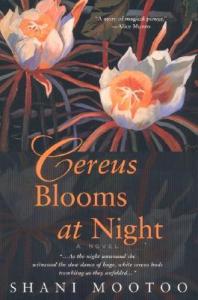 It is a novel narrated in parts, each part focusing on a character(s) who were influential in her life, including the young man who never knew her until this day, the one who became her confidant, perhaps the first man she ever trusted, after all that had passed beforehand. Much of it is told as Mala slips into memories of herself as child, reliving it.
It is set on the fictional Caribbean island of Lantanacamara, in a town called Paradise, the Ramchandin patriarch arriving there from India, trading a life of indentured servitude for little more than the promise of a karmic upgrade for his son, Chandin, who would be taken under the wing of the Reverend in the hope of improving the family prospects.
The young male nurse, Tyler accepted his first job in the alms house and although well-trained and qualified, his employers had yet to extend their generosity towards giving him actual nursing duties. The arrival of the controversial patient Mala Ramchandin, provided him with the first opportunity to exercise his skills.
I hardly had opened my mouth to explain that Miss Ramchandin was too frail to inflict even a bad thought when Sister screamed at me for being insolent and blatantly disregarding her authority.
No one else wanted to go near her, she was bound and believed to be mad and dangerous. Tyler was delighted to be given the opportunity and responsibility and treated his patient with the same compassion he might have offered any patient given the chance. Sensing her distress, he acted to alleviate it regardless of instructions to do otherwise.
 As Tyler gained her trust, Mala’s story is revealed to us through him and through the two visitors she received, who on her first day there, unable to see her, left a pot with a cutting of the fragrant night-blooming cereus plant, a gift that clearly delighted her, a symbol of fragrant, nurturing oblivion.
The novel is full of contrasts, moments of delight and anticipation alongside the growing recognition of impending horrors, abuse and neglect. It taunts the reader into a state of hope, as the potential for things to have been otherwise is so close at times, only for the illusion of escape to become shattered by the reality of a situation that holds tight to those who are caught in its web.
The novel is unique in its portrayal of characters whose sexual identity is unclear, exploring hybridity and sexual minorities within a cultural context, in an intriguing, accepting way.
By the time Ambrosia was five, her parents were embroiled in their marital problems to the exclusion of all else, including their child. They hardly noticed that their daughter was slowly transforming herself into their son. Ambrose slept right through the month, undisturbed until the first Saturday of the next, and Elsie, hungry for a male in the house, went along with his (her) strong belief that he (she) was really and truly meant to be a boy. Else fully expected that he (she) would outgrow the foolishness soon enough. But the child walked and ran and dressed and talked and tumbled and all but relieved himself so much like an authentic boy that Elsie soon apparently forgot she had ever given birth to a girl. And the father, in his few waking episodes, seemed not to remember that he had once fathered one.
Despite the harrowing nature of Mala’s experiences, the luminous storytelling and unique characters bring light to otherwise dark places, and show that perseverance and allowing space for love, can overcome all manner of tragedy.
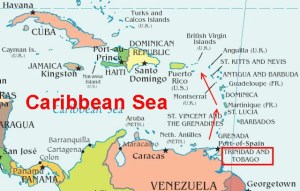
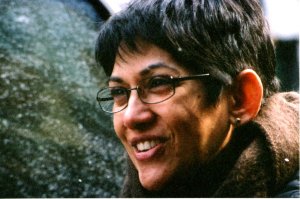
I came across the author Shani Mootoo in my search for other women authors, writing in the Caribbean tradition, authors who may have lived and been educated elsewhere, but whose writing evokes a clear connection to roots from elsewhere. Mootoo was born in Ireland, raised in Trinidad and moved to Canada as a young adult.
Trinidad and Tobago literature is rooted in the oral storytelling of African slaves, the European literary roots of the French creoles and the religious and folk tales of the Indian indentured immigrants.
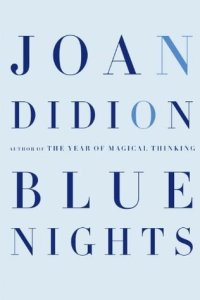 Written as a reflection on the death of her daughter at 39 years of age, the book begins as Didion thinks back to her daughter’s wedding seven years earlier, which then triggers other memories of her childhood, of family moments, of people and places, numerous hotels they have frequented.
 Although the main theme of the book is her daughter’s premature death, nowhere does she analyse or obsess about what actually happened in the way we vividly remember she did about her husband in My Year of Magical Thinking. Rather, the book appears to be as much an acknowledgement of her own ageing and decline, recognising and facing up to her own ‘frailty’, her obsession with her own health scares, recounting every little malfunction or symptom of a thing that never shows up on any of the numerous scans or tests she has. It is as if she writes her own denouement, to a death that never arrives, as the multitude and thoroughness of all the tests she has show how very much alive and in relative good health she is, despite herself.
 This was my first read of Christiane Northrup, despite the fact she’s written lots of books, with titles like: Goddesses Never Age: The Secret Prescription for Radiance, Vitality, and Well-Being, The Wisdom of Menopause: Creating Physical and Emotional Health and Healing During the Change and Women’s Bodies, Women’s Wisdom: Creating Physical and Emotional Health and Healing (39 editions published).
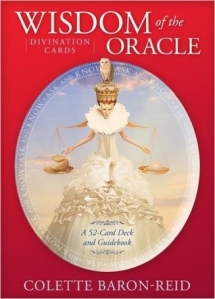 The health and sexuality sections held less interest to me, probably because I was attracted to the book after listening to her speak in a ‘raw and real’ conversation with my favourite ‘intuitive’ Colette Baron-Reid, in that conversation it was the more spiritual aspects that were under discussion, particularly as Colette’s book Uncharted: The Journey through Uncertainty to Infinite Possibility had been published in October 2016. Northrup is a fan of Colette Baron-Reid and mentions that she uses her Wisdom of the Oracle card deck as one of her spiritual tools for guidance.
 She also discusses thoughts and inputs, the effect of what we are constantly exposed to and how it should be managed in order to avoid overdosing on negativity and the toxic, fear-enhancing effect of the media for example. She discusses the positive power of affirmations, meditation, gratitude, the power of giving and receiving, connecting with nature, tapping and much more.
 I’ve been listening to Colette Baron Reid’s insights for a while, I often look up her wisdom cards online and follow her



 It’s a consciousness raising view of reality, one that will resonate with enlightened readers, empaths, those familiar with working with energies and the open-minded.

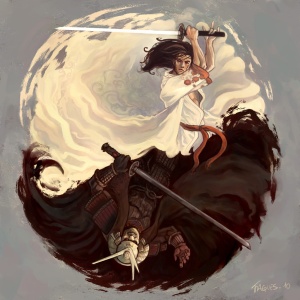 If you have read or were considering reading Marlon James Booker winning
 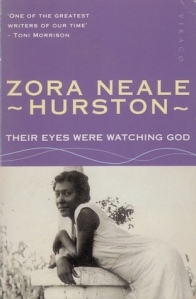 Unable to protect her daughter, who was raped by her schoolteacher, her focus moves to Janie, whom the daughter leaves her with. As soon as adolescence beckons she arranges for her to marry an older farmer with land. Janie dreams of love and fulfilment and when mentions not finding it in this marriage is reprimanded by her grandmother for her romantic notions.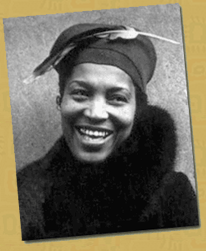
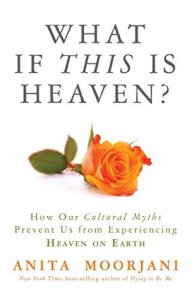 Anita Moorjani wrote her first book Dying to Be Me: My Journey from Cancer, to Near Death, to True Healing after being tracked down by the late Wayne Dyer, who’d come across her story on the internet and wanted to know more about what she had experienced on the day she had been expected to die but miraculously returned from stage four cancer to heal totally and live.
 Rachel Cooke in this Guardian article
 It should have been perfect, but things change when an old friend of her mother’s Anne arrives and she and her father announce their intention to marry. Although it is actually something Cecile feels is right for them and she adores Anne, part of her resents what signifies to her the end to the playful era she and her father have indulged, for Anne’s presence in their lives will certainly bring order and sensibility.
 An utterly charming novel based on a true story of the courtship of the authors parents, young Hungarian survivors of the Nazi concentration camps, post World War Two.
 Gárdos has written a heart-warming, unsentimental account of their relationship and of the characters that surrounded the two young people during this time, their compatriots, the doctors and nurses and the Rabbi who received letters from a concerned friend of Lili, intent on stopping the liaison and her intention to convert to Catholicism.



 Which all leads me on to say it was with quiet anticipation to learn that Dawn Tripp had the courage, respect and admiration for O’Keeffe to decide to venture into creating a work of fiction, that attempts to channel the voice of Georgia O’Keeffe. What might she have really been thinking if it was her voice relating the story of this life and not someone from the outside.
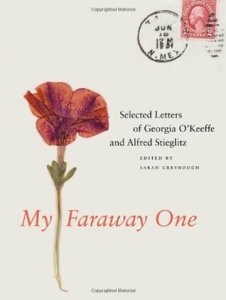 When the novel was almost complete, the correspondence of O’Keeffe and Stieglitz was published, having been sealed for twenty-five years after her death.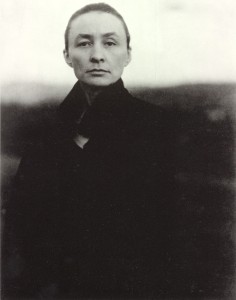
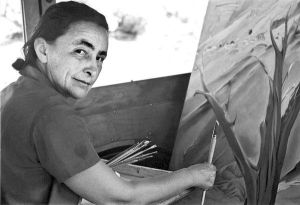 “Pink Tulip”, 1926, Georgia O’Keeffe, oil on canvas, 36” x 30”
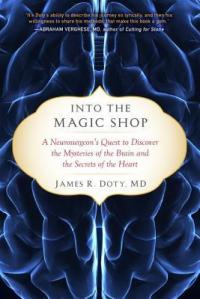 James Doty never really set out to write this book, but he told his story to so many people with whom it resonated and being one of the founding creators of CCARE (The Center for Compassion and Altruism Research) he was eventually convinced how many more people could be inspired by his story and learn about the amazing work being undertaken, that he agreed to share his experience.

 Word by Word