
Hamnet was the winning novel of the Women’s Prize For Fiction in 2020 and won the fiction prize at the National Book Critics Circle Awards (2020). It was author Maggie O’Farrell’s eighth novel.
Behind Every Great Man…Is An Often Untold Story
 Set in 1580’s Stratford, Warwickshire, the novel is about the meeting of two young people, their respective families, the life they create and the effect their twin children have on it.
Though the husband will become a famous playwright and name one of his plays after the son they lose, this isn’t a story that centres around him or his work, neither is it really about the son – those names are more like the bright lights that make us curious to see what the fuss is about.
Delightfully, it’s all about Agnes.
“If you ask someone what they know about Shakespeare’s wife, you’ll probably receive one of two answers. Either: he hated her. Or: she tricked him into marriage. Historians and biographers and critics have for a long time inexplicably vilified and criticized her, creating a very misogynistic version of her. I wanted to persuade people to think again, to not rush to conclusions.
We are so accustomed to calling her ‘Anne Hathaway’ but her father’s will clearly names her as ‘Agnes’. That was an electrifying, defining moment in the writing of the book. In giving her what is presumably her birth name, I’m asking readers to discard what we think we know about her and see her anew.” Maggie O’Farrell
Twin Everything
I expected to be gripped early on, so was surprised that it took a while to get into sync with the very descriptive, present tense, third person, omniscient narrative perspective. Initially it felt like listening to someone -while looking through a camera – describe in minute detail every single detail in the frame as it was moving quickly forward.
It’s written in a dual narrative timeline in alternate chapters; the year that the twins fall ill and the year that these young parents meet. It is divided into two parts, Part 1 takes place before the death of Hamnet and the shorter Part 2, the aftermath.
The initial scene puts us in the eyes of this boy Hamnet as he rushes through his home and that of his grandparents, looking for someone, anyone, due to the sudden onset of deathly pestilence in his twin sister Judith.

Love Always Finds A Way
As the chapters switch between Hamnet’s alarm given the pending emergency and the year his parents met, we get to know his father, a Latin tutor, son of a glove maker/tyrant and his mother Agnes, a farmer’s daughter, living with her disapproving stepmother.
These young people become each others refuge from family situations they’d both like to escape. Agnes is highly intuitive, has an in-depth knowledge of herbalism and possesses a kestrel the local priest gave her. She is unlike other young women, self-possessed, ‘knowing’.
“Some have asked Susanna how her mother does it. They have sidled up to her in the market or out in the streets to demand how Agnes divines what a body needs or lacks or bursts with, how she can tell if a soul is restive or hankering, how she knows what a person or a heart hides.”
The novel traces their relationship, marriage and the sacrificial act that came from her ability to perceive what was best for her husband (facilitating his venturing to London to find and pursue his purpose) and what best for her three children, while highlighting the tragic demise of their son, a turning point in their relationship.
“She, like all mothers, constantly casts out her thoughts, like fishing lines, towards her children, reminding herself of where they are, what they are doing, how they fare.”
Even in the boys passing there is something mystical in the way it is rendered. The boy is a twin, but also the son of a woman in touch with nature and with a feeling for ‘the other side’. What Hamnet did to save his sister comes of both those mysteries.
How Women Shape The Lives of Others
Forget that the playwright Shakespeare is a character in this novel and read it for the unique individuals they might have been, as ordinary people in a community, coming together against the odds. I really enjoyed that this was so much more about Agnes and that she had gifts she seemed able to live with and use as a mature woman, without persecution. A result and reward of a difficult childhood, after the untimely death of her own mother.
“She grows up feeling wrong, out of place, too dark, too tall, too unruly, too opinionated, too silent, too strange. She grows up with the awareness that she is merely tolerated, an irritant, useless, that she does not deserve love, that she will need to change herself substantially, crush herself down if she is to be married. She grows up, too, with the memory of what it meant to be properly loved, for what you are, not what you ought to be.”
By deliberately not mentioning the husband’s name, we imagine this couple encountering each other, evolving together, moving apart and coming back together, for nothing can both unite and divide a couple quite like the grief of losing a child.
“What is given may be taken away at any time. Cruelty and devastation wait for you around corners, inside coffers, behind doors; they can leap out at you at any moment, like a thief or a brigand. The trick is to never let down your guard. Never think you are safe. Never take for granted that your children’s hearts beat, that they sup milk, that they draw breath, that they walk and speak and smile and argue and play. Never for a moment forget that they may be gone, snatched from you, in the blink of an eye; borne away from you like thistledown.”
A novel of an auspicious pairing of souls, of longing and grief, of sacrifice and regret, I really enjoyed it after the slow start, despite the narrative perspective at times keeping me at a distance from the characters. O’Farrell does such a brilliant job in re-imagining this much maligned character, it makes you want to read and know much more about Agnes. About the women whose lives were rarely scribed.
Maggie O’Farrell, Author
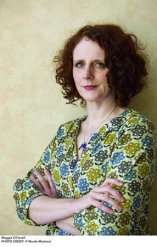 Maggie O’Farrell is a Northern Irish novelist, now one of Britain’s most acclaimed and popular contemporary fiction authors whose work has been translated into over 30 languages. Her debut novel After You’d Gone won the Betty Trask Award and The Hand That First Held Mine the Costa Novel Award (2010).
She has written 9 novels and a superb memoir, I’ve reviewed here: I Am, I Am, I Am, Seventeen Brushes With Death.
Her latest book set in Renaissance Italy, The Marriage Portrait, tells the story of a 16-year-old duchess and her fateful marriage to the Duke of Ferrara – based on the short life of Lucrezia de’ Medici.

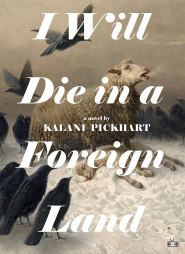 I thought this was an excellent and exceptional novel, that I chose to read because it is too distressing and overwhelming to be bombarded with only the terrible news that is flooding us at the moment.
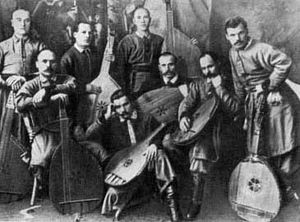 The first lines of the prologue are the collective voice of the
  Katya is a Boston based, American doctor, working with the wounded inside a temporary medical clinic at St Michaels monastery. She is an outsider, drawn to the country because she was orphaned there, but grew up in America with no connection to her birth country. Hers, like the author, is an outside perspective, one that wants to know, to connect, to understand.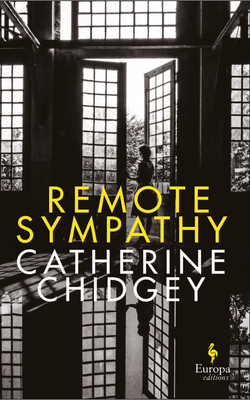
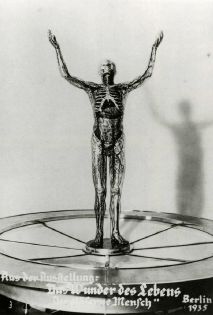 The novel begins with an epistolary narrative of letters written by Doktor Lenard Weber to his daughter Lotte in Frankfurt 1946, after the war has ended. He is telling his daughter how he first first met her mother, his wife Anna, at an exhibition of ‘The Transparent Man’, an installation that showed the inner circuitry of the human body.
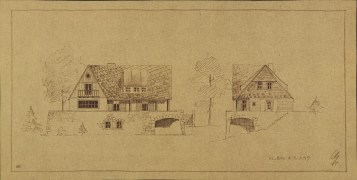 The second narrative voice comes from the imaginary diary of Frau Greta Hahn, the younger wife of the officer and begins in 1943 as she is packing up their lives in Munich, to move to a villa in Weimar, her husband having taken over as Administrator of the Buchenwald prison camp. He has told her and their young son Karl-Heinz how much they will love it there, being near a forest, a zoo, close to nature.
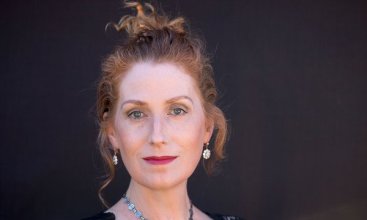 Catherine Chidgey is an award-winning and bestselling New Zealand novelist and short-story writer.

 My habit and ritual is to read a book a week, to read half an hour every morning and every evening, without fail. Now that I’m no longer required to fulfill the needs of little people in the early morning, a few pages accompanies my hot beverage to start the day and is like a reliable sedative that ensures I fall into easy sleep at night.
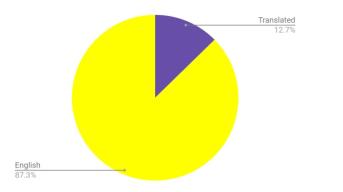 At 13%, this was down on 2020 when 32% of my reads were in translation. This year I spent July/August focusing on a personal writing project so I didn’t participate in the usual Women in Translation August reading challenge.


 And so to my One Outstanding Read of the Year, which thinking about it, combines a little of everything that appeals to me.
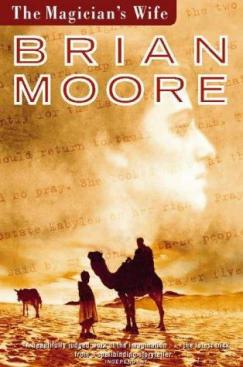 Being historical fiction, The Magician’s Wife became one of those books that I often put down to look up the historical characters, such as
  It becomes clear, that this particular série or group of invitees, are people whose influence might be required, to assist the ruler in his campaigns.
 I loved how this historical novel focuses on the lives of these women, Rue her mother May Belle and grandmother Ma Doe and the community within which they live, without allowing the narrative to stray over too far into the lives and homes of those who diminished their lives.
 In May Belle’s time, one of the ways to effect a conjure was to make a doll that bore a resemblance to the person and if possible to access strands of hair to entwine with whatever material was used. Varina has porcelain dolls that Rue admires and is envious of, when she discovers her mother is making a doll that faintly resembles her, she pretends not to notice she has discovered it, and will mask even further her disappointment when she misreads its purpose.
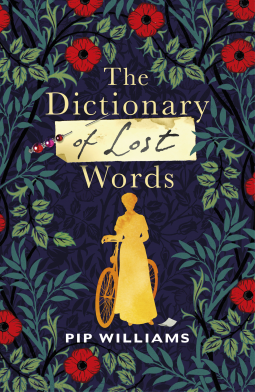 And so I dive in and find myself often using the dictionary feature on the kindle – yes there are a lot of lost words, or words that are no longer in common use, and one of the main words, and locations, the scriptorium had me confused right from the start – a tin shed where a few learned, self-important men are compiling the first edition of the Oxford dictionary? Even as I write these words, the spellcheck has underlined that word in red.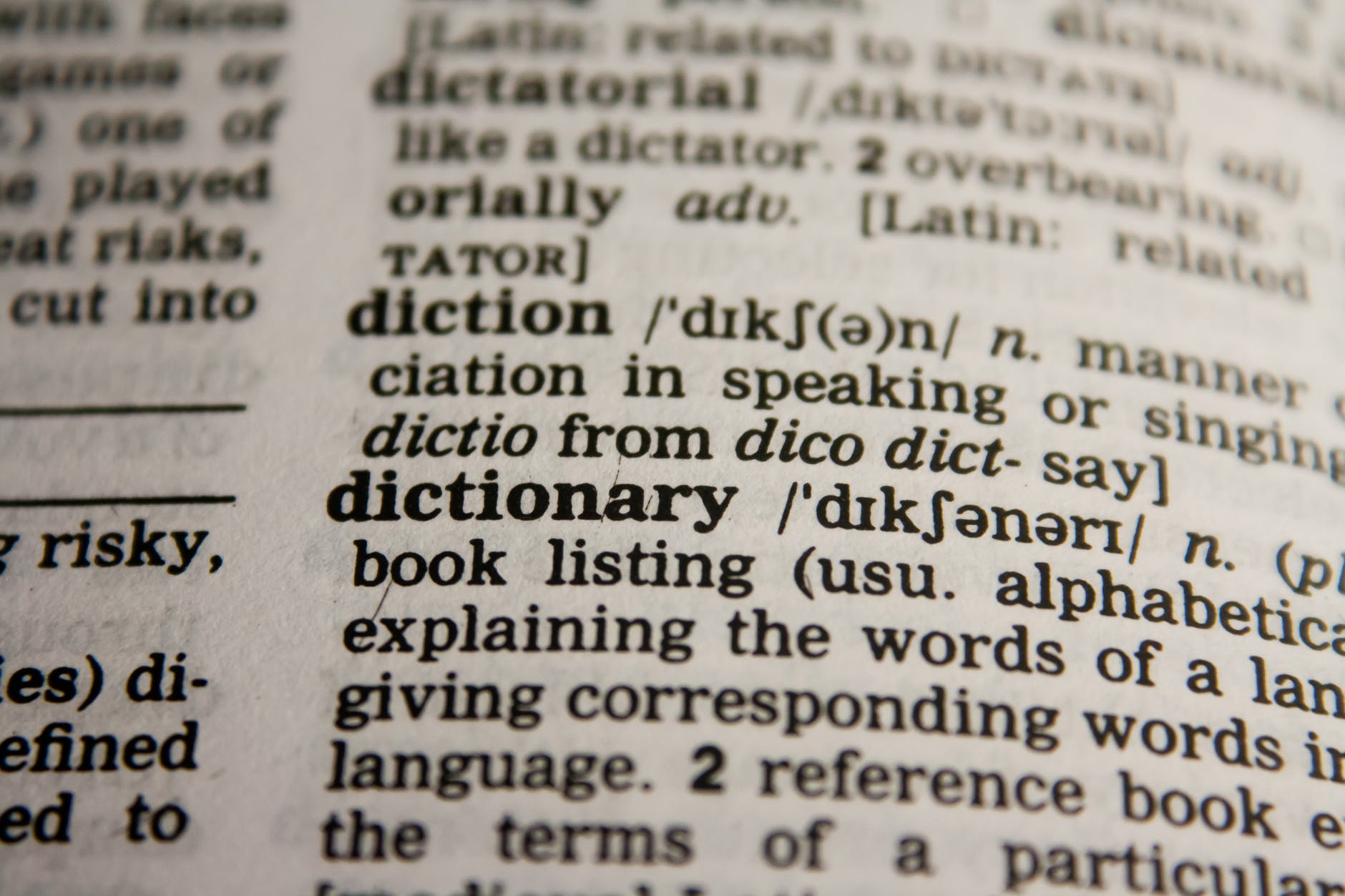
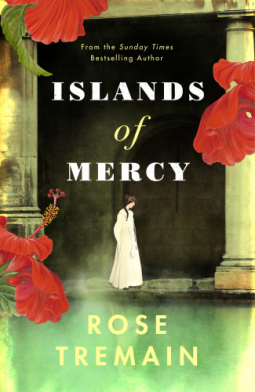 Set in late 1800’s Ireland, Bath, London and Borneo, this is the story of a community of people whose lives intersect in the town of Bath, a dual narrative of events concerning those who live there and the efforts of two men in Borneo with ambitions slightly at cross purposes.


 Cora is an African slave on a cotton plantation in Georgia and within the first few pages we learn of her grandmother’s death while working in the fields and not long after this, her mother Mabel’s disappearance, a runaway.
 Word by Word