Irish Book Awards Winners 2023

There were lots of winners at the An Post Irish Book Awards in Dublin, there being so many different categories from fiction, non-fiction, popular fiction, crime fiction to newcomer. From a small base of three categories, the awards now include eighteen categories spanning a broad range of literary genres. Thousands of readers vote to select the winners every year.

The Novel of the Year prize for which there were eight worthy contenders on the shortlist, went to the Booker shortlist nominated Paul Murray for his fourth novel, the tragicomedy The Bee Sting. Read a Q & A with the author here.

Set in a town in the Midlands in 2014, at the tail end of the financial crash, the Barnes family has a car dealership – they’ve just about managed to survive until now, but as the novel begins the business is on the brink of going under, and the family may be going down with it. The book navigates a family facing this calamity with irony, panging emotion and existential tones. Described as a masterful tragicomedy of familial chaos and dynamics. 

The one book I was championing (reviewed here), the moving, courageous and inspiring Poor by Katriona O’Sullivan, scooped two awards, Biography of the Year and the Listener’s Choice award.

Mark O’Connell won the Non-Fiction Book of the Year with his profound confrontation of true crime, A Thread of Violence a negotiation with the act of writing about murder, and a navigation of the chasm and interplay between fiction and non-fiction, taking the infamous case of Malcolm Macarthur as its subject, while Liz Nugent took the Crime Fiction Book of the Year for Strange Diamond Sally.

Newcomer of the Year went to rising Irish talent Colin Walsh for Kala, a gripping literary thriller, set in a small Irish town suffocating on its own secrets as three friends reunite in their hometown where their friend Kala disappeared fifteen years ago.

In an interesting and informative Q & A interview for the prize, Walsh was asked:

Q: Ireland is such a literary powerhouse, was it supportive of new writers?

The short answer is yes – and not just new writers. Ireland’s a literary powerhouse precisely because we’ve got an Arts Council-supported infrastructure of journals, festivals, indie publishers, etc. That creates a rich writing ecosystem, which is essential to maintaining individual artists and the wider literary culture. Writing is unpredictable magic on the page, but magic always needs concrete structures within which to thrive – that’s what Ireland provides for writers, and that’s why we punch so far above our weight internationally.

The winners of the individual categories will go forward to compete for the title of the overall Irish Book of the Year.  The winner is decided by the An Post Irish Book of the Year judging panel. Watch this space!

In 2022 Sally Hayden won that award for her incredible work of nonfiction My Fourth Time, We Drowned.
The nominations for Irish Book of the Year are the six titles shown below:

The Booker Prize Longlist 2023

The Booker Prize longlist has been announced, featuring books from four continents, representing seven countries – Scotland, England, Ireland, Canada, America, Nigeria and Malaysia and includes four Irish writers plus four debut novelists.

You can read more about the history of the prize here.

The Judges

Novelist Esi Edugyan, twice-shortlisted for the Booker Prize, is the chair of the 2023 judging panel. She is joined by actor, writer and director Adjoa Andoh; poet, lecturer, editor and critic Mary Jean Chan; Professor of English and Comparative Literature at Columbia University and Shakespeare specialist James Shapiro; and actor and writer Robert Webb

The judges are looking for their perceived best sustained work of long-form fiction written in English, selected from entries published in the UK and Ireland between October 1, 2022 and September 30, 2023.

The Booker Dozen

The longlist of 13 books was announced on August 1, 2023 ; the shortlist of six books will follow on September 21 and the winner of the £50,000 prize will be announced on November 26, 2023.

Photo by lil artsy on Pexels.com

The 13 longlisted books explore universal and topical themes: from deeply moving personal dramas to tragi-comic family sagas; from the effects of climate change to the oppression of minorities; from scientific breakthroughs to competitive sport.

The list includes: 

  • 10 writers longlisted for the first time, including four debut novelists 
  • Three writers with seven previous nominations between them 
  • Writers from seven countries across four continents  
  • Four Irish writers, making up a third of the longlist for the first time 
  • A novel featuring a neurodiverse protagonist, written from personal experience 
  • ‘All 13 novels cast new light on what it means to exist in our time, and they do so in original and thrilling ways,’ according to Esi Edugyan, Chair of the judges
fiction

The House of Doors – by Tan Twan Eng

Based on real events, Tan Twan Eng’s masterful novel of public morality and private truth examines love and betrayal under the shadow of Empire

It is 1921 and at Cassowary House in the Straits Settlements of Penang, Robert Hamlyn is a well-to-do lawyer, his steely wife Lesley a society hostess. Their lives are invigorated when Willie, an old friend of Robert’s, comes to stay.   

Willie Somerset Maugham is one of the greatest writers of his day. But he is beleaguered by an unhappy marriage, ill-health and business interests that have gone badly awry. He is also struggling to write. The more Lesley’s friendship with Willie grows, the more clearly she see him as he is – a man who has no choice but to mask his true self.  

As Willie prepares to face his demons, Lesley confides secrets of her own, including her connection to the case of an Englishwoman charged with murder in the Kuala Lumpur courts – a tragedy drawn from fact, and worthy of fiction.  

The Bee Sting by Paul Murray (Ireland)

A patch of ice on the road, a casual favour to a charming stranger, a bee caught beneath a bridal veil – can a single moment of bad luck change the direction of a life?

Dickie’s once-lucrative car business is going under – but rather than face the music, he’s spending his days in the woods, building an apocalypse-proof bunker. His exasperated wife Imelda is selling off her jewellery on eBay while half-heartedly dodging the attentions of fast-talking cattle farmer Big Mike.  

Meanwhile, teenage daughter Cass, formerly top of her class, seems determined to binge-drink her way to her final exams. And 12-year-old PJ, in debt to local sociopath ‘Ears’ Moran, is putting the final touches to his grand plan to run away. 

Yes, in Paul Murray’s brilliant tragicomic saga, the Barnes family is definitely in trouble. So where did it all go wrong? And if the story has already been written – is there still time to find a happy ending? 

Western Lane by Chetna Maroo (Kenya/London)

Chetna Maroo’s tender and moving debut novel about grief, sisterhood, a teenage girl’s struggle to transcend herself – and squash

Eleven-year-old Gopi has been playing squash since she was old enough to hold a racket. When her mother dies, her father enlists her in a quietly brutal training regimen, and the game becomes her world.  

Slowly, she grows apart from her sisters. Her life is reduced to the sport, guided by its rhythms: the serve, the volley, the drive, the shot and its echo. But on the court, she is not alone. She is with her pa. She is with Ged, a 13-year-old boy with his own formidable talent. She is with the players who have come before her. She is in awe.  

Skilfully deploying the sport of squash as both context and metaphor, Western Lane is a deeply evocative debut about a family grappling with grief, conveyed through crystalline language which reverberates like the sound “of a ball hit clean and hard…with a close echo”

In Ascension by Martin MacInnes (Scotland)

Exploring the natural world with wonder and reverence, this compassionate, deeply inquisitive epic reaches outward to confront the great questions of existence, while looking inward to illuminate the human heart

Leigh grew up in Rotterdam, drawn to the waterfront as an escape from her unhappy home life. Enchanted by the undersea world of her childhood, she excels in marine biology, travelling the globe to study ancient organisms.  

When a trench is discovered in the Atlantic Ocean, Leigh joins the exploration team, hoping to find evidence of Earth’s first life forms. What she instead finds calls into question everything we know about our own beginnings, and leaves her facing an impossible choice: to remain with her family, or to embark on a journey across the breadth of the cosmos. 

In this strange and wonderful world, every outward journey – whether to space or the depths of the ocean – is an inward one, as Leigh seeks to move beyond her troubled childhood. In Ascension is a Solaris for the climate-change age.

Prophet Song by Paul Lynch (Ireland)

A mother faces a terrible choice, in Paul Lynch’s exhilarating, propulsive and confrontational portrait of a society on the brink

On a dark, wet evening in Dublin, scientist and mother-of-four Eilish Stack answers her front door to find the GNSB on her doorstep. Two officers from Ireland’s newly formed secret police want to speak with her husband.  

Things are falling apart. Ireland is in the grip of a government that is taking a turn towards tyranny. And as the blood-dimmed tide is loosed, Eilish finds herself caught within the nightmare logic of a collapsing society – assailed by unpredictable forces beyond her control and forced to do whatever it takes to keep her family together.

Paul Lynch’s harrowing and dystopian Prophet Song vividly renders a mother’s determination to protect her family as Ireland’s liberal democracy slides inexorably and terrifyingly into totalitarianism. Readers will find it timely and unforgettable. It’s a remarkable accomplishment for a novelist to capture the social and political anxieties of our moment so compellingly.

All the Little Bird-Hearts by Viktoria Lloyd-Barlow (England)

Viktoria Lloyd-Barlow’s lyrical and poignant debut novel offers a deft exploration of motherhood, vulnerability and the complexity of human relationships

Sunday Forrester does things more carefully than most people. On quiet days, she must eat only white foods. Her etiquette handbook guides her through confusing social situations, and to escape, she turns to her treasury of Sicilian folklore. The one thing very much out of her control is Dolly – her clever, headstrong daughter, now on the cusp of leaving home.  

Into this carefully ordered world step Vita and Rollo, a charming couple who move in next door.

Written from the perspective of an autistic mother, All the Little Bird-Hearts is a poetic debut which masterfully intertwines themes of familial love, friendship, class, prejudice and trauma with psychological acuity and wit.

Pearl by Siân Hughes (England)

Siân Hughes contemplates both the power and the fragility of the human mind in her haunting debut novel, which was inspired by the medieval poem of the same name

Marianne is eight years old when her mother goes missing. Left behind with her baby brother and grieving father in a ramshackle house on the edge of a small village, she clings to the fragmented memories of her mother’s love; the smell of fresh herbs, the games they played, and the songs and stories of her childhood.  

As time passes, Marianne struggles to adjust, fixated on her mother’s disappearance and the secrets she’s sure her father is keeping from her. Discovering a medieval poem called Pearl – and trusting in its promise of consolation – Marianne sets out to make a visual illustration of it, a task that she returns to over and over but somehow never manages to complete.  

Tormented by an unmarked gravestone in an abandoned chapel and the tidal pull of the river, her childhood home begins to crumble as the past leads her down a path of self-destruction. But can art heal Marianne? And will her own future as a mother help her find peace?

Pearl, an exceptional debut novel, is both a mystery story and a meditation on grief, abandonment and consolation, evoking the profundities of the haunting medieval poem. The degree of difficulty in writing a book of this sort – at once quiet and hugely ambitious – is very high. It’s a book that will be passed from hand to hand for a long time to come.

This Other Eden by Paul Harding (USA)

Full of lyricism and power, Paul Harding’s spellbinding novel celebrates the hopes, dreams and resilience of those deemed not to fit in a world brutally intolerant of difference

Inspired by historical events, This Other Eden tells the story of Apple Island: an enclave off the coast of the United States where castaways – in flight from society and its judgment – have landed and built a home.  

In 1792, formerly enslaved Benjamin Honey arrives on the island with his Irish wife, Patience, to make a life together there. More than a century later, the Honeys’ descendants remain, alongside an eccentric, diverse band of neighbours.  

Then comes the intrusion of ‘civilization’: officials determine to ‘cleanse’ the island. A missionary schoolteacher selects one light-skinned boy to save. The rest will succumb to the authorities’ institutions – or cast themselves on the waters in a new Noah’s Ark… 

Based on a relatively unknown true story, Paul Harding’s heartbreakingly beautiful novel transports us to a unique island community scrabbling a living. The panel were moved by the delicate symphony of language, land and narrative that Harding brings to bear on the story of the islanders.

How to Build a Boat by Elaine Feeney (Ireland) (Read my review here)

With tenderness and verve, Elaine Feeney tells the story of how one boy on a unique mission transforms the lives of his teachers, and brings together a community

Jamie O’Neill loves the colour red. He also loves tall trees, patterns, rain that comes with wind, the curvature of many objects, books with dust jackets, cats, rivers and Edgar Allan Poe.  

At the age of 13, there are two things he especially wants in life: to build a Perpetual Motion Machine, and to connect with his mother Noelle, who died when he was born. In his mind, these things are intimately linked.  

And at his new school, where all else is disorientating and overwhelming, he finds two people who might just be able to help him. 

The interweaving stories of Jamie, a teenage boy trying to make sense of the world, and Tess, a teacher at his school, make up this humorous and insightful novel about family and the need for connection. Feeney has written an absorbing coming-of-age story which also explores the restrictions of class and education in a small community. A complex and genuinely moving novel.

If I Survive You by Jonathan Escoffery (USA)

An exhilarating novel-in-stories that pulses with style, heart and barbed humour, while unravelling what it means to carve out an existence between cultures, homes and pay checks

In 1979, as political violence consumes their native Kingston, Topper and Sanya flee to Miami. But they soon learn that the welcome in America will be far from warm.    

Trelawny, their youngest son, comes of age in a society that regards him with suspicion and confusion. Their eldest son Delano’s longing for a better future for his own children is equalled only by his recklessness in trying to secure it.  

As both brothers navigate the obstacles littered in their path – an unreliable father, racism, a financial crisis and Hurricane Andrew – they find themselves pitted against one another. Will their rivalry be the thing that finally tears their family apart?

An astonishingly assured debut novel, lauded by the panel for its clarity, variety and fizzing prose. As the stories move back and forth through geography and time, we are confronted by the immigrants’ eternal questions: who am I now and where do I belong?

Study for Obedience by Sarah Bernstein (Canada/Scotland)

In her accomplished and unsettling second novel, Sarah Bernstein explores themes of prejudice, abuse and guilt through the eyes of a singularly unreliable narrator

A woman moves from the place of her birth to a ‘remote northern country’ to be housekeeper to her brother, whose wife has just left him. Soon after she arrives, a series of unfortunate events occurs: collective bovine hysteria; the death of a ewe and her nearly-born lamb; a local dog’s phantom pregnancy; a potato blight.  

She notices that the community’s suspicion about incomers in general seems to be directed particularly in her case. She feels their hostility growing, pressing at the edges of her brother’s property. Inside the house, although she tends to her brother and his home with the utmost care and attention, he too begins to fall ill… 

Study for Obedience is an absurdist, darkly funny novel about the rise of xenophobia, as seen through the eyes of a stranger in an unnamed town – or is it? Bernstein’s urgent, crystalline prose upsets all our expectations, and what transpires is a meditation on survival itself.

Old God’s Time by Sebastian Barry (Ireland) (Read my review here)

In his beautiful, haunting novel, in which nothing is quite what it seems, Sebastian Barry explores what we live through, what we live with, and what may survive of us

Recently retired policeman Tom Kettle is settling into the quiet of his new home, a lean-to annexed to a Victorian Castle overlooking the Irish Sea. For months he has barely seen a soul, catching only glimpses of his eccentric landlord and a nervous young mother who has moved in next door.  

Occasionally, fond memories of the past return – of his family, his beloved wife June and their two children. But when two former colleagues turn up at his door with questions about a decades-old case, one which Tom never quite came to terms with, he finds himself pulled into the darkest currents of his past. 

A Spell of Good Things by Ayọ̀bámi Adébáyọ̀ (Nigeria/Norwich)

A dazzling story of modern Nigeria and two families caught in the riptides of wealth, power, romantic obsession and political corruption

Ayọ̀bámi Adébáyọ̀’s breathtaking novel shines a light on the haves and have-nots of Nigeria, and the shared humanity that lives in between.  

Eniola is tall for his age, a boy who looks like a man. His father has lost his job, so Eniola spends his days running errands, collecting newspapers and begging – dreaming of a big future.  Wuraola is a golden girl, the perfect child of a wealthy family, and now an exhausted young doctor in her first year of practice. But when sudden violence shatters a family party, Wuraola and Eniola’s lives become inextricably intertwined…

A Spell of Good Things is an examination of class and desire in modern-day Nigeria. While Eniola’s poverty prevents him from getting the education he desperately wants, Wuraola finds that wealth is no barrier against life’s harsher realities. A powerful, staggering read.

* * * * * * * * * *

Have you read any of these novels, or are you tempted by any? A great many unknown authors here, which is exciting, it will be interesting to see how their stories are received by readers.

I haven’t read any of the books mentioned and I have only read two of the nominated authors, Ayọ̀bámi Adébáyọ̀’s Stay With Me which I really enjoyed and Tan Twan Eng’s The Gift of Rain and The Garden of Evening Mists.

I’m always interested in new Irish fiction, so I’ll be taking a good look at those titles and plan to read at the very least, Old God’s Time and How To Build A Boat.

The Amateur Marriage by Anne Tyler

This is the first Anne Tyler novel I ever bought and it sat on the shelf for 19 years, finally read thanks to #20booksofsummer23 where I try to shift some of these titles that have been sitting years on the TBR (to be read) shelf. It was longlisted for the Women’s Prize for Fiction 2004.

Why hadn’t I picked it up before now? Something about the cover, the title and the blurb – Tyler is a master in writing domestic fiction and perhaps it is no coincidence, that it is now possible to read this from a greater distance than the past 19 years allowed.

I was initially a little skeptical as the opening chapters are a somewhat clichéd account of what seems like a perfect couple getting together, only it turns out they are not ideal matched at all, and that is what makes the novel interesting.

Hasty Marriages at the Outbreak of War

The story begins in 1944 in the Polish quarter of Baltimore, an area that hasn’t quite forgotten it’s Irish roots and associated prejudices.

America has just entered the war and Michael, the son of the grocery store owner is caught up in the whirlwind of enlisting while catching the eye of Pauline in her red coat, a girl from the other side of town (and life).

“Pauline was wearing read again. Red seemed to be her colour. A red sweater over a crisp white shirt with a rounded collar. It was known by now that she came from a neighbourhood north of Eastern Avenue; that she wasn’t even Catholic; that she worked as a receptionist in her father’s reality office.”

Once they are connected, the colours Pauline wears are toned down, a metaphor of the adjustment she makes to try and conform to what is expected.

…she’d changed her colours just at the very time when she was changing in people’s opinions. From dangerous and dramatic red to gentle, soft pastels, she’d gone.

Each chapter skips a few years and we see the effect of this mismatched couple that stay together, how each of their three children navigate that dysfunctional environment and the long term consequences of it.

“Pauline believed that marriage was an interweaving of souls, while Michael viewed it as two people travelling side by side but separately.”

Tyler explores the nuances of the relationship, seen from each parents’ perspective, though rarely from the point of view of the children, we see the consequence and observe how they choose to live their lives, in the wake of their parents marriage.

We are left to wonder about the impact of generational attitudes and how the institution of marriage moulds everyone around it, for better, worse or otherwise.

A riveting, thought-provoking read.

Further Reading

Ladder of Years by Anne Tyler

A Spool of Blue Thread by Anne Tyler

Women’s Prize for Fiction Winner 2023

A Stellar Year for Women’s Writing

On the evening of June 14, 2023 the judges, authors and many fans came together for the announcement of the winner of the women’s prize for fiction. You may remember these six novels were on the shortlist:

Black Butterflies by Priscilla Morris Pod by Laline Paull Fire Rush by Jacqueline Crooks Trespasses by Louise Kennedy The Marriage Portrait by Maggie O’Farrell Demon Copperhead by Barbara Kingsolver
Women’s Prize Fiction shortlist 2023

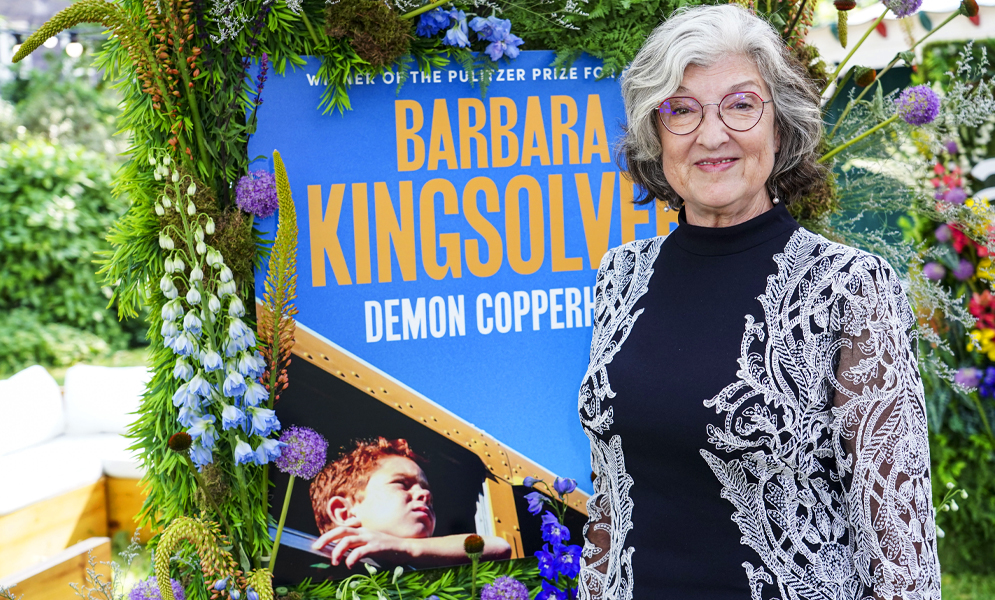
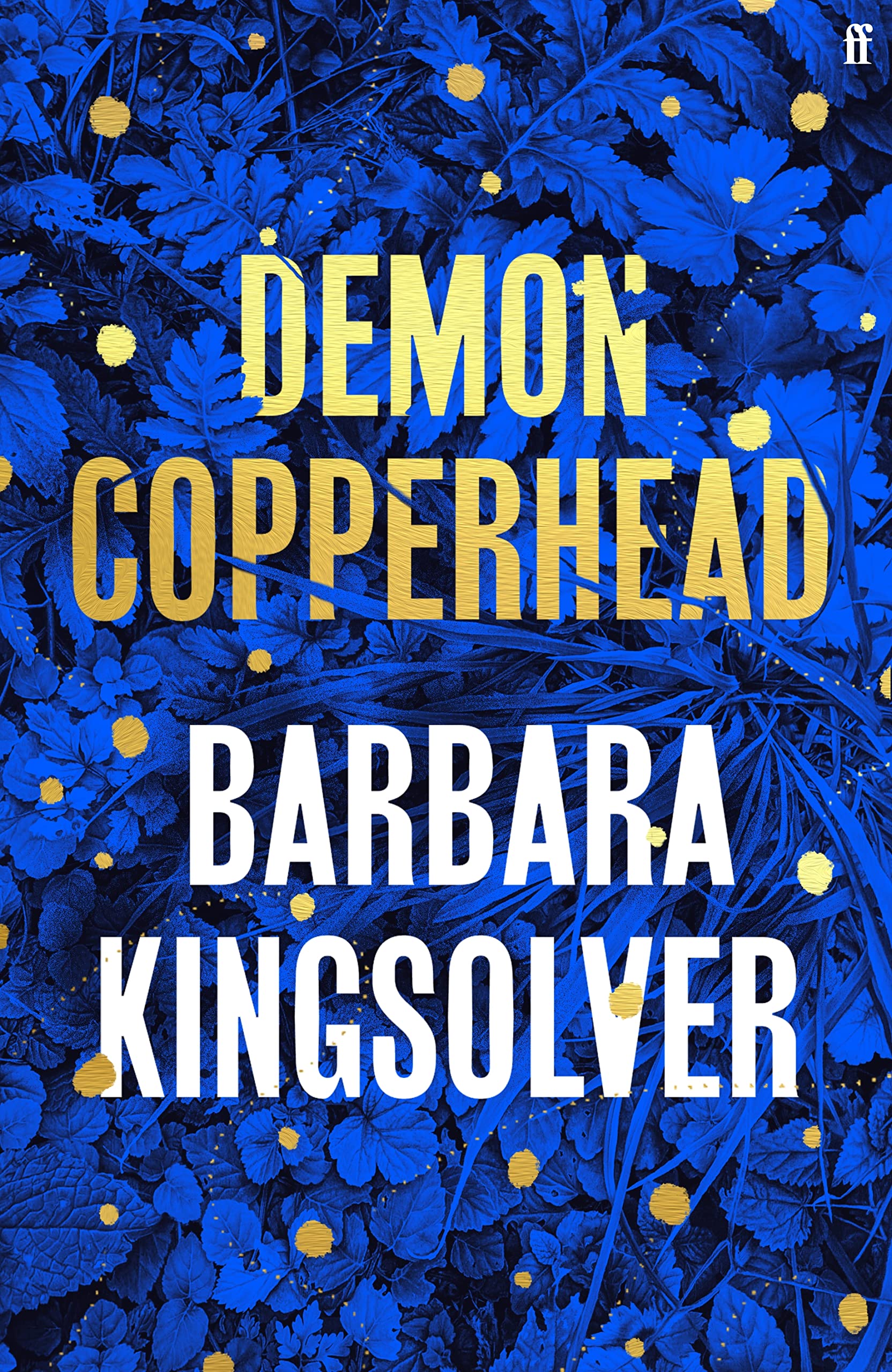
The 2023 Women’s Prize for Fiction is Barbara Kingsolver’s Demon Copperhead!

Barbara Kingsolver, Demon Copperhead

In her speech Barbara Kingsolver said:

“There is no best novel, there is just a best novel for each one of us, that is what is amazing and magical about literature…Literature is how we make our hearts grow bigger and that is how we change the world.”

Institutional Poverty and the Effect on Children

Demon Copperhead is a heartfelt, gritty, poignant novel set in the Appalachian mountains in Virginia, USA. A re-imagining of Charles Dickens’ David Copperfield for modern times, it tells the story of the relentless struggles and triumphs of a young boy born into poverty as he navigates foster care, labour exploitation, addiction, love and loss, while grappling with his invisibility in a culture that neglects rural communities.

I do love a good Barbara Kingsolver novel and have been a fan ever since reading the novel she is most well known for, The Poisonwood Bible. Since then, I have read and reviewed here, The Lacuna (2009) (her 6th novel and also winner of the Women’s Prize for Fiction in 2010), Prodigal Summer (2000) (5th novel) and Flight Behaviour (2012)(7th novel). Winning this year makes her the first double winner for the Women’s Prize for Fiction in its 28 year history.

Demon Copperhead Barbara Kingsolver

Demon Copperhead, from all I have read in reviews, was always going to be an award winning and popular novel, and many are calling it the novel Barbara Kingsolver was destined to write.

As Chair of judges, author and journalist Louise Minchin said:

“Barbara Kingsolver has written a towering, deeply powerful and significant book. In a year of outstanding fiction by women, we made a unanimous decision on Demon Copperhead as our winner. Brilliant and visceral, it is storytelling by an author at the top of her game. We were all deeply moved by Demon, his gentle optimism, resilience and determination despite everything being set against him.

An exposé of modern America, its opioid crisis and the detrimental treatment of deprived and maligned communities, Demon Copperhead tackles universal themes – from addiction and poverty, to family, love, and the power of friendship and art – it packs a triumphant emotional punch, and is a novel that will withstand the test of time.”

I am definitely going to read it, it was also co-recipient of the 2023 American Pulitzer Prize for Fiction. It might be time to dust off the Dickens as well.

Have you read Demon Copperhead, or do you think you might be tempted?

20 Books of Summer 2023

Cathy at 746 Books is hosting the annual 20 Books of Summer challenge, one I have never participated in, but I decided this year that I’m going to try and make space on the bookshelves and donate more books in September to a local vide grenier in Ansouis, Vaucluse, where there is always a large sale of English books.

Below are the 20 books I am will read from this summer, from now until the end of August. I’m predominantly a mood reader, however August is Women in Translation #WITmonth, so I have included a few titles for that. Here are the books on my list:

women in translation summer reading

Other People’s Books, Their Must-Reads

The pile on the left are books that have been lent or given to me by friends, these are books that when I see them on the shelf, I think, I must hurry up and read that, because I need to let my friend know what I thought of it. They are promising, because they were loved by the person who gave it to me! So come on Claire, hurry up and read them, there are potential gems hiding in here!

The title link is to the description in Goodreads, when I’ve finished, I’ll add a link at the end to my review.

  1. Nine Perfect Strangers by Liane Moriarty – I’m starting here today and it’s already given me a few laugh out loud moments. Nine people attend a remote health spa, somewhere north of Sydney, Australia, they’ve all responded to the offer to change their lives in 10 days, but who exactly is this intriguing person who is going to turn their lives around? On verra! – my review
  2. The Maid by Nita Prose – a friend bought this as an airport read and it was the the Goodreads Winner for Best Mystery & Thriller in 2022, it’s described as a locked-room mystery and a heartwarming journey of the spirit, exploring what it means to be the same as everyone else and yet entirely different. – my review
  3. The Tea Girl of Hummingbird Lane by Lisa See – hugely popular author of historical fiction, often connected to China, this novel is set in a remote mountain village tea plantation, exploring the rituals and traditions of the Akha people and the effect of a stranger in their midst. It promises strong and complex female characters and insights into little known aspects of Chinese culture. – my review
  4. All Are Welcome by Liz Parker – this romantic comedy novel was given to me by a friend and it was written by her cousin, got to support family ventures! A darkly funny novel about brides, lovers, friends and family and all the secrets and skeletons in the closet that come with them. Described by one reader as a hybrid ‘beach read’, character-driven, dysfunctional family story.
  5. Purged by Fire: Heresy of the Cathars by Diane Bonavist – a little known work of historical fiction about the struggle of the Cathars of the Languedoc region in Southern France (who rejected the teachings of the Catholic church) in the 13th century, and the papal directive to to root them out as they were deemed heretics, to confiscate property, and burn the unrepentant at the stake. Here is a story of three people trapped in the fatal complicities of that Inquisition.
  6. Dreams of Trespass by Fatema Mernisse – tales of a girlhood harem, this is a memoir of a young girl’s growing up in a French Morroccan harem in Fez, set against the backdrop of WWII.
  7. The Promise by Damon Galgut – this won the Booker Prize in 2021 and was lent to me by a friend, despite me saying I wasn’t going to read it, the premise sounds very much like the incredible South African novel Agaat by Marlene van Niekerk that I read in 2015, but I need to give this back, so…
  8. My Name is Resolute by Nancy E.Turner – this author wrote one of my favourite historical fiction trilogies about a pioneer woman who sought a living in the harsh, untamed lands of the Arizona Territory circa late 1800’s. They were based on the author’s great grandmother Sarah Prine; These is My WordsSarah’s QuiltA Star Garden.  This new book, begins in 1729, the heartfelt story of a woman struggling to find herself during the tumultuous years preceding the American Revolution.

Women in Translation #WITMonth

The pile on the right are all books I really want to read soon and they are a mix of works by women in translation and other books that I feel will be easy to pick up and get lost in, not overly challenging. I think I may be being rather ambitious as not only am I working throughout the summer, I have visitors coming and going throughout most of July and August. But there is a sense of freedom that summer brings and it is light so late, I’m going to create the list and then just see what happens.

  1. Fresh Dirt From the Grave by Giovanna Rivero (Bolivia) tr. Isabel Adey (Spanish) – gothic short stories from Latin America, this is part of my annual subscription to Charco Press. Six tales of a dark beauty that throb with disturbing themes: the legitimacy of revenge, incest as survival, indigenous witchcraft versus Japanese wisdom, the body as a corpse we inhabit. Rivero’s stories pierce the reader like a wound, but in the end also offer possibilities of love, justice and hope.
  2. Elena Knows by Claudia Piñeiro (Argentina) tr. Frances Riddle (Spanish) – a word of mouth sensation and International Booker Prize shortlist (2022) I’ve been wanting to read this for ages, so added it my 2023 bundle from Charco. The author has another book coming into English in July this year A Little Luck, so I may even get to that title this summer. – my review
  3. Boulder by Eva Baltasar (Spain) tr. Julia Sanches (Catalan) – shortlisted for the International Booker (2023) Eva Baltasar demonstrates her preeminence as a chronicler of queer voices navigating a hostile world― in prose as brittle and beautiful as an ancient saga. – my review
  4. Permafrost by Eva Baltasar (Spain) tr. Julia Sanches (Catalan) – having learned Boulder was #2 of a Triptych, I’ve added #1 to the list. Full of powerful, physical imagery, this prize-winning debut novel by acclaimed Catalan poet Eva Baltasar was a word-of-mouth hit in its own language. It is a breathtakingly forthright call for women’s freedom to embrace both pleasure and solitude, and speaks of the body, of sex, and of the self. There’s a third book Mamut not yet translated. – my review

My Summer Reading

best summer reads
  1. My Fourth Time, We Drowned by Sally Hayden – this non-fiction, journalistic masterpiece is chronicle of the plight of refugees that find themselves in Mediterranean water’s and the implicated political decisions that have made their lives that much worse. I came across this after reading Leila Aboulela’s River Spirit, historical fiction set in Sudan. Sally Hayden has written about the situation in Sudan today. Her book won the Orwell Prize for Political Writing 2022 and is described as a must read. #humanrights – my review
  2. The Coroner’s Daughter by Andrew Hughes – I should have read this in April, it was the One Dublin One Book choice for 2023. Last year we read the excellent Nora by Nuala O’Connor about the lives of Nora and James Joyce, this year it’s historical fiction set in 1816 Dublin, about a young lady sleuth operating at the dawn of forensic science.
  3. Promise at Dawn by Romain Gary – I have this in English and French and my neighbour keeps telling me to read it,I know this is going to be a gem, it is the story of the love for his mother that was his very life, their secret and private planet, their wonderland “born out of a mother’s murmur into a child’s ear, a promise whispered at dawn of future triumphs and greatness, of justice and love.”
  4. Homesick by Jennifer Croft – another title from Charco Press, not translated, but the author is a translator. This is a work of autobiographical fiction, longlisted for the Women’s Prize for Fiction.
  5. The Island of Missing Trees by Elif Shafak – I’ve read 4 of her novels The Forty Rules of Love, The Bastard of Istanbul, Three Daughters of Eve and Honour and one work of nonfiction The Happiness of Blond PeopleA Personal Meditation on the Dangers of Identity. I’m always interested in the work of Turkish writer Elif Shafak, who writes from the perspective, and comes from, the place where East meets West.
  6. Daughter of the King by Kerry Chaput – set in La Rochelle, France 1661 – historical fiction based on the true story of the French orphans who settled Canada, a story of one young woman’s fight for true freedom.
  7. The Amateur Marriage by Anne Tyler – far too long sitting on my shelf, I didn’t even realise I had this novel when I first read Tyler’s Ladder of Years. – my review
  8. End of Story by Louise Swanson – and here is the wonderful Louise Beech, whose novel How To Be Brave was such an unforgettable experience; this novel sees her using a new pen name for a different genre, a novel that is making a bit of a splash, it came about after a tweet made by a British politician (now the Prime Minister) suggested that people in the arts ought to retrain.

“This got me trying to imagine about a world without the arts. Without stories.”

Have you read any of these titles above, any recommendations, suggestions as to which to read first? Do you have summer (or winter) reading plans? Let me know in the comments below.


Dublin Literary Award Winner 2023

The wonderful Dublin Literary Award 2023 has announced their winner and I am pleased to learn it is one I have not only read, but it was one of my Top Fiction Reads of 2022

The Dublin Literary Award is unique in that it’s books are nominated by libraries from cities around the world. This year 84 libraries from 31 countries across Africa, Europe, Asia, the US, Canada, South America, Australia, and New Zealand made their nominations, the judges selected a shortlist of six novels and tonight they have awarded the prize to

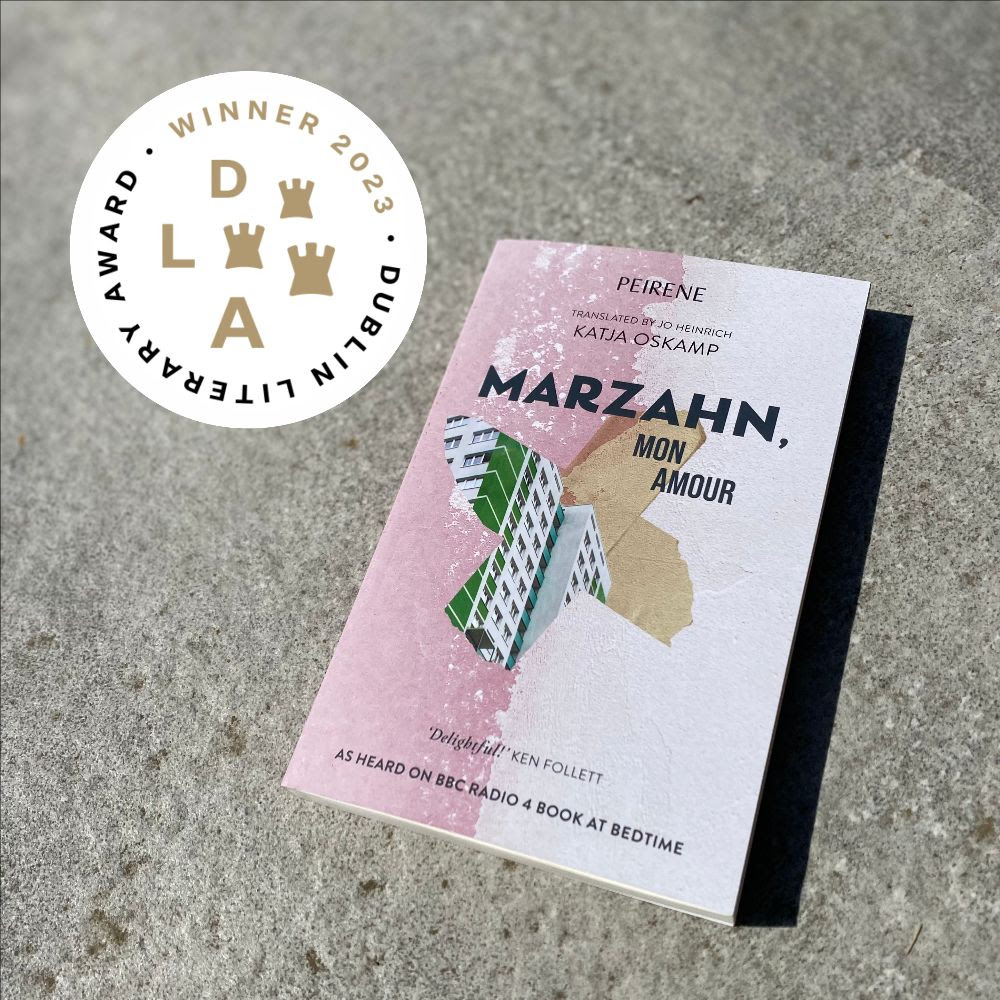
Marzahn, Mon Amour by Katja Oskamp, translated by Jo Heinrich (read my review here) :

The 2023 Judging Panel, led by Professor Chris Morash of Trinity College Dublin, including Gabriel Gbadamosi, Marie Hermet, Sarah Moss, Arunava Sinha and Doireann Ní Ghríofa (author of my One Outstanding Read of 2020), commented:

 “Every so often, you come across a novel whose simple, direct honesty knocks you sideways.  There is an unaffected humility and generosity about Katja Oskamp’s Marzhan, Mon Amour that speaks to the value of community and to the dignity of ordinary lives. ‘The love I have inside me has turned to liquid,’ concludes the novel’s narrator, ‘and now runs into the most unlikely places’.  To read Marzhan, Mon Amour in Jo Heinrich’s translation from the German is to feel Katja Oskamp’s all-encompassing embrace of her world.”

Marzahn Mon Amour Katja OskampMarzhan Mon Amour is a memoir-ish novel, collective history and a character study of a group of people living in and around a multi-storied communist-era plattenbau prefab apartment building in the working class quarter of Marzahn, East Berlin, told through the eyes and ears of a woman facing her middle years.
“The middle years, when you’re neither young nor old, are fuzzy years. You can no longer see the shore you started from, but you can’t yet get a clear enough view of the shore you’re heading for. You spend these years thrashing about in the middle of a big lake, out of breath, flagging from the tedium of swimming. You pause, at a loss, and turn around in circles, again and again. Fear sets in, the fear of sinking halfway, without a sound, without a cause.”

The narrator is a 45 year old woman (referred to in some articles as the author herself), whose partner is ill, requiring her to abandon her career as a writer and take up something else. She retrains as a chiropodist and joins Tiffy who offers beauty treatments and massage and Flocke who does nails, in a salon at the foot of an eighteen storey building.

If the opening paragraph quoted above, sounds melancholy, know that it represents a turning point.

Marzahn, Mon Amour is a tender reflection on life’s progression and our ability to forge connections in the unlikeliest of places under the the most unassuming circumstances.

I highly recommend you read it! A wonderful, life-affirming, inspirational read.


International Booker Prize Winner 2023

The winner of the International Booker Prize 2023 has been announced tonight in London.
Here are the six books on the shortlist, that were under consideration for the prize.

International Booker Prize shortlist 2023

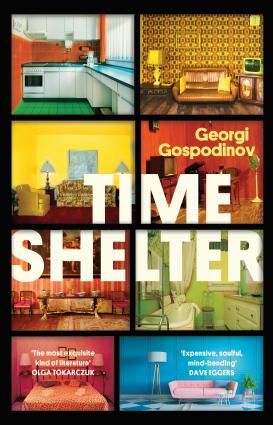
The winner is the Bulgarian novel Time Shelter by Georgi Gospodinov translated by Angela Rodel.

Blurb

Winner of the International Booker Prize 2023

A ‘clinic for the past’ offers a promising treatment for Alzheimer’s sufferers: each floor reproduces a decade in minute detail, transporting patients back in time.

An unnamed narrator is tasked with collecting the flotsam and jetsam of the past, from 1960s furniture and 1940s shirt buttons to scents, and even afternoon light. But as the rooms become more convincing, an increasing number of healthy people seek out the clinic as a ‘time shelter’, hoping to escape the horrors of modern life – a development that results in an unexpected conundrum when the past begins to invade the present.

Intricately crafted, and eloquently translated by Angela Rodel, Time Shelter cements Georgi Gospodinov’s reputation as one of the indispensable writers of our times, and a major voice in international literature.

Judges’ Verdict

Here’s what the judges had to say about the winning novel:

‘Our winner, Time Shelter, is a brilliant novel, full of irony and melancholy. It is a profound work that deals with a very contemporary question: What happens to us when our memories disappear? Georgi Gospodinov succeeds marvellously in dealing with both individual and collective destinies and it is this complex balance between the intimate and the universal that convinced and touched us.

‘In scenes that are burlesque as well as heartbreaking, he questions the way in which our memory is the cement of our identity and our intimate narrative. But it is also a great novel about Europe, a continent in need of a future, where the past is reinvented, and nostalgia is a poison. It offers us a perspective on the destiny of countries like Bulgaria, which have found themselves at the heart of the ideological conflict between the West and the communist world.

‘It is a novel that invites reflection and vigilance as much as it moves us, because the language – sensitive and precise – manages to capture, in a Proustian vein, the extreme fragility of the past. And it mixes, in its very form, a great modernity with references to the major texts of European literature, notably through the character of Gaustine, an emanation from a world on the verge of extinction.

‘The translator, Angela Rodel, has succeeded brilliantly in rendering this style and language, rich in references and deeply free.

‘The past is only ever a story that is told. And not all storytellers have the talent of Georgi Gospodinov and Angela Rodel.’

Time Shelter wasn’t on my radar, but I may have to consider it now.

I have read and really enjoyed Still Born by Mexican author Guadalupe Nettel and I am currently reading Whale by South-Korean author Cheon Myeong-kwan and I’m planning to read Boulder by Catalan author Eva Baltasar.

Have you read any from the shortlist? Any thoughts on Time Shelter?

Further Reading

Georgi Gospodinov interview: ‘I suspect my books are not at all easy to translate’

Angela Rodel interview: ‘Translators don’t play second fiddle to authors, it’s more like a duet’

Reading Guide for Time Shelter

Read an Extract from Time Shelter

New Zealand Book Awards 2023 winners #theockhams

Back in February I posted on the long longlist of 44 books in four categories for the New Zealand Book Awards 2023, also known as  “the ockhams”. The shortlist whittled that down to 16 titles and now we have a set of winners in each of those four categories and a handful of ‘Best First Book’ prizes.

Fiction Prize

No surprise that the winning novel that has captivated not just the nation (winning The People’s Choice), but also the twitterverse, narrated by Tama the magpie, @TamaMagpie, Catherine Chidgey’s The Axeman’s Carnival won the $64,000 Jann Medlicott Acorn Prize for Fiction.

I’m very much looking forward to reading this, and hoping that since Europa Editions UK published her excellent novel Remote Sympathy in 2021, it won’t be long before we see this novel available in Europe and the rest of the English reading world.

Catherine Chidgey Tama the magpie

Chidgey’s masterful writing explores the diversifying of rural life, the predicament of childlessness, the ageing champ, and domestic violence. She provides a perspicacious take on the invidious nature of social media and a refreshingly complex demonstration of feminist principle.

“The unforgettable Tama – taken in and raised by Marnie on the Te Waipounamu high country farm she shares with champion axeman husband Rob – constantly entertains with his take on the foibles and dramas of his human companions. Catherine Chidgey’s writing is masterful, and the underlying sense of dread as the story unfolds is shot through with humour and humanity.

“The Axeman’s Carnival is unique: poetic, profound and a powerfully compelling read from start to finish.”

Poetry Prize

I was particularly intrigued by acclaimed Māori poet and scholar, Alice Te Punga Somerville’s poetry collection, Always Italicise, How To Write While Colonised and was pleased to see it win this category.

‘Always italicise foreign words’, a friend of the poet was cautioned. Alice Te Punga Somerville does exactly that. With humour and rage, regret and compassion, she ponders ‘how to write while colonised’ – penning poetry in English as a Māori writer; tracing connections between Aotearoa, New Zealand and the greater Pacific region, Indigenous and colonial worlds; reflecting on being the only Māori person in a workplace; and how – and why – to do the mahi anyway.

Alice Te Punga Somerville Always Italicise

“Readers are challenged but crucially invited in to accept that challenge and reach a new understanding of what it is to be a Māori woman scholar, mother and wife in 2022 encountering and navigating uncomfortable and hostile spaces.

“Always Italicise stood out amongst a very strong field for its finely crafted, poetically fluent and witty explorations of racism, colonisation, class, language and relationships. It’s a fine collection, establishing and marking a new place to stand.”

General Non-Fiction & Illustrated Non-Fiction

Broadcaster, music critic and author Nick Bollinger won the Booksellers Aotearoa New Zealand Award for Illustrated Non-Fiction for Jumping Sundays: The Rise and Fall of the Counterculture in Aotearoa New Zealand.

Drawing on archival research and rich personal narratives, Nick Bollinger has written a compelling account of an epoch-making period, linking international trends to the local context in a purposeful-yet-playful way.

“A joy to read and to hold, Jumping Sundays is a fantastic example of scholarship, creativity and craft.”

Historian and lawyer Ned Fletcher won the General Non-Fiction Award for his work, The English Text of the Treaty of Waitangi, shedding new light on New Zealand’s founding document’s implications, contributing fresh thinking to what remains a very live conversation for those that call Aotearoa New Zealand home. The treaty was made between the British Crown and about 540 Māori rangatira (chiefs) on February 6, 1840.

Best First Books

Home Theatre by Anthony Lapwood, a collection of interlinked short stories won the Hubert Church Prize for Fiction; Khadro Mohamed’s We’re All Made of Lightning takes the reader to distant lands, Egypt and Somalia, in heightened sensory language as she grieves for her homeland, winner of the Jessie MacKay Prize for Poetry; the Judith Binney Illustrated non-fiction, first book award went to Christall Lowe’s Kai ,which offers whānau stories and recipes that provide wider insight into te ao Māori, creating a homage to food that is grounded in tradition yet modern, the new Edmonds!

Finally, the E.H. McCormick Prize for General Non-fiction and the book I am currently reading, went to Noelle McCarthy for Grand, Becoming My Mother’s Daughter. This book was running neck-a-neck with The Axeman’s Carnival for The People’s Choice, up until the last few days, when Chidgey’s book surged ahead.

An exquisite debut, it masterfully weaves together the threads of Noelle McCarthy’s life, and her relationship with her mother, in a memoir that connects with truths that unite us all. Poignant and poetic language renders scenes with honesty and colour. Intimate, but highly accessible, the fragility and turbulence of the mother-daughter relationship is at times brutally detailed. Despite this, Grand is an uplifting memoir, delicate and self-aware, and a credit to McCarthy’s generosity and literary deftness.

NZ Book Awards

A Special Mention

Non fiction NZ art assessment 50 years as an artistOne that didn’t win, but that was Number 4 in The People’s Choice and one I have heard a lot about and sighted on a recent visit to London, is Robin White: Something Is Happening Here.
Described as more than an exhibition turned art book. It features stunning reproductions, historical essays and the insights of two dozen contributors that do justice to the institution that is Robin White. As iconic screenprints flow seamlessly into large format barkcloth, White’s border-crossing practice is temporally divided with the savvy use of typographic spreads. Space, too, is given to the voices of her Kiribati, Fijian and Tongan co-collaborators.

More recently in her life, collaboration with others has become important, a way of working in the space between cultures, enriching and liberating from the confines of self.

Strikingly elegant yet comprehensive, excellence is what’s happening here.

Check out Robin White’s Artist Profile here.

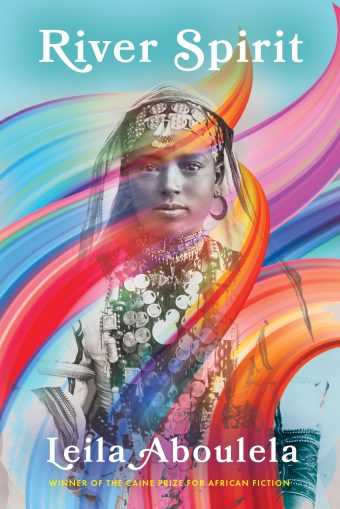
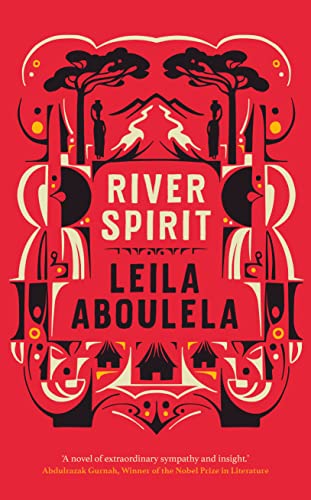
River Spirit by Leila Aboulela

I have now read three novels by Leila Aboulela and enjoyed them all, her historical fiction has taken me into parts of history that I’ve known nothing about and she brings a fresh, unique perspective, thanks to her cross-cultural life experience, at the intersection of being a Muslim woman of Sudanese origin living in Scotland.

I was very much looking forward to this latest novel as she returns within it to her country of origin and tells us a story that begins in a village and moves to the city of Khartoum, Sudan, intertwining the crossover histories of two occupying Empires against a uprising local population, at the very place where two grand rivers meet.

Grandiose Empires and A False Prophet

White Nile Blue Nile Khartoum Sudan conflictRiver Spirit is a unique work of historical fiction set in 1890’s Sudan, at a turning point in the country’s history, as its population began to mount a challenge against the ruling Ottoman Empire, only the people were not united, due to the opposition leadership coming from a self-proclaimed “Mahdi” – a religious figure that many Muslims believe will appear at the end of time to spread justice and peace.
The appearance of ‘the Mahdi’ or ‘the false Mahdi’ created a division in the population and provided a gateway for the British to further a desire to expand their own Empire, under the guise of ousting this false prophet. However for a brief period, this charismatic leader would unite many who had felt repressed by their circumstances, inspiring them to oust their foreign occupiers by whatever means necessary, even if it also set them against their own brothers and kinsmen.

Orphans, A Merchant, A Promise

Against this background, Leila Aboulela tells the story of orphan siblings, Akuany and Bol, and their young merchant friend Yaseen, a friend of their father; their parents were killed in a slave raid on the village, the merchant made a promise to protect these two youngsters, forever connecting them to his life.

The story is told through multiple perspectives, mostly in the third person perspective, from Akuany (who becomes enslaved to both an Ottoman officer and a Scottish painter at various points and is renamed Zamzam) and Yaseen’s point of view, as well as one of the fighters of the Mahdi, Musa.

Leila Aboulela Sudan 1890s historical fictionThe change in perspective and the lack of a first person narrative keeps the characters at a slight distance to the reader as we follow the trials of Zamzam’s life and her dedication to being a part of Yaseen’s life. Like other readers, I wished at times that the story was told in the first person from her point of view, but the story is too important to be limited to one perspective.

So the reader is taken on a journey through the shifting viewpoints of all parties implicated and affected by the approaching conflict, those of fervent belief, the skeptical, outsiders with ulterior motives, and the innocent, the women and children trying to live ordinary family lives amid the power struggles of patriarchal dominance and colonial selfishness.

Yaseen decides to become a scholar, a decision that changes his life and opportunities; he meets the Mahdi and is unconvinced, an opinion that will become dangerous and have repercussions for him and his family.

As the revolutionary Mahdi leader grew in popularity and his followers in confidence, Sudan began to slip from the grasp of Ottoman rule and everyone was forced to choose a side, whether for personal, political or religious reasons. The (religious) confusion created by the implication of accepting this new leader ,became a strategic opportunity for British colonial interests to gain access to natural resources and secure control of the Nile ahead of other European interests was well as protecting their interests in Egypt. The real threat for both the Ottoman and British Empires, was the potential for the creation of a new independent power, one that came from within Sudan. That, clearly, they were likely to undermine.

What has changed is that this is now a massive rebellion against a major power. The fake Mahdi has coalesced the nation’s sense of injustice.

Two Rivers Entwine, the Nile

River Spirit The Nile Leila Aboulela SudanOnce Akuany and her brother leave the family village, most of the story takes place in Khartoum, a city that is at the confluence of the Blue Nile and the White Nile, two major rivers that join to become the Nile proper, the longest river in the world, that continues on through Egypt to the Mediterranean.

The river is part of Akuany’s story, part of her being and a symbol of her twin selves, one free, one enslaved, of twin occupying forces, the Ottoman and British Empires, of the many aspects in the story where twin forces clash, mix and become something new. It represents her devotion to her brother and to the merchant Yaseen, to a focus that drives her forward through the changing circumstances of her life. The two rivers arrive from different sources in a city that is full of many coming from elsewhere, where agendas often clash and local people get caught on the crossfire of inevitable conflict.

She was not one of them, but she was like them. She was also one of the lowly rising, one of the poor benefiting, one of the featherweight children of this land, thrust up by this shake-up, loosened and made free to stand up and grab what was there on offer, what she had always wanted.

One of the things I particularly enjoyed about the story, was the focus of the story coming from characters within the population, that we witness things from within, through the eyes of both a simple, loyal but marginalised, servant girl and through a young educated man, both of whom are from Sudan. They are living in turbulent times and are witness to the effect various powerful influences have on their city and in the case of ZamZam the effect on her person, treated as an object of ownership.

Cycles of Conflict, Khartoum Today

The novel was published on March 7th, 2023, a mere month before two Generals again plunged Sudan into armed conflict with devastating consequences for civilians and civilian infrastructure, especially in Khartoum and Darfur. At least 676 people have been killed and 5,576 injured, since the fighting began. (14 May, UN source)

Over 936,000 people have been newly displaced by the conflict since 15 April, including about 736,200 people displaced internally since the conflict began, and about 200,000 people who have crossed into neighbouring countries, including at least 450,000 children who have been forced to flee their homes.

“Fanatics can never draw out the good in people. They will go to war I predict. They will raise armies, invade, and pillage because it is only aggression that will keep their cause alive. Fighting an enemy is always easier than governing human complexity.”

Further Reading

New York Times: Amid Conflict and Cruelty, a Love Story That Endures by Megha Majumdar, March 7, 2023
Brittle Paper: A Compelling Tale of Love and Anti-Colonialism in 19th Century Sudan by Ainehi Adoro, May 16, 2023

The Scotsman, Book Review by Joyce McMillan

Brittle Paper, Interview: “We Need to Hear the Stories of Africa’s Encounter with Europe from Africans Themselves” | A Conversation with Leila Aboulela

Africa in Words (AiW) Interview: Review and Q&A: Leila Abouleila’s ‘River Spirit’ – Rewriting the Footnotes of Sudanese Colonial History by Ellen Addis

Leila Aboulela, Author

River Spirit Sudanese historical fiction MahdiLeila Aboulela is a fiction writer, essayist, and playwright of Sudanese origin. Born in Cairo, she grew up in Khartoum and moved in her mid-twenties to Aberdeen, Scotland. Her work has received critical recognition and a high profile for its depiction of the interior lives of Muslim women and its distinctive exploration of identity, migration and Islamic spirituality.

She is the author of six novels: River Spirit (2023), Bird Summons (), Minaret (2005), The Translator (1999), a Muslim retelling of Jane Eyre, it was a New York Times 100 Notable Books of the Year, The Kindness of Enemies (2015) and Lyrics Alley (2010), Fiction Winner of the Scottish Book Awards. Leila Aboulela was the first winner of the Caine Prize for African Writing and her latest story collection, Elsewhere, Home (2018) won the Saltire Fiction Book of the Year Award.

Her work has been translated into fifteen languages and she was long-listed three times for the Orange Prize, (now the Women’s Prize for Fiction).

“We need to hear the stories of Africa’s encounter with Europe from Africans themselves. Mainstream colonial history has been viewed and written through the lens of Europe. This is insufficient for us in these contemporary times and as Africans we need to write our own history. ” Leila Aboulela, interview with Brittle Paper.

Pod by Laline Paull

I jumped at the chance to read Pod, after having read The Bees and been bowled over by the Mayan inspired beehive world the author created. I was excited to see what Pod might offer and delighted to see it shortlisted for the Women’s Prize for Fiction. (The winner to be announced on Wed 14 June, 2023)

Laline Paull is fast becoming an afficianado of fiction set in the natural world.

An Immersive Oceanic World

Ea dolphin narrator animal Women's Prize FictionThough not an easy read, Pod is a work of inspired literary genius. A cetacean epic, it is a fictional account of dolphin tribe rivalry and a coming-of-age of story of one of the pod, created from real knowledge of environmental science and marine biology. Clearly, a lot of background research and animal behavioural understanding underpins the narrative.
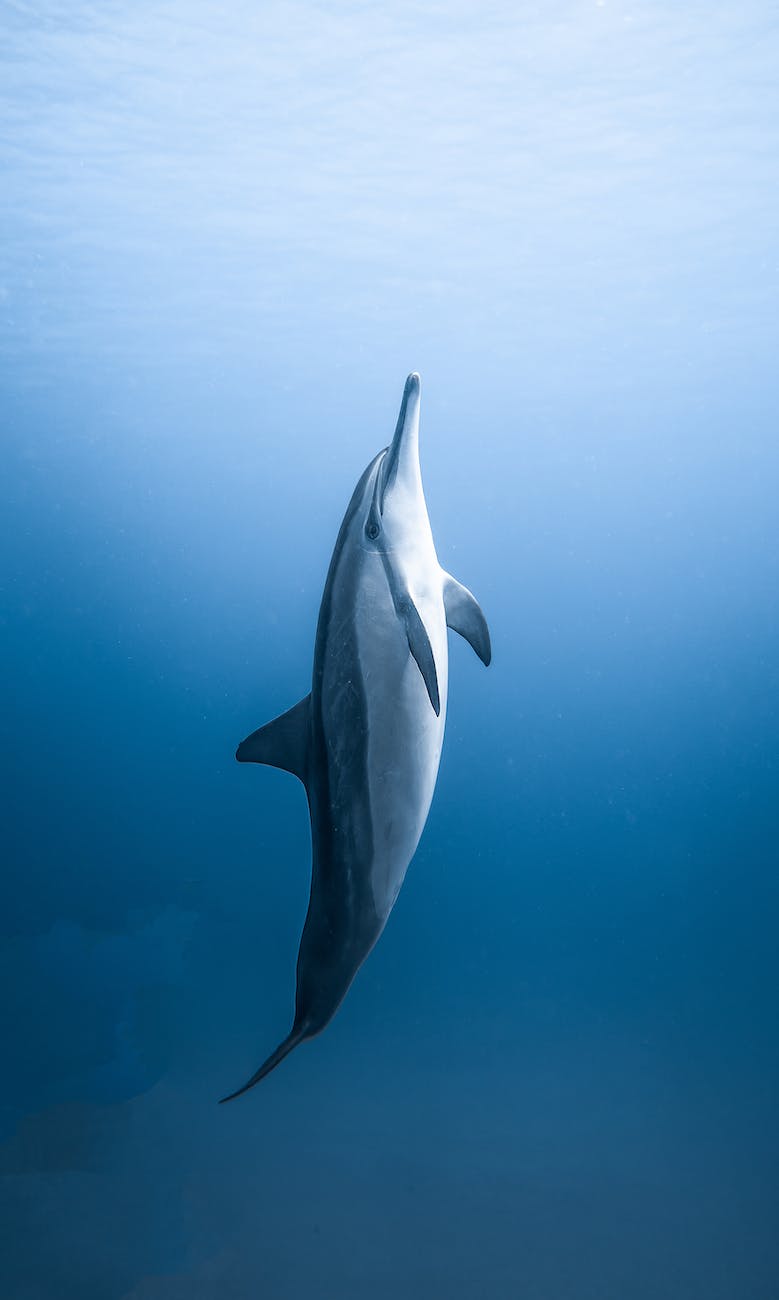
Laline Paull explains in an afterword how the novel was partly inspired following an excursion swimming with wild dolphins.

I learned that this big, noisy pod first appeared in this area after an oil spill up the coast forced them to move on. On arrival in this bay, they deposed the small resident pod of spinner dolphins, who left and were not seen again.

Set in the ocean, from within pods of dolphins, we view an underwater world, peopled by different species as their environment changes, how this affects their habits and behaviours towards others species.

Whales and dolphins are citizens of their world (the ocean), and Pod gives them voice, and readers a view, from within their ecosystem that humans have compromised. Referring to them collectively as people at first seems strange and then it feels appropriate.

Animals Like Humans Like Animals

Sometimes those behaviours mimic dysfunctional aspects of human societal behaviour, such as those brought about by a system of domination, the use of fear, violence and subjugation to keep the female species in line, making examples of the weak and young, banishing the old.

At the same time, their signals become confused by the changing conditions of the ocean, the noise from large ships, pollution, mutations, a general warming and the presence of a large contaminated patch full of micro-plastics.

It grew by the day, by the motion of each tide, yet it remained an inert drifting thing, a negative sea within the ocean. It gathered its great amorphous body piece by piece of plastic, and it made peculiar sounds as it crushed and released, spreading out on the surface, and down to the depths.

Pod Laline Paull spinner dolphin

Photo by Daniel Torobekov on Pexels.com

The story follows the lives of a young female spinner dolphin Ea, of the Longi tribe; another named Google who has been bred in captivity by a military handler, now alone and lost in the ocean he knows nothing of; a pod of bottle-nose dolphins, the Tursiops tribe lead by dominant, aggressive males who have harems.

There are also a few other fish species characters that provide lighter entertainment value, including an informative, commensal Remora that sticks to the dolphins and can infiltrate their thoughts.

To spin like everyone else was the key to fitting in, and if she could only hear the music of the ocean like everyone else, she too would be able to tune in and do it.

The Longi have been forced out of their homewater by an invasion of the cruel barbaric Tursiops tribe. After a tragedy, Ea leaves her pod and is abducted by a group of exiled male Tursiops.

With Google now roaming the ocean alone, it is only a matter of time before there will be an encounter, leading to the novel’s denouement.

When the sharks saw him, with his wounds and his peculiar energy like no other dolphin they had ever encountered, they left him alone. He was not prey, and when one sub-adult tiger shark became too curious, Google remembered the game of tag, and butted back harder than the juvenile had touched him. That was all it took, one contact and and another part of Google’s instinctive mind opened up. Shark.

Belonging, Finding Home, Community

Pod Laline Paull

Photo by Daniel Torobekov on Pexels.com

It’s an ambitious concept and at times difficult to read, due to the treatment inflicted and the dire presence of man, acting in a way that yields little respect for the environment these creatures live and spawn within.

Ultimately, it explores aspects of belonging to a species, how they control from inside and treat outsiders and the rebel within.

Their homewater was no more, powerful devils were ripping the ocean apart and their screaming was killing pods of pilots, of humpbacks, of dolphins.

It is appropriate to mourn the losses, who really knows what it must be like to be a marine animal living in an environment that has been so compromised by a species that lives on land, that continually exploits, pollutes and disregards the fragile biosphere within which they dwell.

Death was everywhere, people were fleeing, the ocean was either full of refugees or terrifyingly empty.

Natural World Fiction

As a work of fiction, this was far outside what I normally read and as such it is hard to describe in those terms. The dolphin characters were interesting as they tried to understand their own inner signals and navigate their increasingly confused environment and community. Reading about dolphins as a society is quite confronting, when we learn that they are far from the playful characters we have been lead to believe.

The unfamiliarity of some of the other species made it a challenge to visualise some of the characters, it was necessary for me to look up some of these fish species, testing the limits of my imagination.  It was just not possible to substitute Dory and Nemo for Wrasse, Fugu and Remora!

Pod is quite a ride, a thought provoking, confronting read that makes no apologies for the dark, realistic world it inhabits.

Further Reading

Interview Orion Magazine: An Ocean of Agony and Ecstasy – 7 questions for Laline Paull about her new novel ‘Pod’

Laline Paull on Substack: Storytelling and the Climate Crisis Science + emotion = change. Using the power of storytelling to communicate the climate crisis.

Captain Paul Watson: Where Others Fear To Go, We Will Continue to Fight

Seaspiracy Documentary Trailer

OceanaProtecting the World’s Oceans

Mission Blue – Hope Spots

Laline Paull, Author

Laline Paull was born in England. Her parents were first-generation Indian immigrants. She studied English at Oxford University, screenwriting in Los Angeles, and theatre in London.

She has had two plays performed at the Royal National Theatre, where she is currently adapting her first novel, The Bees. Her second novel The Ice, was set in the Arctic. She is a member of BAFTA and the Writers’ Guild of America. She lives in the English countryside with her family.

“I loved finding out about different dolphin cultural expressions, which made me think: They’re just like us. They’re tribal. They like different foods, different dances; they make love or coercively mate, have political alliances, get into great big amorous raves—it was wonderful to discover these things through the strict unemotional lens of science. Then run away and make a wild story of it.” Laline Paull, interview, Orion Magazine