
 I was intrigued to read a book by a Mauritian author during Women in Translation month. Eve out of her Ruins hadn’t been on my initial list, but it was recommended to me and I decided to get a copy especially as I’ve been seeing many images of the island of Mauritius recently.
My Uncle is spending some months there at present, designing a noir thriller film called Serenity, starring Anne Hathaway and Matthew McConaughey. A fishing boat captain’s past is about to crash up against his life on a tropical island.
Thank you Andrew McAlpine for the photos shared below, which so well depict the contrasts of Mauritius.
Ananda Devi writes from her roots. Deep within the Indian Ocean, Mauritius was colonised by Dutch, French and English explorers, traces of this colonial past remain evident both in the landscape and among the languages spoken by its multifarious population, descendants of settlers, slaves, indentured servants, and finally immigrants.



Though the blurb does mention the novel is enchanting and harrowing in equal measures, it is the story that is harrowing and the lyrical prose that is enchanting.
…she has trained her novelistic gaze on disenfranchised populations and the ways in which femininity is shaped and established. Her gorgeously hewn sentences rarely shy away from depicting violence or suffering; her novels, rather, embrace the entirety of human experience, from abject suffering to unalloyed joy. Jeffrey Zuckerman, Translator
The novel is narrated through four teenage voices, two young men Saad and Clélio, who like many young people on the island are bored and belong to a gang, not through any desire to cause harm, but almost to create some kind of a sense of community, their destructive tendencies more a result of a restless energy that has no other channel.
Saadiq, though everyone calls him Saad is in love with Eve and wants nothing more than to be able to protect her, and though she is used by everyone, there is something between these two, something that both draws them together and keeps them apart. He loves words, he expresses himself through the poetry of others, inscribing lines upon a wall, when he finds the phrase that resonates.


“Our cité is our kingdom. Our city in the city, our town in the town. Port Louis has changed shape; it has grown long teeth and buildings taller than its mountains. But our neighbourhood hasn’t changed. It’s the last bastion. Here, we let our identities happen: we are those who do not belong. We call ourselves bann Troumaron – the Troumaronis – as if we were yet another kind of people on this island filled with so many kinds already. Maybe we actually are.
Our lair, our playground, our battleground, our cemetery. Everything is here. We don’t need anything else. One day we’ll be invincible and the world will tremble. That’s our ambition.”
The two girls Eve and Savita are friends, the light in each others eyes and lives, something observed by the boys that generates jealousy and inspires something terrible.
There is a second person narrative throughout, written in italics, employing the you voice, an omniscient presence that sees everything, enters the minds of characters, in particular Eve and all who encounter her, it understands everything and voices thoughts that can not be expressed.
Out of distress. Out of misery. Confirming angrily, belligerently, hopelessly, what they’re all thinking, over there, outside.
Being. Becoming. Not disappearing in your eyes. Escaping the straitjacket of passivity, of idleness, of failure, of ashen gazes, of leaden days, of sharpened hours, of shadowy lives,of faraway deaths, of gravelly failures, of lingering, of nakedness, of ugliness, of mockery, of laughter, of tears, of moments, of eternity, of shortness, of heaviness, of night, of day, of afternoons, of dawns, of faded Madonnas, of vanished temptresses.
None of that is you.
It is a tragic account, full of foreboding, it seems as if there is no escape, the one that did, a brother, promised to return, a hollow promise.
She forces open a door in darkness’s wall. This opening indeed reveals the beauty of the island, of this gift from the gods that is Mauritius, this gift that humans do not deserve but only a few innocents may ever see. J.M G. Le Clézio


 The impulsive Claudine, thinking a marriage of her own making and choice (not one chosen by her father or suggested by a man who had feelings for her that weren’t reciprocated) embarks on her marital journey which begins with fifteen months of a vagabond life, travelling to the annual opera Festival de Bayreuth, in Germany, to Switzerland and the south of France.
 This living in the past causes her even to forget that she now lives in this new apartment, coming out of her daydream, she readies herself to return home (to her father) only to realise she no longer lives there and ponders where her home really is.
 Their relationship plays itself out, up to the denouement, when Claudine seeking refuge decides to return to Montigny, to the safety of her childhood home, the woods, her animals whose loyalty she is assured of, and the affection of the maid Mélie and her humble, absent-minded father.
 Khushwant Singh takes the Punjabi farming village of Mano Majra, a small village on the border between India and Pakistan, one of strategic importance to the railway system, and narrates the moment when news of this change arrives and shows how it affects this community.
 ‘Why, don’t you people want to be free? Do you want to remain slaves all your lives?
 Donal Ryan is the Irish author many of us remember for his debut
  Into this isolation comes another Traveller, partially rejected by her family and community, whom Melody befriends and becomes attached to, picking up her teaching with Mary, where she left off with Martin. Here’s their encounter when they first meet:
 It is interesting that Donal Ryan chose to highlight characters from within the Irish Traveller community, as 2017 was a significant year in terms of identity for them. There are estimated to be between 29,000 – 40,000 Travellers in Ireland, representing 0.6% of the population. Recent DNA research has proven they are as genetically different from the settled Irish as they are from the Spanish and that this difference may have emerged up to 12 generations ago, as far back as 1657.
 Louise Beech is a unique author who I feel like I have a personal connection with, after the incredible experience of reading her debut novel How To Be Brave in October 2016, which for me included communicating with her as I endured a hellish experience on the 9th floor of Timone Hospital in Marseille. Twitter hashtags truly can bring incredible people into your lives at pivotal moments, both the living and those that have passed on. #LouiseBeech
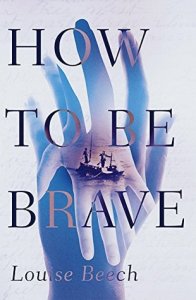 It was also the story of her grandfather who had been lost at sea for over 50 days when he was a young man. Both the diagnosis and the story of the grandfather are true stories, however she used her creativity and imagination to write a novel that blends fact and fiction, taking the reader on an emotionally charged, high sea journey towards healing.
 In chapter two a woman named Bernadette tells us that the book is missing. It is the day she has finally summoned the courage to leave her husband, she’s spent all day preparing and fretting about it, he is a man who values impeccable timing, expecting others to meet his standards, especially his wife Bernadette. She is waiting for him to walk through the door at 6pm like he does every evening before she intends to leave. Only he is late, more than late, he doesn’t come home at all.
 The Complete Claudine by Colette tr. Antonia White (French) – Colette began her writing career with Claudine at School, which catapulted the young author into instant, sensational success. Among the most autobiographical of Colette’s works, these four novels are dominated by the child-woman Claudine, whose strength, humour, and zest for living make her a symbol for the life force.





 Before reading Kamila Shamsie’s Home Fire, I downloaded a translation of Antigone to read, she acknowledges herself that Anne Carson’s translation of Antigone (Oberon Books, 2015) and
  “Stories are a kind of nourishment. We do need them, and the fact that the story of Antigone, a story about a girl who wants to honour the body of her dead brother, and why she does, keeps being told suggests that we do need this story, that it might be one of the ways that we make life and death meaningful, that it might be a way to help us understand life and death, and that there’s something nourishing in it, even though it is full of terrible and difficult things, a very dark story full of sadness.”
 Kamila Shamsie was born in Karachi and now lives in London, a dual citizen of the UK and Pakistan. Her debut novel In The City by the Sea, written while still in college, was shortlisted for the John Llewellyn Rhys Prize in the UK and every novel since then has been highly acclaimed and shortlisted or won a literary prize, in 2013 she was included in the Granta list of 20 best young British writers.
 Loved it, this is my kind of popular summer read, it brought to mind the recent Alaskan classic I read and enjoyed immensely

 The original Swing Time is a film clip of Fred Astaire dancing on stage at a cabaret, with a giant screen behind him, in which three shadow versions of himself attempt to keep up with his energy, his footwork, his dance. In the end they give up and walk off leaving him alone to continue, enrapturing his audience.

 It reminded me of
 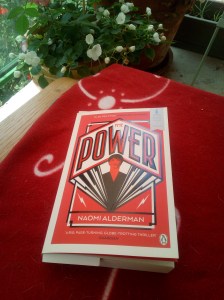 I’ve been aware of this novel and reading about it for a long time, watching it come through and finally win the 2017
 Word by Word