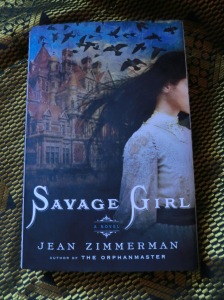
Savage Girl by Jean Zimmerman

Nevada Mine

Drilling in a Nevada Silver Mine

Set in 1875, Savage Girl begins when the wealthy socialite Delegate family are on a tour of the American West, having travelled to Nevada by private train to visit family mining concerns.

The son, Hugo, a 22-year-old anatomy student at Harvard, who keeps taking time out from his studies due to undiagnosed mental health issues, visits a back alley sideshow attraction with his mother entitled ‘Savage Girl’, allegedly a wild, mute 18-year-old girl raised by wolves. It is a popular attraction, attracting many of the mining community and the Delegate family are interested in her, for much more than entertainment purposes.

They have something of an obsession with the feral child phenomena and the nature versus nurture debate and enter into negotiations with the keeper of the girl in their hope of bringing her to into their family, to civilise her and prove a philosophical point.

The Coming Out Season

The Coming Out Season

They succeed in bringing her back to New York, dressing her and teaching her all that is necessary to make her debut into high society. While the parents are pleased with her progress, their son Hugo isn’t so certain.

Torn between what might be a growing love for his savage sister and a wary suspicion of her, he isn’t sure whether to admire her achievements or to be afraid of her influence, as there is a trail of violent murder that follows in her wake. Only Hugo seems to be aware that these unexplained deaths all have one thing in common, they are men that had recently had contact with their protégé.

Savage Girl (2)Hugo knows she has a night life that his parents aren’t aware of and begins to follow her to try to discover where she goes and what she does. He is equally  afraid, given his own history of instability and wonders if it may be himself who is responsible and though he cannot prove it, it is to hear his confession and description of what he found at the scene of the murder of one of his friends, that opens the first pages of the novel. It is Hugo who narrates this story of how the savage girl came into their lives and all the events that followed.

The novel follows ‘Savage Girl’s’ progress, Hugo’s paranoia and reasoning within the context of Manhattan’s Gilded Age (late 1800’s) where only those who know the rules, befriend the right people and come from socially acceptable families will make it.

It is an intriguing story, wrapped around a puzzling, violent mystery containing a dark, barely legible heartbeat of early feminist activism and that nature versus nurture debate. As historical fiction goes, it has all the elements, pure, entertaining escapism.


Note: This book was an ARC (Advance Reader Copy) kindly provided by the publisher.

The Closet of Savage Mementos by Nuala Ní Chonchúir & A Peek at What the Irish are Reading

After seeing her list of Books of the Year for 2014 published in the Irish Times, I remembered how much I admire Eileen Battersby’s articles and her choice of books to read and review.

The Captain's DaughterEven today, when I skim the reviews featured by the Irish Times, the one I click on, sure enough, is written by Eileen Battersby and reading it makes me think perhaps I could start 2015 the same way I started 2014, with Alexander Pushkin, here she describes his novel The Captain’s Daughter, republished in September 2014 in the NYRB Classic series, as a masterclass in storytelling.
Wednesday's Child

The critically acclaimed Number 1 Bestseller I’d never heard of!

So back when her Books of the Year came out, I had a look around the rest of the Books Section of the Irish Times, in part intrigued recalling a family member visiting via a short stopover in Ireland last summer and bringing bestselling books I had never heard of.

A History of LonelinessI was interested to read about their new book club and experience of reading John Boynes novel of a priest, A History of Loneliness and the intelligent, respectful way their readers are able to discuss and disagree in comments without resorting to the kind of insulting rhetoric that stops me from reading comments on most other mainstream media.

This month they are reading Nuala Ní Chonchúir’s The Closet of Savage Mementos, an author and a book I had not heard of, so after reading the blurb which sounded appealing and said to be inspired in part by the authors own experiences, I jumped right in.Irish Times Book Club

The Blurb

Lillis takes a summer job working at a lodge in a small lochside village in the Scottish Highlands. Leaving home is a way to escape her sorrow and despair following the death of her boyfriend and a testy relationship with her mother, Verity.

In Scotland she encounters love and excitement but when a series of unexpected events turn her new found life on its head, she is forced to make a life-changing decision, one that will stay with her for her whole life.

My Review

Divided into two parts, Book One takes place in 1991 when Lillis is almost 21-years-old and in the throes of grief, after the death of her close childhood friend Donal, early on New Year’s Day.

She had already made plans to leave Dublin and take up a waitressing job in Kinlochbrack, a fishing village in Scotland and it is while living there, that she moves through the phases of grief and denial, falling quickly into a new relationship with her boss, 51-year-old Struan Torrance.

Lillis was ready to leave Dublin, her mother Verity a constant source of irritating worry, her father relatively inaccessible, having remarried and busy working and raising two small boys with his new wife; her brother responding reluctantly to her requests for help when asked, otherwise living a somewhat selfish, disinterested existence.

Here is their conversation when he tells Lillis he’s thinking of going to San Francisco, where all the girls wear flowers in their hair, and the boys too, hopefully, he added.

‘Shut up. You’re just pissed off because you’ll be stuck here forever.’ Robin flipped open his lighter.

‘I won’t, you know. I’ve got a summer job lined up in Scotland.’ I put down my glass.

‘You sneaky bitch. How did you get that? We can’t both go away.’

‘Look, at the moment I need your help with Verity. Promise me you’ll go to the house and talk to her. We can head out together.’

‘Lord, you’re so bossy. Is that why you arranged to meet me, to bully me into being our mother’s saviour?’

In Scotland Lillis has her job, her new boyfriend, instant friends at work, hills to climb and roam, the loch to visit; in her head she often revisits her enduring friendship with Donal, he becomes a resting place in her mind she constantly retreats to, as if waiting for the present to overtake these thoughts yet wondering if that will ever be the case.

It is about the unconscious effect of grief and shows how Lillis fulfills the need that arises from it, trying to fill the gaping hole left by the death of someone so familiar, mixed with the separation from family, a father who is elsewhere. She does things unconsciously and in Book Two, she will awaken from her emotional slumber with an earth shattering jolt.

Things end badly for Lillis in Scotland and after a short spell in Glasgow she returns to Dublin. We don’t learn what happened until she is a 40-year-old woman reflecting on the past, as it suddenly is brought into her present by events.

I don’t wish to reveal what happened in case you decide to read the book, an excellent reason for this to have been chosen as a book club book, as it prompts some very interesting questions about so many issues that will make it an interesting discussion.

“Just like when Donal died, I was pulled tight between forgetting and remembering. Any sense of myself as a competent human being, with things to do and achieve, had left me.”

Book two begins 20 years later, Lillis is pregnant and about to give birth to a daughter, her supportive and loving husband at her side. The pregnancy, birth and raising of the child induce a form of post natal depression and bring back memories and force her to address issues she had chosen to bury deep within her for the last twenty years. Much of it to do with being a mother, believing she had come from a long line of woman who were bad mothers.

“It occurs to me that I might be like Verity – exasperation was her fallback position, her natural state as a parent. Everything Robin and I did irritated her. She roared at us from one end of the day to the other….

Verity held the neglect she learned as a daughter to her heart and carried it forward to her own parenting. I do not want to be the mother that Verity was to me.”

It is a realistic novel with much to discuss and reflect on, both the decisions we make as individuals and those that we make due to the pressures of family and society.

Nuala Ní Chonchúir writes in a style that makes the reader feel right there in the room with her characters, the voices are authentic, the emotions vivid and sometimes disturbing, it’s like being in the front row of a theatrical production, even though the characters are over there, we feel the force of every word uttered and action taken and will likely need to talk about the experience with a friend when it’s over.

If you read it between now and mid-January you can join in or follow the book club discussion at The Irish Times (see the link below).
Miss EmilyMiss Emily

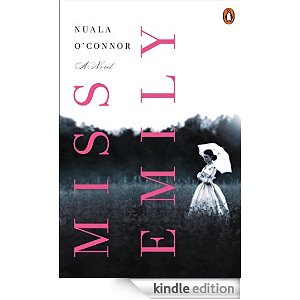
To be published under her original birth name, Nuala O’Connor, (Nuala Ní Chonchúir) has a novel due out in May 2015 called Miss Emilya dual narrative story told alternately from the point of view of Ada (the maid) and Emily Dickinson, the film rights of which have already been acquired.

An author to watch out for!

Links

The Irish Times Book Club

The History of Loneliness

Brown Girl Dreaming by Jacqueline Woodson

Jacqueline Woodson was unknown to me, though she is a prolific writer, having already published 30 books and been shortlisted this year for the Hans Christian Andersen Award for her lasting contribution to children’s literature.

Brown Girl DreamingI saw it mentioned on twitter, as it recently won a National Book award in the US and it has the most beautiful, striking cover and when I read that it is a memoir of the author’s childhood, written in free verse, I just knew I had to read it. And I’m not the only one, of the seventeen books US President, Barack Obama bought on a recent book buying spree with his two daughters, this book was sitting on the top of the pile.

Brown Girl Dreaming is an easy reading collection of anecdotes in free verse, that tell of Woodson’s childhood growing up in the 1960’s and 1970’s in Greenville, South Carolina and Brooklyn , New York, not so much focused on herself, she paints a picture with words of all those around her, their inclinations and beliefs, the daily rituals that made up the ambiance within which she spent her early years.

She has something of both the North and South in her, moving comfortably between the two and she wouldn’t have it any other way. She collects aspects of her childhood that have stayed with her and that shaped who she is today and she discovers old stories that fill out her experience and deepen her roots and sense of belonging.

“When we ask our mother how long we’ll be here,

sometimes she says for a while and sometimes

she tells us not to ask anymore

because she doesn’t know how long we’ll stay

in the house where she grew up

on the land she’s always known.”

After her mother leaves her husband and Ohio behind, bringing three small children to her own childhood home, the children are drawn into their Grandmother’s ways, including regular attendance at the Kingdom Hall, where they become part of a Jehovah Witnesses community, which has a significant impact on their upbringing and keeps them out of trouble, though it also has its consequences and is something the author will eventually leave behind.

“Everyone else

has gone away.

And now coming back home

isn’t really coming back home

at all.”

Jacqueline, named after her father who wanted her to be Jack, observes the individual brilliance of each of her siblings, she acknowledges their talent and discovers her own, a love of words and despite the challenges they confront her with, she never loses sight of her dream to be a writer and to catch those words that sometimes eluded her on the page.

“I am not gifted. When I read, the words twist

Twirl across the page.

When they settle, it is too late.

The class has already moved on.

I want to catch words one day. I want to hold them

Then blow gently,

Watch them float

Right out of my hands”

I couldn’t help but recall the Cuban writer Margarita Engle’s exceptional The Wild Book, not just because it too is a brilliant volume of prose poetry written for both a young and adult audience, but because its subject also includes a child with a love and fear of words.

Jacqueline WoodsonBrown Girl Dreaming is a beautiful book and a compassionate collection of childhood, a celebration of all the author’s family and n its writing, it enabled her to reconnect with many of those whom she hadn’t seen for years and in doing so, to learn of and preserve more of the family’s stories that had been within the family for generations.

Her poems are like a giant tapestry and the members of her family, her neighbourhood and friends make up the complex colours and patterns, infused with story, emotion, excitement and foreboding, the fabric of her childhood.

By the time you get to the end, you feel like you know them all and to complete the experience the author has shared her collection of black and white family photos.

Literary Blog Hop … Book #Giveaway

From now until Wednesday November 5th Word by Word is participating along with other international bloggers in a Literary Blog Hop Giveaway hosted by Judith at Leeswamme’s Blog, an avid reader and reviewer from the Netherlands.

literarybloghopnovember

The blog hop offers you the opportunity to win a book here and you can visit other blogs listed below, each one offering a book of literary merit as a giveaway.

Just leave a comment below to enter the draw and on Thursday 6 November I will notify the winner.  And seriously,  even if you don’t win, you must read this book!

The book is Elena Ferrante’s My Brilliant Friend and the giveaway is open worldwide.

Win a copy of

My Brilliant Friend!

My Brilliant Friend

This entire series is definitely one of my Top Reads of 2014.

Elena Ferrante is an Italian author from Naples, where the books are set. We know little about her as she doesn’t accept interviews and uses a pen name, however that hasn’t prevented her books from becoming a word of mouth sensation. You can read my review of My Brilliant Friend here.

My Brilliant Friend is the story of two friends Elena and Lila growing up in an impoverished neighbourhood of Naples and their efforts to escape the inevitability of their fate, as members of a lower class community.

I found it a compelling read and loved the second book The Story of  New Name (reviewed here), as much as the first.

There are three books available in English (I’m reading Book 3 ) and a fourth book due out in 2015. (It was published in Italian on Oct 29 2014).

To Enter:

1. Leave a comment and tell me whether you have ever read a book in a language other than English, or a translated book. If you have, do you have a favourite? (1 entry)

2. Follow this blog. Mention in the comments if you already do. (2 entries)

3. Follow @clairewords on twitter (3 entries)

Then click on the links below to visit other blogs participating in the giveaway.

Make sure to visit the author Juliet Greenwood, whose two books Eden’s Garden and We That Are Left are excellent reads and also reviewed here at Word by WordClick on the titles to read the reviews.

Linky List:

  1. Leeswammes
  2. Read Her Like an Open Book (US/CA)
  3. My Book Self (N. Am.)
  4. The Book Stop
  5. My Book Retreat (US)
  6. Books in the Burbs (US)
  7. Guiltless Reading
  8. Word by Word
  9. Juliet Greenwood
  10. BooksandLiliane
  11. Words for Worms (US)
  12. The Relentless Reader
  13. The Misfortune of Knowing
  14. The Friday Morning Bookclub (US)
  15. Readerbuzz
  16. Lavender Likes, Loves, Finds and Dreams
  17. The Emerald City Book Review
  18. Wensend
  1. Laurie Here
  2. A Cup Of Tea, A Friend, And A Book (US)
  3. Moon Shine Art Spot (US)
  4. I’d Rather Be Reading At The Beach (US)
  5. Lost Generation Reader
  6. Books Speak Volumes
  7. Mom’s Small Victories (US)
  8. Books on the Table (US)
  9. Orange Pekoe Reviews
  10. Lavender Likes, Loves, Finds and Dreams
  11. Words And Peace (US)
  12. Booklover Book Reviews
  13. Inside the Secret World of Allison Bruning (US)

Note: Thank you to Daniela at Europa Editions for organising a copy of the book.

Carrots and Jaffas by Howard Goldenberg

Allia NurseAll quiet on the blogging and reading front recently as life’s dramas intervened and demanded my full attention. Our daughter had a diabetic crisis 2 weeks ago and has been in hospital, she is stable now and happy to be home and said I can use this new picture she created for her Facebook page.

Consequently I have been carrying Carrots and Jaffas around with me and rereading passages, though I finished it more than 2 weeks ago and finally today had time while our son was at hip hop to move my scribbles here. Apologies Howard for taking so long to share your wonderful book.

Carrots and Jaffas is a wonderful example of how the virtual world allows us to come across writing voices that we don’t always find in bookshops or through mainstream publishers, that don’t require one to have publishing connections or be in the know. Just to be open to the random, serendipitous crossing of paths.

We find them when we are curious, someone may write 140 characters on twitter that prompt us to follow them, read their blog, consider their book and Voila, an instinct results in the arrival of a unique and intriguing book and an unforgettable reading experience.

Howard Goldenberg followed me on twitter, and this is what I saw when I considered whether to follow back.

Howard Tweets


Intrigued, I clicked on his blog link and perhaps uncharacteristically, as his posts are quite varied, the first thing I read was a book review for a book called Joyful by Robert Hillman. The author name seemed familiar, so I read on and was captivated by the review, not just Howard’s account of the story, but the homage to the book and its author his review paid. I thought not only does this sound like a wonderful book, but I want to read more of Howard Goldenberg’s writing and continued to read post after enthralling post.

When his novel Carrots and Jaffas arrived I opened the first page and read praise of the book by the author I mention above, Robert Hillman and a few pages further on, I realised why the name had sounded familiar. There on a page of epigrams preceding the first chapter I read the following quote from one of my Top Reads of 2013 The Honey Thief I reviewed here:

“My heart and my mind, my bones and my flesh and all the organs of my body are bound together with the cords of the stories I was told.” From The Honey Thief by Najaf Mazari and Robert Hillman

CarrotsCarrots and Jaffas is a story of twin boys, one of whom will be stolen, the people who surround them and whom they encounter, and how the events that occur change their lives and character.

The boys are the identical sons of Luisa and Bernard, a couple who worked and met in the same hotel. We are witness to their initial encounters and courtship in the opening chapters of the book, Luisa with her unique use of the English language, peppered with old-fashioned biblical words and quotes, charming in her deliverance. Bernard is enraptured by this exotic woman who interprets his comments in ways he could not have imagined, and is curious to understand more.

A month or so into these pleasant outings, an envelope appears on Bernard’s desk. Square in shape, lilac in colour, unbusinesslike, it sits on his keyboard like a question mark. Curious, he picks it up. A hint of gardenia in his nostrils. Bernard, more than curious, hefts the envelope, feels its substance. Fast fingers break the seal and Bernard reads:

La Señorita Luisa Morales

Has pleasure in inviting

El Señor Bernard Wanklyn

To Mate.

The delight and humour encountered in their courtship sits in stark contrast to the first pages in which we are witness to a kidnapping and the deranged thinking of the captor as we understand he justifies his act with thoughts of retribution for an elderly Aborigine lady Greta, who had two sons stolen from her by the authorities many years before, something that pains her still today.

Louisa and Bernard’s family unit is a metaphor for lives changed by tragic disappearance, the intersection of mixed cultures, social classes, politics and dysfunctional families. Luisa is an Argentinian immigrant whose parents were part of the “disappeared” during the time of the generals. After her grandmother took her to the park one day when she was three years, ago, they returned to discover both her parents gone, disappeared. Her grandmother continues to sit with Las Madres of the disappeared, mothers waiting, never giving up hope that their sons and daughters might return.

Separation changes relationship dynamics and Goldenberg deftly handles the effect of passive versus active separation on the identical twins with surprising, thought-provoking results. The experience is unusual and exposes the reader to the positive growth of someone in an otherwise traumatic situation. Observing the separate experiences of the twins exposes the suffering of those left behind, helpless in their efforts to find their son, the brother and yet when we are with Jaffas we are not afraid for him.

Image from the film Rabbit Proof Fence based on book by Doris Pilkington

Image from the film Rabbit Proof Fence based on book by Doris Pilkington

There are so many layers and learnings, such acute observations and joy in language and celebration of storytelling in this novel, it is difficult to describe without spoiling the experience for the reader, the spontaneous humour, the obvious cultural aspects, all round it was a pleasure to read and engaging all the way through. There were perhaps a few too many coincidences that made me pause for consideration, but then we know stranger things happen in real life and certain experiences can tend to gravitate towards people, repeating in history, so I let it pass.

Thoroughly recommend seeking this out and checking out Howard’s blog here. He writes fun poetry too.

Thank you @HelenHelenback for sending me a copy of the book.

The Rooms Are Filled by Jessica Vealitzek

Jessica  Vealitzek  Photo By Shannon Brandau

Jessica Vealitzek
Photo By Shannon Brandau

I have been following Jessica’s blog True Stories for some time and knew she had written a book, one that intrigued me before I even knew what it was about, because I was already familiar with the voice and thoughts of its author and knew it would be a powerful story told with a quiet voice.

She had some very interesting and thought-provoking things to say about Quiet Literature after a comment made by an agent at a writer’s conference. The agent after reading two pages of her manuscript said: “This has the risk of being too quiet. You don’t want to be too quiet.” In the weeks that followed that interaction, Jessica came to realise that quiet could well be an apt description and that quiet was exactly how she wanted her story and writing to be.

“But I am in love with quiet. Quiet literature assumes the reader is intelligent and thoughtful, able to read between the lines, between the gestures, and peek into the spaces between the words—to understand the words that aren’t there, and why. The quiet reader doesn’t need to be told everything.” Jessica Null Vealitzek

Rooms FilledNow published by SheWrites Press, The Rooms Are Filled, is a coming-of-age story of two outsiders brought together by a recent change in their lives: a Minnesota farm boy moves to suburban Chicago after his father dies, and his teacher, a closeted young woman attempts to start over after failing to live openly. As these two characters navigate new unfamiliar lives, they will make changes and adapt as they reveal who they really are.

Michael is nine years old as he stands and watches paramedics try to bring his father back to life after he collapses while fixing a rotting fence post outside the barn door. It was the day after his father had finally taken him out on one of his excursions into the snow-clad woods, scouring the landscape for traps that farmers had set to stop wolves menacing their flocks, introducing him to members of the pack, like family he would glimpse but never know .

For a time the days pass as they have done, however his father’s sudden death means all that he has known must change. He and his mother will leave the farm, the wilderness and its wolves that had been such a large part of his father’s life and move to the town where his Uncle lives, where his mother can find a job, and start again.

Both will face challenges as will another new arrival, Julia Parnell, Michael’s new school teacher, who has run from facing up to her own reality, taking refuge in this town, only to discover there is nowhere to hide from one’s true self.

The story quietly takes on issues common in our societies today and makes the reader feel what it is to be an outsider, to live outside a small town’s expectations.

Despite the sad beginning, the story unfolds with a grounded reality, life in the countryside, its rituals and chores evoke a feeling like driving along a familiar country road watching the landscape pass by, until we make a sudden turn into new territory and encounter a different kind of settlement where life is no longer as we knew it and one has to develop a whole new aspect to one’s character to survive an unknown urban species.

It is a gripping read, after a slow beginning getting to know these two characters and it’s a book that and once started I couldn’t put down.

The ending was a little mysterious and uncertain, I’m still thinking about that and no doubt it will provoke as much discussion as the story itself.

Further Reading

A Story of Survival – Jessica’s post on her passion for wolves

Quiet Literature – Jessica’s post on why Quiet is ok and for her, essential

Note: This book was an ARC (Advance Reader Copy) kindly provided by the publisher via NetGalley.

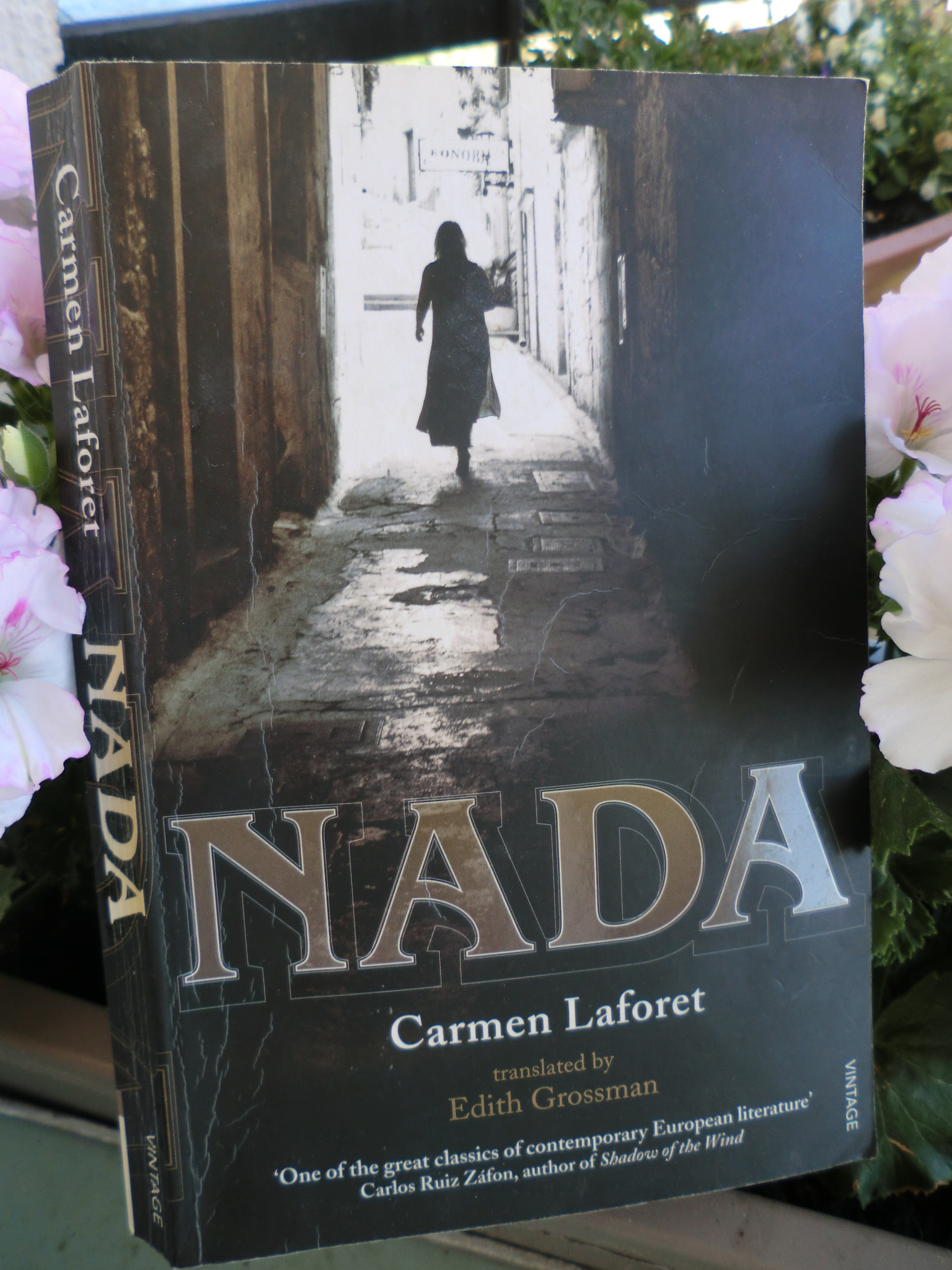
Nada by Carmen Laforet

Nada (2)On a recent visit to London, my Uncle was handing this book back to the friend who lent it to him and I listened intrigued as they discussed its merits. “Isn’t it brilliant?” she said.

Book envy hardly had time to rear its head before my Uncle said “but Claire, you must read this too” and rather than it returning to its owner, this book came home with me, delighted to be off the shelf once more, this time travelling closer to the territory where it was conceived.

Nada was written by Carmen Laforet when she was 23 years old and first published in Spanish in 1945. Born in Barcelona, she moved to Las Palmas in the Canary Islands when she was 2 years old and like her protagonist Andrea, moved to Barcelona when she was 18 to study literature and philosophy.

Edith Grossman, who also translated Gabriel Garcia Marquez and Mario Vargas Llosa (who writes a brilliant introduction in the opening pages) puts Nada into English in what Alberto Manguel describes as “a fluid translation”, one that I read as if it has been written in English as its first language. The book was finally published in 2007, three years after the death of its author.

Andrea has spent a dreamy summer in her hometown, looking forward to coming to Barcelona to study and spend time with her family she hasn’t seen in years and barely remembers. She arrives three hours late and thus finds her way to the Calle de Aribau alone in the dead of night, arriving at the dilapidated apartment to be met by an apparition, a strange gathering of eccentric characters.

gothic barcelonaHer family, weathered by years of neglect, corruption and psychological torment, live in a claustrophobic environment that causes Andrea to develop her own eccentric behaviour in an effort to escape theirs. The house is inhabited by her two uncles, Juan and Roman, her aunt Angustias, the maid Antonia, and Juan’s wife, Gloria, plus a menagerie of cats, an old dog and a parrot.

“That illuminated twinkling of stars brought back in a rush all my hopes regarding Barcelona until the moment I’d entered this atmosphere of perverse people and furniture. I was afraid to get into the bed that resembled a coffin. I think I was trembling with undefinable terrors when I put out the candle.”

Though never mentioned, the city and its people are in the shadow of the recent civil war which has pushed the population to its extremity, people are either starving or drowning in excess, oblivious to the plight of the depleted middle class, who grasp onto whatever they can, the more practical selling the candelabra and curtains no longer given occasion to flaunt their long-lost beauty.

“The memory of nights on Calle de Aribau comes to me now. Those nights that ran like a black river beneath the bridges of the days, nights when stagnant odours gave off the breath of ghosts.”

Carmen Laforet 1921 - 2004

Carmen Laforet 1921 – 2004

Carmen Laforet writes in a way that makes the reader experience the brutality of each encounter, while instilling in us something of the toughness of Andrea, we seem to know she will handle it all, despite her growing thinner by the day as she observes the decline into madness of her extended family.

The depth of the prose is extraordinary and intriguing, the kind of work that makes a reader want to listen to the writer talk about what inspired them and what was going through their mind when these words flowed onto the page.

Carmen Laforet has created a heroine who is witness to a decline, who is oppressed by it and at the same time somewhat oblivious to it, captured it with an intensity that causes us anguish, the story sits uncomfortably with the reader but compels us to turn the pages ravenously. An utterly absorbing and spellbinding read, what a treasure that took so long to be shared with the English reading world.

“She achieved this, and half a century after it was published, her beautiful, terrible novel still lives.” Mario Vargas Losa


Further Reading

Elena’s Books and Reviews – an excellent review by Spanish blogger, Elena Adler. Studying literature and humanities, her insights add much value to our reading and comprehension of the underlying tensions and dysfunction of society post the civil war.

The GuardianAlberto Manguel hails the first appearance in English of the modern Spanish classic Nada.


The People in the Photo – Eux sur la photo by Hélène Gestern

Belgravia BooksI have been patiently waiting for this book to be published since discovering it at the same time I learned of the existence of Gallic Books, francophile publishers based in London specialising in bringing a varied collection of excellent French titles across genres to the English reading world. You can buy their books online or at Belgravia Books which specialises in books in translation (5 mins walk from Victoria train station).

I had something of a French literature binge in December, reading Philippe Claudel’s Brodeck’s Report, Alain Fournier’s classic The Lost Domain, Faïza Guène’s young adult novel Just Like Tomorrow and a couple of Albert Camus essays in commemoration of his 100th anniversary. And I am set to continue this theme in 2014, perhaps even venturing into reading a few in the original language!

The People in the Photo is Hélène Gestern’s debut novel and centres on 40-year-old Parisian archivist Hélène’s personal endeavour to learn more about her mother Nathalie, who died when she was four-years-old and about whom no-one would ever speak, not her father, nor her step-mother or any other person and she never understood why.

Gestern

Her father has passed away and now her stepmother, the last living connection between her and her mother is seriously unwell, an event that prompts her into action.
Hélène has only one photo of her mother alongside two unknown men and places an advertisement to try to find anyone who might recognise them.

It marks the beginning of a correspondence and indeed much of the novel is in epistolary form, made up of letters and emails, with the exception of extracts that describe the various photos that are uncovered by Hélène and Stéphane, a Swiss biologist, who recognises one of the men in the photo.

The letters add more than just their content to the narrative, they are an adept device for creating pace and intrigue, their length and dates are significant measuring the time that passes, the pauses, the urgency of an occasional email and yet there is an unwillingness to let go of the controlled structure and single dialogue of the letter, their preferred medium; the revealing sign-off salutations a clue to the developing relationship between the two protagonists.

LettersIt is a revelatory journey of two people into the past of their parent’s lives. Inherent in delving into the past, no matter how necessary it may seem, is the risk of deception, disappointment, even horror in enlightenment.

Hélène Gestern deftly captures the seesaw of emotions as both characters experience waves of exhilaration in their search and periods of retreat from the insinuations of discovery, suggestions they aren’t always ready to face the implications of.

At times the characters seemed extraordinarily restrained, upon receiving a box likely to contain pertinent information, Hélène leaves it unopened for days, her excuse – no time or inclination, yet there is always sufficient to write the correspondence. It is understandable in a sense, the fear of what the revelation will bring, then Stéfane does the same, after developing a set of photos, has no time to look at them, yet has time for a 2 hour walk and his correspondence as well.

Perhaps the lure of corresponding with the living, that ever-present possibility of a future still to be enjoyed, sometimes overwhelms the need to continue digging into a dusty, forgotten past that holds little promise of joy. Or it might just be the sign of a compelling read, and our impatience with characters, living or between the pages of a book, who don’t act as we might, were we in their shoes.

It is a captivating read, intensely thought-provoking and intricately plotted, revealing little by little clues to lives lived in a distant era, yet which explain much of the more recent past for two young people allowing them greater understanding and the potential for forgiveness of those who, until their truth was revealed, were to them like shadows of their former selves.

Note: Thank you kindly to Gallic Books for sending me a copy of the book to read and review.

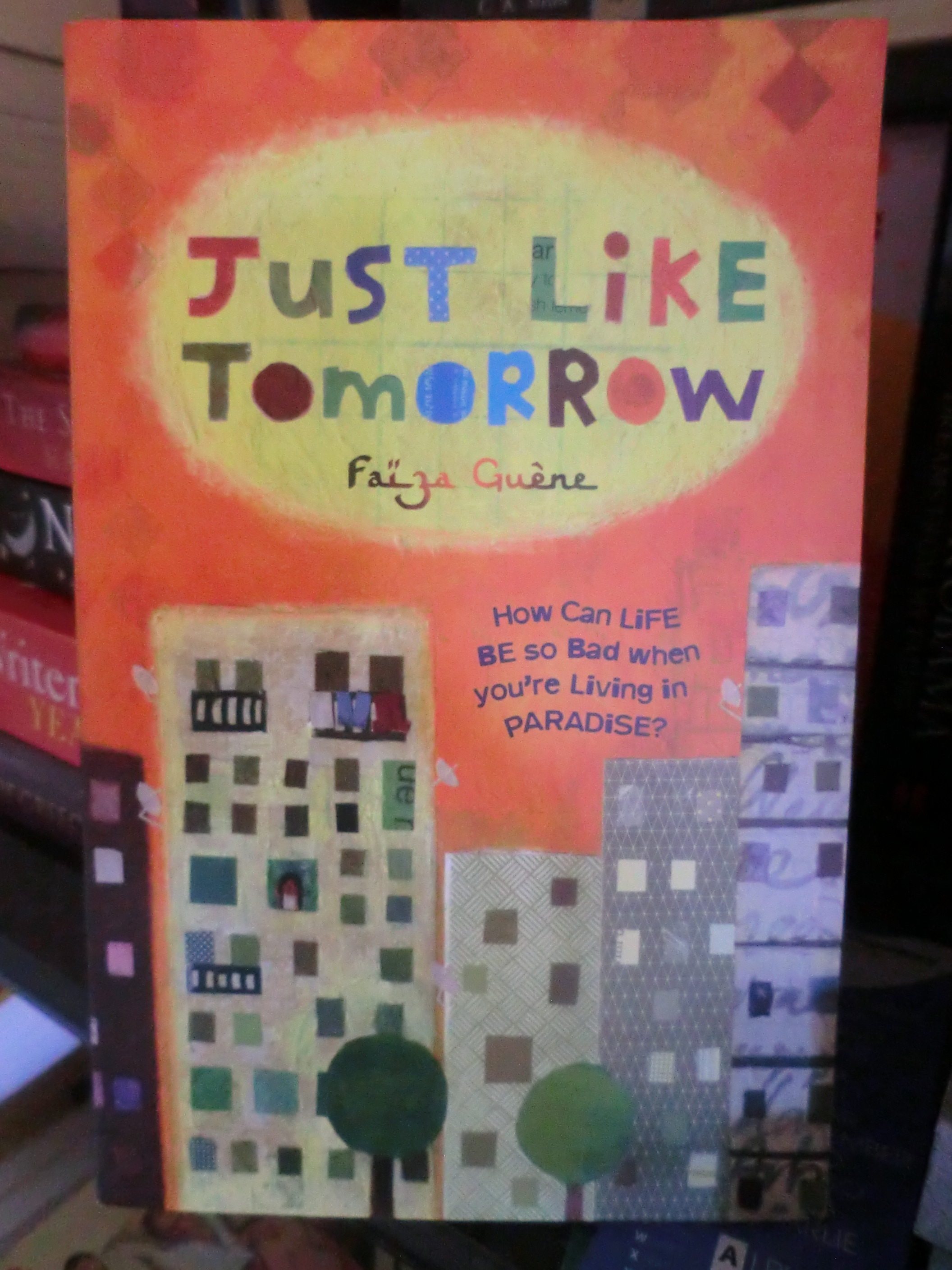
Just Like Tomorrow by Faïza Guène

How Can Life Be So Bad When You’re Living in PARADISE?

Kiffe kiffeI came across Faïza Guène’s  Kiffe kiffe demain translated as Just Like Tomorrow by Sarah Ardizzone, a french contemporary novel for young adults, via a wonderful blog A Year of Reading the World that is being turned into a book*.

Ann Morgan, inspired by the arrival of the multitude of athletes who came to London for the Olympics, decided to read a book from every one of 196 independent countries.

Each country presented a challenge, with only 3% of books in the UK being translated, she had to call on the help of her network and followers to find an English translation for many locations.

Faïza Guène

Faïza Guène

Faïza Guène is a young screenwriter who, after being involved in a local community project, began directing her own films. Born in France of Algerian parents, and growing up in a northern suburb of Paris, she writes from the heart of a challenging suburb, in a part of the city that few from the outside know about and about which little is written in literature.

Fifteen-year-old Doria lives alone with her illiterate mother, abandoned by a father who is seeking a younger, more fertile wife in his birthplace, Morocco. The story follows Doria’s unadulterated thoughts, which for most of the narrative are quietly despondent yet noisy with attitude. She is not prone to drama, although she observes it around her, as if from within a bubble and provides a running commentary on everything in her mind,and on the page.

Peppered with teenage slang, suburban Franco-Arabic dialect, the voice is unique and easily conjures an image of what life must be like for Doria, as she waits to be thrown out of school and pushed into a career she has no desire for. Her low expectations of life make the small gains she and her mother make all the more pronounced and the humour all the funnier.

What Mum really likes watching on telly in the evenings is the weather forecast. Specially when it’s that presenter with brown hair, the one who tried out for the musical The Birdcage but didn’t get it because he was over the top…So there he was, talking about this huge cyclone in the Caribbean, and it was like oh my days, this crazy thing getting ready to do loads of damage. Franky, this hurricane was called. Mum said she thought the western obsession with giving names to natural disasters was totally stupid. I like it when Mum and me get a chance to have deep and meaningful conversations.

It is a slice of life, coming of age story, of a second generation teenage immigrant living her life far from the images of the city of Paris that come to mind for most of us. It is a book that has been widely translated into other languages and offers a unique insight into teenage life for those on the fringe and an excellent alternative to the more well-known French literature out there.

*Reading the World: Postcards from my Bookshelf will be published by Harvill Secker in 2015.

The Examined Life

Examined LifeRecently I listened to a podcast entitled Literature on the Couch featuring Andrew Solomon, Greg Bellow and Stephen Grosz.

It was the book written by the latter that provoked my interest, Stephen Grosz’s The Examined Life, How We Lose and Find Ourselves. While there are many books one can pick up, which write with a voice of authority and experience on the subject of Freudian psychoanalysis, there are few if any, which have been penned as a practical legacy to the children an author will one day leave behind.

I like the idea of leaving lessons of our life’s learning to one’s children, they are the few people on earth we are able to genuinely love unconditionally and it intrigued me to seek out this book, to see if writing for one’s children on a subject one is something of a professional expert in and having already been reasonably widely published can remove the influence of ego or meeting the expectations of one’s academic peers and make a subject or in this instance many case studies, accessible to the lay person and true to that spirit of sharing wisdom with one’s progeny.

The book is divided conveniently into five sections, beginnings, telling lies, loving, changing and leaving.

CIMG0990

My Other Passion, Distilling Essence

The chapters are like perfume samples, distilled to their quintessential essence yet encapsulating the base notes that make a scent whole or a lesson in life complete. Incredible given that many of the cases he mentions are the product of a year or two of conversation, meeting with a person for fifty minutes, four or five times a week, over a number of years. A life work of more than 50,000 hours listening, learning, resolving, and understanding (or at least trying to).

In Beginnings, the first case that made me go back and reread a few pages was How Praise can cause a loss of confidence and once you’ve read it, you’ll understand the subtle difference between giving praise and giving something else more likely to boost esteem and confidence in children, so subtle and yet so potentially powerful. And what a great gift to pass on to those children, who may one day become parents themselves.

Admiring our children may temporarily lift our self-esteem by signalling to those around us what fantastic parents we are and what terrific kids we have – but it isn’t doing much for a child’s sense of self. In trying so hard to be different from our parents, we’re actually doing much the same thing – doling out empty praise the way an earlier generation doled out thoughtless criticism.

In Loving, the chapter Paranoia can relieve suffering and prevent catastrophe is insightful and may make us more sympathetic to those who suffer from it, particularly the elderly.

With old age, the likelihood of developing a serious psychological disorder decreases, and yet the chance of developing paranoia increases. In hospital I have heard elderly men and women complain: “The nurses here are trying to poison me.” “I didn’t misplace my glasses, my daughter has obviously stolen them.” “You don’t believe me but I can assure you: my room is bugged, they are reading my post.” “Please take me home, I am not safe here.”

Grosz suggests that paranoid fantasies, such as a feeling of being betrayed, mocked, exploited or harmed are a defensive response to the feeling that we are being treated with indifference. They protect us from the more disturbing emotional state, from a feeling that no one cares about us or is thinking about us, that we have been forgotten.

changeIn Changing, we learn how our very survival can be put at risk by our fear of change in How a Fear of Loss Can cause us to lose Everything. How some of us will escape at the very first sign of danger, even if it means doing something we are not used to doing and how others may perish, because of the fear of acting without sufficient information.

“We are vehemently faithful to our own view of the world, our story. We want to know what new story we’re stepping into before we exit the old one. We don’t want an exit if we don’t know exactly where it is going to take us, even – or perhaps especially – in an emergency.”

Overall, an intriguing, easy read including stories which might easily be those we encounter or recognise in ourselves or others close to us and with a clear explanation of the hidden meaning and lessons that can be found within them. Not surprising to see it listed yesterday in the Guardian’s recommended Holiday Reads, literature for the couch, the beach, the balcony or wherever it is you’ll be putting your feet up this summer (or winter if you’re down-under!)