
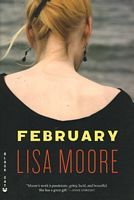
 February is a novel constructed around a real and tragic historical event that occurred in Newfoundland, Canada just over thirty years ago, a tragedy that remains deeply felt in the area today. All Newfoundlanders of a certain age, remember where they were on the night the Ocean Ranger sank, a technological wonder that was supposed to be unsinkable, one that if safety procedures had been followed, indeed, may not have done so.
The book was longlisted for the Man Booker Prize in 2010. The cover doesn’t tell us much about the scope of this novel, I expect it represents the protagonist Helen, at about the age she must have been, in her 30’s when she learned she had lost her husband at sea.
From Wikipedia:
Ocean Ranger was a semi-submersible mobile offshore drilling unit that sank in Canadian waters on 15 February 1982. It was drilling an exploration well on the Grand Banks of Newfoundland, 267 kilometres (166 mi) east of St. John’s, Newfoundland, for Mobil Oil of Canada, Ltd. with 84 crew members on board when it disappeared. There were no survivors.

‘Ocean Ranger Oil Rig’ – Licensed under Fair use via Wikipedia
It was the day after Valentine’s Day, Helen, received a card from her husband Cal, a day or so later. Cal’s mother phoned the Coast guard and shouted at them, saying they’d got it wrong. If the men were dead the company would have informed the families.
Helen knows in her heart it is true, but she needs the body of her husband. Her father-in-law convinces her that she doesn’t want to remember him that way.
‘There were people who went on hoping for months. They said there must be some island out there, and that’s where the survivors were. There was no island. Everybody knew there was no island. It was impossible. People who knew the coast like the back of their hand. But they thought an island might exist that they hadn’t noticed before.’
At night she dreams of him and believes he wishes her to join him.
‘How awful. Death has made him selfish.
Forget the children. This is what he means. Forget yourself. Come with me. Don’t you want to know what happened?
She feels as though she is betraying him by staying. It is relentless and exhausting, every time she says no him, she forgets him a little more.
The novel moves between the 1970’s when she and Cal were married to October, November 2008, the present, when Helen awaits the arrival of her son John, who has called from Tasmania, Australia to tell her he is going to become a father.
Helen is kept busy running her own dressmaking business and at the insistence of her sister Louise, is having her floors replaced by Barry. She doesn’t want the job to end, she becomes used to his presence, his ignorance of her. It makes her desire him.
John’s story also moves between 2008 and the mid 90’s when he makes a career change, becoming an engineer for the same industry that took the life of his father. He has had a high risk job and never wanted to become a father. The novel gives more space to John and the mother of his soon to be born child, Jane, while giving little space to the two daughters, who appear on the fringes, are not close to their mother, nor developed with much depth.
‘John has avoided being a father all his adult life. It has taken stealth and some underhandedness. It has taken clarity of purpose when the moment called for dreamy abandon. He has practised withdrawal. He has kept what he wants, what he actually wants for his life, in the centre of his thoughts, even while in the throes of orgasm. He’s kept a tight fist on the reins of himself.’
February is a brilliantly constructed and thought-provoking vision of one woman’s grief in the wake of her husband’s death, leaving her pregnant and with three children to raise. It illustrates the way this event and the memories it triggers, return in waves from that point forward, that death is not really death, it is a form of ever-present, albeit fading memory.
While never overly melancholic, Helen’s recollections and reconstructions of what may have happened to her husband in those last minutes, her studying of the manuals to understand how to resolve the problem that caused the sinking, reminded me of Joan Didion’s study and reliving of her own husband’s death in The Year of Magical Thinking (2005).
However life continues on and around Helen and those quotidian narratives reminded me of the work of Anne Tyler as we see-saw between the practical elements of daily life and the introspection of a death that stays with someone their entire life and in those still moments, returns as potently, as if it were yesterday.


Moore lost her father a few years before the Ocean Ranger sank, she was 16 and her sister 12, giving her first hand experience of how grief works it way through a family, how it makes and shapes the lives of those left behind, an experience that enriches the novel and brings it alive, makes it feel authentic.
Quietly compelling, highly recommended.
‘I think the most important thing I’ve learned about grief – and coming through it – is that you don’t forget the person you’ve lost. Rather, the memories become sharper, gather new meaning, and are richer over time. The absent become more present, not less so, as time goes on.’ Lisa Moore, extract from an interview with Bookgroup.info
 From whispering muse to the gift of stones, this was the second book I read in 2016, one of Jim Crace’s earlier philosophical works, telling the tale of a village of stone workers, who live a simple life working stone into weapons, which are then traded with passers-by for food and other essentials, which they are not able to provide for themselves, in the arid landscape within which they reside. It is a livelihood they think little about, it is all they know.

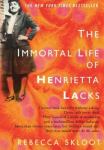
 Skloot made Henrietta the subject of her research for 10 years in the creation of this thorough, respectful account of the life of Henrietta Lacks and her journey to uncover the events of the time within the context of what was the norm in her day.
 A real-life character tour de force from French author Jean Teulé featuring a famous female serial killer from the nineteenth century.
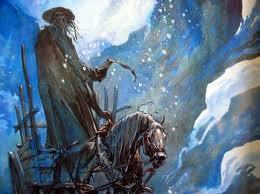 ‘The Ankou wears a cloak and a broad hat,’ said Anne Jégado, sitting down again. ‘He always carries a scythe with a sharpened blade. He’s often depicted as a skeleton whose head swivels constantly at the top of his spine like a sunflower on its stem so that with one glance he can take in the whole region his mission covers.’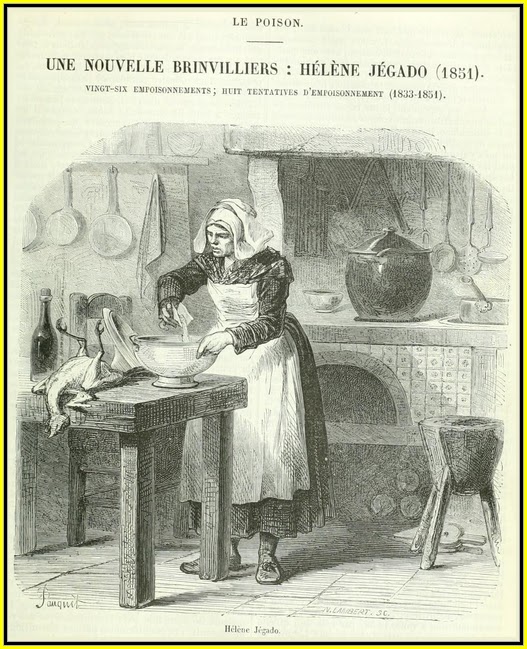


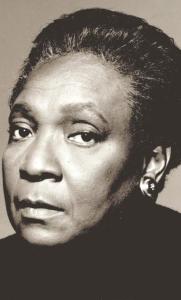
 Her novel Heremakhonon(1976), which I’ve not yet read, is a semi-autobiographical story of a sophisticated Caribbean woman, teaching in Paris, who travels to West Africa in search of her roots and an aspect of her identity she has no connection with.
 In 1797, the kingdom of Segu is thriving, its noblemen are prospering, its warriors are prominent and powerful, at their peak.
 Elizabeth Gilbert, author of the best seller Eat Pray Love and more recently in 2013, the historical, botanical novel

 Ford went on: “I say this to you only because writing is clearly bringing you no pleasure. It is only bringing you pain. Our time on earth is short and should be enjoyed. You should leave this dream behind and go find something else to do with your life. Travel, take up new hobbies, spend time with your family and friends, relax. But don’t write anymore, because it’s obviously killing you.”
 Gilbert gave her a brief outline and asked Patchett what her novel was about and she repeated almost word for word the same idea – fitting into her theory that the idea had visited her and because she had put it aside for a couple of years, it left and had been passed on to Patchett to become
 hough in contrast to that epic tome that won the Man Booker Prize in 2013, Rose Tremain’s novel features only one man seduced by the gold or and gives us an insight into two women, Harriet his wife and Lilian his mothers, their hopes, achievements and personal struggles in trying to make a life in this untamed country.
 They know it will be a tough existence and they will need to learn from mistakes, as all pioneers do, but they find the challenges of this harsh Canterbury landscape almost soul destroying and Joseph is quickly lured away by the glitter and promise of gold dust he finds in his river and soon sets off to join the other men, also seduced by their lust for “the colour”, in new goldfields over the Southern Alps, leaving the two women to fend for themselves.
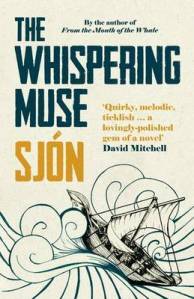 The Whispering Muse by Icelandic poet, songwriter and novelist Sjón, known for his collaborations with Björk and winner of the Nordic Council Literary Prize (equivalent of the Man Booker Prize) for this novel, was the first book I chose to read for the New year.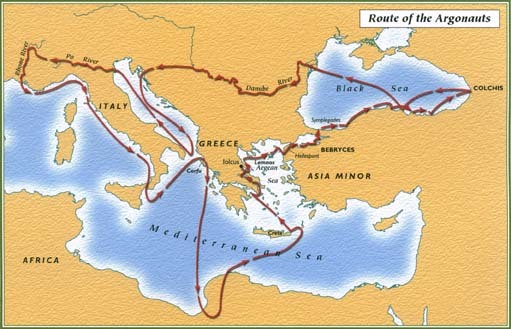







 Word by Word