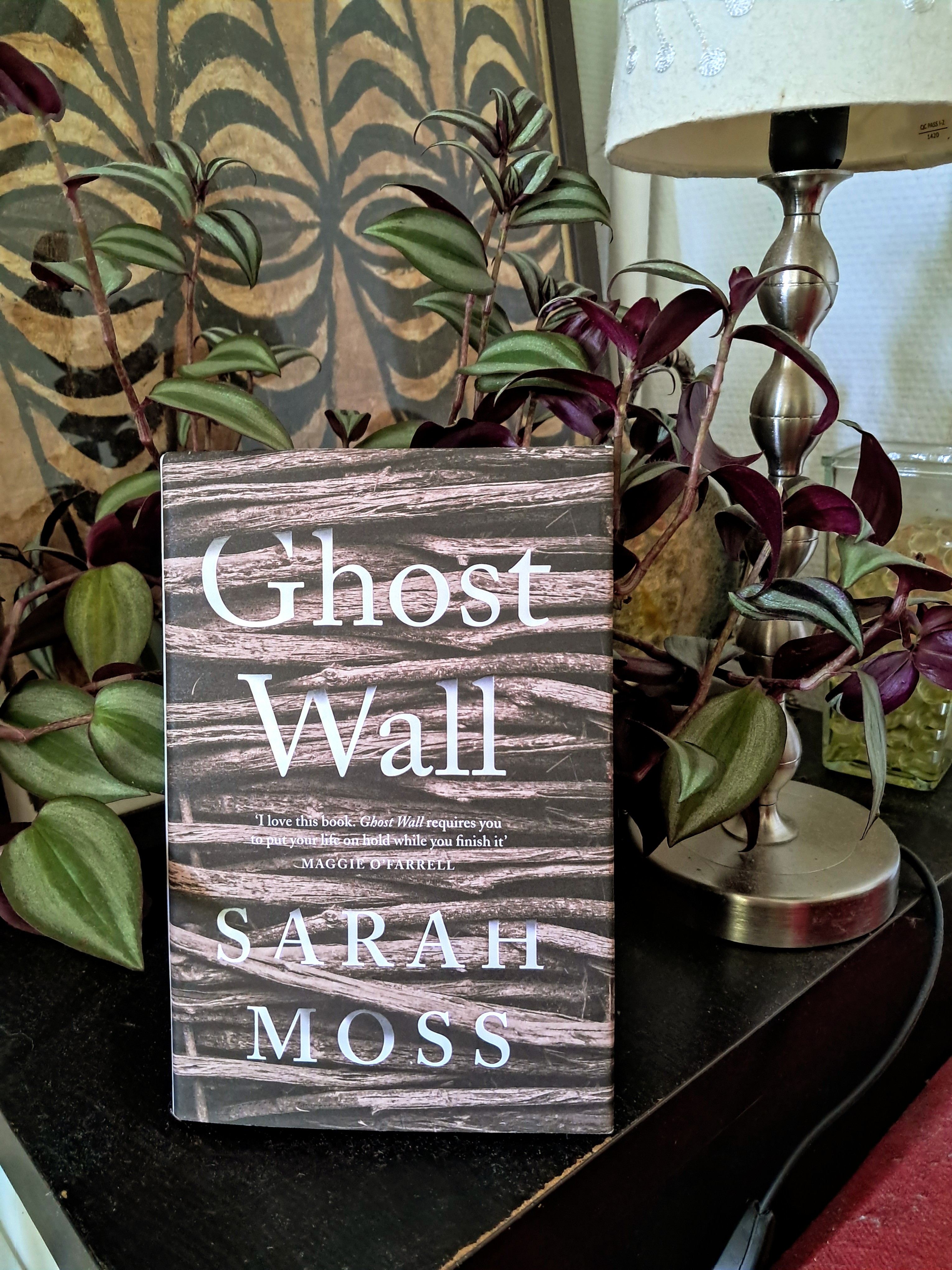
The Seven Moons of Maali Almeida by Shehan Karunatilaka

The Seven Moons of Maali Almeida by Sri Lankan author Shehan Karunatilaka won the Booker Prize in 2022. It wasn’t on my radar, probably because it seemed to me like it was trying to be too many things, but when I saw a hardcover copy on sale at the annual Ansouis vide grenier last September, I decided to delve into it and see for myself.

Outstanding Sri Lankan Literature

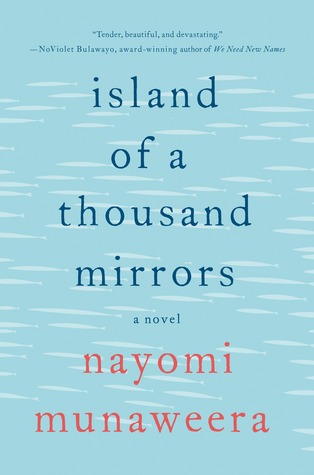
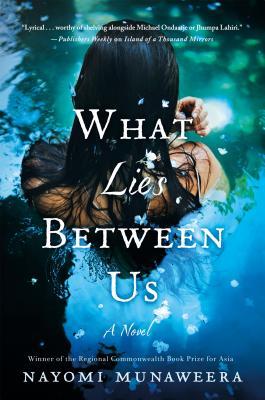
I knew that it was about the civil war era in Sri Lanka and I have read some excellent novels that are set in those difficult times, most recently the novel that won the Women’s Prize for Fiction in 2024 Brotherless Night by V.V. Ganeshananthan (see my review here), but my favourite novel set in that country is Naomi Munaweera’s Island of a Thousand Mirrors (my review here), winner of the Commonwealth Writer’s Prize in 2013.

Munaweera writes exquisitely of the island of Sri Lanka, in lyrical prose that takes the reader inside the family experiences, evoking all the senses, the aroma of the cuisine, the fear and excitement of young, forbidden love, the pain of heartbreak, the palpable tension as sisters walk to school, sometimes witnessing images that will stain their minds and revisit their dreams for years.

Mystery, Satire, Historical Fiction and Magical Realism in One

Booker Prize Winner 2022 Sri Lankan literature magic realism afterlife noir

Seven Moons is a literary mystery about the life and death of Maali Almeida, who from the opening pages, in a second person narrative, turns up dead and from the In Between, that place between life and the afterlife that he now inhabits, proceeds to uncover the mystery of his death.

Set in 1990 Colombo, Maali was a war photographer, a promiscuous gay man, sometimes gambler and seeker of the next photograph that will show the dark and gruesome elements of those in power, a witness to crimes he believes can bring down governments, stop wars.

The In Between, Down Below and The Light

When he arrives at the In Between, he and others like him are told they have seven moons, seven nights to meet the criteria to enter The Light. As they queue and ask questions about their deaths, Maali hopes he is about to wake up from a dream.

The swarm of souls presses closer, berating and badgering the woman in white. You gaze upon the pallid faces, sunken eyes in broken heads, squinted in rage and pain and confusion. The pupils are in shades of bruises and scabs. Scrambled browns, blues and greens – all of which disregard you. You have lived in refugee camps, visited street markets at noon, and fallen asleep at packed casinos. The heave of humanity has never been picturesque. This heave throngs towards you and heaves you away from the counter.

metaphysical thriller civil war Sri Lanka supernatural

Every soul has those seven moons to wander around the In Between, to recall past lives, and to forget.

While he should be completing the tasks to get to The Light, instead he shifts from The In Between back to the present, the Down Below and observes the aftermath of his death.

He tries to direct those close to him towards his most incriminating photographs in order to achieve which he was not able during life. He doesn’t understand quite how these shifts happen, and neither does the reader, making it somewhat confusing to keep up with this trippy journey.

Here’s what you remember from two nights ago: (a) visiting the Leo casino, (b) drinking at the bar, (c) eating the buffet, (d) fooling around with the bartender. here’s what you don’t remember: (a) sitting with a suddha (b) being thrown to your death.

Conversations With the Dead

As well as investigating his own murder, along the way he has conversations with a dead athiest, a dead revolutionary, lawyer, bodyguard, priest, dogs and more. He observes the number of spirits hanging on to the living whispering their ears.

You’ve always thought the voice in your head belonged to someone else. Telling you the story of your life as if it had already happened. The omniscient narrator adding a voiceover to your day. The coach telling you to stop feeling sorry and do what you’re good at. Which was winning at blackjack, seducing young peasants and photographing scary places.

Moons, Chapters and Beats

On his motivation for writing this novel, the author had this to say:

‘I began thinking about [Seven Moons] in 2009, after the end of our civil war, when there was a raging debate over how many civilians died and whose fault it was. A ghost story where the dead could offer their perspective seemed a bizarre enough idea to pursue, but I wasn’t brave enough to write about the present, so I went back 20 years, to the dark days of 1989.’

Not just an author of fiction, Shehan Karunatilaka has also written rock songs and speaks of his work in terms of beats and rhythm, infused with supernatural folklore, ghost stories and history.

It’s a long novel that for me held my interest in parts and then lost me as it shifted, but each time that began to annoy me and slow me down, the narrative would shift back to something of interest and so I persevered, however, I did find it overly long in its digressions, drifting in and out of reality. It’s an undeniably clever, erudite novel, unique in its conception that reminded me a little of the surreal experience of reading David Mitchell’s Cloud Atlas.

The Judges on A Metaphysical Thriller Winner

In addition to praising its ambitious scope and hilarious audacity of narrative techniques, the Booker judges had this to say of the metaphysical thriller:

‘Life after death in Sri Lanka: an afterlife noir, with nods to Dante and Buddha and yet unpretentious. Fizzes with energy, imagery and ideas against a broad, surreal vision of the Sri Lankan civil wars. Slyly, angrily comic.’

‘This is a metaphysical thriller, an afterlife noir that dissolves the boundaries not just of different genres, but of life and death, body and spirit, east and west. It is an entirely serious philosophical romp that takes the reader to ’the world’s dark heart’ — the murderous horrors of civil war Sri Lanka. And once there, the reader also discovers the tenderness and beauty, the love and loyalty, and the pursuit of an ideal that justify every human life.’

Have you read The Seven Moons of Maali Almeida? Share your thoughts in the comments below.

Further Information

Read an Interview With the author Shehan Karunatilka

Click here to read an extract from the first section of the novel – Read an Extract from The Seven Moons of Maali Almeida

By the Sea (2001) by Abdulrazak Gurnah

By the Sea begins as a compelling narrative and mystery of a man who arrives at Gatwick airport from Zanzibar without a visa and refuses to speak English, until the crucial moment where he is about to be deported and he utters the words that will change his trajectory.

Refugee. Asylum.

Old Scores Revisited

Nobel Prize for Literature 2021 Zanzibar Tanzania witing about immigration culture refugees requesting asylum

In trying to locate someone to translate for him, Latif is contacted and the two men realise there is a connection, a history that has perpetuated with major gaps on either side of their understanding, voids often filled by those wishing them ill.

Their story began by the sea and concerned a fragrance Ud-al-qamari, and would be retold far away where few understood the nature of their feuds and punishment, of corruption and power, petty rivalries over debts, possessions, and influences that could drive a man to flee for his life.

The man I obtained the ud-al-qamari from was a Persian trader from Bahrain who had come to our part of the world with the musim, the winds of the monsoons, he and thousands of other traders from Arabia, the Gulf, India and Sind, and the Horn of Africa. They had been doing this every year for at least a thousand years. In the last months of the year, the winds blow steadily across the Indian Ocean towards the coast of Africa, where the currents obligingly provide a channel to harbour. Then in the early months of the new year, the winds turn around and blow in the opposite direction, ready to speed the traders home.

Time Dismembers, Perceptions Unremembered

Told in three parts, the first two focus on each of these characters and their early life in Zanibar and something of their present, while the third part is a kind of oral storytelling as the two meet and their intertwined story is retold from start to finish until a different connection emerges, as they find themselves newly isolated in this place around people uninterested in their journey.

So time dismembers the images of our time. Or to put it in an archaeological way, it is as if the details of our lives have accumulated in layers, and now some layers have been displaced by the friction of other events, and bits of contingent pieces still remain, accidentally tumbled about.

A drama of disappointment, self-deception and renewal, the novel explores both the double bind of the known culture that entraps, and the unknown culture that frees but isolates the individual, for their betterment, yet never quite attaining an imagined, desired status.

Like Admiring Silence, an excellent, astute read by an accomplished author.

Further reading

My review of Admiring Silence (1996)

Nobel Prize Interview with Abdulrazak Gurnah

Article Guardian on Winning the Nobel Prize

New York Times: Abdulrazak Gurnah Refuses to Be Boxed In: ‘I Represent Me’

Abdulrazak Gurnah, Author

Abdulrazak Gurnah was the Winner of the Nobel Prize for Literature in 2021 for

‘his uncompromising and compassionate penetration of the effects of colonialism and the fate of the refugee in the gulf between cultures and continents’,

He was born in 1948 and grew up on the island of Zanzibar in the Indian Ocean, arriving in England as a refugee at the end of the 1960s. After the liberation from British colonial rule in December 1963 Zanzibar went through a revolution which led to oppression and persecution of citizens of Arab origin; massacres occurred. Gurnah belonged to the victimised ethnic group and after finishing school was forced to leave his family and flee the country, by then the newly formed Republic of Tanzania. He was eighteen years old. Not until 1984 was it possible for him to return to Zanzibar, allowing him to see his family shortly before the father’s death.

Themes of Refugee Disruption

Gurnah’s writing is from his time in exile but pertains to his relationship with the place he had left, which means that memory is of vital importance for the genesis of his work. 

The theme of the refugee’s disruption runs throughout his work. His novels depict a culturally diversified East Africa. His dedication to truth and aversion to simplification are striking. It can make the work bleak and uncompromising, however he follows the fates of characters with great compassion and unbending commitment.

His novels include Paradise (1994), which was shortlisted for both the Booker and the Whitbread Prize; By the Sea (2001), which was longlisted for the Booker and shortlisted for the Los Angeles Times Book Prize; and Desertion (2005), shortlisted for the Commonwealth Writers’ Prize. His most recent novel Theft (2025) is the story of the intertwined lives of three young people coming-of-age in postcolonial East Africa, selected as a book to look out for in 2025 by the GuardianObserverIrish Times and BBC.

Until his retirement he had been Professor of English and Postcolonial Literatures at the University of Kent in Canterbury, focusing principally on writers such as Wole Soyinka, Ngũgĩ wa Thiong’o and Salman Rushdie.

The Emperor of Gladness by Ocean Vuong

The hardest thing in the world is to live only once.

But it’s beautiful here, even the ghosts agree.

literary fiction Oprahs bookclub immigrant experience fiction Vietnam Lithuania the eldery the disenfranchised marginalised

Ocean Vuong’s latest novel begins with a chapter that stands apart from the rest of the novel, a lyrical description of the New England town of East Gladness, that sits in a valley that when the prehistoric glaciers melted and the river dried up, left a silvery trickle along the basin called Connecticut : Algonguin for ‘long tidal river’.

The chapter ends with the arrival of a nineteen year old boy named Hai, crossing a bridge in September 2009 and climbing the railings.

Though it was true the boy had run out of paths to take, out of ways to salvage his failures, he never planned on jumping off King Philipp’s Bridge that evening. It was only when he glimpsed, between the rail ties, the river swirling so massive below, a place you could slip clean into, that something in him both jolted and withered at once.

Young and Old On the Margins of Society Take Centre

Hearing a voice shouting at him, he encounters 84-year-old Grazina, a Lithuanian widow drifting in and out of the grip of dementia, trying to stay in her home and keep the hallucinations at bay.

Photo by T.Constant Pexels.com

Hai is the son of a first generation Vietnamese immigrant, entrapped in recurring cycles of illusion, failing to achieve promises he made to his mother, leading him deeper into despair.

When these two characters paths cross, it marks the beginning of a shape shifting, temporarily life-altering bond and uplifting experience in both their lives, as together they attempt to navigate the unsustainable circumstances they are desperately confronted with.

The novel traverses a season in the lives of these two, intimately demonstrating the beautiful supporting effect two strangers can have on each other’s lives, when their closer familial ties are unable to.

When the Past Emerges into the Present

Hai is given refuge and in return he monitors Grazina’s medication, he inserts himself in her hallicinatory episodes, gently accompanying her back to safety, while learning something of the traumatic earlier years she has navigated, that return to haunt her.

She stared out the window as he read the first few paragraphs from the story of a man wandering the warscape of his mind after the wars of his body. When he finished, she looked at him from beneath her glasses and said only, “Very well, then.” He was about to say something about the book when the cuckoo clock on the wall behind him went off, the wooden owl shooting out to nod along to a jagged tune spinning in its broken gears. Her eyes lit up. “Ah, 6.43, the hour Vilnius fell to Stalin.” She crossed herself, shut her eyes, and said a prayer under her breath.

The Circumstantial Family

He reaches out to an estranged family member and gets a job in a fast food restaurant and quickly becomes part of a team that are all shouldering their own struggles and dreams and together they become something that extends beyond the comradeship of colleagues, the circumstantial labour family created through simultaneous work shifts; who take risks, find humour and support each other for a brief chapter in each others lives.

It was in these moments that he thought this new life, if you could call it that, wasn’t so bad. That he could bide his time until something ahead of him lifted, like the mist rising each morning above the river outside his window, revealing what was always there. But he was wrong.

The characters of Hai and Grazina are flawed and unforgettable, they are vulnerable, disillusioned and in perfect alignment as they keep each other as stable as possible, until the external world inevitably interferes.

When Kindness and Care Lead

immigrant american culture, chosen family, kindness of strangers

I was reminded a little of the reading experience of Barbara Kingsolver’s Demon Copperhead, only I loved this even more, because of the added multicultural layer that came from these characters having connections to another culture and way of being in the world, while trying to survive against the odds in the United States.

They are having to cope with and navigate for one, the effects of ageing and the other, the allure of addiction to regulate an overwhelmed nervous system. The support and consistency they stumble across in each other, shines a ray of light in an otherwise dark and lonely existence.

I really enjoyed this novel, even more than his accomplished debut novel On Earth We’re Briefly Gorgeous. There’s so much more to gain from this novel, but I urge you to read it for yourself and gift yourself that experience.

Highly Recommended.

How strange to feel something so close to mercy, whatever that was, and stranger still that it should be found in here of all places, at the end of a road of ruined houses by a toxic river. That among a pile of savaged trash, he would come closest to all he ever wanted to be: a consciousness sitting under a lightbulb reading his days away, warm and alone, alone and yet, somehow, still somebody’s son.

Whereabouts by Jhumpa Lahiri

Cerebral Distractions or Healing Attractions

Whereabouts indeed. I have been absent this space and reading less, as I pursued another passion, the great jigsaw puzzle of building a family tree, which started out as an exercise in tracing my female lineage looking for a particular pattern, I felt called to heal and ended up as a series of unfinished mysteries seeking to be resolved. And it is so much fun, imagining and reclaiming these lives!

Well, all of that is another story, but interesting enough to have pulled me away from my regular habit of sharing my reading here. I miss this space, and the interactions, so here we are, sharing a few recent reads.

I picked up the reading again as the temperatures here rocketed into full summer heat and my brain asked, “Can’t we just read a book today?”, instead of spending my free time working like the dedicated closet researcher I had become.

A day at the beach with a Jhumpa Lahiri novel turned the tide.

A Gifted Book Returns Unread

Whereabouts by Jhumpa Lahiri translated from Italian by the author

Whereabouts by Jhumpa Lahiri is a novel that came back to me, one I gifted a friend from abroad who has a love affair with the city of Rome. Back in Europe to visit the city again, she brought this book I gave her halfway round the world, pulled it out of the suitcase and said:

‘I haven’t read it yet. I’m going to read it in Rome. Here. You have got two weeks to read it before I go. We can talk about it when I get back from Ireland.’

Challenge accepted and quietly delighted; I really wanted to read it too.

Now I have.

I loved it.

It felt like I was reading a work of creative non-fiction. In disguise. Autofiction perhaps?

Jhumpa Lahiri is a British-American author of Bengali parents, whose earlier novels have highlighted the immigrant experience. For some years now she has lived in Italy, learned the language and her last two books were written and published in Italian before being translated into English.

Whereabouts is a collection of short vignettes of one woman’s highly observational, contentedly solitary, existence in Rome. The epigram, a quote from Italo Svevo provides a clue to what follows.

‘Every time my surroundings change I feel enormous sadness.It’s not greater when I leave a place tied to memories, grief, or happiness. It’s the change itself that unsettles me, just as liquid in a jar turns cloudy when you shake it.’

Averse to Change, Loves Movement

Disliking change, but always on the move, her days capture aspects of the surroundings she has grown attached to, taking us right there. The chapter titles nearly all begin with the prepositions: On, In or At.

On the Sidewalk, In the Street, At the Trattoria, In the Piazza, At the Bookstore, On the Couch, On the Balcony, At the Beautician, In the Sun, At my House, In Bed, On the Phone.

Jhumpa Lahiri autofiction Whereabouts set in Rome Italy

Near the end, as I began to notice this pattern and list of locations, I asked myself, “What is this ‘Whereabouts?’ and I flicked back to the contents page and read through the list of destinations. I then turned the page and the only chapter that doesn’t start with a preposition, Nowhere, seemed to be speaking to me, responding to my question.

It began by saying:

‘Because when all is said and done the setting doesn’t matter: the space, the walls, the light. It makes no difference whether I’m under a clear blue sky or caught in the rain or swimming in the transparent sea in summer.’

This has come just after Up Ahead, a sign of change, something our protagonist does not like and spends the entire short chapter of In Spring pondering. A chapter I sent to another friend, one who shares the protagonist’s dislike of that season.

Transition, Change and Things that Stay the Same

In Spring, a chapter from Jhumpa Lahiri's novel of vignettes Whereabouts

Now, she contemplates a transition; both of the day, and of a life, observing the peripheral characters to this solitary existence she has created, people in movement, marking the end of a day.

‘They’ll keep walking along these sidewalks. They’re permanent fixtures in my mind, knotted up in the fabric of my neighbourhood just like the buildings, the trees, the marble woman. These are the faces that have kept me company for years, and I still don’t know the people they belong to. There’s no point saying goodbye to them, or adding, we’ll meet again, even though right now I’m overflowing with affection for them.’

Overall, it’s a reflective relatively smooth paced novel in which not much happens and yet you feel as though you have visited and lived for a short time in a city apartment in one of the squares of this major European city of Rome, a part of it not populated by tourists, but where the everyday life continues to unfold week after week, year upon year, following the same rhythms, with small changes a natural part of its existence.

‘Is there any place we’re not moving through? Disoriented, lost, at sea, at odds, astray, adrift, bewildered, confused, uprooted, turned around. I’m related to these related terms. These words are my abode, my only foothold.’

Brilliantly crafted. Could not put it down, read it in a day.

Highly Recommended.

Have you read Whereabouts? Do you have a favourite by Jhumpa Lahiri? Tell us in the comments below.

House of Splendid Isolation by Edna O’Brien

Back to the final days of Reading Ireland Month 2025, this week I slowly read Edna O’Brien’s political novel House of Splendid Isolation, the first of the Modern Ireland Trilogy, books written in the 1990’s that depict significant events in modern Ireland. The other two novels in that series are Down By the River and Wild Decembers.

Incarceration, Idealism and Ignorance, An Irish Story

Modern Ireland trilogy Edna O'Brien a political novel of the 1990's

House of Splendid Isolation is a story of one event and incidents involving a community, over a few days as a man involved in murderous events is on the loose and actively being hunted.

It is also a book of parts and voices, a child’s voice, the past, the present, a woman Josie who returns to Ireland after a period of youth in Brooklyn, her disappointing yet predictable marriage, an impossible affair and violent retribution, an accident, people who drop by, whose good deeds lead to violent consequences, friendships that hide betrayal, communities that breathe suspicion, harbour fear and occasionally a fugitive.

I hear stories. It could be myself telling them to myself or it could be these murmurs that come out of the earth. The earth so old and haunted, so hungry and replete. It talks. Things past and things yet to be. Battles, more battles, bloodshed, soft mornings, the saunter of beasts and their young. What I want is for all the battles to have been fought and done with. That’s what I pray for when I pray. At times the grass is like a person breathing, a gentle breath, it hushes things.

A Not So Quiet Last Act

Josie is now a lone widow in a big old house that she came to inhabitant through marriage, she did not wish to die in a Home, she has returned. A nurse visits occasionally and her grocery order is delivered. Memories still haunt her.

The nurse muses why, the older they get, the madder they are for talk; their past, their present, their futures, anything, everything, afraid of death too as if she was not afraid of it herself.

Edna O'Brien The Country Girls The House of Splendid Isolation

Into her last solitary days arrives this unwelcome visitor on the run, they play cat and mouse, wary of each other, challenging each other, co-existing nevertheless, never quite knowing if one can trust the other, providing each other something they need for a brief moment, while the world outside goes mad in their paranoia, the rumour-mill running rampant, suspicions gone mad.

The grass smells good to him and after three months cooped up in a house in a town, he’s tuned to the smell of grass and the fresh smell of cow-dung, to the soft and several lisps of night. He knows his country well, McGrevvy does, but only in dark. The dark is his friend. Daylight his enemy. Who set him up. Who can he trust, not trust.

The Grass Was Never Greener

While their words and worlds would never align, there is something in the brief respite one provides the other in this house of Splendid Isolation, before they each face the inevitable that awaits them; capture or death, peace no longer an option. Here the first confrontation.

‘There’s myself and my maker,’ she says quietly. So this is how it happens, this is how a life is suborned, one’s insides turned to whey, an opening door, a man, hooded, with not a lax muscle in his being, a loaded rifle and outside crows cawing with the same eventide fussiness and no one any the wiser that her time is up.

A novel of many layers and consequences revealed of humans wronged, who know not how to seek healing or harmless resolution, whose path leads to occasional respite en route to destruction.

It brilliantly depicts two faces of a staunchly divided territory, their failed attempts to escape their destiny, a brutal confrontation and a land that continues to absorb the repercussions.

Forward, back, slow, quick, slow

The writing moves from poetic, contemplative reflection to rapid, coarse dialogue to action oriented tension as the slow hours spent in captivity contrast with the build up externally as the police net closes in on the fugitives location. At times the prose is sparse, and other times it shifts as our protagonist loses her grip on reality and shifts into past memories or present situations that confuse her.

It’s not a straight forward read, as it navigates and holds all these time frames, but it propels forward at a good pace and leaves the reader with much to reflect on.

A Year With Edna O’Brien

I read this for Reading Ireland Month 2025 with Cathy at 746Books and also for Cathy and Kim’s A Year With Edna O’Brien which they are doing in 2025. Kim will be reading another of the Modern Ireland trilogy novels, Wild Decembers in August.

Further Reading

My review of Edna O’Brien’s renowned Country Girls Trilogy (initially banned in Ireland due to its bold faced portrayal of a young woman’s quest for independence and awakening sexuality) consists of three novels: The Country Girls (1960), The Lonely Girl (1962), and Girls in Their Married Bliss (1964). It was re-released in 1986 in a single volume including a revised ending to Girls in Their Married Bliss and the addition of an epilogue.

Author, Edna O’Brien

Edna O’Brien was born in December 1930 in Tuamgraney, County Clare. She died in 2024, having written over 20 works of fiction, known to provoke, dissect and dig into social, cultural and religious issues deep in the fabric of Irish society.

In addition to The Country Girls trilogy, her novels include A Pagan Place (1970), the story of a girl growing up in rural Ireland, winner of the Yorkshire Post Book of the Year Award; Zee & Co (1972); Johnny I Hardly Knew You (1977), a story of love, murder and revenge; Time and Tide (1992), winner of a Writers’ Guild Award, the story of a young wife who faces a crisis when she leaves her husband and is forced to fight for the custody of her sons.

She is the author of a trilogy of novels about modern Ireland: House of Splendid Isolation (1994), she writes about Irish nationalism and sectarian violence; Down by the River (1996), based on the true story of a young Irish rape victim forced to travel to England for a legal abortion; and Wild Decembers (1999), about a farmer, Joseph Brennan, and his sister, Breege, living in an isolated rural community. In the Forest (2002), is based on the true story of a disturbed, abused young man who murdered a young mother, her infant son and a Catholic priest in the west of Ireland in the early 1990s. The Light of Evening (2006) and Byron in Love (2009), Haunted (2010), The Little Red Chairs (2016), Girl (2020), Joyce’s Women (2022).

She wrote Mother Ireland (1976), a travelogue with photographs by Fergus Bourke, and a biography of James Joyce, published in 1999. She is the author of several plays. In 2021 she was awarded the French Ordre des Arts et Des Lettres.

“I wanted to write from as far back as I can recall. Words seemed and still seem an alchemy, and story the true conductor of life, of lives.”

Reading Ireland Month 2025

Women’s Prize for Non-Fiction Shortlist 2025

Now in it’s second year running, the Women’s Prize for Non-Fiction Shortlist has been announced. If you want a reminder, here are the 16 books that were on the longlist.

The six titles chosen range from history, science and nature, to current affairs and memoir, united by the power of hope and the necessity of resistance to initiate change.

Judge’s Comment

It’s an absolute pleasure to announce six books on our 2025 shortlist from across genres, that are united by an unforgettable voice, rigour, and unique insight. Included in our list are narratives that honour the natural world and its bond with humanity, meticulously researched stories of women challenging power, and books that illuminate complex subjects with authority, nuance and originality. These books will stay with you long after they have been read, for their outstanding prose, craftsmanship, and what they reveal about the human condition and our world. It was such a joy to embrace such an eclectic mix of narratives by such insightful women writers – we are thrilled and immensely proud of our final shortlist.

Kavita Puri, Chair of Judges

The Shortlist

Here are the six books chosen with a description, a short commentary by one of the judges and a link to a sample read or audio, if you’re interested to read/listen to a little of each title. Listening to the judges describe each book made them all sound really interesting to me.

I think I’m most interested by Agent Zo (after reading Madame Fourcade’s Secret War by Lynne Olson last year) and Private Revolutions because of its insight to another culture and those lives and stories that are so unlike our own. What do you think? Do any of these sound interesting to you?

Let me me know in the comments below.

Womens Prize for NonFiction Shortlist 2025

A Thousand Threads by Neneh Cherry (read a sample) (listen to audio)

Top of the Pops, December 1988. The world sat up as a young woman made her debut: gold bra, gold bomber jacket, and proudly, gloriously, seven months pregnant. This was no ordinary artist. This was Neneh Cherry.

But navigating fame and family wasn’t always simple. In this beautiful and deeply personal memoir, Cherry remembers the collaborations, the highs and lows, the friendships and loves, and the addictions and traumas that have shaped her as a woman and an artist. At the heart of it, always, is family: the extraordinary three generations of artists and musicians that are her inheritance and her legacy.

Musician. Songwriter. Collaborator. Activist. Mother. Daughter. Lover. Friend. Icon. This is her story.

A Thousand Threads by Neneh Cherry is the story of a remarkable life and the many threads that made it. Its about belonging, family, how we find our place in society, as well as music of course. The writing is exceptional and effortless. It’s a complex portrayal full of warmth, honesty and integrity and of how Neneh came to be who she is today.

The Story of a Heart by Rachel Clarke (read a sample) (listen to audio)

The first of our organs to form, the last to die, the heart is both a simple pump and the symbol of all that makes us human: as long as it continues to beat, we hope.

One summer day, nine-year-old Keira suffered catastrophic injuries in a car accident. Though her brain and the rest of her body began to shut down, her heart continued to beat. In an act of extraordinary generosity, Keira’s parents and siblings agreed that she would have wanted to be an organ donor. Meanwhile nine-year-old Max had been hospitalised for nearly a year with a virus that was causing his young heart to fail. When Max’s parents received the call they had been hoping for, they knew it came at a terrible cost to another family.

This is the unforgettable story of how one family’s grief transformed into a lifesaving gift. With tremendous compassion and clarity, Dr Rachel Clarke relates the urgent journey of Keira’s heart and explores the history of the remarkable medical innovations that made it possible, stretching back over a century and involving the knowledge and dedication not just of surgeons but of countless physicians, immunologists, nurses and scientists.

The Story of a Heart is a testament to compassion for the dying, the many ways we honour our loved ones, and the tenacity of love.

The Story of a Heart by Rachel Clark is the tale of a boy, a girl and the heart they share. I like how the book combines the author’s expertise and the emotional resonance of the subject to bring together an extraordinary story. It moves effortlessly between disciplines and is meticulously researched and superbly written. I will find it impossible to forget.

Raising Hare by Chloe Dalton (read a sample) (listen to audio)

Imagine you could hold a baby hare and bottle-feed it. Imagine that it lived under your roof and lolloped around your bedroom at night, drumming on the duvet cover when it wanted your attention. Imagine that, over two years later, it still ran in from the fields when you called it and snoozed in your house for hours on end. This happened to me.

When lockdown led busy professional Chloe to leave the city and return to the countryside of her childhood, she never expected to find herself custodian of a newly born hare. Yet when she finds the creature, endangered, alone and no bigger than her palm, she is compelled to give it a chance at survival.

Raising Hare chronicles their journey together and the challenges of caring for the leveret and preparing for its return to the wild. We witness an extraordinary relationship between human and animal, rekindling our sense of awe towards nature and wildlife. This improbable bond of trust serves to remind us that the most remarkable experiences, inspiring the most hope, often arise when we least expect them.

Raising Hare by Chloe Dalton is a beautiful meditation on the interactions between the human and the more than human that takes you under its spell. I really like how the book opens up questions of wildness, how do we let the wild into our lives, what can we do in our spaces to cultivate wild living? This is a captivating book that really stayed with me.

Agent Zo: The Untold Story of Courageous WW2 Resistance Fighter Elżbieta Zawacka by Clare Mulley (read a sample) (listen to audio)

This is the incredible story of Elzbieta Zawacka, the WW2 resistance fighter known as ‘Zo’. The only woman to reach London from Warsaw during the Second World War as an emissary of the Polish Home Army command, Zo undertook two missions in the capital before secret SOE training in the British countryside. As the only female member of the Polish elite Special Forces – the SOE-affiliated ‘Silent Unseen’ – Zo became the only woman to parachute from Britain to Nazi German-occupied Poland. There, whilst being hunted by the Gestapo who arrested her entire family, she took a leading role in the Warsaw Uprising and the liberation of Poland.

After the war she was demobbed as one of the most highly decorated women in Polish history. Yet the Soviet-backed post-war Communist regime not only imprisoned her, but also ensured that her remarkable story remained hidden for over forty years. Now, through new archival research and exclusive interviews with people who knew and fought alongside Zo, Clare Mulley brings this forgotten heroine back to life, and also transforms how we see the history of women’s agency in the Second World War.

Agent Zo: The Untold Story of Courageous WW2 Resistance Fighter Elżbieta Zawacka by Clare Mulley is a masterfully written biography that brings Elżbieta’s extraordinary story to life in exceptional detail. Phenomenally well researched, it’s a window into World War 2 stories that aren’t often heard, told through the life of an inspiring and powerful protagonist. I loved how the book follows Elżbieta right into the twenty-first century, showing the complexity of post-war politics. This is a history that still resonates today.
What the Wild Sea Can Be: The Future of the World’s Ocean by Helen Scales (read a sample) (listen to audio)

No matter where we live, ‘we are all ocean people,’ Helen Scales observes in her bracing yet hopeful exploration of the future of the ocean. Beginning with its fascinating deep history, Scales links past to present to show how prehistoric ocean ecology holds lessons for the ocean of today.

In elegant, evocative prose, she takes us into the realms of animals that epitomize current increasingly challenging conditions, from emperor penguins to sharks and orcas. Yet despite these threats, many hopeful signs remain, in the form of highly protected reserves, the regeneration of seagrass meadows and giant kelp forests and efforts to protect coral reefs.

Offering innovative ideas for protecting coastlines and cleaning the toxic seas, Scales insists we need more ethical and sustainable fisheries and must prevent the other existential threat of deep-sea mining. Inspiring us all to maintain a sense of awe and wonder at the majesty beneath the waves, she urges us to fight for the better future that still exists for the ocean.

A heartfelt exploration of the deep sea from coral to whales to emperor penguins to kelp, the writing is urgent and spellbinding and gripping, showing how humans have accelerated climate change and how we can fight for a better future. I absolutely loved spending time with the marine biologist Helen Scales down in the brutal and beautiful depths of the ocean.

Private Revolutions: Coming of Age in a New China by Yuan Yang (read a sample) (listen to audio)

Yuan Yang, the first Chinese-born British MP, tells the stories of four Chinese women striving for a better future in an unequal society.

From June, who dreams of going to university rather than raising pigs, to Sam, forced into hiding as her activist peers are lifted from the streets, this is a singularly immersive portrait of a rapidly changing nation – and of the courage of those caught in the swell.

Private Revolutions: Coming of Age in a New China by Yuan Yang traces a moment of transition in China through the lives of four women who were growing up in the years after Tiananmen Square.These coming-of-age stories are ones you rarely hear of; individuals who want different lives from their parents who are battling the system.It’s eye-opening, beautifully written and carefully researched.

The Winner

The winner of the Women’s Prize for Non-Fiction will be announced on 12 June 2025, the same day as the winner for the Women’s Prize for Fiction, whose longlist you can view here. That shortlist will be announced on 2 April.

Clear by Carys Davies

Scottish Island literature

Clear by Carys Davies (Granta) is one of those books that stood out for me from the moment I first saw it mentioned. I could tell it was going to be excellent. And it is.

That atmospheric painting, Moonlight on the Norwegian Coast by artist Baade Knud Kunstenr (1876), depicting a fisherman looking out to sea, reading the dark and broody skies, where through a gap, there beholds light, promise.

What will he decide?

1843 Scotland, the Great Disruption, the Clearances

Clear is an exceptional novella, set in 1843 Scotland. It is about a quiet, worrisome, rebel pastor, John Ferguson and his wife Mary, who met rather unexpectedly and dramatically during one of the Comrie earthquakes; and Ivar, the lone islander out there in the North Sea, somewhere between the Shetland Islands and the coast of Norway.

We encounter them in the months after The Great Disruption, when 474 clergy radically separated from the Church of Scotland over government interference in appointments and ‘patronage‘, the dominant influence of wealthy landowners in putting those they wished in position and removing others unwanted.

She remembered a dinner, a long time ago now, at her father’s house in Penicuik, where the talk had turned to a removal somewhere north of Cannich, and remembered her father remarking that he was surprised there was still anyone left to remove – that he thought all the big estates must by now have been thoroughly cleansed of their unwanted people.

Desperate Times, Desperate Measures

John, like other rebel ministers who signed the controversial Act of Separation and Deed of Demission, is now under financial pressure to meet all his new responsibilities, thus he accepts a paid role from a landowner’s factor, much to the consternation of his wife, to visit a remote island in the north to evict the last inhabitant, part of the final throes of the Highland Clearances.

The important thing was not to become dispirited – the important thing was to remember that this was a job, an errand: a means to a very important end.

He sets out by boat, and is left on the island, with the promise of a return berth (with his charge in tow) some weeks ahead. Things don’t go quite to plan and all that passes sets up the already complex dilemma this man faces.

Life on Scottish Islands

Photo by C. Proust on Pexels.com

Set in that mid 1800’s period on the island, felt so authentic, it reminded me of reading a Kathleen Jamie essay from Findings.

The author brings alive the damp, blustery, natural environment, the daily rhythms of Ivar and his few animals, his survival skills.

Then the precise observations of his encounter and time spent with the first man he has seen in years and the portrayal of the care he expends – just brilliant.

He’d been out very little this past spring, first because of his illness and then because of the bad weather when it had been too rough for much outdoor work, and impossible to fish off the rocks – the sea restless and unruly and wild, spindrift from the heavy breakers striking against the shore and forming a deep mist along the coast. He’d spent most of his time knitting, mainly sitting in his great chair next to the hearth but also sometimes on the stool in the byre with Pegi, occasionally talking to her but mostly just sitting in her company with a sock or cap or whatever else he was making.

As well as the natural environment, there is the language Ivar speaks, neither Scots nor English, something else altogther.

Ivar was not garrulous. He did not speak often, and when he did his sentences were short.

Woven through them were a few words John Ferguson thought he recognised – a handful that sounded like ‘fish’, ‘peat’, ‘sheep’, ‘look’, ‘me’, ‘I’, but delivered in an accent that made it impossible to be sure.

Scottish Genealogy and Family History

What made this short novel all the more interesting for me was that I have been researching my Scottish ancestors from the late 1700’s to late 1800’s in and around Dundee, people involved in the weaving and shipping industries.

Reading a novel set in this same period felt strangely but appropriately familiar; the detail on the map on the inside cover, shown here, add to that sense of time and wonder.

If you have spent any time poring over Scotland’s National Records, census indexes and records of the historic environment (archaeological sites, buildings, industry and maritime heritage), then this book is like a short, entertaining breather from that, to embark on another journey, while staying immersed in the era. Reading newspapers or stories, looking at artworks and photos really awakens the lives of those who have gone before us.

Artists Using Photography

When the Great Disruption occurred, the meeting of the First Assembly to sign the Deed was recorded via a painting depicting all 474 men. It was a culturally significant moment. The painting, by the artist David Octavius Hill was internationally important as the first work of art painted with the help of photographic images. Robert Adamson, photographer, had a Calotype studio (an early photographic process introduced in 1841) in Edinburgh and he worked in partnership with Hill, realising the potential of the new medium.

In the novel Clear, one of the significant items that John Ferguson takes with him to the island, is a framed portrait of his wife Mary, an object that is a catalyst of many different emotions in the two men on the island.

The picture of Mary Ferguson in the tooled-leather frame was a colotype by Robert Adamson.

It was made in Edinburgh a few months after the Fergusons’ marriage, and six weeks after the Revernd John Ferguson resigned his living in the city’s northern parish of Broughton and became a poor man by throwing in his lot with the Free Church of Scotland.

Certain aspects of Scottish historical importance are subtly planted like this throughout the text and while they do not distract from it (unless like me you go hunting for those references), they are a welcome authentic addition to an already scintillating text.

I absolutely loved it, my copy now has many scribbled pencil jottings all over it and this is one I would definitely read again as I feel as though there is more to unravel if I went beachcombing through it!

Highly Recommended.

I also read this during March to coincide with Karen at Booker Talk’s Reading Wales Month 2025.

Further Reading

New York Times review: In ‘Clear,’ a Planned Eviction Leads to Two Men’s Life-Changing Connection

Guardian review: Clear by Carys Davies review – in search of a shared language

Author, Carys Davies

Carys Davies‘s first novel West won the Wales Book of the Year Fiction Award, was Runner-Up for the Society of Author’s McKitterick Prize and shortlisted for the Rathbones Folio Prize. Clear has been longlisted for the Walter Scott Historical Fiction Prize 2025.

Her short stories have been widely published and broadcast on BBC Radio 4. Her second collection, The Redemption of Galen Pike, won the Frank O’Connor International Short Story Award 2015. She lives in Edinburgh.

Reading Wales Month 2025 Clear by Carys Davies

Birding by Rose Ruane

Birding by Rose Ruane is longlisted for the Women’s Prize for Fiction 2025.

The novel is about two women living in a rundown, gentrifying seaside town in Britain, arriving at their moment of realisation of how their lives have been affected by damaging events of the past and their beginning to separate from and reject the power this has had over them.

One Woman’s Trauma is Another (Wo)Man’s Drama

Lydia, in her late forties is contacted by Henry “the most assiduously avoidant human she’d ever encountered”, to inform her he will put on a play that recounts a part of their history that ought to have negated their continued contact. Lydia is stunned, haunted and full of regret.

rundown gentrifying British seaside town Birding by Rose Ruane
Photo by R.Keating on Pexels.com

Joyce, of similar age, lives with her super controlling, critical mother Betty in a small house a few blocks back from the sea, after their comedown from The Palace, the departure of Joyce’s father without a word of explanation or contact since she was a child.

Beyond the beach, streets lined with terraces and bungalows crouch behind Victorian buildings with mid-century interiors; carved up into bedsits and B&Bs, their pastel facades crumble like stale cake after a party.

The impact of absent men on both women works like an invisible thread, until a mass social movement of women sharing their experiences of abuse awakens the impact and creates an increasingly conscious ripple effect in their lives.

Like Mother Like Daughter, But No

Photo by cottonbro studio Pexels.com

Joyce has never joined adulthood, her mother keeping her in a kind of stasis, until one Saturday evening when they prepare to go to the club, Betty utters that maybe they might meet a man, both of them, mother and daughter.

Joyce knows people stare because she and her mother wear identical outfits and hairstyles, attired as if they are twins.

Birding navigates a short period of time in these two women’s lives as they live with who they have become and reflect on significant aspects of the past in the 90’s that shaped them.

A lifetime’s habit of exactitude Joyce never used to question. But it has begun to feel stuffy and constricting, as if Joyce is outgrowing all her clothes.

Fake Spice Not Nice

Lydia and her friend Pandora had been a one hit pop wonder in their youth, a promising career thwarted by bad decisions made by powerful people that had little impact on the decision maker’s, but curtailed the girls’ dreams and made them targets of scorn for a while.

Lydia has always been carried by Pan’s sheer force of will; even when unsure if she’s been bullied or beloved, Lydia’s always ridden pillion on Pan’s survival instinct.

But whereas Pan has perfected the art of utter denial, Lydia has not. It never works.

Both have a desire to step outside of their patterns and in some small way the shift begins to happen, as their current minor transgressions exhibit a healthier rebellion and acknowledgement of what inside them, needs to find expression.

It’s a novel that carries a message of hope amid the lost opportunities that stunt some lives, showing the effect one has upon the other. In an interview about her multi-disciplinary creative life, Rose Ruane shared lines from a poem by Frank Bidart that reflect a truth she has learned to live by, one perhaps shared by her characters as they come into their own.

Whether you love what you love
Or live in divided ceaseless
Revolt against it
What you love is your fate

Further Reading

Women’s Prize: In Conversation With Rose Ruane

Irish Times : Birding by Rose Ruane: Friendship, friction and moments of reckoning

Article: Rose Ruane – A Creative Life Story by Leslie Tate

Birding asks if we can ever see ourselves clearly or if we are always the unreliable narrators of our own experiences. It is a story about the difference between responsibility and obligation, unhealthy relationships and abusive ones, third acts and last chances, and two women trying to take flight on clipped wings. Women’s Prize

Author, Rose Ruane

Rose Ruane is an artist and writer living and working in Glasgow. She graduated from the Glasgow School of Art in 2007 and completed a Master of Fine Art research degree and an MLitt in creative writing at the University of Glasgow. She has made podcasts and documentaries for BBC Radio 3, BBC Radio Scotland and Radiophrenia, exhibited her art at home and abroad, and was the 2015 winner of the Off West End Adopt A Playwright award.

Rose is chair of The Adamson Collection, comprised of work created in the art therapy studio at Netherne Hospital during the mid-20th century and is about to complete a PhD exploring the lives and experiences of the individuals who were compelled to live there. Rose is an avid collector of 20th Century crafts and kitsch. Birding is her second novel.

Fierce Appetites by Elizabeth Boyle

Fierce Appetites is my next read for Reading Ireland Month 2025, a nonfiction title I came across in 2022 when it was shortlisted for the Irish Book Awards Non Fiction Book of The Year. It didn’t win the award, that went to the excellent book I reviewed here, journalist Sally Hayden’s My Fourth Time We Drowned.

Lessons From My Year of Untamed Thinking

Fierce Appetites Elizabeth Boyle Medieval Irish literature The Táin Bó Cúailnge

Fierce Appetites is a hybrid memoir, written over the year following the death of the author’s father, which gives her cause to reflect on their relationship, her childhood, her role as a parent/mother, her academic profession and some of the decisions she has made over the years, both the well thought out and the impulsive, those she takes some pride in and others she regrets.

The bonds between different members of a family are explored and pondered and found in the ancient texts.

The world has always been full of stepmothers, foster-mothers, fathers who do the ‘mothering’, aunts and cousins and grandparents who take on primary caring responsibilities, adoptive mothers, institutions that rear children (for better or worse), and innumerable kinds of almost-mothers, surrogate mothers, ‘they-were-like-a-mother-to-me’s. I was reared by a stepmother who mothered me as best she could, even when I sometimes believed she was like the mythic wicked stepmother from a fairy tale, and treated her accordingly.

Writings of the Past

Alongside the memoir aspect, written in 12 chapters, months of the years, her reflections lead into a potted introduction to medieval literature, each chapter finding some connection between the personal narrative and something of the medieval history/literature texts that she is reminded of. In fact each chapter is an essay, but I read it more as an interconnected text.

There is a popular misconception that people in the Middle Ages didn’t grieve as much or as deeply as we do today. Perhaps because of the extremely high rates of infant mortality, and images in modern culture of the Middle Ages as a time of endemic warfare, people tend to think that societies became numbed to death. But the medieval literature of grief disproves that claim. People suffered from the loss of their loved ones then just as much as we do now.

Most of this was unfamiliar to me, as it would be to most people unless you had studied it in university, but that was what initially piqued my interest in the book and I found it fascinating to read about all these references and the translations of those texts and how the author demonstrates how they have something relevant to say today if you care to sit with them and interpret/reflect on their meaning or find a connection, which Elizabeth Boyle does so brilliantly.

The things we fight for, and the reasons we fight for them, can be so elusive, so futile, and yet so deeply felt. Every year, I try to explain the emotional complexities of The Táin: From the Irish Epic Táin Bó Cúailnge to a new generation of students: Fer Diad and Cú Chulainn, fighting on opposite sides of a conflict and yet deeply bound by love for each other; Fergus’s divided loyalties; Medb’s myopic willingness to sacrifice her daughter for the sake of a bull.

They tell us through their stories and poems, how people lived, loved, coped and the scale of their imagination, and we reflect on how much things have or haven’t changed. Boyle not only shares her losses, she shares her excesses, yet this is not a transformational memoir, it is raw and unashamedly wicked, just like some of the characters in those ancient texts.

At the mortuary, we had been handed a NHS leaflet on dealing with grief. One of its sensible pieces of advice is not to make any major life changes in the first year of losing someone close to you. In medieval literature, characters are not given self-help pamphlets. When they suffer grief, they destroy mountains, raze kingdoms, tear their hair out and scorch the earth. I just sat numbly at the kitchen table, drinking gin and sending unwise WhatsApp messages to ex-lovers.

History Repeats

The book was written in 2020, which is also interesting because it was a year that gave many the opportunity to pursue projects like this, and also because of the political climate that gets occasionally referenced.

While Boyle lives in Ireland, she often travels to the UK to see her daughter and abroad to speak on her subject of expertise.

One of the main objections to travel in the Middle Ages was that it led to sin.

When she mentions the political situation, she does so from the point of view of a historian, and these points made from five years ago are interesting to reconsider today.

History is full of incremental improvements and revolutionary convulsions – often these are followed by reactionary backlashes in which rights are revoked, inequalities re-established.

There are so many interesting insights and observations, challenges and meandering trains of thought, I highlighted so many and could easily have spent many more hours looking up the references.

Highly Recommended, if you are curious about medieval literature and balancing family, career and personal interests.

Author, Elizabeth Boyle

Elizabeth Boyle was born in Dublin, grew up in Suffolk and returned to live in Dublin in 2013. She is a medieval historian specialising in the intellectual, literary and religious culture of Ireland and Britain. A former Leverhulme Early Career Fellow at the University of Cambridge, she now works in the Department of Early Irish at Maynooth University, where she was Head of Department for five years until 2020. 

Fierce Appetites is her debut collection of personal essays and was shortlisted for the Irish Book Awards Non Fiction Book of the Year 2022.

Reading Ireland Month 2025 Best Irish literature

Nesting by Roísin O’Donnell

I have added this new title to my pile of books to read for Reading Ireland Month 2025, since it came to my attention, when it was longlisted for the Women’s Prize for Fiction 2025.

On the Run, Creating Home

Nesting by Rosisin O'Donnell longlisted for Womens Prize fiction 2025 Reading Ireland Month

Nesting is a visceral observation of one worldly capable woman trying to create a safe, stable home environment for her preschool age daughters in Dublin.

At the outset, Ciara appears to be living an idyllic middle class suburban life in a leafy suburban of Dublin, until that day – after bringing in the washing, shortly before her handsome civil servant husband is due to arrive home, she bundles her 3 & 5 yr old girls into the car and leaves – the marriage.

Every memory, even the good ones, are laced with clues, with red flags, but also with the critical voice within, that constantly judges her and has kept her there until now. Her battle will not be just with survival and the actions of her husband, but the battle against a conditioned life that resides within her mind, talking constantly, undermining her.

There it is again, that voice in her head. Haven’t you got what you wanted? The thing you’ve been secretly longing for? A lovely home in Ireland. Two little girls. Pigtails curling in the salty spray, jumping around in Minnie Mouse swimsuits with frills around the bums. Ryan, a loyal, hard-working husband. The type of man who other women sneak glances at, when he’s pushing the swings or ordering lunch, or standing – as he is right now – bare chested, towel drying his hair. And yet – on this bright day with seagulls screeching – there’s a gathering weight in her chest, like the feeling before thunder.

The Need for Safety, A Refuge

As the novel opens she is about to leave home for the second time with the girls, she has little money and nowhere to stay, but the intimidating psychological abuse she is subject to from her husband, has arrived at a tipping point. Inside that home, she is unable to think herself into a solution, so she runs.

It’s a habit that started when she was pregnant with Sophie. She used to call it ‘nesting’. That thing women do when they sense their baby is arriving soon. Grouting, hoovering, taking a mad notion to paint the backyard wall Azores Blue. Only, she didn’t sense an arrival but an impending threat. Cleaning, painting, fixing every centimetre of that house felt like the only thing that was safe.

And then the mountain she must climb to establish stability for the three of them, the constant demands of small children, the intimidating messages she is bombarded with, the ticking bomb of needing to get employed quickly and the near impossible task of renting a home as a young single mother in a city going through a housing crisis, with a severe housing shortage, with overpriced rentals and family across a border, unable to do much more than provide moral support..

Battling the System, the Enablers

Full of tension, this novel speeds along thriller-like, as Ciara tries to gain traction in her life and avoid the pitfalls and obstacles, including the compulsory nightly 8pm check in at the temporary hotel housing and the shame of being told to use the back entrance. Determined to escape the lure of going back, Ciara perseveres with the challenge of choosing safety over risk, when all the odds feel stacked against her.

You feel the vulnerability, the fear, the relentless pressure and overwhelm experienced, knowing she is one of the few with the determination and willpower to not go back. She will be tested.

Ciara bites her lip. Fighting the urge to tell Ryan everything. Where they are staying. What they had for dinner. It’s hard to justify her need to keep him informed of her every move. To keep herself under surveillance.

It’s a roller coaster ride of will she, won’t she, as she struggles to not give in to what at times seems the easier, self-sacrificing route…totally gripping, emotionally charged, an uncomfortable cathartic but necessary read.

Not an easy read, but a grim reminder of the absolute importance of every person to have some means of independence and a recognition of the signs of coercive control and psychological abuse in relationships and the path out.

Chair of judges for the Women’s Prize Kit de Waal said the book was:

‘a moving story, well told about what it’s like to try and leave an abusive relationship, the hurdles, the stigma, the doubt, the ease and temptation of return. Not maudlin or depressing, there’s lots of light here but ultimately this is about a system ripe for change where getting help is nearly as hard as escape itself.’

Further Reading

Women’s Prize for Fiction 2025: In Conversation with Roisin O’Donnell – the book, idea inspiration, the writing & creative process, advice to writers, author whose work has impacted her, favorite author.

The Guardian: Nesting by Roisín O’Donnell review – a tense portrait of coercive control

Author, Roisin O’Donnell

Roisín O’Donnell is an award-winning Irish author. She won the prize for Short Story of the Year at the An Post Irish Book Awards in 2018, and was shortlisted for the same prize in 2022. She is the author of the story collection Wild Quiet, longlisted for the Edge Hill Short Story Prize and shortlisted for the Kate O’Brien Award.

Her short fiction has featured in The Stinging Fly, The Tangerine, the Irish Times and many other places. Other stories have been selected for major anthologies such as The Long Gaze Back, and have featured on RTÉ Radio. Nesting is her first novel. She lives near Dublin with her two children.

Reading Ireland Month 2025 Best Irish literature