
I absolutely loved reading this, what a discovery! And brilliantly translated by Ann Goldstein.
Transgressive Writing
 Valeria Cossati is a 42 year old Italian working wife, married with two children; one Sunday she is drawn to want to purchase a notebook in a local grocery store, a shop that is only permitted to be open on a Sunday, to sell tobacco. This purchase is her first act of transgression, the shopkeeper will allow it, but insists she hide the notebook in her coat.
The FORBIDDEN NOTEBOOK.
As if tainted by this scurrilous act, the notebook becomes something she must hide, for within its pages, she reveals her innermost thoughts, something she has not shared with anyone for years.
A Drawer Of Her Own, A Name of Her Own
From the first day she has the notebook in her home, she no longer feels safe, her husband, or one of her children might find it. She realises there is no place in her home that is private to her. In front of the family she tells her daughter she disapproves of her having a drawer she keeps locked.
Mirella responded energetically that if she studies so much, it’s because she wants to start work, to be independent, and to leave home as soon as she’s of age: then she’ll be able to keep all her drawers locked without anyone being offended.
Asking why she might want a drawer, at the suggestion that perhaps she too might like to keep a diary, the family laugh at her:
“What would you write, mamma?” said Michele.
Michele, her husband, since his mother died, he has started to call Valeria Mamma, a habit she enjoyed at first but increasingly resents.
Now I see it was a mistake; he was the only person for whom I was Valeria.
In Solitude I Meet Myself, A Stranger

Photo by Pixabay on Pexels.com
She writes late at night or at a time when the family aren’t at home, she wills them to leave (buying them tickets to a football match saying it was a gift from clients), so she can have time with her thoughts on the page.
Through her journal entries we discover that the words she speaks aloud to her family are often the opposite of what she is thinking. She never admits to resting, upholding the image of hard-working mother and wife.
I never confess it. I’m afraid that if I admitted I’d enjoyed even a short rest or some diversion, I would lose the reputation I have of dedicating every second of my time to the family. No one would remember the countless hours I spend in the office or in the kitchen or shopping or mending but only the brief moments I confessed I’d spent reading a book or taking a walk.
She criticizes and judges her daughter’s behaviour. Mirella is almost finished her law degree and starts working part time for a prominent lawyer, she is seeing an older, successful and sophisticated man – still a minor, she is reminded so by her mother – yet in the notebook, Valeria admires the independence her daughter is developing, the confidence she exhibits.
Mirella challenges her mother, when Valeria makes her take dinner to her brother who must have been tired after studying all day, she reminds her that they too have been working all day.
When she returned, she said “That is what disgusts me mamma. You think you’re obliged to serve everyone, starting with me. So, little by little, the others end up believing it. You think that for a woman to have some personal satisfaction, besides those of the house and the kitchen, is a fault, that her job is to serve. I don’t want that, you understand? I don’t want that.” I felt a shiver run down my spine, a cold shiver that I can’t get rid of. Yet I pretended indifference to what she said. I asked her ironically if she wanted to start being a lawyer in her own home.
I Am My Own Worst Enemy
In contrast, the lazy son Riccardo, who wants to go to Argentina, who neglects his studies, who speaks to his girlfriend in an authoritative manner, can do no wrong. When he makes an error of judgement, his parents laugh it off. Valeria is resentful when she realises her son is gaining a form of strength from his girlfriend that she couldn’t give him.
I wonder how – with her meager words, her motionless face – she can have bestowed on him such happy confidence…Michele says it’s always like that: the only thing that can spur a man is love for a woman, the desire to be strong for her, to win her.
Meanwhile, when her daughter displays the strength she yearns for in her son, she will have the opposite reaction.
I had to intervene, as when they were children, but, as then, I had the impression that Mirella was the stronger, and for that reason alone I would have liked to hit her.
The Cage Opens, My Inner Self is Overpowering Me

Photo by Kat Smith on Pexels.com
The manner in which she writes begins to affect her appearance to others, for it injects an atmosphere of fear into her life, it is as if this activity of daring to write her feelings is highly subversive. For someone usually so cool on the outside, so conformist to what a wife and mother in the 1940’s is perceived to be, the act of writing ignites a disturbing consciousness raising of a deep, inner, feminist desire for expression. Daily, she will explore this on the page, it will morph into an increased awareness, understanding and ultimately change her behaviour.
Her domestic discontent, the suppression of her innermost thoughts, having awakened and found a dangerous outlet, will escape their rigid enclosure and infect everything. She will become at odds with herself.
A Slow Rebellion, A Feminist Awakening
It is compelling and strange, the act of writing begins to have an effect on her relationships at home and at work, it precipitates a kind of mid-life crisis. The stirring up of long suppressed emotions and the witnessing of how a new generation of youth are entering adulthood, awakens a wave of desire and revolt that she both resists and can’t hold back, as her dissatisfaction with her life creates a restlessness that threatens to disrupt and erupt their imperfect equilibrium.
It is a subject explored by Virginia Woolf and others, a subject equally important today, the need for a safe space, time, a notebook – for women to connect to that aspect of themselves that isn’t in service to others, to their inner creativity, expression, joy – to arrive at the place of realising that they too deserve that.
Highly Recommended.
Alba de Céspedes, Author
 Alba de Céspedes (1911-1997) was a bestselling Italian-Cuban novelist, poet and screenwriter. The granddaughter of the first President of Cuba, who helped lead Cuba’s fight for independence, she was the daughter of a Cuban diplomat and his Italian wife, raised in Rome, Italy. She kept alive her family’s political commitment, often running afoul of Italy’s Fascist regime.
Married at 15 and a mother by 16, she began her writing career after her divorce at the age of 20. She worked as a journalist throughout the 1930’s while also taking an active part in the Italian partisan struggle and was twice jailed for anti-fascist activities, in 1935 and in 1943 after she had joined a resistance radio program, broadcasting from Bari under the pseudonym Clorinda.
By the 1950s, she was known throughout Italy. For years she wrote a popular advice column, tackling questions about marriage, infidelity and love with meditations on art and philosophy. These columns steered readers toward a modern, more secular morality, one that stressed women’s equality.
After the fall of fascism, she founded the literary journal Mercurio and went on to become one of Italy’s most successful and widely translated authors.
The New York Times reviewer called de Céspedes “one of the few distinguished women writers since Colette to grapple effectively with what it is to be a woman.”
Forbidden Notebook was longlisted for the Warwick Prize for Women in Translation 2023.
Further Reading
New York Times Review, Jan 2023: The Transgressive Power of Alba de Céspedes by Joumana Khatib
Washington Post Review, Feb 2023: ‘Forbidden Notebook’ is a slyly subversive novel by a writer once banned by Roxana Robinson
“While I am writing, I confine myself to occasionally reading books that keep me company not as entertainment but as solid companions. I call them books of encouragement, like those by Alba de Céspedes.” Elena Ferrante
N.B. Thank you to the publisher Pushkin Press for providing me with a review copy.
 Factory Girls is a story that takes place over the summer of 1994, while three friends, living in an unnamed northern Irish town, await their exam results and confirmed university placements, and therefore the trajectory of their future lives.

 They stand at the edge of a crevice looking down on their client, a British climber.
 In effect, the novel itself is like an ascent, a trek that stops periodically to look back, to observe both the reality of current conditions, of local lives, and the persistent effects of imperialism. And then it looks down into the crevice, taking its time to dig deeper into the subject, into the influences that might have caused this dissonance, this treatment of people, this naming of others.
 This work of autofiction opens when the author with his elderly uncle is taken to a cemetery where the tomb of his great-great-grandmother lies, where he is shown proof of her close association with Gregorio Cartagena, a priest, the man who fathered all her children, whom she was never married to, a man who denied his children both his name and a relationship with their father.
 This novel is his way of exploring all that, of seeing how this new information informs him, how it makes apparent the patterns and threads of a lineage. Although much of the narrative by necessity has been ficitonlised, it reads like a work of creative nonfiction.
 If I have one criticism, it would be the way the women in the story have been depicted, they are made to be responsible and given agency in a way that might raise the eyebrows of some readers. In times gone by, when a woman fell pregnant, there were few options open to them and very little choice.





 I don’t have any Irish nonfiction left unread on my shelf, but I have noted that creative nonfiction author Kerri ní Dochartaigh, whose debut
  If you are looking for inspiration, check out Cathy’s blog, where she shares a list of
  Things They Lost is a coming-of-age tale of a young girl who is highly intuitive and sensitive to other spiritual dimensions. She has always been aware of the presence of entities that may not be apparent to others, although some of the women around her also have perceptive abilities.
 There but Not There, A Peculiar Absence
 Okwiri Oduor was born in Nairobi, Kenya. At the age of 25, she won the Caine Prize for African Writing 2014 for her story ‘My Father’s Head’. Later that year, she was named on the Hay Festival’s Africa39 list of 39 African writers under 40 who would define trends in African literature.
 Written in three parts, each is an immersion in that era and life, showing how swiftly families change when they cross into another culture, how foreign they become to their own, how important it is to heal the wounds of the past, to acknowledge, understand and have tolerance for differences; how fear passes down ancestral lines, how connection is important.
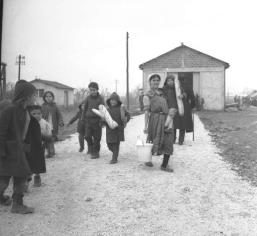 When they flee to France, they are initially housed in the ‘
 Alice Zeniter was born in 1986. She is the author of four novels; Sombre dimanche (2013) won the Prix du Livre Inter, the Prix des lecteurs de l’Express and the Prix de la Closerie des Lilas; Juste avant l’oubli (2015) won the Prix Renaudot des lycéens.


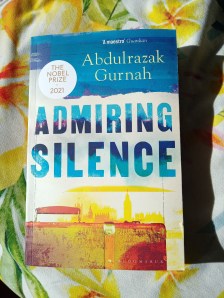 Some years later he is given a chance to study in England, by a family friend who is a strict disciplinarian, ensuring he succeeds in his studies. He discovers how much more difficult life can be when he becomes independent and no longer has the encouragement of his fellow countryman to push him.
 Abdulrazak Gurnah
 My first encounter was her nonfiction title Handiwork, one I highly recommend as a starting place to her work and style. This title is like a spring board into her fiction, an introduction to the visual artist, the poet, the keen observer and storyteller.
 Baume describes everything about them, about the house, its character, its creaks and groans, its smallest inhabitants, the habits of all those who dwell within its walls, inside its walls, outside its walls in her multiple adjective, poetic prose, that skips across the page to a rhythmic beat.
 First we meet the spider that lives behind the wing mirror of their van, who takes refuge behind the glass.
 Sara Baume’s debut novel, Spill Simmer Falter Wither won the Geoffrey Faber Memorial Prize and has been widely translated. Her second novel, A Line Made by Walking, was shortlisted for the Goldsmiths Prize and her 2020 bestselling non-fiction book, handiwork, was shortlisted for the Rathbones Folio Prize. Seven Steeples, was shortlisted for the Goldsmiths Prize and has just been longlisted for the
  Word by Word