Shame (1997) by Annie Ernaux, tr. Tanya Leslie

In her 2022 nobel prize lecture, I Will Write to Avenge My People, Annie Ernaux shares her motivation for writing in the particular way that is unique to her, telling us how it is at odds with the way she taught.

I had to break with ‘writing well’ and beautiful sentences – the very kind I taught my students to write – to root out, display and understand the rift running through me.

So it with this understanding, that I picked up Simple Passion (my review here) and now Shame, works of non-fiction that explore how certain pivotal events in her life affected her, by noticing her actions and reactions, how her own behaviour or perception changed.

The Origin of Shame

The book opens with a quote from Paul Auster‘s The Invention of Solitude:

Language is not truth.

It is the way we exist in the world.

The opening line begins with the pivotal event, shortly before her 12th birthday:

My father tried to kill my mother one Sunday in June, in the early afternoon.

and then describes everything she remembers about that day in a page of detail.

It was 15 June 1952. The first date I remember with unerring accuracy from my childhood. Before that, the days and dates inscribed on the blackboard and in my workbooks seemed just to drift by.

These words were written 45 years later, around 1997, when this book was first published in French, words that she tells the reader were impossible to write about, even in a personal diary, before then.

Silence Esteemed, The Seed of Unworthiness

I considered writing about it to be a forbidden act that would call for punishment. Not being able to write anything else afterwards for instance. (I felt a kind of relief just now when I saw that I could go on writing, that nothing terrible had happened). In fact, now that I have finally committed it to paper, I feel that it is an ordinary incident, far more common among families than I had originally thought. It may be that narrative, any kind of narrative, lends normality to people’s deeds, including the most dramatic ones.

Ernaux looks back at the origin of her experience of shame, awakened to it by certain moments, exploring the change(s) as she is made to feel them, in the many areas of her life within which it dwelt, sometimes just hidden behind a door, always at risk of being discovered by others.

From then on, that Sunday was like a veil that came between me and everything I did. I would play, I would read, I would behave normally but somehow I wasn’t there.

Beginning with that traumatic event, she observes the lingering effect it had on her, the strong presence it maintained, despite the fact that no one ever talked (to her) about it.

She revisits photos and news archives from that day, that time, trying to find something.

Writing an Ethnological Study of Self

While she rejects the idea of traditional therapy, it could be said that she has created her own form of it, by bringing her deepest shame to the page, as if in doing so, she is somehow sending it away, banishing it to readers.

I expect nothing from psychoanalysis or therapy, whose rudimentary conclusions became clear to me a long time ago – a domineering mother, a father whose submissiveness is shattered with a murderous gesture. To state it’s ‘childhood trauma’ or ‘that day the idols of childhood were knocked off their pedestal’ does nothing to explain a scene which could only be conveyed by the expression that came to me at the time: ‘gagner malheur‘, to breathe disaster. Here abstract speech fails to reach me.

Photo Pavel Danilyuk @ Pexels.com

This text she describes as carrying out an ethnological study of herself.

Like Simple Passion, written in short fragments, it is an engaging read that centres around the year 1952, living by the rules and codes of her world, which usually required unquestioning obedience, without any knowledge that there may be others.

The more I retrace this world of the past, the more terrified I am by its coherence and its strength. Yet I am sure I was perfectly happy there and could aspire to nothing better. For its laws were lost in the sweet, pervasive smells of food and wax polish floating upstairs, the distant shouts coming from the playground and the morning silence shattered by the tinkling of a piano – a girl practicing scales with her music teacher.

A brilliant depiction of a shattering of illusion and the origins of one girls perception of unworthiness.

As the book closes, and the year 1952 ends, her attention is caught by a film/book release.

In his novel, Fires on the Plain, published in 1952, the Japanese author Shōhei Ōoka writes: ‘All this may just be an illusion but all the same I cannot question the things I have experienced. Memories too belong in that category’.

Highly Recommended.

Author, Annie Ernaux

Born in 1940, Annie Ernaux (née Duchesne) was born in Lillebonne and grew up in Yvetot, Normandy, where her parents ran a café-grocery store in the spinning mill district.

She was educated at a private Catholic secondary school, encountering girls from more middle-class backgrounds, and experiencing shame of her working-class parents and milieu for the first time.

After a brief stint in Finchley, London, cleaning houses all morning and reading from the library all afternoon, she returned to France to study at the University of Rouen. Obtaining a degree in modern literature, she became a school teacher. From 1977 to 2000 she was a professor at the Centre National d’Enseignement par Correspondance.

Her books, in particular A Man’s Place (La Place) and A Woman’s Story (Une femme) have become contemporary classics in France. These books marked a break from the definitive novelistic form, she would continue teaching in order to never depend on commercial success.

One of France’s most respected authors, she has won multiple awards for her books, including the Prix Renaudot (2008) for The Years (Les Années) and the Marguerite Yourcenar prize (2017) for her entire body of work. The English translation of The Years (2019) was shortlisted for the Man Booker prize International and won the Warwick Prize for Women in Translation (2019).

The main themes threaded through her work over more than four decades are: the body and sexuality; intimate relationships; social inequality and the experience of changing class through education; time and memory; and the overarching question of how to write these life experiences.

Greek Lessons by Han Kang (Korea) tr. Deborah Smith + Emily Yae Won

The first book I read by Han Kang was Human Acts and it remains my favourite, a deeply affecting novel. Her novel The Vegetarian won the Booker International Prize 2016 and she has written another book translated into English, that I have not read The White Book (a lyrical, disquieting exploration of personal grief, written through the prism of the color white).

Of Language and Loss

Korean literature women in translation

In a classroom in Seoul, a young woman watches her Greek language teacher at the blackboard. She tries to speak but has lost her voice. Her teacher finds himself drawn to the silent woman, as day by day he is losing his sight.

The novel goes back in time, slowly uncovering their stories, occasionally revisiting the present, when they are in class, until finally near the end, there is a scene where they properly interact.

Greek Lessons was enjoyable, but it took me a while to figure out which characters (unnamed) were controlling the narrative at any one time, and that didn’t really become clear until quite a way into the book, when the Korean man who teaches Greek and who had lived in Germany for some time, began to interact with the mature woman student in his class, due to a minor accident and his need for help.

Yearning for the Unattainable

Both these characters are dealing with issues, the woman has just lost custody of her 6 year old child, due to an imbalance in power and wealth between the two parents. She was mute as a child and had a special relationship with language, which has lead to her unique desire to learn to read and write in Greek. She dwells in silence, sits and stares, or pounds the streets at night, walking off the frustration she is unable to express with words.

The Greek teacher is slowly losing his sight, a condition inherited from his father. He is aware that he needs to prepare himself for a future without sight.

He recalls a lost, unrequited love and the mistakes he made. His narrative is addressed to this woman who he knew from a young age. There are letters that recount his memories, as well as the discomfort of living in another culture and his desire to return to Korea without his parents. It took me a while to realise this was a different woman.

Ultimately I was a little disappointed, because it lacked the emotive drive that I had encountered before from Han Kang. There were flashes of it, but about halfway, I lost interest and stopped reading for a while. I am glad I persevered as I enjoyed the last 30% when the characters finally have a more intimate encounter and are brought out of themselves, but I was hoping for more, much earlier on.

Reading Print Improves Comprehension

Photo: Perfecto Capucine @ Pexels.com

I did wonder too if it might have been better for me to read the printed version, when the narrator is unclear, I can flick back and forth and take notes in a way that isn’t as easily done reading an ebook.

This perspective is supported by a recent study from the University of Valencia that found print reading could boost skills by six to eight times more than digital reading. I tend to agree that digital reading habits do not pay off nearly as much as print reading.

I picked it up now after reading that it was one of Tony’s Top 10 Reads of 2023 at Tony’s Reading List. He reads a ton of Japanese and Korean fiction, so this is a highly regarded accolade from him. I would recommend reading his review here for a more succinct account of the book. I see he read a library print version.

He finds echoes of The Vegetarian ‘with a protagonist turning her back on the world, unable to conform’ and ‘the poetic nature of The White Book, often slowing the reader down so they can reflect on what’s being said’ describing the reading experience as:

a slow-burning tale of wounded souls.  Poignant and evocative, Greek Lessons has the writer making us feel her creations’ sadness, their every ache. 

In a review for The Guardian, 11 Apr 2023, Em Strang acknowledged that the book wasn’t about characters or plot, so asked what was driving the craft, identifying a courageous risk the writer took.

One answer is that it’s language itself, and the dissolution of language, which is why in parts the narrative seems to almost dissolve.

If you’re interested in reading Greek Lessons, I do recommend reading the print version.

Author, Han Kang

Han Kang was born in 1970 in South Korea. A recipient of the Yi Sang Literary Award, the Today’s Young Artist Award, and the Manhae Prize for Literature, she is the author of The Vegetarian, winner of the International Booker Prize; Human Acts; and The White Book.

Further Reading

The Guardian Article: Greek Lessons by Han Kang review – loss forges an intimate connection by Em Strang, 11 Apr, 2023

The Guardian Article: Reading print improves comprehension far more than looking at digital text, say researchers by Ella Creamer, 15 Dec 2023

N.B. This book was an ARC (Advance Reader Copy) kindly provided by the publisher via NetGalley.

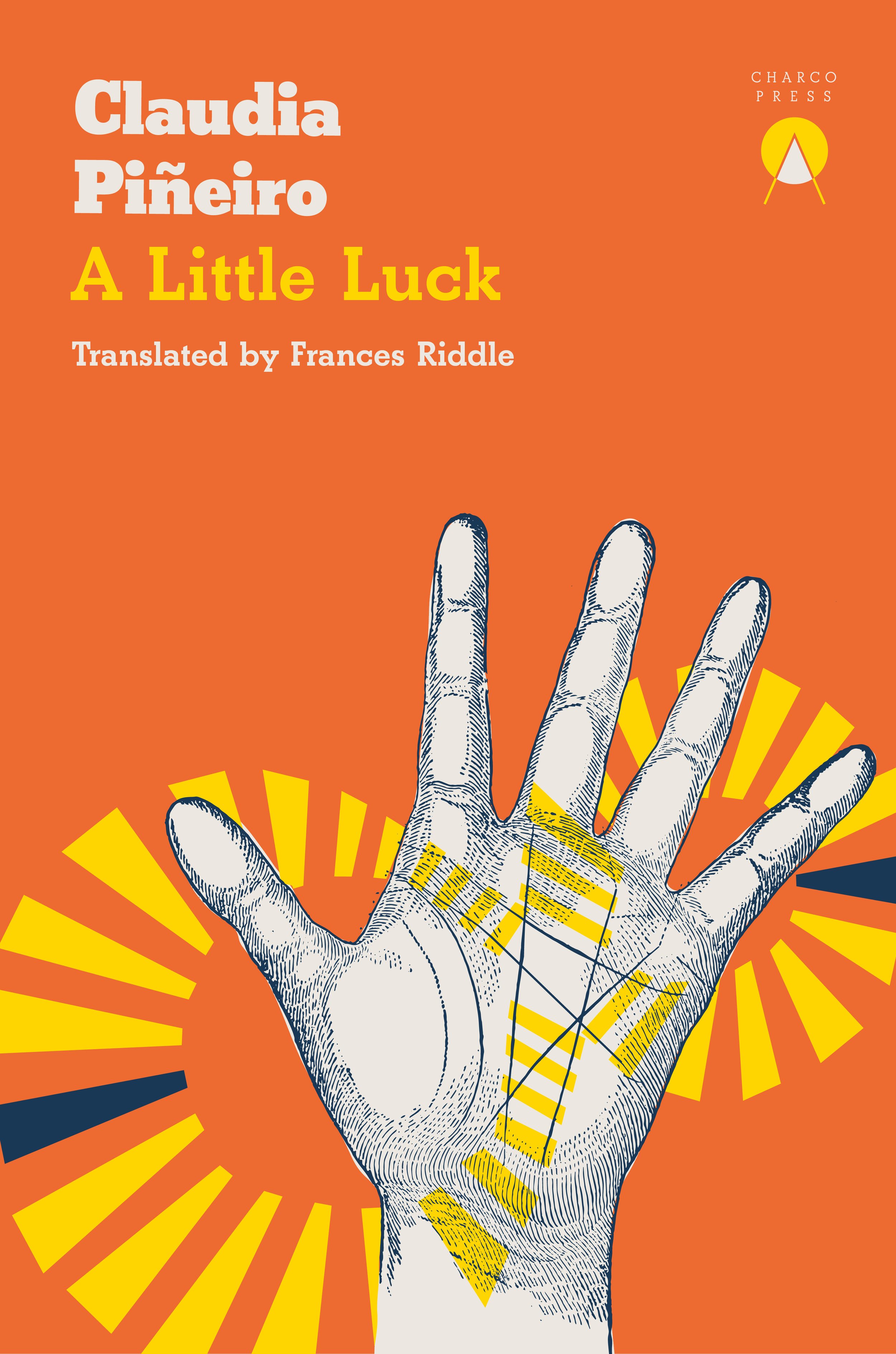
A Little Luck by Claudia Piñeiro tr. Frances Riddle

women in translation argentinian literature crime fiction literary fiction

Stunning.

This was a heart-racing, thrilling and moving read that begins mysteriously as a woman returns to her home country (Argentina) following some kind of event 20 years earlier that we don’t fully learn of until almost halfway into the novel. 

Though she lived most of her early life there, her physical appearance is so radically different, no one recognises her – yet.

We are made aware, though it takes a while to reveal, that she is anxious about the possibility of seeing someone connected to that past event, that sent her into self-imposed exile.

I should have said no, that I couldn’t go, that it would have been impossible for me to make the trip. Whatever excuse. But I didn’t say anything. Instead I made excuses to myself, over and over, as to why, even though I should’ve said no, I agreed in the end. The abyss calls to you. Sometimes you don’t even feel its pull. There are those who are drawn to it like a magnet. Who peer over the edge and feel a desire to jump. I’m one of those people. Capable of plunging headlong into the abyss to feel – finally – free. Even if it’s a useless freedom, a freedom that has no future. Free only for the brief instant that the fall lasts.

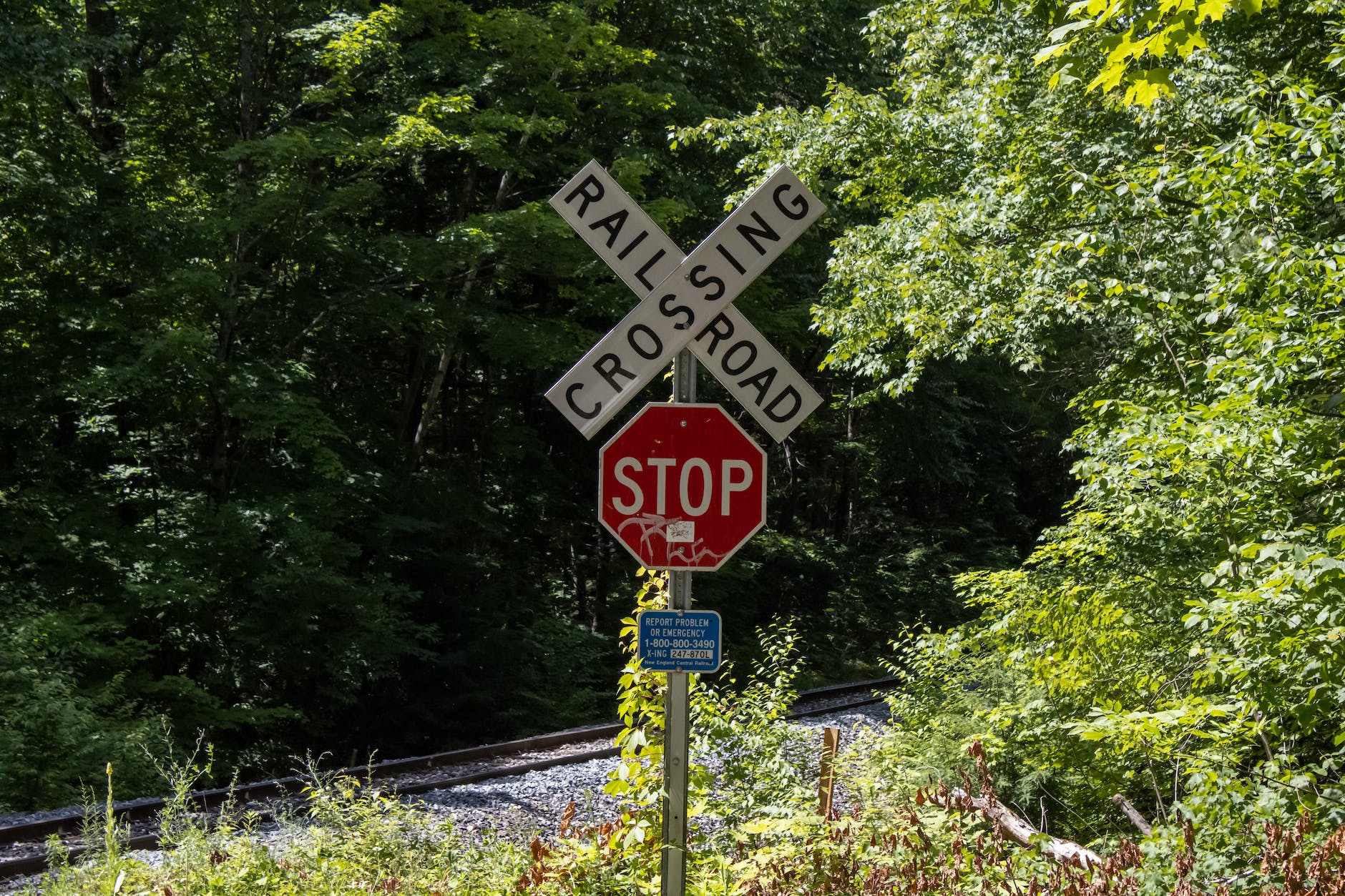
rail crossing train barrier A Little Luck
Photo Tim Dusenberry Pexels.com

As the mystery unravels, the tension mounts. Each new chapter begins with part of the backstory, then stops, this is used as a kind of repetition, as the narrator acquires the courage to reveal the full extent of the backstory.

The constant repeating of this text adds to the volume of its impact on the reader and the sense of suspense and intrigue.

The barrier arm was down. She stopped, behind two other cars. The alarm bell rang out through the afternoon silence. The red lights below the railway crossing sign blinked off and on. The lowered arm, the alarm bell, and the red lights all indicated that a train was coming.

As these events of the past some into clarity, in the present day this woman is booking into a motel, arranging to visit the school that she will consider for accreditation, we encounter the mndane reason for her visit and the extraordinary motivation behind it.

Photo by Y. Shuraev Pexels.com

Simultaneously we follow a small sub-plot drama featuring a bat. And a theme of entrapment. The story of the bat corresponds to our protagonists state of mind and how it evolves over the course of the novel. Once again she must make a life or death decision.

I’m still trapped. I must now decide whether to go out and face the task at hand or stay here and wait for the poison to kill me or the smoke to force me out.

Ultimately, it explores many themes, in a profound way, of motherhood, of domination, community judgement, condemnation and gas-lighting, of the effect of undermining a person’s self-worth, of twin aspects of abandonment, of why it might be deemed necessary and the effect it has on the one abandoned.

Do I deserve to explain why? What I mean is, do I have that right? The right to unburden myself and expect someone to listen?

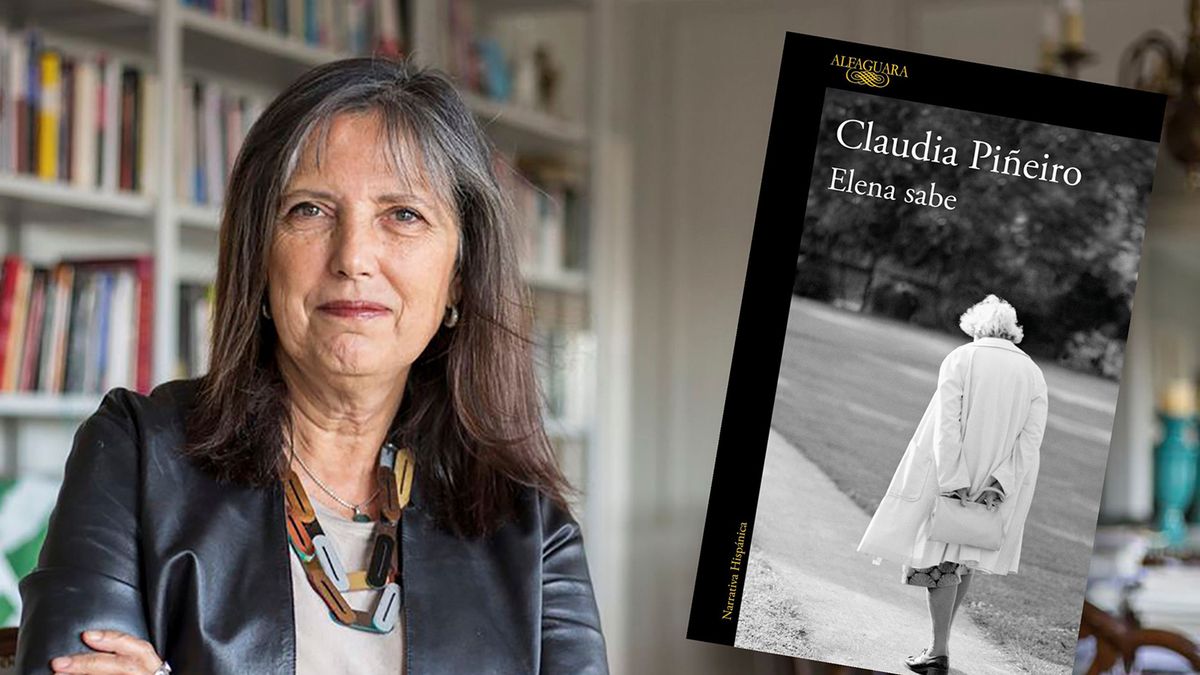
Claudia Piñeiro’s Elena Knows (see my review here) I found curious; there is a similar feeling of mysteriousness as the author withholds telling all, drawing the reader in – however, in A Little Luck, she plummets the mind of the protagonist, letting us into her thoughts, showing us the events and enabling the reader to witness the reactions – allowing us to see the patterns, those all too familiar ways of subjugating a person, of the desire to blame, the withdrawal, the disappearance.

A Little Luck is also a story of healing, of kindness and finding the one person who puts the right thing in one’s way that will lead to release. In this story, a kind man finds the right stories that assist a woman to express and release suppressed emotions. And sends her on a trip.

I began to list the questions that I’d asked myself while reading Alice Munro’s story, questions posed in her words. ‘Is it true that the pain will become chronic? Is it true that it will be permanent but not constant, that I won’t die from the pain? Is it true that someday I won’t feel it every minute, even though I won’t spend many days without it?

Brilliantly conceived, after a few chapters, I absolutely could not put it down, I highlighted so many passages, and it had a surprising though satisfying, tear-jerking conclusion, definitely one of my top fiction reads of 2023. I read this in October, but found it hard to describe the intense reading experience, but I’m sharing my thoughts now, before my end of year review, where it will feature!

Highly Recommended, another fabulous title from Charco Press!

Claudia Piñeiro, Author

As an author and scriptwriter for television, Claudia Piñeiro has won numerous national and international prizes, among them the renowned German LiBeraturpreis for Elena Knows and the prestigious Sor Juana Inés de la Cruz Prize for Las grietas de Jara (A crack in the wall).

She is best known for her crime novels which are bestsellers in Argentina, Latin American and around the world. Many of her novels have been adapted for the big screen. According to the prestigious newspaper La Nación, Claudia Piñeiro is the third most translated Argentinean author, after Borges and Cortázar.

More recently, Piñeiro has become a very active figure in the fight for the legalisation of abortion in Argentina and for the legal recognition of writers as workers. Her fiction (as shown with Elena Knows) is stemmed in the detective novel but has recently turned increasingly political and ideologically committed, reflecting the active role she plays in the fight for the legalisation of abortion in Argentina and Latin America, and for the recognition of employment rights for writers..

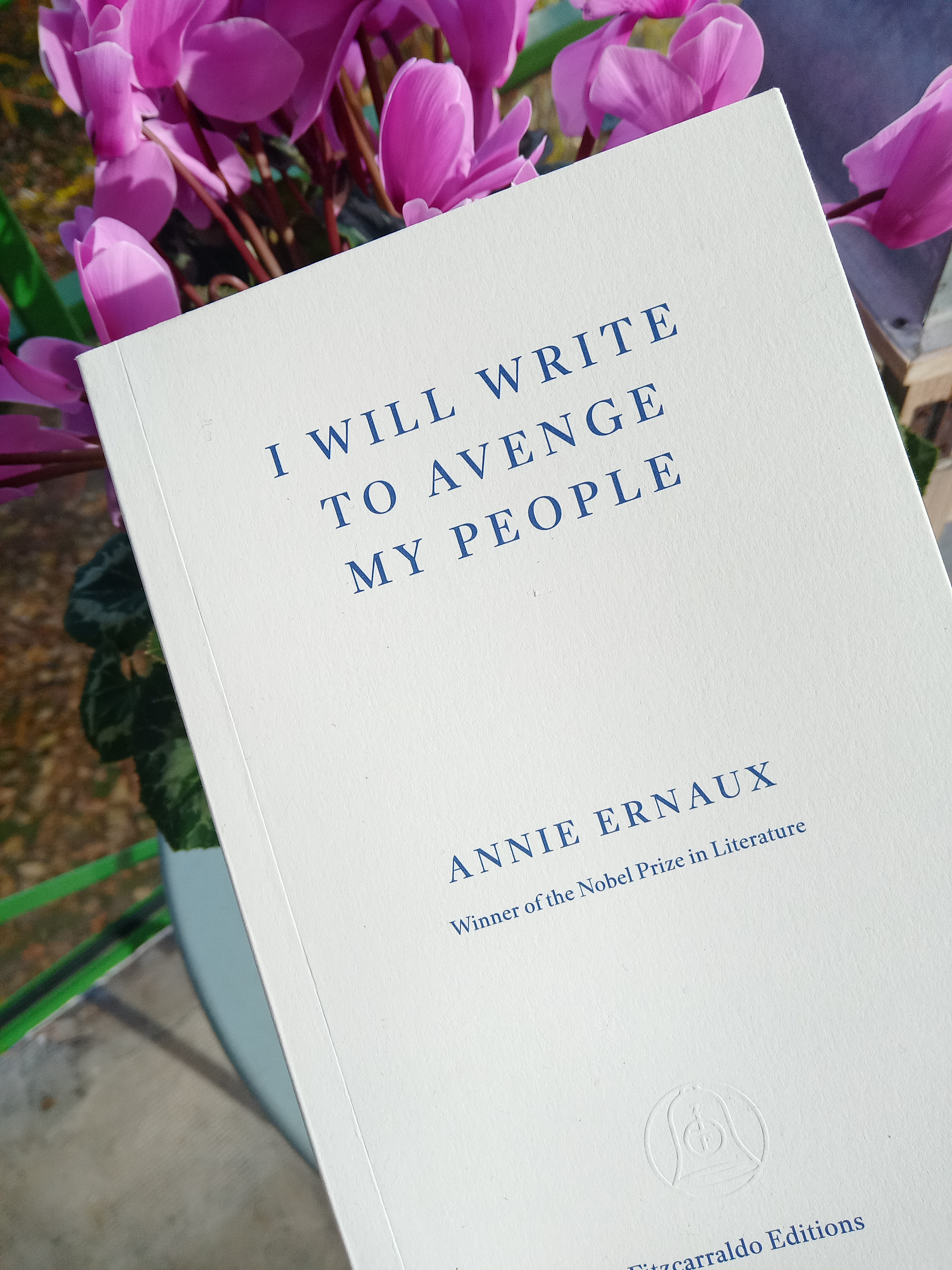
I Will Write To Avenge My People, The Nobel Lecture by Annie Ernaux tr. Alison Strayer & Sophie Lewis

Winner of the Nobel Prize in Literature 2022

In October 2022 the French author Annie Ernaux became the first French woman (the seventeenth woman) to win the Nobel Prize in Literature.

Read together, the reflections of the Nobel women reveal a diversity of ideas about what literature can do and a sense of a practitioner’s responsibility to these ideas. While the lectures vary widely in content—from Lessing’s and Gordimer’s concrete political lessons to Szymborska’s larger abstract musings to fables personal (Müller) and universal (Morrison)—each contains observations that are at once totally complex and completely true. – extract from LitHub article by Jessi Haley

The Agony and Experience of Class

The Nobel Committee recognised that ‘in her writing, Annie Ernaux consistently and from different angles, examines a life marked by strong disparities regarding gender, language and class

They awarded her the prize:

“for the courage and clinical acuity with which she uncovers the roots, estrangements and collective restraints of personal memory”

In this slim volume is the acceptance speech given by Annie Ernaux on 7 December, 2022 in Stockholm, Sweden, alongside a short biography (both translated by Alison L.Strayer). There is a brief banquet speech included, translated by Sophie Lewis.

It is a brilliant introduction to the motivation of the lifetime of work and writing by Annie Ernaux, opening with a reference to the title – alluding to the challenge of a search for the perfect opening line to her upcoming Nobel Prize lecture:

Finding the sentence that will give me the freedom and the firmness to speak without trembling in this place to which you have invited me this evening.

She doesn’t have to look far, she says, although the line she refers to – the title of her talk – is one she wrote in a diary sixty years ago.

j’écrirai pour venger ma race

It was written when she was 22 years old, the daughter of working class parents, studying literature in a faculty of sons and daughters of the local bourgeoise; an echo of Arthur Rimbaud’s cry in Une saison en enfer (A Season in Hell):

‘I am of an inferior race for all eternity.’

A young woman, the first of her family to be university educated, her youthful idealism was projected into those words.

I proudly and naively believed that writing books, becoming a writer, as the last in a line of land-less labourers, factory workers and shop keepers, people despised for their manners, their accent, their lack of education, would be enough to redress the social injustice linked to social class at birth.

Turning Away From Convention

Her first attempt at the novel was rejected by multiple publishers, but it was not this that subdued her desire and pride, to eventually seek a new form of expression.

It was life situations in which the weight of difference between a woman’s existence and that of a man was keenly felt in a society where roles were defined by gender, where contraception was prohibited and termination of pregnancy a crime.

These situations and circumstances instilled in her a pressing need to move away from the “illusory ‘writing about nothing’ of my twenties, to shine light on how her people lived, and to understand the reasons that had caused such distance from her origins.

Like an immigrant now speaking a language not their own, a class-defector, she too had to find her own language, however, it was not to found in the pages of the esteemed writers she had been studying and was teaching:

I had to break with ‘writing well’ and beautiful sentences – the very kind I taught my students to write – to root out, display and understand the rift running through me. What came to me spontaneously was the clamour of a language which conveyed anger and derision, even crudeness; a language of excess, insurgent, often used by the humiliated and offended as their only response to the memory of others’ contempt, of shame and shame at feeling shame.

Recognising that when a reader was culturally privileged they would maintain the same imposing and condescending outlook on a character in a book, as they would in real life, she sought to elude that kind of gaze and thus her trademark style evolved:

I adopted a neutral, objective kind of writing, ‘flat’ in the sense that it contained neither metaphors nor signs of emotion. The violence was no longer displayed; it came from the facts themselves and not the writing. Finding the words that contain both reality and the sensation provided by reality would become, and remain to this day, my ongoing concern in writing, no matter what the subject.

It’s an enrapturing lecture and an excellent introduction and insight into Ernaux’s particular and individual style, and wonderful that her volume of work has been recognised and celebrated at this esteemed level. You can read the lecture using the link below.

I have read one book by Ernaux, A Man’s Place and I am planning to read Shame, A Simple Passion and her masterpiece The Years.

Shame Simple Passion The Years Annie Ernaux Nobel Prize Winner 2022

Have you read any books by Annie Ernaux? Are you planning to read any?

Further Reading

The Nobel Prize Website: Annie Ernaux Nobel Lecture (Read the lecture here)

LitHub Article: A Brief History of All the Women Who Have Won the Nobel Prize in Literature by Jessi Haley

Annie Ernaux, French Author

Born in 1940, Annie Ernaux (née Duchesne) was born in Lillebonne and grew up in Yvetot, Normandy, where her parents ran a café-grocery store in the spinning mill district.

They had lost a little girl of seven before I was born. My first memories are inseparable from the war, the bombings that devastated Normandy in 1944.

She was educated at a private Catholic secondary school, encountering girls from more middle-class backgrounds, and experiencing shame of her working-class parents and milieu for the first time.

After abrief stint in Finchley, London, cleaning houses all morning and reading from the library all afternoon, she returned to France to study at the University of Rouen. Obtaining a degree in modern literature, she became a school teacher. From 1977 to 2000 she was a professor at the Centre National d’Enseignement par Correspondance.

Her books, in particular A Man’s Place (La Place) and A Woman’s Story (Une femme) have become contemporary classics in France. These books marked a break from the definitive novelistic form, she would continue teaching in order to never depend on commercial success.

One of France’s most respected authors, she has won multiple awards for her books, including the Prix Renaudot (2008) for The Years (Les Années) and the Marguerite Yourcenar prize (2017) for her entire body of work. The English translation of The Years (2019) was shortlisted for the Man Booker prize International and won the Warwick Prize for Women in Translation (2019).

The main themes threaded through her work over more than four decades are: the body and sexuality; intimate relationships; social inequality and the experience of changing class through education; time and memory; and the overarching question of how to write these life experiences.

Fitzcarrraldo Editions have now translated and published eleven of her works into English, including this booklet.

Ernaux’s work is uncompromising and written in plain language, scraped clean. And when she with great courage and clinical acuity reveals the agony of the experience of class, describing shame, humiliation, jealousy or inability to see who you are, she has achieved something admirable and enduring. – Nobel Prize Committee

Warwick Prize for Women in Translation Winner 2023

Today the winner of the Warwick Prize for Women in Translation was chosen from eight books shortlisted. The full longlist of 16 titles and descriptions can be seen here.

The 2023 competition received a total of 153 eligible entries representing 32 languages; this was the largest number of submissions made to the prize to date. The longlist covered 11 languages and for the first time included a title translated from Vietnamese. Arabic, Chinese, Hungarian and Italian were represented more than once. 

A Graphic Novel Debut From Egypt Wins

The winning novel by Deena Mohamed (Egypt) is the graphic novel Your Wish Is My Command, translated from Arabic by Deena Mohamed, published by Granta.

The illustrated novel imagines what might happen if you could buy and sell wishes. The book follows Shokry, a kiosk owner in Cairo, Egypt, as he tries to sell off three wishes he inherited from his father.

It combines fantasical elements alongside everyday realities in contemporary Cairo, as the characters cope with the challenges they face.

In the translation, on the opening page (which is at the back, the book reads from right to left, as it would in Arabic) is an inscription, from a reader:

Shubeik Lubeik (Your Wish Is My Command) is easily the most subversive book I’ve read in decades, Deena Mohamed has much to say about the human condition, but she does so with effortless grace, superb cartooning, and brimming with intelligence both emotional and intellectual – all while maintaining an incredible sense of humour.” Ganzeer, author/artist of The Solar Grid.

Further Reading

NPR Review by Malaka Gharib

New Yorker Review by Yasmine AlSayyard

The Guardian – Your Wish Is My Command by Deena Mohamed review – a spellbinding fantasy from Egypt by James Smart

Washington Post review – What Egyptians Wish For – In ‘Shubeik Lubeik,’ a new graphic novel by Deena Mohamed, genies really do come in bottles — but only for those rich enough to afford them by Jonathan Guyer

A Special Commendation, Non Fiction Essays from Denmark

The judges have also selected a title for special commendation this year:

A Line in the World, A Year On the North Sea Coast’ by Dorthe Nors, translated from Danish by Caroline Waight and published by Pushkin Press – a year travelling along the North Sea coast—from the northern tip of Denmark to the Frisian Islands.

In 14 essays, it traces the history, geography, and culture of the places she visits while reflecting on her childhood and her family and ancestors’ ties to the region.

She writes of the ritual burning of witch effigies on Midsummer’s Eve; the environmental activist who opposed a chemical factory in the 1950s; the quiet fishing villages surfers transformed into an area known as Cold Hawaii in the 1970s.

She connects wind turbines to Viking ships, 13th century church frescoes to her mother’s unrealised dreams. She describes strong waves, sand drifts, storm surges, shipwrecks; nature asserting its power over human attempts to ignore or control it.

In Case You Missed It

In 2022, the prize was jointly awarded to Osebol by Marit Kapla, translated from Swedish by Peter Graves and published by Allen Lane/Penguin Random House, and to Tomb of Sand by Geetanjali Shree, translated from Hindi by Daisy Rockwell and published by Tilted Axis Press.

Literature Award Season Wrap Up Week

Remembering the past Spring Literature Awards Season

Back in March/April the Spring Literature Award Season saw the Women’s Prize for Fiction 2023 won by Barbara Kingsolver for Demon Copperhead, a book I did eventually read but didn’t review; the Dublin Literary Award, a celebrated worldwide librarian nominated award, won by Katja Oskamp, translated from German by Jo Heinrich, for the excellent, life-affirming novella Marzhan, Mon Amour, a book I absolutely loved – how could I not, a writer turned well-being practitioner protagonist (much like Oskamp herself), who soothes aches and pains of the body, mind and soul of her small, often misunderstood community.

Then there was the International Booker Prize (fiction in translation) shortlist, from which I read three novels, the outstanding read for me being Mexican author Guadalupe Nettel’s Still Born, the top prize going to Bulgarian author Georgi Gospodinov for his novel Time Shelter, translated by Angela Rodel.

I shared the results of the New Zealand Book Awards and though these titles are not easy to get hold of, I did manage to read Grand: Becoming My Mother’s Daughter by Noelle McCarthy which won the Best First Book in the General Nonfiction category, with Catherine Chidgey’s The Axeman’s Carnival winning the fiction award, one I hope to read in 2024.

Autumn Literature Award Winner Week

This week will see the unveiling of three more literature awards that I’m curious about.

Irish Book Awards 2023

On Wed 22 November, the winners of the Irish Book Awards 2023 will be announced. I’ve been reading a lot of Irish literature this year, including almost half of the 8 fiction titles shortlisted for Novel of the Year and one title Poor by Katriona O’Sullivan that is shortlisted for both Biography of the Year and the Listener’s Choice Awards.

So far, I’ve read and reviewed Sebastian Barry’s Old Gold’s Time which I thought was excellent and would certainly be a worthy winner, Elaine Feeney’s How To Build a Boat, a character lead scenario that I very much enjoyed, I’m almost finished reading Claire Kilroy’s intense, visceral portrayal of a young mother on the edge of parental overwhelm Soldier Sailor and I’ll soon be reading the very short contender by Claire Keegan (so short it might not even be a novella) So Late In the Day.

The Booker Prize 2023

It’s a strong fiction lineup for the Irish Awards, with four of their shortlisted titles already featured on the Booker Prize longlist, two of which made it to the shortlist (none of which I have read); the winner will be announced on Sunday 26 November. This group of six books below was said by the judges to “showcase the breadth of what world literature can do, while gesturing at the unease of our moment.” In this case, I found more of interest in the longlist than the shortlist.

The Warwick Prize for Women In Translation 2023

And last but not least, the winner of the Warwick Prize for Women in Translation will be announced on Thursday 23 November.

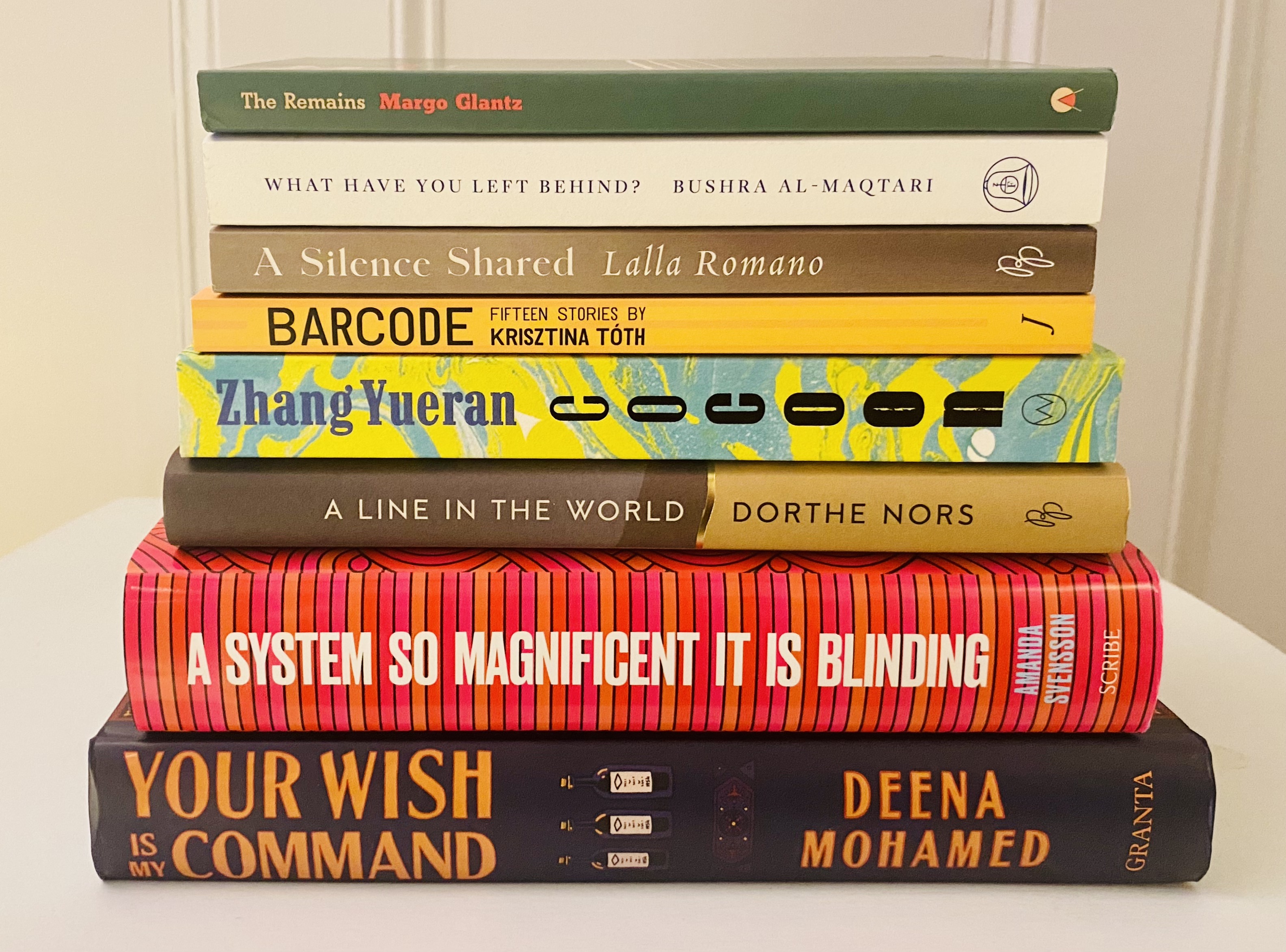
I have read one title from this shortlist, though it has only just appeared in English thanks to Charco Press, The Remains by Mexican author Margo Glantz was originally published in 2002. I describe this literary masterpiece as a lyrical elegy of tempo rubato, z divorced woman feels out of place and yet connected at her ex-husbands wake, a riveting, mind blowing (or perhaps expanding), rhythmic reading experience, just WOW!

Despite being one of the most iconic figures in Latin American literature, her work is little known in English. Charco Press now bring her work to a new audience with this excellent translation by Ellen Jones.

So watch this space this week for the winners of these three sets of awards.

Have you read any works from these shortlists? Any favourites? Predictions?

The Dry Heart by Natalia Ginzburg tr. Frances Frenaye

I’m planning on reading a few books by the Italian writer Natalia Ginzburg, as mentioned on reviewing her excellent memoir Family Lexicon which I chose to start with, before diving into her fiction.

I start her fiction at the beginning with this brilliant, page turning feminist classic, originally penned in 1947, The Dry Heart.

Captivating right from the opening lines,

“Tell me the truth,” I said.
“What truth?” he echoed…
I shot him between the eyes.

novella Italian Literature

Natalia Ginzburg’s debut novella starts with a shot and then goes into the domestic detail that preceded that moment.

Those first lines begin halfway down the page, just a couple of paragraphs before you turn the page, where not only is the husband shot, but in the last sentence before we turn the page, she tells us,

But for a long time already I had known that sooner or later I should do something of the sort.

She then leaves the house and over the course of the day, she recalls in minute detail how she met Alberto, her husband of four years, their long drawn out courtship, her wavering feelings for him that seesaw between love and hate but never indifference, before deciding what she ought to do now.

I put on my raincoat and gloves and went out. I drank a cup of coffee at the counter of a café and walked haphazardly around the city. It was a chilly day and a damp wind was blowing. I sat down on a bench in the park, took off my gloves and looked at my hands. Then I slipped off my wedding ring and put it in my pocket.

A school teacher living in a boarding house, surrounded by different characters on the periphery of her life, she had a vivid imagination and had fantasized about marriage. Alberto hadn’t fit that image but over time that had changed.

When a girl is very much alone and leads a tiresome and monotonous existence, with worn gloves and very little spending money, she may let her imagination run wild and find herself defenceless before all the errors and pitfalls which imagination has devised to deceive her.

The novel vivdly portrays the roller coaster of her young imagination, the frustration and desire she feels, the willingness to compromise and accept a less than perfect situation, the significant step forward their marriage takes when a child comes into it, until the day she snaps.

There is no mystery, all is laid bare in captivating, enticing prose, that is direct and insistent while exploring the dark aspect of a relationship that can’t be controlled, of characters who are ill-suited yet drawn towards one another, until that spontaneous combustion of their marriage.

It’s a novella, just over 100 pages, one to dive right in, highly recommended. A feminist classic.

Brilliant.

Also reviewed earlier this year by Jacqui at JacquiWine’s Journal and Kim at Reading Matters Blog.

Natalia Ginzburg Italian literature Family Lexicon

Natalia Ginzburg, Author

Natalia Ginzburg (1916-1991) was born in Palermo, Sicily. She wrote dozens of essays, plays, short stories and novels, including Voices in the EveningAll Our Yesterdays and Family Lexicon, for which she was awarded the prestigious Strega Prize in 1963.

She was the first to translate Marcel Proust’s Du côté de chez Swann into Italian.

Her work explored family relationships, politics and philosophy during and after the Fascist years, World War II. Modest and intensely reserved, Ginzburg never shied away from the traumas of history, whether writing about the Turin of her childhood, the Abruzzi countryside or contemporary Rome—approaching those traumas indirectly, through the mundane details and catastrophes of personal life.

She was involved in political activism throughout her life and served in the Italian parliament between 1983 to 1987. Animated by a profound sense of justice, she engaged with passion in various humanitarian issues, such as the lowering of the price of bread, support for Palestinian children, legal assistance for rape victims and reform of adoption laws. 

She died in Rome in 1991 at the age of seventy-five.

The Delivery by Margarita Garcia Robayo tr. Megan McDowell

The Delivery was next up to read from my 2023 Charco Press bundle and was published on 24 October. This year’s books have been so great, I couldn’t wait to get to this one. I haven’t read her previous translated book Fish Soup, but I had heard good things about it too.

Charco Press and Latin American Fiction On a Roll

One of the earlier Charco novellas I read this year, The Remains (see my review) by Mexican author Margo Glantz (translated by Ellen Jones) just made the longlist of the Warwick Prize for Women in Translation 2023. In the same week Two Sherpas (see my review) by Sebastian Martinez Daniell translated by Jennifer Croft was longlisted for the 2024 ALA Carnegie Medals for Excellence in Fiction and Ana Paula Maia’s Of Cattle And Men, translated from the Portuguese by Zoë Perry made the 2023 Cercador Prize Finalists ( a bookseller-led prize for literature in translation).

Warning: Don’t Ignore Your Packages – The Review

A young, unapologetically self-absorbed woman lives alone, away from her family. Though loathe to form attachments, she is hyper observant of all that goes on around her; the neighbour into whose apartment she sees, the doorman sweeping below, the mother with her young son, the unreliable babysitter.

A large package arrives from her sister who told her via one of their infrequent video-calls, that she was leaving with her family on a cruise. The sisters have a complicated relationship, one she ponders.

When she notices my silence she goes quiet and sighs. I guess she, too, gets fed up with the weight of incomprehension. I guess that on top of seeming like a sister who is detached, dejected and discourteous, I also come off as an arrogant person. Kinship isn’t enough for her, either, of course it isn’t. In cases like ours, getting along isn’t a question of magic or chemistry or affinity, but of tenacity, toughness and torturous toiling.

The package, the size of a large crate stays in the hallway for two days until neighbours complain, knock on the door and push it into her seventh floor apartment. She continues to ignore it.

It’s noon; my sister must be aboard her cruise ship by now. I can just see her gazing excitedly at the array of interactive screens showing maps of the ship marked with little flags: ‘…over twenty stations of international food.’
I wonder: When my sister isn’t there, who takes care of my mother?

Farming Cows Personality Animals The Delivery On Writing
Photo by Flickr on Pexels.com

Working from home as a freelance copy writer, she meets her boss once a week. Currently working on a piece about a cow, while procrastinating over completing a grant for a writer’s residency in Holland. Here she questions whether her choice to be a writer is another act of avoidance.

And although writing is something I have done every day for years now, I again get the feeling that this thing I call ‘my job’ is nothing but another avoidance strategy. Compared to all other professions, writing is like the effort a tick makes to feed and survive among predators. I climb onto a branch, wait a long time until the herd passes, calculate the least risky distance to drop onto a fluffy mass and drink a minuscule ration of blood, which will allow me to maintain this limited but sufficient life.

Her attempts to avoid human contact threaten to overwhelm her, as increasingly she is drawn in to life around her and made to be present.

I felt I had the right to not be a trustworthy person. It was good to make that clear, even if it worked against my professional future; from now on you should be aware that assigning me a job includes the possibility that I’ll quit halfway through. That was more or less how I put it. It was the closest I would come in this business to an outburst of dignity.

The novel follows a week or so in her life and the people (and a cat) with whom she interacts, both willingly and unwillingly. Encounters that awaken memories, that cause her to explore her own responses and thoughts on them all, she avoids closeness but each situation contributes to the growing relationships between them all.

Her efforts to keep a distance stall, fail and slowly make her see her own role in running from herself, the inclination to self-sabotage.

Sometimes I feel like two people live inside me, and one of those people (the good one) keeps the other in check, but sometimes she gets tired and lowers her guard and then the other (evil) one stealthily emerges, with a mad desire to wound just for the sake of it.

It’s both introspective and funny, as her avoidance and inattention to things leads to consequences that surprise her and because we see everything from her perspective, we too have a somewhat clouded view of reality.

Her philosophical considerations and snippets of conversation give pause for thought. It’s entertaining in a surreal yet banal way, knowing that life’s reality is likely to burst the bubble she lives in eventually, yet it doesn’t stop her from continuing to ponder and escape from it.

How quickly the shell of a routine is shattered.
Any routine, however solid it may be, is obliterated by the unexpected.

Margarita García Robayo, Author

Margarita García Robayo was born in 1980 in Cartagena, Colombia, and now lives in Buenos Aires where she teaches creative writing and works as a journalist and scriptwriter.

She is the author of several novels, including Hasta que pase un huracán (Waiting for a Hurricane) and Educación Sexual (Sexual Education, both included in Fish Soup), Holiday Heart, and Lo que no aprendí (The Things I have Not Learnt). She is also the author of a book of autobiographical essays Primera Persona (First Person, forthcoming with Charco Press) and several collections of short stories, including Worse Things, which obtained the prestigious Casa de las Américas Prize in 2014 (also included in Fish Soup).

Her books have been published widely and praised in Latin America and Spain and have been translated into several languages, including Chinese, Hebrew, French, Danish and Turkish. The Delivery is her third book to appear in English after the very successful Fish Soup (selected by the TLS as one of the best fiction titles of 2018) and Holiday Heart (Winner of the English PEN Award).

Warwick Prize for Women in Translation longlist 2023

16 titles have been longlisted for the seventh annual award of the Warwick Prize for Women in Translation.

The prize was established by the University of Warwick in 2017 to address the gender imbalance in translated literature and to increase the number of international women’s voices accessible to a British and Irish readership.

This year, there were 153 nominations representing 32 languages. The longlist spans 11 languages and for the first time includes a title translated from Vietnamese.  Arabic, Chinese, Hungarian and Italian language books are represented more than once.

A Long Line of Classics by Women Coming into Translation

Knowing how few women authors have been translated into English until now, only confirms how many great books sitting waiting to be discovered and rediscovered, as the demand to read literature from elsewhere increases exponentially. Yes, we have been and are, starved for other voices, for universal connections, stories imagined and conceived in other languages.

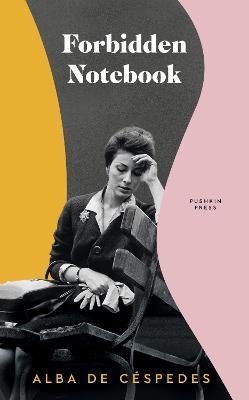
I have read two from the list, both excellent novels that I recommend, click on the titles to read my earlier reviews. Forbidden Notebook by Italian-Cuban author Alba de Cespédes translated by Ann Goldstein is a rediscovered classic from 1952, a highly compelling read about a woman’s self discovery through the transgressive act (find out why) of writing in a notebook.

The Remains by Mexican author Margo Glantz translated from Spanish by Ellen Jones is an extraordinary novella of a woman who returns for the funeral of her ex-husband and relives aspects of their relationship while navigating the audience of mourners, uncertain to whom they should pass on their condolences.

The judges said of the 2023 longlist:

“From an exceptionally rich field of submissions we have chosen 16 remarkable books in first-rate translations. All of them deserve to find delighted readers everywhere.

Our contemporary picks span a dazzling rainbow of genres, cultures and voices – from an Egyptian graphic novel to a Vietnamese vision of migrant life in France; a Chinese fable of an alternative Hong Kong to a comic-epic Swedish novel of ideas; a Mexican musical elegy to a Yemeni documentary testament to the human costs of war.

But this year’s long list also honours a formidable cache of rediscovered gems from major 20th-century women writers: classic works given new life by the translator’s time-defying art.”

The full list of longlisted titles, in alphabetical order, with a summaries, is as follows:

Dorthe NorsA Line in the WorldA Year on the North Sea Coast (nonfiction) translated from Danish by Caroline Waight (Pushkin Press) – a year travelling along the North Sea coast—from the northern tip of Denmark to the Frisian Islands.

In 14 essays, it traces the history, geography, and culture of the places she visits while reflecting on her childhood and her family and ancestors’ ties to the region. She writes of the ritual burning of witch effigies on Midsummer’s Eve; the environmental activist who opposed a chemical factory in the 1950s; the quiet fishing villages surfers transformed into an area known as Cold Hawaii in the 1970s. She connects wind turbines to Viking ships, 13th century church frescoes to her mother’s unrealised dreams. She describes strong waves, sand drifts, storm surges, shipwrecks; nature asserting its power over human attempts to ignore or control it.

Lalla RomanoA Silence Shared (historical fiction, WWII) translated from Italian by Brian Robert Moore (Pushkin Press) – Italian classic about the mysterious relationships between two partisan couples in German-occupied Italy in the wintry mountains of Piemonte.

Sheltering from the war in a provincial town outside of Turin, Giulia and her husband Stefano feel an instant affinity with Ada and Paolo: she a spontaneous, vibrant young woman, he a sickly intellectual, a teacher and partisan in hiding. As the Germans occupy Italy, a subtle dance of attractions between the couples begins, intensified by their shared isolation and the hum of threat over a long, hard winter.

Amanda SvenssonA System So Magnificent It Is Blinding (literary fiction) translated from Swedish by Nichola Smalley (Scribe UK) – A joyful family saga about free will, forgiveness, and connectedness that asks if we are free to create our own destinies or are just part of a system beyond our control?

As a set of triplets is born, their father chooses to reveal his affair. Pandemonium ensues. Two decades later, Sebastian has joined a mysterious organisation, the London Institute of Cognitive Science, where he meets Laura, a patient whose inability to see the world in three dimensions intrigues him. Meanwhile, Clara has travelled to Easter Island to join a cult, and the third triplet, Matilda, is in Sweden, trying to escape the colour blue.

An event forces the triplets to reunite. Their mother calls with news: their father has gone missing and she has something to tell them, a twenty-five-year secret that will change all their lives.

Krisztina TóthBarcode (short stories/literary fiction) translated from Hungarian by Peter Sherwood (Jantar) – a first substantial work in prose after 4 volumes of verse, consists of 15 short stories tied together by a poetic sensibility.

Whether about childhood acquaintances, school camps, of love or deceit, all take place against the backdrop of Hungary’s socialist era in its declining years. The stories are strung together, like jewels in a necklace, along metaphorical ‘lines‘, which nearly all include the word for ‘line, bar‘. The losses, disappointments, and tragedies great and small offer nuanced ‘mirrorings’ of the female soul and linger long in the memory.

ThuậnChinatown (literary fiction) translated from Vietnamese by Nguyễn An Lý (Tilted Axis) – An exquisite and intense journey through the labyrinths of Hanoi, Leningrad, and Paris via dreams, memory, and loss

An abandoned package is discovered in the Paris Metro: local workers suspect it’s a terrorist bomb. A Vietnamese woman sitting nearby, her son asleep on her shoulder, waits and begins to reflect on her life, from her childhood in communist Hanoi, to studying in Leningrad during the Gorbachev period, to the Parisian suburbs where she now teaches English. Through it all runs her passion for Thuy, the father of her son, a writer from Saigon’s Chinatown, who, with the shadow of the China-Vietnam border war falling between them, she has not seen for 11 years.

Through her breathless, vertiginous, and moving monologue alongside the train tracks, the narrator attempts to face the past and exorcize the passion that haunts her.

Zhang YueranCocoon (Historical Fiction) translated from Chinese by Jeremy Tiang (World Editions) – a unique voice from a generation of important young writers from China, shedding a different light on the country’s recent past – on the unshakable power of friendship and the existence of hope

Cheng Gong and Li Jiaqi go way back. Both hailing from dysfunctional families, they grew up together in a Chinese provincial capital in the 1980s. Now, many years later, the childhood friends reunite and discover how much they still have in common. Both have always been determined to follow the tracks of their grandparents’ generation to the heart of a mystery that perhaps should have stayed buried. What exactly happened during that rainy night in 1967, in the abandoned water tower?

Alba de CéspedesForbidden Notebook (literary fiction) translated from Italian by Ann Goldstein (Pushkin Press) – a classic domestic novel that centres the inner life of a dissatisfied housewife living in postwar Rome. Exquisitely crafted, Forbidden Notebook recognises the universality of human aspirations.

Italian feminist writing classic 1940s 1950s

Valeria Cossati never suspected how unhappy she had become with the shabby gentility of her bourgeois life – until she begins to jot down her thoughts and feelings in a little black book she keeps hidden in a closet. This new secret activity leads her to scrutinize herself and her life more closely, and she soon realizes that her individuality is being stifled by her devotion and sense of duty toward her husband, daughter, and son.

As the conflicts between parents and children, husband and wife, and friends and lovers intensify, what goes on behind the Cossatis’ facade of middle-class respectability gradually comes to light, tearing the family’s fragile fabric apart.

Dorothy TseOwlish (Science Fiction/Fantasy) translated from Chinese by Natascha Bruce (Fitzcarraldo) – Thrumming with secrets and shape-shifting geographies, this extraordinary debut novel is a boldly inventive exploration of life under repressive conditions.

In the mountainous city of Nevers, there lives a professor of literature called Q. He has a dull marriage and a lacklustre career, but also a scrumptious collection of antique dolls locked away in his cupboard. And soon Q lands his crowning a music box ballerina named Aliss who tantalizingly springs to life. Guided by his mysterious friend Owlish and inspired by an inexplicably familiar painting, Q embarks on an all-consuming love affair with Aliss, oblivious to the sinister forces encroaching on his city and the protests spreading across the university that have left his classrooms all but empty.

Marguerite DurasThe Easy Life (literary fiction) translated from French by Olivia Baes & Emma Ramadan (Bloomsbury) – For the first time in English, a literary icon’s foundational masterpiece about a young woman’s existential breakdown in the deceptively peaceful French countryside.

Francine Veyrenattes, a 25-year-old woman feels like life is passing her by. After witnessing a series of tragedies on her family farm, she alternates between intense grief and staggering boredom as she discovers a curious detachment in herself, an inability to navigate the world as others do. Hoping to be cleansed of whatever ails her, she travels to the coast. But there she finds herself unraveling, uncertain of what is inside her. Lying in the sun with her toes in the sand by day, dissolving in her hotel room by night, she soon reaches the peak of her inner crisis and must grapple with whether and how she can take hold of her own existence.

An extraordinary examination of a young woman’s estrangement from the world, a work of unsettling beauty and insight, a bold, spellbinding journey into the depths of the human heart.

Magda SzabóThe Fawn (literary fiction) translated from Hungarian by Len Rix (Maclehose) – Eszter Encsy, an accomplished actress, ponders her impoverished childhood and path to accomplishment on hearing news of a childhood acquaintance.

A series of internal monologues delve into the depths of the humiliation, isolation, poverty, social and emotional exclusion and despair she experienced, attempting to comprehend her experiences. At first she recalls them with a disturbing calmness and an indifferent detachment, outwardly remaining unperturbed and icy, but soon finds her manner of speaking and her demeanor slowly changing as it becomes more and more difficult for Eszter to choke down the intense feeling of hatred and resentment she has been allowing to ferment for years.

Bianca BellováThe Lake (Science Fiction/Dystopia) translated from Czech by Alex Zucker (Parthian Books) – a dystopian page-turner, the coming of age of a young hero.

A fishing village at the end of the world. A lake that is drying up and, ominously, pushing out its banks. The men have vodka, the women troubles, the children eczema to scratch. Born into this unforgiving environment, Nami, embarks on a journey with nothing but a bundle of nerves, a coat that was once his grandfather’s and the vague idea to search for his mother, who disappeared from his life at a young age. To uncover this mystery, he must sail across and walk around the lake and finally dive to its bottom. A raw account of life in a devastated land and the harsh, primitive circumstances under which people fight to survive.

Grazia DeleddaThe Queen of Darkness (short stories) translated from Italian by Graham Anderson (Dedalus) – The ancient traditions of Sardinia feature heavily in this early collection. The stories collected in The Queen of Darkness, originally published in 1902 shortly after Deledda’s marriage and move to Rome, reflect her transformation from little-known regional writer to an increasingly fêted and successful mainstream author. The two miniature psycho-dramas that open the collection are followed by stories of Sardinian life in the remote hills around her home town of Nuoro. The stark but beautiful countryside is a backdrop to the passions, misadventures and injustices which shape the lives of its rugged but all too human inhabitants.

Margo GlantzThe Remains (literary fiction) translated from Spanish by Ellen Jones (Charco Press) – The way you hold a cello, the way light lands in a Caravaggio, the way the castrati hit notes like no one else could–a lifetime of conversations about art and music and history unfolds for Nora Garcia as she and a crowd of friends and fans send off her recently deceased ex-husband, Juan.

Like any good symphony, there are themes and repetitions and contrapuntal notes. We ping-pong back and forth between Nora’s life with Juan (a renowned pianist and composer, an accomplished raconteur) and the present day, where she sits among familiar things, next to his coffin, breathing in the mix of mildew and lilies that overwhelm this day and her thoughts.

In Glantz’s hands, music and art access our most intimate selves, illustrating and creating our identities, offering us ways to express love, loss and bewilderment when words cannot suffice. As Nora says, “Life is an absurd wound: I think I deserve to be given condolences.”

Hanne Ørstavikti amo (literary fiction based on true life) translated from Norwegian by Martin Aitken (And Other Stories) – a harrowing novel, filled with tenderness, grief, love and loneliness.

A woman is in a deep and real, but relatively new relationship with a man from Milan. She has moved there, they have married, and they are close in every way. Then he is diagnosed with cancer. It’s serious, but they try to go about their lives as best they can. But when the doctor tells the woman that her husband has less than a year to live – without telling the husband – death comes between them. She knows it’s coming, but he doesn’t – and he doesn’t seem to want to know. Delving into the complex emotions of bereavement, it asks how and for whom we can live, when the one we love best is about to die.

Bushra al-MaqtariWhat Have You Left Behind? (nonfiction) translated from Arabic by Sawad Hussain (Fitzcarraldo) – powerfully drawn together civilian accounts of the Yemeni civil war that serves as a vital reminder of the scale of the human tragedy behind the headlines.

In 2015, a year after it started, Bushra al-Maqtari decided to document the suffering of civilians in the Yemeni civil war, which has killed over 200,000 people according to the UN. Inspired by the work of Svetlana Alexievich, she spent 2 years visiting different parts of the country, putting her life at risk by speaking with her compatriots, and gathered over 400 testimonies, a selection of which appear here. 

Purposefully alternating between accounts from the victims of the Houthi militia and those of the Saudi-led coalition, al-Maqtari highlights the disillusionment and anguish felt by civilians trapped in a war outside of their own making. As difficult to read as it is to put down, this unvarnished chronicle of the conflict in Yemen serves as a vital reminder of the scale of the human tragedy behind the headlines, and offers a searing condemnation of the international community’s complicity in the war’s continuation.

Deena MohamedYour Wish Is My Command (graphic novel) translated from Arabic by Deena Mohamed (Granta) – Shubeik Lubeik – a fairytale rhyme meaning ‘Your Wish is My Command’ is the story of three characters navigating a world where wishes are literally for sale; mired in bureaucracy and the familiar prejudices of our world, the more expensive the wish, the more powerful and more likely to work as intended. The novel tell the story of three first class wishes used by Aziza, Nour, and Shokry, each grappling with the challenge inherent in trying to make your most deeply held desire come true.

Deena’s mix of calligraphy and contemporary styles, brings to life a vibrant Cairo neighborhood, and cast of characters whose struggles and triumphs are deeply resonant. Shubeik Lubeik heralds the arrival of a significant new talent and a brave, literary, political, and feminist voice via the graphic novel.

The shortlist for the prize will be published in early November. The winner will be announced in London on Thursday 23 November.

Elena Knows by Claudia Piñeiro tr. Frances Riddle

With A Little Luck now available in English, I’m catching up by reading the word of mouth sensation Elena Knows, which was shortlisted for the International Booker Prize in 2022 and won the Premio Pepe Carvalho Prize for crime fiction in 2019. According to the newspaper La Nación, Claudia Piñeiro is the third most translated Argentinean author, after Borges and Cortázar.

Claudia Piñeiro does seem like an interesting author to watch, taking the convention crime fiction genre and giving it a shake up by focusing on social issues and ethical questions, in particular related to the way women’s bodies have been and are used and abused.

Also reading this for #20booksofsummer23 and getting a head start on August’s #WITMonth, reading women in translation, because that’s my favourite corner of the reading world to be looking for literary gems!

What Does Elena Know That No One Else Seems to?

Elena has just learned her daughter Rita is dead. That it occurred on the same afternoon she booked Elena into her boyfriend’s mother’s salon for “the works”.

It was a rainy afternoon and this is the main reason Elena knows there was foul play. Because her daughter was afraid of lightning and because a mother just knows.

No one knows as much about her daughter as she does, because she’s her mother, or was her mother. Motherhood, Elena thinks, comes with certain things, a mother knows her child, a mother knows, a mother loves.That’s what they say, that’s how it is.

A Rigid Point of View

We see everything from her ‘eyes cast downward’ viewpoint, as she heads out one day to get answers from someone she hasn’t seen in 20 years.

Elena’s body is debilitated by Parkinson’s, so in between pills, she can move more easily.

Photo by RAFAEL QUATY on Pexels.com

Rita was there when he first explained the disease. Rita, who’s now dead. He told them that Parkinson’s was degradation of the cells of the nervous system. And both she and her daughter disliked that word. Degradation.And Dr Benegas must’ve noticed, because he quickly tried to explain. And he said, an illness of the central nervous system that degrades, or mutates, or changes, or modifies the nerve cells in such a way that they stop producing dopamine. And then Elena learned that when her brain orders her feet to move, for example, the order only reaches her feet if the dopamine takes it there. Like a messenger, she thought that day. So Parkinson’s is Herself and dopamine is the messenger.

The novel is told over the course of one day, in three sections: Morning (second pill), Afternoon (third pill) and Evening (fourth pill). The absence of the first pill in the narrative is a reminder as to how dependent she is on the medication and how controlling it is over her every movement, how it restricts her freedom, her vision, her ability to do anything. She is enslaved to those pills and that body.

As the pill begins to wear off, the risk of her becoming stuck increases, as her body becomes less manageable, there is no room for error or miscalculated judgement, if she is to make the journey she has planned. There are moments when she has to wait for the pill to take effect, these must be carefully timed.

Proprietary Attitudes Over Humans

She is off to get help in her attempt to investigate her daughter’s death, thinking she can use the ‘able body’ of someone she sets out on this day to meet. There is a reason why she believes that this person will help her, where no other can, and she will go to all kinds of lengths, despite the debilitating obstacles of her own body, in order to have an audience with them.

She won’t be able to do it by herself because she doesn’t have a body. Not now that the dethroned king and Herself are in charge. Even if she uses all the tricks in the book, she won’t be able to uncover the truth unless she recruits another body to help her. A different body that can act in her place. That can investigate, ask questions, walk, look directly into people’s eyes. A body that will obey Elena’s orders.

The novel explores this idea of how people impose or claim agency over another’s body and what they sentence them to, in so doing; or how they believe they “know” another just because they gave birth to or mothered them, or that God gave them some kind of right to be so knowing.

Elena’s body is in the end stages, but in her mind, she is still coming-of-age.

Claudia Piñeiro, Author

Claudia Piñeiro is best known for her crime novels, which are bestsellers in Argentina, Latin America and around the world. Four of her novels have been adapted and made into films.

As an author and scriptwriter for television, Piñeiro has already won numerous national and international prizes, among them the renowned German LiBeraturpreis for Elena Knows and the prestigious Sor Juana Inés de la Cruz Prize for Las grietas de Jara (A Crack in the Wall).

Her 8 episode series The Kingdom (2021) currently showing on Netflix, sparked controversy in 2021 for its portrayal of the Evangelical church in Argentina.

More recently, Piñeiro has become a very active figure in the fight for the legalisation of abortion in Argentina and for the legal recognition of writers as workers. Her fiction stems from the detective novel but has recently turned increasingly political, taking a broader, more critical gaze at corruption, injustice, community divisions and other dysfunctions of contemporary society. 

Further Reading

What’s On My Bookshelf: Claudia Piñeiro talks of books that inspired her career including The Little Virtues by Natalia Ginzburg, Fierce Attachments by Vivian Gornick, The Story of a Shipwrecked Sailor by Gabriel García Márquez, To the End of the Land by David Grossman, A Room of One’s Own by Virginia Woolf and The Buenos Aires Affair by Manuel Puig.

International Booker Prize Interview: Claudia Piñeiro, ‘I’ve always been very rebellious’

“I always begin writing my books with an image that acts like a trigger. I allow this image to steep in my mind, the characters then begin to speak, to reveal their conflicts. It’s like a tangled ball of wool that I unwind bit by bit. In the case of Elena Knows this image was a woman, a woman in her kitchen at home, sitting bent over in a chair waiting for the pill she’s taken to take effect so she can get up. This was the trigger image. I should also acknowledge that this diseased body of the character Elena is inspired by the body of my mother, who suffered from the same illness, Parkinson’s.  Claudia Piñeiro