Tidal Waters by Velia Vidal (Colombia) tr. Annie McDermott

Women in Translation

Tidal Waters is my first August read for #WIT month. Reading Women in Translation.

What an original, good-hearted, open, vulnerable read. I’m not sure whether what I read was fictional or not, because much of what is described in the ‘letters to a close friend’ coincides with elements in the author bio inside the front cover of the book and the main character is Vel.

The Epistolary Novel

epistolary novel of letters, reading, literacy, poverty, Afro Colombian

An epistolary narrative, it is about the return to a place and finding new purpose, along with the motivation to pursue it and taking others with you – told through a correspondence that bears witness and though we don’t see the replies, we can tell that they encourage and support both the idea(s) and the woman pursuing it.

I don’t know if I mentioned this specifically, perhaps not in a letter, though maybe when we met up before I left to come and live here here for good, but part of what pushed me to make this radical life change was the need to feel that my existence had meaning, that I was spending each day doing something I cared about and could feel proud of at the end of my life. And that’s just what I found in being Seño Velia, the woman who has meetings with people about books, who tries to motivate children to love reading and books as much as she does, and who supports the teachers.

Finding Purpose and Motivation, In Community

The letters span 3 years from May 2015 and they track a significant change in Vel’s life as she decides to return to Choco (to the Afro-Colombian community she was raised in) to start a new venture to bring reading, literacy and a love of books to it. The correspondence exhibits the growth and expansion of her writing, the letter becomes a safe harbour and she tests it by taking her writing to another level, stretching into a more personal yet contained arena.

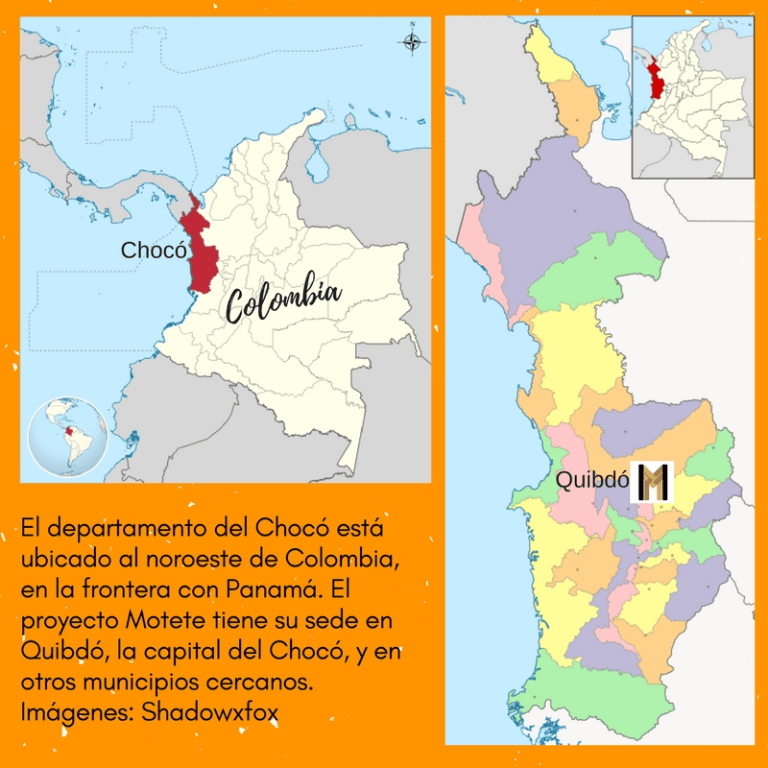
Tomorrow I start a diploma in reading promotion, and with it my project, Motete. We’ve chosen three areas of Quibdo where I’ll start running the workshops.

She is taking a risk starting a new venture, but believes in it and is surrounded by extended family and connections, which facilitate her ability to reach out even further into the community and invite everyone in, to be part of or benefit from her shared love of reading.

And so this project is coming together. This basket, this Motete, is filling up. The slogan for my project is ‘Contenidos que tejen’ – contents that weave – and every day I like it more. Every day I realise that these contents are weaving fulfillment and happiness within me…

The thing is, motetes have been used to carry food for the body: plaintains, bushmeat, fish. Our is to fill them with food for the soul: art, culture, books. And just as motetes are woven by hand, I thought these new contents would also form a fabric: the fabric of society, of community, the fabric of souls.

Letter Writing

Her unnamed friend that she writes to is someone she hasn’t known long, he occupies a space between the familiar and the unfamiliar that she claims as a freedom to express herself, to be vulnerable and open, someone who has mentored and shown her how to get funding. The range of things she will write to him of, span a wide spectrum.

We never see the replies but the continuation of her own correspondence displays her life, her dealing with health problems, the double bind of her wounding and love, of being raised by doting grandparents, while having complicated relationships with a teenage mother unable to mother her and an emotionally absent father. Her later sadness and depression, helped through therapy, tears and conversations, to ways of coping and healing. Her optimism for her venture, and the community connections she creates keep her going.

I grew a lot. I learned. But most of all I tried to weave a new way of relating to my father that hurt as little as possible.

The Sea, The Sea
One of the themes is the sea, the absence of sea, the way the river meets the sea and her relationship to it. She yearns for it when it has been absent for some time, just as she yearns for the letter writer and the relief that comes in the act of writing to him.

She describes herself in her current role as being like the sea at that place where it meets the river.

I’m like the Pacific Ocean, pressing at the river with its tides to make it flow the other way, or lapping at the land when its waters rise, when it feels like gaining inches of new ground. You need strong motivation to stick to this way of life, which isn’t exactly a fight against the world, but rather the certainty of forging your own path.

An Homage to Correspondence

I loved this slender book, it’s project and generosity, its intimate sharing and platform for expanding and learning and having the courage to venture into new areas. It made me think of an exquisite title I’d forgotten about, Leslie Marmon Silko’s slim book of correspondence The Delicacy and Strength of Lace: Letters Between Leslie Marmon Silko and James Wright.

That correspondence was written when Silko was 31 years old and Wright 51. They had planned to meet in the Spring of 1980, mentioned in letters of Oct/Nov of the previous year, not knowing he would be gone before then.

They discuss her novel, his poetry, language, his travels, her adventures with animals, their speaking engagements, their mutual challenges and experiences as university professors, and soon began to share more personal feelings, as she acknowledged the tough time she was having and he shared his own experience, expressing empathy.

Velia Vidal dedicates her book:

To my recipient,
simply for being there.

and when I read about her own projects in society, her love of the sea and shared readings and efforts to help move children and young adults out of poverty, it is all the more inspirational to read these letters, understanding the difference a letter can make, to see someone take a risk and pursue something that will help others from her community, while fulfilling her own dreams and aspirations.

Highly Recommended.

Velia Vidal, Author

Velia Vidal (Bahía Solano, Colombia, 1982) is a writer who loves the sea and shared readings. In 2021 she was a fellow at Villa Josepha Ahrenshoop, in Germany.

For her book Tidal Waters she won the Afro-Colombian Authors Publication Grant awarded by Colombia’s Ministry of Culture. She is the co-author of Oír somos río (2019) and its bilingual German-Spanish edition.

She is the founder and director of the Motete Educational and Cultural Corporation and the Reading and Writing Festival (FLECHO) in Chocó, one of the most isolated, complex and neglected regions in Colombia with the highest afro-descendant population density in the country.

Vidal graduated in Afro-Latin American Studies and has a Masters in Reading Education and Children’s Literature. She is also a journalist and specialist in social management and communication. In 2022 she was included in the list of 100 most influential and inspiring women in the world by the BBC.

She writes children’s literature, fiction and non-fiction, and poetry. Her work has been translated into German, English and Portuguese.

The Years by Annie Ernaux tr. Alison L. Strayer

I have had Annie Ernaux’s English translation of The Years on my bookshelf for some time now, since it was shortlisted for the International Booker Prize in 2019. It was originally published in French in 2008 (Les Années) and is considered to be her chef-d’œuvre. It is a non-fiction work that spans the years 1941 to 2006 in France.

Neither memoir or autobiography, it is a unique compilation of memory, experiences, judgments, of political, cultural, personal and collective statements and images that represent a woman living through those years.

It is bookended by descriptions of things seen that are likely never to be seen again.

All the images will disappear:

the woman who squatted to urinate in broad daylight, behind the shack that served coffee at the edge of the ruins in Yvetot, after the war, who stood, skirts lifted, to pull up her underwear and then returned to the café

the tearful face of Alida Valli as she danced with Georges Wilson in the film The Long Absence

There is no call for literary devices or beautification of language or hiding the crude, raw human elements that some may grimace at.

When Ernaux won the Nobel Prize for Literature in 2022, she gave a speech entitled I Will Write to Avenge My People in which she described deciding on and finding her writing voice, that it would not be like that used by the esteemed writers she taught her students.

What came to me spontaneously was the clamour of a language which conveyed anger and derision, even crudeness; a language of excess, insurgent, often used by the humiliated and offended as their only response to the memory of others’ contempt, of shame and shame at feeling shame.

Raised by shopkeepers/cafe owners, she considered herself a class-defector through her education alongside the sons and daughters of bourgeoise families. She would find a way through the language she used to address that betrayal, to elude the gaze of the culturally privileged reader.

I adopted a neutral, objective kind of writing, ‘flat’ in the sense that it contained neither metaphors nor signs of emotion. The violence was no longer displayed; it came from the facts themselves and not the writing. Finding the words that contain both reality and the sensation provided by reality would become, and remain to this day, my ongoing concern in writing, no matter what the subject.

For Ernaux, class mobility is a violent, brutal process and she sees it as her duty to at least attempt, via her authorship, to make amends to those she remembers, has left behind and to not hide from her own perspective, actions, behaviours.

Shame Simple Passion The Years Annie Ernaux Nobel Prize Winner 2022

Knowing that The Years was considered her masterpiece, I decided to read some of her earlier short works, to engage with her style and thus appreciate this work all the more and that has certainly been the case. I began with the book she wrote of her father La Place (A Man’s Place), then of childhood Shame, and an affair Simple Passion. I do think it is a good idea to read some of these shorter works before taking on The Years.

In effect The Years is an attempt to collate and offer a faithful account of an entire generation, as it was viewed by one woman and the collective that she was part of. The narrative therefore is written from the perspective of ‘she‘ and ‘we‘, there is no ‘I‘. It is an observation of the times passing and the inclinations of people, for better or worse.

She would like to assemble these multiple images of herself, separate and discordant, thread them together with the story of her existence, starting with her birth during World War II up until the present day. Therefore, an existence that is singular but also merged with the movements of a generation.

We read and witness the impact of school, religion, the media, politics on a generation, alongside the cultural influences, the strikes, the films, the advertising, the village gossip and children’s cruelty.

Public or private, school was a place where immutable knowledge was imparted in silence and order, with respect for hierarchy and absolute submission, that is, to wear a smock, line up at the sound of the bell, stand when the headmistress or Mother Superior (but not a teaching assistant) entered the room, to equip oneself with regulation notebooks, pens and pencils, refrain from talking back when observations were made and from wearing trousers in the winter without a skirt over the top. Only teachers were allowed to ask questions. If we did not understand a word or explanation, the fault was ours. We were proud, as of a privilege, to be bound by strict rules and confinement. The uniform required of private institutions was visible proof of their perfection.

While some aspects will be universal, it is by its nature a collective and singular memory of a life in France. That will interest some and not others, but as someone who lives in France today, it is interesting to read of the familiar and also the references to the particular, the cultural, the influences.

Between what happens in the world and what happens to her, there is no point of convergence. They are two parallel series: one abstract, all information no sooner received than forgotten, the other all static shots.

Because it is clearly written over the many, many years, it comes across as being always in the now, as if she is time travelling into the various versions of the self over the years, looking and noting down the visual memories, remembering and accessing the perspective of the time they were in.

So her book’s form can only emerge from her complete immersion in the images from her memory in order to identify, with relative certainty, the specific signs of the times, the years to which the images belong, gradually linking them to others; to try to hear the words people spoke, what they said about events and things, skim it off the mass of floating speech, that hub bub that tirelessly ferries the wordings and rewordings of what we are and what we must be, think, believe, fear, and hope. All that the world had pressed upon her and her contemporaries she will reuse to reconstitute a common time, the one that made its way through the years of the distant past and glided all the way to the present. By retrieving the memory of collective memory in an individual memory, she will capture the lived dimension of History.

L'occupation Une femme Je ne suis pas sortie de ma nuit

I found it an absolutely compelling read, filling in a lot of gaps and knowledge regarding French history that I happily encounter in this kind of format.

Highly recommended if you are interested in French cultural and personal history from a unique literary perspective.

Have you read any works by Annie Ernaux?

I have a few more shown here that I intend to read in the original French version.

Further Reading

The Guardian, Interview: ‘If it’s not a risk… it’s nothing’: Nobel laureate Annie Ernaux on her unapologetic career by Alice Blackhurst

The Guardian: Annie Ernaux: the 2022 Nobel literature laureate’s greatest works

Author, Annie Ernaux

Annie Ernaux was born in Seine-Maritime, France, in September 1940 and currently lives in Paris, France. In October 2022 she was awarded the Nobel Prize in Literature.

Annie Ernaux grew up in Normandy and studied at Rouen University, before becoming a secondary school teacher. From 1977 to 2000, she was a professor at the Centre National d’Enseignement par Correspondance. Her books, in particular A Man’s Place and A Woman’s Story, have become contemporary classics in France. The Years, shortlisted for the International Booker Prize in 2019, won the Prix Renaudot in France in 2008 and the Premio Strega in Italy in 2016. In 2017 she was awarded the Marguerite Yourcenar Prize for her life’s work.

January by Sara Gallardo (1958) tr. Frances Riddle, Maureen Shaughnessy (2023)

January is a slim novella, considered to be a revelatory, pioneering masterpiece about a short period in the life of a 16-year-old Argentine girl living in a rural area, whose life trajectory is radically changed in a day. Now, for the first time, translated from Spanish into English.

Breaking the Silence, Exploring the Consequence

With echoes of Edith Wharton’s Summer , this radical feminist novel broke the silence around abortion to reshape the way women’s bodies and rights were perceived in 20th-century Argentina.

A radical feminist text, January was the first Argentine novel to represent rape from the survivor’s perspective and to explore the life-threatening risks pregnancy posed, in a society where abortion was both outlawed and taboo.

They talk about the harvest but they don’t know that by then there’ll be no turning back, Nefer thinks. Everyone here and everyone else will know by then, and they won’t be able to stop talking about it. Her eyes cloud with worry; she slowly lowers her head and herds a small flock of crumbs across the worn oilcloth.

A 16 year old girl in a predicament, not of her own making discovers she is pregnant, but not by the young man she dreams of. She is the daughter of peasant farm workers and has limited options, but will pursue them all the same, in order to try and avoid the inevitable, forced outcome that awaits her once her secret becomes known.

A pregnant teenager imagines death rather than forced marriage
Photo F.Capetillo Pexels.com

She is just of an age where she begins to notice and feel something for someone around her, but her virtue is stolen by another. Instead of imagining love, she imagines death, and wonders if this might be when her will finally see her.

She no longer cares about anything besides this thing that consumes her days and nights, growing inside her like a dark mushroom, and she wonders if it shows in her eyes as they remain fixed on her worn-out espadrilles, two little gray boats on the tile floor, or in her hands crossed in her lap, or in her hair burned by the perm.

The novella follows her panic, her attempt to find resolution without support, her symptoms, her desperation to seek absolution, her confession, her realisation of the terrible consequence, the life sentence, the marriage plot.

This thought floods her with a tide of anxiety as she remembers her secret. A sense of impotence rises to her throat, as if time has become something solid and she can almost hear its unstoppable current conspiring with her own body, which has betrayed her, tossing her to the mercy of the days.

She lives in rural Argentina, a conservative catholic environment, an unruly place for a young girl.

What will happen to her in this place that reveres the cloth, that judges and shames girls regardless of their innocence?

Further Reading

The New York Review of Books: Nefer’s Mission by Lily Meyer

The New Yorker: The Abortion Plot: A newly translated novel by the Argentinean writer Sara Gallardo provides a missing link in the history of abortion literature, by S. C. Cornell

Sara Gallardo: Recently rediscovered Argentine writer by Jordana Blejmar (University of Liverpool) & Joanna Page (University of Cambridge).

it is perhaps her abiding concern for the ‘Other’ – marginalized, solitary characters, women, animals, monsters, even elements of nature – that gives Gallardo’s literature its most powerful political dimension…

Author, Sara Gallardo

Sara Gallardo was born in Argentina in 1931 to an aristocratic Catholic family. She became a journalist in 1950 and was twenty-seven years old when her powerful debut January was published in 1958.

She grew up in Buenos Aires in a family of men so famous there are streets named after them all over Argentina (all key figures in the constitution of the Argentine nation): her grandfather Ángel Gallardo was a civil engineer and politician; her great-grandfather Miguel Cané was a journalist, senator, and diplomat; and her great-great-grandfather Bartolomé Mitre was president of Argentina from 1862-1868.

By the time she died in 1988 she had published more than a dozen books, including collections of short stories and essays. Gallardo has been compared to Lucia Berlin or Shirley Jackson.

January is considered required reading across Argentina.

Daughters Beyond Command by Véronique Olmi tr. Alison Andersen

Daughters Beyond Command is a wide ranging chronicle of 1970’s France, seen through the eyes of the Malivieri Catholic family with three daughters, living in an apartment in Aix-en-Provence. It traverses issues of family, feminism, worker’s rights, class, animal rights, amid the rapid transformation of society in the 19070’s France.

Family saga set in France against social political context of May 68 to the May 81 election

While the story follows the changing lives and events, in particular of the daughters and the mother (we don’t learn too much about Bruno, the father), it also demonstrates the shifts in society and of generations that occur through the way these daughters seek their independence. It contrasts with the way their mother harbours secrets and makes other complicit when she does share what she would prefer to hide.

Regardless of their ages or circumstances, the country and the world is changing and attitudes and behaviours are shifting and everyone is forced to reckon with the changes as they impact them in different ways, raising consciousnesses and often unable to maintain previous ways of being .

Sabine, the eldest wants to work in theatre and acting and will do everything she can to pursue that dream in Paris. Fiercely independent, she has developed an irritation around comfort and conformity.

She watched as Maria set the table under Michelle’s authority. She looked at the framed photographs of her cousins who had not yet come home.Happy times on horseback, in cars, on boats. It was like a huge advertising campaign. It filled her with rage. There had to be something behind this publicity for the life she was being shown, both here and at home, in the silver frames of photographs, or poor people’s kitchens, behind the slogans like Moulinex Sets a Woman Free, the injunctions to promote progress, comfort, and the frenzied pursuit of happiness, luxury, and family life, there was something else. Which could be neither bought nor sold.

The second sister Hélène has been seduced by the trappings and comfort of this sophisticated Parisian family. Sabine can’t understand why she chooses to spend so much time with them, a family that lives in a way beyond anything they have ever experienced. Hélène spends most of her holidays with the family who don’t have daughters; the Uncle who has taken a particular interest in her. That regular proximity changes some of her habits, including the way she speaks.

It was a betrayal of the Malivieri clan, and Sabine was astonished that her sister could flaunt her bonds of dependence so naturally.

Hélène will also leave home early and pursue an education Paris, supported by her Uncle. She is less outspoken but equally passionate, affected by moral question around the protection and rights of animals.

As time passed, a breach had come between Hélène and her parents; adaptation upon her return required quickly taking stock of her loved ones. She saw her father, whose kindness and altruism for everything he could not lavish on his family financially. She saw her mother, hard-working and attentive, doggedly managing her household, and the rare moments she seemed to cast off her condition as a housewife, when she really seemed to be her true self, were when they visited Laurence on Saturday afternoons at her bastide.

Photo by Alotrobo on Pexels.com

The student riots of May ’68 had an impact on the nation and caused both fear and admiration in these adults trying to figure out how to parent their daughters, growing up surrounded by influences they could not control.

As the lives of the daughters changes, so too does the outside world. Simone de Beauvoir and Gisèle Halimi found the movement Choisir la cause des femmes (Choose the Cause of Women) in 1971 to decriminalise abortion in France, riot police storm the Lip watch factory that had been occupied by workers for three months, forcibly removing them; there is talk and images of the horrors of Vietnam, of the desire for freedom, respect for the proletariat, and the lyrics of the Bob Dylan song The Times Are A Changin’, the death of the President Georges Pompidou.

Sabine told her his name was Bob Dylan and that his song said, more or less, that the world was changing, you had to keep your eyes open,and the parents had better watch out, their sons and their daughters were beyond their command. It was a political song.

As time passes and events happen the sisters find a way to strengthen their bond despite their differences, separating from each other and then coming together in solidarity, while their parents seem stuck in time. Agnes, the mother is unable to stop changes happening to her, which will bring about a crisis, one the two older girls question but are again met with silence.

While the novel isn’t necessarily about resolving any of the issues presented, it encapsulates the impact of changing times on the various members of the family in a way that I found interesting, having lived in France for around 19 years, but not during the era mentioned. So much of the landscape was familiar, and some of the references, but many were not.

I appreciated the story for the depiction of what it might have been like to be part of an ordinary family growing up in this town in the 1970’s and learning about the significant events that challenged and affected people’s thinking, seen from the perspective of inside France. It is these changes in the background of the family lives and the adept writing that maintains the narrative pace.

It might be set in the 1970’s but it feels as relevant today in many respects as it did for that era of change.

Further Reading

My review of Véronique Olmi’s novella Beside the Sea (2015)

Listen to Bob Dylan’s The Times They Are A Changin

Kirkus Reviews: The personal is political for Olmi’s finely drawn characters.

Litro Magazine Review: Daughters Beyond Command by Monica Cadenas

Author, Véronique Olmi

Véronique Olmi was born in 1962 in Nice and now lives in Paris. She is an acclaimed French dramatist and her twelve plays have won numerous awards. Olmi won the Prix Alain-Fournier emerging artist award for her 2001 novella Bord de Mer (beside the Sea). It has since been translated into all major European languages.

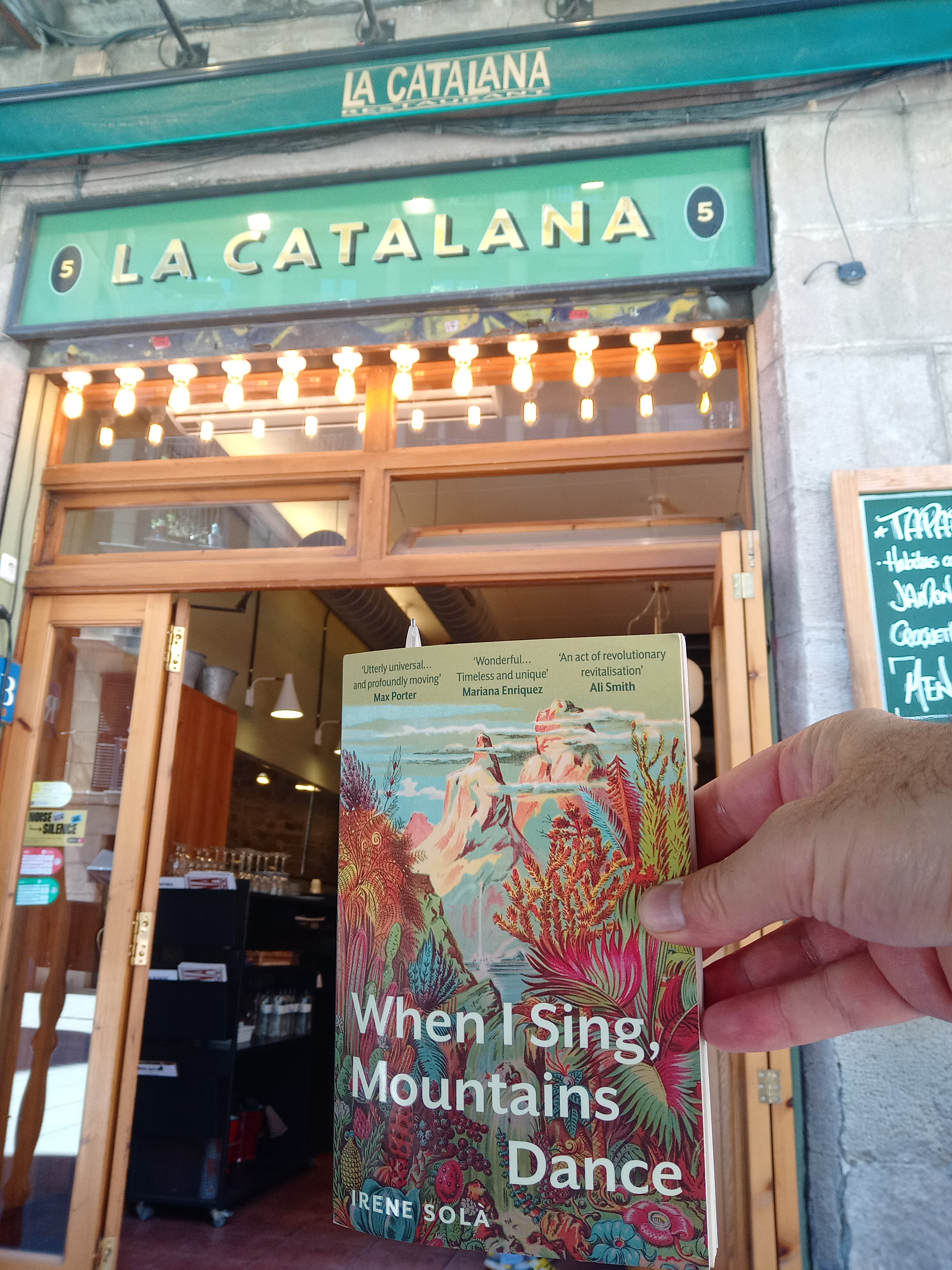
When I Sing, Mountains Dance by Irene Solà tr. Mara Faye Lethem

Early in May, I went with my son to Barcelona to meet up with my brother who was celebrating a significant birthday.

I couldn’t resist the opportunity to take a novel with me translated from Catalan, although during the four days we were there, I did not spend much time reading.

I read a few chapters before I went there and was intrigued to discover a novel of multiple voices and perspectives, not just human voices, firmly rooted in Catalonia culture.

While the first three days were in the city, I felt drawn towards the mountains and so we spent a day in nearby Montserrat.

When Lightning Strikes

Photo M.Soetebier Pexels.com

When I sing, Mountains Dance is set near a village high in the Pyrenees. It is a lyrical, mind-expanding work, littered with references to the folklore and history of Catalonia that brings alive, and gives voice to, every aspect of life within its unique biosphere.

The first chapter is entitled Lightning and I cannot be sure that it is lightning that speaks; perhaps it is the many facets of the storm that narrates. However, it is lightning that wreaks devastation and change on the community that we will then slowly be introduced to, over the following chapters.

After our arrival all was stillness and pressure, and we forced the thin air down to bedrock, then let loose the first thunderclap. Bang! A reprieve. And the coiled snails shuddered in their secluded homes, godless and without a prayer, knowing that if they didn’t drown, they would emerge redeemed to breathe the dampness in. And then we poured water out in colossal drops like coins onto the earth and the grass and the stones, and the mighty thunderclap resounded inside the chest cavity of every beast.

Navigating Loss, Celebrating Survival

A man named Domènec, a husband and father of two children, is outside when the storm breaks. He is in the middle of rescuing a calf whose tail is caught in a jumble of wires, carrying a small load of black chanterelles (Trumpet of Death) he has foraged. In saving the life of one, nature then takes another, in an instant.

And when it was clear we were done, the birds hopped out onto branches and sang the song of survivors, their little stomachs filled with mosquitoes, yet bristling and furious with us. They had little to complain about, as we hadn’t even hailed, we’d rained just enough to kill a man and a handful of snails. We’d barely knocked down any nests and hadn’t flooded a single field.

Ghosts of the Past Acting on the Present

A Catalan novel in translation, book cover set against the mountains of Montserrat

The four women who witnessed it approached him, then left him, gathering the soaking mushrooms he had dropped, women who made unguents and elixirs and all the other wicked things that witches do.

The death of the man sets off a catalyst of consequences for those left behind, his grieving wife, his newborn son, his neighbours.

I don’t know what hurts more: thinking only of the good memories and giving in to the piercing longing that never lets up, that intoxicates the soul, or bathing in the stream of thought that lead me to sad memories, the dark and cloudy ones that choke my heart and leave me feeling even more orphaned at the thought that my husband was not that all the angel I held him up to be.

Their voices are presented individually, then as the narrative moves along, the interconnectedness of this polyphonic world becomes increasingly apparent.

A Polyphonic Narrative

Irene Solà channels the unique voices of every living (or previously living) being: the lightning bolts, roe deer, mountains, the ghosts of civil war, the widow Sió and later her grown children, Hilari and Mia, as well as Mia’s lovers, with their long-buried secrets and their hidden pain.

The construction is non-linear, the voices fragmentary, but the threads of story rise up through the pages, like those black chanterelles from the damp forest floor.

When tragedy strikes the family a second time, the sister is forced to face life’s struggles and joys alone. A chorus of voices bears witness to all that passes, and the savage beauty of the natural environment, demonstrating aloneness as a state of human mind and not a reality.

Here, the voice of the black chanterelles:

The wild boar came, dark mouth, wet teeth, hot air, fat tongue. The boar came and ripped us out. A man came and ripped us out. The lightning came and killed the man. The women came and gathered us up. The women came and cooked us. The children came. The rabbits came. And the roe-deer. More men came and they carried baskets. Men and women came and they carried knives.

There is no grief if there is no death. There is no pain if the pain is shared. There is no pain if the pain is memory and knowledge and life. There is no pain if you’re a mushroom! Rain fell and we grew plump. The rain stopped and we grew thirsty. Hidden, out of sight, waiting for the cool night. The dry days came and we disappeared. The cool night came, and we grew. Full. Full of all the things. Full of knowledge and wisdom and spores. Spores fly like ladybugs. Spores are daughters and mothers and sisters, all at once.

Narrative Threads, Seeds, Spores, Growth and Healing

Sometimes the text reads like a story and other times like a hallucinatory dream, with a hidden message. Something of a puzzle, the various parts that make up this ecosystem, this community, the human and non-human. It is like imagining that the mountain and the trees really do bear witness to all and if they could share what they have witnessed, it would be something like this.

It requires slow reading and perseverance, as it takes a little while for the voices to become apparent and for the reader to accept that the human voices are not given the right to dominate the narrative. We are able to see and comprehend the wider picture if we have the patience to persevere.

Highly Recommended travel companion if visiting Catalonia.

Further Reading

Guardian Review: the mushroom’s tale – Animals, ghosts, humans, mountains and clouds share the narrative in this playful, deeply felt portrait of Catalonia and its people by Christopher Shrimpton

Granta: In Conversation: Eva Baltasar & Irene Solà‘The tide carries my books from my head to a place that is no longer mine.’ The authors discuss friendship, the sea and finishing their novels. March 2022.

Author, Irene Solà

Irene Solà is a Catalan writer and artist, winner of the European Union Prize for Literature, the Documenta Prize for first novels, the Llibres Anagrama Prize, and the Amadeu Oller Poetry Prize. Her artwork has been exhibited in the Whitechapel Gallery.

By interlacing art and literature, Irene Solà’s work investigates the construction, uses and possibilities of narrative and storytelling, from the historical and popular contexts to the more contemporary.

International Booker Prize Winner 2024

The International Booker Prize shortlist celebrated six novels in six languages (Dutch, German, Korean, Portuguese, Spanish and Swedish), from six countries (Argentina, Brazil, Germany, Netherlands, South Korea and Sweden), interweaving the intimate and political in radically original ways. All the books were translated into English and published in the UK/Ireland.

The 2024 international booker prize shortlist including Selva Almada's Not a River

The shortlist was chosen from the longlist of 13 titles and today the winner was announced.

The Winner

The winner for 2024 of the International Booker Prize is Kairos by Jenny Erpenbeck (Germany) translated from German by Michael Hofmann. Jenny Erpenbeck was born in East Berlin in 1967, and is an opera director, playwright and award-winning novelist.

Kairos is an intimate and devastating story of the path of two lovers through the ruins of a relationship, set against the backdrop of a seismic period in European history.

Berlin. 11 July 1986. They meet by chance on a bus. She is a young student, he is older and married. Theirs is an intense and sudden attraction, fuelled by a shared passion for music and art, and heightened by the secrecy they must maintain. But when she strays for a single night he cannot forgive her and a dangerous crack forms between them, opening up a space for cruelty, punishment and the exertion of power. And the world around them is changing too: as the GDR begins to crumble, so too do all the old certainties and the old loyalties, ushering in a new era whose great gains also involve profound loss. 

What the International Booker Prize 2024 judges said

‘An expertly braided novel about the entanglement of personal and national transformations, set amid the tumult of 1980s Berlin. 

Kairos unfolds around a chaotic affair between Katharina, a 19-year-old woman, and Hans, a 53-year-old writer in East Berlin.

Erpenbeck’s narrative prowess lies in her ability to show how momentous personal and historical turning points intersect, presented through exquisite prose that marries depth with clarity. She masterfully refracts generation-defining political developments through the lens of a devastating relationship, thus questioning the nature of destiny and agency. 

Kairos is a bracing philosophical inquiry into time, choice, and the forces of history.’   

Read An Extract From the Opening Chapter

Prologue

Will you come to my funeral? 

She looks down at her coffee cup in front of her and says nothing. 

Will you come to my funeral, he says again. 

Why funeral— you’re alive, she says. 

He asks her a third time: Will you come to my funeral? 

Sure, she says, I’ll come to your funeral. 

I’ve got a plot with a birch tree next to it. 

Nice for you, she says. 

Four months later, she’s in Pittsburgh when she gets news of his death. 

Continue Reading here…

Further Reading

Everything you need to know about Kairos

A Reading Guide on Kairos

Q & A with Jenny Erpenbeck and Michael Hofmann

Thoughts

I haven’t read Kairos though it has had mainly positive reviews. I have read one of her novels Visitation some years ago and didn’t get on with that one too well, so I haven’t picked up any more of her work. I have no doubt that it is well written, I’m just not that interested in the premise.

Have you read Kairos? Or any other novels by Jenny Erpenbeck? Let us know in the comments below what you thought.

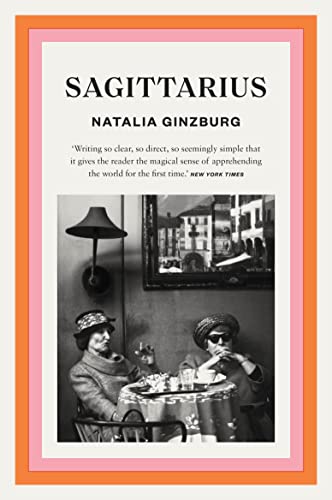
Sagittarius by Natalia Ginzburg (1957) tr. Avril Bardoni

After just finishing Domenico Starnone’s The House on Via Gemito (my review here) featuring a domineering father, it felt appropriate to read another Italian author Natalia Ginzburg and her fictional account of a domineering mother.

The Interfering Parent

However, Ginzburg’s parent in the novella Sagittarius might be considered timid compared to Starnone’s Federico. While she is over invested in the lives of her two daughters, they seem able to pursue their own desires in spite of her interference.

Fed up with life in a small town she moves to the suburb of a city to be closer to her sisters, who run a china shop and her student daughter (who narrates the story), then demands that her second daughter and husband move with her, she has promised to give him money to set up a practice.

What he needed was a practice of his own in a good central location. My mother had promised to give him the money for this as soon as she had won a certain lawsuit against the local council in Dronero, concerning a property dispute; she had made the promise lightly, finding it easy to part with money that was so far away and so unlikely ever to be hers; the litigation had already dragged on for more than three years, and Cousin Teresa’s husband, a solicitor, had told us that our chances of winning were nil.

Photo by Ylanite Koppens on Pexels.com

We learn she disapproves of the husband Chaim, a Jewish Polish Doctor with only one brother left in his family, having lost his family in wartime. She was initially distraught over the one that got away, – a rich, blond, young man her daughter met on holiday, until she became ill and her mother arrived – not realising that her overbearing parental behaviour might have had something to do with it. She had done everything to ensure her daughter would marry well.

Every time she thought about the boy with the blond crew cut my mother became enraged. Not one spark of generosity had he shown! No crumb of comfort had he offered! And to think he had disappeared without even saying goodbye! Without a single word of any kind: The very memory of the blond crew cut and of the afternoon spent with is family now filled her with disgust.

There were days when my mother was almost as bored in town as she had been in Dronero. She already knew the central shopping district like the back of her hand, having walked the length and breadth of it looking for suitable premises, small but attractive, for her art gallery; but the rents were all extremely high and, besides; another problem was beginning to occur to her, that of finding painters willing to show in her gallery. She knew nobody.

Making Friends in the City

Finding it more lonely and isolating than she imagined, she is happy when she meets Pricilla (call me Scilla), a woman who (eventually) listens to her dreams and desires and seems in tune with them and even willing to partner with her on her project to open an art gallery.

My mother was now anxious to talk about her gallery project but was unable to get a word in edgeways because Signora Fontana never stopped chattering for an instant.

In her dogged pursuit of ambition, and desperate desire for a true friend, she overlooks important signs that perhaps all is not as it should be and naively keeps her plans to herself, avoiding criticism or advice from any of her family members that might have lead her to question her association – though probably not.

A Greek Mythology Warning

Photo by Damir on Pexels.com

It is no coincidence that Ginzburg names her character Scilla, that name immediately conjured up for me the creature Scylla lurking in the sea that enticed ships onto the rocks. She is adept at luring men into a perilous and rocky waterway, thus as I read, every person that Scilla was connected to, became for me, a potential villain or obstacle in her path, some perhaps by accident, others by design.

Scilla convinces her friend to wait on the art gallery project and invites her in on another shop idea. They will decide on a name, Scilla’s zodiac sign, Sagittarius, one that could easily be transferred to an art gallery.

Ultimately she will be confronted with her own poor judgement, both those she put her trust in that she should not have and those who she neglected and would be there for her in her downfall.

This novella is often read with the excellent Valentino which I read earlier in the year and loved. Sagittarius is a little more predictable, whereas for me, Valentino was exceptional, my favourite of the two, but I highly recommend them both and look forward to reading more Ginzburg this year.

Further Reading

My reviews of other Natalia Ginzburg works: Family Lexicon (memoir), The Dry Heart (debut novel), Valentino (novella)

JacquiWine’s Journal reviews Valentino and Sagittarius

Author, Natalia Ginzburg

Natalia Ginzburg (1916-1991) was born in Palermo, Sicily. She wrote dozens of essays, plays, short stories and novels, including Voices in the EveningAll Our Yesterdays and Family Lexicon, for which she was awarded the prestigious Strega Prize in 1963.

Her work explored family relationships, politics and philosophy during and after the Fascist years, World War II. Modest and intensely reserved, Ginzburg never shied away from the traumas of history, whether writing about the Turin of her childhood, the Abruzzi countryside or contemporary Rome—approaching those traumas indirectly, through the mundane details and catastrophes of personal life.

She was involved in political activism throughout her life and served in the Italian parliament between 1983 to 1987. Animated by a profound sense of justice, she engaged with passion in various humanitarian issues, such as the lowering of the price of bread, support for Palestinian children, legal assistance for rape victims and reform of adoption laws. 

She died in Rome in 1991 at the age of seventy-five.

Why Did You Come Back Every Summer by Belén López Peiró (Argentina) tr. Maureen Shaughnessy

It’s been a good couple of weeks for Charco Press, with Not a River by Selva Almada (translated by Annie McDermott) on the shortlist for the International Booker Prize 2024 and Of Cattle and Men by Ana Paula Maia (translated by Zoë Perry) winning the Republic Of Consciousness Prize 2024.

An Unforgettable Summer

social legal justice #metoo voices silenced

This week I picked up Why Did You Come Back Every Summer from the 2024 Bundle, originally published in Spanish in 2018 as Por qué volvias cada verano and published in English for the first time in April 2024.

What a book.

A young woman experiences sexual abuse by a family member when she is a teenager. Some years later she reveals what happened. And there are all kinds of responses, reactions, accusations, procedures and legal processes.

Testimony or Treason

In this lucid text, a chorus of voices speak. Often they are speaking to her, only we do not hear her voice. We hear one side of conversations. We hear what they have all said. We see what they are all doing. We understand the selfish human inclination to protect one’s own. We become witness to observing a victim in need of love and support being hung out to dry.

In between the commentaries, are the affidavits. Short, streamlined, neutral texts presented in old fashioned type that all begin and end the same way, with their two or three salient points contained within.

Photo by Suzy Hazelwood on Pexels.com

The voices that speak are presented on the right hand page, the left hand page remains blank. It gives the text momentum, the pages pass quickly. The voices say so much more, they incriminate.

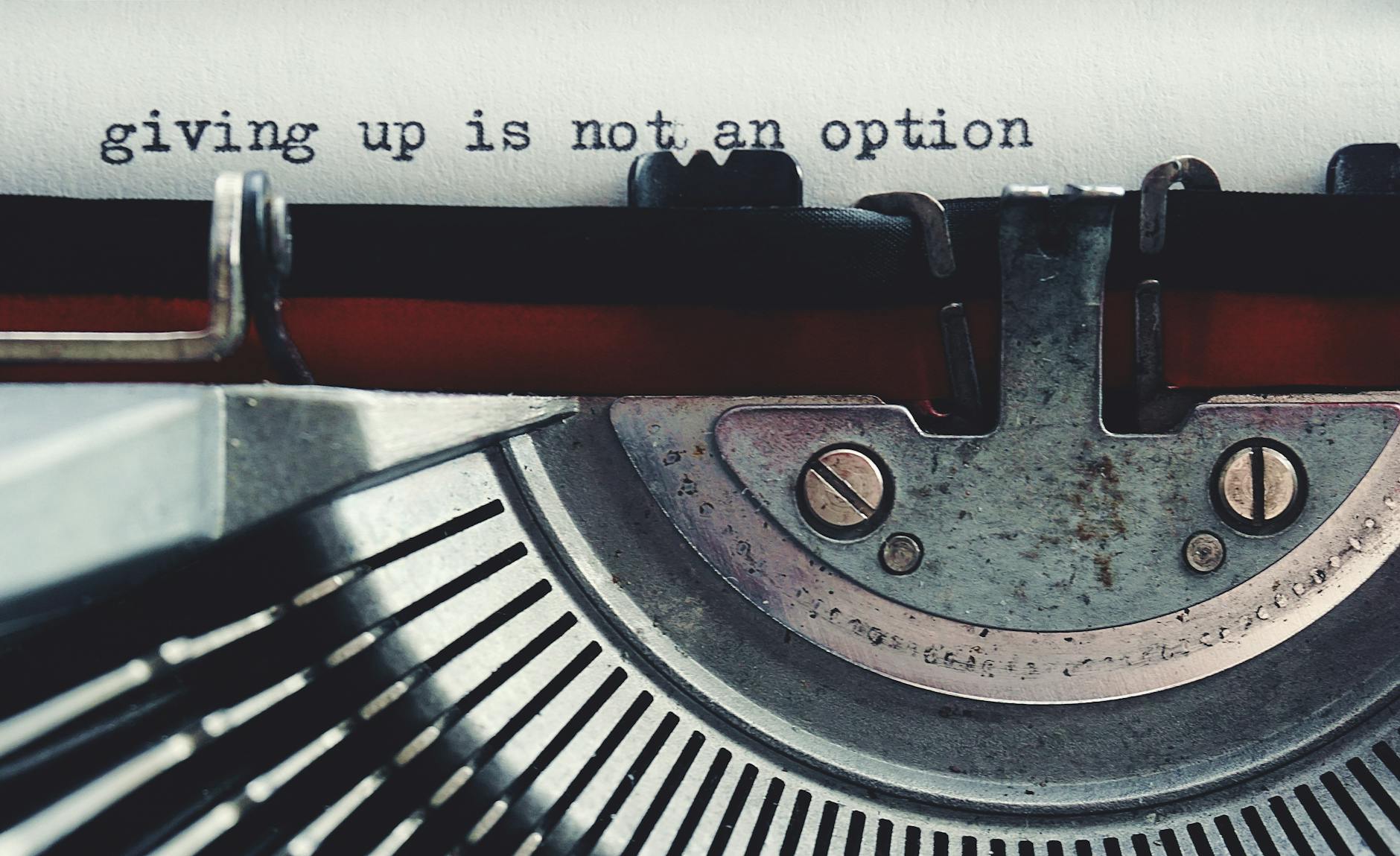
The legal texts are more dense, no white space between paragraphs and they cover consecutive pages. There is no space for reflection or consideration, as we read we can hear the sound of the keys typewriter striking the ribbon.

#MeToo Movement and the Sharing of Stories

The process for pursuing justice, rather than protect or bring about resolution, too often results in making the lives of women even worse. To pursue justice threatens exposure, judgement, scorn, rift, ostracism, it brings shame. It reached a tipping point in 2017 with the #MeToo movement. Frustrated, women began to share their stories, it was the only thing left to do and when it was done as a collective, it created community and support, if not justice. Long buried trauma rose to the surface, if not for justice, to begin to heal a wound of womanhood.

Reading Why Did You Come Back Every Summer reminded me of the recent documentary You Are Not Alone: Fighting the Wolf Pack, a Spanish feature film about a young woman seeking justice after a terrifying ideal at Spain’s iconic ‘running of the bulls’. Produced in secret, the film is told through the words of the victim survivors and recounts the mass protests the case sparked on account of the injustice experienced.

More than a million women and girls took to the streets chanting “Sister, I do believe you” and broke their silence on social media with #Cuéntalo (“Tell Your Story”).

There are many ways to share a story and Belén López Peiró has created a work of art that honours an experience that changed a young girls life forever, putting it into a form that has already become a literary, social and political phenomenon in her country and beyond.

It is a justice-seeking oeuvre narrated through a cacophony of voices that gives power to the unsaid, that allows the quiet to echo resoundingly, that shines a light on yet another shadow of humanity.

Highly Recommended.

Author, Bélen López Peiró

Belén López Peiró studied journalism and communication sciences in Buenos Aires University and has recently completed an MA in Creative Writing at the Barcelona’s Pompeu Fabra University. She currently coordinates non-fiction writing workshops with a gender perspective. 

Why Did You Come Back Every Summer is her debut novel. In 2021 she published her second book Donde no hago pie (Nowhere to Stand) which narrates the legal process the author went through to bring her abuser to justice.

Republic of Consciousness Prize for Small Presses 2024

Now in its 8th year, The Republic of Consciousness Prize is an annual literary prize aimed to support small and independent presses in the UK and Ireland. The organisation supports and recognises the work of those presses considered vital to the United Kingdom’s literary culture.

They state their purpose as:

“To advance for the public benefit literary fiction of the highest merit from small presses in the UK and Ireland through a range of reading, speaking and event initiatives, and by providing grants and assistance to practitioners and producers of literary fiction.”

Ground Breaking Experimental Works of Fiction

By their very nature, they are more likely to be ground-breaking experimental works that mainstream publishers consider commercially risky, although when one of these novels takes off, they are often ready to step in.

It is where we are likely to come across innovative forms of writing, therefore you either have to be a brave and adventurous reader, or practice a certain level of discernment, in order to find those titles that might appeal if you are less of a risk taker in reading.

Reading Outside the Comfort Zone

I like to see what titles the prize is considering, though they are generally a little too avant-garde for me. This year, I discovered I had read one title that was on the longlist and then it made the shortlist, so of course I was hoping it would win!

No doubt if you follow me here, you will have guessed which press it was – Yes, it was a Charco Press title. Charco Press publish outstanding works of mostly Latin American contemporary fiction in translation and you can support them by subscribing to their annual 2024 bundle. You won’t regret it!

Another Winner From Charco Press

Yesterday, from a shortlist of five books, the winner was announced, which the judges described as:

“A stunning thriller of sorts. So understated. So powerful. So heartbreaking. Worked for me completely on both the level of a human story and as a warning parable for our times.“

Of Cattle and Men by Ana Paula Maia (Brazil) translated by Zoë Perry (Portuguese)

I read Of Cattle and Men (link to my review here) in May 2023 and it was one I could not put down until I finished. Deeply evocative of slaughterhouse communities and institutions, it opens a channel to consideration of the consciousness of bovines and depicts man in his basest form, driven to paranoia by what he can not understand or control and therefore seeks to destroy.

The writing is compelling and thought provoking, it is suggestive in a way that provokes the reader’s imagination, without being explicit about what might be being suggested. I thought it was excellent. And a year later, it has stayed with me.

When night falls, the residents of Ruminant Valley tend to shut their doors and windows tight. They believe that everything that seems improbable during the day can overcome the darkness. It’s when thoughts that were once impossible become possible; when hushed whispers swell, and above all, when that layer of darkness cloaks anything suspicious. The figures, the voids, the long shadows, all of it brought on by the night, which is immense, and its reaches infinite.

Highly Recommended.

Warning: Not for the squeamish.

Further Reading

Granta: Read an extract from Of Cattle and Men

Guardian: Charco Press wins Republic of Consciousness prize for ‘gut-punch’ novel by Ella Creamer

Human Ecology Research Paper: A Social History of the Slaughterhouse: From Inception to Contemporary Implications (2010) by Amy J.Fitzgerald, Depart of Sociology & Anthropology, University of Windsor, Canada

The House on Via Gemito by Domenico Starnone (Italy) tr. Oonagh Stransky

That was quite an experience.

Starnone writes a work of fiction about the man his father was (we can assume it is autobiographical since his father’s name was Federico and he painted an artwork titled ‘The Drinkers’ which is in part featured on the cover). It is an attempt to tell the story of a man he spent his childhood in fear of and his adulthood trying not to be like.

Reconstructing a Life, Walking the Streets

In the novel, the narrator is the eldest son Mimi, who lives in Rome but has returned to Naples some time after the death of his father and is reconstructing memories, by walking the streets where they lived, visiting certain places to evoke other memories, like the hospital where his mother was when her husband could no longer deny her illness; the church where he made his first communion; the council offices, where he hopes to find some of his father’s paintings, including ‘The Drinkers’. Every location existed in service to his father’s existence and memories.

He was certain that both great and small events had a common thread: the mystery of his destiny. And he constantly tried to prove it to himself, his relatives, his friends, and to us children by weaving a vibrant pattern in which the only events that were true were the ones vitally connected to him. Consequently, all the names of cities and buildings and roads, all of geography, served merely to create a map of his needs, and this was how they were to be remembered.

Though the novel is about the man, the title refers to a street where they lived for a while and the use of street names rather than diary entries or even artworks, inscribes the neighbourhood into history, creating a different kind of legacy, one that will last longer than any man or work of art. A diary would be too intimate, a street map a kind of canvas.

Portrait of a Narcissist Father Via His Eldest Son

It is also about his own boyhood, however the character of the father overshadows the son, his wife, his wife’s family, in fact anyone in proximity to him. This is because he considers himself superior. According to himself. He makes it one of his main purposes in life to remind everyone around him of that fact. He can not be taken down or made to think he is anything less than how he perceives himself.

It’s true, he was lazy. He was arrogant. He was blowhard. He was all those things, and the first to admit it. He felt he had the right to be lazy, arrogant, and a blowhard – to anyone who busted his balls. He was born to be a painter, not a railroader.

The son walks familiar streets of Naples, streets he never strolled with his father – but knew intimately from his adolescence – as a way to navigate anecdotes about the way his father lived his life, the things he said (mostly insults about everyone else), the things he did (working for the railroad as a clerk, beating his wife, painting artworks) and his opinions about various matters. He walks and remembers. He walks and imagines anew.

A Determined Artist Perseveres

historical fiction Paris 1939 Domenico Starnone House on via gemito
Photo by Pixabay on Pexels.com

Federi is passionate about art and believes he possesses great artistic talent, but the art world is full of shit people who nominate their friends for prizes, then their friends create prizes and nominate those friends, therefore keeping him out of these circles. He blames everyone for his lack of success that he continues to strive for. Beginning with his own father who refused to educate him, in fact his parents abandoned him at a young age and sent him to live with his grandmother.

He becomes a working class man, who sees the most beautiful woman who he takes for a wife, raises four sons and a daughter and spends his free time at home painting or pursuing opportunities to advance his art.

A Literary Triptych

The book is in three sections. The first section ‘The Peacock’ introduces the character and is the part of the book where you might abandon, because it isn’t yet clear why it might benefit any reader to be subject to this psychological demonstration of one of the most extreme versions of the societal system of domination at work. The patriarchy thrives under this system, as Riane Eisler showed in her work The Chalice and the Blade: Our History, Our Future and Nurturing Our Humanity: How Domination and Partnership Shape Our Brains, Lives, and Future and the portrait this novel creates shows how someone who lives according to this conditioning impacts those in his proximity. Cycles of trauma, neglect and narcissism eroding relationships in pursuit of validation, not love.

A Masterpiece Created at All Cost

Much of the source material is inspired by journals his father kept, which trigger memories and dates of events he participated in. The artworks themselves are a kind of journal, a record of themes in his life. Part Two ‘The Boy Pouring Water’ is the most compelling and significant section, it documents the process of creating the largest, most significant art work he would do. ‘The Drinkers’ required the son to pose as the boy pouring water, other members of the family sat for him and the local fruit and vegetable seller.

The anxiety the young son would feel when he realises that there is a problem in the image, between the character holding out the glass and where he is pouring from will cause contortions of magnitude in him, to try and avoid the disaster he sees coming. His father never sees it and we think for a moment that the drama has been averted, alas no – disaster arrives at the height of his short-lived pleasure.

So why do we want to read a novel about an egomaniac? And one that was originally published just over 20 years ago.

It is both a psychological example of the effect a man with no empathy and worse, a need to belittle, insult and induce fear in people, can have on a family. It is set against a backdrop of 1960’s Naples, post WWII, a place where allegiances often changed, both in the halls of power and on the street, depending on how ‘enemies or allies’ treated the people.

It is the historical context and the journey of a working class man trying to break into the establishment of artists, who despite his unruly personality, perseveres and participates as much as is possible for someone who won’t allow himself to be intimidated. Everything is a struggle, he will fight to the end. Art ‘wasn’t fun, it was war’.

Fortunately as the years passed, I developed a strategy for blocking out his words. Using this technique, which I perfected as a teenager, the angrier he grew when telling the stories of his life and the reasons for his actions, the thicker the fog grew in my head, allowing me to think about other things. It helped establish a distance between us. It curbed the desire to kill him.

Fatherhood in Another Era, Produce, Punish, Protect

In the final part ‘The Dancer’ the humiliation of the son comes full circle as he enters adolescence and tries to impress a girl Nunzia and his father gives him terrible advice about what to do with women. As if things couldn’t get any worse, we learn that young girl has been abused by an Uncle and the son lies waiting for his fathers verdict.

The book ends with a scene that makes the reader pause to reflect on how reliable the narrator is, like the father, he too has the ability to exaggerate, to curate anecdotes and perspective.

Once I got into this, which didn’t take very long, I found it both shocking and compelling to read, the dedication by a son to honoring the passage of a man who made his boyhood hell. Thus he provides a kind of validation beyond the grave, but doesn’t hold back from focusing on the many flaws alongside the talent. It is the many layers that make it something of a classic, the psychological profile and repeat patterns of the man, the making of an artist and the impact on family and the social history of a city.

Highly Recommended.

The House on Via Gemito is a marvellous novel of Naples and its environs during and after the Second World War. The prism for this exploration is the relationship between the narrator and his railway worker / artist father – an impossible man, filled with cowardice and boastfulness. His son’s attempt to understand and forgive him is compelling; we are held through the minutiae of each argument and explosion, each hope and almost-success.’ International Booker Judges

Further Reading

New York Times Review June 2023: My Father The Frustrated Artist

A Reading Guide – The House on Via Gemito, International Booker Prize 2024

Read An Extract from the Opening Chapter here

To see the artwork of Federico Starnone visit https://starnone.it/gallery2/

Author, Domenico Starnone

About the author

Domenico Starnone is an Italian writer, screenwriter and journalist. He was born in Naples and lives in Rome

He is the author of 13 works of fiction, including First ExecutionTies, a New York Times Editors Pick and Notable Book of the Year, and a Sunday Times and Kirkus Reviews Best Book of the Year, Trick, a Finalist for the 2018 National Book Award and the 2019 PEN Translation Prize, and Trust. 

The House on Via Gemito won Italy’s most prestigious literary prize, the Strega in 2001 and was longlisted for the International Booker Prize 2024.