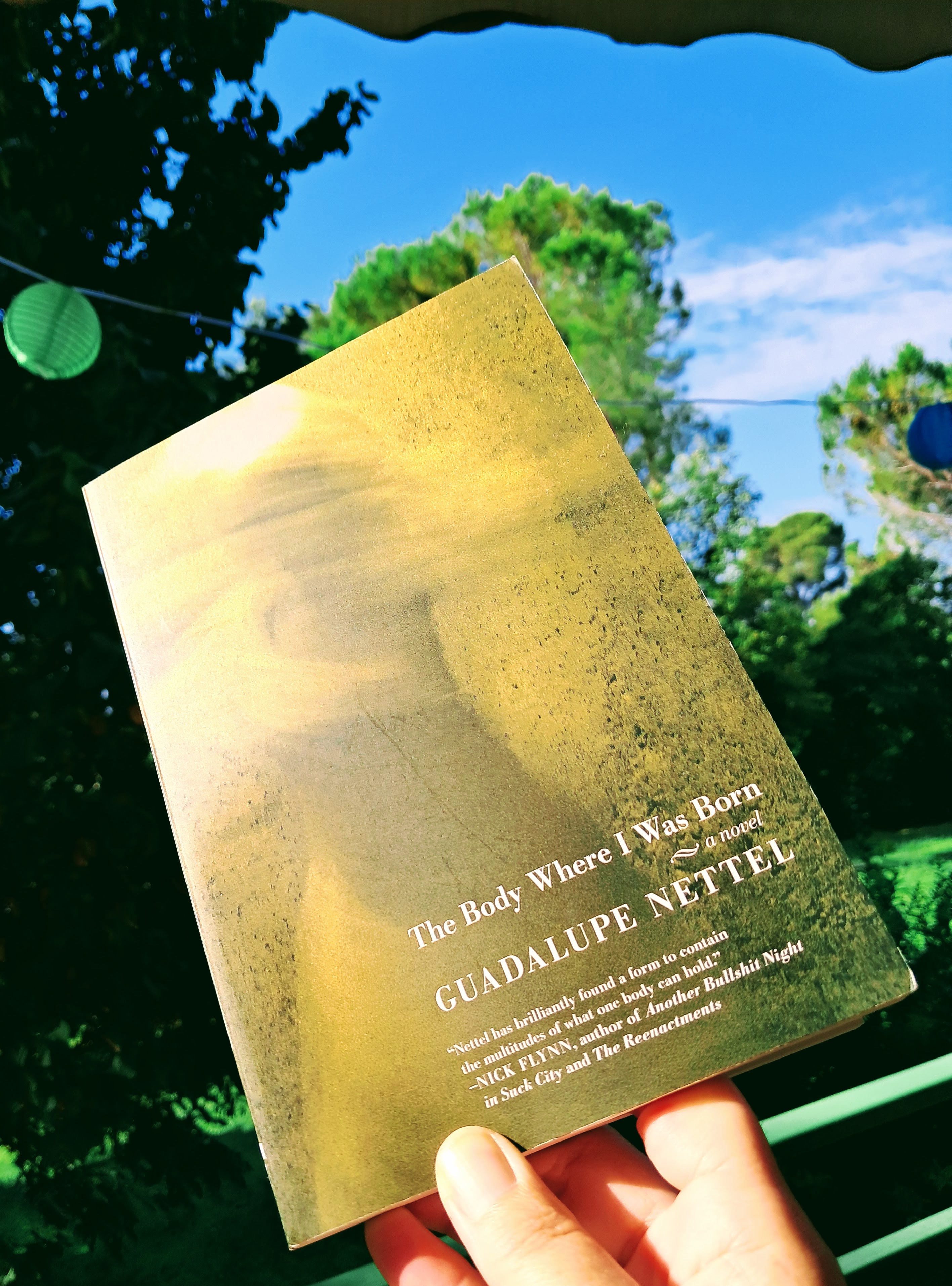
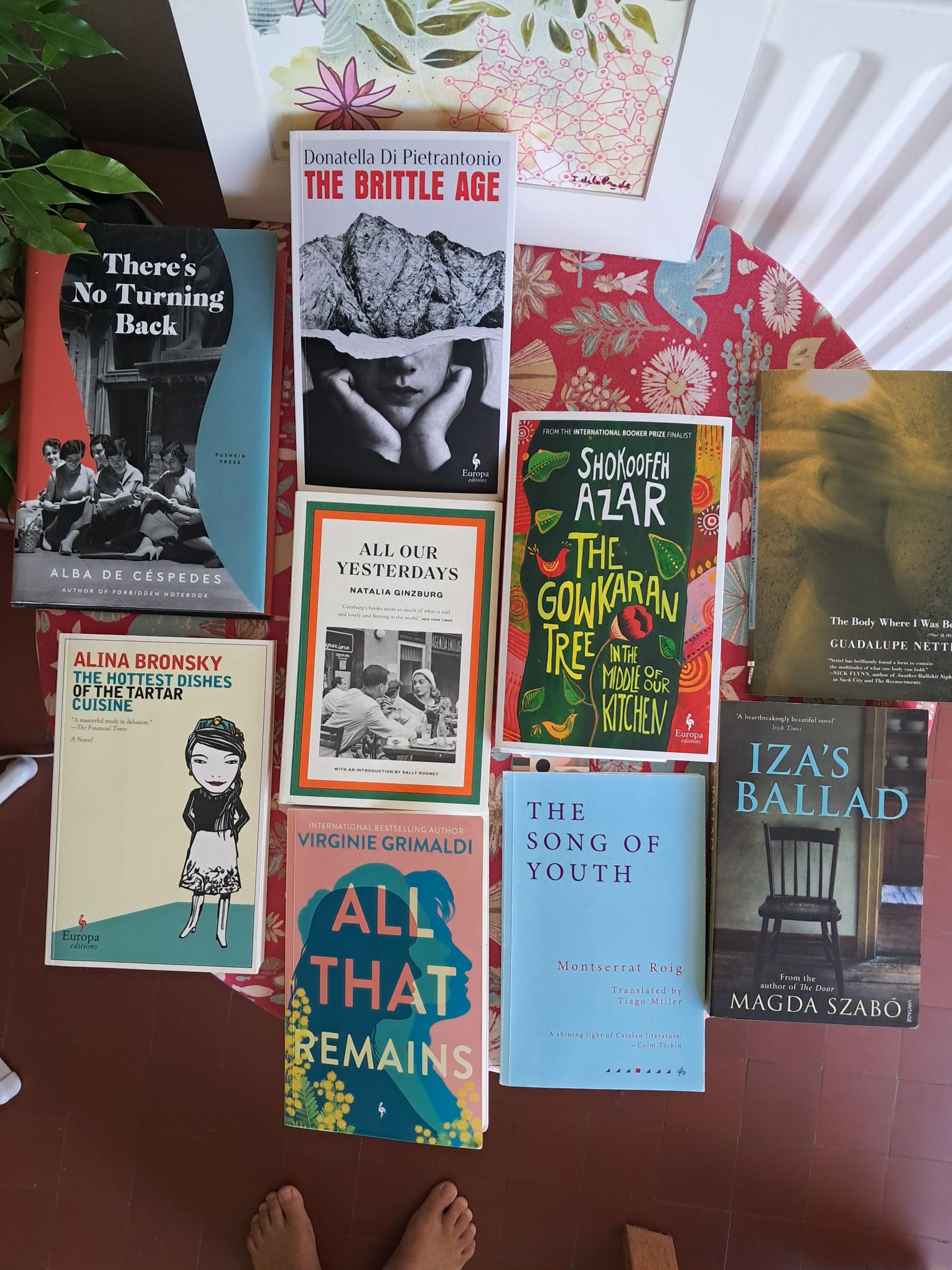
The Body Where I Was Born by Guadalupe Nettel tr. J.T.Lichtenstein #WITMonth

Feeling a little uninspired by recent reads, I decided to check my shelves for what I had in translation, August is WIT Month and my shelves are looking a little depleted in that regard!

I spotted Guadalupe Nettel’s novel The Body Where I Was Born and remembered how much I adored Still Born (my review here) in 2023, a book that was shortlisted for the International Booker Prize 2023. It’s a compelling exploration by two women into the question of whether or not to have children and how their ideas can change as life happens and circumstances arise that can awaken feelings not born of the mind.

Why Did I Do It, Doctor?

women in translation an autobiographical novel set in Mexico and Aix en Provence

It was the compelling style that made me want to read something else by Nettel and as I began to read The Body Where I Was Born I realised it is semi-autobiographical.

The novel is narrated from the psychotherapist’s chair and so occasionally there will an interruption where the narrator asks a question having recounted yet another episode of their childhood.

The novel is written in five parts, segmenting different parts of childhood and it is effectively a form of coming-of-age, albeit recounted to a therapist.

A Marked Childhood

As with her previous novel and writing style, I was immediately drawn into the narrative, which begins with the author recounting the consequence of having been born with a birthmark covering part of her eye.

The only advice the doctors could give my parents was to wait: by the time their daughter finished growing, medicine would surely have advanced enough to offer the solution they now lacked. In the meantime, they advised subjecting me to a series of annoying exercises to develop, as much as possible, the defective eye.

As a result, school became even more of an inhospitable environment and those measures marking her out for unwanted attention.

Condition and Correct, A Parental Institution

But sight was not my family’s only obsession. My parents seemed to think of childhood as the preparatory phase in which they had to correct all the manufacturing defects one enters the world with, and they took this job very seriously.

Our narrator ponders the harm of parental regimes and how we perpetuate onto the next generation the neuroses of our forebears, wounds we continue to inflict on ourselves.

In addition to these corrections, her parents were keen to adopt some of the prevailing ideas of the time (the seventies) about education, a Montessori school in Mexico City and a sexual education free of taboos and encouraging candid conversations.

Rather than clarifying things, this policy often made things more confusing and distressing for the children and was likely the cause of the rupture of the adults when they adopted a practice much in fashion at the time, the then-famous ‘open-relationship’.

During all the preparatory conversations I had worn the mask of the understanding daughter who reasons instead of reacts, and who would cut off a finger before aggravating her already aggravated parents. Why did I do it, Doctor? Explain it to me? Why didn’t I tell them what I was really feeling?

Separation and Abandonment

After the marriage separation their mother is interested for a while in community living, subjecting the children to another experiment, and later still sinks into a deep depression that affects them all.

Finally, in a burst of desperate willpower, she decided to exile herself. Hers was not political, but an exile of love. The pretext was getting a doctorate in urban and regional planning in the south of France.

But before they were sent to France, there was a period where their maternal grandmother – who much favoured her brother- came to live with and look after them. Full of questions about why their parents left them in this situation, the grandmother gave her usual cryptic response:

‘Since when do ducks shoot rifles?’ she’d say, meaning that children should not demand accountability from adults.

Heightened Observations, Humorous Occasions

Part II narrates the period with grandmother in charge, made all the more challenging for being in their own home, one that had held so many previously fond memories.

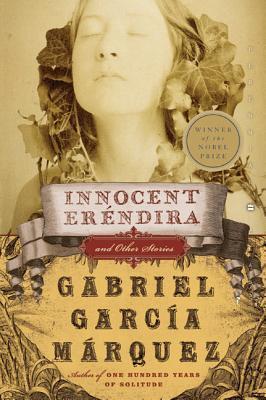
Reading was frowned upon, but the discovery of Gabriel Marcia Marquez’s The Incredible and Sad Tale of Innocent Erendira and her Heartless Grandmother cheered her up and provided a kind of solace.

Doctor, this discovery, as exaggerated as it sounds, was like meeting a guardian angel, or at least a friend I could trust, which was, in those days, equally unlikely. The book understood me better than anyone else in the world and, if that was not enough, made it possible for me to speak about things that were hard to admit to myself, like the undeniable urge to kill someone in my family.

From Mexico City to Aix-en-Provence

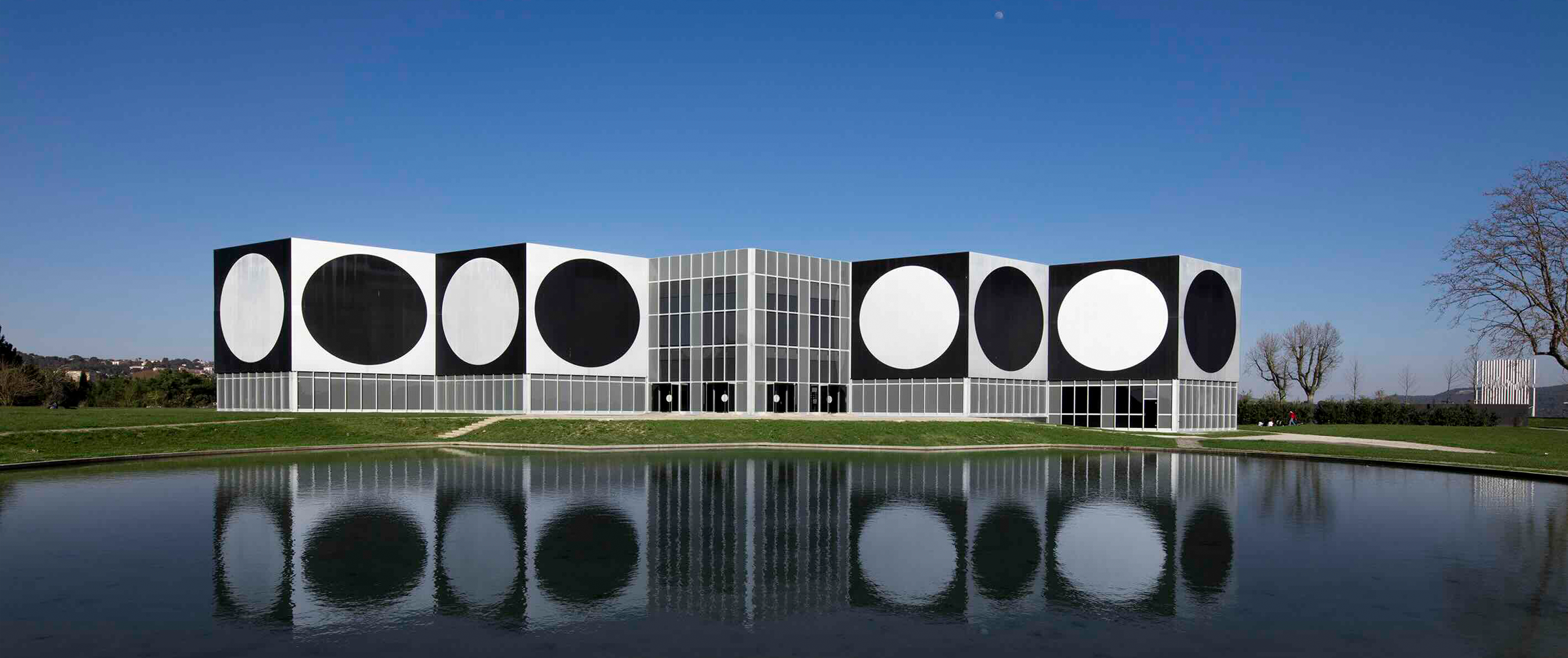
As I began part III, I was surprised to find the two young children following their mother to the south of France, to the Jas de Bouffan quartier of Aix en Provence near the musée Vasarely.

If I was already engaged in the novel, now I was riveted. I know the quartier well and the schools she and her brother are sent to, it awakened my own memories of being an outsider at the school gate, waiting for children to exit from the well regulated school environment.

Vasarely Musée, Aix en Provence

I have no doubt that my mother sought in Aix the institution that most resembled our school in Mexico. The percentage of atypical beings was equal, or maybe even higher. But still… everything there seemed strange to me.

From From the public Freinet education at La Mareschalé to the local middle school, Collège au Jas de Bouffan, a mix of children from multiple origins, North African, Indian, Asian, Caribbean and French.

To survive in this climate, I had to adapt my vocabulary to the local argot – a mix of Arabic and Southern French – that was spoken around me, and my mannerisms to those of the lords of the cantine.

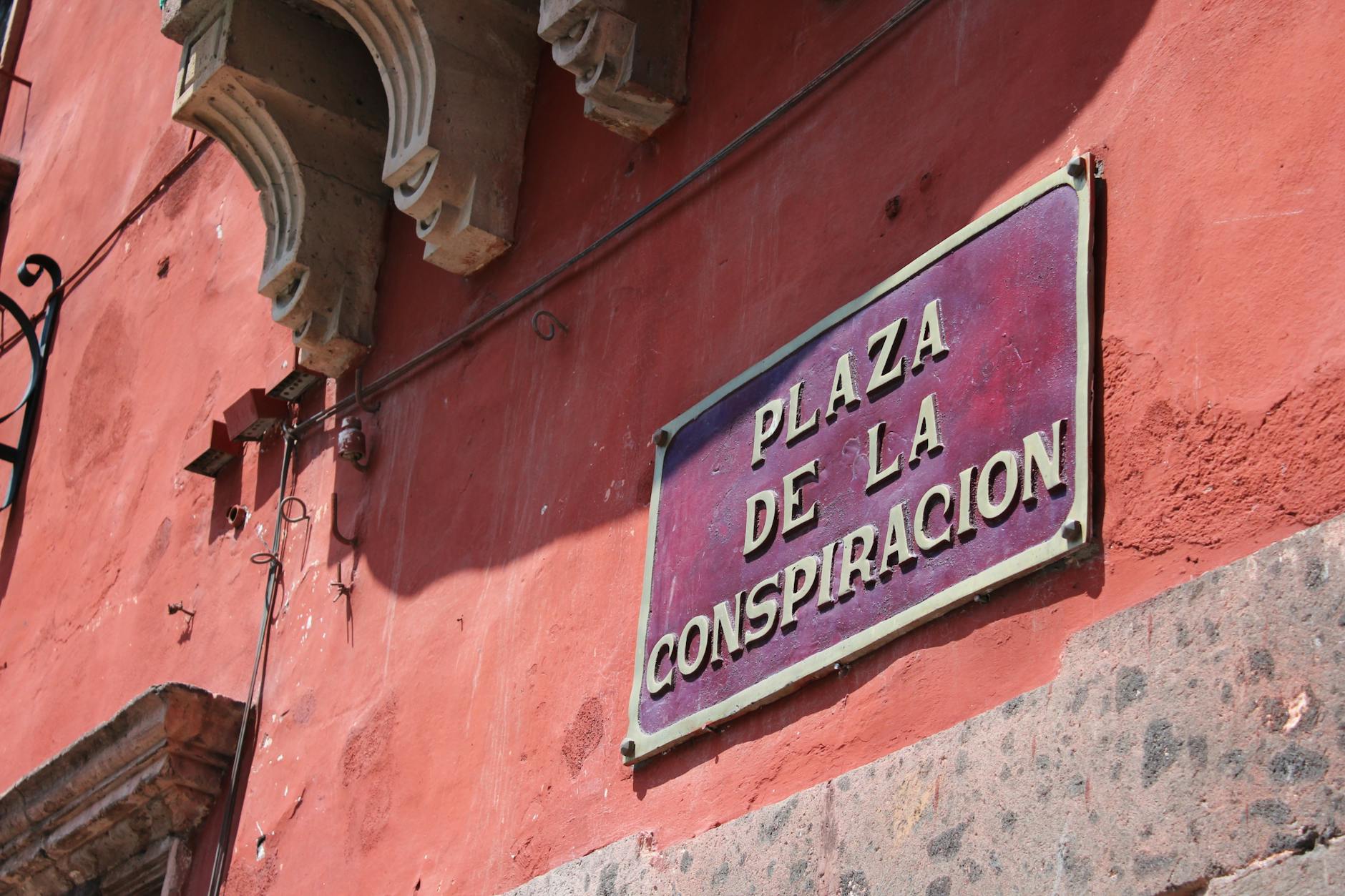
Photo by Fernando G Pexels.com

In Part IV there is a visit back to Mexico, before Part V where they are sent off to a the infamous French institution, the colonie de vacances; supervised holiday camps organised according to interests or specialities, full of young people employed as ‘camp animateurs‘ an idealised form of first employment, being paid to be on holiday, looking after tweens and emerging teens.

The French experience is so well depicted, and gives an insight into the child’s perspective of being an uncommon foreigner among a population of more common second or third generation immigrants. When it ends back in Mexico City, I find myself wishing there were a follow up novel, to find out more about a life that started in this unusual way and had all these experiences in their formative years.

The novel is so engaging, a fascinating insight into a life that delves beneath the surface of events and happenings in a family that is culturally fascinating, as it moves between Mexico City and Aix en Provence, traversing childhood and adolescence, the relationships between a girl, her peers at different ages, her parents and her grandmother.

And then there are the layers of literary references, including the reference to the title, but those I leave the prospective reader to discover for themselves.

I loved it! Highly Recommended.

Author, Guadalupe Nettel

Guadalupe Nettel (born 1973) is a Mexican writer. She was born in Mexico City and obtained a PhD in linguistics from the École des Hautes Études en Sciences Sociales in Paris. She has published in several genres, both fiction and non-fiction.

The New York Times described Nettel’s acclaimed English-language debut, Natural Histories as “five flawless stories”. A Bogota 39 author and Granta “Best Untranslated Writer” The Body Where I Was Born was her first novel to appear in English. Her work has since been translated into more than twenty languages and adapted for theatre and film. Still Born, her most recent novel, was shortlisted for the 2023 International Booker Prize and her latest collection of short stories The Accidentals tr. Rosalind Harvey was published in April 2025.

She has edited cultural and literary magazines such as Número Cero and Revista de la Universidad de México. She lives in Paris as a writer in residence at the Columbia University Institute for Ideas and Imagination.

Booker Prize Longlist 2025

The 2025 Booker Prize longlist was announced last week, 13 novels were chosen from 153 submitted, celebrating long-form literary fiction by writers of any nationality written in English, published in the UK and/or Ireland between 1 October 2024 and 30 September 2025.

There are two debut novelists among the nine authors appearing on the list for the first time. Indian author Kiran Desai is listed, having won the prize 19 years ago with The Inheritance of Loss and Malaysian author Tash Aw is listed for the third time.

13 Novels, A Booker Dozen

The longlisted titles are:

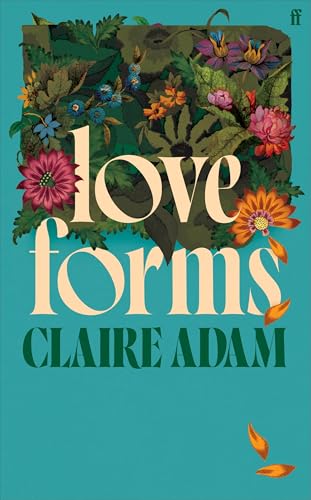
  • Love Forms by Claire Adam (Trinidad)
  • The South by Tash Aw (Taiwan/Malaysia)
  • Universality by Natasha Brown (UK)
  • One Boat by Jonathan Buckley (UK)
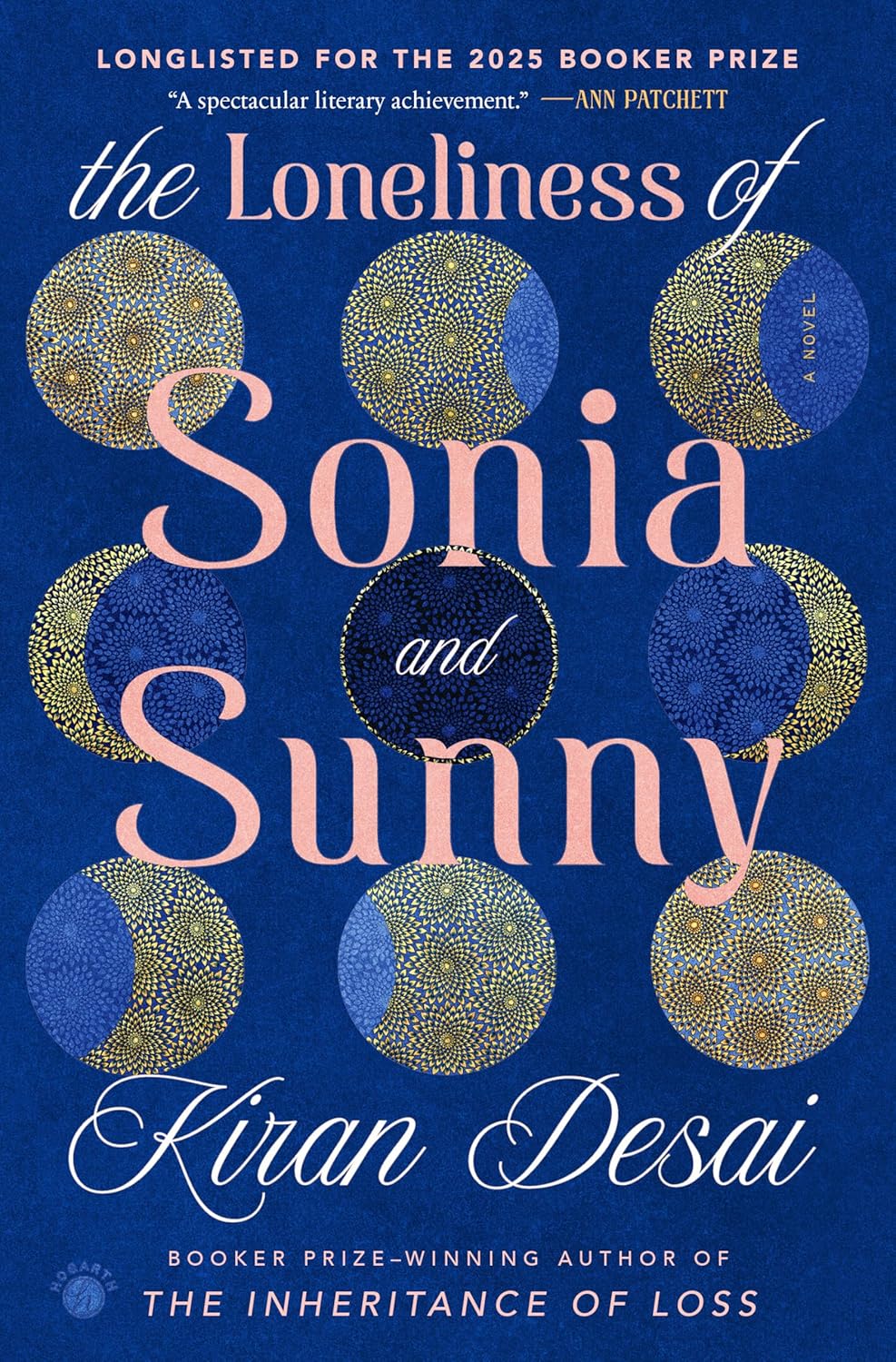
  • The Loneliness of Sonia and Sunny by Kiran Desai  (India/US)
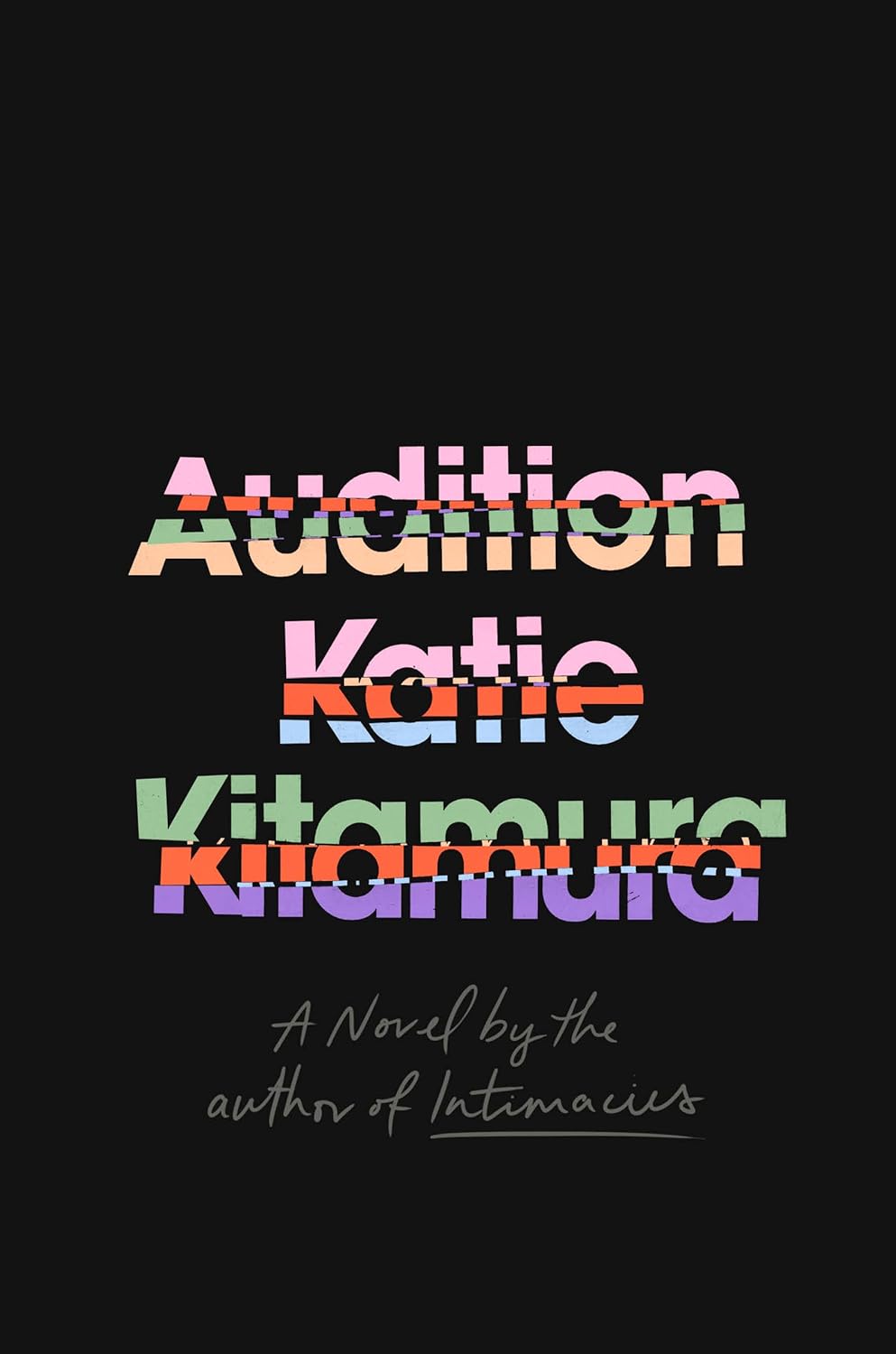
  • Audition by Katie Kitamura (US)
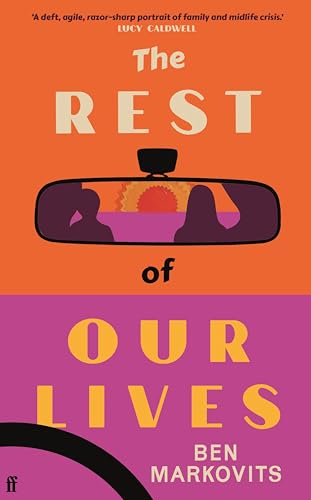
  • The Rest of Our Lives by Benjamin Markovits  (US/UK)
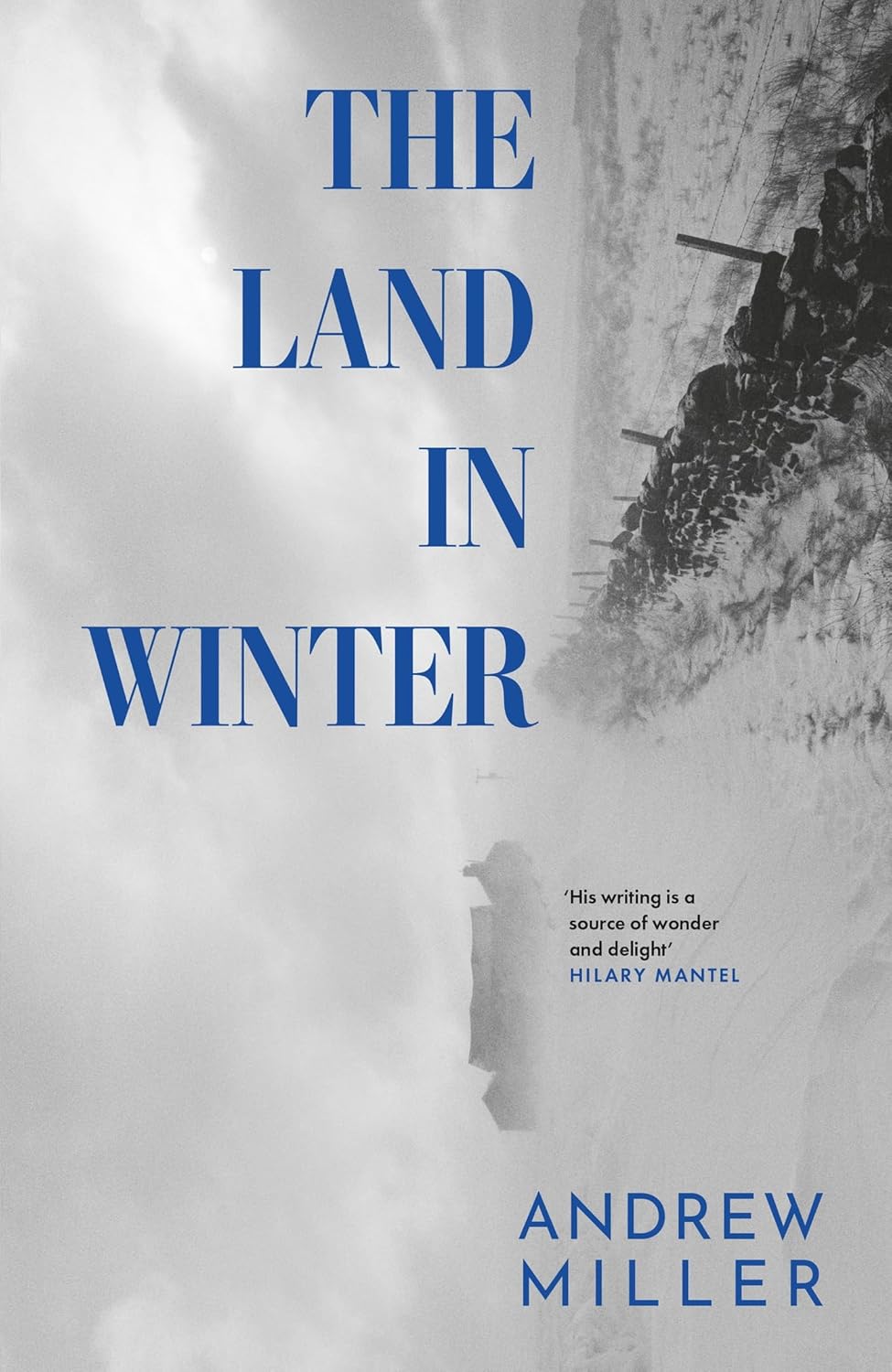
  • The Land in Winter by Andrew Miller (UK)
  • Endling by Maria Reva (Ukraine/Canada)
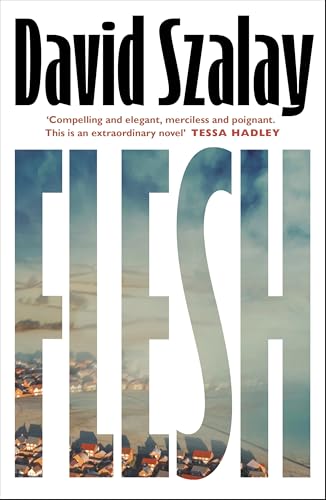
  • Flesh by David Szalay (Canada/Austria)
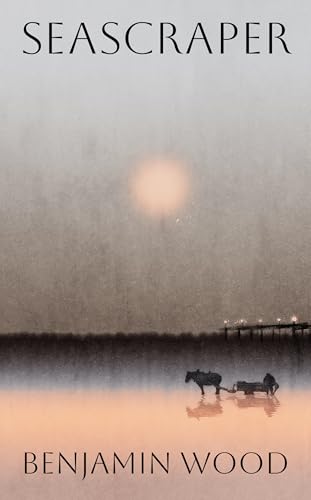
  • Seascraper by Benjamin Wood (UK)
  • Misinterpretation by Ledia Xhoga (Albania/US)
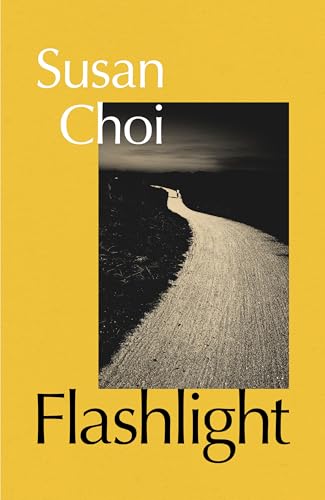
  • Flashlight by Susan Chow (US)

It’s an interesting and very British list compared to other years, and a lot more experimental in style than straight forward traditional storytelling, though that’s to be expected from a literary prize. Coming in August, for me it competes with my wishing to read women in translation for #WITMonth.

Irish Recommendations & Cross Cultural Leanings

After a quick glimpse at the titles the first one that stood out for me was Love Forms by Trinidadian author Claire Adam as I first heard it discussed on The Irish Times Women’s Podcast Summer Reading Recommendations episode and was very tempted. One of my favourite podcasts, their bookclub is fabulous, all the more so, for the host Róisín Ingle’s mother Ann Ingle being part of it (she talks about and recommends Flesh by David Szalay another longlisted title), and adds an interesting mother-daughter dynamic and inter-generational exchange and perspective to the club – and she can’t see, so all her reading is via audio book.

I’m also interested in The Loneliness of Sonia and Sunny by Kiran Desai because it’s a cross cultural story, although I’m not in a rush to read a 600 page novel at present. And Endling sounds interesting, comparisons being made to Percival Everett and George Saunders are both intriguing and promising.

What It’s About & the Judges’ Comment

Below is a summary book description and judges’ comment:

Love Forms by Claire Adam (Trinidad) (My Review Here)

A heart-aching novel of a mother’s search for the daughter she left behind a lifetime ago.

Trinidad, 1980: Dawn Bishop, 16, leaves home and journeys across the sea to Venezuela. She gives birth to a baby girl and leaves her with nuns to be given up for adoption. Dawn tries to carry on with her life; a move to England, marriage, career, two sons, a divorce – but through it all, she still thinks of the child she left, of what might have been.  

40 years later, a woman from an internet forum gets in touch saying she might be Dawn’s daughter, stirring up a mix of feelings: could this be the person to give form to the love and care Dawn has left to offer? 

‘Claire Adam returns to Trinidad for her sophomore novel. We first meet Dawn, a pregnant 16 year-old, on a clandestine journey across the sea to Venezuela. There, she gives birth and returns home without the baby, just as her parents had prescribed. Now, at 58, Dawn is the divorced mother of two adult men, but the loss of the baby girl consumes her every move. The story, heartbreaking in its own right, comes second to its narration. Dawn’s voice haunts us still, with its beautiful and quiet urgency. Love Forms is a rare and low-pitched achievement. It reads like a hushed conversation overheard in the next room.’ 

The South by Tash Aw  (Taiwan/Malaysia)

A radiant novel about family, desire and what we inherit, and the longing that blooms between two boys over the course of one summer.

When his grandfather dies, Jay travels south with his family to the property he left them, a once flourishing farm fallen into disrepair. The trees are diseased, the fields parched from months of drought. Still, Jay’s father Jack, sends him out to work the land. Over the course of hot, dense days, Jay finds himself drawn to Chuan, son of the farm’s manager, different from him in every way except for one. 

Out in the fields, and on the streets into town, the charge between the boys intensifies. At home, other family members confront their regrets, and begin to drift apart. Like the land around them, they are powerless to resist the global forces that threaten to render their lives obsolete. 

Sweeping and intimate, The South is a story of what happens when private and public lives collide. It is the first in a quartet of novels that form Tash Aw’s portrait of a family navigating a period of change.

‘It’s summertime in the 1990s and rural Malaysia is hot. Teenager Jay and his family leave their home of Kuala Lumpur to work on a farm in the Johor Bahru countryside. There, Jay meets Chuan, who opens Jay up to friendship, illicit pastimes, and a deeper understanding of his sexuality. To call The South a coming-of-age novel nearly misses its expanse. This is a story about heritage, the Asian financial crisis, and the relationship between one family and the land. The South is the first instalment of a quartet, and we’re so pleased that there is more to come.’ 

The Loneliness of Sonia and Sunny by Kiran Desai (India/US)

A spellbinding story of two people whose fates intersect and diverge across continents and years – an epic of love & family, India & America, tradition & modernity

When Sonia and Sunny first glimpse each other on an overnight train, they ar captivated, and embarrassed their grandparents had once tried to matchmake them, a clumsy meddling that served to drive Sonia and Sunny apart.  
  
Sonia, an aspiring novelist who completed her studies in the snowy mountains of Vermont, has returned to India, haunted by a dark spell cast by an artist she once turned to. Sunny, a struggling journalist resettled in New York City, attempts to flee his imperious mother and the violence of his warring clan. Uncertain of their future, Sonia and Sunny embark on a search for happiness as they confront the alienations of our modern world.  
  
The Loneliness of Sonia and Sunny is the tale of two people navigating the forces that shape their lives: country, class, race, history, and the bonds that link one generation to the next. A love story, a family saga, and a rich novel of ideas, it is an ambitious and accomplished work by one of our greatest novelists.

‘This novel about Indians in America becomes one about westernised Indians rediscovering their country, and in some ways a novel about the Indian novel’s place in the world. Vast and immersive, the book enfolds a magical realist fable within a social novel within a love story. We loved the way in which no detail, large or small, seems to escape Desai’s attention, every character (in a huge cast) feels fully realised, and the writing moves with consummate fluency between an array of modes: philosophical, comic, earnest, emotional, and uncanny.’

Flashlight Written by Susan Choi (US)

A thrilling, globe-spanning novel that mines questions of memory, language, identity and family

One evening, 10-year-old Louisa and her father take a walk out on the breakwater. They are spending the summer in a coastal Japanese town while her father Serk, a Korean émigré, completes an academic secondment from his American university. When Louisa wakes hours later, she has washed up on the beach and her father is missing, probably drowned. 

The disappearance of Louisa’s father shatters their small family. As Louisa and her American mother return home, this traumatic event reverberates across time and space, as the mystery of what happened unravels. 

Flashlight moves between the post-war Korean immigrant community in Japan, to suburban America, and the North Korean regime, to tell the astonishing story of a family swept up in the tides of 20th-century history. 

Flashlight is a sprawling novel that weaves stories of national upheavals with those of Louisa, her Korean Japanese father, Serk, and Anne, her American mother. Evolving from the uncertainties surrounding Serk’s disappearance, it is a riveting exploration of identity, hidden truths, race, and national belonging. In this ambitious book that deftly criss-crosses continents and decades, Susan Choi balances historical tensions and intimate dramas with remarkable elegance. We admired the shifts and layers of Flashlight’s narrative, which ultimately reveal a story that is intricate, surprising, and profound.’

Audition by Katie Kitamura (US)

An exhilarating, destabilising novel that asks whether we ever really know the people we love

Two people meet for lunch in a Manhattan restaurant. She’s an accomplished actress in rehearsals. He’s attractive, troubling, young – young enough to be her son. Who is he to her, and who is she to him? 

In this compulsive, brilliantly constructed novel, two competing narratives unspool, rewriting our understanding of the roles we play every day – partner, parent, creator, muse – and the truths every performance masks, especially from those who think they know us most intimately.

‘This novel begins with an actress meeting a young man in a Manhattan restaurant. A surprising, unsettling conversation unfolds, but far more radical disturbances are to come. Aside from the extraordinarily honed quality of its sentences, the remarkable thing about Audition is the way it persists in the mind after reading, like a knot that feels tantalisingly close to coming free. Denying us the resolution we instinctively crave from stories, Kitamura takes Chekhov’s dictum – that the job of the writer is to ask questions, not answer them – and runs with it, presenting a puzzle, the solution to which is undoubtedly obscure, and might not even exist at all.’

Universality by Natasha Brown (UK)

A twisty, slippery descent into the rhetoric of truth and power

‘Remember – words are your weapons, they’re your tools, your currency.’ 

Late one night on a Yorkshire farm, a man is bludgeoned with a solid gold bar. A plucky young journalist sets out to uncover the truth, connecting the dots between an amoral banker landlord, an iconoclastic columnist, and a radical anarchist movement. She solves the mystery, but her exposé raises more questions than it answers. 

Through a voyeuristic lens, Universality focuses on words: what we say, how we say it, and what we really mean. The follow-up novel to Natasha Brown’s Assembly is a compellingly nasty celebration of the spectacular force of language. It dares you to look away.  

‘Natasha Brown’s Universality is a compact yet sweeping satire. Told through a series of shifting perspectives, it reveals the contradictions of a society shaped by entrenched systems of economic, political, and media control. Brown moves the reader with cool precision from Hannah, a struggling freelancer, through to Lenny, an established columnist, unfurling through both of them an examination of the ways language and rhetoric are bound with power structures. We were particularly impressed by the book’s ability to discomfit and entertain, qualities that mark Universality as a bold and memorable achievement.’ 

Endling by Maria Reva (Ukraine/Canada)

An unforgettable debut novel about the journey of three women and one extremely endangered snail through contemporary Ukraine

Ukraine, 2022. Yeva is a maverick scientist who scours the forests and valleys, trying and failing to breed rare snails while her relatives urge her to settle down and start a family. What they don’t know: Yeva dates plenty of men – not for love, but to fund her work – entertaining Westerners who take guided romance tours believing they’ll find docile brides untainted by feminism.  
  
Nastia and her sister, Solomiya, are also entangled in the booming marriage industry, posing as a hopeful bride and her translator while secretly searching for their missing mother, who vanished after years of fierce activism against the romance tours.  So begins a journey across a country on the brink of war: three angry women, a truckful of kidnapped bachelors, and Lefty, a last-of-his-kind snail with one final shot at perpetuating his species.

‘Endling shouldn’t be funny, but it is – very. Set in Ukraine just as Putin invades, it features three young women, on two different missions, in one vehicle. Structurally wild and playful, Endling is also heart-rending and angry. It examines colonialism, old and neo, the role of women, identity, power and powerlessness, and the very nature of fiction-writing. Maria Reva also tells a riveting, unique story; the shock is that this is her first novel. It’s a book about the world now, and about three unforgettable women, Yeva, Nastia and Solomiya, travelling together in a mobile lab. The endling, by the way, is a snail.’ 

Seascraper by Benjamin Wood (UK)

A mesmerising portrait of a young man confined by his class and the ghosts of his family’s past, dreaming of artistic fulfilment

Thomas lives a slow, deliberate life with his mother in Longferry, working his grandpa’s trade as a shanker. He rises early to take his horse and cart to the grey, gloomy beach and scrape for shrimp, spending the afternoon selling his wares, trying to wash away the salt and scum, pining for Joan and rehearsing songs on his guitar. At heart, he is a folk musician, but it remains a private dream.  
  
When a striking visitor turns up, bringing the promise of Hollywood glamour, Thomas is shaken from the drudgery of his days and imagines a different future. But how much of what the American claims is true, and how far can his inspiration carry Thomas?  Haunting and timeless, a story of a young man hemmed in by circumstances, striving to achieve fulfilment far beyond the world he knows.

Seascraper seems, at first, to be a beautifully described account of the working day of a young man, Thomas Flett, who works as a shanker in a north of England coastal town, scraping the Irish Sea shore for scrimps. And it is that: the details of the job and the physicality of the labour are wonderfully captured by Benjamin Wood. But this novel becomes much more than that. It’s a book about dreams, an exploration of class and family, a celebration of the power and the glory of music, a challenge to the limits of literary realism, and – stunningly – a love story.’

One Boat by Jonathan Buckley (UK)

Artfully constructed, absorbing and insightful, One Boat grapples with questions of identity, free will, guilt and responsibility

On losing her father, Teresa returns to a small Greek coastal town – the same place she visited when grieving her mother nine years ago. She immerses herself in the life of the town, observing the inhabitants, a quiet backdrop for reckoning with herself. An episode from her first visit resurfaces – her encounter with John, a man struggling to come to terms with the violent death of his nephew.  

Teresa encounters people she met before: Petros, an eccentric mechanic, whose life story may or may not be part of John’s; the beautiful Niko, a diving instructor; and Xanthe, a waitress in one of the cafés. They talk about their longings, regrets, the passing of time, their sense of who they are.

‘Following the death of her father, Teresa returns to the small coastal town in Greece she first visited when her mother died nearly a decade before. From this scenario, tacking between the events of the second trip and memories of the first, Buckley creates a novel of quiet brilliance and sly humour, packed with mystery and indeterminacy. The way in which the book interleaves Teresa’s relationship to her mother, her involvement in an amateur murder investigation, and an account of a love affair, raises questions about grief, obsession, personhood and human connectivity we found to be as stimulating as they are complex.’

Flesh by David Szalay (Canada/Austria)

A propulsive, hypnotic novel about a man who is unravelled by a series of events beyond his grasp

Fifteen-year-old István lives with his mother in an apartment complex in Hungary. New to the town and shy, he is unfamiliar with social rituals at school and becomes isolated, with his neighbour – a woman close to his mother’s age – his only companion. Their encounters shift into a clandestine relationship that István barely understands, as his life spirals out of control.  
   
As the years pass, he is carried upwards on the century’s tides of money and power, moving from the army to the company of London’s super-rich, with his own competing impulses for love, intimacy, status and wealth winning him riches, until they threaten to undo him completely.  Flesh asks profound questions about what drives a life: what makes it worth living, and what breaks it.

‘David Szalay’s fifth novel follows István from his teenage years on a Hungarian housing estate to borstal, and from soldiering in Iraq to his career as personal security for London’s super-rich. In many ways István is stereotypically masculine – physical, impulsive, barely on speaking terms with his own feelings (and for much of the novel barely speaking: he must rank among the more reticent characters in literature). But somehow, using only the sparest of prose, this hypnotically tense and compelling book becomes an astonishingly moving portrait of a man’s life.’

The Land in Winter by Andrew Miller (UK)

A masterful, page-turning examination of the minutiae of life and a dazzling chronicle of the human heart

December 1962, the West Country.  Local doctor Eric Parry, mulling secrets, sets out on his rounds, while his pregnant wife sleeps on in their cottage. Across the field, funny, troubled Rita is also asleep, her head full of images of a past her husband prefers to ignore. He’s been up for hours, tending to the needs of the small dairy farm where he hoped to create a new version of himself, a project that’s faltering.  
  
When the ordinary cold of an English December gives way to violent blizzards, the two couples find their lives unravelling.  Where do you hide when you can’t leave home? And where, in a frozen world, can you run to?  

Misinterpretation by Ledia Xhoga (Albania/UK)

Ledia Xhoga’s ruminative debut interrogates the darker legacies of family and country, and the boundary between compassion and self-preservation

In present-day New York City, an Albanian interpreter reluctantly agrees to work with Alfred, a Kosovar torture survivor, during his therapy sessions. Despite her husband’s cautions, she becomes entangled in her clients’ struggles: Alfred’s nightmares stir up buried memories, and an impulsive attempt to help a Kurdish poet leads to a risky encounter and a reckless plan. 

As ill-fated decisions stack up, jeopardising the narrator’s marriage and mental health, she travels to reunite with her mother in Albania, where her life in the United States is put into stark relief. When she returns to face the consequences, she must question what is real and what is not.

‘A Kosovan torture survivor requests translation assistance at his therapy sessions. Our narrator, a nameless translator, reluctantly agrees. But Alfred’s account of his experiences conjures hidden memories that seep into her psyche, forcing her to question her marriage and her place in the world. This is a story of a woman saddled between her Albanian past and her New York present. It explores the way that language is kept in our bodies, how it can reveal truths we aren’t ready to hear. Misinterpretation subtly blurs the distinction between help and harm. We found it propulsive, unsettling, and strangely human.’

The Rest of Our Lives by Ben Markovits (US/UK)

An unforgettable road trip of a novel about getting older, and the challenges of long-term marriage

What’s left when your kids grow up and leave home?  When Tom Layward’s wife had an affair, he resolved to leave her as soon as his youngest turned 18. Twelve years later, while driving her to start university, he remembers his pact.  Also he’s on the run from health issues, and the fact he’s been put on leave at work after students complained about the politics of his law class – a detail he hasn’t told his wife.  
   
After dropping Miriam off, he keeps driving, with the vague plan of visiting various people from his past – an old college friend, his ex-girlfriend, his brother, his son – on route, maybe, to his father’s grave.  Pitch perfect, quietly exhilarating, moving, The Rest of Our Lives is a novel about family, marriage and moments that may come to define us.

‘When Tom Layward’s wife cheated on him, he stayed for the children but promised to leave when his youngest turned eighteen. Twelve years later, Tom drops his daughter off at college, but instead of driving back to New York he heads west. What follows is a remarkably satisfying road trip full of strangers, friends, and self-discovery. It’s clear author Ben Markovits has spent time teaching. This novel speaks like a much-loved professor, one whose classes have a terribly long waitlist. It’s matter of fact, effortlessly warm, and it uses the smallest parts of human behaviour to uphold bigger themes, like mortality, sickness, and love. The Rest of Our Lives is a novel of sincerity and precision. We found it difficult to put it down.’ 

What Do You Think?

Are you tempted by anything on the list or have you read any of these titles? Let us know in the comments below.

If you’re not sure, Take the Quiz and see what your preferences suggest. I took the quiz and it suggested I read Flesh by David Szalay. Not sure about that! But Ann Ingle did recommend it.

Let Me Go Mad In My Own Way (2025) by Elaine Feeney

Electra Sophles Anne Carson Annie Ernaux Shame Intergenerational inheritance Ireland

Back in 2023 Irish author Elaine Feeney’s novel How To Build a Boat (my review) was longlisted for the Booker Prize and shortlisted for the Irish Book Awards. That was a bumper year for Irish novelists with four of them on the longlist and Paul Lynch’s Prophet Song winning the prize.

How to Build a Boat was a great read with interesting, memorable characters, about an oppressive school and a free spirit whose presence disturbed the controlling order and rigidity of the institution by making a boat inside the school walls.

When I saw she had another book out with a provocative title like this, I decided to dip in and see what it was about.

French and Greek Literary References, The Female Voice

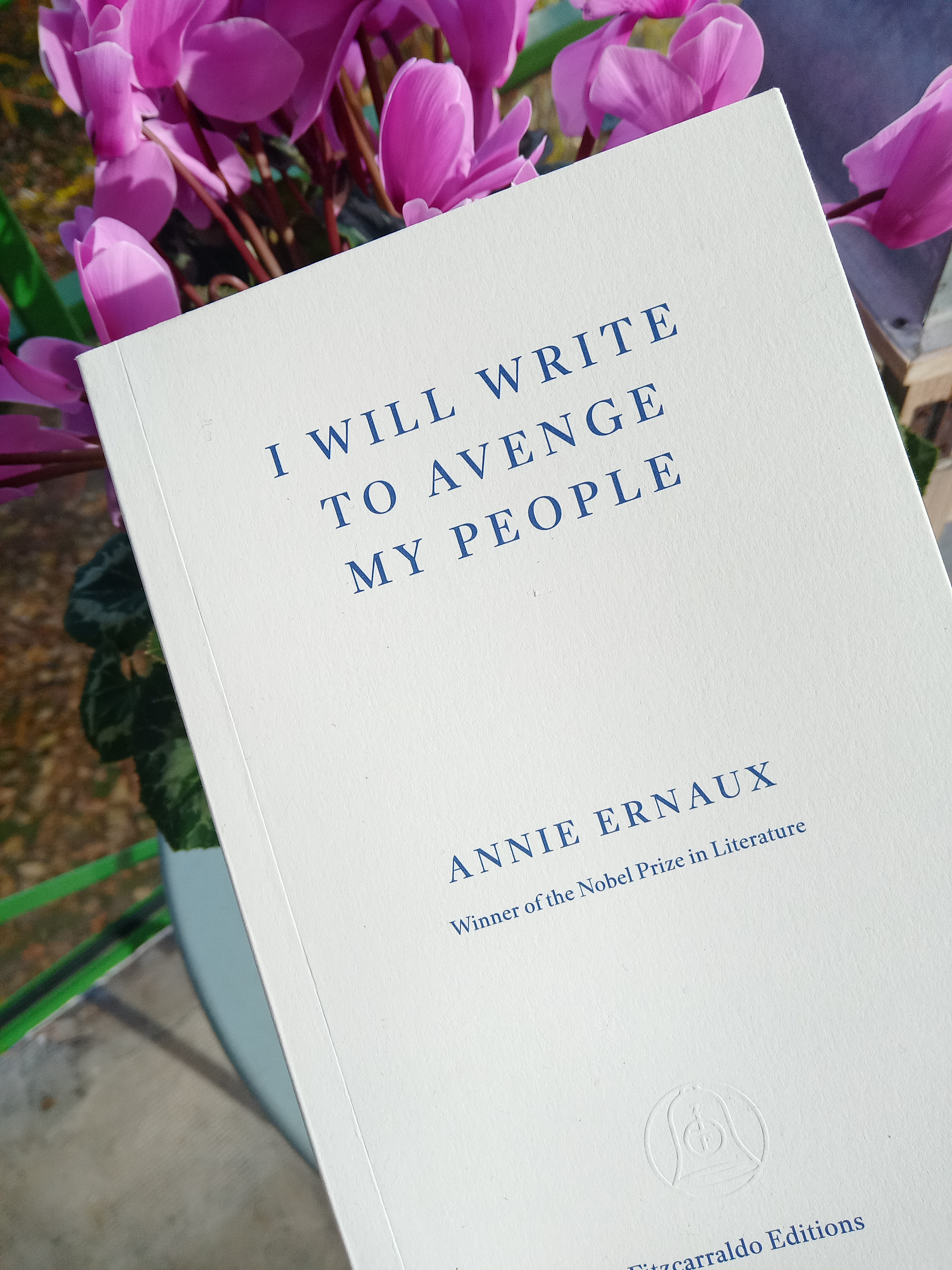
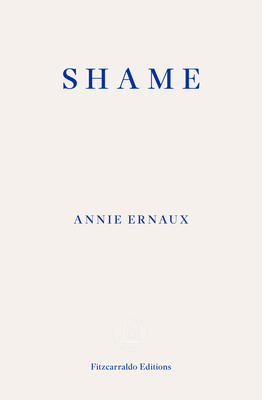
If the title isn’t a giveaway to reclaiming and redefining madness, a convenient label historically used to oppress women and have them incarcerated in the past, the epigram from Annie Ernaux’s novella Shame further reminds us of the often silenced, lived experience of women and girls, peeling back social shame, intergenerational violence and little recognised, inherited trauma that continues to reverberate and affect current behaviours and relationships.

This can be said about shame: those who experience it feel that anything can happen to them, that the shame will never cease and that it will only be followed by more shame. Annie Ernaux, Shame

A Story In a Title

The title of Feeney’s book is a powerful statement from the ancient Greek playwright Sophocles. The line appears in his play Electra, translated as: “I ask this one thing: let me go mad in my own way.” In the play, the main character, overwhelmed by grief, injustice and familial violence, demands to grieve and rage on her own terms. It is a cry for the right to express and feel one’s own emotional suffering and pain, in the way it is desired, needed.

“Don’t tell me how to feel or how to react, let me experience my madness as I must.”

Elaine Feeney said in an interview that she encountered the phrase in Anne Carson’s translation of Electra and immediately felt its resonance, both personally and within her book’s themes.

Going Mad or Getting to Grips With the Past

irish literature contemporary fiction

Her novel is about an Irish woman named Claire O’Connor who had been living in London with her boyfriend Tom Morton, unravelling after the death of her mother. Unable to cope, she breaks up with Tom and returns to the West of Ireland, initially to care for her father.

Back living in the family home awakens memories and issues for Claire and her two brothers, who are more used to avoiding and ignoring past and present bad behaviours.

The unexpected arrival of Tom and new friends Claire makes at her new university job, create a situation that brings people together that wouldn’t ordinarily meet.

Choosing to Live Differently

This new dynamic challenges some of those repressed feelings and the characters will either continue to deny or choose to grow.

‘There’s land here, isn’t there?’ He was playing with me now. ‘They’re not making any more of it – I’ll bet they don’t teach you that inside in the universities.’

I wanted to say that none of us wanted his land, full of rock, thistles and furze bushes. That it was a noose. I wanted to say the land was never mine. I knew well enough to know that.

Generational Influence

The story is told in different timelines, in the first person present, when Claire is an adult and has returned to Ireland, in 2022 and then there are chapters about the family from 1920, events around the old abandoned house at the back their property.

The O’Connor’s were good tenant farmers and had then been given this small handsel of land, a slight acreage of a holding from the Estate in the Land Commission’s Exchange for compliance. They had, until this, been generations of shepherds. Mostly, too, they were emigrants. A compliant people who believed in God being good and work being eventually rewarded for all eternity.

1920 was a period when there was unsettling violence from the Black and Tan Forces in East Galway around the Irish War of Independence, cultivating an atmosphere of fear and violence and an era where there was little escape, and few and far opportunities. Though 100 years in the past, undercurrents of that violent era continue to pump through the veins of this family.

Then there is Claire’s childhood memory of a Hunt Day in 1990, when the Queen of England was looking for a black mare for the Household Cavalry. Flashes of memory bring it all back as Claire confronts the past in order to better create any chance she might have of a better future.

Great Storytelling and Thought Provoking Depth

It is a thought provoking novel rooted in personal, collective and inherited memory, that deals with ‘the home‘ as the institution that requires dismantling, and it is the coming together of family, friends and the new relationships in Claire’s life that will facilitate the change that can redefine what home can become.

It’s also a novel that is entertaining with or without the layers of meaning that come from the references, but it is one that I have enjoyed all the more for understanding more about the motivations of the author and the literary influences she has referenced and talks about in the following interview.

And speaking of the Booker Prize, the longlist for 2025 will be announced on Tuesday 29 July 2025. This year’s Chair of Judges is an author who has never been in a book club, Roddy Doyle, who is joined by Booker Prize-longlisted novelist Ayọ̀bámi Adébáyọ̀; award-winning actor, producer and publisher Sarah Jessica Parker; writer, broadcaster and literary critic Chris Power; and New York Times bestselling and Booker Prize-longlisted author Kiley Reid.

Further Reading or Listening

An Interview by Bad Apple, Aotearoa: Ash Davida Jane interviews Elaine Feeney

Listen to Elaine Feeney read an extract from her novel Met Me Go Mad In My Own Way

Elain Feeney, Author

Elaine Feeney is an acclaimed novelist and poet from the west of Ireland. Her debut novel, As You Were, was shortlisted for the Rathbones Folio Prize and the Irish Novel of the Year Award, and won the Kate O’Brien Award, the McKitterick Prize and the Dalkey Festival Emerging Writer Award. How to Build a Boat was also shortlisted for Irish Novel of the Year, longlisted for the Booker Prize, and was a New Yorker Best Book of the Year.

Feeney has published the poetry collections Where’s Katie?The Radio Was GospelRise and All the Good Things You Deserve, and lectures at the University of Galway.

Leila Aboulela awarded PEN Pinter Prize 2025

Freedom to Write, Freedom to Read

Leila Aboulela winner of English Pen Prize 2025

Leila Aboulela, the Sudanese author who now lives in Scotland has won the English PEN Award 2025, a prize established in homage to Harold Pinter, the British playwright, screenwriter, director and actor and the 2005 Nobel Laureate for Literature:

“who in his plays uncovers the precipice under everyday prattle and forces entry into oppression’s closed rooms”

Judges praised Aboulela, the author of six novels, for her ‘nuanced and rich perspectives on themes that are vital in our contemporary world: faith, migration, and displacement’, calling her writing ‘a balm, a shelter, and an inspiration’.

The author responded:

‘I am honoured to win a prize established in memory of Harold Pinter, a great writer who continues to inspire so much loyalty and consistent high regard. For someone like me, a Muslim Sudanese immigrant who writes from a religious perspective probing the limits of secular tolerance, this recognition feels truly significant. It brings expansion and depth to the meaning of freedom of expression and whose stories get heard.’

One of the judges, novelist Nadifa Mohamed added:

Leila Aboulela is an important voice in literature, and in a career spanning more than three decades her work has had a unique place in examining the interior lives of migrants who chose to settle in Britain. In novels, short stories and radio plays she has navigated the global and local, the political with the spiritual, and the nostalgia for a past home with the concurrent curiosity and desire for survival in a new one. Aboulela’s work is marked by a commitment to make the lives and decisions of Muslim women central to her fiction, and to examine their struggles and pleasures with dignity. In a world seemingly on fire, and with immense suffering unmarked and little mourned in Sudan, Gaza, and beyond, her writing is a balm, a shelter, and an inspiration.’

The prize is awarded annually to writers resident in the UK, Ireland, the Commonwealth or the former Commonwealth. 

Former winners of the PEN Pinter Prize are Arundhati Roy (2024), Michael Rosen (2023), Malorie Blackman (2022), Tsitsi Dangarembga (2021), Linton Kwesi Johnson (2020), Lemn Sissay (2019), Chimamanda Ngozie Adichie (2018), Michael Longley (2017), Margaret Atwood (2016), James Fenton (2015), Salman Rushdie (2014), Tom Stoppard (2013), Carol Ann Duffy (2012), David Hare (2011), Hanif Kureishi (2010) and Tony Harrison (2009).

Three Novels By Leila Aboulela I Recommend

Bird Summons (2019)

Bird Summons is an excellent novel about three Muslim immigrant women living in Scotland, from different countries, who set off on a short holiday in the Scottish Highlands, to pay homage to Lady Evelyn Murray Cobbold, the first British woman convert to Islam who performed Hajj, the spiritual pilgrimage to Mecca.

Taken further outside of their comfort zones, the trip is a kind of reckoning for each of the women, a little like a road trip novel, they are stuck with each other, their forced isolation in the Highlands brings out the best and worst in each other and will leave them each transformed by the experience.

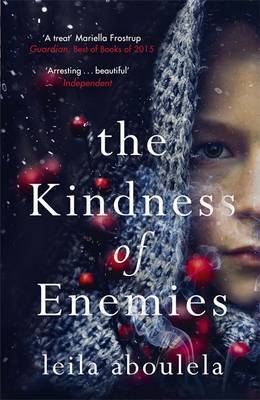
The Kindness of Enemies (2015)

The Kindness of Enemies, is a dual narrative set in modern day Scotland and mid 1800’s Russia and the Caucasus. The contemporary character is Natasha Wilson (born to a Russian mother and Sudanese father, whose mother marries a Scot), a Scottish university lecturer whose research concerns the life of Caucasian Highlander, Shamil Imam.

The novel moves between the issues facing Natasha in her life, and the ancient conflict between Highlander mountain men lead by Shamil Imam as they resisted Tsarist Russia from expanding into their territory.

River Spirit (2023)

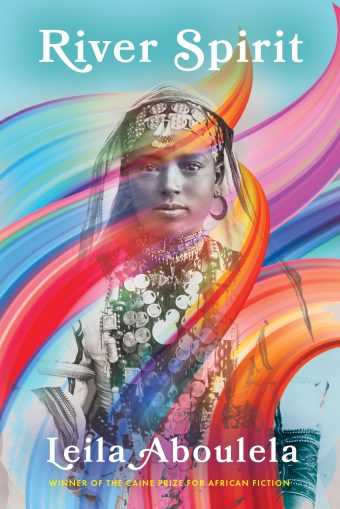
River Spirit is historical fiction set in 1890’s Sudan, at a turning point in the country’s history, as its population began to mount a challenge against the ruling Ottoman Empire, only the people were not united, due to the opposition leadership coming from a self-proclaimed “Mahdi” – a religious figure that many Muslims believe will appear at the end of time to spread justice and peace.

The novel tells the story of orphan siblings, Akuany and Bol, and their young merchant friend Yaseen, the friend of their father who made a promise to protect them, forever connecting them to his life. It is also a story of the Nile, of the White Nile and the Blue Nile, a symbol of twin selves, one free, one enslaved, of twin occupying forces, the Ottoman and British Empires and of the many aspects in the story where twin forces clash, mix and become something new.

Aboulela’s other novels are The Translator (1999), Minaret (2005), Lyrics Alley (2010) all three of which were longlisted for the Women’s Prize for Fiction (Orange Prize) and she has also published a short story collection Elsewhere, Home (2018).

Have you read any works by Leila Aboulela? Let us know in the comments below.

Photo by Gabriela Palai on Pexels.com

Further Reading

World Literature Today Interview: Writing as Spiritual Offering: A Conversation with Leila Aboulela by  Keija Parssinen

Guardian article: Leila Aboulela wins PEN Pinter prize for writing on migration and faith

JSTOR: Leila Aboulela and the Ideology of Muslim Immigrant Fiction by Waïl S. Hassan

Leila Aboulela, Author

Leila Aboulela grew up in Khartoum and has been living in Aberdeen since 1990. She is the author of six novels among them River SpiritThe TranslatorMinaret and Lyrics Alley, Fiction Winner of the Scottish Book Awards. Leila was the first ever winner of the Caine Prize for African Writing and her story collection, Elsewhere, Home won the Saltire Fiction Book of the Year Award.

Her books have been translated into fifteen languages, and she has also written numerous plays for BBC Radio. She is Honorary Professor of the WORD Centre at the University of Aberdeen and a Fellow of the Royal Society of Literature. 

By the Sea (2001) by Abdulrazak Gurnah

By the Sea begins as a compelling narrative and mystery of a man who arrives at Gatwick airport from Zanzibar without a visa and refuses to speak English, until the crucial moment where he is about to be deported and he utters the words that will change his trajectory.

Refugee. Asylum.

Old Scores Revisited

Nobel Prize for Literature 2021 Zanzibar Tanzania witing about immigration culture refugees requesting asylum

In trying to locate someone to translate for him, Latif is contacted and the two men realise there is a connection, a history that has perpetuated with major gaps on either side of their understanding, voids often filled by those wishing them ill.

Their story began by the sea and concerned a fragrance Ud-al-qamari, and would be retold far away where few understood the nature of their feuds and punishment, of corruption and power, petty rivalries over debts, possessions, and influences that could drive a man to flee for his life.

The man I obtained the ud-al-qamari from was a Persian trader from Bahrain who had come to our part of the world with the musim, the winds of the monsoons, he and thousands of other traders from Arabia, the Gulf, India and Sind, and the Horn of Africa. They had been doing this every year for at least a thousand years. In the last months of the year, the winds blow steadily across the Indian Ocean towards the coast of Africa, where the currents obligingly provide a channel to harbour. Then in the early months of the new year, the winds turn around and blow in the opposite direction, ready to speed the traders home.

Time Dismembers, Perceptions Unremembered

Told in three parts, the first two focus on each of these characters and their early life in Zanibar and something of their present, while the third part is a kind of oral storytelling as the two meet and their intertwined story is retold from start to finish until a different connection emerges, as they find themselves newly isolated in this place around people uninterested in their journey.

So time dismembers the images of our time. Or to put it in an archaeological way, it is as if the details of our lives have accumulated in layers, and now some layers have been displaced by the friction of other events, and bits of contingent pieces still remain, accidentally tumbled about.

A drama of disappointment, self-deception and renewal, the novel explores both the double bind of the known culture that entraps, and the unknown culture that frees but isolates the individual, for their betterment, yet never quite attaining an imagined, desired status.

Like Admiring Silence, an excellent, astute read by an accomplished author.

Further reading

My review of Admiring Silence (1996)

Nobel Prize Interview with Abdulrazak Gurnah

Article Guardian on Winning the Nobel Prize

New York Times: Abdulrazak Gurnah Refuses to Be Boxed In: ‘I Represent Me’

Abdulrazak Gurnah, Author

Abdulrazak Gurnah was the Winner of the Nobel Prize for Literature in 2021 for

‘his uncompromising and compassionate penetration of the effects of colonialism and the fate of the refugee in the gulf between cultures and continents’,

He was born in 1948 and grew up on the island of Zanzibar in the Indian Ocean, arriving in England as a refugee at the end of the 1960s. After the liberation from British colonial rule in December 1963 Zanzibar went through a revolution which led to oppression and persecution of citizens of Arab origin; massacres occurred. Gurnah belonged to the victimised ethnic group and after finishing school was forced to leave his family and flee the country, by then the newly formed Republic of Tanzania. He was eighteen years old. Not until 1984 was it possible for him to return to Zanzibar, allowing him to see his family shortly before the father’s death.

Themes of Refugee Disruption

Gurnah’s writing is from his time in exile but pertains to his relationship with the place he had left, which means that memory is of vital importance for the genesis of his work. 

The theme of the refugee’s disruption runs throughout his work. His novels depict a culturally diversified East Africa. His dedication to truth and aversion to simplification are striking. It can make the work bleak and uncompromising, however he follows the fates of characters with great compassion and unbending commitment.

His novels include Paradise (1994), which was shortlisted for both the Booker and the Whitbread Prize; By the Sea (2001), which was longlisted for the Booker and shortlisted for the Los Angeles Times Book Prize; and Desertion (2005), shortlisted for the Commonwealth Writers’ Prize. His most recent novel Theft (2025) is the story of the intertwined lives of three young people coming-of-age in postcolonial East Africa, selected as a book to look out for in 2025 by the GuardianObserverIrish Times and BBC.

Until his retirement he had been Professor of English and Postcolonial Literatures at the University of Kent in Canterbury, focusing principally on writers such as Wole Soyinka, Ngũgĩ wa Thiong’o and Salman Rushdie.

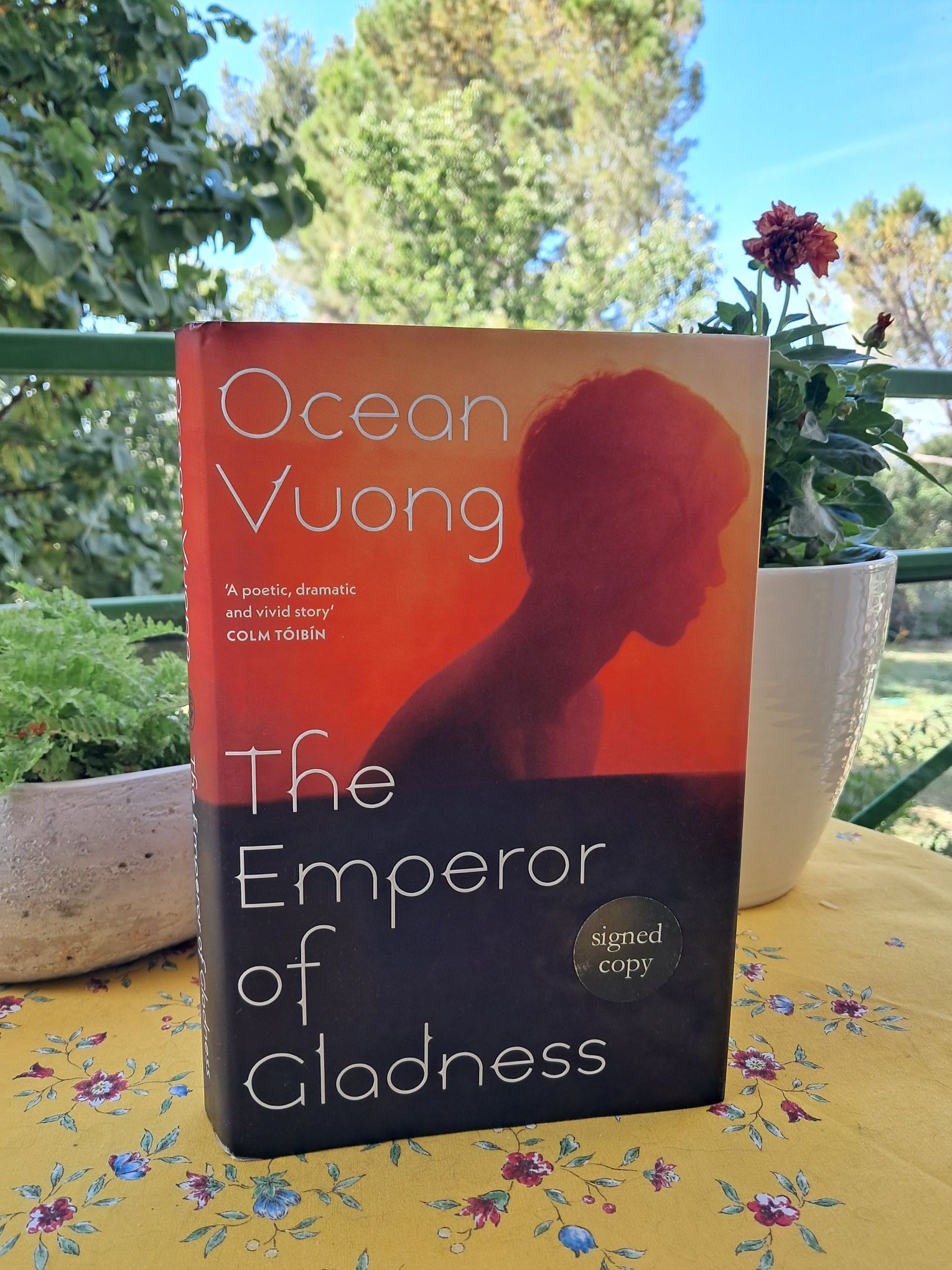
The Emperor of Gladness by Ocean Vuong

The hardest thing in the world is to live only once.

But it’s beautiful here, even the ghosts agree.

literary fiction Oprahs bookclub immigrant experience fiction Vietnam Lithuania the eldery the disenfranchised marginalised

Ocean Vuong’s latest novel begins with a chapter that stands apart from the rest of the novel, a lyrical description of the New England town of East Gladness, that sits in a valley that when the prehistoric glaciers melted and the river dried up, left a silvery trickle along the basin called Connecticut : Algonguin for ‘long tidal river’.

The chapter ends with the arrival of a nineteen year old boy named Hai, crossing a bridge in September 2009 and climbing the railings.

Though it was true the boy had run out of paths to take, out of ways to salvage his failures, he never planned on jumping off King Philipp’s Bridge that evening. It was only when he glimpsed, between the rail ties, the river swirling so massive below, a place you could slip clean into, that something in him both jolted and withered at once.

Young and Old On the Margins of Society Take Centre

Hearing a voice shouting at him, he encounters 84-year-old Grazina, a Lithuanian widow drifting in and out of the grip of dementia, trying to stay in her home and keep the hallucinations at bay.

Photo by T.Constant Pexels.com

Hai is the son of a first generation Vietnamese immigrant, entrapped in recurring cycles of illusion, failing to achieve promises he made to his mother, leading him deeper into despair.

When these two characters paths cross, it marks the beginning of a shape shifting, temporarily life-altering bond and uplifting experience in both their lives, as together they attempt to navigate the unsustainable circumstances they are desperately confronted with.

The novel traverses a season in the lives of these two, intimately demonstrating the beautiful supporting effect two strangers can have on each other’s lives, when their closer familial ties are unable to.

When the Past Emerges into the Present

Hai is given refuge and in return he monitors Grazina’s medication, he inserts himself in her hallicinatory episodes, gently accompanying her back to safety, while learning something of the traumatic earlier years she has navigated, that return to haunt her.

She stared out the window as he read the first few paragraphs from the story of a man wandering the warscape of his mind after the wars of his body. When he finished, she looked at him from beneath her glasses and said only, “Very well, then.” He was about to say something about the book when the cuckoo clock on the wall behind him went off, the wooden owl shooting out to nod along to a jagged tune spinning in its broken gears. Her eyes lit up. “Ah, 6.43, the hour Vilnius fell to Stalin.” She crossed herself, shut her eyes, and said a prayer under her breath.

The Circumstantial Family

He reaches out to an estranged family member and gets a job in a fast food restaurant and quickly becomes part of a team that are all shouldering their own struggles and dreams and together they become something that extends beyond the comradeship of colleagues, the circumstantial labour family created through simultaneous work shifts; who take risks, find humour and support each other for a brief chapter in each others lives.

It was in these moments that he thought this new life, if you could call it that, wasn’t so bad. That he could bide his time until something ahead of him lifted, like the mist rising each morning above the river outside his window, revealing what was always there. But he was wrong.

The characters of Hai and Grazina are flawed and unforgettable, they are vulnerable, disillusioned and in perfect alignment as they keep each other as stable as possible, until the external world inevitably interferes.

When Kindness and Care Lead

immigrant american culture, chosen family, kindness of strangers

I was reminded a little of the reading experience of Barbara Kingsolver’s Demon Copperhead, only I loved this even more, because of the added multicultural layer that came from these characters having connections to another culture and way of being in the world, while trying to survive against the odds in the United States.

They are having to cope with and navigate for one, the effects of ageing and the other, the allure of addiction to regulate an overwhelmed nervous system. The support and consistency they stumble across in each other, shines a ray of light in an otherwise dark and lonely existence.

I really enjoyed this novel, even more than his accomplished debut novel On Earth We’re Briefly Gorgeous. There’s so much more to gain from this novel, but I urge you to read it for yourself and gift yourself that experience.

Highly Recommended.

How strange to feel something so close to mercy, whatever that was, and stranger still that it should be found in here of all places, at the end of a road of ruined houses by a toxic river. That among a pile of savaged trash, he would come closest to all he ever wanted to be: a consciousness sitting under a lightbulb reading his days away, warm and alone, alone and yet, somehow, still somebody’s son.

Whereabouts by Jhumpa Lahiri

Cerebral Distractions or Healing Attractions

Whereabouts indeed. I have been absent this space and reading less, as I pursued another passion, the great jigsaw puzzle of building a family tree, which started out as an exercise in tracing my female lineage looking for a particular pattern, I felt called to heal and ended up as a series of unfinished mysteries seeking to be resolved. And it is so much fun, imagining and reclaiming these lives!

Well, all of that is another story, but interesting enough to have pulled me away from my regular habit of sharing my reading here. I miss this space, and the interactions, so here we are, sharing a few recent reads.

I picked up the reading again as the temperatures here rocketed into full summer heat and my brain asked, “Can’t we just read a book today?”, instead of spending my free time working like the dedicated closet researcher I had become.

A day at the beach with a Jhumpa Lahiri novel turned the tide.

A Gifted Book Returns Unread

Whereabouts by Jhumpa Lahiri translated from Italian by the author

Whereabouts by Jhumpa Lahiri is a novel that came back to me, one I gifted a friend from abroad who has a love affair with the city of Rome. Back in Europe to visit the city again, she brought this book I gave her halfway round the world, pulled it out of the suitcase and said:

‘I haven’t read it yet. I’m going to read it in Rome. Here. You have got two weeks to read it before I go. We can talk about it when I get back from Ireland.’

Challenge accepted and quietly delighted; I really wanted to read it too.

Now I have.

I loved it.

It felt like I was reading a work of creative non-fiction. In disguise. Autofiction perhaps?

Jhumpa Lahiri is a British-American author of Bengali parents, whose earlier novels have highlighted the immigrant experience. For some years now she has lived in Italy, learned the language and her last two books were written and published in Italian before being translated into English.

Whereabouts is a collection of short vignettes of one woman’s highly observational, contentedly solitary, existence in Rome. The epigram, a quote from Italo Svevo provides a clue to what follows.

‘Every time my surroundings change I feel enormous sadness.It’s not greater when I leave a place tied to memories, grief, or happiness. It’s the change itself that unsettles me, just as liquid in a jar turns cloudy when you shake it.’

Averse to Change, Loves Movement

Disliking change, but always on the move, her days capture aspects of the surroundings she has grown attached to, taking us right there. The chapter titles nearly all begin with the prepositions: On, In or At.

On the Sidewalk, In the Street, At the Trattoria, In the Piazza, At the Bookstore, On the Couch, On the Balcony, At the Beautician, In the Sun, At my House, In Bed, On the Phone.

Jhumpa Lahiri autofiction Whereabouts set in Rome Italy

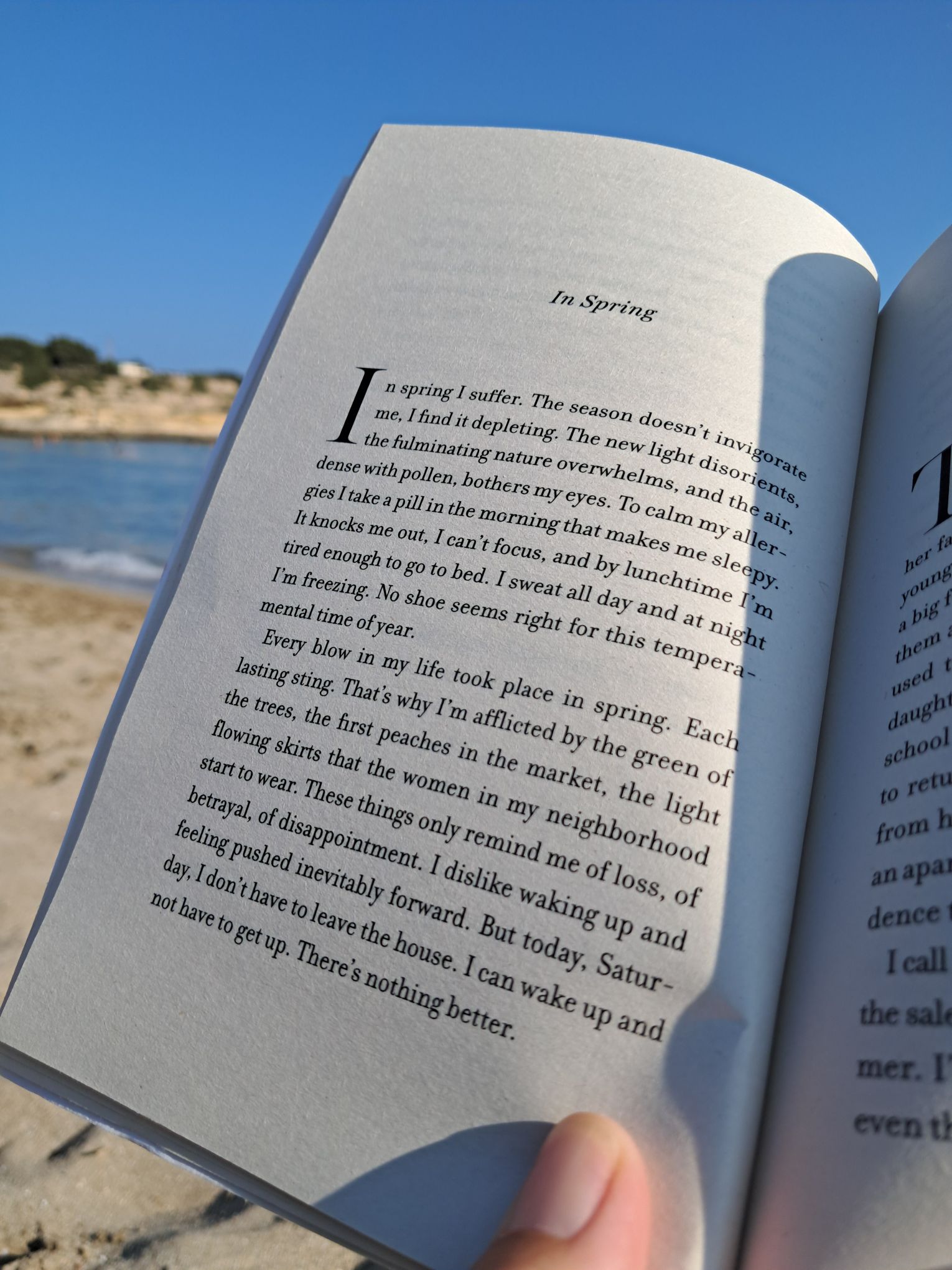
Near the end, as I began to notice this pattern and list of locations, I asked myself, “What is this ‘Whereabouts?’ and I flicked back to the contents page and read through the list of destinations. I then turned the page and the only chapter that doesn’t start with a preposition, Nowhere, seemed to be speaking to me, responding to my question.

It began by saying:

‘Because when all is said and done the setting doesn’t matter: the space, the walls, the light. It makes no difference whether I’m under a clear blue sky or caught in the rain or swimming in the transparent sea in summer.’

This has come just after Up Ahead, a sign of change, something our protagonist does not like and spends the entire short chapter of In Spring pondering. A chapter I sent to another friend, one who shares the protagonist’s dislike of that season.

Transition, Change and Things that Stay the Same

In Spring, a chapter from Jhumpa Lahiri's novel of vignettes Whereabouts

Now, she contemplates a transition; both of the day, and of a life, observing the peripheral characters to this solitary existence she has created, people in movement, marking the end of a day.

‘They’ll keep walking along these sidewalks. They’re permanent fixtures in my mind, knotted up in the fabric of my neighbourhood just like the buildings, the trees, the marble woman. These are the faces that have kept me company for years, and I still don’t know the people they belong to. There’s no point saying goodbye to them, or adding, we’ll meet again, even though right now I’m overflowing with affection for them.’

Overall, it’s a reflective relatively smooth paced novel in which not much happens and yet you feel as though you have visited and lived for a short time in a city apartment in one of the squares of this major European city of Rome, a part of it not populated by tourists, but where the everyday life continues to unfold week after week, year upon year, following the same rhythms, with small changes a natural part of its existence.

‘Is there any place we’re not moving through? Disoriented, lost, at sea, at odds, astray, adrift, bewildered, confused, uprooted, turned around. I’m related to these related terms. These words are my abode, my only foothold.’

Brilliantly crafted. Could not put it down, read it in a day.

Highly Recommended.

Have you read Whereabouts? Do you have a favourite by Jhumpa Lahiri? Tell us in the comments below.

Clear by Carys Davies

Scottish Island literature

Clear by Carys Davies (Granta) is one of those books that stood out for me from the moment I first saw it mentioned. I could tell it was going to be excellent. And it is.

That atmospheric painting, Moonlight on the Norwegian Coast by artist Baade Knud Kunstenr (1876), depicting a fisherman looking out to sea, reading the dark and broody skies, where through a gap, there beholds light, promise.

What will he decide?

1843 Scotland, the Great Disruption, the Clearances

Clear is an exceptional novella, set in 1843 Scotland. It is about a quiet, worrisome, rebel pastor, John Ferguson and his wife Mary, who met rather unexpectedly and dramatically during one of the Comrie earthquakes; and Ivar, the lone islander out there in the North Sea, somewhere between the Shetland Islands and the coast of Norway.

We encounter them in the months after The Great Disruption, when 474 clergy radically separated from the Church of Scotland over government interference in appointments and ‘patronage‘, the dominant influence of wealthy landowners in putting those they wished in position and removing others unwanted.

She remembered a dinner, a long time ago now, at her father’s house in Penicuik, where the talk had turned to a removal somewhere north of Cannich, and remembered her father remarking that he was surprised there was still anyone left to remove – that he thought all the big estates must by now have been thoroughly cleansed of their unwanted people.

Desperate Times, Desperate Measures

John, like other rebel ministers who signed the controversial Act of Separation and Deed of Demission, is now under financial pressure to meet all his new responsibilities, thus he accepts a paid role from a landowner’s factor, much to the consternation of his wife, to visit a remote island in the north to evict the last inhabitant, part of the final throes of the Highland Clearances.

The important thing was not to become dispirited – the important thing was to remember that this was a job, an errand: a means to a very important end.

He sets out by boat, and is left on the island, with the promise of a return berth (with his charge in tow) some weeks ahead. Things don’t go quite to plan and all that passes sets up the already complex dilemma this man faces.

Life on Scottish Islands

Photo by C. Proust on Pexels.com

Set in that mid 1800’s period on the island, felt so authentic, it reminded me of reading a Kathleen Jamie essay from Findings.

The author brings alive the damp, blustery, natural environment, the daily rhythms of Ivar and his few animals, his survival skills.

Then the precise observations of his encounter and time spent with the first man he has seen in years and the portrayal of the care he expends – just brilliant.

He’d been out very little this past spring, first because of his illness and then because of the bad weather when it had been too rough for much outdoor work, and impossible to fish off the rocks – the sea restless and unruly and wild, spindrift from the heavy breakers striking against the shore and forming a deep mist along the coast. He’d spent most of his time knitting, mainly sitting in his great chair next to the hearth but also sometimes on the stool in the byre with Pegi, occasionally talking to her but mostly just sitting in her company with a sock or cap or whatever else he was making.

As well as the natural environment, there is the language Ivar speaks, neither Scots nor English, something else altogther.

Ivar was not garrulous. He did not speak often, and when he did his sentences were short.

Woven through them were a few words John Ferguson thought he recognised – a handful that sounded like ‘fish’, ‘peat’, ‘sheep’, ‘look’, ‘me’, ‘I’, but delivered in an accent that made it impossible to be sure.

Scottish Genealogy and Family History

What made this short novel all the more interesting for me was that I have been researching my Scottish ancestors from the late 1700’s to late 1800’s in and around Dundee, people involved in the weaving and shipping industries.

Reading a novel set in this same period felt strangely but appropriately familiar; the detail on the map on the inside cover, shown here, add to that sense of time and wonder.

If you have spent any time poring over Scotland’s National Records, census indexes and records of the historic environment (archaeological sites, buildings, industry and maritime heritage), then this book is like a short, entertaining breather from that, to embark on another journey, while staying immersed in the era. Reading newspapers or stories, looking at artworks and photos really awakens the lives of those who have gone before us.

Artists Using Photography

When the Great Disruption occurred, the meeting of the First Assembly to sign the Deed was recorded via a painting depicting all 474 men. It was a culturally significant moment. The painting, by the artist David Octavius Hill was internationally important as the first work of art painted with the help of photographic images. Robert Adamson, photographer, had a Calotype studio (an early photographic process introduced in 1841) in Edinburgh and he worked in partnership with Hill, realising the potential of the new medium.

In the novel Clear, one of the significant items that John Ferguson takes with him to the island, is a framed portrait of his wife Mary, an object that is a catalyst of many different emotions in the two men on the island.

The picture of Mary Ferguson in the tooled-leather frame was a colotype by Robert Adamson.

It was made in Edinburgh a few months after the Fergusons’ marriage, and six weeks after the Revernd John Ferguson resigned his living in the city’s northern parish of Broughton and became a poor man by throwing in his lot with the Free Church of Scotland.

Certain aspects of Scottish historical importance are subtly planted like this throughout the text and while they do not distract from it (unless like me you go hunting for those references), they are a welcome authentic addition to an already scintillating text.

I absolutely loved it, my copy now has many scribbled pencil jottings all over it and this is one I would definitely read again as I feel as though there is more to unravel if I went beachcombing through it!

Highly Recommended.

I also read this during March to coincide with Karen at Booker Talk’s Reading Wales Month 2025.

Further Reading

New York Times review: In ‘Clear,’ a Planned Eviction Leads to Two Men’s Life-Changing Connection

Guardian review: Clear by Carys Davies review – in search of a shared language

Author, Carys Davies

Carys Davies‘s first novel West won the Wales Book of the Year Fiction Award, was Runner-Up for the Society of Author’s McKitterick Prize and shortlisted for the Rathbones Folio Prize. Clear has been longlisted for the Walter Scott Historical Fiction Prize 2025.

Her short stories have been widely published and broadcast on BBC Radio 4. Her second collection, The Redemption of Galen Pike, won the Frank O’Connor International Short Story Award 2015. She lives in Edinburgh.

Reading Wales Month 2025 Clear by Carys Davies

The Colony by Audrey Magee

Reading Ireland Month

March is Reading Ireland Month, run by Cathy over at 746books.

An island of approximately 7 million people, it has a successful and supportive literary culture, including four nobel prize winners (George Bernard Shaw, William Butler Yeats, Samuel Beckett, Seamus Heaney) and six Booker Prize winners (Iris Murdoch, John Banville, Roddy Doyle, Anne Enright, Anna Burns, Paul Lynch), plus an honorable mention for William Trevor, who never won, but was shortlisted five times.

Language and Life Intertwined

If you’re interested in a contemporary insight into Irish culture, literature and history, I highly recommend The Passenger – Ireland (reviewed here), which features long form essays, investigative journalism, literary reportage and visual narratives. It takes us beyond the familiar stereotypes to portray the country’s shifting culture and identity, public debates, sensibilities of its people, its burning issues, pleasures and pain. It was published by Europa Editions in March 2022.

One of the essays, An Ocean of Wisdom by Manchan Magnan, a man fascinated by the Irish language and its connection to fishing, tells of his travels to three Gaeltachtai (Irish speaking) areas uncovering local words and phrases that expressed aspects of the sea, weather and coastal life. He captured linguistic nuances that described a way of life fast disappearing and shared the complex reasons behind it.
More Ireland Island Literature, The Colony

My first book for reading Ireland 2025 is the excellent novel The Colony by Audrey Magee. This had rave reviews everywhere and I have long been wishing to read it. It did not disappoint, it has many thought provoking themes, yet can be read at quite a pace.

Mr Lloyd, an English man has come to an island, a rock three miles long and half a mile wide to paint the cliffs and have an authentic experience. He is trying to find inspiration and revive his career (and life).

We get to know his type immediately in the sardonic opening pages, which are illustrated on the cover of the copy I read. A man being rowed across the water to the rock where he will spend the summer, wants to recreate an authentic experience he’s seen a picture of somewhere. Reality, nothing like a still-life.

He looked down again, at his backpack, his easel, his chest of paints bound already to the journey across the sea in a handmade boat. He dropped his right leg, then his left, but clung to the ladder.
self-portrait I: falling
self-portrait II: drowning
self-portrait III: disappearing
self-portrait IV: under the water
self-portrait V:the disappeared
Let go, Mr Lloyd.
I can’t.
You’ll be grand.

The people on the island cater to his needs while fifteen-year-old James is curious about painting and drawing. He begins to learn, to practice, to observe what My Lloyd is incapable of seeing. The islanders have asked My Lloyd to respect certain privacy’s, lines he doesn’t take long to cross.

Rival outsiders on a mission

A while later, another man will arrive for the summer, Mr Jean-Pierre Masson, a Frenchman, returning for his fourth summer.

You speak the language Mr Masson?
Yes, I study Irish, or Gaelic, as you prefer to call it.
I have no preference.
Then we’ll go with Irish.
Masson drank from his cup.
I’m a linguist, Mr Lloyd, and I specialise in languages threatened with extinction.
And you’re here to save Gaelic?

The novel observes the effect these two outsiders have on the islanders, the rivalry and antagonism between them and the inability of the islanders to stop the change these two herald.

Lest We Forget

Interspersed between the chapters, single pages in short paragraphs, recount acts of terrorism, the names and details of those who are victims, targeted by different sides of the Irish divide. Thus the novel depicts the external colonising forces and the internal country conflict on the people.

Alexander Gore is a full-time member of the Ulster Defence Regiment standing outside his barracks on Belfast’s Malone Rod just after eleven on Wednesday morning, June 6th. He is twenty-three years of age, Protestant and has been married for four months. His nineteen-year-old wife is pregnant with their first child.
A truck drives down the Malone Road towards the barracks. Two IRA men in the truck open fire and kill Alexander Gore.

In addition to the islanders, there is the ghostly presence of the three fishermen who drowned, their absence keeping some endlessly waiting, anchored to that rocky outcrop, as if expecting them still to return.

Three good men lost on an autumn day. My son-in-law, my grandson and my grand-daughter’s husband. Gone. Never to come home. Not even for their own funerals. That was a hard time, JP. But as I say, you get hard times wherever you are. They have a great way of following people. Though it took a long time for the island to recover.

The Painter and the Academic, neocolonialism at work

Both visitors have backstories that reveal more about them and question their motives. They discover they can take more than what they initially came for and neither hesitates to expand their remit, because it serves them, it takes them away from looking at themselves, at their own story.

The islanders see all, some stuck in their ways, others with more freedom to slip in and out of what is expected and others have the desire to rebel or seek opportunity. As the visitors time on the island comes to an end, true colours are revealed, change is challenged by the old order and young James weighs up his options.

I very much enjoyed the reading experience and the delving into the different motivations of all the characters. The dialogue was excellent, the humour biting, the prose sometimes poetic and spaced out on the page, other times fluid like the incoming and outgoing tides, occasionally dense when it delved into the political and linguistic aspects and violent when those extracts are shared.

Highly Recommended!

Have you read The Colony? Are you reading any Irish literature this month? Let me know in the comments below.

Further Reading

Guardian review: The Colony by Audrey Magee review – island life at a distance by Jonathan Myerson

Read rave reviews of The Colony by Jacqui at JacquieWine’s Journal, Kim at Reading Matters (her favourite book of the year 2023), Susan at A Life of Books, Sue at Whispering Gums and Lisa at ANZ LitLovers.

Audrey Magee, Author

Audrey Magee was born in Ireland and lives in Wicklow. She worked for twelve years as a journalist.
Her first novel, The Undertaking, was shortlisted for the Women’s Prize for Fiction, for France’s Festival du Premier Roman and for the Irish Book Awards. It was also nominated for the Dublin Literary Award and the Water Scott Prize for Historical FictionThe Undertaking has been translated into ten languages and is being adapted for film.
Her second novel, The Colony was longlisted for the Booker Prize 2022 and shortlisted for the Orwell Prize for Political Fiction (2022).

International Booker Prize Longlist 2025

The International Booker Prize 2025 longlist has been announced by this years judging panel, made up of a novelist, a poet, a translator, a critic and a songwriter, all of whom cross boundaries into other art forms. In their various ways, they are steeped in the world of words.

These are the 13 books they have chosen in the first cut, from 154 books submitted – 11 novels and two collections of short stories, translated from 10 original languages representing 15 nationalities and 11 independent publishers:

The longlisted books are:  

International Booker Prize longlist 2025 © Yuki Sugiura for the Booker Prize Foundation

The Book of Disappearance by Ibtisam Azem (Palestine) translated from (Arabic) by Sinan Antoon

– The shocking premise of Azem’s novel can be summed up in a sentence: what would happen if all the Palestinians in Israel suddenly disappeared?

Alaa is haunted by his grandmother’s memories of being displaced from Jaffa and becoming a refugee in her homeland after the Nakba. Ariel, Alaa’s neighbour and friend, is a liberal Zionist, critical of the military occupation of the West Bank and Gaza, yet faithful to the project of Israel. When he wakes up one morning to find that all Palestinians have suddenly vanished, Ariel begins searching for clues to the secret of their collective disappearance. 

That search, and Ariel’s reactions to it, intimately reveal the fissures at the heart of the Palestinian question. Between the stories of Alaa and Ariel are the people of Jaffa and Tel Aviv – café patrons, radio commentators, flower-cutters – against whose ordinary lives these fissures and questions play out. 

Spare yet evocative, intensely intelligent in its interplay of perspectives, The Book of Disappearance, critically acclaimed in its original Arabic edition, is an unforgettable glimpse into contemporary Palestine as it grapples with both the memory of loss and the loss of memory. 

On the Calculation of Volume I by Solvej Balle (Denmark) translated by Barbara J Haveland

– a woman is trapped in a time loop, waking up each morning to find it’s the 18th of November, again and again.The first book of a planned septology. Five books have been published in Danish so far, with translations underway in over 20 countries. 

She no longer expects to wake up to the 19th of November, and she no longer remembers the 17th of November as if it were yesterday. She comes to know the shape of the day like the back of her hand – the grey morning light in her Paris hotel; the moment a blackbird breaks into song; her husband’s surprise at seeing her return home unannounced.  

But for everyone around her, this day is lived for the first and only time. They do not remember the other 18th’s of November, and they do not believe her when she tries to explain.  As Tara approaches her 365th 18th of November, she can’t shake the feeling that somewhere underneath the surface of this day, there’s a way to escape. 

There’s a Monster Behind the Door by Gaëlle Bélem (La Réunion) translated (French) by Karen Fleetwood & Laëtitia Saint-Loubert

– in 1980s La Réunion (an overseas department of France, in the Indian Ocean), a young girl with a zest for life rises up against her jaded, bitter parents.

La Réunion in the ’80s is a place of high unemployment and low expectations, the legacy of postcolonialism. Here, a little girl makes a bid for escape from her sadistic parents’ reign of terror and turns to school for salvation. The name Dessaintes is one to reckon with. A bombastic, violent and increasingly dangerous clan, little do they know that their downfall is being chronicled by one of their own. 

Rich in the history of the island’s customs and superstition and driven by a wild, offbeat humour, this picaresque tale manages to satirise the very notion of freedom available in this French territory, and perhaps even the act of writing itself and where it might lead you.

Solenoid by Mircea Cărtărescu (Romania) translated by Sean Cotter 

– partly inspired by the author’s years as a teacher in Romania, spiraling into a bizarre account of history, philosophy and mathematics, with flashes of nightmarish body horror. Said to have been written in a single draft, at 627 pages, the longest book on the list.

Grounded in the reality of communist Romania, the novel grapples with frightening health care, the absurdities of the education system and the struggles of family life, while investigating other universes and forking paths. 

In a surreal journey like no other, we visit a tuberculosis preventorium, an anti-death protest movement, a society of dream investigators and a minuscule world of dust mites living on a microscope slide. Combining fiction and history with autobiography – the book is partly based on Cărtărescu’s experiences as a teacher – Solenoid searches for escape routes through the alternate dimensions of life and art, as various monstrous realities erupt within the present. 

Reservoir Bitches (short stories) by Dahlia de la Cerda (Mexico) translated (Spanish) by Heather Cleary & Julia Sanches

–  follows the efforts of 13 memorable Mexican woman, from the daughter of a cartel boss to a victim of transfemicide, to survive against the odds.

In the linked stories of Reservoir Bitches, 13 Mexican women prod the bitch that is Life as they fight, sew, cheat, cry and lie their way through their tangled circumstances. From the all-powerful daughter of a cartel boss to the victim of transfemicide, from a houseful of spinster seamstresses to a socialite who supports her politician husband by faking Indigenous roots, these women spit on their own reduction and invent new ways to survive, telling their stories in bold, unapologetic voices.  

At once social critique and black comedy, Reservoir Bitches is a raucous debut from one of Mexico’s most thrilling new writers.

Small Boat by Vincent Delecroix (France) translated by Helen Stevenson

– the fictional account of a group of migrants’ attempt to cross the English Channel in an inflatable dinghy, which results in the deaths of 27 of those on board. Told from the point of view of a French woman who received, but rejected, their desperate calls for help. 

Despite receiving numerous calls for help, the French authorities wrongly told the migrants they were in British waters and had to call the British authorities for help. By the time rescue vessels arrived on the scene, all but two of the migrants had died.  

The narrator of Delecroix’s fictional account of the events is the woman who took the calls. Accused of failing in her duty, she refuses to be held more responsible than others for this disaster. Why should she be more responsible than the sea, than the war, than the crises behind these tragedies?  

A shocking, moral tale of our times, Small Boat reminds us of the power of fiction to illuminate our darkest crimes. 

Hunchback by Saou Ichikawa (Japan) translated by Polly Barton 

– an unflinching account of sexual desire and disability about a protagonist born with a congenital muscle disorder who uses an electric wheelchair and a ventilator. Hailed as one of Japan’s most important novels of the 21st century. 

Within the limits of her care home, her life is lived online: she studies, she tweets indignantly, she posts outrageous stories on an erotica website. One day, a new male carer reveals he has read it all – the sex, the provocation, the dirt. Her response? An indecent proposal… 

Written by the first disabled author to win Japan’s most prestigious literary award and acclaimed instantly as one of the most important Japanese novels of the 21st century, Hunchback is an extraordinary, thrilling glimpse into the desire and darkness of a woman placed at humanity’s edge. 

Under the Eye of the Big Bird by Hiromi Kawakami (Japan) translated by Asa Yoneda 

– leaps back and forth across thousands of years and finds humankind on the verge of extinction, but still clinging to the impulses that make us human. 

In the distant future, humans are on the verge of extinction and have settled in small tribes across the planet under the observation and care of the Mothers. Some children are made in factories, from cells of rabbits and dolphins; some live by getting nutrients from water and light, like plants. The survival of the race depends on the interbreeding of these and other alien beings – but it is far from certain that connection, love, reproduction, and evolution will persist among the inhabitants of this faltering new world. 

Unfolding over geological eons, Under the Eye of the Big Bird is at once an astonishing vision of the end of our species as we know it and a meditation on the qualities that, for better and worse, make us human. 

Eurotrash by Christian Kracht (Germany) translated by Daniel Bowles

– a Swiss writer named Christian, embarks on a tragicomic road trip with his wealthy, elderly mother in this tragicomic and absurd semi-autobiographical novel.

Realising he and she are the very worst kind of people, a middle-aged man embarks on a dubious road trip through Switzerland with his 80-year-old mother, recently discharged from a mental institution. Traversing the country in a hired cab, they attempt to give away the wealth she has amassed from investing in the arms industry, but a fortune of such immensity is surprisingly hard to squander. Haunted in different ways by the figure of her father, an ardent supporter of Nazism, mother and son can no longer avoid delving into the darkest truths about their past. 

Eurotrash is a bitterly funny, vertiginous mirror-cabinet of familial and historical reckoning. The pair’s tragicomic quest is punctuated by the tenderness and spite meted out between two people who cannot escape one another. Intensely personal and unsparingly critical, Eurotrash is a disorientingly brilliant novel by a writer at the pinnacle of his powers. 

Perfection by Vincenzo Latronico (Italy) translated by Sophie Hughes

– an expat couple attempt to live their dream in Berlin, but find themselves beset with the dissatisfaction and ennui of the modern world.

Millennial expat couple Anna and Tom are living the dream in Berlin – in a bright, plant-filled apartment in Neukölln. They are young digital creatives, freelancers without too many constraints. They have a passion for food, progressive politics, sexual experimentation and Berlin’s 24-hour party scene. Their ideal existence is also that of an entire generation, lived out on Instagram, but outside the images they create for themselves, dissatisfaction and ennui burgeon.  

Their work as graphic designers becomes repetitive. Friends move back home, have children, grow up. An attempt at political activism during the refugee crisis proves fruitless. And in that picture-perfect life Anna and Tom feel increasingly trapped, yearning for an authenticity and a sense of purpose that seem perennially just out of their grasp.  

With the stylistic mastery of Georges Perec and nihilism of Michel HouellebecqPerfection is beautifully written and brilliantly scathing.

Heart Lamp (short stories) by Banu Mushtaq (Southern India) translated (Kannada) by Deepa Bhasthi 

– the author, an activist and lawyer vividly captures the extraordinary everyday lives of Muslim women and girls in southern India, in 12 stories, originally published in Kannada between 1990 and 2023.

Praised for their dry and gentle humour, these portraits of family and community tensions testify to Mushtaq’s years as a journalist and lawyer, in which she tirelessly championed women’s rights and protested all forms of caste and religious oppression.  

Written in a style at once witty, vivid, colloquial, moving and excoriating, it’s in her characters – the sparky children, the audacious grandmothers, the buffoonish maulvis and thug brothers, the oft-hapless husbands, and the mothers above all, surviving their feelings at great cost – that Mushtaq emerges as an astonishing writer and observer of human nature, building disconcerting emotional heights out of a rich spoken style. Her opus has garnered both censure from conservative quarters as well India’s most prestigious literary awards; this is a collection sure to be read for years to come. 

On a Woman’s Madness by Astrid Roemer (Surinamese-Dutch), translated (Dutch) by Lucy Scott 

– a classic of queer literature, as electrifying today as it was when it first appeared in 1982, tells of a courageous Black woman fleeing her abusive husband to embark a new life in the Surinamese capital.

When Noenka’s abusive husband of just nine days refuses her request for divorce, she flees her hometown in Suriname, on South America’s tropical northeastern coast, for the capital city of Paramaribo. Unsettled and unsupported, her life in this new place is illuminated by romance and new freedoms, but also forever haunted by her past and society’s expectations. 

Amid tales of plantation-dwelling snakes, rare orchids, and star-crossed lovers, it is also a blistering meditation on the cruelties we inflict on those who disobey. Roemer, the first Surinamese winner of the prestigious Dutch Literature Prize, carves out postcolonial Suriname in barbed, resonant fragments. Who is Noenka? Roemer asks us. ‘I’m Noenka,’ she responds resolutely, ‘which means Never Again.’ 

A Leopard-Skin Hat by Anne Serre (France), translated by Mark Hutchinson 

– captures the love and despair of an intense friendship between the book’s narrator and his best friend from childhood, who suffers from severe psychological disorders.

A series of short scenes paints the portrait of a strong-willed and tormented young woman battling many demons, and of the narrator’s loving and anguished attachment to her. Serre poignantly depicts the bewildering back and forth between hope and despair involved in such a relationship, while playfully calling into question the very form of the novel.

Written in the aftermath of the death of the author’s little sister, A Leopard-Skin Hat is both the celebration of a tragically foreshortened life and a valedictory farewell, written in her signature style.

Newbies, First Timers and a Classic Translated

Many of the books on the list are by authors being translated into English for the first time, which is a great sign for translated fiction, indicating that publishers and reading more widely and looking further than the already known. Not surprising I haven’t read any of these and only heard of one Solenoid, which won the Dublin Literary Award in 2024. It is not one I will be reading, way too long!

I like the sound of Heart Lamp and On a Woman’s Madness, not just for their premise, but for the language and locations they hail from! The Danish novel, The Calculation of Volume 1 sounds intriguing and something of a cult following, you’ve got to bat for someone who went ahead and self-published and is now being translated into over 20 languages.

Anything on the list tempting you? Let me know in the comments below.

The International Booker Shortlist and Winner 2025

The shortlist of six books will be announced on Tuesday, 8 April.

The winning title will be announced at a ceremony at London’s Tate Modern on Tuesday, 20 May.