Segu by Maryse Condé tr. by Barbara Bray

As I have been on something of a reading journey through Maryse Condé, I want to capture a little background leading up to how she came to write this masterpiece of historical fiction, set in a time of major change in this part of Africa where her ancestors came from.

Background

 Maryse Condé grew up in a large black bourgeoise family in Guadeloupe, well-educated, with regular family visits to Paris, in fact her parents felt French and were surprised when people they deemed of a lesser status than they, (like Parisian cafe waiters) commented on how well they spoke French, in a patronising way.
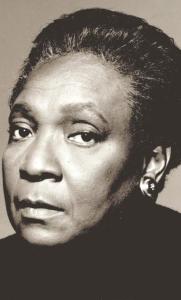
Maryse Condé

Maryse Condé

Maryse Condé was the youngest of eight children, her mother married an older, financially and professionally stable man, she was a formidable teacher, a staunch, authoritative force to be reckoned with.

She died when Maryse was 14 and it wasn’t until years later that Condé began to question why her mother had been the way she had been with her and others, wondering what unseen forces had been pushing from within. this led her to research her grandmothers story, which she published as the novel Victoire, My Mother’s Mother (reviewed here).

Her own childhood she writes about in the beautiful set of vignettes, autobiographical essays collected in Tales of the Heart, Stories from My Childhood (reviewed here).

What she discovered in researching her mother and grandmother’s lives was a history of struggle, of single, compromised women, forced by the abuses inflicted upon them – for which they were harshly judged, though little more was expected of them – to raise their children alone and make do as best they could.

While Condé’s mother was fortunate to have been gifted the opportunity to acquire an education, it was a favour she wanted little or nothing to do with, never sharing the reasons  or people behind it, for her mother Victoire, had been the open mistress of her employer, a friend of his wife, a situation her daughter detested and determined to remove herself far from.

Embarking on her own education, the young Maryse Condé, discovered that though she’d had the best education possible, enabling her to find success in France and Guadeloupe, she learned little about her own history or that of  her people. It was a gap in her education she couldn’t live with, that she wished to fill and it sent her off on a historical pursuit to understand both her maternal history and the voyage of her ancestors.

HeremakhononHer novel Heremakhonon(1976), which I’ve not yet read, is a semi-autobiographical story of a sophisticated Caribbean woman, teaching in Paris, who travels to West Africa in search of her roots and an aspect of her identity she has no connection with.

It is an insightful and somewhat disappointing experience, however for Maryse Condé personally, it was a springboard to the research and work that would follow, as her subsequent novels explore issues of race, gender and culture in a variety of historical periods and locations.

From this context, we come to what is considered a significant and radiant accomplishment, Segu (1984), set in the 19th century Kingdom of Segu (contemporary Mali), entering the soul of the African continent, at a point of prophetic enlightenment, as multiple forces and influences enter into the lives of those, who until now have known great spiritual power and authority.

Review

SeguIn 1797, the kingdom of Segu is thriving, its noblemen are prospering, its warriors are prominent and powerful, at their peak. 

Their people, the Bambara are guided by story-telling griots and divining priests, their lives ruled by the elements and tradition. However their visions fall short in preparing their followers for what is to come.

From the East, religion revolutions have spread Islam across two-thirds of West Africa; from the West, despite laws passed to stop it, the slave trade continues to flourish, and from within merchants make new demands for tropical goods, developing legitimate commerce.

Segu follows the life and descendants of Dousika Traore. He is the king’s most trusted advisor and the fate of his four sons epitomise the challenges that threaten to tear their family and society apart, in this historical turning point of African history. 

Dousika falls out of favour with the King and his son’s each go off in search of adventure outside the kingdom, where they discover quite a different perception of their people and their race.

Tiekoro, renounces his people’s religion, travels North to become a religious scholar and embraces Islam. He is by turn revered, scorned, returns to his home and becomes respected. However his position is always in flux and the balance of power between peoples and their associated beliefs are continuously challenged, he falls in and out of favour.

Siga, initially accompanies his brother and must survive in the same town, but without the introductions his brother has received to help him, he retains his belief in the Bambara gods, defending tradition and becomes a merchant. Although he was born on the same day as Tiekoro, his mother was a slave, so he must accept a less ambitious, less well-connected future.

Naba, is snatched by slave traders and sold and somehow ends up as a slave on a plantation in Brazil. He escapes, only to live on another plantation, a kind of free slave, to be near the woman he loves, whose children will reconnect with the family through a series of coincidences.

Malobali, the youngest, could no longer bear to listen to his older prodigal brother preaching, storms off one day in contempt, never to return. He becomes a mercenary, spending a period of time in a makeshift army, eventually converting to Christianity to improve his chances and has an encounter with the spirit of one of his brothers.

Based on actual events, Segu transports the reader to a fascinating time in history, capturing the earthy spirituality, religious fervour, and violent nature of a people and a growing nation trying to cope with jihads, national, tribal and family rivalries, racism and suspicion, amid the vagaries of commerce.

It shines a light on the impact of cross tribal marriage and partnership, of slavery, both that perpetuated by the Europeans and from within the African continent. The role of the son and the daughter, the rules of marriage, the perceptions of religion, the rise of Islam, the practices of fetishists and superstitions of their followers. The importance of relaying history through the storytelling griots, an inherited role, passed down from family member to family member.
Intuition

Just as with Condé’s previous work, here too there is communication and connections between family members not present, whether alive or manifesting as departed ancestors, they enter via dreams, intuition, providing guidance and reassurance. The presence and guiding voice of ancestors and the reincarnation of souls is important, as is the effect of love/lust on each of them.

As with the best of historical fiction, Segu takes us through a period of significant change, by engaging the reader with a family and its members, its traditions and those who wish to rebel against them, the will to modernise, to make their way forward in a world that is rapidly changing.

It engagingly portrays the balance of power and perceptions between people from different ethnic groups, where one is judged on everything except character. We encounter historic family feuds, feuds between peoples, religion and the rise of Islam, fetish priests, slaves, concubines and nobles, a complex society.

It was a deliberately slow read for me, but at the same time riveting, a book that scratches at the surface of a significant and fascinating subject and does wonders to assist in helping that era and people become more understood.

Buy Segu by Maryse Condé via Book Depository

The Colour by Rose Tremain

The Colour

It’s been a long time since I have read a Rose Tremain book; I think Music and Silence was the last one I read, I remember that she is a captivating storyteller and creates interesting characters, as she has done here with The Colour.

I was intrigued to read it too, because it is set in New Zealand (where I am from originally), a location rare to find in literature outside homegrown, Rose Tremain being a British author.

Similarly to Eleanor Catton’s The Luminaries (reviewed here), The Colour is set in the South Island during the gold rush period. TLuminarieshough in contrast to that epic tome that won the Man Booker Prize in 2013, Rose Tremain’s novel features only one man seduced by the gold or and gives us an insight into two women, Harriet his wife and Lilian his mothers, their hopes, achievements and personal struggles in trying to make a life in this untamed country.

Joseph and Harriet Blackstone depart England as newlyweds, arriving in Christchurch, from where they buy land in isolated countryside near a river, signifying a new beginning for them all including Joseph’s mother Lilian, although she quickly begins to make plans in her head about how she might leave her son’s newly constructed Cob House, to return to the more civilised town. 

Harriet had felt stifled in England and was almost resigned to her state as a spinster governess, until Joseph’s surprise engagement and a chance for her to start anew, to create a new life for them in this foreign land, which bore little of the attitudes and social stratification of home.

“Harriet had asked her new husband to take her with him. She clung to him and pleaded – she who never whined or complained, who carried herself so well. But she was a woman who longed for the unfamiliar and the strange. As a child, she’d seen it waiting for her, in dreams or in the colossal darkness of the sky: some wild world which lay outside the realm of everything she knew.”

Joseph and Lilian were also fleeing something, although their memories and associations were a little more shameful and sinister, secrets they keep from others, that continue to haunt them on the other side of the world, distance found insufficient to wipe their conscience clean of the past.

110611_1523_TheForestfo1.jpgThey know it will be a tough existence and they will need to learn from mistakes, as all pioneers do, but they find the challenges of this harsh Canterbury landscape almost soul destroying and Joseph is quickly lured away by the glitter and promise of gold dust he finds in his river and soon sets off to join the other men, also seduced by their lust for “the colour”, in new goldfields over the Southern Alps, leaving the two women to fend for themselves.
‘I must go,’ he said.  ‘I must go before all the gold is gone.’

‘And if there isn’t gold?’

‘Men are not risking their lives for nothing, Harriet.’

‘Men are risking their lives in the hope of something. That is all.”

‘I have dreams about the Grey River. I shall come back with enough…enough gold to transform our world.’

‘What have we been doing for all these months,’ she said, but endeavouring to “transform our world”?’

Harriet befriends a family that is succeeding in making a living as they hope to, a horse ride away at Orchard House, although they too have their share of difficulty with their son Edwin and his longing for the Maori nanny they’d let go after an accident. Edwin has a strong spiritual connection with Pare, something his parents don’t understand and are afraid of, as they believe her enchantment over him is making him I’ll.

Overall, it is an enjoyable, entertaining and quietly gripping read with a well-rounded character whose development and journey captivates the reader.

Its only weakness for me, was the subplot featuring Pare, the Maori nanny, her superstitions and behaviours seemed odd to me, somewhat fantastical, bordering on magical realism, a little patronising in terms of my understanding and experience of the legends, culture and tradition I grew up with, though perhaps reminiscent of the colonial attitude of that era and beyond.

The Whispering Muse by Sjón tr. Victoria Cribb

Whispering MuseThe Whispering Muse by Icelandic poet, songwriter and novelist Sjón, known for his collaborations with Björk and winner of the Nordic Council Literary Prize (equivalent of the Man Booker Prize) for this novel, was the first book I chose to read for the New year.
I chose it because it’s by an Icelandic author and because it delves into the realm of myth and fable, Alberto Manguel called it:

“an extraordinary, powerful fable – a marvel.”

I loved this gem of a book, which demanded much more from the reader wanting true fulfilment, than the mere 143 pages it was written on.

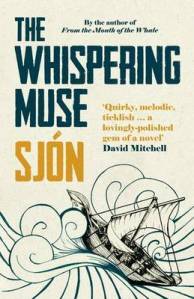
It is an invitation to embark on the adventures of The Argonauts, as told by the second mate Caeneus, who while voyaging on a ship in 1949 narrates his previous adventures on the ship Argo under Captain Jason in their quest for the Golden Fleece.

“Before embarking on his tales the mate had the habit of drawing a rotten chip of wood from his pocket and holding it to his right ear like a telephone receiver. He would listen to the chip for a minute or two, closing his eyes as if asleep, while under his eyelids his pupils quivered to and fro.”

Not being familiar with the epic poem written by Apollonius of Rhodes, (Hellenistic poet, 3rd century BC) I diverged off course to familiarise myself with its plot, and some of the named characters mentioned, as the book is full of mythological literary references that make a pleasant and fulfilling divergence in its reading, not least of which we learn why Caeneus has much respect for wood, though more is revealed on its significance later.

Set in 1949 as an elderly, eccentric Icelandic man is invited by the father of one of the fans of his work on Nordic culture and fish consumption, to embark on a voyage at sea from Copenhagen to the Black Sea, he recounts his journey as he sees it, while learning about the grand voyage of Caeneus and his many transformations.

lead_deskew=-22 checksum=dedd67dbcf472173344bd720e473d789

The sources quoted on the last page provide a link to the ancient sparks that ignited the imagination of Sjón. Familiarity with The Argonauts, Medea, Hypsipyle and Metamorphoses would benefit, but the story is equally accessible with superficial knowledge of those stories.

Entertaining, intriguing, intellectually stimulating and fun, what more could one ask for from a book read on the 1st day of the new year 2016.

I scribbled more notes in the margin than I have every done before and I’m still wondering whether the old man might have had a mild dementia, as the latter part of the book has him witnessing some strange, unaccounted for events. Nothing is ever as it seems and a reader’s imagination can contribute as much to the story as one wishes.

“I was thinking: could the voice you detect in the humming of the wood be your own voice? Like the poet who obstinately believes that he is writing about the world but is in reality only telling yet another story about himself?”

The Life and Loves of Lena Gaunt by Tracy Farr

Tracy Farr’s delightful, fascinating debut novel is the fictional memoir of Dame Lena Gaunt: musician, octogenarian, puffer of exotic substances. It was one of my Top 5 Fiction Reads of 2015.

Lena went from a background of playing traditional instruments to becoming a modern musician, being the first theremin player of the twentieth century, an intriguing instrument played through movement but without the musicians hands actually touching the instrument.

Lena Gaunt

From its opening pages where we experience Lena’s daily routine, her strong pull to the sea, The memory of music in her bones, it becomes a book that grows on you until it becomes unputdownable.

“I move my arms in wide arcs in front of me, pushing water out to the sides and back again. I can feel the stretch in my shoulders, the tendons tense and twist. Bubbles form up my arms and, trapped in the tiny pale hairs, tickling like the bead in champagne. Moving my fingers in the water effects tiny changes in the waves that effect bigger movements. Action at a distance; just like playing the theremin.”

Lena Gaunt was an only child, born in Singapore, spending a solitary childhood in the tropics before being sent “back Home” her parents called it, alone to Australia where her Uncle deposited her at a private boarding school, at four-years of age. She became closer to her bachelor Uncle Valentine than her parents, who were distant, not just physically, but emotionally and who died before any change in their relationship might manifest.

Lena played the piano, but her first true love was the cello, one of her few regrets, that in taking up the theremin, the instrument she would become most well-known for, she stopped playing the cello.

After an unsuccessful visit to her father in Malacca (Malaysia) at 18, one where he had hoped to groom her into the demure, music playing, after dinner entertainment for his friends, a night walk into the seedier parts of the town, where she stumbles across her Uncle and her father’s business partner in an opium den, has her sent back to Australia, willingly and to the beginning of a life she will create anew.

“It had taken little for me to disappoint my father, but in truth, he too had disappointed me. Father, home, family; empty words, without meaning for me.”

She is introduced to and practices cello with Madame Vita Petrova, the eccentric, vodka and coffee drinking Russian with a unique ear and skill for the cello, not found in the more conservative establishments. It is her first encounter with the artistic and musical misfits, a bohemian community with whom she is more comfortable and will become part of.

It is through Madame Petrova she hears of the Professor, the man who introduces her to the instrument, the Music’s Most Modern Instrument, she will play for the world, the theremin.

“played by the waving of hands, like conducting an orchestra. It is played without the player touching it, not with a bow, nor by blowing. It is neither wind nor string, brass nor percussion.”

The Bridge, Dorrit Black (1930)

The Bridge, Dorrit Black (1930)

In Sydney, she meets Beatrix Carmichael, a painter/artist twice her age who becomes her constant companion, a part of who she is, one who really sees her. As Beatrix paints the two sides of the Sydney Harbour Bridge coming together on her canvases, from the verandah of their home, it feels so real, and yet there is a sense of the end of an era, as the subject becomes less intriguing on completion.

“We celebrated it, this joining of the city, the coming together, and yet Trix mourned it too. Since her return from Europe, since her arrival in Sydney, she’d been painting the growing bridge in parts, separate; in fragmented shapes formed of light and colour and sun and music.”

The novel follows Lena’s long, engaging life, and each turn of events that takes her away from the familiar until finally she returns to the place that most feels like home, where she plays one last performance and will meet the young filmmaker Mo, who provokes her into completing the life story she began to record many years before.

As the filmmaker questions Lena Gaunt about her life before the performance she had just given (in her eighties), the narrative flashes back to her past, her isolated childhood, boarding school, separation from family, visits by Uncle Valentine, the piano, the cello, musical influences, her life with Beatrix, making her remember it all, even the painful memories she had hoped never to re-encounter.

It is a fascinating story, a mix of fact and fiction, one that Tracy Farr succeeds in bringing alive through the places Lena visits and lives in, the people we encounter, the music that is made, the images that are painted and the heartbreaking losses she must sustain.

Top Reads 2015

If you’ve noticed a lack of reviews recently, please know it’s not from a lack of interest, time or reading, just a temporary technical problem, not yet resolved but should be by mid January.

So, 2015 was a bumper reading year, I surpassed my book a week ambition and actually read 65 books from 26 different countries, a third of what I read was translated from another language, something I seek out in my interest to experience literature and storytelling from within other cultures and not only by those who have access to the English language.

I will create a separate post to talk more about my impressions and attractions of reading outside the main literary cultures and the cultures and landscapes that keep drawing me back for more.

As with previous years, I’ll share my one Outstanding Read and the Top 5 Fiction and Non-Fiction reads, with a few special mentions.

Outstanding Read of 2015

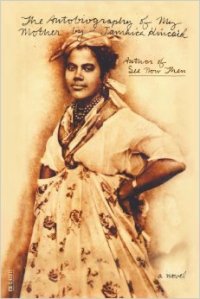
Autobiography MotherThe Autobiography of My Mother by Jamaica Kincaid My first read of the long-established author Jamaica Kincaid (Antigua) and it moved me like no other book had since last years outstanding read, Jennifer Clement’s Prayers for the Stolen.

This is a novel about a young woman growing up without a mother, abandoned for a time by her father and looking back at her life and the thoughts, reactions she had back then, using all the senses.

It is a kind of awakening, a visceral account that is insightful and squeamish both. It was for me too, the beginning of a season of Caribbean reads that were one of the major reading highlights of the year, soon after this I read three books by Maryse Condè (Guadeloupe), Cristina García’s Dreaming in Cuba, Edwidge Danticat’s Breath, Eyes, Memory (Haiti) all of which were 5 star reads.

Top Fiction

Click on the title below to read the review.

1.  The Wall,  Marlen Haushofer a riveting story of one womans survival in the aftermath of a catastrophic event, with only a few animals for companions. A lost classic that was revived years after the death of the writer and one that had me spellbound until the end.

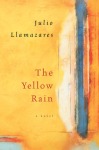
2. The Yellow Rain, Julio Llamazares set in an almost abandoned village in the Spanish Pyrenees, this is a haunting, elegiac account of one man who refused to leave and was witness to the degradation of all that man had contributed as nature reclaimed what was left. Captivating in the way it is written, you will want to slow read it, brief yet unforgettable.

3. Dreaming in Cuban, Cristina Garcia spanning three generations of women from Cuba, told from their differing perspectives, particularly the grandmother who is rooted in her country and culture, it explores separation, identity, the strong bonds of family and the weight of expectation. How these women survive their circumstances. Just brilliant and part of a great collection of literature from the region.

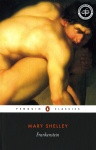
4. Frankenstein, Mary Shelley well it started with listening to the BBC audio broadcasts for learners of English, followed by watching a relayed broadcast of Benedict Cumberbatch in the London National Theatre adaptation, which was brilliant, to finally reading the work itself. I was a little hesitant, old classics aren’t really my thing, but I loved reading Frankenstein and couldn’t help but admire the tremendous achievement of Mary Shelley in creating it. Made all the more fabulous by having seen how it continues to inspire creative direction in the 21st century.

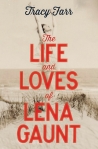
5. The Life and Loves of Lena Gaunt, Tracy Farr I didn’t read a lot of newly published works in 2015, but this one was a standout read for me, I was quickly drawn into the world of Lena Gaunt, an Australian theremin player who was born in Asia and had a few life changing experiences from her encounters there, who lived without much parental guidance or supervision, and developed her musical talents amid an eclectic group of artistic friends, had one true love and faced certain tragedy, all of which is brought to life after a recital she gave in her eighties attracted the attentions of a filmmaker. All the more interesting, for it being inspired by a true legend.

Top Non-Fiction

1. Unbowed: Autobiography of Wangari Maathai the truly inspiring story of Kenyan Nobel Peace Prize winner Wangari Maathai, the work she did, the challenges overcome that gave her a top education and the will to make a real difference, particularly for the lives of women in her country. She empowered others and created enduring projects and movements for all.

2. Under the Sea-Wind, Rachel Carson first in a nature inspired trilogy about the sea and her inhabitants, brought to life in a creative narrative, as seen from the perspective of three sea creatures, part one, the edge of the sea shows the habitat from the point of view of a female sanderling bird, she names Silverbar, part two, the Gulls way, is dedicated to the open sea and navigated by Scomber, the mackerel, and finally part three, river and sea, we follow Anguilla the eel as he travels from his coastal river pool downstream towards the sea and that deep instinctual pull towards the abyss.

3. Tales of the Heart: Stories from my Childhood, Maryse Condé essays, vignettes of childhood, recommended as the place to start in reading the work of this talented and enthralling writer from Guadeloupe. Loved it and was quick to follow-up with Victoire, My Mothers Mother, a book she says is true, though sold as a novel by her publishers due to the tendency of her research subjects to rely on oral stories to pass on their history. Brilliantly told, as she delves into the unknown life of her grandmother to better know and her own mother who died when she was 14.

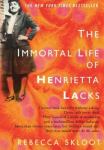
4. The Immortal Life of Henrietta Lacks, Rebecca Skloot (review to come) the background story to the global presence and utilisation of the immortal HeLa human tissue cells, that were discovered to be unique in that they never died, continued to replicate and could be used to do all manner of tests for disease and drugs and how cells respond, something of a revolution for medical science.

HeLa were the initials of the person from whom the samples were taken, as was the procedure at the time. But who was HeLa and what did she or her family have to say about these extraordinary developments thanks to the cells of one woman? Rebecca Skloot spent 10 years researching the life of Henrietta Lacks and the subject of the HeLa cells to bring this extraordinary narrative.

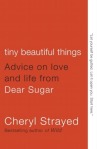
5. Tiny, Beautiful Things: Advice on Love and Life from Dear Sugar, Cheryl Strayed these are letters from the columnist Sugar, who it turned out was Cheryl Strayed, author of the book Wild about her solo journey to trek the Pacific West trail in her twenties.

These letters are written when she is in her forties and though still young, has lived multiple lives and had more than her share of extreme and dysfunctional experiences, from which to draw her own brand of wisdom. It’s a pick up at will kind of book, but her confrontational yet compassionate style is refreshing and thought-provoking, her ability to be very clear on her opinion and advice, without being judgmental.

Special Mentions

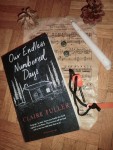
Outstanding Debut – Our Endless Numbered Days Claire Fuller

Excellent Classic – The Enchanted April, Elizabeth von Arnim

Most Uplifting Read – Antoine Laurain’s The Red Notebook and The President’s Hat

Most Disturbing Read – Agaat by Marlene Van Niekerk

Most Disappointing Read – The Waves , Virginia Woolf

The Secret Chord by Geraldine Brooks

Secret Chord

In 2012, Geraldine Brook’s wrote a fascinating book Caleb’s Crossing (review here), about Bethia, the fictional daughter of a Minister and two Wôpanâak tribe members, Caleb Cheeshahteaumauk and Joel Iacoombs, all inhabitants of the 200sqkm island of Noepe, (Martha’s Vineyard). Caleb and Joe were the first Native Americans to attend Harvard College, their story so fascinating, it left this reader wanting to know more about them.

So I was looking forward to Geraldine Brook’s next book, for when she inhabits certain characters, her stories can really carry you away while teaching you something of the historical era they inhabit. And here it is, her next book:

The Secret Chord is an imagined narrative of the biblical figure King David, told mostly from the perspective of a shepherd boy whose father David has had murdered in front of the lad; one who becomes his near constant companion, the prophet Natan. He can foresee the future though isn’t always able to share what he knows will unfold. For this he has few friends, no loves and is a dispassionate observer of events.

‘I have had a great length of days, and been many things. A reluctant warrior. A servant, a counselor. Sometimes, perhaps, his friend. And this, also, have I been: a hollow reed through which the breath of truth sounded its discordant notes.’

David is the youngest of a large family of brothers, rejected by his father and siblings over a perceived betrayal that occurs between his parents. His father can’t bear the sight of him and banishes him to the hills where he is easier to forget. He is recalled some years later when his Uncle Shaul, calls for all his nephews to appear before him, wishing to identify and anoint the one he believes will become the future King. It is a turning point for young David, as will be his encounter with the giant Goliath.

David_Playing_the_Harp_1670_Jan_de_Bray

David Playing the Harp, 1670 Jan de Bray

Sadly, his early years of solitude don’t prevent him from becoming another seeker of power and prowess through murder, mayhem and the sublimation of women.

Lover of Yonatan, David marries his sister Michal, both children of Shaul. Killed in battle,  the father intervenes and marries his daughter off to another man, David is not yet King, he is exiled for a while during this period, he seems to forget Michal, who eventually falls in love with the man forced upon her and will have children with him, only to be summoned by David when he becomes King, as if she would then welcome him. He is unforgiving when he discovers that is not the case.

There will be many more wives and children, and little tolerance for criticism of his protege, whose lives run unchecked by discipline or ressect. David also errs when he observes the wife of his loyal warrior Uriah the Hittite, Batsheva, and calls for her, thus provoking a prophecy the King uttered himself in response to a tale Natan told him of a man who suffered a grave injustice, trying to illustrate how wrong he had been in his behaviour. Upon hearing the story of a rich man who stole a poor man’s favourite ewe to slaughter and serve to a guest, David shouts:

‘That man deserves to die! Tell me his name! I’ll see to it that he pays for that lamb four times over, because he was greedy and had no pity.’

‘His name?’ I said quietly. ‘You really want to know who he is, that greedy, pitiless man? That man who has everything?’

‘As the Name lives, so do.’

‘That man is you.’

Statue King David by Nicolas Cordier

Statue King David by Nicolas Cordier

And so the four deathly, dishonourable events that follow are seen in that context of retribution for what happened to Uriah. A daughter raped and dishonoured by her older brother, a revenge killing one brother against the other, a banishment and betrayal by the son leading to his death. The sole light in all this darkness being the son born to Batsheva named Shlomo who after a vision of the boy’s promising future, one he keeps to himself, comes under Natan’s protectorate, inheriting none of the destructive qualities of his

I have to admit, I almost put this down after reaching halfway, the first half was so full of battles, murder, horror, the callousness of men who seek power, who kill or appropriate anything and everything they want or which stands in their way, ruthlessly dispatching the innocent, acquiring wives and concubines like commodities, and without the balance that can be created in a narrative that observes things from the perspective of the main character or one of his great loves.

The second half is redeemed through the character of Shlomo, the youngest son, who shares none of the attributes of his siblings or father and to spend time on his story provides the reader a little reprieve from the rest.

Of course there are novels based on history and legend full of violence, however I believe this novel failed for me due to the choice of narrative perspective. It may have been a missed opportunity not to have shown us the perspective from one of the characters who had something to gain or lose, a character who was emotionally invested in an outcome, male or female – a perspective the reader might try to comprehend or empathise with. Rather, we must observe from the outside, through a character who abandoned his own grieving mother to follow the murderer of his father, one who will develop no close relationships, save David. Instead of being enraptured by it, I was just constantly sickened by the history and behaviours of people.

Note: This book was an ARC (Advance Reader Copy) kindly provided by the publisher via NetGalley.

Under the Udala Trees by Chinelo Okparanta

Under the Udala TreesIjeoma was living with her parents in their yellow painted home surrounded by rose and hibiscus bushes,  immersed in the aroma of orange, guava, cashew and mango trees, in the village of Ojoto, where vendors lined the street and life had a slow, amiable pace when war broke out between Biafra and Nigeria.
She was just eleven years old when this catastrophe struck, provoking a sequence of other catastrophes in their lives, resulting in her being sent away for her own safety for a year, to a neighbouring village to stay with a childless couple.

‘We moved about in that unhurried way of the butterflies, as if the breeze was sweet, as if the sun on our skin was a caress. As if slow paces allowed for the savoring of both. This was the way things were before the war: our lives, tamely moving forward.’

The 1967 war barged into their lives and all over everything, the quiescent ambiance of Ojoto replaced by the noise and brutality  of the war machine, armoured cars, bomber planes, men with guns and machetes, war chants disturbing the evening air.

Before the war, her father told candlelit stories, folktales about talking animals and old kingdoms, spoke of kings and queens, magic drums, scheming tortoises and hares.

In the second year of war, her Mama sent her off, when bold talk of Biafra beating Nigeria had dwindled, supplanted by:

‘collective fretting over what would become of us when Nigeria prevailed: Would we be stripped of our homes, and of our lands? Would we be forced into menial servitude? Would we be reduced to living on rationed food? …Would we recover?’

Chinelo Okparanta

Author, Chinelo Okparanta

As a consequence of war, Ijeoma is sent to stay with the grammar school teacher and his wife, in the neighbouring village of Nnewi.

It is here, she crosses paths with Amina, a Hausa girl who follows her home from the shop one day.

‘I found a large rock near where an udala tree stood and sat down there. I waited on the rock, hoping the shadow would continue along, but it did not. Instead, it sat across from me, on another rock, eyes brght, like a pair of light bulbs. She was no longer a shadow.’

Ijeoma is Igbo, but she is far from home and the grammar school teacher and his wife though initially disapproving, become used to her new homeless friend, who helps out and doesn’t cause trouble. They decide she hardly even looks like those they consider the enemy.

“Actually she is more Fulani-looking than Hausa-looking. Which means she could pass for Igbo.”

The grammar school teacher considered his wife’s words. “It’s true,” he said. “Some Igbos and Fulanis do have a certain similarity in their features. Their complexion for one thing.”

“And she appears to be a hard worker.”

Part 2 of the novel displays the changed relationship with her mother after the events of Nnewi. The first week she is back her mother does not speak to her, a week passes without a word between mother and daughter. Her mother then resumes speaking, as if the silence had not been. She informs her daughter that now she is settled in, they will make a schedule, to begin the important work of cleansing her soul. No more folktales or stories of Kings and Queens, her mother’s preferred teachings come straight from the Bible and will be poured into her like medicine.

LEVITICUS 18.

Thou shalt not lie with mankind, as with womankind: it is an abomination.

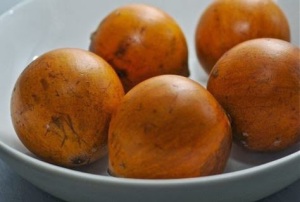
Udala African Star Apple

“Udala” Ibo for white star apple is a feminine symbol of fertility and generosity.

Chinelo Okparanta’s Under the Udala Trees is a journey of self discovery, a coming-of-age tale of a girl experiencing a sexual awakening in defiance of her mother’s and society’s expectations, one she half heartedly attempts to suppress, only to experience an even worse suffering. Ancient folklore, biblical interpretations, all is summoned and used by parents to guide the daughter towards the righteous path.

It is a courageous story to tell in modern-day Nigeria, a country that has criminalised same-sex  relationships. It also adds significantly to the growing literary works that use the Biafran conflict as their historical context and brings our attention to an interesting and outspoken literary talent.

Chimamanda Ngozi Adichie broke the mould in terms of writing about the Biafran conflict with Half of A Yellow Sun and then more recently it was addressed in the autobiographical work of Chinua Achebe There Was A Country: A Personal History of Biafra, the book he published not long before his death, finally speaking out about what has long been considered a taboo subject in Nigeria’s past, one that the generations who lived it had seemed to wish to remain silent on.

Note: This book was an ARC (Advance Reader Copy) kindly provided by the publisher via NetGalley.

Foster by Claire Keegan

Foster‘Early on a Sunday, after first Mass at Clonegal, my father, instead of taking me home, drives deep into Wexford towards the coast where my mother’s people came from.’

She wears light, worn clothing and brings nothing with her. The girl is left with the Kinsella family, the father returns to her mother, soon to give birth again. There is no goodbye or word of when he might return. This is Ireland. Remember Nora Webster and all that is unspoken?

So begins Claire Keegan’s long, short story Foster, a vivid telling of the period following a girl being fostered into a family in rural Ireland. In the stranger’s home she finds an atmosphere unlike that which she is used to, one she enjoys and becomes used to, though always there is the presence of that feeling that it might soon all be taken from her.

‘When I follow the woman back inside, I want her to say something, to put my mind at ease. Instead, she clears the table, picks up the sharp knife and stands in the light under the window, washing the blade under the running tap.’

Seen and heard from the perspective of the girl, we learn the circumstances of both families that led to this situation. They fall into a regular routine, life settles in this new family and nothing appears to happen to destroy the ease with which the girl has come to know.

There is a strange atmosphere throughout the book, it is the anticipation of something, we, like the girl, are wondering and waiting for it to happen. For she seems like the pawn on the chess board, her parents on one side having handed her over, the foster parents on the other having received her. Each move, every event that is outside the daily routine, ignites in the girl heightened powers of observation, developing an acute awareness of even the most subtle changes in those around her.

‘Kinsella looks at me and smiles a hard kind of a smile then looks over to the window ledge where a sparrow has come down to perch and readjust her wings. The little bird seems uneasy – as though she can scent the cat, who sometimes sits there. Kinsella’s eyes are not quite still in his head. It’s as though there’s a big piece of trouble stretching itself out in the back of his mind. He toes the leg of a chair and looks over at me.’

Author, Claire Keegan

Author, Claire Keegan

A touching and yet eerie telling of a story that begs to be read and reread, the writing is exquisite in its depiction and ability to create a taut atmosphere without significant plot, it showcases an author with an immense talent for the short story and makes the reader want more.

Claire Keegan is an Irish writer highly regarded for her award-winning short stories, she has published two collections Antarctica (1999) and Walk the Blue Fields (2007) which I have read excellent reviews of.

Have you read any of Claire Keegan’s work?

The Story of the Lost Child by Elena Ferrante tr. Ann Goldstein

The final book in the Neapolitan Novels tetralogy that began with Elena Ferrante’s My Brilliant FriendThe Story of the Lost Child continues the saga of two compelling woman, Elena and Lila, childhood friends and now single mothers, back living in the neighbourhood of their humble origins.

At the end of Book 3 Those Who Leave and Those Who Stay, Elena was in the midst of a crisis, unable to think or act in anyone’s best interests, rather, she was lead by the wild palpitations of a lust driven heart and appeared to be prepared to risk all she had fought so hard and for so long to rise above and gain.

Now with everything collapsing around her, she returns to her roots, where things are as likely to be in disorder and chaos, but in a place where she feels safe, it is familiar, known.

Elena’s daughters must adapt to a less pampered life, although their mother wishes that they, like her, acquire sufficient education to allow them choices about where and how they might live. Elena and Lila’s children present them both with significant challenges, causing them to move closer together in some respects and further apart when tragedy strikes hard.

As with the previous books, Elena is never quite sure of Lila’s intentions, questioning her motives when she appears helpful and suspicious of her intentions when she informs her of gossip. It is a characteristic of their friendship that has existed since the beginning, an aspect Elena never fully unravels and keeps her always on guard.

‘I went home depressed. I couldn’t drive out the suspicion that she was using me, just as Marcello had said. She had sent me out to risk everything and counted on that bit of fame I had to win her war, to complete her revenge, to silence all her feelings of guilt.’

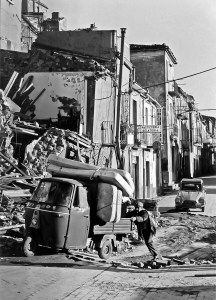
Naples Earthquake 1980It is the 1980’s and one of the turning points in Lila’s deterioration is the earthquake that occurred on November 23, 1980 killing 3,000 and rendering 300,000 of Naples inhabitants homeless. It is used as a powerful metaphor for the destabilisation that occurs in Elena and Lila’s lives.

‘It expelled the habit of stability and solidity, the confidence that every second would be identical to the next, the familiarity of sounds and gestures, the certainty of recognising them. A sort of suspicion of every form of reassurance took over, a tendency to believe in every prediction of bad luck, an obsessive attention to signs of the brittleness of the world, and it was hard to take control again. Minutes and minutes and minutes that wouldn’t end.’

Elena has always sought her independence and intended to create a career as a writer, it is only when she moves back to the neighbourhood that she realises with greater urgency that she must be autonomous.

‘It was then that a part of me – only a part – began to emerge that consciously, without particularly suffering, admitted that it couldn’t really count on him. It wasn’t just the old fear that he would leave me; rather it seemed to me an abrupt contraction of perspective. I stopped looking into the distance, I began to think that in the immediate future I couldn’t expect from Nino more than what he was giving me, and that I had to decide if it was enough.’

Book Four brings the girls full circle into the adult world where the relationships of childhood and dramas of their youth play out in a more dangerous playground, where boyhood pranks have evolved into criminal activities and the annoying habits of children transform into the damaging actions of adults with far-reaching and destructive consequences.

They are no longer observers of the world around them, they are perpetrators of events and circumstances that will affect the next generation, their children. Though they never wanted it and put all their energy into trying to prevent it, in many ways, they have begun to resemble the already departed, those they worked so hard not to become.

Book Four brings Elena and Lila’s stories back to where it all began, reacquainting us with the story’s beginning, of memories and possessions that have endured, that contain within them that sense of unease alongside the familiar, the two coexist and can not be separated, even in maturity. It is a conclusion of sorts, as thought-provoking as we have come to expect previously, not quite giving in to that alternative literary tradition of tying things up neatly.

I read the first three books in close proximity, each volume adding to the compulsion to want to re-enter their lives and discover what would happen next.  The longer gap in awaiting this final novel meant it took a little longer to pick up the pace, suggesting it might be a series best read consecutively.

If you haven’t read Elena Ferrante yet, here are links to reviews of the first three books in this series:

The Neapolitan Novels Reviewed

Book 1: My Brilliant Friend

Book 2: The Story of a New Name

Book 3: Those Who Leave and Those Who Stay


Note: This was an Advance Reader Copy (ARC) thank you to the publisher Europa Editions for kindly providing me with a review copy.


The Pollen Room by Zoë Jenny tr. Elizabeth Gaffney #GermanLitMonth

The Pollen Room was written by the Swiss writer Zoë Jenny when she was 23-years-old and became an international bestseller, translated into more than 27 languages and invitations to speak to readership audiences in Japan, China and the US among others.

Pollen RoomIt is interesting to write about this story after having just read Toni Morrison’s God Help the Child, this novella yet another version of what Morrison demonstrates.
It is the memory of childhood without maternal love and its after-effect. It is not dramatic, nor a traditional story, it is a narrative that sets the reader up to feel something of the isolation and vulnerability of the protagonist and follow her forward as she tries to plug the gap, looking for that nourishment as if it were something tangible she could use to plug the abyss it created by its absence.

Jo stayed with her father when her mother left. There is no explanation, just significant and detailed memories of insignificant events, noises that communicate the beginning of her father’s daily routine, signals that provoke anxiety, nameless visitors, the one he married Elaine, who eventually left too.

‘At night I would fall into a restless slumber. Fractured dreams floated past my sleeping eyes like scraps of paper in the raging torrent of a river. Then I would hear a clatter and find myself wide awake. I looked at the spiderwebs on the ceiling and knew that my father was in the kitchen…

There came a series of muffled rustling noises and a moment of quiet. My breath quickened. A lump rose in my throat and swelled to enormous proportions as I watched my father put on his leather jacket and pull the door quietly closed behind him.’

After initial weekly visits, her mother soon moves on to a new life and there is no contact for 12 years. Eventually Jo goes in search of her, however being reaquainted doesn’t bring her companionship or stability, it brings responsibility, creates concern, disquiet. She seeks solace in the company of others, those who appear to live in the semblance of a home, acquaintances short-lived, consequences that won’t leave her.

 Author Zoë Jenny

Author Zoë Jenny

The prose is spare, observant, it infiltrates your mood and makes the reader suffer alongside the protagonist.

Brilliantly conceived, it is not a book to read if you are feeling sad or vulnerable. There is dialogue, interaction, and a great swathe of stream-of-conscious thought as Jo observes each encounter and responds in her inward-looking, sensitive way to it all.

Unfortunately I read this without realising that and so didn’t appreciate it’s best qualities as much as I might have done, had I read it at another time. I read it at a time of being acutely aware of the fragility and vulnerability of youth and couldn’t see past the neglect and narcissism of those around Jo and spent the entire book worrying that something even more terrible was going to happen to her and just felt great relief when it was all over and we were safe.

I was recommended this title by Vishy and I would highly recommend reading his review, which celebrates the beauty and artistic merit of the novella, showing us just how great it can be, when we choose the right time to read it. It was one of his favourite reads of 2015.

Vishy’s Review of The Pollen Room

And it’s German Literature Month, thanks to Caroline at Beauty Is a Sleeping Cat and Lizzy at Lizzy’s Literary Life

Follow the hashtag #GermanLitMonth on twitter, or click on the links to see what they’ve been reading, and what great works in translation there are out there for us!

German Literature Month