
 Ladivine, written by the Senegalese-French writer Marie NDiaye, known for her 2009 Prix Goncourt award-winning Trois Femmes Puissantes (Three Strong Women) came to my attention when it was longlisted for the Man Booker International Prize in 2016.
The blurb describes it as a novel about a women named Clarisse Rivière, who travels by train once a month to visit her mother Ladivine, a woman neither her husband, daughter or grandchildren, or anyone connected to her present life is aware of. They believe Clarisse, whose real name is Malinka, is an orphan and due to mixed parentage, a father unknown, she bears little resemblance to the mother she is ashamed to acknowledge.
The novel demonstrates this artifice of a life, where Clarisse spends every day trying to remove from her very essence who she really is, and while the result could be seen by some as perhaps attaining some kind of perfection, as a character she is hollow, superficial, not there. What makes it hard to accept or believe, is that there appears to be no reason for this decision, no apparent childhood trauma, no cruelty to have turned her into such a narcissist, except perhaps her isolation from normal family and social norms, being the daughter of a single, working mother who was obviously a foreigner, most likely from an African country.
“She kissed her mother, who was short, thin, prettily built, who like her had slender bones, narrow shoulders, long, thin arms, and compact, unobtrusive features, perfectly attractive but discreet, almost invisible.
Where Malinka’s mother was born, a place Clarisse Rivière had never gone and would never go – though she had, furtive and uneasy, looked at pictures of it on the Internet – everyone had those same delicate features, harmoniously placed on their faces as if with an eye for coherence, and those same long arms, nearly as slender at the shoulder, as at the wrist.
And the fact that her mother had therefore inherited those traits from a long, extensive ancestry and then passed them on to her daughter (the features, the arms, the slender frame and, thank God, nothing more) once made Clarisse Rivière dizzy with anger, because how could you escape when you were marked in this way, how could you claim not to be what you did not want to be, what you nevertheless had every right not to want to be?”
I admit, I found this novel strange, weird and inhuman. While I understand the author may have been trying to portray something about humanity, what results is the shadow of a human when an aspect of their humanity, their cultural and familial identity, is removed.
“And another realisation hit her at the same time, with the violence of a thing long known but never quite grasped, now abruptly revealed in all its simplicity: being that woman’s daughter filled her with a horrible shame and fear.”

Marie NDiaye by Nicolas Hidiroglou
As Clarisse, Malinka marries and has a child, who she names Ladivine, a daughter who drifts away from her family, when she moves to Berlin and who senses something missing in herself, but with no way to understand what it might be or how to resolve it. Clarisse’s husband Richard leaves her, for perhaps the same reason, again something he can’t quite communicate.
Slightly frustrated having finished the novel, which features a dog in various scenes, which may or may not be the incarnation of one of the characters, I decided to read a few interviews to discover what I was missing in understanding this weird novel by an award-winning and highly revered French novelist.
The details about Marie NDiaye’s life are telling, as are the common themes in her fiction to date. I’ll admit, I find I appreciate the novel more, for having been made aware of this background, to read it without this context, is to feel something this character, that something vital is missing!
Marie NDiaye is the daughter of a French mother and a Senegalese father she barely knows and is married herself to a white Frenchman. She, like the character Clarisse, was raised just south of Paris, and according to an interview in Le Monde, has spent only 3 weeks on the African continent, 2 of those weeks in Senegal, and was said to have felt “wholly foreign” to the continent. For me, this may explain why it feels as though Ladivine, the mother also has no heritage, it is clear she comes from elsewhere, but the author chooses not to provide the narrative any clue to that heritage or cultural reference and even when later in the book, it seems as though the daughter of Clarisse and her family visit that country, though it is never named, again the reader is kept from knowing the actual origins, except through the occasional physical description of the people, reminding us of those opening clues to her mother’s physique.
“NDiaye’s novels frequently feature biracial couples, absent or distant fathers, and strained filial relationships. Her characters often feel ill at ease within their communities, and struggle with doubts that they are not who they believe or wish themselves to be.” New Republic, The Metamorphoses of Marie NDiaye by Jeffrey Zuckerman
There is an emptiness at the core of the novel, a sad indictment of the policies of some countries in their attempt to assimilate the many cultures into one, a loss of a richness that even when unknown can be exhilarating to explore, which is why I have enjoyed so much the work of writer’s like Maryse Condé’s Victoire: My Mother’s Motherand Yaa Gyasi ‘s Homegoing who through their stories seek to explore that which they were not exposed to during their childhoods, but which they come to understand more by visiting the places or exploring through storytelling.
The article in the New Republic (linked below) is worth a read for its discussion of comparisons with Gustave Flaubert’s ‘free indirect discourse’ and how NDiaye submerges the reader into the speaker’s mind and the role of the element of fantasy, or those aspects that cause the reader to wonder whether what they just read was real or a hallucination or the product of an unreliable narrator.
Overall, an interesting read and an interesting writer and novel to read about, but that lack of a cultural heritage or interest in going there to seek it out and confront it, make me less inclined to want to read more of her work. I would however be interested in what she might come up with, should she decide to research her African roots and risk taking that inner journey that would no doubt enrich her fiction and interest this reader.
Further Reading
The Metamorphoses of Marie NDiaye, New Republic by Jeffrey Zuckerman
3 Generations Of Trauma Haunt ‘Ladivine’, NPR review by Jean Zimmerman
 Salt Houses is a novel that eventually comes full circle, as it follows the female members of a Palestinian family as they flee, move, marry and cope with constantly being and feeling outside where they belong, including between generations and even between siblings.
 “The porcelain surface of the teacup is white as salt; the landscape of dregs, violent.”
 Hala Alyan is a Palestinian-American author, poet and practicing clinical psychologist living in Brooklyn, who spent her childhood moving between the Middle East and the US. Salt Houses is her debut novel and is inspired by some of her own extended family experiences.


 Eva Sleeps is a thought-provoking novel that takes the reader on multiple journeys, as the narrative slowly unravels the mystery that connects Eva, her mother Gerda and Vito.

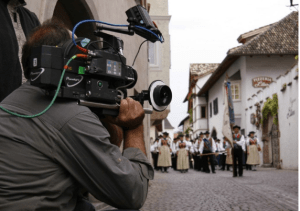
 The dual narrative follows firstly the journey of a young woman recovering from her role as a volunteer in World War I, who decides in 1921 to leave England and follow in her French grandfather’s footsteps to Cambodia. Afflicted by strange dreams that seem to relate to the area she is visiting, she tries to unravel their mystery and some of the things written in her grandfather’s journals that don’t initially appear to make sense.
 The Last Gods of Indochine was nominated for the The Man Booker Asian Literary Prize, an award that sadly, has also disappeared.
 A quick look up tells me that noir fiction has its roots in hard-boiled fiction ( a tough, unsentimental style American of crime writing) where the protagonist is often an outcast, alienated. However, Kim Fay from LA Review of Books, when reading noir, used to preparing herself for ‘bleak cynicism and uncomfortable moral ambiguity’ is pleasantly surprised, referring to De Giovanni’s Pizzofalcone precinct series and empathetic characters as ‘tender noir’:
 He is new to Naples, he has a teenage daughter he is worried about, a pizza waitress who is eyeing him up and a high-ranking magistrate whom he daydreams inappropriately of.
 Maurizio de Giovanni was born in Naples in 1958 and for many years worked in a bank, though not a natural vocation, his colleagues attest he always had his nose in a book and it was in fact they who entered him in a short story competition in 2005 for ‘giallo novelists’ (a 20th-century Italian mystery, thriller or horror genre of literature and film) that was the catalyst to his becoming a successful crime writer.
 Ties is a novel about the short and long-term effect of the first grand infidelity, on a couple, on their adult children and even on the life of their cat.
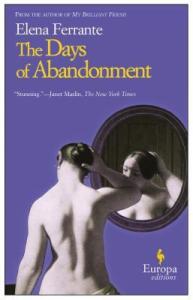 It’s an intriguing novel, with what I felt was a slightly bizarre and unexpected ending. The story invoked immediate comparisons with The Days of Abandonment, however the experience of reading this novel was like viewing these lives from the outside, like looking at things from a distance, provoking a more questioning response, whereas Ferrante’s novel succeeds in transporting the reader into the narrative, it’s more cathartic and slightly terrifying, as she brings you to the edge of sanity, making you sense the danger in letting that temporary instability be observed by the outside world, a situation that many women in past centuries were indeed committed to asylums for, provoked as they often were by the cool, insensitive abandonment of the patriarch.
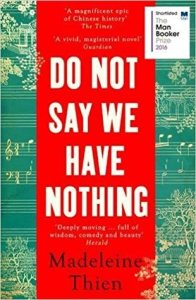
 ‘Do Not Say We Have Nothing’ felt to me like a novel of ancestral DNA and how living through Chairman Mao’s and the subsequent communist regime imprinted its effect onto people behaviours forcing them to change, leaving its trace in their DNA which was passed on to subsequent generations, who despite living far from where those events took place, continue to live with a feeling they can’t explain, but which affects the way they live, or half-live, as something crucial to living a fulfilled life is missing. This reminds me of what Yaa Gyasi achieves so successfully in her extraordinary novel

 The shortlisted books are as follows:
 The Dark Circle, Linda Grant

 Stay With Me, Ayọ̀bámi Adébáyọ̀̀
 The Sport of Kings, C.E. Morgan
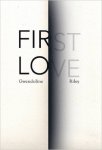 First Love, Gwendoline Riley
 I’m guessing that Ayobami Adebayo uses it as the title to her novel, because it relates to the twin desires of the main characters in the book, Yejide in her yearning to become pregnant and to keep a child, to be the mother she was denied, having been raised by less than kind stepmothers after her mother died in childbirth; and her husband Akin, in his desire to try to keep his wife happy and with him, despite succumbing to the pressures of the stepmothers and his own family, he being the first-born son of the first wife, to produce a son and heir.
 The narrative voice moves from first person accounts of both Yejide and Akin, ensuring the reader gains twin perspectives on what is happening (and making us a little unsure of reality) and the more intimate second person narrative in the present day, as each character addresses the other with that more personal “you” voice, they are not in each other’s presence, but they carry on a conversation in their minds, addressing each other, asking questions that will not be answered, wondering what the coming together after all these years will reveal.

