
 Rebecca Solnit writes reflective, thought-provoking essays, which often connect her intellectual curiosity with where she is in her life now. In an earlier work Wanderlust, she ponders the history of walking as a cultural and political experience; facing the unknown, in A Field Guide to Getting Lost; her mother’s Alzheimer’s, regression and how she spent that final year in The Faraway Nearby.
Now a new collection of essays, the title The Mother of All Questions, from an introductory piece on one of her pet frustrations, that all time irrelevant question that many professional women, whether they are writer’s, politicians or humble employees too often get asked.
But it is the timely and questioning opening essay ‘A Short History on Silence’ that binds the collection together and should be the question being asked. It is an attempt at a history of silence, in particular the silencing of women, the effect of patriarchal power, the culpability of institutions, universities, the court system, the police, even families, their roles in continuing to ensure women’s silence over the continual transgressions of men.
Rebecca Solnit has been writing about this issue for many years, trying to create a public conversation on a subject that many continued to insist was a personal problem – yet another form of silencing.
 As she wrote in Wanderlust (2000)
“It was the most devastating discovery of my life that I had no real right to life, liberty, and pursuit of happiness out of doors, that the world was full of strangers who seemed to hate me and wished to harm me for no reason other than my gender, that sex so readily became violence, and that hardly anyone else considered it a public issue rather than a private problem.”
She makes a distinction between silence being that which is imposed and quiet being that which is sought.
What is left unsaid because serenity and introspection are sought is as different from what is not said because the threats are high or the barriers are great as swimming is from drowning. Quiet is to noise as silence is to communication. The quiet of the listener makes room for the speech of others, like the quiet of the reader taking in the words on the page…Silence is what allows people to suffer without recourse, what allows hypocrisies and lies to grow and flourish, crimes to go unpunished. If our voices are essential aspects of our humanity, to be rendered voiceless is to be dehumanized or excluded from one’s humanity. And the history of silence is central to women’s history’
The list of who has been silenced goes right back to the dawn of literature, it goes back millennia, classics scholar Mary Beard noted that silencing women begins almost as soon as Western literature does, in the Odyssey, with Telemachus telling his mother to shut up.
It continues through the years with the woman’s exclusion from education, from the right to vote, to making or being acknowledged for making scientific discoveries to campus rape and the introduction of sexual harassment guidelines as law and the unleashing of stories and the wave of voices coming out of silence that sharing on social media has spawned, generating a fiercely lively and unprecedented conversation.
80 Books No Woman Should Read is her response to a list published by Esquire magazine of a list they created of 80 books every man should read, a list of books, seventy-nine of which were written by men, with one by Flannery O’Connor. It speaks of the reader’s tendency to identify with the protagonist, only the books she mentions from this list that she has read, she often identifies, not with the protagonist but with the woman, noticing that some books are instructions on why women are dirt or hardly exist at all except as accessories or are inherently evil and empty.
Not surprisingly, her essay (first published at Lithub.com) elicited a significant online response, prompting a reply from Esquire, admitting they’d messed up, saying their article had rightfully been called out for its lack of diversity, and proactively inviting eight female literary powerhouses, from Michiko Kakutani to Anna Holmes to Roxanne Gay, to help them create a new list. You can see the list here.
And in the essay In Men Explain Lolita to Me she expounds further on empathy:
‘This paying attention is the foundational act of empathy, of listening, of seeing, of imagining experiences other than one’s own, of getting out of the boundaries of one’s own experience. There’s a currently popular argument that books help us feel empathy, but if they do so they do it by helping us imagine that we are people we are not. Or to go deeper within ourselves, to be more aware of what it means to be heartbroken, or ill, or ninety-six, or completely lost. Not just versions of our self rendered awesome and eternally justified and always right, living in a world in which other people only exist to help reinforce our magnificence, though those kinds of books and comic books and movies exist in abundance to cater to the male imagination. Which is a reminder that literature and art can also help us fail at empathy if it sequesters in the Boring Old Fortress of Magnificent Me.’
 I haven’t read Men Explain Things to Me, although I heard Rebecca Solnit speak about the leading and infamous anecdote it retells when I went to listen to her at the Royal Festival Hall in London.
That talk coincided with the publication of The Faraway Nearby (link to review) the book that traverses her uneasy relationship with her mother and how the approach of death forces her to contemplate it, how it may have shaped her. I liked the book, but I loved listening to the author in person, she has such an engaging presence, is a captivating speaker, a performer of the reflective and spontaneous.
The Mother of All Questions is a culmination of Solnit’s and many women’s frustrations in the world today, where being a woman living in a patriarchal culture, no matter which part of the world, brings challenges that must reach a breaking point. It is a conversation that is happening everywhere that hopefully will bring change for the better, as many voices come together in solidarity. It is an acknowledgement both of how far we have come and how much we have still to do, to change the culture of silence we have inhabited for too long, to safely be ourselves.
I highly recommend picking up one of her works, if you haven’t yet read her.
 A Victorian era historical novel (London 1893) set over a single year, that follows the footsteps of the young widow Cora Seaborne, in the months following the premature of her husband, a cruel man who’d become indifferent to her, but one who’d been her companion from such a young age, he’d moulded her into what he could tolerate.


 The opening story is a mix of reportage and a retelling of the story of Mangilaluk Bernard Andreason, who when he was 11 years old, slipped out of the Inuvik residential boarding school he’d been sent to, along with two friends Jack and Dennis, to avoid being punished for stealing a pack of cigarettes, and spotting newly hung power lines, decided to follow them home to Tuktoyaktuk.


 With it’s 111 vibes or spiritual practices, it’s designed not to be read in one sitting, but daily or randomly. I found often that the vibe for the day was often something that really resonated with my day, it’s also like an energising, elevating pick me up or start to the day, it sets the tone for the rest of the day.
 The second volume of essays by Kathleen Jamie that I’ve read, more encounters with birds on lonely, windswept islands that have long been abandoned by humans, though traces remain of their earlier occupation.
 The Hvalsalen
 I have finally read a novel by Ali Smith and enjoyed it, though it is distracting to explain why with so many exuberant accolades and comments all over it saying how brilliant it is, I wish I could just read without the expectation this over abundance of blurbs brings. She is clearly the darling of British literary media and publishing, however all the superlatives are a little over the top in my opinion.

 All We Shall Know by Donal Ryan is a slim novella, the third book by this young Irish writer and his best in my opinion.
 Salt Creek by Lucy Treloar was published by Gallic Books new imprint Aardvark Bureau, I’ve loved all the books they’ve brought out under this imprint and Salt Creek might just be the best so far. It’s an historical novel, inspired by the events of the authors family, who immigrated to Australia from Britain, portraying one family trying to find success in farming in a harsh, unforgiving environment of South Australia.
 The Complete Claudine by Colette (translated by Antonia White) was my One Summer Chunkster for 2017, a French classic, relatively little known outside France among general readers, but an author who should be more widely read, especially by young adult readers, as it charts the young Claudine’s journey through her last year in school, then her adventures in Paris with her father, through marriage and into maturity.
 Two Old Women by Velma Wallis is a quirky fable-like book I read about and was intrigued by, recommended by a fellow reader. It is an Alaskan legend of betrayal, courage and survival, one which features, as the title suggests, two old women.
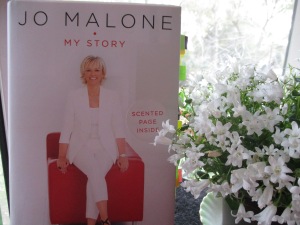 My Story by Jo Malone is one of the six memoirs I read in 2017 and the one that was the most intriguing and personal to me, not because I’m a fan of her perfumes, but because I too have a love of the aromas of plants, flowers, resins, herbs and like to create remedies from essential oils and mix them with other plant oils to use therapeutically.




 Word by Word