

After reading Annie Ernaux’s Nobel Prize Lecture I Will Write to Avenge My People, I decide to read the slim titles Simple Passion (48 pages) and next I will read Shame (86 pages). I have already read A Man’s Place, and eventually I will get to her more lengthy masterpiece The Years.
Simple Passion was the #1 national bestseller in France for over three months when it was first published in 1991, and a celebrated scandal even in France’s liberal society. It was followed up ten years later by a second book Se Perdre (2001) (Getting Lost), which explores the affair through a series of diary notes.
In this book, Annie Ernaux observes herself throughout the life-cycle of an affair, the in-between moments of a conditional relationship, describing how that passion drew her in and ruled her, even when she took herself away from it.
She writes of this encounter with hindsight, as if observing something external to her, like a work of art, looking for some kind of truth or meaning behind the physical and mental experience, now that she has some distance from it. Her interest in writing is not to focus on the man (who could be any man) but on the obsession itself.
A Simple Passion Reveals a More Complex Humanity
The man, referred to as A, is from another country, he is married; the 18 months he is in her life, this ‘simple passion’ is depicted like an illness or a condition, she is able to see how it changes her. She studies it.
I am not giving the account of a liaison, I am not telling a story (half of which escapes me) based on a precise – ‘he came on 11 November’ – or an approximate chronology – ‘weeks went by’. As far as I was concerned, that notion did not enter the relationship. I could experience only absence or presence. I am merely listing the signs of a passion, wavering between ‘one day’ and ‘every day’, as if this inventory could allow me to grasp the reality of my passion.
A Life Suspended, Waiting for a Man

She observes this condition, though she is virtually powerless to overcome or stop it, it will run its course and she will create an honest, transparent account of it, documenting the range of emotions, behaviours and instinct that run through her.
She observes how this desire becomes the lens through which she sees everything around her, how she spends her time endlessly waiting; waiting for him to call, waiting for him to arrive, waiting for the inevitable end of their association.
This endless wait reduces every other experience, as if they were lived by someone else, while magnifying the space in her mind given to thinking about him, of their time together – amid brief lucid moments of realising the insignificance of him, of the exaggerated importance she has temporarily given him.
I often wondered what these moments of lovemaking meant to him. Probably nothing more than just that, making love. There was no point looking for other reasons. I would only ever be certain of one thing: his desire or lack of desire. The only undeniable truth could be glimpsed by looking at his penis.
Fulfilling Life’s Purpose, Finding Meaning
The passion passes through a cycle from its beginning, middle, near-end and end, passing through excitement, anticipation, acceptance, moving on, overcoming towards finding meaning.
Yet it is that surreal, almost non-existent last visit that gives my passion its true meaning, which is precisely to be meaningless, and to have been for two years the most violent and unaccountable reality ever.
Written in short fragments, paragraphs, it is a hypnotic read. I have never read anything quite like it, an introspective interrogation of the self, she is able to set aside society’s judgments and write in a way that is as intimate as a journal, but in a short succinct way that has her own purpose, to better understand the human condition.
I discovered what people are capable of, in other words, anything: sublime or deadly desires, lack of dignity, attitudes and beliefs I had found absurd in others until I myself turned to them. Without knowing it, he brought me closer to the world.
The author presses forward towards fulfilling that promise made to her 22 year old self, as we learned of in her novel lecture, to interrogate her own actions, her own mind in the life she has created, having ventured far from humble beginnings. In writing to avenge her people, she writes to avenge all.
He had said, ‘You won’t write a book about me.’ But I haven’t written a book about him, neither have I written a book about myself. All I have done is translate into words – words he will probably never read, which are not intended for him – the way in which his existence has affected my life. An offering of a sort, bequeathed to others.
 Translated Fiction





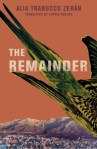
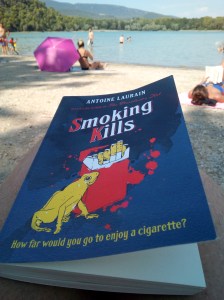 Antoine Laurain is one of my go to author’s when I’m in the mood for something short and light and of course, being a French author, there’s going to be the inevitable addition of the little French quirks, the things that one recognises from living here in France for more than 10 years.
 After a series of stressful events overwhelm him, he takes up the habit once more, relieved to find that the ‘urge’ has returned, but shocked to discover that the subsequent ‘pleasure’ that should follow it when he does light up has gone. Angered and determined to have that aspect returned to him, he makes a follow-up appointment with the hypnotist to reverse the procedure, which will lead him down a rocky road towards involvement in a worse crime, in pursuit of that elusive ‘pleasure’ he is determined to retrieve.
 I’ve attempted to read Visitation about four times and never succeeded in getting past the first few chapters, but this year I persevered as I felt I hadn’t given it a fair chance.
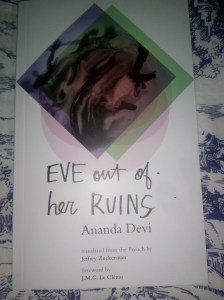 I was intrigued to read a book by a Mauritian author during Women in Translation month. Eve out of her Ruins hadn’t been on my initial list, but it was recommended to me and I decided to get a copy especially as I’ve been seeing many images of the island of Mauritius recently.





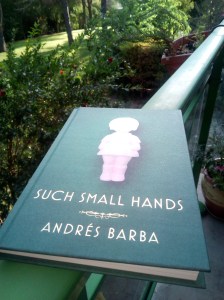 Such Small Hands is an incredible and unique novella, quite unlike anything I have read, it’s written almost from another dimension. The author somehow enters into a childlike perspective and witnesses the aftermath of a car accident in which the child Marina’s parents don’t survive.
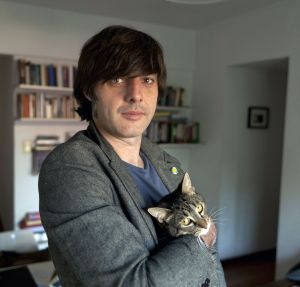 Inspired by a disturbing event, this enters the realm of post trauma in an innocent and bizarre way, taking the reader back to a kind of twilight zone of an insecure childhood, where the nightmare becomes real and the line between reality and dreams is blurred.
 Nothing Holds Back the Night is the book Delphine de Vigan avoided writing until she could no longer resist its call. It is a book about her mother Lucile, who she introduces to us on the first page as she enters her apartment and discovers her sleeping, the long, cold, hard sleep of death. Her mother was 61-years-old.
 I read this book in a day, it’s one of those narratives that once you start you want to continue reading, it’s described as autofiction, a kind of autobiography and fiction, though there is little doubt it is the story of the author’s mother, as she constructs thoughts and dialogue inspired by the information provided by family members, acknowledging that for many of the events, some often have a different memory which she even shares.
 After her abrupt departure from Paris back to her father’s home in Montigny, to the village home where she grew up, I was curious to know what was to come of our troubled Claudine and her errant husband.
 However he is more than happy that she spend time with his sister Marthe, about whom he writes: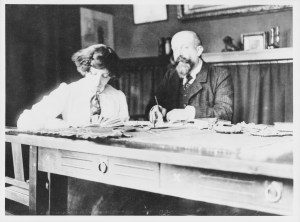
 I loved Claudine at School for her exuberant overconfidence and love of nature, Claudine in Paris for her naivety and prudence, realising there was much about life she had still to learn and Claudine Married for the melancholy of marriage, of the realisation of her false ideals and indulgence of strong emotional impulses.
 Claudine develops an attachment to one of the Assistant teachers, nineteen year old Aimée and in order to spend more time with her exclusively, organises private English lessons at home. This seems to turn the new Headmistress against her even more so than was initially apparent, revealing a complex female tension within the school, tolerated only because of the Headmistress’s special relationship to the District Superintendent of Schools.
 The year passes with the continued dramas between the students, Claudine reconciles herself to friendship with Luce, the younger sister of Aimée, who complains incessantly of mistreatment by her older sister, whose sole attentions are for the Headmistress.
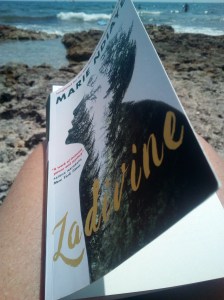 Ladivine, written by the Senegalese-French writer Marie NDiaye, known for her 2009 Prix Goncourt award-winning Trois Femmes Puissantes (Three Strong Women) came to my attention when it was longlisted for the Man Booker International Prize in 2016.
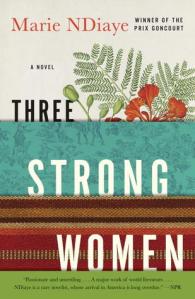 “NDiaye’s novels frequently feature biracial couples, absent or distant fathers, and strained filial relationships. Her characters often feel ill at ease within their communities, and struggle with doubts that they are not who they believe or wish themselves to be.” New Republic, The Metamorphoses of Marie NDiaye by Jeffrey Zuckerman
 Word by Word