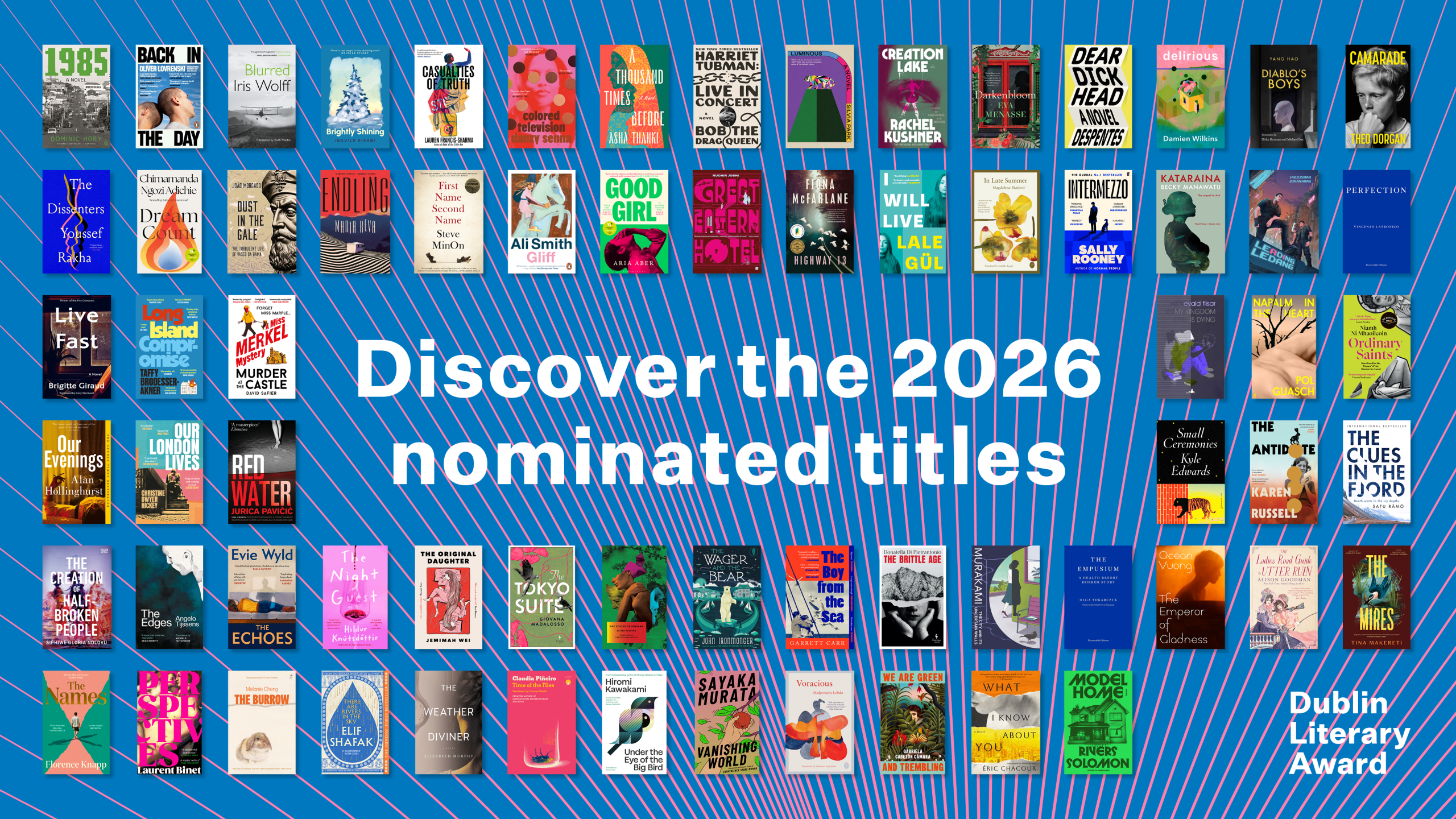
The Dublin Literary Award nominations have been revealed, an award that allows international libraries to nominate one work of fiction, therefore achieving its aim to promote excellence in world literature.
For the 2026 Award, 69 titles have been nominated by 80 libraries from 36 countries, reflecting the best in fiction from Africa, Europe, Asia, USA, Canada, South America, Australia and New Zealand.
30 Books in Translation
The list features 20 debut authors, 30 translated titles in 17 languages including Brazilian Portuguese, Catalan, Chinese, Japanese and Polish.
This year the judges will select a longlist of up to 20 titles, to be announced on 17 February 2026 and the shortlist of 6 titles will be revealed on 7 April 2026. The winner will be announced on 21 May 2026.
Below I have listed all the titles by the country the author comes from, and next to it, the library that nominated it. I find this useful, in particular when a library votes openly and not merely patriotically.
The Nominated Titles By Country of Author
New Zealand (4 titles)
1985: a novel by Dominic Hoey (Dunedin Public Libraries)
Delirious by Damien Wilkins (Auckland Council Libraries)
Kataraina by Becky Manawatu (Wellington City Libraries) author of Aue
The Mires by Tina Makereti (Christchurch City Libraries)
Australia (4 titles)
First Name Second Name by Steve MinOn (State Library of Queensland)
Highway 13 by Fiona MacFarlane (National Library of Australia)
The Burrow by Melanie Cheng (State Library of NSW)
The Ladies Road Guide to Utter Ruin by Alison Goodman (State Library Victoria)
Ireland (5 titles)
Camarade by Theo Dorgan (Cork City Libraries)
Our London Lives by Christine Dwyer Hickey (Waterford City and County Libraries + Princess Grace Irish Library)
The Boy from the Sea by Garrett Carr (Galway Public Libraries)
Intermezzo by Sally Rooney (Redbridge Central Library + Liverpool Libraries)
Ordinary Saints by Niamh Ni Mhaoileoin (Libraries NI)
Canada (3 titles)
Small Ceremonies by Kyle Edwards (Winnipeg Public Library)
The Weather Diviner by Elizabeth Murphy (Newfoundland and Labrador Public Libraries)
What I Know About You by Éric Chacour tr. Pablo Strauss (Bibliothèque de Québec + Toronto Public Library)
USA (10 titles)
A Thousand Times Before by Asha Thanki (The Seattle Public Library)
Casualties of Truth by Lauren Francis-Sharma (DC Public Library)
Colored Television by Danzy Senna (Milwaukee Public Library)
Creation Lake by Rachel Kushner (Chicago Public Library)
Good Girl by Aria Aber (Cleveland Public Library)
Harriet Tubman: Live in Concert: A Novel by Bob the Drag Queen (LA Public Library)
The Antidote by Karen Russell (Iowa City Public Library + New Hampshire State Library)
Model Home by Rivers Solomon (Carnegie Library of Pittsburgh)
Long Island Compromise by Taffy Brodesser-Akner (Bibliotheek Gent, Belgium)
United Kingdom (5)
The Names by Florence Knapp (Limerick City Library)
The Wager and the Bear by John Ironmonger (Norfolk Library)
Gliff by Ali Smith (Katona József Könyvtár, Hungary)
The Echoes by Evie Wyld (Bruges Public Library)
Our Evenings by Alan Hollinghurst (Richland Library, North Carolina)
Turkey
There Are Rivers in the Sky: A Novel by Elif Shafak (Municipal Library of Prague + Biblioteca Nazionale “Vittorio Emanuele III” Napoli)
India
Great Eastern Hotel by Ruchir Joshi (India International Centre)
Egypt
The Dissenters by Youssef Rakha (Fingal Libraries)
Nigeria
Dream Count by Chimamanda Ngozi Adichie (Almeida Garrett Municipal Library, Portugal + Openbare Bibliotheek Amsterdam + Bibliotheca Alexandrina, Egypt)
Zimbabwe
The Creation of Half-Broken People by Siphiwe Gloria Ndlovu (City of Cape Town Library, S.Africa)
Malaysia
Leading Ledang by Fadzlishah Johanabas (National Library of Malaysia)
South Korea
Luminous by Silvia Park (Bucheon City Library)
Singapore
The Original Daughter by Jemimah Wei (National Library Board Singapore)
Ukraine
Endling by Maria Reva (Ottawa Public Library)
In Translation
Norway
Back in the Day by Oliver Lovrenski tr. Nichola Smalley (Leipziger Städtische Bibliotheken, Germany)
Germany (3 titles)
Blurred by Iris Wolff tr. Ruth Martin (City Library Heidelberg)
Brightly Shining by Ingvild Rishøi tr. Caroline Waight (Oslo + Bergen Public Library)
Murder at the Castle: A Miss Merkel Mystery by David Safier tr. Jamie Bulloch (Stadtbibliothek Bremen)
Austria
Darkenbloom by Eva Manesse tr. Charlotte Collins (Zentralbibliothek Zürich)
France (3 titles)
Dear Dickhead: A Novel by Virginie Despentes tr. Frank Wynne (Mediathèque de la Grande Garenne)
Live Fast by Brigitte tr. Giraud Cory Stockwell (Bibliothèque municipale de Lyon)
Perspective(s) by Laurent Binet tr.Sam Taylor (Bibliothèques municipales de Genève)
Italy
Perfection by Vincenzo Latronico tr. Sophie Hughes (Biblioteca San Giorgio)
Diablo’s Boys by Yang Hao tr. Nicky Harman and Michael Day (Shanxi Library)
Japan (3 titles)
The City and Its Uncertain Walls by Haruki Murakami tr. Philip Gabriel (Frankfurt am Main Public Library)
Under the Eye of the Big Bird by Hiromi Kawakami tr. Asa Yoneda (Tartu Public Library, Estonia)
Vanishing World by Sayaka Murata tr. Ginny Tapley Takemori (Saiwaicho Okayama Public Library)
Portugal
Dust in the Gale by João Morgado tr. José Manuel Godinho (Lisbon Libraries)
The Netherlands
I Will Live by Lale Gül tr. Kristen Gehrma (de Bibliotheek Eindhoven)
The Edges by Angelo Tijssens tr. Michele Hutchison (De Bibliotheek Utrecht + National Library of the Netherlands)
Finland
The Clues in the Fjord by Satu Rämö tr. Kristian London (Helsinki City Library)
Iceland
The Night Guest by Hildur Knútsdóttir tr. Mary Robinette Kowal (Reykjavík City Library)
Poland
The Empusium by Olga Tokarczuk tr. Antonia Lloyd-Jones (”Octavian Goga” Cluj County Library, Romania)
Voracious by Małgorzata Lebda tr. Antonia Lloyd-Jones (Municipal Public Library of Tadeusz Różewicz, Wrocław)
Bosnia and Herzegovina
In Late Summer by Magdalena Blažević tr. Anđelka Raguž (University Library of Bern, Switzerland)
Croatia
Red Water by Jurica Pavičić tr. Matt Robinson (Rijeka City Library)
Slovenia
My Kingdom is Dying by Evald Flisar tr. David Limon (Mariborska knjižnica + Ljubljana City Library)
Spain
Napalm in the Heart by Pol Guasch Mara tr. Faye Lethem (Catalan) (Biblioteca Vila de Gràcia)
The Voices of Adriana by Elvira Navarro tr. Christina MacSweeney (Biblioteca de Andalucía)
Argentina
Time of the Fliesby Claudia Piñeiro tr. Frances Riddle (Biblioteca Daniel Cosío Villegas, El Colegio de México)
We Are Green and Trembling by Gabriela Cabezón Cámara Robin Myers (Biblioteca Utopía) author of The Adventures of China Iron
Brazil
The Tokyo Suite by Giovana Madalosso tr. Bruna Dantas Lobato (Mário de Andrade Library + Biblioteca Demonstrativa Maria da Conceição Moreira Salles)
I have read four of the novels listed Elif Shafak’sThere Were Rivers in the Sky which is excellent; Time of the Flies by Claudia Pineiro, a brilliant novel, Ocean Vuong’s excellent The Emperor of Gladness and the true crime novella The Brittle Age by Donatella Di Pietrantonio. I am currently reading Dream Count by Chimamanda Ngozi Adichie (Nigeria). I also have the Evie Wyld on my shelf and I want to read We Are Green and Trembling and The Mires by Tina Makereti.
There’ll likely be more but I need to look at them more carefully.
Any here interest you, especially the books in translation?
In Feb 2020 I read Shokoofeh Azar’s epic debut novel, The Enlightenment of the Greengage Tree (my review) translated from Farsi. An Iranian writer living in exile in Australia, I was excited to have the opportunity to read a brilliant work of imagination in English. It was later shortlisted for the International Booker Prize (UK), longlisted for a National Book Award for Translated Literature (US) and three Australian Book Awards including the Stella Prize.
Epic and challenging, both that novel and this latest both use elements of magic realism in a unique way to explore recent history, (that of the Iranian Revolution in 1979), while referencing mythic texts and ancient aspects of Iranian culture, which an outsider won’t necessarily pick up on them all, but how incredible a feat, to maintain a compelling plotline that explores the past and uses the metaphysical to assist with confronting situations that are painful to contemplate, creating meaning and helping to overcome trauma.
“Magical realism is not only a realm of boundless imagination, it is also a powerful literary and cultural tool for resisting dominant and imposed powers… I turn to this genre to confront authoritarian structures in Iran while celebrating the true cultural and artistic beauty of my country.”
Preserving a Culture Through Storytelling
Again in The Gowkaran Tree in the Middle of Our Kitchen, Azar writes to embrace and acknowledge family, a beautifully diverse and colourful culture, complex politics, revolution and resistance.
The novel tells a story about a Zoroastrian family with twelve children and a long, interwoven lineage, where the living and the dead are both present and absent, sometimes called on or observed when needed to understand how to navigate the present. Those living in the now are often less aware than those who came before and this connection with their heritage and family is part of the way they survive difficult times.
The story starts with the strange occurrence of a Gowkaran Tree appearing one day in their bustling kitchen, travelling up towards the ceiling, alive with bird life and firmly rooted.
No one but family can see the tree, and while making repairs, their father, a University Professor decides to build a round table around the trunk. The kitchen was their centre and beneath the walls of the old mansion lay the remains of eleven other mansions.
A big, twelve-person table. In this way the Tree of Knowledge, the Tree of Life, the Bas-Tokhmeh Tree, the Gowkaran Tree, the Tree of the Incident, became the kitchen’s centre of gravity.
The grandmother Khanom Joon tells her granddaughter (the narrator Shokoofeh) some of the old family stories, of love and storytelling and the 1,762 notebooks containing the memoirs of their ancestors. She tells her own story and that of the Ball of Light that follows her.
“Curled up in a chair, I let history go and breathed in the air of love and suddenly realised that from now on I was caught. That said, in my dreams I had seen that this madness would grip us both, neither of knowing when it began or how long it would go on. Just like this mansion and this timeless tree and the history of foreigner’s incursions and invasions in this country.”
A Heroine on a Quest, Mentors Abound
I’m not going to even attempt to describe too much of the plot, suffice to say that it is something of the heroine’s journey for the young narrator, who is in the throes of falling in love and will be sent on a quest to search for her brother Mehab, who has gone to fight in the war. A coming-of-age story in harsh times, and yet a celebration of that which continues to resist and persevere and give fruit.
The journey brings to light the terror of a country taken over by despots, and the predicaments of those who capitulate and those who refuse, the voiceless and the silenced. And throughout the Gowkaran Tree remains, rooted, alive and bringing those who remain together.
Why Trees Matter
Trees are a recurring motif in Shokoofeh Azar’s novels. Trees often live on longer than humans, just as our ancestral lineage does, they are places of refuge and transendence.
The rootedness of a big tree in the middle of a kitchen is a symbol of resistance, of strength and the power of deep, familial roots. Its central presence helps preserve what is under threat – family heritage, culture and identity.
The earthy, rooted tree grounds the magical realism element, allowing the author to meander into myth and folklore without losing the connection to the aspects of the story that are firmly rooted in reality. The reader surrenders and goes with it, relieved by the presence of the Ball of Light and terrified by the danger our protagonist is exposed to on her solo journey.
Destiny and Liberty
The book is made up of 27 chapters in two parts, Part One The Womb of Destiny takes place in and around the home mansion and in Part Two The Ordeal of Liberty, our protagonist is sent out alone on her mission to overcome challenges and learn something before her return.
“The way is reached by taking it.”
If you’ve read her earlier works, you’ll be prepared for how unique the storytelling is, but if you’re not a fan of magic realism, this might challenge, however for me it was worth it for the immersion in the storytelling, culture and literary tradition, even if not all the references are familiar. The occasional footnotes are helpful.
The way the plot takes the reader on the journey to save a brother, while encountering historical characters along the way reads like a blend of fable and adventure with philosophical insights mitigating the challenging obstacles required to overcome.
At 512 pages, I admit that once I was out of holiday mode, I set it aside, due to the sheer size of it. I do think it asks a lot from readers today to engage with such a massive book.
Shokoofeh Azar has developed a unique style of magic realism to narrate harsh truths about a society under political and cultural oppression, while sharing its depths of family unity, cultural heritage and dedication to resistance. Overall, I highly recommend it and look forward to where she goes next and hope for a more taut, less ambitious novel next time.
Further Reading
Review: World Literature Today : The Gowkaran Tree in the Middle of Our Kitchen by Andrew Martino
Born in Iran in 1972, the author worked as a journalist and field reporter in her country, covering human rights issues. After several arrests in connection with her work as a journalist, on advice from her family, she fled Iran in 2010 and was granted asylum in Australia, where she has lived as a political refugee since.
She is the author of essays, articles, and children’s books, and is the first Iranian woman to hitchhike the entire length of the Silk Road.
Every novel I’ve read in translation this month has been exceptional. I do love August for seeing what others are reading in this category to ensure I have a future supply of excellent reads originating from elsewhere, coming from other languages.
Here’s what I hope to read this month and I’d love to hear your favourites, what you’ve read and loved or are looking forward to during WIT Month or any time!
Translation Opens World Views
I find it such an immense privilege to have the opportunity to read a novel that was originally conceived and written in another language, that can naturally dive into perspectives from other cultures that might be completely different or universally connected.
I loved norms being challenged and insights shared, new words, cultural references, all those opportunities to expand one’s awareness.
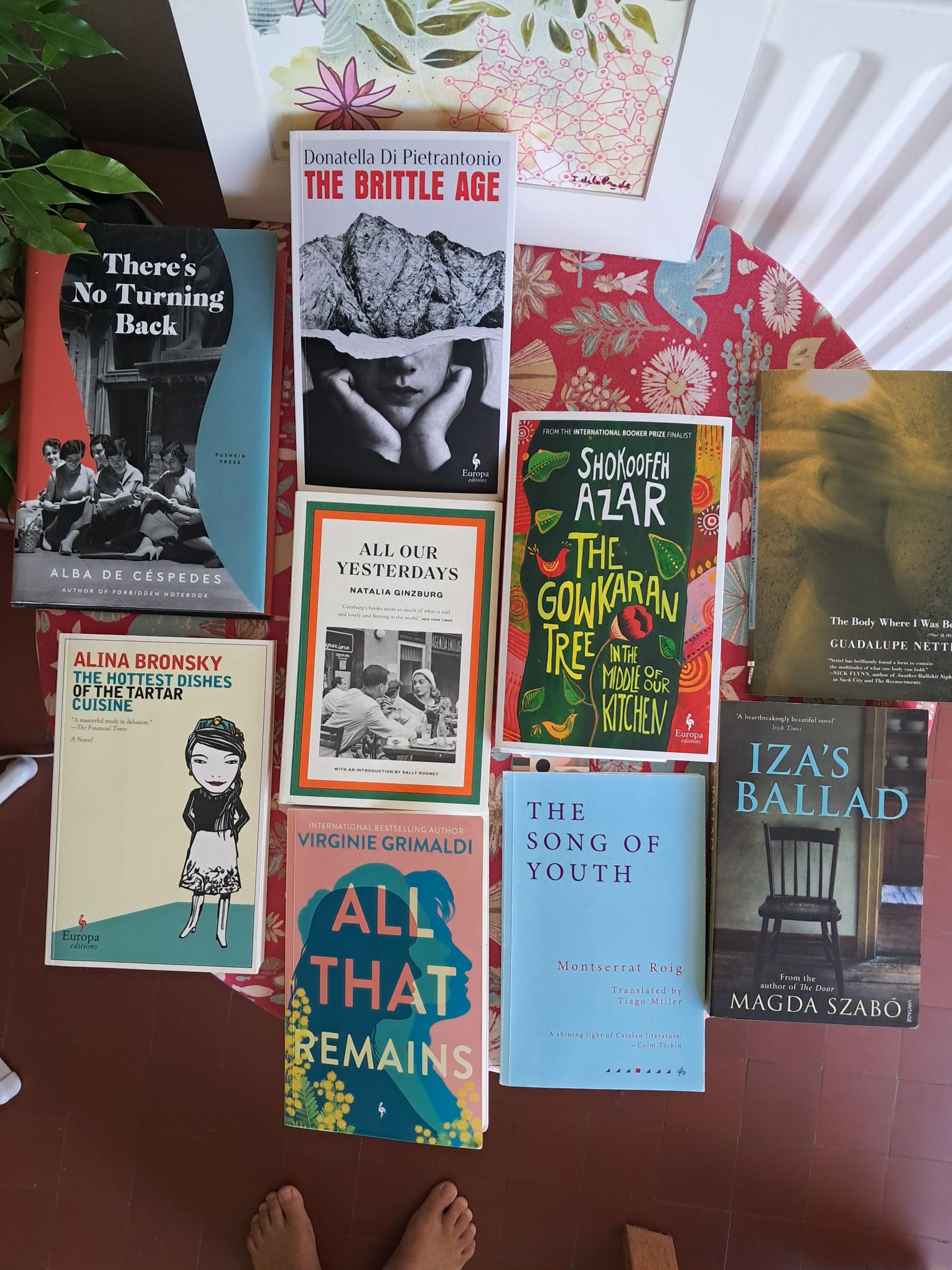
So I gathered what I had on my shelf to read for August to share here and I am very grateful to Daniela at Europa Editions UK who sent me three excellent new publications published by Europa in 2025, which arrived just as the month started, two of which I have devoured already.
Read Around the World
The books I have chosen are by women from Mexico (translated from Spanish), Rome and Abruzzo in Italy, Barcelona (Catalan), France (French), Iran (living as a political refugee in Australia, translated from Farsi), Russia living in Berlin (translated from German) and Debrecen, Hungary.
Mexico
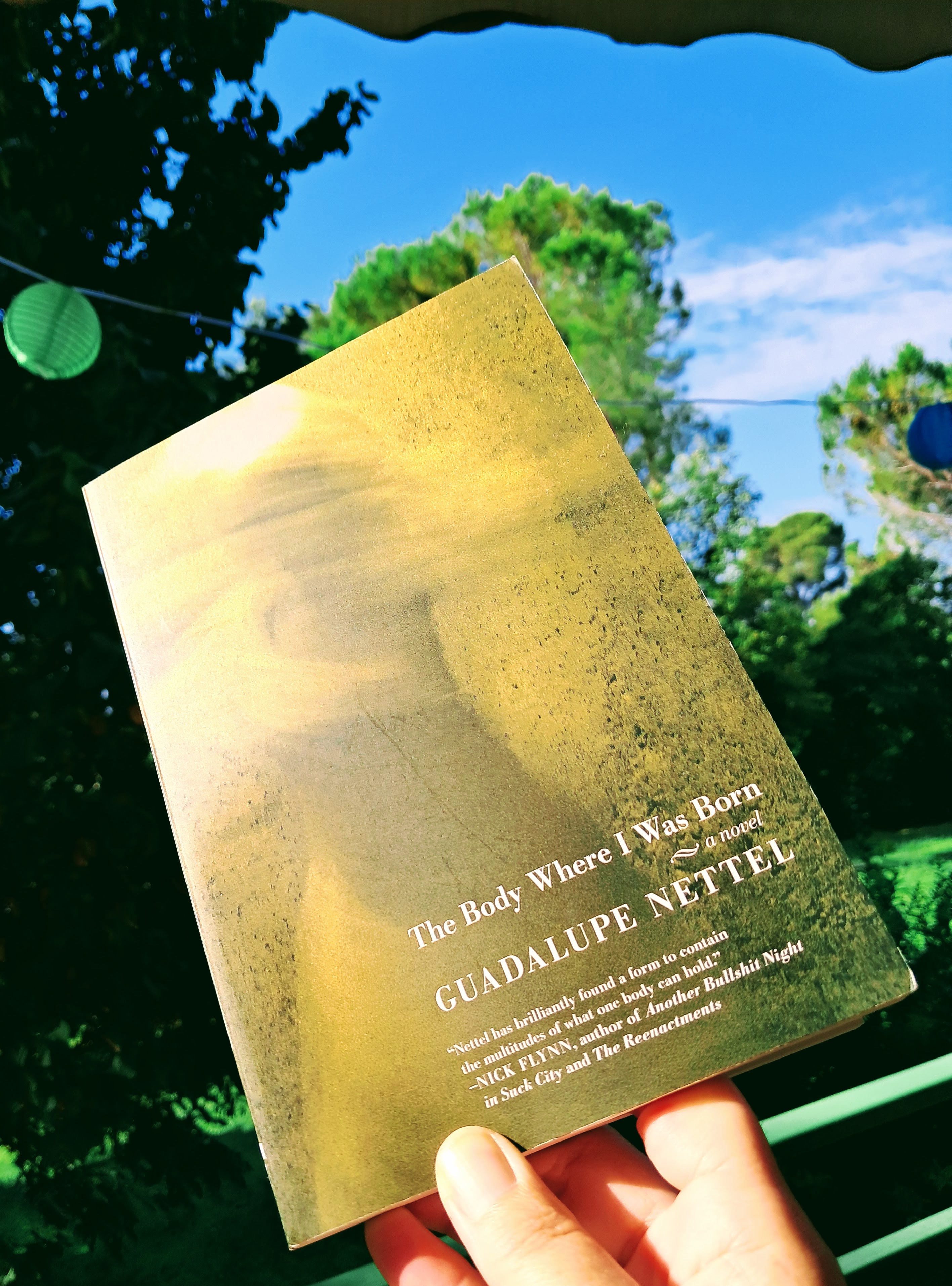
I started the month with Guadalupe Nettel’s (Mexico) excellent autobiographical novel The Body Where I Was Born (reviewed here) translated by J.T. Lichtenstein, a book that reads like a memoir of childhood and adolescence, but from the perspective of looking at how those various experiences she had, might have moulded her character.
The real surprise was when she and her brother join her mother to come and live here in Aix en Provence while she’s working towards a PhD. Very insightful and for me, utterly riveting. You can also read Still Born (reviewed here) shortlisted in 2023 for the International Booker, hers is a voice and style I adore.
Italy
I’ve definitely been in a phase of reading Italian women writers from the 30’s and 40’s, so of course there is more Natalia Ginzburg and Alba de Céspedes in my pile for this month.
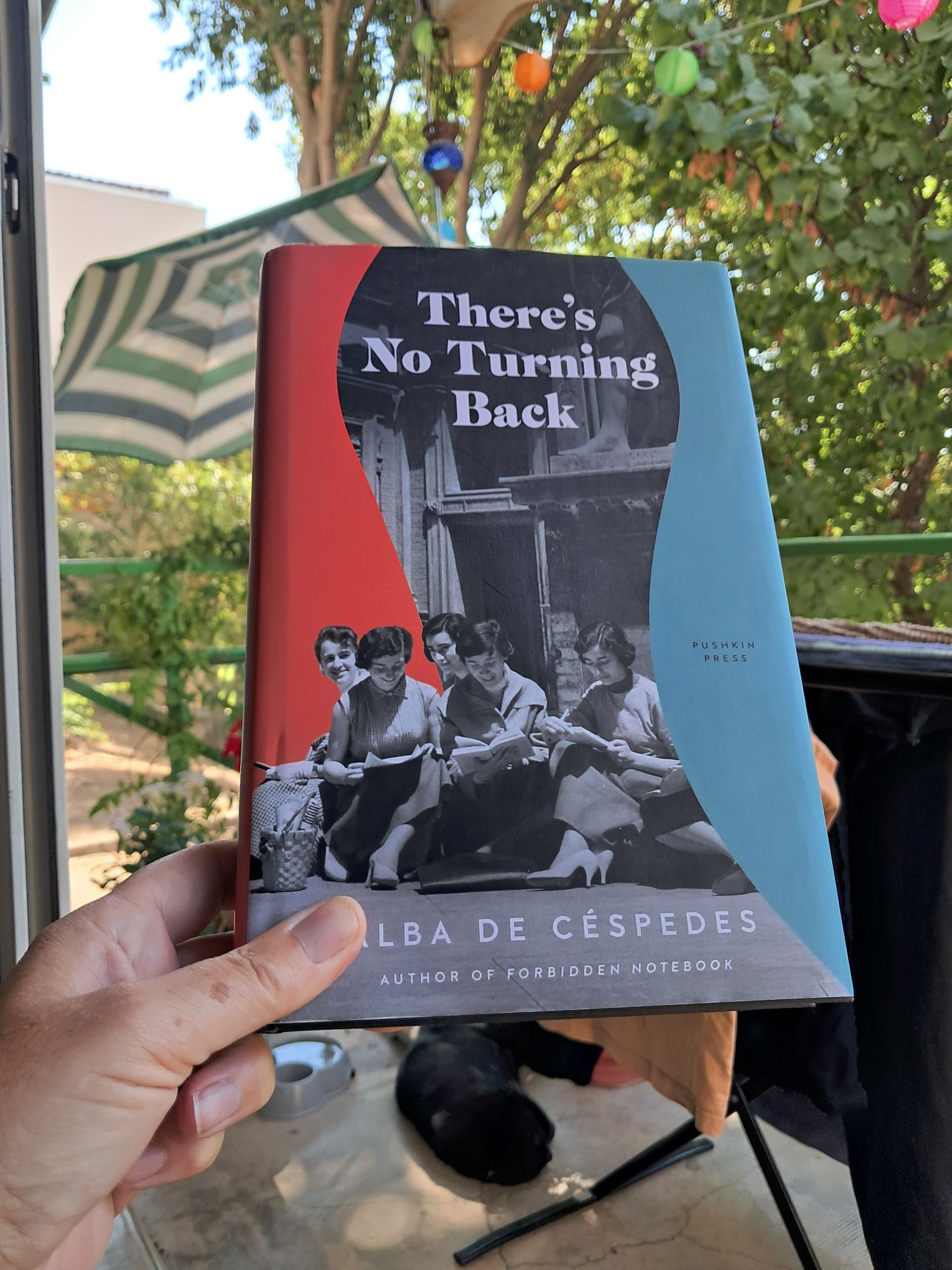
I’ve already finished There’s No Turning Back (reviewed here) translated by Ann Goldstein, a novel of eight women entering adulthood and potential independence in the face of a society that wants women to stay traditional, and I’m looking forward to Ginzburg’s novel All Our Yesterdays about a pregnant 16 year old who marries an older family friend to save her reputation.
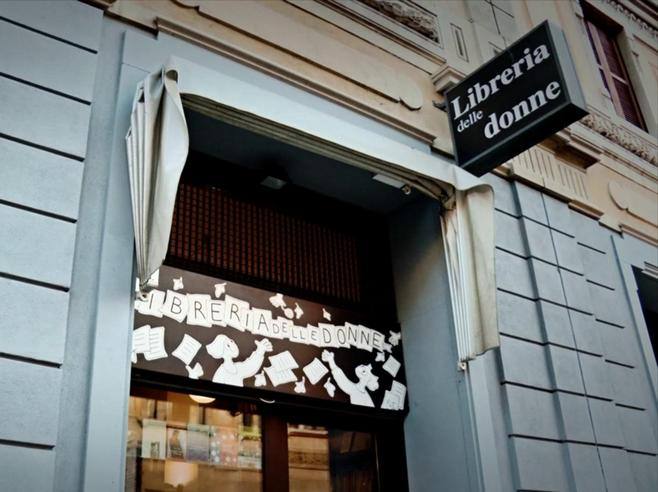
I recently read an excellent article about Italy’s feminist history and literature by Margarita Diaz, who after reading Elena Ferrante’s essay collection In the Margins, sought out a women’s bookstore collective, the Libreria delle Donne di Milano, whose work had been a source of inspiration for her Neapolitan novels. The bookstore occupies a unique place in the history of the Italian women’s movement, having established “an alternative genealogy of culture,” a perspective quite different to that of English speaking cultural feminism. I would love to visit this bookshop.
The Libreria delle Donne di Milano (The Milan Women’s Bookstore), on Via Pietro Calvi in the Zona Risorgimento, houses more than 7,500 carefully curated works, mostly in Italian, by 3,700 female writers from all around the world. Works by icons of Italian literature like Sibilla Aleramo, Grazia DeLedda, and Elena Ferrante sit next to translated copies of works by anglophone writers like Virginia Woolf and Jane Austen. It is a refreshing, unapologetic, women-only space, where female voices are celebrated and encouraged.
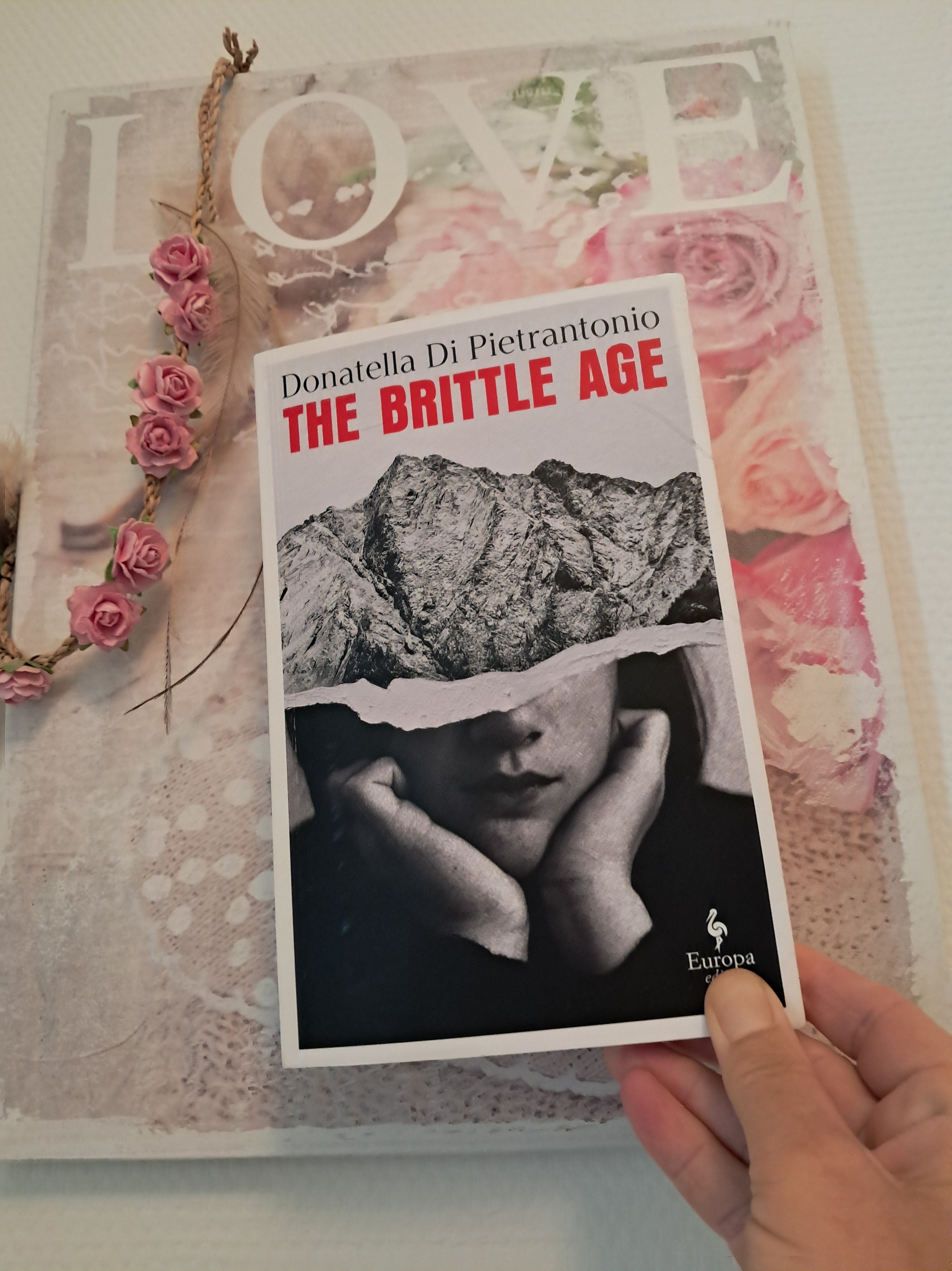
My third Italian read, more contemporary, with a flashback to events of the 90’s is the Strega Prize 2024 winning novel The Brittle Age by Donatella Di Pietrantonio (reviewed here), also translated by Ann Goldstein.
Her novels are excellent. A Girl Returned was exceptional, and I was riveted reading this latest. Historical true crime inspired and a psychological exploration of the effect of traumatic events on the individual and community and the small actions that help heal – just brilliant.
Doesn’t that mountain look like our local Mount Saint Victoire, with the cross at the summit?
France
It being a busy and hot working summer, I was also looking for lighter reads that would be captivating and so I chose Virginie Grimaldi’s second novel All That Remains (my review here) translated by Hildegarde Serle, a story of three people whose paths cross when each is at a significant turning point. Jeanne (74) is widowed and is overwhelmed, Iris (33) has made a near-escape and is in hiding, and Théo (18) working in a boulangerie (bakery) is starting out having left a boy’s home.
I was particularly interested in this after having seen French a news item about inter generational living arrangements, where young people move in with the elderly, enabling them to stay in their own homes. This was a page turner, totally feel good, brilliant and uplifting, a perfect all year round read!
Catalan, Spain
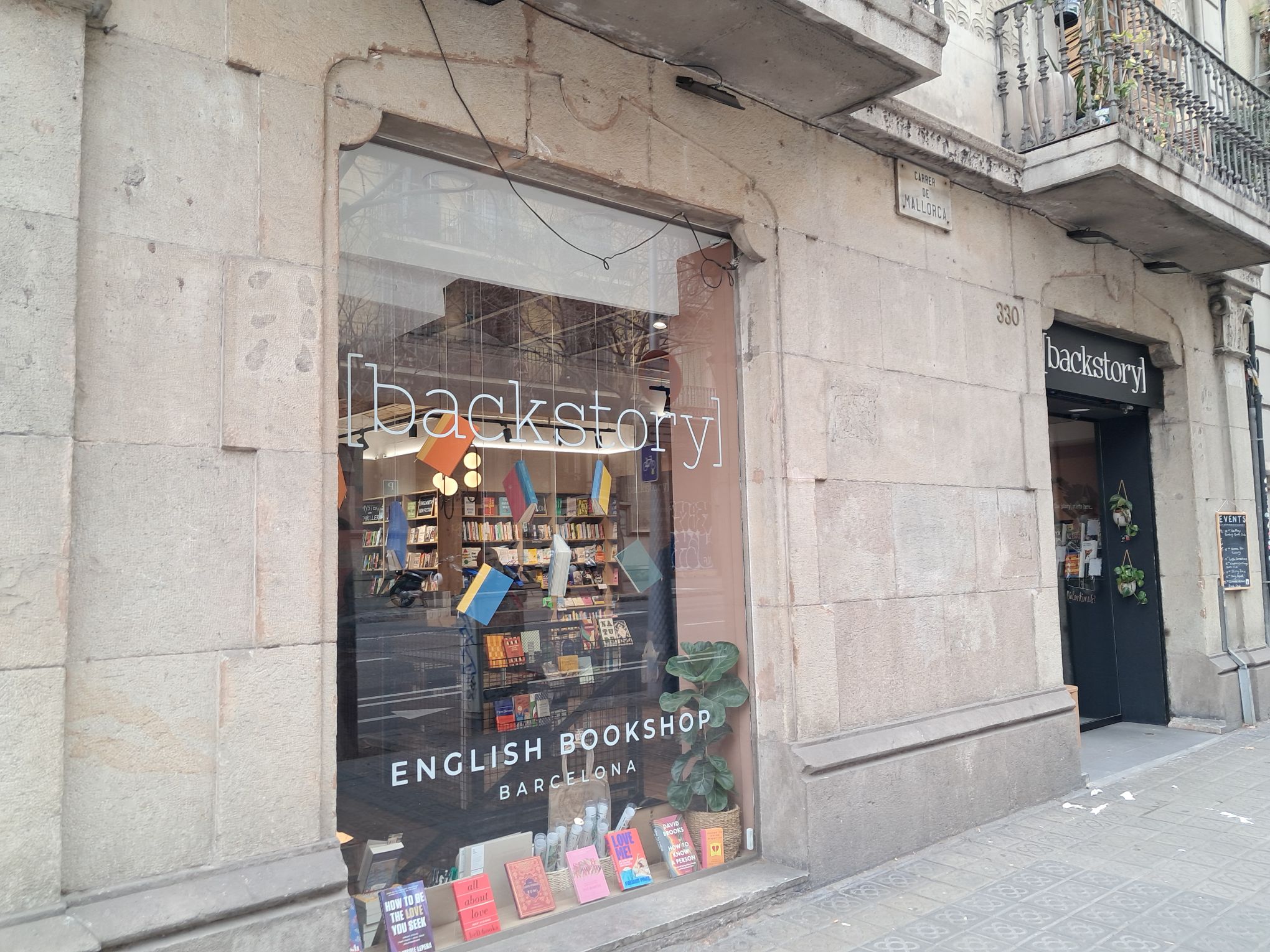
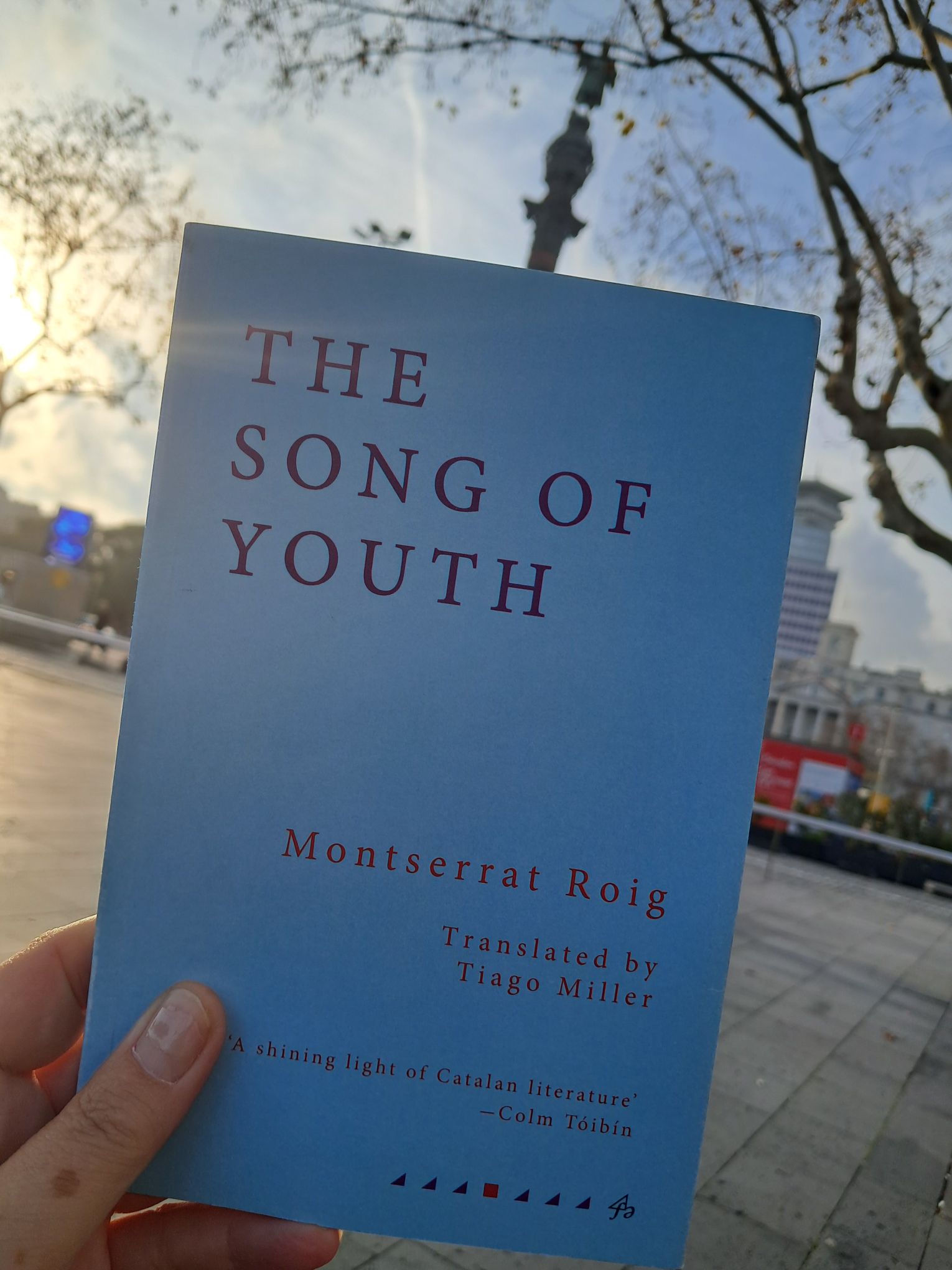
In February, visiting Barcelona, I found my way to the BackStory Bookshop where I discovered works in Catalan translated into English. The Song of Youth (reviewed here) by Montserrat Roig (1946-1991) translated by Tiago Miller is a collection of eight stories, which I have already started and I am pencil scribbling all over, they are so, so good.
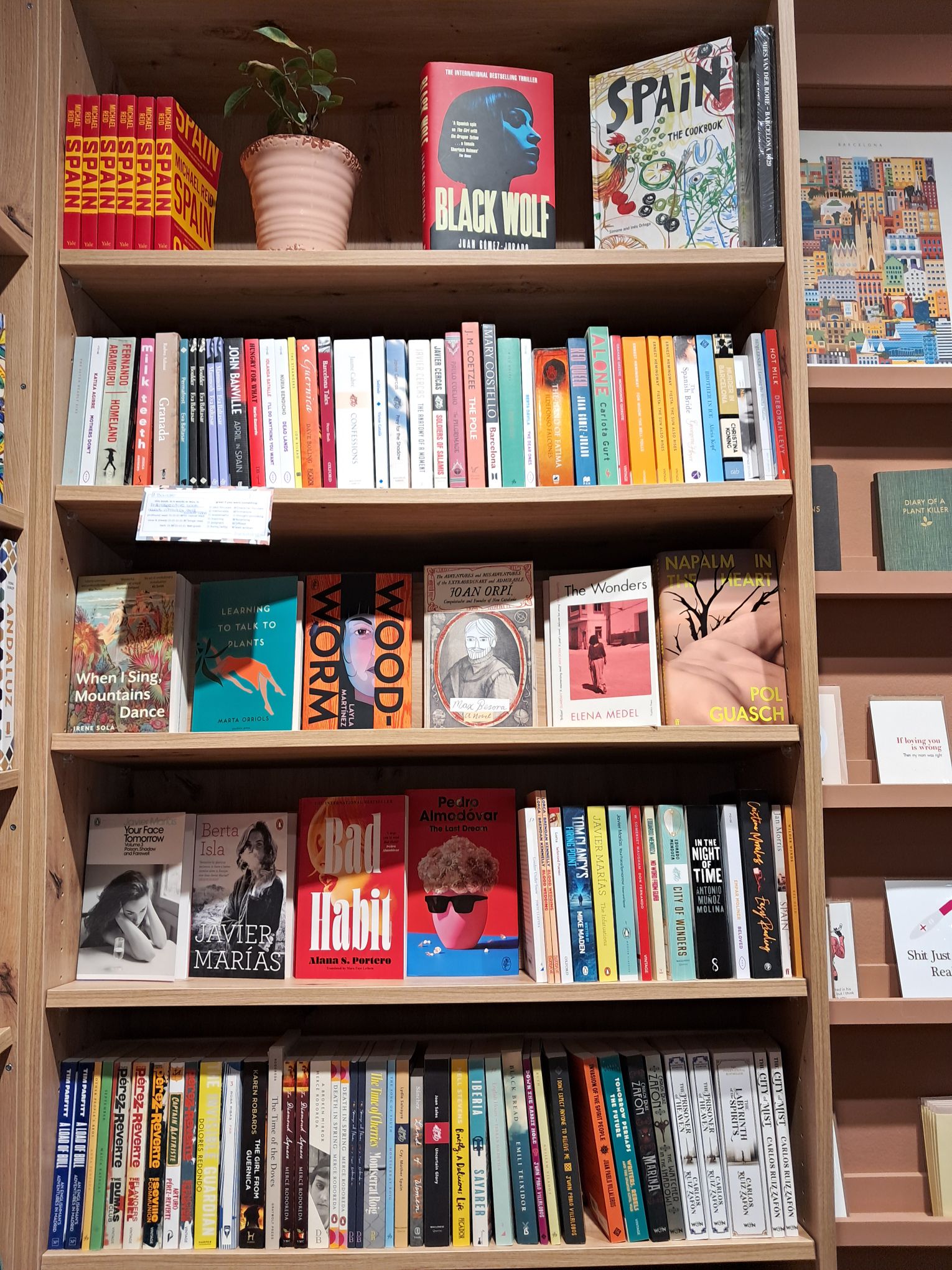
Looking back at that lower bookshelf in the bookstore, from where I obtained this volume, I wish I had bought Time of the Cherries as well, one I’ve seen reviewed by Jacqui and more recently, Goodbye, Ramona. The latter, wasn’t in the store, but I have recently found and ordered a copy. Those Fum de Stampa Press editions are gorgeous but not easy to find!
Iran
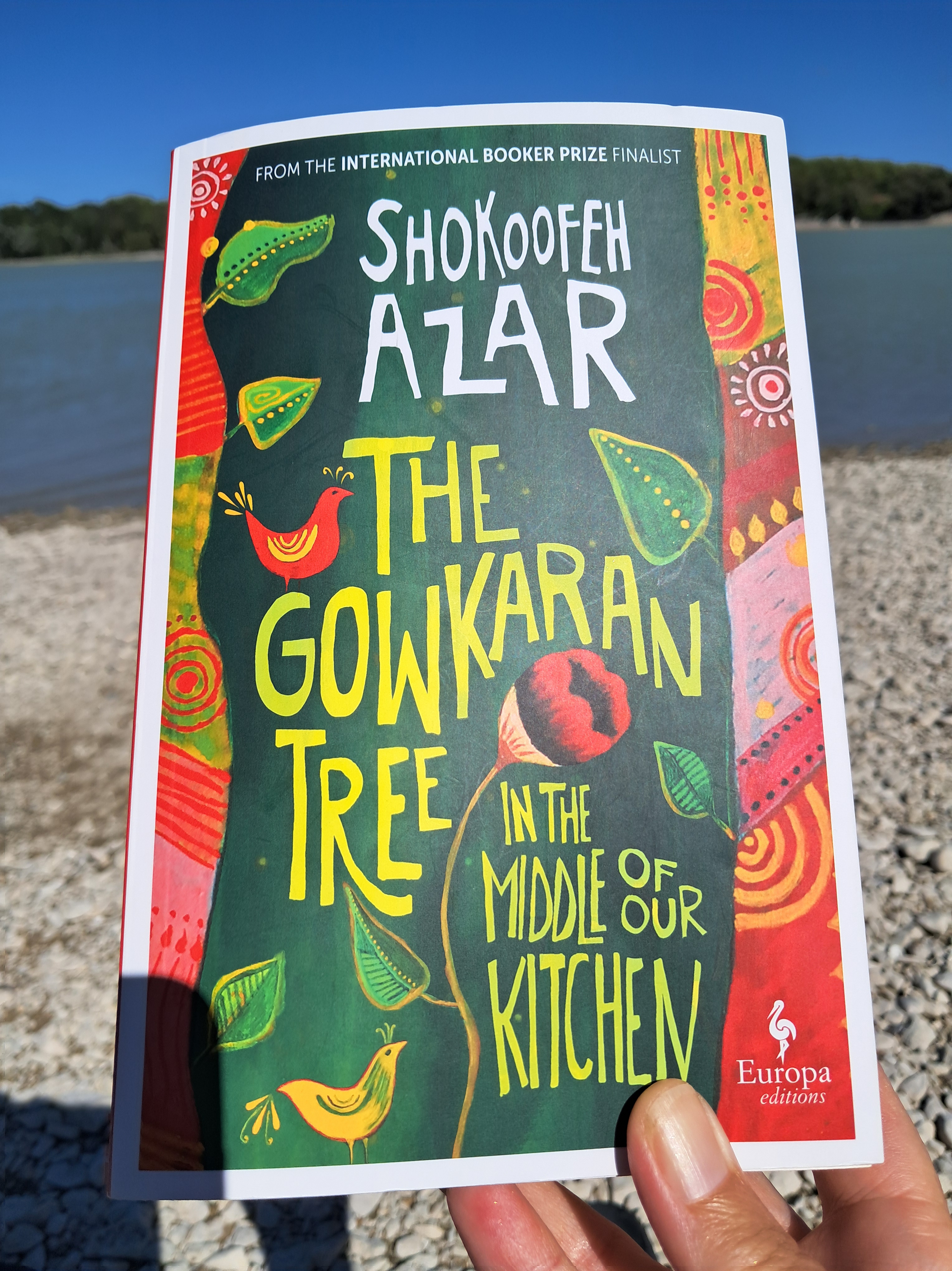
Delighted to see a new bold chunkster translated from Farsi by Shokoofeh Azar, The Gowkaran Tree in the Middle of Our Kitchen (reviewed here). This one, spanning fifty years in the history of modern Iran, is described as a lush, layered story embracing politics and family, revolution and reconstruction, loss and love amid the colourful stories of twelve children, each told against the backdrop of cultural and political change.
The Hottest Dishes of the Tartar Cuisine was the second novel written by Alina Bronsky, a German novelist born in the Ural mountain area of Russia, a dark, funny novel that stars Rosalinda, the irrepressible tyrant babushka who’ll stop at nothing to keep her family from emigrating without her as the Soviet Union falls apart. She’s brutal and cunning but also induces sympathy and amusement. This has been on my shelf too long and reading this NYT interview has pushed me to want to read it.
“Sometimes I do readings and people can’t stop laughing, but I’m reading about pretty tragic things,” Bronsky says. “I think Soviet humor is a desperate humor, rather typical of very different nations, of Jewish people, Ukrainians, and of course Russians. It’s despair — just keep laughing, until you are dead.”
Hungary
Lastly another that’s been waiting a while to be picked up is Magda Szabo’sIza’s Ballad translated by George Szirtes, about a woman whose daughter insists she leaves her countryside home after her husband’s death to move to the city of Budapest. Uprooted from her community she must make a place and a life for herself anew.
I read her novel The Door some years ago and enjoyed it, so I’m looking forward to visiting Budapest and the countryside she left for it.
Recommendations
That’s my pile of potential reads for August, let us know in the comments below if you have read any of these or what you are looking forward to.
Every novel I’ve read by Alba de Céspedes has been excellent and this controversial debut (at the time of its original publication in Italy, 1938) brims with the seeds of what was to come from her work, starting with this excellent, collective coming-of-age, of eight, twenty-something year old women in pre-war Rome.
I pre-ordered this novel, as she is a favourite author, of whose work I want to read everything, sharing now for WIT Month (Women in Translation).
Literature and Morality
In the informative translator’s note at the beginning of the book, Ann Goldstein shares some of the historical context within which the book became an immediate and immensely popular bestseller, despite the authorities finding the novel’s breaking of female stereotypes and suggestion of other possible pathways for women offensive.
“By the time the novel was published the fascist dictator Benito Mussolini had been in power for more than a decade. His government promoted the idea that the proper place for women was to be at home and to bear children; sposa e madre esemplare (exemplary wife and mother). While there is no overt mention of Mussolini or fascism in the novel, none of the young women conform to this female ideal. In fact, in their different ways they are challenging it, even if not intentionally or even consciously.”
Selected to win the prestigious Viareggio Literary Prize in 1939, a government order stopped it and attempted to block further editions from being published, claiming it went against ‘fascist morality’. As Margarita Diaz points out in a recent article ‘An Immoral Endeavour‘:
Vague accusations of ‘immorality’ have been, and continue to be, used by dominant institutions, governments and autocratic regimes to stifle free expression and to censor legions of books and artworks.
Women at a Turning Point
Set in Rome 1936-1938, the novel focuses on eight young women in higher education, most studying at university, who live together in convent boarding house in Rome. They have greater freedoms than school girls, with restrictions deemed appropriate for unmarried single women.
From different backgrounds they have different issues, desires and ideas about life, which they share with each other as they progress through the year and one by one prepare to leave the premises.
On the cusp of “no turning back”, concluding their theses, each must make a decision about what to do next and none of them are thinking, acting or passively accepting the route that tradition has dictated.
The mere consideration of other life avenues and the outward expression of those thoughts, the girls’ discussions with each other, in this safe and open, female community, demonstrate an important processing step in their being better informed, while equally often challenged by their peers, at this formative moment in their lives.
“In all her novels de Céspedes investigates women’s attempts to both deconstruct and construct their lives and gain a sense of themselves, as she investigated her own life.”
Throughout that year, the girls will learn more than just the subject of their thesis as they share and navigate the issues that arise, including their reactions to things some have kept secret. They attend mass and adhere to the curfew, then gather after lights out to talk about everything deemed pressing.
Their conversations and reflections often lead to scenes from the past, as the reader gains insight into each of the circumstances that lead each young woman to this place.
Xenia is the first to present her thesis and to leave and she does so under cover of night, severing her connection with the girls, choosing the least conventional path, allowing an older businessman to arrange a job for her and accommodation, introducing her to a different circle of associates. Her desires are revealed in one of the early exchanges with the girls:
“Some nights a kind of yearning grips me: I can’t close my eyes and I get worn out thinking how I’m caged in this cloister of nuns, while outside life is flowing, fortune passing by – who knows? – and I can’t take advantage of it. You have to jump into life head-long, grab it by the throat. I won’t ever go back to Veroli, anyway.”
No Two Paths
If Xenia’s failure and disappearance shakes the girls up, the fate of quiet Milly, who writes letters in braille to a blind organist rocks their world even more.
As soon as Papa found out about our meetings, he made me come to Rome. But I’m not unhappy here: I can play the harmonium and write to him with that device there, which is all holes, in the braille alphabet, made just for blind people. By now I can write well, and he reads my letters by running his fingers over them, like this, see?
Silvia is a high performing literature student, a favourite of the Professor, who asks her to do research on his behalf, which he presents to great acclaim, telling her she will go far.
Silvia had on her face the expression of servile gratitude typical of those who are accustomed to submission from birth. Who were her parents, after all? Scarcely more than peasants. Someone had always taken possession of their work without even saying “Thank you, well done.” Confused by that praise, Silvia would have liked to promise : “I won’t take my eyes off the books professor, I’ll even work at night”; but at that moment Belluzzi’s wife came in, carrying a cup of tea.
Emanuela has told everyone her parents are travelling in America, disappearing every Sunday to visit her five year old daughter she has told no-one about, just like her father had written to the Mother Superior of the boarding school she attends, saying his daughter was abroad.
Though she does not study, she is drawn into the literature group, who appreciate her vigilant, intuitive faculty:
which revealed and illuminated, in those who approached her, only the aspect of the self capable of inspiring a mutual sympathy. So each saw her own image reflected, as in a mirror; and although the mirror had many faces, it projected only the one that it animated. And this game of reflections was a continuous revelation for Emanuela, too, who saw rising from the depths of herself, and appearing on the surface, constantly new and until then unknown aspects of her personality. Illuminated from the outside, exposed by the contact with others, her true physiognomy emerged gradually, and in a surprising way, from the shadows.
Women as Masters of Themselves
Augusta is enrolled in classes but doesn’t plan to sit the exams. She stays up late writing novels and sending them out. When Emanuela asks her how long she plans to stay, she replies:
Until I’ve done something. I go back to Sardinia only for a month or two, in summer. By now, one can’t go home anymore. Our parents shouldn’t send us to the city; afterward, even if we return, we’re bad daughters, bad wives. Who can forget being master of herself? And in our villages a woman who’s lived alone in the city is a fallen woman. Those who remained, who passed from the father’s authority to the husband’s, can’t forgive us for having had the key to our own room, going out and coming in when we want. And men can’t forgive us for having studied, for knowing as much as they do.
Vinca is from Spain and during her time with the girls, she learns from the newspaper that Spain is at war and that the young man she has been seeing will go and join the fight. These and subsequent events change her trajectory.
One by one, they have their experiences and they make their own decisions, no two the same, yet all of them having been through the process of living together and sharing their developing ideas, strengthening their positions and coming to some kind of resolution about how they will live their lives.
It’s another brilliant read by this fabulous author and one can just imagine how this book would have been devoured by many women in the era it was published, providing them insight and a form of company to their own thoughts, or provoking them in their solitude as they lived out those traditional paths and dreamed of something else.
Highly Recommended.
“Emanuela took her head in her hands. “I think that at a certain point you have to stop searching and accept yourself. Find the courage not to count on others anymore, to separate from childhood even at the cost of solitude;” “It’s all a matter of courage, in life. If you have it, you do well to leave,” Augusta murmured, tapping the ashes from her cigarette.”
Alba de Céspedes (1911-97) was a bestselling Italian-Cuban novelist, poet and screenwriter.
The granddaughter of the first President of Cuba, de Céspedes was raised in Rome. Married at 15 and a mother by 16, she began her writing career after her divorce at the age of 20. She worked as a journalist throughout the 1930s while also taking an active part in the Italian partisan struggle, and was twice jailed for her anti-fascist activities.
After the fall of fascism, she founded the literary journal Mercurio and went on to become one of Italy’s most successful and most widely translated authors.
After the war, she accompanied her husband, a diplomat to the United States and the Soviet Union. She would later move to Paris, where she would publish her last two books in French and where she spent the rest of her life. She died in 1997.
Feeling a little uninspired by recent reads, I decided to check my shelves for what I had in translation, August is WIT Month and my shelves are looking a little depleted in that regard!
I spotted Guadalupe Nettel’s novel The Body Where I Was Born and remembered how much I adored Still Born (my review here) in 2023, a book that was shortlisted for the International Booker Prize 2023. It’s a compelling exploration by two women into the question of whether or not to have children and how their ideas can change as life happens and circumstances arise that can awaken feelings not born of the mind.
Why Did I Do It, Doctor?
It was the compelling style that made me want to read something else by Nettel and as I began to read The Body Where I Was Born I realised it is semi-autobiographical.
The novel is narrated from the psychotherapist’s chair and so occasionally there will an interruption where the narrator asks a question having recounted yet another episode of their childhood.
The novel is written in five parts, segmenting different parts of childhood and it is effectively a form of coming-of-age, albeit recounted to a therapist.
A Marked Childhood
As with her previous novel and writing style, I was immediately drawn into the narrative, which begins with the author recounting the consequence of having been born with a birthmark covering part of her eye.
The only advice the doctors could give my parents was to wait: by the time their daughter finished growing, medicine would surely have advanced enough to offer the solution they now lacked. In the meantime, they advised subjecting me to a series of annoying exercises to develop, as much as possible, the defective eye.
As a result, school became even more of an inhospitable environment and those measures marking her out for unwanted attention.
Condition and Correct, A Parental Institution
But sight was not my family’s only obsession. My parents seemed to think of childhood as the preparatory phase in which they had to correct all the manufacturing defects one enters the world with, and they took this job very seriously.
Our narrator ponders the harm of parental regimes and how we perpetuate onto the next generation the neuroses of our forebears, wounds we continue to inflict on ourselves.
In addition to these corrections, her parents were keen to adopt some of the prevailing ideas of the time (the seventies) about education, a Montessori school in Mexico City and a sexual education free of taboos and encouraging candid conversations.
Rather than clarifying things, this policy often made things more confusing and distressing for the children and was likely the cause of the rupture of the adults when they adopted a practice much in fashion at the time, the then-famous ‘open-relationship’.
During all the preparatory conversations I had worn the mask of the understanding daughter who reasons instead of reacts, and who would cut off a finger before aggravating her already aggravated parents. Why did I do it, Doctor? Explain it to me? Why didn’t I tell them what I was really feeling?
Separation and Abandonment
After the marriage separation their mother is interested for a while in community living, subjecting the children to another experiment, and later still sinks into a deep depression that affects them all.
Finally, in a burst of desperate willpower, she decided to exile herself. Hers was not political, but an exile of love. The pretext was getting a doctorate in urban and regional planning in the south of France.
But before they were sent to France, there was a period where their maternal grandmother – who much favoured her brother- came to live with and look after them. Full of questions about why their parents left them in this situation, the grandmother gave her usual cryptic response:
‘Since when do ducks shoot rifles?’ she’d say, meaning that children should not demand accountability from adults.
Heightened Observations, Humorous Occasions
Part II narrates the period with grandmother in charge, made all the more challenging for being in their own home, one that had held so many previously fond memories.
Doctor, this discovery, as exaggerated as it sounds, was like meeting a guardian angel, or at least a friend I could trust, which was, in those days, equally unlikely. The book understood me better than anyone else in the world and, if that was not enough, made it possible for me to speak about things that were hard to admit to myself, like the undeniable urge to kill someone in my family.
From Mexico City to Aix-en-Provence
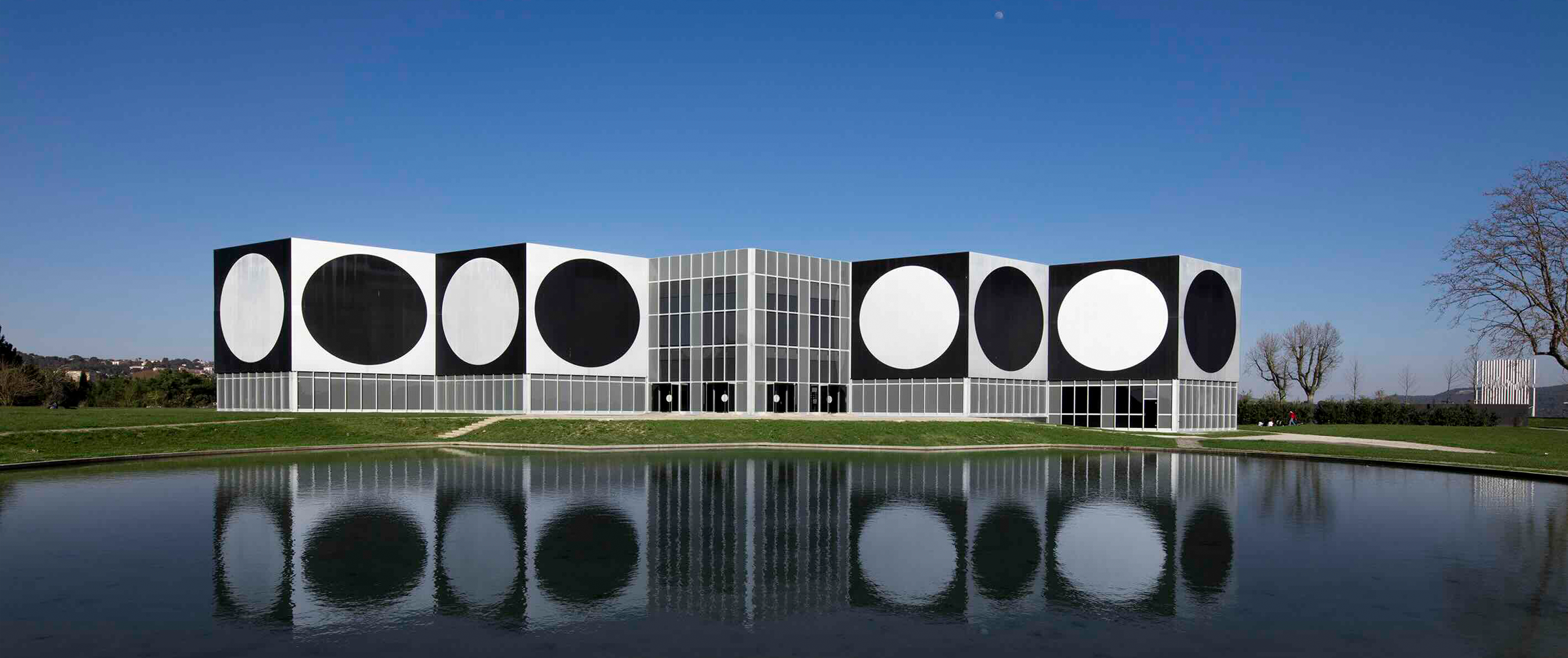
As I began part III, I was surprised to find the two young children following their mother to the south of France, to the Jas de Bouffan quartier of Aix en Provence near the musée Vasarely.
If I was already engaged in the novel, now I was riveted. I know the quartier well and the schools she and her brother are sent to, it awakened my own memories of being an outsider at the school gate, waiting for children to exit from the well regulated school environment.
Vasarely Musée, Aix en Provence
I have no doubt that my mother sought in Aix the institution that most resembled our school in Mexico. The percentage of atypical beings was equal, or maybe even higher. But still… everything there seemed strange to me.
From From the public Freinet education at La Mareschalé to the local middle school, Collège au Jas de Bouffan, a mix of children from multiple origins, North African, Indian, Asian, Caribbean and French.
To survive in this climate, I had to adapt my vocabulary to the local argot – a mix of Arabic and Southern French – that was spoken around me, and my mannerisms to those of the lords of the cantine.
In Part IV there is a visit back to Mexico, before Part V where they are sent off to a the infamous French institution, the colonie de vacances; supervised holiday camps organised according to interests or specialities, full of young people employed as ‘camp animateurs‘ an idealised form of first employment, being paid to be on holiday, looking after tweens and emerging teens.
The French experience is so well depicted, and gives an insight into the child’s perspective of being an uncommon foreigner among a population of more common second or third generation immigrants. When it ends back in Mexico City, I find myself wishing there were a follow up novel, to find out more about a life that started in this unusual way and had all these experiences in their formative years.
The novel is so engaging, a fascinating insight into a life that delves beneath the surface of events and happenings in a family that is culturally fascinating, as it moves between Mexico City and Aix en Provence, traversing childhood and adolescence, the relationships between a girl, her peers at different ages, her parents and her grandmother.
And then there are the layers of literary references, including the reference to the title, but those I leave the prospective reader to discover for themselves.
I loved it! Highly Recommended.
Author, Guadalupe Nettel
Guadalupe Nettel (born 1973) is a Mexican writer. She was born in Mexico City and obtained a PhD in linguistics from the École des Hautes Études en Sciences Sociales in Paris. She has published in several genres, both fiction and non-fiction.
The New York Times described Nettel’s acclaimed English-language debut, Natural Histories as “five flawless stories”. A Bogota 39 author and Granta “Best Untranslated Writer” The Body Where I Was Born was her first novel to appear in English. Her work has since been translated into more than twenty languages and adapted for theatre and film. Still Born, her most recent novel, was shortlisted for the 2023 International Booker Prize and her latest collection of short stories The Accidentals tr. Rosalind Harvey was published in April 2025.
She has edited cultural and literary magazines such as Número Cero and Revista de la Universidad de México. She lives in Paris as a writer in residence at the Columbia University Institute for Ideas and Imagination.
The International Booker Prize 2025 longlist has been announced by this years judging panel, made up of a novelist, a poet, a translator, a critic and a songwriter, all of whom cross boundaries into other art forms. In their various ways, they are steeped in the world of words.
These are the 13 books they have chosen in the first cut, from 154 books submitted – 11 novels and two collections of short stories, translated from 10 original languages representing 15 nationalities and 11 independent publishers:
The Book of Disappearance by Ibtisam Azem (Palestine) translated from (Arabic) by Sinan Antoon
– The shocking premise of Azem’s novel can be summed up in a sentence: what would happen if all the Palestinians in Israel suddenly disappeared?
Alaa is haunted by his grandmother’s memories of being displaced from Jaffa and becoming a refugee in her homeland after the Nakba. Ariel, Alaa’s neighbour and friend, is a liberal Zionist, critical of the military occupation of the West Bank and Gaza, yet faithful to the project of Israel. When he wakes up one morning to find that all Palestinians have suddenly vanished, Ariel begins searching for clues to the secret of their collective disappearance.
That search, and Ariel’s reactions to it, intimately reveal the fissures at the heart of the Palestinian question. Between the stories of Alaa and Ariel are the people of Jaffa and Tel Aviv – café patrons, radio commentators, flower-cutters – against whose ordinary lives these fissures and questions play out.
Spare yet evocative, intensely intelligent in its interplay of perspectives, The Book of Disappearance, critically acclaimed in its original Arabic edition, is an unforgettable glimpse into contemporary Palestine as it grapples with both the memory of loss and the loss of memory.
On the Calculation of Volume I by Solvej Balle (Denmark) translated by Barbara J Haveland
– a woman is trapped in a time loop, waking up each morning to find it’s the 18th of November, again and again.The first book of a planned septology. Five books have been published in Danish so far, with translations underway in over 20 countries.
She no longer expects to wake up to the 19th of November, and she no longer remembers the 17th of November as if it were yesterday. She comes to know the shape of the day like the back of her hand – the grey morning light in her Paris hotel; the moment a blackbird breaks into song; her husband’s surprise at seeing her return home unannounced.
But for everyone around her, this day is lived for the first and only time. They do not remember the other 18th’s of November, and they do not believe her when she tries to explain. As Tara approaches her 365th 18th of November, she can’t shake the feeling that somewhere underneath the surface of this day, there’s a way to escape.
There’s a Monster Behind the Door by Gaëlle Bélem (La Réunion) translated (French) by Karen Fleetwood & Laëtitia Saint-Loubert
– in 1980s La Réunion (an overseas department of France, in the Indian Ocean), a young girl with a zest for life rises up against her jaded, bitter parents.
La Réunion in the ’80s is a place of high unemployment and low expectations, the legacy of postcolonialism. Here, a little girl makes a bid for escape from her sadistic parents’ reign of terror and turns to school for salvation. The name Dessaintes is one to reckon with. A bombastic, violent and increasingly dangerous clan, little do they know that their downfall is being chronicled by one of their own.
Rich in the history of the island’s customs and superstition and driven by a wild, offbeat humour, this picaresque tale manages to satirise the very notion of freedom available in this French territory, and perhaps even the act of writing itself and where it might lead you.
Solenoid by Mircea Cărtărescu (Romania) translated by Sean Cotter
– partly inspired by the author’s years as a teacher in Romania, spiraling into a bizarre account of history, philosophy and mathematics, with flashes of nightmarish body horror. Said to have been written in a single draft, at 627 pages, the longest book on the list.
Grounded in the reality of communist Romania, the novel grapples with frightening health care, the absurdities of the education system and the struggles of family life, while investigating other universes and forking paths.
In a surreal journey like no other, we visit a tuberculosis preventorium, an anti-death protest movement, a society of dream investigators and a minuscule world of dust mites living on a microscope slide. Combining fiction and history with autobiography – the book is partly based on Cărtărescu’s experiences as a teacher – Solenoid searches for escape routes through the alternate dimensions of life and art, as various monstrous realities erupt within the present.
Reservoir Bitches (short stories) by Dahlia de la Cerda (Mexico) translated (Spanish) by Heather Cleary & Julia Sanches
– follows the efforts of 13 memorable Mexican woman, from the daughter of a cartel boss to a victim of transfemicide, to survive against the odds.
In the linked stories of Reservoir Bitches, 13 Mexican women prod the bitch that is Life as they fight, sew, cheat, cry and lie their way through their tangled circumstances. From the all-powerful daughter of a cartel boss to the victim of transfemicide, from a houseful of spinster seamstresses to a socialite who supports her politician husband by faking Indigenous roots, these women spit on their own reduction and invent new ways to survive, telling their stories in bold, unapologetic voices.
At once social critique and black comedy, Reservoir Bitches is a raucous debut from one of Mexico’s most thrilling new writers.
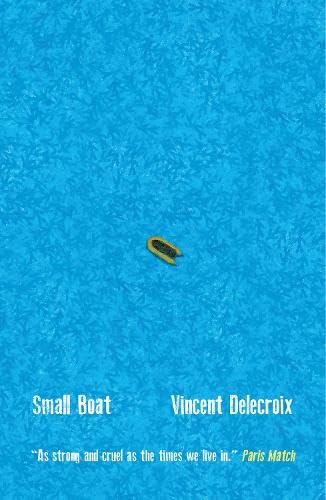
Small Boat by Vincent Delecroix (France) translated by Helen Stevenson
– the fictional account of a group of migrants’ attempt to cross the English Channel in an inflatable dinghy, which results in the deaths of 27 of those on board. Told from the point of view of a French woman who received, but rejected, their desperate calls for help.
Despite receiving numerous calls for help, the French authorities wrongly told the migrants they were in British waters and had to call the British authorities for help. By the time rescue vessels arrived on the scene, all but two of the migrants had died.
The narrator of Delecroix’s fictional account of the events is the woman who took the calls. Accused of failing in her duty, she refuses to be held more responsible than others for this disaster. Why should she be more responsible than the sea, than the war, than the crises behind these tragedies?
A shocking, moral tale of our times, Small Boat reminds us of the power of fiction to illuminate our darkest crimes.
Hunchbackby Saou Ichikawa (Japan) translated by Polly Barton
– an unflinching account of sexual desire and disability about a protagonist born with a congenital muscle disorder who uses an electric wheelchair and a ventilator. Hailed as one of Japan’s most important novels of the 21st century.
Within the limits of her care home, her life is lived online: she studies, she tweets indignantly, she posts outrageous stories on an erotica website. One day, a new male carer reveals he has read it all – the sex, the provocation, the dirt. Her response? An indecent proposal…
Written by the first disabled author to win Japan’s most prestigious literary award and acclaimed instantly as one of the most important Japanese novels of the 21st century, Hunchback is an extraordinary, thrilling glimpse into the desire and darkness of a woman placed at humanity’s edge.
Under the Eye of the Big Bird by Hiromi Kawakami (Japan) translated by Asa Yoneda
– leaps back and forth across thousands of years and finds humankind on the verge of extinction, but still clinging to the impulses that make us human.
In the distant future, humans are on the verge of extinction and have settled in small tribes across the planet under the observation and care of the Mothers. Some children are made in factories, from cells of rabbits and dolphins; some live by getting nutrients from water and light, like plants. The survival of the race depends on the interbreeding of these and other alien beings – but it is far from certain that connection, love, reproduction, and evolution will persist among the inhabitants of this faltering new world.
Unfolding over geological eons, Under the Eye of the Big Bird is at once an astonishing vision of the end of our species as we know it and a meditation on the qualities that, for better and worse, make us human.
Eurotrashby Christian Kracht (Germany) translated by Daniel Bowles
– a Swiss writer named Christian, embarks on a tragicomic road trip with his wealthy, elderly mother in this tragicomic and absurd semi-autobiographical novel.
Realising he and she are the very worst kind of people, a middle-aged man embarks on a dubious road trip through Switzerland with his 80-year-old mother, recently discharged from a mental institution. Traversing the country in a hired cab, they attempt to give away the wealth she has amassed from investing in the arms industry, but a fortune of such immensity is surprisingly hard to squander. Haunted in different ways by the figure of her father, an ardent supporter of Nazism, mother and son can no longer avoid delving into the darkest truths about their past.
Eurotrash is a bitterly funny, vertiginous mirror-cabinet of familial and historical reckoning. The pair’s tragicomic quest is punctuated by the tenderness and spite meted out between two people who cannot escape one another. Intensely personal and unsparingly critical, Eurotrash is a disorientingly brilliant novel by a writer at the pinnacle of his powers.
Perfectionby Vincenzo Latronico (Italy) translated by Sophie Hughes
– an expat couple attempt to live their dream in Berlin, but find themselves beset with the dissatisfaction and ennui of the modern world.
Millennial expat couple Anna and Tom are living the dream in Berlin – in a bright, plant-filled apartment in Neukölln. They are young digital creatives, freelancers without too many constraints. They have a passion for food, progressive politics, sexual experimentation and Berlin’s 24-hour party scene. Their ideal existence is also that of an entire generation, lived out on Instagram, but outside the images they create for themselves, dissatisfaction and ennui burgeon.
Their work as graphic designers becomes repetitive. Friends move back home, have children, grow up. An attempt at political activism during the refugee crisis proves fruitless. And in that picture-perfect life Anna and Tom feel increasingly trapped, yearning for an authenticity and a sense of purpose that seem perennially just out of their grasp.
With the stylistic mastery of Georges Perec and nihilism of Michel Houellebecq, Perfection is beautifully written and brilliantly scathing.
Heart Lamp (short stories) by Banu Mushtaq (Southern India) translated (Kannada) by Deepa Bhasthi
– the author, an activist and lawyer vividly captures the extraordinary everyday lives of Muslim women and girls in southern India, in 12 stories, originally published in Kannada between 1990 and 2023.
Praised for their dry and gentle humour, these portraits of family and community tensions testify to Mushtaq’s years as a journalist and lawyer, in which she tirelessly championed women’s rights and protested all forms of caste and religious oppression.
Written in a style at once witty, vivid, colloquial, moving and excoriating, it’s in her characters – the sparky children, the audacious grandmothers, the buffoonish maulvis and thug brothers, the oft-hapless husbands, and the mothers above all, surviving their feelings at great cost – that Mushtaq emerges as an astonishing writer and observer of human nature, building disconcerting emotional heights out of a rich spoken style. Her opus has garnered both censure from conservative quarters as well India’s most prestigious literary awards; this is a collection sure to be read for years to come.
On a Woman’s Madness by Astrid Roemer (Surinamese-Dutch), translated (Dutch) by Lucy Scott
– a classic of queer literature, as electrifying today as it was when it first appeared in 1982, tells of a courageous Black woman fleeing her abusive husband to embark a new life in the Surinamese capital.
When Noenka’s abusive husband of just nine days refuses her request for divorce, she flees her hometown in Suriname, on South America’s tropical northeastern coast, for the capital city of Paramaribo. Unsettled and unsupported, her life in this new place is illuminated by romance and new freedoms, but also forever haunted by her past and society’s expectations.
Amid tales of plantation-dwelling snakes, rare orchids, and star-crossed lovers, it is also a blistering meditation on the cruelties we inflict on those who disobey. Roemer, the first Surinamese winner of the prestigious Dutch Literature Prize, carves out postcolonial Suriname in barbed, resonant fragments. Who is Noenka? Roemer asks us. ‘I’m Noenka,’ she responds resolutely, ‘which means Never Again.’
A Leopard-Skin Hat by Anne Serre (France), translated by Mark Hutchinson
– captures the love and despair of an intense friendship between the book’s narrator and his best friend from childhood, who suffers from severe psychological disorders.
A series of short scenes paints the portrait of a strong-willed and tormented young woman battling many demons, and of the narrator’s loving and anguished attachment to her. Serre poignantly depicts the bewildering back and forth between hope and despair involved in such a relationship, while playfully calling into question the very form of the novel.
Written in the aftermath of the death of the author’s little sister, A Leopard-Skin Hat is both the celebration of a tragically foreshortened life and a valedictory farewell, written in her signature style.
Newbies, First Timers and a Classic Translated
Many of the books on the list are by authors being translated into English for the first time, which is a great sign for translated fiction, indicating that publishers and reading more widely and looking further than the already known. Not surprising I haven’t read any of these and only heard of one Solenoid, which won the Dublin Literary Award in 2024. It is not one I will be reading, way too long!
I like the sound of Heart Lamp and On a Woman’s Madness, not just for their premise, but for the language and locations they hail from! The Danish novel, The Calculation of Volume 1 sounds intriguing and something of a cult following, you’ve got to bat for someone who went ahead and self-published and is now being translated into over 20 languages.
Anything on the list tempting you? Let me know in the comments below.
The International Booker Shortlist and Winner 2025
The shortlist of six books will be announced on Tuesday, 8 April.
The winning title will be announced at a ceremony at London’s Tate Modern on Tuesday, 20 May.
I haven’t read much Japanese literature so when I saw Mieko Kawakami’s novel Breasts and Eggs at a booksale I picked it up, recalling it had caused much interest among readers at the time of its translation into English. It caused a significant reaction in Japan when originally published, a bestseller spurned by traditionalists.
It was a New York Times Notable Book of the Year and one of TIME’s Best 10 Books of 2020 and established the author as something of a feminist icon, exploring the inner lives of women through the ages.
A Woman’s Lot
Breasts and Eggs is set in two time periods eight years apart and centres around 30 year old woman Natsuko, a writer living in Tokyo and those two themes, Breasts and Eggs; or Appearance and Mothering.
I’m still in the same apartment with the slanted, peeling walls and the same overbearing afternoon sun, surviving off the same minimum wage job, working full time for not a whole lot more than 100,000 yen a month, and still writing and writing, with no idea whether it’s ever going to get me anywhere. My life was like a dusty shelf in an old book store, where every volume was exactly where it had been for ages, the only discernable change being that my body has aged another ten years.
Silence Speaks Volumes
In the first part of the book her sister Makiko comes to visit with her 12 year old daughter Midoriko, who has stopped speaking to her mother. She writes her responses, we read her perspective through a few journal entries, which has become the place where she has conversations she is missing elsewhere.
Unspoken Job Requirements
Makiko is an ageing hostess whose occupation demands certain expectations of looks and she has become obsessed with breast augmentation surgery to the neglect of all else. It has been the topic of conversation with her sister for the last three months. Natsuko realises she doesn’t want her advice, just a sounding board. Their mother died when the girls were teenagers from breast cancer.
…after all these years, at thirty-nine, she still works at a bar five nights a week, living pretty much the same life as our mum. Another single mother, working herself to death.
While her sister goes for a consultation Natsuko spends time with her niece and ponders women’s bodies, pains, expectations, grievances, self-judgments, societal judgments, obsessions. During the visit, the three women confront their issues, desires and frustrations, building to resolution.
When Time Is Running Out and All is On the Table
In Part Two, eight years have passed and now it is Natsuko who arrives at an age of obsession, only her focus is on eggs, or the desire to have a child and the dilemma of not being in a relationship when the age of becoming eggless is in sight.
A Making Children Medical Procedure
She begins to research alternative ways of conceiving, finding ways to learn more and to meet people she might be able to discuss her desire. In doing so she discovers there is more to the subject than just a woman’s desire, there are moral considerations she hasn’t considered, that might affect her decision.
“Neither the medical community, not the parents who undergo this type of treatment, have adequately considered how the children – and this is about the children – will eventually see themselves,” Aizawa said, in summary. “As for donors, most of them haven’t given much thought to these issues, either. For them, it’s something akin to giving blood. Legal reform has a long, long way to go, but recent attention to the child’s right to know had led more and more hospitals to suspend treatment entirely…”
The Child Who Grows Up Not Knowing Shares As an Adult
Her interest leads her to new connections that increase the depth of her understanding and options available to her. By the time she makes her decision, she will be significantly more informed and understand the situation from multiple perspectives.
I thought about what I had said, but couldn’t explain what I meant. What made me want to know this person? What did I think it meant to have me as a mother? Who, or what, exactly, was I expecting? I knew I wasn’t making any sense, but I was doing all I could to string the words together and convey that meeting this person, whoever they may wind up being, was absolutely crucial to me.
It is an interesting, thought-provoking look at the lives of women trying to find fulfillment while navigating the challenges of single motherhood, health, womanhood, reproductive rights and familial relationships in non-nuclear families.
“I try to write from the child’s perspective – how they see the world,” says Kawakami. “Coming to the realisation that you’re alive is such a shock. One day, we’re thrown into life with no warning. And at some point, every one of us will die. It’s very hard to comprehend.”
Author, Mieko Kawakami
Born in Osaka, Japan Kawakami made her literary debut as a poet in 2006 and in 2007 published her first novella My Ego, My Teeth, And the World. Heaven, translated by Sam Bett and David Boyd, was shortlisted for the 2022 International Booker Prize.
Known for their poetic qualities, their insights into the female body and their preoccupation with ethics and the modern society, her books have been translated into over twenty languages. Her most recent novel that has been translated into English is All the Lovers in the Night.
Kawakami’s literary awards include the Akutagawa Prize, the Tanizaki Prize, and the Murasaki Shikibu Prize. She lives in Tokyo, Japan.
Fresh Dirt From the Grave is another Charco Press title, this time from Bolivia. It is a collection of six stories that unsettle the reader, navigating paths outside the norm, revealing aspects of characters, of circumstances and inclinations that pierce like a wound, while evoking expressions of love, justice and hope.
Described as where contemporary horrors and ancient terrors meet, these short stories by Bolivian author Giovanna Rivero are not my usual fare, however I chose to read it for #WITMonth and discover what the boundaries of Gothic really means.
There are six stories and the first few were tales of macabre revenge that reminded me of Yoko Ogawa’s excellent collection Revenge.
Overall an interesting, dark collection that brings out a quiet consideration in each of the protagonists as they grapple with their challenging situations and must either make a decision or give in to one made by an other.
blessed are the meek
A young woman is violated. Everyone around her seems to be denying the gravity of it. The family moves away, until the opportunity arrives to bury their grief, literally…
It shouldn’t have been her family that had to leave. But they were the ones who left.
A man survives 100 days at sea, the young apprentice companion with him does not.
Now he is meeting the mother of that young boy. She feeds him tortillas, asking him to repeat again what happened out there.
Atoning for his loss, he will atone for hers.
Tell me more, she says, pushing the plate of tortillas towards him as if she were paying him to tell the tale with that warm, fragrant dough.
it looks human when it rains
A Japanese widow in Bolivia teaches origami to women prisoners in a jail. She is curious about these so-called murderers, until she teaches them how to make a snake – and observes in the eyes of one woman, something terrifying.
She was surprised to find that she was not appalled by their crimes, their mistakes, their unbridled passions, the gross misjudgements that had led them there. Who was she to ponder their failings.
Her own past comes back to haunt her, a young woman lodger helps her in the garden, things that were buried resurface in her mind, in her life. A sense of injustice, a prickle of rage. The year of the snake had been the worst, the part she had tried to bury. Origami was a path, a light, because it never resorted to twists or curves to fix a form.
No one who had been so fortunate as to find themselves among the group of émigrés that embarked on the voyage to Brazil and Peru in 1957 before settling in Bolivia, in the eastern rainforest of Yapacani, had returned to Japan carrying the wilting flowers of the fiasco on their backs.
Socorro
“Those boy’s aren’t your husbands” says a deranged Aunt in the opening lines.
I didn’t know in that moment, what shook me more: the mad woman’s barbed remark or the cackle she unleashed as she spoke those words, which felt like a reprimand.
A woman, her husband and twin boys visit her mother and Aunt. She is an expert in mental health but being around her Aunt unsettles her in ways that her professional self finds hard to deal with. The moments of lucidity among the madness, reach in to her own hidden aspect and threaten to overwhelm her.
Donkey Skin
Two children orphaned overnight are sent to live with their French Aunt in Winnipeg, Canada. When they get to 17 years old, they plan an escape, and their world gets turned upside down again.
The only blood uncle we had left in Santa Cruz, Papa’s brother, said that children were always better off being raised near a female voice, and so without saying a word, he signed all the migration papers needed for Dani and me to leave Bolivia and his life for good. Being Bolivian is a mental illness, he told us in that good-humoured way of his, which made us forgive him for everything, even for handing us over like pets to Aunt Anita, who, when the time came to appear at the juvenile court, despite all those breath mints she slotted between her teeth, still couldn’t disguise the stench of whiskey.
Intelligent but struggling financially, students sign up for medical trials that promise to cover their debts, but at what price.
The medicinal smell that rises from Joaquin’s body like an aura has taken over our bedroom. It’ll be gone in a few days, they told him.
They ignore the corpse of a dead animal outside their window, leaving it longer than they should to address. Like the strange mark on his back that shouldn’t be there, have they left that too late as well, will he pay the ultimate price?
Pay him double or I’m leaving, I say.
Author, Giovanna Rivero
Giovanna Rivero was born in the city of Montero, Santa Cruz, Bolivia in 1972 and is a writer of short stories and novels.
She holds a doctorate in Hispano-American literature. In 2004, she studied on the Iowa Writing Program and in 2006 was awarded a Fulbright scholarship, enabling her to take a masters in Latin American literature at the University of Florida. In 2014, she received her doctorate. In 2011, she was selected by the Guadalajara Book Fair as one of the 25 upcoming stars of Latin American literature.
She is the author of the books of short stories as well as children’s books. She has published four novels: Las camaleonas (2001), Tukzon (2008), Helena 2022 (2011) and 98 segundos sin sombra (2014). Her literary work, which moves between horror literature and science fiction, is regarded as a major contribution to the renewal of the Gothic and fantastic genres in Latin America.
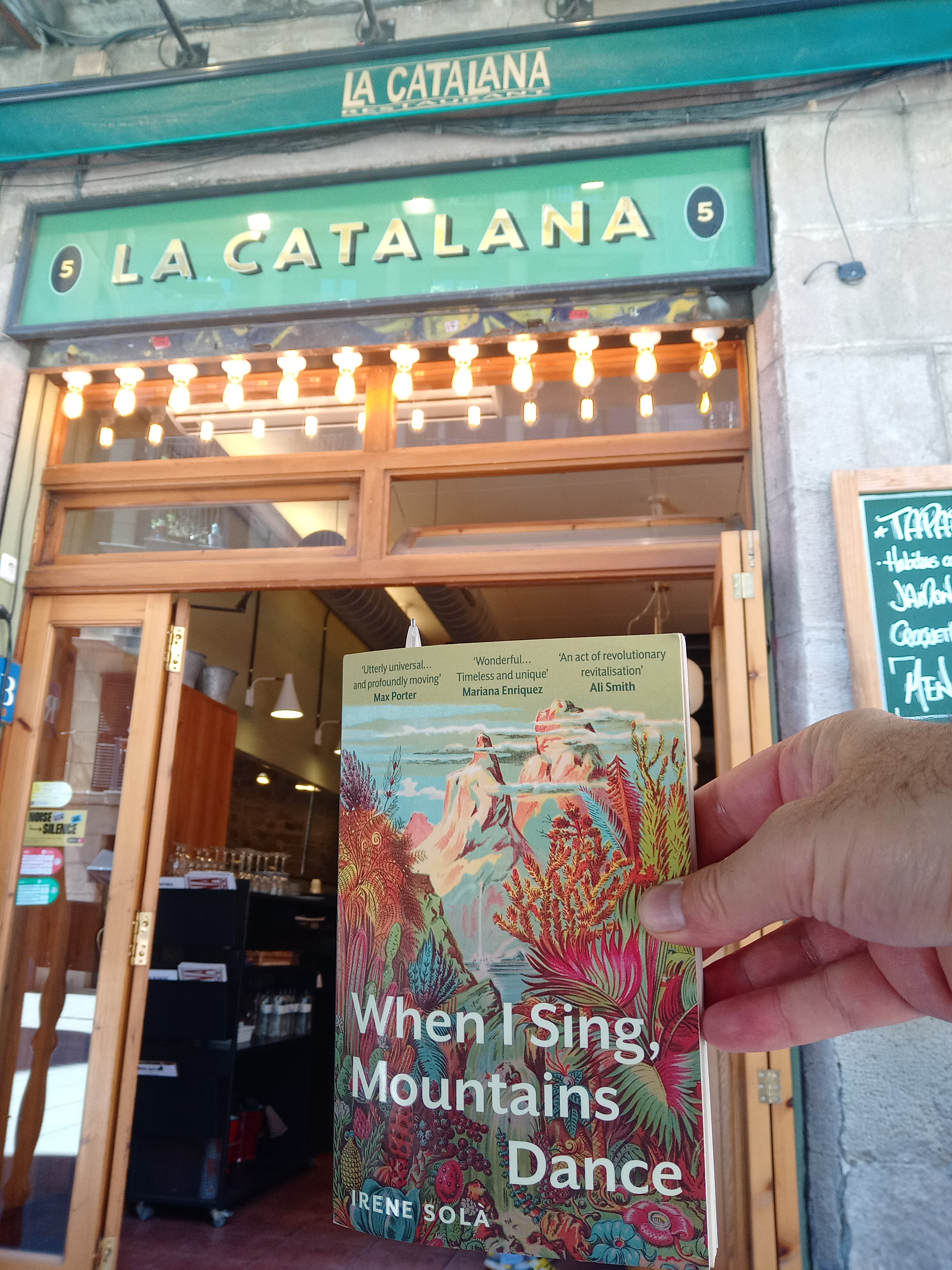
Early in May, I went with my son to Barcelona to meet up with my brother who was celebrating a significant birthday.
I couldn’t resist the opportunity to take a novel with me translated from Catalan, although during the four days we were there, I did not spend much time reading.
I read a few chapters before I went there and was intrigued to discover a novel of multiple voices and perspectives, not just human voices, firmly rooted in Catalonia culture.
While the first three days were in the city, I felt drawn towards the mountains and so we spent a day in nearby Montserrat.
When I sing, Mountains Dance is set near a village high in the Pyrenees. It is a lyrical, mind-expanding work, littered with references to the folklore and history of Catalonia that brings alive, and gives voice to, every aspect of life within its unique biosphere.
The first chapter is entitled Lightning and I cannot be sure that it is lightning that speaks; perhaps it is the many facets of the storm that narrates. However, it is lightning that wreaks devastation and change on the community that we will then slowly be introduced to, over the following chapters.
After our arrival all was stillness and pressure, and we forced the thin air down to bedrock, then let loose the first thunderclap. Bang! A reprieve. And the coiled snails shuddered in their secluded homes, godless and without a prayer, knowing that if they didn’t drown, they would emerge redeemed to breathe the dampness in. And then we poured water out in colossal drops like coins onto the earth and the grass and the stones, and the mighty thunderclap resounded inside the chest cavity of every beast.
Navigating Loss, Celebrating Survival
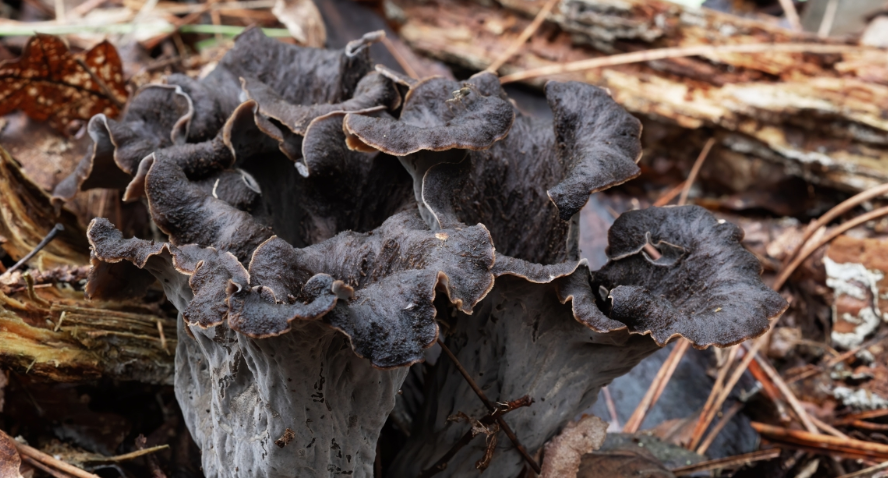
A man named Domènec, a husband and father of two children, is outside when the storm breaks. He is in the middle of rescuing a calf whose tail is caught in a jumble of wires, carrying a small load of black chanterelles (Trumpet of Death) he has foraged. In saving the life of one, nature then takes another, in an instant.
And when it was clear we were done, the birds hopped out onto branches and sang the song of survivors, their little stomachs filled with mosquitoes, yet bristling and furious with us. They had little to complain about, as we hadn’t even hailed, we’d rained just enough to kill a man and a handful of snails. We’d barely knocked down any nests and hadn’t flooded a single field.
Ghosts of the Past Acting on the Present
The four women who witnessed it approached him, then left him, gathering the soaking mushrooms he had dropped, women who made unguents and elixirs and all the other wicked things that witches do.
The death of the man sets off a catalyst of consequences for those left behind, his grieving wife, his newborn son, his neighbours.
I don’t know what hurts more: thinking only of the good memories and giving in to the piercing longing that never lets up, that intoxicates the soul, or bathing in the stream of thought that lead me to sad memories, the dark and cloudy ones that choke my heart and leave me feeling even more orphaned at the thought that my husband was not that all the angel I held him up to be.
Their voices are presented individually, then as the narrative moves along, the interconnectedness of this polyphonic world becomes increasingly apparent.
A Polyphonic Narrative
Irene Solà channels the unique voices of every living (or previously living) being: the lightning bolts, roe deer, mountains, the ghosts of civil war, the widow Sió and later her grown children, Hilari and Mia, as well as Mia’s lovers, with their long-buried secrets and their hidden pain.
The construction is non-linear, the voices fragmentary, but the threads of story rise up through the pages, like those black chanterelles from the damp forest floor.
When tragedy strikes the family a second time, the sister is forced to face life’s struggles and joys alone. A chorus of voices bears witness to all that passes, and the savage beauty of the natural environment, demonstrating aloneness as a state of human mind and not a reality.
Here, the voice of the black chanterelles:
The wild boar came, dark mouth, wet teeth, hot air, fat tongue. The boar came and ripped us out. A man came and ripped us out. The lightning came and killed the man. The women came and gathered us up. The women came and cooked us. The children came. The rabbits came. And the roe-deer. More men came and they carried baskets. Men and women came and they carried knives.
There is no grief if there is no death. There is no pain if the pain is shared. There is no pain if the pain is memory and knowledge and life. There is no pain if you’re a mushroom! Rain fell and we grew plump. The rain stopped and we grew thirsty. Hidden, out of sight, waiting for the cool night. The dry days came and we disappeared. The cool night came, and we grew. Full. Full of all the things. Full of knowledge and wisdom and spores. Spores fly like ladybugs. Spores are daughters and mothers and sisters, all at once.
Narrative Threads, Seeds, Spores, Growth and Healing
Sometimes the text reads like a story and other times like a hallucinatory dream, with a hidden message. Something of a puzzle, the various parts that make up this ecosystem, this community, the human and non-human. It is like imagining that the mountain and the trees really do bear witness to all and if they could share what they have witnessed, it would be something like this.
It requires slow reading and perseverance, as it takes a little while for the voices to become apparent and for the reader to accept that the human voices are not given the right to dominate the narrative. We are able to see and comprehend the wider picture if we have the patience to persevere.
Highly Recommended travel companion if visiting Catalonia.
Further Reading
Guardian Review: the mushroom’s tale – Animals, ghosts, humans, mountains and clouds share the narrative in this playful, deeply felt portrait of Catalonia and its people by Christopher Shrimpton
Irene Solà is a Catalan writer and artist, winner of the European Union Prize for Literature, the Documenta Prize for first novels, the Llibres Anagrama Prize, and the Amadeu Oller Poetry Prize. Her artwork has been exhibited in the Whitechapel Gallery.
By interlacing art and literature, Irene Solà’s work investigates the construction, uses and possibilities of narrative and storytelling, from the historical and popular contexts to the more contemporary.
The International Booker Prize shortlist celebrated six novels in six languages (Dutch, German, Korean, Portuguese, Spanish and Swedish), from six countries (Argentina, Brazil, Germany, Netherlands, South Korea and Sweden), interweaving the intimate and political in radically original ways. All the books were translated into English and published in the UK/Ireland.
The winner for 2024 of the International Booker Prize is Kairos by Jenny Erpenbeck (Germany) translated from German by Michael Hofmann. Jenny Erpenbeck was born in East Berlin in 1967, and is an opera director, playwright and award-winning novelist.
Kairos is an intimate and devastating story of the path of two lovers through the ruins of a relationship, set against the backdrop of a seismic period in European history.
Berlin. 11 July 1986. They meet by chance on a bus. She is a young student, he is older and married. Theirs is an intense and sudden attraction, fuelled by a shared passion for music and art, and heightened by the secrecy they must maintain. But when she strays for a single night he cannot forgive her and a dangerous crack forms between them, opening up a space for cruelty, punishment and the exertion of power. And the world around them is changing too: as the GDR begins to crumble, so too do all the old certainties and the old loyalties, ushering in a new era whose great gains also involve profound loss.
What the International Booker Prize 2024 judges said
‘An expertly braided novel about the entanglement of personal and national transformations, set amid the tumult of 1980s Berlin.
Kairos unfolds around a chaotic affair between Katharina, a 19-year-old woman, and Hans, a 53-year-old writer in East Berlin.
Erpenbeck’s narrative prowess lies in her ability to show how momentous personal and historical turning points intersect, presented through exquisite prose that marries depth with clarity. She masterfully refracts generation-defining political developments through the lens of a devastating relationship, thus questioning the nature of destiny and agency.
Kairos is a bracing philosophical inquiry into time, choice, and the forces of history.’
Read An Extract From the Opening Chapter
Prologue
Will you come to my funeral?
She looks down at her coffee cup in front of her and says nothing.
Will you come to my funeral, he says again.
Why funeral— you’re alive, she says.
He asks her a third time: Will you come to my funeral?
Sure, she says, I’ll come to your funeral.
I’ve got a plot with a birch tree next to it.
Nice for you, she says.
Four months later, she’s in Pittsburgh when she gets news of his death.
I haven’t read Kairos though it has had mainly positive reviews. I have read one of her novels Visitation some years ago and didn’t get on with that one too well, so I haven’t picked up any more of her work. I have no doubt that it is well written, I’m just not that interested in the premise.
Have you read Kairos? Or any other novels by Jenny Erpenbeck? Let us know in the comments below what you thought.













 Word by Word