Cold Enough for Snow by Jessica Au

Cold Enough for Snow is a 96 page literary fiction novella set in Japan, that can be read in an afternoon.

Mother Daughter Relationships

literary fiction set in Japan Australian literatureIt is an intricate, observant story told by a daughter who has arranged to take her mother on holiday to Japan. She recounts their days and interactions and tries to anticipate what her mother might like, knowing that the intersection of their common interests is negligible.

Mother and daughter have been raised in different countries and cultures, additionally the mother was not raised in the same country as her parents, so both have grown up migrants, knowing little about what came before, except that it has influenced the way they would have been raised.

Do We Ever Really Know Our Mother?

There is a void, a vacuity, a kind of absence of understanding that is very present, in terms of the way the daughter tries to feel her way towards guessing what her mother might like, what to propose to her. The mother doesn’t have set ideas or desires regarding what they might do, she is like a stranger, a visitor to the holiday, not exhibiting the same kind of intentionality that the daughter possesses.

Earlier in the year, I had asked her to come with me on a trip to Japan. We did not live in the same city anymore, and had never been away together as adults, but I was beginning to feel it was important, for reasons I could not yet name. At first, she had been reluctant, but I had pushed, and eventually she had agreed, not in so many words, but by protesting slightly less, or hesitating over the phone when I asked her, and by those acts alone, I knew that she was finally signalling that she would come. I had chosen Japan because I had been there before, and although my mother had not, I thought she might be more at ease exploring another part of Asia. And perhaps I felt this would put us on equal footing in some way, to both be made strangers.

mt fuji Cold Enough for Snow Jessica Au

Photo by Tomu0e on Pexels.com

It was autumn and though pretty, there had been adverse weather warnings.

The daughter describes the minutiae of their every movement, of taking trains, changing platforms, the places they visit, the flora and fauna, occasionally flashing back to memories to when she travelled with her husband Laurie; wishing that the same excitement of discovery she’d had with him might be present with her mother.

She also recalls how difficult her younger sister was, growing up. Now a mother herself, she is dealing with difficult behaviours that have passed through to her own child, little understanding why she had been so troubled.

Ask Me No Questions, I Tell You No Lies

She tries to engage her mother in conversation, they talk; the daughter asks questions, the mother answers.

I thought about how vaguely familiar this scene was to me, especially with the smells of the restaurant around me, but strangely so, because it was not my childhood, but my mother’s childhood that I was thinking of, and from another country at that. And yet there was something about the subtropical feel, the smell of the steam and the tea and the rain…

It was strange at once to be so familiar and yet so separated. I wondered how I could feel so at home in a place that was not mine.

light soul

Photo by Pixabay on Pexels.com

The daughter has had a particular education that influences the way she observes things, she wants to share that with her mother, she tries, mostly her mother smiles when she shares these perspectives, but it is impossible to tell if she agrees.

Whenever I’d asked her what she’d like to visit in Japan, she’d often said she would be happy with anything. The only question she’d asked once was whether, in winter, it was cold enough for snow, which she had never seen.

Existential Beliefs and Nothingness

One day the daughter desires to visit a church, reportedly a beautiful building designed by a famous architect, in a suburb near Osaka. Though she knew her mother did not believe in that religion, visiting that place was supposed to be a profound experience, it provoked and exchange between the two.

I asked my mother what she believed about the soul and she thought for a moment. Then, looking not at me but at the hard, white light before us, she said that she believed that we were all essentially nothing, just series of sensations and desires, none of it lasting. When she was growing up, she said that she had never thought of herself in isolation, but rather as inextricably linked to others. Nowadays, she said, people were hungry to know everything, thinking that they could understand it all, as if enlightenment were just around the corner. But, she said, in fact there was no control, and understanding would not lessen any pain. The best we could do in this life was to pass through it, like smoke through the branches, suffering, until we either reached a state of nothingness, or else suffered elsewhere.

The novella presents these two women and the things they do, snippets of their one sided conversations, their attempt to bond, to find a connection. They are transparent, one thing they have in common is the inability to pretend, there is no falseness, they are a product of those environments they’ve grown up trying to fit into, familiar yet unfamiliar, known, yet unknown, compelled by life’s circumstance to remain an enigma to each other.

It was an interesting read, that palpable desire to connect, the deep chasm between them, born of something outside their control, yet the human need to try and persevere, to find a way through anyway.

Further Reading:

Interview Bomb magazine: Chasing the Echoes of Belonging: Jessica Au Interviewed by Madelaine Lucas

Review, the guardian: a graceful novella about how we pay attention

Jessica Au, Author

Jessica Au is a writer, editor and bookseller based in Melbourne, Australia.

Cold Enough for Snow won the inaugural Novel Prize in 2022, run by Giramondo, New Directions and Fitzcarraldo Editions, and is set to be published in eighteen countries. Au won both the 2023 Victorian Premier’s Prize for Literature and Victorian Premier’s Prize for Fiction for Cold Enough for Snow.

“Migration is probably the one through line of my family. My grandfather migrated from China to Malaysia, my mother migrated from Malaysia to Australia. So, that’s three generations of migration. When I was younger, I would take my mother’s language and refer to Malaysia as “home”. Where I was living, where I was born, was never “home”. Even after living in Australia for so many years, that idea of home being elsewhere is constant and present. I don’t have a sense of belonging anywhere.” Jessica Au, interview, Bomb Magazine

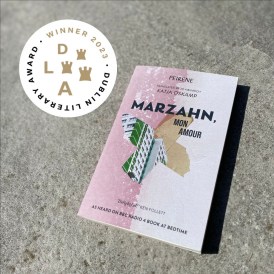
Dublin Literary Award Winner 2023

The wonderful Dublin Literary Award 2023 has announced their winner and I am pleased to learn it is one I have not only read, but it was one of my Top Fiction Reads of 2022

The Dublin Literary Award is unique in that it’s books are nominated by libraries from cities around the world. This year 84 libraries from 31 countries across Africa, Europe, Asia, the US, Canada, South America, Australia, and New Zealand made their nominations, the judges selected a shortlist of six novels and tonight they have awarded the prize to

Marzahn, Mon Amour by Katja Oskamp, translated by Jo Heinrich (read my review here) :

The 2023 Judging Panel, led by Professor Chris Morash of Trinity College Dublin, including Gabriel Gbadamosi, Marie Hermet, Sarah Moss, Arunava Sinha and Doireann Ní Ghríofa (author of my One Outstanding Read of 2020), commented:

 “Every so often, you come across a novel whose simple, direct honesty knocks you sideways.  There is an unaffected humility and generosity about Katja Oskamp’s Marzhan, Mon Amour that speaks to the value of community and to the dignity of ordinary lives. ‘The love I have inside me has turned to liquid,’ concludes the novel’s narrator, ‘and now runs into the most unlikely places’.  To read Marzhan, Mon Amour in Jo Heinrich’s translation from the German is to feel Katja Oskamp’s all-encompassing embrace of her world.”

Marzahn Mon Amour Katja OskampMarzhan Mon Amour is a memoir-ish novel, collective history and a character study of a group of people living in and around a multi-storied communist-era plattenbau prefab apartment building in the working class quarter of Marzahn, East Berlin, told through the eyes and ears of a woman facing her middle years.

“The middle years, when you’re neither young nor old, are fuzzy years. You can no longer see the shore you started from, but you can’t yet get a clear enough view of the shore you’re heading for. You spend these years thrashing about in the middle of a big lake, out of breath, flagging from the tedium of swimming. You pause, at a loss, and turn around in circles, again and again. Fear sets in, the fear of sinking halfway, without a sound, without a cause.”

The narrator is a 45 year old woman (referred to in some articles as the author herself), whose partner is ill, requiring her to abandon her career as a writer and take up something else. She retrains as a chiropodist and joins Tiffy who offers beauty treatments and massage and Flocke who does nails, in a salon at the foot of an eighteen storey building.

If the opening paragraph quoted above, sounds melancholy, know that it represents a turning point.

Marzahn, Mon Amour is a tender reflection on life’s progression and our ability to forge connections in the unlikeliest of places under the the most unassuming circumstances.

I highly recommend you read it! A wonderful, life-affirming, inspirational read.


Of Cattle and Men by Ana Paula Maia tr. Zoë Perry

Charco Press Brazilian Literature novellaBrazilian author, Ana Paula Maia’s Of Cattle and Men, was an interesting and confronting story that in parts was hyper realistic in a visceral way, and fable-like in other ways. It is the fourth book I’ve read this year from the Charco Press Bundle 2023.

Set in a place where there is a one-man owned slaughter-house, not far away a hamburger processing plant, the author creates a small world that concerns men and their relationship to meat and their relationship to the beings who provide it.

Two enclosures, one for cattle and one for men, standing side by side. Sometimes the smell is familiar. Only the voices on one side and the mooing on the other distinguish the men from the ruminants.

Humanity has been able to consume meat in part because they are separated from the process of how to turn something sentient into something edible.

Man’s Need for Ritual

Here, we meet Edgar Wilson, stun operator, who has ritualised his occupation and believes that it has an effect on the animal.

Edgar picks up the mallet. The steer comes up close to him. Edgar looks into the animal’s eyes and caresses its forehead. The cow stomps one hoof, wags its tail and snorts. Edgar shushes the animal and its movements slow. There is something about this shushing that makes the cattle drowsy, it establishes a mutual trust. An intimate connection. With his thumb smeared in lime, Edgar Wilson makes the sign of the cross between the ruminant’s eyes and takes two steps back. This is his ritual as a stun operator.

He has a dark history and holds little compassion for men who are carelessly cruel. It brings out his own.

Milo decides to keep quiet. He knows Edgar Wilson’s loyalty, his methods, and he knows that Zeca really was useless. No one had reported him missing, and if anybody came looking for the boy, he would simply say he never showed up for work again. That he doesn’t know where he’s gone off to. Just as no one questions death in the slaughterhouse, the death of Zeca, whose rational faculties were on par with the ruminants, would surely be ignored. Senhor Milo knows cattlemen, he’s cut from the same cloth. No one goes unpunished. They’re men of cattle and blood.

Recently the animals waiting in the holding area have become unsettled and strange, unexplained happenings have been occurring. The men stay up into the night to investigate and try to find the suspected predator that is disturbing the animals and worse.

How Language Eviscerates and/or Exposes

I thought this novella was quite incredible and it evoked all kinds of memories and thoughts, that may not be like many other readers.

Firstly, the realism of the slaughter house. Although this novel concerns what seems like a small scale operation, the attention to detail in its execution and the evocation of all the senses in that environment immediately reminded me of memories I would rather forget.

When I was a university student, one summer I needed to find a job allied to the agricultural industry. I wrote to a family friend who was a ‘stock agent’ asking if he knew of an opportunity. He suggested a “freezing works” (an interesting choice of name used in New Zealand and Australia to describe a slaughterhouse at which animal carcasses are frozen for export) and so I began my summer working in this enterprise’s pay office, transferring data from daily timesheets into a ledger that would eventually be input into a computer to generate their pay. Far from the action, except that one of my roles was to go and collect those time sheets from the different departments. And that is where and how, I witnessed, with every one of my senses, everything.

Benevolent Bovines and Other Sentient Beings

of cattle and men Ana Paula Maia

Photo by Pixabay on Pexels.com

Secondly, the question of what an animal intuits and feels. Being raised on a 1,600 acre sheep and cattle farm, I can acknowledge that as humans, we are conditioned to accept certain realities and often made to participate in them, until the age of free will. Within childhood, in my case, we occasionally had access to a ‘farm animal’ as a pet – the relationship building that can occur between the human and the animal is undeniable, but equally, not every human will allow that relationship to occur.

Our pet lambs (after the annual school pet day) were put back into the flock; my pet calf, I rescued from one fate (slaughter), to have her destined for another (to become the ‘house cow’), providing daily milk to the family; she could therefore keep her offspring for six months. There was on occasion, an attempt to ‘mother’ one newborn (orphan) onto another, an act that could result in the false mother killing the strange newborn, despite it being dressed in the skin of her own dead lamb.

There is indeed a knowing.

For a few moments, Edgar Wilson yields to the late afternoon sun that has not yet fully set, but that is rushing headlong into a moonless, starless night. He knows how to listen in silence, even when others are just sighing or snorting. Life in the country has made him like the ruminants, and being a cattleman, he is able to strike a perfect balance between the fears of irrational beings and the abominable reverie of those who dominate them. He sinks two fingers into the paint can and marks the foreheads of the four cornered cows.

In Of Cattle and Men, Ana Paula Maia shows man’s inhumanity to man and his denial that an other meat-producing species might have awareness, consciousness or feeling. So the men are confused by what is occurring and they look only towards what they know, that which man is capable of; therefore they suspect other men, each other. They disbelieve what is in front of them, what they see.

Because what if those animals had agency?

Certainly not my usual kind of read, but I read this novella in one sitting, intrigued by the premise and captivated by the writing. Brilliantly portrayed, evocative of place and confronting to humanity’s blindness, I’d definitely read more by Ana Paula Maia.

Ana Paula Maia, Author

Ana Paula Maia (Brazil, 1977) is an author and scriptwriter and has published several novels, including O habitante das falhas subterráneas (2003), De gados e homens (2013), and the trilogy A saga dos brudos, comprising Entre rinhas de cachorros e porcos abatidos (2009), O trabalho sujo dos outros (2009) and Carvão animal (2011). Her novel A guerra dos bastardos (2007) won praise in Germany as among the best foreign detective fiction.

As a scriptwriter she has worked on a wide range of projects for television, cinema and theatre. She won the São Paulo de Literatura Prize for Best Novel of the Year two years in a row: in 2018 for her novel Assim na Terra como embaixo da Terra, and in 2019 for Enterre Seus Mortos.

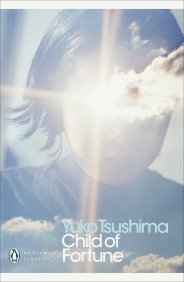
Child of Fortune by Yuko Tsushima tr. Geraldine Harcourt

‘Hark, my distant, quiet friend, and feel
Your breath still enriching this emptiness.’
RilkeSonnets to Orpheus

Such a thought provoking novel.

Child of Fortune begins inside Koko’s dream. Dreams appear often in the narrative, as do memories, not exactly nightmares, they make her uneasy, leave her feeling unsatisfied.

The dream consisted simple of staring at the ice mountain. It had no beginning and no end. When she opened her eyes the mountain was there, and when she closed them it was gone. Cold and abrupt, it wouldn’t allow her emotions free play like any ordinary dream.

Japanese literature literary fiction36 year old Koko raises her 11 year old daughter Kayako alone, she works part time teaching piano, though the way she is obliged to teach it pains her. Since she bought her apartment (thanks to a partial inheritance) she has also become independent of her family, something her sister Shoko constantly criticizes her for.
Shoko chose to stay living in the family home after the death of their mother, using her money to upgrade their lifestyle, the children’s schools. She is full of judgement. Undermining Koko, she lures the daughter away, to the point where Kayako only spends Saturday’s with her mother.

Koko was in fact proud of the way she and her daughter lived in their apartment – with no frills, and entirely on her own earnings – and she wanted Kayako to share that pride, but the cousins in their setting made a too-perfect picture.

Not wishing to nag and risk losing her completely (as she had done with the father and her lover), she allows her this freedom to come and go. She suspects the visit is a way of her sister keeping an eye on her. Her daughter confirms it.

That’s right. She said we can’t let your mother out of our sight or there’s no telling what she’ll get up to next.

Child of Fortune Dreams Ice Mountain Yuko

Photo Simon Berger @ Pexels.com

Koko begins to feel unwell.

She remembers her marriage to Hatanaka and how ill-suited they were, her husband so focused on his studies, never working, all his women friends, the loss of the few of her own, because they didn’t like him.

Though she has no memory of it, her father died when she was young, she knew he had gone to live elsewhere before she was born. Her mother too had raised her children alone.

Koko suspects she may be pregnant. She ignores it.

Three people. Koko was strongly attracted by the number’s stability. Not two, not four, but three. A triangle: a full, beautiful form. There was something to be said for the square, too, but the triangle was the basis of all form. The dominant.

She remembers her affair with Doi, three years before, how attentive he had become when he became a father himself. Then in the fall, she began seeing Osada, a friend of Hatanaka, stirring up old, deep regrets.

He reminds Koko of her brother who died, a child who found happiness in making others happy. The loss of this childhood connection is deep, profound, forgotten, almost non-existent. He had been Kayako’s age.

She was sure there could be no happiness for her without her brother. For the first time, Koko knew a kind of joy that had nothing to do with the intellect. The boy’s emotions were unclouded: what pleased him meant joy, what displeased him meant anger; but he experienced his deepest joy in enduring what displeased him for the sake of those he loved. She wondered why. Though he lacked intelligence, he was endowed with love, which was another kind of wisdom.

The sister arranges an interview for Koko’s daughter at the school her cousins attend. Koko isn’t comfortable but allows it. Kayako is worried about what to say about her father, having heard a lot of people are turned down because of their home background.

Koko’s dreams are like insights into a state of mind she can’t quite grasp. She is passive, the consequences of which threaten to overwhelm her, the potential loss of her daughter, the pending arrival of a baby, the secrecy around it. She thinks of everything, except what she must do, make a decision, confront reality. She has become somewhat paralysed.

She could hear her sister’s voice now, drawing gradually closer: so you’ve finally begun to understand what a bad mother you’ve been, how little sense you’ve shown? And hear herself protest; no, that’s not it – don’t think I’ve liked choosing a different world from other people. I know I’ve been stubborn – but not about Kayako alone. All my life, though often I haven’t known which way to turn, I have managed to make choices of my own. I don’t know if they were right or wrong. I don’t think anyone can say that.

Because of the insight into her mind, her thoughts, dreams, her past, we see all aspects of Koko and we hear the damning, irresponsible voice of her sister, the judgement that wears down what little self-worth remains. There is no recognition of her pain, of her depression, neither seen within nor by others. It is never mentioned, never thought of, yet it is obvious.

One thing, though, was certain: that she had never betrayed the small child she’d once been; the child who had pined for her brother in the institution; the child who had watched her mother and sister resentfully, unable to understand what made them find fault with her grades, her manners, her languages. And she was not betraying that child now, thirty years later. This, she had always suspected, was the one thing that mattered. And although she was often tempted by a growing awareness of the ‘proper thing to do’ once Kayako was born – not only in the harsh advice she was constantly offered by others, but within her own mind – in the long run her choices had always remained true to her childhood self.

Tsushima explores this in a powerful stream of consciousness narrative that invites all kinds of reactions from readers, many sit in judgement, casting Koko as the bad mother, the unconventional mother, the selfish woman pursuing her own desires.

And yet, she is the new woman, safeguarding the home, choosing to do something she loves without it stealing all her time, so she has time for her daughter and herself. She is independent and does not aspire to that which accrued wealth can buy.

It is a reflection on the many manifestations of grief, of events, moods and emotions that arrive unbidden; often unseen, rarely unexplained, but very present; and how little patience our society can have for understanding, how punitive we can be in our insistence on conventionality, how intolerant of depression, of weakness, of prolonged grief.

Rather than stand for any one view, Tsushima presents her character Koko and shows us the effect of her struggle for freedom.

As I finished the book, which was originally published in 1978, I was struck by the relevance of a quote by the French author Constance Debré, author of Love Me Tender translated by Holly James; in the Guardian on 14 Jan, 2023:

“There’s always a price to pay for freedom. To me, that’s a happier, livelier way to see things: rather than saying there are injustices or blows raining down on you, you realise it’s all because you’re living life in the way you want, seeking out an existence … trying to give life some shape. That’s why life and literature are so connected: it’s the quest for form.”

Yuko Tsushima, Author

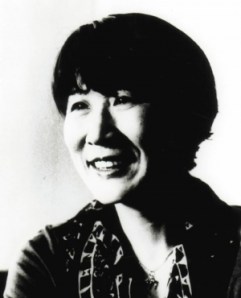
Japanese literature feminismYuko Tsushima (1947-2016) was a prolific writer, known for her stories that centre on women striving for survival and dignity outside the confines of patriarchal expectations. Groundbreaking in content and style, Tsushima authored more than 35 novels, as well as numerous essays and short stories.
Like her protagonist in Child of Fortune, Tsushima’s childhood was marked by the death of her disabled brother. Her father, Osamu Dazai was one of the most celebrated Japanese writers of the 20th century, who passed away when she was a year old.

Tsushima’s 1978 novel Child of Fortune  won the 1978 Women’s Literature Prize in Japan, it was published in English in 1986 by The Women’s Press, earning the translator Geraldine Harcourt the Wheatland Foundation’s translation prize in 1990.

Further Reading

New York Times: The Overlooked Autofiction of Yuko Tsushima By Abhrajyoti Chakraborty

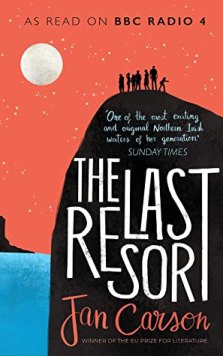
The Last Resort by Jan Carson

The only downside in reading The Last Resort is that it was so short!

Northern Irish Literature short storiesThis is the novel I have been waiting for Jan Carson to write, for here is a writer who in her ordinary life as an arts facilitator has brought together people from opposite sides in their way of thinking, encouraging them to sit down and write little stories, enabling them to imagine from within the shoes of an(other) – teaching the practice of empathy.
Her novel The Fire Starters comes from that place of darkness and indifference, when there is no empathy. I found it disturbing. I’ve since realised gothic novels aren’t my thing.

Here, Carson digs deeper into the psyche of the many that make up their community and finds a common thread that connects them, something that both pushes them forward and holds them back and shows it in its many guises, through a kaleidoscope of colourful characters. Everyone has their own mini drama and troubling perspective, that coming together might create a shift away from.

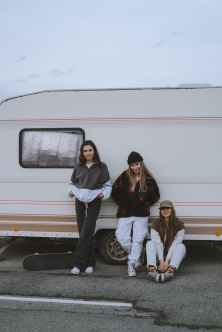
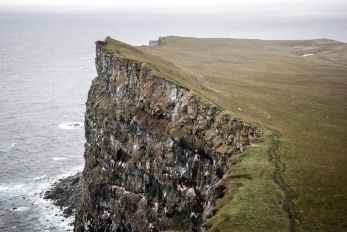
Set in a fictional Seacliff caravan park in Ballycastle on the North Coast of Ireland, as the book opens we meet Pete, who now (reluctantly) runs the caravan park and Frankie, who has gathered a few friends for the 50th anniversary of Lynette, for whom they will place a memorial bench with a brass plaque at the top of the cliff.

A caravan on the North Coast was the height of luxury, somewhere you could escape to at the weekend. They felt safe here. Or they did until that bomb went off in the car park.

the last resort ballycastle jan carson ireland

Photo Y. ShuraevPexels.com

It’s the first day of the holiday season and most of these people have been coming here for years, though for some this may be their last visit. Not everyone is happy to be here, like Alma and her two siblings, especially when they wake up one morning to discover their phones and her iPad are missing.

Alma is into Agatha Christie and when she discovers they are not the only family that has something missing she decides to investigate, even if there hasn’t been a murder. Yet. No really, there’s no murder.

It’d be easy to push someone over that cliff. It’s so crumbly. You could make it look like an accident. I can think of at least three different times Agatha Christie killed somebody by shoving them off a cliff. If my iPad wasn’t gone I’d google to see if there were more. I’m raging about losing my iPad. Now I have to run my investigation the old-fashioned way. Snooping around. Observing suspects. Taking notes on my jotter. Maybe it’s better like this. Poirot never looked anything up on Wikipedia or checked suspects’ alibis on Facebook. If Poirot was here, he’d say, forget the iPad, Alma. Use your leetle grey cells. I’m doing my best. I’m watching everyone, even Mum. It’s always the person you least suspect.

Alma’s Mum Lois has a PhD in mythology and her thing is sea monsters. Monsters, wizards and demons, that’s her parents thing, Harry Potter is for kids, Alma likes the real world, way scarier.

Seacliff Northern Ireland The Last Resort

Photo by Tatiana on Pexels.com

Each chapter is narrated by one of 10 characters in the caravan park and about each family we learn what is holding them back, what consumes their minds. And while there is not a murder, no smoking gun, there is the cliff – and from the beginning you sense its ominous presence, the way it draws everyone to its apex.

We meet Alma again (my favourite character) as she trails around the caravan park interrogating her disapproving adult suspects. She’s brilliant.

Richard is a complete empath, hiding it from his family as if it were a sign of weakness, a position likely to be exposed given he has used his father’s caravan to house sixteen homeless men, many of them immigrants.

I couldn’t tell Dad about them. I’ve never really told him what I really do. He wouldn’t understand. In his world, you work hard, and you do well. There’s no reason to end up on the street, hawking The Big Issue, unless you’ve brought it on yourself.

Kathleen struggles to accept her daughter for who she is, because of societal expectations, but finds it hard to follow through with her disapproval because she desperately wants a relationship with her grandson Max. She finds Alma strange, intense and curious.

Lois answers all her questions. She talks to her weans like they’re adults. When she split up with her husband, Alma was fit to tell me the ins and outs of the whole divorce. She was only ten. You have to protect a child that age. They’re not old enough to know everything. Still, I have to say I envy them – calearied as they are – at least they talk to each other, really properly talk. We’re all adults in this caravan but we’ll spend the whole weekend talking about nothing. The weather. The baby. Whether or not to put the kettle on. Avoiding the elephant in the room because nobody wants to cause a scene.

So many great lines, so much humour, angst, regret, camaraderie as the story leads to its wild denouement on the seacliff, as the thing that’s been holding them all together, holding them back, demands to be released.

Just brilliant. Highly Recommended.

Further Reading

Best Caravans in Fiction (A List in Progress), Jan Carson

Jan Carson, Author

Northern Ireland Author Fiction

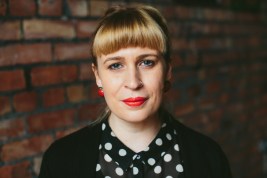
Jan Carson by ©Jonathan Ryder

Jan Carson is a writer and community arts facilitator based in Belfast. Her debut novel Malcom Orange Disappears (2014) was published to critical acclaim, followed by a short-story collection, Children’s Children (2016), and two flash fiction anthologies Postcard Stories (2017) and Postcard Stories 2 (2020).

Her second novel The Fire Starters (2019) translated into French by Dominique Goy-Blanquet as Les Lanceurs de Feu, won the EU Prize for Literature, was shortlisted for two prestigious French literary awards the Prix Femina and Prix Médicis in 2021 and was also shortlisted for the Dalkey Novel of the Year Award.

Her third novel The Raptures was released in Jan 2022.

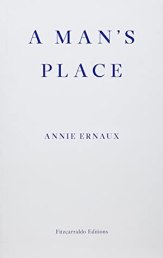
A Man’s Place by Annie Ernaux tr. Tanya Leslie

A book that can be read in an afternoon, this is my first read of Annie Ernaux’s work, one I enjoyed and appreciated. I did find myself wondering why the French title La place was changed to A Man’s Place. I find the change in title unnecessarily provocative and limiting.

La Place autofiction memoir French literature women in translationAt only 76 pages, it is a brief recollection that begins in quiet, dramatic form as she recalls the day her father, at the age of 67, unexpectedly, quite suddenly dies.
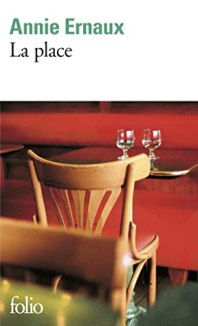
Other memories arise as she recalls this shocking one and it is this same recollection she will end the book with, albeit alongside a few other now restored memories, once she has written her way through many others as she attempts to create a tableau of anecdotes that describe the man her father was, their family, social status and surroundings.

A child who will rise into and feel comfortable within a middle class environment, marrying into it, she then tries to look back, remember and understand the characteristics and desires of her family – her father in particular – now that she dwells on the other side, among the petite bourgeoisie.

Having decided she has no right to adopt an artistic approach to write about him (the novel), she embarks on a more neutral tone.

I shall collate my father’s words, tastes and mannerisms, the main events of his life, all the external evidence of his existence, an existence which I too shared.
No lyrical reminiscences, no triumphant displays of irony. This neutral way of writing comes to me naturally, it is the very same style I used when I wrote home telling my parents the latest news.

Neither fiction or nonfiction, this work has  been described as an autosociobiographical text, one that explores their lives and the social milieu within which they are surrounded, dwell and evolve.

Though she only met her grandfather once, she sketches him through overheard comments, a hard man that no one dared quarrel with, a carter for wealthy landowning farmers.

His meanness was the driving force which helped him resist poverty and convince himself that he was a man. What really enraged him was to see one of the family reading a book or a newspaper in his house. He hadn’t had time to learn how to read or write. He could certainly count.

French memoir autofiction nonfictionErnaux’s father was fortunate to remain in education until the age of 12, when he was hauled out to take up the role of milking cows. He didn’t mind working as a farmhand. Weekend mass, dancing at the village fetes, seeing his friends there. His horizons broadened through the army and after this experience he left farming for the factory and eventually they would buy a cafe/grocery store, a different lifestyle.
Ernaux shares memories, observing her father and her own growing awareness of the distance between his existence and way of being and that witnessed at the homes of friends she becomes acquainted with, as she straddles the divide, living in one world, familiar with the other, neither judging or sentimentalising the experiences as she notes them down.

In front of people whom he considered to be important, his manner was shy and gauche and he never asked any questions. In short, he behaved intelligently. Which consisted in grasping our inferiority and refusing to accept it by doing everything possible to conceal it.

They are a snapshot in time and of a place and way of life of a certain social class and milieu, one she is able to preserve by collecting these memories in a kind of obituary to both her father and the places he lived and worked, the people he loved, the mannerisms and behaviours he engendered.

His greatest satisfaction, possibly even the raison d’être of his existence, was the fact that I belonged to the world which had scorned him.

Annie Ernaux, Author

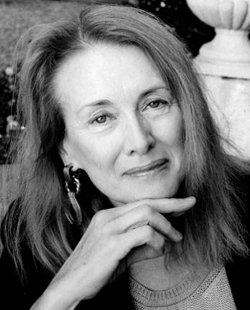
Annie ErnauxBorn in 1940, Annie Ernaux (née Duchesne) was born in Lillebonne and grew up in Yvetot, Normandy, where her parents ran a café and grocery store. She was educated at a private Catholic secondary school, encountering girls from more middle-class backgrounds, and experiencing shame of her working-class parents and milieu for the first time. After studying at Rouen University she became a school teacher.

Her books, in particular A Man’s Place (La Place) and A Woman’s Story (Une femme) have become contemporary classics in France.

One of France’s most respected authors, she has won multiple awards for her books, including the Prix Renaudot (2008) for The Years (Les Années) and the Marguerite Yourcenar prize (2017) for her entire body of work. The English translation of The Years (2019) was shortlisted for the Man Booker prize International and won the Warwick Prize for Women in Translation (2019).

The main themes threaded through her work over more than four decades are: the body and sexuality; intimate relationships; social inequality and the experience of changing class through education; time and memory; and the overarching question of how to write these life experiences.

Fitzcarrraldo Editions have now translated and published seven of her works into English.

Small Things Like These by Claire Keegan

Claire Keegan is an Irish writer who writes atmospheric, slice of life novellas on an aspect of Irish life. I read her novella Foster some years ago, a touching and eerie story of a girl caught between two sets of parents, that is unsettling, though never quite reveals the source of this tension, that is left somewhat to the reader’s imagination.

Small Things Like These is set in an Irish town in 1985 in the lead up Christmas. Bill Furlong, a father of five daughters is a coal merchant, raised by a single mother who was a housemaid for an upper class woman who allowed her to keep her son with her. The story recalls an event that occurs at the nearby convent, when Bill is making his deliveries and we observe different members of the community’s reaction to that.

Irish literature Magdalen laundries shaming mothers religious oppressionI admire the way Claire Keegan creates atmosphere and a sense of place, I could well imagine the small Irish town they lived, the cold, the workplace, the river – although I had to keep reminding myself it was the 1980’s and that there was electricity. Bill’s deliveries of wood and coal and the way the women made it feel like a much earlier era, though I don’t doubt it was freezing then as few could afford to heat their homes by other means.

The character of Bill Furlong was interesting and held potential, both due to the unique circumstance of his upbringing, which made him an empathetic character, and the fact that his wife and other women in the community had a different opinion or perception to his, regarding the situation that he will be confronted with.

The blow was cheap but it was the first he’d heard from her, in all their years together. Something small and hard gathered in his throat then which he tried but felt unable to say or swallow. In the finish, he could neither swallow it down nor find any words to ease what had come between them.

magdalen laundries adoption Ireland patriarchy

Photo by Mikhail Nilov on Pexels.com

Furlong was one of very, very few babies born to a woman out out wedlock who got to stay with his mother, due to the generosity of his mother’s employer.

When we meet him he is a grown married man with daughters, with his own business, though still struggling and not able to imagine a time when that might change. There is something in him that is unsettled despite his circumstance, something slowly revealed that he seeks liberation from.

On making a delivery to the nearby convent, where his daughters are at school, he becomes aware of the fact there are other young women there, who work with the nuns and provide the community with laundry services.

It is a subtly consciousness raising novel yet somewhat ironic and convenient to this reader that the empathetic character is a working man with daughters. While the story conveniently sidesteps the significant issues, it takes a provocative stance in choosing to instill empathy in a character, who represents generally, the one we never look at – the boy involved, the father or brother who punished their daughter/sister, or the decision maker’s of the institutions (church and state) that carried out the punishment of these young women. In this respect, the premise of the novel feels totally unrealistic, a Disney-like fantasy. The reality is that it is very likely no one ever did was Bill purports to do here.

Claire Keegan Small Things Like These Men With EmpathyIt made me recall another character, Albert, from the film Made in Dagenham, who was initially the only man who supported a group of female factory workers fighting for equal rights at the Ford Dagenham factory in 1968 – the reason he supported them was because he had been raised by a single mother – perhaps there is something to be said for the development of a deeper empathy in men who’ve been raised by single mothers.

One of the other things that did stand out was the prevalence and contribution of community gossip to the development of judgement and insinuation. He is warned by the woman running the café where his men eat lunch.

‘Tis no affair of mine, you understand, but you know you’d want to watch over what you’d say about what’s there?’

Those that listen to and contribute to gossip are of a different kind than those who respond to an injustice that was right in front of them, despite it being none of their business. Bill was of the latter.

Overall, I felt like this novel had only just begun and then it was over; it left me with too many questions and felt like it was set in a time that was decades earlier than the 1985. It read more like a promising beginning, than a complete novel. Deliberately provocative perhaps.

N.B. Thank you to the publisher for providing an ARC via NetGalley.

Warning: Likely to trigger adoptees or any woman coerced by society, to give up a child to adoption.

What Were The Magdalene Laundries?

A Campaign for Justice Mothers AdopteesFrom the foundation of the Irish Free State in 1922 until 1996, at least 10,000 girls and women were imprisoned, forced to carry out unpaid labour and subjected to severe psychological and physical maltreatment in Ireland’s Magdalene Institutions. These were carceral, punitive institutions that ran commercial and for-profit businesses primarily laundries and needlework.

After 1922, the Magdalene Laundries were operated by four religious orders (The Sisters of Mercy, The Sisters of Our Lady of Charity, the Sisters of Charity, and the Good Shepherd Sisters) in ten different locations around Ireland. The last Magdalene Laundry ceased operating on 25th October, 1996.

The women and girls who suffered in the Magdalene Laundries included those who were perceived to be ‘promiscuous’, unmarried mothers, the daughters of unmarried mothers, those who were considered a burden on their families or the State, those who had been sexually abused, or had grown up in the care of the Church and State.

Confined for decades on end – and isolated from their families and society at large – many of these women became institutionalised over time and therefore became utterly dependent on the relevant convents and were thus unfit to re-enter society unaided.

Further Reading

Guardian Interview: The acclaimed Irish writer on writing short works, the Magdalene Laundries and her new hobby, horse training by Claire Armistead

Article: How Ireland Turned ‘Fallen Women’ Into Slaves

Book: Ireland and the Magdalene Laundries: A Campaign For Justice by Katherine O’Donnell – Sept 2021 – a devastating and vital account of life behind the high walls of Ireland’s institutions, featuring original research and testimony + the continued campaign for justice for victims and to advance public knowledge and research.

So Long A Letter by Mariama Bâ, tr. Modupé Bodé-Thomas

An excellent Sunday afternoon read and pertinent to much that is being written and read in the media under the banner of the silencing of women today.

This short, articulate novella is a conversation, in the form of a lengthy letter from a widow to her best friend, whom she hasn’t seen for some years, but who is arriving tomorrow. It is set in Senegal, was originally written and published in French in 1980 and in English in 1981, the year in which the author died tragically of a long illness.
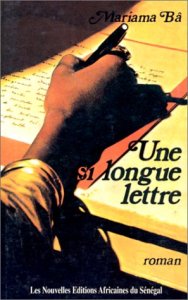
Our recent widow is reflecting on the emotional fallout of her husband’s death, how she is unable to detach from memories of better times in the past, during those 25 years where she was happily married and the only wife of her husband, thoughts interrupted by the more bitter, heart-breaking recent years where she was abandoned by him for the best friend of her daughter, a young woman, who traded the magic of youth for the allure of shiny things (with the exception of his silver-grey streaks, which he in turn trades in for the black dye of those in denial of the ageing process).

With his death, she must sit beside this young wife, have her inside her home for the funeral, in accordance with tradition. She is irritated by this necessity.

Was it madness, weakness, irresistible love? What inner confusion led Modou Fall to marry Binetou?
To overcome my bitterness, I think of human destiny. Each life has its share of heroism, an obscure heroism, born of abdication, of renunciation and acceptance under the merciless whip of fate.

By turn she expresses shock, outrage, anger, resentment, pity until her thoughts turn with compassion towards those she must continue to aid, her children; to those who have supported her, her friends; including this endearing one about to arrive; she thinks too of the burden of responsibility of all women.

And to think that I loved this man passionately, to think that I gave him thirty years of my life, to think that twelve times over I carried his child. The addition of a rival to my life was not enough for him. In loving someone else, he burned his past, both morally and materially. He dared to commit such an act of disavowal.
And yet, what didn’t he do to make me his wife!

It is a lament, a paradox of feelings, a resentment of tradition, a wonder at those like her more liberated and courageous friend, who in protest at her own unfair treatment (a disapproving mother-in-law interferes – reminding me of Ayòbámi Adébáyò’s Stay with Me), took the road less travelled, taking her four sons, arming herself with renewed higher education and an enviable career abroad.
It is a testament to the plight of women everywhere, who live in sufferance to the old ways of patriarchy, whose articulate social conscience has little outlet except through their children, whose ability to contribute so much more is worn down by the age-old roles they  continue to play, which render other qualities less effective when under utilised.

I am not indifferent to the irreversible currents of the women’s liberation that are lashing the world. This commotion that is shaking up every aspect of our lives reveals and illustrates our abilities.
My heart rejoices every time a woman emerges from the shadows. I know that the field of our gains is unstable, the retention of conquests difficult: social constraints are ever-present, and male egoism resists.
Instruments for some, baits for others, respected or despised, often muzzled, all women have almost the same fate, which religions or unjust legislation have sealed.

Ultimately, she posits, it is only love that can heal, that can engender peace and harmony and the success of family is born of the couple’s harmony, as the nation depends inevitably on the family.

I remain persuaded of the inevitable and necessary complementarity of man and woman.
Love, imperfect as it may be in its content and expression, remains the natural link between these two beings.

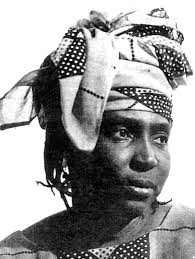
Mariama Bâ (April 17, 1929 – August 17, 1981) was a Senegalese author and feminist, who wrote in French. Born in Dakar to an educated and well-off family, her father was Minister of Health, her grandfather a translator in the occupying French regime. After the premature death of her mother, she was largely raised in the traditional manner by her maternal grandparents.

She was a novelist, teacher and feminist, active from 1979 to 1981 in Senegal, West Africa. Bâ’s source of determination and commitment to the feminist cause stemmed from her background, her parents’ life, her schooling and subsequent experiences as a wife, mother and friend.

Her contribution is considered important in modern African studies as she was among the first to illustrate the disadvantaged position of women in African society. She believed in her mission to expose and critique the rationalisations employed to justify established power structures. Bâ’s work focused on the grandmother, the mother, the sister, the daughter, the cousin and the friend, how they deserve the title “mother of Africa”, and how important they are for  society.

It’s an excellent short read and an excellent account from the inside of a polygamous society, highlighting the important role women already have and the greater one they could embrace if men and women were to give greater respect to the couple, the family, or at least to exit it with greater respect than this model implies.


Such Small Hands by Andrés Barba (Spain) tr. Lisa Dillman

Such Small Hands is an incredible and unique novella, quite unlike anything I have read, it’s written almost from another dimension. The author somehow enters into a childlike perspective and witnesses the aftermath of a car accident in which the child Marina’s parents don’t survive.

“My father died instantly, and then my mother died in the hospital.”

An omniscient narrator theorizes on her relationship to sounds and words, as she repeats certain phrases and sees visions of the accident recurring.

As if, of all the words that might describe the accident, those were the only ones that possessed the virtue of stating what could never be stated; or, as if they, of all words, were the only ones there, so close at hand, so easy to grasp, making what could never possibly be discerned somehow accessible.

Marina sees a psychologist after recovering from her own injuries and is placed in an orphanage.

The narrative alternates between Marina’s perspective and the collective “we” of all the other girls. Marina is already different, in that up until she entered the orphanage she lived in her own family with her parents, unlike many of the other children.

They love her, they are intrigued by her, but resent the attention she receives.

“This is the moment when Marina realises something: I’m different. And as always, the realisation itself outshines the symbolic event that lead to it, the realisation emerges from the sludge of reality performed, , round and irrefutable, , something that had always been there: I’m different.”

Marina introduces them to a game, which splits their daytime from their nighttime selves. Without another outlet for their emotions, they resort to certain behaviours, which begin like a game, but without an authority to draw the boundary between acceptable and unacceptable behaviours.

“The doll opened one eye, her right one, slowly, surprised. Her hands were still, resting on her knees, waiting for what she did not know. We didn’t know either. It was just the momentum of the circle, the knowledge that something was about to spring like a coil, the conviction that the circle would spin faster and faster and faster until it was so fast that it would vanish into the air, and we’d vanish with it, everything would vanish.”

Inspired by a disturbing event, this enters the realm of post trauma in an innocent and bizarre way, taking the reader back to a kind of twilight zone of an insecure childhood, where the nightmare becomes real and the line between reality and dreams is blurred.

Fascinating.

Andrés Barba is the author of twelve books and was selected as one of Granta’s Best of Young Spanish Novelists.

He was a teacher at a university in Madrid and now gives writing workshops. His writing has been translated into ten languages.

Further Reading

Guardian Review – An unsettling tale set in an orphanage will trouble readers long after they have put the novella aside by Sarah Perry

Paris Review – All Writers Have a Corpse in Their Closet: An Interview with Andrés Barba by Jonathan Lee

Masks by Fumiko Enchi tr. Juliet Winters Carpenter #WITMonth

MasksA mysterious novella that begins in a quiet humble way as we meet the young widow Yasuko whose husband, the only son of Meiko Togano, we learn died tragically in an avalanche.
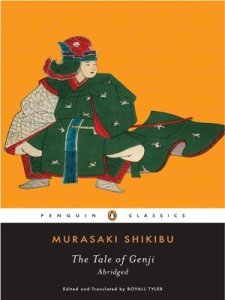
Yasuko has stayed close to her mother-in-law who in the early chapters seems like a peripheral character, however as the story ventures further, it is suspected that she may be manipulating events and that this is not the first time in her life she has done so.

“A woman’s love is quick to turn into a passion for revenge – an obsession that becomes an endless river of blood, flowing on from generation to generation”

Yasuko is ready to move on with her life and the two men who are in love with her become part of a triangle of deception, where the motives take some time to become clear.

Mieko is a poet and an essay she wrote called ‘The Shrine in the Fields‘, resurfaces, intriguing the two men. The shrine is a reference to a location in the Japanese classic The Tale of Genji that is mentioned in connection with tone of the characters in that novel the Rokujo lady.

“She has a peculiar power to move events in whatever direction she pleases, while she stays motionless. She’s like a quiet mountain lake whose waters are rushing beneath the surface toward a waterfall. She’s like the face on a No mask, wrapped in her own secret.”

Tale of GenjiIt is worth knowing a little about the plot of The Tale of Genji and the ‘Masks of Noh’ from the dramatic plays, as we realise there are likely to be references and connections to what is unfolding here. And not surprising given Fumiko Enchi translated this 1,000+ page novel into modern Japanese.

It may be that Masks, is an allegory to one or more chapters of The Tale of Genji, and in particular in relation to the story of the Rokujo lady, something that made me remember reading Sjon’s The Whispering Muse which did a similar thing with the Greek poet, Apollonius of Rhodes, and his epic poem The Argonautica.

Masks is an enchanting read, that begins as a straightforward narrative and becomes an intriguing multi-layered tapestry of long held deceptions and narcissistic conspiracies that will haunt the lives of these characters.

An intriguing, thought-provoking read, that expands our horizons, introducing us as it does, to classic works and theatre from the long Japanese literary culture.

Fumiko EnchiFumiko Enchi was a Tokyo born novelist and playright, the daughter of a distinguished philologist and linguist. Poorly as a child, she was home-schooled in English, French and Chinese literature by private tutors.

Her paternal grandmother introduced her to the Japanese classics such as The Tale of Genji, as well as gesaku novels,  kabuki and bunraku theatre. Her  adolescent reading included the works of Oscar Wilde, Edgar Allan Poe, Kyōka Izumi, Nagai Kafū, Ryūnosuke Akutagawa, and especially Jun’ichirō Tanizaki, whose sado-masochistic aestheticism particularly fascinated her.

Much of her work explores female psychology and sexuality, while three of her works have been influenced by The Tales of Genji, – Masks, The Waiting Years and The Tale of An Enchantress.

Buy a Copy of Masks via Book Depository (Affiliate Link)