
 Wow! Those of you who have been reading this blog long enough to remember my post on Why People Don’t Read Short Stories may remember that they are something I usually savour, rarely devouring an entire collection in one sitting, but Yoko Ogawa breaks the mould and her newly published book Revenge is full of hooks and devices that stopped me putting it aside and saw me instead ploughing on to read one after the after.
Like a curious sea creature taking the glistening bait, after reading the first story, I dove into the next, caught in the deft grip of Ogawa’s clever and haunting narration, each story carrying the slimmest thread into the next, sufficient to keep the reader interested and more than that, inquisitive to continue and see what she would come up with next.
I first read Yoko Ogawa last year, attracted by her slim collection of three stories contained within The Diving Pool and then her novella The Housekeeper + The Professor, they are very different books, so I was interested in how this collection would compare.
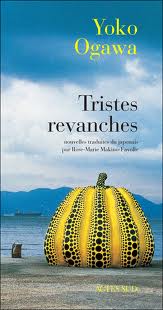 She has written prolifically over the years and much of her work has been translated into French, very little thus far in English, though perhaps that will change as her short stories are increasingly appearing in contemporary English language publications. The Nobel Prize winning author Kenzaburō Ōe when speaking about her work said:
‘Yoko Ogawa is able to give expression to the most subtle workings of human psychology in prose that is gentle yet penetrating.’
Revenge is an apt title, there are traces of it in every story, calculated revenge, obsessive revenge, inexplicable revenge and cold-blooded revenge. Each story exists on its own, but I read it like a novel, not wanting to pause between titles and feeling right from the end of the first story a tightness in the solar plexus and realisation that I had been holding my breath.
It’s not just the story, it’s awe at how she can write in such an engaging way, where very little actually happens, but we begin to understand more about what is going on in the mind of the character from all the little details she gives, creating a growing image in our own minds, just before she delivers the final blow. And even when we don’t know much about a particular character, someone on the periphery perhaps, not important to the story, chances are we are about to find out more about them in the next story. And so we read on to find out if we guessed right or if she will insert some other connection.
I share this from the blurb, which encapsulates something of these stories in a more concise manner than I ever could:
An aspiring writer moves into a new apartment and discovers that her landlady has murdered her husband. Years later, the writer’s stepson reflects upon his stepmother and the strange stories she used to tell him. Meanwhile, a surgeon’s lover vows to kill him if he does not leave his wife. Before she can follow-through on her crime of passion, though, the surgeon will cross paths with another remarkable woman, a cabaret singer whose heart beats delicately outside of her body. But when the surgeon promises to repair her condition, he sparks the jealousy of another man who would like to preserve the heart in a custom tailored bag. Murderers and mourners, mothers and children, lovers and innocent bystanders—their fates converge in a darkly beautiful web that they are each powerless to escape.
Ogawa is certainly not the first writer to do this, to infuse stories with their subtle threads and connections, Alice Hoffman does it with Blackbird House, Colum McCann did it with Let The Great World Spin and I believe Cloud Atlas (which I have not read) has something that makes it too, more like vaguely connected stories than a novel.
 Revenge isn’t a complicated kind of clever though, there’s no need to question or ponder too deeply over it, the links are clear, but it will leave you wondering how she does it, how she maps out those stories and creates those links. It’s like a jigsaw puzzle with multiple subjects, the letters R E V E N G E scratched across the surface.
Note: This book was an Advance Reader Copy (ARC) provided by the publisher via NetGalley.
 In 1996 I spent three months travelling in Asia, limiting my visit to four countries, India, Nepal, Vietnam and Thailand.


 I read this book on a loose recommendation from
 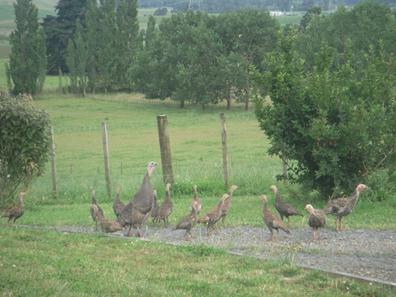 It being the festive season, I couldn’t miss an opportunity with a title like A Month in the Country, to share this delightful photo sent by my family in New Zealand a few days before Christmas, having explained to a few friends here that we are not really into eating turkey and as you can see, they feel quite safe to wander up the driveway of my father’s home and show off their brood.




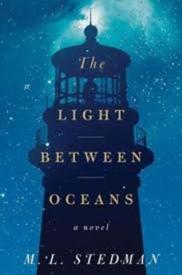 I begin reading with envy as M.L.Stedman’s playful yet adept metaphors slip off sentences, like droplets off the oars of a dinghy, each one plunging back into the ocean to collect another stream from which to compose those few extra words that create more than just mere description, revealing an image and inviting us deeper into the world she paints with words, an island hundreds of miles from civilisation, where only the two oceans, a grand light, the twinkling stars and the tall, elegant, imposing bearer of that light keep a young, newly married couple company.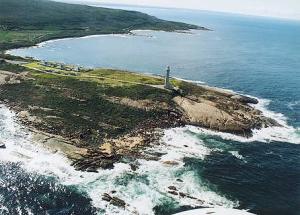
 linked at the end of this post.
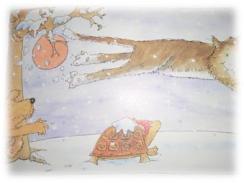 Shelley the tortoise disagrees, but discovers she can’t break the ice to get food like a duck, keep warm by running around like a dog, crawl into a nice warm house like a cat, or fly off home like a bird.
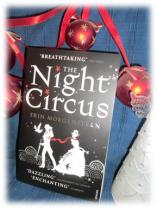


 one of the conditions being to pass the book on, so what better reason to offer the book as a give-away If you would like to enter the draw, just make a comment and leave an email address so I can contact you after the draw on Wednesday November 7. You can also assist in selecting the books that will be offered free in the US and the UK for World Book Night 2013 by clicking on the link and nominating your favourite book(s).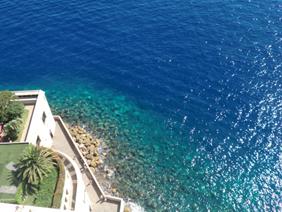
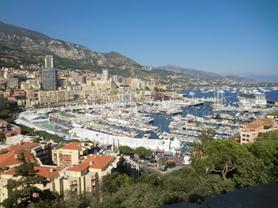 And with the change of location from the calm, sun-filled vistas of Monaco and Italy, we arrive at Manderley, the grand estate of many rooms, corridors, wings, ritual, tradition and an established staff, all haunted by memories, both real and imagined of the previous Mrs de Winter, Rebecca.

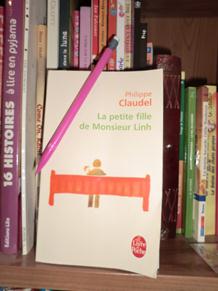 ambiguous title because it can be interpreted in two different ways, already a dilemma for the translator no doubt, because petite fille is the expression used for grand-daughter, but it can also be read as petite ‘little’ and fille ‘girl’.
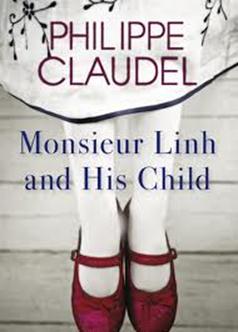 So did the English translation go with grand-daughter or little girl you might ask? Actually neither, the English title as shown is Monsieur Linh and His Child. I’m not sure why they stay with Monsieur rather than Mr, I was not under the impression that he spoke in French. It becomes clear how much of a task translating a novel must be, so many decisions to make or discard with the title alone, already certain ambiguities are lost while other insinuations are made.
 The author does not say where he came from or where he arrives at, making this part of the reading experience, in fact we all had various impressions of where the story may have taken place, my own impression very much influenced by my recent reading of Vaddey Ratner’s novel


 Word by Word