The Invention of Wings by Sue Monk Kidd

Although Sue Monk Kidd will be a name familiar to many, it was only a few years ago that her book The Secret Life of Bees was recommended to me by a dear and special friend who always went out of his way to visit and spend a few days with us when making his 10 yearly pilgrimage to Rome. We always had wonderful discussions about books, about life, the situation in Palestine, our mutual family connections and much more. So when I saw that the author had published another novel, I wanted to read it, to remember that stories continue to be told and memories passed on, even when those who told them and recommended them are no longer with us. He would have loved this story I am sure.

Invention of WingsThe Invention of Wings is a work of historical fiction, inspired when the author came across their names at an exhibit at the Brooklyn Museum. The discovery of two sisters Sarah and Angelina Grimké, abolitionists whose story was little known outside academic circles was all the more poignant for Sue Monk Kidd, when she learned they came from Charleston, South Carolina, the town she was living in at the time.

The story is a work of fiction, but the work of Sarah Grimké and her sister was real and her writing and achievements are receiving the recognition they deserve, representing as they did, an era when even a life of privilege did not give women the right to express a public opinion and especially one that challenged the status of individuals in a society.

In her novel, Sue Monk Kidd tells a story of two girls growing up in an urban slave-holding family in Charleston, South Carolina. Sarah is the daughter of a wealthy, aristocratic family and Hetty, or Handful as she is referred to, is gifted to her on her 11th birthday, an event that Sarah actively attempts to reject and does so in writing. She is refused her request, just as she is also denied and mocked for her desire to pursue a professional career, her punishment to be banned from her father’s library and from reading books.

For many years she accepts her fate, although as retribution and in response to a promise made to Charlotte (Handful’s mother), she teaches Handful to read, not only a forbidden act, but against the law. Certain events eventually shake off her complacency and after one particular episode, despite the risk of rejection and ostracism by her family and community she becomes wedded to her new vocation and dares not only to voice her outrage but with the support of her sister begins to take a more active and dangerous role in standing against slavery and advocating equal rights for women.

WingsThe slave Hetty also possesses a rebellious streak, more dangerous in someone of her stature, where any small infraction can result in violent and damaging consequences, as she will discover. Denied an education, she and her mother Charlotte become talented seamstresses, Charlotte narrating her life story through the quilted squares she creates in her own time, each one representing a significant event in her life, images that speak the words she could not read or write, a reminder of who they are, where they have been, stories continually passed from mother to daughter. It was a way to subvert the system and to preserve her story.

In a sense both Sarah and Hetty are enslaved and Hetty articulates it in a scene that haunts Sarah long after.

“I’m twenty-seven-years old, Handful, and this is my life now.” She looked around the room, up at the chandelier, and back at me. “This is my life. Right here for the rest of my days.” Her voice broke as she covered her mouth with her hand.

She was trapped same as me, but she was trapped by her mind, by the minds of people around her, not by the law. At the African church, Mr Vesey used to say, Be careful, you can get enslaved twice, once in your body and once in your mind.

I tried to tell her that. I said, “My body might be a slave, but not my mind. For you, it’s the other way round.”

Wings are a metaphor for freedom from oppression but they also represent the ability to soar, not only to be able to choose what we want to do and how to live a life, but to do it to the best of one’s ability, to step beyond the expectations of family, community, society.

Sarah Grimké (1792-1873)

Sarah Grimké (1792-1873)

I thought this book was excellent and I like it all the more for having understood subsequently how it came about. The female characters are particularly vivid, especially Handful and her mother Charlotte and though Sarah took time to come to terms with her own vocation and to shed the trappings of her upbringing, she is an incredibly courageous character given society had rather dismissed her given her disappointment in not being able to pursue a career or attracting the right kind of husband.

When asked about writing from the perspective of an enslaved character, Sue Monk Kidd mentioned that while writing this book she read an interview with Alice Walker in which she says “She was all over my heart, so why shouldn’t she be in literature”, exactly how she felt about Handful.

I also wondered about the author’s reasons for embracing such a story, her own connections to America’s history in the South and in the links below is a Reader’s Guide in which she speaks of her own upbringing in the South in the fifties and sixties, where she was witness to many terrible racial injustices and divides, which has had the effect of drawing her towards writing about them.

“I’ve been drawn to write about racial themes because they are part of me, and also because they matter deeply to me. I can’t help but feel a social responsibility about it as a writer. Racism is the great wound and sin of the South and indeed, the great wound and original sin of America. Two hundred and forty-six years of slavery was an American holocaust, and its legacy is racism. I don’t think we’ve fully healed the wound or eradicated the sin. For all the great strides we’ve made, that legacy still lingers.” Sue Monk Kidd

Additional Links

A Readers Guide – Q & A with Sue Monk Kidd

Interview with Oprah – Sue Monk Kidd chats with Oprah and takes Reader’s Questions

Note: This book was provided by the publisher Viking, an imprint of the Penguin Group.
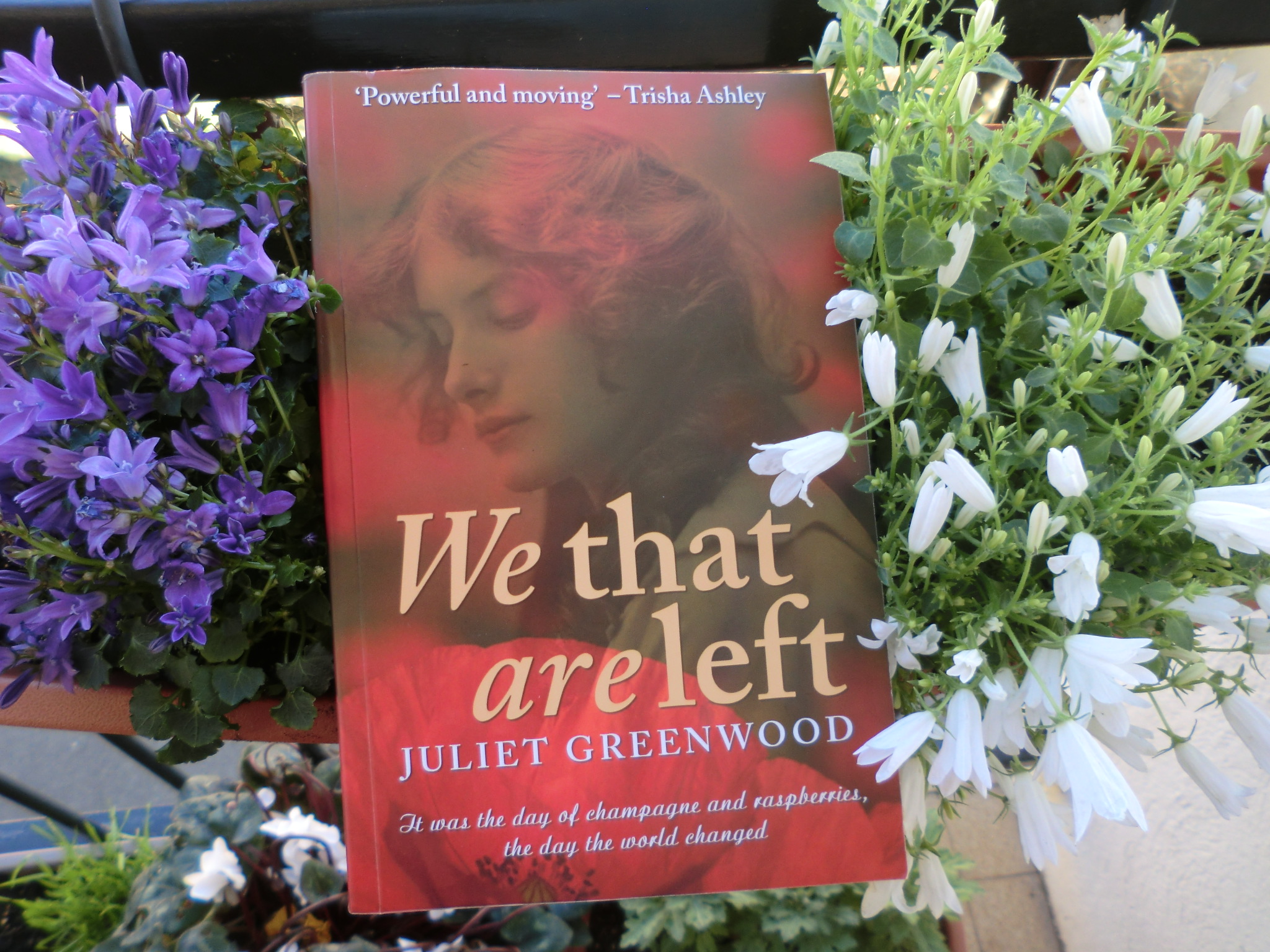
We That Are Left by Juliet Greenwood

There are few greater delights than a book that draws you in from the very first pages and immediately makes you care about what happens next, that demands your attention in every free moment you can conjure until the end.

We That Are Left (2)Juliet Greenwood, while painting a world that is far from one that we might imagine living ourselves, one that takes place in an enormous stately home on a hill overlooking a village in Cornwall – manages to imbue in the reader a kind of aspiring fantasy that those who prefer an episode of Downton Abbey to Twilight will be more than happy to immerse themselves within.

Two years ago I read her novel Eden’s Garden also set in Cornwall and Wales and adored it. That book was a dual narrative of two women, one in contemporary time, the other in the Victorian era, whose lives we follow and as the novel progresses reveals what connects them.

Now Juliet Greenwood has written a timely novel, chronicling the lives of a group of young women, focused on Elin Helstone, a young wife living in Hiram House, a country estate that has been her family home since birth.  Now run by her increasingly distant husband Hugo, he has become consumed by dark thoughts he is unwilling to share connected to events of the Boer War and is now likely to be called up in yet another war. Elin tries to anticipate her husbands needs until the onset of war provides the circumstance  that will propel her towards asserting an independence she will find difficult to relinquish.

Elin’s unmarried cousin Alice lives with them, though Hugo pursues every opportunity to introduce her to eligible company in the hope that she too might exit his orbit. Then there is Mouse, Lady Margaret Northholme, whom the two young women meet in the opening pages and become firm friends, their lives will become forever entwined as war descends upon the country and everything as they have previously known it changes forever.

The opening pages possess an air of excitement and potential, young people meet at their big houses, conforming to social convention and can’t quite believe the rumours of pending war.

‘It will most likely blow over. War is such a medieval occupation. I can’t imagine any modern state embarking on such barbarity.’

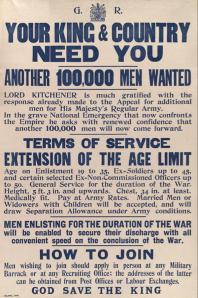
War Draft

However, war does arrive and strips the village bare of men, plunging those who stay behind into an alternative way of living, they must live with the fear of not knowing what will happen, of the risk of attack and the dread of a telegram bearing tragic news.

That fear of the unknown will become less significant in comparison with the experience awaiting Elin and her gardener Jack as they depart on their own dangerous mission.

‘Nervous?’

‘Terrified,’ I replied.

‘So you should be. There’s no point in being brave from now on. Forget what anyone ever told you about heroes. Once we reach the other side, it’s fear that will keep you alive.’

Juliet Greenwood creates believable characters, putting them in credible but challenging situations where they fulfill our suspicions of their true natures, while her trademark elements of mystery and intrigue run on continuously throughout the narrative.

She does the same with country locations, we inhabit Hiram Hall and the Welsh farmhouse as if we had known them for years, the author invokes the reader’s imagination bringing the outdoor landscape and its associated elements into the page like fog creeping in from the bay. As Lewis Hyde, author of The Gift reminded us “The spirit of an artist’s gifts can wake our own.’

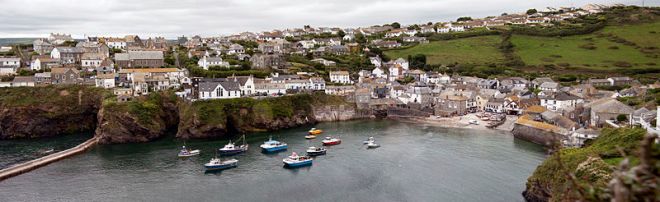
Port Issac Cornwall

We that are left begins in 1914, a mere five years before Michel Déon’s The Foundling Boy (reviewed here) in 1919 and yet the contrast couldn’t be greater.

Here we become immersed in the war years (Déons novel set in the interwar years) where the absence of so many men advanced opportunities for women like no suffragette initiative yet had, though they certainly paved the way for women like Elin, Lady Margaret, Kitty, Alice and others to be able to take the initiative and get involved in the war effort. They learn to drive, volunteer in hospitals, grow food and distribute it to those with little or nothing. Women of the upper classes who were used to being waited on found themselves with few staff and having to manage like common people. Servants experienced the shift in equality between the classes.

Having complained about the lack of female role models with redeeming features in Michel Déon’s coming of age novel, I find them in abundance here and can’t help but observe the contrast in the female characters portrayed here versus those we met across the channel.

The actions of these women were no doubt inspired from Juliet Greenwood’s research into women and the war effort and she mentions the Virago Book of Women and the Great War edited by Joyce Marlow in the bibliography.

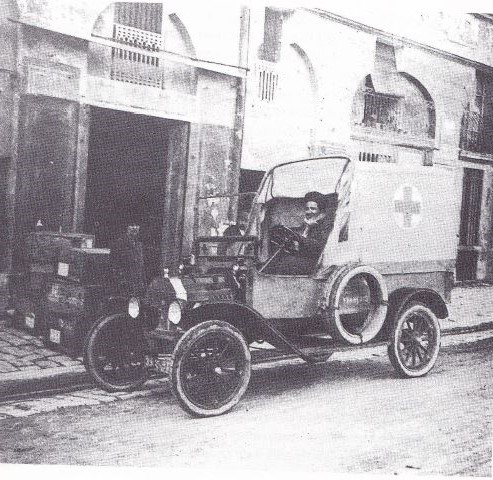
!!!!Car

Gertrude Stein With Auntie and war supplies, 1917

I was reminded of the incredible and courageous efforts of Gertrude Stein and Alice Toklas as portrayed in Diana Souhami’s excellent biography Gertrude and Alice; Gertrude having sold her Matisse Women with a Hat she and Alice initially decamped for the French Riviera abandoning Paris, but after some time became bored and returned deciding they too wanted to help with the war effort.

After meeting with an organisation that distributed supplies to hospitals, they were informed it would be most useful if they could provide a truck and do the same. So Gertrude took driving lessons, wrote to a cousin in New York asking for a van to be sent, had it converted and named Auntie and off they went road tripping around the country, becoming known at the garages throughout France, distributing the hospital supplies, writing letters to soldiers whom they referred to as their military godsons and collecting recipes along the way. But that’s another story!

We That Are Left is an enthralling read that sets a compulsive pace from that first intriguing landing and doesn’t let up until the final pages. It  is a moving contribution to contemporary WWI fiction and an enlightening exposé on how perceptions and the role of women experienced a complete and irreversible paradigm shift during those years, from which we have benefited more than we realise.

Highly recommended.

Note: Thank you to the author Juliet Greenwood for providing the photos of Glynllifon Hall above, and to her publisher Honno Press for providing me with a copy of the book to read.

The Literary Blog Hop – #Giveaway

Today and until 12 February, I’m participating in a literary giveaway blog hop hosted by Judith at Leeswammes’ Blog, an avid reader and blogger.

literarybloghop

All the blogs listed below are participating and offering a literary giveaway to readers. Just leave a comment below to be in the draw for my giveaway and visit any of the blogs listed below, to be in with a chance to win a book. This giveaway is open to you all, worldwide!

WIN A COPY of

Philippe Claudel’s Brodeck’s Report !

I am giving away a copy of one of the best books I read in 2013, a brilliant English translation of a contemporary French novel and winner of a French literary Prize Brodeck’s Report by Philippe Claudel.

You can read My Review here or the brief summary I wrote immediately upon finishing it.

Quietly devastatingly brilliant. Claudel takes one village which happens to be near the border – and what is a border but an imagined line – of an occupying nation and uses the village and its resident to portray humanity and its many inclinations, when a stranger rides into town, makes himself comfortable and goes about his business, without letting anyone know what that business was.

Brodeck is tasked with writing an account of events that take place and as he does so, he simultaneously writes another account, his own, of what is occurring now and what has happened to them all in the recent past, he tries to make sense of it, as is his nature and to know what to do.

I have another giveaway running concurrently (only open to US readers), if you like historical fiction, I am offering a copy of the recently published I Always Loved You by Robin Oliveira recounting the life of the artist Mary Casssat and her friend Edgar Degas in Paris in the late 1800’s. Read my review here and enter the giveaway here.

This is a great opportunity to visit blogs that review literary books and win a book! Entry into the draw via comments are open until 12 February.

Linky List:

  1. Leeswammes
  2. Seaside Book Nook
  3. Booklover Book Reviews
  4. Biblionomad
  5. Laurie Here
  6. The Well-Read Redhead (US/CA)
  7. River City Reading
  8. GirlVsBookshelf
  9. Ciska’s Book Chest
  10. The Book Stop
  11. Ragdoll Books Blog
  12. Nishita’s Rants and Raves
  13. Lucybird’s Book Blog
  14. Reading World (N-America)
  15. Journey Through Books
  16. Readerbuzz
  17. Always With a Book (US)
  18. 52 Books or Bust (N.Am./UK)
  19. Guiltless Reading (US/CA)
  20. Book-alicious Mama (US)
  21. Wensend
  22. Books Speak Volumes
  23. Words for Worms
  24. The Relentless Reader
  25. A Lovely Bookshelf on the Wall (US)
  1. Fourth Street Review
  2. Vailia’s Page Turner
  3. The Little Reader Library
  4. Lost Generation Reader
  5. Heavenali
  6. Roof Beam Reader
  7. Mythical Books
  8. Word by Word
  9. The Misfortune of Knowing
  10. Aymaran Shadow > Behind The Scenes
  11. The Things You Can Read (US)
  12. Bay State Reader’s Advisory
  13. Curiosity Killed the Bookworm
  14. Lizzy’s Literary Life
  15. Books Can Save a Life (N. America)
  16. Words And Peace (US)
  17. The Book Club Blog

This giveaway is now closed.

I Always Loved You – #Giveaway

Thanks to the generous team at the Penguin Group, US and today, the day of its publication I offer one lucky reader (you must be resident in the US – sorry) a copy of this fabulous book:

I  ALWAYS  LOVED  YOU

by

Robin Oliveira

I Always Loved You

Read my review here of this historical novel set in 1880’s Paris, which the publisher describes as:

A novelization of Mary Cassatt and Edgar Degas’s relationship in Belle Époque Paris. It captures the golden age of Impressionism and is peopled with many prominent figures of the movement including artists Édouard Manet and Berthe Morisot (the only other prominent female artist working in Paris at that time).

Robin Oliveira writes with grace and uncommon insight into the lives of artists and the passions and foibles of the human heart.

Leave a comment below if you wish to be in the draw to be held on 12 February!

This giveaway is now closed.

The Signature of All Things by Elizabeth Gilbert

Signature (2)Elizabeth Gilbert’s ambitious, historical novel was my Christmas chunkster and a book I had looked forward to reading since listening to and watching her three-minute book trailer the day she was due to give a reading at the Southbank Centre in London. If I had been there, I would definitely have attended, I think she is a compelling speaker and after listening to this clip below, I knew I would read The Signature of All Things.

Listen to the trailer, her recounting of viewing as a child, her family owned, leather-bound book of Captain Cook’s Voyages full of maps and illustrations lures us towards imagining the kind of character she has created in Alma Whittaker, the daughter of a botanical explorer who sailed with Captain Cook.

Englishman, Henry Whittaker was born in Richmond to a poverty-stricken family, with an insatiable curiosity and desire to improve his station in life and an inclination to want to better others after suffering humiliation at the hand of his British patron, Kew Gardens superintendent Sir Joseph Banks.

Sir Joseph Banks President of the Royal Society - 1812 print Source: wikipedia

Sir Joseph Banks President of the Royal Society – 1812 Source: wikipedia

One mocking laugh would create a turning point in his life, taking him to the Netherlands and eventually to Philadelphia where in 1793 he settled and established White Acre, a manor, greenhouses and lands to house and tend his expanding botanical collection and commercial interests and where he and his formidable Dutch wife Beatrix, would raise two daughters, Alma, a passionate botanist and intellectual and her adopted sister Prudence, a committed abolitionist and educator.

Alma is the centre of the story and the book follows her journey, her learnings, her relationships and disappointments as she passionately pursues her botanical interests, manages her father’s affairs and slowly develops an emotional intelligence to understand her own character and how she is perceived in the world. In a sense we experience how she feels as Gilbert focuses very much on the perspective of Alma and if I have one criticism, because I really loved reading the book, it was that I wanted to get a better understanding of some the other characters close to Alma.

In particular I wanted to know more about her sister Prudence, who is misunderstood and yet this incomprehension actually serves as one of the more profound metaphors in the book, for she symbolises a gap in Alma’s understanding, one that will prevent her from publishing her Theory of Competitive Alteration which provides a wonderful tie-in with another two authors of such theories, one of whom she will meet.

When I arrived at this philosophical dilemma, I was a little disheartened to discover how close to the end we were, because I could have happily kept reading until Alma discovered or created a detailed response to her question,  supported by her understanding of humanity through the passage of a lifetime of observation. It is a question that invites consideration and discussion, one that piqued the interest of this reader.

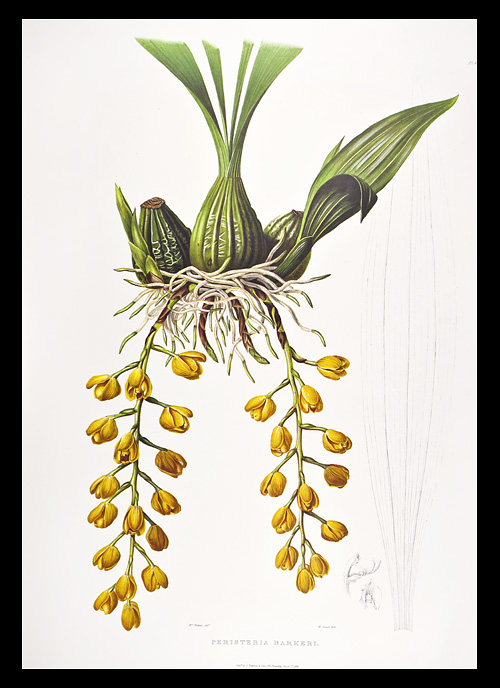
Peristeria  barkeri Guatamalan Orchid 1837

Peristeria barkeri Guatamalan Orchid 1837

Two men introduce Alma to alternative ways of thinking and seeing the world and these encounters are both baffling and fascinating at the same time. They confuse and reveal in equal measures and leave one in awe of the miracle of life and an appreciation of our differences and the infinite mystery and wisdom that interactions across humanity behold, in particular with those who live beyond the limits of our acceptable knowledge and experience who reveal that which we struggle to understand. In addition, these two characters take the reader on a thrilling journey to Tahiti and immerse us in experiences that delight the imagination.

If that sounds a little unclear, it is because it is better to embark on the journey of reading to unravel the book’s mystery. It is a well-researched, easily accessible book I am sure will provoke a variety of reactions, there is something in here for everyone and it provides an excellent balance of plot, character, philosophy and discovery to keep one reading late into the night.

Helium by Jaspreet Singh

I doubt this book would have crossed my path, had it not been sent to me by The Guardian in recognition for an extract quoted from my review of Caroline Smaile’s The Drowning of Arthur Braxton, one of my outstanding reads of 2013.

Helium2However, I am glad that it did, as it is an example of important fiction that crosses between cultures and provides us with insights into other worlds and perspectives, lessening our ignorance of events which often account for the unspoken attitudes and undercurrents present in countries that visitors, travellers and outsiders rarely gain access to. We are seeing more novels written in English from immigrants written from outside their country, alluding often to tragic events that have happened in their home country; for many, the reason they have fled.

Last year one of my favourite reads was one such book, Vaddey Ratner’s In the Shadow of the Banyan, based on a true story of the survival of seven-year-old girl of royal descent under a despotic regime in Cambodia and fictionalised as a tribute to those who were lost, in particular her own father. It is a stunning portrayal seen through the eyes of a child with both a chilling and hopeful view of humanity.

Indira Gandhi

Indira Gandhi

Helium centres around one man, Raj, a scientist who was an only child; we learn he left India 25 years before and will discover the reason why, along with his continuous fascination for science, the periodic table and memories. One memory in particular influences his journey and decisions, the attack of his college professor, a Sikh, who along with thousands of others in 1984 are targeted and killed in revenge for the assassination of the Prime Minister Indira Gandhi (daughter of India’s first Prime Minister Jawaharlal Nehru), in what was believed to be a government assisted genocide.

“How wrong Professor Singh was that day on the train when he said that the three most important questions for us concerned the origin of the universe, the origin of life and the origin of the mind. He forgot to add other questions or shall I say he forgot to ask the three really significant ones: Why do people respond differently to traumatic events? How do we remember the past? Why when ‘meaning’ collapses in our lives, do some of us seem to locate a new ‘meaning’?”

Rashtrapati Niwas, built 1888  Source: Wikipedia

Rashtrapati Niwas, built 1888
Source: Wikipedia

Raj, who faces his own challenges as a husband and father back in the United States, returns to India and unable to face his father, whom he suspects of being involved in those events, looks for the wife and children of his Professor and finds her working in an archive at Rashtrapati Niwas, formerly the Viceregal Lodge in Shimla, Himachal Pradesh.

“Clara has her romantic ideas of India and she clings to those ideas and I am a personification of those ideas. I am not allowed to narrate the dark side of that romance – how ugly the collective consciousness of a nation can be.”

Singh references Primo Levi’s The Periodic Table, a novel of science and memory and a man who survived persecution in the concentration camps of WWII and who wrote that outstanding, compassionate masterpiece If This Is A Man: The Truce which I was fortunate to read last year. And the black and white photos throughout the text are a sure reference to W.G.Sebald, another author he admires and relates to. They have the effect of making the reader almost forget that this is a work of fiction, and are a more than subtle reminder that the background events certainly did.

Jaspreet Singh’s character Raj is conflicted, being neither victim nor perpetrator of any crime, except perhaps ignorance, he reads Levi but can’t embrace his humanity or gift for forgiveness. He is angry, as much with himself as anyone else, and must live with the knowledge and acceptance of his role as bystander.

It is a novel that addresses the attempt to escape the past through distance, both physical and cultural and is a reminder that even as many as 25 years will not keep the past from affecting the present when confronted with people, places, books and reminders of that past, that without facing up to our inner demons, they will likely continue to possess and haunt us.

An Auspicious Ascendancy – The Luminaries, Eleanor Catton

LuminariesEleanor Catton’s The Luminaries is an engaging, avant-garde novel, not to be read with the traditional expectations of the form, for it will entertain, intrigue, provoke, infuriate and keep you thinking about why it works, when certain aspects we know and love about stories, suggest that it shouldn’t. The allure of the new.

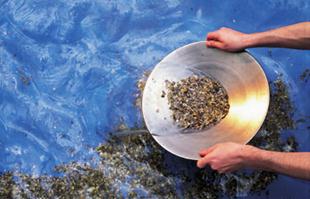
The Luminaries is a 19th century narrative, set in the gold –digging community of Hokitika ‘place of return‘, on the west coast of New Zealand’s South Island.

In 1866, when the story takes place, it was a thriving community, expanding in the golden glint of its anticipated resource and one of the most populous towns in New Zealand, a far cry from it’s just over 3,000 inhabitants today. While it remains possible for visitors to try their luck at gold panning today, they are more likely to be cycling the West Coast wilderness trail or to taking a helicopter over the Fox and Franz Joseph glaciers.

Hokitika township 1870s

Hokitika township 1870s – source Wikipedia

The story focuses on a group of people living in Hokitika, attracted by the prospects of finding gold or its associated business opportunities. It opens with the newest arrival, a distressed Thomas Moody, who has just disembarked from the barque Godspeed and after checking into the Crown Hotel, happens upon a gathering of 12 men in a bar of the hotel that had been closed for the evening. Already in the hotel, he had not been prevented from entering the room and thus becomes witness to a discussion of events that had occurred two weeks prior, the death of the hermit Crosbie Wells, the disappearance of the gold prospector Emery Staines, the arrest of a whore Anna Wetherell and the discovery of a cache of retorted gold bars.

As any 12 prominent men summoned to a room for a discussion might attempt to garner attention, so too does Catton give over chapters which allow those men to stand in their own limelight and this gathering will invoke a long and divergent narrative of stories, encounters and sharing of perspectives by each of the men present.

Their stories span the first half of the book, introducing a structural device Catton uses to divide the book into 12 parts, each successive part half the length of that before it, where the sequence of events moves about so that we reach the end only to discover we are at the beginning. We realise this is not a plot heading towards its climax, nor a beginning working towards its end, it is a series of revelations that unmask illusions of our own imagination as well as that of the characters portrayed and by the time we reach those last pages, the actual dramatic events that unfold will occupy fewer lines on the pages of this book than the mass of 400 plus ages that has allowed this community of men to discuss, analyse, reveal, conceal and pontificate on what might have occurred.

110611_1523_TheForestfo1.jpgAs fast as one mystery unravels, there arises another as Catton introduces one twist after another and slowly reveals the encounters and connections between characters, including those not present at the meeting.

The use of an omniscient narrator means that no one character plays a lead role, just as the lack of a detective precludes it from unravelling like a conventional mystery. Instead, it reads almost as a series of dramatic episodes, where the various interactions and focus on certain characters help the viewer/reader understand their ambitions and motivations, though like a jigsaw, the whole picture will not become clear until all the missing pieces are joined together.

The IdiotI was reminded at times of reading Dostoevsky’s The Idiot, a novel that is without comparison when it comes to penetrating character analysis, itself a complex web of relationships and associations. Catton’s insights into her characters perhaps owe more to her reading of Jung than Dostoevsky, as she penetrates the psychological depths of each character using lyrical prose. While these insights make pleasant reading, it is the actual interactions and actions of the characters that more ably create a lasting impression. As a consequence, we perceive the entire cast at a slight distance and may yearn for something more from some of them.

Much has been written elsewhere about the astrological structure and intention behind Catton’s writing, and it would be easy to turn this into as essay and begin to analyse twin hemispheres, yin and yang, predestined forces and those luminaries that represent our innermost and outermost selves whom she literalises in characters, however I have chosen to write more on the experience of reading the book, without focusing on the forces at play in their interactions. It is possible to listen to Eleanor Catton speak more on this at the Southbank reading here and in numerous articles in The Guardian and elsewhere.

It is an entertaining read, that despite its length I never wanted to put down and actually found myself wondering about other members of the community that don’t appear in the book, like the families of these characters and other inhabitants of this gold loving town. Perhaps we might get to meet them in a future TV adaptation, since I hear the rights have already been bought by a British production company.

Luminaries Cloud

#ManBookerLive at the SouthBank Centre

Listening to Six Shortlisted Authors Read

Last night the six shortlisted authors of the Man Booker Prize came together at the SouthBank Centre in London’s Royal Festival Hall and thanks to seeing a tweet from someone present I discovered that it was streaming live from the Man Booker website.

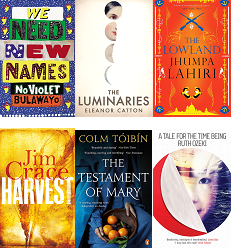
So instead of reading another 200 pages of Eleanor Catton’s The Luminaries, I listened to her, NoViolet Bulawayo, Jim Crace, Jhumpha Lahiri, Ruth Ozeki and Colm Tóibín read from their books and answer questions from the host Mark Lawson and the audience.

2013

It was a wonderful evening and risks making us want to read all the books, to see the writers presenting their works and sharing their private anecdotes about the journey to publication.

Today the live event has been uploaded to YouTube, so if you are interested to hear more about these excellent books, before tomorrow evenings announcement of the winner, here is the link to watch it yourself.

The event starts at 28 minutes 20 seconds.

Don’t expect it to help you decide, I think they are all winners and have no idea who the judges will choose. The bookmakers and the BBC are backing  Jim Crace, the quintessential English vote.

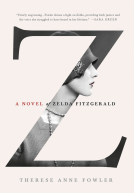
Z: A Novel of Zelda Fitzgerald by Therese Anne Fowler

Zelda_Fitzgerald_portrait

Zelda Sayre

Born with an exotic name that lent itself to bright lights and a spirit that loved nothing more than to dwell under them, it is not surprising that Zelda Sayre’s life was illuminated and became of interest to so many who were less daring themselves but fascinated with her life and antics.

But just as light cannot exist without shadow, she would discover the darker underside of a life lived in the shadow of her husband, when she dared to pursue her own desire to be recognised as a professional in her own right.

ZZ: A Novel of Zelda is an excellent companion novel to The Paris Wife and one of an expanding collection that gathers around that group of artists, writers, wives and hangers-on of the “lost generation“, a term coined by a young French mechanic who was reprimanded for giving insufficient priority to repairs on Gertrude Stein’s Model T Ford and thus complained to his patron that they were all a “generation perdue“, those young people who served in the war, respected little and indulged themselves to immoderate excesses.

Hemingway’s A Moveable Feast is a logical follow on read, having now read the fictionalised accounts of the two wives of these well-known writers and great friends who were in the midst of that post WWI group that sought a kind of writing utopia in Paris.

scott and zelda

Zelda and F.Scott Fitzgerald

While the utopia may have eluded them, their experiences would provide rich material for their writing, even if at the expense of some of their friends and loved ones. It is interesting to note that while their output during those early years was largely even, the Hemingways‘ lived quite frugally with an awareness of their financial struggle, while the Fitzgeralds‘ lived hedonistically in complete denial of theirs.

Zelda was reluctant to be lured away from Montgomery, Alabama by a complete dreamer and in the early days of their courtship actually threatened to dump F.Scott Fitzgerald unless he proved himself worthy and obtained his first serious publishing contract.

“I was so sure of our love then, so determined to prove to Mama and Daddy that we weren’t doing things wrong, just differently. There was no way to know that certainty  would one day become a luxury too.”

save me the waltzWhen Fitzgerald succeeds in getting that commitment  from his publisher to publish This Side of Paradise, she is ready to join him in New York and their life of adventure will begin.

From New York to Paris and the south of France, where Zelda throws herself into her own professional dance ambitions and is rewarded with an offer, which makes this reader wonder, what might have happened if…

“Scott and I both were awed by how cultured all these folks appeared to be, how intact they all were. For a change, Scott listened more than he talked. They spoke of painting and music and dance – their own work as well as other artists’ – with knowledge and candor and passion. If they felt rivalries, they expressed the situations as challenges, not jealousies.”

I came to this novel with no idea about Zelda or the role she played among the writing set of Paris and while much has been written in personal letters and hospital records documenting her mental health challenges and treatments, I find Therese Anne Fowler’s depiction of the character Zelda to be both realistic and sensitive  and portrayed in a way that is compelling to read. It has made me interested to read more about Zelda Fitzgerald and that period in history she was a part of; she was one of, if not the first young women referred to as a “flapper” of the 1920’s, a kind of “it girl” whose rise in society came about alongside a public contempt for prohibition and was described by Dr. R. Murray-Leslie, who criticized

“the social butterfly type… the frivolous, scantily clad, jazzing flapper, irresponsible and undisciplined, to whom a dance, a new hat, or a man with a car, were of more importance than the fate of nations.” Times 5 Feb 1920, p 9

They were a significant step away from accepting the lives of their mothers before them and while they accepted the lesser role in support of their husbands and were not quite suffragettes, they developed an awareness that women could be more outgoing and present in the relationship and even pursue a career, something that usually required marriage to be forfeited for.

highland hospitalThe sad truth was that all that freedom and lack of  meaningful purpose was not good for their mental health and whereas today one might be prescribed medication for depression, bi-polar disorder or spend time in rehab, in the 1920’s/1930’s it was off to the psychiatric asylum for electric shock treatments and a prognosis of hysteria or even worse schizophrenia, if  one showed signs or symptoms of not coping with it all.

If you enjoyed The Paris Wife or A Moveable Feast, this book should certainly be on your list to read. A riveting read and a thought-provoking insight into an exciting and turbulent period of cultural history.

Note: This book was an Advance Reader Copy (ARC) kindly provided by the publisher via NetGalley.

TransAtlantic Journeys, Real and Imagined

Colum McCann’s latest novel did well to live up to my raised expectations and has now become a symbol of a path on the journey of this blog itself. I was always keen to read McCann’s next novel, after the hype of Let the Great World Spin, which I enjoyed although I wouldn’t class it as one of my all-time favourites. TransatlanticHowever, TransAtlantic became a “must read” after I received a hardback copy in the post, in recognition of one of my reviews being profiled on The Guardian’s online book pages, where I occasionally post extracts of reviews and comment under the pseudonym RedBirdFlies. The review that was acknowledged, was Zadie Smith’s NW and you can read what the Guardian had to say about it here.

So thank you to The Guardian Books team for sending me a copy of TransAtlantic, a welcome surprise and wonderful to know that a few of these “word by words” have flown the page and landed elsewhere to an appreciative audience.

Vickers Vimy with Alcock and Brown aboard departs-Newfoundland 14 June 1919

Vickers Vimy with Alcock and Brown aboard departs Newfoundland 14 June 1919

TransAtlantic is a hybrid novel (is that an oxymoron?), in which McCann takes real historical figures, all of whom made a transatlantic journey which subsequently had a bearing on the story of Ireland and re-imagines a part of their story, interspersing the narrative with fictional characters.

He starts with Alcock and Brown in 1919, who ditched their bomb carriers, modifying the Vickers Vimy by taking war out of flight and adding more fuel than had ever been strapped to an aircraft in their attempt to cross the Atlantic non-stop.

The names sounded familiar, but I didn’t know as I began to read who they were, so looked them up and was startled to see Alcock’s date of birth and then death, the same year in which he makes this attempt – are they going to make it I asked? And is it cheating to look up a historical figure in the midst of reading a novel? Brown dies many years later, so I settle back into reading, content they are going to make it. Until I read that Alcock couldn’t swim.

Their preparation and journey are captured by a journalist Emily Ehrlich and her photographer daughter Lottie, who reappear in later chapters, two women whose family have made the crossing many times, the first family member to do so Lily, inspired by meeting Frederick Douglass, who we meet in the second chapter. In a chance encounter with Brown, Lottie asks if he will carry a letter written by her mother to an address in Cork. A letter that survives this entire novel.

Frederick Douglass 1847 by Samuel J Miller (wikipedia)

Frederick Douglass 1847 by Samuel J Miller (wikipedia)

Frederick Douglass visits Ireland while in the throw of becoming a free man, he is spreading the word against slavery, a young abolitionist, a charismatic presence, in awe of how he is received, as an equal, yet disturbed by what he sees outside the warm, accepting rooms of his well-off hosts, the onset of famine in Ireland, people living in more dire conditions, than what he has left, though they are free. It is a humbling experience, as it is for anyone meeting those worse off than they, no matter how tragic one’s own circumstance.

“He thought he knew now what had brought him here – the chance to explore what it felt like to be free and captive at the same time. It was not something even the most aggrieved Irishman could understand. To be in bondage to everything, even the idea of one’s peace.”

A young maid, Lily Duggan is inspired by his presence to abandon her employ and take a ship to America, where she meets mixed fortune, her descendants equally inspired to search for new shores, leading them back full circle to that island of her birth Ireland. It is through the women characters that the threads of narrative are interwoven and connections are made across the years, witness to, or affected by the consequences of those significant events that the men of those first three chapters represent.

These characters might represent us, the population, those that stay in a country generation after generation, some harbouring seeds of revenge, and those who leave, immigrate, seeking utopia, hoping that there does exist, a place where men and women of any race, class, religion or persuasion have an equal chance at bettering their lives.

And as McCann himself says in the interview with Jeffrey Brown:

“Women, as we know, get the short shrift in history.

It’s been largely written and dictated by men, or at least men believe that we own it, and women have really been in those quieter moments at the edge of history. But, really, they’re the ones who are turning the cogs and the wheels and allowing things like the peace process to happen.”

There is something alluring in the novelist who takes on a historical figure and imagines their past, it can bring the past to life in a more animated way; in the present when the media delves into the personal life of an important political or scientific or literary figure, it is deemed an invasion of their privacy, the cult of the celebrity. When a novelist looks back and intertwines the narrative of their accomplishment and the context of their life, their loves, and their thoughts beyond the significant reason that they have become known, it makes them whole and they become characters that we might even relate to.

Entrance to Titanic Museum, Northern Ireland

Past in the Present
Entrance to Titanic Museum, Northern Ireland

“I am partial, still, to the recklessness of the imagination. The tunnels of our loves connect, coming to daylight at the oddest moments, and then plunge us into the dark again. We return to the lives of those who have gone before us, a perplexing Möbius strip until we come home, eventually, to ourselves.”

Whist many authors safely inhabit the lives of historical figures from a distance, many years or centuries after their death, dwelling in the safety of already published and authenticated research, McCann goes one step further by taking as his third character the US Senator, George Mitchell, effectively channeling his thoughts during the day that he journeys to Northern Ireland to broker the Good Friday Peace Agreement. Clearly, this was no mean feat, as the interview comments quoted attest, but he succeeds in creating the man behind the politician, without it seeming like an invasion of his privacy.

McCann’s prose style often reduces to the minimum, he sometimes dispenses with conventions of grammar, reducing his phrases to only the words that describe or evoke the scene or emotion and it is compelling reading. He doesn’t strip beauty from language; if anything he accentuates it by removing the accessories.

I don’t wish to make comparisons, but the only other writer whose prose has that kind of addictive effect on my reading is Cormac McCarthy. They don’t strum their words in the same way, but if they were musicians, they’d both be on my playlist. They possess talent worth dwelling within.

“It is one of their beauties, the Irish, the way they crush and expand the language all at once. How they mangle it and revere it. How they colour even their silences.”

Strangford Lough, Northern Ireland

Strangford Lough, Northern Ireland