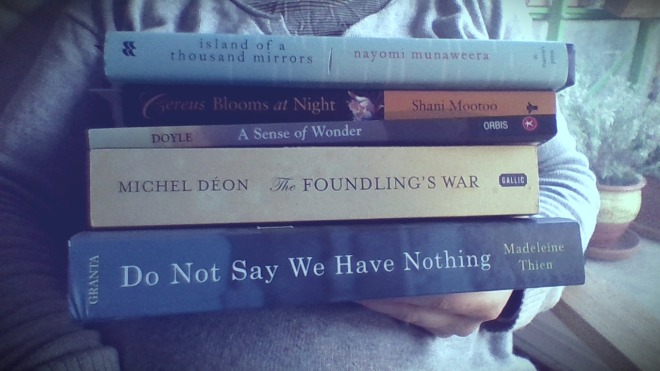
Island of a Thousand Mirrors by Nayomi Munaweera

In 2016 I read Nayomi Munaweera’s second novel What Lies Between Us and it was one of my Top Reads of 2016, a novel of a young woman trying to adjust to a new life in a new country, though still haunted by both the beauty and deeply buried tragedy of her past, her childhood in Sri Lanka.
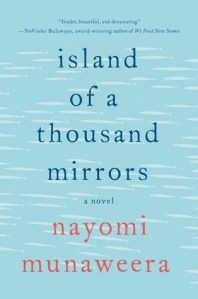
thousand-mirrorsIsland of a Thousand Mirrors similarly evokes the childhoods and family life of two families living in the same house. The house is owned by the matriarch Sylvia Sumethra and her husband The Judge, who are Sinhala people (an Indo-Aryan ethnic group originally from northern India, now native to and forming the majority (75%) of the population of Sri Lanka, mostly Buddhist) and upstairs they rent to an extended Tamil family (a culturally and linguistically distinct ethnic group native to Sri Lanka, mostly Hindu).

It is a time when they live side by side in relative peace, although there are prejudices and intolerances at the adult level, attitudes that are initially not understood by children. Multiple generations of children will grow up and some of them will be capable of bridging those differences, until violence, heartache and tragedy taint them.

Sylvia’s daughter Visaka grows up in the house and develops a fearful crush on the son of the family upstairs, later when she is married and gives birth to one of our narrators, her daughter Yasodhara too will befriend Shiva, the next generation son of the same family living upstairs.

Her father Nishan is a twin, the lighter skinned one, his sister Mala, despaired of by her mother Beatrice when she was young, perceived as being unlikely to marry, to be rejected because of her skin tone, finds love without the interference of her family, something of a scandal.

There is silence and then the familiar smack of Beatrice Muriel’s palm against her forehead. “A love marriage,” she says. In her opinion, love marriages border on the indecent. They signify a breakdown of propriety, a giving in to the base instincts exhibited by the lower castes and foreigners. She believes marriages are too important to be relegated to the randomness of chance meetings and hormonal longings. They must be conducted with precision, calculated by experts, negotiated by a vast network of relations who will verify the usual things: no insanity in the family, evidence of wealth and fertility, the presence of benevolent stars.

An old photograph reminds Yasodara of the moment she was forced to recognise the age-old prejudices that infiltrate families, that perpetuated the myth that she and her friend Shiva were different.

We had been talking in our own shared language, that particular blur of Sinhala, Tamil and English much like what our mothers used in the early days, when suddenly my grandmother, her attention telescoped on us, pins him like an insect. Her iced voice, incredulous, “Are you teaching my granddaughter Tamil?” Her hand smashing hard across his cheek. He rips his hand from mine, turns to run. The camera in my father’s hand clicks shut.

When violence enters the town and the soldiers come knocking, their world turns upside down, and both families leave. Yasodara and her family will move to America and start over.

In Part Two we meet Saraswathi, the eldest daughter of a Tamil family in the northern war zone of Sri Lanka. Her family have already lost two brothers to war, and they live in fear of losing a third or worse, something terrible happening to the girls. Sara and her sister are still in school, she hopes to become a teacher, but there are white van abductions, despicable acts of violence and lynchings which put stress on the family. There is pressure to join the Tamil Tigers, a militant group fighting for independence.

There are roofless, bombed-out houses with bullet-splattered walls and empty, eyeless rooms everywhere. I hate these houses, they look like dead bodies or like mad people, laughing through their openmouthed doorways. I want to know what this place looked like before, when all the houses were whole, when people lived in them and cared about them and grew vegetables in front of them, flowers even.
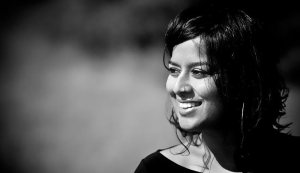
Nayomi Munaweera by Nathanael F. Trimboli

Nayomi Munaweera by Nathanael F. Trimboli

Munaweera writes exquisitely of the island of Sri Lanka, in lyrical prose that takes the reader inside the family experiences, evoking all the senses, the aroma of the cuisine, the fear and excitement of young, forbidden love, the pain of heartbreak, the palpable tension as sisters walk to school, sometimes witnessing images that will stain their minds and revisit their dreams for years.

Through the forced changes political events put on the families, we become witness to the struggle to adapt, in some the nostalgia for the past will lead them back there, in others, it is as if it never was, they have banished nostalgia and reminiscing from their minds and will do all they can to keep it from their children, not realising that they too will grow up and question their parents origins and be curious to know that part of themselves that provokes questions by others, highlighting the obvious, gaping hole in their identity.

I knew it would be good, it is a prize winning novel and deservedly so, it is endearing, evocative and sensual, touching on both the best of humanity and it’s most despicable, unpalatable horrors and the effect that exposure to those horrors can have on the innocent.

Brilliant. Highly Recommended.

Buy one of Nayomi Munaweera’s Books at Book Depository

10 Books I’m Looking Forward to Reading in 2017, Mirrors, Blooms, Wonder, War, Not Nothing

I’m not really into making reading lists, but I do make lots of reading piles of books I think I might read next, which often then get changed, as I’ll read a great review of a book I have on the shelf and be convinced I have to read it sooner, now it’s come to my attention.

So here are five books on my pile at the moment and five waiting on my kindle to start the year with, though don’t be surprised if you find me reading and reviewing something entirely different!

Five From The Shelf

2017-reads

thousand-mirrorsIsland of a Thousand Mirrors, Nayomi Munaweera (Sri Lanka) – Last year I read her second novel What Lies Between Us and it made my top 5 fiction reads and this one is her debut which was longlisted for the Man Booker Prize, the Dublin Impac Prize and won the Commonwealth Regional Prize for Asia. It’s about two families on either side of the conflict during the long civil war, told though the eyes of the eldest daughter of each family.

cereusCereus Blooms at Night, Shani Mootoo (Trinidad) – Part of my fascination with reading stories by women from the Caribbean culture, this one came to my attention last year and is said to be a fascinating narrative propelled by vivdly drawn characters, set on a fictional island, a mystery about a reclusive old woman accused of murder.

sense-of-wonderA Sense of Wonder, The World’s Best Writers on the Sacred, the Profane, & the Ordinary, edited by Brian Doyle– a beautiful Christmas gift from a dear friend containing an anthology of powerful stories, essays and reflections from some of the world’s best writers including Pico Iyer, Mary Oliver, Barry Lopez, Helen Garner, Cynthia Ozick

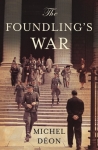
foundlings-warThe Founding’s War, Michel Déon (France) #RIP – the French writer who lived in Ireland, with over 50 novels, plays and essays published, just passed away Dec 28 at the age of 97 years. Having read his novel The Foundling Boy, translated into English by Gallic Books, I’m going to read the sequel A Foundling’s War as a tribute to his lifetime of considerable achievement.

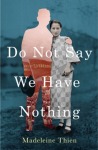
do-not-sayDo Not Say We Have Nothing, Madeleine Thien (Canada/China) – no need to say much about this one, shortlisted for the Man Booker 2016 and I would say it was The People’s Choice, the book most people loved most from the list and one I picked to read when the longlist came out. Secrets from the revolution, a pianist and a composer, intimate and political.

5 on the Kindle

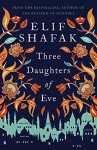
three-daughters-of-eveThree Daughters of Eve, Elif Shafak (Turkey) – I’ve been a fan of Rumi scholar Elif Shafak since she wrote The Forty Rules of Love and have since read The Bastard of IstanbulHonour and her essay The Happiness of Blond People – A Personal Meditation on the Dangers of Identity so I’m looking forward to her latest which she says tackles the confusion of Turkey, faith and God from Turkey to Oxford and back.

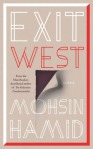
exit-westExit West, Mohsin Hamid (Pakistan) – literary novel of new love in a time of war which causes them to immigrate when the world is in crisis – by a renowned author, with a couple of rave reviews, time to get on the band wagon, a timely novel.

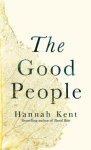
the-good-peopleThe Good People, Hannah Kent (Australia/Ireland) – well I missed Burial Rites, her debut historical novel set in Iceland, about a woman who was executed, so I’m going for her second novel, this one set in Country Kerry, Ireland in 1825 in a time of traditions and superstitions surrounding those born a little different, and women who are vilified for having anything to do with them. I hope it’s as good as her debut!

breaking-connectionsBreaking Connections, Albert Wendt (Samoa) – Reading around the world brings me down under to leading Pacific writer Albert Wendt’s new novel by the excellent Huia Publishers. A group whose members refer to themselves as the Tribe, mainly Polynesian grow up together, rise from poverty and become successful professionals, bound by love and fierce loyalty. When one of them is killed, they face an ensuing crisis.

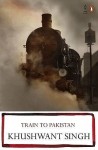
train-to-pakistanTrain to PakistanKhushwant Singh (Pakistan/India) – a classic set in the partition, that was recommended me to me last year after reading Where The River Parts by Radhika Swarup.


Plenty to choose from there, I hope you are looking forward to some exciting reads to start the new year as well.

Let me know what you’re looking forward to!

Click Here to Buy A Novel via Book Depository

Top Reads 2016

In 2016, I read 55 books, just over my ongoing intention, to read a book a week.

I managed to read books by authors from 26 different countries and 19 of them, just over a third, were translations. My absolute favourite book of the year, was written by an author from Guadeloupe, translated from French into English, and 3 of my top 5 fiction reads were translated.

Outstanding Read of 2016
Bridge of Beyond

The book that has stayed with me, that I loved above all else was Simone Schwarz- Bart’s The Bridge of Beyond, a novel that touched on the lives of three generations of women from the French Antillean island of Guadeloupe, narrated by the granddaughter Telumee as she grows up on the island, learning from experience and the traditions of her culture, guided by the wisdom of her grandmother Toussine, ‘Queen Without a Name’. A masterpiece of Caribbean literature, “an unforgettable hymn to the resilience and power of women,” translated from French, republished as a New York Review of Books (NYRB) classic.

Top 5 Fiction Reads

Human ActsHuman Acts, Han Kang (South Korea) tr. Deborah Smith

As much a work of art as novel, Human Acts is an attempt to understand a despicable act of humanity through story telling, Han Kang was one of the most thought provoking authors of 2016 for me, equally incredible was her novel The Vegetarian, which won the Man Booker International Prize in 2016.

What Lies Between UsWhat Lies Between Us, Nayomi Munaweera (Sri Lanka)

Like The Bridge of Beyond, Munaweera’s work is evocative of place and she brings a childhood in the gardens of Sri Lanka alive. A woman remembers her past from behind the walls of a cell, and as she reveals her upbringing and the changes that brought her family to live in America, we wonder what went terribly wrong, that caused her to lose everything. And best book cover!

zoraTheir Eyes Were Watching God, Zora Neale Hurston (USA)

I finally read this great American classic and it was absolutely fantastic, another story that touches on multiple generations of women and how the lives of each affects the other, as they all wish a different life for the future generation. Janie is determined to live her life differently, but some lessons have to be lived thought and not told. The prose is astounding, melodic and the whole reading experience one I’ll never forget.

FirdausWoman at Point Zero, Nawal El Saadawi (Egypt) tr. Sherif Hetata

An internationally renowned feminist writer, activist, physician, psychiatrist and prolific writer, I’d been wanting to read her for some time and during August, reading books by Women authors in translation #WITMonth was the perfect opportunity. And what a novel! Inspired by real events, after she was given the opportunity to interview a woman who had been been imprisoned for killing a man and due to be executed, she retells this story of Firdous, too beautiful and poor to pass through life unscathed, who finds the desire to lift herself and others out of oppression and will pay the ultimate price. Haunting, beautiful, a must read author and book!

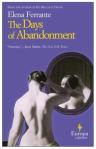
Days of AbandonmentDays of Abandonment, Elena Ferrante (Italy) tr. Ann Goldstein

The year wouldn’t be complete without Elena Ferrante, the reclusive Italian author whose identity was outed this year, although I didn’t read any of the reports, preferring she remain as unknown to me now as before. Days of Abandonment was published before her popular tetrology which began with My Brilliant Friend and is a compelling, searing account of one woman’s descent into semi madness following abandonment by her husband, in the days where the hurt prevents her from seeing things objectively and her rationality leaves her. It’s full of tension, as she has two young children and Ferrante uses her incredible talent to make the reader live through the entire uncomfortable experience of this roller coaster ride of temporary insanity.

Top Non Fiction Reads

Memoir

Brother Im DyingBrother I’m Dying by Edwidge Danticat (Haiti)

A beautiful memoir of her father and his brother, alternating between Haiti and America, it is a tribute to a special relationship and an insight into the sacrifices people make to better the lives of others, whether its family or their community. I’ve read her novel Breath, Eyes, Memory she is a wonderful writer with a gift for compassionate storytelling.

why-be-happyWhy Be Happy When You Could Be Normal by Jeanette Winterson (UK)

Wow, this is the adoption memoir that tops all others, a literary tour de force, an entertaining, horrifying account of a young girl’s childhood, survived by a strong passion for life and literature that gets her through some tough moments and develops an iron will to pursue the joy that appeals so much more than the conformity her mother sought. Brilliant.

woman-on-the-edgeA Woman on the Edge of Time by Jeremy Gavron (UK)

Less a memoir of the son, than one of his obsession to understand why his mother, when she appeared to have everything a young woman would ever want, decided to end it all. Having never asked questions about his mother’s suicide, Jeremy Gavron, now a father of two girls becomes obsessed with knowing who she was and what pressures lead her to her end. Early 1960’s insight.

The Blue Satin NightgownThe Blue Satin Nightgown by Karin Crilly (US)

A reading highlight of the year for me, I’ve seen Karin’s book go through many stages leading to publication this year, in my review you’ll read how I was involved a little in its development. I knew it would be a success, as we sipped champagne together in Aix after she won the Good Life in France short story competition for the first chapter, Scattered Dreams. Last seen, Karin and her friend Judy were in China continuing their adventures, which age will never hamper and there’s a mysterious new man appearing in her recent Facebook posts, suggesting she may be writing a sequel perhaps?

Soul Food

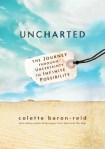
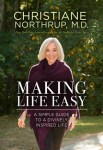
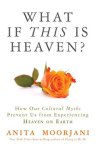
This year, in particular after the harrowing experience accompanying my 14-year-old daughter through back surgery to correct a curvature of the spine, I read a few books by authors published by Hay House, whose radio show I often  listen to. I’m already a fan and follower of Colette Baron-Reid and her book Uncharted came out this year, and through her I discovered, listened to and read What if This is Heaven by Anita Moorjani, Making Life Easy by Christiane Northrup and I’m still slow reading a few others. During challenging times, these authors are a soothing balm, reminding us of much we may already know, offering an alternative perspective on how we see things and tips for remaining grounded and healthy in body, mind and spirit.

Special Mentions

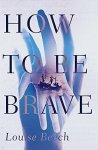
how-to-be-braveUnforgettable Reading Experience Ever: How to Be Brave, Louise Beech(UK)

I couldn’t let the year pass without mentioning the extraordinary reading experience of Louise Beech’s How to Be Brave. I read this book while I was in the hospital with my daughter and it was surreal, a captivating, incredible story, based partly on true events, both those of the author and her daughter, who are both coming to terms with a recent diagnosis of Type1 diabetes and a retelling of her grandfather’s epic journey lost at sea, after their ship was destroyed.

Bonjour TristesseBest Translations: Bonjour Tristesse(France) & The Whispering Muse (Iceland)

Two fabulous novellas, from Iceland, Sjón’s The Whispering Muse was my first read of the year for 2016 and I loved it, it’s a kind of parody of The Argonauts and had me looking up references to the Greek classic and enjoying both the story and its connections.

Bonjour Tristesse is an excellent, slim summer read, of a young woman’s regret, a heady summer on the French Riviera, engaging as she has a deft ability to portray her minds workings and see herself interacting with the others, aware of her own manipulative ability and yet unable to stop herself. Brilliant.

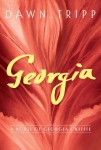
GeorgiaBest Fictional Biography: Georgia, A Novel of Georgia O’Keeffe, Dawn Tripp (US)

I love the work of the artist Georgia O’Keeffe, she’s probably my favourite artist in fact. And she was an incredible woman, who lived a long time and had an intriguing relationship with her husband, who discovered her as one of his protege, the photographer and gallery owner Alfred Steiglitz. Dawn Tripp has done an outstanding job of researching her life, bringing to this novel, insights from new material available and succeeds in doing what hasn’t really been done before, channelling the voice of the artist, providing a perspective that is loyal to the artist and how she may have thought.

Brief HistoryBiggest, Most Satisfying Challenge: A Brief History of Seven Killings, Marlon James (Jamaica)
Written a large part in Jamaican patois, with a wide array of characters, this 700+ page book won the Man Booker Prize in 2015 and was my summer chunkster for 2016. I gave it 5 stars for sheer effort, even though it’s not really my style of book, I tend to prefer the stories by women writers from around the Caribbean, Marlon James is perhaps too modern for me, he moves his story out of generational tradition and into the cold, dark, masculine front lines of survival, jealousy and ambition in a trigger happy, drug induced frightening world that is far from sleepy villages I prefer to inhabit.

Biggest Disappointment: The Fox Was Ever the Hunter, Herta Muller (Romania)(DNF)

It wasn’t on my reading list and I should have listened to my instinct, but since I was reading books by women in translation and I’d been sent this by the publisher (unsolicited), and it was a novel by a Nobel Prize winning author I attempted it. Impossible. Incomprehensible. Stop. Prize winning authors and books should be looked at like any other book I tell myself, forget about what a committee of 18 Swedish writers, linguists, literary scholars, historians and a prominent jurist with life tenure think, they are not you.

Well that’s it for 2016, another great reading year!

What was your outstanding read for 2016?


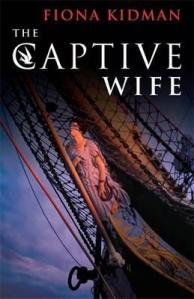
The Captive Wife by Fiona Kidman

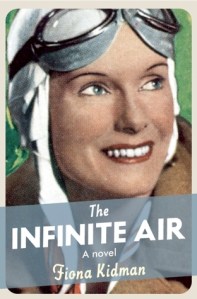
Fiona Kidman is a New Zealand novelist, poet and script writer, whose most recent novel The Infinite Air a novel of the life of the aviator Jean Batten, I reviewed earlier this year.

Gallic Books and Aardvark Bureau

Although she has published over 20 books, she is relatively little known outside Australia and New Zealand, however recently her novels have begun to be published in the UK by Gallic Books, who translate a number of excellent French authors into English, and now with their new imprint Aardvark Bureau, are bringing novels originally written in English, but from countries outside the UK and US, their aim to bring an eclectic selection of the best writing from around the world.

aardvark

One of my favourite reads from 2015 was the Aardvark published novel The Life and Loves of Lena Gaunt by Tracy Farr and in early 2017, they will publish Fiona Kidman’s novel Songs From the Violet Café.

The Captive Wife isn’t a recent novel, just one I had on the shelf, it was originally published in 2005 and I was reminded of it after reading Jeremy Gavron’s memoir, A Woman on the Edge of Time, as his mother, who is the subject of his memoir, also wrote a book called The Captive Wife, though quite a different volume to Fiona Kidman’s.

Review

The Captive Wife is set in the 1830’s, spanning ten years from 1832 -1843 and is based around the lives of two women, one the young Betty Guard and the other her school teacher Adeline Malcolm, whom Betty takes as her confidant, to share what exactly happened to her and her children, when they were taken captive on the shores of New Zealand, during one of their frequent visits.

In narrating her story, we come to know the circumstances of these women and their men and how they came to be living in Sydney, where much of the story is based.  The man Betty is betrothed to Captain John (Jacky) Guard, arrived on one of the convict transport ships, a petty criminal, but one whose fortunes have changed as he gets involved in seafaring and whaling.

Miss Malcolm had been a teacher and is now a governess to two children, her situation somewhat precarious since the death of her mistress and her employer’s disapproval of her connection with the so-called captive wife, Betty Guard, whom rumour has it, was not as captive as many would have them believe.

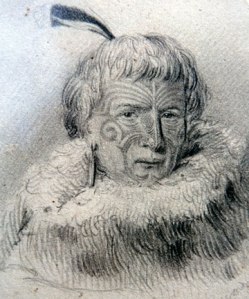
te-rauparahaJacky Guard takes Betty to New Zealand as his wife and they set up home in a bay that is handy for their whaling activities and where it is easy to trade with the native Maori population. Jacky trades with, though doesn’t trust the Maori Rangatira (chief), Te Rauparaha. He is able to negotiate with him, but fears he may have disrespected some of their taboo beliefs. There are constant challenges to their attempt to settle on this land, each time they return to Sydney, their home and belongings are often burned on their return.
Sometimes the whalers invade the villages and fraternise or do worse with the local women and it is through one of these misunderstandings that their lives come under threat and the young Betty is taken captive with her two children.

The novel is based on real events and is compellingly told, as two cultures clash and one way of life is gradually imposed upon another, although the perspective is more oriented towards the colonists, as much of the narrative is told through entries in Jacky Guard’s journal and in the oral narrative of his wife to her ex school teacher.

It is only through Betty’s eyes that we see and experience something of the Maori way of life and their reaction to the arrival of these whalers and traders and the devastation they introduce with what they bring. Betty stays long enough with the tribe to begin to see the value in their ways and it is this sympathy that is subsequently seen as suspicious, as a betrayal not just to her so-called husband, but to the colonial masters.

Betty’s experiences are those of a young woman, though it is as if she has lived much more than her years. Her story is told to Miss Malcolm, who though much older is as much a captive herself, in her spinsterhood and in her inability to communicate her own hidden desire, which Betty’s story forces her to confront.

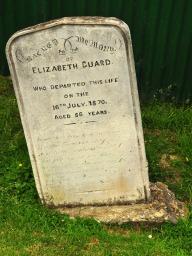
elizabeth-guardElizabeth Parker, the Real Betty Guard

In real life Betty Guard (born Elizabeth Parker in Parramatta, Sydney) made her first voyage with Captain Jacky Guard when she was either 12 or 15 years old, and he 23 years older than her. She is said to have been the first woman of European descent to settle in the South Island of New Zealand and her son John, the first Pakeha child born in the South Island.

She and her family were captured at one point, her husband released with orders to return with a ransom. Her ordeal was later described in a somewhat lurid report in the Sydney Herald of 17 November 1834. It was four months before a rescue mission was  dispatched to bring them back. She and her family eventually settled in Kakapo Bay, where she is buried and where some of their descendants continue to live today.

The Captive Wife is an intriguing story and although a part of me wishes someone would write a novel from the perspective of the indigenous people, at least this gives us an alternative insight, by giving a significant portion of the narrative to the women who lived through these times, rather than referring to them in the footnotes, as was normally the case, as ‘the woman’.

Dame Fiona Kidman

Fiona Kidman in an interview with Kelly Ana Morey of ANZL, the Academy of New Zealand Literature had this to say about communicating with her characters, during the writing process:

I tend to live inside my characters for a long time when I’m thinking about a book. They go with me wherever I go, and sit beside me in the car. This is true, I’m talking to them all the time. And what is happening is that for the most part I’m thinking about how I would have responded to their situations had I been in them.

This was particularly true of Betty Guard, about whom very little was known – and I take some credit for uncovering her true origins and giving her to her descendants – generally, in historical references she was a footnote and referred to as ‘the woman’. I loved giving her a full-blooded persona and thinking myself into the pa sites where she was taken, and discovering both captivity and a wild freedom of the self.

Buy a book by Fiona Kidman

Kakapo Bay

Kakapo Bay


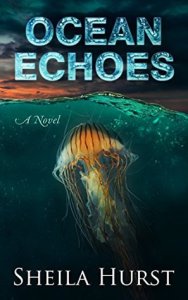
Ocean Echoes by Sheila Hurst

Sheila Hurst is both a reader and a writer with a love of the sea. We connected through a love of literature concerning the sea, I recommended Rachel Carson’s Under the Sea Wind and she recommended The Outermost House by naturalist writer Henry Beston to me, a writer who Rachel Carson mentions as her only other influence when she wrote Under the Sea-Wind.

ocean-echoesOcean Echoes follows a period in the life of a marine researcher named Ellen, who is dedicated to her work, the study of jellyfish, her main desire to discover a new species. She has become ever more focused on her work since a major betrayal that crossed both personal and professional boundaries, an experience that has made her cautious of becoming close to others and less trusting about divulging the findings of her research.
She and her young male assistant Ryan, are soon to join a group on a research cruise to a group of Pacific Island atolls, a fact-finding mission that has suddenly become all the more important as their funding is under threat, the expedition will either help generate funding or could put an end to her research career.

The area they are going into is populated by islanders who have a very different relationship to their environment and the sea, they have rituals that must be respected, if they are to maintain a harmonious symbiotic relationship with the sea. Some of the researchers were resentful at having to go along with their demands, seeing them as no more than superstitions.

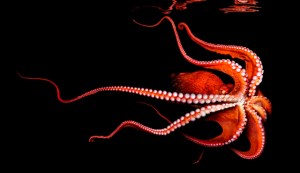
octopus“One of our gods in Mala legend is the fierce sea monster Minawaka. He was once the guardian of the reef entrance to our island. He would change into a shark and travel through the reef, challenging others to fight. But whenever he fought as a shark, great waves would form, valleys would flood, and there would be much suffering…Until one day a giant octopus grew tired of the waves and the suffering caused from all this fighting. This octopus snuck up behind Minawaka and coiled his tentacles around him. The octopus began to squeeze. Minawaka begged for mercy and agreed never to fight again or harm anyone from the island of Mala.”
They saw it as the stuff of legends that had been created to explain the unknown, stories they had little use for in the information age. Ellen knew this, but some of the things she experiences in this environment she has difficulty explaining.

“Ellen had always tried to explain the unexplainable. Now, after visiting this land of magic and legends she wasn’t so sure. Maybe the opposite had been true all along and nothing could ever be fully explained.”

On their research dives, Ellen’s discovers something that may be a new species, but there is something strange and menacing about it, especially when they swarm together. Not only is she looking into this strange new species, but they are discovering the little known history of the area they are in, which has its own dark, menacing past.

Ocean Echoes begins at a gentle pace, with the sense of a story of transformation, but quickly develops into a thrilling mystery, as we enter into a marine sanctuary that is harbouring its own dark secrets. In a world of legends, we are never sure what is real and what is imagined, however the threat is ever-present and the pace quickens along with a sense of foreboding.

jellyfish

How To Be Brave by Louise Beech #Type1

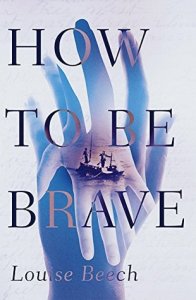
how-to-be-braveHow to Be Brave isn’t just a book you read, it’s a story that you feel like you are living while reading, right down to sharing the symptoms and emotions of some of its characters. I didn’t just read this book, I experienced it, developed symptoms and was grateful for medicine and the time to rest and recuperate from it. But fear not, it’s totally worth the ride.
Natalie is the mother of 9-year-old Rose, whose father Jake is on a tour of duty in Afghanistan when Rose has a crisis which we learn is caused by a diagnosis of Type 1 diabetes. While they are in hospital both mother and daughter are visited and spoken to by a man who reassures them and whose voice leads them soon after to the discovery of dusty diary in a long abandoned box belonging to Natalie’s grandfather Colin.

As the two struggle to adapt to their new life routines that diabetes has forced upon them, they begin to share the story they have uncovered, of the destruction of the ship Colin had been working on and his long survival at sea before rescue.

The narrative of mother-daughter daily life and the passing of days at sea by Colin are interwoven so closely that we live the two simultaneously, there is a strong connectivity between what passes through the mind of young Rose and that of her great-grandfather.

They develop a routine that each time they must do the finger prick test and the insulin injection, they will narrate a portion of Rose’s great grandfather’s story; they don’t read from the diary however, rather, they take what they know and imagine the days, entering the minds and bodies of the men who shared the enormous challenge of trying to survive in a lifeboat floating with the currents at sea, and keeping their spirits up.

We meet Ken and Fowler and Scown and others and Scarface, the menacing shark that never gives up its pursuit, whose instinct is sharp and head-butting intentions lethal.

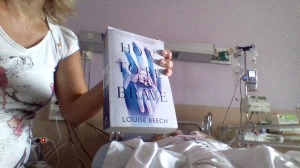
how-to-be-brave2Louise Beech has created a page-turning, moving story that on Day 2 of reading, which was also Day 2 post-op for my daughter who also has Type 1 diabetes (diagnosed at 9 year-old), but who is recovering currently from spinal surgery to correct a scoliosis related curvature, I began to develop symptoms of headache, dehydration and my body ached all over. I wasn’t sure if it was sympathetic pain for my daughter or for Colin, I couldn’t read, just as Colin and the men couldn’t always find the energy to keep a lookout and gave into sleep, and so did I, after a quick trip to the pharmacy for medicine and water, so dehydrated! Miraculously, the next day I was completely fine.
In between the created narrative which mother and daughter eventually share, coinciding with Rose taking more responsibility for doing her tests, preparing her insulin and even doing her own injections, they also open the diary randomly, using it as a kind of oracle and as one would expect, discovering just the reflection they needed to hear at that moment, as they travel their own journey.

Just as I do now with this book, while I live one day at a time with my daughter’s pain, and today as the morphine is removed and she has taken the paracetamol and all the medicine she is allowed, and the pain is still there and there is nothing more to give but a mother’s love, yes, I too open the book for reassurance and get this:

No one spoke. Even the sea seemed to listen, calm for a moment, its many colours merging into sparkling gold. Colin cut off thoughts beyond two days ahead. He was unable to imagine his hunger on so small an amount of food and so little water. Looking around at the craggy faces of his mates, he could see in their eyes the same fear. But it had to be. Much as the craving was there,they couldn’t eat more heartily for fear of how long rescue might be in coming.

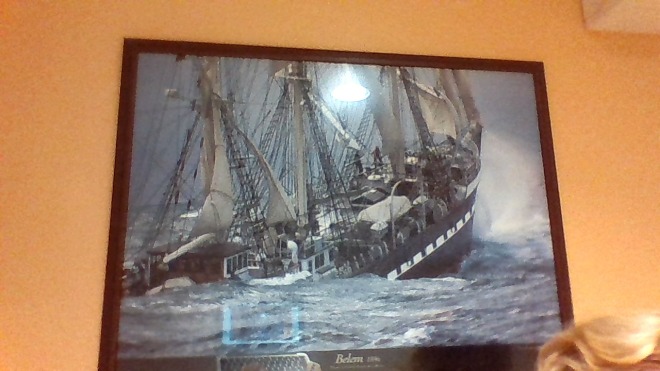
Louise’s book has been my little escape these past four days, and these notes more like a journal than a review. I had intended to take a literary ocean escape with me during this time and meant to begin with Sheila Hurst’s Ocean Echoes which I will begin today, as she shares a similar love of the sea and ocean to me and likes the same kind of nature writing, however Louise’s book reached out to me and I decided to begin there, not realising how much of it takes place at sea. I couldn’t help noticing the synchronicity of this giant picture of a roiling sea, tossing a ship in its swell, right opposite us, the first thing I see every time I leave the room:

at-sea

When Rose suggests she is ready to take more responsibility for her diabetes preparation and injections, her mother is initially reluctant, seeing her still as small child, wanting to avoid her immersion into the serious world of managing the medical challenge. In the same way she resists Rose’s desire to take up some of the storytelling, until Rose shares the words she’d whispered into Colin’s ear, during her night-time dream:

Rose patted my head, gentler now.
‘I said, If you don’t live, I’ll disappear Grandad. Can I call you Grandad? You’re really my Great Grandad, but I like Grandad better. If you don’t live Grandad, I won’t be able to come back and stroke your hair. I’ll just dissolve like a salty ghost. So then I got a bit of the canvas logbook and drew us all in there; you and me and Dad. I wrote above it that I was learning how to be brave, and he was making it a lot easier.

I loved everything about this book, brilliantly conceived and written, I would almost say channelled, as we are totally cast into Colin’s experience and made to feel it, and that doesn’t come from mere words scratched on a page. And I loved how mother and daughter become twin storytellers of the story, using their imagination, feeding into and drawing from their night dreams and day dreams and the bittersweet ending. Oh the magic of fiction and of life.

Highly Recommended.

Click Here To Buy of How To Be Brave at Kenny’s

More Louise Beech I’ve Reviewed:

The Mountain in My Shoe

Maria in the Moon

Man Booker Prize Winner 2016 #FinestFiction

I’ve not really been following the prize this year, although I listed the titles of the longlist as they are generally where I identify the book or author I’m most likely to be interested in.  You can find the Man Booker Longlist here.

So the book that stood out for me from the longlist and the only one I have a copy of ready to read, actually made the shortlist which was Madeleine Thien (Canada) – Do Not Say We Have Nothing

Here are the titles from the shortlist and if you scroll down the winner will be revealed at the bottom of the page!

The 2016 Shortlist

Paul Beatty (US) The Sellout (Oneworld)

  • Satire about a young man’s isolated upbringing and the race trial that sends him to the Supreme Court. It challenges the sacred tenets of the United States Constitution, urban life, the civil rights movement, the father-son relationship, and the holy grail of racial equality—the black Chinese restaurant

Deborah Levy (UK) Hot Milk (Hamish Hamilton)

  • Sofia, a young anthropologist, has spent much of her life trying to solve the mystery of her mother’s unexplainable illness. She and her mother travel to the searing, arid coast of southern Spain to see a famous consultant in the hope that he might cure her unpredictable limb paralysis. A profound exploration of the sting of sexuality, of unspoken female rage, myth and modernity, the lure of hypochondria.

Graeme Macrae Burnet (UK) His Bloody Project (Contraband)

  • A brutal triple murder in a remote northwestern crofting community in 1869 leads to the arrest of a young man by the name of Roderick Macrae. There’s no question that Macrae is guilty, but the police and courts must uncover what drove him to murder the local village constable. And who were the other two victims?

Ottessa Moshfegh (US) Eileen (Jonathan Cape)

  • A lonely young woman working in a boys’ prison outside Boston in the early 60s is pulled into a very strange crime, in a mordant, harrowing story of obsession and suspense. Set in the snowy landscape of coastal New England in the days leading up to Christmas. 5 “repugnant, vile, fierce, exhibitionistic” stars said Jaidee, who recommends it for those willing to see the darkness in women.

David Szalay (Canada-UK) All That Man Is (Jonathan Cape)

  • Nine men. Each at a different stage of life, all living away from home, striving – in the suburbs of Prague, beside a Belgian motorway, in a cheap Cypriot hotel – to understand just what it means to be alive, here and now. A piercing portrayal of 21st-century manhood.

Madeleine Thien (Canada) Do Not Say We Have Nothing (Granta Books)

  • In Canada in 1991, ten-year-old Marie and her mother invite a guest into their home: a young woman who has fled China in the aftermath of the Tiananmen Square protests. Her story brings to life one of the most significant political regimes of the 20th century and its traumatic legacy, which still resonates for a new generation. A gripping evocation of the persuasive power of revolution and its effects on personal and national identity, and an unforgettable meditation on China today.

And the Winner of the Man Booker Prize for Fiction for 2016 is….

*****

The Sellout by Paul Beatty


Click Here to Buy a Copy of Any Book from the Man Booker Prize


Their Eyes Were Watching God by Zora Neale Hurston

Totally brilliant and original, what a voice, a narrative and an insight into a woman’s desire for fulfilment.

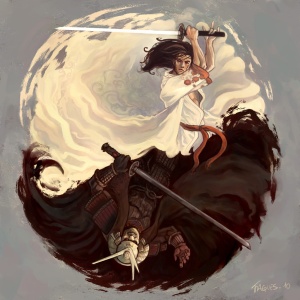
yin_yang_by_fallen_eyeIf you have read or were considering reading Marlon James Booker winning A Brief History of Seven Killings, then this is the Yin to his Yang, this is the feminine yearn to his masculine ambition.
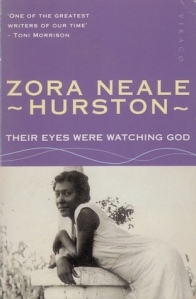
Immersed in the dynamic culture of the American South, its language, traditions and folklore and equally fascinated by it, Zora Neale Hurston had instant access to a rich depth of stories, songs, incidents, idiomatic phrases and metaphors and an adept ear for the rhythm of speech patterns. With her literary intelligence and skill, she brings it together with remarkable power and beauty to the written page.

Their Eyes were Watching God is an American classic, the esteemed author Toni Morrison called her “One of the greatest writers of our time”, though she may be lesser known beyond those shores. There has been much written about her work and of this particular novel, criticized by feminists at the time of publication, yet come to be more appreciated and understood with time.

Alice Walker’s essay, “In Search of Zora Neale Hurston” revived interest in the author and since then there have been numerous new editions published. It was originally published in 1937.

Zora Neale Hurston tells the story of Janie, a girl raised by her Nanny, who was an ex-slave and therefore wanting to protect her daughter and grand-daughter from the things she feared, which amounted to marriage to a man with land or money or to live under the wings of a good, white family.

zoraUnable to protect her daughter, who was raped by her schoolteacher, her focus moves to Janie, whom the daughter leaves her with. As soon as adolescence beckons she arranges for her to marry an older farmer with land. Janie dreams of love and fulfilment and when mentions not finding it in this marriage is reprimanded by her grandmother for her romantic notions.
“There are years that ask questions and years that answer.Janie had had no chance to know things, so she had to ask. Did marriage end the cosmic loneliness of the unmated? Did marriage compel love like the sun the day?”

She moves on and marries Joe Sparks who takes her to a new town in Florida, a town built by black people for black people. It isn’t as Joe expects, so he sets about continuing its creation, getting himself elected as mayor and becoming a wealthy man. Janie becomes his showpiece, working in the shop, however he curtails her interactions with the community, thwarting her ability to be herself, even making her cover her hair due to his jealousy.

“She had found a jewel down inside herself and she had wanted to walk where people could see her and gleam it around. But she had been set in the market place to sell.  Been set for still-bait. When God had made The Man, he made him out of stuff that sang all the time and glittered all over. Then after that some angels got jealous and chopped him into millions of pieces, but still he glittered and hummed.  So they beat him down to nothing but sparks, but each little spark had a shine and a song. So they covered each one over with mud. And the lonesomeness in the sparks made them hunt for one another, but the mud is deaf and dumb. Like all the other tumbling mud-balls, Janie had tried to show her shine.”

Finally, her quest will become fulfilled, though not without its share of life’s ordinary and extraordinary sufferings, when she meets Tea Cake and they manage to ride life’s roller coaster of events and emotions, working together to deal with the demons and living their dream.

“Dis is uh love game.  Ah done lived Grandma’s way, now Ah means tuh live mine.”

The excellent afterword of the Virago edition I read, says the following to explain one of the reasons this novel has attributed such notoriety today and why it is that she achieved something so rare.

Black women had been portrayed as characters in numerous novels by blacks and non-blacks. But these portraits were limited by the stereotypical images of, on the one hand, the ham-fisted matriarch, strong and loyal in the defense of the white family she serves (but unable to control or protect her own family without the guidance of some white person), and, on the other, the amoral, instinctual slut. Between these two stereotypes stood the tragic mulatto: too refined and sensitive to live under the repressive conditions endured by ordinary blacks and too coloured to enter the white world.

Even the few idealised portraits of black women evoked these negative stereotypes. The idealisations were morally uplifting and politically laudable, but their literary importance rests upon just that: the correctness of their moral and political stance. Their value lies in their illuminations of the society’s workings and their insights into the ways oppression is institutionalised. They provide, however, few insights into character or consciousness. And when we go (to use Alice Walker’s lovely phrase) in search of our mother’s gardens, it’s not really to learn who trampled on them or how or even why – we usually know that already. Rather, it’s to learn what our mothers planted there, what they thought as they sowed, and how they survived the blighting of so many fruits. Zora Hurston’s life and work present us with insights into just these concerns.” Sherley Anne Williams

Zora Neale Hurston’s depiction of Janie’s life provides a wonderful insight into the character and consciousness of a woman of her era, drawing from her own experience, though the character of Janie has a different personality to Hurston, providing a look not so much into the experiences, but of the yearnings and emotional life of women, their quest for fulfilment and self-discovery and though it’s not without obstacles, allows a little light to shine on those moments where her life does reach that bitter-sweet destination, leaving wisdom in its wake.

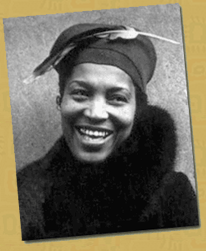
Zora Neale Hurston

Zora Neale Hurston

Zora Neale Hurston (1892-1960) was born in Eatonville, Florida, the first incorporated black town in America. Her life there, nine years of wanderings is described in her book Dust Tracks on the Road. She studied at Howard University and began to write, attracting the attention of the Harlem Renaissance with her essays and short fiction and won a scholarship to Barnard College where she studied Cultural Anthropology, subsequently spending four years researching folklore on the South and publishing another five books including this novel and a collection of tales, songs, games and voodoo practices from the time.

Click Here to Buy a Copy of Their Eyes Were Watching God

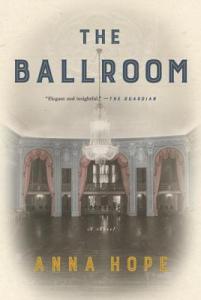
The Ballroom by Anna Hope

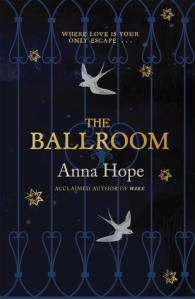
ballroomThe Ballroom is Anna Hope’s second novel and one inspired in part by a family connection. I review it in full at Bookbrowse.

A woman who works in a dark, stuffy, factory, one who has been working in hard labour since she a child, is seized by a desperate need to see the sky and smashes a blackened window one day on impulse.

This is how we meet Ella Fay, just before she is committed to an asylum, a place where not only those who genuinely require care, but those who are at the mercy of the powerful (men, husbands, employers), often find themselves.

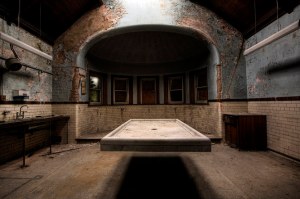
Picture: Mark Davis

It is here Ella meets John, a more fortunate patient who works outdoors, he and Ella meet briefly when she tries to escape being held and subsequently on Fridays in the ballroom, the only time selected men and women are allowed to meet.

John is being observed by Dr Charles Fuller, who desires to make a contribution to his field, he closely follows the developments of the Eugenics movement, a group who support improvement of the human race through the prevention of the feeble-minded from reproducing. Uncertain which side of the debate he is on, he tests his theories through observations of the patients, until an unfortunate incident swings his position wildly towards one extreme.

Picture: Mark Davis

Tension mounts as Ella and John begin to correspond and grow closer to each other and as Dr Fuller’s plans grow closer to fruition, endangering all that might be.

It is an interesting and gripping novel of the experience of two patients who feel more normal to the reader than the man in charge of them, creating a certain tension as we wonder what will happen to them, as they grow to need each other.

The novel is based in part or at least inspired by the authors own great-great grandfather, also an Irishman, who she discovered was committed to the West Riding Pauper Lunatic asylum in the same era on account of his melancholia, caused by the constant threat of poverty; sadly he passed away there.

It provides a disturbing highlight on the British eugenics movement, at its height at the time, supported by a number of high-profile intellectuals and politicians including Winston Churchill.

Note: This book was an ARC (Advance Reader Copy) provided by the publisher via NetGalley.

Click Here To Buy a copy of The Ballroom via Book Depository

the-ballroom2

The Bright Edge of the World by Eowyn Ivey

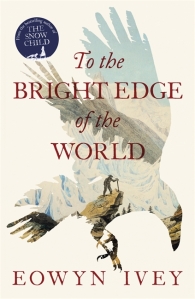
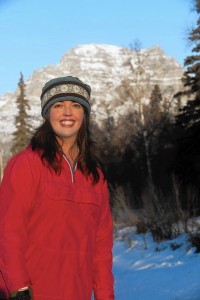
To the Bright EdgeEowyn Ivey was the author of my favourite book of 2012 and one of my all time favourite reads, her debut novel The Snow Child an extraordinary, accomplished work about a childless couple who leave the close-knit support of their child-filled families to try to make a success of ‘homesteading’ in the Alaska wilderness.

I’m not the only one who long-awaited the next thing she would write, a book that was first mentioned a couple of years ago, with the suggested title Shadow of the Wolverine and which would eventually be published in 2016 as To the Bright Edge of the World.

I reviewed this title for Bookbrowse, that review (not the same as my comments below) and an article I wrote about Lieutenant Henry Tureman Allen, can be viewed by members by clicking the link.

bookbrowse_logo
Set in 1885, Ivey’s new book was inspired by real events, and in particular by the adventures of the little known Lieutenant Henry Tureman Allen, an Alaskan Explorer and Decorated US Major General and his Report of an Expedition to the Copper, Tananá, and Kóyukuk Rivers.

The author also cites for inspiration Bram Stoker’s Dracula (first-person voices, use of documents and tremendous suspense), Mary Shelley’s Frankenstein (for its humanity in the face of terror and its time frame) and William Vollmann’s mythological fantasy The Ice-Shirt from the Seven Dream series.

It is narrated firstly through the letters and diary entries of the fictional Lieutenant Allen Forrestor (based on Henry Allen) and his younger wife Sophie, as he makes a commissioned expedition through harsh US owned Alaskan territory up the fictitious Wolverine River, with a small team accompanying him.

His wife Sophie writes him letters and keeps a journal of her time while he is away, so she can share how she spent her time. Sophie is both a woman of her time and ahead of her time, she knows what is expected of her, but has married a man who she hopes accepts she has a mind and a curiosity of her own, a part of her that shall not be tamed.

She takes up photography, learning how to mix chemicals and process plates and spends hours observing birdlife, in some of the most exquisite passages, as she patiently waits to capture a singular event, that might express that moment of pure magic she does not have the words to define, but can recognise instantly in an image, rare though it may be.

allen-team

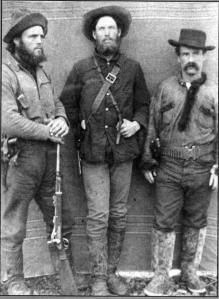
The Team Who Inspired the Novel

In contemporary time, we also read letters between a descendant of Allen Forrestor named Walter Forrester, who has sent the Colonel’s journals, papers and other items for safekeeping to Josh, the exhibitions curator of the Alpine Historical Museum in Alaska, hoping to convince him to safeguard the documents and artefacts, given they are some of the earliest, firsthand descriptions of those northern lands before colonisation, while still inhabited by native Midnooskies (a Russian word for “people of the Copper River”) and Wolverine River Indians (Ahtna and Eyak tribes).

While it is a novel, the journey upriver was inspired by the expedition of Lieutenant Henry T. Allen (1859 – 1930), a true account Eowyn Ivey came across when the bookshop she worked for acquired a rare copy of Allen’s Report of their Expedition to the Copper, Tanana, and Koyukuk Rivers in the Territory of Alaska.

Ivey took the book home for an evening, staying up late to read it, sharing passages with her husband and was completely fascinated by this piece of Alaskan history she had never heard of before, despite growing up and living all her life there.

In 1885, Allen and two men trekked up the Copper River into completely unmapped territory and encountered Native Alaskans who had never seen white people. The men nearly died many times from starvation and exposure, but eventually they made it through the mountains, down the Yukon River and to Saint Michael.

Though inspired by the Colonel’s expedition, the novel is influenced by other encounters and ancient beliefs she became aware of over time, and it was then the idea for the novel developed:

And at some point it struck me—what if a landscape actively reflected the beliefs of its people? And when these military men ventured into Alaska, what if they had encountered those beliefs as living, breathing, tangible forces?

030412_2011_TheSnowChil1.jpgAnd in a style true to Eowyn Ivey and familiar from her novel The Snow Child (inspired by both a fairy tale and her own life), The Bright Edge of the World might be described she says, as “documentary meets mythology” where certain things the men encounter, they will fail to be able to explain, despite the fact that they all witnessed them. They are things the natives accept and speak of openly, but that these men have no words to describe and are somewhat reluctant to mention.
It is a novel that charts out the recent history of this relatively untamed wilderness and while recognising the beauty and simplicity of a way of life before armies, prospectors and settlers would change it forever, also looks back and recognises that if it were not for those who went first and documented what they found, little of that way of life would be known about and be able to be appreciated today.

The Colonel’s diaries, like the writings of Meriwether Lewis and Captain Cook, are a kind of cursed treasure.

eowyn-ivey

Author, Eowyn Ivey

To the Bright Edge of the World is a wonderful introduction to a little known expedition that opened up further the Alaskan frontiers and a delightful story of a well matched couple, who manage to combine their love of nature and the outdoors with the way they live their lives.

Eowyn Ivey manages to inform and entertain in this worthy follow-up to the magical Snow Child, a novel that was always going to be a tough act to follow.

Click Here to Buy a Copy of To The Bright Edge of the World

Note: This book was an ARC (Advance Reader Copy), thank you to the publisher for providing a copy via NetGalley.