Lotusland by David Joiner

LotuslandLotusland starts out with the main protagonist Nathan, taking a long train journey from Saigon in the south of Vietnam where he lives, to Hanoi, the capital where he will visit his friend Anthony who he hasn’t been in touch with for some time.

Ironically, he reflects on the many things in his life that he perceives have always been a long wait for him. Ironic, because he is a character who has difficulty keeping a commitment, distracted too easily by the allure of the new and unknown, like the girl with the pink hair he meets on the train, or the attraction and undivided attention he gives to a new feature article he is asked to write, neglecting other commitments.

What follows is a well written story exploring the relationships between these two expatriate American men living in Vietnam, both their relationships to each other and the local women they marry/befriend and their contrasting attitudes to work.

Girl With a Fan by Công Quốc Hà Source: Wikipedia

Girl With a Fan by Công Quốc Hà
Source: Wikipedia

Nathan, a struggling writer, considers entering Anthony’s real estate business to make money, promising he is serious this time, though his word is rapidly thwarted by his developing relationship with the pink-haired woman, a traditional Vietnamese lacquer artist and gallery owner Le, in the weeks before he is supposed to leave Saigon and move to Hanoi.

“Somehow the mystery of the painting excited him even more than Anthony’s job offer. As he prepared to return to Saigon with the task of wrapping up his life there, the offer paled in importance to the chance he had of getting to know her.”

Anthony, now a successful business owner, husband and father of two small children he can’t communicate with, is barely in control of his rapid success or family life, unsure whether to rely on his friend, though it is clear he needs him for more than just work reasons.

The couples are like the escaped and the escapee, almost doomed from the beginning as they represent that often classic situation of the allure of a foreign culture, where the aims of the individuals are the opposite to each other despite their attraction.

Le has an interview at the American consulate for a visa and has made it clear to Nathan that that is the basis of her interest in him, a fact he seems intent on ignoring, preferring to pursue the illusion of a more intimate relationship.

“How’d it go?” He touched her hand, her arm, her cheek. “You’re still alive, and your body’s intact – all good signs.”

“It went okay,” she said, giving him a quick hug. “It’s hard to tell with Americans. They’re serious but also friendly. I don’t know what’s real. The worst part was dealing with the Vietnamese staff. They look down on people like me.”

It’s an often painful, uncomfortable read as David Joiner makes no excuses for his characters’ flaws and we witness that selfish aspect of humanity in which every person appears to want something from the other yet rarely puts the needs of the other before their own before acting or speaking.

Like a falling trail of dominoes, each person wants something from the next, though rarely is the desire reciprocated, individuals search for that thing just beyond their reach without appreciating what they have at hand. Blindness, illusion, disillusion, the impulse to escape.

It reminded me of a quote from Jamaica Kincaid’s expansive essay A Small Place, on her returning to the island of Antigua where she grew up, after many years of being away.

“That the native does not like the tourist is not hard to explain. For every native of every place is a potential tourist, and every tourist is a native of somewhere. Every native everywhere lives a life of overwhelming and crushing banality and boredom and desperation and depression, and every deed, good and bad, is an attempt to forget this. Every native would like to find a way out, every native would like a rest, every native would like a tour. But some natives – most natives in the world—cannot go anywhere. They are too poor. They are too poor to go anywhere. They are too poor to escape the reality of their lives; and they are too poor to live properly in the place they live, which is the very place you, the tourist, want to go – so when the natives see you, the tourist, they envy you, they envy your ability to leave your own banality and boredom, they envy your ability to turn their own banality and boredom into a source of pleasure for yourself.”

David Joiner excels in evoking the sense of being in Hanoi, a city I visited 20 years ago and adored (see my photos above). I was quickly transported back there through his ability to develop a vivid sense of place and found those passages where the action is accompanied by this strong sense of the surroundings captivating.

“In Hanoi the French presence could still be felt, preserved in the architecture and layout, whereas in Saigon the atmosphere still harked back 30 or 40 years to the American era, the notion of aesthetics crowded out by the practicalities of war.”

I was shocked to find myself at the final page, an abrupt ending that leaves the reader with much to think about and likely to provoke discussion about the mix of post-war opportunity, life in foreign cultures, immigration, freedom and entrapment, capitalism and whether and or how it is possible to overcome the clash of cultures within a relationship.

Hanoi by Cheong Source: Wikipedia

Hanoi by Cheong
Source: Wikipedia

Ru by Kim Thúy

RuReading Ru by Kim Thúy is like taking a long overland journey while looking up regularly to witness that which passes in front of our eyes. Sometimes the view is stunning, sometimes it elicits sadness, it can be moving, nostalgic, perhaps an odour transports us back to a scene from childhood, a person we see reminds us of someone we once knew.

Reading it in French imbues it with a drifting, lyrical resonance, sometimes I drifted off as the excess of descriptive words were beyond my reach and I was too lazy to look them up, not wanting to interrupt the flow. Until the next day, when I would happily read with the two dictionaries beside me and remember how much more fulfilling it is to venture further into unknown linguistic territory, enriching one’s vocabulary in another language.

blue dragon tattooMost of the pages read like short vignettes, experiences that provoke a memory, the man at the petrol station who sees a scar and recognises a childhood vaccination from Vietnam, his own hidden beneath a tattoo of a blue dragon, he shares a few memories, he touches her scar and places her finger in the middle of the blue dragon.

Reflections of times gone by, the journey of a woman with her family leaving the south of Vietnam for Canada via a refugee camp in Malaysia, she is a woman connected with another culture and the past, who intends to and does embrace ‘the dream’, whose own children will grow up in that modern culture with different references. Uprooted and yet connected at the same time.

A short but powerful read, that is incredibly moving without being sentimental. A rare and authentic talent, Kim Thúy channels her experience into this fictional tribute, which makes me remember reading Vadney Ratner’s In The Shadow of the Banyan, a tribute to another author’s human experience, struggle and survival despite the horrors lived through.

Ru in French means a small stream or a flow – of water, blood, tears or liquid. In Vietnamese, Ru is a lullaby.

Also Reviewed By

Nancy at Ifsofactodotme 

Jennifer D at LiteralLife

I read the book in French, but it is available in English, under the same title.

Ru English

The President’s Hat by Antoine Laurain

The President’s Hat is the first book of Antoine Laurain’s that was translated from French into English by Gallic Books. It appears that three translators were used for the different voices.

Daniel Mercier voiced by Louise Rogers Lalaurie

Fanny Marquant and Bernard Lavallière voiced by Emily Boyce

Pierre Aslan voiced by  Jane Aitken

In February, Gallic Books sent me a copy of his second translation The Red Notebook, which I devoured immediately and adored. Click on the link to read my review.

Thanks to that review where I indicated a wish to read The President’s Hat, Owen at The Carrot Cake Diaries sent me his copy and I returned the favour by sending him one my all time favourites, Martin Booth’s The Industry of Souls.

The President’s Hat is just as brilliant in its light-hearted uplifting way. It is the story of what happens to the people beginning with Daniel Mercier who encounter a black hat with the letters F M embossed in gold lettering inside the rim, when it is left on a restaurant seat by the former French President François Mitterand. Daniel is the first person seized by a compulsion to covet the hat and wear it until he too will leave it behind and the adventure moves on to the next person.

black hat

Each person who encounters the hat, is touched by it sufficiently to act in a way that will have a significant impact on their lives, thus taking the reader on an entertaining journey across France and into Venice in the eighties via gifted storytelling.

Although he appears only very briefly in the story, it is in a way a tribute to the man who was a popular President in the 1980’s, who ruled from 1981 to 1995 and in his last address to the people said:

“I believe in the forces of the spirit, and I won’t leave you.”

He died one year later.

mitterrand tranquille

Impossible to put down, uplifting and a joy to read, it is wonderful to come across one of those ‘turn-to’ authors when in need of a literary pick-me-up or just a fun read!

Tales From The Heart, True Stories From My Childhood by Maryse Condé

I came across Maryse Condé recently via the Man Booker International Prize 2015 list of 10 nominated authors. She is third from the left in the picture below.

FinalistsNot a book prize as such, it is an award conferred on an author who has a significant body of published work, regardless of the original language it was written in, though some of it must have been translated into English.

It is from such long lists the gems are found I say, and having read about all 10 thanks to this excellent Interview: The Finalists Speak in The Guardian, I spotted my potential winner immediately. A winner in the sense that I intend to read a few of their books. The Indian writer Amitav Ghosh was the only author I’d read on this list.

One writer jumped out at me straight away and I pursued her works with little consideration for the pending award result. Maryse Condé didn’t win the prize, the Hungarian writer László Krasznahorkai did, a writer whose books intellectuals rave about, but who I’m not sure I’m ready for yet.

Tales Maryse CondéSo I took Maryse Condé’s advice and started by reading this slim volume of essays of her childhood in Guadeloupe, Tales From the Heart, True Stories From My Childhood.

She takes us right back to the beginning, to the day of her birth. Being the youngest of 8 children, the family possessed an extended collective memory and she was fortunate to have heard the story of her birth from other perspectives.

Her appearance was both a source of pride and shame for her then 43-year-old mother and 63-year-old father, proud that her body remained robust enough to support the creation of a child and shame that it publicly displayed evidence of their continued indulgence in carnal pleasures.

The first chapter Family Portrait describes her parents relationship with France:

“For them France was in no way the seat of colonial power. It was truly the Mother Country and Paris, the City of Light that lit up their lives.”

World War II wasn’t considered dark on account of all the dreadful atrocities that occurred:

“but because for seven long years they were deprived of what meant the most to them, their trips to France.”

She recounts an anecdote of a waiter in a café complimenting the family on their excellent French pronunciation, to which her parents felt indignant, considering themselves just as French as a Parisian waiter, even more so because of their higher education, manners and regular travel.

Not understanding why it mattered so, she asked her brother Sandrino:

“Could he explain my parents behaviour?” to which he replied “Papa and Maman are a pair of alienated individuals,”

a mysterious word that would rest a long time in her consciousness until she came to understand it. She realised that not only did they take no pride in their African ancestry, they knew nothing of it, however:

“They believed they were the most brilliant and most intelligent people alive, proof positive of the progress achieved by the Black Race.”

Maryse Condé

In their neighbourhood all the mothers in their circle held a profession and with it contempt for the manual work they believed had been the undoing of their own mothers. They employed a servant who, though she raised 6 children of her own would begin work at 5am to take care of the needs of the family.

We meet her best friend Yvelise, two girls who did everything together, their friendship almost destroyed by the unfortunate intervention of one of her teachers, causing a temporary rupture.

Maryse’s mother Jeanne, knew the life she didn’t wish to lead, nor her children either, she had succeeded in breaking the cycle endured by her mother and grandmother and a good education was key (and perhaps being married to a successful and much older husband). Jeanne was a school teacher, revered and feared in equal measure by those around her. Her eldest son Sandrino and her youngest child Maryse the only two children who weren’t afraid to stand up to her, the others too terrified to challenge her.

On her birthday, her favourite pupils recited compliments, gave her roses, her husband bought her jewellery and the day would culminate with a family play, a short piece of theatre written themselves, in her honour.

‘Beneath her flamboyant appearance, I imagine my mother must have been scared of life, that unbridled mare that had treated her mother and grandmother so roughly…Both of them had been abandoned with their “mountain of truth” and their two eyes to cry with.’

10-year-old Maryse asked if she could read one of her compositions for her mother’s birthday.

‘I had no idea what I wanted to write. I merely sensed that a personality such as my mother’s deserved a scribe.’

If a book of essays can reach a crescendo, this is the moment when we reach it. The moment when Maryse learns that not all lessons come from one’s parents and school teachers, some come from life itself and often when we least expect it.

In the chapter School Days , she is at school (lycée) in Paris when her French teacher asks her to present to the class a book from her island. It is a watershed moment.

‘This well intentioned proposition, however, plunged me into a deep quandary. It was, let us recall, the early fifties. Literature from the French Caribbean had not yet blossomed. Patrick Chamoiseau lay unformed in his mother’s womb and I had never heard the name Aime Césaire. Which writer from my island could I speak about? I resorted to my usual source: Sandrino.’

Sugar Cane Alley

Sugar Cane Alley

Sandrino introduces her to to a treasure. La Rue Case-Negres (Black Shack Alley) by Joseph Zobel and his hero José Hassan. It was made into an award-winning film titled Sugar Cane Alley.

It was her first introduction to a world no one up until that moment had ever mentioned; a world that highlighted slavery, the slave trade, colonial oppression, the exploitation of man by man and colour prejudice.

‘I was scared to reveal how José and I were worlds apart. In the eyes of this Communist teacher, in the eyes of the entire class, the real Caribbean was the one I was guilty of not knowing.’

These glimpses into the more significant and memorable aspects of childhood that shaped the author Maryse Condé are insightful, engaging and honest. Just as her consciousness is awakened, the vignettes finish and leave the reader desperate to know more.

I had intended to read this volume over time, but once I started reading I couldn’t stop, it is almost like reading a coming-of-age novella and at its conclusion, the writers fiction will begin. For Condé’s first novel Hérémakhonon is about a character raised in Guadeloupe, educated in Paris, who then travels to Africa in search of a recognisable past, just as she did.

‘Veronica has spent her childhood in Guadeloupe and, after a period as a student in Paris, wants to escape that island’s respectable black bourgeoisie, which she regards as secretly afraid of its own inferiority. She travels to an unnamed West African state and, while there, seeks an authentically African past with which she will be able to identify.’

Tales From The Heart is an excellent read and an intriguing introduction to the writer and her influences and will certainly make you want to read more of her work. I am very happy I have these three novels on the shelf to follow-up with only I am missing that debut novel which I really want to read now too! Very highly recommended.

Literary Works of Maryse Condé

My Other Reviews

Victoire, My Mother’s Mother 

Segu

The Story of the Cannibal Woman

A Season in Rihata

Click Here to Buy a book by Maryse Condé


Moloka’i by Alan Brennert

molokaiBorn in Honolulu, Rachel’s Kalama’s memory of childhood with her mother, sister and two brothers is limited to her first six years, a time when life was full of simple joys and memorable returns, the homecomings of her father Henry, who was away at sea for months on end, his return always marked for Rachel by an anticipated gift, a doll he never failed to present to her, from one of the places he had recently visited.

The last doll she received from him was a nesting doll from Russia that he’d bought in Japan, the matryoshka.

Things started to change when her Uncle Pono fell sick and not only were they not allowed to see him, they weren’t to speak of him to anyone.

After a fight with her sister Sarah, which resulted in scratches on her legs, her mother notices a patch of pink skin with a nasty gash in the middle, one that doesn’t cause Rachel to flinch, something that worries her mother and causes her to become paranoid with fear, fear of leprosy, a disease that carries not only a terrible social stigma, but a life sentence if discovered by the authorities, and they will hunt you down at the first hint of suspicion.

It is the beginning of the end of childhood as Rachel has known it when the Health Inspector calls.

Brennert’s novel, largely based on historical fact, follows Rachel through the quarantine process of those suspected of carrying leprosy (Hansen’s disease) and on to life in Kalaupapa on the island of Moloka’i, allowing a glimpse into the community of sufferers and carers, of the pain of isolation and the irony of the freedom of this close-knit, albeit closed community.

“Love, marriage, divorce, infidelity… life was the same here as anywhere else, wasn’t? She realized now wrong she’d been; the pali wasn’t a headstone and Kalaupapa wasn’t a grave. It was a community like any other, bound by ties deeper than most, and people here went to their deaths as people did anywhere: with great reluctance, dragging the messy jumble of their lives behind them.”

It follows the life of a girl raised by Franciscan nuns, befriended by lepers, loved by her Uncle and an adopted Aunty, coming of age, finding one true love, deprived of maternal love and healing both physical and emotional wounds.

Brennert said of his novel:

“I wanted to tell the story of ordinary people who had to make such heartbreaking sacrifices…”

And one his main characters, Sister Catherine:

“I’ve come to believe that how we choose to live with pain, or injustice, or death is the true measure of the Divine within us…I use to wonder, why did God give children leprosy? Now I believe God doesn’t give anyone leprosy. He gives us, if we choose to use it, the spirit to live with leprosy, and with the imminence of death.”

Not just a tale of their suffering and coming to terms with life and death, it is a clash of cultures as a local population is forced to accept the beliefs and rituals of outsiders, a colonial and christian inheritance, where to stay true to one’s own traditions was seen as an act of rebellion or work of the devil even.

Recommended if you enjoy historical fiction based on real events and enjoy literature set in the islands of the Pacific.

End of an Island Era

A mere 16 leprosy patients remain today in this isolated community of Kalaupapa, a place through whom thousands of sufferers have passed since the 19th century. At present, the youngest member of the colony is 73-years-old. Although mandatory exile was lifted by the state in 1969, a number of patients voluntarily decided to stay. They were offered lifetime housing, amenities and healthcare and did not wish to open their community and environment to uninvited visitors. This may change however, when the colony’s last patient dies.

In an interesting article written by Philip Ross in the International Business Times on 5 May, 2015, he mentions:

Kalaupapa’s history is a tragic tale. In 1866, the Hawaiian government banished anyone diagnosed with leprosy, a chronic bacterial infection also known as Hansen’s disease, to Kalaupapa. More than 8,000 lepers were forced to relocate to the island at a time when there was no cure for the infection.

Men, women and children who had the disease were stigmatized and shunned as outcasts out of fear that their condition was highly contagious. The disease, however, cannot easily be passed from one person to another. Leprosy is caused by a bacterium called Mycobacterium leprae that grows slowly and affects the skin and nerves. Symptoms of leprosy include skin sores, and lumps and bumps that disfigure the body and can last for several weeks or months.

Read the entire article and see some incredible pictures here:

Further Reading:

Philip Ross, International Business Times Article: Kalaupapa, Hawaii Leper Colony: A Look Inside The Remote Island Home For The State’s Few Surviving Leprosy Patients


Kalaupapa leper colony, Moloka'i, circa 1870: Creative Commons

Kalaupapa leper colony, Moloka’i, circa 1870:
Creative Commons


The Autobiography of my Mother by Jamaica Kincaid

Jamaica Kincaid’s The Autobiography of my Mother is a book that was being discarded from our local English library that I pounced on when I discovered it in the collection of books that hadn’t been borrowed for years and therefore must make way for others.

The 7 books I rescued from the Annual Library Sale!

The 7 books I rescued from the Annual Library Sale!

I already have two slim novellas by the same author that sit unread, but something about this novel, for it is fiction, despite the playful title, insisted it should be read at once. Not just a fabulous cover, which is repeated inside as chapter headings, each chapter reveals a section of the photo, until the last one revealing the entire portrait – but the comments from various publications and writers who sang its praise back in 1996 when it was first published.

“Writing in precise, lyrical prose that uses the repetition of images and words to build a musical rhythm, Jamaica Kincaid conjures up the world of Dominica in all its beauty and casual cruelty, a world in which the magical coexists with the mundane, a world in which the ghosts of colonialism still haunt the relationships between men and women. In doing so she has written a powerful and disturbing book.” NEW YORK TIMES

And let me say from the outset, I absolutely loved this book, its language, its voice, its poetry, the complexity of its narrator, who could be so distant yet simultaneously get so under your skin. There is a raw but brutal honesty to it, that disturbs and is to be admired at the same time, it is so full of contrasts and so compelling and beats its rhythm so loud, I almost can’t describe it.

Now that I have finished it, I want to read more by Kincaid and just now before writing this review I looked up a little about the author’s own life, and now I am even more intrigued, what an amazing story and experiences which are often at the heart of what she channels through her stories. A unique voice indeed.

So for those who, like me, knew little about this author, a little background before talking about the novel.

Jamaica Kincaid was born Elaine Potter Richardson in the capital city of St. John’s, Antigua in 1949.  Antigua is a small island in the West Indies (a region of the Caribbean basin), colonised by the British in 1632 that became independent in 1981.

Caribbean


Her mother was from Dominica and her biological father, a West Indian chauffeur, whom she didn’t meet until her thirties.  Kincaid was an only child until she was nine, when the first of her three brothers was born. Until then she’d had the sole attention of her mother, so life changed dramatically thereafter and at 17 she left for America, severing ties with her family and did not return to Antigua for 20 years, though it resonated deep within her creativity.

She still lives in the US today and teaches at Claremont McKenna College in Claremont, California. Her most recent novel See Now Then was published in 2013 after a 10 year absence, depicting in her original style the unravelling of an interracial marriage.

Autobiography MotherIn the autobiography of my mother, we encounter Xuela Claudette Richardson, who narrates her life looking back over seventy years, though the sense of her life reads as if it is being lived in the present, so vivid are the memories, so visceral the experiences. Her mother died in child birth and her father left her with his laundry woman until she was seven, when he remarried and came back for her.

She recalls the moment vividly through the senses and how it made her feel.

“I thanked Eunice for taking care of me. I did not mean it, I could not mean it, I did not know how to mean it, but I would mean it now. I did not say goodbye; in the world that I lived in then and the world that I live in now goodbyes do not exist, it is a small world. All my belongings were in a muslin knapsack and he placed them in a bag that was on the donkey he had been riding. He placed me on the donkey and sat behind me. And this was how we looked as my back was turned on the small house in which I spent the first seven years of my life…”

Through the narrator looking back over years and at events that she re-experiences as she recalls them, we see how it was then, that something, whether it is the lack of maternal love or the makeup of this character, nature or nurture, contributes to her way of being in the world in an emotionally detached way. She responds to instincts and observes acutely her own responses and is able to look back on them and describe and account for them, but there is a sense of something missing, that appears through the recurring dream of a mother climbing up and away from her and the questions she asks herself throughout her life.

“Who was my father? Not just who was he to me, his child – but who was he? He was a policeman, but not an ordinary policeman; he inspired more than the expected amount of fear for someone in his position…At the time I came to live with him, he has just mastered the mask that he wore as a face for the remainder of his life: the skin taut, the eyes small and drawn back as though deep inside his head, so that it wasn’t possible to get a clue to him from them, his lips parted in a smile. He seemed trustworthy.”

Yet nothing is ever as it seems and she depicts her father as dishonest and grows up in a culture and environment of distrust, discouraged from making friendships, made to see that no one can be trusted.

“We were not friends; such a thing was discouraged. We were never to trust each other. This was like a motto repeated to us by our parents; it was a part of my upbringing, like a form of good manners: You cannot trust these people, my father would say to me, the very words the other children’s parents were saying to them, perhaps even at the same time. That “these people” were ourselves, that this insistence on mistrust of others – that people who looked so very much like each other, who shared a common history of suffering and humiliation and enslavement, should be taught to mistrust each other, even as children, is no longer a mystery to me. The people we should naturally have mistrusted were beyond our influence completely; what we needed to defeat them, to rid ourselves of them, was something far more powerful than mistrust. To mistrust each other was just one of many feelings we had for each other, all of them the opposite of love, all of them standing in the place of love.”

Her father’s wife who is resentful toward Xuela and reminds her often that she can’t be her father’s daughter, soon bears two children, a boy and a girl. Though there is no love between them, Xuela doesn’t hate her, she has sympathy for her.

“Her tragedy was greater than mine; her mother did not love her, but her mother was alive, and every day she saw her mother and every day her mother let her know she was not loved. My mother was dead.”

At 15, her father removes her from his home and takes her to live with a business partner and his wife as a boarder. She develops a close friendship with the wife, Madame LaBatte, observing with the same acuity their relationship and way of living and enters womanhood herself, observing and experiencing changes in her own body and the effect it elicits in others.

She makes decisions about her own womanhood, about her body, about mothering. And she lives her life in accordance with those decisions. She marries, she discovers love and seems never to lose that ability to see through the illusions that surround all those things without sacrificing pleasure and contentedness.

“And this man I married was one of the victors, and so much a part of him was this situation, the situation of the conqueror, that only through a book of history could he be reminded of a time when he might have been something other, something like me, the vanquished, the defeated. When he looked at the night sky, it was closed off; so, too, was the midday sky, closed off; the seas were closed off, the ground on which he walked was closed off. He did not have a future, he had only the past, he lived in that way; it was not a past he was responsible for all by himself, it was a past he had inherited. He did not object to his inheritance; it was a good one, only it did not bring happiness; and his reply to such an assertion would be the correct one: What can bring happiness? At the moment the conqueror asks such a question, his defeat is secure.”

And at the end I ask, who is writing this story? Who is this mother who had no mother and no children? And in the dying pages, she will answer the question and we may realise we knew it all along.

the autobiography of my Mother plumbs the depths of maternal love and its lack, mother daughter relationships, self-love, absent fathers and the latent influences of enslavement and occupation, how they continue to distort reality even when they are no longer present.

I find it almost impossible to describe the reading experience, except that it left me asking “How did I not know about this book?” The voice is so unique and powerful and much more than an imagination, it is rooted in something strong and yet transparent and is utterly compelling.  Don’t read this for story, this is about writing and thus reading through the senses, Jamaica Kincaid creates prose that inhabits them all.

A 5 star read for me!

Click Here to Buy a Copy of The Autobiography of My Mother Now!


Literary BlogHop Book #Giveaway

blog-hop

Leave a comment, win a book… Open internationally

The literary bloghop hosted by  Melanie at My Book Self offers the chance to win a book at Word by Word and visit other blogs offering books, vouchers and bookish accessories. Anyone can enter, anywhere in the world, you don’t have to have a blog or follow anything, just leave a comment,

To be in to win a copy of:

Endless

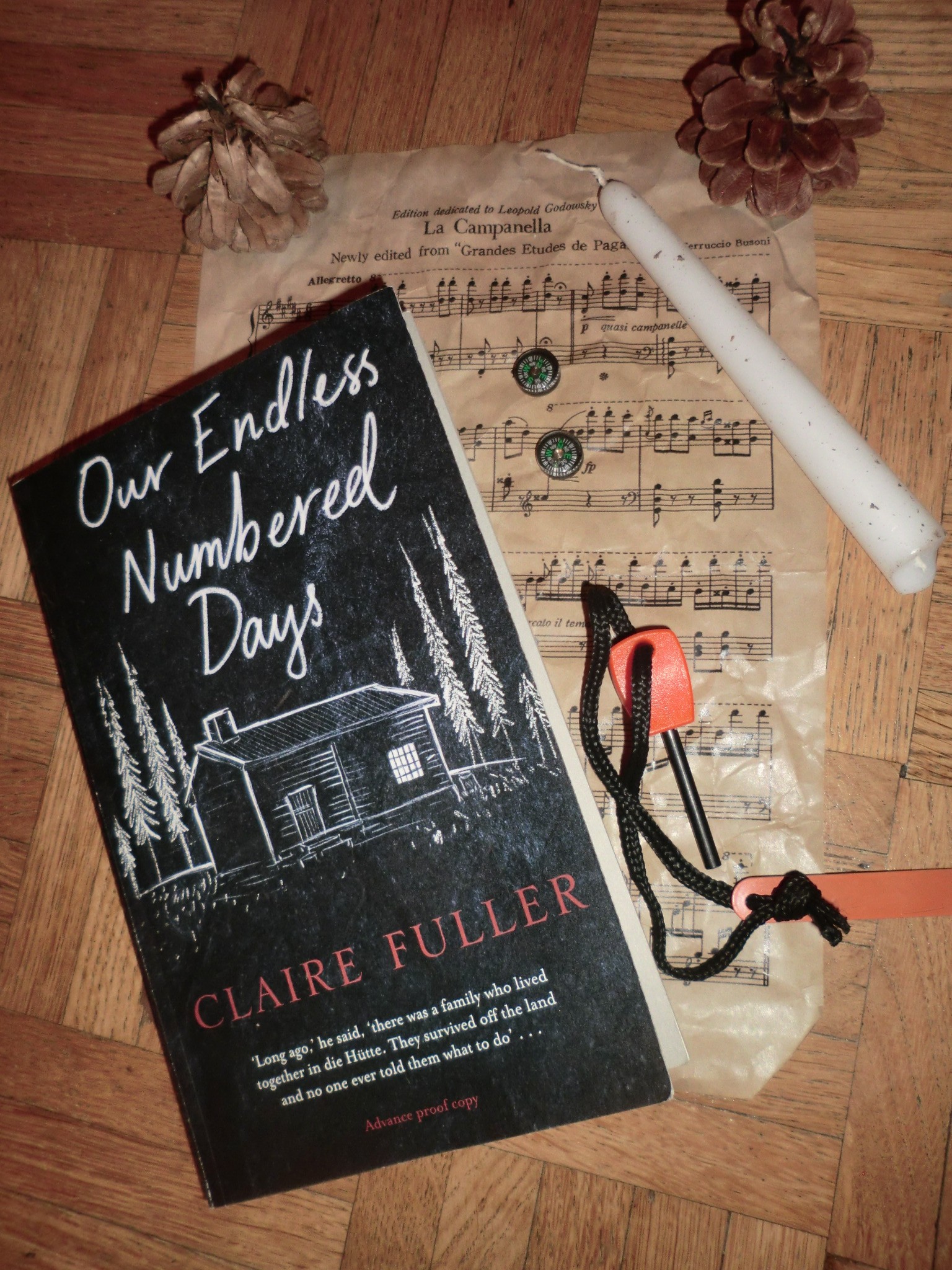
Our Endless Numbered Days

by Claire Fuller

– read my review here

Peggy Hillcoat is 17 years old and has been back in her family for 2 months now, everything is familiar and strange at the same time. Her father is no longer there, but in his place is an 8-year-old brother Oskar, she hadn’t known of until her return. He is the same age now that she was when she and her father disappeared, for nine years, without trace. – extract from Claire’s review

a) Leave a comment below with your email address (1 entry)

b) Follow me on twitter @clairewords  and ReTweet the offer (1 entry)

c) Follow Word by Word (1 entry)

Click Here to visit other participating blogs…

Thank you for stopping by at Word by Word and Happy Blog Hopping!

N.B. The giveaway closes 12 April, 2015. The winner will be notified by email.

This giveaway is now closed.

A Journey From Hobbiton to Provence

Carolyne Kauser-Abbot is a freelance writer who has a passion for food, travel and Provence and shares many wonderful things to see and do here in the lifestyle travel magazine Perfectly Provence as well as a food and travel related blog Ginger and Nutmeg.

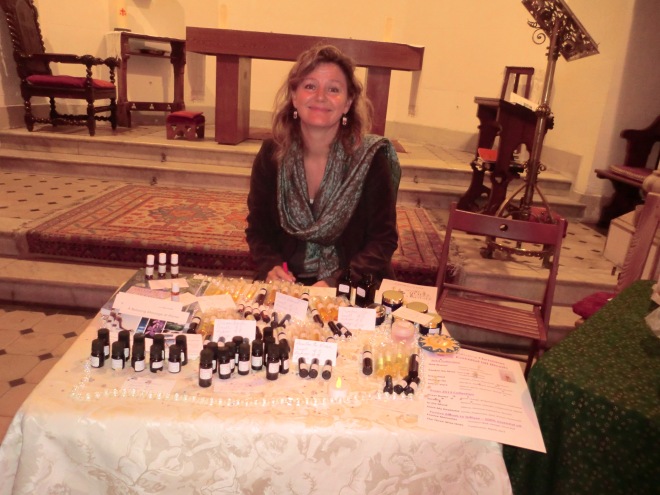
Recently she asked me how I came to be a writer/blogger and Aromatherapist in Provence.

If you click on the photo below you can read the article:

Claire's Christmas Aromatherapy Remedies

Claire’s Christmas Aromatherapy Remedies

I hope you enjoyed the diversion from reading a book review.

 Claire

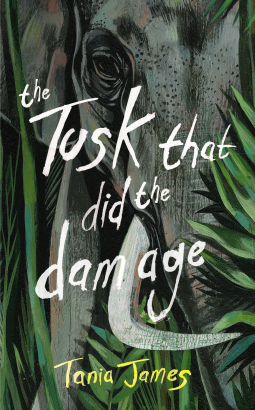
The Tusk That Did the Damage by Tania James

Elephants Ivory Poaching India Environmental LiteratureTania James’s The Tusk That Did the Damage is a story about a couple of very young American film-makers who travel to a  Keralan wildlife park in South India to make a documentary about a veterinarian they’ve heard of, who rescues orphaned elephants. One of those orphaned elephants is now on the loose and is being pursued by poachers.

The young elephant orphaned after the brutal death of its mother, initially seized as a baby by poachers earns the name Gravedigger after developing a reputation for covering his human victims with leaves and dirt after death. Having escaped captivity he is being pursued by poachers, a significant price on his head.

Manu is the younger brother of a poacher, disturbed by what he discovers his brother is up to and the lies he tells his wife to cover for his absences. For the sake of his mother, who pleads with him to watch over her eldest son, he follows his brother on this last deadly pursuit, to try to ensure his safety; he knows the danger very well as his best friend was one of the victims of Gravedigger, but he hopes to keep his brother out of danger and trouble.

It is a story of a tribe of elephants in South India, who have lost their ability to roam freely and live as their nature intended, forever changed by their interactions with humans, it is also about those who wish to care for and protect elephants, those who are willing to exploit them and outsiders looking for a sensational story to bolster their careers.

Remembering India

Remembering India

It is a clash of cultures, of people and species who have forgotten how to live in harmony and are having to live with the consequences of their behaviours.

The narrative follows the elephant they name Gravedigger, the film maker Emma and Manu, the younger brother of the ivory poacher.

“Fresh out of college, we’d been looking for a subject for our first documentary feature when I learned about Ravi from an inflight magazine. The photos of fuzzy elephant calves hooked me for the usual cutesy reasons; the description of the veterinary doctor glowed with dramatic potential.”

The story moves between the three narratives, following their lives, looking back at the events that have shaped them until now, leading them towards each other and the inevitable confrontations that beckon.

“The trouble began when my mother found a pouch of bullets in Jayan’s cabinet – thick and crude as if sawed from a steering rod – and thrust the pouch at my father. She felt it a father’s duty to straighten out a wayward son even if the father himself was wayward past hope.”

There is an authenticity to the narrative of the younger brother that has the effect of drawing the reader deep into the lives of his family and neighbours, that his story involves more than just himself may be one of the reasons I was captivated by these sections.

The insights into the perceptions from the elephants point of view are sensitively if briefly handled, I wished this narrative voice could have been even stronger.

“I had never stood in such intimate company with a wild bull elephant or felt its breath steaming upon my face, had never watched the ground beneath my feet fall away until all that remained was the small patch on which I stood trembling. How could a man survive such a thing unchanged? How could he glimpse that unholy omen, a warning as ancient as the oldest of fables, as obvious as a black-bellied cloud, and ignore it?”

An Outsiders Perspective

The film-makers felt unnatural in the environment, lacking understanding, empathy and not spending sufficient time to learn anything, they were the major weakness in the narrative for me. It is interesting having recently read Yasmina Khadra’s The African Equation, that both authors depict a similar stereotype of the Westerner entering into a foreign culture for a short period of time, insufficient to be able to able to understand it from the inside and this case, perhaps not wishing to see it in any other way that a sensational one.


It might be time for me to read  Tété-Michel Kpomassie’s An African in Greenland, brought to my attention by Ann Morgan, in her A Year of Reading the World project.

The author ran away from his native Togo, to avoid having to be initiated into a snake cult and after reading a children’s book about a place called Greenland that had no snakes, he made that his destination. For the next twelve years, he travelled overland working his way towards his destination, sharing his observations and experiences. Not just an adventure, his book published in 1977 in France won a literary prize and since Ann Morgan read and reviewed it, the story has been picked up by a film producer.

*

Note: The Tusk That Did the Damage was an ARC (Advance Reader Copy) provided by the publisher via NetGalley.

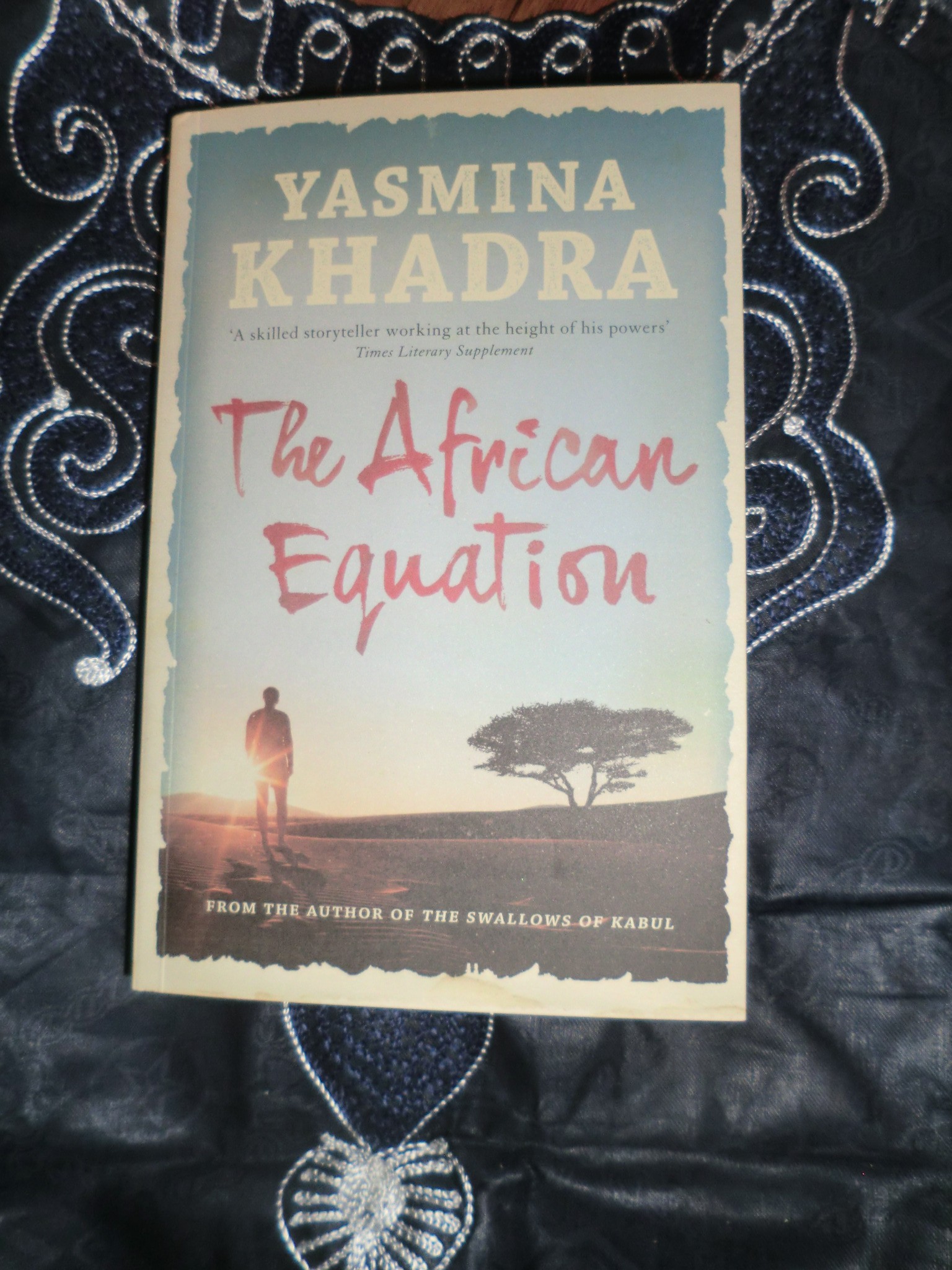
The African Equation by Yasmina Khadra tr. by Howard Curtis (French)

Yasmina Khadra is a name I have seen and heard mention often, here in France. At first, I too thought it was a woman writer. The real Yasmina Khadra is indeed a woman, but the author of the books is her husband, the Algerian writer Mohammed Moulessehoul, who created the pseudonym to deflect attention away from censors, as he was an officer in the Algerian army at the beginning of his writing career. His real identity was only revealed after he left the army and came to France to live in 2001.

He is known for offering an alternative narrative and perspective on the subjects he pursues in his fiction, a challenge to commonly held Western stereotypes. Whether he achieves that or not, his books fly off the shelves in France and now appear to be gathering an audience in the English language as well. It’s disturbing, compelling, likely to provoke much debate and makes me look forward to reading his next book.

KhadraFirst published in France in 2012, The African Equation was translated by Howard Curtis for Gallic Books and made available in February 2015. Two further titles will be published in late 2015 and 2016.

Kurt Krausmann, a doctor living in Frankfurt, Germany met a beautiful woman while in Paris, both were there for work purposes, attending different conferences in the same hotel, seemingly wedded to their careers, they found each other and if we are to believe the doctor narrator, 10 years of contentedness followed.

Moments from the past now arrive unbidden, a mocking assurance as his illusion of bliss is permanently scarred the evening he arrives home to discover the loving (though recently tormented by he knows not what) Jessica, has committed suicide.

The doctor’s ritualistic, clinical, predictable life is turned upside down and he experiences extremes of emotion, the like of which he would normally only ever encounter in the detached manner he has of observing patients, those symptoms he has so often downplayed in others threaten to overwhelm him.

‘Try to forget your dark thoughts, Frau Biribauer,’ I said. ‘You’re worrying unnecessarily. It’s all in your mind. Keep your spirits up. You’ve shown great courage and a clear head. You have no reason to give in now. With its joys and pains, life deserves to be lived to the end.’

His friend Hans Mekkenroth, a wealthy philanthropist throws him a lifeline, suggesting he travel with him on one of his regular humanitarian missions, they will sail across the seas in his yacht to deliver supplies to the Comoros Isles.

Hans lost his wife Paula some years before and though there isn’t a day when he doesn’t miss her, he appreciates that life doesn’t stop, he has found meaning in using his wealth to try and alleviate the suffering of others (while enjoying the element of adventure), whether it is the poor of Africa or the 1st world problems of his companion the Doctor, Kurt.

The Gulf of Aden

The Gulf of Aden

Kurt is about to discover a version of suffering and misery worse than he came with, when they are hijacked by pirates in the Gulf of Aden in the middle of the night and taken hostage. Transported inland, they are initially held in a cave, while their captors decide what to do with them and teach them a lesson or two in the meantime.

The men are moved and lose all sense of where they actually are, as they try to understand who is in charge and what is going on around them. When they meet fellow hostage Bruno, a Frenchman who has been living a nomadic existence in Africa for 40 years, they begin to understand the varying potential prices on their heads and fear for their survival. Despite his captivity, Bruno the ‘born again African’ Frenchman, refuses to let go of his love for Africa, countering every negative situation with an alternative view.

‘I don’t understand what goes on in these monsters’ minds.’

‘A goldfish can’t bring the complexity of the ocean back to the tranquillity of its bowl, Dr Kausmann,’ Bruno said with a hint of reproach.

‘I don’t live on another planet,’ I retorted, exasperated that he could still come out with these insinuations after all I had been through.

‘Neither does a goldfish. But what does it know about storms? The world has become colour blind. On both sides, everything is either black or white, and nobody cares to put things into perspective. Good and evil are ancient history. These days, it’s a matter of predators and prey. The predators are obsessed with extending their living space, the prey with their survival.’

‘You’ve been too long in Africa, Bruno.’

‘What is Africa, or Asia or America? he said in disgust. ‘It’s all the same. Whether you call it a brothel or a whorehouse, it’s the soul that’s in it that determines its vocation. Whether you say “it smells bad” or “it stinks” doesn’t change the air around you. The South Pole is only the North Pole lying on its back, and the West is only the East on the other side of the street. And do you know why, Dr Kausmann? Because there are no more shades of grey, anybody can rationalise anything, even the worst atrocity.’

The hostage experience awakens a once dormant, now seething rage in the Doctor, an equivalent madness that has been roused for some time in his captors, as they trade insults, tirades of hatred and contempt revealing how similar they all are, despite their intent to exert superiority and dominance, each striving to rise above the other. They have worn their societal labels, been perceived, and practised as a Poet(the African) and a Doctor(the Westerner) yet in this unforgiving environment, they are reduced to their despicable worst, seeing the other as their nemesis, representing the worst of those stereotypes, they reduce each other to in their respective forms of bigotry, showing themselves equally capable of the worst man can do, given the circumstances.

Yasmina Khadra

Yasmina Khadra

It is a compelling story that provokes as many questions as it answers, that at times risks falling into the stereotypical traps it seeks to avert. The Doctor had no desire to travel to the African continent, he is there by accident, thus he represents the perspective of those who come by their views through media and external cultural perspectives and his violent experience would seem only to strengthen those views, though they are challenged by some of his later encounters.

Without giving the plot away, I conclude he learns little from his experience, he reverts to his former self, seeks a form of escape from his reality, another version of the life he had before. Perhaps this is what Khadra is getting at, whether it’s a hostage experience, a safari trip or medical relief, that Westerners remain unchanged by their experience? Certainly tourism is rarely a life changing activity, but living in another country for more than 40 years might be.

We were puzzled by the suicide of the Doctor’s wife and though a reason is proffered, there is little introspection on his part to understand his role in it. Did his subsequent journey transform his character in any way? His reaction on his return and unwillingness to explore it, suggest not.

On the reverse side of this equation, we witness the horror of hostage taking and the keeping of prisoners in horrid conditions, the anger and violence of men, the arid landscape, civilian brutalities, villagers on the run and a refugee camp. They a significant contrast to the part of Africa I have been in recently through Wangari Maathai’s autobiography, Unbowed, One Woman’s Story she inhabited a woman’s world in the beginning and then through education, the Kenyan elite. Her story does more to dispel the myths and stereotypes than anything else I have read so far. She may have been an exceptional woman, but I have no doubt there are many more like her, who could teach us a lot more about the Frenchman Bruno’s favourite and frequent quote:

‘That’s Africa, Monsieur Krausmann!’