House of Splendid Isolation by Edna O’Brien

Back to the final days of Reading Ireland Month 2025, this week I slowly read Edna O’Brien’s political novel House of Splendid Isolation, the first of the Modern Ireland Trilogy, books written in the 1990’s that depict significant events in modern Ireland. The other two novels in that series are Down By the River and Wild Decembers.

Incarceration, Idealism and Ignorance, An Irish Story

Modern Ireland trilogy Edna O'Brien a political novel of the 1990's

House of Splendid Isolation is a story of one event and incidents involving a community, over a few days as a man involved in murderous events is on the loose and actively being hunted.

It is also a book of parts and voices, a child’s voice, the past, the present, a woman Josie who returns to Ireland after a period of youth in Brooklyn, her disappointing yet predictable marriage, an impossible affair and violent retribution, an accident, people who drop by, whose good deeds lead to violent consequences, friendships that hide betrayal, communities that breathe suspicion, harbour fear and occasionally a fugitive.

I hear stories. It could be myself telling them to myself or it could be these murmurs that come out of the earth. The earth so old and haunted, so hungry and replete. It talks. Things past and things yet to be. Battles, more battles, bloodshed, soft mornings, the saunter of beasts and their young. What I want is for all the battles to have been fought and done with. That’s what I pray for when I pray. At times the grass is like a person breathing, a gentle breath, it hushes things.

A Not So Quiet Last Act

Josie is now a lone widow in a big old house that she came to inhabitant through marriage, she did not wish to die in a Home, she has returned. A nurse visits occasionally and her grocery order is delivered. Memories still haunt her.

The nurse muses why, the older they get, the madder they are for talk; their past, their present, their futures, anything, everything, afraid of death too as if she was not afraid of it herself.

Edna O'Brien The Country Girls The House of Splendid Isolation

Into her last solitary days arrives this unwelcome visitor on the run, they play cat and mouse, wary of each other, challenging each other, co-existing nevertheless, never quite knowing if one can trust the other, providing each other something they need for a brief moment, while the world outside goes mad in their paranoia, the rumour-mill running rampant, suspicions gone mad.

The grass smells good to him and after three months cooped up in a house in a town, he’s tuned to the smell of grass and the fresh smell of cow-dung, to the soft and several lisps of night. He knows his country well, McGrevvy does, but only in dark. The dark is his friend. Daylight his enemy. Who set him up. Who can he trust, not trust.

The Grass Was Never Greener

While their words and worlds would never align, there is something in the brief respite one provides the other in this house of Splendid Isolation, before they each face the inevitable that awaits them; capture or death, peace no longer an option. Here the first confrontation.

‘There’s myself and my maker,’ she says quietly. So this is how it happens, this is how a life is suborned, one’s insides turned to whey, an opening door, a man, hooded, with not a lax muscle in his being, a loaded rifle and outside crows cawing with the same eventide fussiness and no one any the wiser that her time is up.

A novel of many layers and consequences revealed of humans wronged, who know not how to seek healing or harmless resolution, whose path leads to occasional respite en route to destruction.

It brilliantly depicts two faces of a staunchly divided territory, their failed attempts to escape their destiny, a brutal confrontation and a land that continues to absorb the repercussions.

Forward, back, slow, quick, slow

The writing moves from poetic, contemplative reflection to rapid, coarse dialogue to action oriented tension as the slow hours spent in captivity contrast with the build up externally as the police net closes in on the fugitives location. At times the prose is sparse, and other times it shifts as our protagonist loses her grip on reality and shifts into past memories or present situations that confuse her.

It’s not a straight forward read, as it navigates and holds all these time frames, but it propels forward at a good pace and leaves the reader with much to reflect on.

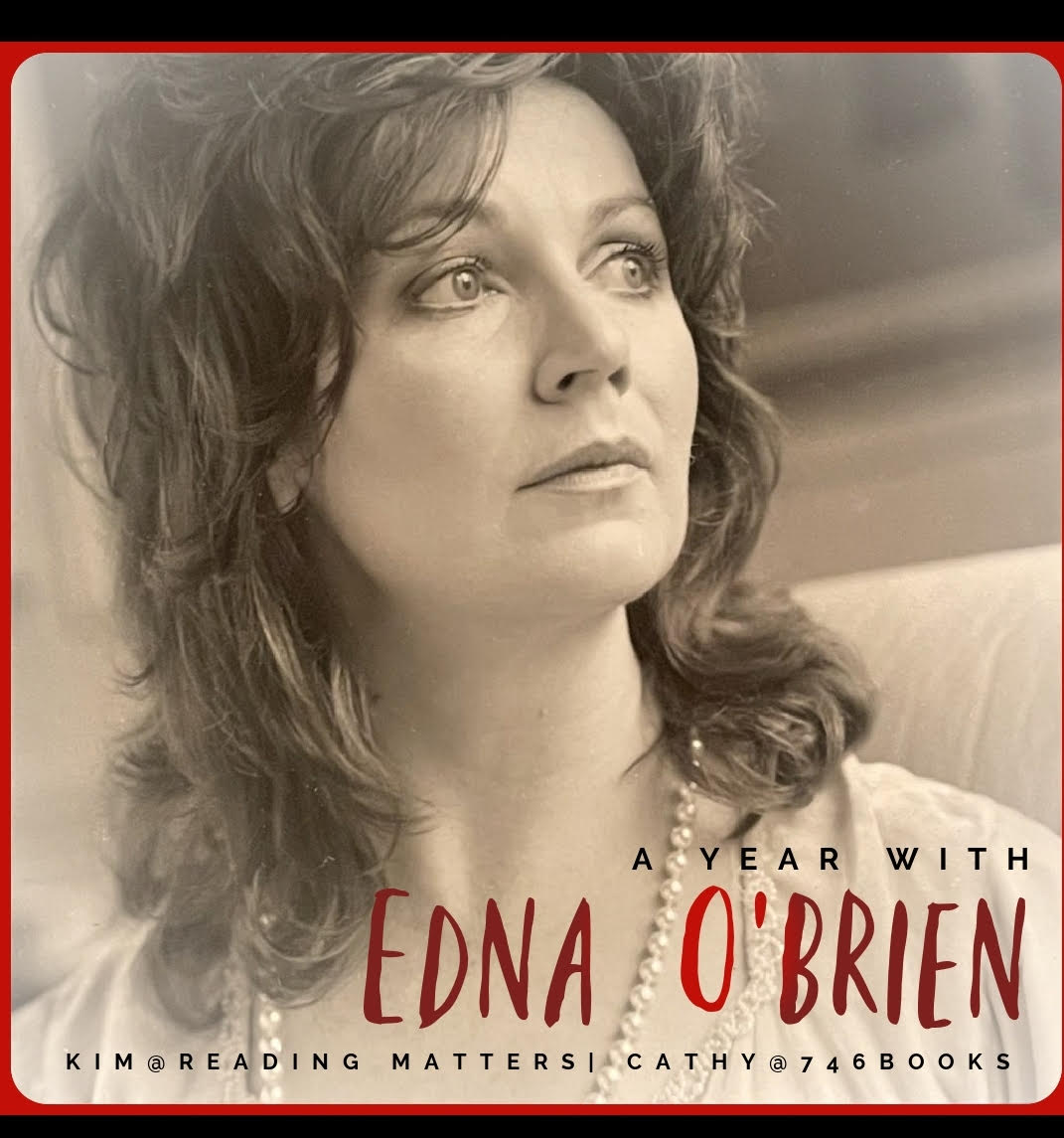
A Year With Edna O’Brien

I read this for Reading Ireland Month 2025 with Cathy at 746Books and also for Cathy and Kim’s A Year With Edna O’Brien which they are doing in 2025. Kim will be reading another of the Modern Ireland trilogy novels, Wild Decembers in August.

Further Reading

My review of Edna O’Brien’s renowned Country Girls Trilogy (initially banned in Ireland due to its bold faced portrayal of a young woman’s quest for independence and awakening sexuality) consists of three novels: The Country Girls (1960), The Lonely Girl (1962), and Girls in Their Married Bliss (1964). It was re-released in 1986 in a single volume including a revised ending to Girls in Their Married Bliss and the addition of an epilogue.

Author, Edna O’Brien

Edna O’Brien was born in December 1930 in Tuamgraney, County Clare. She died in 2024, having written over 20 works of fiction, known to provoke, dissect and dig into social, cultural and religious issues deep in the fabric of Irish society.

In addition to The Country Girls trilogy, her novels include A Pagan Place (1970), the story of a girl growing up in rural Ireland, winner of the Yorkshire Post Book of the Year Award; Zee & Co (1972); Johnny I Hardly Knew You (1977), a story of love, murder and revenge; Time and Tide (1992), winner of a Writers’ Guild Award, the story of a young wife who faces a crisis when she leaves her husband and is forced to fight for the custody of her sons.

She is the author of a trilogy of novels about modern Ireland: House of Splendid Isolation (1994), she writes about Irish nationalism and sectarian violence; Down by the River (1996), based on the true story of a young Irish rape victim forced to travel to England for a legal abortion; and Wild Decembers (1999), about a farmer, Joseph Brennan, and his sister, Breege, living in an isolated rural community. In the Forest (2002), is based on the true story of a disturbed, abused young man who murdered a young mother, her infant son and a Catholic priest in the west of Ireland in the early 1990s. The Light of Evening (2006) and Byron in Love (2009), Haunted (2010), The Little Red Chairs (2016), Girl (2020), Joyce’s Women (2022).

She wrote Mother Ireland (1976), a travelogue with photographs by Fergus Bourke, and a biography of James Joyce, published in 1999. She is the author of several plays. In 2021 she was awarded the French Ordre des Arts et Des Lettres.

“I wanted to write from as far back as I can recall. Words seemed and still seem an alchemy, and story the true conductor of life, of lives.”

Reading Ireland Month 2025

International Booker Prize Longlist 2025

The International Booker Prize 2025 longlist has been announced by this years judging panel, made up of a novelist, a poet, a translator, a critic and a songwriter, all of whom cross boundaries into other art forms. In their various ways, they are steeped in the world of words.

These are the 13 books they have chosen in the first cut, from 154 books submitted – 11 novels and two collections of short stories, translated from 10 original languages representing 15 nationalities and 11 independent publishers:

The longlisted books are:  

International Booker Prize longlist 2025 © Yuki Sugiura for the Booker Prize Foundation

The Book of Disappearance by Ibtisam Azem (Palestine) translated from (Arabic) by Sinan Antoon

– The shocking premise of Azem’s novel can be summed up in a sentence: what would happen if all the Palestinians in Israel suddenly disappeared?

Alaa is haunted by his grandmother’s memories of being displaced from Jaffa and becoming a refugee in her homeland after the Nakba. Ariel, Alaa’s neighbour and friend, is a liberal Zionist, critical of the military occupation of the West Bank and Gaza, yet faithful to the project of Israel. When he wakes up one morning to find that all Palestinians have suddenly vanished, Ariel begins searching for clues to the secret of their collective disappearance. 

That search, and Ariel’s reactions to it, intimately reveal the fissures at the heart of the Palestinian question. Between the stories of Alaa and Ariel are the people of Jaffa and Tel Aviv – café patrons, radio commentators, flower-cutters – against whose ordinary lives these fissures and questions play out. 

Spare yet evocative, intensely intelligent in its interplay of perspectives, The Book of Disappearance, critically acclaimed in its original Arabic edition, is an unforgettable glimpse into contemporary Palestine as it grapples with both the memory of loss and the loss of memory. 

On the Calculation of Volume I by Solvej Balle (Denmark) translated by Barbara J Haveland

– a woman is trapped in a time loop, waking up each morning to find it’s the 18th of November, again and again.The first book of a planned septology. Five books have been published in Danish so far, with translations underway in over 20 countries. 

She no longer expects to wake up to the 19th of November, and she no longer remembers the 17th of November as if it were yesterday. She comes to know the shape of the day like the back of her hand – the grey morning light in her Paris hotel; the moment a blackbird breaks into song; her husband’s surprise at seeing her return home unannounced.  

But for everyone around her, this day is lived for the first and only time. They do not remember the other 18th’s of November, and they do not believe her when she tries to explain.  As Tara approaches her 365th 18th of November, she can’t shake the feeling that somewhere underneath the surface of this day, there’s a way to escape. 

There’s a Monster Behind the Door by Gaëlle Bélem (La Réunion) translated (French) by Karen Fleetwood & Laëtitia Saint-Loubert

– in 1980s La Réunion (an overseas department of France, in the Indian Ocean), a young girl with a zest for life rises up against her jaded, bitter parents.

La Réunion in the ’80s is a place of high unemployment and low expectations, the legacy of postcolonialism. Here, a little girl makes a bid for escape from her sadistic parents’ reign of terror and turns to school for salvation. The name Dessaintes is one to reckon with. A bombastic, violent and increasingly dangerous clan, little do they know that their downfall is being chronicled by one of their own. 

Rich in the history of the island’s customs and superstition and driven by a wild, offbeat humour, this picaresque tale manages to satirise the very notion of freedom available in this French territory, and perhaps even the act of writing itself and where it might lead you.

Solenoid by Mircea Cărtărescu (Romania) translated by Sean Cotter 

– partly inspired by the author’s years as a teacher in Romania, spiraling into a bizarre account of history, philosophy and mathematics, with flashes of nightmarish body horror. Said to have been written in a single draft, at 627 pages, the longest book on the list.

Grounded in the reality of communist Romania, the novel grapples with frightening health care, the absurdities of the education system and the struggles of family life, while investigating other universes and forking paths. 

In a surreal journey like no other, we visit a tuberculosis preventorium, an anti-death protest movement, a society of dream investigators and a minuscule world of dust mites living on a microscope slide. Combining fiction and history with autobiography – the book is partly based on Cărtărescu’s experiences as a teacher – Solenoid searches for escape routes through the alternate dimensions of life and art, as various monstrous realities erupt within the present. 

Reservoir Bitches (short stories) by Dahlia de la Cerda (Mexico) translated (Spanish) by Heather Cleary & Julia Sanches

–  follows the efforts of 13 memorable Mexican woman, from the daughter of a cartel boss to a victim of transfemicide, to survive against the odds.

In the linked stories of Reservoir Bitches, 13 Mexican women prod the bitch that is Life as they fight, sew, cheat, cry and lie their way through their tangled circumstances. From the all-powerful daughter of a cartel boss to the victim of transfemicide, from a houseful of spinster seamstresses to a socialite who supports her politician husband by faking Indigenous roots, these women spit on their own reduction and invent new ways to survive, telling their stories in bold, unapologetic voices.  

At once social critique and black comedy, Reservoir Bitches is a raucous debut from one of Mexico’s most thrilling new writers.

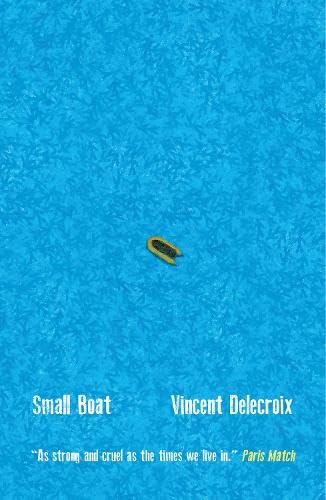
Small Boat by Vincent Delecroix (France) translated by Helen Stevenson

– the fictional account of a group of migrants’ attempt to cross the English Channel in an inflatable dinghy, which results in the deaths of 27 of those on board. Told from the point of view of a French woman who received, but rejected, their desperate calls for help. 

Despite receiving numerous calls for help, the French authorities wrongly told the migrants they were in British waters and had to call the British authorities for help. By the time rescue vessels arrived on the scene, all but two of the migrants had died.  

The narrator of Delecroix’s fictional account of the events is the woman who took the calls. Accused of failing in her duty, she refuses to be held more responsible than others for this disaster. Why should she be more responsible than the sea, than the war, than the crises behind these tragedies?  

A shocking, moral tale of our times, Small Boat reminds us of the power of fiction to illuminate our darkest crimes. 

Hunchback by Saou Ichikawa (Japan) translated by Polly Barton 

– an unflinching account of sexual desire and disability about a protagonist born with a congenital muscle disorder who uses an electric wheelchair and a ventilator. Hailed as one of Japan’s most important novels of the 21st century. 

Within the limits of her care home, her life is lived online: she studies, she tweets indignantly, she posts outrageous stories on an erotica website. One day, a new male carer reveals he has read it all – the sex, the provocation, the dirt. Her response? An indecent proposal… 

Written by the first disabled author to win Japan’s most prestigious literary award and acclaimed instantly as one of the most important Japanese novels of the 21st century, Hunchback is an extraordinary, thrilling glimpse into the desire and darkness of a woman placed at humanity’s edge. 

Under the Eye of the Big Bird by Hiromi Kawakami (Japan) translated by Asa Yoneda 

– leaps back and forth across thousands of years and finds humankind on the verge of extinction, but still clinging to the impulses that make us human. 

In the distant future, humans are on the verge of extinction and have settled in small tribes across the planet under the observation and care of the Mothers. Some children are made in factories, from cells of rabbits and dolphins; some live by getting nutrients from water and light, like plants. The survival of the race depends on the interbreeding of these and other alien beings – but it is far from certain that connection, love, reproduction, and evolution will persist among the inhabitants of this faltering new world. 

Unfolding over geological eons, Under the Eye of the Big Bird is at once an astonishing vision of the end of our species as we know it and a meditation on the qualities that, for better and worse, make us human. 

Eurotrash by Christian Kracht (Germany) translated by Daniel Bowles

– a Swiss writer named Christian, embarks on a tragicomic road trip with his wealthy, elderly mother in this tragicomic and absurd semi-autobiographical novel.

Realising he and she are the very worst kind of people, a middle-aged man embarks on a dubious road trip through Switzerland with his 80-year-old mother, recently discharged from a mental institution. Traversing the country in a hired cab, they attempt to give away the wealth she has amassed from investing in the arms industry, but a fortune of such immensity is surprisingly hard to squander. Haunted in different ways by the figure of her father, an ardent supporter of Nazism, mother and son can no longer avoid delving into the darkest truths about their past. 

Eurotrash is a bitterly funny, vertiginous mirror-cabinet of familial and historical reckoning. The pair’s tragicomic quest is punctuated by the tenderness and spite meted out between two people who cannot escape one another. Intensely personal and unsparingly critical, Eurotrash is a disorientingly brilliant novel by a writer at the pinnacle of his powers. 

Perfection by Vincenzo Latronico (Italy) translated by Sophie Hughes

– an expat couple attempt to live their dream in Berlin, but find themselves beset with the dissatisfaction and ennui of the modern world.

Millennial expat couple Anna and Tom are living the dream in Berlin – in a bright, plant-filled apartment in Neukölln. They are young digital creatives, freelancers without too many constraints. They have a passion for food, progressive politics, sexual experimentation and Berlin’s 24-hour party scene. Their ideal existence is also that of an entire generation, lived out on Instagram, but outside the images they create for themselves, dissatisfaction and ennui burgeon.  

Their work as graphic designers becomes repetitive. Friends move back home, have children, grow up. An attempt at political activism during the refugee crisis proves fruitless. And in that picture-perfect life Anna and Tom feel increasingly trapped, yearning for an authenticity and a sense of purpose that seem perennially just out of their grasp.  

With the stylistic mastery of Georges Perec and nihilism of Michel HouellebecqPerfection is beautifully written and brilliantly scathing.

Heart Lamp (short stories) by Banu Mushtaq (Southern India) translated (Kannada) by Deepa Bhasthi 

– the author, an activist and lawyer vividly captures the extraordinary everyday lives of Muslim women and girls in southern India, in 12 stories, originally published in Kannada between 1990 and 2023.

Praised for their dry and gentle humour, these portraits of family and community tensions testify to Mushtaq’s years as a journalist and lawyer, in which she tirelessly championed women’s rights and protested all forms of caste and religious oppression.  

Written in a style at once witty, vivid, colloquial, moving and excoriating, it’s in her characters – the sparky children, the audacious grandmothers, the buffoonish maulvis and thug brothers, the oft-hapless husbands, and the mothers above all, surviving their feelings at great cost – that Mushtaq emerges as an astonishing writer and observer of human nature, building disconcerting emotional heights out of a rich spoken style. Her opus has garnered both censure from conservative quarters as well India’s most prestigious literary awards; this is a collection sure to be read for years to come. 

On a Woman’s Madness by Astrid Roemer (Surinamese-Dutch), translated (Dutch) by Lucy Scott 

– a classic of queer literature, as electrifying today as it was when it first appeared in 1982, tells of a courageous Black woman fleeing her abusive husband to embark a new life in the Surinamese capital.

When Noenka’s abusive husband of just nine days refuses her request for divorce, she flees her hometown in Suriname, on South America’s tropical northeastern coast, for the capital city of Paramaribo. Unsettled and unsupported, her life in this new place is illuminated by romance and new freedoms, but also forever haunted by her past and society’s expectations. 

Amid tales of plantation-dwelling snakes, rare orchids, and star-crossed lovers, it is also a blistering meditation on the cruelties we inflict on those who disobey. Roemer, the first Surinamese winner of the prestigious Dutch Literature Prize, carves out postcolonial Suriname in barbed, resonant fragments. Who is Noenka? Roemer asks us. ‘I’m Noenka,’ she responds resolutely, ‘which means Never Again.’ 

A Leopard-Skin Hat by Anne Serre (France), translated by Mark Hutchinson 

– captures the love and despair of an intense friendship between the book’s narrator and his best friend from childhood, who suffers from severe psychological disorders.

A series of short scenes paints the portrait of a strong-willed and tormented young woman battling many demons, and of the narrator’s loving and anguished attachment to her. Serre poignantly depicts the bewildering back and forth between hope and despair involved in such a relationship, while playfully calling into question the very form of the novel.

Written in the aftermath of the death of the author’s little sister, A Leopard-Skin Hat is both the celebration of a tragically foreshortened life and a valedictory farewell, written in her signature style.

Newbies, First Timers and a Classic Translated

Many of the books on the list are by authors being translated into English for the first time, which is a great sign for translated fiction, indicating that publishers and reading more widely and looking further than the already known. Not surprising I haven’t read any of these and only heard of one Solenoid, which won the Dublin Literary Award in 2024. It is not one I will be reading, way too long!

I like the sound of Heart Lamp and On a Woman’s Madness, not just for their premise, but for the language and locations they hail from! The Danish novel, The Calculation of Volume 1 sounds intriguing and something of a cult following, you’ve got to bat for someone who went ahead and self-published and is now being translated into over 20 languages.

Anything on the list tempting you? Let me know in the comments below.

The International Booker Shortlist and Winner 2025

The shortlist of six books will be announced on Tuesday, 8 April.

The winning title will be announced at a ceremony at London’s Tate Modern on Tuesday, 20 May.

Small Worlds by Caleb Azumah Nelson

Cover of Small worlds by Caleb azumah nelson bestselling author of Open Water. The book sits on a piece of yellow, green gold Nigerian wedding fabric

What a brilliant novel this was. I loved it.

It might even be my Outstanding Read of 2025.

A meandering story-line, spanning 3 years, the introspective excavating of a young British-Ghanaian man’s soul and the situations he will encounter and confront, as he matures and grows into a version of himself that he likes.

I highlighted SO many passages.

Moments of Bliss, Small Worlds

Small worlds describes the way Stephen has learned to see things. It is his way of identifying and capturing certain moments, especially the loving, the poignant, the fleeting, the good.

A coming-of-age story set mostly in Peckham, London, it follows Stephen as he navigates the period in his life when he is separating from friends and his parents, from all that he knows. Simultaneously, he is moving from letting things happen to him and suffering, towards sitting with what is, reflecting, rejecting, embracing, understanding. A journey the evolves over three years.

the beats, the rhythm, the soul – A trio

Photo by Victor Freitas Pexels.com

Introspective and sensitive, music plays a large role in his mood, his management of his emotions, his friendships and the collective memory of Ghana, a country he is connected to but did not grow up in, a place that separates him from his family as much as it is a part of them all.

The novel is set over three years, written in three parts, like a jazz trio of piano, bass and drummer.

Part One – Two Young People in the Summertime (2010)

The summer after Stephen and all his friends have finished school and they are deciding what comes next. Stephen and his long-known friend Del are both applying to study music. This summer they start to look at each in a different way, to feel something, they are light-footed, beach going, feeling like something good is coming.

When Stephen’s path changes course, he deals with isolation and separation, unable to even find solace in his instrument, the trumpet, or music. His emotions run deep and he withdraws from them.

Part Two – A Brief Intimacy (2011)

Stephen is working with his friend Nam, training to become a chef. The owner Femi has split allegiances, a Ghanaian mother and Nigerian father mean they serve Ghanaian food and play Nigerian music, and they all know about the 1983 Nigerian Presidential executive order, the mandate of Ghana Must Go that affected an estimated 2 million people living in the country.

Rhythm returns to his life and he feels it everywhere. The observations of bits of daily life, poetic, vibrant, rhythmic and upbeat.

Back in Peckham, it’s here too, this rhythm happening everywhere, as I take my time to wander home: in the dash of four boys dressed in black, trying to beat the bus round the curve, soft socks in sliders slapping the ground. The song of a passing car, distant bass finding a home in my ears, the low, slow rumble calling attention the way thunder might ask you to check the sky for rain. The haggling taking place at the butcher’s and the grocer’s, the disbelief that it’s now three plantain for a pound, not four. In the sadness as I pass the spot where Auntie Yaa’s shop used to be, where she would make sure everyone was looked after. In the joyful surprise when I run into Uncle T, his mouth full of gold like its own sunshine. The couple I pass in the park, holding each other close, her head turned away from his, a smile on his face even as he pleads with her, babe, I didn’t mean it. In the distance she holds him, to see if he’ll come closer, because sometimes it’s not enough to say it, you have to show it too. In the conviction I share with many that this stretch, from Rye Lane to Commercial Way, is where our small world begins and ends. There’s rhythm happening, everywhere; all of us like instruments, making our own music.

But expectations, old trauma and shame linger and until they can be addressed, they undermine relationships, cause rupture, rigidity and regret. So much still to recognise, dismantle, overcome and heal. And Stephen explores it all.

I’m slowly taking myself apart, so I might build myself up once more. And as part of this undoing, I want to ask him, why?And then there are those aspects of the outside world, not so far away, that seethe with unresolved anger and hatred, that threaten to close in on them. A raising of public consciousness and a shift in perception.

Part Three – Free (2012)

Photo by Kh-ali-l i on Pexels.com

Stephen takes time off after the turn of events and pays a visit to Ghana. His trip heralds a reckoning.

Still, of late I’ve felt the urge for more. I’ve always had a decent grasp on who I am, or where I might find myself, but I’ve never really known where I’ve come from. This trip has started a shift. There are gaps which my father might fill, with his own story. I want him to tell me who he is, or who he was. I want to know who he was when he was twenty. I want to know what he dreams of, where he finds freedom.

Melody, discord, harmony and triumph – a story through music

As we read, there are songs Stephen chooses to accompany him. Often as I read, I stop to listen and look up the artist, reminding me of the enjoyment I had reading Bernice McFadden’s The Book of Harlan (reviewed here). It can add so much more to the experience, when music with a cultural influence is present, calibrating the reader’s imagination with the mood of the story.

The way the story comes full circle, when by the end, Stephen’s father accepts his son’s invitation to come with him, to share a meal, to listen to ‘Abrentsie’ by Gyedu-Blay Ambrolley, the book morphed into scenes of a wonderful film that I was simultaneously watching and reading. I wished I weren’t on the last pages, because it felt so good to witness the transmutation of emotion into a new way forward, that was something like the old, but different; accepted, something they will be able to nourish and grow from.

Highly Recommended.

I’m happy knowing I have still to read his debut, Open Water now being made into a BBC 8 part series.

Further Reading

Interview Guardian – Novelist Caleb Azumah Nelson: ‘there is a wholeness in living life not always afforded to black people’ – Apr 2023

Afreada – Caleb Azumah Nelson In Conversation – Interviewed by Nancy Adimora and Amanda Kingsley

Author Interview – 21 Questions with Caleb

Caleb Azumah Nelson, Author

Caleb Azumah Nelson is a British-Ghanaian writer and photographer living in south-east London.

His first novel, Open Water, won the Costa First Novel Award, Debut of the Year at the British Book Awards, and was a number-one Times bestseller. It was shortlisted for the Dylan Thomas Prize, the Sunday Times Young Writer of the Year Award, Waterstones Book of the Year, and longlisted for the Gordon Burn Prize and Desmond Elliott Prize. He was selected as a National Book Foundation ‘5 under 35’ honoree by Brit Bennett.

Small Worlds, his second novel won the Dylan Thomas Prize (2024) (a prize that celebrates exceptional literary talent aged 39 or under), cementing the 30-year-old British-Ghanaian author as a rising star in literary fiction. The judges had this to say:

 “Amid a hugely impressive shortlist that showcased a breadth of genres and exciting new voices, we were unanimous in our praise for this viscerally moving, heartfelt novel. There is a musicality to Caleb Azumah Nelson’s writing, in a book equally designed to be read quietly and listened aloud. Images and ideas recur to beautiful effect, lending the symphonic nature of Small Worlds an anthemic quality, where the reader feels swept away by deeply realised characters as they traverse between Ghana and South London, trying to find some semblance of a home. Emotionally challenging yet exceptionally healing, Small Worlds feels like a balm: honest as it is about the riches and the immense difficulties of living away from your culture.”

Couver Un Astre by Sophie Fontanel

How to even translate the meaning of this title. Couver means to cover, but that is insufficient to describe what Sophie Fontanel means when she writes ‘Couver un astre’.

While trying to understand the greater meaning, I came across a description that put it like a hen sitting on her eggs, protecting them, brooding, incubating.

A curious way to describe a large balloon don’t you agree? I would have to to read on and find out.

A Ball, A Ballon or An Olympic Cauldron

A large helium balloon floats up into the sky in Paris during the Olympic Games

She was referring to the large twenty-two metre diameter helium-filled balloon that the French designer Mathieu Lehanneur created for the Paris Olympics in July/August 2024. And more specifically, the attachment, adoration and psychological effect this ‘Boule’ had on her and much of the local population, as it sat in the Jardin des Tuileries and every evening rose up skywards and settled there like a full moon, then during the day descended.

It began to gather an almost cult-like following, crowds standing in the street or sitting at their apartment windows, waiting for the moment when the balloon would rise.

With a Huff and a Puff, and an I’m Out of Here

In her slim, contemplative non-fiction work, Sophie Fontanel described her cynicism at the arrival of the Olympic Games into Paris, all the unwanted infrastructure, inconvenience, people and disturbance. So much was she affronted, she left the city the opening ceremony week and went off to a Greek Island with her friends, while another friend, with quite the opposite attitude, quit Bretagne and came to Paris for a month specifically to witness and be a part of the historical moment.

She owns up to exaggerating her anticipated frustrations, but what she isn’t prepared for on her return, is the effect of a giant balloon, seen from the window of her apartment, a balloon that draws crowds as it rises every evening and descends every morning, quietly elevating the ‘joie de vivre’ of those who witness it.

Come Closer, Stand Still, Behold

The book is written during that summer, in sections relating to proximity of observation.

It begins with a series of 8 black and white photos over 4 pages that show the rise and descent of the magnificent creation, followed by:

A Prologue
De loin (From afar)
De près (Up Close)
De plus près (Closer)
De tout près (Up Very Close)
An Epilogue, by Mathieu Lehanneur

There is her contemplation and wonder of it, occasional conversations, both with friends and strangers, various encounters, concluding with that of the inventor/designer himself, who interacts on her social media post and asks his own contemplative question. A kind of invitation to respond, that manifests into an actual invitation to do what he suggests, to get closer and observe from yet another perspective, the magic of this phenomena.

《Et si vous veniez la voir de près? Histoire d’avoir un autre point de vue…》

What was this hypnotic effect of a lustrous balloon that made us not wish to turn away, that made those walking the rue ravioli lift their gaze. Some filmed it …

“Et puis, ils cessaient de le faire. Ce n’est pas que cela ne rendait pas, c’était que rien ne valait l’admiration simple.
De temps en temps, seuls les yeux compte.”
《Eh, c’est à nous, tout ça?》

And then they stopped. Not because it didn’t capture it, it was that nothing beats simple admiration. Sometimes only the eyes can appreciate.

《Hey, this is ours, all this?》

The magic of a gift of a balloon offered to the people. The incomprehension of the gift.

Sharing the Experience, An Invitation

Photo by Mathias Reding on Pexels.com

The author posted a few photos and messages on her Instagram account, having observed the balloon from her window. One day a message appears inviting her to come closer. Intrigued she does and so another wonderful aspect of the book, how sharing reflections and observing beauty and wonder can create connection and community.

I bought this as a gift for a couple of my French friends, who had been somewhat ambivalent about the then approaching season of the Olympics, who were pleasantly surprised by their own reaction when it did finally arrive and in many ways brought out the best in people.

It is a testament to the idea that magic can arrive through creativity and community, that the presence of a balloon can lift spirits, as most children know and many adults have forgotten.

I adored this little book and highly recommend it if you took any pleasure in the summer of 2024 Paris and wished to remember the good feeling it brought about in many.

For the moment it is published in French, hopefully it will get picked up and translated into English.

Sophie Fontanel, Author

Sophie Fontanel is an author and essayist living in Paris. She has been an editor at Elle France for more than a decade. She has written 18 books in the French language.

Mathieu Lehanneur, Designer

“This absolutely unique Cauldron represents all the spirit I wanted to give to the Olympic and Paralympic objects. Light, magical and unifying, it will be a beacon in the night and a sun within reach during the day. The fire that burns in it will be made of light and water, like a cool oasis in the heart of summer. I created the Torch, the Relay cauldron and the Olympic Cauldron as three chapters in the same story. The Cauldron is the epilogue and the ultimate symbol of that story. Light, magical and unifying…” ML

Breasts and Eggs by Mieko Kawakami tr. by Sam Bett & David Boyd

I haven’t read much Japanese literature so when I saw Mieko Kawakami’s novel Breasts and Eggs at a booksale I picked it up, recalling it had caused much interest among readers at the time of its translation into English. It caused a significant reaction in Japan when originally published, a bestseller spurned by traditionalists.

It was a New York Times Notable Book of the Year and one of TIME’s Best 10 Books of 2020 and established the author as something of a feminist icon, exploring the inner lives of women through the ages.

A Woman’s Lot

Japanese literature in translation women navigating life work motherhood societal expectations and desire

Breasts and Eggs is set in two time periods eight years apart and centres around 30 year old woman Natsuko, a writer living in Tokyo and those two themes, Breasts and Eggs; or Appearance and Mothering.

I’m still in the same apartment with the slanted, peeling walls and the same overbearing afternoon sun, surviving off the same minimum wage job, working full time for not a whole lot more than 100,000 yen a month, and still writing and writing, with no idea whether it’s ever going to get me anywhere. My life was like a dusty shelf in an old book store, where every volume was exactly where it had been for ages, the only discernable change being that my body has aged another ten years.

Silence Speaks Volumes

In the first part of the book her sister Makiko comes to visit with her 12 year old daughter Midoriko, who has stopped speaking to her mother. She writes her responses, we read her perspective through a few journal entries, which has become the place where she has conversations she is missing elsewhere.

Unspoken Job Requirements

Makiko is an ageing hostess whose occupation demands certain expectations of looks and she has become obsessed with breast augmentation surgery to the neglect of all else. It has been the topic of conversation with her sister for the last three months. Natsuko realises she doesn’t want her advice, just a sounding board. Their mother died when the girls were teenagers from breast cancer.

…after all these years, at thirty-nine, she still works at a bar five nights a week, living pretty much the same life as our mum. Another single mother, working herself to death.

While her sister goes for a consultation Natsuko spends time with her niece and ponders women’s bodies, pains, expectations, grievances, self-judgments, societal judgments, obsessions. During the visit, the three women confront their issues, desires and frustrations, building to resolution.

When Time Is Running Out and All is On the Table

In Part Two, eight years have passed and now it is Natsuko who arrives at an age of obsession, only her focus is on eggs, or the desire to have a child and the dilemma of not being in a relationship when the age of becoming eggless is in sight.

A Making Children Medical Procedure

She begins to research alternative ways of conceiving, finding ways to learn more and to meet people she might be able to discuss her desire. In doing so she discovers there is more to the subject than just a woman’s desire, there are moral considerations she hasn’t considered, that might affect her decision.

“Neither the medical community, not the parents who undergo this type of treatment, have adequately considered how the children – and this is about the children – will eventually see themselves,” Aizawa said, in summary. “As for donors, most of them haven’t given much thought to these issues, either. For them, it’s something akin to giving blood. Legal reform has a long, long way to go, but recent attention to the child’s right to know had led more and more hospitals to suspend treatment entirely…”

The Child Who Grows Up Not Knowing Shares As an Adult

Her interest leads her to new connections that increase the depth of her understanding and options available to her. By the time she makes her decision, she will be significantly more informed and understand the situation from multiple perspectives.

I thought about what I had said, but couldn’t explain what I meant. What made me want to know this person? What did I think it meant to have me as a mother? Who, or what, exactly, was I expecting? I knew I wasn’t making any sense, but I was doing all I could to string the words together and convey that meeting this person, whoever they may wind up being, was absolutely crucial to me.

It is an interesting, thought-provoking look at the lives of women trying to find fulfillment while navigating the challenges of single motherhood, health, womanhood, reproductive rights and familial relationships in non-nuclear families.

Further Reading

Article: Mieko Kawakami’s books: a complete guide, Naomi Frisby on literary sensation Mieko Kawakami Nov 2024

Guardian Interview: Mieko Kawakami: ‘Women are no longer content to shut up’ David McNeil, 18 Aug 2020

“I try to write from the child’s perspective – how they see the world,” says Kawakami. “Coming to the realisation that you’re alive is such a shock. One day, we’re thrown into life with no warning. And at some point, every one of us will die. It’s very hard to comprehend.”

Author, Mieko Kawakami

Born in Osaka, Japan Kawakami made her literary debut as a poet in 2006 and in 2007 published her first novella My Ego, My Teeth, And the World. Heaven, translated by Sam Bett and David Boyd, was shortlisted for the 2022 International Booker Prize.

Known for their poetic qualities, their insights into the female body and their preoccupation with ethics and the modern society, her books have been translated into over twenty languages. Her most recent novel that has been translated into English is All the Lovers in the Night.

Kawakami’s literary awards include the Akutagawa Prize, the Tanizaki Prize, and the Murasaki Shikibu Prize. She lives in Tokyo, Japan.

Unearthing (2023) by Kyo Maclear

A Story of Tangled Love and Family Secrets

“But what is the point of writing if not to unearth things… Annie Ernaux

I chose to read Unearthing because it was the overall favourite read of 2023 of Shagafta who I follow on Substack and because it ties in to a theme I have been researching, exploring separation, kinship and the discovery of one’s identity.

Of Changing Seasons and Evolving Stories

Unearthing is a memoir of twenty four sekki (節気) or “small seasons” that offers a different way of thinking about the ever changing ground of our personal stories.

Three months after Kyo Maclear’s father dies, looking to know him at a deeper level and curious about his mother’s side of the family, she takes a DNA test.

When my father died and I was his grieving and wondering daughter, I thought of a word. The word, yugen, or what the Japanese call a state of “dim” or “deep” mystery, evokes the unsettled feeling I had at various points growing up as an only child. Our family was a tiny unit with strange ways. My parents acted like criminals on the lam – loading up moving vans, changing house every few years. I was four years old when we left England, shedding backstory and friends overnight. What made a family behave this way, like people drawn to erasure? Why were we always leaving like this, unceremoniously? I did not know. Growing up, I assumed that everyone was shaped and suffused by what they could not perceive clearly, the invisible and voiceless things imparted atmospherically within families.

Ask Your Father

Shocked, when she receives the results she learns that she is not biologically related to her father and that her mother refuses to speak on the subject.

She repeated it three times. Talk to your Dad. As if his death had been a hoax; her voice no longer blurry but brisk with fear.

Though her mother does not wish to talk about it, her daughter perseveres. She will weather this storm, waiting for it to calm, listening between the lines of conversation, picking up on the cues.

When one person leaves, the old order collapses. That’s why we were speaking to each other carefully. We were a shapeshifting family, in the midst of recomposing ourselves. What is grief, if not the act of persisting and reconstituting oneself? What is its difficulty, if not the pressure to appear, once more, fully formed?

Solving the Mystery of Your Life

Photo K. Kaboompics Pexels.com

Becoming a detective in her own life, Kyo assembles the story of her lineage, tied to the seasons and the making of a garden.

Digging was my way out. An impulse born of stubbornness and bred in me by a culture that loves stories of people discovering the truth of their paternity; that champions the idea that concealment is destructive and truth is freeing.

The way the Kyo Maclear takes her time unveiling the truth of her story, the various paths she follows, the thoroughness of her pursuit to know, makes this a thrilling read.

There is something about the long, slow seasons and the process of tending the soil, not trying to rush the end result that resonates in her writing, yet never slows the narrative.

Her observations of her mother, the nuanced noticing, are so well depicted, you can feel the resolution of the mystery getting warmer and warmer, as she regains her mother’s trust and nurtures her into revealing more.

Something

It was all being pulled from some shadowy room. The details she remembered. The broken chain of events. What she spoke arrived in fragments. But there was something else, a hitch and hesitance, that made me alert.

I did not yet understand the need to hold on to an invented story, even a falsified past, at all costs. I did not recognize her dissembling. Usually impervious, I thought she seemed out of sorts. Maybe a little distraught.

She does not want to tell me something, I thought.

Along the way larger questions arise: What exactly is kinship? What does it mean to be family? What gets planted and nurtured? What gets buried and forgotten? Can tending a garden heal anything?

I thought this memoir was brilliant, I highlighted so many thoughtful and thought provoking passages. I admired the way the revelations came slowly and the characters of her family were explored, her search for herself made her realise how little she knew of her own parents. They too, were a mystery to unravel and motivations to explore, before even embarking on the second exploration, the unknown aspect that her DNA revealed.

It also celebrates those that helped, guided and accepted her along the way, new relationships and a deeper understanding of aspects of the self, while never losing her essence.

Highly Recommended.

Kyo Maclear, Author

Kyo Maclear was born in London, England, and moved to Toronto at the age of four. She holds a doctorate from York University in Environmental Humanities.

Her most recent book, the hybrid memoir, Birds Art Life, was published in seven territories and became a Canadian #1 bestseller. It was a finalist for the Hilary Weston Writers’ Trust Prize for Nonfiction and winner of the Trillium Book Award.

Unearthing was an instant bestseller in Canada and winner of the Governor General’s Literary Award for Nonfiction. Her short fiction, essays, and art criticism have been published in Orion MagazineAsia Art PacificLitHubBrickThe MillionsThe GuardianLion’s Roar, The Globe and Mail (Toronto) and elsewhere. She has been a national arts reviewer for Canadian Art and a monthly arts columnist for Toronto Life. She is also a children’s author, editor, and teacher.

She lives in Tkaronto/Toronto, on the traditional territories of the Mississaugas of the New Credit, the Haudenosaunee, Métis, and the Huron-Wendat.

Tidal Waters by Velia Vidal (Colombia) tr. Annie McDermott

Women in Translation

Tidal Waters is my first August read for #WIT month. Reading Women in Translation.

What an original, good-hearted, open, vulnerable read. I’m not sure whether what I read was fictional or not, because much of what is described in the ‘letters to a close friend’ coincides with elements in the author bio inside the front cover of the book and the main character is Vel.

The Epistolary Novel

epistolary novel of letters, reading, literacy, poverty, Afro Colombian

An epistolary narrative, it is about the return to a place and finding new purpose, along with the motivation to pursue it and taking others with you – told through a correspondence that bears witness and though we don’t see the replies, we can tell that they encourage and support both the idea(s) and the woman pursuing it.

I don’t know if I mentioned this specifically, perhaps not in a letter, though maybe when we met up before I left to come and live here here for good, but part of what pushed me to make this radical life change was the need to feel that my existence had meaning, that I was spending each day doing something I cared about and could feel proud of at the end of my life. And that’s just what I found in being Seño Velia, the woman who has meetings with people about books, who tries to motivate children to love reading and books as much as she does, and who supports the teachers.

Finding Purpose and Motivation, In Community

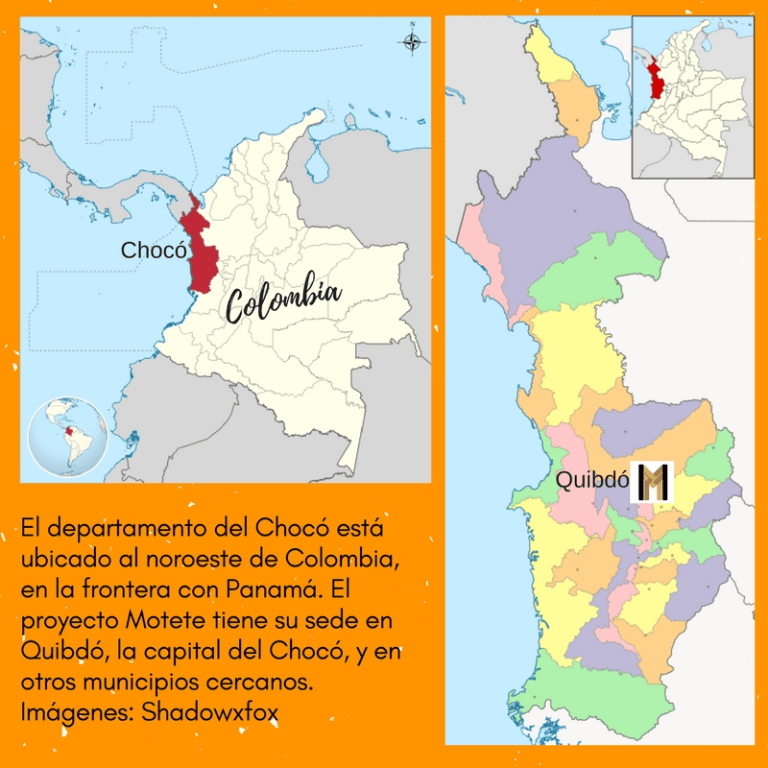
The letters span 3 years from May 2015 and they track a significant change in Vel’s life as she decides to return to Choco (to the Afro-Colombian community she was raised in) to start a new venture to bring reading, literacy and a love of books to it. The correspondence exhibits the growth and expansion of her writing, the letter becomes a safe harbour and she tests it by taking her writing to another level, stretching into a more personal yet contained arena.

Tomorrow I start a diploma in reading promotion, and with it my project, Motete. We’ve chosen three areas of Quibdo where I’ll start running the workshops.

She is taking a risk starting a new venture, but believes in it and is surrounded by extended family and connections, which facilitate her ability to reach out even further into the community and invite everyone in, to be part of or benefit from her shared love of reading.

And so this project is coming together. This basket, this Motete, is filling up. The slogan for my project is ‘Contenidos que tejen’ – contents that weave – and every day I like it more. Every day I realise that these contents are weaving fulfillment and happiness within me…

The thing is, motetes have been used to carry food for the body: plaintains, bushmeat, fish. Our is to fill them with food for the soul: art, culture, books. And just as motetes are woven by hand, I thought these new contents would also form a fabric: the fabric of society, of community, the fabric of souls.

Letter Writing

Her unnamed friend that she writes to is someone she hasn’t known long, he occupies a space between the familiar and the unfamiliar that she claims as a freedom to express herself, to be vulnerable and open, someone who has mentored and shown her how to get funding. The range of things she will write to him of, span a wide spectrum.

We never see the replies but the continuation of her own correspondence displays her life, her dealing with health problems, the double bind of her wounding and love, of being raised by doting grandparents, while having complicated relationships with a teenage mother unable to mother her and an emotionally absent father. Her later sadness and depression, helped through therapy, tears and conversations, to ways of coping and healing. Her optimism for her venture, and the community connections she creates keep her going.

I grew a lot. I learned. But most of all I tried to weave a new way of relating to my father that hurt as little as possible.

The Sea, The Sea

One of the themes is the sea, the absence of sea, the way the river meets the sea and her relationship to it. She yearns for it when it has been absent for some time, just as she yearns for the letter writer and the relief that comes in the act of writing to him.

She describes herself in her current role as being like the sea at that place where it meets the river.

I’m like the Pacific Ocean, pressing at the river with its tides to make it flow the other way, or lapping at the land when its waters rise, when it feels like gaining inches of new ground. You need strong motivation to stick to this way of life, which isn’t exactly a fight against the world, but rather the certainty of forging your own path.

An Homage to Correspondence

I loved this slender book, it’s project and generosity, its intimate sharing and platform for expanding and learning and having the courage to venture into new areas. It made me think of an exquisite title I’d forgotten about, Leslie Marmon Silko’s slim book of correspondence The Delicacy and Strength of Lace: Letters Between Leslie Marmon Silko and James Wright.

That correspondence was written when Silko was 31 years old and Wright 51. They had planned to meet in the Spring of 1980, mentioned in letters of Oct/Nov of the previous year, not knowing he would be gone before then.

They discuss her novel, his poetry, language, his travels, her adventures with animals, their speaking engagements, their mutual challenges and experiences as university professors, and soon began to share more personal feelings, as she acknowledged the tough time she was having and he shared his own experience, expressing empathy.

Velia Vidal dedicates her book:

To my recipient,
simply for being there.

and when I read about her own projects in society, her love of the sea and shared readings and efforts to help move children and young adults out of poverty, it is all the more inspirational to read these letters, understanding the difference a letter can make, to see someone take a risk and pursue something that will help others from her community, while fulfilling her own dreams and aspirations.

Highly Recommended.

Velia Vidal, Author

Velia Vidal (Bahía Solano, Colombia, 1982) is a writer who loves the sea and shared readings. In 2021 she was a fellow at Villa Josepha Ahrenshoop, in Germany.

For her book Tidal Waters she won the Afro-Colombian Authors Publication Grant awarded by Colombia’s Ministry of Culture. She is the co-author of Oír somos río (2019) and its bilingual German-Spanish edition.

She is the founder and director of the Motete Educational and Cultural Corporation and the Reading and Writing Festival (FLECHO) in Chocó, one of the most isolated, complex and neglected regions in Colombia with the highest afro-descendant population density in the country.

Vidal graduated in Afro-Latin American Studies and has a Masters in Reading Education and Children’s Literature. She is also a journalist and specialist in social management and communication. In 2022 she was included in the list of 100 most influential and inspiring women in the world by the BBC.

She writes children’s literature, fiction and non-fiction, and poetry. Her work has been translated into German, English and Portuguese.

Booker Prize for Fiction Longlist 2024

Today the longlist for the Booker Prize for Fiction 2024 was announced, 13 books, featuring three debut novels and six previously nominated writers.

It features blackly comic page-turners, multi-generational epics, meditations on the pain of exile – plus a crime caper, a spy thriller, an unflinching account of girls’ boxing and a reimagining of a 19th-century classic.

The long listed selection was chosen from 156 books published between 1 October 2023 and 30 September 2024. The Prize is open to works of long-form fiction by writers of any nationality, written in English and published in the UK and/or Ireland.

The list includes the following titles, of which I have read three (reviews linked to title):

Wild Houses by Colin Barrett (Ireland)  – A story of two outsiders striving to find themselves as their worlds collapse in chaos and violence, set in County Mayo.

Headshot by Rita Bullwinkel (US) – Funny, propulsive, obsessive and ecstatic, Headshot is equal parts subtle and intense, as it brings us to the sidelines of the boxing ring and above and beyond it.

James by Percival Everett (US) – A profound meditation on identity, belonging and the sacrifices we make to protect the ones we love, which reimagines The Adventures of Huckleberry Finn.

Orbital by Samantha Harvey (UK) – Six astronauts rotate in the International Space Station. They are there to do vital work, but slowly they begin to wonder: what is life without Earth? What is Earth without humanity?

Creation Lake by Rachel Kushner (US) – A woman is caught in the crossfire between the past and the future in this part-spy novel, part-profound treatise on human history.

My Friends by Hisham Matar (US/UK/Libya) – An intensely moving novel about three friends living in political exile and the emotional homeland that friendship can provide.

Held by Anne Michaels (Canada) – In a narrative that spans four generations from 1917, moments of connection and consequence ignite and re-ignite as the century unfolds.

This Strange Eventful History by Claire Messud (US) – charts the Franco-Algerian, Cassars’ unfolding story, in a work of breathtaking historical sweep and vivid psychological intimacy, from June 1940, as they move between Salonica and Algeria, the US, Cuba, Canada, Argentina, Australia, and France.

Wandering Stars by Tommy Orange (US) – A tender, shattering story of generations of a Native American family, struggling to find ways through displacement, addiction and pain, towards home and hope. 

Enlightenment by Sarah Perry (UK) – A story of love and astronomy told over the course of 20 years through the lives of two improbable best friends.

Playground by Richard Powers (US) – Playground explores that last wild place we have yet to colonise and interweaves profound themes of technology and the environment, and a deep exploration of our shared humanity.

The Safekeep by Yael van der Wouden (Netherlands) – An exhilarating tale of twisted desire, histories and homes – and the legacy of one of the 20th century’s greatest tragedies.

Stone Yard Devotional by Charlotte Wood (Australia) – The past comes knocking in this fearless exploration of forgiveness, grief and female friendship.

* * * * * * *

Both My Friends by Hisham Matar and James by Percival Everett were 5 star reads for me, that I highly recommend. Orbital was a unique and different read, but one that at times I felt a little disengaged from.

Plenty more to explore here, have you read any from this list that you highly recommend or are looking forward to reading?

The shortlist of six books will be announced on Monday, 16 September.

International Booker Prize Winner 2024

The International Booker Prize shortlist celebrated six novels in six languages (Dutch, German, Korean, Portuguese, Spanish and Swedish), from six countries (Argentina, Brazil, Germany, Netherlands, South Korea and Sweden), interweaving the intimate and political in radically original ways. All the books were translated into English and published in the UK/Ireland.

The 2024 international booker prize shortlist including Selva Almada's Not a River

The shortlist was chosen from the longlist of 13 titles and today the winner was announced.

The Winner

The winner for 2024 of the International Booker Prize is Kairos by Jenny Erpenbeck (Germany) translated from German by Michael Hofmann. Jenny Erpenbeck was born in East Berlin in 1967, and is an opera director, playwright and award-winning novelist.

Kairos is an intimate and devastating story of the path of two lovers through the ruins of a relationship, set against the backdrop of a seismic period in European history.

Berlin. 11 July 1986. They meet by chance on a bus. She is a young student, he is older and married. Theirs is an intense and sudden attraction, fuelled by a shared passion for music and art, and heightened by the secrecy they must maintain. But when she strays for a single night he cannot forgive her and a dangerous crack forms between them, opening up a space for cruelty, punishment and the exertion of power. And the world around them is changing too: as the GDR begins to crumble, so too do all the old certainties and the old loyalties, ushering in a new era whose great gains also involve profound loss. 

What the International Booker Prize 2024 judges said

‘An expertly braided novel about the entanglement of personal and national transformations, set amid the tumult of 1980s Berlin. 

Kairos unfolds around a chaotic affair between Katharina, a 19-year-old woman, and Hans, a 53-year-old writer in East Berlin.

Erpenbeck’s narrative prowess lies in her ability to show how momentous personal and historical turning points intersect, presented through exquisite prose that marries depth with clarity. She masterfully refracts generation-defining political developments through the lens of a devastating relationship, thus questioning the nature of destiny and agency. 

Kairos is a bracing philosophical inquiry into time, choice, and the forces of history.’   

Read An Extract From the Opening Chapter

Prologue

Will you come to my funeral? 

She looks down at her coffee cup in front of her and says nothing. 

Will you come to my funeral, he says again. 

Why funeral— you’re alive, she says. 

He asks her a third time: Will you come to my funeral? 

Sure, she says, I’ll come to your funeral. 

I’ve got a plot with a birch tree next to it. 

Nice for you, she says. 

Four months later, she’s in Pittsburgh when she gets news of his death. 

Continue Reading here…

Further Reading

Everything you need to know about Kairos

A Reading Guide on Kairos

Q & A with Jenny Erpenbeck and Michael Hofmann

Thoughts

I haven’t read Kairos though it has had mainly positive reviews. I have read one of her novels Visitation some years ago and didn’t get on with that one too well, so I haven’t picked up any more of her work. I have no doubt that it is well written, I’m just not that interested in the premise.

Have you read Kairos? Or any other novels by Jenny Erpenbeck? Let us know in the comments below what you thought.

Erasure by Percival Everett (2001)

I read this after Percival Everett’s excellent So Much Blue (my review) so my reading was influenced by having read that earlier novel, which I enjoyed more.

I did really enjoy this, however I enjoyed So Much Blue more on account of the type of reader I am, because it takes you outside of America to Paris and El Salvador – that novel was about the growth of the protagonist as a result of those experiences, whereas Erasure is more of a commentary on American culture and racial bias.

Revenge Can Backfire

American Fiction film classic satire Cord Jefferson book cover young smiling black boy child holds a toy pistol to his head wearing checked shirt and jeans with braces photo in black and white the word Erasure in yellow text

In Erasure, a deeply satirical novel of the publishing industry and its biases; we have a Black American writer ‘Monk’ as protagonist, whose current work isn’t gaining traction.

I called my agent to check on the status of my novel and he had no good news for me. Three more editors had turned it down. ‘Too dense,’ one had said. ‘Not for us,’ a simple reply from another. And, ‘The market won’t support this kind of thing,’ from the third.

‘So, what now?’ I asked.

‘I don’t know what to tell you,’ Yul said. ‘If you could just write something like The Second Failure again.’ The ice clinked in his glass.

‘What are you telling me?’ I asked.

‘I’m not telling you anything.’

He feels resentful of some of what he is seeing gain popularity (fiction about the Black community using performative and pejorative racial themes and language); and he has had enough of his work being criticised for being too white.

He is middle aged and his mother is showing signs of needing additional care as her dementia begins to endanger her life. His sister and brother are both Doctors as was his late father. He visits his mother and sister, to learn his sister is being harassed by pro-life protestors every day and his mother has been lighting fires inside – a box of papers his father asked her to burn.

The Novel With A Novel

In his angst about work he writes a revenge novella using the pseudonym Stagg R. Leigh, one that uses every terrible trope about his race and sends it to his agent. The agent thinks it is a joke, he is instructed to send it out to prospective publishers anyway.

I remembered passages of Native Son and The Color Purple and Amos and Andy and my hands began to shake, the world opening around me, tree roots trembling on the ground outside, people in the street shouting dint, ax, fo, screet, and fahvre! and I was screaming inside, complaining that I didn’t sound like that, that my mother didn’t sound like that, that my father didn’t sound like that and I imagined myself sitting on a park bench counting the knives in my switchblade collection and a man came up to me and he asked me what I was doing and my mouth opened and I couldn’t help what came out, ‘Why fo you be axin?

I put a page in my father’s old manual typewriter. I wrote this novel,, a book on which I knewI could never put my name:

That 80 page novella, initially entitled My Pafology is contained within the novel Erasure. When I started reading, I skipped ahead to see how long it was. It is a unique experience to read a novel within a novel and one that is…well, I don’t really know how to describe it, because it is so deliberately offensive – and so then we witness the author watch his act of protest backfire as he is made to kind of account for what he has done.

Dealing With A Parent With Dementia

In the meantime he takes his mother and her maid on a short holiday, which results in hastening things forward there, dealing with a tragedy and coming to terms with aspects of the family that had been hidden.

Photo furkanfdemir Pexels.com

As in So Much Blue, where we learned that Percival Everett has a bit of a fascination for secrets, so too are they present here. He explores their impact on those whom they have been withheld from.

It is a thought provoking novel and there are many references to other writers and artists and thinkers within, like clues to the things that the author might have been thinking about while writing, that can take the reader down various rabbit holes. Like this one:

* * *
D.W. Griffith: I like your book very much.
Richard Wright: Thank you.

* * *

Going Down A Rabbit Hole

I learned that film director D.W.Griffith, in 1915, directed a controversial, silent film, Birth of a Nation, that depicted previously enslaved African Americans as uncivilised, and that order was restored to the chaotic South by the noble KKK.

African American author Richard Wright wrote Native Son, a book with a similar premise to My Pafology, one that may or may not undermine the humanity of the African American. James Baldwin objected to it, believing it confirmed the damning judgment on African-Americans delivered by their longstanding tormentors.

All that to say there are complex references and issues contained within Erasure that might require more close reading.

It also satirises the book prize industry, when our protagonist finds himself in a dilemma having been asked to judge a prize.

The Movie American Fiction

The book has recently been made into a film which I have not seen, entitled American Fiction. It was written and directed by Cord Jefferson and won an Academy Award (Oscar) for Best Adapted Screenplay in 2024. Jefferey Wright plays the role of the author ‘Monk’, he received a nomination for Best Actor in the Academy Awards 2024.

I was aware of this, although I did not look at any reviews or trailers, but did wonder how much of the depth of reflection could ever be portrayed in a film.

Highly Recommended. Read the book before seeing the film.

Have you read Erasure or seen the film American Fiction? What did you think?

Further Reading

New York Times: The Book Behind ‘American Fiction’ Came Out 23 Years Ago. It’s Still Current.

NPR: Advice from a critic: Read ‘Erasure’ before seeing ‘American Fiction’ by Carole V. Bell

Percival Everett, Author

Percival Everett is the author of over thirty books, including So Much BlueTelephoneDr No and The Trees, which was shortlisted for the 2022 Booker Prize and won the 2022 Bollinger Everyman Wodehouse Prize.

He has received the Hurston/Wright Legacy Award and the PEN Center USA Award for Fiction, has been a Pulitzer Prize finalist, and is Distinguished Professor of English at the University of Southern California. His novel Erasure has now been adapted into the major film American Fiction.

His latest novel James (a reimagining of Mark Twain’s The Adventures of Huckleberry Finn, told from the perspective of the enslaved Jim) was published on 11 April 2024. He lives in Los Angeles.