Unearthing (2023) by Kyo Maclear

A Story of Tangled Love and Family Secrets

“But what is the point of writing if not to unearth things… Annie Ernaux

I chose to read Unearthing because it was the overall favourite read of 2023 of Shagafta who I follow on Substack and because it ties in to a theme I have been researching, exploring separation, kinship and the discovery of one’s identity.

Of Changing Seasons and Evolving Stories

Unearthing is a memoir of twenty four sekki (節気) or “small seasons” that offers a different way of thinking about the ever changing ground of our personal stories.

Three months after Kyo Maclear’s father dies, looking to know him at a deeper level and curious about his mother’s side of the family, she takes a DNA test.

When my father died and I was his grieving and wondering daughter, I thought of a word. The word, yugen, or what the Japanese call a state of “dim” or “deep” mystery, evokes the unsettled feeling I had at various points growing up as an only child. Our family was a tiny unit with strange ways. My parents acted like criminals on the lam – loading up moving vans, changing house every few years. I was four years old when we left England, shedding backstory and friends overnight. What made a family behave this way, like people drawn to erasure? Why were we always leaving like this, unceremoniously? I did not know. Growing up, I assumed that everyone was shaped and suffused by what they could not perceive clearly, the invisible and voiceless things imparted atmospherically within families.

Ask Your Father

Shocked, when she receives the results she learns that she is not biologically related to her father and that her mother refuses to speak on the subject.

She repeated it three times. Talk to your Dad. As if his death had been a hoax; her voice no longer blurry but brisk with fear.

Though her mother does not wish to talk about it, her daughter perseveres. She will weather this storm, waiting for it to calm, listening between the lines of conversation, picking up on the cues.

When one person leaves, the old order collapses. That’s why we were speaking to each other carefully. We were a shapeshifting family, in the midst of recomposing ourselves. What is grief, if not the act of persisting and reconstituting oneself? What is its difficulty, if not the pressure to appear, once more, fully formed?

Solving the Mystery of Your Life

Photo K. Kaboompics Pexels.com

Becoming a detective in her own life, Kyo assembles the story of her lineage, tied to the seasons and the making of a garden.

Digging was my way out. An impulse born of stubbornness and bred in me by a culture that loves stories of people discovering the truth of their paternity; that champions the idea that concealment is destructive and truth is freeing.

The way the Kyo Maclear takes her time unveiling the truth of her story, the various paths she follows, the thoroughness of her pursuit to know, makes this a thrilling read.

There is something about the long, slow seasons and the process of tending the soil, not trying to rush the end result that resonates in her writing, yet never slows the narrative.

Her observations of her mother, the nuanced noticing, are so well depicted, you can feel the resolution of the mystery getting warmer and warmer, as she regains her mother’s trust and nurtures her into revealing more.

Something

It was all being pulled from some shadowy room. The details she remembered. The broken chain of events. What she spoke arrived in fragments. But there was something else, a hitch and hesitance, that made me alert.

I did not yet understand the need to hold on to an invented story, even a falsified past, at all costs. I did not recognize her dissembling. Usually impervious, I thought she seemed out of sorts. Maybe a little distraught.

She does not want to tell me something, I thought.

Along the way larger questions arise: What exactly is kinship? What does it mean to be family? What gets planted and nurtured? What gets buried and forgotten? Can tending a garden heal anything?

I thought this memoir was brilliant, I highlighted so many thoughtful and thought provoking passages. I admired the way the revelations came slowly and the characters of her family were explored, her search for herself made her realise how little she knew of her own parents. They too, were a mystery to unravel and motivations to explore, before even embarking on the second exploration, the unknown aspect that her DNA revealed.

It also celebrates those that helped, guided and accepted her along the way, new relationships and a deeper understanding of aspects of the self, while never losing her essence.

Highly Recommended.

Kyo Maclear, Author

Kyo Maclear was born in London, England, and moved to Toronto at the age of four. She holds a doctorate from York University in Environmental Humanities.

Her most recent book, the hybrid memoir, Birds Art Life, was published in seven territories and became a Canadian #1 bestseller. It was a finalist for the Hilary Weston Writers’ Trust Prize for Nonfiction and winner of the Trillium Book Award.

Unearthing was an instant bestseller in Canada and winner of the Governor General’s Literary Award for Nonfiction. Her short fiction, essays, and art criticism have been published in Orion MagazineAsia Art PacificLitHubBrickThe MillionsThe GuardianLion’s Roar, The Globe and Mail (Toronto) and elsewhere. She has been a national arts reviewer for Canadian Art and a monthly arts columnist for Toronto Life. She is also a children’s author, editor, and teacher.

She lives in Tkaronto/Toronto, on the traditional territories of the Mississaugas of the New Credit, the Haudenosaunee, Métis, and the Huron-Wendat.

Cairn (2024) by Kathleen Jamie

A Poet Writing Nature Essays

Kathleen Jamie is a poet and writer of creative nonfiction about nature. She has written three wonderful collections that I have adored. Findings (2005), my favourite, included essays about the Hebridean and Orkney Islands near her home in Fife and Peregrines nesting; Sightlines (2012) covers a fascinating archaeological dig, tales of more birds on lonely, windswept islands and a visit to the Arctic and finally Surfacing (2019) which I review here in Surfacing 1 and Surfacing 2.

Making Ripples at 60

creative non fiction essays poetry by Scottish poet and nature writer Kathleen Jamie

In Cairn, we find a collection of writings, fragments, observations and memories. Sometimes an individual observation and other times a collective witnessing of changes in the local environment. Of migratory patterns disrupted, of things once common on the horizon, now departed.

As she arrives at her 60th year, she begins to ask different questions, about the next generation and the one after that, if there will indeed be one as children question whether to bring another generation into this vastly changing world.

There is less a note of wonder and more a tone of trepidation at the precarious situation of the natural world and those being born into what will continue after we have left.

The Bass Rock and Bird Flu

It’s a while since we could turn to the natural world for reassurance, since we could map our individual lives against the eternal cycles of the seasons, our griefs against the consolation of birds, the hills. Instead there’s the sense that things are breaking, cracking like a parched field. There they are, the seabird people, among their beloved birds at the height of the breeding season, wearing hazmat suits as they pile corpses into bin bags.

Photo by Magda Ehlers on Pexels.com

Like a cairn, these short prose pieces are markers, memories, memorials or perhaps even metaphorical or literary burial mounds, tracking the thoughts and observations of an observer over the years of the natural environment, of change in both the natural surroundings and humanity. Testimonies.

‘Stones propose another sense of time, whereby the past, the deep past of the plant, proffers a meagre yet massive support to acts of human resistance…’ John Berger

A thought-provoking collection.

Further Reading

The Guardian: Cairn by Kathleen Jamie review – a wry SOS for the world

The Caught by the River Book of the Month: July 2024 Cairn by Kathleen Jamie With its bursts of beautiful brilliance, it is something akin to lightning, writes Annie Worsley

The Guardian: Scotland’s Bass Rock: world’s largest colony of northern gannets – in pictures

Author, Kathleen Jamie

Kathleen Jamie, Photo by Alan Young

Kathleen Jamie is one of Britain’s foremost writers. In 2021 she was appointed Makar, Scotland’s national poet.

Jamie resists being identified solely as a Scottish poet, a woman writer, or a nature poet. Instead, she aims for her poetry to “provide a sort of connective tissue”.  Influenced by Seamus HeaneyElizabeth BishopJohn Clare, and Annie Dillard, Jamie writes musical poems that attend to the intersection of landscape, history, gender, and language.

Her groundbreaking works of prose – Findings (2005), Sightlines (2012) and Surfacing (2019) – are considered pioneers and exemplars of new nature writing. She lives in Fife.

In Ordinary Time, Fragments of a Family History by Carmel McMahon #ReadingIrelandMonth24

In Ordinary Time is one of those wonderful finds, when a number of your own disparate interests collide and someone has managed to put together a work that spans years, across two countries, reflecting on different events in their own life and the background of a country and culture’s history, with these continuous threads running through it, that make it almost seamless.

In a hybrid memoir, Carmel McMahon has written fragments of a family history, structuring them into four parts of three chapters, beginning with Part One: Imbolc: February, The Feast of Saint Brigid and ending in Part Four Samhain: January, Notes on A Return where the story comes full circle.

There are 21 black and white illustrations scattered throughout the text, ordinary photos that amplify the message and create a sense of travel through time. I looked back at the index page for each photo and scribbled my penciled note underneath it, such was the joy of words meeting image.

Full circle feels appropriate to describe a work that despite that linear structure of months and parts, is not that. Rather, it represents points on the spiral of life that goes through cycles; repeating cycles, short cycles, long cycles, interconnected and intergenerational cycles.

Each of the events that she describes in her family history have a shadow history in the culture and while she reflects on her own situation, she finds resonance in the voices of others who have gone before, in particular those whose story we might not have heard, or if we have, might not have been aware of the full picture.

Her story begins somewhere in the middle of her own self-imposed exile, living in New York City. It voyages through her experience with addiction, denial and recovery and ends with the heroine’s return, the learning and this book.

The city had not yet woken on the frigid Sunday morning of February 20, 2011, when the body of a young Irish woman was found outside St. Brigid’s Church in Manhattan’s East Village. The news reports cited alcoholism, homelessness, and hypothermia as contributing factors in her death. They said that earlier that month, on St. Brigid’s feast day she had turned thirty-five years old. They said she wanted to be an artist. They said her name was Grace Farrell.

Photo by C1 Superstar on Pexels.com

She questions whether it begins here, or in 1937 when the new Irish state ratified its constitution to reflect a strengthened church-state partnership, that would have a devastating effect on thousands of lives of girls and women and their children, and the unborn future generations who might inherit that affected DNA. All those sent to the Magdalene laundries.

In 1966, her mother would live a version of the shame that surrounded pregnancy out of wedlock, managing to avoid institutional incarceration by disappearing for a while.

Women and children were not afforded the rights of citizenship, of subjecthood, of being. They lived under threat of being erased, hidden, buried. This is why my mother tells me – halting, hesitating – that in her day it was the worst thing in the world for a girl to find herself pregnant, but worse still was for her to talk about it.

That first sister Michelle, born in London, would be knocked down outside her primary school, three months before Carmel was born. Six more children arrived after her and Michelle’s name was never spoken in their house. The legacy of silence she had been born into continued, was passed on, but not forgotten.

Or did the story begin when she had her first drink at the age of ten, at a family gathering? Feelings of inferiority and shame, dulled by the dregs of the adults drinks that replaced that unwanted feeling with one of warmth, of a circle of golden light.

McMahon left Ireland in the 1990’s and did not return permanently until the pandemic era, 2021. Ironically, it seems to this reader, the return has allowed the distance to reflect on the journey and the learning and to piece the interconnectivity of so many people’s lives past, present and future into this text.

Science has proven and is now able to show how stress and trauma can be passed on biologically from one generation to the next, we read.

We know that now. Vehicles of transportation include, according to the scholar of memory studies Marianne Hirsch, “narratives, actions and symptoms.” The stories we tell and don’t tell, the actions we take and don’t take, the symptoms expressed by a mother holding the trauma tightly to herself, because she refused to burden her children with it.

Listening to the podcast On Being, she hears Dr. Rachel Yehuda reminds listeners that:

…we are not in biological prison: experiences and events in our environment can also make positive changes to our programming. We can consciously move towards healing.

These intertwined fragments thus reveal the events, experiences and the slow realisation of all that is working on her, the understanding and the aspects that will aid the healing.

Photo by Jessie Crettenden on Pexels.com

There are the endless jobs she tries to hold down, while numbing herself nightly; the visits back home precipitated by tragedy, the road trip across America, an escape that brings her closer to understanding loss and aloneness.

The industrial ghost towns, the late spring rain, the wide, low skies. The old sadness rising. An excess of black bile, they used to say, made the melancholic personality. Freud said that mourning and melancholia are akin in that they are both responses to loss. Mourning is a conscious and healthy response to the loss of a love object. Melancholia is more complicated. It operates on a subconscious level. All the feelings of loss are present, but for what? The melancholic cannot say. This, Freud says, is a pathology.

McMahon reads and shares anecdotes and reflections on the lives of other women who immigrated before her; the young Irish immigrant Maeve Brennan who was a staff writer at the New Yorker before the disease of alcoholism colonized her life; Mary Smith, one of many Irish women used for gynecological experiments in New York hospitals in the mid nineteenth century; Grace Farrell.

After a family tragedy, she reads Anne Carson’s Nox, a book of poems created from the notebook she recorded memories and impressions of her brother, in the decade after he died.

She did this, she tells us, because a brother does not end. He goes on.

She reflects on the Famine, on the role of church and state, on the complicit silences and forgetting, on the advances that were made at the expense of the vulnerable, the now removed statues, the little known memorials of the unnamed. She acknowledges the collective impact of a nation’s traumas on individuals and families with brief insights (her own and Carl Jung’s) into a way forward, towards speaking up, sharing stories, creating meaning, allowing space for healing, for moving towards the light, to enable the passing on of a lighter legacy to future generations.

Sharing her story is part of that, not just for the writer herself, but for those who might find resonance in her journey, towards their own. And to remember the forgotten, the ordinary women like Mary Smith.

I could not put this book down, despite wishing to make it last. Though it is a collection of essays, some of which have been previously published, the threads that run through it make it read like a memoir, perfectly balancing the personal stories with the background history, questioning the effect of both on a young woman’s psyche.

Highly Recommended.

Further Reading

Guardian Review: In Ordinary Times: the trials of inherited trauma, Carmel Mc Mahon uses her own story of emigration, uncertainty and alcoholism as one thread in a wider historical tapestry

RTE Radio1 Interview: Carmel McMahon on The Ryan Tubridy Show – (18 mins) – on New York, family tragedy, drinking and the legacy of ‘pidgin emotion’

Guardian Books: Anne Enright: In search of the real Maeve Brennan

JSTOR: Owens, Deidre Cooper, Irish Immigrant Women and American Gynecology: In Medical Bondage: Race, Gender, and the Origins of American Gynecology, 89–107. University of Georgia Press, 2017. 

Carmel Mc Mahon, Author

Carmel Mc Mahon grew up in County Meath, and lived in New York City from 1993 – 2021, when she returned with her partner to renovate a house on Ireland’s west coast.

A graduate of CUNY, her writing has been published in the Irish Times, Humanities Review, Roanoke Review, Longreads and shortlisted for the Hennessy Literary Award.

A Respectable Occupation (2017) by Julia Kerninon tr. Ruth Diver (2020)

An Ode to Pope

How could I not love a miniature work of narrative nonfiction that the author quotes as having being in part inspired by the opening two lines of a poem from the 18th century English poet Alexander Pope.

The heroic rhyming couplets of Pope’s The Rape of the Lock (1712) were my optional choice for the fifth form School Certificate exam many moons ago, a memorable chapter of my own literary journey. Kerninon quotes from his Why did I write? what sin to me unknown.

Why did I write? what sin to me unknown
Dipp’d me in ink, my parents’, or my own?

Why and How I Write

une activitié respectable writing life nonfiction French literature

A Respectable Occupation is a short nonfiction narrative about how and why the French author Julia Kerninon became a writer and the necessity of reading.

I came across this book in a photo on author Kerri ní Dochartaigh’s Substack g l i m m e r s where she wrote about her favourite books of the year for 2023.

Dochartaigh is the q u e e n of referencing creative nonfiction and nature writing in her own writing. Her second memoir Cacophony of Bone is full of literary references to little known, enticing contemporary works of narrative nonfiction.

Julia Kerninon had a unique upbringing in many ways, not least because she lived in multiple countries, Canada, England and France, but also because it is as if she were raised to become a writer, more of an expectation than a desire, so she pursues it in the same way many others might pursue a career that has been held in high esteem by their parents. Only writing isn’t like law, medicine or business.

I had an incredibly heavy electric typewriter my mother had lent me, and she had glued little labels with lowercase letters onto the keys because I found capitals confusing, and I wrote lots of stories about talking animals with my friend Pete.

The Legend of Writers

She recalls a kind of bohemian childhood and the first six years where she was an only child and the focus of her mother who she admired, and how her world tilted when they became a family of 4 not 3.

An identical monument of books had saved her as well, thirty years earlier, from a hopeless childhood, and so she spread her secret before me, she explained what she loved most in the world, in a gesture that was also a potlatch, an immeasurably generous offering, which I might be expected to return one day with an even greater gift.

Her mother had been born in a small fishing village, the eldest of four, the only girl, she had learned Russian at ten in boarding school and read everything she could lay her hands on. She passed on all she could to her daughter, who did everything in her power to satisfy her, to repair her, to recompense her for the enormous effort it must have cost her to make all this known to her first child.

I read books non-stop, in a panicked frenzy, trying to catch up on lost time, trying to catch up with my mother who seemed to know everything.

If I lost a manuscript and went crazy with panic, she would just shrug with no compassion at all and explain that in any case I would have to throw away or lose lots of books before writing a single good one. The best thing that can happen to you is a house fire.

a respectable occupation Julia Kerninon typewriter
Photo by medium photoclub @ Pexels.com

At sixteen she had found a community of ‘old poets’ who met in an old biscuit factory in her hometown, a second education, after a house full of books.

At twenty she was reading Gertrude Stein‘s ill-conceived advice: If you don’t work hard when you are twenty, no one will love you when you are thirty.

She confronted her father and told him she wanted to take a gap year from her university studies. He agreed.

I thought that to be a writer, I had to train like an athlete, like a dancer, until it didn’t hurt anymore, until I didn’t ask myself any more questions. I wanted to possess that skill.

She takes herself off to Budapest for a year. Her life becomes a cycle of working hard, playing hard, then taking herself off somewhere for a year or six months to write.

She becomes a waitress in the summers, so she can write throughout the winter. She decides that to be poor is acceptable if she can be free instead and that she would learn to live alone, to be alone, to work alone, during those productive times of her life. That maybe these were not sacrifices at all, they were merely aspects of the life that she had created, that she loved.

Though she figures out how to live like this herself, she attributes this advice given to her by a much loved man:

the main thing is to have free time – you’ll obviously work out how to earn a crust somehow – but free time is something you’ll always have to scavenge, he told me earnestly.

It’s a wonderful little book, a digression of sorts, a reminder that the writing life comes in many shapes and forms, that the sharing of the various experiences can also provide inspiration to those who are on that path and that the pursuit of the occupation can also be a subject to write about, that people like reading about.

I write books because it’s good discipline, because I like sentences and I like putting things in order in a Word document. I like counting the words every night and I like finishing what I start.

A short introduction by Lauren Elkin is equally compelling, another writer whose book Art Monsters : Unruly Bodies in Feminist Art was in the photograph in Kerri Ni Dochartigh’s end of year essay.

I will leave you with one final quote from Julia Kerninon, one that applies as equally to reading as it does to writing.

I’ve been striding through literature like a field, where my footsteps flatten the grass for a moment, just long enough to see the path I’ve taken and the immensity of what is yet to be discovered.

Further Reading/Listening

An Interview with Julia Kerninon and Ruth Diver: A Respectable Occupation

#RivetingReviews: Jennifer Sarha reviews A Respectable Occupation by Julia Kerninon

Author, Julia Kerninon

Julia Kerninon is a French novelist from Brittany, whose first novel Buvard (2013) won the prestigious Prix Françoise Sagan in 2014.

Born in 1987, she holds a Ph.D in American Literature. She has been compared to French New Wave filmmaker Éric Rohmer for her sense of style and feeling for dialogue, and to Alain Resnais for the artful structure of her narratives. Most of all, her work stands out for its contagious joy, drive, exuberance.

Kerninon’s second novel, Le dernier amour d’Attila Kiss, won the Prix de la Closerie des Lilas in 2016, and her latest novel, My Devotion, won the 2018 Fénéon Literary Prize. She lives in Nantes.

Top Reads of 2023 – Part 2, Top 5 Non-Fiction

In Top Reads of 2023 – Part 1 I shared my One Super Outstanding Read of the Year and my Top 7 Fiction titles. I also provide a brief look into what I read overall, the 23 countries, the mix of fiction and non-fiction of works in translation.

Top 5 Non-Fiction, An Irish Scoop

In 2023, I read 19 works of non-fiction, from 9 countries, ranging from climate change memoirs like Ugandan author Vanessa Nakate’s A Bigger Picture and Doreen Cunningham’s Soundings to fragmentary slices of life by French nobel prize winner Annie Ernaux in Simple Passion and Shame and Natalia Ginzburg’s Family Lexicon and the true crime adventures of David Grann’s The Wager.

Everything I read was good, but the standouts were:

Irish Book Awards Biography of the Year 2023

Poor, Grit, courage and the life-changing value of self-belief by Katriona O’Sullivan (2023) (Ireland) (Memoir)

Poor is the incredible story of Katriona O’Sullivan, a university Professor in Dublin, who overcame incredible odds to rise up through the education system, having been raised by heroin addicts in a chaotic household, dropping out of school and becoming pregnant at 15.

She charts the turning points in her life, the people and the opportunities that allowed her to change the trajectory of her life and become a major influencer in advocating for access to higher education for working class girls from poor backgrounds.

She won two Irish Book Awards (Best Biography + Listener’s Choice Award). Totally Inspirational.

grief nature writing memoir motherhood loss apothecary garden

All My Wild Mothers, Motherhood, Loss and an Apothecary Garden by Victoria Bennett (2023) (UK) (Memoir/Nature Writing/Grief)

– This was one of the first books I read in 2023, a beautiful memoir that shares a mother’s journey of homeschooling her son while dealing with the grief of having lost a close sibling. Much like Helen MacDonald’s H is For Hawk, the author plunges into a creative project, to help move through the emotional challenges. Here it was to create an apothecary garden in a social housing estate in rural Cumbria, built over what was an industrial site, a barren, rubble-filled, now rule-restricted, wasteland.

Each chapter began with a different plant, starting with an intriguing medieval, magical perception of it, including stunning black & white woodcut illustrations, the medicinal properties, a bit of folklore and where it might be found. The real star of the book and source of comfort though is her inquisitive son.

A quiet book that celebrates the wisdom of small children and a tribute to sisters and mothers.

creative nonfiction nature writing Irish Literature

Cacophony of Bone by Kerri ní Dochartaigh (2023) (Ireland) (Creative Nonfiction)

– This memoir is a delightful sequel to the author’s more bleak, but exceptional, memoir Thin Places. That debut memoir was a mix of memoir and a reckoning with the after effect of a fractured childhood in a Northern Irish town.

In Cacophony of Bones, she has moved to a rural cottage in the middle of Ireland and while still in the process of healing, there is more light and poetry and inspiration from a multitude of nonfiction writers here. Written in the form of a 12 month journal, it is a book of reflection, poetic expression and of noticing, of planting, growing, of collecting objects, abandoned nests, bone remnants…

I find myself searching for the words of others as a means to fill the holes that the actions of (other) others have left in me.

In my review, I mention a number of the authors she quotes from; I spent a lot of pleasurable time looking up the many references and finding new sources of creative nonfiction to read. A great book and an extremely well-read author.

My Fourth Time We Drowned by Sally Hayden (2022) (Ireland) (Political Nonfiction)

– Though it is a challenging read, this is an incredible book and tribute to the endless support, research and investigative journalism, Sally Hayden has contributed. Winner of the 2022 Orwell Prize for Political WritingIrish Book Awards Book of the Year 2022, it tells the story of how she was contacted by refugees incarcerated in Libyan migrant detention centres, who were using hidden phones to appeal for help.

Abandoned by everyone, these people were being held in terrible conditions, treated inhumanely and often being extorted for huge sums of money in order to attempt the deadliest migrant rote of all, across the Mediterranean. While the rules of her profession prevented her from assisting them, she began to share their stories and investigate the different centres and discovered the complicity of the EU, in their policies that magnified the humanitarian crisis.

An extraordinary, detailed and condemnatory read. Highly Recommended.

essays memoir creative nonfiction Jamaican literature

Redemption Ground, Essays & Adventures by Lorna Goodison (2018) (Jamaica)

– A mix of memoir, poetry, life adventure and epiphanies, I loved this collection, that stops in and visits different periods in the life of the poet/writer Jamaican author Lorna Goodison (poet laureate of Jamaica from 2017 – 2020), including first time visits to London, New York, tributes to her mother and grandmother in poetry, to her mentor, the great poet and playwright, Derek Walcott, influential theatre and film experiences and inspirational women writers and poets.

Special Mentions, The Other Two Stand Outs

These two 5 star reads are very slim volumes, featuring one essay or lecture, they are literally half hour reads, but very worthwhile and not difficult to access and read.

I Will Write to Avenge My People by Annie Ernaux (2022) (France) translated by Tanya Leslie (French) (Essay + Bio)

Annie Ernaux won the Nobel prize for literature in 2022 and this is the lecture she gave to the committee, in it she shares her motivation for writing and an explanation of how she came to write in her very particular style.

Indignez-vous! (Time For Outrage) by Stéphane Hessel (2010) (France) (Essay)

– Very well known in France, this is the essay written by 93 year old Stéphane Hessel, since translated into numerous languages and sold 4.5 million copies worldwide. He wrote it 3 years before passing away and it is a message for youth of today, inviting them to find their cause and take action. It became a huge bestseller and long lines of young people lined up to have him sign their copy, much respect did they have for a man who had lived through it all, the war, the resistance, the concentration camp and a participant in the creation of the declaration of human rights.

* * * * * * * *

That’s it for nonfiction, let me know if you have any good recommendations for 2024!
Let us know your favourite non-fiction title from 2023 in the comments below.

Cacophony of Bone by Kerri Ni Dochartaigh

When I saw that Kerri ní Dochartaigh had a new book out, I was intrigued. I read her debut Thin Places  (reviewed here) in 2022, it was a tough read at times, especially as I went into it thinking it might be nature writing akin to others of the genre I’ve read. It was not. It was much darker.

At that time, nature, more than an observation, provided solace to an ever present dread and those thin places were a kind of magical opening and hint of acceptance that kept her here – just. The book trawled through a sombre northern Irish childhood into young adulthood, as the author attempted to rise out of a grasping fog towards finding their place and way in the world. To feel safe, while railing against the after-effects of trauma. From nightmares to numbness, nature was her nurturer.

Cacophony of Bone Thin Places creative nonfiction

While that book was challenging because of all it makes the reader feel, Cacophony of Bone was proof of a move forward, of a shift out of the rawness of her earlier existence and while still in the process of healing, clear signs of hope and progress and development. A relationship that comes across as more anchored and a commitment to sobriety. New circumstances that hold promise.

It began two days
after the winter solstice,
as all stories begin:
with light.

Essentially, it is a beautifully sculpted 12 month hybrid journal/memoir with splashes of poetry. It begins just as she is making a move to a one room very basic railway cottage in the middle of Ireland with her partner/lover, a couple of months before the country/world is going into lockdown. It becomes a year of noticing, of planting, growing, of collecting objects, abandoned nests, bone remnants…

To notice those things and to hold them, give my furry body over to their coming, to stop hurrying through life like a person shamed, by my female body and its traumas, by my past, by what that body could not have, what its parts could not produce.

At the beginning of each chapter before the brief, dated, diary entries, which are short poetic fragments and thoughts, there is a longer text that contemplates – a navigation of layers of loneliness, grief and gratitude, observations of birds and moths, planning, planting and harvesting a garden, recognising the importance of rituals, appreciating the constant and reliable companionship of another human being, developing connections with amazing women she has never met (yet) and embracing the comfort to be found in lines of language, the soothing power of words, the immense power and wonder of books.

Ritual finds form through the assumption that it is a means of really knowing something. Religious ceremony and personal rites of passage fill my thoughts. The gently, insistent act of repeating. How it creates equilibrium between the small and the vast, the seen and the unseen, the self and other, the part and the whole. We build myths (which are really just houses). Dwelling places built of the bones left behind by stories. We fill the gaps in the walls with ritual. We insulate it with objects.

Dreams arrive and motifs return, the days are spent reaching for meaning, walking them through, collecting and abandoning them anew.

I don’t think I have ever read a book that made me stop so often to look up references to predominantly works of creative nonfiction, poetry and memoir. It was a year of isolation, but Kerri ní Dochartaigh was able to read (and reread) from a bountiful collection of stunning literature. I admit to placing two orders with my new favourite Kenny.ie independent bookshop during the week I read the book.

It was no surprise to see mentioned the works of Doireann Ní Ghríofa and Sara Baume, it felt like these women hail from a similar soul group, literary sirens whose words lure readers not to their deaths, but to their visions and streams of conscious thought.

I find myself searching for the words of others as a means to fill the holes that the actions of (other) others have left in me.

We encounter throughout the pages Alice Oswald, Tove Jannsson, Moya Cannon, Annemarie Ni Churreain, Annie Ernaux, Terry Tempest Williams, Karine Polwart, Sarah Gillespie, Ellena Savage, Elizabeth-Jane Burnett, Rebecca May Johnson, Rebecca Solnit, Kathryn Joseph, Anne Carson, Kathleen Jamie, Anne Lamott, Richelle Kota, Alice Vincent, Lauret Savoy, Rebecca Tamas, Tania Tagaq, Emily Dickinson, Louise Erdrich, Colette Fellous, Sinéad Gleeson, Selva Almada, Katherine Mansfield, Virginia Woolf, Nancy Campbell, Elske Rahill, Octavia Bright, Alice Miller, Maggie O’Farrell, Genevieve Dutton and more…

After being alone for a long time, one starts to listen
differently,
to perceive the organic and the unexpected all around,
to brush against all the incomprehensible beauty of the material. Tove Jansson, ‘The Island’

It’s a book that follows the seasons, that reminded me of reading Alice Tucker’s A Spell in the Wild: A Year (and Six Centuries) of Magic and Sara Baume’s A Line Made By Walking, it takes some skill to keep a reader engaged in a form of nature diary, but the blend of personal story, observations of nature, literary references and the curiosity of seeing where the author will end up after the revelations of Thin Places, all made it a compelling read for me, that became increasingly absorbing the further I read.

It’s a heart laid bare, bruised but beating madly with the joy of being alive.

I’m left intrigued and curious about what will come next, although that might be quite obvious, since the end is in effect the dawn of a new beginning. A work in progress.

Highly recommended.

Further Reading

Interview: Writing Between Two Worlds, An Interview with Kerri Ni Dochartaigh

Review: The Guardian Thin Places by Kerri ní Dochartaigh review – a survivor’s story

Kerri ní Dochartaigh, Author

Kerri ní Dochartaigh’s first book, Thin Places, was published in Spring 2021, for which she was awarded the Butler Literary Award 2022, and highly commended for the Wainwright Prize for Nature Writing 2021.

Cacophony of Bone is her second book. She lives in the west of Ireland with her family.

She writes about nature, literature and place for the Irish Times, Dublin Review of Books, Caught by the River and others. She has also written for the Guardian, BBC, Winter Papers.


Reading Ireland Month 2023, A Wish List

Looking ahead, March is Reading Ireland month over at Cathy746Books, so I’m putting together what is currently on my shelf and what is lurking in the depths of my kindle, which I seem to have been more reluctant to read from lately, so a month of focusing on Irish literature should help.

Irish Literature Classic Contemporary Nonfiction
Cathy has set out a program below for the five weeks that focuses on classics, contemporary works (where most of my titles sit), short stories and non fiction.

Eager Anticipation

I had been looking forward to reading Sara Baume’s Seven Steeples, having read her excellent nonfiction title Handiwork, and two other novels, Spill Simmer Falter Wither and A Line Made by Walking – however I couldn’t wait and read it earlier this month. Highly recommended literary fiction, with a strong tendency toward poetic prose.

Intro Week:    1 – 5 March

I’m going to try and read the Edna O’Brien trilogy The Country Girls in the first week, which I have in one volume, but I will post as the three separate books. Originally published in 1960, 1962 and 1964, they are a portrait of youth, marriage, friendship, love and loss and I’m very excited to read this author for the first time and to begin here. She is hailed as one of the great chroniclers of the female experience in the twentieth century.

I managed to acquire a hardback of her 1994 novel, House of Splendid Isolation, which would be great to read if time allows.

Irish Classics Week: 6 -12 March

I have the novella A World of Love (1954) by Elisabeth Bowen, which should be possible to read in week 2.

I’m putting Brian Moore into this category, I have 3 of his novels on my shelf, a continuation, having read five of his novels for the 100th centenary in 2021.  A previously neglected Irish author, he lived most of his adult life in Canada and the U.S., thus his literary output was created from the perspective of an outsider, looking back at his own culture, and occasionally at other cultures where he spent time, such as The Statement (1995), a political thriller set in France and The Magician’s Wife (1997), historical fiction set in France and Algeria, both of which take an aspect of French history that he found fascinating, turning them into compelling stories.

I have The Temptation of Eileen Hughes (1981), a Belfast love triangle, Black Robe (1985), a Jesuit missionary in North America in the 17th century, and The Mangan Inheritance (1979), a recently widowed man in Canada journeys to track down an Irish ancestor.

Contemporary Irish Week: 13 – 19 March

In this 3rd week, I shall attempt one or two of these novels from the kindle.

Trespasses by Louise Kennedy – this novel has garnered much praise since publication, set in Northern Ireland during the Troubles, a shattering novel about a young woman caught between allegiance to community and a dangerous passion.

Factory Girls by Michelle Gallen – I loved her novel Big Girl, Small Town and this latest has just been shortlisted for the Comedy Women in Print Award 2022/23 UK/Ireland. This is a definite, she makes me laugh out loud!

The Quiet Whispers Never Stop Olivia Fitzsimons – a dual narrative set in 1982 & 1994 Ireland, exploring the mother-daughter relationship; described as “A story of love, obsession and escape, an uncompromising, lyrical tour-de-force that marks the arrival of an extraordinary new voice in Irish fiction”.

Listening Still Anne Griffin – her debut When All is Said was a runaway international success, a book I enjoyed about a man who toasts 5 friends of importance to him. Her second book is about a young woman who can hear the last words of the dead, though it hasn’t made the same impact on readers; she has a new book due out on 27 Apr 2023 The Island of Longing about the disappearance of a daughter and a mother’s difficulty in accepting her loss, not knowing whether she is alive or dead. This latest is getting many 5 star reviews (from those reading an advance copy), one to watch.

A Traveller at the Gates of Wisdom John Boyne – an unknown man leads the reader through 2000 years of human and family history, slipping through time and space with slightly different identities, continuing on the same path, from Palestine in AD 1 to the year 2080 in a space colony. An ambitious and epic concept, a story that has had mixed reviews.

#ReadingIreland2023

Short Story Week: 20 – 26 March

I have this one collection that I shall try to get to read:

Dance Move by Wendy Erskine – stories set in Northern Ireland, where we meet characters looking to wrest control of their lives, only to find themselves defined by a moment in their past that marked them. In these stories – as in real life – the funny, the tender and the devastating go hand in hand. Full of warmth, the familiar and the strange, they are about what it means to live in the world, how far you can end up from where you came from, and what it means to look back.

Non- Fiction Week: 27 – 31 March

Cacophony of Bone Kerri ni dochartaighI don’t have any Irish nonfiction left unread on my shelf, but I have noted that creative nonfiction author Kerri ní Dochartaigh, whose debut Thin Places I read in 2021 and enjoyed immensely, has a follow up book due out in April 2023, Cacophony of Bones.

It maps the circle of a year – a journey from one place to another, field notes of a life – from one winter, to the next. It is a telling of a changed life, in a changed world – and it is about all that does not change, that which simply keeps on – living and breathing, nesting and dying – in spite of it all.

I would also recommend in this category, the excellent collection of essays The Passenger Ireland – one of my Top Reads in 2022

Literary Inspiration

Dublin One City One Read Irish LiteratureIf you are looking for inspiration, check out Cathy’s blog, where she shares a list of 100 Irish Novels from Gulliver’s Travels by Jonathan Swift (1726) to Here Are The Young Men by Rob Doyle (2014) and 100 Novels by Irish Women Writers from the Memoirs of Miss Sidney Bidulph by Frances Sheridan (1761) to Conversations with Friends by Sally Rooney (2017).

You can check out the One Dublin, One Book challenge – each year an invitation to read an Irish book in April. Last year, I joined in and read the excellent Nora, A Love Story of Nora and James Joyce by Nuala O’Connor.

In April 2023, they will be reading The Coroner’s Daughter by Andrew Hughes.

Alternatively, check out my posts:

My Year of Irish Literature – 2021 Highlights

My Top 5 Irish Fiction & Nonfiction Books

Have you read and enjoyed any of the titles here? Are you planning on reading any Irish literature in March? If so, what are you looking forward to reading? Do you have a favourite Irish author or book? Let me know in the comments below.

Happy Reading Ireland if you join in!

All My Wild Mothers by Victoria Bennett

Motherhood, Loss and an Apothecary Garden

I loved this book, a kind of hybrid memoir that combined a passion for herbal folklore and a creative project, the building of an apothecary garden in a location where there were many obstacles to overcome, environmental and human, while exploring and healing from the loss of a loved one.

It reminded me a little of the experience of reading Helen Macdonald’s H is For Hawk, another memoir where the author takes on challenging project while navigating the tumultuous waves of grief – in that case, training a goshawk.

grief nature writing memoir motherhood loss apothecary garden

The memoir began at a moment in the author’s life when there was an unexpected death in the family; grief and coping with it, learning how to manage its lingering presence, is one of the themes she reflects on throughout the book.

At the time of this initial event, she is pregnant with her first child and as the story continues, her son becomes as much a part of the narrative as the author herself.

Victoria Bennett grew up in a large family, one that due to her father’s career, relocated countries often, that fragmented when some of the children were sent to boarding school, and even when they did settle down, did not partake in community life. They were self contained.

Used to living in places where they were outsiders, it became a way of being, even in their country of origin, England. In a conservative rural community, her mother wore hot-pants and homemade kaftans, had an art studio in the shed and had once offered to liven up a craft show with an exhibition of nudes.

Due to circumstance, Bennett and her husband move to a new social housing estate in rural Cumbria, built over what was an industrial site, a barren, rubble-filled, now rule-restricted, wasteland.

Mother and son slowly repurpose their backyard, building an apothecary garden – a construction of permaculture beauty, an appreciation of nature, an alternative education – yet encounter resistance, judgement, complaint and obstacle as subscribers to a more authoritarian rule, attempt to oppress or stamp out their initiative, unable to see the bigger picture of a more sustainable, kinder way of living in the shared world we inhabit.

wildflowers weeds apothecary garden

Photo E. BolovtsovaPexels.com

Bennett’s quest, to build an apothecary garden and educate (home-school) her son, was in part, an effort to integrate into the community, to overcome an inherited sense of not belonging, a deconditioning of learned ways. She overcomes anxiety, often lead by her son’s enthusiasm, to become more participative.

Despite her reticence, she had been raised by a feminist, ‘my mother was fierce about being fair,’ her sisters were outspoken, when Bennett discovers that her efforts to create something sustainable are being undermined by neighbours, she sets out to inform and educate them all.

“When we first moved onto the estate, the garden was a patch of newly sown grass, a thin layer of topsoil, and several metres of rock, rubble, and industrial hardcore. With no money, and only the weeds we found growing on the building site, my young son and I set out to see what we could grow. What was once a wasteland, became a haven for wildlife, and a balm for the body and soul. “

For a memoir that  navigated emotions, it had a good solid structure within which to contain the outpourings – each chapter began with a different plant, starting with the intriguing medieval, magical perception of it, including stunning yet simple black & white woodcut illustrations, the medicinal properties, a bit of folklore and where it might be found.  There followed a meandering through events, memories and reflections from Bennett’s life, that often ventured off from an aspect of the plant’s curative powers.

ALL My Wild Mothers

Photo Yan Krukau Pexels.com

Sow Thistle, Sonchus Oleraceus

Milkweed, swine thistle, turn sole, hare’s colewort, soft thistle

Hang sow thistle in the home to drive out melancholy…

Sow thistle grows abundantly on rubbish dumps, wasteland and roadsides.

All My Wild Mothers is also a reflection on motherhood, of one woman’s experience, given her own inclinations, personality and the effect of being the youngest in a family of six children. It is a celebration of the power and reward of maternal nurturing, of focusing on the development of a child according to their individual needs,

It is sensitively narrated, introspective and a tribute in particular to her sisters and her mother and a celebration of her son, for all that he teaches her, that he reflects back to her, due to the way she parents him and the way he in turn reminds her what it is to be a child, the gifts they offer having been nurtured, loved and allowed to grow into themselves authentically. He is a less conditioned mini human than most and Bennett’s articulate expression and capturing of his innocent yet profound utterances are a gift to all who read her prose.

Children can teach and remind us of so much that is simple and good in life, sadly conditioned out of us by the effect of a societal system that squashes it before it can have enough of a chance to flourish.

I absolutely loved this quiet book, that celebrates the wisdom of small children, nurtured through the early years and the symbiosis of mother and child.

Highly Recommended.

“What is grief, if not love persevering.” WandaVision

Victoria Bennett, Author

Victoria Bennet AuthorVictoria Bennett was born in Oxfordshire in 1971. A poet and author, her writing has previously received a Northern Debut Award, a Northern Promise Award, the Andrew Waterhouse Award, and has been longlisted for the Penguin WriteNow programme and the inaugural Nan Shepherd Prize for under-represented voices.

She founded Wild Women Press in 1999 to support rural women writers in her community, and since 2018 has curated the global Wild Woman Web project, an inclusive online space focusing on nature, connection, and creativity. When not juggling writing, full-time care, and genetic illness, she can be found where the wild weeds grow.  All My Wild Mothers is her debut memoir.

In 2022, her family made the difficult decision to leave the garden and follow a long-held dream of moving to Orkney, where they will discover anew what wildness will grow in a new soil.

Further Reading

For a Peek Inside the Garden + some of Victoria Bennett’s herbal potion recipes

N.B. Thank you to the publisher for the ARC (Advance Reader Copy) ebook provided via NetGalley.

Best Books Read in 2021 Part 3: Top 10 Non Fiction

Paris Hotel de Ville Christmas 2021

Sisters in Paris

I had hoped to issue Part 3 of My Top Reads of 2021 in December, however that didn’t happen. I put my books and blog aside for a month while my sister was visiting, to just enjoy each other’s company and the beauty of the local environment where I live.

Given the times we are currently living through, it has been a humbling gift to combine those two things, to re-connect and enjoy our surroundings, albeit mid-winter.

2022 Reading Plans of a Mood Reader

Today my friend Deidre at Brown Girl Reading called and it was like a sign from the book world, a reminder that this post was sitting here, as are the many piles of unread books. Before speaking to her I had no idea what I might read next, or in 2022.
Musée Carnavalet Me Marais Paris History Madame Sévigné de Seve

History of Paris, Musée Carnavalet

As a mood reader, I don’t tend to make plans, but as I stood in front of the shelves, I noticed that I have already accumulated some little piles of books by authors I want to read more of, like Buchi Emecheta, Gayl Jones, Mary Costello, Janet Frame; more books by Northern Irish authors, including a few more by Brian Moore.

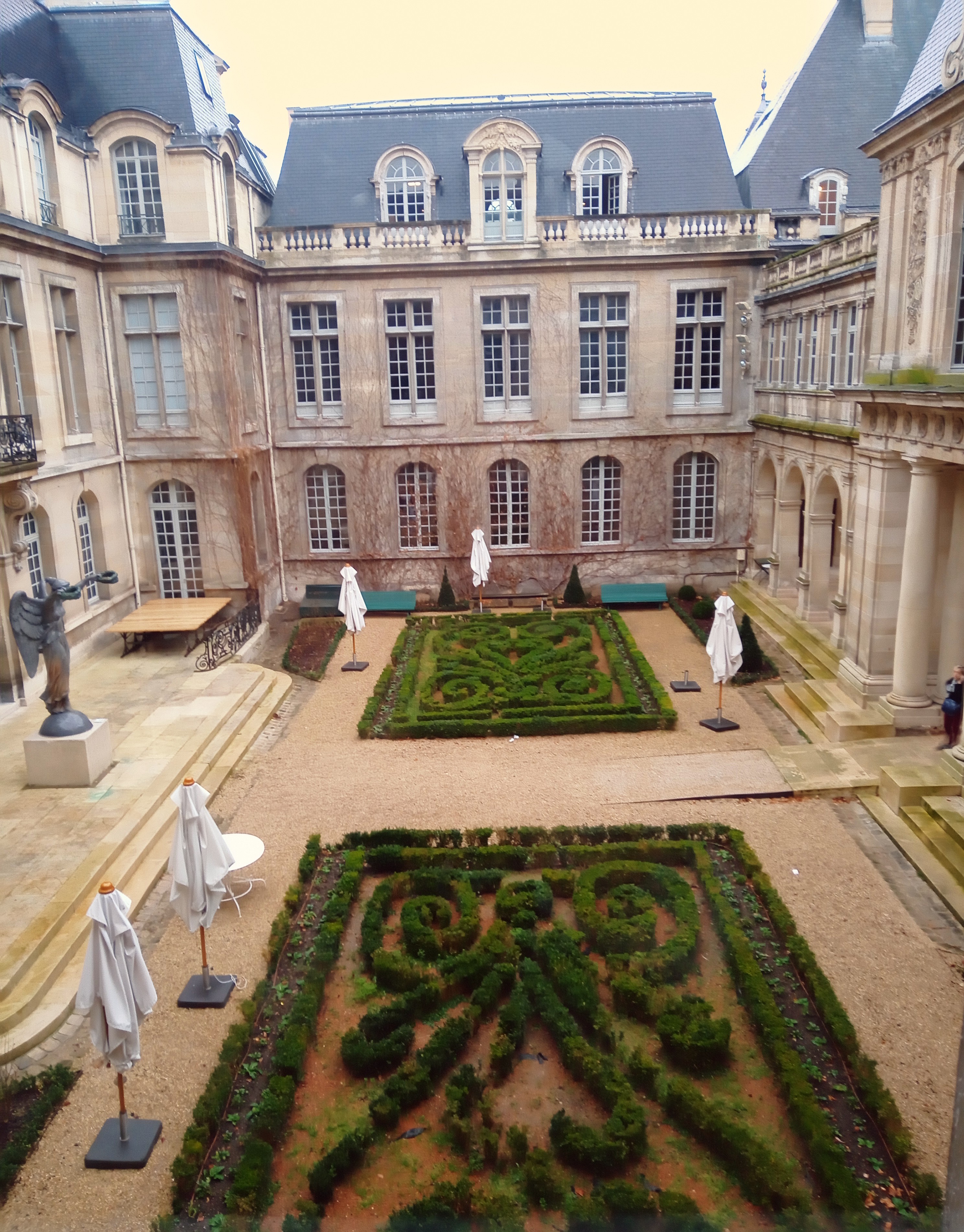
There’s a French history written by women pile, inspired by a recent visit to the History of Paris, Musée Carnavalet. It seems something in my subconscious had indeed been planning!

Best NonFiction Reads of 2021

So, to complete there three part series, following on from Part 1: The Stats + One Outstanding Read of the Year and Part 2: Best Fiction Reads, here is my Part 3: Best NonFiction Books of 2021 and at the end, I’ve tagged on 4 books from my Spiritual Well-being collection that I read in 2021, each of them equally inspiring and nourishing.

In 2021 I read 28 works of nonfiction, so many of them were were excellent, below is a selection of those that I really enjoyed, that have stayed with me, in no particular order:

Autobiography/Memoir

To My Childresn Children Sindiwe Magona1. To My Children’s Children (1990) + Forced to Grow (1992) by Sindiwe Magona (South Africa) – discovering Sindiwe Magona was one of my reading highlights of 2021. Tired of her people being written about and misrepresented by others, she decided for the sake of generations to come, and especially for girls, to share her experience, of an enriching, loving childhood, of growing up under apartheid and overcoming racist and patriarchal challenges.

The first volume covers her life up to the age of 23, when she encounters the most challenging circumstance ever and then in Forced to Grow, from age 23-40 we learn how she finds a way not only to survive but to grow, develop and thrive, overcoming poverty, pursuing education, collaborating with empowered women, spending over 20 years serving in the United Nations. These two books are like nothing else I’ve ever read coming out of South Africa, more than a gift to her grandchildren, they are a treasure and a lesson in humility to all humanity. I’m hoping there is a third volume in the making.

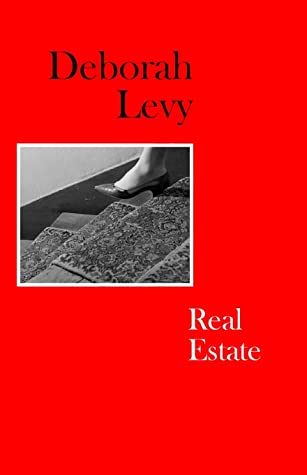
The Cost of LIving Deborah Levy memoir2. Real Estate (2021) + The Cost of Living (2018) by Deborah Levy (Creative Nonfiction) (South Africa/UK) – An author who left South Africa at the age of 9, Levy’s life and reminiscences are a world away from her birthplace and from the life of her compatriot above, though they have left a barely discernible imprint. While Magona embraces the entirety of her experience, Levy in titling her opening memoir Things I Don’t Want to Know (2013), struggles to talk about what she doesn’t want to talk about, using humour, her observation of others and a feminist lens to deflect her existentialism.

In three volumes, as she begins a new phase, unravelling from marriage into mature, independent woman, she reflects on life, her influences, her frustrations, critiquing the roles society assigns us, the way literature and cinema perpetuate them and considers the effect of disrupting them, breaking free. She observes what is going on around her while considering the wisdom of writers who came before, liberates herself from convention, while longing still for aspects of a distorted dream. Slim volumes, entertaining to read, they both inform and obscure, a life in fragments.

autobiography memoir australia indigenous3. My Place by Sally Morgan (1987) (Australia) (Biography/Memoir) – a classic of Australian aboriginal literature, Morgan writes about her childhood when her identity was hidden from her, uncovering her Aboriginal ancestry and understanding why her grandmother was so fearful of talking about the past.

Sharing what she discovered of the life stories of her mother, grandmother and great Uncle to understand why it was deemed necessary to be protected from the knowledge of who she was, she uncovers a heritage and her place in it, in this extraordinary and valuable account. An absolute must read.
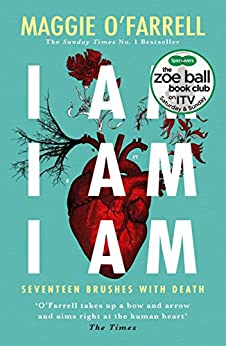
Maggie O'Farrell Memoir Near Death Experiences4. I Am, I Am, I Am, Seventeen Brushes With Death (2017) by Maggie O’Farrell (Northern Ireland/British) (memoir) – a unique memoir told through 17 encounters with death that range from the terrifying to the mundane, the memorable to the repressed.

O’Farrell finds meaning in these experiences, initially cultivating a state of fearlessness followed by the magical effect and shift in perspective that giving birth to a child brings about. A remarkable and thought provoking work using a unique structure, I thought it was brilliant.

Nature Writing

Indigenous Wisdom, Scientific Knowledge and the Teachings of Plants5. Braiding Sweetgrass by Robin Wall Kimmerer (2013) (Creative Non Fiction) (US) – In this remarkable collection of 32 essays, organised into 5 sections that follow the life cycle of sweetgrass, we learn about the philosophy of nature from the perspective of Native American Indigenous Wisdom, shared by a woman of native origin who is a scientist, botanist, teacher, mother.

Sharing scientific knowledge and going out into the forest and field, she demonstrates how close and quiet observation of plants in their habitat teach us. The most crucial lessons being learning how to give back, reciprocity and gift giving, using our imagination and intuition to reconnect with nature and understand the connection between them and us. Just stunning.

nature writing Wainwright prize6. Diary of a Young Naturalist by Dara McAnulty (2020) (Northern Ireland) – an inspired account of a year in the life of a 15 year old boy with a passion for nature and all forms of wildlife and how his connection to them assists him to navigate life mitigating the intensity and challenges of autism.

His observations are a pleasure to read, his use of language evocative and resonant in bringing the natural world he loves to life for the reader. A writer to watch, inspirational.

Justice/Social Science/History

The Fire Next Time James Baldwin7. The Fire Next Time James Baldwin (1963) (Letters) (Social Justice) (US) – a short book of just two letters, one written to his young nephew, a kind of preparation for what lies ahead of him as he will become a young black man in America and a tender description of who he sees in him, his heritage, his family connection and that he is loved, a beautiful literary gift to a young boy.

The second letter he writes to himself, Letter From a Region of My Mind – like a journal entry, he writes of his own development of his self-awareness, of the experiences that moulded him, of his choices to seek refuge and revenge in the same calling, his assessment of meeting Elijah Muhammed, leader of the Nation of Islam. Baldwin’s message is one of love, of standing up for one’s rights, of dignity and the health of one’s soul, of our responsibility to life. A gem of a book, as relevant now as when he wrote it.

Nurturing Humanity8. Nurturing Our Humanity, Riane Eisler, Douglas Fry (Austria/US) (Social Science/Cultural History/Anthropology) (2019) – The long awaited sequel to her brilliant The Chalice and The Blade (1987) which introduced Eisler’s theory on domination versus partnership models of society, this new book written in collaboration with Anthropologist Douglas Fry, explores how domination and partnership have shaped our brains, lives and futures.

They demonstrate through decades of research how we have been influenced by a system of domination that favours hierarchical structures, ranking of one over another, authoritarian parenting and leadership, fueled by fear, tamed by punishment, sustained by conditioning. They argue that the path to human survival and well-being hinges on our human capacities to cooperate and promote social equality, through empathy, equity, helping, caring and various other prosocial acts. A riveting, essential read on understanding human nature and where we are headed.

Sea People In Search of Ancient Navigators of the Pacific9. Sea People Christina Thompson (2019) (Australia/US) (History)  – I loved and was fascinated by this book, a woman curious about her husband and son’s cultural heritage, looks back at what has been written by various/mostly male historians about these ancient navigators of the Pacific and according to their own paradigm and biases, their theories on how they arrived there.

What she discovers are non-instrument navigation techniques that Europeans weren’t aware of, abilities developed by these ancient mariners that are fascinating to imagine, and that a small group seek to emulate, challenging themselves to go back in time, to think and understand the sea, the stars and nature, as their ancestors did. Fascinating and insightful.
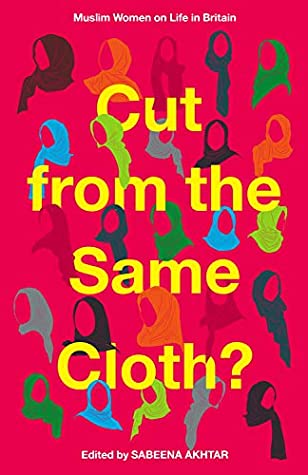
Cut From the Same Cloth Sabeena Akhtar10. Cut From the Same Cloth, Muslim Women on Life in Britain (2021) Edited Sabeena Akhtar (UK) (Essays) – this was a long awaited volume of essays, crowdfunded by many supporters, brings together the voices of 21 Muslim women of different ages, races and backgrounds, allowing them to explore their experience and spiritual perspectives, expressing them creatively.

More than mere essays, collectively, their words bust the all too common stereotypic myths of the hijab wearing woman and introduce us to a bright, humorous, passionate group of women, whose honesty and thoughts are both empowering and insightful. Though they are writing for themselves and each other, anyone interested in understanding the many diverse views of British Muslim women today, will enjoy reading this anthology.

Spiritual Well-being Reads

Finally, one of the genres I like to read is Spiritual Well-being and there is a page dedicated to those books at the top of this blog, for easy reference. They tend to be winter reads, corresponding to that time when we tend to go within and might benefit from a revisiting of inspirational words and an alternative perspective on how to co-exist with whatever it is we are dealing with in the external world.

Sensitives and Soul Purpose

The Power of Empaths in an Increasingly Harsh WorldThis year I found inspiration from two of my favourites in this field, and two new authors, all of them coming from renowned publisher Hay House.

“Every thought we think is creating our future.” Louise Hay

Anita Moorjani’s Sensitive is the New Strong (2021) (India/Hong Kong/US) is written in particular for highly sensitive empaths, with information about recognising this in oneself, learning to develop it as a strength, while understanding the importance of  how to protect your energetic body from the negative effects of the kind of world we live in today.

Rebecca Campbell What is a Soul WLetters to a Starseed (2021) by Australian intuitive and creative, now based in Glastonbury, Rebecca Campbell, who previously wrote Light is the New Black(2015) and Rise Sister Rise (2016). This latest book is for those interested in understanding more about soul purpose.

She considers the big questions that mystics and philosophers through the ages have been asking about our cosmic origins, in a much lighter way: What is the soul, where did it originate and why have we chosen to come here at this time? You’ll know if this is meant for you or not.

Archangel Guidance and Self-Worth

the female archangels Claire StoneAnother new author I picked up this year was Claire Stone and her book The Female Archangels (2021) (UK) having already read quite a few books by Kyle Gray, which I’ve found hugely beneficial in previous years to carry with me and read whenever I had to deal with stressful hospital environments, unhelpful bureaucracy, anxiety producing school meetings – an alternative to pharmaceuticals I guess!

I enjoyed reading her book, although it might be more suited to practitioners or those already in the habit of ritual, as many of her suggestions require props.
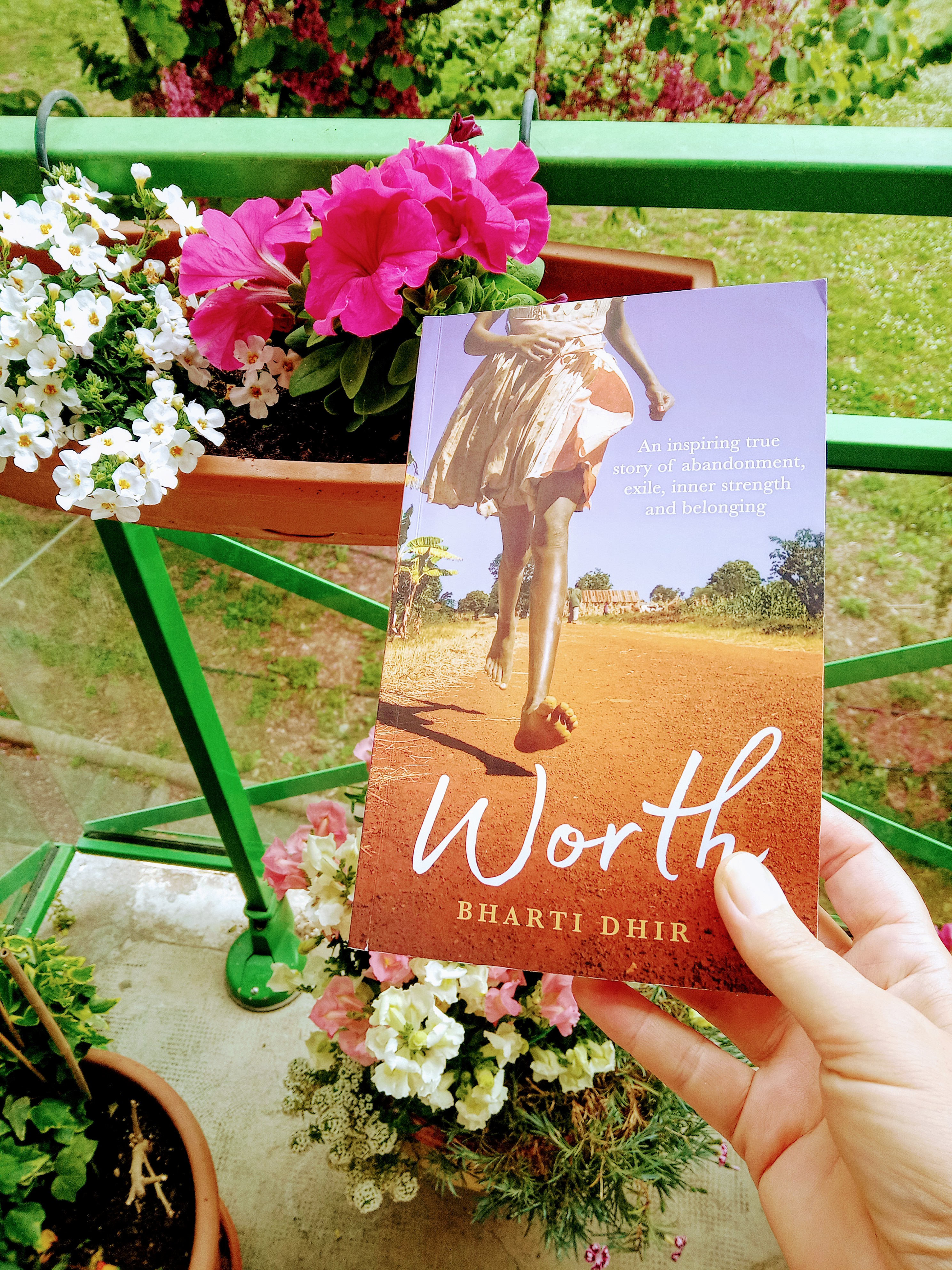
Inspirational memoir of belongingFinally, Worth by Bharti Dhir (2021) (UK/Uganda) – Bharti Dhir was abandoned as a newborn in a fruit box on the side of the road in the Uganda countryside. To this day she doesn’t know who her birth mother was, though rumours created a version of the story and the imagination of the author and reader contribute to what might have happened.

Throughout her childhood there are numerous events, situations, heath problems and challenges that Bharti and her family live through, address and overcome, some of which contribute (at the time) to diminishing her sense of self-worth. With each situation, she shares how she is able to look back with compassion and forgiveness and describe how she was able to turn all that around.

Her reflections on compassion and empathy are enlightening and model a nurturing way to embrace our humanity and practice them as acts of self-care.

 * * * * *

That’s it for 2021 nonfiction reads. Share with me your recent nonfiction favourites or thoughts on any of the above.

Happy Reading for 2022 and thank you for reading!

Claire

Real Estate by Deborah Levy

I read the three volumes that make up Deborah Levy’s Living Autobiography over the year, beginning with the slim Things I Don’t Want to Know, a writer in the cocoon stage of transformation, the threads wound tight. A confrontation with denial, it is equally enticing as it is uncomfortable, it reveals as it obscures trying to fit into George Orwell’s framework from his essay ‘Why I Write’.

In The Cost of Living, a more expansive narrative, the threads unravel and insights are plentiful, though some of the thinking that created the earlier restrictiveness remain.

Real Estate Deborah Levy Memoir AutobiographyAnd now the final volume, Real Estate, which might as easily have been called UnReal Estate, in tumeric coloured silk, Levy has shed the cocoon, ready to embrace a new decade, the nest empty.
I became obsessed with silk. I wanted to sleep in it and wear it and somehow knew it had healing properties. It started when a royalty cheque came in and I took it literally and began to sleep by royalty.

With marriage and motherhood behind her, she dreams of a home with a fountain in the garden, a mimosa tree, a place to welcome friends, unencumbered by practicalities or marital vows.

Yet in my unreal estate dreams my nest was not empty.

If anything the walls had expanded. My real estate had become bigger, there were many rooms, a breeze blew through every window, all the doors were open, the gate was unlatched. Outside in the unreal grounds, butterflies landed on bushes of purple lavender, my rowing boat was full of things people had left behind: a sandal, a hat, a book, a fishing net. I had recently added light green shutters to the window of the house.

Deborah Levy Real Estate Paris

Photo by alleksana on Pexels.com

As with the previous book, there are recurrent themes, there is a sense of humour and a search for something elusive in the idea of an appealing mature woman character. Deconstructing the stereotype of these persona, she ponders why no scripted female characters had full lives of their own.

It occurred to me that what was wrong with the scripts was that the mothers and grandmothers were always there to police the the more interesting desires of others, or to comfort them, or to be wise and dull.

Accepting a fellowship at the same time her younger daughter leaves home, she prepares to spend some months in a bare apartment in Paris, a new source of inspiration and insight, rereading and reflecting on the works of Simone de Beauvoir, Marguerite Duras and Katherine Mansfield, researching the subject of the doppelgänger.

My empty nest in Montmartre was really a version of my two writing sheds, except I could cook and sleep in it. I worked through the night on my new novel, while the sculptor downstairs worked through the night with her electric saw.

Approaching her sixth decade, somewhat in isolation brings on a melancholic reckoning, a party and as the mimosa blooms, the mood lifts.

mimosa Paris Deborah Levy Creative nonfiction

Photo Larysa Charnakal Pexels.com

It’s not easy to describe the book, being a circular narrative that moves forward at the same time revisiting themes, turning back on itself, considering different perspectives.

The combination of grit, pearls of wisdom and humour, combine in a rollicking read of interconnected thoughts and observations, the searching for and letting go of ideas, those that promise an experience and the outdated that no longer serve the purpose of finding contentedness as a mature woman.

I loved it, finishing it in two days, and all the more for having struggled through the first volume, been both delighted and frustrated by the second and arrived here, at the evolution of an observation and examination of what it means to live, to love, let go and just be.