Irish Book Awards Winners 2023

There were lots of winners at the An Post Irish Book Awards in Dublin, there being so many different categories from fiction, non-fiction, popular fiction, crime fiction to newcomer. From a small base of three categories, the awards now include eighteen categories spanning a broad range of literary genres. Thousands of readers vote to select the winners every year.

The Novel of the Year prize for which there were eight worthy contenders on the shortlist, went to the Booker shortlist nominated Paul Murray for his fourth novel, the tragicomedy The Bee Sting. Read a Q & A with the author here.

Set in a town in the Midlands in 2014, at the tail end of the financial crash, the Barnes family has a car dealership – they’ve just about managed to survive until now, but as the novel begins the business is on the brink of going under, and the family may be going down with it. The book navigates a family facing this calamity with irony, panging emotion and existential tones. Described as a masterful tragicomedy of familial chaos and dynamics. 

The one book I was championing (reviewed here), the moving, courageous and inspiring Poor by Katriona O’Sullivan, scooped two awards, Biography of the Year and the Listener’s Choice award.

Mark O’Connell won the Non-Fiction Book of the Year with his profound confrontation of true crime, A Thread of Violence a negotiation with the act of writing about murder, and a navigation of the chasm and interplay between fiction and non-fiction, taking the infamous case of Malcolm Macarthur as its subject, while Liz Nugent took the Crime Fiction Book of the Year for Strange Diamond Sally.

Newcomer of the Year went to rising Irish talent Colin Walsh for Kala, a gripping literary thriller, set in a small Irish town suffocating on its own secrets as three friends reunite in their hometown where their friend Kala disappeared fifteen years ago.

In an interesting and informative Q & A interview for the prize, Walsh was asked:

Q: Ireland is such a literary powerhouse, was it supportive of new writers?

The short answer is yes – and not just new writers. Ireland’s a literary powerhouse precisely because we’ve got an Arts Council-supported infrastructure of journals, festivals, indie publishers, etc. That creates a rich writing ecosystem, which is essential to maintaining individual artists and the wider literary culture. Writing is unpredictable magic on the page, but magic always needs concrete structures within which to thrive – that’s what Ireland provides for writers, and that’s why we punch so far above our weight internationally.

The winners of the individual categories will go forward to compete for the title of the overall Irish Book of the Year.  The winner is decided by the An Post Irish Book of the Year judging panel. Watch this space!

In 2022 Sally Hayden won that award for her incredible work of nonfiction My Fourth Time, We Drowned.
The nominations for Irish Book of the Year are the six titles shown below:

Soldier Sailor by Claire Kilroy

Soldier Sailor is on the shortlist for the Irish Book Awards 2023.

Cathy at 746 Books praised this one, as her pick for Novel of the Year, saying it deserved the award attention, so I decided to read it to find out what that was about.

The Clash of Fierce Love versus Stolen Identity

Irish Book Awards 2023 motherhood literary fiction

So, after an eleven year gap since the publication of her last book, following the birth of her son, Claire Kilroy has overcome her writer’s block and “angry few years”, to produce a piercing, visceral account by the unnamed narrator Soldier ravaged by new motherhood, to the child, Sailor.

Here is how the author describes her book:

Soldier Sailor is a mother talking to her sleeping child explaining what was going on during those years he was too young to understand or remember the events around him. She tells him of her love, but also of how difficult, how isolating she found it when motherhood ended her old life. Nothing much happens; one of the main characters, Sailor, has no dialogue. The whole experience is a non-event from the outside, but when you are that soldier pushing the pram, my, what a psychodrama it is.

The novel as the image depicts, zooms right in to the responsibility, the bond and the practice of being mother to a small child, to how it changes EVERYTHING. From the entering into a relationship like no other that exists and the loss of what came before it; to the very different support that a mother might need, and the unlikely place(s) she might find it.

A Mother’s Instinct to Kill

It is not a reflection, it is an act, you will read it and live it, or relive aspects of it, if you have already been there.

Do you know what I would I do for you? I hope not. What would I not do, is the question. The universe careens around us and I shield your sleeping body with my arms, ready to proclaim to the heavens that I would kill for you: that I would kill others for you, that I would kill myself. I would even kill my husband if it came down to it. I swear every woman in my position feels the same. We all go bustling about, pushing shopping trolleys or whatever, acting like love of this voltage is normal; domestic, even.That we know how to handle it. But I don’t.

Using the second person “you” addressed as a monologue to her baby son, the narrative swings between the emotional peaks of a tireless love, to violent frustration and resentment; from the misleading two second Instagram snaps sent to the elsewhere husband, to her thirty second screaming telephone rages, with only the reader, witness to and understanding the riding crescendo of events that lead from one of those events to the next. A bewildered husband, observing the peaks, oblivious.

Your sleeve is in your dinner, my husband remarked. He wasn’t there but he didn’t have to be there. He was always there when things were going wrong. Yet never there to help. The luxury, the sheer luxury of sending a last-minute message saying you wouldn’t be home that evening. It would be a decade – more – before I could do the same. What does he eat? he had texted me the one time he was left in charge?

Sons and Fathers Take Note

To read this account, especially because of the culture within which it stems from, one that for many years locked up its women who expressed too loudly their discontent, or behaved in ways considered improper, is to understand a little of what was labelled hysteria – one of the natural consequences of needs not being met. Forget the narrative arc, read this and you plunge into the subject, you become it, you feel it, you remember bits of it. The son is warned, made to understand, his future depends on it.

I was firmly in my wrong mind and liable to do anything, so off I went, down the stairs, out the door, up the drive, through the gate, along the road, overcome by a wildness that I needed to convert to movement or else risk doing something stupid, and by stupid I mean destructive because words have many meanings, Sailor, and you must deploy them with care because they can inflict real hurt.

The mother like her infant child, is reborn yet will only realise she has inhabited this new being ‘the mother who birthed‘ when it is too late, when this tiny creature she loves so fiercely and will protect with her life, claims her, and in her most challenging moments, she like him, will feel the desire to scream, to run, to escape or somehow figure out, how to make ‘the other’ understand.

What struck me as the starkest contradiction of all was that, having navigated this much of life – the volatility of youth, of love and loss, the agony and the ecstasy – the closest I had come to losing my mind was during the period known as settling down.

Friendship for Hope and Healing

motherhood Soldier Sailor Claire Kilroy
Photo by Oleksandr P on Pexels.com

This text will not speak of the quiet moments, it is the intersection of all the moments lived, of the brutal awakening that is ‘becoming a mother’ and the warning to ‘the other’ that did not give birth, who is part of the journey, to prepare for this change and get ready to adapt, to support, to listen, to learn to be ‘the friend’ she is going to need.

One day she encounters an old friend, and these follow up meets mark a turning point, to being seen again, to being understood, and something dangerous shifts, quiets. Small gestures, moments of listening, the beginning of a form of solidarity.

We were better together my friend and I. Better parents. I was anyway. I was a better mother to you when I was around my friend. But a worse wife.

We arrive at the end – where she imagines moments years down the road ahead – with a kind of relief, knowing that with age and stage, the distance between those peaks will lessen, the relationships will either adapt or crumble, that true friendships will witness and endure it all.

An utterly compelling read that you won’t want to put down.

Further Reading

The Observer Review: Soldier Sailor by Claire Kilroy review – a mother’s confession after the fight of her life by Stephanie Merritt, 12 June 2023

The Irish Times Review: Soldier Sailor by Claire Kilroy: An astute, provocative, intriguing novel about motherhood – A virtuosic set-piece late on veers so far into nightmare territory, it feels as if we’re reading a thriller by Sarah Gilmartin

Eason Novel of the Year, Interview Q & A With Claire Kilroy

Claire Kilroy, Author

Claire Kilroy is the author of five novels including Soldier SailorAll SummerTenderwire, and The Devil I Know. She was awarded the Rooney Prize for Irish Literature in 2004 and has been shortlisted for many other prizes, including the Irish Novel of the Year and the Kerry Group Irish Fiction Award.

She studied at Trinity College and lives in Dublin.

What do you hope readers will take away from your narrative?

It is so easy to dismiss a mother and her work, and a father and his – one of the main characters is a stay-at-home dad. I had no idea what minding an infant involved and had regarded it as easy, unchallenging (I am mortified to admit that), so I hope I have revealed how demanding it is, but also how rewarding, never mind how important. I hope more fathers will get involved in raising children because it changes you, it remakes you, you become more compassionate. I don’t think Trump and Putin would be the awful tyrants they are had they cared for, well, anyone. It doesn’t have to be a child, just any person or creature who needs care.    

Literature Award Season Wrap Up Week

Remembering the past Spring Literature Awards Season

Back in March/April the Spring Literature Award Season saw the Women’s Prize for Fiction 2023 won by Barbara Kingsolver for Demon Copperhead, a book I did eventually read but didn’t review; the Dublin Literary Award, a celebrated worldwide librarian nominated award, won by Katja Oskamp, translated from German by Jo Heinrich, for the excellent, life-affirming novella Marzhan, Mon Amour, a book I absolutely loved – how could I not, a writer turned well-being practitioner protagonist (much like Oskamp herself), who soothes aches and pains of the body, mind and soul of her small, often misunderstood community.

Then there was the International Booker Prize (fiction in translation) shortlist, from which I read three novels, the outstanding read for me being Mexican author Guadalupe Nettel’s Still Born, the top prize going to Bulgarian author Georgi Gospodinov for his novel Time Shelter, translated by Angela Rodel.

I shared the results of the New Zealand Book Awards and though these titles are not easy to get hold of, I did manage to read Grand: Becoming My Mother’s Daughter by Noelle McCarthy which won the Best First Book in the General Nonfiction category, with Catherine Chidgey’s The Axeman’s Carnival winning the fiction award, one I hope to read in 2024.

Autumn Literature Award Winner Week

This week will see the unveiling of three more literature awards that I’m curious about.

Irish Book Awards 2023

On Wed 22 November, the winners of the Irish Book Awards 2023 will be announced. I’ve been reading a lot of Irish literature this year, including almost half of the 8 fiction titles shortlisted for Novel of the Year and one title Poor by Katriona O’Sullivan that is shortlisted for both Biography of the Year and the Listener’s Choice Awards.

So far, I’ve read and reviewed Sebastian Barry’s Old Gold’s Time which I thought was excellent and would certainly be a worthy winner, Elaine Feeney’s How To Build a Boat, a character lead scenario that I very much enjoyed, I’m almost finished reading Claire Kilroy’s intense, visceral portrayal of a young mother on the edge of parental overwhelm Soldier Sailor and I’ll soon be reading the very short contender by Claire Keegan (so short it might not even be a novella) So Late In the Day.

The Booker Prize 2023

It’s a strong fiction lineup for the Irish Awards, with four of their shortlisted titles already featured on the Booker Prize longlist, two of which made it to the shortlist (none of which I have read); the winner will be announced on Sunday 26 November. This group of six books below was said by the judges to “showcase the breadth of what world literature can do, while gesturing at the unease of our moment.” In this case, I found more of interest in the longlist than the shortlist.

The Warwick Prize for Women In Translation 2023

And last but not least, the winner of the Warwick Prize for Women in Translation will be announced on Thursday 23 November.

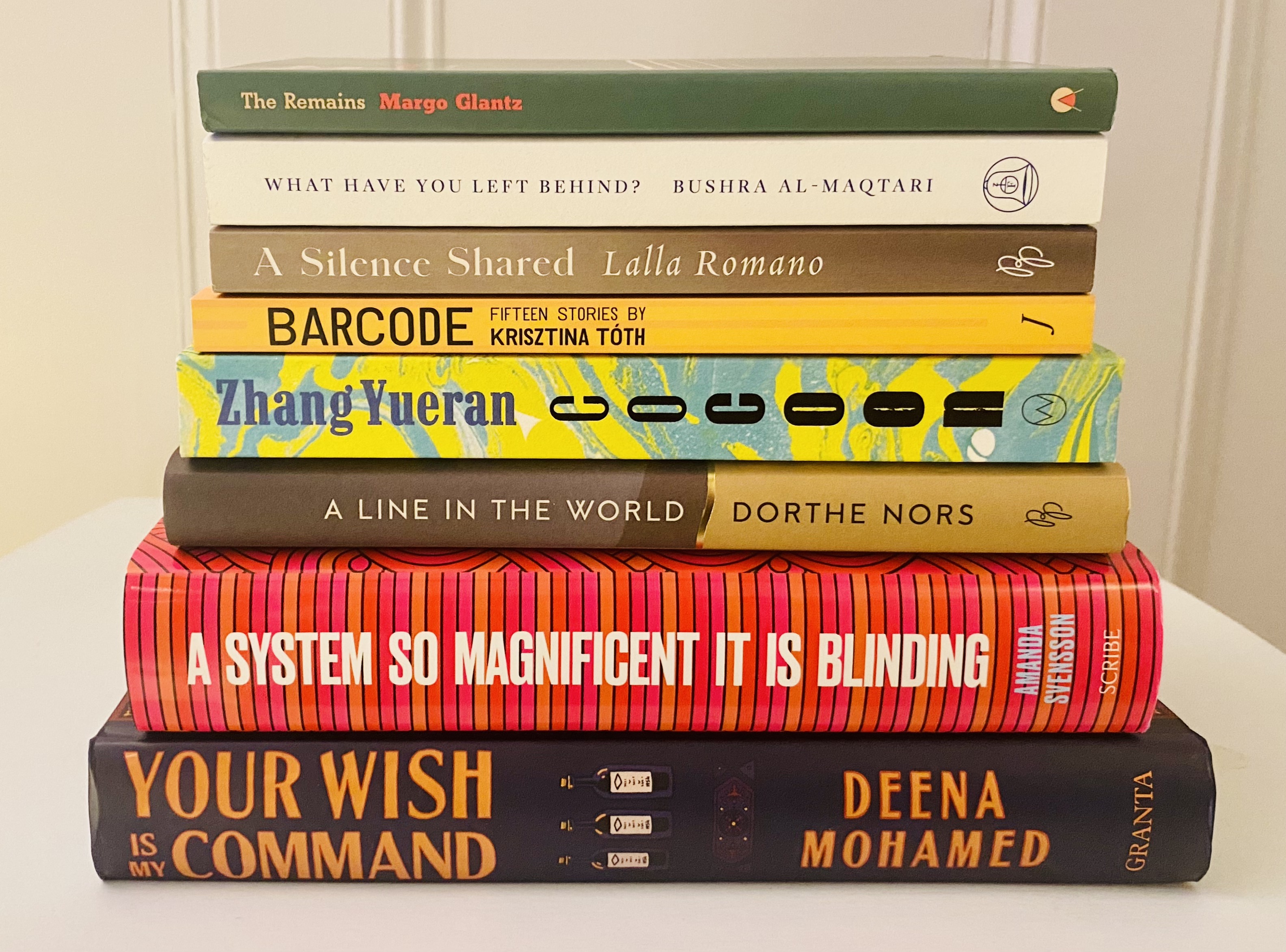
I have read one title from this shortlist, though it has only just appeared in English thanks to Charco Press, The Remains by Mexican author Margo Glantz was originally published in 2002. I describe this literary masterpiece as a lyrical elegy of tempo rubato, z divorced woman feels out of place and yet connected at her ex-husbands wake, a riveting, mind blowing (or perhaps expanding), rhythmic reading experience, just WOW!

Despite being one of the most iconic figures in Latin American literature, her work is little known in English. Charco Press now bring her work to a new audience with this excellent translation by Ellen Jones.

So watch this space this week for the winners of these three sets of awards.

Have you read any works from these shortlists? Any favourites? Predictions?

Sambac Beneath Unlikely Skies (2021) by Heba Hayek

Tender, nostalgic vignettes of a childhood growing up in Gaza, often told from the perspective of the twenty-something narrator looking back from the present, now living in exile in London. She is constantly longing for old places while finding new ones, the past never far from being elicited by the present.

Each new chapter has an associated song, vignettes accompanied by a playlist.

The image of the sambac, the tree that filled our back yard with its sweet, creamy scent, appears in my narrator’s attempts to create life where this shrub doesn’t naturally thrive.

short stories Palestinian Literature Gaza Hajar Press

The little stories are so compelling, I finished them in one sitting and was left wanting to read more. I sincerely hope the author is writing more stories, preserving important memories, while there is a terrible war raging in her home town.

These stories are the anti-thesis of that violent incursion, they speak of family outings to the sea, of friendships, of Aunties, though so many are tinged with reminders that it is almost never without some reference to loss.

As the narrator grows into unlikely circumstances away from Gaza, memory is her greenhouse; her way to bring back the voice of the girl who was sacrificed and born in the hands of her identity. At her desk in a flat in Southeast London, she writes of what makes her soul flicker: community love, especially the kind embodied by circles of women and girls.

Guns and Figs

In this vignette, our narrator shares a childhood memory of driving along the Gaza coast with her parents, beside the Mediterranean, in her favourite place, by the window facing the sea, window down, sea breeze rushing in, an unchanging view for the duration of the 20 minute drive.

The song accompanying the vignette is Fairuz ”Nassam Alayna El Hawa’ (The Breeze Is Upon Us)

Photo by Kadir Akman on Pexels.com

My brother and I each had assigned places in the car, until our little sister grew old enough to claim her window-seat rights. Then the rotation became tricky, involving fights that mostly ended with my brother crying in the middle.

I usually sat by the window, facing the sun and the sea, breathing the salty, creamy air and occasionally eating grapes and figs: the ultimate Mediterranean snack.

These drives all felt the same, until the last one.

At a checkpoint, a soldier indicates they should pull over, “I’ll just be a minute” says her father. An hour later he returns, the Friday barbecue trips end indefinitely that day, though she is never told why.

I started to notice Baba paying more attention to the road; it seemed like he was avoiding certain checkpoints. Every so often, he would point out something ahead and wonder aloud whether it was a checkpoint or a fruit cart. As Fairuz sang from the cassette player, Baba drove on, trying to guess the difference between guns and figs.

Friendship, Fear and Foreign Places

Other stories ‘Ask Me Anything’ tell of school days interrupted by explosions, of friendships interrupted by disappearances, ‘A Carry-On Full Of Pictures and Letters’.

We were never trained for emergencies at school. We just knew what to do. We would sit on the floor under our tables each time we heard the recurrent loud explosions – ignore the first two, exchange a few nervous looks, and then, in one swift move, we’d all be in our places by the third. That consistency was comforting. The fact that we had survived the first two was a good enough sign that it’d be worth shielding ourselves from the rest.

In an attempt at reassurance, our teacher would remind the class: ‘The one you hear isn’t the one that kills you.’

One day her best friend Lubna leaves Gaza without telling anyone. She had visited the Al-Shifaa hospital after breaking her arm and never returned.

When she was ten, Lubna’s dad had been one of seven people martyred after the occupation forces targeted a car in the middle of a busy street. She’d been planning her exit for years; I just didn’t think it was really going to happen.

Three years later, she visits her friend in Amsterdam where she now lives.

Song: Lucy Dacus – ‘Yours and Mine’.

That day feels like the oldest memory I have. Yet somehow I can barely remember it at all, or the person I was when I hadn’t yet imagined what it meant to leave.

‘I love my mother, but she couldn’t protect me. I love you, but you couldn’t either. I’m a lot better now, you see?’ She waves her hand in the air, and I look around and nod.

A Moving Tale, Of Family Drama

Song: Nina Simone – ‘I Wish I Knew How It Would Feel To Be Free’

In this vignette, we first hear that our narrator has been kicked out of her flat after secretly hosting an Airbnb guest to help pay the rent. Homeless, she moves into the office where she works and takes on additional responsibilities.

Sometimes, I even feel content in my windowless bunker, stealing bits of people’s lunches from the common lounge – not the entire meal. As I look up flats in my small college town, I think of my first big move.

Here, we learn of when our narrators parents leave the family home, the summer she turns six, after problems around inheritance became intolerable. Their last day living in an apartment above her grandmother Sitti, arrives:

Moving out of the family house was never a casual affair, but rather a statement. It’s like leaving home for the first time – making a point that it’s time to move on. Changes like these usually carried an undertone of wives taking their husbands away from their families and keeping them for themselves.

The move also meant that no one was going to interfere in how to raise us, except for my parents. It was a bit of a slap in the face, especially for Sitti. But I was excited about it; I wanted to be like my other cousins who visited only on Fridays and wore something new each time: a little bag or a hair tie, or even a completely different hairstyle. I was ready to rebel with my parents and become the daughter of a mean woman. I started to imagine what I would wear the next Friday.

Some years later, she visits her grandmother in Belgium, where she now lives and finds her safe, but malcontent.

Song: Idir – ‘A Vava Inouva’

Seventy years since her birth,our Grandma is in a French-speaking town, barely able to move, again a refugee. She tells me she didn’t want to leave Gaza, and that she regrets it.

‘Who leaves at this age?’ she says, slightly ashamed of her attempt at survival. As though there were an age limit to craving life, or to that quiet longing older folks back home often fear expressing.

Photo by u015eeyma D. on Pexels.com

It is a wonderful collection, that preserves childhood memories and shares with the rest of us, a slice of life for a member of a Palestinian family in Gaza, where growing up is fraught with uncertainty, trauma and nothing can be taken for granted.

From afar, the beauty of family and fragmented moments of friendship gain additional significance, as a way of life is slowly and methodically destroyed.

A must read, excellent portrayal of a lonesome yearning for home.

To order a copy of this book, visit Hajar Press here.

Heba Hayek, Author

Heba (she/they) is a London-based, Gaza-raised Palestinian author, creative and facilitator. She completed an MFA in Creative Writing at Miami University, Ohio, and studied for an MA in Social Anthropology at SOAS University of London.

Rooted in anti-nation-state, decolonial, queer, Afrikan feminist thought, Heba’s work navigates topics such as disposability, Global South solidarity movements, land justice, Palestinian drill music, and more.

Heba’s first book, Sambac Beneath Unlikely Skies, won the Creative Award in the 2022 Palestine Book Awards and was chosen as a 2021 Book of the Year by The White Review, Middle East Eye and The New Arab.

My Fourth Time, We Drowned by Sally Hayden

Seeking Refuge On the World’s Deadliest Migration Route

Sally Hayden is a correspondent for the Irish Times, who has reported stories across Africa and the Middle East for a wide range of media, including the Guardian, CNN, Al Jazeera, Channel 4 News, the Washington Post and the New York Times.

Earlier this year, I read River Spirit by Sudanese/Scottish author Leila Aboulela and as I was interested to understand a little more of the history of Khartoum, Sudan, I started reading some informative news articles by the Irish correspondent Sally Hayden.

I then discovered she had recently written a book, a very powerful and important book.

A Non-Fiction Tour de Force

Her book My Fourth Time, We Drowned was the winner of the 2022 Orwell Prize for Political Writing, Irish Book Awards Book of the Year 2022, it was shortlisted for the Bailee Gifford Prize for Non-Fiction 2022.

In 2018, Sally was contacted by refugees incarcerated in Libyan migrant detention centres, who were using hidden phones to appeal for help.

“Sister Sally,” a man WhatsApped her in 2018 from a Libyan detention centre for refugees, “we need your help.”

“I had stumbled, inadvertently, on a human rights disaster of epic proportions,” Hayden remembers.

From that day, she became a kind of lifeline to many, staying in contact, travelling across the region verifying facts and keeping a vigilant eye on those she had come to know travelling along the Central Mediterranean migration route, between Libya or Tunisia and Italy or Malta. The UN has called it the deadliest migration route in the world.

A 21st Century Human Rights Scandal

Since 2014, more than 28,200 men, women and children have died or gone missing on the Mediterranean Sea while trying to reach Europe – more than 22,400 of them along this route.

In her book, she documents the messages and traces what happens to some of these people, and referring to a map, focuses on every detention centre and shares the conditions and some of the events that occurred in each of those places. It is a compilation of evidence and an act of ‘seeing’ those individuals whose lives have been demeaned and exposes the reality of unwholesome alliances forged between European leaders with warlords, militias and rebels who profit from the movement of human beings through political funding and extortion.

Returning people to Libya traps them in a cycle that also involves human smugglers. The smugglers work in league with both the coastguard and the detention centre management – this has been documented by an independent UN fact-finding mission, as well as by me. Videos of captives being tortured are even circulated by their families on social media, in a desperate bid to raise ransom money through crowdfundingEritrean journalist Meron Estefanos says around one billion euros in ransoms could have been paid to smugglers in Libya by now. 

The main reason for her focus on the Central Mediterranean route was because of the role and impact of the European Union (EU). A law graduate with a Master’s in International Politics, she would investigate and report on the circumstances that lead to this becoming a major humanitarian crisis, as a result of EU policy, that funded and facilitated thousands of people being captured and forced back to a militia-run state where they were often locked up indefinitely in detention centres.

Each chapter focuses on a different location, sharing the messages from people being held, the dire conditions, the punishments, the ransom demands, the deaths. The ineffectiveness of the UNHCR (United Nations High Commissioner for Refugees), the suggestion of Rwanda as a new route for safety, the trial of known smugglers at Addis Ababa, where Hayden is the only foreign correspondent present. The humanitarian lawyers who made a submission to the International Criminal Court calling for the EU to be charged with crimes against humanity.

She also travels to parts of Africa where some have returned home to, to find out how they are faring, and then the few who made it to a safe country, who ares starting new lives – how it is now for them.

It is difficult to encapsulate the extent of this testament to the experience and situation of a large group of people made to live and die in terrible, inhumane conditions here, but it is an opportunity to avail ourselves of the knowledge of the repercussions of these funding policies and to understand what is behind these so-called solutions to a humanitarian crisis.

“The world will not be destroyed by those who do evil,” wrote one detained Eritrean refugee, “but by those who watch them without doing anything.”

An extraordinary, detailed and condemnatory read. Highly Recommended.

Journalist of the Year, Irish Journalism Awards 2023

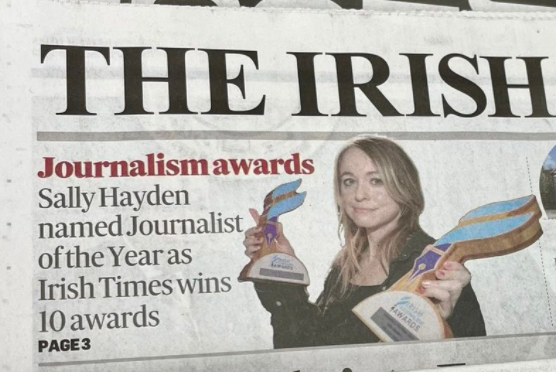
Just this week (Nov 15, 2023) Sally Hayden was named journalist of the year at the 2023 Irish Journalism Awards. Hayden also received the award for best foreign coverage for Irish Times articles on famine risks in Somalia, Sudan’s pro-democracy movement and unrest in Sierra Leone over its cost of living crisis.

Further Reading

A Speech Sally Hayden Gave to the European Parliament, 9 Nov, 2023 – on Why People Want to Come to Europe

Irish Times Article: Sally Hayden: ‘You have to be careful not to let your empathy or your humour be torn away’

Interview, Women In Foreign Policy: Sally Hayden on her career as a journalist and reporting on the migration crisis

Sally Hayden, Author

Sally Hayden is an award-winning journalist and photographer focused on migration, conflict and humanitarian crises. She is currently the Africa correspondent for the Irish Times and in 2023 won journalist of the year at the Irish Journalism Awards.

Her writing has been translated into nine languages and she has appeared on national and international media.

David Edgerton, the Chair of Judges for The Orwell Prize for Political Writing 2022, commented:

Hayden’s reporting is an extraordinary exploration of a modern reality using modern means: truly a book of our times. While many people seeking refuge from the terrible logics of repression, war and poverty cannot easily cross frontiers, phone and Facebook messages can. They allow contact with home but are also the means by which ransoms are gruesomely demanded by traffickers. But they are also the way in which Hayden explores the lives of people stuck under the control of traffickers, militias, the UN, and lets them speak to us as full human beings: hungry, ill, and often doomed in their quest for safety. She gets the terrible truth out to a world that has been far too indifferent.

How To Build A Boat by Elaine Feeney

How To Build a Boat is a contemporary Irish novel that deals with people in a community navigating lives complicated by things that have happened or are happening to them, in this case a 13 year old boy Jamie is starting high school and it’s clear he is being singled out by some of the mean boys (and not for his height or bright red hair).

Irish Literature literary fiction Booker Prize longlist 2023

The novel was longlisted for the Booker Prize 2023 and shortlisted for the Irish Book Awards 2023, both of which announce winners in late November.

In a way it reminded me of Sebastian Barry’s Old God’s Time, in the sense that it relates to the power of connections in the community, the unexpected and the previously unknown, that can help pave the way towards healing and the passing through of the tumultuous hallways of grief.

Old God’s Time is more introspective and focused on a single character, while How To Build a Boat gives equal weight to a number of characters, there is more dialogue and a greater sense of place, of the physical environment and dwelling places of its inhabitants.

How can I miss someone I have never met? Jamie said.
Grief was profoundly different for both humans. One felt an intense anger he had never recovered from, the other knew something was missing, a vacuum to where a mother should fit, and he had a fixed determination to fill it.

Jamie’s mother Noelle died post childbirth at the age of 15 and he is being raised by his young father Eoin and grandmother. He takes everything literally and is serious minded and ambitious.

Jamie got it. He just didn’t want to get it. Noelle had never stopped moving from the first minute he had met her on screen. She was in constant and limited motion.

His one resounding ambition is to invent/create a machine that will be in perpetual motion; in his mind it will somehow allow him to remain connected to his mother, who, though he never knew her, he visualises through the one remaining video that is left of her, competing in a swimming gala.

There had been hundreds of clips. Noelle laughing after school. Noelle walking in the woods. Noelle soaked to the skin on a picnic. Noelle pulling faces outside the cinema. Noelle painted like a Dalmatian at Halloween with a black-and-white hair wig. But after a rare night out with the soccer club, Eoin, angry and lonely and drunk in his small, dark living room, deleted the phone’s contents. After which, he placed his phone on the laminate floor of the two-up-two-down and smashed it hard under the heel of his foot. After which, he vomited. After which, he passed out until morning when he woke frantic and pacing about with a dry mouth and a pounding headache, and in a lather of sweat and overwhelmed with the desire to disappear. But Jamie woke, crept downstairs and began asking so many questions that Eoin had no choice but to recover and get on with the getting on a young boy requires. And for years after, Eoin replayed each deleted clip in his mind before he’d fall into a fretful sleep, until the clips grew so hazy and faint and there came a time when Eoin couldn’t visualise Noelle’s face at all,
and though he tried to (re)build it:
smile, red hair, eyes, freckled nose, wide shoulders
parts of her vanished until it was finally impossible to recreate her.

Yusra Mardini Butterfly The Swimmers Elaine Feeney
Photo by Heart Rules on Pexels.com

At the new school he encounters Tess (Mrs McMahon) the English teacher and Taigh (Mr Foley), the woodwork teacher, whose classroom has been built in what was the old swimming pool.

These two are also in the midst of transition; Tess is married to Paul who has little patience or empathy for his wife’s uncertainty. She has come to the end of being able to suppress her feelings and knows that running away is no longer a sustainable solution to her agitated, easily triggered mind.

They were almost a decade married now and to avoid misinterpretations in the way they communicated, they had grown polite and consistent with each other. To Tess, it was as though she had catapulted. She stopped giving Paul her point of view. And Paul stopped worrying about what ailed Tess.

Taigh has left the island where he was raised and keeps his distance from people, avoiding growing close to anyone while he adapts to his newfound independence.

The three are connected through the school and Taigh’s suggestion to Jamie that they build a currach (a traditional Irish boat with a wooden frame, over which animal skins or hides were once stretched, though now canvas is more usual).

It is a school project that a number of the boys work on and commit time to, though not necessarily supported by the very traditional, linear leadership or parents with single-minded expectations of their protege. The project in different ways facilitates consideration of the many pressures weighing on them all.

It is a heart-warming, thoughtful novel of the importance of community interactions and the power of imagination and creativity and teamwork to nurture and heal and progress the journey of everyone involved, when obstacles are removed and the way is cleared for out of the box thinking, support and the healing that can result from going with the flow.

I thought it was an excellent, enjoyable, thought provoking read of hope and optimism.

Further Reading

Elaine Feeney Booker Interview: ‘It’s impossible not to consider pain and loss when writing’

New York Times Review: Grief, Community and Boat Building in a Moving New Novel, In Elaine Feeney’s latest book, a child’s grief-driven engineering dream connects a handful of isolated citizens in a small Irish town by Sophie Ward.

The Guardian: How to Build a Boat by Elaine Feeney review – secret shame and practical woodwork by Killian Fox.

Elaine Feeney, Author

Elaine Feeney is an award-winning poet, novelist, short story writer and playwright from the west of Ireland.

How to Build a Boat, longlisted for the Booker Prize 2023, is her second novel. The 2020 debut, As You Were, was shortlisted for the Rathbones Folio Prize and the Irish Novel of the Year Award, and won the Kate O’Brien Award, the McKitterick Prize, and the Dalkey Festival Emerging Writer Award.

Feeney has published three collections of poetry, including The Radio Was Gospel and Rise, and her short story ‘Sojourn’ was included in The Art of the Glimpse: 100 Irish Short Stories, edited by Sinéad Gleeson. Feeney lectures at the National University of Ireland, Galway.  

” I am constantly imagining and reimagining this place; its socio-economics; geo-political landscape; pagan versus Christian traditions; new cultures; power and who holds it; the post-colonial effect on language, emigration, class and agriculture. Our proximity to the sea seems to energise writers.” Elaine Feeney on Ireland

Our Souls At Night by Kent Haruf

During the weekend, I took a break from my current read to pick up this final slim book written by Kent Haruf, knowing it would be a gentle, soothing read that makes little demand of the reader.

Nights in Holt, Colorado

Kent Haruf last novel set in HoltLike the Plainsong Trilogy, it takes place in the provincial town of Holt where all Haruf’s book were set. This time we meet neighbours Louis and Addie, who are both widowed, early 70’s, living alone, with Ruth, in her 80’s in the house between them.

They’re not close, but one morning Addie arrives on Louis’s doorstep with an unorthodox proposal to alleviate her insomnia. That he spend nights with her, in her bed. She thinks it might help and wonders if he has a similar issue.

I’ve made up my mind I’m not going to pay attention to what people think. I’ve done that too long – all my life. I’m not going to live that way anymore.

The novel this explores the development of this new relationship, that Addie has no wish to hide, and it’s repercussions, in that frank, open way Haruf has of confronting his characters with their often uncommunicative selves, forcing them out of their silences, of their set ways, for their own benefit.

Challenging the Quiet to Speak Up, Act Out

When Louis tells Addie he has thought of her, admiring her character, she responds:

Why would you say that?
Because of how you live. How you managed your life after Carl died. That was a hard time for you he said. That’s what I mean. I know what it was like for me after my wife died, and I could see that you were doing better than did. I admired that.
You never came over or made a point of saying anything, she said.
I didn’t want to seem intrusive.
You wouldn’t have. I was very lonely.

One would think at their age they ought to be free to indulge themselves a little, but this a parochial town and Addie’s intention is more of a challenge than she initially realises.

Daring to Be Free, At Their Age

Robert Redford Jane Fonda Our Souls at Night Kent Haruf When Louis’s daughter visits, her explains that it is a decision they’ve made to be free. She tells him he is acting like a teenager.

I never acted like this as a teenager. I never dared anything. I did what was supposed to do. You’ve done too much of that yourself, if I may say so.

There’s a reference in chapter 34 to his earlier novels, where Addie and Louis are discussing the upcoming theatrical season in which they are featuring the last book about Holt Country. The one with the old many dying and the preacher. They discuss the author’s imagination.

He took the physical details from Holt, the place names of the streets and what the country looks like and the location of things, but it’s not this town. And it’s not anybody in this town. All that’s made up. Did you know any old brothers like that? Did that happen here?
Not that I know of. Or ever heard of.
It’s all imagined, he said.
He could write a book about us. How would you like that?

Yes, there is one of these in the book too.
Photo by Brixiv on Pexels.com

It’s both life affirming and sad at the same time, we have a perspective that not everyone in the community shares, though Haruf seems to be telling his readership that ultimately, if we nurture and allow it, love always finds a way.

A perfect weekend read and fitting tribute to a much loved author.

Kent Haruf died in November 2014 at the age of seventy-one, just before this last book was published in 2015.

In 2017 it was made into a film starring Jane Fonda and Robert Redford.

Have you read this book or seen the film?

Further Reading/My Reviews

Plainsong by Kent Haruf

Benediction by Kent Haruf

Eventide by Kent Haruf


I Am, I Am, I Am: Seventeen Brushes With Death by Maggie O’Farrell

This memoir is told using the unique narrative structure of seventeen brushes with death, each chapter heading shows an anatomical sketch of an organ of the body and the year it was affronted, a pattern that isn’t chronological, more like a jigsaw puzzle, that as we read, begins to reveal more of itself as each experience is understood.

Warnings and Wake Up Calls

Maggie O'Farrell Memoir Near Death ExperiencesI thought it was brilliant and I Am as much in awe of how it’s been put together, as I Am of the insights she shares as each brush has its impact and adds to her knowledge of the body, mind and her own purpose in being here.

The first encounter is thriller-like and anyone who’s ever felt their inner warning system go off when in the presence of a would-be predator, will recognise the signs and shake their heads at the response she gets when trying to report the event to the police.

That going over the conversation afterwards thing, wondering what else she could have said for there to have been a different outcome.

How could I have articulated to this policeman that I could sense the urge for violence radiating off the man, like heat off a stone?

It occurs to me that we humans have more lives than cats, these brushes with death can occur without us even realising. It will make you pause and think back to some of those near misses you too might have had.

Others, like the first one she shares are pushed down so deep, never again mentioned, except that one time, when it was necessary to make someone understand, to accept a necessary attitude and behaviour change.

It is a story difficult to put into words, this. I never tell it, in fact, or never have before. I told no one at the time, not my friends, not my family: there seemed no way to translate what had happened into grammar and syntax.

Some stories/brushes forewarn of another that is still to come in the narrative, so that in this way, there is an invisible thread connecting them, we come to an encounter later in the text, having already been made aware of some of the underlying facts that have formed this life.

Drowning In Life, Travel An Escape

Drowning Maggie O'Farrell Memoir I Am I Am

Photo by Hernan Pauccara on Pexels.com

A near drowning at sixteen is as much about the inclinations, boredom and despondency of adolescence, as it is about the consequence of having lost a sense of direction underwater.

It is all these things and more that propel me to my feet. At sixteen you can be so restless, so frustrated, so disgusted by everything that surrounds you that you are willing to leap off what is probably a fifteen-metre drop, in the dark, into a turning tide.

A Latin class school trip to Rome and Pompeii at seventeen was a turning point O’Farrell describes as being like receiving a blood transfusion, the assault on all the senses of the sights, sounds, tastes, the contrast to what was familiar so great, it was painful to consider leaving.

It was the beginning of a love affair with travel and gave a focus to her innate restlessness, a way to satisfy it, the only thing besides writing that can meet and relieve it.

A Cure For Prejudice, Bigotry and Narrow-Mindedness

Maggie O'Farrell Feather Death Angels

Photo by Erik Mclean on Pexels.com

She quotes Mark Twain, who after travelling around the Mediterranean said that travel was ‘fatal to prejudice, bigotry and narrow-mindedness’ and tells us that neuroscientists have for years been trying to understand what it is about travel that alters us, effects mental change.

Professor Adam Galinsky, an American social psychologist who has studied the connection between creativity and international travel, says that ‘Foreign experiences increase both cognitive flexibility and depth and integrativeness of thought, the ability to make deep connections between disparate forms.

One of the most gripping chapters for me was the second to last, CEREBELLUM 1980, when a headache that becomes a significant marker on her life path, a period of hospitalisation and subsequent rehabilitation and re-education as she recovers from encephalitis, a debilitating inflammation of the brain probably caused by a virus resulting in muscular atrophy, a long period of immobility and several ongoing, invisible side-effects.

Apart from the more obvious physical issues, enduring a chronic condition also had a kind of mystical quality. The way she writes of convalescence, where weeks slide by without your participation, ironically, has some resonance with what we are experiencing with lockdowns/confinement.

Fever, pain, medicine, immobility: all these things give you both clarity and also distance, depending on which is riding in the ascendant.

A Fear Of Fearlessness

Near death experience fearless recklessness Maggie O'Farrell Memoir

Photo by Christopher Moon on Pexels.com

The insight that really stood out though, was the development of, and her living in a state, of fearlessness.

Coming so close to death as a young child, only to resurface again into your life, imbued in me for a long time a brand of recklessness, a cavalier or even crazed attitude to risk. It could, I can see, have gone the other way, and made me into a person hindered by fear, hobbled by caution. Instead, I leapt off harbour walls. I walked alone in remote mountains. I took night trains through Europe on my own, arriving in capital cities in the middle of the night with nowhere to stay.

These insights were so remarkable and familiar to me, when I reflect on the way my daughter lived her life, that they help me understand something I was so fearful of myself, her fearlessness and familiarity with death, and her artistic conversation with it.

It was not so much that I didn’t value my existence but more that I had an insatiable desire to push myself to embrace all that it could offer. Nearly losing my life at the age of eight made me sanguine – perhaps to a fault – about death. I knew it would happen, at some point, and the idea didn’t scare me; its proximity felt instead almost familiar. The knowledge that I was lucky to be alive, that it so easily could have been otherwise, skewed my thinking.

Fortunately for us Maggie O’Farrell lived far enough into her life for this thinking to change, the birth of a child is magical in so many ways, her indifference stopped the minute she became a mother. And then even greater challenges would arrive, situations that the life she had lived until then, unwittingly had been preparing her for.

If you are aware of these moments, they will alter you. You can try to forget them, to turn away from them, to shrug them off, but they will have infiltrated you, whether you like it or not.

A work of incredible merit, highly recommended.

And then there is Hamnet.


Booker Prize Longlist 2019 Announced

The longlist, or ‘Booker Dozen’, for the 2019 Booker Prize was announced on Tuesday 23 July.
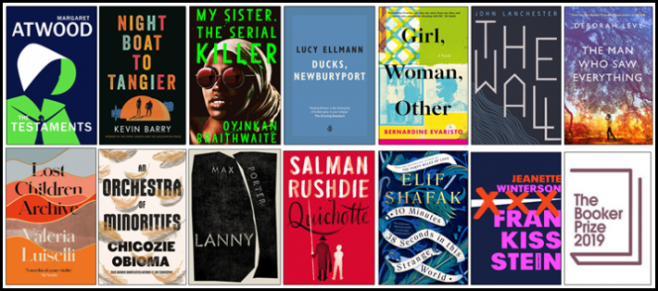
The list of 13 books was selected by a panel of five judges: founder and director of Hay Festival Peter Florence (Chair); former fiction publisher and editor Liz Calder; novelist, essayist and filmmaker Xiaolu Guo; writer, broadcaster and former barrister Afua Hirsch; and concert pianist, conductor and composer Joanna MacGregor.

“If you only read one book this year, make a leap. Read all 13 of these. There are Nobel candidates and debutants on this list. There are no favourites; they are all credible winners. They imagine our world, familiar from news cycle disaster and grievance, with wild humour, deep insight and a keen humanity. These writers offer joy and hope. They celebrate the rich complexity of English as a global language. They are exacting, enlightening and entertaining. Really – read all of them.” Peter Florence

Featuring 8 women and 5 men with authors from the UK, Canada, Ireland, Nigeria, the United States, Mexico, Italy, India,  South Africa and Turkey, the nominated titles are:

Margaret Atwood (Canada), The Testaments (Vintage, Chatto & Windus)

– the sequel to The Handmaid’s Tale, fifteen years later, as told by three female characters.

Kevin Barry (Ireland), Night Boat to Tangier (Canongate Books)

– sex, death, narcotics, sudden violence and old magic in a Spanish port town

Oyinkan Braithwaite (UK/Nigeria), My Sister, The Serial Killer (Atlantic Books)

– a blackly comic novel about how blood is thicker – and more difficult to get out of the carpet – than water.

Lucy Ellmann (USA/UK), Ducks, Newburyport (Galley Beggar Press)

– A scorching indictment of America’s barbarity, past and present, a lament for the way we are sleepwalking into environmental disaster.

Bernardine Evaristo (UK), Girl, Woman, Other (Hamish Hamilton)

– Generations of women, the people they have loved and unloved – the complexities of race, sex, gender, politics, friendship, love, fear and regret.

John Lanchester (UK), The Wall (Faber & Faber)

– a chilling fable, dystopian novel that blends the most compelling issues of our time—rising waters, rising fear, rising political division—into a suspenseful story of love, trust, and survival.

Deborah Levy (SouthAfrica/UK), The Man Who Saw Everything (Hamish Hamilton)

–  the difficulty of seeing ourselves and others clearly. Specters that come back to haunt old and new love, previous and current incarnations of Europe, conscious and unconscious transgressions, and real and imagined betrayals, while investigating the cyclic nature of history and its reinvention by people in power. And a man crossing Abbey Road.

Valeria Luiselli (Mexico/Italy), Lost Children Archive (4th Estate)

– inspired by the experiences of desperate children crossing the desert border between Mexico, New Mexico and Arizona, and the Apache warriors who made their last stand in the desert, told as a family sets off on a road trip.

Chigozie Obioma (Nigeria), An Orchestra of Minorities (Little Brown)

– contemporary twist on the Odyssey, narrated by the chi, or spirit of a young poultry farmer, a heart-wrenching epic about destiny and determination.

Max Porter (UK), Lanny (Faber & Faber)

– an experimental fantasy set in an English village where a child goes missing, highlighting societal issues, history and the environment.

Salman Rushdie (UK/India), Quichotte (Jonathan Cape)

– a tour-de-force that is both an homage to an immortal work of literature and a modern masterpiece about the quest for love and family, a dazzling Don Quixote for the modern age.

Elif Shafak (UK/Turkey), 10 Minutes 38 Seconds in This Strange World (Viking)

– After death, a woman’s brain remains active for 10 minutes 38 seconds, during which her memories recall significant moments of her life and stories of 5 close friends she met at key stages in her life.

Jeanette Winterson (UK), Frankissstein (Jonathan Cape)

– a young transgender doctor called Ry is falling in love – against their better judgement – with a celebrated professor leading the public debate around AI.  Alternating with chapters narrated by 19 year old Mary Shelley, who is writing a story about creating a non-biological life-form.

The list was chosen from 151 novels published in the UK or Ireland between 1 October 2018 and 30 September 2019. The shortlist will be announced Tuesday 3 September.

I like that it’s such an international list, with voices from a variety of different countries and cultures, bringing more depth and diversity to the prize.

I haven’t read any of these titles, but I’m interested in Chigozie Obioma’s An Orchestra of Minorities novel, Valeria Luiselli’s Lost Children Archive and Deborah Levy’s and Bernadine Evaristo’s novelsThat said, I’m only reading #WIT Women in Translation during August, so I’ll be watching and reading the reviews of these longlisted titles to see which really tempt me.

And you? Have you read any of these? Interested in any?

Further Reading

The Guardian article: Not Read Them Yet? A cheat’s guide

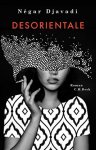
Disoriental by Négar Djavadi tr. Tina Kover #WITMonth


I could end my review right there, those were the words I tweeted not long after I finished Négar Djavadi’s Disoriental while I was still in the moment of coming to the end of an excellent story of an immersive experience I wasn’t ready to be done with. It was a five star read for me, but I’ll share a little more of the experience to help you decide if it’s for you or not.

The novel is a dual narrative, set in the present and the past, where the protagonist – who for some time is nameless, with little said to explain how she came to be here – is sitting in a fertility clinic, waiting for her appointment. This immediately creates questions in the reader’s mind, as it is made clear there is something unusual about the situation, that she is taking a risk to even be there. This contemporary narrative, slowly builds the picture of who she is and the  circumstance she is in.

This interminable waiting creates an opening for her to reflect and remember, thus interspersed between what takes place in the present, is the story of her family, a long line of Sadr’s, beginning with her parents Sara and Darius, forced to flee Iran, who came to France when she and her two sisters were of school age.

The narrating of family stories, taking us back as far as her great-grandfather Montazemolmolk with his harem of 52 wives, serves to provide context and an explanation for why certain family members might have behaved or lived in the way they did, helping us understand their motives and actions.

The daughter Nour, born with unusual piercing blue eyes, her mother dying in childbirth, the man obsessed with making her his wife, her reluctance to go out being the object of unwanted attention, her children who desire to be free of restriction, the reading of the coffee cups, predicting the sex of the child of a pregnant woman; Uncle Number Two and his secret.

Darius, the timid elder son, sent to Cairo to study law, abandons his studies and pursues a doctorate in Philosophy at the Sorbonne. Eventually he returns to the family, changed by his studies and experiences and though quiet in person, wields a mighty sword through his journalistic pen and letters to a political regime he detests and chooses not to ignore.

It is a story that spans a changing, turbulent time in Iranian history, one that travels through highs and lows, for while the passionate intellectual is free to express their opinion and brings no harm, they continue to live within their culture, family and be an active part of their community and society. But when freedom of expression becomes a danger to the individual, the sacrifices that are made stifle and silence them, but don’t always make them safe. Life in exile, without the connections to friends, family, neighbours, reduces these adults to shadows of their former beings, unable to truly be themselves in a foreign culture.

I highlighted so many great passages in reading, but I’ve already passed the book on to someone else to read, so can not share them here yet. It is a reminder of another era, of people who had rich, cultural and intellectual lives, of families who fled persecution, not because of war, but because of their intellectual and philosophical activism and of how much is lost, when a new generation grows up within a culture no longer connected to their past, to their heritage and worse, in a country that has been subject to the propaganda of the media, and perceptions of that culture are tainted by the agenda of politicians and parties, and what they wish their populations to believe about foreign cultures.

I absolutely loved it, I liked the slow drip revelation of what this young woman’s life had become, having been severed from her country and community of origin and the colourful, abundant richness of the family history and culture, which while separate from her life today, existed somewhere deep in her psyche, in her genes, and in those non-genetic aspects we inherit from previous generations even without knowledge of what has passed.

It is as if she had a crystal ball to look back through the years, through lives she hadn’t personally experienced and discovered events from the past that created an aspect of who she was and would in turn, be passed on and live deep within the yet unborn child she desires to conceive.

Highly Recommended.

Buy a Copy of DisOriental via Book Depository