Art in Nature, Tove Jansson #TOVE100

Coming out of any intense, dramatic period of living can make it hard to choose appropriate reading material.

Recently I found it difficult to sustain reading as it all seemed too far removed from life’s demands that I be very present and attentive to the needs of those around me.

It made me reflect on what and who can I read I turn to during these kinds of periods. Short stories and/or non-fiction. Tove Jansson and The Dalai Lama.

TOVE 100 © Moomin Characters™

TOVE 100
© Moomin Characters™

I chose Tove Jansson (translated by Thomas Teal), because even her stories feel like they haven’t strayed too far from the reality within which they were inspired. I find immeasurable comfort in reading the words of this talented artist, the short form allowing a brief respite without requiring an ongoing commitment of a novel, when concentration spans are short.

Art in NatureArt in Nature is an intriguing collection of character studies, characters who happen to be creative, eccentric, obsessive, all curiously flawed in some way and Tove Jansson observes them in a situation until the cracks appear. They are a slice of life short narrative and any one of them could easily have morphed into a longer story such as her novel The True Deceiver I recently reviewed here.

The first story Art in Nature is about a caretaker watching over an exhibition of work in open air.

“He slept in the sauna down below the great lawn where the sculptures were set out among the trees.”

The day has its rhythm and characteristics and the evenings belong to the caretaker, the quiet contemplative time when he is alone among the unmoving silent works, still, post creation. He observes everything, every inclination, every watcher, he categorizes them and becomes attached to how things are.

“Almost all the feet moved respectfully. If they were with a guide, they’d stand still for a while, all turned in the same direction, and then they’d change direction all at the same time to look at something else. The lonely feet were uncertain in the beginning, then they’d move slowly at an angle, stop, stand with legs crossed, turn around, and sometimes they’d lift one foot and scratch with it because there were lots of mosquitos.”

Until one evening when a couple overstays, middle-aged adults breaking the rules, having a domestic argument. He intervenes, listens to them argue, provokes them with his own thoughts on the mystery of what art is.

Tove Jansson's Atelier © Moomin Characters™

Tove Jansson’s Atelier
© Moomin Characters™

The Cartoonist is a mysterious, insightful look into the daily work of an illustrator, a job that Tove Jansson’s mother did and one she dabbled in herself, making me wonder how much of this was inspired by the environment and circumstance of her mother.

A famous newspaper cartoonist has quit suddenly after 10 years and a new artist is required to assume his role without a break in the cartoon strip, without his fans knowing. The new artist slips easily into the role but becomes plagued with needing to know why his predecessor quit.

The Doll’s House is brilliant and shocking and quite different from anything else of Jansson’s I have read. Like The True Deceiver, it shows her deftness at spotting signs and cracks in character that over time can grow from barely visible flaw into raging psychological dysfunction when neither checked or dissipated.

Two recently retired men who have lived together and shared the same respect for the beautiful objects that surround them, are adjusting to the new routine of no longer having demanding day jobs. Alexander is a craftsman and Eric a retired banker.

“Alexander was an upholsterer of the old school. He was exceptionally skilled, and he took a craftsman’s natural pride in his work. He discussed commissions only with those customers who had taste and a feel for the beauty of materials and workmanship. Not wishing to show his contempt, he referred all the others to his employees.”

In the beginning they have difficulty adjusting to this new way of life, discovering that in such close proximity their interests aren’t as fine-tuned or in harmony as they had appeared when their time was absorbed by outside demands. Eric begins to take on more of the domestic role and Alexander begins a project to build a miniature house. He seeks the help of an electrician called Boy, who becomes his trusted helper.

“Boy came back almost every evening. He often brought little table lamps, sconces, or a chandelier that he’d found in some hobby shop or toy store. He came straight from work in his jeans and trailed street dirt over the rugs, but Alexander didn’t seem to notice – he just admired what Boy had brought him and listened gravely to his suggestions about improvements to the house.”

Just rereading these two quotes, makes me realise what clever insights Tove Jansson’s places into the text, the clues into character are there from the beginning and the simple daily events that follow turn these insights into something raw and dangerous.

Another excellent collection of stories from the Finnish artist and writer who would have been 100 years old next month.

Absolutely gripping!

Check out her books and events at TOVE100.com

Tove Jansson with her brother Per Olov © Moomin Characters™
Tove Jansson with her brother Per Olov
© Moomin Characters™


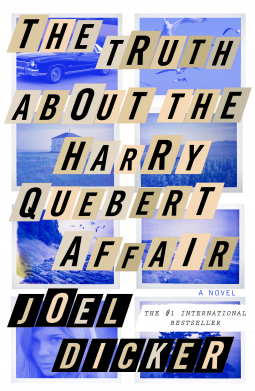
The Truth About the Harry Quebert Affair by Joël Dicker

Ok a few truths.

TruthAboutHarryThe Truth About the Harry Quebert Affair was originally written and published in French. The Swiss author, 28-year-old Joël Dicker’s first novel wasn’t a big hit, but he followed it up by writing this 600 page satire of  a young American man (his age) who writes one bestseller and then can’t write anything else.

His pushy agent and publisher threaten law suits and ruin unless he meets a deadline on his next big thing. Rather than write, he visits his ageing writing professor in New Hampshire, who was once a young man who wrote a bestseller and then didn’t write anything else. He gives him advice that prefaces many of the chapters:

“Books are interchangeable: People want a story that excites them, relaxes them, entertains them. And if you don’t give them that, someone else will – and you’ll be history.”

More truth.

Harry QuebertYesterday I was in the popular French bookstore FNAC (a kind of WH Smith equivalent) in Lyon and saw La Vérité sur l’Affaire Harry Quebert is still in the Number 1 slot. I saw it the day before in the giant supermarket Carrefour in the same position. It’s been a bestseller for over a year in France.

I do love watching a book become a runaway success and don’t always read them, but this is a book in translation, double victory –  the rights sold to 35 countries and translated into 37 languages and it won two prestigious French book awards.

The Harsh Truth.

However despite all the accolades, I have to be honest and say that I did not enjoy the read, it offered very little in terms of what I like to get from a book and worse, it annoyed me immensely in parts.

Maybe Not Your Truth Though.

But first the story, because it is a somewhat compelling read which many have and still may enjoy; full of twists and turns, a disappearance,a cold case reopened, concerning teenage girls, older men, appearances not what they seem, everyone with something to hide and more twists than an old-fashioned telephone cord. So many twists in fact, I can’t remember who did it. No, everyone did it, didn’t they? Well, Dicker certainly has a skill in making you think they’re all capable of murder.

So Marcus Goldman is living the life of a rich and famous writer in New York on the strength of a debut bestseller, when his writers block starts to have menacing consequences and he has to come up with a solution, quickly. He visits his old university professor Harry Quebert, whom he had kind of forgotten while he was busy being famous and pursued by actresses and other celebs. Not long after his visit, Harry is accused of the murder of Nola Kellergan (Nola, Lola, Lolita?), a 15-year-old girl who disappeared 30 years ago, whose remains are discovered, implicating Harry Quebert.

Marcus returns to Harry’s home when he is arrested and makes the investigation of his innocence his new purpose in life, he meddles in police affairs, interviews locals and even receives his own menacing threats penned by someone who wants him to leave town. The case might well provide him with the solution he requires, as his publisher asks him to write The Truth about what went on between Harry Quebert and Nola Kellergan.

Joel Dicker

Joël Dicker speaking in FNAC bookstore

A Consuming Truth

Viewing the wall of bestsellers is the first thing you see when you enter major supermarkets in France like Geant Casino and Carrefour; it says a lot about local culture that people are being enticed to grab a book at the very first moment they enter a supermarket! I don’t think I have seen that in any other country, I have listened to experts talk about enticing customers with fresh healthy fruit at the entrance, but not literature.

Too Many Additives

For me, although I get the requirement of a modern social satire to exaggerate, the Harry Quebert story carried too many characters that were inflated caricatures of American stereotypes, with insufficient humour to make it work. Trying to be a satire, a pastiche and a murder mystery with its innumerable twists made it for me, like a cocktail made by an unsupervised teenager  who, rather than combining two ingredients, like a mature pre-adult can’t resist adding a little of everything on offer until ultimately it becomes unpalatable.

I viewed it as an outsiders attempt at making a comment on modern American society, media, publishing, the sensationalism and obsession with broadcasting the trials of celebrities. That a 28-year-old writer could enter into a police murder investigation and  didn’t ring true enough for me to be able to read it without the constant presence of low-level annoyance at its flaws. Perhaps if I had saved it for a summer read when my expectations are lower, I may have enjoyed it more.

I do love that a French bestseller was picked up by international publishers and translated into English, the author interviewed in The Observer and elsewhere, but sadly, this award-winning novel wasn’t my cup of tea.

Great Gatsby2And in a twist of Great Gatsbyish irony, it seems that thousands of the English translation books are languishing in storage, waiting for a boom that has yet to arrive. Will it take a generation to be revered as an apt indictment of the times or will it languish in obscurity as a publishers costly mistake?

Further Reading:

The Observer Article – Joël Dicker: ‘I lost a bit of control of my life’

Note: This book was kindly sent to me by the publisher via NetGalley.

Literary Blog Hop Book #Giveaway

From today until Wednesday June 25th I am participating along with many other international bloggers in a Literary Blog Hop Giveaway hosted by Judith at Leeswamme’s Blog, an avid reader and reviewer from the Netherlands.

literarybloghop

Comment below to win the books I am offering and visit the other blogs to enter their offers.

I am offering two books, recent reads and not the usual thing you find in a bookshop. Both titles are literary gems, one an award-winning Norwegian translation, the other a riveting, thought-provoking glimpse into a cross cultural family that thanks to blogging and twitter connections I became aware of. They are fabulous reads, but do check out my reviews first to find out if they sound like something you might enjoy.

You can enter for one title only or for both, one comment puts you in the draw for both books, unless you tell me you are only interested in one of the titles. Ok, here they are:

COMMENT to WIN A COPY of

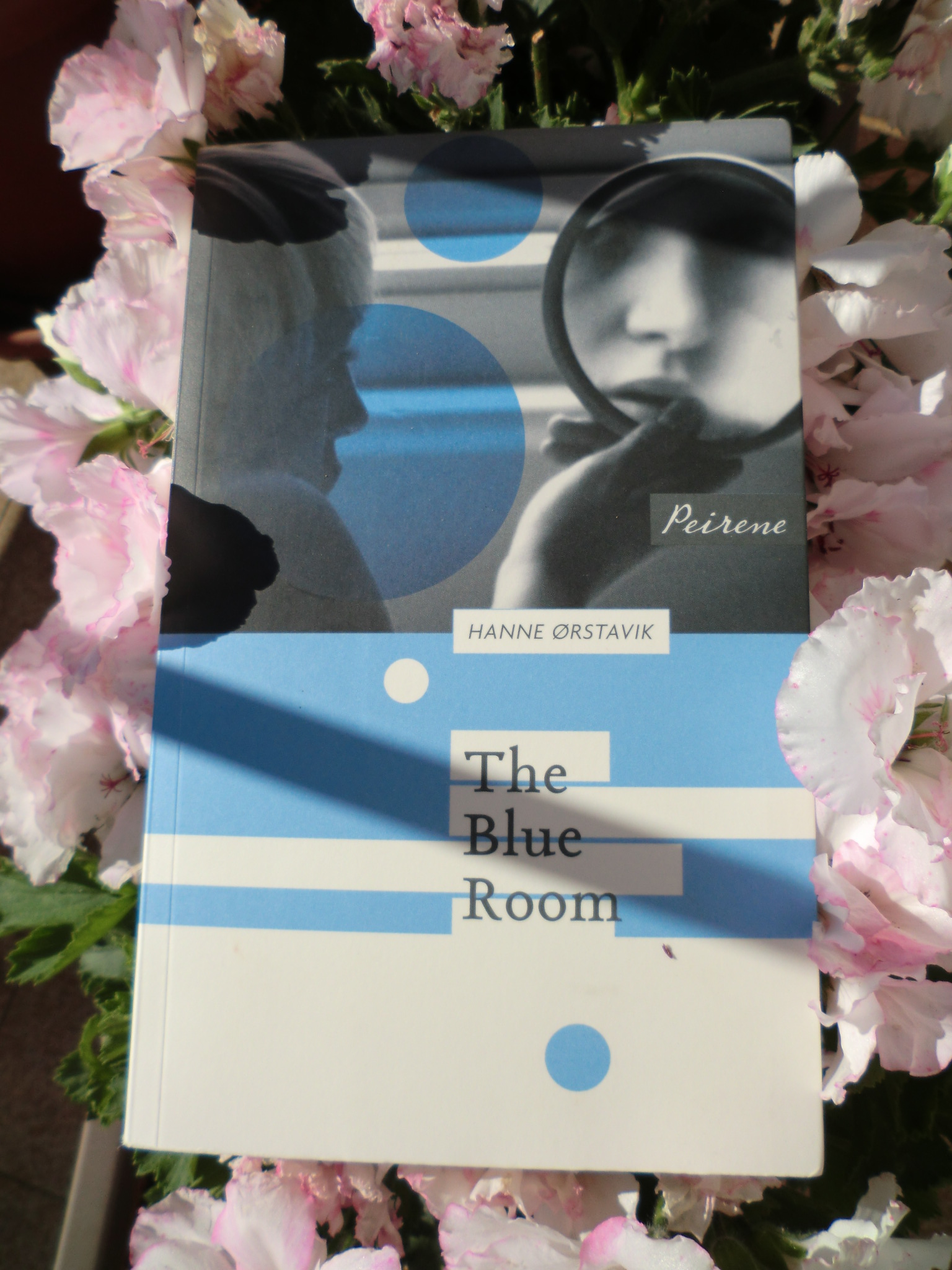
The Blue Room by Hanne Ørstavik translated by Deborah Dawkin – read my review here.

“a gripping portrayal of a mother-daughter relationship that will send a chill down your spine.”

OR

Carrots and Jaffas by Howard Goldenberg – read my review here.

 “a glimpse into the heart of an ancient land and a fractured family, through the story of a stolen child.”


BlogHop Button

To enter the giveaway, open worldwide to anyone whether you have a blog or not, just leave a comment below to be entered in the draw.

Follow my blog Word by Word to get two chances to win and mention it in your comment.

Follow the blog Word by Word and @clairewords on twitter to have three entries in the draw.

If you are already following, make sure to remind me in your comment.

Good Luck and enjoy visiting the other blogs listed here, just click to visit:

Linky List:

  1. Leeswammes
  2. The Misfortune of Knowing
  3. Bibliosue
  4. Too Fond
  5. Under a Gray Sky
  6. Read Her Like an Open Book (US)
  7. My Devotional Thoughts
  8. WildmooBooks
  9. Guiltless Reading
  10. Fourth Street Review
  11. Nishita’s Rants and Raves
  12. Word by Word
  13. Words And Peace (US)
  14. Ciska’s Book Chest
  15. Falling Letters
  16. Roof Beam Reader
  17. Readerbuzz
  18. The Relentless Reader (US)
  19. Mom’s Small Victories (US)
  20. Daily Mayo (US)
  1. The Emerald City Book Review (US)
  2. A Lovely Bookshelf on the Wall
  3. Lost Generation Reader
  4. Booklover Book Reviews
  5. Bay State Reader’s Advisory
  6. River City Reading (US)
  7. Books Speak Volumes
  8. Words for Worms
  9. Wensend
  10. Bibliophile’s Retreat
  11. Readers’ Oasis
  12. The Book Musings
  13. My Book Retreat (N. Am.)
  14. Books on the Table (US)

Carrots and Jaffas by Howard Goldenberg

Allia NurseAll quiet on the blogging and reading front recently as life’s dramas intervened and demanded my full attention. Our daughter had a diabetic crisis 2 weeks ago and has been in hospital, she is stable now and happy to be home and said I can use this new picture she created for her Facebook page.

Consequently I have been carrying Carrots and Jaffas around with me and rereading passages, though I finished it more than 2 weeks ago and finally today had time while our son was at hip hop to move my scribbles here. Apologies Howard for taking so long to share your wonderful book.

Carrots and Jaffas is a wonderful example of how the virtual world allows us to come across writing voices that we don’t always find in bookshops or through mainstream publishers, that don’t require one to have publishing connections or be in the know. Just to be open to the random, serendipitous crossing of paths.

We find them when we are curious, someone may write 140 characters on twitter that prompt us to follow them, read their blog, consider their book and Voila, an instinct results in the arrival of a unique and intriguing book and an unforgettable reading experience.

Howard Goldenberg followed me on twitter, and this is what I saw when I considered whether to follow back.

Howard Tweets


Intrigued, I clicked on his blog link and perhaps uncharacteristically, as his posts are quite varied, the first thing I read was a book review for a book called Joyful by Robert Hillman. The author name seemed familiar, so I read on and was captivated by the review, not just Howard’s account of the story, but the homage to the book and its author his review paid. I thought not only does this sound like a wonderful book, but I want to read more of Howard Goldenberg’s writing and continued to read post after enthralling post.

When his novel Carrots and Jaffas arrived I opened the first page and read praise of the book by the author I mention above, Robert Hillman and a few pages further on, I realised why the name had sounded familiar. There on a page of epigrams preceding the first chapter I read the following quote from one of my Top Reads of 2013 The Honey Thief I reviewed here:

“My heart and my mind, my bones and my flesh and all the organs of my body are bound together with the cords of the stories I was told.” From The Honey Thief by Najaf Mazari and Robert Hillman

CarrotsCarrots and Jaffas is a story of twin boys, one of whom will be stolen, the people who surround them and whom they encounter, and how the events that occur change their lives and character.

The boys are the identical sons of Luisa and Bernard, a couple who worked and met in the same hotel. We are witness to their initial encounters and courtship in the opening chapters of the book, Luisa with her unique use of the English language, peppered with old-fashioned biblical words and quotes, charming in her deliverance. Bernard is enraptured by this exotic woman who interprets his comments in ways he could not have imagined, and is curious to understand more.

A month or so into these pleasant outings, an envelope appears on Bernard’s desk. Square in shape, lilac in colour, unbusinesslike, it sits on his keyboard like a question mark. Curious, he picks it up. A hint of gardenia in his nostrils. Bernard, more than curious, hefts the envelope, feels its substance. Fast fingers break the seal and Bernard reads:

La Señorita Luisa Morales

Has pleasure in inviting

El Señor Bernard Wanklyn

To Mate.

The delight and humour encountered in their courtship sits in stark contrast to the first pages in which we are witness to a kidnapping and the deranged thinking of the captor as we understand he justifies his act with thoughts of retribution for an elderly Aborigine lady Greta, who had two sons stolen from her by the authorities many years before, something that pains her still today.

Louisa and Bernard’s family unit is a metaphor for lives changed by tragic disappearance, the intersection of mixed cultures, social classes, politics and dysfunctional families. Luisa is an Argentinian immigrant whose parents were part of the “disappeared” during the time of the generals. After her grandmother took her to the park one day when she was three years, ago, they returned to discover both her parents gone, disappeared. Her grandmother continues to sit with Las Madres of the disappeared, mothers waiting, never giving up hope that their sons and daughters might return.

Separation changes relationship dynamics and Goldenberg deftly handles the effect of passive versus active separation on the identical twins with surprising, thought-provoking results. The experience is unusual and exposes the reader to the positive growth of someone in an otherwise traumatic situation. Observing the separate experiences of the twins exposes the suffering of those left behind, helpless in their efforts to find their son, the brother and yet when we are with Jaffas we are not afraid for him.

Image from the film Rabbit Proof Fence based on book by Doris Pilkington

Image from the film Rabbit Proof Fence based on book by Doris Pilkington

There are so many layers and learnings, such acute observations and joy in language and celebration of storytelling in this novel, it is difficult to describe without spoiling the experience for the reader, the spontaneous humour, the obvious cultural aspects, all round it was a pleasure to read and engaging all the way through. There were perhaps a few too many coincidences that made me pause for consideration, but then we know stranger things happen in real life and certain experiences can tend to gravitate towards people, repeating in history, so I let it pass.

Thoroughly recommend seeking this out and checking out Howard’s blog here. He writes fun poetry too.

Thank you @HelenHelenback for sending me a copy of the book.

The Blue Room by Hanne Ørstavik

Blue Room2The Blue Room is the latest novella from Peirene Press, a publishing concept I wrote about here.

Peirene’s novellas always promise something a little different, a mix of women and men authors, all of them originating in a language other than English and sometimes writers whose work is being translated into English for the first time.

Perhaps the only positive aspect of there being so little fiction of foreign origin translated into English (4-5%), is the grand opportunity that awaits publisher’s like Peirene Press and Gallic Books to discover true gems of literature to share with the English reading world.

Story telling is universal and equally engaging no matter where it comes from. Just like travel, literature in translation can offer insights into another culture and perspective.

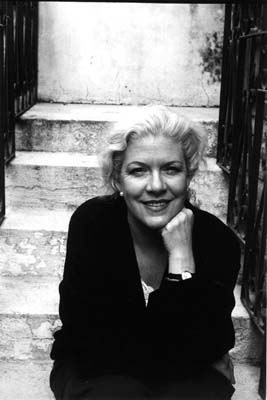
June’s coming-of-age novella, The Blue Room by Hanne Ørstavik translated by Deborah Dawkin, is already well-known in Norway and internationally; she has written numerous books which have been translated into 18 languages, though not until now, into English. The recipient of literary awards in Norway including the Doblou Prize for her entire literary output, she is one of the most admired  authors in contemporary Norwegian literature.

Provoking readers with her large, bold font message on the opening page, Meike Zeirvogel says of The Blue Room:

“Everyone who has read Fifty Shades of Grey should read this book. Why?

The Blue Room holds up a mirror to a part of the female psyche that yearns for submission. The story shows how erotic fantasies are formed by the relationship with our parents. It then delves further to analyse the struggle of women to separate from their mothers – a struggle that is rarely addressed in either literature or society.”

Making us wonder what revelations might unfold.

Johanne lives with her mother in a small apartment, she occupies the only bedroom, her mother hangs a curtain in the living room and sleeps there. The story starts on the day Johanne is due to leave for America with her boyfriend Ivar. She wakes to find the door to her bedroom locked and no response from the other side.

As she spends the day in her room, musing on the likely action and varying theoretical states of mind of Ivar, who would have waited for her and come to his own conclusions concerning her absence, she also thinks back over the past two weeks since she first met him at the university canteen, in between her lectures on psychology, some of which she shares with us, creating a bland kind of irony; the reader can’t help but read significance into the lessons she is learning in class as events play out in her life, where she discovers the essence of her slumbering sexuality, awakened in the shadow of her mother’s history, coming to us in flashes.

BlueFrom the first pages, I recognise it as a slow read, sentences that beg to be read twice, thoughts expressed that benefit from quiet reflection and words that hum from the page in clandestine harmony.

“Suddenly it came over me again and I started to cry. No sobbing, just tears. Water, I thought, nothing but salt water, dropping onto the paper, making minuscule white suns. Clearly the slat had an effect on the colours, erasing them. I didn’t understand what was happening inside me. Then it passed, like a rain cloud, drifting away.”

Although it wouldn’t be called a mystery or suspense novel, there exists all through the pages a sense of foreboding and it was almost with relief that I turned the last pages, half expecting something more sinister to await me or perhaps that was the latent effect of the suspense novel that I did read before embarking on this.

It captures the natural evolution of innocence and like the allure of watching two colours mix on a canvas to see what shade it will yield, first it is necessary to know one’s own true colour before we can observe or understand the effect when it combines with another.

An alluring read, that captivates as it reveals.

Looking forward to the next in the series!


Before I Go to Sleep by S J Watson

SleepChristine wakes up in the morning and doesn’t recognise the man sleeping in the bed next to her. Nor do the photos posted in the bathroom assist her, they refuse to evoke any memories. Every day she wakes with the same feeling, she remembers nothing of the past 20 years and is surprised to find herself middle-aged and wonders who is in the bed beside her.

Her doctor suggests she begins to write things into a journal that she can read each morning, promising to call her in the morning to tell her where the journal is, so she can quickly bring herself up to date with what she has leaned the previous day.

He also suggests she keeps it to herself, that she not share it with her husband. Can she trust her doctor, can she trust her husband? The journal both helps and confuses her, until ultimately it reveals what she needs to know and the incredible facts that have been kept from her.

Before I Go To Sleep by S.J.Watson is an award-winning crime/thriller novel, a best seller when it came out – however it is not the kind of book I would usually choose to read, which probably best explains why it was an okay read for me and not one that I can say too much about.

It’s a suspense novel, however because a large portion of the novel is taken up with reading Christine’s journal, (about two-thirds of the novel) the suspense is delayed (in my opinion) until the last 50 pages and that middle section is more one of mild intrigue. It can get a little repetitive as each day she must go through the same thing, slowly learning more about what happened to her to cause her amnesia and what has happened in the last twenty years. A very long time.

The reader becomes increasingly suspicious despite Christine’s best intentions to convince us that everything is okay. S.J.Watson is good at withholding any clue to what will eventually be revealed, however some of these absences felt inauthentic, as if Christine wasn’t really interested in finding out more about the people around her and why there only appear to be two people in her life, her husband and her doctor. It might have been more intense if she’d been more curious and insistent to know the truth and challenged those she is in contact with about the inconsistencies.

One of the measures of a great book for me is to highlight passages throughout a book, sentences and paragraphs that make me want to reread, that create an image, that evoke something, they are the literary gems. This is not that kind of book, but I am happy that it was suggested by the book club, we had a very interesting discussion about it and the idea of losing one’s memory or another sense.

And for fans of the book, it looks like there is a film in the making, with Nicole Kidman as Christine:

Sleep Tweet

And in another thread on twitter S.J.Watson admits that he has finished his long-awaited, next book.

TruthAboutHarryAnd even though I say it’s not my genre, I am about to read another, knowing that it too probably won’t offer much in terms of literary highlights, but this thriller is a French translation that is taking the world by storm.

It has already become a bestseller in France with over 2 million copies sold in Europe and was part of a heated auction for the English publication rights. It has to be read if one wants to contribute to the conversation after all.

So watch out for The Truth about the Harry Quebert Affair, the debut novel by 28-year-old Swiss author Joël Dicker, likely to be a popular read this summer.

Interview in The Observer Joël Dicker: ‘I lost a bit of control of my life’

Prayers for the Stolen by Jennifer Clement

bringbackourgirlsStolen women. It sounds like an oxymoron, as if those two words cancel each other out, they should not go together, it should not exist.

In the last month the #BringBackOurGirls campaign has raised awareness of the plight of stolen girls and women, the kidnapping of 200 high school girls from a boarding school in Nigeria bringing our attention to the proliferation of crimes that exist concerning the stealing or kidnapping of women. Modern day slavery. That it took so long for the story to come to the attention of the media and politicians disgusted many, making women feel like many third world countries feel – unimportant, insignificant, forgotten.

prayers for the stolenPrayers for the Stolen is the story of a girl named Ladydi, born in the mountain village of Guerrero in Mexico, what was once a real community, until it was ruined by the toxic effect of drug traffickers and immigration to the United States.

“Our angry piece of land was a broken constellation and each little home was ash.”

In this community families pray to give birth to sons, for daughters are cursed with everything that will mark them with the potential to become stolen. From a young age they blacken their faces and teeth, cut their hair short and their mothers clothe them as and tell people they are boys. They dig holes in the ground outside where they live and tell the girls to run and hide when they hear the big SUV’s with blackened windows approaching.

And when they hear the army helicopter, they run even faster, for it contains an even more deadly menace.

Ladydi lives alone with her mother, her father is working in the US. In the beginning he sent money but not now, some even say he has another family. Her mother plots her revenge against him daily, she has been doing so for a long time, before he even left she was consumed with vengeance, the naming of her daughter was one of her first acts of revenge.

Ladydi is friends with Maria, saved by a birth defect and Paula cursed by being born not just a girl, but a too beautiful one.

After eight years of waiting, doctors come to operate for free on children with deformities. Maria’s mother is reluctant to transform her daughter.

“Three army trucks were parked outside the clinic and twelve soldiers stood watch…

On one of the trucks someone had tacked a sign that said: Here doctors are operating on children.

These measures were taken so that the drug traffickers wouldn’t sweep down and kidnap the doctors and take them off.”

Maria’s brother Mike was the only boy on the mountain and as such indulged and spoiled, though now he is not often around, too busy, he turns up occasionally and his appearance changes noticeably over time. He has contacts and may be able to find Ladydi a job looking after the children of a well off family. Are her fortunes about to change?

I found this book a riveting read right from the first pages. It seems like an incredible story and yet it is clear that there are threads of truth running through the narrative, a terrible insight into the human trafficking trade. And despite the seriousness and tragic nature of the issues it deals with, it is not without humour and you can’t help but empathise with each of the female characters she so skilfully weaves together. We sense that their time together is limited but there are numerous memorable incidents that stay with the reader and endear us to this unique community of lost souls.

“A human being you can sell many, many times, whereas a bag of drugs you can sell once,” Clement, who has lived in Mexico since she was a year old, explains. “The trafficking of women is so horrific. You’d think that in this day and age there would be more equality and more fairness, and from what you see, it’s just not true.”

– Extract from interview by Stacey Bartlett

Jennifer Clement

Jennifer Clement

Jennifer Clement, in addition to writing four books of poetry, two novels and a work of non-fiction, was President of PEN Mexico for three years, where she investigated the killing of journalists (a crime no one has ever gone to prison for despite 75 being killed in the last decade). Her book is yet another way to raise awareness of the plight of women who are unable to speak out for themselves and she is a believer that literature can indeed change the world.

The book was inspired by the real village of Guerrero where poppy fields and heroin labs are hidden from view and Clement spent ten years researching the impact of drug and human trafficking on Mexican women. It is estimated that between 600,000 and 800,000 people are trafficked across international borders every year and that doesn’t include what goes on within national borders.

Prayers for the Stolen was a 5 star read for me, highly recommended.

Further Reading:

Interview – Stacey Bartlett’s excellent interview with Jennifer Clement

Review – New York Times book review by Gaby Wood

Note: This book was an Advance Reader Copy (ARC) kindly provided by the publisher via Netgalley.


Signed, Sealed, Delivered – Celebrating the Joys of Letter Writing by Nina Sankovitch

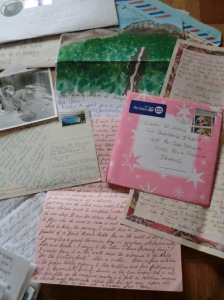
Signed SealedHow could I not pick this book up, a non-fiction tribute to the dying art of letter writing. A pastime that makes the young at heart feel like they have entered old age, because so few people do it any more, it has become old-fashioned!

I am a letter writer from so far back that I didn’t realise how early it began until reacquainting with people from the past via Facebook resulted in some reminding me of letters I had written when I was younger than 10-years-old.

I know I wrote letters when I was at boarding school (from 13), we all did, it was a matter of survival and a tactic to avoid that dreadful feeling at midday as we lined up the staircase waiting to retrieve our lunch to take outdoors, listening to the boarding school mistress read aloud the names of those who had received a letter today, and when your name wasn’t read out – inevitable really – it invoked a sense of disconnect, reminding you that you didn’t live at home, that you couldn’t just visit a friend, a neighbour, your family whenever you wanted, you had to wait for them to write a letter to be in contact.  Four years of listening to names being read out is enough of a sentence to instill a habit of letter writing into anyone surely.

LettersNina Sankovitch has a more romantic view of letters and letter writing and the word joy in the title is a clue. She doesn’t speak of the suffering of not receiving letters, she speaks of the joys of connection.

She gives her son a table and pen and he pens his first postcard letter at thirteen months old, fast forward to the present when he is eighteen and off to Harvard, now she is hankering for more than the brief text messages, tweets and occasional telephone calls, this more disposable form of communication that dominate life today but do not endure. She wants a letter and that desire makes her wonder what it is about a letter that means so much.

Will she convince her son to write to her, the kind of letters she has appreciated herself? Whether she does or not, that desire and the discovery of an old trunk containing letters dating back to the 1800’s that she inherits when she and her husband buy a new house, the seller wanting nothing to do with an old rotting trunk or its contents, send her on a quest of her own through the history of letters and her own personal correspondence, to discover and celebrate what is special about the handwritten letter.

“There have been times when I have needed the reassurance that I am not floating out there alone in the universe, that I am tethered to people who will keep me secure. The letters offer that reassurance. Even if those people are gone, the bond endures through the tokens of connection we passed back and forth, the written manifestation of our relationship.”

The author lost her oldest sister to a fast and brutal bile duct cancer, she has photos and memories of the times they shared, but it is the letters, postcards and birthday cards that keep her most alive within, just as the hundreds of letters written by James Bernheimer Seligman that she inherited in that trunk, a young man she never knew, but came to know through his correspondence created in her imagination, a vision of a person that almost seemed real.

From the ancient Egyptians to the medieval lovers Abelard and Heloise, from the letters received by President Lincoln after his son’s death to the correspondence of Edith Wharton and Henry James, Nina Sankovitch attempts to divine the allure of the letter. She takes us on journey through a stack of published letters that have been preserved and published, introducing those interested in letters and the epistolary form, to a long list of references that speak of great love, erotic fantasy, a mother’s love, a son’s last words from the front and much more.

I enjoyed the book and its introduction to some of the great literary correspondences, including the one found in her own backyard. I did find it overly sentimental in parts and despite the great introduction to those letter writers in history, there were too many examples of short encounters with little depth that had the effect of being easily forgotten.

It may have been better to highlight fewer, more memorable examples than some of the less engaging examples that pad out the book. On the other hand, readers have varied interests. I know I could easily have been swept away by a more in-depth discovery of fewer pairs of letter writers.

Samuel Steward 1957 Source: Wikipedia

Samuel Steward 1957
Source: Wikipedia

The relationship between Gertrude Stein, Alice B.Toklas and Samuel Steward (a poet and novelist I had never heard of) was one of the sets of correspondence that stood out for me. Steward wrote a letter to Gertrude Stein that was to become the beginning of a lifelong friendship, (interspersed with trips to Paris to see the two women), much of it conducted through letters and when Gertrude died he and Alice continued to write for another 20 years until her death.

Steward also wrote a journal, religiously writing notes every evening of all that had happened during the day, from which he penned his memoir Dear Sammy. A character in his own right, Steward left the world of academia to become a tattooist and pornographer remaining committed to the lifelong friendship he developed with Gertrude and Alice.

Ultimately, by referring to so many pairs of correspondence, we find something here for everyone, whether it hails from the present, our more recent history, or medieval characters like Heloise, the cloistered nun writing to her lover Abelard in the early 1100’s.

Madame Sévigné3I have moved Madame De Sévigné’s Selected Letters to within reach and feel inspired to become acquainted with one of the world’s greatest correspondents, a prominent figure in French society and literary circles in the 17th century, her letters continuing to enchant readers 300 years after they were written.

And do I still write letters? Absolutely, I just wrote one last week to an Irish poet!

So when did you last write a letter?

A timely and nostalgic reference to a dying form of communication and literary art form.

*

Note: This book was an Advance Reader Copy (ARC) kindly provided by the publisher via NetGalley.

The Rooms Are Filled by Jessica Vealitzek

Jessica  Vealitzek  Photo By Shannon Brandau

Jessica Vealitzek
Photo By Shannon Brandau

I have been following Jessica’s blog True Stories for some time and knew she had written a book, one that intrigued me before I even knew what it was about, because I was already familiar with the voice and thoughts of its author and knew it would be a powerful story told with a quiet voice.

She had some very interesting and thought-provoking things to say about Quiet Literature after a comment made by an agent at a writer’s conference. The agent after reading two pages of her manuscript said: “This has the risk of being too quiet. You don’t want to be too quiet.” In the weeks that followed that interaction, Jessica came to realise that quiet could well be an apt description and that quiet was exactly how she wanted her story and writing to be.

“But I am in love with quiet. Quiet literature assumes the reader is intelligent and thoughtful, able to read between the lines, between the gestures, and peek into the spaces between the words—to understand the words that aren’t there, and why. The quiet reader doesn’t need to be told everything.” Jessica Null Vealitzek

Rooms FilledNow published by SheWrites Press, The Rooms Are Filled, is a coming-of-age story of two outsiders brought together by a recent change in their lives: a Minnesota farm boy moves to suburban Chicago after his father dies, and his teacher, a closeted young woman attempts to start over after failing to live openly. As these two characters navigate new unfamiliar lives, they will make changes and adapt as they reveal who they really are.

Michael is nine years old as he stands and watches paramedics try to bring his father back to life after he collapses while fixing a rotting fence post outside the barn door. It was the day after his father had finally taken him out on one of his excursions into the snow-clad woods, scouring the landscape for traps that farmers had set to stop wolves menacing their flocks, introducing him to members of the pack, like family he would glimpse but never know .

For a time the days pass as they have done, however his father’s sudden death means all that he has known must change. He and his mother will leave the farm, the wilderness and its wolves that had been such a large part of his father’s life and move to the town where his Uncle lives, where his mother can find a job, and start again.

Both will face challenges as will another new arrival, Julia Parnell, Michael’s new school teacher, who has run from facing up to her own reality, taking refuge in this town, only to discover there is nowhere to hide from one’s true self.

The story quietly takes on issues common in our societies today and makes the reader feel what it is to be an outsider, to live outside a small town’s expectations.

Despite the sad beginning, the story unfolds with a grounded reality, life in the countryside, its rituals and chores evoke a feeling like driving along a familiar country road watching the landscape pass by, until we make a sudden turn into new territory and encounter a different kind of settlement where life is no longer as we knew it and one has to develop a whole new aspect to one’s character to survive an unknown urban species.

It is a gripping read, after a slow beginning getting to know these two characters and it’s a book that and once started I couldn’t put down.

The ending was a little mysterious and uncertain, I’m still thinking about that and no doubt it will provoke as much discussion as the story itself.

Further Reading

A Story of Survival – Jessica’s post on her passion for wolves

Quiet Literature – Jessica’s post on why Quiet is ok and for her, essential

Note: This book was an ARC (Advance Reader Copy) kindly provided by the publisher via NetGalley.

The Expedition to the Baobab Tree by Wilma Stockenström

Baobab Tree CoverI came across this book by chance, first published as Die kremetartekspedisie in its original Afrikaans in 1981, it was translated into English by Nobel Prize winner J.M. Coetzee, initially in 1983 and again in 2014.

I had never heard of Wilma Stockenström, but after a little digging, I find:

“For the past four decades Wilma Johanna Stockenström has been enriching Afrikaans literature with her satirical, obstinate and compassionate voice. Along with Elisabeth Eybers, Sheila Cussons, Ina Rousseau and Antjie Krog, she remains one of the most important women writers in Afrikaans.” © Johann de Lange

After recently reading Sue Monk Kidd’s The Invention of Wings, a story narrated by a female slave, I was interested to read this more literary novel, set in the harsh interior of South Africa.

It is a quiet, compelling, stream of consciousness narrative of a slave woman who finds refuge in the hollow of a baobab tree, attempting to survive following the death of her third master, finding herself abandoned in an often hostile wilderness.

“I was sold off a second time on the square near the sea where even then the raggedy castor-oil trees were standing. Was sold secondhand. I was a damaged plaything, my bundle of baby and myself bid for separately and disposed of separately. Simply playthings. Useful, certainly. My owner thought he had wasted his money.”

The Baobab Tree

The Baobab Tree

Embracing this newfound freedom of her body, mind and time, she thinks back over the years, reflecting on what her existence thus far has meant, the role of her three masters, moments shared with a friend, the loss of her children and the inclinations of man, something she has witnessed both in captivity and in this solitary freedom, where she finds a kind of disturbed though preferable peace.

“I know the interior of my tree as a blind man knows his home, I know its flat surfaces and grooves and swellings and edges, its smell, its darknesses, its great crack of light as I never knew the huts and rooms where I was ordered to sleep, as I can only know something that is mine and mine only, my dwelling place into which no one ever penetrates. I can say: this is mine. I can say: this is I. These are my footprints. These are the ashes of my fireplace. These are my grinding stones. These are my beads. My sherds.”

She is viewed by a tribe of small people who make a pilgrimage to the tree and recognise her as some kind of deity. It is their generosity and ritual of giving alms that aids her survival.

She notices everything, she appreciates her surroundings and tunes into small changes and disturbances in it. She becomes it.

Haunting, lyrical, this work is unlike any other narrative of the life of a slave woman I have ever encountered.


Note: This book was an Advance Reader Copy (ARC) kindly provided by the publisher via NetGalley.