The Rooms Are Filled by Jessica Vealitzek

Jessica  Vealitzek  Photo By Shannon Brandau

Jessica Vealitzek
Photo By Shannon Brandau

I have been following Jessica’s blog True Stories for some time and knew she had written a book, one that intrigued me before I even knew what it was about, because I was already familiar with the voice and thoughts of its author and knew it would be a powerful story told with a quiet voice.

She had some very interesting and thought-provoking things to say about Quiet Literature after a comment made by an agent at a writer’s conference. The agent after reading two pages of her manuscript said: “This has the risk of being too quiet. You don’t want to be too quiet.” In the weeks that followed that interaction, Jessica came to realise that quiet could well be an apt description and that quiet was exactly how she wanted her story and writing to be.

“But I am in love with quiet. Quiet literature assumes the reader is intelligent and thoughtful, able to read between the lines, between the gestures, and peek into the spaces between the words—to understand the words that aren’t there, and why. The quiet reader doesn’t need to be told everything.” Jessica Null Vealitzek

Rooms FilledNow published by SheWrites Press, The Rooms Are Filled, is a coming-of-age story of two outsiders brought together by a recent change in their lives: a Minnesota farm boy moves to suburban Chicago after his father dies, and his teacher, a closeted young woman attempts to start over after failing to live openly. As these two characters navigate new unfamiliar lives, they will make changes and adapt as they reveal who they really are.

Michael is nine years old as he stands and watches paramedics try to bring his father back to life after he collapses while fixing a rotting fence post outside the barn door. It was the day after his father had finally taken him out on one of his excursions into the snow-clad woods, scouring the landscape for traps that farmers had set to stop wolves menacing their flocks, introducing him to members of the pack, like family he would glimpse but never know .

For a time the days pass as they have done, however his father’s sudden death means all that he has known must change. He and his mother will leave the farm, the wilderness and its wolves that had been such a large part of his father’s life and move to the town where his Uncle lives, where his mother can find a job, and start again.

Both will face challenges as will another new arrival, Julia Parnell, Michael’s new school teacher, who has run from facing up to her own reality, taking refuge in this town, only to discover there is nowhere to hide from one’s true self.

The story quietly takes on issues common in our societies today and makes the reader feel what it is to be an outsider, to live outside a small town’s expectations.

Despite the sad beginning, the story unfolds with a grounded reality, life in the countryside, its rituals and chores evoke a feeling like driving along a familiar country road watching the landscape pass by, until we make a sudden turn into new territory and encounter a different kind of settlement where life is no longer as we knew it and one has to develop a whole new aspect to one’s character to survive an unknown urban species.

It is a gripping read, after a slow beginning getting to know these two characters and it’s a book that and once started I couldn’t put down.

The ending was a little mysterious and uncertain, I’m still thinking about that and no doubt it will provoke as much discussion as the story itself.

Further Reading

A Story of Survival – Jessica’s post on her passion for wolves

Quiet Literature – Jessica’s post on why Quiet is ok and for her, essential

Note: This book was an ARC (Advance Reader Copy) kindly provided by the publisher via NetGalley.

The Expedition to the Baobab Tree by Wilma Stockenström

Baobab Tree CoverI came across this book by chance, first published as Die kremetartekspedisie in its original Afrikaans in 1981, it was translated into English by Nobel Prize winner J.M. Coetzee, initially in 1983 and again in 2014.

I had never heard of Wilma Stockenström, but after a little digging, I find:

“For the past four decades Wilma Johanna Stockenström has been enriching Afrikaans literature with her satirical, obstinate and compassionate voice. Along with Elisabeth Eybers, Sheila Cussons, Ina Rousseau and Antjie Krog, she remains one of the most important women writers in Afrikaans.” © Johann de Lange

After recently reading Sue Monk Kidd’s The Invention of Wings, a story narrated by a female slave, I was interested to read this more literary novel, set in the harsh interior of South Africa.

It is a quiet, compelling, stream of consciousness narrative of a slave woman who finds refuge in the hollow of a baobab tree, attempting to survive following the death of her third master, finding herself abandoned in an often hostile wilderness.

“I was sold off a second time on the square near the sea where even then the raggedy castor-oil trees were standing. Was sold secondhand. I was a damaged plaything, my bundle of baby and myself bid for separately and disposed of separately. Simply playthings. Useful, certainly. My owner thought he had wasted his money.”

The Baobab Tree

The Baobab Tree

Embracing this newfound freedom of her body, mind and time, she thinks back over the years, reflecting on what her existence thus far has meant, the role of her three masters, moments shared with a friend, the loss of her children and the inclinations of man, something she has witnessed both in captivity and in this solitary freedom, where she finds a kind of disturbed though preferable peace.

“I know the interior of my tree as a blind man knows his home, I know its flat surfaces and grooves and swellings and edges, its smell, its darknesses, its great crack of light as I never knew the huts and rooms where I was ordered to sleep, as I can only know something that is mine and mine only, my dwelling place into which no one ever penetrates. I can say: this is mine. I can say: this is I. These are my footprints. These are the ashes of my fireplace. These are my grinding stones. These are my beads. My sherds.”

She is viewed by a tribe of small people who make a pilgrimage to the tree and recognise her as some kind of deity. It is their generosity and ritual of giving alms that aids her survival.

She notices everything, she appreciates her surroundings and tunes into small changes and disturbances in it. She becomes it.

Haunting, lyrical, this work is unlike any other narrative of the life of a slave woman I have ever encountered.


Note: This book was an Advance Reader Copy (ARC) kindly provided by the publisher via NetGalley.

The True Deceiver by Tove Jansson – #TOVE100

True Deceiver

I am reading The True Deceiver as part of my #TOVE100 Reading Challenge.

This is the first of Tove Jansson’s novels I have read that flows like a single story, her A Winter Book and The Summer Book read like vignettes, not driven so much by plot, more focused on the characters that inhabited their pages, their environment and various encounters that carried them through the season.

The seasons are ever present in all her work and in The True Deceiver, we meet the characters snow-bound in winter, waiting for the thaw of spring. This passage of time will thaw the surroundings and to a certain degree the characters as they undergo a transformation due to the events that follow.

“It was an ordinary dark winter morning, and snow was still falling. No window in the village showed a light.”

The True Deceiver is the story of an aging woman artist Anna Aemelin who lives alone on the outskirts of small village, snow bound as the opening pages reveal its stillness and propensity for chatter within. Anna keeps to herself and is content that way, her post and necessary supplies are delivered, there is minimal disruption to her way of life and the inspiration that feeds her artistic leanings, which awaken with the Spring and her venturing into the woodland beyond her home.

She often receives correspondence from fans, her art depicts realistic portrayals of the forest floor, disturbed only by the presence of her not so life-like animated rabbits, for which she is world-renowned, especially among the younger generation.

Tove Jansson © Moomin Characters™

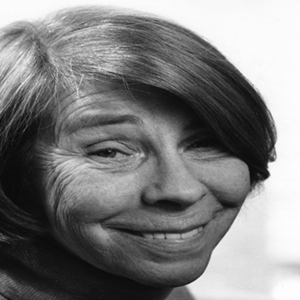
Tove Jansson
© Moomin Characters™

As Boel Westin notes in Tove Jansson Life, Art, Words: The Authorised Biography, Jansson often writes herself into her fiction:

“Sometimes unconcealed, freely, openly, sometimes hidden behind various names and disguises…traces of Tove Jansson run hither and thither in all her texts and pictures, and the patterns they form are constantly new” Boel Westin

One of the villagers, Katri Krill, known to all as being good with numbers, one who can sniff out the slightest hint of corruption or exploitation, dreams of financial security for herself and her brother Mats. Despite her trustworthiness, her sudden interest in the aging artist sets tongues wagging in the village, as she takes over more and more of Anna’s business affairs, bringing her out of an oblivious state of denial regarding her situation, an interference that is both appreciated and resented equally.

“Now don’t take this the wrong way, Miss Kling, but I find your way of never saying what a person expects you to say, I find it somehow appealing. In you, there’s no, if you’ll pardon my saying so, no trace of what people call politeness… And politeness can sometimes be almost a kind of deceit, can it not? Do you know what I mean?”

When Katri takes over the letter writing activity to Anna’s child fans, the artist is appalled to learn how business like and impersonal her responses are, it might take less time, but it is not her style at all and she lets her know exactly how it should be:

“And what about this one? Anna went on. “Where’s the chitchat? He’s tried to draw a rabbit – obviously no talent at all – so here you could write something like ‘I’ve hung your picture above my desk’… This one’s learning to skate, and her cat’s name is Topsy. You can fill nearly a whole page with the skating and the cat if you write big enough. You’re not using the material.”

TOVE 100 © Moomin Characters™

TOVE 100
© Moomin Characters™

It is as though Tove Jansson is arguing with herself, Katri is like her alter ego and Anna resists embracing what she knows should be done, it undermines her integrity as an artist, she resents all the questions relating to the ugly business of merchandising that has grown like a malignant tumour out of her artwork; people take these things on, come up with ideas that have nothing to do with her work or her characters and their inclinations and want to do things with them, that in her imagination she knows they would never do. Katri tries to get her to detach from them, trying to convince her that she will never see these manifestations of her work, she should see them purely as a source of income, but Anna will not compromise, the artist’s integrity is not for sale.

Who is the true deceiver? Perhaps everyone has something of the deceiver in them, the truth can be brutal, kindness can be deceptive, secondary agendas can lie behind them both. The True Deceiver is Tove Jansson at her best, struggling and yet persevering to put into story form, the battle of those two states of mind, objectivity and aesthetic sensibility, constantly at war with each other, unlikely companions just as Anna and Katri, the rabbits and the dog.

Brilliantly evocative of the artistic struggle, it is a story that invites discussion and keeps the reader thinking long after that last page is turned. And wondering what those rabbits might have looked like, Moomins perhaps?

Highly Recommended.


Tove Jansson Anniversary 100 years #TOVE100

TOVE 100 © Moomin Characters™

TOVE 100
© Moomin Characters™

2014 is TOVE100, 100 years since the birth of the Finnish artist and writer Tove Marika Jansson.

I have read a few of her books (the adult books translated by Thomas Teal), discovering her about a year ago and I have become a little obsessed with her work since then.

To celebrate her 100 years, I plan to read a few more books by or about Tove Jansson and invite you to join me if you wish.

Books Read

A Winter Booksee my review here

A quiet, honest collection of stories, containing evocative black and white photos that add to the atmosphere the author evokes making the reader experience life on the island and all its challenges, right up to the final story, Taking Leave, the last visit, when the nets have become too heavy to pull, the boat too difficult to handle, the sea too unpredictable for two aging women.

The Summer Booksee my review here

An elderly artist and her six-year-old grand-daughter spend a summer on an island in the gulf of Finland. Gradually, the two learn to adjust to each other’s fears, whims and desire for independence, coming to an understanding, teaching each other something along the way.

The True DeceiverSee my review here 

An aging women artist living alone on the outskirts of a village is befriended by a younger woman, who after faking a break-in moves in with her brother, allegedly to provide companionship. It is a relationship that peels back the layers of both women, bringing their inclinations and bugbears to the surface, a face-off between truth and kindness, both containing elements of deception.

Art in Nature – See my review here

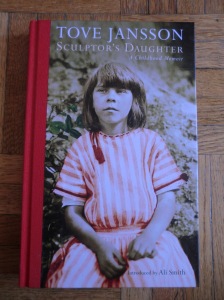
Sculptors daughterStill To Read

The Sculptor’s Daughter by Tove Jansson

Fair Play by Tove Jansson

Tove Jansson Life, Art, Words: The Authorised Biography, Written by Boel Westin, Translated by Silvester Mazzarella

The Moomintroll Books

Tove Jansson with her brother Per Olov © Moomin Characters™

Tove Jansson with her brother Per Olov
© Moomin Characters™

She wrote and illustrated children’s books and later in life began to write for adults as well. She was close to nature and spent nearly every summer on a family island in the Pellinge archipelago, in the Gulf of Finland, an environment that features often in A Winter Book and The Summer Book.

Born on 9 August 1914 to a family of artists, her mother was a graphic designer and her father a sculptor. An artist before anything, she was multi-talented, painting, illustrating and writing, not confined to any one genre. Her first book for adults was part fiction, part memoir, The Sculptor’s Daughter, written 10 years after her father’s death.

Although I admit to never having read any of them, she is most well-known for nine children’s books that grew out of her family of characters, little white trolls living in Moominvalley named Moomintroll, Moominmamma and Moominpappa along with other creative creatures such as the Hattifatteners, Mymbles and Whompers. She also illustrated other classic children’s books including versions of Alice in Wonderland and The Hobbit.

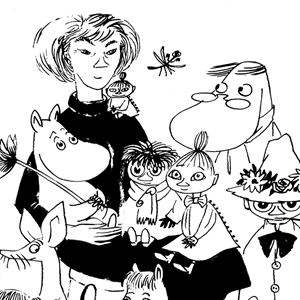
Tove Jansson and Her Moomintrolls © Moomin Characters™

Tove Jansson and Her Moomintrolls
© Moomin Characters™

Her career started early, drawing for a liberal satire magazine Garm at the age of 15, the title where her large nosed character Moomintroll made its first appearance. I think she may have been filling in for her mother, based on a comment I read in The New Yorker, but I’ll find out more when I read the biography. Her first book Sara and Pelle and the Octopuses of the Water Sprite – was published when she was just 13.

Her books have been translated into more than 40 languages, making her one of the most well-known Finnish artists, remembered by many from their own childhood and continuing to gain new audiences today.

“I didn’t realise it was set in a real place. I thought she’d made Finland up. Finland was like Narnia, with these incredible characters that were so strange but instantly recognisable because you had met lots of them – noisy Hemulens or neurotic, skinny Fillijonks.” Frank Cottrell Boyce

Events

There are numerous events happening worldwide and the national gallery of Finland, Ateneum Art Museum in Helsinki is holding an exhibition of all oeuvres of Jansson’s career, her surrealistic paintings of the 1930s, modernist art of the 1950s and more abstract works in the 1960s and ’70s, as well as her satirical anti-war illustrations for the magazine Garm, her murals created for public spaces, and illustrations of her Moomin characters and stories. I’m unlikely to make it to Helsinki, but was pleased to discover the audio presentations linked below, 2 minute descriptions (in English) of 12 of her paintings which you can view while listening.

Further Reading, Listening

Two Minute Audio Descriptions of 12 of her Paintings, via the Finnish Art Museum, Ateneum

TOVE100 – website with events happening internationally, resources

The Hands That Made the Moomins – An article in the New Yorker


Have you read any of Tove Jansson’s books? Are you planning to read any of them this year?

Nada by Carmen Laforet

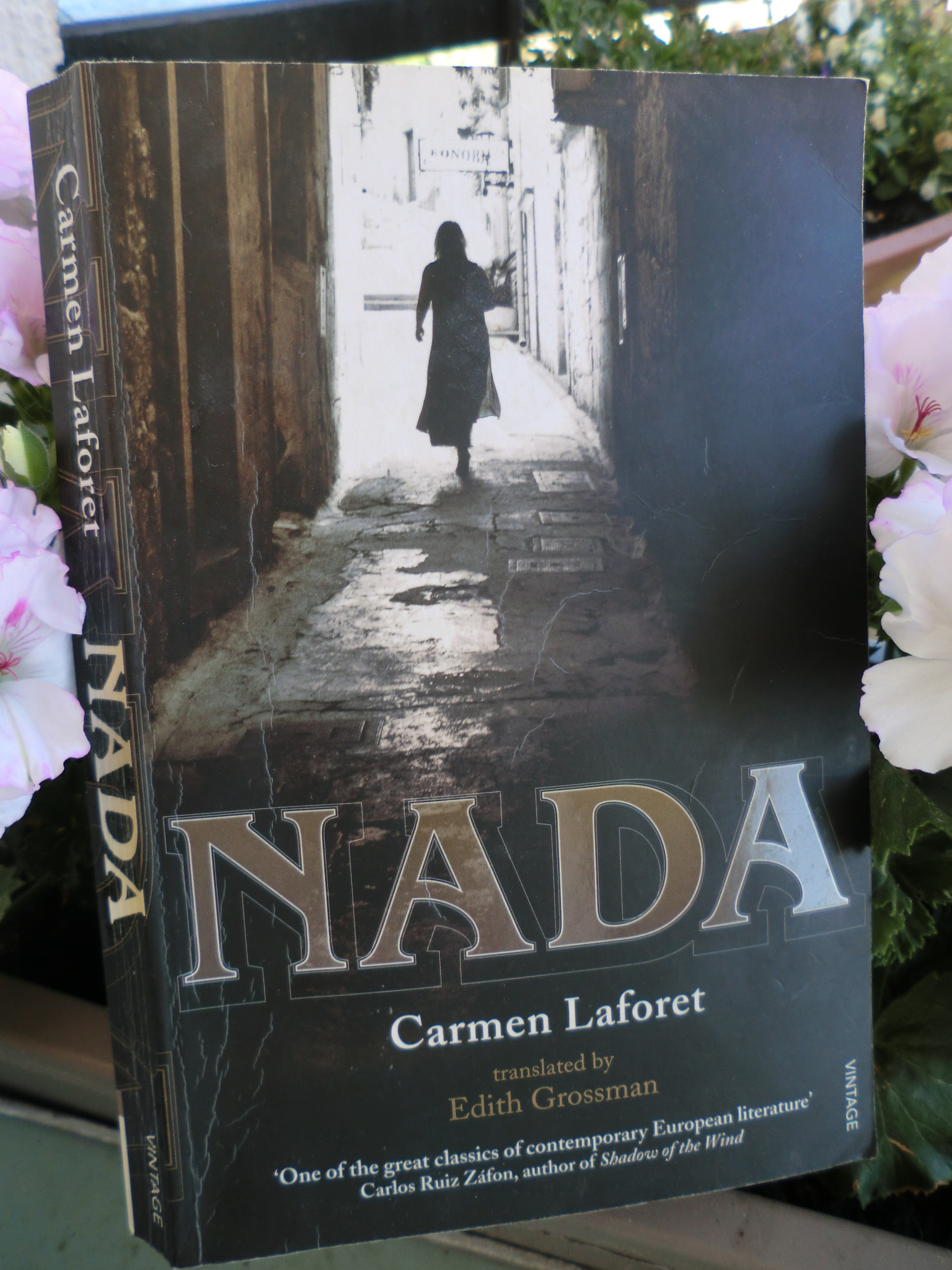
Nada (2)On a recent visit to London, my Uncle was handing this book back to the friend who lent it to him and I listened intrigued as they discussed its merits. “Isn’t it brilliant?” she said.

Book envy hardly had time to rear its head before my Uncle said “but Claire, you must read this too” and rather than it returning to its owner, this book came home with me, delighted to be off the shelf once more, this time travelling closer to the territory where it was conceived.

Nada was written by Carmen Laforet when she was 23 years old and first published in Spanish in 1945. Born in Barcelona, she moved to Las Palmas in the Canary Islands when she was 2 years old and like her protagonist Andrea, moved to Barcelona when she was 18 to study literature and philosophy.

Edith Grossman, who also translated Gabriel Garcia Marquez and Mario Vargas Llosa (who writes a brilliant introduction in the opening pages) puts Nada into English in what Alberto Manguel describes as “a fluid translation”, one that I read as if it has been written in English as its first language. The book was finally published in 2007, three years after the death of its author.

Andrea has spent a dreamy summer in her hometown, looking forward to coming to Barcelona to study and spend time with her family she hasn’t seen in years and barely remembers. She arrives three hours late and thus finds her way to the Calle de Aribau alone in the dead of night, arriving at the dilapidated apartment to be met by an apparition, a strange gathering of eccentric characters.

gothic barcelonaHer family, weathered by years of neglect, corruption and psychological torment, live in a claustrophobic environment that causes Andrea to develop her own eccentric behaviour in an effort to escape theirs. The house is inhabited by her two uncles, Juan and Roman, her aunt Angustias, the maid Antonia, and Juan’s wife, Gloria, plus a menagerie of cats, an old dog and a parrot.

“That illuminated twinkling of stars brought back in a rush all my hopes regarding Barcelona until the moment I’d entered this atmosphere of perverse people and furniture. I was afraid to get into the bed that resembled a coffin. I think I was trembling with undefinable terrors when I put out the candle.”

Though never mentioned, the city and its people are in the shadow of the recent civil war which has pushed the population to its extremity, people are either starving or drowning in excess, oblivious to the plight of the depleted middle class, who grasp onto whatever they can, the more practical selling the candelabra and curtains no longer given occasion to flaunt their long-lost beauty.

“The memory of nights on Calle de Aribau comes to me now. Those nights that ran like a black river beneath the bridges of the days, nights when stagnant odours gave off the breath of ghosts.”

Carmen Laforet 1921 - 2004

Carmen Laforet 1921 – 2004

Carmen Laforet writes in a way that makes the reader experience the brutality of each encounter, while instilling in us something of the toughness of Andrea, we seem to know she will handle it all, despite her growing thinner by the day as she observes the decline into madness of her extended family.

The depth of the prose is extraordinary and intriguing, the kind of work that makes a reader want to listen to the writer talk about what inspired them and what was going through their mind when these words flowed onto the page.

Carmen Laforet has created a heroine who is witness to a decline, who is oppressed by it and at the same time somewhat oblivious to it, captured it with an intensity that causes us anguish, the story sits uncomfortably with the reader but compels us to turn the pages ravenously. An utterly absorbing and spellbinding read, what a treasure that took so long to be shared with the English reading world.

“She achieved this, and half a century after it was published, her beautiful, terrible novel still lives.” Mario Vargas Losa


Further Reading

Elena’s Books and Reviews – an excellent review by Spanish blogger, Elena Adler. Studying literature and humanities, her insights add much value to our reading and comprehension of the underlying tensions and dysfunction of society post the civil war.

The GuardianAlberto Manguel hails the first appearance in English of the modern Spanish classic Nada.


Scattered Dreams by Karin Crilly

On March 4th I sent an email to Karin Crilly about a competition being run on The Good Life France. I saw this competition mentioned on twitter  @lifefrance and thought of Karin as I knew she was writing a memoir about her year in Aix-en-Provence and I thought it would be a good idea for her to send something out into the world.

The Good Life France is an independent online magazine that celebrates life in France and attracts a number of writers and contributors who write on a wide range of subjects, keeping visitors and residents informed about France and all things French. The competition was to celebrate the 2nd anniversary since their inception and they invited contributions of work up to 1000 words on France or French related.

Good Life

Karin replied and said she would be very interested in entering the competition and asked if I would like to read the extract she had chosen, from the first chapter of her book.

Unbeknown to us both at the time, it was the beginning of the two of us working together. I read her work, made some suggestions and she polished her already excellent prose into a shape resembling 1000 words of an evocative experience in Paris that did indeed wow the judges, moving some of them to tears yet uplifting them at the same time.

Earlier this week, to our great joy, we learned that Karin had won the competition, ahead of more than 100 other entries and her story Scattered Dreams in Paris has now been published on The Good Life France.

You can read the story here by clicking on the title.

Winner of 2014 Writing Competition The Good Life France!

Scattered Dreams in Paris by Karin Crilly

CIMG2976


Congratulations Karin and  Bonne Continuation!

Update: Karin’s memoir has now been published, you can find out more by reading my review here: The Blue Satin NightGown by Karin Crilly.

la fête du muguet et du travail

Le Muguet

Le Muguet

Au mois de mai, fais ce qu’il te plait.

In the month of May do what your heart fancies.

Provencal proverb

Today is a public holiday here in France, to commemorate la fête du travail and la fête du muguet.

I wrote a little about this tradition two years ago here, sharing my experience of a neighbour knocking on our apartment door and presenting me with this small token of friendship and bonheur (happiness) le muguet. Around town, I noticed people selling the small flowers in the street.

This commemoration actually has two origins and two separate histories, one dating back to the Middle Ages and the other to Chicago in 1886.

La muguet, also known as lys des vallées (lily of the valley) is a plant originating in Japan, long symbolising the arrival of spring, and on 1 May 1561, the year he became King, Charles IX chose it as a gift to bring bonheur to the women of the royal court.

Charles IX, King of France 1560-1574

Charles IX, King of France 1560-1574

It wasn’t until 1976 that it was also associated with la fête du 1er mai, la fête du travail.

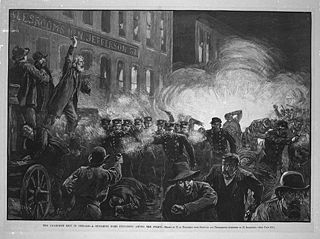
In Chicago in 1886 a movement was launched to lobby for the 8 hour working day and the 1st of May was chosen to commemorate it. A strike involving 400,000 workers on May 4, referred to as the Haymarket Riot, paralysed a number of factories, the protest became violent resulting in the death of a dozen people including seven police.

Haymarket Riot, 4 May 1886, Chicago, Illinois

Haymarket Riot, 4 May 1886, Chicago, Illinois

In June 1889 in Paris, for the centenary of the French revolution, it was decided to associate the 1st of May with the objective of attaining the 8 hour working day and in commemoration of the movement launched in Chicago on 1 May 1886.

Initially, they wore a red triangle to represent the triple objectives, 8 hours work, 8 hours sleep, 8 hours of leisure. This was replaced by the flower l’églantine and finally in 1907 by le muguet.

On 23 April 1919, the 8 hour day was ratified by the French senate and on 24 April 1941, during the German occupation,  the 1st of May was officially designated la fête du travail.

8 hours

Today la fête du travail is celebrated in most countries across Europe, except Switzerland and the Netherlands. It is also celebrated in South Africa, Latin America, Russia and Japan.  In the UK, the first Monday in May is celebrated and in the US, Labour Day is celebrated on the first Monday in September.

Voila! Bonne fête à tout le monde.

All The Light We Cannot See by Anthony Doerr,

Sea swell at Manu Bay, Raglan, NZ

Sea swell at Manu Bay, Raglan, NZ

I read Anthony Doerr’s book after finishing two books that didn’t work too well for me and so the experience of dipping into the first few pages of Doerr’s All The Light We Cannot See was like exiting the murky depths of a turbulent current to float in that gentle swell of the ocean just before the breakwater, where the waves lift us up and down like a life buoy without breaking.

Reading Doerr’s words and meeting his characters Marie-Laure, Werner and Jutta caresses the mind like the sea cradling the body as if it were weightless.

That light, the gentle caress of words that uplift, that intrigue, that follow through on their promise, that warns of tragedy and provides the reader with a guide to navigate the pages that follow.

All the LightMarie-Laure and her father live within walking distance of the Natural History Museum in Paris, where he works as the master of locks, the keyholder. When she is six Marie-Laure loses her sight and every year after that her father builds her a wooden structure that is a kind of puzzle box. Using her hands, she explores the gift to finds its hidden secret and despite its increasing sophistication and difficulty, each year it takes her less time to crack its ingenious code, opening it to reveal the gift within.

He also builds her a model of their neighbourhood, every home, building, street. She memorises it until she is ready to go out and discover the area in its life-size proportion. When the Germans occupy Paris, Marie-Laure and her father flee to Saint-Malo to stay with her reclusive Uncle and his housekeeper where they must build another model she will learn to navigate.

“For a long time though, unlike his puzzle boxes, his model of their neighborhood makes little sense to her. It is not like the real world. The miniature intersection of rue de Mirbel and rue Monge, for example, just a block from their apartment, is nothing like the real intersection. The real one represents an amphitheater of noise and fragrance; in the fall it smells of traffic and castor oil, bread from the bakery, camphor from Avent’s pharmacy, delphiniums and sweet peas and roses from the flower stand. On winter days it swims with the odor of roasting chestnuts; on summer evenings it becomes slow and drowsy, full of sleepy conversations and the scraping of heavy iron chairs.

But her father’s model of the same intersection smells only of dried glue and sawdust. Its streets are empty, its pavements static, to her fingers it serves as little more than a tiny and insufficient facsimile.”

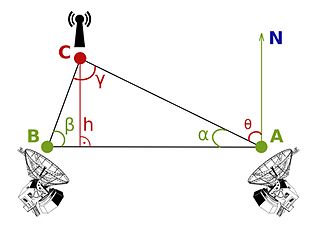
Werner and his sister Jutta are orphans in Germany, their father killed in a coal mining accident. Werner has a fascination for radio, both listening to and repairing them; the siblings discover and listen to broadcasts from as far away as France and England until war approaches, when to be in possession of a radio becomes a dangerous and illegal pastime. However, his talent has not gone unnoticed and will fast-track him into the midst of Hitler’s youth and a role as a detector of radio signals, leading him in wartime to the north of France.

“At midnight he and Jutta prowl the ionosphere, searching for that lavish, penetrating voice. When they find it, Werner feels as if he has been launched into a different existence, a secret place where great discoveries are possible, where an orphan from a coal town can solve some vital mystery hidden in the physical world.”

Radiotriangulation Scheme: Source wikipedia

Radiotriangulation Scheme: Source wikipedia

I really enjoyed this book, it made me care about the characters and interested in their lives and worry about them being on opposite sides of a great war. How could that ever be navigated safely?

Doerr describes the two different worlds of Marie-Laure and Werner with such clarity, overcoming blindness and interesting us in the intricacies of radio circuitry, pathways of electrons, amplifiers and transformer coils as if they were the most fascinating thing ever invented.

It is a story of survival, perseverance, passion and obsession set in the years leading up to and during WWII, it brings the streets, homes and sea wall of Saint Malo into the reader’s imagination where we too learn to see without seeing. And it will may make you curious to read Jules Verne if you haven’t already.

Anthony Doerr transmits an infectious enthusiasm for the story, creating endearing characters with rich, enticing prose, all the elements of great literary fiction that can entertain.

Further Reading:

New York Times Review Light Found in Darkness of Wartime


Note: This book was an Advance Reader Copy (ARC) provided by the publisher via NetGalley.


Nagasaki by Éric Faye

Thanks to Gallic Books, another recent English translation of a French literary work is being published in 2014, Nagasaki, a slim novella inspired by a newspaper cutting of real life events.

Belgravia Books

Belgravia Bookshop offering Gallic Books and other translations

Shimura Kobo lives alone in a quiet suburban street, by day he works as a meteorologist, he rarely socialises with his colleagues, nor does he see family much, his life causes fewer ripples in Nagasaki than the weather he forecasts for it.

“There comes a time when nothing happens any more. The ribbon of destiny, stretched too wide, has snapped. There’s no more. The shockwave caused by your birth is far, oh so far, behind you now. That is modern life. Your existence spans the distance between failure and success. Between frost and the rising of sap.”

Recently there have been a few barely detectable disturbances to his inanimate way of living. A container of fruit juice seems to have lost a few centimetres, and isn’t there one yoghurt pot less than was there this morning? He begins to take extra care securing his home, yet still has the feeling of something not being quite right.

Nagasaki (2)He sets up a webcam in his home and sits at work watching his kitchen as if studying the meteorological charts, waiting to detect any sign of disturbance.

It is a brief story where the revelation comes early, its slow residual effect only beginning in the aftermath. About halfway the narrative shifts, adding to the mystery of how the revelation impacts Shimura, as we no longer have access to his thoughts.

That it is based on a true story is enough to haunt the reader, but the way Eric Faye narrates it, contributes to the way this story inhabits the mind as we read. Like the best stories, it stays with you long after reading and invites discussion with others about how such a thing could happen in our society.

And it will make you check your door locks more carefully.


Note: Thank you to Gallic Books for providing a copy of the book.

The Invention of Wings by Sue Monk Kidd

Although Sue Monk Kidd will be a name familiar to many, it was only a few years ago that her book The Secret Life of Bees was recommended to me by a dear and special friend who always went out of his way to visit and spend a few days with us when making his 10 yearly pilgrimage to Rome. We always had wonderful discussions about books, about life, the situation in Palestine, our mutual family connections and much more. So when I saw that the author had published another novel, I wanted to read it, to remember that stories continue to be told and memories passed on, even when those who told them and recommended them are no longer with us. He would have loved this story I am sure.

Invention of WingsThe Invention of Wings is a work of historical fiction, inspired when the author came across their names at an exhibit at the Brooklyn Museum. The discovery of two sisters Sarah and Angelina Grimké, abolitionists whose story was little known outside academic circles was all the more poignant for Sue Monk Kidd, when she learned they came from Charleston, South Carolina, the town she was living in at the time.

The story is a work of fiction, but the work of Sarah Grimké and her sister was real and her writing and achievements are receiving the recognition they deserve, representing as they did, an era when even a life of privilege did not give women the right to express a public opinion and especially one that challenged the status of individuals in a society.

In her novel, Sue Monk Kidd tells a story of two girls growing up in an urban slave-holding family in Charleston, South Carolina. Sarah is the daughter of a wealthy, aristocratic family and Hetty, or Handful as she is referred to, is gifted to her on her 11th birthday, an event that Sarah actively attempts to reject and does so in writing. She is refused her request, just as she is also denied and mocked for her desire to pursue a professional career, her punishment to be banned from her father’s library and from reading books.

For many years she accepts her fate, although as retribution and in response to a promise made to Charlotte (Handful’s mother), she teaches Handful to read, not only a forbidden act, but against the law. Certain events eventually shake off her complacency and after one particular episode, despite the risk of rejection and ostracism by her family and community she becomes wedded to her new vocation and dares not only to voice her outrage but with the support of her sister begins to take a more active and dangerous role in standing against slavery and advocating equal rights for women.

WingsThe slave Hetty also possesses a rebellious streak, more dangerous in someone of her stature, where any small infraction can result in violent and damaging consequences, as she will discover. Denied an education, she and her mother Charlotte become talented seamstresses, Charlotte narrating her life story through the quilted squares she creates in her own time, each one representing a significant event in her life, images that speak the words she could not read or write, a reminder of who they are, where they have been, stories continually passed from mother to daughter. It was a way to subvert the system and to preserve her story.

In a sense both Sarah and Hetty are enslaved and Hetty articulates it in a scene that haunts Sarah long after.

“I’m twenty-seven-years old, Handful, and this is my life now.” She looked around the room, up at the chandelier, and back at me. “This is my life. Right here for the rest of my days.” Her voice broke as she covered her mouth with her hand.

She was trapped same as me, but she was trapped by her mind, by the minds of people around her, not by the law. At the African church, Mr Vesey used to say, Be careful, you can get enslaved twice, once in your body and once in your mind.

I tried to tell her that. I said, “My body might be a slave, but not my mind. For you, it’s the other way round.”

Wings are a metaphor for freedom from oppression but they also represent the ability to soar, not only to be able to choose what we want to do and how to live a life, but to do it to the best of one’s ability, to step beyond the expectations of family, community, society.

Sarah Grimké (1792-1873)

Sarah Grimké (1792-1873)

I thought this book was excellent and I like it all the more for having understood subsequently how it came about. The female characters are particularly vivid, especially Handful and her mother Charlotte and though Sarah took time to come to terms with her own vocation and to shed the trappings of her upbringing, she is an incredibly courageous character given society had rather dismissed her given her disappointment in not being able to pursue a career or attracting the right kind of husband.

When asked about writing from the perspective of an enslaved character, Sue Monk Kidd mentioned that while writing this book she read an interview with Alice Walker in which she says “She was all over my heart, so why shouldn’t she be in literature”, exactly how she felt about Handful.

I also wondered about the author’s reasons for embracing such a story, her own connections to America’s history in the South and in the links below is a Reader’s Guide in which she speaks of her own upbringing in the South in the fifties and sixties, where she was witness to many terrible racial injustices and divides, which has had the effect of drawing her towards writing about them.

“I’ve been drawn to write about racial themes because they are part of me, and also because they matter deeply to me. I can’t help but feel a social responsibility about it as a writer. Racism is the great wound and sin of the South and indeed, the great wound and original sin of America. Two hundred and forty-six years of slavery was an American holocaust, and its legacy is racism. I don’t think we’ve fully healed the wound or eradicated the sin. For all the great strides we’ve made, that legacy still lingers.” Sue Monk Kidd

Additional Links

A Readers Guide – Q & A with Sue Monk Kidd

Interview with Oprah – Sue Monk Kidd chats with Oprah and takes Reader’s Questions

Note: This book was provided by the publisher Viking, an imprint of the Penguin Group.