Under the Sea-Wind by Rachel Carson

Under the Sea-Wind (1941) was Rachel Carson’s literary debut and the first title in her Sea Trilogy, three books she wrote about the sea, the second The Sea Around Us (1951) and finally The Edge of the Sea (1955).

I discovered Under the Sea-Wind one day because I felt sure someone must have written a creative non-fiction book about the sea, someone with an affinity for the sea and an ability to bring it alive in the way I was imagining.

I like to read page-turning, lyrical nature writing, the kind of prose written by poets, though not poetry; authors like Kathleen Jamie who wrote Findings (my review here) and Sightlines, Barry Lopez and his Arctic Dreams (review here), Annie Dillard’s Pilgrim at Tinker Creek. They are all books that fascinate, entertain and enthrall on the subject of nature, in a way that traditional, factual texts about those subjects rarely inspire.

So I asked myself, well who has written in this form, about the sea? Because the sea is my muse, my resting place, that living, moody, playful, dangerous place that I never tire of and rarely get enough of and I wanted to read something that attempted to articulate the essence of it. So I could bring the sea nearer to me, when I can’t go to her. In that search I discovered Rachel Carson’s literary debut, her personal favourite book of all those she wrote, a book all about the sea, invoking its mystery and wonder.

The book started out as an assignment she completed in 1936, when she was an unemployed zoologist and freelance writer for the U.S. Bureau of Fisheries. Asked to write an introduction to a brochure on marine life, she submitted an essay entitled “The World of Waters” neatly typed by her mother, as all her manuscripts would be.

The next day Carson sat in Higgins’s Washington D.C. office waiting for his verdict.The government ichthyologist knew at once that it was unsuitable. What he was reading was a piece of literature. Carson never forgot the conversation: ‘My chief…handed it back with a twinkle in his eye. ‘I don’t think it will do,’ he said. ‘Better try again. But send this one to the Atlantic Monthly.’

The essay was a narrative account of the countless sea creatures that cohabit in and underwater and introduced her two most enduring and renowned themes: the ecological relationships of ocean life that have been in existence for millenia and the material immortality that embraces even the tiniest organism. It was the essay that spawned a classic in nature literature.

A sanderling shore bird

A sanderling shore bird

Under the Sea-Wind is structured in three parts, and in each part, we view the sea and sea life from the point of view of one of its inhabitants.

In Part One, Edge of the Sea, written for the life of the shore, and inspired by a stretch of North Carolina sea-coast, we meet a female sanderling she names Silverbar, it is Spring and the great Spring migration of shore birds is at its height and concludes with the end of summer where the movements of  birds, fish, shrimp and other water creatures heralds the changing of the seasons.

“Pressing close to the backwash, Silverbar saw two shining air bubbles pushing away the sand grains and she knew that a crab was beneath. Even as she watched the bubbles her bright eyes saw that a wave was taking form in the tumbling confusion of the surf. She gauged the speed of the mound of water as it ran, toppling, up the beach. Above the deeper undertones of moving water she heard the lighter hiss that came as the crest began to spill. Almost in the same instant the feathered antennae of the crab appeared above the sand. Running under the very crest of the green water hill, Silverbar probed vigorously in the wet sand with opened bill and drew out the crab. Before the water could so much as wet her legs she turned and fled up the beach.”

She describes the terror of the shore birds as they hide in the beach grass from the noisy, boisterous migrating flocks that briefly occupy their territory; the terrible snow storm that will freeze hundreds of egg embryos, where only the fittest and strongest survive; the way the birds lure a fox away from their nests and the day the parents finally abandon their young, their job complete.

A school of Mackerel

A school of Mackerel

Part Two The Gull’s Way, is dedicated to the open sea, a parallel time period in the open ocean and here we encounter Scomber the mackerel, following his journey from birth through infancy and youth in a quiet New England harbour, only to join a school that follows its instinct into the great sea where numerous predators await. As the fish move from one location to the next, trying to outwit predators, including man, the sea becomes the scene of a thriller and Scomber the mackerel, our fugitive!

Anguilla, the eel

Anguilla, the eel

Part Three River and Sea is written in the deepest, darkest, fathoms, we follow Anguilla, the eel from the far tributaries of a coastal river pool, downstream to the gently sloping depths of the sea, ‘the steep descent of the continental slopes and finally the abyss’.

After 10 years of uneventful river habitation, the eels are drawn by instinct downriver returning to their place of birth, a deep abyss near the Sargasso Sea where they will spawn and die. It is the most remarkable journey, as is that of the newborn spawn originating from two continents, who float side by side and drift towards those same coastal rivers their parents swam from, a voyage of years and over time the two species will separate and veer towards their continent, the US or Europe.

“Anguilla had entered Bittern Pond as a finger-long elver ten years before. She had lived in the pond through its summers and autumns and winters and springs, hiding in its weed beds by day and prowling through it waters by night, for like all eels she was a lover of darkness…Now it was autumn again… a strange restiveness was growing in Anguilla the eel. For the first time in her adult life, the food hunger was forgotten. In its place was a strange, new hunger, formless and ill-defined. Its dimly perceived object was a place of warmth and darkness – darker than the blackest night over Bitten Pond.  She had known such a place once – in the dim beginnings of life, before memory began. Many times that night, as the wind and rain tore at the surface film of the pond, Anguilla was drawn irresistibly towards the outlet over which the water was spilling on its journey to the sea.”

Rachel Carson writes about the sea, the sand, the birds, fish and the smallest of creatures and organisms in a way that makes us realise how little we observe of what is occurring around us, though we may stand, swim, float or fish in the midst of it. For the sea, its shore and the air above thrum like a thriving city of predator and prey of all sizes and character, constantly fluctuating, its citizens ever alert to when it is prudent to move and when it is necessary to be still.

Original, enthralling, it opens our eyes to much that we do not see or understand, I am in awe of shore birds, mackerel, eels, the sea, streams, rivers, ponds and the interconnectedness of them all.

Man, when his ambitions were more local, was once a balanced part of this ecosystem, though many of the practices of today appear to have stretched the boundaries of our role too far towards destructive exploitation, in our ignorance, we are upsetting this delicate yet complex ecosystem, which will be to our detriment if not stopped.


Fortunately, we have people like Captain Paul Watson and the Sea Shepherd Conservation Society, who have made themselves guardians of marine wildlife, actively pursuing  and preventing those who exploit and destroy without regard for the destructive effect of their pillaging the oceans.

Rachel Carson explores the sea-shore, the shallow and the deep, seeing them from the point of view of three species natural to those habitats, while mentioning so many more that they encounter, in a narrative that makes nature writing absolutely thrilling and survival an astounding feat.

Highly Recommended!

Buy a copy of Under the Sea-Wind via Book Depository

From Caucasia With Love by Danzy Senna

A Longish Intro on How I Came Across this Book

OreoDanzy Senna reviewed a book in the New Yorker in May 2015, a work she refers to as that hilarious, badass novel Oreo* by Fran Ross, an overlooked classic, a satire about race, originally published in 1974 without a stir, the novel everyone remembers from that time published two years later, had the title Roots.

Senna read Oreo in the late 1990’s, when she was living in a neighbourhood of what she called ‘Brooklyn’s dreadlocked élite‘ talented, up and coming, young black musicians, film-makers, artists said to be backed by the likes of Tracy Chapman and Alice Walker.

Though it had been written 20 years before, the book seemed to speak of their present and in her article she reflects on the narratives that had tended to gain traction and audience, those like Roots that looked back at slavery and oppression and then those that had been ignored, like Oreo, narratives that looked forward, that addressed modern issues, where no one is immune to criticism.

Sadly, Fran Ross died at a young age of cancer, little known in the literary world, this her only published work. It was republished in July 2015.

*To much of the public, an oreo is a black biscuit with white cream filling, in the African-American community however, it is a racial slur used to insult a black person who appears to act white.

You can read the article linked below, I hope to read the book soon, and all this to say how I came across the author Danzy Senna, who wrote From Caucasia, With Love, a novel about a mixed race family and the effect on their two daughters, when they separate, on account of the differing colour of their skin.

Review of From Caucasia, With Love

CaucasiaBirdie and Cole are two sisters, so close, they have their own made up language they speak fluently, that no one else can understand. The rest of society judges them on appearance, for Birdie appears white and her older sister Cole appears to be black.

While their parents are together it is less of an issue, but when they separate and move away from each other, each daughter departing with one parent, they will discover how much their colour dictates other people’s perceptions of them. Cole leaves for Brazil with her father and Birdie is on the run with her white activist mother fleeing the authorities.

The story is narrated from the point of view of Birdie and although she feels just like her sister, there were already signs of their differences in the behaviour of those closest to them. Her white grandmothers favouritism, and her father’s new girlfriend who won’t look her in the eye,  favoured by one, rejected by the other.

Birdie travels with her mother, losing all contact with her sister and father and integrates into a new life and school as someone she is not, she accepts it, but the truth seethes beneath the surface of all her interactions, she becomes numb to the misconceptions about who she is, until she has had enough and decides to go looking for Cole and her father.

“Strange as it may sound, there was safety in this pantomime. The less I behaved like myself, the more I could believe that this was still a game. That my real self – Birdie Lee – was safely hidden beneath my beige flesh, and that when the right moment came, I would reveal her, preserved, frozen solid in the moment in which I had left her.”

Danzy Senna

Danzy Senna

It is a gripping coming of age story of a girl who must deal with so much more than growing up, being forced to subsume another identity, neither one thing nor the other, without a role model to guide her.

It is a courageous effort to place the reader in the mind of a character who is like a changeling, crossing racial and geographic boundaries, making choices that will ensure not just her survival, but that she gets the answers she is looking for.

Further Reading:

New Yorker Article – An Overlooked Classic About the Comedy of Race by Danzy Senna


Lotusland by David Joiner

LotuslandLotusland starts out with the main protagonist Nathan, taking a long train journey from Saigon in the south of Vietnam where he lives, to Hanoi, the capital where he will visit his friend Anthony who he hasn’t been in touch with for some time.

Ironically, he reflects on the many things in his life that he perceives have always been a long wait for him. Ironic, because he is a character who has difficulty keeping a commitment, distracted too easily by the allure of the new and unknown, like the girl with the pink hair he meets on the train, or the attraction and undivided attention he gives to a new feature article he is asked to write, neglecting other commitments.

What follows is a well written story exploring the relationships between these two expatriate American men living in Vietnam, both their relationships to each other and the local women they marry/befriend and their contrasting attitudes to work.

Girl With a Fan by Công Quốc Hà Source: Wikipedia

Girl With a Fan by Công Quốc Hà
Source: Wikipedia

Nathan, a struggling writer, considers entering Anthony’s real estate business to make money, promising he is serious this time, though his word is rapidly thwarted by his developing relationship with the pink-haired woman, a traditional Vietnamese lacquer artist and gallery owner Le, in the weeks before he is supposed to leave Saigon and move to Hanoi.

“Somehow the mystery of the painting excited him even more than Anthony’s job offer. As he prepared to return to Saigon with the task of wrapping up his life there, the offer paled in importance to the chance he had of getting to know her.”

Anthony, now a successful business owner, husband and father of two small children he can’t communicate with, is barely in control of his rapid success or family life, unsure whether to rely on his friend, though it is clear he needs him for more than just work reasons.

The couples are like the escaped and the escapee, almost doomed from the beginning as they represent that often classic situation of the allure of a foreign culture, where the aims of the individuals are the opposite to each other despite their attraction.

Le has an interview at the American consulate for a visa and has made it clear to Nathan that that is the basis of her interest in him, a fact he seems intent on ignoring, preferring to pursue the illusion of a more intimate relationship.

“How’d it go?” He touched her hand, her arm, her cheek. “You’re still alive, and your body’s intact – all good signs.”

“It went okay,” she said, giving him a quick hug. “It’s hard to tell with Americans. They’re serious but also friendly. I don’t know what’s real. The worst part was dealing with the Vietnamese staff. They look down on people like me.”

It’s an often painful, uncomfortable read as David Joiner makes no excuses for his characters’ flaws and we witness that selfish aspect of humanity in which every person appears to want something from the other yet rarely puts the needs of the other before their own before acting or speaking.

Like a falling trail of dominoes, each person wants something from the next, though rarely is the desire reciprocated, individuals search for that thing just beyond their reach without appreciating what they have at hand. Blindness, illusion, disillusion, the impulse to escape.

It reminded me of a quote from Jamaica Kincaid’s expansive essay A Small Place, on her returning to the island of Antigua where she grew up, after many years of being away.

“That the native does not like the tourist is not hard to explain. For every native of every place is a potential tourist, and every tourist is a native of somewhere. Every native everywhere lives a life of overwhelming and crushing banality and boredom and desperation and depression, and every deed, good and bad, is an attempt to forget this. Every native would like to find a way out, every native would like a rest, every native would like a tour. But some natives – most natives in the world—cannot go anywhere. They are too poor. They are too poor to go anywhere. They are too poor to escape the reality of their lives; and they are too poor to live properly in the place they live, which is the very place you, the tourist, want to go – so when the natives see you, the tourist, they envy you, they envy your ability to leave your own banality and boredom, they envy your ability to turn their own banality and boredom into a source of pleasure for yourself.”

David Joiner excels in evoking the sense of being in Hanoi, a city I visited 20 years ago and adored (see my photos above). I was quickly transported back there through his ability to develop a vivid sense of place and found those passages where the action is accompanied by this strong sense of the surroundings captivating.

“In Hanoi the French presence could still be felt, preserved in the architecture and layout, whereas in Saigon the atmosphere still harked back 30 or 40 years to the American era, the notion of aesthetics crowded out by the practicalities of war.”

I was shocked to find myself at the final page, an abrupt ending that leaves the reader with much to think about and likely to provoke discussion about the mix of post-war opportunity, life in foreign cultures, immigration, freedom and entrapment, capitalism and whether and or how it is possible to overcome the clash of cultures within a relationship.

Hanoi by Cheong Source: Wikipedia

Hanoi by Cheong
Source: Wikipedia

Ru by Kim Thúy

RuReading Ru by Kim Thúy is like taking a long overland journey while looking up regularly to witness that which passes in front of our eyes. Sometimes the view is stunning, sometimes it elicits sadness, it can be moving, nostalgic, perhaps an odour transports us back to a scene from childhood, a person we see reminds us of someone we once knew.

Reading it in French imbues it with a drifting, lyrical resonance, sometimes I drifted off as the excess of descriptive words were beyond my reach and I was too lazy to look them up, not wanting to interrupt the flow. Until the next day, when I would happily read with the two dictionaries beside me and remember how much more fulfilling it is to venture further into unknown linguistic territory, enriching one’s vocabulary in another language.

blue dragon tattooMost of the pages read like short vignettes, experiences that provoke a memory, the man at the petrol station who sees a scar and recognises a childhood vaccination from Vietnam, his own hidden beneath a tattoo of a blue dragon, he shares a few memories, he touches her scar and places her finger in the middle of the blue dragon.

Reflections of times gone by, the journey of a woman with her family leaving the south of Vietnam for Canada via a refugee camp in Malaysia, she is a woman connected with another culture and the past, who intends to and does embrace ‘the dream’, whose own children will grow up in that modern culture with different references. Uprooted and yet connected at the same time.

A short but powerful read, that is incredibly moving without being sentimental. A rare and authentic talent, Kim Thúy channels her experience into this fictional tribute, which makes me remember reading Vadney Ratner’s In The Shadow of the Banyan, a tribute to another author’s human experience, struggle and survival despite the horrors lived through.

Ru in French means a small stream or a flow – of water, blood, tears or liquid. In Vietnamese, Ru is a lullaby.

Also Reviewed By

Nancy at Ifsofactodotme 

Jennifer D at LiteralLife

I read the book in French, but it is available in English, under the same title.

Ru English

The Wall by Marlen Haushofer tr. Shaun Whiteside

The WallHaushofer’s novel begins on the 5th of November, the day the protagonist, a middle-aged woman, begins to write a report of what has occurred over the last two years, since she became isolated in a hunting lodge in the Austrian Alps, where she had been visiting her cousin Luise and Luise’s husband Hugo.

Some kind of unwitnessed catastrophic event occurs, creating an invisible wall between that which lives and that which doesn’t.

As I started reading and then discovered what The WallWake Elizabeth Knox was, I recalled Elizabeth Knox’s Wake, where a similar event occurs, though rather than one woman as we observe in Marlen Haushofer’s modern classic The Wall, with Knox we followed what happened to a group of survivors adding elements of fantasy and horror that suspend belief  allowing the reader to interpret it more as the form of entertainment it was written to be.

In The Wall, Luise and Hugo walk to the nearby Alpine village one evening, putting them on the deathly side of the catastrophic event. Sending their dog Lynx home before them, he becomes one of the important and constant companions of this lone woman, who will learn what it takes to survive.

Eventually she realises she is living in the forest completely alone, she is joined by a cow she names Bella whom she hopes is pregnant, an old cat who will also give birth, and she finds a sack of potatoes she can plant and some beans which she will also use to create a crop. She is grateful to Hugo for his forethought.

“At the time everyone was talking about nuclear wars and their consequences, and this led Hugo to keep a little store of food and other important things in his hunting-lodge.”

The book recalls the days, the months, the seasons, the work she creates for herself, the relationship between her and the animals, her nurturing of them and attempt to protect them from the harsh elements of the environment and their interactions with her, that remind her of her duty to survive.

Lynx prodded me with his muzzle and pushed me sideways. Maybe he didn’t like the flood, maybe he also felt that I was miles away and wanted to attract some attention. As always on such occasions I followed him in the end. He knew much better than I did what was good for me.

It is written in a stream of conscious style that never becomes monotonous, despite the monotony of her days, she must live in the present to survive and that depends very much on caring for the needs of the animal life that support her. She must deal with her own mental turbulence and anguish, discovering that her manual labours and constant activity, though tiring, keep her from the dangers of over thinking and decline.

By cutting timber, in fact, I missed a very fine Indian summer. I didn’t see the landscape at all, obsessed as I was by the thought of stacking up a big enough supply of wood.  Once the last log had been stored under the verandah I had a stretch and decided to treat myself a little. It’s strange, in fact, how slight my pleasure is every time I complete a task. Once it’s out of the way I forget it,  and think about new things to do. Even at that time I didn’t allow myself much time to recover. That’s how it always was: while I was slaving away I dreamt about how I would quietly and peacefully rest on the bench, but as soon as I finally sat down on the bench I grew restless, and started looking out for new work to do. I don’t think this was due to any particular industriousness, since by nature I’m rather lethargic,  but was probably through self-protection, for what would I have done otherwise but remember and brood? That was exactly what I mustn’t do, so what was there to do but more work? I didn’t even have to look for work, it turned up insistently of its own accord.

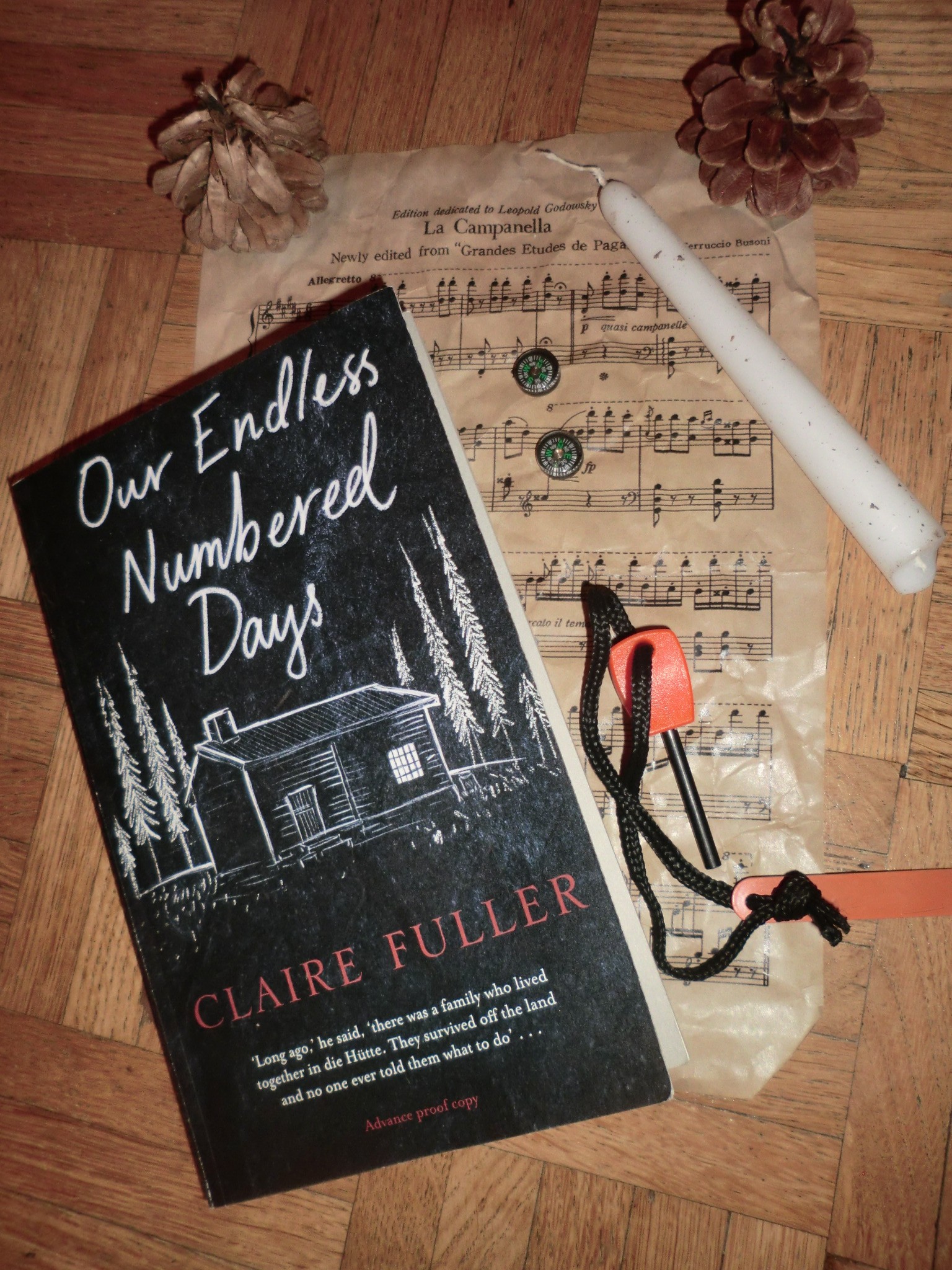
EndlessI was also reminded of Claire Fuller’s Our Endless Numbered Days, another book of survival in the European forest lands, a novel that contains distractions other than just survival, it being about a daughter whose father has taken her off to survive in the forest.

Marlen Haushofer’s protagonist has no zombies or deranged father’s to contend with, purely one woman’s survival and existence alongside a select few animals.

I found it utterly compelling and could not put it down. It is a brilliant novel that strips away the noise and manic obsessions of society placing one woman in a basic situation that will exhibit humanity’s natural feminine instinct to nurture, to protect, to achieve and survive while intermittently falling prey to the melancholic tendencies of mind that threaten to derail us. It does this without the use of fantastical elements apart from the existence of the wall itself, making it feel realistic and believable.

Marlen Haushofer wrote the book in the early 1960’s and it wasn’t published until 1968, two years before her premature death at the age of 49. The book was resurrected 15 years later when discovered by the feminist and anti-nuclear movements and has since been translated into 18 languages and made into a major motion picture by the Director Julian Pölsler. Deserving of being categorised as a modern classic.

The Wall is a muted critique of consumerism and a delicate poem in praise of nature, a challenge to violence and patriarchy, an encomium to peace and life-giving femininity, a meditation on time, an observation on the differences and similarities between animals and humans, and a timeless minor masterpiece. Jerry Whyte , Film critic on Julian Pölsler’s film adaptation

Wall Movie

Highly recommended and thank you to Vishy (click here for his review) for recommending it to me.

Mayumi and the Sea of Happiness by Jennifer Tseng

“I am a quiet lady, but my imagination is wild and busy.” Isobelle Ouzman

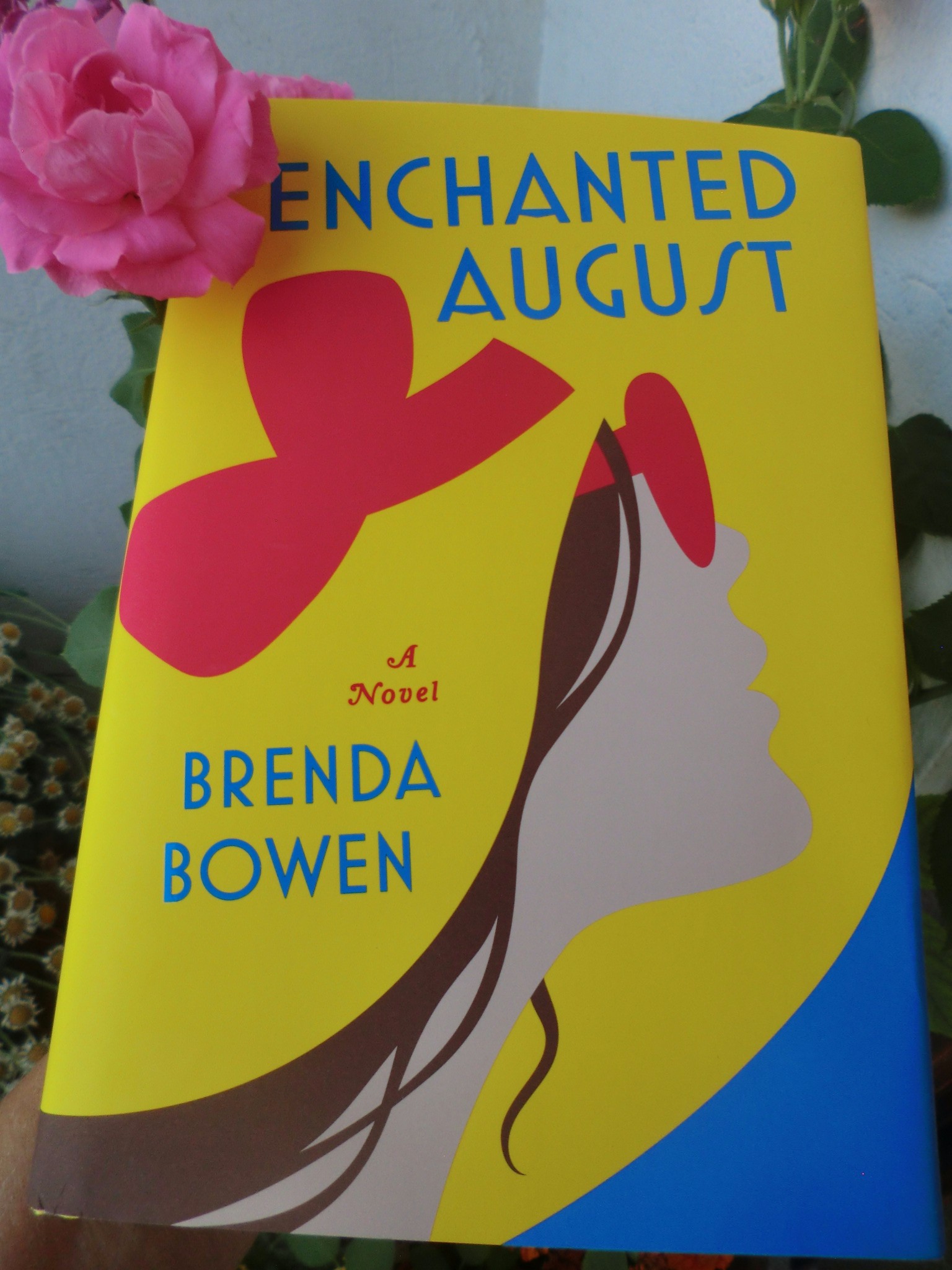
Livia and TsengFrom one island to another, having left the four holidaymakers from elsewhere on Little Lost Island in Brenda Bowen’s Enchanted August, I find a not so little, but lost islander in Mayumi, a 41-year-old librarian and resident of another New England island.

With a demanding 4-year-old daughter who has claimed a place in the marital bed, an emotionally and physically distant husband and finding solace between the pages of the books she reads, Mayumi’s life seems to lack something she isn’t aware of, until someone arrives at the library counter to ignite it.

She develops a fixation on a 17-year-old boy, seducing him and slotting him timetable-like in her already routine, controlled life, as if forbidden love is just another aspect of a carefully planned existence, something that be contained.

In addition, she can’t help but allow a friendship to develop with the boy’s mother, her equal desire for friendship and understanding crossing neurotic wires that seem destined to create an emotional explosion.

Publisher, Europa Editions describe the book as:

“With echoes of  The Giant’s House and shot through with literary references, the debut novel by Asian-American poet Jennifer Tseng is a book that leaves a lasting impression.”

and Kirkus Reviews:

Tseng explores time and place, isolation and connection, and veers more toward the lyrical than the lurid.”

while the author herself said:

“I love the premise of someone in a mundane setting, then a stranger walks in, and everything changes.”

Jennifer Tseng

Jennifer Tseng

It was a strange read for me and while many authors succeed in bringing the reader inside a perspective that might be counter-intuitive to their own instinct, it felt as though I remained on the outside of this narrative, never able to crossover into the world Muyumi inhabits, through her narcissistic obsession.

I haven’t read The Giant’s House, although reading the blurb of it I can see why comparisons might be made.

orhan-pamuk-the-museum-of-innocenceThe only reading experience I can compare this too is Orhan Pamuk’s The Museum of Innocence, which is a very long treatise on the experience of obsession, it is so long that you can’t help but experience the tedium of an unrelenting obsession.
Tseng’s exploration is unique by virtue of it being a female obsession, confusing the roles of mother, lover, friend and wife.

It is a reminder that in the quietest of environments, the imagination is actively at work and you never know when inspiration or obsession might alight.

I leave you with a quote from the book, where Mayumi is feeling frustrated by the pending departure of the young man for a couple of weeks over the summer:

“You know I didn’t come here to mix with your sort. If anything I came here to escape such excitements.”

What had in it the seed of a compliment came off sounding like a snub. He drew back slightly as if I had just hit him.

“What I meant to say,” I persisted, determined to salvage the moment and bolster his confidence, “is that this is a highly unusual circumstance. I’ve lead a very sheltered life, sheltered from good as much as from bad. I’ve minded my own business. I never sought thrills. I’ve been content to avoid the company of youth and beauty. Before you, I had no desire.”

“With all due respect, May, I find it hard to believe,” he finished in iambic pentameter, “that a woman with your brain and your appetite came halfway across the world in search of nothing.”

He was well-mannered yet restless; his eyes studied me as though I were a page in a book. I had the sense of being one among many, of being read intensely but fleetingly by a reader who would soon turn the page.

In addition to being a poet and fiction writer, the author Jennifer Tseng is a librarian on Martha’s Vineyard, a New England island.

Pumpkin Island Maine

Note: This book was an ARC (Advance Reader Copy) kindly provided by the publisher.

Enchanted August, A Novel by Brenda Bowen

Enchanted AugustNot only are Elizabeth von Arnim’s works experiencing a surge in popularity, with The Enchanted April being republished as a Penguin Classic this month, but her 90-year-old novel has spawned a work of fan fiction in Brenda Bowen’s Enchanted August.

Bowen takes four same named characters and weaves a contemporary 21st century tale set on an island in Maine. A huge fan of first the movie and then the book, Bowen transposes von Arnim’s idea into the modern world and reinvents its magic.

Two mothers Lottie and Rose see the same advertisement posted on the noticeboard of the over-zealous Brooklyn preschool their children attend:

Hopewell Cottage

Little Lost Island, Maine.

Old, pretty cottage

to rent on a small island

Springwater, blueberries, sea glass.

August.

They dCIMG7226ecide to rent it and find two others to join them to reduce the cost, Caroline Dester, a celebrity who wishes to hide from the world following a recent public humiliation and Beverly Fisher, the somewhat grumpy and initially reclusive, older character, grieving after a heartbreaking loss and seeking solitude in the company of strangers.

Lottie and Rose reflect on their unhappy marriages; distance and absence incline them towards remembering better days in the early years and in a surge of optimism brought on by the island ambiance, Lottie invites her husband without consulting the others, while Rose procrastinates at Lottie’s suggestion that she do the same.

These four unlikely holidaymakers attempt to navigate living together for one month and discover an ironic comfort and lack of inhibition brought about in the company of strangers. Wounds begin to heal, the island changes their routine and shifts their perspectives as they discover the life-changing effect of a month-long summer holiday on a small island where there is little to do but relax and unwind.

Enchanted August is a pleasant read, even when aware of the plot as it unfolds; discovering how Bowen chooses to represent her characters and their various dilemmas is part of the joy in reading it.

lobsterbake

Traditional Maine Lobster Bake

It is very much an American version with its characters and setting just as von Arnim’s is essentially English even if set in Italy. One of the intriguing local aspects was the age-old lobster bake, something of a communal island lobster, clam, vegetable, seaweed, open fire culinary tradition that brings everyone together.

The island didn’t succeed in invoking quite the same charm and magic as Portofino did for me in the orignal classic, an idyll almost impossible to replicate, however it perhaps offers for many, a more realistic or attainable allure, the idea that one doesn’t have to travel so far to find a simple magic that can transform perspectives and lives.

An entertaining summer read, evocative of the charm, simplicity and transformative powers of a small island holiday.

Further Reading

Review of The Enchanted April by Elizabeth von Arnim

Review of Elizabeth and her German Garden by Elizabeth von Arnim

Note: This book is an ARC (Advance Reader Copy) kindly provided by the publisher.

The President’s Hat by Antoine Laurain

The President’s Hat is the first book of Antoine Laurain’s that was translated from French into English by Gallic Books. It appears that three translators were used for the different voices.

Daniel Mercier voiced by Louise Rogers Lalaurie

Fanny Marquant and Bernard Lavallière voiced by Emily Boyce

Pierre Aslan voiced by  Jane Aitken

In February, Gallic Books sent me a copy of his second translation The Red Notebook, which I devoured immediately and adored. Click on the link to read my review.

Thanks to that review where I indicated a wish to read The President’s Hat, Owen at The Carrot Cake Diaries sent me his copy and I returned the favour by sending him one my all time favourites, Martin Booth’s The Industry of Souls.

The President’s Hat is just as brilliant in its light-hearted uplifting way. It is the story of what happens to the people beginning with Daniel Mercier who encounter a black hat with the letters F M embossed in gold lettering inside the rim, when it is left on a restaurant seat by the former French President François Mitterand. Daniel is the first person seized by a compulsion to covet the hat and wear it until he too will leave it behind and the adventure moves on to the next person.

black hat

Each person who encounters the hat, is touched by it sufficiently to act in a way that will have a significant impact on their lives, thus taking the reader on an entertaining journey across France and into Venice in the eighties via gifted storytelling.

Although he appears only very briefly in the story, it is in a way a tribute to the man who was a popular President in the 1980’s, who ruled from 1981 to 1995 and in his last address to the people said:

“I believe in the forces of the spirit, and I won’t leave you.”

He died one year later.

mitterrand tranquille

Impossible to put down, uplifting and a joy to read, it is wonderful to come across one of those ‘turn-to’ authors when in need of a literary pick-me-up or just a fun read!

Tales From The Heart, True Stories From My Childhood by Maryse Condé

I came across Maryse Condé recently via the Man Booker International Prize 2015 list of 10 nominated authors. She is third from the left in the picture below.

FinalistsNot a book prize as such, it is an award conferred on an author who has a significant body of published work, regardless of the original language it was written in, though some of it must have been translated into English.

It is from such long lists the gems are found I say, and having read about all 10 thanks to this excellent Interview: The Finalists Speak in The Guardian, I spotted my potential winner immediately. A winner in the sense that I intend to read a few of their books. The Indian writer Amitav Ghosh was the only author I’d read on this list.

One writer jumped out at me straight away and I pursued her works with little consideration for the pending award result. Maryse Condé didn’t win the prize, the Hungarian writer László Krasznahorkai did, a writer whose books intellectuals rave about, but who I’m not sure I’m ready for yet.

Tales Maryse CondéSo I took Maryse Condé’s advice and started by reading this slim volume of essays of her childhood in Guadeloupe, Tales From the Heart, True Stories From My Childhood.

She takes us right back to the beginning, to the day of her birth. Being the youngest of 8 children, the family possessed an extended collective memory and she was fortunate to have heard the story of her birth from other perspectives.

Her appearance was both a source of pride and shame for her then 43-year-old mother and 63-year-old father, proud that her body remained robust enough to support the creation of a child and shame that it publicly displayed evidence of their continued indulgence in carnal pleasures.

The first chapter Family Portrait describes her parents relationship with France:

“For them France was in no way the seat of colonial power. It was truly the Mother Country and Paris, the City of Light that lit up their lives.”

World War II wasn’t considered dark on account of all the dreadful atrocities that occurred:

“but because for seven long years they were deprived of what meant the most to them, their trips to France.”

She recounts an anecdote of a waiter in a café complimenting the family on their excellent French pronunciation, to which her parents felt indignant, considering themselves just as French as a Parisian waiter, even more so because of their higher education, manners and regular travel.

Not understanding why it mattered so, she asked her brother Sandrino:

“Could he explain my parents behaviour?” to which he replied “Papa and Maman are a pair of alienated individuals,”

a mysterious word that would rest a long time in her consciousness until she came to understand it. She realised that not only did they take no pride in their African ancestry, they knew nothing of it, however:

“They believed they were the most brilliant and most intelligent people alive, proof positive of the progress achieved by the Black Race.”

Maryse Condé

In their neighbourhood all the mothers in their circle held a profession and with it contempt for the manual work they believed had been the undoing of their own mothers. They employed a servant who, though she raised 6 children of her own would begin work at 5am to take care of the needs of the family.

We meet her best friend Yvelise, two girls who did everything together, their friendship almost destroyed by the unfortunate intervention of one of her teachers, causing a temporary rupture.

Maryse’s mother Jeanne, knew the life she didn’t wish to lead, nor her children either, she had succeeded in breaking the cycle endured by her mother and grandmother and a good education was key (and perhaps being married to a successful and much older husband). Jeanne was a school teacher, revered and feared in equal measure by those around her. Her eldest son Sandrino and her youngest child Maryse the only two children who weren’t afraid to stand up to her, the others too terrified to challenge her.

On her birthday, her favourite pupils recited compliments, gave her roses, her husband bought her jewellery and the day would culminate with a family play, a short piece of theatre written themselves, in her honour.

‘Beneath her flamboyant appearance, I imagine my mother must have been scared of life, that unbridled mare that had treated her mother and grandmother so roughly…Both of them had been abandoned with their “mountain of truth” and their two eyes to cry with.’

10-year-old Maryse asked if she could read one of her compositions for her mother’s birthday.

‘I had no idea what I wanted to write. I merely sensed that a personality such as my mother’s deserved a scribe.’

If a book of essays can reach a crescendo, this is the moment when we reach it. The moment when Maryse learns that not all lessons come from one’s parents and school teachers, some come from life itself and often when we least expect it.

In the chapter School Days , she is at school (lycée) in Paris when her French teacher asks her to present to the class a book from her island. It is a watershed moment.

‘This well intentioned proposition, however, plunged me into a deep quandary. It was, let us recall, the early fifties. Literature from the French Caribbean had not yet blossomed. Patrick Chamoiseau lay unformed in his mother’s womb and I had never heard the name Aime Césaire. Which writer from my island could I speak about? I resorted to my usual source: Sandrino.’

Sugar Cane Alley

Sugar Cane Alley

Sandrino introduces her to to a treasure. La Rue Case-Negres (Black Shack Alley) by Joseph Zobel and his hero José Hassan. It was made into an award-winning film titled Sugar Cane Alley.

It was her first introduction to a world no one up until that moment had ever mentioned; a world that highlighted slavery, the slave trade, colonial oppression, the exploitation of man by man and colour prejudice.

‘I was scared to reveal how José and I were worlds apart. In the eyes of this Communist teacher, in the eyes of the entire class, the real Caribbean was the one I was guilty of not knowing.’

These glimpses into the more significant and memorable aspects of childhood that shaped the author Maryse Condé are insightful, engaging and honest. Just as her consciousness is awakened, the vignettes finish and leave the reader desperate to know more.

I had intended to read this volume over time, but once I started reading I couldn’t stop, it is almost like reading a coming-of-age novella and at its conclusion, the writers fiction will begin. For Condé’s first novel Hérémakhonon is about a character raised in Guadeloupe, educated in Paris, who then travels to Africa in search of a recognisable past, just as she did.

‘Veronica has spent her childhood in Guadeloupe and, after a period as a student in Paris, wants to escape that island’s respectable black bourgeoisie, which she regards as secretly afraid of its own inferiority. She travels to an unnamed West African state and, while there, seeks an authentically African past with which she will be able to identify.’

Tales From The Heart is an excellent read and an intriguing introduction to the writer and her influences and will certainly make you want to read more of her work. I am very happy I have these three novels on the shelf to follow-up with only I am missing that debut novel which I really want to read now too! Very highly recommended.

Literary Works of Maryse Condé

My Other Reviews

Victoire, My Mother’s Mother 

Segu

The Story of the Cannibal Woman

A Season in Rihata

Click Here to Buy a book by Maryse Condé


The Enchanted April by Elizabeth von Arnim

CIMG7226As soon as I learned that Elizabeth von Arnim’s The Enchanted April was to be reissued as a Penguin classic, I jumped at the chance to read it. Elizabeth and her German Garden was such an engaging and entertaining read and I recall in the comments of that review so many mentions of The Enchanted April as a must read.

Elizabeth wrote The Enchanted April in a castello (an eleventh-century fortress with Roman foundations overlooking the Ligurian Sea) in Portofino, Italy, in April 1921. She had rented the place to get away from her own (sixteen bedroom) chalet in Switzerland… an extract from the Introduction by Brenda Bowen

Brenda Bowen has written a work of fan fiction, published in June 2015, one that mirrors von Arnim’s work, set in contemporary Brooklyn and Maine featuring four ladies who will rent a cottage (not castle) on Little Lost Island, Maine.

Enchanted August

One to Watch Out For, Fan Fiction

Enchanting indeed, not just the month of April, but all that made this original classic so; the villa San Salvatore (inspired by the Castello Brown pictured below) on the cliffs of Portofino overlooking the sea, the blooming buds and flowers of Spring, four weeks stretched out in front of four unaccompanied women with no social obligations, no cooking, cleaning, nothing to do but enjoy the gardens, the villa, the seascape and one minor challenge, to tolerate each others company.

They are four women who remind me of the semi-autobiographical and coolly calculating character of Elizabeth, in von Arnim’s Elizabeth and her German Garden, for though the four women in this novel sought company for this séjour on the Ligurian coast of Italy, it was purely for financial reasons, most certainly not for companionship, the first hint of von Arnim’s well-known and often quoted attitude towards visitors.

Being with strangers, they each hoped to leave that part of themselves that must always meet the expectations of others behind. Mrs Wilkins  from Hampstead was the first to see the advertisement in The Times while visiting her London club.

To Those Who Appreciate Wisteria and Sunshine. Small mediaeval Italian Castle on the shores of the Mediterranean to be Let furnished for the month of April. Necessary servants remain. Z, Box 1000,

The Times.

Mrs Wilkins was certain another woman her age was reading the same ad and having a similar response to it, so true to her nature (though not typical of society’s expectation of a response) she seized the initiative suggesting they rented the place together.

Her initial reluctance overcome, once the two women realised it was possible, they needed only a solution to the expense which Mrs Wilkins solved by suggesting they place another ad to attract another two like-minded female souls, thus we are introduced to the beautiful, ever charming even when she is trying not to be, Lady Caroline Dester and the somewhat disagreeable and much older Mrs Fisher.

Once ensconced in their lodgings, the four women interact and are given a well-portrayed and at times humorous glimpse into their individual characters, made all the more interesting by the fact that these women were most unlikely to have ever encountered each other within their existing social circles.

Enchanted April

Mrs Wilkins and Mrs Arbuthnot are pleased to have escaped their husbands, though they each harbour an underlying sadness for how things were when they were newly married. They are not aged, in their thirties, they have more the air of self-accepting middle age. However, they hadn’t reckoned on the effect of a stay at San Salvatore.

Lady Caroline just wants to be left alone, unmarried and disinclined, she detests the attention her beauty and natural charm attract. The formidable Mrs Fisher appears malcontent for no more reason than that she’s been on Earth at least twice as long as the younger women, having lost what youthful exuberance she may ever have had long ago.

‘Mrs Fisher doesn’t seem happy – not visibly anyhow,’ said Mrs Arbuthnot, smiling.

‘She’ll begin soon, you’ll see.’

Mrs Arbuthnot said she didn’t believe that after a certain age people began anything.

Mrs Wilkins said she was sure no one, however old and tough could resist the effects of perfect beauty. Before many days, perhaps only hours, they would see Mrs Fisher bursting out into every kind of exuberance. ‘I’m quite sure, said Mrs Wilkins, ‘that we’ve got to heaven, and once Mrs Fisher realises that’s where she is, she’s bound to be different. You’ll see. She’ll leave off being ossified, and go all soft and able to stretch, and we shall get quite – why, I shouldn’t be surprised if we get quite fond of her.’

Things are about to change, as the castle San Salvatore, though solid and immovable, works its way into their psyches and each will fall under the spell of the charming fortress and its healing environment over the course of their four-week stay.

I thought The Enchanted April a wonderful, evocative read and witty insight into its very English characters, enjoyable for its sense of place and the lush season it evokes, von Arnim’s natural, subtle humour that she never ceases to inject into her narratives, in this novel there is no trace of the slight cynicism of her earlier work; she has allowed her four women to indulge this fantasy through to its natural conclusion.

And oh how fulfilling that can be for the reader, I know this little stretch of Italy and it invoked pleasant memories and incited future dreams of a possible return – with three women ‘bien sûr’!

Countess Elizabeth von Arnim

Born Mary (May) Annette Beauchamp in 1866, Elizabeth von Arnim was Australian by birth, English by upbringing, German and English through marriage, Swiss and French by choice and finally American by emigration. She published 21 books in her lifetime,  books where the central female character(s) were often witty and unreserved, possessing an unusual outlook on life. A number of them, including The Enchanted April were made into films.

An appearance of the novel Elizabeth and her German Garden in a recent episode of Downton Abbey, sparked renewed interest in the works of the author. That novel was so popular when first published, it was reprinted 21 times within a year of publication.

She was the cousin and contemporary of the New Zealand/English writer Katherine Mansfield. She died in Charleston, South Carolina in 1941.

KM logoElizabeth von Arnim Conference – In an extraordinary coincidence that I just discovered, the Katherine Mansfield Society is to hold an Elizabeth von Arnim Conference, at Lucy Cavendish College, University of Cambridge on Sept 13th 2015!

My review of Brenda Bowen’s Enchanted August.

Note: This book was an ARC (Advance Reader Copy) kindly provided by the publisher.