
This book was such an enticing premise and clearly a passionate endeavour on the part of the author, who spent years researching her family and understanding the modern tools available through AncestryDNA and 23andMe that I couldn’t wait to read it and started it immediately it arrived in my letterbox.
A Hobby Becomes an Obsession
To a large extent, it was the Mormons who made the larger-scale practice of genealogy among Americans possible. Over time, to achieve its mandate of baptizing all forbears of Mormons, the LDS has collected records from a vast and ever-increasing number of populations, converted them into millions of reels of microfilm and microfiche, and stored them in a massive climate-controlled vault carved out of the Granite Mountains of Utah.
The internet and the rise in popularity of DNA testing transformed genealogy into the mainstream hobby – come obsession, it has become today, with sophisticated tools and avenues of research that can make it a compelling pursuit.
With all the tools at their disposal, contemporary genealogists can test rumours passed down like pocketknives. They can also rebut lies, expose secrets, and heal fractures.
DNA and Family Trees, the secrets they reveal
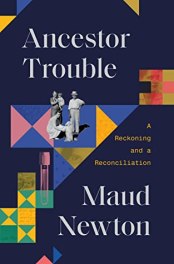 This work of nonfiction is both the author’s personal project and an exploration of the meaning of genetic genealogy, of observations of ancestor behaviour and achievements, their inclinations and attitudes, their better moments and worst traits. Her desire to know what is inherited versus what is learned and the implications that has on her own character, drives her forward.
Maud Newton explores society’s experiments with eugenics and ponders her own father’s marriage, a choice he made based on trying to create “smart kids”. She delves into persecuted women, including a female relative accused of being a witch, and discovers a clear line of personality inclinations that have born down the female line of her family.
Maud Newton (the name a pseudonym inspired by one of her relatives) is both curious and wary. Curious to know who these people were and whether there was any connection to the way her own personality had manifested in this world and wary of the darker aspects she was aware of and had uncovered. Those present in her father, (from whom she was estranged), and that of the plantation and slave owning ancestors she was descended from.
To understand ourselves, Carl Jung argued, we need to understand our ancestors. “Our souls as well as our bodies are composed of individual elements which were all already present in the ranks of our ancestors,” he wrote in his autobiography Memories, Dreams, Reflections. “The ‘newness’ in the individual psyche is an endlessly varied re-combination of age-old components…The less we understand of what our fathers and forefathers sought, the less we understand ourselves.
Nature versus Nurture
Exploring the concept of nature versus nurture, Newton studied their faces and read of their ailments, looking for physical resemblance and a possible forecast of health parameters that might need to have been monitored. This is something that DNA companies have dabbled with in the past, a subject that has created controversy as people make decisions about their health based on speculative, not always reliable genetic information; creating databases that insurance companies would pay handsomely for.
The genes we inherit from our ancestors have a lot to do with the odors we give off. It’s even possible that newborns recognize their own biological mothers by scent and that mothers can identify their biological newborns the same way.
One of the most incredible aspects of the DNA results, was how many times her profile has changed over the years and how extreme the changes were, making one wonder what is real and what is a fiction, as the databases are added to over time, causing everyone’s results to constantly adjust significantly.
An Open-Minded Approach
In the end, having explored all the archives, the registry’s, the DNA results and her own observations and those of her living relatives, she takes a more open minded, imaginative route. Attending an “ancestral lineage healing intensive” workshop/retreat in North Carolina, she meets others interested in connecting with their ancestors and learns of age old ceremonies that had been long forgotten in some cultures, traditions that are beginning to be revived. She is open enough to it, to have had an interesting experience, which was likely to have been healing in some way.
At times there was a lot of family detail, but it’s written in a way that kept me captivated while reading. I appreciated the depth which with she explained how to get the most of DNA information, the risks of obsessing about it and the number of extended family one is likely to encounter. I particularly enjoyed the more spiritual journey she took at the end and the dedication with which the project was realized.
An excellent and informative read. Highly Recommended and a great festive read or gift.
Further Reading/Listening
In ‘Ancestor Trouble,’ Maud Newton wrestles with her family history – review by Kristen Martin, NPR
From Family Trees to 23andMe, and Back Again – review by Kerri Arsenault, New York Times
 Told through the eyes of a 14-year-old boy subjected to relentless bullying, Heaven is a haunting novel of the threat of violence that can stalk our teenage years.
 A unique story that interweaves crime fiction with intimate tales of morality and the search for individual freedom.
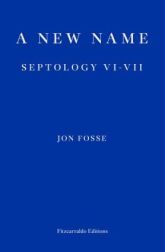 Jon Fosse delivers both a transcendent exploration of the human condition and a radically ‘other’ reading experience – incantatory, hypnotic, and utterly unique.
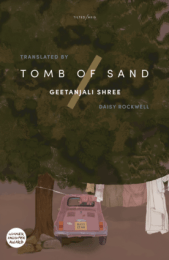 An urgent yet engaging protest against the destructive impact of borders, whether between religions, countries or genders.
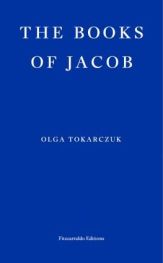 Olga Tokarczuk’s portrayal of Enlightenment Europe on the cusp of precipitous change, searching for certainty and longing for transcendence.
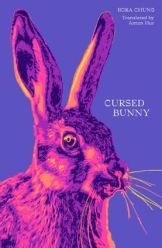 Bora Chung presents a genre-defying collection of short stories, which blur the lines between magical realism, horror and science fiction.
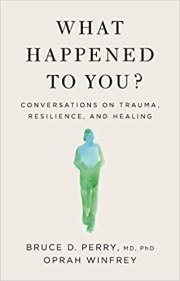 This was a compelling read in an interesting, dynamic format, a book length conversation between child psychiatrist and neuroscientist Bruce Perry and the well known broadcaster, philanthropist and show host, Oprah Winfrey.

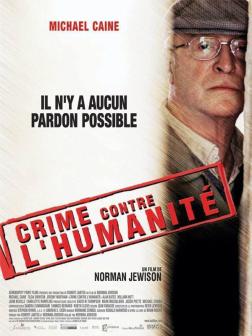
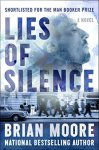
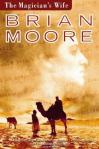
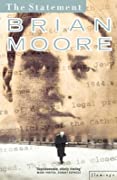 Much like his final novel The Magician’s Wife (1997) this is another of Brian Moore’s novels, that is more than just a political thriller, it is a work of historical fiction that brings together both his lifetime pursuit for challenging the Catholic Church (here, for harbouring a fugitive war criminal) and his curiosity for elements of a country’s history that often go undetected by the world at large.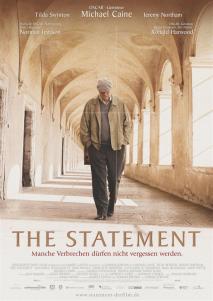
 In real life,
 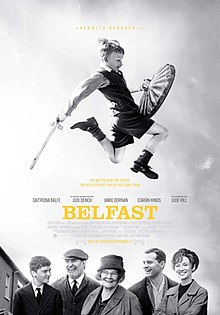 Moore was born in Belfast in August 1921, shortly after the partition of Ireland that created the southern Free State, eventually the Republic of Ireland. His parents and childhood were traditional middle class and his early years relatively protected from the sectarian conflict violence that often erupted around them, despite being a member of the Catholic minority.
 Huginn and Muninn are two ravens from Norse mythology. Sent out by Odin at dawn each day, they return at night to perch on the god’s shoulders, whispering to him whatever knowledge and wisdom they have gathered from every corner of the world. Like Huginn and Muninn The Passenger travels far and wide to bring back the best writing from the countries it visits.
 Population (the island of Ireland) : 6.9 million (the highest since 1851)
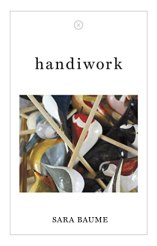 In Handiwork, she was sculpting birds, but here she writes about the Irish cottage, its evolution and the rise of the Irish villas that were much despised for a period of time. As she spends months creating objects that represent small scale versions of these houses, she reflects on the way Ireland’s built environment has changed.

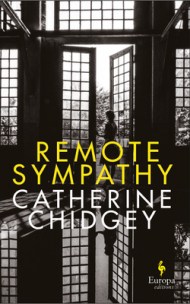 – New Zealander Catherine Chidgey opens a new chapter of Holocaust literature as she tells the story of Greta Hahn, who is the wife of a concentration camp manager and doesn’t know – then doesn’t want to know – what goes on behind the fence. When her Nazi husband becomes convinced that only a prisoner can save Greta from dying of cancer, Dr. Weber enters her parallel universe at the edge of the camp. The prisoner-doctor treats Greta because he hopes it will help his Jewish wife and their young daughter who have been forcibly separated from him and sent further East. Slowly he bursts Greta’s bubble of oblivion and she is forced to confront the horror to which she has been an accomplice.
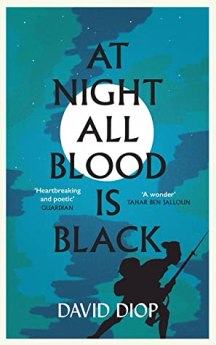 – At Night All Blood is Black is a carefully crafted, heart-wrenching, passionate, and engaging story about the insanity of war and its devastating toll on humanity. Told from the perspective of Alfa Ndiaye, a 20-year-old Senegalese who, like his friend, Mademba Diop and many other young West Africans were conscripted by European imperial powers – in this case, France – to fight in World War I. The novel raises fresh concerns about the issues of war, humanity, identity, sexuality, racism, violence, and colonialism as it explores strong emotions like love, apathy, fear, and indignation towards war. The plot hinges around the gruesome death in battle of Mademba, and Ndiaye’s refusal to carry out the “mercy killing” for his friend. From that point onward, Ndiaye begins to spiral towards insanity, consciously becoming the “dämme”, “demon” or “savage” his European trench-mates think him to be.
 – Akwaeke Emezi’s novel opens with a chapter of only one sentence: “They burned down the market on the day Vivek Oji died.” From that first sentence, we are immersed in contemporary Nigeria in all of its complexity, where tight family and community bonds are woven into the submerged stories of gay, bisexual and transgender people, and where groups such as the ‘Nigerwives’ (foreign-born wives of Nigerian men) form one of the cultures that make up the mosaic of Nigerian society. Emezi’s novel manages to balance an unflinching realism with something of the quality of a folktale or a myth. On one level, this is a very directly told story of two people coming of age and grappling with sexualities that struggle to find expression.
 – Danielle McLaughlin’s novel is set in Cork. Its curator protagonist Nessa , is organizing a retrospective of the work of a Scottish-born sculptor, Robert Locke. Locke established himself in West Cork, at the end of the 1960s, after years of wandering. Locke’s studio and his sculpture ‘Venus at the Hotel Negresco’, known colloquially as ‘The Chalk Sculpture’ will become a permanent exhibit in the museum where Nessa is employed. Nessa has worked long and hard for this event and has nurtured a relationship with Locke’s widow Eleanor and daughter Loretta. Women attribute healing powers to the statue, fetishizing it as a cure for infertility. At a public lecture on Locke’s work, another woman, Melanie Doerr, comes forward and tells Nessa that she was the model for the monumental piece, claiming that Locke spent a period of time with her in 1972. These are lost months in Locke’s biography, when Locke disappeared without trace, turning up later, like an unkempt beggar, on Eleanor’s doorstep offering neither explanation nor apology. While Nessa’s professional life revolves around the mystery of Locke’s disappearance and the veracity of Melanie Doerr’s claims, Nessa’s own personal life is in turmoil. She struggles with the aftermath of her husband’s affair, their threadbare finances, and their teenage daughter’s behavioural problems.
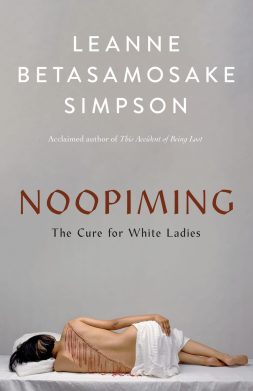 – This book is literary art. It’s charming, witty, insightful and unforgettable. The way Simpson writes is completely unique. The love and honour about which she writes among Anishinaabeg (an indigenous people in Canada) and the land is both poetic and lyrical. Narrators include Mashkawaji (they/them), who lies frozen in the ice, remembering a long-ago time of hopeless connection and now finding freedom and solace in isolated suspension. They introduce us to the seven main characters: Akiwenzii, the old man who represents the narrator’s will; Ninaatig, the maple tree who represents their lungs; Mindimooyenh, the old woman who represents their conscience; Sabe, the giant who represents their marrow; Adik, the caribou who represents their nervous system; Asin, the human who represents their eyes and ears; and Lucy, the human who represents their brain.
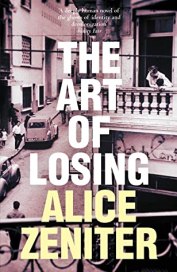 – Deriving its title from the piercing first line of Elizabeth Bishop’s arch poem “One Art”, The Art of Losing follows three generations of an Algerian family from the 1950s to the present day—as they progressively lose, in the fog of conflict and post-colonial transition, their country, their roots, and their innocence. The narrative wings its way from the contested highlands of Northern Algeria to a French refugee camp, to the streets of Paris and back, borne forward by a cast of nuanced characters: from the patriarch Ali to his granddaughter Naïma, heir to a new digital age in which old prejudices and presumptions persist. Each is profoundly human in their passions, griefs, vanities, contradictions and silences. The family’s journey unspools in a deft weave of fiction and research, as the narrator fills in with compassion and imagination what the clan’s muteness about the past have refused to yield.
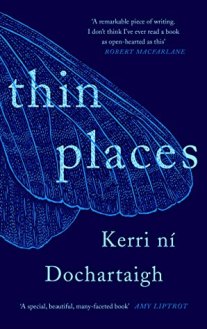 Thin Places is something of an enigma, when I bought it, I thought it was in the nature writing genre, the inside cover calls it a mix of memoir, history and nature writing – such a simplistic description of the reading experience, which for me was something else.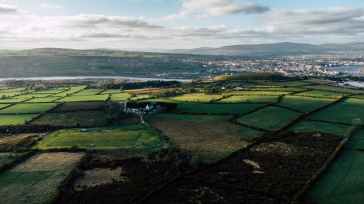
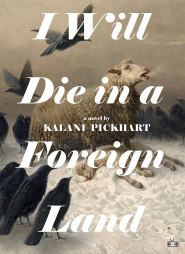 I thought this was an excellent and exceptional novel, that I chose to read because it is too distressing and overwhelming to be bombarded with only the terrible news that is flooding us at the moment.
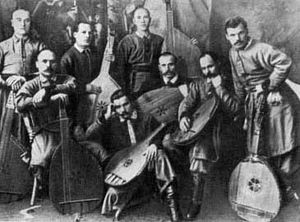 The first lines of the prologue are the collective voice of the
 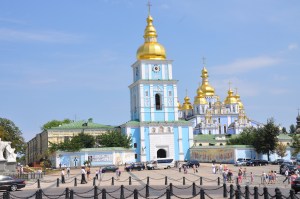 Katya is a Boston based, American doctor, working with the wounded inside a temporary medical clinic at St Michaels monastery. She is an outsider, drawn to the country because she was orphaned there, but grew up in America with no connection to her birth country. Hers, like the author, is an outside perspective, one that wants to know, to connect, to understand.
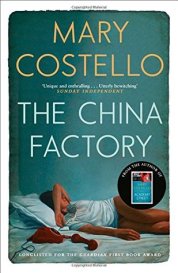 I’ve heard many say good things about her debut novel Academy Street and when her most recent novel The River Capture was published, a self-confessed homage to James Joyce’s Ulysses, I decided I would start at the beginning with Costello’s short stories.

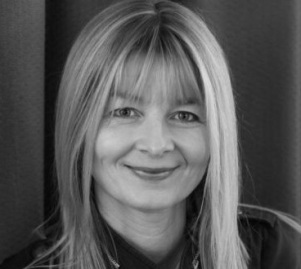 Mary Costello is an Irish short story writer and novelist from Galway now living in Dublin.
 Word by Word