A Regular Fix of Contemporary European Literature

While no slave to social networking, I do appreciate those needle in a haystack gems of information that twitter occasionally throws out. It’s a little like a child knowing that there is a lolly scramble going on behind a door that opens once a day and if you stand in one spot with your hand out, you might just catch something. Much of it passes us by, but the one that lands in the hand, is appreciated all the more for the scant chance it had of being captured.

Which is what this little tweet I caught in late May did.

I remembered that when I wrote about Deborah Levy’s Booker short-listed novel Swimming Home and mentioned the subscription based publisher And Other Stories, that @MarinaSofa mentioned Pereine Press. I looked at their website and started following them on twitter.

CIMG4717Pereine Press publish contemporary European literature, in the form of novellas, a new book coming out every 3 months. So they provide an opportunity to introduce readers to new authors, outside what we might normally read in English and a book that doesn’t require a long time to read, each book can supposedly be read in an afternoon. No 400+ page tomes here.

So the tweet reminded me that I did want to read their books and there’s nothing like the threat of a price increase to motivate one to act. So now I am a Pereine Press subscriber and I have the first two books from this years series on the shelf.

Mussel FeastEach year has a theme, in 2013 it is Revolutionary Moments and the first book is the German classic The Mussel Feast by Birgit Vanderbeke which I have now read and will tell you about very soon. Very well-known in Germany I am sure and a gripping read, I devoured as hungrily as I would moules frites.

Not only does this subscription mean there will be European literature arriving regularly, but subscribers are invited to participate and attend literary events with the authors whose books have been published, including the revival of a literary salon, which sounds intriguing. The events take place in London and I hope one day I might coincide a visit to be able to attend one. I love that this type of event is coming back into vogue.

So more contemporary European literature reviews coming here soon…

Portrait of a Turkish Family by Irfan Orga

The last of my collection of Turkish literature either brought back from Istanbul or lying on the shelf unread, Portrait of a Turkish Family was hailed as a masterpiece and I have to agree, a timeless classic, capturing a changing way of life as a consequence of war and fire, two of Turkey’s most fearsome destroyers of many families life of peace and tranquility that preceded them.

Orga IrfanIrfan Orga was born in 1908 in Istanbul, his mother only 15 years old, his father 20 and a younger brother Mehmet born two years later. His sharing of the family story really starts at age 5 when he remembers certain events with an amazing clarity, although many memories and conversations are clarified in greater depth later on to him by his mother. His curiosity and gift for eavesdropping apparent early on and perhaps those memories are so clear because life was soon to change dramatically.

By 1913, war was imminent and it was clear that Irfan’s father and only uncle were going to be called up. He sold the family business which hadn’t been doing too well, against his mother’s wishes, before being sent to war, in the hope that there might be something to come back to, a fresh start.

Ottoman uniforms WWI

Imperial Army workshop making uniforms

Once the men left for war, the family, raised and assisted by servants, continued largely in ignorance of what was to come, until food became scarce and their roles began to change.  As time went on, war forced everyone to adapt without realising that life would never again be as it had been before.

As change burrowed permanently into their lives, each would suffer in their own way, the coping mechanism of one often causing suffering in another.  Mother, mother-in-law, and the two boys were forced to move houses, downsizing significantly and rebelling against this change Irfan’s mother ripped the kafes from the windows of the house, insisting on letting the light in.

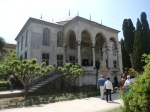
Kafes are the closely latticed harem shutters always used in Ottoman times to prevent passing males from catching glimpses of the women who moved within the house, not so much in evidence today, due to the neglect that makes them a significant fire risk. As back then, even today many families struggle to afford the upkeep required to take care of these houses, thus they crack, peel, rot and deteriorate into an unlivable state, when not consumed by fire first. We were fortunate to see this excellent restored house near Topkapi Palace and its equally neglected counterpart on Heybeliada Island below.

Without giving anything away, because it is so much better to experience the book, Orga captures the events and dramatic turning points of his family life with insight and brutal honesty. It is heart breaking at times, in particular the relationship between the mother and her sons, of which there is more focus than with his younger sister, born later and not always sharing the same experiences as the two boys.

The Orga Family

The Orga Family

Orga left Istanbul in his 30’s after a period in the Air Force to come to England and eventually married his Norman-Irish wife, amid controversy, not least of which it being deemed an illegal act in Turkey at the time, thus apart from one return visit, he was forced to remain living in exile in England.

His son Ateş Orga contributes a heartfelt afterword, sharing something of his father’s life outside the scope of his book, which focuses on those first 30 years of his life in Turkey.

A brilliant read, full of insight into life in a liberal Muslim family at the beginning of the 20th century and their challenges in coping with the effects of war and devastation.

It seems timely to be reading this as contemporary events overshadow historical reflections, provoked by the seizure of one of the last remaining urban parks in central Istanbul, it is being reclaimed to build a shopping mall and the citizens begin to revolt against what they perceive as authoritarian rule.

Ironically, on our last day in the city 2 weeks ago, we tried to find Taksim Square and Gezi Park, but all we found was a corrugated iron fence and a sea of humanity traversing the great shopping street between Taksim and Tunnel. It had been said that you haven’t seen Istanbul if you have not visited this area, but I was at a loss as to what I was supposed to find, all trace of restive beauty hidden and on the verge of replacement.

I am reminded of Pamuk’s Istanbul Memories of a City and the many pages of hüzün, that sense of melancholy that has hung over the city since Ottoman times and can’t help but wonder if the time for silent brooding is erupting into a new age of outspoken demonstration.CIMG4470

And all down the Bosphor, down, down to the Black Sea, ran the tall trees and the old wood houses that suit the skyline so well. If I turned my head to the left there on the hilltop, I could see Dolmabahçe Saray white and artificial as a wedding cake in its peaceful setting. Miniature mosques front the water’s edge and there at the end of all the shining palaces lay Istanbul – my Istanbul that will forever hold something of my heart. Grey it would look from this hill and the smoke from the boats would lie over it like a soft veil and tall and tapering are the minarets that enchant the skyline, and from my hill I would see, being the Mosques, the Marmara like a faint line of thread. Irfan Orga

Patasana: Murder at an Archaeological Dig by Ahmet Ümit tr. Amy Spangler

Patasana

Visiting another country is an opportunity to be introduced to new authors, to read outside one’s preferred genre and to gain new historical perspectives.

So while I am already a fan of the more well-known in the English language writers, Orhan Pamuk and Elif Shafak, Ahmet Ümit was completely unknown to me and while mystery isn’t my preferred genre, a book that introduces us to new places and offers insights into other cultures and their way of life is certainly appealing.

Books from the Basement

I asked in the bookshop in Istanbul for A Memento of Istanbul, another book written by Ahmet Ümit, but it wasn’t available. The only book they had in English by him, had to be retrieved from the basement. I’m not sure if that is significant or not, although having got to the end of the book and knowing the controversy surrounding the treatment of the Armenian population within Turkey, allowing his characters to thrash out their opposing views, may have courted controversy.

In 2012 France tried to make denial of the Armenian Genocide a criminal offence, souring relations between the two countries, however the draft law was struck down.

Review

HIttites
Ancient Hittites

Patasana was the son and grandson of a palace scribe, who wrote his story and that of his father and grandfather onto tablets that were then sealed and are now being uncovered 2700 years later.

Each alternate chapter is a translation of one of the tablets, so while we follow the contemporary story of the archaeological dig of an antique Hittite settlement in southeast Anatolia and it’s team members, we also learn what Patasana lived through, the confessions of a young scribe, his life, love and regrets.

The Hittites

Hittite Chariot
Hittite Chariot

“He was the chief scribe of the palace, a very important government position among the Hittites. These men were extremely well-educated. They knew several languages. Their duty was to compose texts as dictated by the king, not to write down their own feelings, thoughts and memories. But that didn’t keep the scribe Patasana from writing down his own story. That’s why the tablets are so important….We believe what we have here is the earliest documentation of humankind’s non-official history….We think he’s telling the story of the ancient city’s final days. And together with the history of the city, his own personal history as well.”

Unsure whether it is related to the dig or not, a local elder is discovered dead, having fallen, or been pushed from the minaret of the mosque, a man in monks clothes seen fleeing the scene. Esra, the leader of the team is paranoid about upsetting locals and having her first dig cancelled before they have uncovered all the tablets and participated in an important press conference being held to satisfy their funders. Her insistence on knowing everything and getting close to the police captain makes her just as suspicious as virtually every character who at one time or other she imagines as a suspect.

Euphrates River, Anatolia

Whilst it could have done with some editing down, it is an enjoyable and I believe popular book.

It is interesting that the author was born in Gaziantep, southern Antolia and while on a family picnic near the Euphrates River saw an excavation site, an old Hittite city, prompting him to immerse himself in researching the area, its people and customs and then write this book.

Ahmet Ümit, Author

Ahmet Ümit himself sounds like an interesting character straight from a novel and it is clear that his own life has inspired many of the stories and characters he has written. As a young man he was a revolutionary political activist and a member of the Turkish Communist Party and he illegally attended the Academy for Social Science for a while in Moscow.

In an interview with Maria Eliades in Time Out Istanbul in 2011 he said:

“In this land, there’s a problem with history. The Turks came here 1,000 years ago but the land has a history that is 200,000 years old. Generally, the government believes that history began 1,000 years ago. They do not count the history of people who were not Muslim. In my novels, I’m trying to show how these people influenced the history and where their position was. I’m trying to emphasize how the Hittites, the Romans, the Byzantines, the Armenians, Greeks and all the different groups affected it. Turkey needs this: an independent view of people, regardless of their race or religion. That’s the basis of my books. The detective part of the story is a catalyst for explaining the untold part of the stories.”

Istanbul Memories of a City by Orhan Pamuk

IstanbulAlthough I carried the book  to Istanbul and back, there was no inclination to read it while I was there, I started it on the return plane journey, the appropriate occasion to do so, for Pamuk’s Istanbul is laced with more melancholy than the city I visited and I realise with hindsight, the importance of constructing my own unfettered impressions, free of this philosophical consequence of the decline of a grand empire and the inclination of its progeny to feel somewhat bereft at missing out on an era when their prominence was that much greater than it is today.

However, I remain as intrigued about the author now as I did before I started the book, it is a unique form of memoir, more of a nostalgia trip through selective memories of his childhood and his city, sharing anecdotes from both that formed him into the writer he is today.

The imagination features large in Pamuk’s  life from a very young age, when he was five-years-old he was sent to stay with an Aunt on his own and she used to point at a picture of a child and say it was him. He came to know him as the other Orhan and while he knew it was not him, this shadow of himself never left him behind. Neither did he ever leave the city of Istanbul in the fifty years up to writing this book.

CIMG4275“But the ghost of the other Orhan in another house somewhere in Istanbul never left me. Throughout my childhood and well into adolescence, he haunted my thoughts.”

Though he never left the city, he read many works by writers and poets who published impressions of Istanbul, Gustave Flaubert, the poet Gérard de Nerval, Théophile Gautier, Pierre Loti, Edmondo de Amici and laments that in the same period they were writing about the city,  little was written or painted by its own artists and writers, therefore, whilst the work of others is familiar, it remains an outsiders perspective and does not quite capture the essence of how the Istanbullus see themselves.

Pamuk often visualises the city in black and white and throughout the book on nearly every page are photographs depicting the city in monochrome. He spends an entire chapter describing Hüzün, the Turkish word for melancholy explaining how if differs from sadness and finishes by almost convincing the reader that it is something close to a virtue, absorbed with pride and shared by a community.

“the hüzün of Istanbul is not just the mood evoked by its music and its poetry, it is a way of looking at life that implicates us all, not only a spiritual state, but a state of mind that is ultimately as life affirming as it is negating.”

“… hüzün brings us comfort, softening the view like the condensation on a window when a tea kettle has been spouting steam on a winter’s day.”

CIMG4331

Entrance to the Grand Bazaar

I did not come to Istanbul expecting to see sultans, dervishes or crystal chandeliers, though there are traces of them all if you seek them out. I came to see a city that comfortably exists while straddling two sides of a significant divide.

Bosphorus

The Bosphorus with the Castles of Europe and Asia by Thomas Allum

The Bosphorus, that deep channel of powerful surging water and current that separates two continents is deceiving. The reasonably short distance from one side to the other, only 2 to 3 kilometres, the fact that it embraces one city reminds us that there is less than we might think between the people who inhabit each continent.

A deep and powerful separation of continents, yet humanity passes across it with ease. Great divides can indeed be overcome.  The streets of shops and the Grand Bazaar attest to that passage of traders and pilgrims who have entered and passed through the city over hundreds of years.

It takes until the very last chapter before we meet the more mature Orhan who will become a writer, because unlike many born to write, his first love was painting and he shares much through his observation and study of artists who painted his city, something he practiced prolifically in his youth. The demise of this early calling occurred not long after his teenage muse was packed off by her family to Switzerland, his mother’s relentless cautions against pursuing the life of an artist transforming his rebellion against completing his architectural studies into announcing:

“I don’t want to be an artist.” I said. “I am going to be a writer.”

CIMG4495

“I was, as I had begun to discover even then, the sort who could always wear the same clothes and eat the same things and go for a hundred years without getting bored so long as I could entertain wild dreams in the privacy of my imagination.”

A treat for admirers of Orhan Pamuk’s work and those who have had the good fortune to visit his wonderful city, which is not nearly as melancholic to the visitor as it is to a philosophical resident.

Next up, murder at an archaeological dig! Time to leave Istanbul and travel inland with Ahmet Umit.

Ottoman Distractions

Sultanahmet (Blue Mosque)

Sultanahmet (Blue Mosque)

Greetings from a vibrant and bustling Istanbul.

There is too much opportunity to observe, appreciate, participate and marvel at this wonderful city situated where Europe meets Asia and where on every corner there lies evidence of humanity’s incredible vision going back many hundreds and thousands of years, one must put down the books and just dwell in its presence.

So no update on reading, though I do have some reading related pictures to share and I have bought two books to add to my Turkish literature collection. Not far from Sultanahmet (the Blue Mosque) is a bookshop with an enticing window showing off its collection of English translated works, works by Turkish authors written in English and any writer, whose work focuses on the area.

The owner’s brother was quick to recommend Louis de Bernières Birds Without Wings, which I told him was already in my top all-time favourite reads and of course Elif Shafak and Orhan Pamuk’s works are all there.

Portrait of a FamilyHe then handed me Portrait of a Turkish Family and promised with stalwart confidence that this little masterpiece would replace my current favourite. Sales-speak or the truth, I shall soon find out.

PatasanaI was actually looking for a copy of A Memento of Istanbul, by Ahmet Ümit, a writer I have not read before, master of the Turkish thriller and after Turkey’s profile at the London Book Fair, watch out for more from this author. I was interested in this particular book as it is said to highlight seven significant attractions introducing something of the city’s rich culture and history. They only had one book left in English by this writer, Patasana, so A Memento can wait, this is where I shall start. Thrilled already!

Istanbul is a fabulous city to visit and the children and I have totally fallen for the historic part of town. I am sure we will be back and would recommend it to you all if you ever have the opportunity to visit.

Some of the highlights:

A Winter Book by Tove Jansson

Too many days have passed in a fog and even this is hard to write, because I had already written and lost it, so peeking out from the blur of la grippe (flu), I hope I find the inspiration that assisted me first time round.
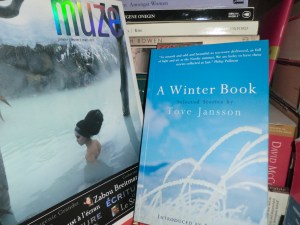
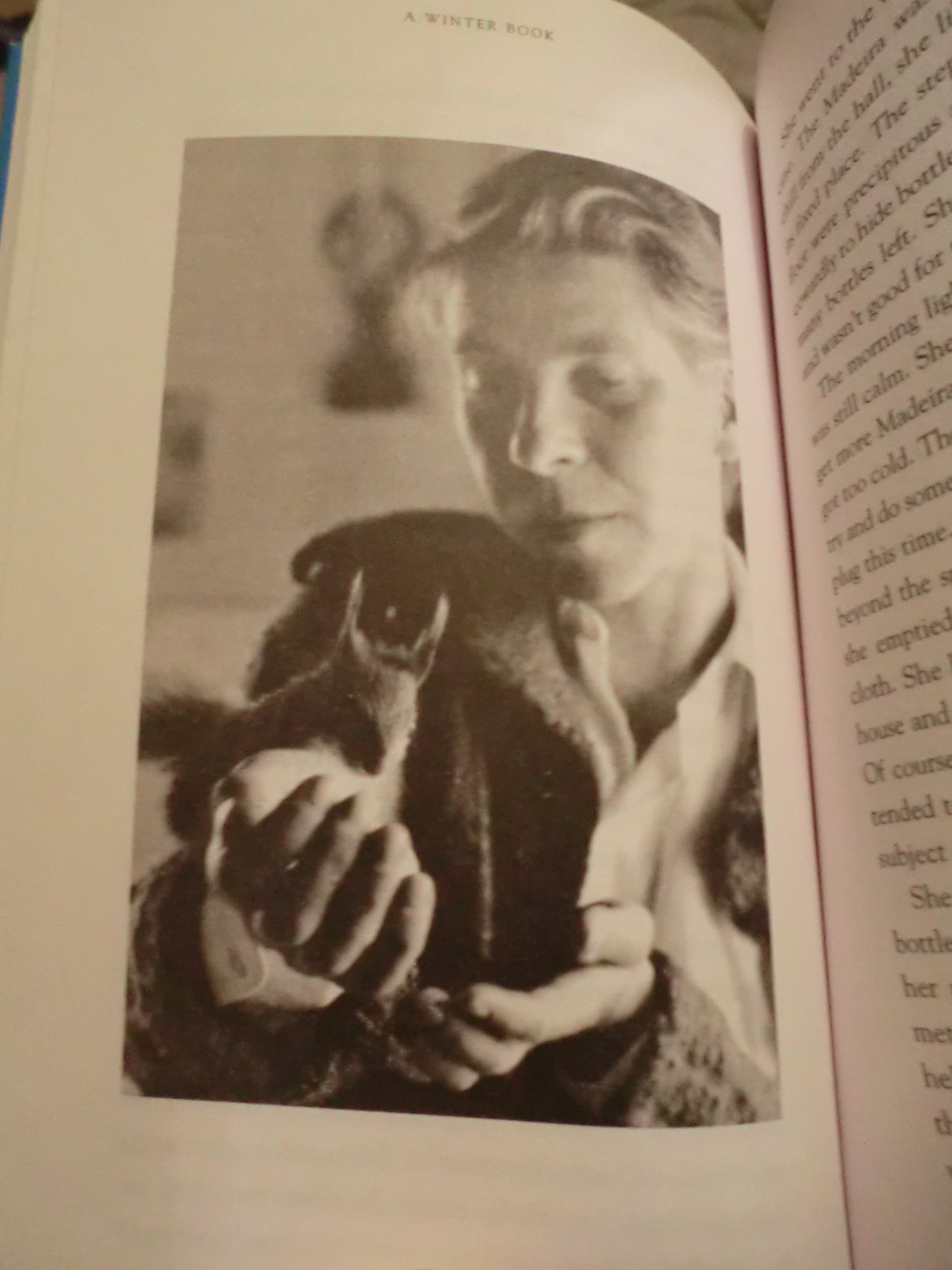
A Winter BookI came across a review for Tove Jansson’s A Winter Book after spending an evening reading Katie Metcalfe’s sublime poetry here.

Metcalfe is a young contemporary poet from Teesside, in the North of England, who churns out poetry at an astonishing rate and has an abundant talent for getting to the heart of it, all of it, any of it, whatever it is she chooses to write about in that heart-felt way that only poetry can do.

Inspired by the Arctic and snowy landscapes, it was no wonder a book like Jansson’s would appeal to her. And something about it appealed to me too, a collection of tales to read in winter, semi-autobiographical bite sized vignettes of another creative spirit.
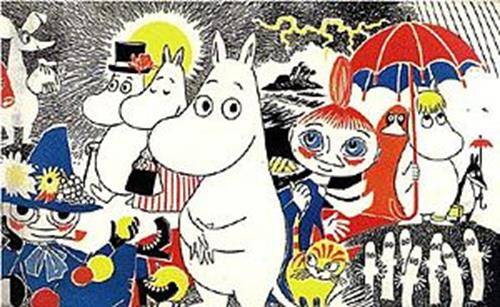
The Moomin Family

Tove Jansson (1914-2001) was not known to me, but will be known to many as she was the author of the children’s fantasy Moomin books. The Moomins are a family of pale, rotund trolls with large snouts, resembling hippopotamuses. Sniff, Snufkin, Moominmamma, Moominpapa and more, they live in Moominvalley in the forests of Finland and have lots of adventures.

Jansson was awarded the Hans Christian Andersen Award for her lasting contribution to children’s literature in 1966.

Her first collection of stories for adults The Summer Book was published in 1972, and this more recent collection spans her writing career, like seaside keepsakes gathered over the years. I now have The Summer Book, but shall make that a seasonal read as well.

The daughter of creative parents, her father a sculptor and her mother an illustrator, Jansson’s own imagination has been given full rein and it comes out in her first stories, which are told from the perspective of a girl, whom I am sure was the author herself. In fact all through the book, I was left more with a feeling of reading non-fiction than anything else. This selection draws from five collections presenting the best of her short fiction.

In one story entitled Snow, she writes of a girl and her mother being snowed in, the light slowly disappearing as the windows are covered up and expresses her delight in having escaped the outside world, warm in the safe and secure presence of her cheerful mother.

“..we have gone into hibernation. Nobody can get in any longer and no one can get out!”

I looked carefully at her and understood that we were saved. At last we were absolutely safe and protected. This menacing snow had hidden us inside in the warmth for ever and we didn’t have to worry a bit about what went on there outside.

Jansson spent every summer living and working on a tiny island off the coast of Finland, returning to Helsinki for the more difficult months and clearly spent many summers in boats and on the island during her childhood. Another memorable story was The Boat and Me, she is given her first boat at twelve-years-old and wastes no time in asserting her new-found independence, taking the boat out along the coast to look at her favourite spots from another perspective, with little regard for the hours that pass by or the hearts that might be fretting.

I go slowly, hugging the shore, into each creek and out round each headland; I mustn’t miss anything out because it’s a ritual. Now I’m about to see my territory from the sea for the first time, that’s important.

I pulled up the anchor-stone and rowed straight out into the path of the moon. Of course the moon’s path is lovely as a picture in calm weather, but when it’s rough, it’s even more beautiful, all splinters and flakes from precious stones like sailing through a sea set with diamonds.

And at that very moment Dad turned up…
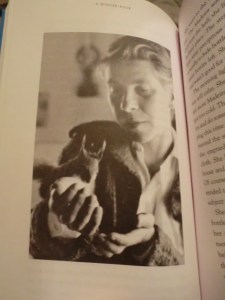
Tove SquirrelBut my favourite story has to be the one that follows, in a section entitled Travelling Light, signifying the latter years, where annoyance is more likely the emotion of choice to greet uninvited guests in place of the enthusiasm or delight of her more youthful years. Even when that guest is an island-hopping squirrel.

Either I am incredibly gullible or this story will teach you something new about the intelligence of squirrels, as a reader I was right there with squirrel and hoping for the best, while Jansson was lining up his escape options, ill inclined to do anything to encourage the lonesome animal to stay.

She didn’t care about squirrels, or fly fishermen, or anyone, but just let herself slip down into a great disappointment and admit she was disappointed. ‘How can this be possible?’ she thought frankly. ‘How can I be so angry that they’ve come at all and then so dreadfully disappointed that they haven’t landed?’

Not just a quiet, honest collection of stories, but containing wonderful black and white photos that add to the atmosphere the author evokes and make us feel the heaviness and significance of that final story, Taking Leave, the last visit, when the nets have become too heavy to pull, the boat too difficult to handle, the sea too unpredictable for two aging women. It is with a quiet sadness but knowledge that many happy hours were spent, that we turn the last page on that final visit.

What We Expect When We Don’t Expect Much From Love: Stories by Ludmilla Petrushevskaya

LudmillaThere Once Lived A Girl Who Seduced Her Sister’s Husband, And He Hanged Himself. The title itself is intriguing, though if you have read the author before, you will recognise the tendency, she is the bestselling author of There Once Lived A Woman Who Tried To Kill Her Neighbour’s Baby.

I took the book with me on a recent visit to London, as my alternative to the kindle, since I have been caught out a couple of times with that little machine dying on me even though the battery wasn’t run down. I have since discovered the 20 second rule. When the kindle fails to come to life when it should, hold it in the on position for 20 seconds to reboot it. Like many gadgets today I’m not sure these things are designed to last, not as long an old-fashioned book anyway. And I have Penguin to thank for sending me a bona-fide book!

The blurbs quote Chekov, Poe, Beckett, Tolstoy and various others to entice you in, making promises that will no doubt encourage dissent; it is a tall order to be compared to literary greats. I haven’t read all those greats, but there is one collection I am reminded of, not because she writes like him, but because the voice is clear from story to story and at the end I am left with the notion that “there is consistency in that voice” and “she says it how it is”.

Carver LoveIf Ludmilla Petrushevskaya reminds me of any writer, it is Raymond Carver and his collection what we talk about when we talk about love. Ironically, when pulling this volume off the shelf, I also find tucked in its last page, a boarding card for a flight from Marseille to London, dated June 2008.

So back to the book.

Seventeen episodes of attempts at love or connection with another, in all their dysfunction, set within the context of post revolutionary Russia when private ownership of housing was forbidden and many family apartments were divided and sub-divided and the space people came to occupy diminished, along with many of their hopes and expectations of each other.

By 1972, when Petrushevskaya published her first story, Moscow was ringed with concrete buildings containing these overcrowded units where the majority of these love stories take place.

Born in 1938 in Moscow, Ludmilla Petrushevskaya never knew family life. Evacuated with her mother to Kuibyshev during the war, she was left there in the care of her aunt and grandmother while her mother returned to Moscow to attend college. Members of the family of “an enemy of the people”, they were treated as pariahs – and were slowly starving. At age eight, Petrushevskaya began to run away from her temporary home and spend summers as a street beggar. Her mother returned after four years and brought her back to Moscow, where they were officially homeless. As a young girl there, Petrushevskaya and her mother lived under a desk in her insane grandfather’s room, while occasionally renting cots in nearby communal apartments. It was an unsettled, unhappy childhood, one experienced without the consolation of siblings.” Extract from Introduction by translator Anna Summers

The stories are collected into four sections, the first A Murky Fate contains stories of characters who consider entering relationships that are flawed or doomed, in readiness for a chance at that diminished flutter of something that may resemble love. It is not to be moved by these circumstances that we read these stories, it is to bear witness to another’s reality. They are uncomfortable, fatalistic and near-true.

She’ll wait for his long-distance call in a phone booth at the post office. For ten prepaid minutes they’ll become one soul again, as they did over the twenty-four prepaid days of their vacation. They’ll shout and cry across thousands of miles, deceived by the promise of eternal summer, seduced and abandoned.

As we read the stories, our own expectations are so low for these women, that it is possible to experience our own small pleasure in expecting nothing and finding delight in an obscure change in their fortune, even if only for a short period.

I mentioned to a friend that it was as if I was sitting across the table from the writer listening to an oral narration of people she knew, that it reminded me of other tables I have sat at, listening to stories of other women from different cultures and how they found themselves living in this or that country or city, so often lead by the allure of love or the promise of an improved lifestyle.

dollsEach community, era, culture has its stories to share, it disappointments to shed and its eternal hope for future generations, that they may do better. Reading these stories is like reading another chapter in the evolution of humanity and reminds us that we have a long way to go before arriving near any kind of nirvana.

…the day is burning its last, and Milgrom, eternal Milgrom, sits in her little pensioner’s room like a guard at the museum of her own life, where there is nothing at all but a timid love.

Note: This book was kindly made available by the publisher.

Revenge by Yoko Ogawa (Japan) – Eleven Dark Tales

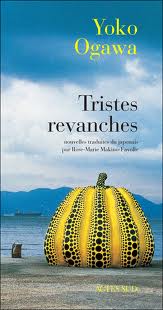
RevengeWow! Those of you who have been reading this blog long enough to remember my post on Why People Don’t Read Short Stories may remember that they are something I usually savour, rarely devouring an entire collection in one sitting, but Yoko Ogawa breaks the mould and her newly published book Revenge is full of hooks and devices that stopped me putting it aside and saw me instead ploughing on to read one after the after.

Like a curious sea creature taking the glistening bait, after reading the first story, I dove into the next, caught in the deft grip of Ogawa’s clever and haunting narration, each story carrying the slimmest thread into the next, sufficient to keep the reader interested and more than that, inquisitive to continue and see what she would come up with next.

I first read Yoko Ogawa last year, attracted by her slim collection of three stories contained within The Diving Pool and then her novella The Housekeeper + The Professor, they are very different books, so I was interested in how this collection would compare.

tristes revancesShe has written prolifically over the years and much of her work has been translated into French, very little thus far in English, though perhaps that will change as her short stories are increasingly appearing in contemporary English language publications. The Nobel Prize winning author Kenzaburō Ōe when speaking about her work said:

‘Yoko Ogawa is able to give expression to the most subtle workings of human psychology in prose that is gentle yet penetrating.’

Revenge is an apt title, there are traces of it in every story, calculated revenge, obsessive revenge, inexplicable revenge and cold-blooded revenge. Each story exists on its own, but I read it like a novel, not wanting to pause between titles and feeling right from the end of the first story a tightness in the solar plexus and realisation that I had been holding my breath.

It’s not just the story, it’s awe at how she can write in such an engaging way, where very little actually happens, but we begin to understand more about what is going on in the mind of the character from all the little details she gives, creating a growing image in our own minds, just before she delivers the final blow. And even when we don’t know much about a particular character, someone on the periphery perhaps, not important to the story, chances are we are about to find out more about them in the next story. And so we read on to find out if we guessed right or if she will insert some other connection.

I share this from the blurb, which encapsulates something of these stories in a more concise manner than I ever could:

An aspiring writer moves into a new apartment and discovers that her landlady has murdered her husband. Years later, the writer’s stepson reflects upon his stepmother and the strange stories she used to tell him. Meanwhile, a surgeon’s lover vows to kill him if he does not leave his wife. Before she can follow-through on her crime of passion, though, the surgeon will cross paths with another remarkable woman, a cabaret singer whose heart beats delicately outside of her body. But when the surgeon promises to repair her condition, he sparks the jealousy of another man who would like to preserve the heart in a custom tailored bag. Murderers and mourners, mothers and children, lovers and innocent bystanders—their fates converge in a darkly beautiful web that they are each powerless to escape.

Ogawa is certainly not the first writer to do this, to infuse stories with their subtle threads and connections, Alice Hoffman does it with Blackbird House, Colum McCann did it with Let The Great World Spin and I believe Cloud Atlas (which I have not read) has something that makes it too, more like vaguely connected stories than a novel.

jigsawRevenge isn’t a complicated kind of clever though, there’s no need to question or ponder too deeply over it, the links are clear, but it will leave you wondering how she does it, how she maps out those stories and creates those links. It’s like a jigsaw puzzle with multiple subjects, the letters R E V E N G E scratched across the surface.

Note: This book was an Advance Reader Copy (ARC) provided by the publisher via NetGalley.

The Zenith by Dương Thu Hương

In 1996 I spent three months travelling in Asia, limiting my visit to four countries, India, Nepal, Vietnam and Thailand.

It was in Vietnam that I first travelled on my own and perhaps for this reason, it has always resonated deeply within me. It is a special place and I experienced it at a unique time, the city of Hanoi had no cars and most of its population travelled by bicycle, unlike the city of Saigon in the South full of the noise pollution of motorbikes. 090212_1801_IntheShadow1.jpg

That’s not to suggest it was easy to navigate those intersections, with bicycles coming from all directions, the ring of the bicycle bell a constant stream of warning as the masses somehow managed to criss-cross in opposite directions without accident. I watched that flow for a long time before I understood and dared to join it. The trick? Do not hesitate.

While in Hanoi, I decided to read a couple of Vietnamese authors, I was interested in reading something that came from a local perspective and not from the English-speaking perspective which seemed more prominent.  A young boy in the street sold me two books, Bao Ninh’s The Sorrow of War and Dương Thu Hương’s Paradise of the Blind, the latter a story that illustrated the effect of a rigid communist ideology on a family in the wake of the land reforms of the 1950’s, as narrated by a young woman travelling to Moscow in the 1980’s.

A quote on the back written by Grace Paley, confirmed my thoughts.

“At last a woman, a Vietnamese woman, tells us Vietnamese life: the village, the city, the repression and expansion, the middle peasant, the poor peasant, the years of exquisite food and no food, working in the Soviet Union – and all beautifully told so that we begin to understand not where we were for years, but where and how they – the Vietnamese – are now.”                                                      – Grace Paley

090212_1801_IntheShadow6.jpgThe author’s depiction of ordinary people, in both rural and urban Vietnam was compelling and the definition of terms at the back of the book, particularly of food and practical items was especially useful for me as I cycled my way around the city and out along the river, past markets and temples and saw how people lived, ate and spent their days. This book was the first Vietnamese novel published in the US (1993) I have since discovered, so no surprise that I had never come across this enlightened perspective before.

zenithDương Thu Hương now lives in exile in Paris and her latest novel The Zenith has recently been published. It gets off to a slow start initially, when Ho Chi Minh, the President looks back as a 70-year-old man at parts of his life with regret. He regrets the lack of contact with children that he fathered and the loss of a woman he loved, he regrets the distance that has come between himself as a man and the people he sought to represent.

Wishing to retrieve something of that contact, he attends the funeral of a woodcutter to pay his respects, only to realise the suffering his presence will have caused because of his distinguished position and the expectations that are carried with it should he grace them with his presence. He despairs at having lost sight of that which motivated him to first become involved in the revolution, to bring equality to all.

A bitter longing mixed with a searching curiosity flowers in his heart; he wants to attend the funeral of the woodsman because he wants to experience the funeral of a real father.

Things pick up in pace and interest when we learn more of the story of the woodcutter, his family and village, this one story perhaps seen to represent various stages in the country’s own experience of communism, both its idealistic benefits for the community and its destructive elements against the weak and innocent, when power, greed and envy are present within its leadership, turning even family members against each other. The story-telling reaches its zenith and had me totally convinced of the authenticity of the relationship between the wise sixty-something father/grandfather Mr Quang and his new 18-year-old bride Miss Ngan and relishing the way they managed the reactions of close family and their community with their provocative yet bona-fide marriage.

Of old, it was said: “Tears run downward.” So true.

“Filial love for parents can’t equal the ties of anxious love in a father’s soul for a child. Because when we love our parents we look up but when we love our children we look down. And according to the laws of heaven and earth, tears always flow downward. Especially whenever we recognise that as fathers we have done wrong. Hell itself will then open a door straight into the heart.”

It highlights the enormous gap that can grow between those who rule and have power and/or wealth and those who are trying to survive, just like the distance between rich and poor in a democratic society, similarly it exists between those who yield power and those who don’t in a communist society, trust breaking down within a community as people become increasingly desperate and open to being corrupted while others live in constant fear.

This is not a book to be read quickly, nor even understood immediately. I continue to think about what I read and what it attempted to portray about society, leadership, workers, family and the effect of power and its oft great distance from the reality of how people live, the destructiveness of jealousy and the perseverance of those who will never be compromised, who will always fight for what they perceive is good and right.

The country, its writers and message continue to allure and despite all the suffering, both past and present, there remains for me a quiet tranquility that pervades it, a steadfast patience and determination I admire.

Note: This book was an Advance Reader Copy (ARC) provided by NetGalley on behalf of the publisher.

1Q84 The Finale

Foyles bookshop, Southbank Centre, Royal Festival Hall, London

It’s been a busy month and my reading has suffered for it, not to mention having to take a break 400 pages into a historical novel about the French revolution, but a visit to London and another wonderful bookshop, Foyles on the Southbank helped, tempting me with Book 3 of Murakami’s trilogy and promising to be even more of a page-turner than the first two books.

If you haven’t read it already, I suggest you begin with Book 1 &2, which I read in the summer and review here.

In essence Book 1 and 2 follow the lives of the two main protagonist’s Aomame and Tengo, who were in the same class at primary school, twenty years before the episode the book narrates occurs.

In these first two books, we follow the two characters into the alternative world of 1Q84, where everything appears normal, until they notice the presence of the two moons. Tengo has ghost-written what he assumes is a fantasy novel, however the presence of the two moons suggests otherwise. Aomame is a sports instructor with a penchant for carrying out untraceable acts of revenge.

By Book 3, we are just waiting for these two to meet as they seem to be on a collision course for doing so and Murakami seems to delight in teasing the reader, as this reunion almost happens on more than one occasion. He adds tension and pace by introducing Ushikawa, a private investigator searching for leads after the murder of the leader of a cult, an act that has yet to become public. He has sniffed out a connection between the two, before they have realised it, Tengo and Aomame are relying on and following an instinct, Ushikawa deals only in facts and is closing in on them both.

In times like these Ushikawa didn’t like to have a set objective. He let his thoughts run free, as if he were releasing dogs on a broad plain. He would tell them to go wherever they wanted and do whatever they liked, and then he would just let them go. He sank down into bath water up to his neck, closed his eyes, and, half listening to the music, let his mind wander.

Yet again, I am in awe of the grand imagination of Haruki Murakami in conceiving this extraordinary plot and notice once again the mirroring effect in the separate lives of two characters who have not yet met up and yet who encounter equivalent or parallel situations. I am sure I am only skimming the surface of what lies beneath this narrative, but it was a joy to find Book 3 as enticing as and perhaps even more exciting than the book preceding it.