Victoire: My Mother’s Mother by Maryse Condé tr. Richard Philcox

Maryse Condé is the author I discovered on the Man Booker International long list, the author that stood out for me, even if she didn’t win the prize. Since discovering her, I have read and reviewed the book she recommended for those wishing to discover her work, Tales From the Heart: True Stories From my Childhoodvignettes of her life growing up as the youngest and 8th child of a civil servant (who had been a school principal when her mother married him) and school teacher in a black bourgeoise family.

I decide to follow this up with another tale Victoire: My Mother’s Mother, though publishers label it as fiction, it is based on the life and facts of her grandmother. Victoire was an illiterate, white skinned woman she never met, who worked as a highly reputable cook for a white Creole family, the Walbergs, a connection that her mother Jeanne, though raised, supported and educated by this family, appeared to reject.

VictoireMaryse Condé wrote this account in a desire to learn more of her family history, a quest that began by researching the life of Victoire Elodie Quidal, speaking to a lot of people and a project that would take three years to complete.

When she questioned her mother Jeanne, a woman with no discernible palate, incapable of boiling an egg, she was shocked to learn her grandmother had been a cook.

‘And she didn’t teach you anything, not even one recipe?’ She continued without answering the question. ‘She first worked in Grand Bourg for the Jovials, some relatives of ours. That ended badly. Very badly. Then …then she migrated to La Pointe and hired out her services to the Walbergs, a family of white Creoles, right up until she died.’

Maryse wanted answers, but that was as much as her mother would share, they never resumed the conversation, the years passed by, in a kind of chaos, however that conversation never left her curious mind and her grandmother began to seep into her imagination.

Sometimes I would wake up at night and see her sitting in a corner of the room, like a reproach, so different to what I had become.

‘What are you doing running around from Segu to Japan to South Africa? What’s the point of all these travels? Can’t you realise that the only journey that counts is discovering your inner self? That’s the only thing that matters. What are you waiting for to take an interest in me?’ she seemed to be telling me.

Victoire’s mother Eliette was a twin who died in childbirth at the age of fourteen. More than the shock of her pregnancy and sudden death, was the appearance of a child with clear eyes and pink skin. No one was aware of her having crossed paths with a white man, there were no whites in La Trielle where she lived except priests and at one point a garrison of soldiers, who’d been training in the area, before being despatched back to France.

Eliette’s mother Caldonia raised Victoire and became close to her, when most people were wary of her with her too white skin and transparent eyes. The only education she received was religious and at the age of 10, the Jovial’s requested she come and work for them in the kitchen. Given only the thankless tasks, she observed the others and began to acquire the culinary skills she would become so well-known for.

Obtaining a position as cook for the Dulieu-Beaufort family was a turning point in her life, perhaps even more so than finding herself pregnant at 16-years-old, for in this family she would meet her lifelong friend Anne-Marie, her same age, outraged at having been married off to Boniface Walberg, Victoire’s future employers and the beginning of a mysterious and enduring relationship, one that set people talking and would be seen by her daughter Jeanne (Maryse’s mother) with utmost disapproval.

Apart from a brief period when Victoire fell in love with another, causing a period of separation from her daughter, and a significant turning point in their relationship, she would stay loyal to the Walberg’s all her life. Though she could neither read or write, she accepted her life, despite suffering the disapproval of her unforgiving daughter Jeanne, who would obtain an excellent education and position, marry a man twenty years her senior, removing all risk of insecurity that she’d observed in her mother and previous generations, determined to avoid a similar fate.

In an interview with Megan Doll, in Bookslut Maryse Condé explains her desire to write about her grandmother:

Maryse Condé‘The story is, of course, about my grandmother but the real problem was my mother. I lost my mother when I was very young — fourteen and a half. And during the short time that I knew her I could never understand her. She was a very complex character. Some people — most people, the majority of people — disliked her. They believed she was too arrogant, too choleric. But we knew at home that she was the most sensitive person and I could not understand that contradiction between the way she looked and the way she actually was. So I tried to understand as I grew up and I discovered that it was because of a big problem with her own mother. She seems to have failed; she had the feeling that she was not a good, dutiful daughter. I had to understand the grandmother and the relationship between my mother, Jeanne, and her mother, Victoire, to understand who Jeanne was, why she was the way she was, and at the same time understand myself.’

Condé also finds a connection between her and Victoire through their creativity, her grandmother’s through her renowned cuisine, Condé’s through her writing. At times she almost appears to channel her grandmother, as she senses what she may have been thinking or why she reacted in a certain way,  connecting with this mysterious woman who was so different to the mother she knew, a woman equally misunderstood by the community around her.

This was the perfect follow-up to Tales of the Heart and an intriguing look into the impact of circumstances of birth of three generations of women, how the past constantly threatens and can mock one’s position in the present, somewhat explaining Jeanne’s instinct to distance herself from her illiterate mother while fulfilling her ambitions and then her guilt at having treated her mother badly, when she only wanted the best for her.

The two books I have read were translated from French into English.

The Wall by Marlen Haushofer tr. Shaun Whiteside

The WallHaushofer’s novel begins on the 5th of November, the day the protagonist, a middle-aged woman, begins to write a report of what has occurred over the last two years, since she became isolated in a hunting lodge in the Austrian Alps, where she had been visiting her cousin Luise and Luise’s husband Hugo.

Some kind of unwitnessed catastrophic event occurs, creating an invisible wall between that which lives and that which doesn’t.

As I started reading and then discovered what The WallWake Elizabeth Knox was, I recalled Elizabeth Knox’s Wake, where a similar event occurs, though rather than one woman as we observe in Marlen Haushofer’s modern classic The Wall, with Knox we followed what happened to a group of survivors adding elements of fantasy and horror that suspend belief  allowing the reader to interpret it more as the form of entertainment it was written to be.

In The Wall, Luise and Hugo walk to the nearby Alpine village one evening, putting them on the deathly side of the catastrophic event. Sending their dog Lynx home before them, he becomes one of the important and constant companions of this lone woman, who will learn what it takes to survive.

Eventually she realises she is living in the forest completely alone, she is joined by a cow she names Bella whom she hopes is pregnant, an old cat who will also give birth, and she finds a sack of potatoes she can plant and some beans which she will also use to create a crop. She is grateful to Hugo for his forethought.

“At the time everyone was talking about nuclear wars and their consequences, and this led Hugo to keep a little store of food and other important things in his hunting-lodge.”

The book recalls the days, the months, the seasons, the work she creates for herself, the relationship between her and the animals, her nurturing of them and attempt to protect them from the harsh elements of the environment and their interactions with her, that remind her of her duty to survive.

Lynx prodded me with his muzzle and pushed me sideways. Maybe he didn’t like the flood, maybe he also felt that I was miles away and wanted to attract some attention. As always on such occasions I followed him in the end. He knew much better than I did what was good for me.

It is written in a stream of conscious style that never becomes monotonous, despite the monotony of her days, she must live in the present to survive and that depends very much on caring for the needs of the animal life that support her. She must deal with her own mental turbulence and anguish, discovering that her manual labours and constant activity, though tiring, keep her from the dangers of over thinking and decline.

By cutting timber, in fact, I missed a very fine Indian summer. I didn’t see the landscape at all, obsessed as I was by the thought of stacking up a big enough supply of wood.  Once the last log had been stored under the verandah I had a stretch and decided to treat myself a little. It’s strange, in fact, how slight my pleasure is every time I complete a task. Once it’s out of the way I forget it,  and think about new things to do. Even at that time I didn’t allow myself much time to recover. That’s how it always was: while I was slaving away I dreamt about how I would quietly and peacefully rest on the bench, but as soon as I finally sat down on the bench I grew restless, and started looking out for new work to do. I don’t think this was due to any particular industriousness, since by nature I’m rather lethargic,  but was probably through self-protection, for what would I have done otherwise but remember and brood? That was exactly what I mustn’t do, so what was there to do but more work? I didn’t even have to look for work, it turned up insistently of its own accord.

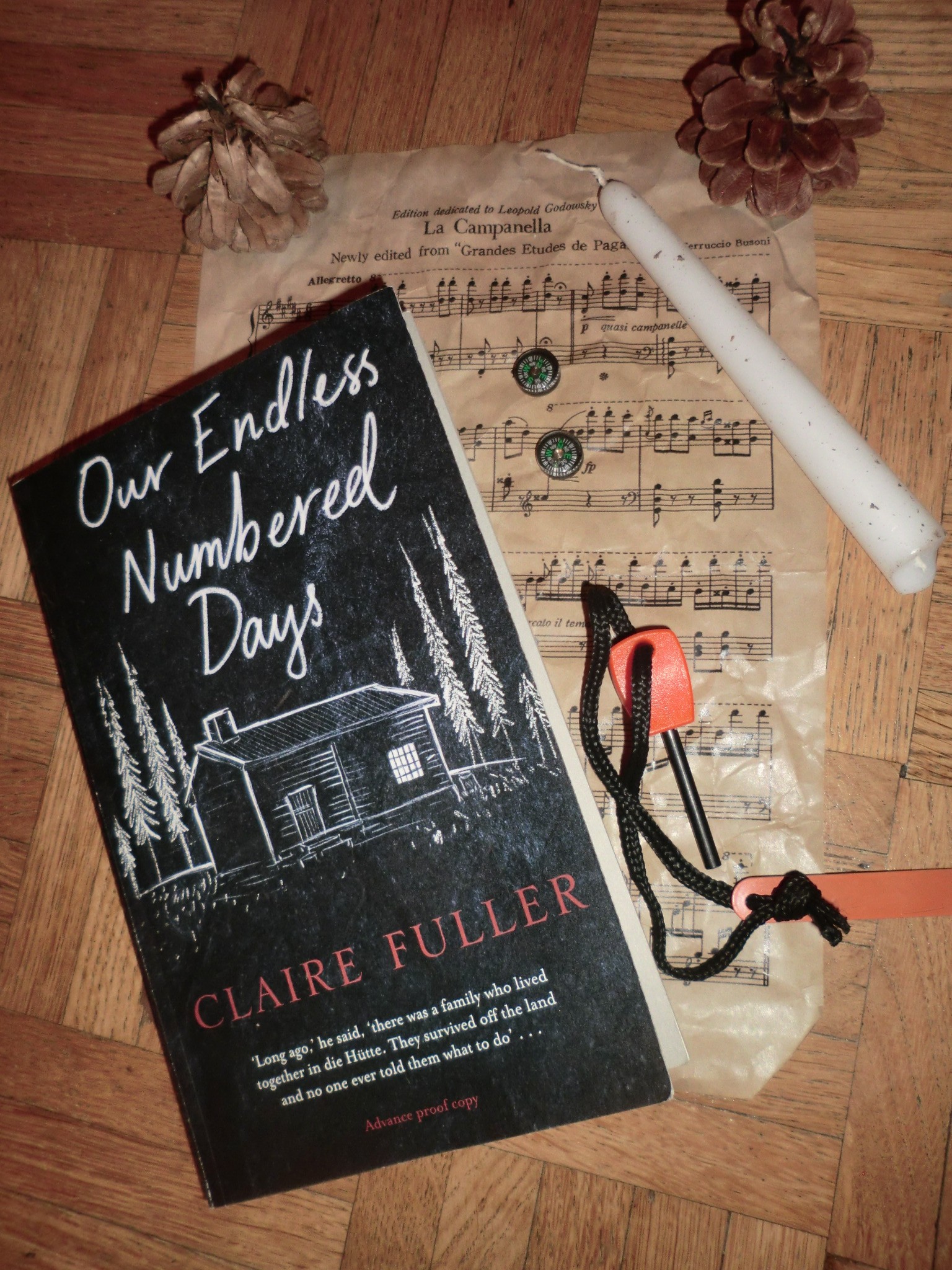
EndlessI was also reminded of Claire Fuller’s Our Endless Numbered Days, another book of survival in the European forest lands, a novel that contains distractions other than just survival, it being about a daughter whose father has taken her off to survive in the forest.

Marlen Haushofer’s protagonist has no zombies or deranged father’s to contend with, purely one woman’s survival and existence alongside a select few animals.

I found it utterly compelling and could not put it down. It is a brilliant novel that strips away the noise and manic obsessions of society placing one woman in a basic situation that will exhibit humanity’s natural feminine instinct to nurture, to protect, to achieve and survive while intermittently falling prey to the melancholic tendencies of mind that threaten to derail us. It does this without the use of fantastical elements apart from the existence of the wall itself, making it feel realistic and believable.

Marlen Haushofer wrote the book in the early 1960’s and it wasn’t published until 1968, two years before her premature death at the age of 49. The book was resurrected 15 years later when discovered by the feminist and anti-nuclear movements and has since been translated into 18 languages and made into a major motion picture by the Director Julian Pölsler. Deserving of being categorised as a modern classic.

The Wall is a muted critique of consumerism and a delicate poem in praise of nature, a challenge to violence and patriarchy, an encomium to peace and life-giving femininity, a meditation on time, an observation on the differences and similarities between animals and humans, and a timeless minor masterpiece. Jerry Whyte , Film critic on Julian Pölsler’s film adaptation

Wall Movie

Highly recommended and thank you to Vishy (click here for his review) for recommending it to me.

The President’s Hat by Antoine Laurain

The President’s Hat is the first book of Antoine Laurain’s that was translated from French into English by Gallic Books. It appears that three translators were used for the different voices.

Daniel Mercier voiced by Louise Rogers Lalaurie

Fanny Marquant and Bernard Lavallière voiced by Emily Boyce

Pierre Aslan voiced by  Jane Aitken

In February, Gallic Books sent me a copy of his second translation The Red Notebook, which I devoured immediately and adored. Click on the link to read my review.

Thanks to that review where I indicated a wish to read The President’s Hat, Owen at The Carrot Cake Diaries sent me his copy and I returned the favour by sending him one my all time favourites, Martin Booth’s The Industry of Souls.

The President’s Hat is just as brilliant in its light-hearted uplifting way. It is the story of what happens to the people beginning with Daniel Mercier who encounter a black hat with the letters F M embossed in gold lettering inside the rim, when it is left on a restaurant seat by the former French President François Mitterand. Daniel is the first person seized by a compulsion to covet the hat and wear it until he too will leave it behind and the adventure moves on to the next person.

black hat

Each person who encounters the hat, is touched by it sufficiently to act in a way that will have a significant impact on their lives, thus taking the reader on an entertaining journey across France and into Venice in the eighties via gifted storytelling.

Although he appears only very briefly in the story, it is in a way a tribute to the man who was a popular President in the 1980’s, who ruled from 1981 to 1995 and in his last address to the people said:

“I believe in the forces of the spirit, and I won’t leave you.”

He died one year later.

mitterrand tranquille

Impossible to put down, uplifting and a joy to read, it is wonderful to come across one of those ‘turn-to’ authors when in need of a literary pick-me-up or just a fun read!

Tales From The Heart, True Stories From My Childhood by Maryse Condé

I came across Maryse Condé recently via the Man Booker International Prize 2015 list of 10 nominated authors. She is third from the left in the picture below.

FinalistsNot a book prize as such, it is an award conferred on an author who has a significant body of published work, regardless of the original language it was written in, though some of it must have been translated into English.

It is from such long lists the gems are found I say, and having read about all 10 thanks to this excellent Interview: The Finalists Speak in The Guardian, I spotted my potential winner immediately. A winner in the sense that I intend to read a few of their books. The Indian writer Amitav Ghosh was the only author I’d read on this list.

One writer jumped out at me straight away and I pursued her works with little consideration for the pending award result. Maryse Condé didn’t win the prize, the Hungarian writer László Krasznahorkai did, a writer whose books intellectuals rave about, but who I’m not sure I’m ready for yet.

Tales Maryse CondéSo I took Maryse Condé’s advice and started by reading this slim volume of essays of her childhood in Guadeloupe, Tales From the Heart, True Stories From My Childhood.

She takes us right back to the beginning, to the day of her birth. Being the youngest of 8 children, the family possessed an extended collective memory and she was fortunate to have heard the story of her birth from other perspectives.

Her appearance was both a source of pride and shame for her then 43-year-old mother and 63-year-old father, proud that her body remained robust enough to support the creation of a child and shame that it publicly displayed evidence of their continued indulgence in carnal pleasures.

The first chapter Family Portrait describes her parents relationship with France:

“For them France was in no way the seat of colonial power. It was truly the Mother Country and Paris, the City of Light that lit up their lives.”

World War II wasn’t considered dark on account of all the dreadful atrocities that occurred:

“but because for seven long years they were deprived of what meant the most to them, their trips to France.”

She recounts an anecdote of a waiter in a café complimenting the family on their excellent French pronunciation, to which her parents felt indignant, considering themselves just as French as a Parisian waiter, even more so because of their higher education, manners and regular travel.

Not understanding why it mattered so, she asked her brother Sandrino:

“Could he explain my parents behaviour?” to which he replied “Papa and Maman are a pair of alienated individuals,”

a mysterious word that would rest a long time in her consciousness until she came to understand it. She realised that not only did they take no pride in their African ancestry, they knew nothing of it, however:

“They believed they were the most brilliant and most intelligent people alive, proof positive of the progress achieved by the Black Race.”

Maryse Condé

In their neighbourhood all the mothers in their circle held a profession and with it contempt for the manual work they believed had been the undoing of their own mothers. They employed a servant who, though she raised 6 children of her own would begin work at 5am to take care of the needs of the family.

We meet her best friend Yvelise, two girls who did everything together, their friendship almost destroyed by the unfortunate intervention of one of her teachers, causing a temporary rupture.

Maryse’s mother Jeanne, knew the life she didn’t wish to lead, nor her children either, she had succeeded in breaking the cycle endured by her mother and grandmother and a good education was key (and perhaps being married to a successful and much older husband). Jeanne was a school teacher, revered and feared in equal measure by those around her. Her eldest son Sandrino and her youngest child Maryse the only two children who weren’t afraid to stand up to her, the others too terrified to challenge her.

On her birthday, her favourite pupils recited compliments, gave her roses, her husband bought her jewellery and the day would culminate with a family play, a short piece of theatre written themselves, in her honour.

‘Beneath her flamboyant appearance, I imagine my mother must have been scared of life, that unbridled mare that had treated her mother and grandmother so roughly…Both of them had been abandoned with their “mountain of truth” and their two eyes to cry with.’

10-year-old Maryse asked if she could read one of her compositions for her mother’s birthday.

‘I had no idea what I wanted to write. I merely sensed that a personality such as my mother’s deserved a scribe.’

If a book of essays can reach a crescendo, this is the moment when we reach it. The moment when Maryse learns that not all lessons come from one’s parents and school teachers, some come from life itself and often when we least expect it.

In the chapter School Days , she is at school (lycée) in Paris when her French teacher asks her to present to the class a book from her island. It is a watershed moment.

‘This well intentioned proposition, however, plunged me into a deep quandary. It was, let us recall, the early fifties. Literature from the French Caribbean had not yet blossomed. Patrick Chamoiseau lay unformed in his mother’s womb and I had never heard the name Aime Césaire. Which writer from my island could I speak about? I resorted to my usual source: Sandrino.’

Sugar Cane Alley

Sugar Cane Alley

Sandrino introduces her to to a treasure. La Rue Case-Negres (Black Shack Alley) by Joseph Zobel and his hero José Hassan. It was made into an award-winning film titled Sugar Cane Alley.

It was her first introduction to a world no one up until that moment had ever mentioned; a world that highlighted slavery, the slave trade, colonial oppression, the exploitation of man by man and colour prejudice.

‘I was scared to reveal how José and I were worlds apart. In the eyes of this Communist teacher, in the eyes of the entire class, the real Caribbean was the one I was guilty of not knowing.’

These glimpses into the more significant and memorable aspects of childhood that shaped the author Maryse Condé are insightful, engaging and honest. Just as her consciousness is awakened, the vignettes finish and leave the reader desperate to know more.

I had intended to read this volume over time, but once I started reading I couldn’t stop, it is almost like reading a coming-of-age novella and at its conclusion, the writers fiction will begin. For Condé’s first novel Hérémakhonon is about a character raised in Guadeloupe, educated in Paris, who then travels to Africa in search of a recognisable past, just as she did.

‘Veronica has spent her childhood in Guadeloupe and, after a period as a student in Paris, wants to escape that island’s respectable black bourgeoisie, which she regards as secretly afraid of its own inferiority. She travels to an unnamed West African state and, while there, seeks an authentically African past with which she will be able to identify.’

Tales From The Heart is an excellent read and an intriguing introduction to the writer and her influences and will certainly make you want to read more of her work. I am very happy I have these three novels on the shelf to follow-up with only I am missing that debut novel which I really want to read now too! Very highly recommended.

Literary Works of Maryse Condé

My Other Reviews

Victoire, My Mother’s Mother 

Segu

The Story of the Cannibal Woman

A Season in Rihata

Click Here to Buy a book by Maryse Condé


Reader for Hire by Raymond Jean tr. Adriana Hunter

CIMG7184From the 2015 theme Chance Encounters: Meeting the Other comes another novella from Peirene Press, translated from French, Reader for Hire (La Lectrice) by Raymond Jean, translated by Adriana Hunter.

The first book in the series was Finnish author Aki Ollikainen’s White Hunger, a chilling tale of the necessity of abandonment to survive, when leaving behind what seems like certain death is replaced by a journey towards what is a less certain but equally probable demise, trying to escape the famine of 1867 Finland, heading for St Petersburg on foot through the snow.

This second book Reader for Hire tells the story of thirty-four year old Marie-Constance who is married, childless and unoccupied. She still regularly visits one of her literature professors at the university where she failed to complete her studies, but otherwise appears to possess little motivation to change her life or find a job.

One day a friend makes a suggestion that she at first considers outlandish, however with nothing better to do, the idea sticks and despite her general lethargy for being proactive, acts on it.

“You have a wonderful voice, it’s silly not to do something with it. A woman really needs an occupation these days…When we were at the Conservatoire you showed such talent… Why don’t you put an ad in the papers offering to read to people in their own homes?”

The man at the newspaper agency tries to discourage her, attempting to enlighten her as to what she may be exposing herself to, without being so direct to describe his exact misgivings, wishing to warn her of the kind of response she might attract, suggesting she remove the words ‘young woman’ and replace them with ‘person‘, a recommendation she rejects vociferously and thus proceeds with the advert offering her services as a reader.

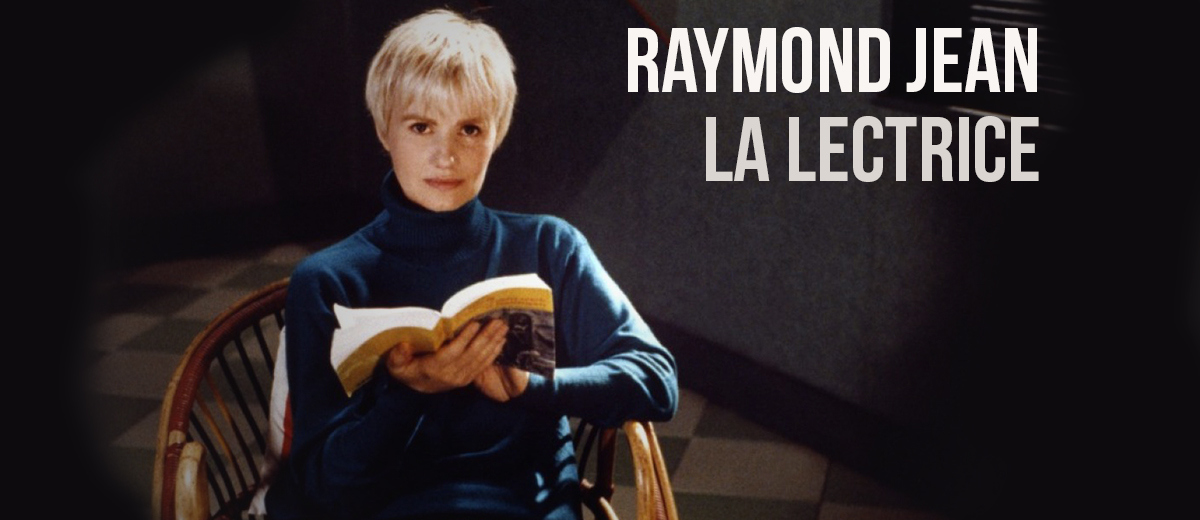
Miou-Miou in the film, La Lectrice

Miou-Miou in the film, La Lectrice

It’s a social satire that attempts to celebrate the joy of reading aloud, willing it to be the life changing experience it could be, that clearly is not. Instead, it reveals just how much loneliness, desperation and depravity exists in our society and how many are looking for something that might quell the symptoms, even if that means corrupting something else offered. Despite the obvious need to use her to fulfil their empty lives, Marie-Constance is determined to turn her fantasy into a viable profession and talks of it as if it already is.

“…I mustn’t lose the few ‘regulars’ I’ve managed to hook. In fact I’m on my way to my managing director today. He’s more hooked than anyone else, we’ve all grasped that, but by something other than reading. I’ve made my decision and I’m ready. But I might still try and bring him around to literature.”

A wheelchair bound adolescent, a six-year-old girl who wants to go to the fair, not stay at home and be read to, the aging, demented communist wife of an ex General, the depressed Managing Director and the elderly magistrate, they come in all forms and guises and like a Doctor choosing the right medicine, Marie-Constance will select Maupassant, Marx, Claude Simon, de Perec and others in her quest for the best bookish match. She thinks only in terms of literary solutions, seeking out the company of her old professor for guidance, though he too appears to have other intentions.

I enjoyed most of the book, particularly while there was still some mystery and intrigue around the characters and their motivations, however I wanted the fantasy to endure, for Marie-Constance to  find more of the genuine kind and less of the erotic, sadly the fictional reality, as depicted by Raymond Jean seems to illustrate that depravity is more in abundance and women will continue to allow it.

The book was originally published in French in 1986 and was made into a film two years later starring the French actress affectionately known as Miou-Miou, a name given to her on her acting debut by French comedian Coluche, a reference to her ‘petite voix douce miaulante’ soft voice.

Contemporary European Fiction via Peirene Press

Contemporary European Fiction via Peirene Press

The Man Booker International Prize 2015 Winner #MBI2015

Lydia Davis

Lydia Davis

Man Booker IntlToday the winner of The Man Booker International Prize was announced.

This prize recognises one writer for his or her achievement in fiction. It is awarded every two years to a writer whose work has been published in English or is generally available having been translated into English.

Unlike the Man Booker Prize for Fiction, there are no submissions from publishers, it is a decision left solely to the judging panel, who must consider a writer’s body of work and not just their latest novel.

The 2013 winner was short story writer and translator Lydia Davis (America).

The finalists for 2015, alongside a quote made by one of the judges were:

Alain Mabanckou (Republic of Congo) ‘His voice is vividly colloquial, mischievous and … outrageous’

Amitav Ghosh (India) ‘In Ghosh’s hands the contemporary historical novel is transformed’

César Aira (Argentina) ‘A performance on page’

Fanny Howe (US) ‘[her] care for words matches her care for characters’

Hoda Barakat (Lebanon) ‘The unrivalled bride of the Mediterranean

László Krasznahorkai (Hungary) ‘What strikes the reader above all are extraordinary sentences’

Marlene van Niekerk (South Africa) ‘The author of two immense masterpieces

Mia Couto (Mozambique) ‘His pages are studded with startling images’

Maryse Condé (Guadeloupe) ‘A monumental body of work that acts against forgetting’

Ibrahim al-Koni (Libya) ‘Reading al-Khoni is a transcendental experience’

Finalists

The Guardian interviewed all 10 finalists in this excellent article, asking each of them:

  • to describe their work to someone unfamiliar with it
  • which of their books they’d recommend to a first time reader
  • whether as a writer,  they felt a distinction between local and international readers
  • who their literary heroes were
  • whether it was the duty of a novelist to engage with the political issues of the day
  • to share something new about themself

After reading this article, I could tell immediately that I would love to read the work of Guadeloupean author Maryse Condé. I have ordered a few of her books already. I recommend reading it if you are interested in knowing which of these authors might appeal to you.

One of the judges, New York Review Classics editorial director Edwin Frank had this to say:

“It would be pretentious to say we wanted to survey the world, but we wanted to be mindful of the wider world of literature. For me, I’ve learned all sorts of things about authors I’d never read especially in Arabic literature, which is still woefully underrepresented in English. And we have various writers from Africa, writing in very different languages and literary traditions.”

And so the winner of the Man Booker International Prize 2015 is…..

Winner 2015

The Red Notebook by Antoine Laurain tr. Emily Boyce and Jane Aitken

The Red Notebook Antoine Laurain Paris Light Translated FicitonAntoine Laurain is the French author of five novels, including The President’s Hat, a novel that has found a popular and loyal following in the US and UK since being translated into English by Gallic Books.

Not serious literature, they’re the kind of books you reach for when you need something uplifting and entertaining. I reached for this one at the end of winter when in the grip of a terrible flu and found it the best medicine of all!

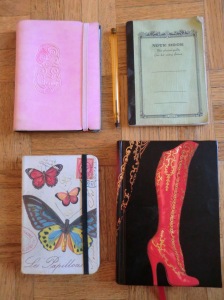
My Review Notebooks The Red Notebook Antoine Laurain

A Selection of Word by Word notebooks.

Intrigued and incensed in equal measure, as a notebook toting woman myself, I wanted to know more of this story centred around a character whose red notebook, containing handwritten thoughts and random PRIVATE jottings, has fallen into the hands of the curious bookseller, Monsieur Laurent Letellier.

Recognising it as a handbag of quality and not something intended to be thrown out, when Monsieur Letellier comes across the abandoned handbag on a Parisian street early one morning, he picks it up intending to hand it in at the police station, which he almost succeeds in doing, except, you know, French bureaucracy, it will require a one hour wait and he has a shop to open up, so plans to return later. Only later becomes much, much later and the police station is not where he will return it to.

mauve handbag The Red Notebook Antoine Laurain ParisThe bag belongs to Laure, a woman we meet in the opening pages as she clutches her handbag to her detriment, metres from her apartment, only to be shoved against a metal door frame, losing the bag anyway. Without keys, and despite it being 2am, she manages to check into the hotel opposite, promising to pay in the morning, by which time she will have fallen into a coma.
Once the bag comes home with the bookseller, it becomes a major temptation and much of the book is spent on various dilemmas arising as a consequence of his inaction, which in turn provoke memories of past events. The longer it stays with him, the more trouble it causes and the more intrigued he becomes by its owner, despite recognising his chances at redemption grow slimmer as each day passes.

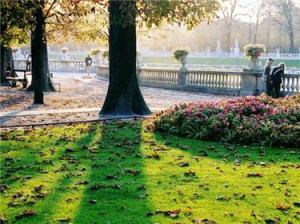
Jardin du Luxembourg Antoine Laurain The Red Notebook

Early morning in the Luxembourg gardens, Paris

One of the items the bookseller discovers is a signed copy of Accident Nocturne by Patrick Modiano which leads him to track down the reclusive author, known to frequent Luxembourg Gardens most mornings. As a bookseller, he knows how rare book signings by this author are, so hopes the author may lead him to the woman.

The Modiano cameo intrigued me, particularly as he’d just won The 2014 Nobel Prize for Literature, was that the reason to mention him, I wondered? And then I read Helen’s Mad About The Books review of Dora Bruder and found an even better reason for the reference to this esteemed author.

Paris Soir Dora BruderIn Dora Bruder, Modiano tells how in 1988 he stumbled across an ad in the personal columns of the 1941 New Year’s Eve edition of Paris Soir. The ad had been placed by the parents of 15-year-old Jewish girl Dora Bruder, who had run away from the Catholic boarding school where she’d been living.

It set the author off on an obsessive quest to find out everything he could about Dora Bruder and why during the most dangerous period of the German occupation of Paris, she had run away from those protecting her. But that’s another story and book, so see Helen’s review below for more on that extraordinary tale.

The Red Notebook has little of the hardship and tragedy of Dora Bruder, it reads more like a book that could be made into an entertaining romantic comedy, it has all the ingredients, the streets and bookshops of Paris, an artists’ workshop, handbags and their intriguing taboo contents, a jealous girlfriend and a lippy adolescent daughter. Watch this space I say!

Personally, I found it wonderful to discover an author who can do uplifting, feel good stories that push the right buttons for booklovers without becoming sentimental or too romantic. Though the ending may not be realistic, it was fun getting there.

If you like a glimpse of local life in Paris, characters who observe bookshelves and mention what other characters are reading, people who write in notebooks, the short form novella and an uplifting story, that could turn into a beautiful film, then pick up a copy of The Red Notebook here.

Further Reading:

Review by Susan of A Life in Books  – The President’s Hat, Antoine Laurain

Review by Helen of Mad About the BooksDora Bruder, Patrick Modiano – translated into English by Joanna Kilmartin as The Search Warrant

Article by Antoine Laurain – On Patrick Modiano winning the 2014 Nobel Prize

Dora Bruder Patrick Modiano The Red Notebook Antoine Laurain

Note: This book was an ARC (Advance Reader Copy) kindly provided by the publisher, Gallic Books.


The Yellow Rain by Julio Llamazares tr. by Margaret Jull Costa

A village high in the Pyrenees, mostly in ruin, houses one last ageing male resident who imagines those who will eventually discover him and all that has passed.

“Yes, that is probably how they will find me, still dressed and staring straight at them, much as I found Sabina amid the abandoned machinery in the mill. Except that, then, the only other witnesses were the dog and the grey moan of the mist as it caught and tore on the trees by the river.”

CIMG6791Julio Llamazares The Yellow Rain is an elegy to a forgotten village, a way of life, for a man who meets death long before it invites him to join it.

Ainielle is a village in the Spanish Pyrenees that has become abandoned and derelict, no one lives there any longer except this one man who refuses to let go of the past and will experience his last years, months, days in a kind of slow, yellowing reality.

“Solitude, it is true, has forced me to come face to face with myself. But also, as a consequence, to build thick walls of forgetting around my memories. Nothing so frightens a man as another man especially if they are one and the same – and that was the only way I had of surviving amid all this ruin and death, the only way of withstanding the loneliness and the fear of madness.”

A snake bite almost relieves him of his solitary existence, but even then he can’t help but fight against death’s shadows of invitation that sit uninvited next to his bedside.

“The panic and cold of death have long since ceased to frighten me. Before I discovered its black breath inside me, even before I was left all alone in Ainielle, like one more shadow amid the shadows of the dead, my father had already shown me by his example that death is only the first step on that journey into silence from which there is no return.”

Throughout the book, images of yellow and yellowing pervade, as everything succumbs to oblivion, a consequence of time passing and soon we are not sure if it is merely nature or the natural deterioration of an old man’s eyes, tainting everything he sees.

Source: Melancholy Morning by Vizibil

Source: Melancholy Morning by Vizibil

“But suddenly, at around two or three in the morning, a gentle breeze came up the river, and the window and the roof of the mill were suddenly covered by a dense, yellow rain. It was the dead leaves from the poplars falling; the slow, gentle autumn rain was returning once more to the mountains to cover the fields with old gold and the roads and the villages with a sweet, brutal melancholy. The rain lasted only a matter of minutes. Long enough, though, to stain the whole night yellow, and, by dawn, when the sunlight fell once more on the dead leaves and on my eyes, I understood that this was the rain which, autumn after autumn, day after day, slowly destroyed and corroded the plastered walls, the calendars, the edges of letters and photographs, and the abandoned machinery of the mill and my heart.”

Written in the future, the past and the present, in a lyrical style that for me never depresses though we might think it bleak, this ode to a changing landscape that is reverting back to its true nature is haunting, gripping, colourful and soul destroying all at the same time.

Even as it gets a little repetitive towards the end, it is all part of the slow degeneration of mind, body, house, village, life, with no witness but himself, the last inhabitant. Another 5 star read for me.

The author Julio Llamazares, was born in the now vanished town of Vegémian, which he left at the age of 12 to go to a boarding school in Madrid.  He is one of Europe’s most celebrated writers. Hundreds of these villages have disappeared in recent decades as their inhabitants leave for the cities.

Maria Barbal’s Stone in a Landslide tells a similar story, only she traverses the entire life of her female protagonist Conxa, while Llamazares focuses on the end and on one who refused to leave.

Kamchatka by Marcelo Figueras tr. Frank Wynne (Spanish, Argentina)

KamcahtkaKamchatka is a novel by the Argentinian writer Marcelo Figueras set in 1976, one year during a disturbing era of Argentinian history under military dictatorship, often referred to as The Dark Ages, a time when speaking out against the establishment gave rise to a terrible number of “Disappeared”.

Ordinary people vanished without trace, neither arrested nor imprisoned, there was no record of their detainment, they simply disappeared, believed to have been disposed off.

In an interview with Stu a huge reader of translated fiction who reviews at Winston’s Dad, Marcelo Figueras said this about his own experience as a child growing up in those years, words that are clearly an inspiration for the novel he has written:

“On the one hand, I was the typical boy on the verge of adolescence: shy, introspective, living in a bubble made of books ,music, comics, TV and movies. I played Risk a lot. I watched The Invaders. I enjoyed Houdini, the movie with Tony Curtis and Janet Leigh, but rejected its sad, sad ending. I fell in love every day. I danced alone.

But on the other hand, I lived in fear. I knew nothing about what was happening, my family had always been apolitical. In spite of that, I sensed something awful was going on: it was everywhere, even in the air, atoms of fear mixed with oxygen and nitrogen.

That was one of the main ingredients of the military Junta’s perversity: they tried to keep the appearance of normality, Buenos Aires’ streets were calm and orderly (and filled with policemen), as if nothing out of the ordinary was really happening. But people were being kidnapped in the dark, locked in dungeons, tortured and killed, and their bodies hidden in massive, anonymous graves or dropped into the sea. So something wicked was indeed happening. And my nose picked it up somehow.”

The author goes on to say that the subject has been written about by many authors and in his opinion many of those stories follow a similar trajectory of a romantic young man or woman, their involvement in politics, a kidnapping occurs, torture, death and the law courts follow.

He wanted to do something different, to write about what those who were not kidnapped endured, a different horror. By making a 10-year-old the narrator of his novel, he puts the reader right into this fearful and confusing situation of sensing being in danger and yet understanding nothing about where that fear is coming from.

HoudiniEarly on in the novel, our narrator and his younger brother, whom he affectionately refers to as The Midget, are pulled out of school abruptly by their mother and they go on what she describes as a holiday, to stay in a safe house.

The boys are told to choose a name for themselves, to change their identity and after finding a book about Harry Houdini on top of a cupboard, our narrator calls himself Harry and decides he wants to become an escape artist, something he goes to great lengths to tell us is very different to being a magician.

“Since the uncertainties of the present weighed heavily on me, I had been spending a lot of time thinking about my future. The idea of becoming an escape artist struck me as clearly as a vision: once the notion was firmly planted in my brain, all my worries  disappeared. Now I had a plan, something that would, in the near future, make it possible to tie up the loose ends of my circumstances. I imagined that Houdini himself had done much the same thing. ”

Risk Map

The ‘Risk’ Map of the World

The stay doesn’t feel like a holiday to Harry, however he passes his time doing the things he enjoys, playing Risk with his father, a post colonial game of strategy to take over the territories of the world. Harry wants to conquer but he never does, his father believes it is important he learns how to win through continual practice, not to have victory handed to him.

Finally the match occurs where Harry begins to win, he pushes his father back, gaining all but one last territory, that last bastion of strength, Kamchatka. He fails to take it and from that moment on his fortune turns.  Kamchatka is this place on the map that few have heard of, but it contains a hidden strength and it is both a figurative place Harry will return to in later years and a physical landscape of extraordinary elements that he will also visit.

Our Harry is very curious and intelligent and the book is structured into sections like lessons from a day at school. In each of these parts he reflects on philosophical ideas, covering subjects the book is divided into, biology, geography, language, astronomy and history. These reflections were one of the magical parts of the book for me, I recognise that beautiful curiosity of a young mind, trying to make connections between what he knows and what he thinks might be, growing his brain on the page.

“Sometimes I think that everything you need to know about life can be found in geography books. The result of centuries of research, they tell us how the Earth was formed…They tell us about how successive geological strata of the planet were laid down, one on top of the other, creating a modem which applies to everything in life. (In a sense too, we are made up of successive layers. Our current incarnation is laid down over a previous one, but sometimes its cracks and eruptions bring to the surface elements we thought long buried.)”

Most of the narrative takes place in this suburban exile for the period that the two boys are with their parents, during that time they invite their Grandmother to visit, a formidable woman who doesn’t get on with her daughter and whom The Midget plays a deathly trick on.

There is  a swimming pool and often the boys find a dead toad floating within it, so they devise a method for the toad to escape, hoping to improve the genetic selection of toads, as only the intelligent will figure out how to escape. It is a child’s game invested with hope.

And Kamchatka?

“The last thing Papa said to me, the last word from his lips, was ‘Kamchatka’.”

I thought this book was incredibly well told, the voice of the child narrator was so authentic and believable, his curiosity, frustrations and fear penetrate the pages and make the reader feel it all. You can’t help but read the book with a certain amount of tension, not knowing what the outcome will be. I was left wanting to read a sequel, to know how Harry coped and lived in the teenage years that would have followed, when life must have been so different to everything he and The Midget had known up until then.

A 5 star read for me, highly recommended.

The book was short listed for the Independent Foreign Fiction Prize in 2011.

A Note on That Place Called Kamchatka

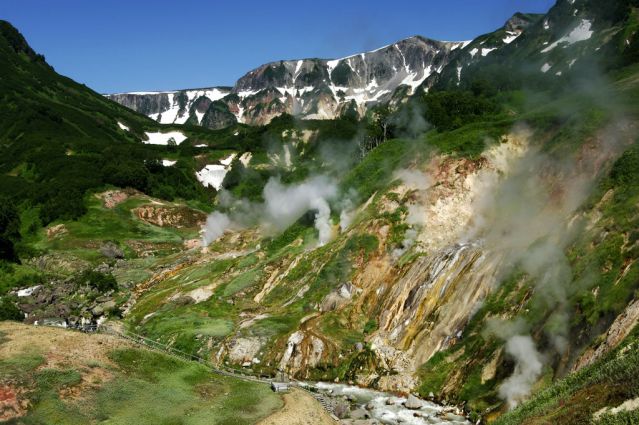
Kamchatka landscapeIn the easternmost region of Russia, eight time zones from Moscow, closer to Japan than most of Russia lies the region and peninsula of Kamchatka. A land of legends and a kingdom of bears. The region is stunning to look at and sees all the elements come together, snow topped hills, ramblings brooks, luscious greenery and volcanic vapours, yes there are frequent volcanic eruptions and earthquakes.

I realised some days after finishing this wonderful book that I knew about Kamchatka because some months ago my son made me go with him to see a stunning documentary at the cinema called ‘Terre des Ours’ which is set right on the heart of Kamchatka, a territory that is the home of brown bears, who only come out of hibernation for 3 months of the year and during that time they leave the snow topped mountainous regions and traverse the lava fields and go down to the river and lakes which are heaving with salmon. They must eat enough to get them through the next hibernation and the female bears have an even more challenging role as they have to catch enough for themselves and their offspring, while fending off the attentions of the lone male bears.

Below is a one minute trailer that show you a little of that magical world. The film is brilliant, sadly I don’t think it is available in English, the voice over is done by Marion Cotillard. But do watch this snippet, its magic.

Portrait of the Mother as a Young Woman by Friedrich Christian Delius tr. Jamie Bulloch

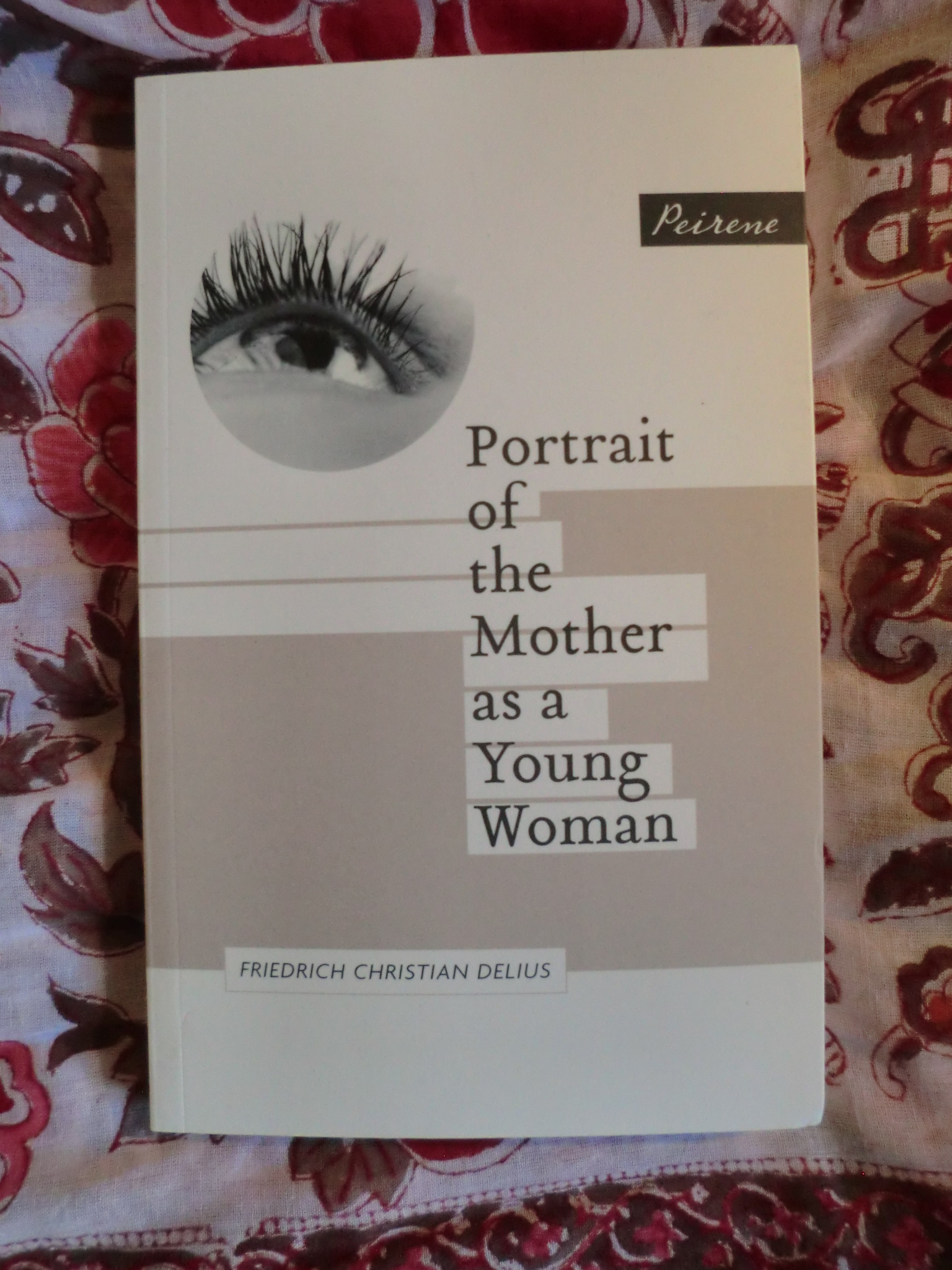
Portrait of the MotherThis 117 page long single sentence in a novella, is the third and final book in the Peirene Press series entitled Female Voices: Inner Realities.

If you missed the first two, you can read my reviews here:

Beside the Sea by Véronique Olmi (translated from French by Adriana Hunter)

Stone in a Landslide by Maria Barbal (translated from Catalan by Laura McGloughlin and Paul Mitchell)

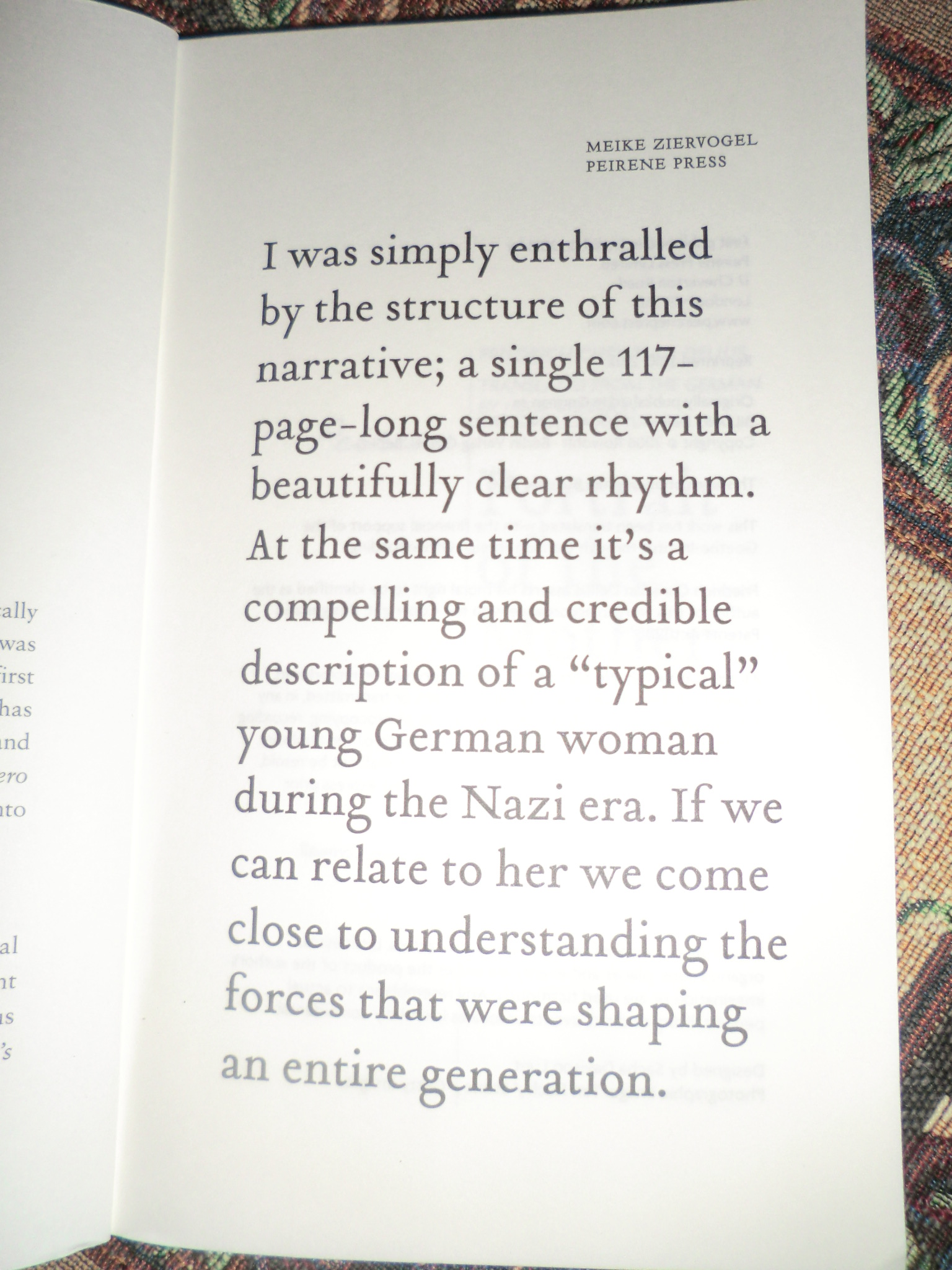
In my previous review I mention the enticing page at the beginning of all Peirene books where publisher Mieke Ziervogel shares what drew her to choosing this book for translation into English.

Here is a glimpse at what she says about this book:

Portrait 2

The book is set in Rome in 1943 when Italy and Germany remain allies during the second world war. The narrative takes place during an afternoon stroll as our young woman on the brink of becoming a mother is walking towards a Lutheran church where she will attend a classical concert.

Eight months pregnant, she is the young wife of a German solider and had been waiting for him to join her in Rome; after briefly reuniting, one day later he is redeployed to Tunisia. Alone again so soon, she walks to the Bach concert thinking about how her life has changed now as a married woman and how distant she feels from everything around her. She recalls recent memories of the short time spent with her husband wondering whether he will return to her safely or not.

Rome 1943Being outside her own country, without her husband and not yet active in her role as mother, it is as if she becomes more acutely aware of who she is, there is little to distract her and she often prefers to keep to herself.

Even the friendship that naturally developed with her room-mate Ilse, she keeps in check, worrying about the implications of being associated with those whose views are more vociferous than her own, she who wishes for a quiet life.

she worried about Ilse, who rarely had a good word to say about authority that was

invested by God, about Hitler and Mussolini, only a few days ago she had said Hitler always demanded that people show no weakness, but human beings were not made like that, and Mussolini always demanded that people had to hate the enemy, but the Italians that she knew were not fond of hatred, why should they hate the English and the Americans,

fortunately Ilse had broken off at this point, perhaps out of consideration for her, because she,

the younger woman, who was always silent when national and political questions were discussed, had just for a second wondered why it was necessary to hate the British and Americans, and in the same instant this forbidden thought made her feel guilty, confused and horrified,

She is not despondent for she has a deep faith and whenever her thoughts turn towards herself she recalls that war is God’s most difficult trial, lamenting:

“God, who is love, delivers this all to us, that it may benefit us in the end,

for it was un-Christian to shed tears for one’s own misfortune and to forget the far greater misfortunes of others, the joys of life were limitless”

Her thoughts enable the reader to understand her reluctance to do anything that might jeopardise what slim chance she may have at a normal life, she dislikes that by virtue of being foreign she already stands out, the opposite of what might give her peace of mind.

Portrait of the Mother as a Young Woman is a spellbinding portrayal of one woman’s internal conversation, her method of coping with the strangeness of her environment, talking herself into maintaining a calm state of mind, rationalising why they have found themselves in this situation. Though it is a trial for her, it is not enough to prevent her dreaming of the life she wishes they were living, something that seems increasingly like a fantasy, as the probability of her husband’s return grows slimmer as each day passes.

Poignant in its simplicity, expressing that universal feminine desire for love in a safe, nurturing environment.