The Rabbit House by Laura Alcoba tr.Polly McLean #WITMonth

Laura Alcoba was born in Argentina in 1968 and has lived in Paris since she was 10 years old, when she fled Argentina during the period in the country’s history from 1976 to 1983 when military, security forces hunted down any political dissidents and/or anyone believed to be associated with socialism, or the Montoneros movement. Her father had been imprisoned and her mother had already fled the country, a wanted woman.

Many that were targeted were from the church, labour unions, artists, intellectuals and university students and professors were targeted.  Pregnant women had their babies taken from them and then disappeared, many of these children were raised by military families, some of them today still have no idea of their origins, a few fortunate to be reaquainted with siblings or other family thanks to the tireless efforts of the Grandmothers of Plaza de Mayo. More than 400 children are believed to have been taken from political prisoners in Argentina during that era and the efforts of the grandmothers have reunited around 120 so far.

The Rabbit HouseIn The Rabbit House, Laura rarely refers to the political situation that forced them to live in hiding, resulting in her having to change her name and be extra careful about how she engaged with others, for it is written from the perspective of her 7-year-old self, exactly as she recalls the events and changes that occurred in their lives at the time, with little understanding of the cause of this sudden change.

After her father is imprisoned, Laura and her mother go into hiding in a house in the suburbs, they live with a young couple, the woman Diana was pregnant with her first child.

During the day, “the labourer” and “the engineer” arrive to build a rabbit house, a place where they are going to breed rabbits, a cover for the job to create an underground space in which to house a printing press, to print and distribute a banned publication.

This is because we are doing some work on the shed so we can keep rabbits in there. These visible sacks justify – we hope – the endless comings and goings of the grey van. In this way we flaunt the busyness and waste materials appropriate to a modest rabbit breeding project. But behind the rabbit breeding area is concealed a whole other building site, huge, on another scale entirely – because the house we live in was chosen to hide the secret Montonera printing press.

Though there are things Laura has been told she can and can’t do, this precarious life and it’s rules aren’t well enough defined to help her with every situation, some of which she recounts here, creating the acute tension under which she lived, terrified of doing something wrong and endangering all their lives.

EvitaMontoneraThe only people in the house are Diana, seven months pregnant, my mother behind the false back wall, and me.

Oh, and the rabbits. And the rolls of wrapping paper and ribbon. and the secret printing press and hundreds of copies of a banned newspaper. And also the weapons, for self-defence.

And the ferocious kitten.

We are very afraid.

A visit with her paternal grandparents to see her father in prison is organised in a clandestine manner, and is so traumatising she is physically sick and it is decided not to take the risk again, her fear clearly outweighing any benefit in seeing her father.

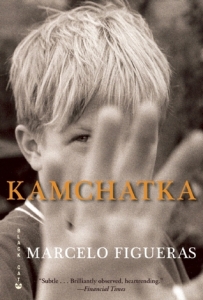
I was reminded of Marcelo Figueras’s book Kamchatka which I read in 2015, a novel also written from a child’s perspective, set in 1976. Figueras uses the novel form to inspire his storytelling, clearly drawing from his own memory and experiences of that same era.

The writing and narrating of Laura’s story is simplistic yet intense, she effectively portrays the sense of unease and desire of the child to not create trouble, but not knowing quite how, when the situations are complex and unknown,  she is destabilised by the visible fear of the grown-ups, demonstrated in how quickly they anger when they fear she may have crossed a forbidden threshold.

First read for me in #WITMonth 2016 – Reading Women in Translation.
KamcahtkaFurther Reading

My review of Marcelo Figueras Kamchatka

Argentina – A Terrible Period of State Terrorism/Genocide

Operation Condor conspiracy faces day of judgment in Argentina court

Madres of the Plaza de Mayo – Grandmothers of the Disappeared

How an Argentinian man learned his ‘father’ may have killed his real parents – Guardian 22 June 2016
******

Click here to Buy a copy of The Rabbit House via Book Depository

August is Women in Translation #WITMonth

1 Summer Chunkster - A Brief History of Seven Killings

One Summer Chunkster

Summer reading used to be beach reads, these days I have one beach read, my one summer chunkster, otherwise I try to participate in #WITMonth, reading women writers in translation, those who originally wrote their books in a language other than English.

I won’t be putting any pressure on myself to achieve any lists or numbers, but a quick scan of my shelves shows me that I already have a few potentially excellent novels to choose from for #WITMonth.

One Summer Chunkster

My summer chunkster isn’t a woman writer, it will be Marlon James Booker Prize winning novel A Brief History of Seven Killingsa novel that explores Jamaican life, culture, politics and the drug trade through a fictionalised telling with a multitude of characters, of the attempted assassination of Bob Marley in the late 70’s in a blend of standard English prose and Jamaican patois.

Women in Translation

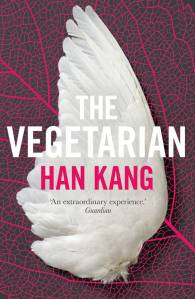
A quick look at my shelves tells me that these are the novels I’ll be choosing from in August to read books by women writing in a language other than English. I’ll be reading them in the English translation and starting off with Han Kang’s The Vegetarian.

The Vegetarian by Han Kang (South Korea) tr. Deborah Smith (Korean)

Viewed in South Korea initially as ‘extreme and bizarre’  it has gone on to become a cult bestseller and in English, it was the winner of the Man Booker International Prize 2016 – an allegorical novel about modern-day South Korea told via three narratives surrounding a woman’s decision to become vegetarian; a story of obsession, choice, and our faltering attempts to understand others. I read and was blown away by her Human Acts earlier this year.

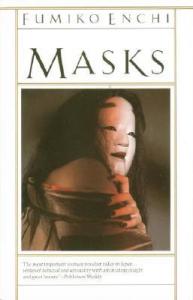
Masks by Fumiko Enchi (Japan) tr.  Juliet Winters Carpenter (Japanese)

A subtle and sometimes shocking novel about seduction and infidelity in contemporary Japan and the destructive force of feminine jealousy and resentment with allusions to the masks of the traditional Japanese theatrical Nō plays and the 11th century epic The Tale of Genji.

The Rabbit House by Laura Alcoba (Argentina) tr. Polly McLean (French)

A short memoir set in 1975 Buenos Aires, Argentina when Laura is seven years old and the brutal military regime has just taken over. Her father is imprisoned and she and her mother go into hiding in ‘the rabbit house’ where the resistance movement is involved in clandestine activity that puts their lives in constant danger.

The Bridge of Beyond by Simone Schwarz-Bart (French-Guadeloupean) tr.Barbara Bray (French)

Set on the French Antillean island of Guadeloupe, a story of mothers and daughters, spiritual values and the grim legacy of slavery, a reminder of the Creole oral tradition.

Crossing the Mangrove by Maryse Condé (Guadeloupean) tr. Richard Philcox (French)

More from Guadeloupe, following the death of a handsome outsider, villagers reveal clues that will uncover the mystery of this man’s death, a story imbued with the nuances of Caribbean culture.

A Season in Rihata by Maryse Condé (Guadeloupean) tr. Richard Philcox (French)

Condé’s second novel set in a sleepy backwater fictitious African state, a family struggle amid the backdrop of political upheaval, a community torn between progress and tradition, subject to the whims of a dictatorship.

The Door by Magda Szabó (Hungary) tr. Len Rix (Hungarian)

A young writer employs an elderly woman as housekeeper, a woman everyone knows, though no one knows anything about, nor have they ever crossed her threshold. An event will provoke her to unveil glimpses of her past, shedding light on her peculiar behaviour as the relationship between the two evolves. This recent New Yorker article makes comparisons with Elena Ferrante’s My Brilliant FriendThe Hungarian Despair of Magda Szabó’s “The Door”

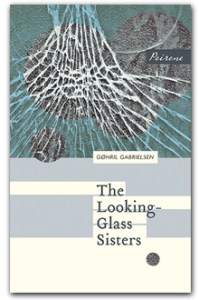
The Looking Glass Sisters by Gøhril Gabrielsen (Norway) tr. John Irons (Norwegian)

A Peirene Press novella from the Chance Encounters series and another intense relationship between two women; sisters who live an isolated life, one who nurses the other and keeps house. Until one day, a man arrives… ‘raw, dark and wonderfully different from anything else’

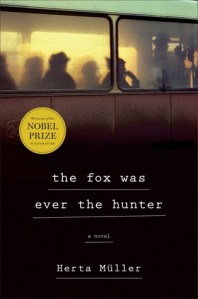
The Fox Was Ever the Hunter by Herta Müller (Romania) tr. Philipp Boehm (Romanian)

An early masterpiece set in Ceaușescu’s Romania by Herta Müller, winner of the 2009 Nobel Prize for Literature. A young school teacher returns home to find her fox fur rug has had its tail cut off. Then a foreleg. Signs she is being tracked by secret police – a portrayal of the corruption of the soul under totalitarianism.

I would love to hear any recommendations you have, that I might add to the list, anything you’ve read and absolutely loved, or are anticipating reading soon that you’ve heard good things about, let me know in the comments below. And if you’ve made a list, feel free to provide a link to it in the comments as well.

******

To buy any of these titles, click on the Book Depository link below, for which I receive a small commission to put towards buying more books:

Buy a Book in Translation or A Summer Chunkster!

A Whole Life by Robert Seethaler tr. Charlotte Collins

A Whole LifeDumped with an uncaring relative after his mother dies of consumption Andreas Eggers connects with the mountain more than with the family that barely tolerate him and when he is strong enough to resist the thrashings, will leave and make his own way as a labourer eventually earning sufficient to buy a plot of land up the mountain where he can build a cabin.

He arrived in the village as a small boy in the summer of 1902, brought by horse-drawn carriage from a town far beyond the mountains. When he was lifted out he stood there, speechless, eyes wide, gazing up in astonishment at the shimmering white peaks. He must have been about four-years-old at the time, perhaps a little younger or older. No one knew exactly, and no one was interested, least of all the farmer Hubert Kranzstocker, who reluctantly took receipt of little Egger and gave the carriage driver the measly tip of two groschen and a crust of hard bread.

A Whole Life is a melancholic yet soothing narrative of days and events that affect the life of Eggers, few of its turning points are initiated by himself – only when it becomes a matter of survival or principal. He is somewhat at the mercy of the mountain, the elements and whatever it is that confronts him. It is a gentle, unassuming novella of an unremarkable life, touchingly evocative yet unsentimental, a tribute to small wonders that make up a relatively uneventful life.

His early life stems from the moment of being left in the place of the family, his later life from having carried a dying man down the mountain, causing him to stop in at the inn, where the briefest touch of a woman becomes the catalyst for the next significant turning point in his life.

‘Another one?’ the young woman asked, and Egger nodded. She brought a fresh glass, and as she leaned forward to put it on the table she touched his upper arm with the fold of her blouse. The touch was barely perceptible, yet it left a subtle pain that seemed to sink deeper into his flesh with every passing second. He looked at her, and she smiled.
All his life Andreas Egger would look back on this moment, again and again; that brief smile that afternoon in front of the quietly crackling guesthouse stove.

Apart from a brief period at war and a longer spell as a prisoner of war in a Russian camp, his life is spent living off and around the mountain, a landscape he is at one with, in awe and wary of. It is all that he knows.

Seethaler describes Eggers, his life and environment in thoughtful, elegiac prose creating a man as much in harmony with his surroundings as is possible. He stands for those who observe change and the approach of the modern world from a distance, who accept who they are and where they have been placed and have only the occasional fleeting desire to move, but will do so when it is necessary.

He thought of the fact that, apart from trips to the Bitterman & Sons cable cars and chair lifts in the surrounding area, he had only left the neighbourhood on one single occasion: to go to war. He thought about how once, along this very road, back then little more than a deeply rutted track across the fields, he had come to the valley for the first time on the box of a horse-drawn carriage. And at that moment he was overcome with a longing so searing and profound he thought his heart would melt. Without looking back he got up and ran.

I loved this book, it reminded me a little of Julio Llamazares set in the Spanish Pyrenees The Yellow Rain, another novella with a strong connection to the village/environment, a kind of wistful resistance, imploring the reader to understand what it means to be human and so strongly connected to a place.

No surprise this novella became a bestseller in Germany and Austria and was shortlisted for the Man Booker International 2016, we are fortunate to have had it translated so beautifully by Charlotte Collins into English.

In his life he too, like all people, had harboured ideas and dreams. Some he had fulfilled for himself; some had been granted to him. Many things had remained out of reach, or barely had he reached them than they were torn from his hands again. But he was still here. And in the mornings after the first snowmelt, when he walked across the dew-soaked meadow outside his hut and lay down on one of the flat rocks scattered there, the cool stone at his back and the first warm rays of sun on his face, he felt that many things had not gone so badly after all.

Robert SeethalerBorn in Vienna, Austria, Robert Seethaler is an actor (most recently in Paulo Sorrentino’s Youth) and writer, he grew up in Germany and now lives in Berlin.  A Whole Life is his fifth novel and the first to be translated into English.
Charlotte Collins studied English at Cambridge University. She worked as an actor and radio journalist in both Germany and the UK before becoming a literary translator, and has also translated Robert Seethaler’s novel The Tobacconist.

Further Links: 

Irish Times ReviewOne man endures, one day at a time by Eileen Battersby

To Buy This Book Now, Click Below

A Whole Life by Robert Seethaler

Fever at Dawn by Péter Gárdos (Hungary) tr. Elizabeth Szász

Fever at DawnAn utterly charming novel based on a true story of the courtship of the authors parents, young Hungarian survivors of the Nazi concentration camps, post World War Two.

Shortly after his father Miklós’s death, Péter Gárdos’s mother handed him a bundle of letters, written in the months after the Holocaust. He read them immediately, every one of them, stunned to discover the romantic story behind his parents meeting, a period they had never talked about or shared and one that might have been lost forever, had his mother not decided to share them.

The novel takes place during the six months that Miklós and Lili were letter correspondents, Miklós who’d survived the camps was diagnosed with incurable TB and told he had only six months to live. He and others were in recovery in Sweden, where they would stay until the had the strength and health to return to whatever remnants of their lives awaited them in Hungary.

Declaring war on death, he wrote 117 letters to young Hungarian women convalescing in other hospitals in Sweden, where many of the Hungarian survivors were being taken care of after the horrors of their wartime experience.

Lili Reich was one of the 117 women who received a letter. She was an eighteen-year-old patient at the Smålandsstenar rehabilitation hospital. It was early September. She opened the envelope and scanned its contents. The young man from distant Lärbro did have lovely handwriting. But he must have mixed her up with someone else. She promptly forgot about the whole thing.

He settled on Lili as “the one”, though she was less certain that she was what he was looking for, but agreed to write to him. Over the next six months they get to know each other through their correspondence and develop a tentative affection for each other.

Miklos GardosGárdos has written a heart-warming, unsentimental account of their relationship and of the characters that surrounded the two young people during this time, their compatriots, the doctors and nurses and the Rabbi who received letters from a concerned friend of Lili, intent on stopping the liaison and her intention to convert to Catholicism.

It has both touching and tragic moments as all these young people wait for news of their families and loved ones, moments the author resists exploiting which could have made this a much more emotionally charged novel and will no doubt make it a heart-rending film, rather he focuses as much on the lighter, more positive moments, the desire to overcome the death sentence, to survive and the importance that the promise of love and the support and solidarity of others contributes to it.

Highly recommended.

Here is a clip of that author talking about that moment of being given the letters and what it meant for him to read them.

Note: This book was and ARC (Advance Reader Copy) kindly provided by the publisher.

The Man Who Snapped His Fingers by Fariba Hachtroudi tr. Alison Anderson

Layout 1A woman working in an asylum centre as a translator is called to fill in for an interview. She utters the word she has all but banished from her vocabulary. Yes.

Now she faces the man with the voice she recognises, the man who snapped his fingers and changed her life, in their country, all those years ago.

One last interview with an asylum seeker who’s a bit of a problem, said my interlocutor, who was not anyone I knew. He went on, It’s a Colonel from the Theological Republic. But – I read your file. “Refuses to do any simultaneous translation for military or government personnel from her country of origin.”

Fariba Hachtroudi’s novella (translated from French) is a dual narrative, switching between two characters as they experience the present and remember the past in flashbacks, a kind of first person stream-of-conscious prose that is tense and withholding, though ultimately revealing.

We know bad things have happened, but no one wishes to relive or explain them, their thoughts rarely go there and yet we feel the presence of the past that hangs over them and the danger in the present. They both live with fear, paranoia and suffer from separation, from the memory and pain of love. They seek answers, atonement and their brief meeting will move them closer to it.

Now the Colonel is one of the hunted. He has been reinstated as a citizen. We have become full-fledged compatriots.  But what about the past? Can you just erase it with a swipe of your hand? And that pool of putrefaction that he waded into, without blinking an eyelid? The stench of it?

They live in isolation and with the memory of a great love and yet they have this terrible connection, which they must move beyond if they are to benefit each other. Can one overcome the memory of torture, the victim and the perpetrator and establish some other understanding?

Torture, like love, destroys, distorts, and transforms. Indubitably. Love, like torture, alters bodies. From the precipices of torment. Both love and torture mortify the soul deep in one’s inner chaos. Where the self disintegrates.

It’s a book that would benefit from being read twice as the narrative isn’t chronological, the characters and their loved ones are revealed slowly so thoughts shared in the beginning without reader knowledge add more to the story if we flip back and reread them.

Though a short novella, it requires concentration and acceptance that the threads will become clear, even while things are unclear, there is a mounting tension and discomfort that is hard to articulate, but is testament to the profound, tightly woven writing style of the author, this her first translation into English.

Fariba Hachtroudi

Fariba Hachtroudi

Fariba Hachtroudi was born in Tehran, leaving Iran after the 1979 revolution and settling in France. She spent 2 years in Sri Lanka teaching and researching Theravada Buddhism.

An account of her return to Iran after 30 years in exile was the subject of a memoir The Twelfth Iman’s a Woman? Following that visit she set up MoHa, a humanitarian foundation that advocates for women’s rights, education and secularism.

Note: Thank you to the publisher Europa Editions for kindly providing a copy of this novel.

Man Booker International Prize 2016 #MBI2016

MBI 2016 LogoWhile adrift from the internet and with little time to read and review, I missed this literary event, which I’ll still mention as it’s one of the literary highlights of the year for readers of world and translated fiction like me.
The prize is timely as it coincides with an increasing trend for reading translations, up 96% since 2001 though still only counting for 7% of fiction sold in the UK.

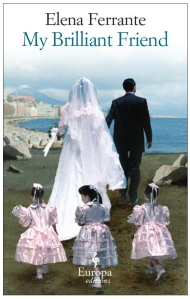
My Brilliant FriendThe most popular literature languages translated into English in 2015 were French, Italian, Japanese, Swedish and German while the top-selling author was Elena Ferrante, with her all-consuming, Neapolitan series of four books: My Brilliant Friend, The Story of a New Name, Those Who Leave and Those Who Stay and The Story of the Lost Child.

So, from the Man Booker longlist of 13 books reviewed here, the six titles below made the shortlist for the Man Booker International Prize in 2016:

José Eduardo Agualusa (Angola) Daniel Hahn, A General Theory of Oblivion – On the eve of Angolan independence an agoraphobic woman bricks herself into her apartment for 30 years, living off vegetables and the pigeons she lures in with diamonds, burning her furniture and books to stay alive, writing her story on the apartment’s walls.

Elena Ferrante (Italy) Ann Goldstein, The Story of the Lost Child – book four in the Neapolitan saga of two friends, Lena and Lila, now adults, returning to their childhood town, dealing with life as mother’s, lovers, surviving an earthquake, tragedies of nature and humanity.

Han Kang (South Korea) Deborah Smith, The Vegetarian – Yeong-hye, seeking a more ‘plant-like’ existence, decides to become a vegetarian, prompted by grotesque recurring nightmares. In South Korea, where vegetarianism is almost unheard-of and societal mores are strictly obeyed, Yeong-hye’s decision is a shocking act of subversion.

As her rebellion manifests in ever more bizarre and frightening forms, Yeong-hye spirals further and further into her fantasies of abandoning her fleshly prison and becoming – impossibly, ecstatically – a tree. Fraught, disturbing, and beautiful, The Vegetarian is a novel about modern day South Korea, but also a novel about shame, desire, and our faltering attempts to understand others, from one imprisoned body to another.

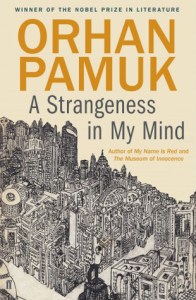
Orhan Pamuk (Turkey) Ekin Oklap, A Strangeness in My Mind – the story of Mevlut, the woman to whom he wrote three years’ worth of love letters, and their life in Istanbul. Mevlut Karataş sells boza (a traditional mildly alcoholic Turkish drink) in Istanbul and wishes for love and riches. He doesn’t have the best of luck (falling in love with a woman and accidentally eloping with the sister) as he ages, attempts to discover what is missing from his life.

Robert Seethaler (Austria) Charlotte Collins, A Whole Life – Andreas lives his whole life in the Austrian Alps, arriving as a boy taken in by a farming family. A man of few words, when he falls in love with Marie, he has friends light her name at dusk across the mountain. When she dies in an avalanche, pregnant with their first child, Andreas’ heart is broken. He leaves the valley just once more, in WWII – and is taken prisoner in the Caucasus – returning to find modernity has reached his remote haven.

Yan Lianke (China) Carlos Rojas, The Four Books – In the ninety-ninth district of a sprawling labour camp, the Author, Musician, Scholar, Theologian and Technician are undergoing Re-education, to restore their revolutionary zeal and credentials. In charge of this process is the Child, who delights in draconian rules, monitoring behaviour and confiscating treasured books.

Divided into four narratives, echoing the four texts of Confucianism and the four Gospels of the New Testament, The Four Books tells the story of one of China’s most controversial periods, demonstrating the power of camaraderie, love and faith against oppression and the darkest possible odds.

And the Man Booker International 2016 winner was:

South Korean writer Han Kang’s The Vegetarian translated by Deborah Smith.

Vegetarian

I haven’t read The Vegetarian, but was stunned by Han Kang’s Human Acts which I read earlier this year, and reviewed here. She is a remarkable writer and thinker and it’s brilliant that her work is being recognised and will find its way to a wider audience. I highly recommend reading her work, if you are interested in extraordinary minds trying to make sense of the most troubling aspects of humanity.

To purchase any of the above titles, click here:

Buy One of These Books Here

Man Booker International Longlist 2016 #MBI2016

MBI logoToday the longlist of the newly formed Man Booker International (MBI) 2016 was announced. In the past, this award was made every two years to an author for a body of work, so usually an author who has written numerous novels and is recognised as having made a significant literary contribution.
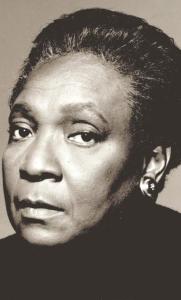
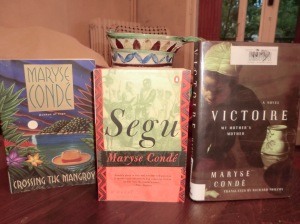
That changed after 2015, which was the last year under the old rules, I remember last year, from the longlist of 10 authors you can see here, I decided to read some of the works of the Guadeloupean author Maryse Condè.

She didn’t win the prize, but she was the right choice for me. I read her childhood essays Tales From The Heart, True Stories From My Childhood , the novel Victoire: My Mother’s Mother and the masterpiece she is most well-known for Segu.

Maryse Condé

Maryse Condé

Literary Works of Maryse Condé

In addition to the MBI, there was another prize called the Independent Foreign Fiction Prize (IFFP) which rewarded one novel, a recent publication, that had been translated into English in the previous year.

In 2016, these two prizes have joined together, to become one, retaining the rules of the IFFP Prize and the name of the Man Booker International Prize. The £50,000 prize is shared equally between the author and the translator.

Boyd Tonkin, chair of the 2016 Man Booker International Prize judging panel, said:

‘For the first longlist in its new form, the Man Booker International Prize invites readers to share a thrilling journey of discovery across the finest fiction in translation.

The 13 books that the judges have chosen not only feature superb writing from Brazil to Indonesia, from Finland to South Korea, from Angola to Italy. Our selection highlights the sheer diversity of great fiction today.

From intense episodes of passion to miniature historical epics; from eerie fables of family strife to character-driven chronicles of urban life, this list showcases fiction that crosses every border. It also pays tribute to the skill and dedication of the first-rate translators who convey it to English-language readers.’

Thirteen books have been announced on the longlist:

José Eduardo Agualusa (Angola) Daniel Hahn, A General Theory of Oblivion – On the eve of Angolan independence an agoraphobic woman bricks herself into her apartment for 30 years, living off vegetables and the pigeons she lures in with diamonds, burning her furniture and books to stay alive, writing her story on the apartment’s walls.

Elena Ferrante (Italy) Ann Goldstein, The Story of the Lost Child – book four in the Neapolitan saga of two friends, Lena and Lila, now adults, returning to their childhood town, dealing with life as mother’s, lovers, surviving an earthquake, tragedies of nature and humanity.

Han Kang (South Korea) Deborah Smith, The Vegetarian – Yeong-hye, seeking a more ‘plant-like’ existence, decides to become a vegetarian, prompted by grotesque recurring nightmares. In South Korea, where vegetarianism is almost unheard-of and societal mores are strictly obeyed, Yeong-hye’s decision is a shocking act of subversion.

Maylis de Kerangal (France) Jessica Moore, Mend the Living – takes place over twenty-four hours surrounding a fatal accident and a resulting heart transplant as life is taken from a young man and given to a woman close to death, examining the deepest feelings of everyone involved.

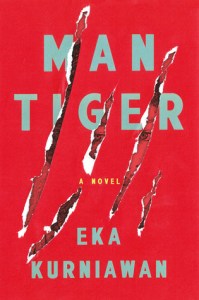
Eka Kurniawan (Indonesia) Labodalih Sembiring, Man Tiger – A slim, wry story set in an unnamed town near the Indian Ocean, Man Tiger tells the story of two interlinked and tormented families, and of Margio, an ordinary half-city, half-rural youngster who also happens to be half-man, half-supernatural female white tiger.

Yan Lianke (China) Carlos Rojas, The Four Books – In the ninety-ninth district of a sprawling labour camp, the Author, Musician, Scholar, Theologian and Technician are undergoing Re-education, to restore their revolutionary zeal and credentials. In charge of this process is the Child, who delights in draconian rules, monitoring behaviour and confiscating treasured books.

Divided into four narratives, echoing the four texts of Confucianism and the four Gospels of the New Testament, The Four Books tells the story of one of China’s most controversial periods, demonstrating the power of camaraderie, love and faith against oppression and the darkest possible odds.

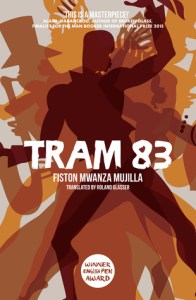
Fiston Mwanza Mujila (Democratic Republic of Congo/Austria) Roland Glasser, Tram 83 – In a war-torn African city-state tourists converge with students, ex-pats and locals. Their one desire: to make a fortune by exploiting the wealth of the country, both mineral and human. As night falls, they go out to drink, dance, eat and abandon themselves in Tram 83, the only night-club of the city, a den of all iniquities. An African-rhapsody novel infused with the rhythms of jazz.

Raduan Nassar (Brazil) Stefan Tobler, A Cup of Rage – A pair of lovers – a young female journalist and an older man who owns an isolated farm in the Brazilian outback – spend the night together. The next day they proceed to destroy each other. Erotic cult novel by one of Brazil’s most infamous modernist writers explores alienation, the desire to dominate and the wish to be dominated.

Marie NDiaye (France) Jordan Stump, Ladivine – a psychological tale of a trauma that ensnares three generations of women, via a woman captive to a secret shame. Once a month, Clarisse Rivière leaves her family and secretly takes the train to visit her mother, Ladivine. Just as Clarisse’s husband and daughter know nothing of Ladivine, Clarisse has hidden nearly every aspect of her adult life from this woman, whom she dreads, despises but also pities.

Kenzaburō Ōe (Japan) Deborah Boliner Boem, Death by Water – his recurring protagonist and literary alter-ego returns to his hometown village in search of a red suitcase fabled to hold documents revealing the details of his father’s death during WWII: details that will serve as the foundation for his new, and final, novel.

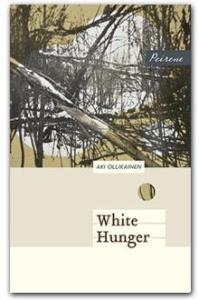
Aki Ollikainen (Finland) Emily Jeremiah & Fleur JeremiahWhite Hunger – 1867: a year of devastating famine in Finland. Marja, a farmer’s wife from the north, sets off on foot through the snow with her two young children. Their goal: St Petersburg, where people say there is bread. Others are also heading south, just as desperate to survive.

Orhan Pamuk (Turkey) Ekin Oklap, A Strangeness in My Mind – the story of Mevlut, the woman to whom he wrote three years’ worth of love letters, and their life in Istanbul. Mevlut Karataş sells boza (a traditional mildly alcoholic Turkish drink) in Istanbul and wishes for love and riches. He doesn’t have the best of luck (falling in love with a woman and accidentally eloping with the sister) as he ages, attempts to discover what is missing from his life.

Robert Seethaler (Austria) Charlotte Collins, A Whole Life – Andreas lives his whole life in the Austrian Alps, arriving as a boy taken in by a farming family. A man of few words, when he falls in love with Marie, he has friends light her name at dusk across the mountain. When she dies in an avalanche, pregnant with their first child, Andreas’ heart is broken. He leaves the valley just once more, in WWII – and is taken prisoner in the Caucasus – returning to find modernity has reached his remote haven.

*****

A fabulous lineup of books and authors across countries and languages. I have read two of the books, Elena Ferrante’s The Story of the Lost Child and Aki Ollikainen’s White Hunger, both of which are excellent, and although I haven’t read The Vegetarian, I have read Han Kang’s more recent novel Human Acts which was brilliant!

I’d love to read Marie NDiaye, Orhan Pamuk, Kenzaburō Ōe, Robert Seethaler, Yan Lianke, they all sound fantastic. And Man Tiger sounds interesting, and I definitely want to read more of Han Kang!

A shortlist of six books will be announced on 14 April.

So many great reads, which of these sounds the most appealing to you? Have you read any already?

Further Reading

The Guardian ArticleMan Booker International 2016 longlist includes banned and pseudonymous authors

Purchase A Book:

If you wish to buy one of the above books, you can do so via the Book Depository link below, with whom I have an affiliation.

Buy One of These Books at Book Depository


ARTE by Kei Ohkubo Episode One #Manga

Arte 1I learned that yesterday was World Book Day and when asked if I did anything to celebrate, I realised that I’d done something I’ve never done before in terms of reading, I finished my first Japanese Manga called ARTE, illustrated and written by Kei Ohkubo translated into French and set in Florence Italy!

My daughter never liked reading books when she was younger and seemed almost stressed out by the appearance of so many words on the page, it provoked some kind of anxiety and there was nothing I could do to encourage her.

One day she came home from school with a book in her hand and didn’t stop to look up and continued to her bedroom to read. I was fascinated, what was this book that got her reading and why was she reading it back to front?

It was a Japanese manga and although it was translated into French, they still published them with the front cover on the back and you must read and turn the pages from right to left, from the back to the front – I am sure this is an excellent brain exercise!

Arte, was the first volume I chose, I wanted to read one myself, though not the genre my daughter reads (and creates – she’s created more than one of her own series preferring storytelling through drawing and dialogue), which has more of a gothic orientation.

I also chose it to show her some images of Italy through storytelling and to reinforce why it is a beautiful language to learn (she started the school year late and there were no more places in Spanish class, so she has been forced to learn Italian).

So reading a new genre that immerses itself into another culture, reading it in another language seemed like a fun way to celebrate World Book Day. And not to mention it has a fabulous, feisty, young woman protagonist, just the thing for an adolescent girl and her mother to read!

Arte lives in Florence at the beginning of the 16th century and dreams of becoming a painter, a wish indulged when her father was still alive, but scorned by her mother after he dies, a young woman must marry to ensure the continued protection and support of the family, her passions were secondary, not deemed important.

arte Ohkubo

Arte rebels against this idea and with determination visits the city’s ateliers in search of an apprenticeship, only to be laughed at and scorned by the community, until one young artisan offers her a challenge, he thinks she won’t achieve, and then must fulfil his promise to let her become his apprentice. Although she is of noble birth and he of humble origin, he discovers they share a common motivation to want to pursue art in their lives.

Eventually he takes her to meet a client, one whom he often makes a portrait of. The client wishes Arte to paint the portrait, thus life begins to change for Arte!

Although the story appears to show painting as a domain for men and Arte a young feminist, wanting equally to indulge her passion and develop her skill, it appears Arte did have contemporaries in the Renaissance period, they were rare indeed and faced numerous challenges.  Four of these women (there were more) produced the stunning self portraits below as well as other great works and were encouraged in their chosen metier.

The book shows the challenge also between young and old, between youthful idealism and middle age fear, the daughter unafraid to pursue her dreams, life has yet to disappoint her greatly, she believes in her own determination, while the mother has lost her protector and her chance to change her own life, so wishes to use the daughter to allay her own fears, to protect her from disappointment, even if at the expense of destroying her spirit.

Further Reading

Female painters from the Italian Renaissance period

Artemisia Lomi Gentileschi (Rome 1593 – Naples 1652)

Liviana Fontana (Bologne 1552 – Rome 1614)

Sofonisba Anguissola (Crémone 1535 – Palerme 1625)

Elisabetta Sirani (Bologne 1638 – 1665)


Human Acts by Han Kang tr. Deborah Smith

Han Kang AuthorHuman Acts is the author Han Kang’s attempt to make some kind of peace with the knowledge and images of the Gwangju massacre in South Korea in 1980.

Her family had left that city just one year before, she was 10 years old when the 10 day uprising occurred, but she became aware of it through the overheard, whispered conversations of her family and the silence that surrounded them speaking of the home where they used to live. She learned three young people from that household had lost their lives, one, a boy Dong-Ho probably shared the same room she had lived in for many more years than the short time he had.

What made the events sear into her mind and perhaps permanently affect her psyche, was the forbidden photo book that was given to her family, books circulated secretly to let survivors know what had really happened, a book her parents tried to hide, one she sought out, opening its covers to images she would forever be haunted by.

At night, though, when all the grown-ups were all sitting in the kitchen and I knew I’d be safe…I crept into the main room in search of that book. I scanned every spine until finally I got to the top shelf; I still remember the moment when my gaze fell upon the mutilated face of a young woman, her features slashed through with a bayonet. Soundlessly, and without fuss, some tender thing deep inside me broke. Something that, until then, I hadn’t even realised was there.

Asked why she felt motivated to write this book – which begins with the immediate after-effects of the massacre, the very real logistical management of the bodies, the bereaved, mass memorial rituals and the burials and goes on to enter the after death consciousness of one the victims, seeing things from outside his body – she responded that the experience of seeing those images left her scared, afraid of human cruelty, struggling to embrace human beings.

It left her with the two internal questions below, they became her motivation to enter into the experience and try to write her way out of it, spurred on by the events surrounding the 1980 massacre in her birthplace of Gwangju and then the more recent social cleansing that took place in the Yongsan area of Seoul in 2009:

1. How can human beings be so violent?
2. How could people do something against extreme violence?

Human ActsHuman Acts, which seems to me to be an interesting play on words, is divided into six chapters (or Acts), each from the perspective of a different character affected by the massacre and using a variety of narrative voices.

The opening chapter entitled The Boy, 1980 introduces us to Dong-Ho, but seen from outside himself, written in the second person singular narrative voice ‘You’. It is after the initial violence in the square and something has driven this boy, initially searching for the body of his friend who he witnessed being shot on the first day, to volunteer and help out, confronting him in a visceral way with so much more death and tragedy than he had escaped from on the day itself.

We meet the shadow of his friend in the second chapter, as he exits his body, but is unable to escape it, he tries to understand what is happening around him and observes his shattered body and others as they arrive, until something happens that will release him whereupon he senses the death of those close to him, his friend and his sister.

How long do souls linger by the side of their bodies?

Do they really flutter away like some kind of bird? Is that what trembles at the edge of the candle flame?

In another chapter, we learn one of the volunteers from the first chapter is an editor, we meet her again five years later in a short, violent episode, that is revealed in the seven days of healing that follow. Devastatingly brilliant, it delves into the cost of censorship and the risk of being anywhere near it.

She had no faith in humanity. The look in someone’s eyes, the beliefs they espoused, the eloquence with which they did so, were, she knew, no guarantee of anything. She knew that the only life left to her was one hemmed in by niggling doubts and cold questions.

The following chapters skip years, but never the prolonged effect of what happened, the events never leave those scarred by them. The narrative works its way back to the origins of the uprising, to the factory girl, the hard-working, little educated group of young women trying to improve their lot, to obtain fair wages and equal rights. They become bolder when they meet in groups and speak of protesting, they educate themselves and each other and feel part of something, a movement and a feeling they wish to express publicly, with the naive assumption they won’t be arrested or killed.

It brings us back to humanity’s tendency to group, to find common interests, to progress as a team with common interests, to support each other and to the tendency of those in power to feel angry, threatened and violent towards those who have an equal ability to amass support, regardless of the merits of their cause.

Deborah Smith’s translation with all the narrative changes and structural vagaries works so well, it’s only the names and the occasional script that remind us that this was a work written in a language, so very different in its structure and ability than English, a challenge Smith was very much aware of, but overcame in this stunning result. I can only imagine how it must feel to read it in the original language.

Han Kang so immersed herself in these stories and events, that it is as if we are reading the experience of a holocaust survivor, a torture sufferer; we know only a little of what it must be like to live with the memory and the reluctance to want to share it, the heavy price that some pay when they do.

Despite the suffering and proximity to events, I was riveted by this novel all the way through, reading it slowly, endeavouring to expand my awareness to try to comprehend where the artist is taking us, to try to receive the answers too to those questions that have haunted her for so long.

I was constantly racking my brains.

Because I wanted to understand.

Somehow or other, I needed to make sense of what I’d experienced.

I remember Primo Levi’s book If This is A Man: The Truce, a memoir, and his words, which could easily have been a guide for Han Kang herself, in the way she has approached this incredibly moving, heart-shattering novel. It seems a fitting note on which to conclude this review, to recall his words and his intention in setting things down on paper.

052812_1909_IfThisisaMa1.jpgI believe in reason and in discussion as supreme instruments of progress, and therefore I repress hatred even within myself: I prefer justice. Precisely for this reason, when describing the tragic world of Auschwitz, I have deliberately assumed the calm, sober language of the witness, neither the lamenting tones of the victim nor the irate voice of someone who seeks revenge. I thought that my account would be all the more credible and useful the more it appeared objective and the less it sounded overly emotional; only in this way does a witness in matters of justice perform his task, which is that of preparing the ground for the judge. The judges are my readers.

Primo Levi


Further Reading

Buy This Book

Click on the link to buy this book.

Buy Human Acts at Book Depository

Note: This book was kindly provided by the publisher Portobello Books.


Happiness is an Inside Job by Sylvia Boorstein and the joy of reading books by The 14th Dalai Lama

Sylvia Boorstein’s Happiness is an Inside Job is an easy-reading distillation of the key components of Buddhist thought and practise shared through a lifetime of experiences.

The Dalai Lama

The Dalai Lama

“We’ll start as the Buddha did in his declaration of what is fundamentally true about life, with the premise that challenges in life are inevitable and that suffering, the mind in contentious mode with its experience, is the instinctive response of the untrained mind.

These premises are the first two of the famous Four Noble Truths regarded as the summation of the Buddha’s teaching.

The third truth is the definite promise that a peaceful mind, one not in contention with anything, is a possibility for human beings.

The fourth truth is the Buddha’s training program for developing that kind of mind.”

That training is basically about how to cultivate what we call ‘equanimity’, that ability to be in a situation and at the same time, be outside the situation observing it happening and our response to it, learning to use that ability to shape how we respond, from one of the great Buddhist intellects living today.

Boorstein’s book (reviewed below) talks us through the various components of developing and nurturing that wisdom, using examples from her and her friend’s lives. Before reviewing that text, and to give it context from my own personal reading, I share below a few enlightened books I’ve read over the years that penetrate this wisdom with clarity, insight and offer helpful and realistic suggestions for their practical application.

The 14th Dalai Lama

Some of my favourite books are those written by the 14th Dalai Lama, spiritual leader of Tibet, holder of the Nobel Peace prize, philosopher, intellectual, a genuinely altruistic man of great wisdom and compassion.

Many of them I pass on to others as they are too full of penetrating insights and ideas for changing our thinking in a positive way, to let waste away on a dusty shelf.  I thought I’d share three that come immediately to mind, because they each had a significant impact when I read them:

Transforming the MindTransforming the Mind: Teachings on generating compassion – this one is based on an edited series of lectures and is full of excellent practical advice and mind training on how to modify our perceptions to create a more compassionate view. This is his most important work in my opinion, it has some philosophical sections that are a little harder to grasp, but it is so worth persevering to get to the real wisdom within.
I remember when I read it, how well it resonated and how much I learned and was able to apply, it was quite a revelation the first time I read it. Such a gift.

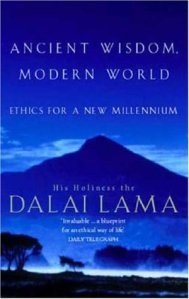
Ancient WisdomAncient Wisdom, Modern World Ethics for the New Millennium was published just before the millennium, a beautiful, small hard-cover book that reached out to all beings, not just those interested in Buddhism, addressing the spiritual void in a non-religious way and bringing attention to ethics and to finding new ways of living that avoid destroying nature and the environment, protecting our shared inheritance.

I remember that this was the first book of his, that I felt completely comfortable handing on to almost anyone, it surpassed belief and spoke to us all, no matter what our faith or spiritual inclination, this is an important and accessible message for humanity.

How to See YourselfHow to See Yourself As You Really Are – this book is a lighter, practical guide to understand the nature of self, examining how many of the things we currently believe to be solid are an illusion and that by appreciating this, we can learn how to minimise suffering.

His older books tend to be more philosophical and can at times be a challenge to understand the way of thinking, all of which is encouraged in Buddhist thought – that we should question in order to understand – however this book is more of a modern interpretation, written not for the scholar or practitioner but for anyone with an interest in self-improvement and understanding the mind.

By the time I read this one, I recognised much of the message, it wasn’t so new to me, I was already living it, but we always need reminding and encouraging, as the path is littered with obstacles!

Review: Happiness is an Inside Job

HappinessThis book was a delightful Christmas gift I was promised I would enjoy, described by Publishers Weekly as:

‘a small, polished gem of a book’

I had not heard of Sylvia Boorstein, one of the co-founding teachers at Spirit Rock Meditation Centre in California. She has written a number of books on Buddhist thinking, meditation, mindfulness and kindness.

In Happiness is an Inside Job, she shows how mindfulness, concentration, and effort–three elements of the Buddhist path to wisdom–can lead us away from anger, anxiety, and confusion, and into calmness, clarity, and the joy of living in the present.

Split into sections on equanimity, wise effort (and speech), mindfulness, and concentration it uses anecdotes and examples in everyday life to illustrate how to put this philosophy of compassion into practice.

It sounds like common sense and indeed it is, however the mind often loses track and imagines, worries, obsesses and does everything but choose the path of common sense and we often need to be reminded of the most simple observations to declutter it.

She reminds us that much that happens in our lives is external to us and beyond our control, but that our response to it is within our ability to manage and there is much we can do to help ourselves by learning how to respond in a way that will calm and nurture us, that we can choose to respond in a way that veers more toward the path of happiness.

‘Speech that compliments is, by definition, free from derision, which clouds the mind with enemies and makes it tense. Kind speech makes the mind feel safe and also glad.’

It’s a book to read a chapter at a time, not all at once, an alternative to the demands of fiction, more nourishing than television, food for the soul. Recommended as an introduction to Buddhist thought and the benefits of practising compassion.

“My practise is remembering that although whatever is happening, including my emotional response to it, is the lawful consequence of myriad causes that are beyond my control, the relationship I hold toward it all is within my control. I can choose on behalf of happiness.”