
 Translated Fiction
The Man Booker International Prize, celebrates newly translated fiction into English; this years judges have now whittled their long list down to six titles, giving us this interesting and diverse shortlist below. Though you’ll find a lot of translated fiction on the pages of this blog, it’s a niche that’s dominated by small publishers, so less known and indulged by the wider reading public.
Things are changing however and readers are becoming more discerning and aware of being made to seem ignorant by publishers who’ve stuck predominantly to nationalistic loyalties. I say this personally, as I discovered when I moved to France that without even making an effort you are just as likely here to read Russian, Colombian or Japanese authors as you are French authors. 45% of their fiction is translated! 5% of ours is.
Do we really only want to be offered stories written by authors from one country, to read thoughts generated in the imagination of only one original language?
Though we are in a climate of Brexit and an era of vociferous intolerance towards multiculturalism; storytelling and literature in translation offer a quiet route to developing empathy and understanding of ‘the other’ and a reminder that we can both learn something new and find the familiar in words from elsewhere.
The prize equally awards the translator, which should boost the industry and help translators take on more projects bringing us more excellent literature from elsewhere. The shortlist includes five languages, Arabic, French, German, Polish and Spanish from six different cultures.
Bettany Hughes, chair of the 2019 Man Booker International Prize judging panel, said:
‘Wisdom in all its forms is here. Unexpected and unpredictable narratives compelled us to choose this vigorous shortlist. Subversive and intellectually ambitious with welcome flashes of wit, each book nourishes creative conversation. We were struck by the lucidity and supple strength of all the translations.’
The six titles are listed below, summaries edited from the prize’s website: click on title to purchase a copy.


Celestial Bodies by Jokha Alharthi (Oman) tr. Marilyn Booth (Arabic) Sandstone Press
Set in the village of al-Awafi in Oman, we encounter three sisters: Mayya, who marries Abdallah after a heartbreak; Asma, who marries from a sense of duty; and Khawla who rejects all offers while waiting for her beloved, who emigrated to Canada. The three women and their families witness Oman evolve from a traditional, slave-owning society, slowly redefining itself after the colonial era, to the crossroads of its complex present. Elegantly structured and taut, it tells of Oman’s coming-of-age through the prism of one family’s losses and loves.
“No matter where you are, love, loss, friendship, pain and hope are the same feelings and humanity still has a lot of work to do to believe in this truth.” Jokha Alharti
The Years by Annie Ernaux(France) tr. Alison Strayer (French) Fitzcarraldo Editions
Considered by many to be the iconic French memoirist’s defining work, a narrative of the period 1941 to 2006 told through the lens of memory, impressions past and present, photos, books, songs, radio, television, advertising, and news headlines. Local dialect, words of the times, slogans, brands and names for ever-proliferating objects are given voice. The author’s voice continually dissolves and re-emerges as Ernaux makes the passage of time palpable. Time itself, inexorable, narrates its own course, consigning all other narrators to anonymity. A new kind of autobiography emerges, at once subjective and impersonal, private and collective, a remembrance of things past.
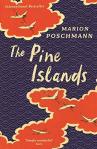
The Pine Islands by Marion Poschmann tr. Jen Calleja (German) Profile Books, Serpent’s Tail
When Gilbert, a journeyman lecturer on beard fashions awakes from a dream that his wife has cheated on him, he flees to Japan. In discovering the travel writings of the great Japanese poet Basho, he finds a purpose: a pilgrimage in the footsteps of the poet to see the moon rise over the pine islands of Matsushima. Falling in step with another pilgrim – a Japanese student with a copy of The Complete Manual of Suicide – Gilbert travels across Basho’s disappearing Japan with Yosa, one in search of his perfect ending and the other a new beginning that might give his life meaning. A serene, playful, moving story of the transformations we seek and those we find along the way.
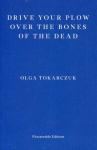
Drive Your Plow Over The Bones Of The Dead by Olga Tokarczuk (Poland) tr. Antonia Lloyd-Jones (Polish) Fitzcarraldo Editions
In a remote village in south-west Poland Janina Dusezjko, an eccentric woman in her 60s, describes the events surrounding the disappearance of her two dogs. When members of a local hunting club are found murdered, she becomes involved in the investigation. No conventional crime story, this novel offers thought-provoking ideas on perceptions of madness, social injustice against people who are marginalised, animal rights, the hypocrisy of traditional religion, and belief in predestiny.
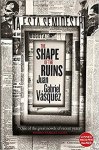
The Shape of the Ruins by Juan Gabriel Vásquez (Colombia) tr. Anne McLean (Spanish) Quercus, MacLehose Press
Pacing the dark corridors of a hospital during the birth of his twin daughters, Juan Gabriel Vásquez befriends a physician. Through him he meets Carlos Carballo, a man consumed by a conspiracy theory about the assassination of a politician Jorge Eliécer Gaitán in 1948. He tries to persuade Vásquez to write a novel about the murder, but despite repeated refusals Vásquez is drawn into the conspiracy when Gaitán’s vertebrae, stored in a glass jar at a mutual friend’s house, goes missing. Sparking a turn of events, Varquez opens up a second, darker conspiracy about the assassination of another politician, Rafael Uribe Uribe, in 1914.
“It’s a novel about past violences written at a time in which my country was trying to find some form of present peace. It turns around two political murders that shaped Colombian history in the twentieth century, and it uses them to think about the ways in which violence can be inherited: an act committed half a century ago can influence and even determine our private lives in the present. Deep down, how does political violence work? How does it change our private lives?” Juan Gabriel Vasquez
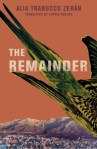
The Remainder by Alia Trabucco Zerán (Chile) tr. Sophie Hughes (Spanish) And Other Stories
Santiago, Chile. The city is covered in ash. Three children of ex-militants are facing a past they can neither remember nor forget. Felipe sees dead bodies on park benches, counting them in an obsessive quest to tally figures with the official death toll. He is searching for the perfect zero, a life with no remainder. Iquela and Paloma are also searching for a way to live on. When the body of Paloma’s mother gets lost in transit, the three take a hearse and a handful of pills up the cordillera for a road trip with a difference. Intense, intelligent, and extraordinarily sensitive to the shape and weight of words, this remarkable debut presents a new way to count the cost of generational trauma.
******
I haven’t read any of the titles shortlisted, I’ve been watching since the long list came out, the one that most intrigues me is Celestial Bodies, because it promises to highlight aspects of Oman’s history as shown through the story of three sister’s lives. While The Shape of the Ruins sounds intriguing, I’m a little wary of it seeming a little like Roberto Bolano’s 2666 another lengthy South American novel that centred around unsolved murders, that was too much for me.
I’m also intrigued by Olga Tokarczuk’s latest, she won the prize last year, though this is said to be a different and lighter read to Flights that can be read on multiple levels, with its elements of mystery, nature writing and reflective, philosophical inclinations.
So have you read any of the novels on the shortlist? Do you already have a favourite?
The winner will be announced on May 21.
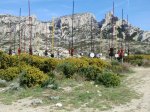
 I’ve been looking forward to picking this novel up, because it’s set in and around the streets and coastal inlets of Marseilles (our local city) and even ventures into Aix-en-Provence and Vauvenargues (the scene of a murder in the novel – though known locally because Picasso lived in the château there). It was originally published in French in 1995, when Izzo was 50 years old, a mere five years before his premature passing.


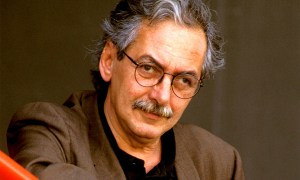 Jean-Claude Izzo when asked about the phenomenal success of his trilogy, characteristically chose to shine the light on the city he loved:
 As soon as I saw the cover of Sandrine Collette’s Nothing But Dust I wanted to read this book. I didn’t know what genre it was, but it was published by Europa Editions; all the books they choose to publish that I have read have been excellent.
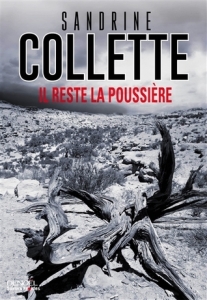 We become immersed in this life on a sheep farm with The Mother, her four sons, a dog named Three and the Criollos they ride, on the arid, infertile steppe they live on in Patagonia. All they’ve known and grown up with is harsh and menacing, reliably so; all they know is work, for her.
 The novella introduces Salimah, who found herself a job in the supermarket after her husband left her and her two sons as soon as they arrived in this foreign country. She attends an English class for learners of a second language where she meets a Japanese woman named Echnida who brings her small baby to class, an older Italian woman Olive, a group of young Swedish ‘nymphs’ and her teacher. She makes observations about her classmates and her own life, as she learns the language that is her entry into this foreign place.
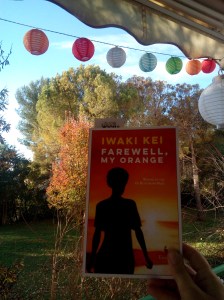 As time passes, new developments replace old situations, opportunities arise, Salimah’s son begins to be invited to play with a school friend, a pregnancy brings the three women together and it is as if they begin to create a community or family between them.
 I absolutely loved it and was reminded a little of my the experience of sitting in the French language class for immigrants, next to women from Russia, Uzbekistan, Cuba and Vietnam, women with whom it was only possible to converse in our limited French, supported by a teacher who spoke French (or Italian). So many stories, so many challenges each woman had to overcome to contend with life here, most of it unknown to any other, worn on their faces, mysteries the local population were unconcerned with.
 Iwaki Kei was born in Osaka. After graduating from college, she went to Australia to study English and ended up staying on, working as a Japanese tutor, an office clerk, and a translator. The country has now been her home for 20 years. Farewell, My Orange, her debut novel, won both the Dazai Osamu Prize (a Japanese literary award awarded annually to an outstanding, previously unpublished short story by an unrecognized author) and the
  Hanna has one daughter, Johanna, a name that carries its own story and past, before she is even born, one of the reasons she is closer to her father in her early years. Johanna would also have one daughter Anna, it is she who begins to narrate this story, she visits her mother in hospital, desperate to get answers to questions she has left it too late to ask.
 The first half of the book is dedicated to Hanna and her life and this is where the novel is at its best, immersed in the struggle of Hanna’s early years, its tragic turning point and the situation she is forced to accept as a result. Circumstances that will become buried deep, that nevertheless leave their impression on how she is in the world and impact those daughters indirectly.
 Antoine Laurain is one of my go to author’s when I’m in the mood for something short and light and of course, being a French author, there’s going to be the inevitable addition of the little French quirks, the things that one recognises from living here in France for more than 10 years.
 After a series of stressful events overwhelm him, he takes up the habit once more, relieved to find that the ‘urge’ has returned, but shocked to discover that the subsequent ‘pleasure’ that should follow it when he does light up has gone. Angered and determined to have that aspect returned to him, he makes a follow-up appointment with the hypnotist to reverse the procedure, which will lead him down a rocky road towards involvement in a worse crime, in pursuit of that elusive ‘pleasure’ he is determined to retrieve.
 I’m glad The Open Door was brought back into publication, it was a landmark work in woman’s writing in Arabic when it was first published in 1960, an important commentary on the challenges women and girls in so many societies face, a consequence of patriarchy; an effect that is being busted wide open today, forcing transparency, offering support, healing and with hope, gradual change in many countries today. It seems timely to revisit this, or to read it for the first time, as will likely be the case for many.
 About her novel, she had this to say:

 The narrating of family stories, taking us back as far as her great-grandfather Montazemolmolk with his harem of 52 wives, serves to provide context and an explanation for why certain family members might have behaved or lived in the way they did, helping us understand their motives and actions.

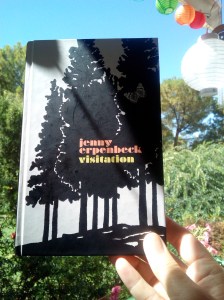 I’ve attempted to read Visitation about four times and never succeeded in getting past the first few chapters, but this year I persevered as I felt I hadn’t given it a fair chance.
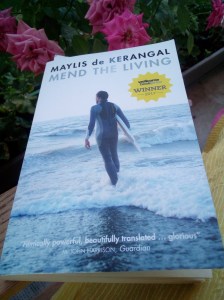 Although I’ve read reviews and seen this book appear often over the last year, and knew I really wanted to read it, I couldn’t remember what is was about or why.
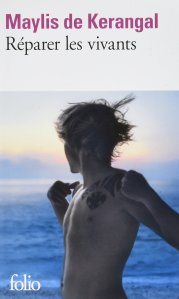 The British translation (by Jessica Moore) is entitled Mend the Living, broader in scope, it references the many who lie with compromised organs, who dwell in a twilight zone of half-lived lives, waiting to see if their match will come up, knowing when it does, it will likely be a sudden opportunity, to receive a healthy heart, liver, or kidney from a donor, taken violently from life.
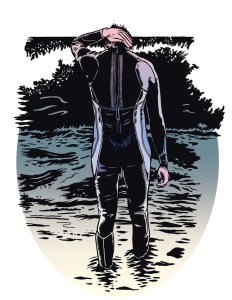 The translator Jessica Moore refers to her task in translating the authors work, as ‘grappling with Maylis’s labyrinthe phrases’, which can feel like what it must be like to be an amateur surfer facing the wave, trying and trying again, to find the one that fits, the wave and the rider, the words and the translator. She gives up trying to turn what the author meant into suitable phrases and leaves interpretation to the future, potential reader, us.
 Word by Word