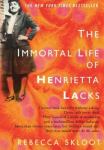
The Immortal Life of Henrietta Lacks by Rebecca Skloot

Henrietta LacksIn the same way we sometimes debate whether the story should be seen as an entirely separate entity to the writer, so too scientists perceive a sample of cell tissue as separate to the human body it was extracted from.

Except that it is not possible to extract a story from a writer’s imagination without their consent. 

Henrietta Lacks was a young mother in her early thirties when she was diagnosed with an aggressive form of cancer that would quickly take her life. She was fortunate to live close to John Hopkins hospital, built in 1889 as a charity hospital for the sick and poor, to ensure equal access to medical care for all, no matter their race, status, income or any other characteristic that might have otherwise given cause to discriminate in many of the hospitals at the time.

Before undergoing treatment, one of the Doctors took a tissue sample of both her healthy cells and the cancerous cells, as he had been doing to most patients, in an effort to try to find cells that would continue to replicate without dying – searching for the elusive “immortal” cell. It had never been done successfully with human cells.

He succeeded and the cells became known the world over – as he gave them away freely – as HeLa cells, immortal human cells that never died and could be used over and over to test for cures to disease and to observe how cells react to numerous variables, furthering science in ways unimaginable previously.

‘In culture, cancer cells can go on dividing indefinitely, if they have a continual supply of nutrients, and thus are said to be “immortal”. A striking example  is a cell line that has been reproducing in culture since 1951. (Cells of this line are called HeLa cells because their original source was a tumour removed from a woman called Henrietta Lacks.)’

Few paused to ask about the woman behind these cells, what was her story, how her family felt about the multi million dollar research industry that made great strides in science , yes, but also made entrepreneurial types wealthy in the process.

Rebecca Skloot first heard of the HeLa cells in 1988, she was 16-years-old, sitting in her biology class listening to a lecture on cell culture by her instructor Donald Defler. He described the many things that have been learned by being able to grow cells in culture, indicating that much we knew today was due to the proliferation of cells made available thanks to Henrietta Lacks.

‘HeLa cells were one of the most important things that happened to medicine in the last hundred years, ” Defler said.

Henrietta_LacksSkloot made Henrietta the subject of her research for 10 years in the creation of this thorough, respectful account of the life of Henrietta Lacks and her journey to uncover the events of the time within the context of what was the norm in her day.

In much of her location research, when she travelled to meet and interview people, she was accompanied by Henrietta’s daughter Deborah, a passionate woman, unable to find peace in her own life, until she had helped bring her mother’s story to light.

Henrietta Lacks was born in Roanoke, Virginia in August 1920, in a small shack overlooking a busy train depot, where freight cars constantly shunted to and fro. She lived there with her parents and 8 older siblings until 1924, when her mother died giving birth to her tenth child.

Her father lacked the patience for raising children, so took them all to his family in Clover, Virginia, where they farmed tobacco and split the children between those who could take them. Henrietta went to live with her grandfather, Tommy Lacks and her nine-year-old-cousin Day, left there after his birth, by his mother.

‘A twelve year old cousin and midwife named Munchie delivered him, blue as a stormy sky and not breathing. A white doctor came to the home-house with his derby and walking stick, wrote “stillborn” on Day’s birth certificate, then drove his horse-drawn buggy back to town, leaving a cloud of red dust behind.’

Their life there, became one filled with chores, waking at 4 o’clock in the morning, feeding animals, tending the family garden and then off to the tobacco fields to work.

Skloot finds out about her childhood, her marriage to Day, the 10 years they were married and had their children and the diagnosis that she kept from everyone, until it became obvious she was going to die.

It is tragic, sad and yet also a brilliant and informative story and piece of scientific medical history that reads like a novel and brings our awareness to the many who unknowingly make sacrifices for the better of others and that always present aspect of commercial vultures, hovering in the wings, recognising an opportunity to profit.

It rightly reveals and celebrates the life of the little-known woman behind those cells, Henrietta Lacks, who died at a young age from a ravaging cervical cancer, her children’s struggle, the family’s history and all that is kept from them in the name of science.

The Immortal Life of Henrietta Lacks was one of my Top 5 Non-Fiction Reads of 2015.

Big Magic, Creative Living Beyond Fear by Elizabeth Gilbert

Signature (2)Elizabeth Gilbert, author of the best seller Eat Pray Love and more recently in 2013, the historical, botanical novel The Signature of All Things (reviewed here) has thought a lot about Creativity, so much so that she gave a TED Talk on the subject.

Tapping into one’s creative life can often be referred to as a sea of obstacles, fears, procrastinations and can tend to focus on what one lacks, rather than the small steps we can take in pursuit of it.

In Big Magic, Gilbert writes a lot about how we get in the way of our own creativity, covering a multitude of sins, some that we may find relevant, others not, depending where we are on the path to pursuing it.

The book is separated into six sections, Courage, Enchantment, Permission, Persistence, Trust and Divinity where she discusses many aspects of e creative process, her own experiences and many anecdotes from well-known personalities.

Why You Should Quit Writing

One of the best is from Richard Ford, author of Canada (reviewed here); he gave this response to an audience member who recounted all the things that he and Ford had in common; age, background, themes, the fact they’d both been writing all their life.

The big difference being this person had never been published, they were heartbroken, a “spirit crushed by all the rejection and disappointment”. He added that he did not want to be told to persevere, that’s all he ever heard from anyone.

Ford told him he should quit.

The audience froze: What kind of encouragement was this?

Canada1Ford went on: “I say this to you only because writing is clearly bringing you no pleasure. It is only bringing you pain. Our time on earth is short and should be enjoyed. You should leave this dream behind and go find something else to do with your life. Travel, take up new hobbies, spend time with your family and friends, relax. But don’t write anymore, because it’s obviously killing you.”

There was a long silence.

Then Ford smiled and added, almost as an afterthought:

“However, I will say this. If you happen to discover, after a few years away from writing, that you have found nothing that takes its place in your life – nothing that fascinates you, or moves you, or inspires you to the same degree that writing once did…well, then, sir, I’m afraid you will have no choice but to persevere.”

Seize an Idea and Follow It

She writes about her theory that ideas are a separate entity to ourselves and if we do not pursue them when they come knocking in the form of inspiration, we risk them leaving us altogether and being passed on to someone else. When the momentum and inspiration has left us, which can also happen if we put something aside for too long, it becomes difficult, if not impossible, to renter the zone to complete it.

She gives an example of a novel she was very passionate and inspired by, an Amazonian novel. She mentioned it to her friend Ann Patchett who was curious as she was at the time writing a novel set in the same location.

042812_1839_StateofWond1.jpgGilbert gave her a brief outline and asked Patchett what her novel was about and she repeated almost word for word the same idea – fitting into her theory that the idea had visited her and because she had put it aside for a couple of years, it left and had been passed on to Patchett to become State of Wonder (reviewed here).
It’s necessary to read her quaint theories with an open mind, Big Magic itself is the label she applies to all those instances of coincidence, luck, the unexplained, it is a form of belief in universal guidance or positive thinking, one conveniently packaged as Big Magic.

Fortunately, we need not put all our faith in it, she pulls back from the inclination of some to urge us to seek out our passion, especially when many struggle to find or identify with such a thing. She favours curiosity over passion.

Forget Passion Pursue Curiosity

Forget about passion, pursue curiosity. Curiosity is accessible to everyone, while passion can seem intimidating and out of reach.

‘…curiosity is a milder, quieter, more welcoming and democratic entity…curiosity only ever asks one simple question of you:

“Is there anything you’re interested in?”

Anything?

Even a tiny bit?

No matter how mundane or small?

Curiosity is like a clue, you follow it, see where it takes you and continue along that train of thought or research. It may lead somewhere or nowhere, it doesn’t matter, momentum is what’s important. She gives the example of following an interest in gardening, that lead to researching and eventually writing her much admired historical novel The Signature of All Things.

She acknowledges that the necessity to achieving a creative life of note takes discipline, luck and talent and puts more faith in the former, than the latter.

She doesn’t regard herself as being endowed with greater than average talent, she is not a perfectionist – admitting to flaws in her work she knew were there, that weren’t worth the effort to pursue in the grand scheme of things. An interesting observation, as one of the flaws she mentions was an under-developed character in that same novel, something I noted in my review, that she admits beta readers warned her of, a flaw she deliberately did not remedy. In some cases the effort required to fix something is greater than the reward it will bring.

Overall, a fast, easy read, that can act as a reminder and a motivator to us in relation to any creative endeavour, it’s one of those books to read with a filter, let it pass through you and take the gems for what they’re worth to you now.

“Possessing a creative mind is like having a border collie for a pet. It needs to work, or else it will cause you an outrageous amount of trouble. Give your mind a job to do, or else it will find a job to do, and you might not like the job it invents.

It has taken me years to learn this, but it does seem to be the case that if I am not actively creating something, then I am probably actively destroying something (myself, a relationship, or my own peace of mind).”

Top Reads 2015

If you’ve noticed a lack of reviews recently, please know it’s not from a lack of interest, time or reading, just a temporary technical problem, not yet resolved but should be by mid January.

So, 2015 was a bumper reading year, I surpassed my book a week ambition and actually read 65 books from 26 different countries, a third of what I read was translated from another language, something I seek out in my interest to experience literature and storytelling from within other cultures and not only by those who have access to the English language.

I will create a separate post to talk more about my impressions and attractions of reading outside the main literary cultures and the cultures and landscapes that keep drawing me back for more.

As with previous years, I’ll share my one Outstanding Read and the Top 5 Fiction and Non-Fiction reads, with a few special mentions.

Outstanding Read of 2015

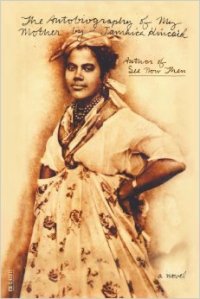
Autobiography MotherThe Autobiography of My Mother by Jamaica Kincaid My first read of the long-established author Jamaica Kincaid (Antigua) and it moved me like no other book had since last years outstanding read, Jennifer Clement’s Prayers for the Stolen.

This is a novel about a young woman growing up without a mother, abandoned for a time by her father and looking back at her life and the thoughts, reactions she had back then, using all the senses.

It is a kind of awakening, a visceral account that is insightful and squeamish both. It was for me too, the beginning of a season of Caribbean reads that were one of the major reading highlights of the year, soon after this I read three books by Maryse Condè (Guadeloupe), Cristina García’s Dreaming in Cuba, Edwidge Danticat’s Breath, Eyes, Memory (Haiti) all of which were 5 star reads.

Top Fiction

Click on the title below to read the review.

1.  The Wall,  Marlen Haushofer a riveting story of one womans survival in the aftermath of a catastrophic event, with only a few animals for companions. A lost classic that was revived years after the death of the writer and one that had me spellbound until the end.

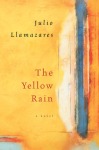
2. The Yellow Rain, Julio Llamazares set in an almost abandoned village in the Spanish Pyrenees, this is a haunting, elegiac account of one man who refused to leave and was witness to the degradation of all that man had contributed as nature reclaimed what was left. Captivating in the way it is written, you will want to slow read it, brief yet unforgettable.

3. Dreaming in Cuban, Cristina Garcia spanning three generations of women from Cuba, told from their differing perspectives, particularly the grandmother who is rooted in her country and culture, it explores separation, identity, the strong bonds of family and the weight of expectation. How these women survive their circumstances. Just brilliant and part of a great collection of literature from the region.

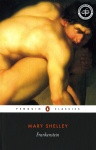
4. Frankenstein, Mary Shelley well it started with listening to the BBC audio broadcasts for learners of English, followed by watching a relayed broadcast of Benedict Cumberbatch in the London National Theatre adaptation, which was brilliant, to finally reading the work itself. I was a little hesitant, old classics aren’t really my thing, but I loved reading Frankenstein and couldn’t help but admire the tremendous achievement of Mary Shelley in creating it. Made all the more fabulous by having seen how it continues to inspire creative direction in the 21st century.

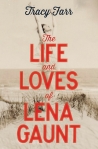
5. The Life and Loves of Lena Gaunt, Tracy Farr I didn’t read a lot of newly published works in 2015, but this one was a standout read for me, I was quickly drawn into the world of Lena Gaunt, an Australian theremin player who was born in Asia and had a few life changing experiences from her encounters there, who lived without much parental guidance or supervision, and developed her musical talents amid an eclectic group of artistic friends, had one true love and faced certain tragedy, all of which is brought to life after a recital she gave in her eighties attracted the attentions of a filmmaker. All the more interesting, for it being inspired by a true legend.

Top Non-Fiction

1. Unbowed: Autobiography of Wangari Maathai the truly inspiring story of Kenyan Nobel Peace Prize winner Wangari Maathai, the work she did, the challenges overcome that gave her a top education and the will to make a real difference, particularly for the lives of women in her country. She empowered others and created enduring projects and movements for all.

2. Under the Sea-Wind, Rachel Carson first in a nature inspired trilogy about the sea and her inhabitants, brought to life in a creative narrative, as seen from the perspective of three sea creatures, part one, the edge of the sea shows the habitat from the point of view of a female sanderling bird, she names Silverbar, part two, the Gulls way, is dedicated to the open sea and navigated by Scomber, the mackerel, and finally part three, river and sea, we follow Anguilla the eel as he travels from his coastal river pool downstream towards the sea and that deep instinctual pull towards the abyss.

3. Tales of the Heart: Stories from my Childhood, Maryse Condé essays, vignettes of childhood, recommended as the place to start in reading the work of this talented and enthralling writer from Guadeloupe. Loved it and was quick to follow-up with Victoire, My Mothers Mother, a book she says is true, though sold as a novel by her publishers due to the tendency of her research subjects to rely on oral stories to pass on their history. Brilliantly told, as she delves into the unknown life of her grandmother to better know and her own mother who died when she was 14.

4. The Immortal Life of Henrietta Lacks, Rebecca Skloot (review to come) the background story to the global presence and utilisation of the immortal HeLa human tissue cells, that were discovered to be unique in that they never died, continued to replicate and could be used to do all manner of tests for disease and drugs and how cells respond, something of a revolution for medical science.

HeLa were the initials of the person from whom the samples were taken, as was the procedure at the time. But who was HeLa and what did she or her family have to say about these extraordinary developments thanks to the cells of one woman? Rebecca Skloot spent 10 years researching the life of Henrietta Lacks and the subject of the HeLa cells to bring this extraordinary narrative.

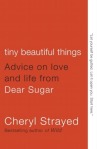
5. Tiny, Beautiful Things: Advice on Love and Life from Dear Sugar, Cheryl Strayed these are letters from the columnist Sugar, who it turned out was Cheryl Strayed, author of the book Wild about her solo journey to trek the Pacific West trail in her twenties.

These letters are written when she is in her forties and though still young, has lived multiple lives and had more than her share of extreme and dysfunctional experiences, from which to draw her own brand of wisdom. It’s a pick up at will kind of book, but her confrontational yet compassionate style is refreshing and thought-provoking, her ability to be very clear on her opinion and advice, without being judgmental.

Special Mentions

Outstanding Debut – Our Endless Numbered Days Claire Fuller

Excellent Classic – The Enchanted April, Elizabeth von Arnim

Most Uplifting Read – Antoine Laurain’s The Red Notebook and The President’s Hat

Most Disturbing Read – Agaat by Marlene Van Niekerk

Most Disappointing Read – The Waves , Virginia Woolf

Women in Translation #WITMonth

During August many I will be reading novels by women that have been translated from a language other than English. It’s an initiative created by Meytal Radzinski at Biblibio, Life in Letters and can be followed on twitter using the hashtag #WITMonth.

WITMonth15

Literature in translation represents less than 5% of published works in the English language, compared to nearly 50% for example in France and of works translated, approximately 30% is attributed to women.

I have gathered together a stack of books I already own that are works of translation and it is from this pile that I will be reading this month. It coincides with my interest in reading what I call cross cultural fiction, or literature from another perspective than that which we have grown up and/or been educated around, which in my case was very Anglo-focused.

WIT Month

If you have a favourite book by a woman, that has been translated, please tell us about it in the comments below so I can add it to my list for next year.

So far in 2015, I have read and reviewed the following books by women that have been translated: (click on the title to read the review)

Stone in a Landslide by Maria Barbal (Spain) translated Laura McGloughlin, Paul Mitchell (Catalan)

Beside the Sea by Véronique Olmi (France) translated Adriana Hunter (French)

Tales From The Heart, True Stories From My Childhood, by Maryse Condé (Guadeloupe) translated Richard Philcox (French)

Ru by Kim Thuy (Vietnamese-Canadian) (read in French, available in English)

The Wall by Marlen Haushofer (Austria) translated Shaun Whiteside (German)

Victoire: My Mother’s Mother by Maryse Condé (Guadeloupe) translated by Richard Philcox (French)

Happy Reading All.

To the River: A Journey Beneath the Surface by Olivia Laing

A relationship ends, prompting the author to plan a journey that follows the course of the River Ouse in Southern England, a river that has changed over time, through man’s battles, interventions and industrial/agricultural practices.

To The RiverAs she walks the river, Olivia Laing narrates a number of those historic events, occurrences that the river today bears little trace of, including the last immersion of Virginia Woolf, her pockets laden with heavy rocks as she strode with purpose into the river, her corpse emerging downstream three weeks later.

“Let me then, like a child advancing with bare feet into a cold river, descend again into that stream.” Virgina Woolf

The narrative meanders like the river might have done, had it not had its more interesting aspects and life-filled curves, sliced and straightened long ago, making it in parts more like a dredged canal. By bringing disparate events together in one narrative, Laing attempts to connect history to the landscape, reviving ghosts of the past, on a route where no markers inform the casual walker of its gruesome days gone by.

It is an attractive premise, to walk the length of a river as a form of therapy, writing and researching its length, though rather than submerge as Virginia Woolf was so drawn towards doing and did in this same river, Olivia Laing’s journey is more one of, walk, pause, reflect on great battles and digs, other lives lived, move swiftly on.

She spends little time reflecting on her own troubled narrative, the barely mentioned Matthew, a ghost-like figure never fully formed, their dilemma not shared on the page, instead it is the river we begin to grieve for, her character sliced and cut and reformed to meet the purpose of man, ignorant of the smaller life forms dependent on it for survival.

Deflecting attention away from her own purpose, Laing has written a tribute to a little known river, a metaphor of life, with all the events that chip away at and form its character, though its true essence remains.

She recalls the brutal Barons’ War of the 13th century, the dinosaur hunters of the 19th century at a time when that word had not yet been invented and the many writers whose lives and works were inspired or touched by rivers.

“I’d been thinking that morning of  The Wind and the Willows, and it struck me that if it had nurtured my love of rivers,  might also be responsible for this faint mistrust of woods…”

As she recalls listening with her sister to tapes of Kenneth Grahame’s stories of Rat, Mole, Toad and Badger, she tells the tragic tale of the author’s son Alistair, aspects of whose nature were immortalised in the character of Toad, his difficulty adjusting to the expectations of public school and university life and his premature death. This event segues into the question of whether A.S. Byatt in her novel The Children’s Book, who casts a character who writes children’s stories and uses her children as inspiration, has created an epitaph for Kenneth Grahame.

Of particular interest to those familiar with the landscape and interested in its history and of Virginia Woolf, it provides a brief introduction to many subjects, meandering off course at times. The book may have held my attention more, if the author had reached deeper into her own inner journey, though perhaps these lessons are realised long after the physical journey has taken place.

“Water,in Woolf’s personal lexicon, represented a way of slipping the superficial self … and ducking down into a deeper, nameless realm.  When Virginia writes about writing, the images she employs are liquid. She is flooded or floated; she breaks the current. When the books are going well she plunges off, happy as a swimmer, into the marine element of private thought.  When the work is going poorly, however, when headaches prevail,  or sleeplessness sets in, her descriptions begin to acquire a nightmarish dryness.”

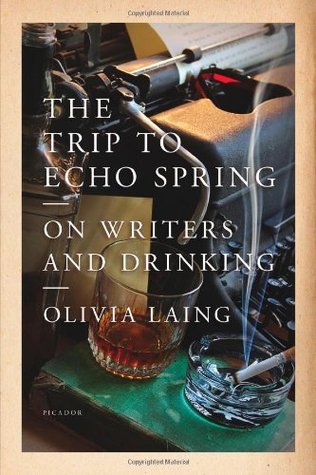
Trip to Echo SpringOlivia Laing combines a present day physical journey with threads of the past, as she does with The Trip to Echo Spring, a journey across America via a topographical map of alcoholism that examines the link between creativity and alcohol apparent in the books of John Cheever, John Berryman, Raymond Carver, Ernest Hemingway, F. Scott Fitzgerald and Tennessee Williams.

Under the Sea-Wind by Rachel Carson

Under the Sea-Wind (1941) was Rachel Carson’s literary debut and the first title in her Sea Trilogy, three books she wrote about the sea, the second The Sea Around Us (1951) and finally The Edge of the Sea (1955).

I discovered Under the Sea-Wind one day because I felt sure someone must have written a creative non-fiction book about the sea, someone with an affinity for the sea and an ability to bring it alive in the way I was imagining.

I like to read page-turning, lyrical nature writing, the kind of prose written by poets, though not poetry; authors like Kathleen Jamie who wrote Findings (my review here) and Sightlines, Barry Lopez and his Arctic Dreams (review here), Annie Dillard’s Pilgrim at Tinker Creek. They are all books that fascinate, entertain and enthrall on the subject of nature, in a way that traditional, factual texts about those subjects rarely inspire.

So I asked myself, well who has written in this form, about the sea? Because the sea is my muse, my resting place, that living, moody, playful, dangerous place that I never tire of and rarely get enough of and I wanted to read something that attempted to articulate the essence of it. So I could bring the sea nearer to me, when I can’t go to her. In that search I discovered Rachel Carson’s literary debut, her personal favourite book of all those she wrote, a book all about the sea, invoking its mystery and wonder.

The book started out as an assignment she completed in 1936, when she was an unemployed zoologist and freelance writer for the U.S. Bureau of Fisheries. Asked to write an introduction to a brochure on marine life, she submitted an essay entitled “The World of Waters” neatly typed by her mother, as all her manuscripts would be.

The next day Carson sat in Higgins’s Washington D.C. office waiting for his verdict.The government ichthyologist knew at once that it was unsuitable. What he was reading was a piece of literature. Carson never forgot the conversation: ‘My chief…handed it back with a twinkle in his eye. ‘I don’t think it will do,’ he said. ‘Better try again. But send this one to the Atlantic Monthly.’

The essay was a narrative account of the countless sea creatures that cohabit in and underwater and introduced her two most enduring and renowned themes: the ecological relationships of ocean life that have been in existence for millenia and the material immortality that embraces even the tiniest organism. It was the essay that spawned a classic in nature literature.

A sanderling shore bird

A sanderling shore bird

Under the Sea-Wind is structured in three parts, and in each part, we view the sea and sea life from the point of view of one of its inhabitants.

In Part One, Edge of the Sea, written for the life of the shore, and inspired by a stretch of North Carolina sea-coast, we meet a female sanderling she names Silverbar, it is Spring and the great Spring migration of shore birds is at its height and concludes with the end of summer where the movements of  birds, fish, shrimp and other water creatures heralds the changing of the seasons.

“Pressing close to the backwash, Silverbar saw two shining air bubbles pushing away the sand grains and she knew that a crab was beneath. Even as she watched the bubbles her bright eyes saw that a wave was taking form in the tumbling confusion of the surf. She gauged the speed of the mound of water as it ran, toppling, up the beach. Above the deeper undertones of moving water she heard the lighter hiss that came as the crest began to spill. Almost in the same instant the feathered antennae of the crab appeared above the sand. Running under the very crest of the green water hill, Silverbar probed vigorously in the wet sand with opened bill and drew out the crab. Before the water could so much as wet her legs she turned and fled up the beach.”

She describes the terror of the shore birds as they hide in the beach grass from the noisy, boisterous migrating flocks that briefly occupy their territory; the terrible snow storm that will freeze hundreds of egg embryos, where only the fittest and strongest survive; the way the birds lure a fox away from their nests and the day the parents finally abandon their young, their job complete.

A school of Mackerel

A school of Mackerel

Part Two The Gull’s Way, is dedicated to the open sea, a parallel time period in the open ocean and here we encounter Scomber the mackerel, following his journey from birth through infancy and youth in a quiet New England harbour, only to join a school that follows its instinct into the great sea where numerous predators await. As the fish move from one location to the next, trying to outwit predators, including man, the sea becomes the scene of a thriller and Scomber the mackerel, our fugitive!

Anguilla, the eel

Anguilla, the eel

Part Three River and Sea is written in the deepest, darkest, fathoms, we follow Anguilla, the eel from the far tributaries of a coastal river pool, downstream to the gently sloping depths of the sea, ‘the steep descent of the continental slopes and finally the abyss’.

After 10 years of uneventful river habitation, the eels are drawn by instinct downriver returning to their place of birth, a deep abyss near the Sargasso Sea where they will spawn and die. It is the most remarkable journey, as is that of the newborn spawn originating from two continents, who float side by side and drift towards those same coastal rivers their parents swam from, a voyage of years and over time the two species will separate and veer towards their continent, the US or Europe.

“Anguilla had entered Bittern Pond as a finger-long elver ten years before. She had lived in the pond through its summers and autumns and winters and springs, hiding in its weed beds by day and prowling through it waters by night, for like all eels she was a lover of darkness…Now it was autumn again… a strange restiveness was growing in Anguilla the eel. For the first time in her adult life, the food hunger was forgotten. In its place was a strange, new hunger, formless and ill-defined. Its dimly perceived object was a place of warmth and darkness – darker than the blackest night over Bitten Pond.  She had known such a place once – in the dim beginnings of life, before memory began. Many times that night, as the wind and rain tore at the surface film of the pond, Anguilla was drawn irresistibly towards the outlet over which the water was spilling on its journey to the sea.”

Rachel Carson writes about the sea, the sand, the birds, fish and the smallest of creatures and organisms in a way that makes us realise how little we observe of what is occurring around us, though we may stand, swim, float or fish in the midst of it. For the sea, its shore and the air above thrum like a thriving city of predator and prey of all sizes and character, constantly fluctuating, its citizens ever alert to when it is prudent to move and when it is necessary to be still.

Original, enthralling, it opens our eyes to much that we do not see or understand, I am in awe of shore birds, mackerel, eels, the sea, streams, rivers, ponds and the interconnectedness of them all.

Man, when his ambitions were more local, was once a balanced part of this ecosystem, though many of the practices of today appear to have stretched the boundaries of our role too far towards destructive exploitation, in our ignorance, we are upsetting this delicate yet complex ecosystem, which will be to our detriment if not stopped.


Fortunately, we have people like Captain Paul Watson and the Sea Shepherd Conservation Society, who have made themselves guardians of marine wildlife, actively pursuing  and preventing those who exploit and destroy without regard for the destructive effect of their pillaging the oceans.

Rachel Carson explores the sea-shore, the shallow and the deep, seeing them from the point of view of three species natural to those habitats, while mentioning so many more that they encounter, in a narrative that makes nature writing absolutely thrilling and survival an astounding feat.

Highly Recommended!

Buy a copy of Under the Sea-Wind via Book Depository

Tales From The Heart, True Stories From My Childhood by Maryse Condé

I came across Maryse Condé recently via the Man Booker International Prize 2015 list of 10 nominated authors. She is third from the left in the picture below.

FinalistsNot a book prize as such, it is an award conferred on an author who has a significant body of published work, regardless of the original language it was written in, though some of it must have been translated into English.

It is from such long lists the gems are found I say, and having read about all 10 thanks to this excellent Interview: The Finalists Speak in The Guardian, I spotted my potential winner immediately. A winner in the sense that I intend to read a few of their books. The Indian writer Amitav Ghosh was the only author I’d read on this list.

One writer jumped out at me straight away and I pursued her works with little consideration for the pending award result. Maryse Condé didn’t win the prize, the Hungarian writer László Krasznahorkai did, a writer whose books intellectuals rave about, but who I’m not sure I’m ready for yet.

Tales Maryse CondéSo I took Maryse Condé’s advice and started by reading this slim volume of essays of her childhood in Guadeloupe, Tales From the Heart, True Stories From My Childhood.

She takes us right back to the beginning, to the day of her birth. Being the youngest of 8 children, the family possessed an extended collective memory and she was fortunate to have heard the story of her birth from other perspectives.

Her appearance was both a source of pride and shame for her then 43-year-old mother and 63-year-old father, proud that her body remained robust enough to support the creation of a child and shame that it publicly displayed evidence of their continued indulgence in carnal pleasures.

The first chapter Family Portrait describes her parents relationship with France:

“For them France was in no way the seat of colonial power. It was truly the Mother Country and Paris, the City of Light that lit up their lives.”

World War II wasn’t considered dark on account of all the dreadful atrocities that occurred:

“but because for seven long years they were deprived of what meant the most to them, their trips to France.”

She recounts an anecdote of a waiter in a café complimenting the family on their excellent French pronunciation, to which her parents felt indignant, considering themselves just as French as a Parisian waiter, even more so because of their higher education, manners and regular travel.

Not understanding why it mattered so, she asked her brother Sandrino:

“Could he explain my parents behaviour?” to which he replied “Papa and Maman are a pair of alienated individuals,”

a mysterious word that would rest a long time in her consciousness until she came to understand it. She realised that not only did they take no pride in their African ancestry, they knew nothing of it, however:

“They believed they were the most brilliant and most intelligent people alive, proof positive of the progress achieved by the Black Race.”

Maryse Condé

In their neighbourhood all the mothers in their circle held a profession and with it contempt for the manual work they believed had been the undoing of their own mothers. They employed a servant who, though she raised 6 children of her own would begin work at 5am to take care of the needs of the family.

We meet her best friend Yvelise, two girls who did everything together, their friendship almost destroyed by the unfortunate intervention of one of her teachers, causing a temporary rupture.

Maryse’s mother Jeanne, knew the life she didn’t wish to lead, nor her children either, she had succeeded in breaking the cycle endured by her mother and grandmother and a good education was key (and perhaps being married to a successful and much older husband). Jeanne was a school teacher, revered and feared in equal measure by those around her. Her eldest son Sandrino and her youngest child Maryse the only two children who weren’t afraid to stand up to her, the others too terrified to challenge her.

On her birthday, her favourite pupils recited compliments, gave her roses, her husband bought her jewellery and the day would culminate with a family play, a short piece of theatre written themselves, in her honour.

‘Beneath her flamboyant appearance, I imagine my mother must have been scared of life, that unbridled mare that had treated her mother and grandmother so roughly…Both of them had been abandoned with their “mountain of truth” and their two eyes to cry with.’

10-year-old Maryse asked if she could read one of her compositions for her mother’s birthday.

‘I had no idea what I wanted to write. I merely sensed that a personality such as my mother’s deserved a scribe.’

If a book of essays can reach a crescendo, this is the moment when we reach it. The moment when Maryse learns that not all lessons come from one’s parents and school teachers, some come from life itself and often when we least expect it.

In the chapter School Days , she is at school (lycée) in Paris when her French teacher asks her to present to the class a book from her island. It is a watershed moment.

‘This well intentioned proposition, however, plunged me into a deep quandary. It was, let us recall, the early fifties. Literature from the French Caribbean had not yet blossomed. Patrick Chamoiseau lay unformed in his mother’s womb and I had never heard the name Aime Césaire. Which writer from my island could I speak about? I resorted to my usual source: Sandrino.’

Sugar Cane Alley

Sugar Cane Alley

Sandrino introduces her to to a treasure. La Rue Case-Negres (Black Shack Alley) by Joseph Zobel and his hero José Hassan. It was made into an award-winning film titled Sugar Cane Alley.

It was her first introduction to a world no one up until that moment had ever mentioned; a world that highlighted slavery, the slave trade, colonial oppression, the exploitation of man by man and colour prejudice.

‘I was scared to reveal how José and I were worlds apart. In the eyes of this Communist teacher, in the eyes of the entire class, the real Caribbean was the one I was guilty of not knowing.’

These glimpses into the more significant and memorable aspects of childhood that shaped the author Maryse Condé are insightful, engaging and honest. Just as her consciousness is awakened, the vignettes finish and leave the reader desperate to know more.

I had intended to read this volume over time, but once I started reading I couldn’t stop, it is almost like reading a coming-of-age novella and at its conclusion, the writers fiction will begin. For Condé’s first novel Hérémakhonon is about a character raised in Guadeloupe, educated in Paris, who then travels to Africa in search of a recognisable past, just as she did.

‘Veronica has spent her childhood in Guadeloupe and, after a period as a student in Paris, wants to escape that island’s respectable black bourgeoisie, which she regards as secretly afraid of its own inferiority. She travels to an unnamed West African state and, while there, seeks an authentically African past with which she will be able to identify.’

Tales From The Heart is an excellent read and an intriguing introduction to the writer and her influences and will certainly make you want to read more of her work. I am very happy I have these three novels on the shelf to follow-up with only I am missing that debut novel which I really want to read now too! Very highly recommended.

Literary Works of Maryse Condé

My Other Reviews

Victoire, My Mother’s Mother 

Segu

The Story of the Cannibal Woman

A Season in Rihata

Click Here to Buy a book by Maryse Condé


A Journey From Hobbiton to Provence

Carolyne Kauser-Abbot is a freelance writer who has a passion for food, travel and Provence and shares many wonderful things to see and do here in the lifestyle travel magazine Perfectly Provence as well as a food and travel related blog Ginger and Nutmeg.

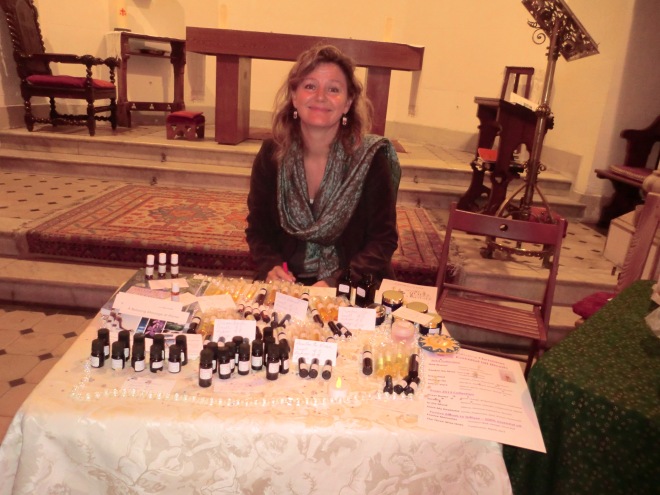
Recently she asked me how I came to be a writer/blogger and Aromatherapist in Provence.

If you click on the photo below you can read the article:

Claire's Christmas Aromatherapy Remedies

Claire’s Christmas Aromatherapy Remedies

I hope you enjoyed the diversion from reading a book review.

 Claire

Unbowed, One Woman’s Story by Wangari Maathai

WangariWangari Maathai was an exceptionally hard working, charismatic, altruist, who came from humble rural beginnings, toiling the land barehanded from a young age to become one of a group of young Africans identified as part of the “Kennedy Airlift”, provided the opportunity to gain bachelor’s and master’s degrees in the US, then completing a PhD in her native Kenya and using her education to work for the betterment of her country and people in terms of sustainable environmental practices social justice.

In addition to a senior role as a scientist and researcher at a university in Nairobi, needing to do something practical and far-reaching, she founded the sustainable tree planting initiative, The Green Belt Movement and would go on to become a responsible and practically minded activist, working to protect the natural resources and people of Kenya, through her knowledge of where to apply pressure, through her strong international network and above all the high regard in which she was esteemed by many, though sadly, that didn’t include the government of Kenya, who over many, many years continued to block her, plant obstacles in her way, arrest her and make it very difficult for her to continue in her role as an academic and to run her own business.

Wangari Maathai possessed a spirit that refused to lie down, with every setback, she gathered herself and whatever limited resources she still had, and at times this was nearly nothing and always looked towards the one step she could take, that first step towards a solution.

Wangari Maathai, Tree Hugger Extraordinaire!

Wangari Maathai, Tree Hugger Extraordinaire!

Planting a tree was both symbolic and life-sustaining. As more and more of Kenya’s forest was being deforested, underground water sources were drying up, land that had been planted with indigenous trees was being replaced with cash crops like tea and coffee, stripping the soil of nutrients and occupying land previously used to produce traditional foods for people to eat. As a consequence women began to feed their families more processed foods, requiring less energy to produce, less firewood and increasing the incidence of malnutrition.

“While I was in the rural areas outside Nairobi, I noticed that the rivers would rush down hillsides and along paths and roads when it rained, and that they would be muddy with silt. This was very different from when I was growing up. “That is soil erosion,” I remember thinking to myself. “We must do something about that.” I also observed that the cows were so skinny that I could count their ribs. There was little grass or other fodder for them to eat where they grazed, and during the dry season much of the grass lacked nutrients.”

And she took people with her, she made them part of the solution. To grow The Green Belt Movement required a large network of people to plant trees and to source and nurture seedlings. She went to the women, women like herself who grew up with their hands in the earth, she empowered them to create nurseries in their villages and tend the small trees and keep planting.

“Although the leadership of the NCWK (National Council of Women of Kenya) was generally elite and urban,  we were concerned with the  social and economic status of the majority of our members, who were poor, rural women. We worried about  their access to clean water,  and firewood,  how they would feed their children,  pay their school fees,  and afford clothing, and we wondered what we could do to ease their burdens. We had a choice: we could either sit in an ivory tower wondering how so many people could be so poor and not be working to change their situation, or we could  try to help them escape the vicious cycle they found themselves in. This was not a remote problem for us. The rural areas were where our mothers and sisters still lived. We owed it to them to do all we could.”

Tumutumu Hills nursery

Tumutumu Hills nursery

These women were already farmers, they knew how to nurture beans, maize and millet seeds, and Wangari and her team reminded them, they didn’t need a diploma to plant a tree. All they needed was their “women-sense”. These women succeeded, they showed other women what to do and became known as their “foresters without diplomas”. At every stage they looked to see if they could improve the way they did things and to overcome any obstacles the women encountered. It was a huge and sustainable success.

Unfortunately, the government for much of the 80’s and 90’s was against her, almost as if it were a personal affront, to witness a woman speak out and lead and inspire others to stand up to authority; Wangari Maathai was an advocate for proper governance and management of public resources and as soon as she heard about abuses of powers that threatened to remove public rights, she moved her supporters to action.

Through perseverance she won many battles, to save the last big public park in the middle of Nairobi, Uhuru Park from urban development, preventing Karura Forest from being given to friends and political supporters of politicians, the release of political prisoners and even the lobbying of the World Bank to forgive Kenya’s national debt which had escalated out of control. due to interest payments, despite the original loan amounts having been repaid .

“When I see Uhuru Park and contemplate its meaning, I feel compelled to fight for it so that my grandchildren may share that dream and that joy of freedom as they one day walk there.”

« Maathai and Obama in Nairobi » Source: Fredrick Onyango,  Nairobi, Kenya Wikipedia

« Maathai and Obama in Nairobi » Source: Fredrick Onyango, Nairobi, Kenya Wikipedia

Unbowed, One Woman’s Story, is an astonishing and important recollection of the life and work of Wangari Maathai. She applied herself to everything she did with vigour and heart, the opportunity to be educated, something that continues to be lobbied for so many girls in third world countries, was a major turning point and became the first of many open doorways she walked through and made the most of, not for own benefit, but always for the good of all.

It seems almost like a utopian fantasy, to imagine what the world could be like, if more women were given the opportunity to gain the necessary knowledge that could allow them to facilitate solutions to village and country problems, that allowed them to live sustainably and not in fear or poverty without understanding why. Wangari Maathai knew and practised that one person can’t change everything, it is through showing and empowering others that change happens.

She was an amazing, inspirational and practical woman, who responded to the call for help on many significant issues that would benefit all Kenyan’s and was an example to the world, rightfully acknowledged and awarded the Nobel Prize for peace in 2004. Sadly she passed away in 2011 from ovarian cancer.

“Throughout my life, I have never stopped to strategize about my next steps. I often just keep walking along, through whichever door opens. I have been on a journey and this journey has never stopped. When the journey is acknowledged and sustained by those I work with, they are a source of inspiration, energy and encouragement. They are the reasons I kept walking, and will keep walking, as long as my knees hold out.”

Wangari tells a wonderful story of how the hummingbird responds to a forest fire, in a delightful metaphor that describes exactly her attitude to life and the many challenges that surround us. It has been made into a 2 minute animated film, Dirt, narrated by Wangari Maathai and is a wonderful introduction to her faithful, persevering spirit. A wonderful short film and one of my Top Reads for 2015.

I will be the hummingbird…

Cider With Rosie by Laurie Lee

cider with rosieA nostalgic memoir of early boyhood in a Cotswold village, recalling memories from the age of 3-years-old, surrounded by older sisters and siblings, the father having long abandoned the family household, leaving the housekeeper who had become his wife, to raise the children of his first marriage and the four he had with her.

Rather than a tale of struggle and poverty that we might expect given the circumstance of being raised in a large single parent family, in Laurie Lee’s hands, family life is narrated as a bundle of daily adventures and anecdotes that celebrate village life, sibling love, old lady madness and an attitude of making the most of it.

Born in 1914,and writing this memoir in 1959, Lee’s style shares what he saw looking out at his view of the world, rather than looking within, it is a celebration of the time and a tribute to those he loved, respected, feared and was in awe of around him – including young Rosie, who makes the briefest of appearances luring him into the haystack, a significant turning point in his life no less.

Bank Cottages, the Family Home

Bank Cottages, the Family Home

It is unique to read an author recalling tales of his relatives and sparing a thought for their sensitivity to what he is about to make public, something that today might be glimpsed in the acknowledgements, but rarely in the text, where the current trend is to hold nothing back and share all.
“On my Mother’s side there were these five more uncles: squat, hard-hitting, heavy-drinking heroes whom we loved and who were kings of our youth. For the affection we bore them and the pride we took in them, I hope they’ll not be displeased by what follows.”

This reluctance to spill all, means that the one thing that modern readers are no doubt curious about, the absent father and Laurie Lee’s thoughts about him, rarely get a mention.

“The three or four years Mother spent with my father she fed on for the rest of her life. Her happiness at that time was something she guarded as though it must ensure his eventual return. She would talk about it almost in awe, not that it had ceased but that it had happened at all.”

Acceptance or denial, they all just get on with living, surviving, getting an education and taking care of each other. Certainly they are always entertained, if not by each other, then by the two eccentric Grandmother figures who live within the same building complex and whose mutual hatred for each other seems to be the thing that sustains their life force.

“For several more years the lives of the two old ladies continued to revolve around each other. Like cold twin stars, linked but divided, they survived by a mutual balance. Both of them reached back similarly in time, shared the same modes and habits, the same sense of feudal order, the same rampaging terrible God. They were far more alike than unalike, and could not abide each other.”

Slad ValleyLee paints a picture of village life that is vivid and alive with character and memory as if it happened today without compromising respect for any of the inhabitants; even at their most villainous, he narrates their stories with compassion and mild regret.

His narrative captures the passing of time, the slow encroachment of city life and innovation that will ultimately kill that old village way of life that encapsulated them all, from the Squire down to the struggling newborn. He does so by sharing the stories and anecdotes of others seen through his eyes, rather than turning his gaze inward.

“The last days of my childhood were also the last days of the village. I belonged to that generation which saw, by chance, the end of a thousand years’ life…Myself, my family, my generation, were born in a world of silence; a world of hard work and necessary patience, of backs bent to the ground, hands massaging the crops, of waiting on weather and growth; of villages like ships in the empty landscapes and the long walking distances between them; of white narrow roads, rutted by hooves and cartwheels, innocent of oil or petrol, down which people passed rarely, and almost never for pleasure, and the horse was the fastest thing moving. Man and horse were all the power we had – abetted by levers and pulleys.”

A wonderful narrative of a not so distant time, lost forever.

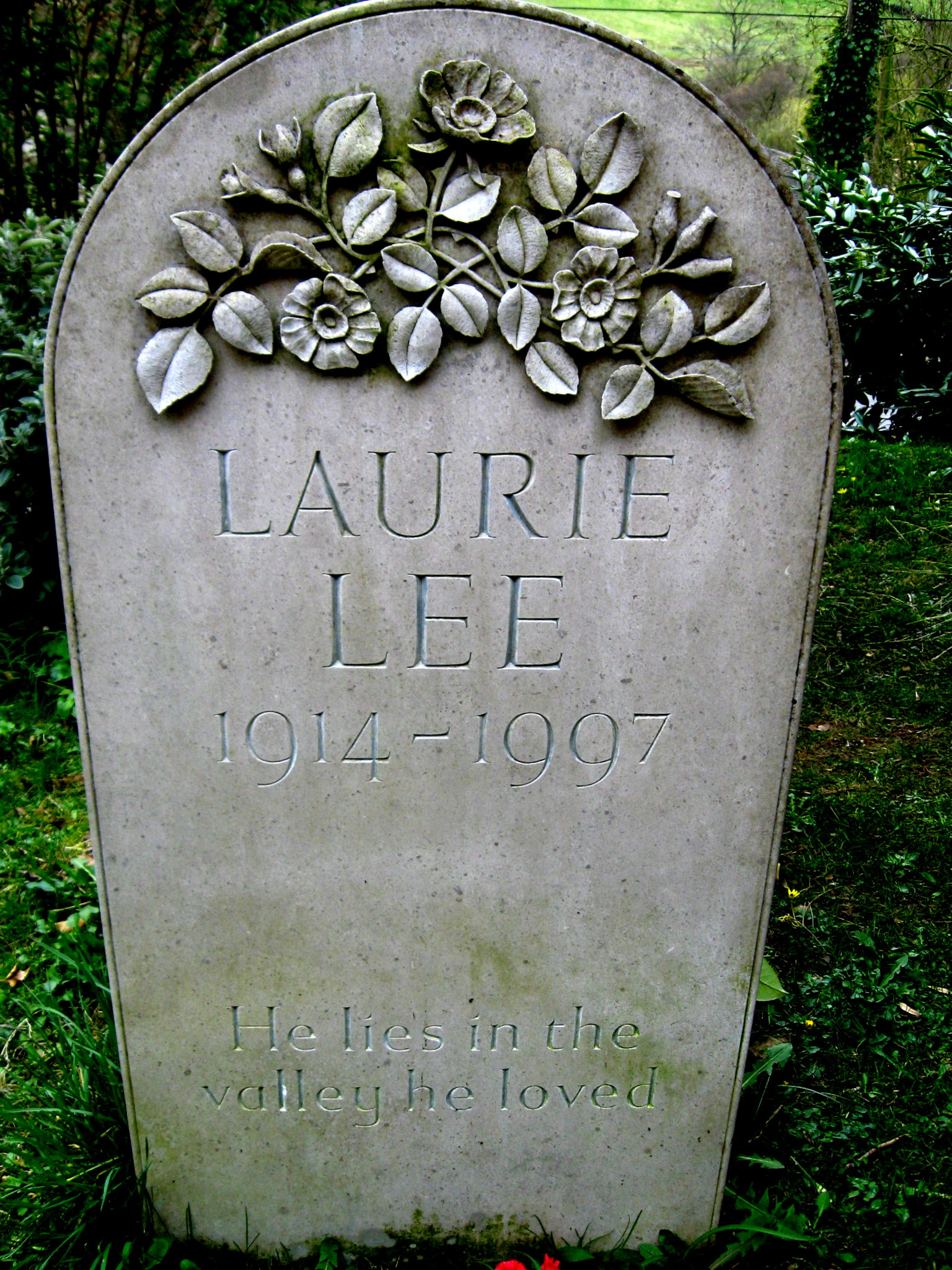
"LaurieLeeHeadstone" by Jongleur100 - Source: Wikipedia

“LaurieLeeHeadstone” by Jongleur100 – Source: Wikipedia

Note: This book was an ARC (Advance Reader Copy) kindly provided by the publisher via Netgalley.