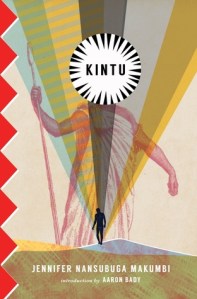
Kintu by Jennifer Nansubuga Makumbi

When I look back at my absolute favourite book of the year in recent years, there is a common theme running in which an author has written a story that comes from deep within their cultural heritage; it’s there in my favourite book of 2017 Homegoing by Yaa Gyasi, a book that reaches back to the author’s Ghanaian heritage, in Simone Schwartz-Bart’s The Bridge of Beyond and in Jamaica Kincaid’s The Autobiography of My Mother. It’s even there in Eowyn Ivey’s The Snow Child.

This is what appealed to me immediately about the prospect of reading Jennifer Nansubuga Makumbi’s Kintu. It promises to do the same thing, to take the reader from where we are at today in a culture and link it back to the past, from modern day Uganda to the era of when the region was ruled as a kingdom. And it succeeds brilliantly, in a way rarely seen in literature in the UK/US published today.

Kintu was discovered when a project called Kwani? launched a manuscript competition in 2012 to discover the best unpublished novels  by writers from across Africa, and to publish them for readers there. Ayòbámi Adébáyò’s excellent Stay With Me, was one of seven manuscripts shortlisted, it also went on to make the shortlist of the Women’s Prize for Fiction in 2017.

About the Kwani? project, one of the judges, Ellah Wakatama Allfrey said:

What we looked for as judges were manuscripts that told stories from the inside without the burden of focusing on how an imagined ‘West’ would view them.

As a result of winning that prize Kintu was published by Kwani Trust (in Kenya) before being offered to international publishers. It was published in the US (Transit Books) and the UK (One World Publications) and in March 2018 Jennifer Makumbi learned she was a recipient of a prestigious Windham Campbell Prize for Literature worth US$165,000. She is working on her second novel.

My Review:

1750 Buddu Province, Buganda

Kintu is the name of a clan, the original clan elder Kintu Kidda fell in love with Nnakato, an identical twin (the younger) and her family refuse to allow him to marry her unless he married her sister Babirye first. He refused. They resisted. He relented.

Kintu’s mind lingered on the primal conflict that led to a soul splitting into twins. No matter how he looked at it, life was tragic. If the soul is at conflict even at this remotest level of existence, what chance do communities have? This made the Ganda custom of marrying female identical twins to the same man preposterous. It goes against their very nature, Kintu thought. Twins split because they cannot be one, why keep them as such in life? Besides, identical men did not marry the same woman.
Babirye gave him four sets of twins while Nnakato was unable to conceive. When the twins, raised as if they belonged to Nnakto were adults, Nnakato finally gave birth to a son Baale. They adopted a baby boy Kalema, from Ntwire a widower who was passing through their lands, who decided to stay in gratitude to Kintu and Nnakto for raising his son in their family.

When tragedy occurs, Kintu tries to conceal it, Ntwire suspects something and places a curse on Kintu, his family and their future descendants.

The novel is structured into Book One to Book Six, the first five books focus on different strands of the Kintu clan, the first book being the original story of Kintu Kidda and his family in the 1700’s (pre-colonial era) and the latter stories are set in modern times, colonial interlopers have left their imprint, however this is not their story nor a story of their influence, except to note the impact on the kingdom.

After independence, Uganda – a European artefact – was still forming as a country rather than a kingdom in the minds of ordinary Gandas. They were lulled by the fact that Kabuku Mutees II was made president of the new Uganda. Nonetheless, most of them felt that ‘Uganda’ should remain a kingdom for the Ganda under their kubuka so that things would go back to the way they were before Europeans came. Uganda was a patchwork of fifty or so tribes. The Ganda did not want it. The union of tribes brought no apparent advantage to them apart from a deluge of immigrants from wherever, coming to Kampala to take their land. Meanwhile, the other fifty or so tribes looked on flabbergasted as the British drew borders and told them that they were now Ugandans. Their histories, cultures and identities were overwritten by the mispronounced name of an insufferably haughty tribe propped above them. But to the Ganda, the reality of Uganda as opposed to Buganda only sank in when, after independence, Obote overran the kabuka’s lubiri with tanks, exiling Muteesa and banning all kingdoms. The desecration of their kingdom by foreigners paralysed the Ganda for decades.

Each beginning of the six parts/books however narrates over a few pages, something of the story of a man named Kamu Kintu, who is seized from his home, hands tied behind his back and taken away for questioning by a group of local councillors. Overhearing someone mutter the word thief, an angry mob of villagers menace him without knowledge of the reason for his being detained and he is killed, left for dead on the road, the men who’d requested he come with them fleeing. What subsequently happens to every one of those councillors is equally mysterious, creating a thread of mystery that both links and separates the family stories that make up the novel.

We don’t find out who Kamu Kintu is or how he is connected to the families we encounter in each part, until Book Six, where the threads that tie the clan together begin to connect in the enthralling homecoming.

Throughout each family and over the years certain aspects replicate throughout the families, the presence of twins, premature death, as if the curse that was muttered so long ago continues to reverberate through each generation. Some of them are aware of the curse, remembering the story told by their grandmothers, others haven’t been told the truth of their origins, in the hope that ignorance might absolve them.

Her grandmother’s story had intruded on her again. All day at work, the story, like an incessant song, had kept coming and going. Now that she was on her way home, Suubi gave in and her grandmother’s voice flooded her mind.
Some are haunted by ghosts of the past, thinking themselves not of sound mind, particularly when aspects of their childhood have been hidden from them, some have prophetic dreams, some have had a foreign university education and try to sever their connections to the old ways, though continue to be haunted by omens and symbols, making it difficult to ignore what they feel within themselves, that their mind wishes to reject. Some turn to God and the Awakened, looking for salvation in newly acquired religions.

It’s brilliant. We traverse through the lives of these families, witness their growth, development, sadness’ and joys, weaving threads of their connections together, that will eventually intersect and come to be understood and embraced by all as the clan is brought together to try to resolve the burden of the long-held curse that may have cast its long shadow over this clan for so many generations.

One of the things that’s particularly unique about the novel, is the contrast of the historical era, 1750’s with the modern era, the historical part shows the unique way of life before the arrival of Europeans, in all its richness and detail, how they live, the power structures, the preparation for the long journey to acknowledge a new leader, the protocols they must adhere to, the landscapes they traverse. An article in The Guardian notes twin historical omissions and concludes that the novel is the better for it:

Makumbi mostly avoids describing both the colonial period, which so often seems the obligation of the historical African novel, and Idi Amin’s reign, which seems the obligation of the Ugandan novel. Kintu is better for not retreading this worn ground.

It reminded me of the world recreated by the Guadeloupean-French-African writer, Maryse Condé, in her epic historical novel Segu, another African masterpiece, set in the 1700’s in the kingdom of Segu.

I hope the success of Kintu encourages other young writers from within the vast storytelling traditions of the many African countries to continue to tell their stories and that international publishers continue to make them available to the wider reading public, who are indeed interested in these lives, cultures, histories and belief systems of old that continue to resonate in the modern-day, despite political policies and power regimes that seem to want to change them.
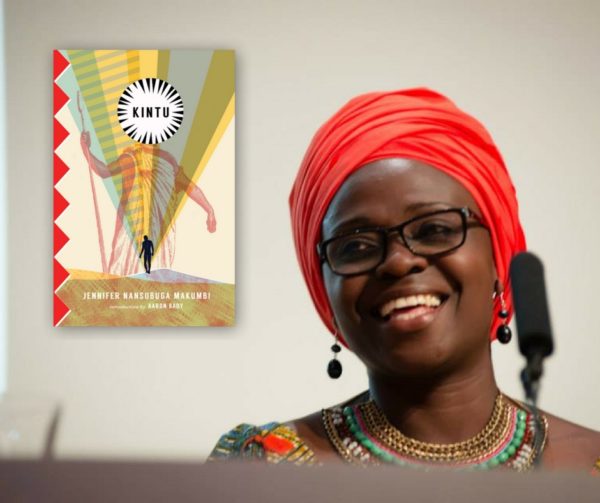
Jennifer Nansubuga Makumbi: Image from Martin Harris Centre via BrittlePaper.com

Further Reading

Brittle Paper: Essay – When We Talk about Kintu by Ellah Wakatama Allfrey

Africa In Words: Review – Jennifer Nansubuga Makumbi’s ‘Kintu’ Made Me Want to Tell Our Stories by Nyana Kakoma

The East African: Article – Kintu’s ‘Africaness’ pays off for Jennifer Makumbi by Bamutaraki Musinguzi

The Guardian: Kintu by Jennifer Nansubuga Makumbi review – is this ‘the great Ugandan novel’? by Lesley Nneka Arimah


Buy a copy of Kintu via BookDepository

Note: Thank you to the UK Publisher One World Publications for sending me a copy of the book.
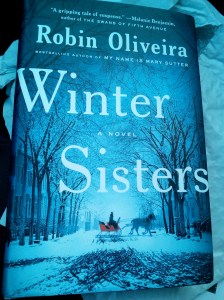
Winter Sisters by Robin Oliveira

I read My Name is Mary Sutter when it first came out and was utterly entranced by Robin Oliveira’s depiction of the character of Mary, a midwife intent on becoming a surgeon in an era where women were totally blocked from pursuing such a thing. She was unable to achieve her ideal through formal channels, so she went to war, the American civil war, and there had the kind of experience few would wish her, unless, like Mary, you were being excluded from pursuing your desired profession and were driven to break through irrational barriers by equally irrational means.

In her research, the author learned that 17 young women became physicians after their nursing experiences in the civil war. While Mary Sutter is fictional, she is a truly inspired character about whom Robin Oliveira had this is say:

“And through it all there was Mary Sutter, whose story I needed to tell as a celebration of women who seize the courage to live on, to thrive, to strive, even, when men conspire to war. Mary, flawed and intelligent, careening between desire and remorse, stumbling forward out of courage and stubbornness, hiding a broken heart, but hoping to redeem something beautiful from a life humbled by regret.”

Her second novel, set in Paris was the excellent I Always Loved You, reviewed here, is about the American painter Mary Cassatt, her life in Paris, struggling to make a name while remaining true to her art, and enduring a life-long fractious relationship with impressionist painter and sculptor Edgar Degas.

When asked what made her return, in this her third historical novel, to the character of Mary Sutter, Robin Oliveira said:

Over the last few years, readers have often asked me to include Mary Sutter in a new book, but I could not think of a single circumstance that would challenge her as much as the obstacles she had faced in the Civil War. Then I learned about the age of consent. I simply couldn’t leave Mary Sutter out of it, for I had finally discovered something of equal importance for her to battle.

So now it is 1869 in Albany, New York, Mary Sutter is now Dr Mary Sutter Stipps, living in Albany, New York, where she practices in a local hospital, despite most of her male colleagues despising her (because she is a woman), she also runs a home practice with her husband William Stipp and a lesser known clinic, where a lantern is illuminated on Thursdays when she opens for ladies of the night, those who are refused treatment elsewhere.

These are the conservative years after the civil war, a period of tumultuous struggle and the emergence of women’s suffrage, meaning any freedoms women attempted to gain were often fiercely opposed and ridiculed. Mary faces opposition at every turn, but refuses to be cowered and will stand up for and insist on justice for what she believes is right and good.

On the evening this story begins, a severe winter blizzard disrupts the city, children are locked in schools for two days, businesses close, the Doctors house their patients overnight, and accidents occur – two days later as people begin to reappear, Mary learns of the deaths of close family friends, the hatmaker Bonnie and her labourer husband David and the unexplained disappearance of their daughters, Emma(10) and Claire(7).

Mary and William search for the girls everywhere, implore the police and their wider networks to help and eventually must accept they’ve gone.

At the graveside, they become acquainted with lumberlord Gerritt Van der Veer, his wife Viola, and their son Jakob. From that day on the lives of the two families become intertwined, as Mary continues her relentless pursuit of the lost girls, leading her to become exposed to the deep manipulations throughout the city and its powerful, by those out to benefit themselves who will do anything to stop those like her, trying to help and heal, without discrimination or judgement.

Book One sets up the story, introducing us to Elisabeth, Mary’s niece, a violin protegé who has been studying in Paris in the company of her grandmother Amelia, who swiftly return on hearing the terrible news, though laden with their own mysterious troubles.

Mary seeks the help of the women she’s met through the clinic, women who hear and see things she and Will would never come across, suspicions begin to arise, as they become aware of a man in hiding, injured on the night the ice cracks on the Hudson River, causing flash flooding across the city.

“I trust her Mother. She’s no opportunist. If she’d wanted money, she would have asked for it then, wouldn’t she have, if she intended to lie? And besides, none of that matters, does it, if we go looking ourselves. The brothels are the single place we haven’t looked. What harm can come from looking? I can’t understand why Captain Mantel refused. Oh damn him.The police know exactly where the brothels are. it would be easy for them.”

By Book Two the story has become riveting, complex, there are elements of the mystery to resolve, a pending court case, perceived betrayals, all set against the legal and societal background of the times they lived in, there are aspects of the law that will shock the reader, we read about the 1800’s and we are reminded of the similar treatment of victims today with regard to police procedure, questioning victims and the law that appears designed to protect the accused more than the victim.

It’s too good a read to give away anything more that happens from Book Two onwards, suffice to say I could not put this down, I was up late finishing it and thought it brilliantly woven together. It’s commentary on the hardships of women and girls, of all ages and from all classes is insightful and outrageous. Women are blocked in so many directions, in particular when they possess talent, controlled, commented on, kept by men in positions of power. Fortunately, there are exceptions, and these characters provide the faint glimmer of hope that gets us through the tough parts.

“He wanted to say, It’s either hide forever or see forever. He wanted to say, You need to choose. He wanted to say, Follow me, I’ll show you…

Every inch toward courage was a decision. Every ten feet on her own would be a triumph. The line between coercion and choice for her was the line between darkness and light. He would never push her, but she needed to choose to climb this hill. If she didn’t, she wouldn’t have the courage to climb onto the witness stand or perhaps even to walk down a street on her own.”

Mary Sutter oversteps the demarcated line of acceptable professions for women, she breaks the mould, though not without challenge and William and Jakob show themselves to be different kind of men, demonstrating the potential of working alongside women, not excluding them.

The price women pay when they overstep that societal and male control, is the story of the Gilded Age, and continues to play out one hundred and fifty years later. Indeed, the changing role of women in society, and what men will accept, remains one of the essential conflicts of our time.

Highly recommended, one of the best historical novels of the year.

Note: This book was an ARC (Advance Reader Copy) kindly provided by the publisher.

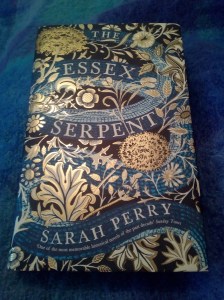
The Essex Serpent by Sarah Perry

A Victorian era historical novel (London 1893) set over a single year, that follows the footsteps of the young widow Cora Seaborne, in the months following the premature of her husband, a cruel man who’d become indifferent to her, but one who’d been her companion from such a young age, he’d moulded her into what he could tolerate.

She begins to shed the layers of that stifled London life, both physically and mentally, taking her son Francis and their companion Martha to Colchester, swapping gowns and stays for a man’s tweed coat and trousers. She steps out each day taking herself on long walks in search of anything unusual and in particular remnants and fossilised objects unearthed after a recent earthquake and subsequent landslides.

In London, she had befriended Dr Luke Garret, affectionately referred to as the Imp on account of his size. He is at the forefront of medicine at the time, something of a maverick surgeon, fascinated by the potential of yet unproven surgical procedures, assisted by his friend and colleague Spencer. He is fond of Cora and their friendship continues after the death of her husband.

Katherine and Charles Ambrose, frequent visitors to Essex, unwittingly encouraged Cora’s interest in the region and in fossil remains, through various introductions, one of whom recounts to her the life and work of Mary Anning, the English fossil collector and paleontologist, whose discoveries included the first ichthyosaur skeleton. Mary Anning is the protagonist of Lisa Chevalier’s excellent novel Remarkable Creatures.

Meeting her again in Colchester, the Ambrose’s introduce Cora to the Reverend William Ransome and his wife Stella and a unique friendship develops.

Much of the novel is narrated through letters between Cora and these new friends she’s made since her widowhood and one of the subjects that arises is talk of a creature, said to have reappeared since the land was disturbed by the quake, one they’ve dubbed the Essex Serpent. Local beggar Taylor fills her in on the details of the earthquake and the sleeping legend it has awakened.

‘It had come eight years back, by his reckoning, at eight minutes past nine precisely. It had been as fair an April morning as any could remember, which later was counted a blessing, since most were out-of-doors. The Essex earth had bucked as if trying to shake off all its towns and villages; for twenty seconds, no more, a series of convulsions that paused once as if a breath were being drawn and then began again. Out in the estuaries of the Colne and the Blackwater, the sea had gathered into foaming waves which ransacked the shore and reduced every vessel on the water to splinters.’

Cora is delighted to think that modest little Essex, with its Paleozoic rock beneath their feet, laid down five hundred million years before, shrugging its shoulders, creating waves and toppling church steeples and fantasizes about finding her own ichthyosaur.

Taylor feeds her mind with tales of a creature from 1669, when it was believed a serpent came out of the Essex waters into the birch woods and commons.

‘Those were the years of the Essex serpent, be it scale and sinew, or wood and canvas, , or little but the ravings of madmen; children were kept from the banks of the river and fishermen wished for a better trade! Then it was gone as soon as it came, and for night on two hundred years we had neither hide nor hair of it ’til the quake came and something was shook loose down there under the water – something was set free! A great creeping thing, as they tell it, more dragon than serpent, as content on land as in water, that suns its wings on a fair day.’

Away from the responsibilities and expectations of womanhood and motherhood, long walks reawaken Cora’s naturalist and philosophical interests.

‘It struck her that everything under that white sky was made of the same substance – not quite animal, but not merely earth: where branches had sheared from their trunks they left bright wounds, and she would not have been surprised to see severed stumps of oak and elm pulse as she passed. Laughing, she imagined herself part of it, and leaning against a trunk in earshot of a chattering thrush held up her arm, and wondered if she might see vivid green lichen stippling the skin between her fingers.

Had it always been here – this marvellous black earth in which she sank to her ankles, this coral coloured fungus frilling the branches at her feet? Had birds always sung? Had the rain always this light touch, as if she might inhabit it?’

As Cora pursues fossils and sea creatures, her companion Martha uses the opportunity of having contact with influential men to push her social activism, intent on bringing to light the plight of the working class housing conditions, dire accommodations and landlords who continue to raise rents, not to mention hypocritical attitudes.

‘She spread open the pages and showed him a map on which the poorest of London’s housing was overlaid with plans for new developments. They would be sanitary , she said, and spacious: children would have green spaces to play in and tenants would be free from landlord caprice. But (she flicked contemptuously at the paper) to qualify for housing, tenants must demonstrate good character. ‘They’re expects to live better than you or I ever did to deserve a roof over their children’s heads: must never be drunk or a nuisance to neighbours, or gamble, and God forbid too many children by too many fathers, and had too often. You, Spencer – with your estate and pedigree – you can drink yourself wretched on claret and port and no-one begrudges you any of your homes; but spend what little you have on cheap beer and the dogs and you’ve not enough moral standing to sleep in a dry bed.’

The novel provides a snapshot of the era, with its significant scientific progress and discoveries, its social issues among the classes and between the sexes, medical progress and the conflict between men of science and men of the cloth.

For the most part I enjoyed it immensely, however, if I were to fault it, I thought the seesawing between relentless soul-searching and denial on the part of the Reverend and Cora, in coming to terms with their relationship became a little tedious. It made the second half of the novel drag a little and I notice that all the passages I noted come from the first 200 pages. However the acute sense of place and era and that traversing of issues of the time within the framework of of an engaging story make it all worthwhile.

Salt Creek by Lucy Treloar

Salt Creek is a powerful and riveting account of a family struggling to make a living in the harsh environment of coastal South Australia, depicting the pioneering patriarchal entrepreneur and his devoted but long-suffering wife, and the children that will grow up with both an attachment to the place and an instinct to escape it. This story gets inside you and makes you feel the struggle and the dilemma, and wish that it could have been different.
We meet Hester Finch, in Chichester, England in 1874 where she lives as a widow with her son Joss, in the house where her mother spent her childhood, remembered from the stories her mother used to tell, in a place so far from this new reality, of that life in Salt Creek, South Australia.

Hester takes us back to her childhood in the Coorong, narrating the family story throughout the period she lived with them at Salt Creek from 1855 to 1862. Her father was an entrepreneurial businessman, who could never settle to one thing, without always having his eye on the next great idea, the thing that was going to make him rich, a success. For a while the family had lived in Adelaide, while he ran a successful dairying business, but not content to stick with that he would borrow against the things that seemed solid to invest in the next thing. He’d bought land at Salt Creek, but the sheep he’d hoped to farm were lost at sea while being transported, causing the entire family to be uprooted as the family home required selling to pay the debts.

The family find themselves leaving their grandparents, friends and familiar town environment behind to live on an isolated peninsula in rural South Australia. They must rely on each for company, schooling and help their parents out to run the farm and household.

Hester’s mother becomes melancholy and withdrawn from the moment she views her future home, requiring Hester to have to step into a more encompassing role than just that of eldest daughter. To add to her woes, their mother whose youngest Mary is only three years old, discovers she is again with child, and the nearest neighbour not company she can bring herself to indulge.

Mrs Robinson was no comfort to her and never would be; she was the measure for Mama of how far she had fallen.

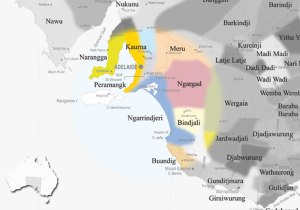
The family discover indigenous Ngarrindjeri people camping not far from their property, and become interested in a boy named Tully, who is able to speak a little English and seems keen to learn more. Slowly he slips into their lives, though without ever letting go of his ways, his disappearances, his unassuming manner, his sharing of old knowledge about which trees can and shouldn’t be cut, which ducks to avoid, much of it disregarded particularly by the two eldest sons and the father as superstitions to be ignored.

“Do you know what that boy told me today? That we shouldn’t have chopped that tree down and then showed me which ones we should use, can you believe it? Didn’t have all the words but did very well making his thoughts known. I told him we would use the wood that we saw fit since it was ours, not his, and did not trouble to conceal my feelings.”


Although the father believes himself to have an enlightened view, that all men are created equal and seen by the Divine as being equal, his beliefs are challenged when it comes to his own family, both in the example he sets for his son (in relation to indigenous women) and the restrictions he places on his daughters (including his desire to use matrimony as business negotiating device).

It is the younger siblings who grow into and live his more open minded view, and who will force to the surface his deep conditioning, which is unable to embrace those beliefs at all. Hester recalls the first day they set eyes on indigenous people and is filled with remorse:

When I think of what they became to us and how long I have been thinking of them I would like to return to that day and stop the dray and shout at our ghostly memories and the natives: ‘I am sorry. I am sorry for what is to come.’

While the older boys rebel by going off to try their luck in the goldfields, the younger sibling Fred stands his ground and resists his fathers efforts to use him as a form of payment, he spends a lot of time drawing plants in his notebook and is fascinated by the work of Charles Darwin.

“Watching Fred, I began to wonder if it was something other than interest and curiosity alone that drove his actions. He was so purposeful in what he did. Self doubt did not occur to him; he was able to look only at the thing, the task before him. I wished that I could do the same. My own self was mysterious to me. Oh, I knew what I did, but other than that I was invisible to myself…I did not know or see the difference that I made, the space I occupied in this world.”

Hester stays and stays, witness to all that occurs, as the challenges of Salt Creek and the rigid attitude of their father begin to wear everyone down. Hester is warned more than once, that she should not hesitate should there be an opportunity for her to escape. Mrs Robinson comments ‘Hard for girls like you’ to Hester and when questioned why, tells her:

I know, my dear, I know. It’s the expectations that hold you back. They’ll kill you in the end, if you’re not careful, suck the life right out of you. Run, I say. Run whenever you should have the chance, don’t spare a glance back or you’ll turn to salt or stone.”

The arrival of European settlers, their desire to own and restrict land, to create boundaries, while beneficial to their capitalist desires, becomes increasingly detrimental to the way of life of the indigenous people, as they pollute their fresh water access, introduce sickness and disease and contemplate removing their children.
Brilliantly conceived and heartbreaking to read, Salt Creek opens itself wide for discussion on the many issues related to the impact of colonial idealism, whether it’s how it affects women and children, how it impacts and impedes the native population, the imposition of solutions by one group on the other, the inherent disrespect and disregard for a different way of life.

I’m interested to read these accounts yet I am repelled by what transpires, knowing there is little possibility for an alternative ending, it is and always be a kind of clash of civilisations, which annihilates the ancient view, and will only accept its input when it has been turned it into a version of itself.

Lucy Treloar speaks of the considerable unease she felt and continues to feel two years on from its initial publication  in Australia, at telling the story, which was partly inspired by her ancestors attempt to set up a farm in the Coorong region. Compelled to share the experience and uncomfortable in the role they played. – Lucy Treloar on writing about indigenous Australians

The short video below gives voice to the Ngarrindjeri people and some hope that we might learn something from their more sustainable way of living in harmony with the natural elements around us.

Note: This book was an ARC (Advance Reader Copy) kindly provided by Aardvark Bureau, an imprint of Gallic Books. It is published in the UK in September 2017.

Train to Pakistan by Khushwant Singh

1947 Migration to Pakistan, wikipedia

There are so many tragic stories surrounding the independence of India and the formation of East and West Pakistan, or the 1947 partition, as it’s often referred to, sadly thousands that will never be told because there is no one left to tell them. It was a moment in history that demonstrated what happens to humanity when fear and panic take hold in the wake of political posturing and it is devastating.

Train to Pakistan was written in 1956, a mere nine years after the British drew a controversial line through India, sending Muslims to the newly named Pakistan and banishing Hindus and Sikhs from that territory.

The author, who died in 2014 at the age of 99, belonged to a Sikh family, with roots in the area that was to become Pakistan, was an outspoken critic of the establishment, intolerant of hypocrisy, who abandoned his studies in law and diplomacy to become a writer. Witness to killings on both sides of the India-Pakistan border, his novel is his reflection of events in that period in history, his frustration with various parties and people in positions of authority and a comment on the individual living in fear.

Khushwant Singh takes the Punjabi farming village of Mano Majra, a small village on the border between India and Pakistan, one of strategic importance to the railway system, and narrates the moment when news of this change arrives and shows how it affects this community.

The trains are symbolic to the story, portenders of what is to come; in the past they have run like clockwork and though they rarely stop, the lives of the villagers is intricately linked to their passing. When the trains become delayed, the rhythm of the village gets out of sync and worse when the trains begin to stop in Mano Majra, life will never be the same.

An educated young man named Iqbal arrives from Delhi, sent by his party to observe the impact of the news.

Well, Babuji,’ began the Muslim. ‘Tell us something. What is happening in the world?
What is all this about Pakistan and Hindustan?
‘We live in this little village and know nothing,’ the lambardar put in. ‘Babuji, tell us, why did the English leave?’

The villagers aren’t convinced by Iqbal’s idealistic view that freedom will follow Independence.

‘Why, don’t you people want to be free? Do you want to remain slaves all your lives?
After a long silence the lambardar (Headman/Revenue collector) answered: ‘Freedom must be a good thing. But what will we get out of it? Educated people like you, Babu Sahib, will get the jobs the English had. Will we get more land or more buffaloes?
‘No,’ the Muslim said. ‘Freedom is for the educated people who fought for it. We were slaves of the English, now we will be slaves of the educated Indians – or the Pakistanis.’

Iqbal and a young local man are wrongly arrested for a murder just as the village arrives as a point where it can longer deny what is happening elsewhere in the country. The town’s Muslims are told to leave and eerily quiet trains begin to arrive in the village, causing consternation and fear. The fate of the two young men becomes a political consideration, justice playing no role. It builds to a terrible climax and will leave them and generations to follow scarred by the experience.

Brilliant, a compelling read, and one that was relatively respectful to all who were affected and to readers with vivid imaginations, who don’t need certain scenes described in overly graphic detail.

Buy a Copy of The Train to Pakistan via Book Depository

Further Reading:

Obituary: Khushwant Singh by Reginald Massey

Partition: 70 years On – Authors consider its legacy and the crises now facing their countries

– featuring Kamila Shamsie, Mohsin Hamid, Tahmima Anam, Fatima Bhutto, Kiran Desai, Pankaj Mishra and others

Eva Sleeps by Francesca Melandri tr. Katherine Gregor

Eva Sleeps is a thought-provoking novel that takes the reader on multiple journeys, as the narrative slowly unravels the mystery that connects Eva, her mother Gerda and Vito.


“Where’s Eva anyway?”

“Eva is sleeping.”

The brown parcel travelled backward along the road it had taken to arrive at that spot: two thousand, seven hundred and ninety-four kilometres in total,there and back.

Eva Sleeps is a reference from Paradise Lost and a quote in the book that is repeated both in the prologue (above) and at the end of the novel, referring to the delivery of a package that arrives from the postal worker for Eva, one that her mother rejects, saying it is unwanted. It is an indirect introduction to the three main characters, introducing a connection that will be alluded through throughout and revealed  by the end after we too have travelled that same journey the package takes.

“Let Eve (for I have drench’d her eyes, Here sleep below, while thou to foresight wak’st.”

John Milton, Paradise Lost, book XI

We meet Eva as she is met at Munich airport by Carlo, he will drive her the three-hour journey across two borders to her home in Sudtirol/Alto Adige in a German-speaking part of northern Italy. It is the beginning of the Easter holiday and the beginning of a longer journey she will make when she receives the call from Vito telling her he doesn’t have long to live and that he’d like to see her again.

Eva’s chapters are titled Kilometre 0, Kilometres 0-35, up to Kilometre 1397 ending with Kilometre 0, Today. These chapters contain her thoughts and observations as she makes the 1400km journey towards the dying Vito in Sicily.

The interposing chapters are Gerda’s story and they are labelled by the years within which her story is narrated, beginning in 1919, a year in which:

“…the peace treaty was being signed in Saint-Germain, with which the victorious powers of the Great War – France, especially – wishing to punish the dying Austrian Empire, assigned South Tyrol to Italy. Italy was very surprised. There had always been talk of liberating Trento and Trieste, but never Bolzano – let alone Bozen. It was perfectly logical. South Tyrolean’s were German people, perfectly at ease in the Austro-Hungarian empire, and didn’t need anyone to liberate them. Even so, after a war that had certainly not been won on the battlefield, Italy ended up with that stretch of the Alps as their unexpected booty.”

It was also the year her father inherited the family home after the death of his parents. The fate of the family would forever be affected by that political decision, for all those native to the area, who overnight were ruled in a language and culture foreign to their ways, making them like strangers in their own country, as people from the poorer southern parts of Italy were sent to live among them, in an effort to try to make these tall, blond people more Italian.

Gerda’s family is poor and as soon as she is old enough she is sent out to work, she works in the kitchen of a large hotel and alongside her striking beauty, develops a talent for creating delectable local dishes, twin characteristics that will lift her out of poverty and give her a measure of independence, much required after her father disowned her upon the arrival of Eva. She finds a way to continue working without losing her daughter.

Alongside the enthralling life of Gerda, who is the most well-rounded and well-known of the characters we follow, we are exposed to the context of the freedom fights of Alto Adige, those who protested against the cultural white-washing, labelled terrorists for their protests when they turn violent.

“Until a few years ago, when you said you were a German speaker from Alto Adige, they thought you were a terrorist. At the very least they’d ask: but why do you people hate Italians so much?

Then things changed. In the weekly supplement of the newspaper, a few months ago, the front cover was devoted to separatist ethnic movements in Europe. It mentioned:

Corsica, Slovakia, Scotland, Catalonia, the Basque country, Kosovo, Montenegro, Slovenia, Croatia, Bosnia and the Po Valley.

The Po Valley!

No sign of Alto Adige.

Eva Sleeps is a provocative novel of journeys, of connections and contradictions across cultures, of love in its many forms, of struggles and conflicts, identity and how we are connected to place.

Told in a compelling narrative while backgrounding the fascinating and little known history of this part of northern Italy, it does what the historical novels often do best, increase our historical knowledge, while highlighting the ricochet effects political decisions can have on humanity, on innocent civilians, making us understand why the oppression that results turn some towards violence and others to seek love, as ways to dull the pain.

The novel is being made into a film.

Note: This book was kindly provided to me by the publisher, Europa Editions.


Do Not Say We Have Nothing by Madeleine Thien

Tomorrow begins from another dawn,
when we will be fast asleep.
Remember what I say: not everything will pass.

I like the saying “this too shall pass”, it’s a way of being in the difficult moment, of realising that it will be replaced by something else, it represents a sliver of hope, a reminder of gratitude, that thoughts are not reality, they can be changed. So this quote that “not everything will pass” evokes a kind of heartfelt stab for me, for it pierces that hope and reminds us that some things stay, that they are not seeds of hope, they are reminders of a sadness that endures.

‘Do Not Say We Have Nothing’ felt to me like a novel of ancestral DNA and how living through Chairman Mao’s and the subsequent communist regime imprinted its effect onto people behaviours forcing them to change, leaving its trace in their DNA which was passed on to subsequent generations, who despite living far from where those events took place, continue to live with a feeling they can’t explain, but which affects the way they live, or half-live, as something crucial to living a fulfilled life is missing. This reminds me of what Yaa Gyasi achieves so successfully in her extraordinary novel Homegoing, spanning an even longer historical trajectory of 300 years.

The novel is presented through dual narratives, in Canada today Marie lives alone with her mother, her father Ba, died in Hong Kong far from them both in circumstances they don’t understand, a kind of double abandonment. The alternate narrative is set in her father’s time, with his extended family during the time of and following China’s Cultural Revolution.

We will come to understand that mystery as the daughter of one of her father’s friends Ai-Ming, comes to stay with them and recognises the calligraphy of her father in a box of books under the kitchen table, the first encounter we have with a manuscript called ‘The Book of Records’ a narrative by an unknown author, one that has been added to and copied and left as a message for various characters who became lost over the years.

The title of the manuscript is an allusion to China’s most celebrated work of history, Sima Qian’s Historical Records, completed in 91BCE but kept hidden for fear of the wrath of an emperor who had its author castrated. The telling of history in China was always a dangerous occupation.

We are taken back to China to the home of Ai Ming’s father who is referred to as Sparrow, a composer at the music conservatory, one of his students Kai and his young cousin Zhuli, whose parents are the first to come under the harsh judgement of Mao’s philosophy, because they were landlords, denounced, beaten, thrown from their homes, accused and sent to labour camps for unsubstantiated crimes. The young daughter is deposited with her Aunt and Uncle miles away in the city, under the protection of her Uncle who works for the regime.

He Luting, Composer (1903 – 1999) China

The story follows these three musicians who are passionate about music (which will become the wrong kind of music) and to survive they must suppress their desires, their passion and compromise, the three of them each make different choices, that will affect those around them.

The narrative around the musicians and some of the characters closely mirrors actual events that occurred in the Shanghai Conservatory of Music, the main concert hall now renamed He Luting Concert Hall, after the Director who “in 1968, after two years of violence and humiliation, was dragged before television cameras by Red Guards to be threatened and physically abused”

In the following quote, Ai-ming listens to what she learns is her father’s music for the first time, music that was destroyed before it could ever be played, recalled from the recesses of the mind of the composer, after 20 years of silence.

“Ai-ming sat on a chair in the corner as her father played the piano, she had never heard him do so before, had not quite realised he was even capable. His entire body, the way he moved, changed. Most of the pieces she recognised from the records (Bach’s Partita No. 6, Couperin, Shostakovich) but there was another piece, a complex figure that seemed to disassemble as she listened, a rope of music,  a spool of wire. It seemed to rise even as it was falling, to lift in volume even as it diminished, a polyphony so unfathomably beautiful it made the hairs on the back of her neck stand up. When it stopped tears came abruptly to her eyes.”

This is a tragic novel whose characters spirits are oppressed by a philosophical regime, which mutates into something equally oppressive after the death of Chairman Mao, for a while the younger generation without the memory of the era their parents generation suffered under (and somewhat judging of their inability to challenge the circumstances forced upon them), appear to revolt against the lack of freedom to choose their paths, until they too are brutally crushed in the events of Tiananmen Square in 1989, ensuring the new generation understand the power and reach of an authoritarian regime, that no-one is immune to.

Madeleine Thien had originally intended to write a novel about the 1989 demonstrations in Tiananmen Square, events she vividly remembered watching unfold on television during her teenage years, however over time she began to ask herself more about what had motivated the one million Beijing citizens to come out onto the streets, especially the older generation.

“What gave them the courage to stand up to the government? And, what made them come into the streets to want to protect, in many ways, their children, and another generation? So I think that’s why it ended up going backwards into the Cultural Revolution. I’d been writing about Cambodia before that – the Cambodian genocide – and one thing I’d been thinking a lot about were the musicians. I started thinking about what was it about music that could be so threatening. We often know about the writers who are targeted by totalitarian regimes but looking at musicians is another way in to thinking about what’s threatening to this consolidation of power.” Madeleine Thien, Granta Conversation

Madeleine Thien

This is a must read novel if you wish to reflect on how recent Chinese history affects the present generations, how regimes affect generations of their populations and how even though subsequent generations may not have experienced the past, they continue to feel its effect in their lives today.

It was short listed for the Baileys Women’s Prize for Fiction 2017.


Further Reading:

Article by Madeleine Thien: After the Cultural Revolution: what western classical music means in China, The Guardian, 8 July 2016

Madeleine Thien Interview : on a solitary childhood in Canada and daring to question the Chinese regime, ‘In China, you learn a lot from what people don’t tell you’, The Guardian, 8 Oct 2016

Conversation with Madeleine Thien: On translating the sensation of music for a reader, the importance of writing about women of colour, and the Chinese conceptual framework of time, Granta Magazine, 3 Oct 2106

Buy a copy of ‘Do Not Say We Have Nothing’ here


Homegoing by Yaa Gyasi

homegoing-yaa-gyasiAstonishing, a work of art, an interwoven tapestry of stories that weave across the generations to create something so beautiful, so heartfelt, the thing that connects them is so strong, even when it isn’t known by its characters, somehow Yaa Gyasi conveys that to the reader, so that by the end when something quite magical happens, there is a feeling of grieving for all that has passed and of relief that something new has been found.

I love, love, loved this novel and I am in awe of its structure and storytelling, the authenticity of the stories, the three-dimensional characters, the inheritance and reinvention of trauma, and the rounding of all those stories into the healing return. I never saw that ending coming and the build up of sadness from the stories of the last few characters made the last story all the more moving, I couldn’t stop the tears rolling down my face.

How to give it justice in a review, it is so much more than story, we are so much more than our own personal experience and the place(s) we have lived.

Novels That Ask Questions

Just as Han Kang, the South Korean author of the novel Human Acts wrote in consideration of two fundamental questions about humanity, Yaa Gyasi tells us in an article for the New York Times (referenced below) that she too began to write with a vague but important question that she put at the top of her blank screen: What does it mean to be black in America?

She further explains her inspiration in an article for the Observer (also below)

I began Homegoing in 2009 after a trip to Ghana’s Cape Coast Castle [where slaves were incarcerated]. The tour guide told us that British soldiers who lived and worked in the castle often married local women – something I didn’t know. I wanted to juxtapose two women – a soldier’s wife with a slave. I thought the novel would be traditionally structured, set in the present, with flashbacks to the 18th century. But the longer I worked, the more interested I became in being able to watch time as it moved, watch slavery and colonialism and their effects – I wanted to see the through-line.

The Legacy of Generations

Homegoing begins with the image of a partial family tree, with two strands and the novel will follow just one family member down each strand, the first two characters who begin these family lines are the daughters of Maame, Effia and Esi.

Effia, whom the villagers said was a baby born of the fire, believed she would marry the village chief, but would be married to a British slave trader and live upstairs in the Cape Coast Castle.

‘The night Effia Otcher was born into the musky heat of Fanteland, a fire raged through the woods just outside her father’s compound. It moved quickly, tearing a path for days. It lived off the air; it slept in caves and hid in trees; it burned, up and through, unconcerned with what wreckage it left behind, until it reached an Asante village. There, it disappeared, becoming one with the night.’

Effia’s father, Cobbe would lose his crop of yams that night, a precious crop known to sustain families far and wide and with it, through his mind would flit a premonition that would reverberate through subsequent generations:

He knew then that the memory of the fire that burned, then fled, would haunt him, his children, and his children’s children for as long as the line continued.’

Cape Coast Castle (a slave trading castle), Ghana

Cape Coast Castle (a slave trading castle), Ghana

Esi, whose father was a Big Man, in expressing her empathy for their house girl, would precipitate events that lead her to be captured and chained in the dungeons beneath that same castle, awaiting the slave trading ships that would transport them to their slave masters in America.

‘They took them out into the light. The scent of ocean water hit her nose. The taste of salt clung to her throat. The soldiers marched them down to an open door that led to sand and water, and they all began to walk out on to it.’

Symbolism

In these first two chapters of Effia and Esi, the recurring twin symbols of fire and water are introduced, something that each generation subconsciously carries with them and passes on, they will reappear through fears, dreams, experiences, a kind of deep primal scar they don’t even know requires healing, its origins so far back, so removed from anything that can be easily articulated.

Fire (yang) is like the curse of the slave trade, raging through the lives of each generation, even when they appear to have escaped it, as with Kojo’s story, a baby passed to the arms of a woman who helped slaves escape, whose parents are captured, but he will live freely, only to have one member of the family cruelly snatched, perpetuating the cycle yet again, orphaning another child, who must start over and scrape together a life from nothing.

‘They didn’t now about Jo’s fear of people in uniform, didn’t know what it was like to lie silent and barely breathing under the floorboards of a Quaker house, listening to the sound of a catcher’s boot heel stomp above you. Jo had worked so hard so his children wouldn’t have to inherit his fear, but now he wished they had just the tiniest morsel of it.’

Water (yin) to me is the endless expanse, the rootlessness, floating on the surface, feet never able to get a grip, efforts floundering. This symbol is carried throughout Essi’s family line, a cast of characters whose wheels are turning, who work hard, but suffer one setback after another.

The novel is structured around one chapter for each character, alternately between the twin sides of the family, the narrative perspective changing to focus on the new generation, through whom we learn something of what happened to the character in the previous generation, who’ve we left two chapters ago.

Importantly, because Yaa Gyasi decides not to write in the present with flashbacks, but writes from the perspective of each character in their present, the novel never falters, it doesn’t suffer from the idling effect of flashbacks, it keeps up the pace by putting the reader at the centre of the drama in every chapter. We must live all of it.

The irony of the structure is that we read an entire family history and see how the events of the past affect the future, how patterns repeat, how fears are carried forward, how strong feelings are connected to roots and origins, we see it, while they experience the loss, the frustration, the inability to comprehend that it is not just the actions of one life that affect that life’s outcome.

This book is like a legacy, a long legacy that revolves between the sadness of loss and the human struggle to move forward, to survive, to do better, to improve. And also a legacy of the feeling of not belonging that is carried within those who have been uprooted, who no longer belong to one place or another, who if they are lucky might find someone to whom they can ignite or perhaps even extinguish that yearning ‘to belong’.

‘We can’t go back to something we ain’t never been to in the first place. It ain’t ours anymore. This is.’ She swept her hand in front of her, as though she were trying to catch all of Harlem in it, all of New York, all of America.’

And in writing this novel, Yaa Gyasi perhaps achieves something of what her final character Marcus is unable to articulate to Marjorie as to why his research feels futile, spurning his grandmother’s suggestion that he perhaps had the gift of visions, trying to find answers in a more tangible way, through research and study.

“What is the point Marcus?”
She stopped walking. For all they knew, they were standing on top of what used to be a coal mine for all the black convicts who had been conscripted to work there. It was one thing to research something, another thing entirely to have lived it. To have felt it. How could he explain to Marjorie that what he wanted to capture with his project was the feeling of time, of having been a part of something that stretched so far back, was so impossibly large, that it was easy to forget that she, and he, and everyone else, existed in it – not apart from it, but inside it.

Yes, she achieves it through literature, through fiction. And this is literature at its most powerful and best.

This novel is going to win awards in 2017, undoubtedly.

*****

Yaa Gyasi

Yaa Gyasi was born in Ghana in 1989 and raised in the US, moving around in early childhood but living in Huntsville, Alabama from the age of 10. She is the daughter of a francophone African literature professor and a nurse and completed her MFA at the Iowa Writer’s Workshop, University of Iowa. She wrote this, her debut novel at the age of 26.

Further Reading

New York Times, Sunday Review – Opinion, June 18, 2016 – I’m Ghanaian-American. Am I Black?

Review, The Observer, January 8, 2017 – Yaa Gyasi: ‘Slavery is on people’s minds. It affects us still’

Click Here to Buy A Copy of

Homegoing via BookDepository

The Good People by Hannah Kent

good-people

Some of you may know of the author Hannah Kent, whose debut novel Burial Rites, set in Iceland, became a popular bestseller. I never did get around to reading it, though I would still like to, and it was for that reason I was intrigued to pick up this, her second historical novel, set in Ireland during the early 1800’s.

The Good People centres around the lives of three Irish country women, Nora, who has recently become a widow in the same year her daughter passed away, Mary, the teenage housemaid she employs to help her take care of a 4-year-old cripple, the grandson her son-in-law left with her; and Nance, an ageing spinster who lives in a mud shack on the edge of the forest, the one with “the knowledge” whom certain members of the community go to when the remedies of the doctor and the priest yield no cure.

Nora has not consulted Nance before, though her husband Martin had. She is wary of others and their superstitions so keeps the boy hidden from their prying eyes, lest they connect his condition to the string of bad luck in the community, for there are some saying he has ‘the fairy in him’, that he was a changeling, as if possessed.

changeling-pj-lynch

‘A Changeling’ by illustrator & Ireland’s laureate for children’s literature, PJ Lynch – http://www.pjlynchgallery.com

In Irish folklore, people believed that fairies (Irish fairies appear to be a lot more sinister than the Disney kind) could entice or abduct a child away, leaving a malformed substitute (fairy) in its place, recognisable due to its ugly appearance, ill-health, bad temper and old world look of knowledge in their eyes. There were a number of ‘cures’ that might be applied to ‘sweep’ out the fairy and restore the child.

The novel follows the events that occur during the time Mary stays with Nora, as the widow increasingly begins to doubt the child is her grandson and treats “it” as if he were a changeling and Nance’s ways are denounced by the new priest.

‘I have been told you make it your trade to cry at burials.’

‘What is the harm in that?’

‘Your sorrow is artificial, Nance. Rather than comfort those who are afflicted, you live upon their dead.’

Nance shook her head. ‘I do not, Father. That’s not it at all. I feel their sorrow. I give voice to the grief of others when they have not a voice for it themselves.’

The novel immerses the reader deep into the folklore of 19th century Ireland, portraying many of its characters and the community around them as believers of those ancient ways, practitioners of protective rituals, despite the existence of more rational medicines and beliefs.

‘That’s right. Lights. Coming from here the fairies do be, down by the Piper’s Grave,’ Peter continued. Now I might not have the full of my eyes, but I swear I saw a glowing by that whitethorn. You mark my words, there’ll be another death in this family before long.’ His voice dropped to a whisper. ‘First the daughter passes, and now the husband. I tell you, death likes three in company. And if the Good People had a hand in it… well.’

The old ways brush up against the new and culminate in a challenge of one versus the other through the justice system.

Clearly, an extraordinarily well-researched novel, based on certain real events, it succeeds in creating an authentic sense of place, inside the very primitive home of Nora imbued with a strong sense of dread that this is not going to end well. We are shown how things came to be for all three characters and the reactions of the community around them, quick to fear and to judge.

Whitethorn, Faerie Tree, said to guard the entrance to the faerie realm

Whitethorn, Faerie Tree, said to guard the entrance to the faerie realm

What it really excels at, is to make the reader wonder what is real and what is not, after the rejection of the doctor and the priest, we understand how the maid and the widow want desperately to believe in the knowledge of Nance and her alternative “cure”, providing a fascinating insight into a cultural folklore that had much of its community in its grip (and some say does still).

Despite this authenticity, I found it lagged in the mid-section, as Nance’s back story was filled in, causing me to lose interest in picking the book up for a while. It picked up again as the author returned to moving the plot forward. It’s a book, that despite its flaws is likely to generate interesting discussions, of those ancient rituals and beliefs and the cases that became well-known, of cures gone wrong.

Come away, O human child!
To the waters and the wild
With a faery, hand in hand,
For the world’s more full of weeping than you can understand.

(Excerpt from ‘The Stolen Child’ by W.B Yeats)

 Note: This book was an ARC (Advance Reader Copy) kindly provided by the publisher via NetGalley.

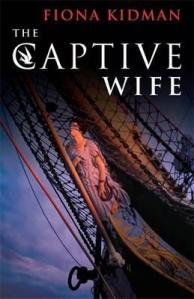
The Captive Wife by Fiona Kidman

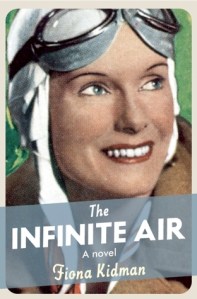
Fiona Kidman is a New Zealand novelist, poet and script writer, whose most recent novel The Infinite Air a novel of the life of the aviator Jean Batten, I reviewed earlier this year.

Gallic Books and Aardvark Bureau

Although she has published over 20 books, she is relatively little known outside Australia and New Zealand, however recently her novels have begun to be published in the UK by Gallic Books, who translate a number of excellent French authors into English, and now with their new imprint Aardvark Bureau, are bringing novels originally written in English, but from countries outside the UK and US, their aim to bring an eclectic selection of the best writing from around the world.

aardvark

One of my favourite reads from 2015 was the Aardvark published novel The Life and Loves of Lena Gaunt by Tracy Farr and in early 2017, they will publish Fiona Kidman’s novel Songs From the Violet Café.

The Captive Wife isn’t a recent novel, just one I had on the shelf, it was originally published in 2005 and I was reminded of it after reading Jeremy Gavron’s memoir, A Woman on the Edge of Time, as his mother, who is the subject of his memoir, also wrote a book called The Captive Wife, though quite a different volume to Fiona Kidman’s.

Review

The Captive Wife is set in the 1830’s, spanning ten years from 1832 -1843 and is based around the lives of two women, one the young Betty Guard and the other her school teacher Adeline Malcolm, whom Betty takes as her confidant, to share what exactly happened to her and her children, when they were taken captive on the shores of New Zealand, during one of their frequent visits.

In narrating her story, we come to know the circumstances of these women and their men and how they came to be living in Sydney, where much of the story is based.  The man Betty is betrothed to Captain John (Jacky) Guard, arrived on one of the convict transport ships, a petty criminal, but one whose fortunes have changed as he gets involved in seafaring and whaling.

Miss Malcolm had been a teacher and is now a governess to two children, her situation somewhat precarious since the death of her mistress and her employer’s disapproval of her connection with the so-called captive wife, Betty Guard, whom rumour has it, was not as captive as many would have them believe.

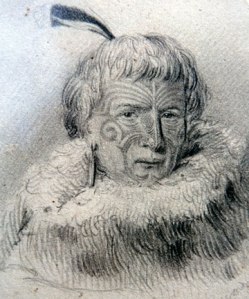
te-rauparahaJacky Guard takes Betty to New Zealand as his wife and they set up home in a bay that is handy for their whaling activities and where it is easy to trade with the native Maori population. Jacky trades with, though doesn’t trust the Maori Rangatira (chief), Te Rauparaha. He is able to negotiate with him, but fears he may have disrespected some of their taboo beliefs. There are constant challenges to their attempt to settle on this land, each time they return to Sydney, their home and belongings are often burned on their return.
Sometimes the whalers invade the villages and fraternise or do worse with the local women and it is through one of these misunderstandings that their lives come under threat and the young Betty is taken captive with her two children.

The novel is based on real events and is compellingly told, as two cultures clash and one way of life is gradually imposed upon another, although the perspective is more oriented towards the colonists, as much of the narrative is told through entries in Jacky Guard’s journal and in the oral narrative of his wife to her ex school teacher.

It is only through Betty’s eyes that we see and experience something of the Maori way of life and their reaction to the arrival of these whalers and traders and the devastation they introduce with what they bring. Betty stays long enough with the tribe to begin to see the value in their ways and it is this sympathy that is subsequently seen as suspicious, as a betrayal not just to her so-called husband, but to the colonial masters.

Betty’s experiences are those of a young woman, though it is as if she has lived much more than her years. Her story is told to Miss Malcolm, who though much older is as much a captive herself, in her spinsterhood and in her inability to communicate her own hidden desire, which Betty’s story forces her to confront.

elizabeth-guardElizabeth Parker, the Real Betty Guard

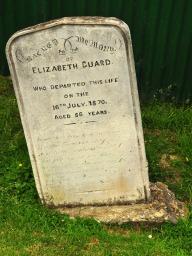
In real life Betty Guard (born Elizabeth Parker in Parramatta, Sydney) made her first voyage with Captain Jacky Guard when she was either 12 or 15 years old, and he 23 years older than her. She is said to have been the first woman of European descent to settle in the South Island of New Zealand and her son John, the first Pakeha child born in the South Island.

She and her family were captured at one point, her husband released with orders to return with a ransom. Her ordeal was later described in a somewhat lurid report in the Sydney Herald of 17 November 1834. It was four months before a rescue mission was  dispatched to bring them back. She and her family eventually settled in Kakapo Bay, where she is buried and where some of their descendants continue to live today.

The Captive Wife is an intriguing story and although a part of me wishes someone would write a novel from the perspective of the indigenous people, at least this gives us an alternative insight, by giving a significant portion of the narrative to the women who lived through these times, rather than referring to them in the footnotes, as was normally the case, as ‘the woman’.

Dame Fiona Kidman

Fiona Kidman in an interview with Kelly Ana Morey of ANZL, the Academy of New Zealand Literature had this to say about communicating with her characters, during the writing process:

I tend to live inside my characters for a long time when I’m thinking about a book. They go with me wherever I go, and sit beside me in the car. This is true, I’m talking to them all the time. And what is happening is that for the most part I’m thinking about how I would have responded to their situations had I been in them.

This was particularly true of Betty Guard, about whom very little was known – and I take some credit for uncovering her true origins and giving her to her descendants – generally, in historical references she was a footnote and referred to as ‘the woman’. I loved giving her a full-blooded persona and thinking myself into the pa sites where she was taken, and discovering both captivity and a wild freedom of the self.

Buy a book by Fiona Kidman

Kakapo Bay

Kakapo Bay