Far by Rosa Ribas tr. Charlotte Coombe

A Monument to Failure
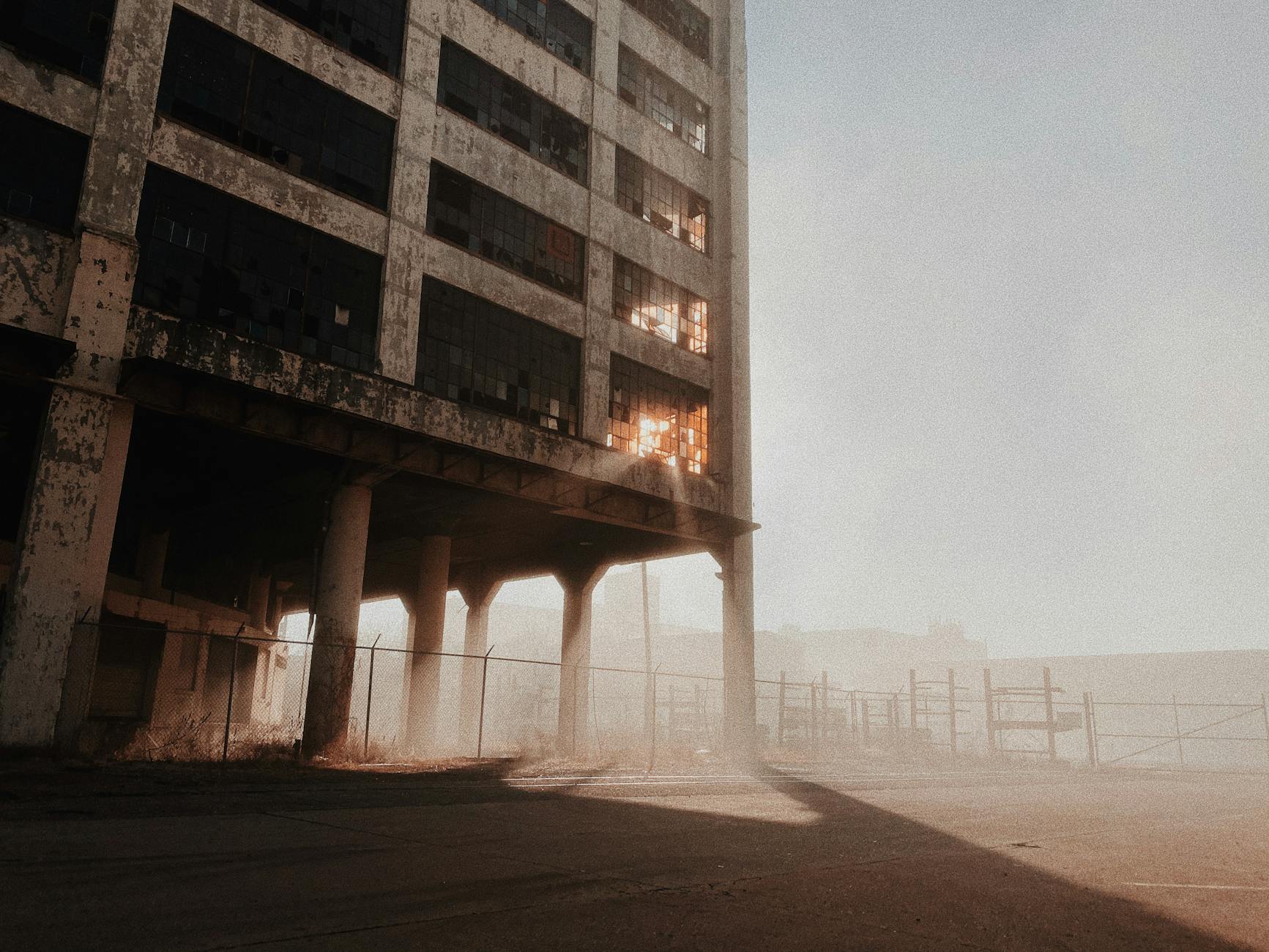
Abandoned apartment building in a development
Photo by Oliver Oudomsouk on Pexels.com

Seventeen years ago, the author Rosa Ribas was taken by friends to visit a strange monument to a broken era in Seseña; it was a housing development known as ‘The Manhattan of La Mancha’.

Built in 2008, it was designed to house 40,000 people in 13,500 affordable apartments – a ready made settlement emerging from the dust-bowls of remote farmland 40 kilometres from Madrid. It now looked something like between an eerie ghost town and an abandoned building site.

One representation of many, it was a stark reminder of a housing bubble, burst by a rampant, unchecked building boom bust, and a global financial crisis that created an unprecedented unemployment rate and the deepest economic recession Spain had experienced for fifty years.

“When you walked around, you’d see the blocks where people were living, the blocks that were semi-inhabited, and then all the skeletons of buildings in different stages of completion,” she said. “From one day to the next, they told the workers not to come back the following day. And it all stayed like that.”

Holding On to Threads

Santiago Calatrava City of Arts and Sciences Valencia Spain
Photo by Dominik Pexels.com

As night fell and three lights came, the realisation that they were the only people living there spawned the idea for a novel, Lejos in Spanish, now translated by Charlotte Coombe into English, brought to us by an excellent new imprint Foundry Editions, created in 2023 out of a love of these three things:

a love for discovering and sharing new voices, a love for the Mediterranean and the people and lands that surround it, and a love of internationalism and reading across borders.

The patterns on the covers of their books have been designed to capture the visual heritage of the Mediterranean. This one is inspired by the architecture of Santiago Calatrava’s City of Arts and Sciences in Valencia. It was created by Hélène Marchal.

Far, A Novel
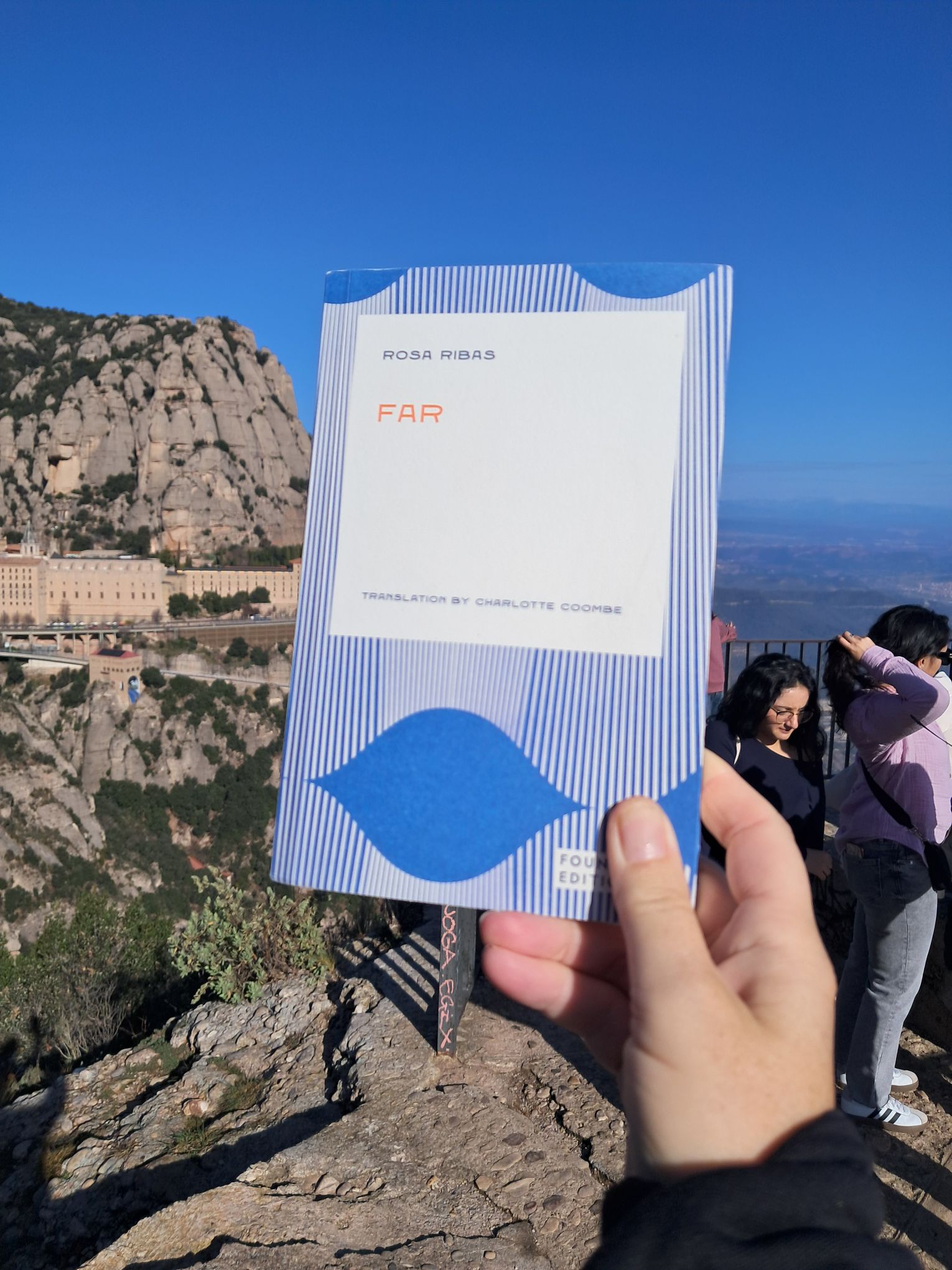
Book cover of English translation of Far by Rosa Ribas translated by Charlotte Coombe, mountain and monastery of Montserrat, Catalonia in the background

I loved this novel, it is evocative of this semi-abandoned place, it depicts a demarcation between the legals and the illegals, the rightful inhabitants and the opportunistic outsiders, the followers of rules, those that want to make their own, and those that fall into the cracks.

The entire development was constructed on a pile of poorly concealed sleaze, a chain of bribery, corruption, intimidation, and complicit silences. No ancient manuscripts, no mythical foundations. If these lands had been the scene of some momentous event, back when battles of conquest and reconquest were being fought all over the area, no one had bothered to record it. It was a bleak place, devoid of stories, where it was impossible to satisfy any yearnings for greatness.

The entrance to the development still shows billboards offering apartments for sale, the middle one depicting the fugitive developer Fernando Pacheco in his suit and tie, the others depicting scenes of golfing, swimming pools and cocktails, a far cry from the reality within which they sat.

An Element of Noir, Foretold

A rusty padlock on a wire mesh fence a symbol of keep out forbidden territory
Photo by Antonio G. Prats Pexels.com

The opening lines of Far stayed with me for the entire novel, they foreshadow the dénouement, a future turning point, that could even be the beginning of a follow up novel. For me it was a delightfully transgressive ending that I wasn’t even looking for, it arrived abruptly, though more regular readers of noir fiction might have seen it coming.

That night, he had no idea he was walking over a cemetery. A secret cemetery with no gravestones or crosses, and only two dead bodies. There would be three by the time he left.

The lyrical prose is clever, compelling and nothing is lost in translation.

The Lost and Fallen

We meet two unnamed characters, the first is the man we meet walking across that unconsecrated ground. He has just walked out of his office, his job, his life and is looking for a temporary refuge, when he remembers this place, this lost dream of many that one of his colleagues bought into. He needs to stay in hiding and at first is vigilant in keeping away from others, but the forced isolation and the desolate nature of the place loosen his discipline and he makes a friend in an older widower, Matias.

The second character is a woman living in one of the villas alone. Experiencing a double abandonment, she is sticking it out, she works from home and writes the minutes of the resident’s association meetings. Since the realisation that the development had truly been abandoned, the association had turned its focus onto other items.

Hegemons Harmony Hampered

Then, given the inhospitable environment, efforts became focused on the interior, on the decor of the apartments and villas. And on the “dignification” of the settlement. Swept pavements, manicured gardens. Being dressed properly in the street. “So, no more going out in your dressing gown to buy bread,” said Sergio Morales, the chairman of the residents’ association, at one of their meetings, in that jocular tone which often masks inconvenient or ridiculous orders.

a stairwell in an abandoned apartment building like Spain
Photo by W. Jacober Pexels.com

In this place that promised a kind of utopia, those that bought into it begin to realise that they have become neighbours with the marginalised, as the unfinished houses become occupied by people in equally difficult, but entirely different circumstances and they don’t like it. They begin to obsess over it, becoming paranoid, arguing about whether to call the police or take care of things themselves.

The destruction of their fantasy, the deterioration of an imagined life, of people’s mental states and even their physical states, emulates the disintegration of the country’s economic situation, that contributed to the depth of suffering inflicted on the population, as millions of jobs were lost and opportunities for youth disappeared, creating a surge in racism and xenophobia.

Light Always Illuminates

And there, amid the chaos, insecurity and fear, unlikely friendships and connections develop, between the man and the widower on the unfinished side of the settlement, the woman from the deteriorating utopia on the other side and the Dominican who doesn’t ask questions, working at the petrol station.

Brilliantly told, infused with sardonic humour, it is a disturbing yet revelatory tale of what happens when severe change arrives unbidden and the effect it has on the ‘haves,’ the ‘have-nots’ and those that fall through the cracks in between.

Highly Recommended.

Further Reading

Article, Guardian: ‘Huge scars’: novelist finds a fractured Spain in its half-built houses by Sam Jones, July 2024

Article, Guardian: Building boom reduced to ruins by collapse of Spain’s economic miracle by Giles Tremlett, Jan 2009

Author, Rosa Ribas

Rosa Ribas was born in El Prat de Llobregat in 1963. She has a degree in Hispanic Philology from the University of Barcelona, and spent time in Frankfurt at the Goethe University and the Instituto Cervantes. She now lives and works in Barcelona again and the city plays a big role in her writing.

Rosa is widely considered one of the queens of Spanish noir, achieving critical and commercial success in Spain with her Dark Years Trilogy (Siruela) and her Hernández trilogy (Tusquets). Far is her first foray away from crime fiction, into a more menacing social commentary. It is her first book to be translated into English.

Translator, Charlotte Coombe

Charlotte Coombe translates works from French and Spanish into English. She was shortlisted for the Queen Sofía Spanish Institute Translation Prize 2023 for her co-translation of December Breeze by Marvel Moreno. In 2022 she won the Oran Robert Perry Burke Award for her translation of Antonio Diaz Oliva’s short story ‘Mrs Gonçalves and the Lives of Others’, and she was shortlisted for the Valle Inclán Translation Prize 2019 for her translation of Fish Soup by Margarita García Robayo.

Second-class Citizen by Buchi Emecheta

I read Buchi Emecheta’s Joys of Motherhood (1979) in 2019, it is such a great novel, one of my all time favorites, not yet reviewed here. I have been looking forward to reading more of her work since then, I picked up Second-class Citizen (1974) knowing it was likely to be equally good. She is known for her themes confronting girls and women, of motherhood, female independence and freedom through education.

A Girl Determined to Realise a Dream

Adah is a fabulous, determined character, a girl who when her father dies, her mother is inherited by his brother. Like many girl-orphans (fatherless), Adah was sent to live with her mother’s elder brother to work as a servant; any money her father left would be used for her brother Boy’s education.

Even if she was sent to school, it was very doubtful whether it would be wise to let her stay long. ‘A year or two would do, as long as she can write her name and count. Then she will learn how to sew.’ Adah had heard her mother say this many many times to her friends.

Determined to get an education herself, having already been punished for taking herself off to school without permission, the family decide to let her go, not for her own benefit, but because they recognise how it might benefit themselves. If Adah gets more schooling, the dowry that her future husband will have to pay them will be even bigger.

Adah wants more than just school, she wants a higher education, however she does not have the money to pay for the entry examination, let alone the other costs.

She was aware that nobody was interested in her since Pa died. Even if she had failed, she would have accepted it as one of the hurdles of life. But she did not fail. She not only passed the entrance examination, but she got a scholarship with full board.

My Struggles Become My Strength

The combination of hard work for the household and an education made Adah strongly responsible for herself and strategic in ensuring she stayed in education and succeeded enough to get a scholarship with full board. But to go even further with her studies, she needed a home, she would need to marry.

Her plan is to get to the UK but now she has a husband and in-laws and her good job not only supports them all, but makes many dependant on her and less inclined to be independent.

A New Motivation, I Do This Not Just for Myself

1960’s England is not what she expects, the challenges are even greater because now she has a woman’s body whose reproductive rights are not under her control and a partner who is no longer how he was in their home country, he seems invested in keeping her from shining.

He lifted his hand as if to slap her, but thought better of it. There would be plenty of time for that, if Adah was going to start telling him what to do. This scared Adah a little. He would not have dreamt of hitting her at home because his mother and father would not have allowed it. To them, Adah was like the goose that laid the golden eggs. It seemed that in England, Francis didn’t care whether she laid the golden egg or not. He was free at last from his parents, he was free to do what he liked, and not even hundreds of Adahs were going to curtail that new freedom. The ugly glare he gave Adah made that clear.

However, taking responsibility is what she knows best, she is determined to provide for her growing family and negotiate the mounting injustices she faces, in pursuit of achieving her dreams and caring for her children.

She was going to live, to survive, to exist through it all. Some day, help would come from somewhere.She had been groping for that help as if she were in the dark. Some day her fingers would touch something solid that would help her pull herself out. She was becoming aware of that Presence again – the Presence that had directed her through childhood. She went nearer to It in her prayers.

An inspirational story of the girl that never gives up, written by the woman who lived much of that experience, raising her own five children on her own in a foreign country and becoming a successful author.

Total inspiration and still relevant today. Highly recommended.

Further Reading

Review Guardian: Second-Class Citizen by Buchi Emecheta review – fresh and timeless by John Self, Oct 2021

Article: My mother, the pioneer: how Buchi Emecheta captured immigrant life in 1970s London by Sylvester Onwordi, 2021

Author, Buchi Emecheta

Buchi Emecheta OBE (1944 – 2017) was born in Lagos, Nigeria and moved to London with her student husband when she was eighteen. After her marriage broke up at the age of twenty-two, and while raising five children, she began writing and also obtained a degree in sociology from London University.

As well as writing numerous novels, she wrote plays for television and radio, and worked as a librarian, teacher, youth worker and sociologist, and community worker. She was one of Granta’s Best of Young British Novelists in 1983. Following her success as an author, Emecheta travelled widely as a visiting professor and lecturer.

She published over 20 books, including In the Ditch (1972), Second-Class Citizen (1974), The Bride Price (1976), The Slave Girl (1977) and The Joys of Motherhood (1979).

Her themes of child slavery, motherhood, female independence and freedom through education won her considerable critical acclaim. Emecheta once described her stories as “stories of the world…[where]… women face the universal problems of poverty and oppression, and the longer they stay, no matter where they have come from originally, the more the problems become identical.”

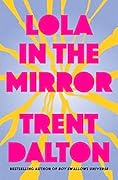
Lola in the Mirror by Trent Dalton

In 2024 I was recommended a book by a family member, who went to an event and heard the author tell the story of his childhood and this novel he wrote called Boy Swallows Universe. Barely a week after this conversation, a friend arrived in my hometown of Aix en Provence, from Australia, pressed this book into my hands and said “You have GOT to read this!”.

Yes, you guessed right, it was Boy Swallows Universe by Trent Dalton and I reviewed it here.

That book was published in 2018. I then saw there was another book about to be published called Lola in the Mirror, which some reviewers described as being even better than the debut novel. On reading about the inspiration for the novel, I decided to get a copy.

Love Stories and a Typewriter

Trent Dalton spent 17 years writing social affairs journalism across Australia. He had his own troubled childhood and upbringing, but he also witnessed and wrote about the situations of so many others, driven by the question; how was it that 120,000 people slept rough every night in one of the brightest, most fortunate countries in the world?

It is this question and the stories shared by the many people he has met over those years, that inspired him to create this latest story Lola in the Mirror.

Frank and Heartfelt

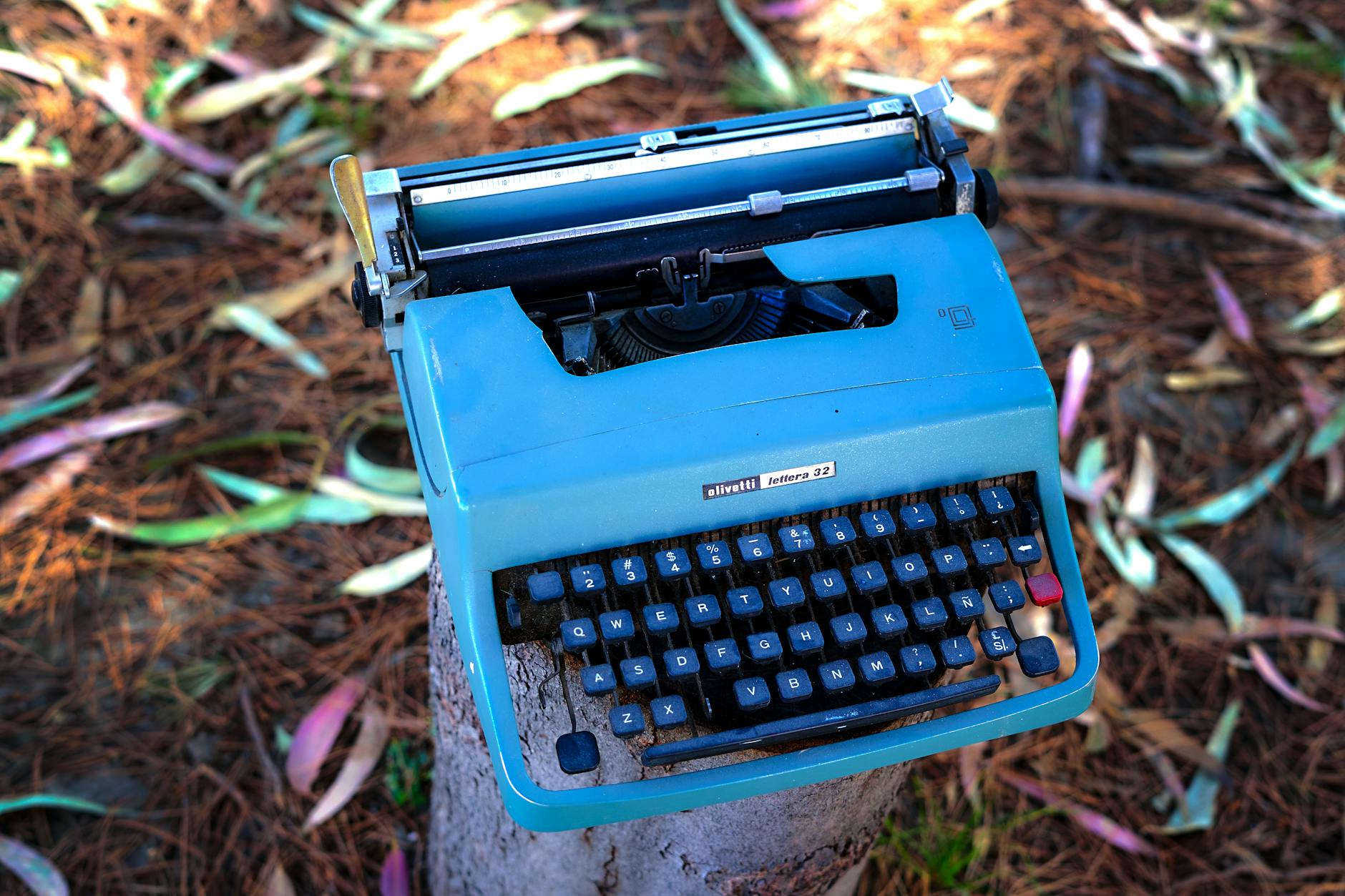
One of the people he was inspired by and wrote about, was Kathleen Kelly, the mother of a friend of his, who passed away on Christmas Day 2020. His book Love Stories is dedicated to her and prefaced with a letter written to her, typed on the sky blue Studio 44 Olivetti typewriter she bequeathed him.

In a letter to Kath, he writes of her memorial service:

Photo by Adriel Macedo Pexels.com

Greg spoke of you and your beloved Olivetti Studio 44 typewriter, the sky-blue one that you’d been tapping on since the early 1970’s, writing fiery letters about woman’s rights and human rights and doing life right to politicians and principals and popes. He spoke about the letter you wrote to the Catholic Leader in 1970, railing against Canon Law demanding the covering of women’s heads in church. You were furious and brilliant.

After the service, Greg tells Trent that his Mum cut out all the stories he wrote and made scrapbooks that documented her life and all that was important to her and that she wanted him to have her typewriter. Being the honour that it was, Dalton wanted to do something special with it, to write something filled with love and depth and truth and frankness and heart because that’s how Kath was.

I told Greg I wanted to walk through the streets of Brisbane’s CBD (central business district) for two months asking random strangers to tell me love stories. I told him I then wanted to sit two for weeks straight with the Olivetti on the corner of Adelaide and Albert streets, on the edge of King George Square, and ask random strangers to stop and tell me more love stories, and then I wanted to write about all those love stories on your beautiful Olivetti.

Those two months of listening to people tell their stories of love, loss and belonging were research for this story of Lola, frank, fearless and full of heart.

Lola in the Mirror

Lola in the Mirror is a riveting, page turning novel that gripped me from the opening pages and never let go. It is a whirlwind of risk and adventure, an exploration of friendship, loss, perseverance and the resilience of the human spirit to not give up on a dream. It is a challenging coming-of-age story of an innocent girl who desperately wants to know who she is and rise above her situation.

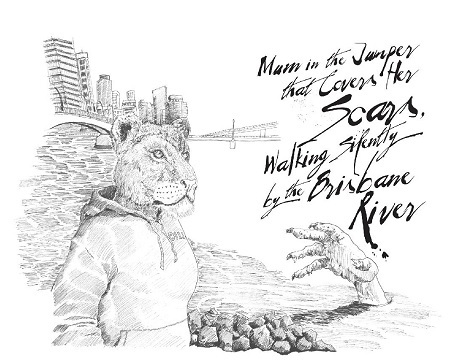
The novel opens with a black and white illustration entitled ‘Escaping the Tyrannosaurus Waltz‘, the dance of mothers and their monsters, or the dark shadow of domestic violence, something Dalton recalled about his own mother, who often had to choose between homelessness or ‘the monster’, a terrible choice faced by many women in Australia, for whom domestic and family violence is one of the leading causes of homelessness.

The artist is a 16-year-old girl, she and her mother are on the run, they have been for all her life. The girl does not know her own name, because it’s too dangerous, but her mother promises to reveal things to her soon, when she turns 18, because then she will be free to make her own choices.

Houseless not homeless

The girl does not describe herself as homeless, the two live in a van with four flat tyres parked in a scrapyard by the banks of the Brisbane River. There is a community of friends who live in similar circumstances, who look out for each other and this girl has a dream of a future life that will be different to how she lives now. For now that scrapyard home is her sanctuary, where she can dream up the best version of herself.

For a start, I ain’t homeless, I’m just houseless. Those two things are about as different as resting your head on a silk pillowcase and resting your head on a brick.

As this girl navigates her life in search of who she is, she comes across a mirror that she takes home, and after a period when the mirror cracks, something magical happens, half the mirror shows her legs and the other shows a dressed up woman in different world cities, who converses with her.

She wants to see her face, but she always has her back to her. She calls her Lola. Lola’s presence keeps her curious, keeps her coming back and looking in the mirror, gives her reason to keep dreaming. She is like a pulse on her mood, on her self-belief.

“Mirror, mirror, on the grass, what’s my future? What’s my past? … Mirror, mirror, please don’t lie. Tell me who you are. Tell me, who am I?”

The storytelling is incredible, the characters are fully formed, and the depiction of the city, the river, the bridges is visionary. You cannot read this book and not care about what happens to this girl or get hooked into wanting to know how she gets in and out of various situations. It is mystery, adventure, crime, psychological suspense and love story rolled into one. The best kind of holiday read ever.

When Life Connects With Art

Photo by Samantha Samantha Gilmore on Pexels.com

I took this book on holiday with me to Australia, figuring I would read it there and leave it behind. It is set in Brisbane which is where I flew into, although I was staying much further South. On the day I started reading, my son was due to fly back to France. I sat in the passenger seat of the car as we drove to the airport. This time, we took a different route and suddenly we were driving alongside the CBD and there were all these bridges and a glimpse of Victoria Park and the mighty river.

When I got back to my book later in the day, on page 45, I read descriptions of exactly the same places we had just driven past. It was surreal, to move from the imagined place to these live flashes of what I had just seen. It brought the story to life and for the rest of the novel, those images kept recurring. I have always been a fan of reading works set in the places I travel to, and I’m glad I read this one in situ as well.

The Artwork

Throughout the novel are a number of superb illustrations, which both tell parts of the story and also suggest a future life of the girl artist. Each drawing is followed by an imagined art critic review in a black box, as if it were being displayed at an exhibition at the Metropolitan Museum of Art, the commentary describing what the artist is representing in the illustration.

Of course, I became curious about the actual artwork and skipped to the back of the book to look up the story behind it. It’s a good one.

Trent Dalton, Author

Trent Dalton is a two-time Walkley Award-winning journalist and the international bestselling author of Boy Swallows Universe, All Our Shimmering Skies, and Lola in the Mirror. His books have sold over 1.3 million copies in Australia alone. He lives in Brisbane, Australia, with his wife and two daughters.

Lola in the Mirror is for anyone who ever felt like they were going to collapse under the weight of sorrow. The book is also for all those beautiful souls who help us carry that weight. It’s an art story. It’s a crime story. It’s a mystery novel. And it’s a life story. I hope people will read this, get to the end and realise why I wrote Love Stories and sat on a Brisbane street corner watching people and asking them about love, loss and belonging for three months.

Small Worlds by Caleb Azumah Nelson

Cover of Small worlds by Caleb azumah nelson bestselling author of Open Water. The book sits on a piece of yellow, green gold Nigerian wedding fabric

What a brilliant novel this was. I loved it.

It might even be my Outstanding Read of 2025.

A meandering story-line, spanning 3 years, the introspective excavating of a young British-Ghanaian man’s soul and the situations he will encounter and confront, as he matures and grows into a version of himself that he likes.

I highlighted SO many passages.

Moments of Bliss, Small Worlds

Small worlds describes the way Stephen has learned to see things. It is his way of identifying and capturing certain moments, especially the loving, the poignant, the fleeting, the good.

A coming-of-age story set mostly in Peckham, London, it follows Stephen as he navigates the period in his life when he is separating from friends and his parents, from all that he knows. Simultaneously, he is moving from letting things happen to him and suffering, towards sitting with what is, reflecting, rejecting, embracing, understanding. A journey the evolves over three years.

the beats, the rhythm, the soul – A trio

Photo by Victor Freitas Pexels.com

Introspective and sensitive, music plays a large role in his mood, his management of his emotions, his friendships and the collective memory of Ghana, a country he is connected to but did not grow up in, a place that separates him from his family as much as it is a part of them all.

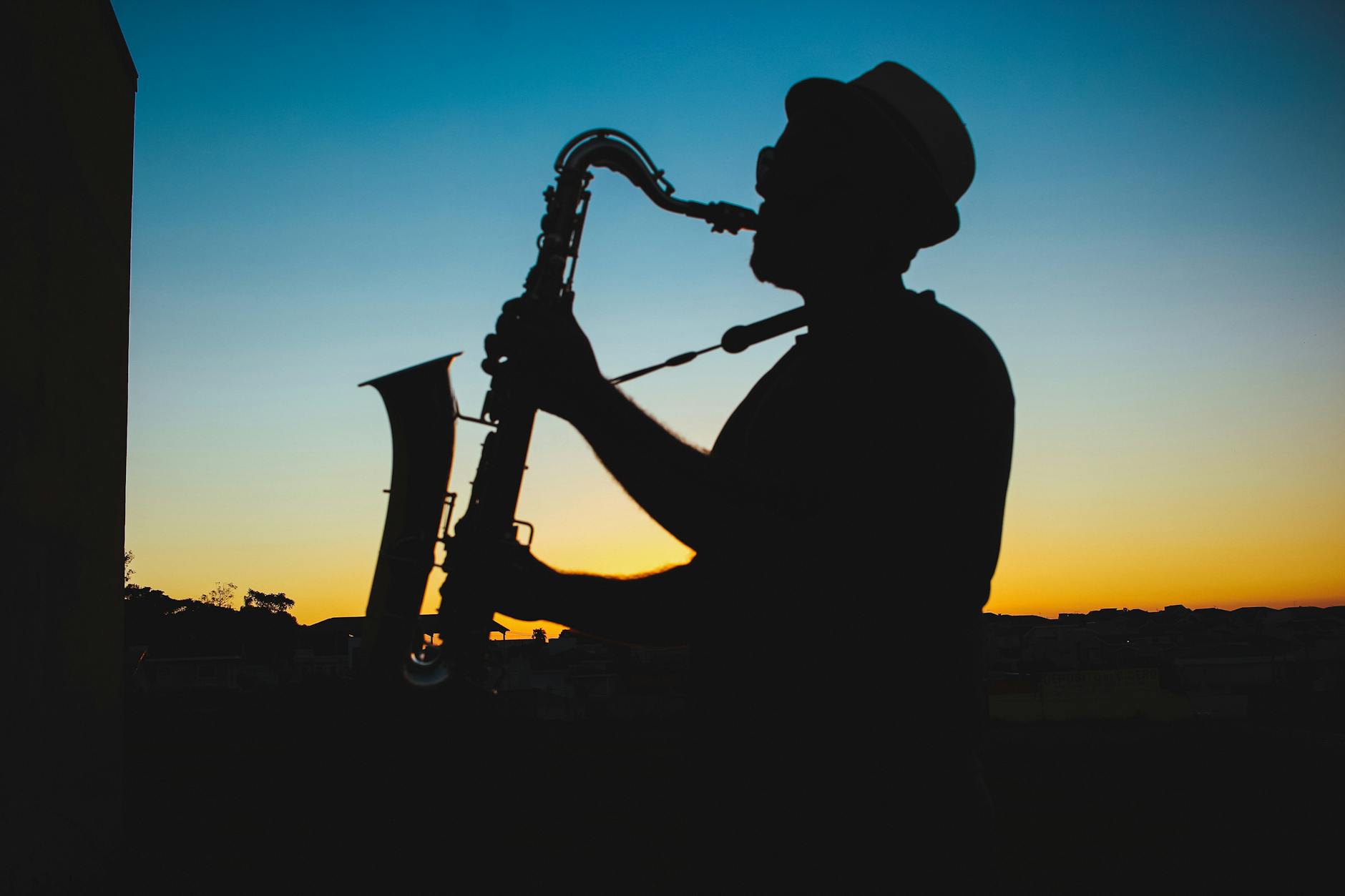
The novel is set over three years, written in three parts, like a jazz trio of piano, bass and drummer.

Part One – Two Young People in the Summertime (2010)

The summer after Stephen and all his friends have finished school and they are deciding what comes next. Stephen and his long-known friend Del are both applying to study music. This summer they start to look at each in a different way, to feel something, they are light-footed, beach going, feeling like something good is coming.

When Stephen’s path changes course, he deals with isolation and separation, unable to even find solace in his instrument, the trumpet, or music. His emotions run deep and he withdraws from them.

Part Two – A Brief Intimacy (2011)

Stephen is working with his friend Nam, training to become a chef. The owner Femi has split allegiances, a Ghanaian mother and Nigerian father mean they serve Ghanaian food and play Nigerian music, and they all know about the 1983 Nigerian Presidential executive order, the mandate of Ghana Must Go that affected an estimated 2 million people living in the country.

Rhythm returns to his life and he feels it everywhere. The observations of bits of daily life, poetic, vibrant, rhythmic and upbeat.

Back in Peckham, it’s here too, this rhythm happening everywhere, as I take my time to wander home: in the dash of four boys dressed in black, trying to beat the bus round the curve, soft socks in sliders slapping the ground. The song of a passing car, distant bass finding a home in my ears, the low, slow rumble calling attention the way thunder might ask you to check the sky for rain. The haggling taking place at the butcher’s and the grocer’s, the disbelief that it’s now three plantain for a pound, not four. In the sadness as I pass the spot where Auntie Yaa’s shop used to be, where she would make sure everyone was looked after. In the joyful surprise when I run into Uncle T, his mouth full of gold like its own sunshine. The couple I pass in the park, holding each other close, her head turned away from his, a smile on his face even as he pleads with her, babe, I didn’t mean it. In the distance she holds him, to see if he’ll come closer, because sometimes it’s not enough to say it, you have to show it too. In the conviction I share with many that this stretch, from Rye Lane to Commercial Way, is where our small world begins and ends. There’s rhythm happening, everywhere; all of us like instruments, making our own music.

But expectations, old trauma and shame linger and until they can be addressed, they undermine relationships, cause rupture, rigidity and regret. So much still to recognise, dismantle, overcome and heal. And Stephen explores it all.

I’m slowly taking myself apart, so I might build myself up once more. And as part of this undoing, I want to ask him, why?And then there are those aspects of the outside world, not so far away, that seethe with unresolved anger and hatred, that threaten to close in on them. A raising of public consciousness and a shift in perception.

Part Three – Free (2012)

Photo by Kh-ali-l i on Pexels.com

Stephen takes time off after the turn of events and pays a visit to Ghana. His trip heralds a reckoning.

Still, of late I’ve felt the urge for more. I’ve always had a decent grasp on who I am, or where I might find myself, but I’ve never really known where I’ve come from. This trip has started a shift. There are gaps which my father might fill, with his own story. I want him to tell me who he is, or who he was. I want to know who he was when he was twenty. I want to know what he dreams of, where he finds freedom.

Melody, discord, harmony and triumph – a story through music

As we read, there are songs Stephen chooses to accompany him. Often as I read, I stop to listen and look up the artist, reminding me of the enjoyment I had reading Bernice McFadden’s The Book of Harlan (reviewed here). It can add so much more to the experience, when music with a cultural influence is present, calibrating the reader’s imagination with the mood of the story.

The way the story comes full circle, when by the end, Stephen’s father accepts his son’s invitation to come with him, to share a meal, to listen to ‘Abrentsie’ by Gyedu-Blay Ambrolley, the book morphed into scenes of a wonderful film that I was simultaneously watching and reading. I wished I weren’t on the last pages, because it felt so good to witness the transmutation of emotion into a new way forward, that was something like the old, but different; accepted, something they will be able to nourish and grow from.

Highly Recommended.

I’m happy knowing I have still to read his debut, Open Water now being made into a BBC 8 part series.

Further Reading

Interview Guardian – Novelist Caleb Azumah Nelson: ‘there is a wholeness in living life not always afforded to black people’ – Apr 2023

Afreada – Caleb Azumah Nelson In Conversation – Interviewed by Nancy Adimora and Amanda Kingsley

Author Interview – 21 Questions with Caleb

Caleb Azumah Nelson, Author

Caleb Azumah Nelson is a British-Ghanaian writer and photographer living in south-east London.

His first novel, Open Water, won the Costa First Novel Award, Debut of the Year at the British Book Awards, and was a number-one Times bestseller. It was shortlisted for the Dylan Thomas Prize, the Sunday Times Young Writer of the Year Award, Waterstones Book of the Year, and longlisted for the Gordon Burn Prize and Desmond Elliott Prize. He was selected as a National Book Foundation ‘5 under 35’ honoree by Brit Bennett.

Small Worlds, his second novel won the Dylan Thomas Prize (2024) (a prize that celebrates exceptional literary talent aged 39 or under), cementing the 30-year-old British-Ghanaian author as a rising star in literary fiction. The judges had this to say:

 “Amid a hugely impressive shortlist that showcased a breadth of genres and exciting new voices, we were unanimous in our praise for this viscerally moving, heartfelt novel. There is a musicality to Caleb Azumah Nelson’s writing, in a book equally designed to be read quietly and listened aloud. Images and ideas recur to beautiful effect, lending the symphonic nature of Small Worlds an anthemic quality, where the reader feels swept away by deeply realised characters as they traverse between Ghana and South London, trying to find some semblance of a home. Emotionally challenging yet exceptionally healing, Small Worlds feels like a balm: honest as it is about the riches and the immense difficulties of living away from your culture.”

The Girl With the Louding Voice by Abi Daré

Back in September 2024, I visited the small Provençal village of Ansouis for their annual vide grenier which included a corner of tables where the local French library sell second hand books in French and English. I like to donate a couple of boxes of books and try not to be too tempted by what I find.

Nigerian Literature and Storytelling

The Girl With the Louding Voice was one of the titles that jumped out at me that I couldn’t resist picking up.

I enjoy Nigerian literature and storytelling, all more so because I visited Lagos for a friend’s wedding many years ago and writing like Abi Daré’s evokes all the senses that bring back memories of being in that place and time.

Not only the location, but the descriptions of people’s lives sounded familiar, those that have been educated outside and come back, the self-made women entrepreneurs who just get on and create businesses as well as raise families and those that you know have never been outside of their country, trying to make their way.

Loss of a Mother Changes Everything

A young girl from a Nigerian village whose life changes multiple times, but a desire for an education, never

14 year old Adunni’s life changes after the death of her mother, who had been keeping the family afloat. Despite the husband having made promises to his dying wife not to marry off his only daughter, he’s unable to keep up with paying the rent and soon his daughter has been promised as the 3rd wife of a much older man.

Why will Morufu pay our community rent? What was he wanting? Or is he owing Papa money from before in the past? I look my papa, my eyes filling with hope that it is not the thing I am thinking. ‘Papa?’

‘Yes.’ Papa, wait, swallow spit and wipe his front head sweat. ‘The rent money is … is among your owo-ori.’

‘My owo-ori? You mean my bride price?’ My heart is starting to break because I am only fourteen years going on fifteen and I am not marrying any foolish stupid old man because I am wanting to go back to school and learn teacher work and become a adult woman and have moneys to be driving car and living in fine house with cushion sofa and be helping my papa and my two brothers.

Marrying Morofu puts Adunni into an environment where a woman’s value is defined by her ability to bear male babies and one where she is in competition with other wives. Adunni doesn’t wish to bring more children into the world with no chance at an education, or voice.

Education is Key

Adunni has held aspirations of continuing her education ever since it was cut short and it is one element of belief and resilience that carries her through the challenges that confront her when a sudden tragedy causes her to flee her situation.

When she finds herself in the busy city of Lagos, working for the self-made Big Madam, she hopes her luck might change. She manages to steal time in the library where she comes across a dictionary and a book of Nigerian facts, in which are written things like:

Fact: Nigerians are known for their love of parties and events. In 2012 alone, Nigerians spent over $59 million on champagne.

Cover of the girl with the louding voice against a blue winter sku

Adunni learns facts about her country, dictionary definitions and new vocabulary and tries to keep herself safe and true to her ideal. Fortunately she also meets one or two characters who look out for her, however Big Madam seems intent on crushing her spirit.

As the novel ends, it feels like a new chapter of her life is beginning and that we may not have heard the last of Adunni.

It’s an excellent read that is very evocative of place, the descriptions of Lagos put you right there, as were the descriptions of the contrasting lives of the haves and the have nots. It highlights that fact that despite the patriarchal society, many households and entrepreneurial businesses are run by women and much of the fragment of society is kept together by their determined contribution and drive.

‘My mama say education will give me a voice. I want more than just a voice, Ms Tia. I want a louding voice,’ I say. ‘I want to enter a room and people will hear me even before I open mout to be speaking. I want to live in this life and help many people so that when I grow old and die, I will still be living through the people I am helping.’

Highly Recommended.

If You Like This Book

Reading The Girl With the Louding Voice reminded me of the equally excellent novels Nervous Conditions (my review here) (the first in a trilogy) by Tsitsi Dangarembga (Zimbabwe) and The Son of the House (reviewed here) by Cheluchi Onyemelukwe-Onuobia (Nigerian/Canadian), which was shortlisted for the Scotiabank Giller Prize (2021).

Author, Abi Daré

Abimbola (Abi) Daré grew up in Lagos, Nigeria and has lived in the UK for eighteen years. She studied law at the University of Wolverhampton and has an M.Sc. in International Project Management from Glasgow Caledonian University as well as an MA in Creative Writing at Birkbeck University of London.

The Girl with the Louding Voice won The Bath Novel Award for unpublished manuscripts in 2018 and was selected as a finalist in 2018 The Literary Consultancy Pen Factor competition. It has been translated into 20 languages.

Her second novel And So I Roar follows Adunni’s and Ms Tia’s journey and was published in 2024. Listen here to Abi Daré talk about the new novel and some of the interesting people who reached out to her after reading her debut, in this 90 second summary of And So I Roar.

In 2023, she established the Louding Voice Educational and Empowerment Foundation in Nigeria, a nonprofit dedicated to providing scholarships to young girls in rural Nigeria.  It exists as a testament to the belief that education and empowerment can be a beacon of change for girls trapped in the shadows of domestic labor and gender-based violence in Nigeria.

Abi lives in Essex with her husband and two daughters, who inspired her to write her debut novel.

Breasts and Eggs by Mieko Kawakami tr. by Sam Bett & David Boyd

I haven’t read much Japanese literature so when I saw Mieko Kawakami’s novel Breasts and Eggs at a booksale I picked it up, recalling it had caused much interest among readers at the time of its translation into English. It caused a significant reaction in Japan when originally published, a bestseller spurned by traditionalists.

It was a New York Times Notable Book of the Year and one of TIME’s Best 10 Books of 2020 and established the author as something of a feminist icon, exploring the inner lives of women through the ages.

A Woman’s Lot

Japanese literature in translation women navigating life work motherhood societal expectations and desire

Breasts and Eggs is set in two time periods eight years apart and centres around 30 year old woman Natsuko, a writer living in Tokyo and those two themes, Breasts and Eggs; or Appearance and Mothering.

I’m still in the same apartment with the slanted, peeling walls and the same overbearing afternoon sun, surviving off the same minimum wage job, working full time for not a whole lot more than 100,000 yen a month, and still writing and writing, with no idea whether it’s ever going to get me anywhere. My life was like a dusty shelf in an old book store, where every volume was exactly where it had been for ages, the only discernable change being that my body has aged another ten years.

Silence Speaks Volumes

In the first part of the book her sister Makiko comes to visit with her 12 year old daughter Midoriko, who has stopped speaking to her mother. She writes her responses, we read her perspective through a few journal entries, which has become the place where she has conversations she is missing elsewhere.

Unspoken Job Requirements

Makiko is an ageing hostess whose occupation demands certain expectations of looks and she has become obsessed with breast augmentation surgery to the neglect of all else. It has been the topic of conversation with her sister for the last three months. Natsuko realises she doesn’t want her advice, just a sounding board. Their mother died when the girls were teenagers from breast cancer.

…after all these years, at thirty-nine, she still works at a bar five nights a week, living pretty much the same life as our mum. Another single mother, working herself to death.

While her sister goes for a consultation Natsuko spends time with her niece and ponders women’s bodies, pains, expectations, grievances, self-judgments, societal judgments, obsessions. During the visit, the three women confront their issues, desires and frustrations, building to resolution.

When Time Is Running Out and All is On the Table

In Part Two, eight years have passed and now it is Natsuko who arrives at an age of obsession, only her focus is on eggs, or the desire to have a child and the dilemma of not being in a relationship when the age of becoming eggless is in sight.

A Making Children Medical Procedure

She begins to research alternative ways of conceiving, finding ways to learn more and to meet people she might be able to discuss her desire. In doing so she discovers there is more to the subject than just a woman’s desire, there are moral considerations she hasn’t considered, that might affect her decision.

“Neither the medical community, not the parents who undergo this type of treatment, have adequately considered how the children – and this is about the children – will eventually see themselves,” Aizawa said, in summary. “As for donors, most of them haven’t given much thought to these issues, either. For them, it’s something akin to giving blood. Legal reform has a long, long way to go, but recent attention to the child’s right to know had led more and more hospitals to suspend treatment entirely…”

The Child Who Grows Up Not Knowing Shares As an Adult

Her interest leads her to new connections that increase the depth of her understanding and options available to her. By the time she makes her decision, she will be significantly more informed and understand the situation from multiple perspectives.

I thought about what I had said, but couldn’t explain what I meant. What made me want to know this person? What did I think it meant to have me as a mother? Who, or what, exactly, was I expecting? I knew I wasn’t making any sense, but I was doing all I could to string the words together and convey that meeting this person, whoever they may wind up being, was absolutely crucial to me.

It is an interesting, thought-provoking look at the lives of women trying to find fulfillment while navigating the challenges of single motherhood, health, womanhood, reproductive rights and familial relationships in non-nuclear families.

Further Reading

Article: Mieko Kawakami’s books: a complete guide, Naomi Frisby on literary sensation Mieko Kawakami Nov 2024

Guardian Interview: Mieko Kawakami: ‘Women are no longer content to shut up’ David McNeil, 18 Aug 2020

“I try to write from the child’s perspective – how they see the world,” says Kawakami. “Coming to the realisation that you’re alive is such a shock. One day, we’re thrown into life with no warning. And at some point, every one of us will die. It’s very hard to comprehend.”

Author, Mieko Kawakami

Born in Osaka, Japan Kawakami made her literary debut as a poet in 2006 and in 2007 published her first novella My Ego, My Teeth, And the World. Heaven, translated by Sam Bett and David Boyd, was shortlisted for the 2022 International Booker Prize.

Known for their poetic qualities, their insights into the female body and their preoccupation with ethics and the modern society, her books have been translated into over twenty languages. Her most recent novel that has been translated into English is All the Lovers in the Night.

Kawakami’s literary awards include the Akutagawa Prize, the Tanizaki Prize, and the Murasaki Shikibu Prize. She lives in Tokyo, Japan.

heart, be at peace by Donal Ryan

It has been 10 years since The Spinning Heart (my review), and in this small town in rural Ireland, County Tipperary, not a lot seems to have changed, or maybe it has. Previously it was economic collapse, lack of employment, toxic masculinity and how the actions of one man affected a community.

In Donal Ryan’s heart, be at peace we meet many of the cast from the past, another 21 voices some years further on, with a new set of troubles affecting the community.

Some are faring rather well financially, but not everyone is happy about the activities they are involved in and their loved ones who might be affected. Suspicion, mistrust, grief, regret prevail and all manner of connections have been formed and remade.

Births, Deaths and Estrangements

One of the most intriguing characters that I could have happily read a novel on and one of the few characters that does stand out was Lily, described as a witch by training and a whore by inclination, estranged from her son, then made up over her granddaughter Millicent who turns up at her door one day.

Having the gift of insight, she can see her granddaughter will find little solace with the boy she’s seeing. When she asks her granny for a spell to bind him always to her for fear of losing him, she knows there will be trouble ahead.

I explained to her again that the spells weren’t real magic, that the power of them was already inside the people who wanted them, the spells just allowed them the use of it, that the magic was in their faith that the magic would work and she screamed at me then, That’s what I want, Granny, that’s what I want, to have faith that he’ll always love me, that he’ll never leave me. I can’t bear the thought of losing him, of some other bitch touching him. He’s MINE, Granny, he’s mine.

A Chorus of Voices

The way the novel is written with short chapters from multiple character viewpoints, we can only discern what happens next to some of those we meet along the way, as we imagine the implications of all that is revealed. It is a novel that might be better understood after multiple readings, as it takes some work to connect and reconnect the different voices. It’s a kind of fly-on-the-wall polyphonic chorus.

In a way, the novel reading experience is like being in the presence of a community but not really knowing them, observing for a while reveals some connections but not others.

Some men can lie with such ease that they quickly begin to believe themselves, and so in a way their lies become truth and their sin is expunged.

21 voices a community in Tipperary follow up to The Spinning Heart

I have a few of Donal Ryan’s novels and I do recall having a little difficulty with his Booker longlisted debut mentioned above, and then absolutely loving All We Shall Know (reviewed here), then not being impressed at all by Strange Flowers. So a bit hit and miss for me, but one I’ll keep reading as he seems to have his finger on the pulse of contemporary community issues.

I enjoyed heart, be at peace and its themes, but it is a novel that is unlikely to stay with me due to the vast cast of character voices that too often became indiscernable for me.

Author, Donal Ryan

Donal Ryan is an award winning author from Nenagh, County Tipperary where this latest novel is set. His work has been published in over twenty languages to critical acclaim.

heart, be at peace won Novel of the Year and the Overall Grand Prize of Book of the Year at the An Irish Book Awards in 2024, described by the Irish Times an “absorbing, emphatic story of a community in trouble”

Maria Dickenson, Chair of the Judging Panel, said:

“Heart, Be at Peace was the unanimous choice of the judges from among the fantastic array of titles shortlisted this year. Donal Ryan’s writing has earned him a place among the greatest names in Irish literature and this lyrical novel speaks to the very heart of modern Irish society. Weaving twenty one voices together, Ryan portrays the passions, frailties and sorrows of one Irish town with compassion and clarity. Heart, Be at Peace is a masterful achievement and we congratulate Donal warmly on winning this award.”

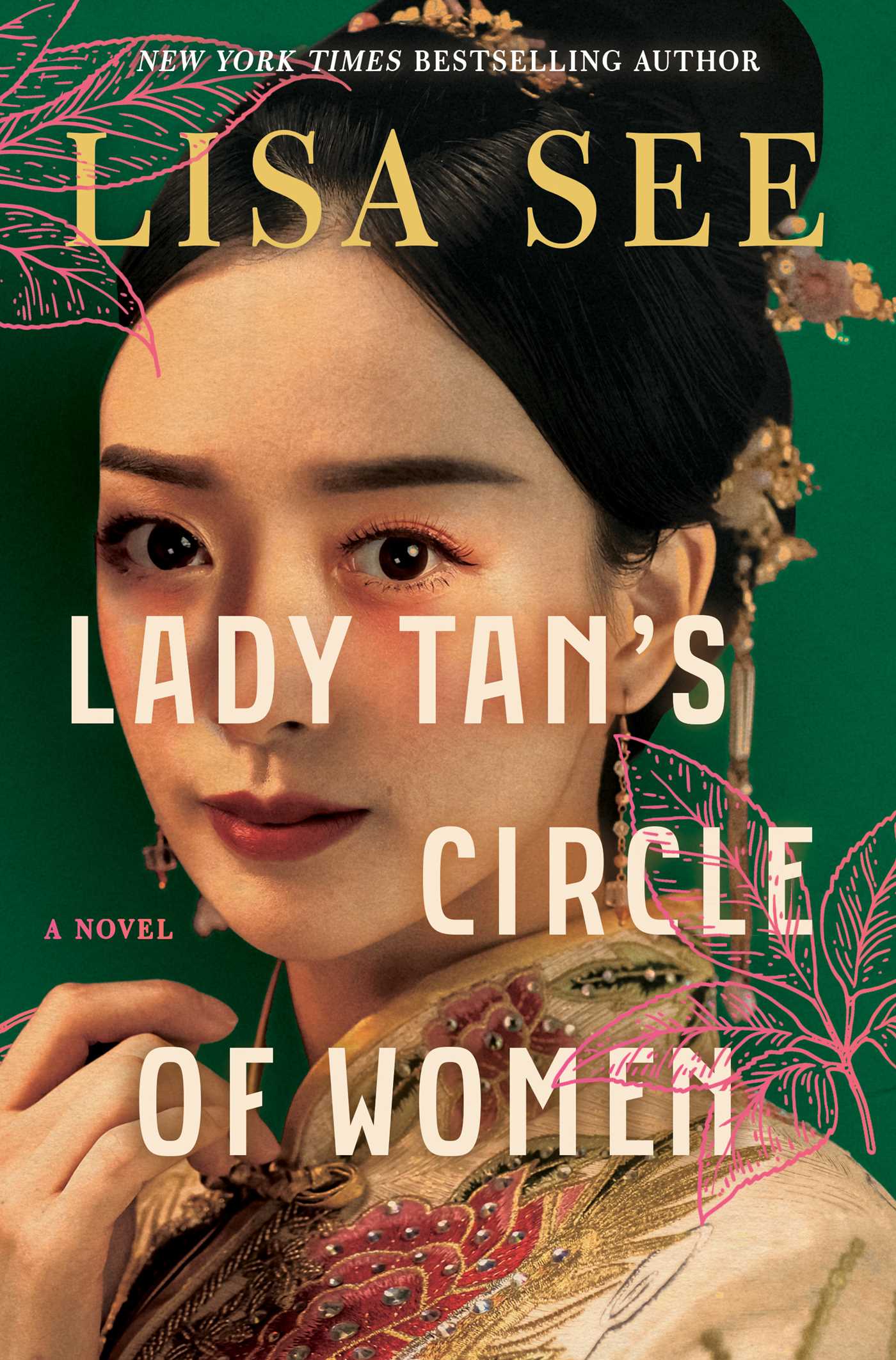
Lady Tan’s Circle of Women by Lisa See

A Girl Born into an Elite Family

15th century China, a girl from an elite family, follows in her grandmother's tradition, as a Doctor of Women's ailments.

Lady Tan’s Circle of Women by Lisa See is historical fiction set in 15th century China.

The story begins in 1469, the fifth year of the Chenghua Emperor’s Reign, when the main protagonist Tan Yunxian, is eight years old.

From the opening passages we see how she is being indoctrinated for the role ahead of her, as her mother who all refer to as Respectful Lady, an honorary title of rank, questions her on the rules she must know by heart.

“You are a little girl, so you are still in milk days. When you turn fifteen, you will enter hair-pinning days. The way we style your hair will announce to the world that you are ready for marriage.

She smiles at me. “Tell me Daughter, what comes next?”

The Year of the Metal Snake

Photo by Zlau.cz on Pexels.com

The story unfolds around two characters of the same age, born under the same sign, in the year of the Metal Snake. Each of the twelve zodiac signs is paired with one of the five elements of Chinese Medicine and in the case of these two girls, it is the Metal snake.

Out of interest, we will enter the Year of the Wood Snake this January 29, 2025.

Of different classes, they are friends as children, one training to become a midwife, like her mother, the other to become a noble, cloistered wife and a doctor like her grandmother.

Respectful Lady asks me to repeat the rules we’ve covered.

“When walking, don’t turn my head,” I recite without protest. “When talking, don’t open my mouth wide. When standing, don’t rustle my skirts. When happy, don’t rejoice with loud laughter. When angry, never raise my voice. I will bury all desire to venture beyond the inner chambers. Those rooms are for women alone.”

The story follows their lives and the precarious events of navigating life under the rule of a mother in law, the intrigues of concubines, the ambitions of those seeking power and the risks of those who stand in their way.

I particularly enjoyed the descriptions of the different cases of disharmony and disequilibrium Lady Tan attended to, making her diagnoses according to the principles of traditional Chinese medicine, a subject I find endlessly interesting.

A Woman Doctor in 15th Century China

historical novel inspired by the true story of a woman physician in 15th-century China

Lady Tan was inspired by Tan Yunxian, a woman doctor in the Ming Dynasty, who at the age of fifty, was the first to write a book of medical cases about women’s maladies and treatments, an incredible feat given the era in which she lived. Many of the cases in her book have been used by the author, creating fictional lives around the information gleaned from that record.

If you enjoy historical fiction about the lives of women in centuries past, especially those that defy the norms and live remarkable lives, you’ll likely enjoy this. And if like me, you have an interest in traditional medicine philosophies and treatments, then this is a wonderfully insightful and interesting read.

Author, Lisa See

Lisa See is the New York Times bestselling author of Lady Tan’s Circle of Women, The Island of Sea Women (my review here), The Tea Girl of Hummingbird Lane (my review here), Snow Flower and the Secret FanPeony in LoveShanghai GirlsChina Dolls, and Dreams of Joy. She is known for her deeply researched, lyrical stories about Chinese characters and cultures.

Lady Tan’s Circle of Women is not only a captivating story of women helping women, but it is also a triumphant re-imagining of a woman who was remarkable in the Ming dynasty and would be considered remarkable and inspirational today.

She is also the author of On Gold Mountain, which tells the story of her Chinese American family’s settlement in Los Angeles. 

Absolutely & Forever by Rose Tremain

A friend gave me this book to read recently and I brought it with me on holiday intending to read it on the plane, which didn’t happen. It is indeed an ideal holiday read, Rose Tremain being one of those reliable authors so adept at storytelling, at drawing you in to a character’s perspective, imagining their predicament.

When we first meet Marianne, it is the 1950’s, she is fifteen, the only child of regular middle class parents from a semi-rural district in southern England and in her prime for falling helplessly in love with the boy who is paying her attention, Simon Hurst. They are both coming to the end of their schooling years, he with great expectations, she with few.

When I was fifteen, I told my mother that I was in love with a boy called Simon Hurst and she said to me, ‘Nobody falls in love at your age, Marianne. What they get are “crushes” on people. You’ve just manufactured a little crush on Simon.’

When Simon fails to meet the expectations of him, his life plan changes and this will impact Marianne. Her parents dismiss her feelings and put it down to a schoolgirl crush, she describes it as being in the Love Asylum. Unable to let go of her ideas about a life with Simon, she flounders for a while, will eventually move on, but the pattern of unrequited love is never far away from her experience.

Photo by Miquel R. Calafell @ Pexels.com

At school studying Romeo and Juliet, she relates to the Juliet character and wishes for a character like Nurse in her life, one who understands what Romeo and Juliet are doing and how they feel, one kinder than her mother who could hold her and soothe her erratic emotions.

I imagined her listening attentively while I confessed to her that my head was so burdened by my obsession with Simon that I was afraid of becoming a total imbecile. And she would stroke my hair and reassure me that this was a perfectly normal state for young people to be in, that we were all inevitably headed for a stay in the Love Asylum, but that in time the spell would be overcome and normal life would resume.

It is an absorbing story of turning points in people’s lives, the different people they meet, how that can change their trajectory, including the presence of those absent and the illusions harboured of lives not lived, not meant to be lived. It is also a thought provoking depiction of the relationships between generations and the expectations of those coming-of-age in the 1960’s England.

Absolutely and Forever was shortlisted for the Walter Scott Prize for Historical Fiction 2024.

Booker Prize for Fiction Shortlist 2024

Today the Booker Prize Judges shared their shortlist of six novels, narrowed down from the 13 novels in the longlist from an original list of 156 novels.

The panel is chaired this year by artist and author Edmund de Waal, joined by award-winning novelist Sara Collins; Fiction Editor of the GuardianJustine Jordan; world-renowned writer and professor Yiyun Li; and musician, composer and producer Nitin Sawhney.  

The Shortlist of Six books below includes five women and authors from five countries including the first Dutch author to be shortlisted, the first Australian in 10 years. Below the description is a brief comment from the judges and the reason they think reader’s will love that book:

The Safekeep by Yael van der Wouden (Netherlands) – An exhilarating tale of twisted desire, histories and homes – and the legacy of one of the 20th century’s greatest tragedies.

Set in the Netherlands after the war, a quietly devastating novel of obsession and secrets, in which a relationship between two women in a perfectly ordered Dutch household becomes a story of the Holocaust.

We loved how atmospheric this book is. The austerity of these years is powerfully evoked, the particularity of where each teaspoon and coffee cup belongs is beautifully calibrated. But we adored the dynamic of the relationship between Isabel and Eva, the way they inhabit this charged space, always aware of each other and their bodies. 

Orbital by Samantha Harvey (UK) – Six astronauts rotate in the International Space Station. They are there to do vital work, but slowly they begin to wonder: what is life without Earth? What is Earth without humanity?

This brief yet miraculously expansive novel, set aboard the International Space Station is inflused with such awe and reverence that it reads like an act of worship.

This novel is superbly crafted and lyrically stunning. Sentence after sentence is charged with the kind of revelatory excitement that in a lesser book would be eked out of plot alone.   

Creation Lake by Rachel Kushner (US) – A woman is caught in the crossfire between the past and the future in this part-spy novel, part-profound treatise on human history.

A thought-provoking novel of ideas, wrapped up in a page-turning spy thriller. Kushner’s prose is juicy, her narrator jaunty, her world-building lush.

Novels that investigate what it is to be human can veer into the sentimental; this one is utterly flinty and hard-nosed. And yet, there’s mystery at its core – both the mystery of human origins and of individual identity. ‘What is it people encounter in their stark and solitary 4am self? What is inside them?’ As with the caves that play such a key part in the book, Kushner taps into something profound.

Stone Yard Devotional by Charlotte Wood (Australia) – The past comes knocking in this fearless exploration of forgiveness, grief and female friendship.

Set in a claustrophobic religious retreat in rural Australia, this is a fierce and philosophical interrogation of history, memory, nature and human existence.

Contemporary issues – climate change and a global pandemic – can sometimes appear as flat concepts or stale ideas in fiction, but Stone Yard Devotional is able to make both topics locally and vividly felt as haunting human stories.  

James by Percival Everett (US) – A profound meditation on identity, belonging and the sacrifices we make to protect the ones we love, which reimagines The Adventures of Huckleberry Finn.

A powerful, genre-defying, revisionist exploration of slavery, the indomitable resilience of the human spirit and the pursuit of freedom. It subverts all expectations.

While the book deals with the horrors of slavery, it also examines universal themes of identity, freedom and justice. Everett challenges us to question, and reflect on, the nature of morality, the corrupting influence of power and the indomitable resilience of the human spirit.  

Held by Anne Michaels (Canada) – In a narrative that spans four generations from 1917, moments of connection and consequence ignite and re-ignite as the century unfolds.

A lyrical kaleidoscope of a novel created from the scattered images and memories of four generations of a family. Few books could sustain a pitch of poetic intensity.

We loved the quietness of this book: we surrendered to it. The large themes are of the instability of the past and memory, but it works on a cellular level due to the astonishing beauty of the details. Whether it is the mistakes that are knitted into a sweater so that a drowned sailor can be identified, or the rituals of making homecoming pancakes, or what it feels like to be scrutinised as you are painted, the novel makes us pause. 

The Verdict

So I’m surprised and disappointed not to see My Friends by Hisham Matar on the list, I thought it was excellent; it is great to see Percival Everett’s masterpiece James there, I loved it. I have read Orbital and it was okay, though I felt quite detached from it and the characters, while reading.

Of the others, I’m curious enough to read an extract from Stoneyard Devotional, and Held, though the Anne Michaels might be a bit much for me if its anything like her much earlier Fugitive Pieces. I’m not sure about Creation Lake, it’s giving me Birnam Wood, Eleanor Catton vibes, so likely not for me. And now I have these two previous Booker Prize winning novels to read, thanks to a lucky book haul at the Vide Grenier in Ansouis Village yesterday.

So what do you think of the shortlist? Any recommendations? Disappointments?

Read An Extract

If you want to check out some of the first chapter of any of these books, you can read an extract here.

The Booker Winner

The announcement of the winner of the Booker Prize 2024 will take place at a ceremony and dinner held at Old Billingsgate in London on Tuesday, 12 November.