
An excellent Sunday afternoon read and pertinent to much that is being written and read in the media under the banner of the silencing of women today.
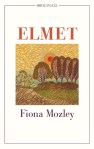
 This short, articulate novella is a conversation, in the form of a lengthy letter from a widow to her best friend, whom she hasn’t seen for some years, but who is arriving tomorrow. It is set in Senegal, was originally written and published in French in 1980 and in English in 1981, the year in which the author died tragically of a long illness.
Our recent widow is reflecting on the emotional fallout of her husband’s death, how she is unable to detach from memories of better times in the past, during those 25 years where she was happily married and the only wife of her husband, thoughts interrupted by the more bitter, heart-breaking recent years where she was abandoned by him for the best friend of her daughter, a young woman, who traded the magic of youth for the allure of shiny things (with the exception of his silver-grey streaks, which he in turn trades in for the black dye of those in denial of the ageing process).
With his death, she must sit beside this young wife, have her inside her home for the funeral, in accordance with tradition. She is irritated by this necessity.
Was it madness, weakness, irresistible love? What inner confusion led Modou Fall to marry Binetou?
To overcome my bitterness, I think of human destiny. Each life has its share of heroism, an obscure heroism, born of abdication, of renunciation and acceptance under the merciless whip of fate.
By turn she expresses shock, outrage, anger, resentment, pity until her thoughts turn with compassion towards those she must continue to aid, her children; to those who have supported her, her friends; including this endearing one about to arrive; she thinks too of the burden of responsibility of all women.
And to think that I loved this man passionately, to think that I gave him thirty years of my life, to think that twelve times over I carried his child. The addition of a rival to my life was not enough for him. In loving someone else, he burned his past, both morally and materially. He dared to commit such an act of disavowal.
And yet, what didn’t he do to make me his wife!
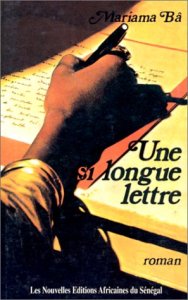 It is a lament, a paradox of feelings, a resentment of tradition, a wonder at those like her more liberated and courageous friend, who in protest at her own unfair treatment (a disapproving mother-in-law interferes – reminding me of Ayòbámi Adébáyò’s Stay with Me), took the road less travelled, taking her four sons, arming herself with renewed higher education and an enviable career abroad.
It is a testament to the plight of women everywhere, who live in sufferance to the old ways of patriarchy, whose articulate social conscience has little outlet except through their children, whose ability to contribute so much more is worn down by the age-old roles they continue to play, which render other qualities less effective when under utilised.
I am not indifferent to the irreversible currents of the women’s liberation that are lashing the world. This commotion that is shaking up every aspect of our lives reveals and illustrates our abilities.
My heart rejoices every time a woman emerges from the shadows. I know that the field of our gains is unstable, the retention of conquests difficult: social constraints are ever-present, and male egoism resists.
Instruments for some, baits for others, respected or despised, often muzzled, all women have almost the same fate, which religions or unjust legislation have sealed.
Ultimately, she posits, it is only love that can heal, that can engender peace and harmony and the success of family is born of the couple’s harmony, as the nation depends inevitably on the family.
I remain persuaded of the inevitable and necessary complementarity of man and woman.
Love, imperfect as it may be in its content and expression, remains the natural link between these two beings.
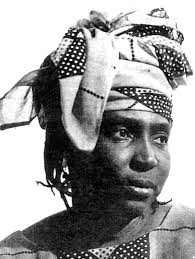 Mariama Bâ (April 17, 1929 – August 17, 1981) was a Senegalese author and feminist, who wrote in French. Born in Dakar to an educated and well-off family, her father was Minister of Health, her grandfather a translator in the occupying French regime. After the premature death of her mother, she was largely raised in the traditional manner by her maternal grandparents.
She was a novelist, teacher and feminist, active from 1979 to 1981 in Senegal, West Africa. Bâ’s source of determination and commitment to the feminist cause stemmed from her background, her parents’ life, her schooling and subsequent experiences as a wife, mother and friend.
Her contribution is considered important in modern African studies as she was among the first to illustrate the disadvantaged position of women in African society. She believed in her mission to expose and critique the rationalisations employed to justify established power structures. Bâ’s work focused on the grandmother, the mother, the sister, the daughter, the cousin and the friend, how they deserve the title “mother of Africa”, and how important they are for society.
It’s an excellent short read and an excellent account from the inside of a polygamous society, highlighting the important role women already have and the greater one they could embrace if men and women were to give greater respect to the couple, the family, or at least to exit it with greater respect than this model implies.
 Once I got into the rhythm of this, which is to say, reading in French, and getting past the need to look up too many new words, I couldn’t put this down, by the time I found my reading rhythm, the lives of Gabriel (Gaby) and his sister Ana, his parents, his friends had their claws in me and I had to know what was going to happen next.
 His father is French, his mother Tutsi from Rwanda, they live in the small country bordering Rwanda, Tanzania and the Democratic Republic of Congo, called Burundi. It boasts the second deepest lake in the world, Lake Tanganyika, which occupies a large portion of the country’s border and is part of the African Great Lakes region.

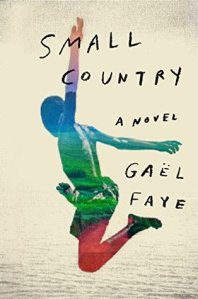 The ending is not really an ending, it could be said there is more than one ending and perhaps there may even be another book. I found it incredibly moving and was amazed to be so moved in a language that is not my own. An incredible feat of writing, a wonderful talent.
 Sing, Unburied, Sing is set in the same Southern US community, putting us amidst a struggling mixed race family, a young black woman Leonie, who fell in love with Michael from a racist white family implicated in a tragedy that affected her family. In its telling, it traverses love, grief, terminal illness, addiction, prejudice, dysfunctional parenting, hope and survival, the effect this mix has on everyone touched by it, the painful and the poignant.
 There is a reference to her novel Salvage The Bones, as the family return from their road trip, they pass a young couple walking a dog, it is the brother and sister, Skeetah and Eschelle, from the neighbourhood, protagonists of that earlier novel. I was curious to know if the dog was related to China, an unresolved thread left hanging from her earlier novel. I was delighted to encounter them.
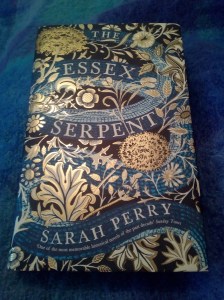 A Victorian era historical novel (London 1893) set over a single year, that follows the footsteps of the young widow Cora Seaborne, in the months following the premature of her husband, a cruel man who’d become indifferent to her, but one who’d been her companion from such a young age, he’d moulded her into what he could tolerate.

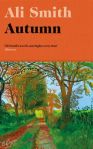
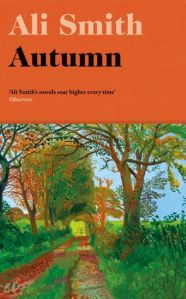 I have finally read a novel by Ali Smith and enjoyed it, though it is distracting to explain why with so many exuberant accolades and comments all over it saying how brilliant it is, I wish I could just read without the expectation this over abundance of blurbs brings. She is clearly the darling of British literary media and publishing, however all the superlatives are a little over the top in my opinion.

 All We Shall Know by Donal Ryan is a slim novella, the third book by this young Irish writer and his best in my opinion.
 Salt Creek by Lucy Treloar was published by Gallic Books new imprint Aardvark Bureau, I’ve loved all the books they’ve brought out under this imprint and Salt Creek might just be the best so far. It’s an historical novel, inspired by the events of the authors family, who immigrated to Australia from Britain, portraying one family trying to find success in farming in a harsh, unforgiving environment of South Australia.
 The Complete Claudine by Colette (translated by Antonia White) was my One Summer Chunkster for 2017, a French classic, relatively little known outside France among general readers, but an author who should be more widely read, especially by young adult readers, as it charts the young Claudine’s journey through her last year in school, then her adventures in Paris with her father, through marriage and into maturity.
 Two Old Women by Velma Wallis is a quirky fable-like book I read about and was intrigued by, recommended by a fellow reader. It is an Alaskan legend of betrayal, courage and survival, one which features, as the title suggests, two old women.
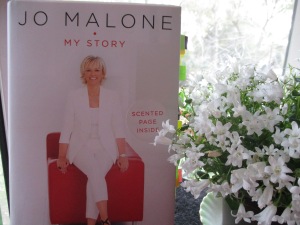 My Story by Jo Malone is one of the six memoirs I read in 2017 and the one that was the most intriguing and personal to me, not because I’m a fan of her perfumes, but because I too have a love of the aromas of plants, flowers, resins, herbs and like to create remedies from essential oils and mix them with other plant oils to use therapeutically.




 It’s a novel about a family struggling to stay together under already challenging circumstances, about to become even more trying with a grade 5 hurricane heading their way. It is set (as is the new novel) in a fictional, rural coastal town named Bois Sauvage, Mississippi. Interestingly, the French edition of the novel is called Bois Sauvage, meaning Wild Wood, the author playing with the world savage and salvage, connected to the theme of survival.
 Although the mother is never present, her memory is held strong by Esch and fiercely through Skeetah, in his protection of China and her pups, Junior clammers for attention and affection, never having known her. They hold strong to how she made them feel and recognise that after the devastation, they can salvage what’s left and continue.
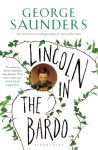
 Saunders told TIME magazine that he didn’t really want to write about Lincoln,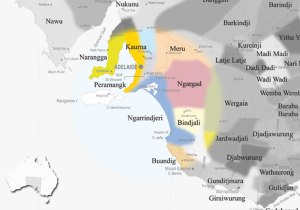

 The arrival of European settlers, their desire to own and restrict land, to create boundaries, while beneficial to their capitalist desires, becomes increasingly detrimental to the way of life of the indigenous people, as they pollute their fresh water access, introduce sickness and disease and contemplate removing their children.


 Word by Word