
As you may know, Andrea Levy sadly passed away in February 2019 at the tender age of 62. She was a British author of Jamaican origin who became well-known when her fourth novel Small Island ( 2004) was awarded the Woman’s Prize for Fiction (then known as the Orange Prize).
Her novels explore the experiences of those connected British/Jamaican histories, gaining inspiration from her own family and heritage. Every Light in the House Burnin’ (1994), is an intimate portrayal of family life that felt like I was reading about the author’s childhood, depicting the challenges faced by a Jamaican family in 1960s London. Semi-autobiographical, it was clearly inspired by experiences she’d had, growing up the daughter of immigrants in London.
In The Long Song, she delves deeper into her heritage, into the lives of slaves on a plantation in Jamaica, telling it through the voice of July, who we meet as she is birthed and follow as fate intervenes and snatches her from her mother, placing her in the main house, where she becomes the maid to the sister of the owner.
Levy wanted to get inside the world of her character in a way she hadn’t seen done before. To imagine those voices that hadn’t been able to record their perspectives and feelings, especially the women. To imagine what they were really thinking, how they would have been feeling, the emotions that were not safe for them to express, that we might imagine by reading between the lines of the slanted narratives that do exist.
What I wanted to explore isn’t in our history books. I wanted to put back in the voices of everyday life for black Jamaicans that are so silent in the record…When the time you are writing about is two hundred years ago, there’s no one to interview and so the individual view has to come from the writer’s imagination.
 Much of the research she encountered were accounts of perspectives that didn’t at all fit with what she sought to show, planters accounts “of negroes child-like ways” and their wives equally misconceived notions on their “defects of character”.
And what an astounding novel results, a natural development of the author’s work as she claimed her ancestry and woke to who she was and where parts of her family had come from.
I loved it. It’s unique, she narrates from both the inside and the outside, being in the story and looking back on the story of the life of a girl named July, the daughter of a black slave and a white overseer on a plantation in Jamaica. It is at times crass, confronting and yet slightly tongue in cheek, daring you to continue reading through the discomfort.
Miss July narrates the story as a grandmother looking back at her life, committing it to paper at the request of her son, who every evening reads it and comments. She writes her account of that in the third person, interrupting it in the first person to complain about the demands of her son, or to clarify something she wants the reader to know. She’s having a conversation with you as you read, and I found it entertaining.
Now, reader, no matter what you may have heard Caroline Mortimer declare as the next act in this story, for she gave her own fulsome account of that day to the militia, several magistrates, lawyers and indeed anyone who ever graced her dinner table, this that I am about to tell you, is the truth of what occurred next within that bed chamber. So not doubt me, for remember my witness still lies beneath the bed.
She removes the blinkers, stepping inside her characters showing them warts and all, making this uncomfortable reading at times, yet perhaps more realistic than most. For even those who have been depicted as well intended (white saviour narratives) were a product of their time and of white privilege.
Little writing or testimony has emerged that was not filtered at the time through a white understanding or serving a white narrative – whether it be the apologists for slavery and the West Indian planter classes, or their opponents, the abolitionists.
She shares the story with great humour and frequent distaste. No one is immune to her stripping characters bare and showing their true selves. So there’s no indulging flights of fancy, happy endings or gratuitous violence, although there is perhaps one character who manages to rise above the rest, but he was abandoned at birth so he deserves to shine a little brighter.
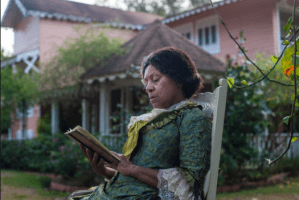
It’s sad to think her storytelling days have ended, but the three works I’ve read are a brilliant encapsulation of seeing through the lens of a life imagined and lived, the daughter of Jamaican immigrants living in Britain, who came to know and imagine the history and potential lives of her ancestors.
The Long Song was awarded the Walter Scott Prize for historical fiction, and was shortlisted for the 2010 Man Booker Prize. It was also adapted by the BBC into a TV series.
 Meytal Radzinski, the founder of #WITMonth, an initiative to encourage people to read more books by women that have been translated from another language, therefore promoting diversity, has asked readers to share their top 10 ten books by women writers in translation.
 1.
1.  2.
2.  3.
3.  4.
4.  5.
5.  6.
6.  7.
7.  8.
8.  9.
9.  10.
10. 
 The longlist, or ‘Booker Dozen’, for the 2019 Booker Prize was announced on Tuesday 23 July.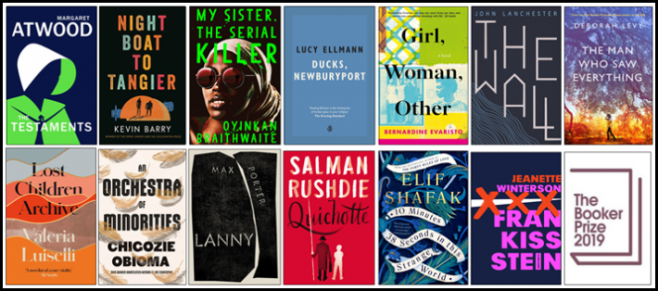
 The Gold Letter is a story of Greek families living in what was then known as Constantinople (later renamed as Istanbul, one of many name changes – The city was founded in 667 BC and named Byzantium by the Greeks ), and how the same twist of fate affects three generations of the same two families, where a young woman and a young man fall in love, only to have the union thwarted by their parents – in each generation it is for a different reason, beginning with them not being of the same wealth and social status, where marriage was more of a contract between families decided by the father’s.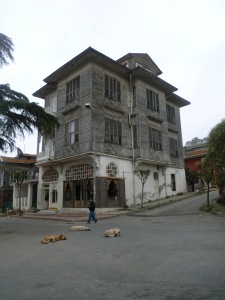
 I was reminded of the wonderful novel about a friendship between two children in the same village, one of Greek and one of Turkish origin by
  Maria in the Moon intrigued from the moment I looked at its beautiful cover and read the title, wondering what the significance of it was. This tender novel hooked me from its opening pages and never let go until I heard that chant ‘maria in the moon’ and understood.
 The story is set in Hull 2007, after their wettest summer on record, when 8,000 homes and 1,300 businesses were flooded.
 Maria in the Moon is one of those books you want to get back to every chance you can, it was gripping until the end, and even the quiet and mundane parts I found riveting. I loved going to work with Catherine and listening to her handling calls, the characters were well formed and contributed to a deeper understanding of the dynamics surrounding her, but also raised questions.
 A fascinating read, an insight into a unique way of life by women known as ‘haenyeo‘ on the coastal, volcanic island of Jeju, in South Korea and a well-researched, thought-provoking work of historical fiction.
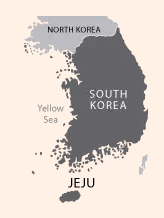 Though the islanders live a simple life, they suffer the consequence of being a resting place for occupying forces, initially when the story opens, it is the Japanese military who occupy the island and create a bad feeling.
 This mid-section of the novel is subsumed by the changing political situation and the dire effect on the local population, nearly all of whom lose members of their family. Young-Sook’s family suffer severe tragedy, creating a deep resentment, causing her to abandon her friendship with Mi-ja.
 French Literature
 Monsieur Pierre Chauveau (Julien’s great grandfather) gave a witness statement on 16 September 1954, describing what he had seen. His unusual testimony was classified by the police as follows:
 The four of them have various interesting encounters, Hubert with a long lost relative whose charred diary he finds in the apartment he left empty for 24 years, Julien meets the original Harry MacElhone, founder of the bar he works in and Magalie seeks out her now thirty-one-year old grandmother Odette.
 While Ceremony was the coming of age of a young man set over a short period of time, Garden in the Dunes is more of a historical novel, set in the late 1800’s, tracing the lives of two native American sisters, Indigo and Sister Salt and at various times, their Grandmother and the newlywed white woman Hattie who provides refuge for Indigo for a period of time after she escapes the boarding school she has been imprisoned within.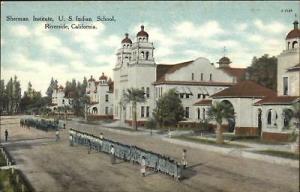

 “Nearly all human cultures plant gardens, and the garden itself has ancient religious connections. For a long time, I’ve been interested in pre-Christian European beliefs, and the pagan devotions to sacred groves of trees and sacred springs. My German translator gave me a fascinating book on the archaeology of Old Europe, and in it I discovered ancient artifacts that showed that the Old European cultures once revered snakes, just as we Pueblo Indian people still do. So I decided to take all these elements – orchids, gladiolus, ancient gardens, Victorian gardens, Native American gardens, Old European figures of Snake-bird Goddesses – and write a novel about two young sisters at the turn of the century.” – Leslie Marmon Silko, Gardens in the Dunes (1999)
 The Women’s Prize for Fiction 2019 winner was announced on June 5 and the prize this year went to American author Tayari Jones for her novel An American Marriage, published by One World, who brought us my favourite book of 2018
  Tayari Jones is the author of four novels, including Silver Sparrow, The Untelling, and Leaving Atlanta. The book was named as a favourite by both Oprah Winfrey and Barack Obama; Oprah is in talks to make it into a film.
 This novel La Tresse by Laetitia Colombani was a birthday gift from a friend, at the time I was given it, it wasn’t available in English, however it has since been translated and published in 2019, available under the title The Braid.
 I hesitated to read this for some time, just because it was in French, but I was pleasantly surprised by how easy it was to read and how little I had to look up new vocabulary. I enjoyed it when I did as I discovered new words and scribbled them in pencil in the margins. And then how I come across those words in the external world, resulting in me thinking I really would enjoy to read more of these works that are available in French but not yet in English.
 Word by Word