Top Five Uplifting Fiction

Finding Uplifting Fiction that isn’t genre specific like Romance or ChickLit is quite difficult. Since you’re unlikely to have these on your shelves, I’m  including a link to a longer Goodreads List described also described as Uplifting:

When you close these books you feel happy to be alive, secure that life is worth living, and motivated to get out there and live an awesome life.

Some of these books may deal with the dark side of life, but they still convey that overall it is good to be alive and leave you feeling uplifted.

GoodReads Top 100 Uplifting Fiction

A lot of the books on their list are children’s classics or novels by familiar authors such as Jane Austen and Elisabeth Von Arnim (I’ve read Elizabeth & Her German Garden and The Enchanted April); others are more contemporary and were popular when they were published like The Guernsey Literary and Potato Peel Society, The Life of Pi, The Secret Life of Bees, The Goldfinch, The Shipping News, The Unlikely Pilgrimage of Harold Fry, A Short History of Tractors in Ukrainian and Eleanor Oliphant is Completely Fine.

None of my choices are on that list, but these five below are my personal favourites.

Top Five Uplifting Fiction

1. Two Old Women by Velma Wallis

Inspired by an Alaskan legend, this is a wonderful short read featuring the original inhabitants of the interior of Alaska; nomads they moved about in search of food according to the weather.

During a particularly harsh winter the group makes a decision regarding the two old women, which results in a sudden change in their attitudes and demands that they recall and put into practice everything they have learned over their long lives. It’s a wonderful, inspiring story, an ode to the importance of sharing experiences through friendship and community and a warning against complacency.

2. Their Eyes Were Watching God by Zora Neale Hurston

This book is a modern classic in America, so I expected it to be a slower read than usual, but I was totally hooked right from its opening pages.

Not only is it a compelling story of a woman’s search for fulfillment, it is an elevating study of character and consciousness emphasized by the use of dialect that draws the reader into the narrative as if it’s being read to you. A unique and exciting reading experience once you get into the rhythm of it.

3. The President’s Hat by Antoine Laurain

Antoine Laurain is a French author who writes whimsical, humorous novellas and this was the first translated into English. They’re a guaranteed light, uplifting read. The President’s Hat is about what happens when President Mitterand leaves his hat behind in a restaurant and someone else picks it up. That person too leaves it behind, and so on, it is a nod to the nostalgia of Parisian life told as a kind of fairy tale, with its connection to a revered hat-wearing President of the 1980’s, whom Laurain describes as being like a noble Florentine Prince. Also inspired by the loss of a much loved hat and an active imagination!

His other books are similarly uplifting, The Red Notebook, Vintage 1954, or the slightly darker Smoking Kills.

4. The Woman Next Door by Yewande Omotoso

This is a wonderful story of octogenarian neighbours Hortensia and Marion, living in a suburb in Cape Town, South Africa. They’ve both had successful lives, run their own businesses and are on the same neighbourhood committee, but their similarities act as a reason to divide them rather than support each other. One day an unforeseen event forces the women together. Could this long-held mutual loathing transform into friendship?  Is it really possible to love thy neighbour? Easier said than done.

It’s a story that reminds me a little of A Man Called Ove, except I didn’t like Ove and wouldn’t put that book on my list, but this one definitely, these two are far more interesting to hang out with than Ove ever was! And this novel was nominated for the Women’s Prize for Fiction in 2017, a worthy contender in my opinion.

5. The Italian Chapel by Philip Paris

Inspired by a true story, this is a tale of Italian prisoners of war, transported from the North African desert to the freezing cold of Orkney, (an archipelago off the northeastern coast of Scotland), at the beginning of winter 1942.

In a testament to the wonders of the human spirit, despite insufferable conditions they build a chapel, one of the most enduring icons of hope and peace to come out of WWII.

The novel introduces us to key characters and imagines them achieving this incredible feat. It is a story of optimism, resourcefulness and the things men do to keep their spirits up when the circumstances are against them. An easy, light read, moving without being overly sentimental, knowing this wonderful refuge still exists today makes it all the more special.

Philip Paris has also written a non-fiction account of the true story behind the chapel. Orkney’s Italian Chapel: The True Story of an Icon. In my review he wrote a comment, saying that he and his wife had returned for the 70th anniversary of the chapel’s completion and met up with several family members of the key artists who built the chapel, as well as 94 year old Gino Caprara, an ex Orkney POW who travelled from Italy for the event. There were many tears shed during those few days together.

Further Reading Lists

Top Five on MyTBR

Top Five Spiritual Well-Being Reads

Top Five Nature Inspired Reads

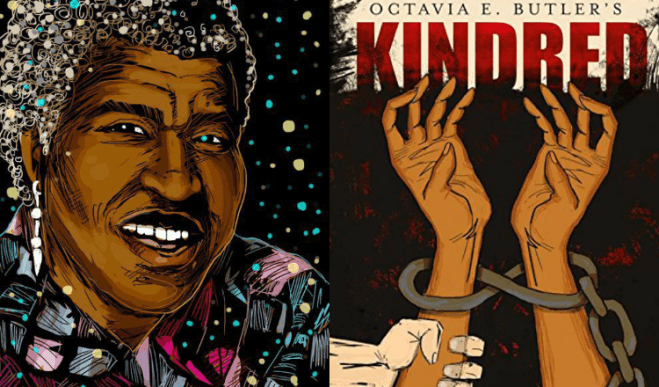
Kindred by Octavia E.Butler

I have been wanting to read Octavia E. Butler for some time, she was one of the most well-known African-American science fiction writers, with a reputation akin to the likes of Alice Walker, Toni Morrison, Maya Angelou who sadly passed away at the age of 58 in 2006.

I guess it was the science-fiction label that stopped me reading her until now, having read Kindred her best-known work, I understand why Butler refers to this particular novel not as science fiction, but fantasy. She uses that element of fantasy to transport a character back to that historical period.

The novel begins with a shocking revelation, that immediately puts the reader on guard. After reading the first line, I was ready for something brutal to occur. It did, but not what I expected.

I lost an arm on my last trip home. My left arm.

It is 1976 and Dana is remembering everything that happened leading up to that moment. She is a Black woman writer married to a white man, a writer named Kevin. On her 26th birthday, something strange happens, she feels dizzy and nauseated, the room blurs and darkens around her, symptoms she will come to recognise with horror, signalling she is about to be transported back in time.

I was at the edge of a woods. Before me was a wide tranquil river, and near the middle of that river was a child splashing, screaming …

Drowning!

The child is Rufus, it is 1815 in Maryland and Dana has time-travelled (without explanation) to an era where her liberties are severely constrained, to save the life of an ancestor. She must try and survive while she is there and figure out how to return to her own life. Until the next time his life is danger and she is called back again.

It’s a riveting account, putting a modern woman into an era where her attitude, education and way of being in the world are a danger to herself. It reminded me of Andrea Levy’s story of slavery in the Jamaican plantations Long Song both writer’s had a similar objective, to get inside the world of their ancestors, to imagine those voices that hadn’t been able to record their perspectives and feelings.

Levy looks at slavery through the eyes of a slave and does so with both humour and distaste. Butler transports a modern women, someone like her in fact, back in time, and makes us feel what life was like in 1815, showing us how someone from our own time might cope if sent back there, knowing what we know now. It’s an interesting predicament.

The longer Dana stays, the more she begins to feel part of the household, familiar and accepting.

That disturbed me too when I thought about it. How easily we seemed to acclimatize. Not that I wanted us to have trouble, but it seemed as though we should have had a harder time adjusting to this particular segment of history – adjusting to our places  in the householder of a slaveholder.

Rufus is the son of the plantation owner, the person Dana is connected to, as he ages and becomes more like his father, she struggles to rationalise her feelings towards him.

I looked at him again and let myself understand. It was that destructive single-minded love of his. He loved me. Not the way he loved Alice, thank God. He didn’t seem to want to sleep with me. But he wanted me around – someone to talk to, someone who would listen to him and care what he said, care about him.

And I did. However little sense it made, I cared. I must have. I kept forgiving him for things…

It’s a thought-provoking novel that uses that element of fantasy to place a woman of the 1970’s into the 1800’s to look at that life and legacy from the inside out. We can imagine how that would have stretched the imagination of the author and the challenges that created for her, grappling with what she discovered there, with what she was becoming aware of.

Highly recommended.

Her Mother’s Mother’s Mother and Her Daughters by Maria José Silveira (Brazil) tr. Eric.M.B. Becker

Just brilliant.

What a perfect way to navigate through 500 years of history of a country, without ever getting bogged down in the detail, to follow the lives of daughters, a matrilineal lineage, whose patterns are affected if not dictated by the context of the era within which they’ve lived.

An omniscient narrative begins with the daughter of a native tribeswoman, who leaves her village and family on the arm of a Portuguese ship hand, and moves to the many generations living on sugarcane plantations, to the era of daughters of wealthy business owners living off the profits of those ancestors; from the bitter to the sweet, the uncaring to the revolutionary, five centuries of women, interlaced through stories.

Each chapter follows one young woman and though some of their lives are short-lived, they at least give birth to one daughter, even if some don’t live to raise them. Though unlikely in reality that so many generations would all produce at least one daughter who survives long enough to reproduce, this construct provides the framework for telling the stories, weaving together the historical threads, allowing only us as readers to see what they often don’t, that they are, that we all connected if we look back far enough, or inside deep enough.

Translator Eric M. B. Becker, the winner of a 2014 PEN/Heim Translation grant, produces an excellent translation. By leaving particularly Brazilian terms such as “emboaba” and “cafuzo” untranslated, Becker manages to make readers of English understand the untranslatable within its context. The novel maintains a casual, dreamlike quality, as if the narrator were telling these stories to a friend. Each character is given their own original voice, emotions, and musicality. If some syntax feels unexpected, it is almost always for the benefit of sound.

L. E. Goldstein, Harvard Review

Their stories are grouped into five parts:
A Shortlived Romance – Inaia (1500 – 1514) and her daughter Tebereté (1514 -1548)
Desolate Wilderness -six daughter descendants, the slave years (1531 – 1693)
Improbable Splendour – five daughters, the commercial trading years, accumulating wealth (1683 – 1822)
Vicious Modernity – four daughters, revenge, jealousy, naivety, the elite upper classes (1816 – 1906)
A Promising Sign – three daughters, working class, equality, human rights, exile, freedom (1926 – present)

There are so many stories, it is difficult to retain them all and remember them, and for this it’s necessary to slow-read this book to really take in the breadth of storytelling, which implicitly tells the greater story of a country’s evolution, growth, pain and development. But what better way than to inhabit the lives of one family and follow them over the course of time, recalling the fates of each character and the essence of the life they lived, was enabled or disabled by the time they lived through.

The narrator makes an appearance from time to time, like the hand that threads the needle, they are threadbare and unintrusive, like a pause in reading to make a cup of tea, they don’t disturb the reader, if anything we are comforted by the presence.

I absolutely loved it, I read this because I seek out works by women in translation to read in August for #WITMonth and finding a book like this is such a joy, for it gives so much in its reading, great storytelling, a potted history of Brazil, a unique multiple women’s perspective and an introduction to an award winning author, the writer of ten novels, this her first translated into English.

The variety of their personalities, and the pain, beauty, and strength they display shows that genetics alone does not make a person who they are. In this book, the characters’ environments form them, from the people with whom they interact to the great changes taking place in the pulsing heart of Brazil itself.

L. E. Goldstein, Harvard Review

I wrote most of this review back in August last year, and as you know, I wasn’t capable of sharing anything for some time after that. I passed the book on to a wonderful friend who came to be with me during that time, and for that reason too I’m unable to share any quotes.

It was one certainly of my favourite reads of 2019. A real gem.

Thank you to Enrico for his excellent review that made me get my own copy of the book to read. Read his review, it’s more of an incisive literary criticism that looks at the challenges of writing a novel like this and how Silveira overcomes them.


Where The Crawdads Sing by Delia Owens

I absolutely loved this, a surprise read, it was a gift from a friend who spends more time living in the wilderness than with humanity. When I read the bio of the author and saw she was a nature writer and wildlife scientist, with a degree in Zoology and a PhD in Animal Behaviour, I was even more attracted to the potential this might infuse, what looked like a murder mystery novel.

Delia’s research on the importance of female grouping in social mammals influenced her fictional writing. Where the Crawdads Sing explores the behavioral impact on a young woman who is forced to live much of her young life without a group.

It’s a slow burning, pleasurable observation of Kya, a girl as a fledgling, one pushed from the nest of family and abandoned before fully formed. And so she develops in a way not like others, highly observant, ultra sensitive to her surroundings, the marsh. They call her the marsh girl.

The marsh did not confine them but defined them and, like any sacred ground, kept their secrets deep. No one cared that they held the land because no one else wanted it.

Like any weak female species, she knows she is prey to the predator, and so acts in ways that might seem strange to other humans, who live within the security of a home and a community (although this is the 1960’s in North Carolina, so not all humans are treated equally).

When cornered, desperate, or isolated, man reverts to those instincts that aim straight at survival. Quick and just. They will always be the trump cards because they are passed on more frequently from one generation to the next than the gentler genes. It is not a morality but simple math. Among themselves, doves fight as often as hawks.

The story is told via twin narratives; the present day when a young man Chase Andrews is found dead at the base of a tower, and the question being asked is whether he fell or was pushed, and if pushed by who; and the past, the story of Kya, her abandonment, her survival, her friendship with Tate, with Chase, with Jumpin’ and Mabel, and how her feelings of rejection affect her relationships.

Her father stays long enough to teach her how to fish and navigate the channels with a boat, but when he leaves she has to learn to feed herself and make money to keep the boat in fuel.

The way the author makes the reader see Kya through the lens of biology and the behaviour of different species is stunning. When she described certain species behaviour, they were like clues to what was coming, I loved that she used nature as a guide.

Observing fireflies, she notices that each species has its own language of flashes to attract a mate. The males recognise the signals and fly only to the females of their species. But the female is capable of changing codes.

First she flashed the proper sequence of dashes and dots, attracting a male of her species, and they mated. Then she flickered a different signal, and a male of a different species flew to her. Reading her message, the second male was convinced he’d found a willing female of his own kind and hovered above her to mate. But suddenly the female firefly reached up, grabbed him with her mouth, and ate him, chewing all six legs and both wings.

Kya watched others. The females got what they wanted – first a mate, then a meal – just by changing their signals.
Kya knew judgement had no place here. Evil was not in play, just life pulsing on, even at the expense of some of the players. Biology sees right and wrong as the same colour in different light.

Loneliness leads her towards trouble and lessons. The marsh and its inhabitants always reward her. Humans disappoint her and she withdraws more than ever. Fortunately her one friend Tate, teaches her to read and her knowledge of the marsh becomes more academic and her appetite for learning about and within her natural environment are insatiable.

Sitting outside the old cabin, she picked up a scientific digest. One article on reproductive strategies, was entitled “Sneaky Fuckers.”

:

Kya dropped the journal in her lap, her mind drifting with the clouds. Some female insects eat their mates, overstressed mammal mothers abandon their young, many males design risky or shifty ways to outsperm their competitors. Nothing seemed too indecorous as long as the tick and tock of life carried on. She knew this was not a dark side to Nature , just inventive ways to endure against the odds. Surely for humans there was more.

She tries to understand life through the biology she reads about and observes, but the community don’t tolerate difference and will create a narrative of their own in order to seek justice for one of theirs.

Ultimately Nature will decide.

A brilliant way of exploring human nature and our ecosystem, the culmination of a long career of observing wildlife and nature, now in that stage of life where she can share it perhaps more widely in the fictional form.

Delia Owens was born in southern Georgia and grew up with a close relationship to nature. After her studies, she and her husband drove over the central Kalahari in Botswana and set up camp there for 7 years studying lions and hyenas, co-authoring the book Cry of the Kalahari. From there they moved to Zambia, where they studied elephants and established a program offering jobs, loans, and other assistance to local villagers so they would not have to poach wildlife for a living. They lived 22 years in Africa before returning to to the US.

She wants to continue writing fiction, especially mysteries that explore how our evolutionary past on the savannas influenced our current behavior in a world less wild.

She has won the John Burroughs Award for Nature Writing and has been published in NatureThe African Journal of Ecology, and many others. Where the Crawdads Sing is her first novel.

Celestial Bodies by Jokha Alharthi tr. Marilyn Booth

Celestial Bodies won the 2019 International Booker Prize, a literary prize open to newly translated works of fiction into English.

Jokha Alharthi is from Oman and her novel was originally written in Arabic. She is the first female Omani novelist to be translated into English and the first author from the Arabian Gulf to win the prize. The judges had this to say:

“It’s less flamboyant than some of the other books, there’s a kind of poetic cunning to it. It starts feeling like a domestic drama in a fascinating world, but with the layers of philosophy, psychology and poetry, you are drawn into the prose, through the relationship between the characters. It encouraged us to read in a slightly different way.”

It is a read that requires just letting go and going with the flow, allowing the characters to lead us wherever it is the author is taking us. I say that because it is a non-linear narrative, that moves its narrative perspective often from one character to another and also across time seemingly randomly, as events trigger memories and take the story back to their origin.

There is a family tree in the opening pages, which I did refer back to often, though perhaps it wasn’t really necessary, sometimes just knowing it is there is an excuse to refer to it, but it’s not really necessary for a story that follows no chronological order, that moves from the present to the past and back generations according to the feelings, thoughts and behaviours of its characters.

Abdullah’s thoughts occupy us more than most, and they often refer him back to a childhood memory, that turns into a recurring adult nightmare of being suspended by ropes in a well, a punishment for taking his father’s rifle to shoot magpies with the boys who lured him out to join them. Only they beat him.

He is married to Mayya, who he loves, since the first day he saw her – and because he was a man, he could have her as his wife. The feelings aren’t reciprocated and love doesn’t flourish there. Unbeknown to him there is another ‘celestial body’ orbiting in his universe that intends to reel him in.

For me, this felt like a novel that centred around the lives of those connected with ‘The Big House’ whether they were descendants of the one who built it, to contain his family, slaves, to be place friends could visit. For some it is a sort of prison, not necessarily the slaves, for they have certain freedoms not given to those who are part of the family, especially those who have no memory of being stolen.

It is useless, Zarifa, to try telling this man that no one stole you. That you were born a slave because your mother was a slave and that’s the way life is. That slavery passes to you from your mother. That no one stole you, and al-Awafi is your place, its people are yours.

Her husband remembers and shouts when she says such things.

The second child of his mother who had five boys in all, he remembers everything: the local gangs that attacked their village wanting money, or perhaps to pay old scores; the merchants, a jumble of Baluchs and Arabs, who bought them, there on the plains, the filthy crammed ships those merchants crammed them into; the eye disease that spread fast from one child to the next on shipboard; his mother’s screaming for her other children, who’d been shoved onto other boats; the nursing baby who died of smallpox while on her breast, so the slave traders snatched him away and threw him into the sea.

Her son also sees things differently:

He spoke through clenched teeth. Listen to me. Merchant Sulayman raised me and, yes, he put through me through a little schooling, and he found me a wife, but it was all for his own self-interest, all because he meant me to serve him, and to have my wife as his servant too, and then my children later on.

Even those who leave, (to Cairo), when tragedy strikes, in their upset they return to this small town of The Big House, forever connected to those who reside there.

At certain points in their domestic history, there are things that are changing in the external and international world, like the abolition of slavery, though those affected by it here, seem immune to the changes, their lives don’t change, they are not even aware of their rights. Change here happens slowly, in the rebelliousness of each new generation, challenging what came before in some way.

Time changes them, multiple generations must live together in understanding and be misunderstood. Some things are never understood and leave some always seeking the truth, to the point of obsession.

Do you see the way people move life – and I mean, just the bits of their lives you can see? Most of their movement through life is invisible, it goes on inside of them, so for us it exists beneath the surface. Their own private worlds, their imaginations. When I liberated myself from living through my father’s head I created my own imagination with a paintbrush.
.
My art saved me from acting out the image my father had made for me.
.
When I could finally shake myself loose, when I managed to no longer live inside the image of me he had in his head, I finally found out what freedom tastes like….How liberated a person feels when it’s finally no longer a question of being just an extension or embodiment of someone else’s fancy, even if that someone is your father.

It doesn’t follow a conventional plot and just as in life, the voices of the household come through chapters almost haphazardly, just as thoughts do, and yet over the span of 240 pages we have a sense of this extended family and community of the pressure of time moving on, of lives changing and challenging old perceptions.

As I look back at the book, I see so many passages highlighted and randomly opening to any of them I immediately see what it was that attracted me and understand why this book elevated itself above the rest, to win the Man Booker International Prize in 2019. There is a richness to it, a complete immersion, a gathering of influences, duty alongside rebelliousness, tradition nestled with change, love and loss, history and modernity.

International Booker Long List 2020

The International Booker Prize long list was announced today Feb 27. Thirteen novels of translated fiction from 8 languages, 11 countries, six male authors and seven women. The judges this year were looking for distinctive voices that stayed with them, fiction that once you’d read it, you couldn’t stop thinking about.

The prize is awarded every year for a single book that is translated into English and published in the UK or Ireland. It aims to encourage more publishing and reading of quality fiction from all over the world and to promote the work of translators.  The contribution of both author and translator is given equal recognition, with the £50,000 prize split between them.

Ted Hodgkinson, Chair of Judges said:

‘What a thrill to share a longlist of such breadth and brilliance, reflecting a cumulative artistry rooted in dialogue between authors and translators, and possessing a power to enlarge the scope of lives encountered on the page, from the epic to the everyday. Whether reimagining foundational myths, envisioning dystopias of disquieting potency, or simply setting the world ablaze with the precision of their perceptions, these are books that left indelible impressions on us as judges. In times that increasingly ask us to take sides, these works of art transcend moral certainties and narrowing identities, restoring a sense of the wonderment at the expansive and ambiguous lot of humanity.’

Below are the novels on the list with a short summary of their premise. Surprisingly, I have read and reviewed two (reviews linked below) and they are indeed thought provoking novels, and I have The Adventures of China Iron on my shelf to read. The shortlist will be announced on April 2nd.

The Enlightenment of The Greengage Tree by Shokoofeh Azar (Iran) Translated by Anonymous from Farsi

Set in Iran in the decade following the 1979 Islamic Revolution, this moving, richly imagined novel is narrated by the ghost of Bahar, a 13-year-old girl whose family is compelled to flee their home in Tehran for a new life in a small village, hoping in this way to preserve both their intellectual freedom and their lives. They soon find themselves caught up in the post-revolutionary chaos that sweeps across the country, a madness that affects both living and dead, old and young.
The Enlightenment of the Greengage Tree speaks of the power of imagination when confronted with cruelty, and of our human need to make sense of the world through the ritual of storytelling. Through her unforgettable characters and glittering magical realist style, Azar weaves a timely and timeless story that juxtaposes the beauty of an ancient, vibrant culture with the brutality of an oppressive political regime.
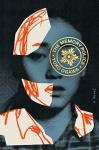
The Memory Police  by Yoko Ogowa (Japan) Translated by Stephen Snyder from Japanese

Hat, ribbon, bird, rose. To the people on the island, a disappeared thing no longer has any meaning. It can be burned in the garden, thrown in the river or handed over to the Memory Police. Soon enough, the island forgets it ever existed. When a young novelist discovers that her editor is in danger of being taken away by the Memory Police, she desperately wants to save him. For some reason, he doesn’t forget, and it becomes increasingly difficult for him to hide his memories. Who knows what will vanish next?
The Memory Police is a beautiful, haunting and provocative fable about the power of memory and the trauma of loss, from one of Japan’s greatest writers.

The Adventures of China Iron by Gabriela Cabezón Cámara (Argentina)Translated by Iona Macintyre & Fiona Mackintosh from Spanish

1872. The pampas of Argentina. China is a young woman eking out an existence in a remote gaucho encampment. After her no-good husband is conscripted into the army, China bolts
for freedom, setting off on a wagon journey through the pampas in the company of her new-found friend Liz, a settler from Scotland. While Liz provides China with a sentimental education and schools her in the nefarious ways of the British Empire, their eyes are opened to the wonders of Argentina’s richly diverse flora and fauna, cultures and languages, as well as to the ruthless violence involved in nation-building.
This subversive retelling of Argentina’s foundational gaucho epic, Martín Fierro, is a celebration of the colour and movement of the living world, the open road, love and sex, and the dream of lasting freedom. With humour and sophistication, Gabriela Cabezón Cámara has created a joyful, hallucinatory novel that is also an incisive critique of national origin myths and of the casualties of ruthless progress.
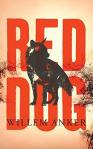
Red Dog by Willem Anker (South Africa) Translated by Michiel Heyns from Afrikaans

In the 18th century, a giant bestrides the border of the Cape Colony frontier. Coenraad de Buys is a legend, a polygamist, a swindler and a big talker; a rebel who fights with Xhosa chieftains against the Boers and British; the fierce patriarch of a sprawling mixed-race family with a veritable tribe of followers; a savage enemy and a loyal ally. Like the wild dogs who are always at his heels, he roams the shifting landscape of southern Africa, hungry and spoiling for a fight.
Red Dog is a brilliant, fiercely powerful novel – a wild, epic tale of Africa in a time before boundaries between cultures and peoples were fixed.

The Other Name: Septology I – II byJon Fosse (Norway) Translated by Damion Searls from Norwegian

Follows the lives of two men living close to each other on the west coast of Norway. The year is coming to a close and Asle, an ageing painter and widower, is reminiscing about his life. He lives alone, his only friends being his neighbour, Åsleik, a bachelor and traditional Norwegian fisherman-farmer, and Beyer, a gallerist who lives in Bjørgvin, a couple hours’ drive south of Dylgja, where he lives. There, in Bjørgvin, is another Asle, also a painter. He and the narrator are doppelgangers – two versions of the same person, two versions of the same life. Written in hypnotic prose that shifts between the first and third person, The Other Name calls into question concrete notions around subjectivity and the self. What makes us who we are? And why do we lead one life and not another? With The Other Name, the first volume in a trilogy of novels, Fosse presents us with an indelible and poignant exploration of the human condition that will endure as his masterpiece.
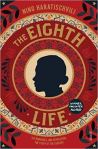
The Eighth Life by Nino Haratischvili (Georgia) Translated by Charlotte Collins and Ruth Martin from German

At the start of the 20th century, on the edge of the Russian empire, a family prospers. It owes its success to a delicious chocolate recipe, passed down the generations with great solemnity and caution. A caution which is justified: this is a recipe for ecstasy that carries a very bitter aftertaste…
Stasia learns it from her Georgian father and takes it north, following her new husband Simon to his posting at the centre of the Russian Revolution in St Petersburg. But Stasia’s will be the first of a symphony of grand, if all too often doomed, romances that swirl from sweet to sour in this epic tale of the red century.
Tumbling down the years, and across vast expanses of longing and loss, generation after generation of this compelling family hears echoes and sees reflections. Great characters and greater relationships come and go and come again; the world shakes, and shakes some more, and the reader rejoices to have found at last one of those glorious old books in which you can live and learn, be lost and found, and make indelible new friends.

Serotonin by Michel Houellebecq (France) Translated by Shaun Whiteside from French

Dissatisfied and discontented, Florent-Claude Labrouste feels he is dying of sadness. His young girlfriend hates him and his career as an engineer at the Ministry of Agriculture is pretty much over. His only relief comes in the form of a pill – white, oval, small. Recently released for public consumption, Captorix is a new brand of anti-depressant which works by altering the brain’s release of serotonin.
Armed with this new drug, Labrouste decides to abandon his life in Paris and return to the Normandy countryside where he used to work promoting regional cheeses, and where he had once been in love. But instead of happiness, he finds a rural community devastated by globalisation and European agricultural policies, and local farmers longing, like Labrouste himself, for an impossible return to what they remember as the golden age.

Tyll by Daniel Kehlmann (Austria-Germany) Translated by Ross Benjamin from German

He’s a trickster, a player, a jester. His handshake’s like a pact with the devil, his smile like a crack in the clouds; he’s watching you now and he’s gone when you turn. Tyll Ulenspiegel is here!
In a village like every other village in Germany, a scrawny boy balances on a rope between two trees. He’s practising. He practises by the mill, by the blacksmiths; he practises in the forest at night, where the Cold Woman whispers and goblins roam. When he comes out, he will never be the same. Tyll will escape the ordinary villages. In the mines he will defy death. On the battlefield he will run faster than cannonballs. In the courts he will trick the heads of state. As a travelling entertainer, his journey will take him across the land and into the heart of a never-ending war. A prince’s doomed acceptance of the Bohemian throne has European armies lurching brutally for dominion and now the Winter King casts a sunless pall. Between the quests of fat counts, witch-hunters and scheming queens, Tyll dances his mocking fugue; exposing the folly of kings and the wisdom of fools.
With macabre humour and moving humanity, Daniel Kehlmann lifts this legend from medieval German folklore and enters him on the stage of the Thirty Years’ War. When citizens become the playthings of politics and puppetry, Tyll, in his demonic grace and his thirst for freedom, is the very spirit of rebellion – a cork in water, a laugh in the dark, a hero for all time.

Hurricane Season by Fernanda Melchor (Mexico) Translated by Sophie Hughes from Spanish

Hurricane Season opens with the macabre discovery of a decomposing body in a small waterway on the outskirts of La Matosa, a village in rural Mexico. It soon becomes apparent that the body is that of the local witch, who is both feared by the men and relied upon by the women, helping them with love charms and illegal abortions.
Mirroring the structure of Gabriel García Márquez’s Chronicle of a Death Foretold, the novel goes back in time, recounting the events which led to La Matosa’s witch’s murder from several perspectives. Hurricane Season quickly transcends its detective story constraints: the culprits are named early on in the narrative, shifting the question to why rather than who. Through the stories of Luismi, Norma, Brando and Munra, Fernanda Melchor paints a portrait of lives governed by poverty and violence, machismo and misogyny, superstition and prejudice. Written with a brutal lyricism that is as affecting as it is enthralling, Hurricane Season, Melchor’s first novel to appear in English, is a formidable portrait of Mexico and its demons.

Faces on the Tip of My Tongue by Emmanuelle Pagano (France) Translated by Sophie Lewis & Jennifer Higgins from French

Meetings, partings, loves and losses in rural France are dissected with compassion.
The late wedding guest isn’t your cousin but a drunken chancer. The driver who gives you a lift isn’t going anywhere but off the road. Snow settles on your car in summer and the sequins found between the pages of a borrowed novel will make your fortune. Pagano’s stories weave together the mad, the mysterious and the dispossessed of a rural French community with honesty and humour. A superb, cumulative collection from a unique French voice.

Little Eyes by Samanta Schweblin (Argentina) Translated by Megan McDowell from Spanish

They’ve infiltrated homes in Hong Kong, shops in Vancouver, the streets of Sierra Leone, town squares of Oaxaca, schools in Tel Aviv, bedrooms in Indiana.
They’re not pets, nor ghosts, nor robots. They’re real people, but how can a person living in Berlin walk freely through the living room of someone in Sydney? How can someone in Bangkok have breakfast with your children in Buenos Aires, without you knowing? Especially when these people are completely anonymous, unknown, untraceable.
The characters in Samanta Schweblin’s wildly imaginative new novel, Little Eyes, reveal the beauty of connection between far-flung souls – but they also expose the ugly truth of our increasingly linked world. Trusting strangers can lead to unexpected love, playful encounters and marvellous adventures, but what if it can also pave the way for unimaginable terror? Schweblin has created a dark and complex world that is both familiar but also strangely unsettling, because it’s our present and we’re living it – we just don’t know it yet.
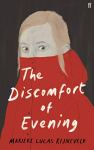
The Discomfort of Evening by Marieke Lucas Rijneveld (The Netherlands) Translated by Michele Hutchison from Dutch

Jas lives with her devout farming family in the rural Netherlands. One winter’s day, her older brother joins an ice skating trip. Resentful at being left alone, she makes a perverse plea to God; he never returns. As grief overwhelms the farm, Jas succumbs to a vortex of increasingly disturbing fantasies, watching her family disintegrate into a darkness that threatens to derail them all.
A bestselling sensation in the Netherlands by a prize-winning young poet, Marieke Lucas Rijneveld’s debut novel lays everything bare. It is a world of language unlike any other, which Michele Hutchison’s striking translation captures in all its wild, violent beauty.

Mac and His Problem by Enrique Vila-Matas (Spain) Translated by Margaret Jull Costa & Sophie Hughes from Spanish

Mac is not writing a novel. He is writing a diary, which no one will ever read. At over 60, and recently unemployed, Mac is a beginner, a novice, an apprentice – delighted by the themes of repetition and falsification, and humbly armed with an encyclopaedic knowledge of literature.
Mac’s wife, Carmen, thinks he is simply wasting his time and in danger of sliding further into depression and idleness. But Mac persists, diligently recording his daily walks through the neighbourhood. It is the hottest summer Barcelona has seen in over a century.
Soon, despite his best intentions (not to write a novel), Mac begins to notice that life is exhibiting strange literary overtones and imitating fragments of plot. As he sizzles in the heatwave, he becomes ever more immersed in literature – a literature haunted by death, but alive with the sheer pleasure of writing.


 

The Memory Police by Yoko Ogawa tr. Stephen Snyder

From an extraordinary writer and storyteller who defies categorisation, another tale that stretches and flexes the readers imagination, hauntingly written, leaving me to wonder just how she does it, a thought I had after reading her novel, or story collection Revenge in 2013.

The Memory Police are an oppressive, bureaucratic menace slowly making things on the island disappear along with all memories of them in the minds of inhabitants. And they enforce forgetfulness. Checking up on people to be sure memory has been erased, because though for most the memories disappear without effort, in some they linger. Those whose memory somehow stays intact live in danger, they begin to disappear, go in to hiding or are forcefully removed.

Our unnamed narrator has lost both her parents, taken by the police and no longer heard of; though her mother tried to preserve and hide some of the things that disappeared through her art. The daughter is a novelist, as long as words, imagination and voice exist she continues to write. She accepts her fate and continues to adapt to each disappearance with the help of an old man she is close to and the company of the neighbour’s dog, when its owners are removed.

Her editor R goes into hiding due to his ability to remember and tries to instill in her the importance and value of memories, while sometimes a memory returns, for her, it no longer has emotional significance or meaning. She possesses empathy but is void of nostalgia, without the objects the memories disappear and even when one reappears, it no longer evokes any emotion or feeling.

Gathering photographs (when they become the next thing to disappear) and albums to burn, R makes a desperate effort to stop her:

“Photographs are precious. If you burn them, there’s no getting them back. You mustn’t do this. Absolutely not.”
“But what can I do? The time has come for them to disappear,” I told him.
“They may be nothing more than scraps of paper, but they capture something profound. Light and wind and air, the tenderness or joy of the photographer, the bashfulness or pleasure of the subject. You have to guard these things forever in your heart. That’s why photographs are taken in the first place.”

It’s a dystopian novel that focuses more on the survival of the citizens than on exploring the tyranny that oppresses them, the Memory Police don’t seem to be afflicted with “forgetting” and we don’t understand what motivates them. Is it an allegory of collective degeneration, or an attempt to make the reader understand something that is universal among the aged? Suffering seems to rest with those to retain memory, those who forget adapt, and forget that they have forgotten.

There doesn’t seem to be any purpose, merely an exploration of those aspects of humanity of the oppressed to survive and care for one another, whether that means putting one’s life at risk to hide someone who does retain memories, to seek out old memories at the risk of being caught, caring for an old man and a dog.

Some things are innate to humanity and no matter what afflicts us, we are endlessly adaptable, continuing to find ways to work around and/or accept obstacles, here presented in a somewhat absurd manner, highlighting our inability to fight against adaptability. We have no choice but to adapt, it’s written into our genes, and this regime has somehow managed to find a way to control and rewrite them.

Alongside what is happening on the island’s (sur)real world, our protagonist writes a novel about a woman taking typing lessons from a man who will put her in a tower, these chapters are interspersed throughout the narrative and provide an alternative, thought-provoking aspect to the wider story.

When novels disappear and hers remains unfinished despite numerous attempts to write at the request of R, and a loss of inspiration, the old man asks her if it’s possible to write about something in a novel if you’ve never experienced it.

“I suppose it is. Even if you haven’t seen or heard about something, it seems you can just imagine it and then write it down? It doesn’t have to be exactly like the real thing; it’s apparently all right to make things up or even lie.”

“That’s right. Apparently no one blames you for lying in a novel. You can make up the story out of nothing, starting from zero. You write about something you can’t see as though you can see it. You make something that doesn’t exist just by using words. That’s why R says we shouldn’t give up, even if our memories disappear.”

Each disappearance activates the reader’s imagination and the novel provokes many questions that make this an interesting one to discuss.

It’s a novel that stayed with me long after reading, wondering what it was getting at; just as you think you’ve found some deeper meaner, it kind of gets erased, there are no easy conclusions…it’s like the advent of short term memory loss, a literary version of mild cognitive impairment, an affliction all humans post middle age experience and one this novel makes you experience what that might be like in reading. Astonishing.

Further Reading

The Guardian: The Memory Police by Yōko Ogawa review – profound allegory of loss by Madeleine Thien

NY Times Article: How “The Memory Police” makes you See  by Jia Tolentino

Thanks to an email from Peirene Press this morning sharing news of the long list nomination of their novella Faces On the Tip of My Tongue by the French author Emmanuelle Pagano, I see that both The Memory Police and The Enlightenment of the Greengage Tree by Shokoofeh Azar have also been nominated for the International Booker 2020.

The Enlightenment of the Greengage Tree by Shokoofeh Azar

In yesterday’s post I mentioned I had just finished reading this book, a wonderful, if challenging work of translated fiction by the Iranian author Shokoofeh Azar, who lives in exile in Australia. This novel was shortlisted for the Stella Prize in 2018 (a literary award that celebrates Australian women’s writing and an organisation promoting cultural change).
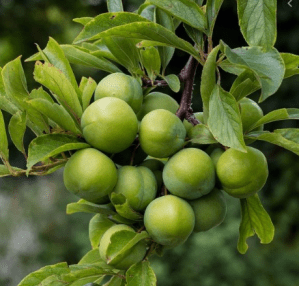
I was very quickly pulled into this book and for the most part seamlessly travelled between the realistic part of the story and parts where the author shifted into the character’s imagination.

Azar uses the lyrical magic realism style of classical Persian storytelling to tell the story of a family of five in the period immediately after the 1979 Islamic revolution and the story is narrated by the spirit of the 13 year old daughter. When fire takes their daughter and much that have till then valued, the family flees Tehran in search of a place as far away as possible from conflict and interference, making their home on a hill above the sleepy village of Razan.

One day Beeta tells Bahar: ‘When life is so deficient and mundane, why shouldn’t imagination supplement reality to liven it up?’

The story shifts between the quiet lulls where it appears they have realised such a utopia and flights of the imagination, where we are temporarily protected from exposure to the harshness and brutality of reality, just as this family attempts to do to preserve their way of life and life itself.

Azar says she wrote the story, in an attempt to answer this question:

Can we survive without passion and hope in a religious dictatorial system?

By letting go of the need to have all of the story narrated in the realistic voice, we hang loosely onto the storyline and then detach, like a kite being given more length of string, flying high above, sometimes so high we no longer recognise where we are, before being pulled back to ground.

I managed to stay with the narrative until Beeta’s metamorphosis around page 178, where I felt my mind spinning, trying to stay with it, wondering what was happening. I almost felt defeated, and then arrived that wonderful moment of clarification, when without giving anything away, the father is forced by the dictatorship to write a statement, and as readers we are given insight into the reality we have been protected from and how the imagination has carried us through it. And though we might question what was real and what wasn’t, it no longer matters, because we have been made to understand why.  As if the universe is making a point here, this realisation ironically appears on page 222.

Dad wrote everything again. This time he cut out all the parts he had realized were incomprehensible to their stale minds, and embellished here and there to make it thoroughly believable.

This made me very curious to understand more about the Persian style of storytelling, whether this was the author’s imagination or something that was inherent in the culture she came from. And this is one of the reasons I love reading translated fiction, because of the gift of this kind of insight into another culture’s storytelling and way of thinking, how they cope with the often harsh reality of life.

Asked in an interview with the LARB (LA Review of Books) about her use of magical realism, Azar said:

Magical realism comes from an old or ancient deep-seated insight. It is more than a literary style that you can learn at university or from the books. I did not learn it only by reading magic realism modern fictions, but I also learned from mythic texts, Persian classic texts, and my own people’s culture. People of old or ancient cultures sometimes seek the metaphysical solution for realistic problems. And it has nothing to do with superstition or religion. If you learn to look at these beliefs in the right way and deeply, you can find the roots of myths, and important and beautiful meanings in these beliefs.

I highlighted many passages, too numerous to include, but leave you with this one:

Persian Greengage Plum Tree

I looked at the eyes of the ghosts sitting around the fire and at Beeta, and suddenly I realized that we dead are the sorrowful part of life, while the living are the joyful side of death. And yet, Beeta was not joyful and it was the sad side of life that she didn’t even know she should be joyful in life because there was nothing else she could do. I wanted to tell her this, but was afraid of bringing her damaged spirit down even further. Fortunately, she herself eventually spoke and said, “It seems that from among you, I am the more fortunate because nobody killed me. But I don’t feel happy at all.”

She looked at we who had died. The dead who had been the first to meet her in the world of the living outside Razan. An old man in the group responded, “This is because you don’t yet realize how beautiful, young, and healthy you are.” Beeta smiled and her cheeks reddened by the light of the fire in silent emotion; and all of us who were dead saw how good the smile looked on her. But as she recalled dark memories, her smile faded and she said, “But the man who loved me simply turned his back on me and married a young girl.” The middle-aged man said, “All the better! It means you were lovable enough but he wasn’t smart enough to realize it.”

This is one of those books that demands perseverance, for which we are warmly rewarded when we do so. I am pleased to read that she is at work on a second novel in a similar style asking the question:

Can true love exist in a religious dictatorship in which the body and love are censored? When you are not allowed to love your body and mind, can you truly be in love with another’s body and mind?

Further Reading:

Deep Into the Heart: An Interview With Shokoofeh Azar by Robert Wood, LARB

The Stella Interview: where she discusses the experiences that informed the novel, the writers that inspire her work and how writing is a means of resistance

Thank you to Daniela at Europa Editions for sending me a review copy.

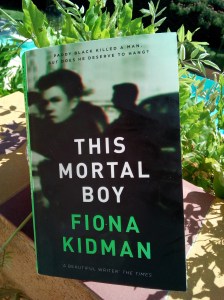
This Mortal Boy by Fiona Kidman

This Mortal Boy is a fictionalised account of a true crime story. A sensitively written account of the life of Albert Black a young man from Belfast, Northern Ireland who arrived in NZ in the 1950’s on a £10 one-way ticket, guaranteed work for 2 years, who never quite fit in and discovered it was a whole lot more expensive to return, if you decided you didn’t want to stay.

His father hadn’t been conscripted but had gone to war anyway, leaving his wife and young son Albert, who survived the Blitz together, an experience that drew mother and son closer than ever. He never attained the same closeness to his father, who returned a different man.

Remembering how it was, the explosions and the fire raids, the people dying or already dead all about their street, the way she had put Albert on a shelf in a closet and held the door shut against him, leaning her body in with all her might, hoping not to be thrown off her feet when the next blast came. He was barely six at the time, still small enough to put in a cupboard and keep him safe.

Belfast had its own problems and New Zealand seemed like an experience that might be good for him, so his parents bought him a ticket and Albert set off dreaming of getting rich and building a fine house for his family.

Some days she looks at her husband and think it is his fault. Then she thinks it is hers for over-loving him, for not wanting to let him go, and her husband seeing that, and thinking he needed the chance to to grow up, to go to a land of opportunity.

Initially he worked in Wellington where he stuck with his new friend Peter, a young man from Liverpool who he met on the boat, they move in as private boarders with a young widow and her children, but the letters from home give Albert  itchy feet; he takes the train to Auckland in search of better paid work to save for his passage home.

He is a gentle, kind lad, one his landlady trusted immediately to take care of her boarding house while she tended to a sick friend. A little lonely he began to frequent a local cafe where he came across a violent young man, who would cause a significant change in his life’s trajectory.

The volatile man called himself Johnny McBride after a character in a Mickey Spillane novel, he was quick to settle any dispute with his fists and feet. Against his better judgement, Albert allowed him to stay a few nights, he overstayed his welcome, their relationship turned sour, ultimately violent, resulting in a death. Albert Black was accused of murder and forced to face a judge and jury unlikely to consider the mitigating circumstances that might have reduced his crime to manslaughter.

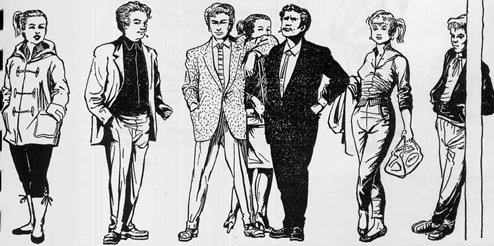
Originally meaning ‘fake, false, inferior, worthless’, the term ‘bodgie’ was applied in the 1950s to a male youth distinguished by his conformity to certain fashions and behaviours. The ‘widgie’ was his female counterpart.

A change in government to a more right wing party and its disapproval of youth culture prompted the Mazengarb inquiry into ‘juvenile delinquency’ and the reintroduction of the previously outlawed death penalty. The government took a hard line on what they perceived as immoral youth and its representatives publicly expressed their prejudice against and contempt for outsiders, often blaming them for this wave of moral delinquency.

The offender is not one of ours. It is unfortunate that we got this undesirable from his homeland.

Delivered to every household it also blamed the perceived promiscuity of the nation’s youth on working mothers, the ready availability of contraceptives, and young women enticing men to have sex. Kidman, who was 15 years old at the time, remembers it arriving at her family home and it being quickly removed before it gave them ideas. It is said to have had no observable impact on young people’s behaviour, rather contributing to the sense of moral panic.*

The report, sent to every New Zealand home, blamed lack of parental supervision for juvenile delinquency and advocated a return to Christianity and traditional values. Excessive wages for teenagers, a decline in the quality of family life, the influence of films, comics and American literature all apparently contributed to the problem. The report provided a basis for new legislation that introduced stricter censorship and restrictions on contraceptive advice to young people.

Albert effectively becomes a scapegoat for a violent message they wished to deliver to wayward youth, and with the odds stacked against him, a terrible verdict is delivered.

…in the eyes of God as in those of conscience, what is a crime when individuals do it is no less an offence when society commits the deed. Victor Hugo

It’s a tragic story of a young man caught in a moment of history that came down hard on youth and migrants. His case was sensationalised by the media and there were a number of irregularities that are likely to have contributed to the verdict.

More than just a novel, Fiona Kidman has requested and hopes for a posthumous pardon for Albert Black, hoping for the sake of his family that he can be seen in a different way to how history has portrayed him. This work helps create more of a balanced view of the young man, his hopes, dreams and intentions in his short-lived life.

I began the story of Albert’s short life and death because it illustrated a theme that has run through my mind for a long time, a concern for young people who make one terrible mistake and have not only had their own lives changed forever, but that of theirs and their victim’s families, and of the wider society.

This Mortal Boy won the Ockham New Zealand Book Award for Fiction.

Further Reading

Article by Fiona Kidman, Irish Times – Chasing justice for a Belfast man hanged in New Zealand

* NZ History – Mazengarb report released, 20 September 1954

More reviews of Fiona Kidman novels, The Captive Wife, The Infinite Air, Songs From the Violet Cafe

Buy a Copy of This Mortal Boy via Book Depository

N.B. Thank to the publisher Gallic Books, Aardvark Bureau for an ARC (advance reader copy) of this book.

Transit by Anna Seghers tr. Margot Bettauer Dembo

I have wanted to read this novel for a while, ever since reading Jacqui’s review a few years ago. With August focused on #womenintranslation and being asking for a suggestion for our upcoming bookclub, it seemed the perfect moment to read it.

It is an incredible novel, written in a surreal time, while the writer was living in exile in Mexico, Anna Seghers (having left Germany in 1933 to settle in France) was forced (with her husband and two children) to flee from Marseille in 1940, the only port in France at that time that still flew the French flag, the rest under German occupation.

With the help of Varian Fry, (see his autobiography Surrender on Demand) an American journalist who came to Marseille for a year and helped 1500 artists, writers, intellectuals escape Europe; they found safe passage to Mexico, where they stayed until able to return to East Berlin, where she lived until her death in 1983.

While in Mexico she wrote this thought-provoking, accomplished, “existential, political, literary thriller” novel narrated by a 27-year-old German man who has escaped two labour camps (in Germany and France) before arriving in Paris where he promises to do a favour for a friend, coming into possession of a suitcase of documents belonging to a German writer named Weidel, who he learns has taken his own life.

There is an element of the absurd in many of the encounters throughout the entire novel, and one of the first is when the young man meets the hotel proprietor, inconvenienced by the death of this man in her establishment, which she’d had to officially register and arrange for burial, she complains that he’d caused her more trouble than the German invasion and that they hadn’t ended there and goes into detail.

“Don’t think that my troubles are over. This man has actually managed to create trouble for me from beyond the grave.”

Our unnamed narrator offers to assist, requiring him to travel to Marseille, where he hopes to stay indefinitely. To avoid checkpoints, he leaves the train a few stops early and descends into the city.

Walking down from the hills, I came to the outer precincts of Marseille. At a bend in the road I saw the sea far below me. A bit later I saw the city itself spread out against the water. It seemed as bare and white as an African city. At last I felt calm. It was the same calm that I experience whenever I like something very much. I almost believed I had reached my goal. In this city, I thought, I could find everything I’d been looking for, that I’d always been looking for. I wonder how many times this feeling will deceive me on entering a strange city!

Descending into Marseille today

Alongside many others genuinely trying to flee, we follow him to hotels, cafes, consulates, shipping offices, travel bureaus and stand in line as he applies for visa and stamps that he has little vested interest in, observing the absurd demands made of people trying to find safe passage to what they hope is a free world. He is given a one month residency and then settles in to watch the world go by, ignoring that he must still establish his intention.

By now I felt part of the community. I had a room of my own, a friend, a lover; but the official at the Office for Aliens on the Rue Louvois had a different view of things. He said, “You must leave tomorrow. We only allow foreigners to stay here in Marseille if they can bring us proof that they intend to leave. You have no visa, in fact not even the prospect of getting one. There is no reason for us to extend your residence permit.”

The man he knows is dead, has a wife widow waiting for him in Marseille, her story becomes part of the young man’s quest, in this transitory city that holds a thin promise of a lifeline to the fulfillment of desperate dreams for so many refugees.

The complexity of requirements means many more are rejected than succeed and all risk being sent to one of the camps that the authorities without hesitation dispatch those whose papers are not in order.

Our narrator is independent, without family and not in possession of a story that invokes sympathy in the reader. A drifter without purpose, he likes the city and wants to stay. His circumstance removes something of the terror and tragedy of what people around him are going through, allowing the reader to see the situation outside of the tragic humanitarian crisis it was.

Instead we witness the absurd situation people have been put in, the endless, near impossible bureaucratic demands refugees encounter, when they are forced to flee homes they don’t want to leave, to go to a safe(r) place equally they don’t necessarily wish to go to, but will do so to survive and in an attempt to keep their families together. And the irony or blindness of those around them who continue with their lives as if nothing has changed.

Sometimes you find real Frenchmen sitting in the Brûleurs des Loups. Instead of talking about visas, they talk about sensible things like the shady deals that go on. I even heard them mention a certain boat that was sailing for Oran. While the Mont Vertoux customers prattle on about all the details of booking a passage on a ship, these people were discussing the particulars of the cargo of copper wire.

I highlighted so many passages that I will go back and reread, it’s a fascinating book that could perhaps only have been written from the safety of exile and from the perspective of the everyday man and woman, without going into detail about the reasons for their haste, for even a safe place can become unsafe, and a manuscript sufficient to sign a death warrant. And even though this book was written 77 years ago, there is much about the bureaucracy that continues to ring true for immigrants in Europe today.

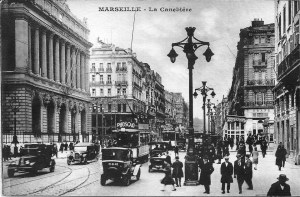
Marseille’s thoroughfare, Le Canibiére

The depiction of Marseille, though in a time of terror is evocative too of that city today, only the places mentioned here are now frequented by people from a different set of countries, those who have fled or left in search of something better in the last 30 years, from parts of Africa, Vietnam, Lebanon and those who just need to disappear for a while, finding anonymity and comradeship in the small alleys and cafes of Marseille, a city of temporary refuge, where everyone has a story that begins elsewhere.

Immigrants of the 21st century – Balade de Noailles

A while ago, I visited a quartier of Marseille, just off Le Canibiére, called Noailles, with a group of university professors looking to know the city’s immigrant population and influence better in anticipation of further developing their classes to incorporate the reality of today.

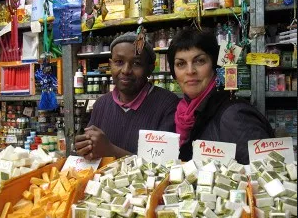
Bénédicte Sire & One of the Legends of Noailles

The personal tour was guided by local comedien/actor, Bénédicte Sire, who introduced us to a new generation of immigrants who have adopted Marseille as their home. We visited them in their shops tasting the food while listening to personal family stories, narrated either by Bénédicte taking on the persona of a relative, or a combination of her oral storytelling and the shop owner participating.

It was one of the most informative and personal visits I have made to Marseille. Like a live version of many novels translated from countries far away, only here they live in a nearby city, introduced by a cheerful, empathetic woman who has developed authentic relationships with her fellow residents, gently guiding them to open up and share their often traumatic, personal stories with outsiders, genuinely interested to know.

Highly Recommended if you visit the city of Marseille and wish to experience it from within.