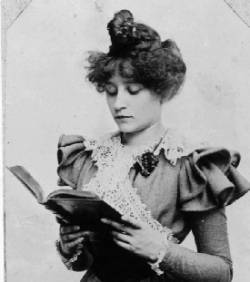
Three by Valérie Perrin tr. Hildegarde Serle

From Flowers to Friendship

Valérie Perrin’s Fresh Water for Flowers was the final book I read in Dec 2020 and one of my favourite reads of that year. It is a novel that has stayed with me since, due to a strong sense of place in various locations in France, the unique character of Violette Touissant and her unforgettable choice of careers; she moves from being a level-crossing keeper to cemetery keeper.

“If life is but a passage, let us at least scatter flowers on that passage.”

The Ties That Bind

French literature fiction Europa Editions

Valérie Perrin’s latest novel Three, (a 575 page chunkster) is something of a coming-of-age tale of three young people in a small provincial French town, intersecting with the mystery of why they no longer speak to each other, 30 years on.

“They were united by the same ideal: leaving when they were grown up. Quitting this hole to go and live in a city full of traffic lights, noise, and frenzy, of escalators and store windows, with bright lights everywhere, even in the middle of the night. With crowds on the pavements, of strangers, of foreigners one can’t gossip about.”

Set in 1986, the years they were at high school together and 2017 – the year a car is retrieved from the bottom of a lake with the remains of human bones in the back seat – the novel glides back and forth over time, scene by scene, recounting a kaleidoscope of episodes among the three that slowly reveal the depth of their relationships to each other and how they were torn apart.

“Étienne was the leader, Nina the heart, and Adrien followed with never a complaint.”

Unconventional Families

Nina was raised by her grandfather and never knew her single mother. She is both curious and resentful about Marion, with good reason. Having such loyal friends as Adrien and Étienne and the assurity of her grandfather’s presence, she feels secure.  He is worried about her, she exhibits signs of taking after her mother, traits he is determined to stamp out.

“He panics. Like lightning in his eyes. He’s brought straight back to his daughter, Marion. His punishment. She was the same. Something like misfortune running in their veins. The mother has contaminated the daughter. An affliction.”

coming of age french novel

Photo by iOnix on Pexels.com

Adrien lives with his mother Josephine. He sees his father occasionally, a man married to another, who will never leave his wife. He becomes the victim of a bullying teacher at school, the same year he becomes part of the Three. The school year that gave him two friends and took away his innocence.

“Sometimes, he would reappear. Like some public-works inspector, or cop. He barely rang the doorbell before coming in. He would glance around the apartment, at the paintwork, the plumbing, Adrien’s school report, leave yet another cheque on the table in the sitting room, and leave. No doubt his conscience clear.”

When the car is dredged from the bottom of the lake, a fourth voice, the only first person narrator in the novel appears. Virginie is a journalist, clearly someone who was at school with the Three. This character is something of an enigma, never mentioned in the adventures of the Three.

“They had no friends but themselves.They were almost stuck to each other, like puppies from the same litter. And yet, they in no way resembled each other. Neither physically, nor in their attitudes.”

Creating Suspense and Intrigue

Three Valérie Perrin Europa Editions

Photo Quang Nguyen VinhPexels.com

Valérie Perrin is quite the master at withholding and timing revelations, drip feeding events, turning points and characters to increase the intrigue, leading the reader down various paths of speculation, until further scenes reveal a bigger picture.

As major events occur, we witness how the three respond, how their dreams are both pursued and thwarted, how secrets eat away at them and ultimately how the strength and belief in their friendship can help them, if they can overcome their inner obstacles.

Ultimately, while there is an engaging plot and a multitude of minor intrigues layered around the central mystery, it is a novel that dissects friendship, its random formation and sense of belonging, its source of support to each person and potential for envy and destruction by those outside of it.

Over thirty years, they will make their mistakes, drift apart, come together, indulge resentments, forgive each other and come to realise that acceptance and truth can set them free from pain and longing, that personal histories matter and those who were part of them can help each other to heal.

A Feast of Issues, A Famine of Depth

It is an entertaining and enjoyable novel, the way the text goes back and forth, the slow reveal, felt very much like something written for the screen, not surprising given that the author is a photographer and screenwriter.

My criticism  would be that there is an attempt to pack too much into the novel; weighty issues, each of which could have been a central theme of the novel. The sheer number of significant issues it raises, in some way dilutes them and compromises the authenticity of some of the secondary characters. The author has ambitious ideas and an interest in social issues, but as a result some are dealt with too lightly, or used to create intrigue, which at times felt inauthentic, a disservice. It’s neither a conventional mystery/thriller or literary fiction, it sits somewhere between the two, something of a hybrid.

Valérie Perrin, Author

Fresh Water for Flowers, ThreeValérie Perrin is a photographer and screenwriter who was born in the Vosges in 1967, grew up in Bourgogne and settled in Paris in 1986, then Normandy in 1995.

Her novel The Forgotten Sunday (2015) won the Booksellers Choice Award. Her English language debut Changer l’eau des fleurs (Fresh Water for Flowers) (2020) was translated into 30 languages, it won the Prix Maison de la Presse 2018 and the Prix des Lecteurs au livre de poche in 2019 and was longlisted for the Dublin Literary Award 2022.

Figaro Littéraire named Perrin one of the 10 best-selling authors in France in 2019, and in Italy, Fresh Water for Flowers was the best selling book of 2020.

N.B. Thank you to the publisher Europa Editions, for providing me a review copy of the novel.

Free Love by Tessa Hadley

Nothing Free About It

relationshipsAfter seeing this title on a few end of year Top Fiction Reads for 2022, this was one of the first books I chose, to get back into the reading rhythm. Perhaps for that reason, it took a little while to get into, but once it reached the first significant turning point, the plot became more interesting and surprising and the choices the author made, much more thought provoking. It would make an excellent book club choice.

In essence, 40 year old Phyllis – who was living a conventional life as a housewife with two children, her husband Roger working at the Foreign Office – steps out of the submissive role she has been wed to, when a friends’ son comes to visit. Prior to this moment she hadn’t appeared to be frustrated with her life.

“In fact she was easy, an easy person, easily made happy, glad to make others happy. She was pleased with her life. The year was 1967.”

The encounter leads to numerous consequences, increasingly dramatic, that will affect everyone in the family. Our housewife leaves her middle class, manicured English lawn suburb for a rundown, seedy apartment building in Ladbroke Grove, teeming with diversity, creativity, and people living in the moment.

A Housewife Acting on a Crazy Impulse. Really?

Free Love Tessa Hadley Sixties fashion UtopiaIn the initial chapters, it was difficult to believe. Every reader will bring to their reading of the story, their own imagining of how this mother could abandon all for something that feels like it will be fleeting.

But then you slowly accept it, recalling the era in which it was set, knowing there was a whole other way of living and being in the 1960’s, a revolution against convention and authority, a risk taking utopian fever spreading its tentacles among the young and not so young. A time bomb, but still.

Colette, Not Yet Colette

The teenage daughter Colette is the more tortured soul, an astute observer, a lonely intellectual who read everything, though refused to read the novelist her mother said she was named after.

“Her father’s intelligence was so much stronger than her mother’s, Colette thought; yet it was the slippery labyrinth of her mother’s mind – illogical, working through self-suggestion and hunches according to her hidden purposes – which was closed to Colette, and therefore more dangerous for her.”

Colette Reading

              The Other Colette

While we may feel sorry for the children – the son was always going to be sent away to boarding school, an interesting juxtaposition, to set side by side, twin forms of abandonment – it is interesting to see how the relationship between mother and daughter evolves under the new circumstance of their lives.

Colette starts skipping school.

“When she got to London Bridge she put her satchel and uniform in a left-luggage locker. All she did in the city was walk around in the crowds, pretending to be absorbed and purposeful like everyone else. She went to browse in certain bookshops, in Carnaby Street she bought tinted sunglasses, underground magazines and cones of incense from stuffy little shops, also henna to dye her hair at home. Sometimes she screwed up her courage to ask for a glass of barley wine in a pub, then sat alone defiantly to drink, reading.”

Honesty versus Secrecy

It was interesting to imagine a conventional housewife having such courage or impulsivity to do what she did. The choices Phyllis makes are surprising and daring, and just when we think she is the only one capable of making such counter conventional choices, there is another twist in the story.

It becomes a story about consequences, those that are dared lived out in the open, versus those that have been hidden. Then it gets really interesting. It makes you wonder, should those secrets be kept or shared? One can never predict the consequences of either route, but this story attempts to pit one against the other.

It reminded me of the experience of reading Brian Moore’s The Doctor’s Wife.

Coming Full Circle

The ending is more poignant than conclusive, it reiterates the messiness of real lives and the power of forgiveness, the benefit of setting aside judgement, of being true to oneself without having to reject the other.

“Phyllis had been braced to defend herself against her husband. On her way to meet him, she’d summoned an idea of his authority, implacable and punitive, mixed up with his role in the world of Establishment power. Now she was taken aback by how he bent his head before her, opening himself so easily; his kindness drew one sob out of everything loosened and raw inside her.”

An enjoyable and thought provoking read ad an author I’d be happy to read more of. Have you read any of Tessa Hadley’s novels?

N.B. Thank you to the publisher for providing an ARC via Netgalley.

Further Reading

NPR review –A woman embraces change in the 1960s in Tessa Hadley’s novel ‘Free Love’ by Heller McAlpin

Guardian review: sexual revolution in 60s suburbia by Michael Donkor

Interview with Lisa Allardice: Tessa Hadley: ‘Long marriages are interesting. You either hang on or you don’t’

Guardian Short Story, Dec 18, 2022 : Juana the Mad – A chance encounter at a Christmas party churns up buried memories in this exclusive tale by the prize-winning novelist.

Tessa Hadley, Author

Free Love London based fiction A9Tessa Hadley is a British author of 8 novels, short stories and nonfiction. Born in Bristol in 1956, she was 46 when she published her first novel, Accidents in the Home, which she wrote while bringing up her 3 sons and studying for a PhD.

Her writing focuses on women, families and relationships – what she has called “the intricate tangle of marriage, divorce, lovers, close friends, children and stepchildren – the web people create for themselves”.

She reviews regularly for the London Review of Books and is a frequent contributor to the New Yorker and Granta. Professor of Literature and Creative Writing at Bath Spa University, her special interests including Jane Austen, Henry James, Jean Rhys and Elizabeth Bowen.

“I love the irresponsibility of short stories. Writing short, you create with a free hand. Each new development you imagine can be drawn in to the story without consequences, with all the lightning-bolt effect of a first thought, no requirement to elaborate a hinterland. A quickly scribbled indication of background can stand in for a whole city, a whole past. And yet I can’t stop wanting to write novels too. Novels see things through. The reader is in for the long term; the writer is in for a sizeable stretch of her life. In a novel there’s not only the dazzle of the moment, but also the slow blooming of the moment’s aftermath in time, its transformation over and over into new forms. I love to write about the present, and the past that’s recent enough for me to remember. The fiction writer’s ambition is modest and overweening: to take the imprint of the passing moment, capture it in the right words, keep it for the future to read.” Tessa Hadley, Author Statement

Top Reads of 2022

It feels a little fraudulent to write about my favourite reads of 2022, when I forbid myself to read or write about books for six months of the year, while I was working on a creative writing project. Writing about books is one of my greatest pleasures, however I realised that if I could harness that energy and apply it to something else I wished to complete, perhaps I could finish that other project.

I did finish it, so I’m giving myself a break and reopening the blog door, keeping the ‘thoughts on books’ muscle active.

An Irish Obsession and A Foreign Language Desire
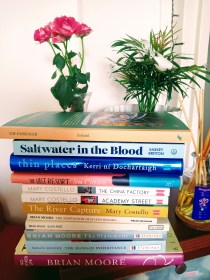
Reading Ireland Month 2022 TBRThough I read less than half the number of books of 2021, I did manage to read 30 books from 13 countries, a third Irish authors, thanks to Cathy’s annual Reading Ireland month in February. I’m looking forward to more Irish reads this year; there were many promising reads published in 2022 that I wasn’t able to get to.

Sadly I missed Women in Translation month in August, though I managed to read six books in translation, two making my top reads of the years.

2023 will definitely be better for translations, since I’ve taken out a Charco Press subscription, giving me the opportunity to read a few Latin American contemporary authors from Argentina, Brazil, Bolivia, Peru, Colombia and Mexico.
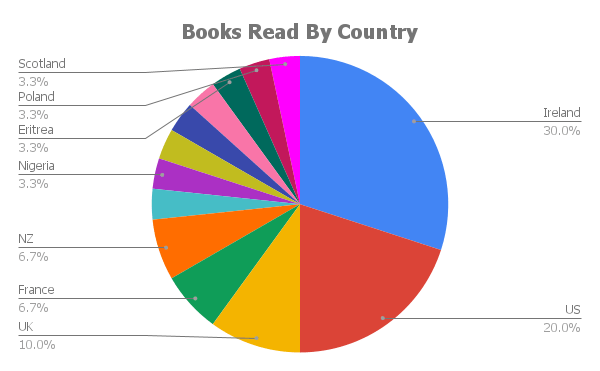
Books Read By Country

Non-Fiction, A Rival to the Imagination

As far as genre went, there was a much greater balance between fiction and non-fiction than in previous years, due to having been in the mood to read a lot more non-fiction this year.
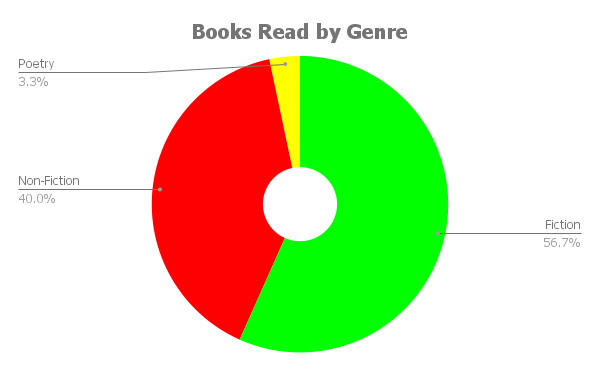
Books Read by Genre

And so to the books that left the most significant impression, where I have reviewed them I’ll create a link in the title.

One Outstanding Read

Was there one book that could claim the spot of Outstanding Read of 2022? This wasn’t easy to decide given most of my reading occurred in the beginning of the year, but as I look over the titles, there was one book that I remember being pleasantly surprised by and having that feeling of it not wanting to end, and being laugh out loud funny in places.

It is one of those novels, or perhaps I ought to say she is one of those writer’s whose works I wouldn’t mind being stuck on a desert island with, more than just a story, they open your mind to other works, stimulate curiosity and have a particular sensibility that reassures this reader that the novel will endure.

“I absolutely loved it and was surprised at how accessible a read it was, given this is an author who recently won the Nobel Prize for Literature. Her power to provoke by telling a story is only heightened by the suggestion on the back cover that her ideas presented here caused a genuine political uproar in Poland.” – extract from my review

So here it is, my One Outstanding Read of 2022 was :

Olga Tokarczuk’s Drive Your Plow Over the Bones of the Dead translated from Polish by Antonia Lloyd-Jones

In no particular order, here are my top 5 fiction and non-fiction reads for 2022.

Top 5 Fiction
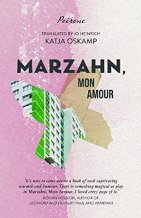
Peirene Press German Literature Women in TranslationMarzhan, mon amour, Katja Oskamp (Germany) translated by Jo Heinrich

– What a joy this Peirene novella was, one of those rare gems of what I perceived as uplifting fiction, until I lent it to a friend who is a nurse, who DNF’d it, making me realise that what can be delightful for one reader can be quite the opposite for another, in this case, someone who had heard too many sad stories from patients, requiring an empathetic barrier, to endure the overwhelm it creates.

Marzhan is a much maligned multi-storied, communist-era, working class quarter in East Berlin, where our protagonist, a writer, leaves her career behind to retrain as a chiropodist, due to the sudden illness of her husband. In each chapter, we meet one of her clients, members of the local community, many who have lived there since its construction 40 years earlier. A chronicler of their personal histories, we witness the humanity behind the monolith structures of the housing estates, the connections created between the three women working in the salon and the warmth and familiarity they provide to those who cross their threshold. A semi-autobiographical gem.
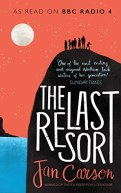
Northern Irish Literature novellaThe Last Resort, Jan Carson (Northern Ireland)

– Another novella, this was another delightful, often hilarious story, with well constructed characterisation. Set in a fictional Seacliff caravan park in Ballycastle on the North Coast of Ireland, a group gather to place a memorial bench on the cliff top for a departed friend.

Each chapter is narrated by one of 10 characters, revealing their state of mind and concerns, while exploring complex family dynamics, ageing, immigration, gender politics, the decline of the Church and the legacy of the Troubles.  A sense of mystery and suspense, pursued by teenage sleuth Alma, lead to the final scene, the cliff-hanger.  A delightful afternoon romp.

Ukraine historical fictionI Will Die in a Foreign Land, Kalani Pickhart (US) (Set in Ukraine 2013/14) (Historical Fiction)

– Set in Ukraine in 2014, during the Euromaiden protests, four characters with different backgrounds (two outsiders, two protestors) cross paths, share histories, traverse geography and represent different perspectives in this Revolution of Dignity, the origin of a conflict that endures today.

The narrative is gripping, informative, well researched and had me veering off to look up numerous historical references. Moved by the documentary, Winter on Fire: Ukraine’s Fight for Democracy, Pickhart was struck by the fighting spirit of the Ukrainian people against their government and the echo of the past, when the bells of St. Michael’s Golden-Domed Monastery rang for the first time since the Mongols invaded Kyiv in 1240AD.

“Though it is novel told in fragments, through multiple narratives and voices, there is a fluidity and yet the plot moves quickly, as the connection(s) between characters are revealed, their motivations and behaviours come to be understood and revelations acknowledge the pressures and complexities of life in this country, some things universal, others unique to their history and geography.”

Dublin One City One Read Irish LiteratureNora, A Love Story of Nora Barnacle & James Joyce, Nuala O’Connor (Ireland) (Historical Fiction)

– Absolutely loved it. I was instantly transported into Nora’s world, seeing their life and travels, the many challenges they faced and the unique connection that kept them together throughout. I knew nothing of their lives before picking this up during the One Dublin, One Book initiative in April 2022. Knowing now all the many places they lived and how Europe allowed them to live free of convention, I’m curious to encounter the stories Joyce created while Nora was keeping everything else together for him.

It is incredible that Nuala O’Connor managed to put together such a cohesive story given the actions of Joyce’s formidable grandson/gatekeeper Stephen, who did all he could to prevent access or usage of the family archive, including the destruction of hundreds of letters, until his death in 2020.

In 2023 the One Dublin, One Book read will be The Coroner’s Daughter by Andrew Hughes.

London Homesickness New Zealand writers abroadTowards Another Summer, Janet Frame (NZ) (Literary Fiction)

–  What a treat this was, one of Janet Frame’s early novels written in the 1960’s when she was living in London, one she was too self conscious to allow to be published, so it came out posthumously in 2007. Written long before any of her autobiographical work, it clearly was inspired by much of her own experience as a writer more confident and astute with her words on the page than social graces.

In the novel, a young NZ author living in a studio in London, is invited to spend a weekend with a journalist and his family, something she looks forward to until beset by anxiety and awkwardness. Her visit is interspersed with reminiscences of her homeland, of a realisation of her homesickness and desire to return. She imagines herself a migratory bird, a kind of shape-shifting ability that helps her to be present, absent, to cope with the situation and informs her writing.

“A certain pleasure was added to Grace’s relief at establishing herself as a migratory bird. She found that she understood the characters in her novel. Her words flowed, she was excited, she could see everyone and everything.”

Top 5 Non-Fiction
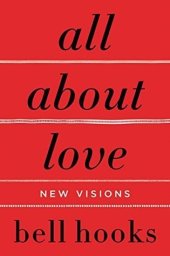
nonfiction essays love effect of domination patriarchy black woman perspectiveAll About Love: New Visions, bell hooks (US)

– What a joy it was to discover the voice and beautifully evolved mind of bell hooks in these pages.

Her perspective is heart lead, her definition of love leaves behind conditioned perceptions of romance and desire and the traditional roles of carer, nurturer, provider – and suggests that it might be ‘the will to do for oneself or another that which enables us to grow and evolve spiritually’ love becomes a verb not a noun.

It is a way of looking at this least discussed human emotion and activity that fosters hope and encouragement, in an era where we have been long suffering the effects of lovelessness under a societal system of domination.

essays Sara Baume Colum McCann Europa EditionsThe Passenger – Ireland (Essays, Art, Investigative Journalism)

– This collection of essays, art and information about contemporary Ireland is an underrated gem! Europa Editions noticed my prolific reading around Ireland after I read Sara Baume’s wonderful A Line Made By Walking and mentioned that she was one of the contributors to this stunning collection.

I planned to read a couple of essays each day, but it was so interesting, I kept reading until I finished it. Brilliant!

Across 11 essays, the collection explores the life and times of modern Ireland, with contributions from Catherine Dunne and Caelinn Hogan – discussing the decline of the Church’s influence, the dismantling of a system designed to oppress women and a culture of silence in The Mass is Ended; William Atkins writes a fascinating essay on the Boglands; Manchan Magnan shares how the contraction of a small local fishing industry heralded the decline and disappearance of much of the Irish language in An Ocean of Wisdom; Sara Baume writes of Talismans and Colum McCann of nostalgia in Everything That Falls Must Also Rise.

The BBC’s former political editor in Northern Ireland Mark Devenport, writes about a region hanging in the balance, the UK and the EU, torn between fear and opportunity and the distinct feeling of having been abandoned in At The Edge of Two Unions: Northern Ireland’s Causeway Coast; while Lyra McKee’s gut-wrenching essay Suicides of the Ceasefire Babies investigates the troubling fact that since the signing of the Good Friday Agreement in 1998, more people in Northern Ireland have committed suicide than were killed during the 30 year conflict.

“Intergenerational transmission of trauma is not just a sociological or psychological problem, but also a biological one.”

And more, a brilliant essay on citizen assemblies, another on Irish music, rugby and a less enchanting one that explores locations in The Game of Thrones.
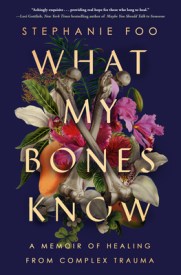
What My Bones Know Stefanie FooWhat My Bones Know, A Memoir of Healing from Complex Trauma, Stefanie Foo (US) (Memoir)

– This was a gripping memoir I couldn’t put down. I read it for reference purposes, interested in the solutions she finds for healing complex PTSD. It is well researched, while each section contributes to the arc of a comprehensive and compelling narrative.

Stefanie Foo had a dream job as an award-winning radio producer at This American Life and was in a loving relationship. But behind her office door, she was having panic attacks and sobbing at her desk every morning.  After years of questioning what was wrong with herself, she was diagnosed with complex PTSD – a condition that occurs when trauma happens continuously, over the course of years.

She becomes the subject of her own research, her journalist skills aiding her to interview those responsible for various discoveries and healing modalities, gaining insights into the effect and management of her condition, eventually reclaiming agency over it.

“Every cell in my body is filled with the code of generations of trauma, of death, of birth, of migration, of history that I cannot understand. . . . I want to have words for what my bones know.”
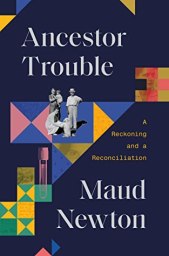
Ancestor Trouble Maud NewtonAncestor Trouble, A Reckoning & A Reconciliation, Maud Newton (US) (Memoir/Genealogy)

– This was a fascinating read and exploration, at the intersection between family history and genetics; the author sets out to explore the nurture versus nature question with the aid of DNA genetic reports and stories both documented about and passed down through her family. Some of those stories and people she was estranged from create a concern/fear about what she might inherit.

Maud Newton explores society’s experiments with eugenics pondering her father’s marriage, a choice he made based on trying to create “smart kids”. She delves into persecuted women, including a female relative accused of being a witch, and discovers a clear line of personality inclinations that have born down the female line of her family. A captivating and highly informative read.
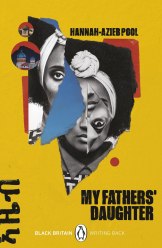
My Fathers Daughter Hannah Azieb PoolMy Father’s Daughter, Hanna Azieb Pool (UK/Eritrea) (Adoptee Memoir)

– A memoir of the Eritrean-British journalist, Hannah Azieb-Pool, who returns to Eritrea at the age of 30 to meet her family for the first time. In her twenties, Azieb-Pool is given a letter that unravels everything she knows about her life. Adopted from an orphanage in Eritrea, brought to the UK, it was believed she had no surviving relatives. When she discovers the truth in a letter from her brother – that her birth father is alive and her Eritrean family are desperate to meet her, she is confronted with a decision and an opportunity, to experience her culture origins and meet her family for the first time.

It’s a story of uncovering the truth, of making connections, a kind of healing or reconciliation. Ultimately what has been lost can never be found. It’s like she was able to view an image of who she might have been and the life she may have had, and while viewing it was cathartic, it is indeed an illusion, a life imagined, one never possible to live.

 *  *  *  *  *  *

Have you read any of these books? Anything here tempt you for reading in 2023?
Happy Reading All!

Hamnet by Maggie O’Farrell

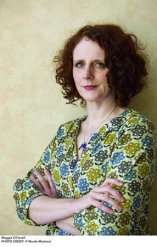
Hamnet was the winning novel of the Women’s Prize For Fiction in 2020 and won the fiction prize at the National Book Critics Circle Awards (2020). It was author Maggie O’Farrell’s eighth novel.

Behind Every Great Man…Is An Often Untold Story

Anne Hathaway Shakespeares wife HamletSet in 1580’s Stratford, Warwickshire, the novel is about the meeting of two young people, their respective families, the life they create and the effect their twin children have on it.
Though the husband will become a famous playwright and name one of his plays after the son they lose, this isn’t a story that centres around him or his work, neither is it really about the son – those names are more like the bright lights that make us curious to see what the fuss is about.

Delightfully, it’s all about Agnes.

“If you ask someone what they know about Shakespeare’s wife, you’ll probably receive one of two answers. Either: he hated her. Or: she tricked him into marriage. Historians and biographers and critics have for a long time inexplicably vilified and criticized her, creating a very misogynistic version of her. I wanted to persuade people to think again, to not rush to conclusions.

We are so accustomed to calling her ‘Anne Hathaway’ but her father’s will clearly names her as ‘Agnes’. That was an electrifying, defining moment in the writing of the book. In giving her what is presumably her birth name, I’m asking readers to discard what we think we know about her and see her anew.” Maggie O’Farrell

Twin Everything

I expected to be gripped early on, so was surprised that it took a while to get into sync with the very descriptive, present tense, third person, omniscient narrative perspective. Initially it felt like listening to someone -while looking through a camera – describe in minute detail every single detail in the frame as it was moving quickly forward. 

It’s written in a dual narrative timeline in alternate chapters; the year that the twins fall ill and the year that these young parents meet. It is divided into two parts, Part 1 takes place before the death of Hamnet and the shorter Part 2, the aftermath.

The initial scene puts us in the eyes of this boy Hamnet as he rushes through his home and that of his grandparents, looking for someone, anyone, due to the sudden onset of deathly pestilence in his twin sister Judith.

Love Always Finds A Way

As the chapters switch between Hamnet’s alarm given the pending emergency and the year his parents met, we get to know his father, a Latin tutor, son of a glove maker/tyrant and his mother Agnes, a farmer’s daughter, living with her disapproving stepmother.

These young people become each others refuge from family situations they’d both like to escape. Agnes is highly intuitive, has an in-depth knowledge of herbalism and possesses a kestrel the local priest gave her. She is unlike other young women, self-possessed, ‘knowing’.

“Some have asked Susanna how her mother does it. They have sidled up to her in the market or out in the streets to demand how Agnes divines what a body needs or lacks or bursts with, how she can tell if a soul is restive or hankering, how she knows what a person or a heart hides.”

The novel traces their relationship, marriage and the sacrificial act that came from her ability to perceive what was best for her husband (facilitating his venturing to London to find and pursue his purpose) and what best for her three children, while highlighting the tragic demise of their son, a turning point in their relationship.

“She, like all mothers, constantly casts out her thoughts, like fishing lines, towards her children, reminding herself of where they are, what they are doing, how they fare.”

Even in the boys passing there is something mystical in the way it is rendered. The boy is a twin, but also the son of a woman in touch with nature and with a feeling for ‘the other side’. What Hamnet did to save his sister comes of both those mysteries.

How Women Shape The Lives of Others

Forget that the playwright Shakespeare is a character in this novel and read it for the unique individuals they might have been, as ordinary people in a community, coming together against the odds. I really enjoyed that this was so much more about Agnes and that she had gifts she seemed able to live with and use as a mature woman, without persecution. A result and reward of a difficult childhood, after the untimely death of her own mother.

“She grows up feeling wrong, out of place, too dark, too tall, too unruly, too opinionated, too silent, too strange. She grows up with the awareness that she is merely tolerated, an irritant, useless, that she does not deserve love, that she will need to change herself substantially, crush herself down if she is to be married. She grows up, too, with the memory of what it meant to be properly loved, for what you are, not what you ought to be.”

By deliberately not mentioning the husband’s name, we imagine this couple encountering each other, evolving together, moving apart and coming back together, for nothing can both unite and divide a couple quite like the grief of losing a child.

“What is given may be taken away at any time. Cruelty and devastation wait for you around corners, inside coffers, behind doors; they can leap out at you at any moment, like a thief or a brigand. The trick is to never let down your guard. Never think you are safe. Never take for granted that your children’s hearts beat, that they sup milk, that they draw breath, that they walk and speak and smile and argue and play. Never for a moment forget that they may be gone, snatched from you, in the blink of an eye; borne away from you like thistledown.”

A novel of an auspicious pairing of souls, of longing and grief, of sacrifice and regret, I really enjoyed it after the slow start, despite the narrative perspective at times keeping me at a distance from the characters.  O’Farrell does such a brilliant job in re-imagining this much maligned character, it makes you want to read and know much more about Agnes. About the women whose lives were rarely scribed.

Maggie O’Farrell, Author

Hamnet The Marriage Portrait Shakespeares WifeMaggie O’Farrell is a Northern Irish novelist, now one of Britain’s most acclaimed and popular contemporary fiction authors whose work has been translated into over 30 languages. Her debut novel After You’d Gone won the Betty Trask Award and The Hand That First Held Mine the Costa Novel Award (2010).

She has written 9 novels and a superb memoir, I’ve reviewed here: I Am, I Am, I Am, Seventeen Brushes With Death.

Her latest book set in Renaissance Italy, The Marriage Portrait, tells the story of a 16-year-old duchess and her fateful marriage to the Duke of Ferrara – based on the short life of Lucrezia de’ Medici.

Towards Another Summer by Janet Frame

This novel grew on me the more I read it and the less I expected from it.

A Kiwi Writer In London

London Homesickness New Zealand writers abroadThe story takes place over one weekend when a young New Zealand novelist named Grace Cleave, who is living in London, takes a train to spend the weekend with Philip, a journalist, his wife and two young children. She has escaped the city for a while after accepting an invitation to visit the family following an interview about her work and ambitions.

She is the author of a few published novels, a writer with an expanding reputation, living in a small, cold, uninspiring flat, moving between her writing desk, her therapist and a nagging yearning to be elsewhere. 

Keen to take up the opportunity to escape and the familiarity the visit may offer (they have a connection to her home country), she is disappointed to be confronted by dreadful anxiety once she arrives. Her tendency to analyse everything and to express herself more articulately in her thoughts (or on paper) than in actual conversation makes her feel shameful.  She has been invited in her capacity as a writer; she feels sure they expect more from her and sees herself as a disappointment, not measuring up to the perception created by her talent.

Grace was stricken with the terrible certainties and uncertainties of speech…The ritual of spoken communication is so firmly accepted that few people question it or dare to rearrange it. If you look towards someone, speak to that person, saying You, you, you, then what you say refers to that person; it’s all so simple.
Not being a human being and not being practiced in the art of verbal communication, Grace was used to experiencing moments of terror when her mind questioned or rearranged the established ritual; when commonplace certainties became, from her point of view, alarming uncertainties.

Homesickness

New Zealand landscape cabbage tree Janet FrameDuring the visit, many instances, objects and mutterings remind her of her own faraway home, memories of childhood intercede and brilliant metaphors come to her fully formed. It was as if she were being filled with future content and yet the contrast with how she came across to others was painful for her to witness.

Filled with longing born out of the loneliness of her self-imposed exile, she hoped to fill that void by being with someone who valued her work and understood her connection to a landscape elsewhere.

“So I, a migratory bird, am suffering from the need to return to the place I have come from before the season and sun are right for my return. Do I meet spring summer or winter? Here I live in a perpetual other season unable to read in the sky, the sun, the temperature, the signs for returning. Is it homesickness – ‘I know a place whereon…’ the matagouri, the manuka, the cabbage tree grow…”

A Migratory Bird

In her dream life, day or night, there are moments when Grace thinks of herself as a migratory bird.  It adds something to her work, to be able to retreat into this imagined form and see things from another perspective.

“A certain pleasure was added to Grace’s relief at establishing herself as a migratory bird. She found that she understood the characters in her novel. Her words flowed, she was excited, she could see everyone and everything.”

Semi-Autobiographical

It is all the more brilliant, having learned that it was published posthumously, that it is semi autobiographical, though written twenty years before any of her own autobiographical works. She set the novel aside referring to it as ’embarrassingly personal’. The character of Philip was based on a Guardian journalist who had interviewed her.

“I matter. I fly alone, apart from the flock, on long journeys through storm and clear skies to another summer. Hear me!”

Highly recommended for Janet Frame fans.

migratory bird, get on your bird, Janet Frame Towards Another Summer

Photo by Flo Maderebner on Pexels.com

Janet Frame, Author

Janet Frame died on January 29 2004 at the age of 79. She wrote novels, poems, and a three-volume autobiography that were read and admired worldwide. She won many awards and was short-listed for the Nobel Prize in Literature.

Further Reading

‘a sharp drama, of fleeing and missing, home’ – Guardian review by Catherine Taylor

Short Biography of Janet Frame – by Patrick Evans Dictionary of New Zealand Biography

The Janet Frame Collection, NZ On Screen – a collection of films and material relating to Janet Frame

Wrestling With the Angel – a brilliant biography written by esteemed historian Michael King


Booker International Prize Shortlist 2022

In my recent absence, six translated novels have been shortlisted for the International Booker Prize including book from six languages: Korean, Norwegian, Japanese, Spanish, Hindi and Polish.

Wildly original works of literature that will captivate readers, this year’s shortlisted books all explore trauma, whether on an individual or societal level. 

Translated literary fiction

Summaries of the novels are below, with the judges comments. The winners of the prize will be named on 26 May 2022.

The Shortlist

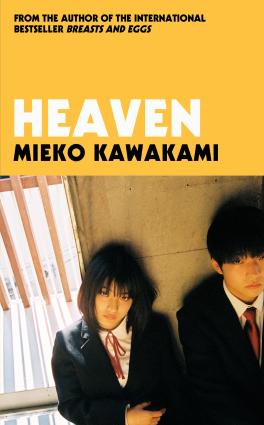
Heaven by Mieko Kawakami (Japan) Translated by Sam Bett, David Boyd

HeavenTold through the eyes of a 14-year-old boy subjected to relentless bullying, Heaven is a haunting novel of the threat of violence that can stalk our teenage years.

Instead of putting up resistance, the boy suffers in complete resignation. His sole ally is a girl classmate, similarly outcast and preyed upon by the bullies. They meet in secret to take solace in each other’s company, unaware that their relationship has not gone unnoticed by their tormentors.

Mieko Kawakami’s deceptively simple yet profound work stands as a testament to her remarkable literary talent. Here, she asks us to question the fate of the meek in a society that favours the strong, and the lengths to which even children will go in their learnt cruelty.

An intense, claustrophobic novel, Heaven uses its tale of middle school bullying to enact
Nietzsche’s critique of morality.

Elena Knows by Claudia Piñeiro (Argentina) Translated by Frances Riddle

Elena KnowsA unique story that interweaves crime fiction with intimate tales of morality and the search for individual freedom.

After Rita is found dead in the bell tower of the church she used to attend, the official investigation into the incident is quickly closed. Her sickly mother is the only person still determined to find the culprit.

Chronicling a difficult journey across the suburbs of the city, an old debt and a revealing conversation, Elena Knows unravels the secrets of its characters and the hidden facets of authoritarianism and hypocrisy in our society.

“Claudia Piñeiro’s short and deeply felt novel, evokes the loneliness of ageing and the uncertainty of memory. Frances Riddle’s brutal yet sparing translation suggests the shadows and light of noir without ever eclipsing the very human tragedy at the core of the book.”

A New Name: Septology VI-VII by Jon Fosse (Norway) Translated by Damion Searls

A New NameJon Fosse delivers both a transcendent exploration of the human condition and a radically ‘other’ reading experience – incantatory, hypnotic, and utterly unique.

Asle is an ageing painter who lives alone on the coast of Norway. His only friends are his neighbour, Åsleik, a traditional fisherman-farmer, and Beyer, a gallerist who lives in the city. There, in Bjørgvin, lives another Asle, also a painter but lonely and consumed by alcohol. Asle and Asle are doppelgängers – two versions of the same person, two versions of the same life, both grappling with existential questions.

Written in melodious and hypnotic ‘slow prose’, this is the final instalment of Fosse’s Septology, the major prose work by ‘the Beckett of the twenty-first century’ (Le Monde).

Tomb of Sand by Geetanjali Shree (India) Translated by Daisy Rockwell

Tomb of SandAn urgent yet engaging protest against the destructive impact of borders, whether between religions, countries or genders.

In northern India, an 80-year-old woman slips into a deep depression at the death of her husband, then resurfaces to gain a new lease of life. Her determination to fly in the face of convention confuses her bohemian daughter, who is used to thinking of herself as the more ‘modern’ of the two. To her family’s consternation, Ma then insists on travelling to Pakistan, confronting the unresolved trauma of her teenage experiences of Partition.

Despite its serious themes, Geetanjali Shree’s light touch and exuberant wordplay ensures that Tomb of Sand remains constantly playful – and utterly original.

A loud and irresistible novel.

The Books of Jacob by Olga Tokarczuk (Poland) Translated by Jennifer Croft

The Books of JacobOlga Tokarczuk’s portrayal of Enlightenment Europe on the cusp of precipitous change, searching for certainty and longing for transcendence.
In the mid-18th century, as new ideas begin to sweep the continent, a young Jew of mysterious origins arrives in a village in Poland. Before long, he has changed not only his name but his persona; visited by what seem to be ecstatic experiences, Jacob Frank casts a charismatic spell that attracts an increasingly fervent following.

In the decade to come, Frank will traverse the Hapsburg and Ottoman empires as he reinvents himself again and again. He converts to Islam and then Catholicism, is pilloried as a heretic and revered as the Messiah, and wreaks havoc on the conventional order with scandalous rumours of his sect’s secret rituals and the spread of his increasingly iconoclastic beliefs.

Cursed Bunny by Bora Chung (South Korea) Translated by Anton Hur

Cursed BunnyBora Chung presents a genre-defying collection of short stories, which blur the lines between magical realism, horror and science fiction.
Korean author Bora Chung uses elements of the fantastic and surreal to address the very real horrors and cruelties of patriarchy and capitalism in modern society. Anton Hur’s translation skilfully captures the way Chung’s prose effortlessly glides from the terrifying to the wryly humorous. Winner of a PEN/Haim Grant.

While the stories in Cursed Bunny by Bora Chung blend elements of horror, fantasy and the surreal, each is viscerally rooted in the real fears and pressures of everyday life.

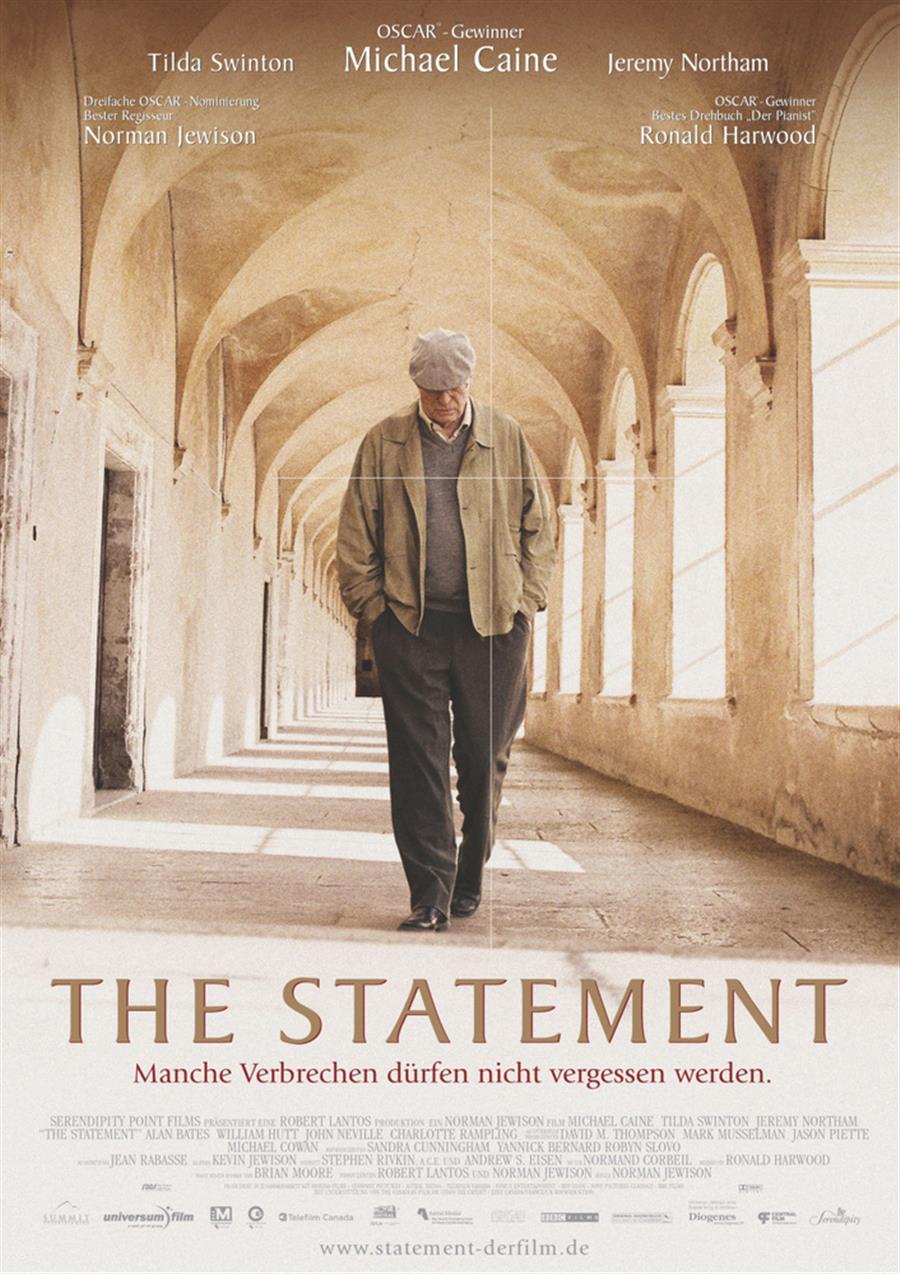
The Statement by Brian Moore (1995)

Political thriller set in France war crimesMuch like his final novel The Magician’s Wife (1997) this is another of Brian Moore’s novels, that is more than just a political thriller, it is a work of historical fiction that brings together both his lifetime pursuit for challenging the Catholic Church  (here, for harbouring a fugitive war criminal) and his curiosity for elements of a country’s history that often go undetected by the world at large.
The Magician’s Wife came about, after the random spotting of a historical fact in the notes of  The Correspondence of Gustave Flaubert and George Sand that mentioned a famous French magician sent on a mission to Algeria by Napoleon II to advance the cause of mal-intended colonial interests, he was to perform to locals to undermine their faith in their marabout (mystical men).

A Chapter in France’s Dark History

Brian Moore 1995 novel to film Tilda Swinton

In The Statement, published in 1995, he writes a story of Pierre Brossard, a French fugitive on the run, pursued by an unknown group of assassins and the gendarmerie, sheltered by various monasteries and clergy. Having previously been condemned to death in absentia by French courts for the murder of 14 Jews during the war, he has been in hiding for over 40 years.

The book felt made for its script conversion, which Moore no doubt had in mind, although its dialogue often reads more like rants against the secretive and hypocritical nature of his religious characters, rather than using the opportunity for his fugitive to be confronted by those who have taken issue with his relative freedom.

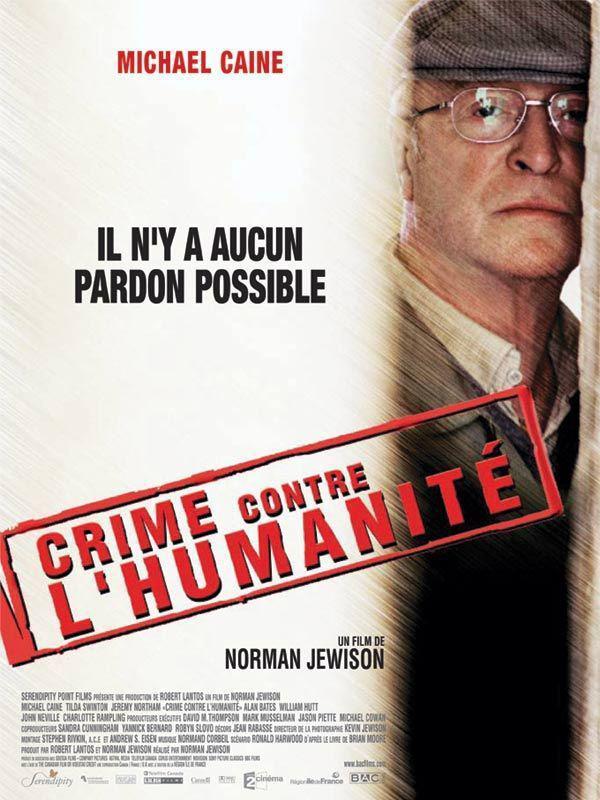
While the story itself races through the south of France, from Salon de Provence, through Aix to Nice and Villefranche, (made into a film in 2004 featuring Michael Caine and Tilda Swinton); it is the underlying history that had me ‘stop and start’ reading, looking up the many references he uses or alludes to.

Like the use of the word milice (his protagonist the fictional Brossard, was milice) a reference he does not translate from the French, a word I was not familiar with, but one that lead me down a labyrinth of links related to the military history of France during World War II. At the end of the war, in August 1944 a court martial was held against 98 milice francaise of whom 76 were condemned to death by firing squad. They rest in unmarked graves at Le Grand Bornand.

The First Frenchman Ever Convicted of Crimes Against Humanity

Crime contre l'humanite Brian MooreIn real life, Paul Tourvier (1915-1996),a former officer of Vichy France, was a wanted war criminal condemned in absentia for treason and collusion with the Nazis in September 1946 and given the death sentence. Though arrested in 1947 for armed robbery he escaped and evaded capture for 40 years.

In 1966 his death sentence could no longer be upheld due to the statute of limitation and lawyers applied for a pardon. He was given this controversial pardon in 1971 by President Georges Pompidou, but remained in hiding while a new effort was made to charge him with crimes against humanity. Eventually captured, tried and convicted to a life sentence in 1994, he died two years later in prison at the age of 81.

One of the assasins in the novel, referred to only as T is the son of an Algerian Harki, another buried subject that Alice Zeniter researched in her family inspired work of historical fiction l’art de perdre (The Art of Losing).

Brian Moore described his novel The Statement as “a novel with a knife in it” – it made me wonder, who exactly he had the knife out for. Openly referring to that dark, suppressed element of French history and war crimes perpetrated by Vichy France, it pits the French police as pro-Pétain (Chief of State, Vichy France) against The gendarmerie, sympathetic to the Resistance and De Gaulle, adding in hypocritical, anti-Semitic attitudes of the Catholic church in France. But a quick glimpse into his own family history, reveals that it was more than just the Church he took issue with.

Moore’s Personal Vendetta

Living in the south of France, I noticed detail that indicated knowledge and some that was skewed, like the 13100 postcode for Salon de Provence, when it is the postcode for Aix en Provence; it made me go back and look at when it was that Moore spent time in France that gave him both that intimate knowledge and personal interest in the history, to be still writing about it just five years before his death in 1999. So, I digress.

Northern Ireland TroublesMoore was born in Belfast in August 1921, shortly after the partition of Ireland that created the southern Free State, eventually the Republic of Ireland. His parents and childhood were traditional middle class and his early years relatively protected from the sectarian conflict violence that often erupted around them, despite being a member of the Catholic minority.
Setbacks in adolescence led to his open rejection of the Church and the stifling, provincial, class -bound Belfast atmosphere, including his parents’ religious and ideological affiliations.

Celia Nichols writes in the The Canadian Journal of Irish Studies (CJIS):

Some conservative Irish Catholics, Dr Moore among them, initially supported Hitler’s march across Europe as a protest against the British Empire. Yet Brian Moore, in his independent pursuit of intellectual stimulation joined socialist youth groups, read modern authors such as James Joyce and W.H. Auden, and cultivated interests detached from the predominant Catholic ethos he had been subjected to both at school and at home.

He joined the war effort in 1939 and his knowledge of French had him willingly posted to North Africa and then to posts in Naples, the Cote d’Azur and Paris as the Allied forces advanced. These early travels and the people of many nationalities he would have encountered, contributed to his first hand knowledge, unique perspective, continued curiosity and audacious daring, in terms of the subjects he was willing to explore and confront through his ficiton.

Dedicated to “those who stayed”, “those who left” and “all those who were lost”

Like the young boy and his family, in the excellent film Belfast, Brian Moore became one of those who left, but the effect of his upbringing meant that Belfast was somehow always present, no matter what the subject of his novels.

French Presidential Elections 2022

French Presidential elections 2022

Photo by Atypeek Dgn on Pexels.com

It’s an interesting and strange tale to be reading this, as France prepares to elect a new President in the coming months, with first round voting on April 10 and the final vote on April 24, 2022 at a time when politics has become more divisive than ever.

I’m left pondering Moore’s own prosaic statement:

“I don’t think novels do change the world.”

They may not change the world, but they can lead us to look further than storytelling to understand the real life tales they are inspired by, that might serve as a warning.

If the true writer is an outsider, few have perfected this role as subtly as Brian Moore, whose finest work was always marked by his surest personal qualities: intelligence, curiosity and an abiding sense of justice. – extract from an article by Eileen Battersby, Irish Times

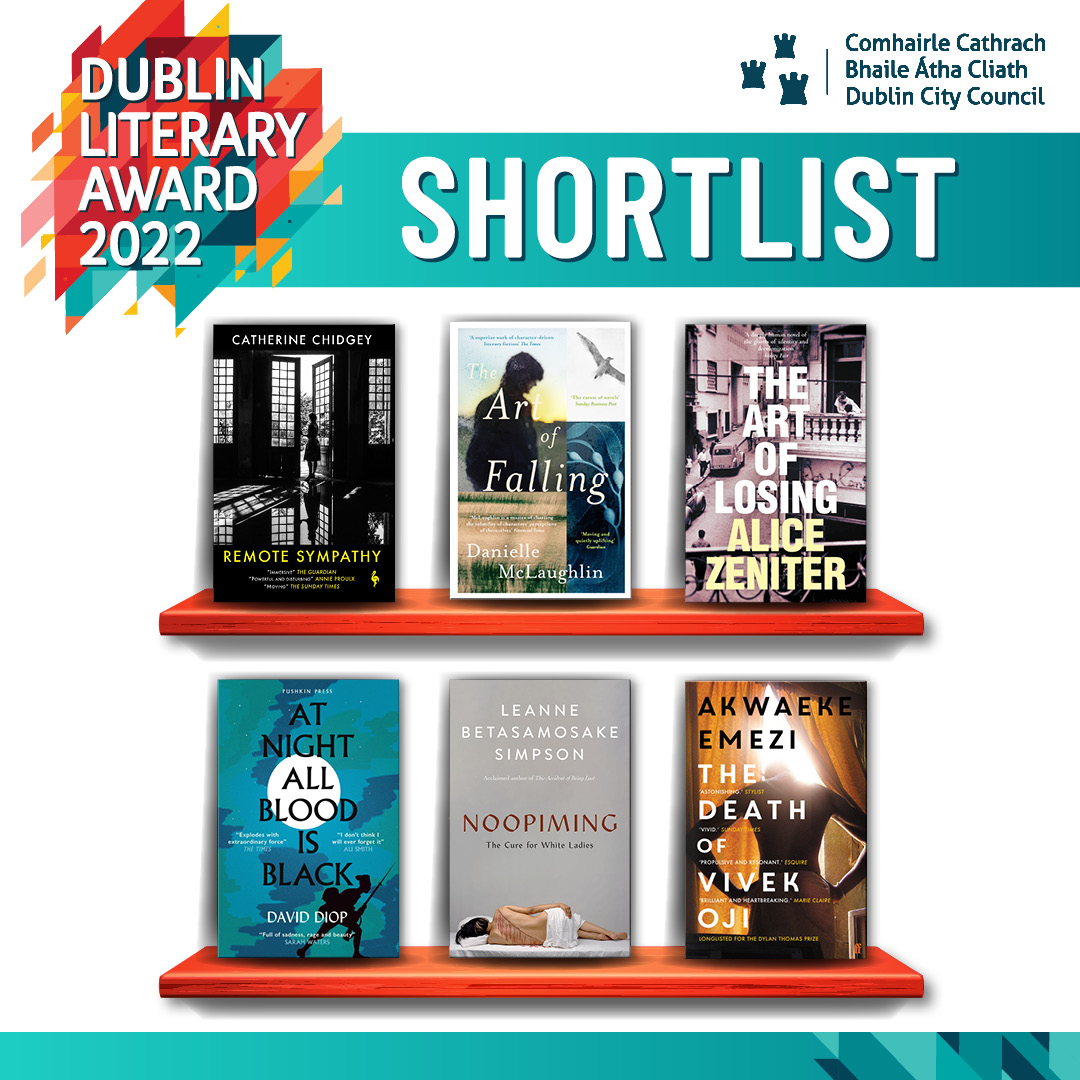
Dublin Literary Award Shortlist 2022

From a longlist of 79 novels, including 30 novels in translation, the committee has shortlisted six novels. These novels were all nominated by libraries around the world. Celebrating 27 years, this award is the world’s most valuable annual prize for a single work of fiction published in English, worth €100,000 to the winner.

The list includes two novels in translation and a debut novelist, with authors from France, Ireland, Canada (Michi Saagiig Nishnaabeg, Alderville First Nation), New Zealand and Nigeria.

Below are the shortlisted titles with judges comments and the two I have read linked to my reviews:

Dublin Literary Award shortlist 2022
Remote Sympathy by Catherine Chidgey (New Zealander) Published by Europa Editions
Nominated by Auckland Libraries, New Zealand and Dunedin Public Libraries, New Zealand.

Buchenwald Weimar WWII novel Germany – New Zealander Catherine Chidgey opens a new chapter of Holocaust literature as she tells the story of Greta Hahn, who is the wife of a concentration camp manager and doesn’t know – then doesn’t want to know – what goes on behind the fence.  When her Nazi husband becomes convinced that only a prisoner can save Greta from dying of cancer, Dr. Weber enters her parallel universe at the edge of the camp.  The prisoner-doctor treats Greta because he hopes it will help his Jewish wife and their young daughter who have been forcibly separated from him and sent further East.  Slowly he bursts Greta’s bubble of oblivion and she is forced to confront the horror to which she has been an accomplice.
Chidgey expertly choreographs this desperate dance of death as the Allied liberating army comes closer and closer, and surviving long enough to be freed becomes the ultimate challenge. Remote Sympathy, harrowing but ultimately hopeful, is a passionate warning against the dangers of our wilful ignorance in the face of oppression which is, sadly, of urgent relevance today, and every day.

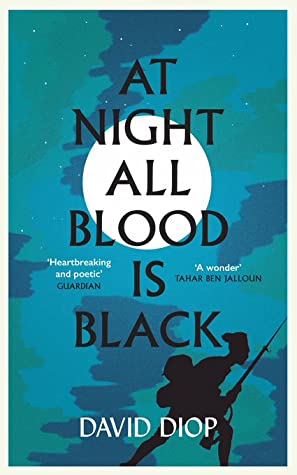
At Night All Blood is Black by David Diop (French) Translated from the French by Anna Moschovakis  Published by Pushkin Press Nominated by Bibliothèque de Reims, France

At Night All Blood is BlackAt Night All Blood is Black is a carefully crafted, heart-wrenching, passionate, and engaging story about the insanity of war and its devastating toll on humanity. Told from the perspective of Alfa Ndiaye, a 20-year-old Senegalese who, like his friend, Mademba Diop and many other young West Africans were conscripted by European imperial powers – in this case, France – to fight in World War I. The novel raises fresh concerns about the issues of war, humanity, identity, sexuality, racism, violence, and colonialism as it explores strong emotions like love, apathy, fear, and indignation towards war.  The plot hinges around the gruesome death in battle of Mademba, and Ndiaye’s refusal to carry out the “mercy killing” for his friend.  From that point onward, Ndiaye begins to spiral towards insanity, consciously becoming the “dämme”, “demon” or “savage” his European trench-mates think him to be.

Alternately horrific and lyrical, the novel moves back and forth between the Senegalese village of Ndiaye’s youth and the brutal chaos of the trenches.  For such a slim book, Diop’s novel manages to attain a kind of epic scale, sweeping back and forth between Africa and Europe, between world-historical events and village life.  Holding all of this together is the narrative voice of Ndiaye.  Diop combines traditional African tropes with modern literary devices, giving the novel a rhythmic quality, as Ndiaye repeats phrases like “God’s truth”, “more-than-brother”, “I swear to you”, “I know, I understand”, whispering gently in our ears as he carries us into the dark heart of twentieth-century history.

The Death of Vivek Oji by Akwaeke Emezi (Nigerian) Published by Faber & Faber
Nominated by Helsinki City Library, Finland

Akwaeke Emezi trans literatureAkwaeke Emezi’s novel opens with a chapter of only one sentence: “They burned down the market on the day Vivek Oji died.”  From that first sentence, we are immersed in contemporary Nigeria in all of its complexity, where tight family and community bonds are woven into the submerged stories of gay, bisexual and transgender people, and where groups such as the ‘Nigerwives’ (foreign-born wives of Nigerian men) form one of the cultures that make up the mosaic of Nigerian society.  Emezi’s novel manages to balance an unflinching realism with something of the quality of a folktale or a myth.  On one level, this is a very directly told story of two people coming of age and grappling with sexualities that struggle to find expression.
As readers, we encounter these lives almost like “a stack of photographs” being handed around at a wake (to use an image from the novel).  At the same time, The Death of Vivek Oji is shot through with mythic elements.  Oji is born on the day of their grandmother’s death, and there is a sense in which her spirit inhabits the person they will become.  The burning market foretold in that opening line is both an entirely credible part of the novel’s world, and a kind of symbolic crucible, out of which a new identity is born.  “I was born and I died”, Oji tells us at the novel’s end.  “I will come back.”

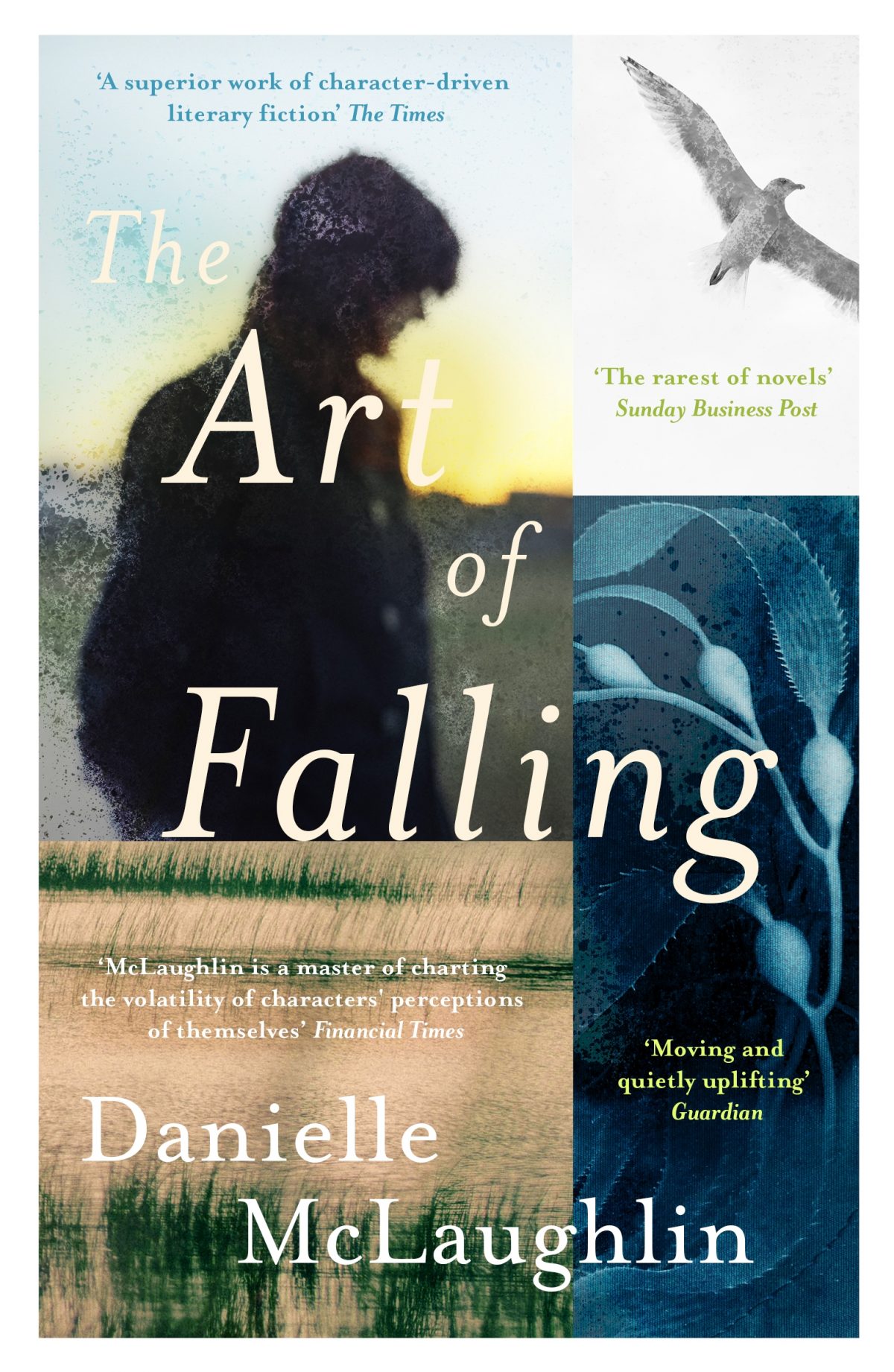
The Art of Falling by Danielle McLaughlin (Irish) Published by John Murray
Nominated by Cork City Libraries, Ireland

Dublin literary award shortlist 2022Danielle McLaughlin’s novel is set in Cork. Its curator protagonist Nessa , is organizing a retrospective of the work of a Scottish-born sculptor, Robert Locke. Locke established himself in West Cork, at the end of the 1960s, after years of wandering. Locke’s studio and his sculpture ‘Venus at the Hotel Negresco’, known colloquially as ‘The Chalk Sculpture’ will become a permanent exhibit in the museum where Nessa is employed. Nessa has worked long and hard for this event and has nurtured a relationship with Locke’s widow Eleanor and daughter Loretta. Women attribute healing powers to the statue, fetishizing it as a cure for infertility. At a public lecture on Locke’s work, another woman, Melanie Doerr, comes forward and tells Nessa that she was the model for the monumental piece, claiming that Locke spent a period of time with her in 1972. These are lost months in Locke’s biography, when Locke disappeared without trace, turning up later, like an unkempt beggar, on Eleanor’s doorstep offering neither explanation nor apology. While Nessa’s professional life revolves around the mystery of Locke’s disappearance and the veracity of Melanie Doerr’s claims, Nessa’s own personal life is in turmoil. She struggles with the aftermath of her husband’s affair, their threadbare finances, and their teenage daughter’s behavioural problems.
McLaughlin creates a compelling portrait of a life spent in pursuit of art and happiness. She summons up contemporary Cork, the universality of marital woes, and the everyday frustrations of middle-age in elegantly chiseled prose.

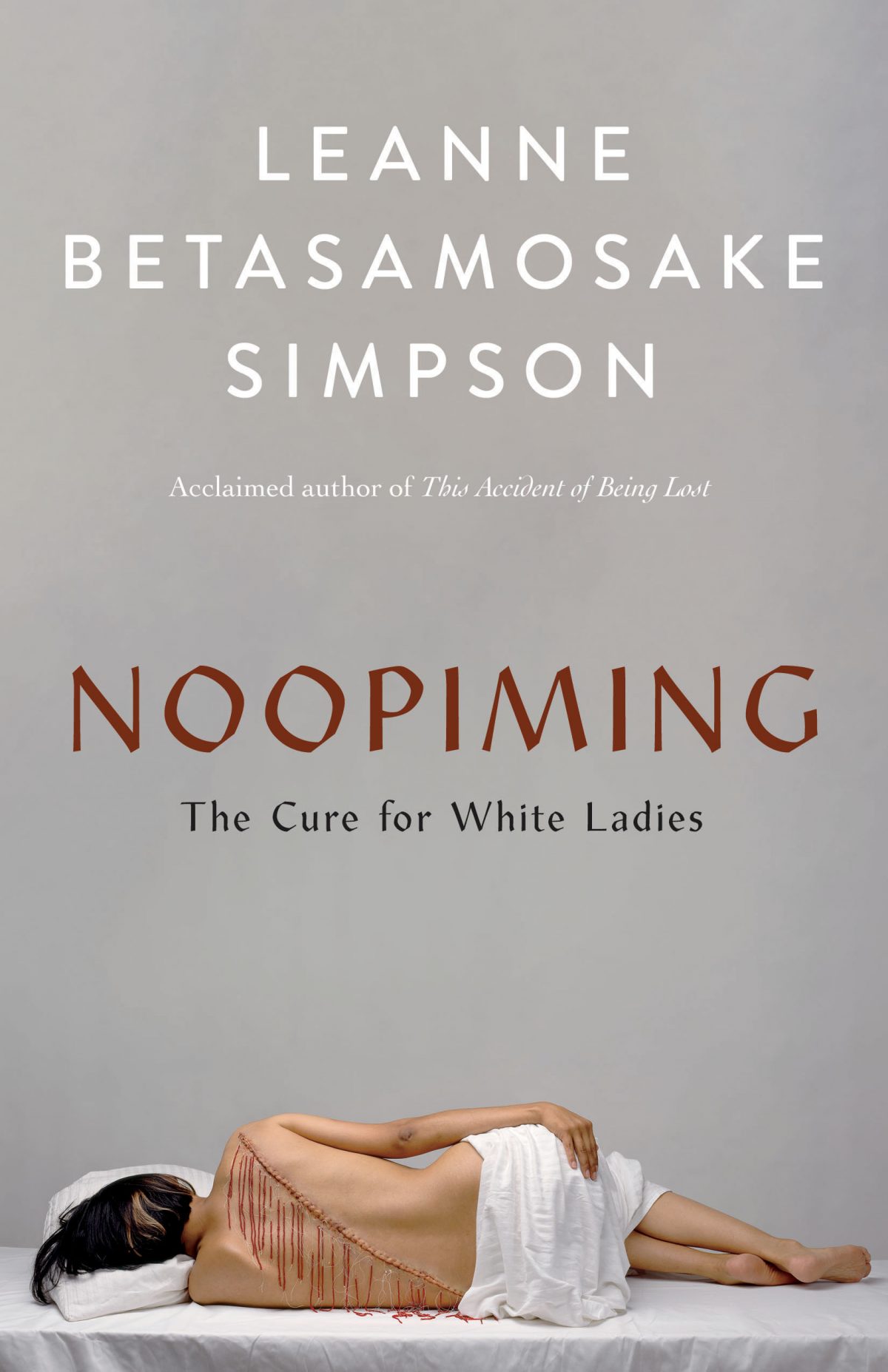
Noopiming: The Cure for White Ladies by Leanne Betasamosake Simpson (Michi Saagiig Nishnaabeg)
Published by House of Anansi Nominated by Ottawa Public Library, Canada

Dublin Literary Award Shortlist 2021– This book is literary art. It’s charming, witty, insightful and unforgettable. The way Simpson writes is completely unique. The love and honour about which she writes among Anishinaabeg (an indigenous people in Canada) and the land is both poetic and lyrical.  Narrators include Mashkawaji (they/them), who lies frozen in the ice, remembering a long-ago time of hopeless connection and now finding freedom and solace in isolated suspension. They introduce us to the seven main characters: Akiwenzii, the old man who represents the narrator’s will; Ninaatig, the maple tree who represents their lungs; Mindimooyenh, the old woman who represents their conscience; Sabe, the giant who represents their marrow; Adik, the caribou who represents their nervous system; Asin, the human who represents their eyes and ears; and Lucy, the human who represents their brain.

The novel unfolds as a constant conversation and interaction between the seven selves that make up Mashkawaji. Simpson skilfully brings each of the characters to life on the page so they feel real and not just metaphorical.  Ultimately, the novel provides powerful insight into how Indigenous people have tried to sustain their identity and their old traditions as they navigate living in the modern world. This is a unique, charming and lyrical novel that combines poetry song and prose.

The Art of Losing by Alice Zeniter (French)
Translated from the French by Frank Wynne Published by Picador, Pan Macmillan
Nominated by Bibliothèque publique d’information, Paris, France

The Art of LOsing Alice Zeniter – Deriving its title from the piercing first line of Elizabeth Bishop’s arch poem “One Art”, The Art of Losing follows three generations of an Algerian family from the 1950s to the present day—as they progressively lose, in the fog of conflict and post-colonial transition, their country, their roots, and their innocence. The narrative wings its way from the contested highlands of Northern Algeria to a French refugee camp, to the streets of Paris and back, borne forward by a cast of nuanced characters: from the patriarch Ali to his granddaughter Naïma, heir to a new digital age in which old prejudices and presumptions persist. Each is profoundly human in their passions, griefs, vanities, contradictions and silences. The family’s journey unspools in a deft weave of fiction and research, as the narrator fills in with compassion and imagination what the clan’s muteness about the past have refused to yield.

Symphonic in historical and emotional scope, the novel is by turns infuriating, unflinching, wry, recalcitrant, sensual, aporetic, courageous. It offers insights at every scale, from the national and the individual, about the fluid nature of identity; how our relations to place and to each other situate and perhaps free us. Refusing easy answers, pat politics and cultural caricatures while acknowledging their presence and seductive power in our time, The Art of Losing is a loving and clear-eyed sifting of the stories we tell ourselves.

* * * * *

The winner will be announced on Thursday 19th May during the International Literature Festival Dublin which runs from the 19th to the 29th May 2022.

I Will Die In A Foreign Land by Kalani Pickhart

Many are reading literature from or about Ukraine at the moment, whether it is history, news reports, fiction or other. Below are a book and a diary I’m reading to both stay in touch and understand.

A Daily Reflection from A Woman in Kyiv

Ukranian author Yevgenia Belorusets lives in Kyiv, each day she writes from her neighbourhood, she goes out and meets people, takes a few pictures. You can read her very moving, human interest diary here.

Today she noticed cosy lights on in a café that has been closed since the beginning of the war:

Ukraine Coffee

Photo by E.Tariq on Pexels.com

I went inside and ordered a cappuccino, a drink I keep trying to find since the war started and, if successful, enjoy in a new way each time.

It is a game I play with myself. Every day I wonder if a coffee kiosk will be open on my route. When I get a cup, I’m immensely happy, as if I’ve received an unexpected gift.

The coffeehouse was open because an employee who had quit before the war offered to come back and work alone.

I Will Die In A Foreign Country, A Novel

Ukraine historical fictionI thought this was an excellent and exceptional novel, that I chose to read because it is too distressing and overwhelming to be bombarded with only the terrible news that is flooding us at the moment.
Rather than look away, here is a novel, whose intention is to pay homage to those who wish to preserve a culture, to protect their homes, to help the wounded, to ease the suffering of the dying, to sing their songs and tell their stories.

Kalani Pickhart is American, passionate about Ukranian history and culture and began to write this story in 2016, in the aftermath of the American elections.

In an interview with New Lines’ Lydia Wilson, Pickhart talks about her motivation and inspiration for writing this novel, which has come to the world at a time when many are trying to understand how these terrible patterns continue to repeat, and searching for some hope in a humanity that appears at times to have gone mad.

Ukraine 2013 – 2014

The novel is set in late 2013, early 2014 and on the opening page, there is a map of Ukraine and a timeline of events at Euromaidan (the site of mass protest), from November 21, 2013 the day the 4th President of Ukraine Viktor Yanukovych declined to sign an association agreement with the European Union, precipitating protests, until late 2014 when the last barriacades and tents were removed from the city of Kyiv.

The novel is about four fictional characters, whose paths cross during this time, the story goes back and forth in time. The text is interspersed with other voices, most chapter headings indicating the place, the date, the voice or a subject, pieces that connect the narrative. With its relatively concise chapters, the narrative never overwhelms, like pieces of a jigsaw, as the story evolves and events unfold, geography is traversed, people respond to what confronts them, understanding broadens, a picture emerges.

Kobzari, Singing

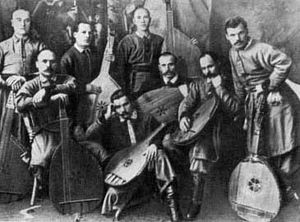
Kobzari musicians Kalani PIckhartThe first lines of the prologue are the collective voice of the Kobzari, whose story of persecution isn’t told until later in the book; like a Greek chorus, they recount aspects of Ukranina history, culture and tradition through the lyrics of song, ensuring a language, a culture and events can be carried forward to future generations.
Where does it begin? Ah, ah. Depends on who you ask…

It could begin with Scythians and Cimmerians, Slavs and the Rus’. Queen Olha. Vladmyr the Great. Yaroslav the Wise.

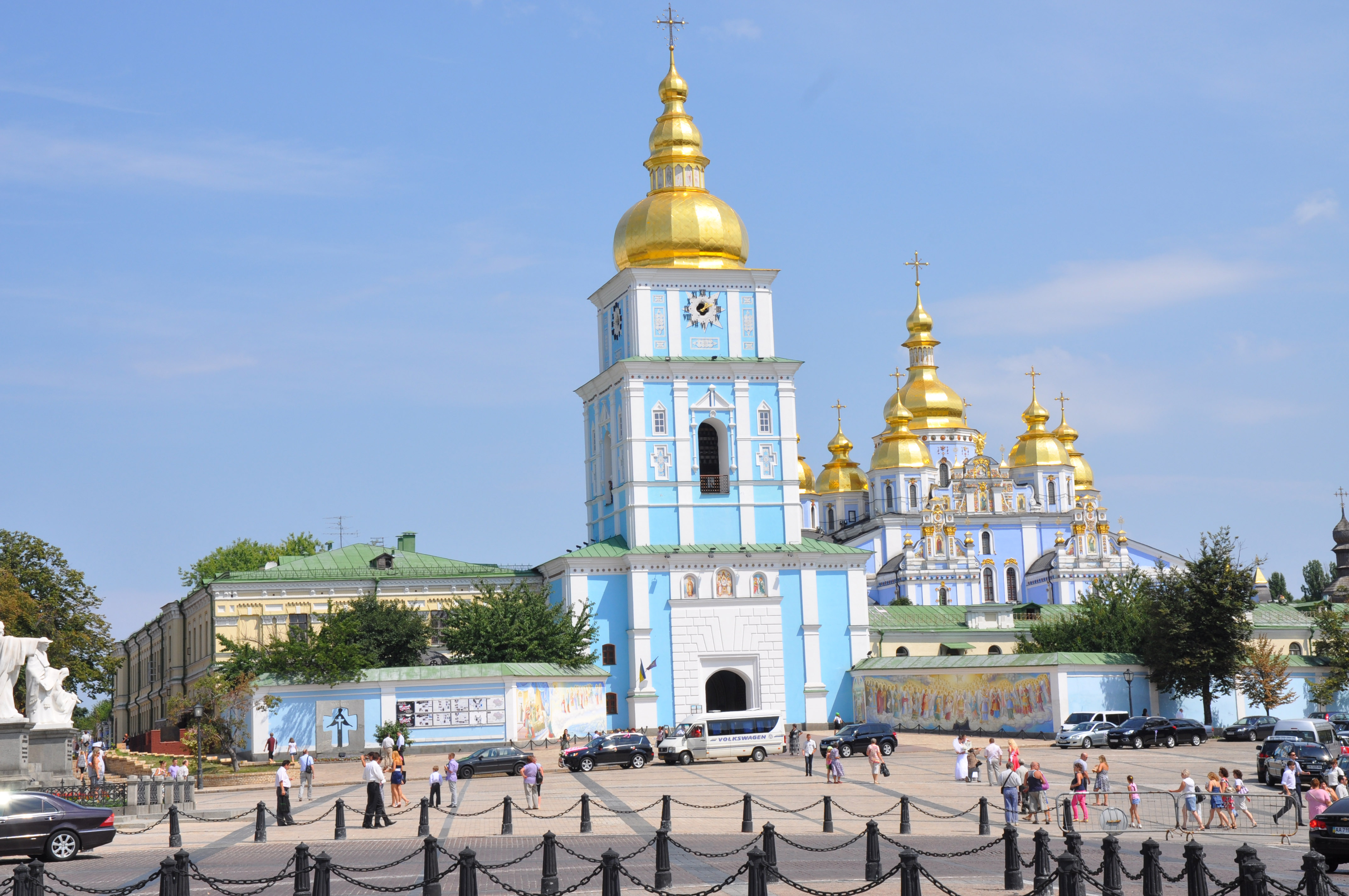
The Kobzari sing of events that will never be forgotten, like the church bells at St. Michael’s that rang in December 2013, something the church has only done once before: 800 years ago, against the Mongols. This collective voice slips into the narrative seamlessly, drip feeding the reader with an historical context.

Katya, the American Doctor

I Will Die in a Foreign Land Kalani Pickhart Literature UkraineKatya is a Boston based, American doctor, working with the wounded inside a temporary medical clinic at St Michaels monastery. She is an outsider, drawn to the country because she was orphaned there, but grew up in America with no connection to her birth country. Hers, like the author, is an outside perspective, one that wants to know, to connect, to understand.

She has temporarily removed herself from having to face a broken marriage in the aftermath of the death of her son.

Ekaterina, her mother and father named her when they took her home from the orphanage. Ekaterina the Great. Looking over Kyiv, Katya feels neither great nor pure. Her son is dead, her marriage is dead, and her birthplace is on fire.

The Captain

One of Katya’s patients is a man they refer to as Captain, only known to people because he would play an outdoor piano every day on the street during the protests. Katya finds a telephone number and a cassette in his pocket. The Captain’s story is narrated through the playing of an audio tape, created for his daughter Anna. He too is an outsider, a former officer, a man whose loyalties have been dictated to him, who is given little choice. He shares his story in an old oral tradition.

My mother was the one with the gift. She had a soft voice that warbled like a bird, but it was my father who wanted us to learn music. We learned the arts, my father said, to be civilized people because the world was at times a most uncivilized place. I often forgot he survived the war.

The Violence of Spring

One of the  (true) stories the Captain tells is of the composer Stravinsky’s controversial composition The Rite of Spring. He was invited by the Director of the newly opened Théâtre des Champs-Élysées to collaborate in a ballet. The work was so modern, it attracted a youthful audience and a riot broke out inside the theatre as the traditionalist patrons in the crowd began hurling insults, clashing with youth.

In his notes, Stravinsky said it is an episodic ballet without a cohesive beginning-to-end narrative. Instead, the episodes are bound by one unifying thread: the mystery and the great surge of the power of Spring.

It is a violent ballet, a violent composition, taking place in pagan Russia. During the performance in 1913, the choreographer, Nijinsky, before he went mad, had the dancers move in contorted, disfigured ways. It was obscene, the audience thought – an abomination of the arts, of theatre, of ballet.

Intrigued, I looked this up, it was one of the most notorious ballet performances of the 20th century, shattering the conventions of both classical music and dance. Here is France Musique’s excellent explanation (3 mins).

Micha, Ukranian Engineer

Micha is a Ukranian protest, helping out, an engineer, originally from Chernobyl, who worked in the mines. He was married to his childhood friend Vera, who succumbed to sickness.

The Exclusion Zone

His home is near where Katya was born, they return to visit his mother, to reconnect with a lost part of her, before her return.

I didn’t think people could live there anymore, but I heard stories about some old women whose husbands died, the samosely. I tried to convince my mother not to return. She said it was the only place she ever felt at home. A couple hundred babushkas had returned and she went with them. Women in their seventies, eighties having survived Stalin, genocide.

Slava, Ukranian Protestor

Slava and Micha are friends, she is from Odessa, a place she ran from after what happened to her there, something that fuels her determination. Slava meets a journalist Dascha, their relationship puts them both at risk.

You said you once protested with FEMEN – that is also very brave, I feel we have similar views, that you’re accepting of me.

Though it is novel told in fragments, through multiple narratives and voices, there is a fluidity and yet the plot moves quickly, as the connection(s) between characters are revealed, their motivations and behaviours come to be understood and revelations acknowledge the pressures and complexities of life in this country, some things universal, others unique to their history and geography.

Lest We Forget

As I neared the end of the book, on page 268, I read six pages of names that traverse the globe in culture, nationality, language, showing just how interconnected the world today is. It was the Passenger and Crew Manifest read aloud at trial for the victims of Malaysian Airlines Flight MH17 from Amsterdam to Kuala Lumpur.

The same day I read those names, I read this article indicating that today Australia and the Netherlands  launched legal proceedings against Russia for the downing of flight MH17.

Loss, when it occurs, has memory stronger than the mind, stronger than visual recollection patterned in the brain. It’s something the flesh knows, the muscles know, like a dancer reciting a step done hundreds of times, like a musician playing a song or a scale after decades without practice. It’s something the body knows, something the body is aware of while the mind adapts, responds, reacts.

Highly Recommended.

Further Reading/Listening

Podcast: Writing a Revolution: Ukraine’s Maidan Uprising — with Kalani Pickhart

Article: The Atlantic – What Ukrainian Literature Has Always Understood About Russia by Uilleam Blacker

Who Will Bury Me if I Die in a Foreign Land

Kalani Pickhart, Author

Kalani Pickhart, author of I Will Die in a Foreign Land, holds an MFA in Creative Writing from Arizona State University. An American, she is the recipient of research fellowships from the Virginia G. Piper Center and the U.S. Department of State Bureau of Intelligence for Eastern European and Eurasian Studies.

She currently lives and writes in Phoenix, Arizona.

What is the act of love if not bold?

As the world comes apart, nothing to lose-

What is love if not a promise to go on?

The China Factory by Mary Costello

It’s week three of Reading Ireland Month and today I’m sharing thoughts on a book of short stories by Irish author Mary Costello, The China Factory.

Threads of Inspiration

Irish Literature Reading Ireland MonthI’ve heard many say good things about her debut novel Academy Street and when her most recent novel The River Capture was published, a self-confessed homage to James Joyce’s Ulysses, I decided I would start at the beginning with Costello’s short stories.
I will read The River Capture later, as April is the One Dublin, One Book initiative and their chosen read for 2022 is Nora by Nuala O’Connor another book with a James Joyce connection. It is a bold reimagining of the life of James Joyce’s wife and muse, Nora, the model for his character Molly Bloom in Ulysses.

The Dublin City Libraries initiative encourages people to read a book connected with the capital city during the month of April every year.

Capturing a Voice

The China Factory Mary Costello

Photo by cottonbro Pexels.com

The 12 stories that make up The China Factory create a strong sense of authorial voice. Highly observant, sensitive characters, steeped in melancholy. They are practiced at holding back, trying not to make a ripple in the external world, until unforseen events pitch them into interactions, all the while controlling that emotional seepage.

In the opening story, The China Factory, a young woman works a summer job in a china factory, catching a ride with a quiet man named Gus, who she is distantly related to. She works at the sponger’s station, wiping off lines the moulds leave on clay cups.

I smiled when I passed the other girls those first days, and longed to speak, but feared that words would betray the yearning for friendship that I felt inside.

For a while she becomes closer to the girls, listening to their gossip, they quiz her about Gus, the freak, sharing an overheard story of his childhood that disturbs her. When a wayward man appears with a gun, Gus will surprise them all, and years later the impact of that summer job, his actions and her guilt will continue to haunt her.

dreamy woman with crossed legs sitting near window

Photo by L.SummerPexels.com

In Things I See a woman lies in bed, hyper aware of her husbands movements downstairs, she relays scenes in her mind of being close to him, but even in her imagination she holds back. She fears not growing old, but of growing different.

There is something severe and imperious in Don’s bearing that makes me resist.

She works full time and her husband cares for their six year old child. Her sister Lucy who is visiting, seems more at ease in the family than she does. The things she sees, hears, picks up on, imagines, occupy her mind, creating a distance, a corner from which she has entrapped herself. A witness. Stifled. Knowing she will not change anything, though her indecision will imprint itself on her face and in her demeanour.

And I think this is how things are, and this is how they will remain, and with every new night and every new wind I know that am cornered too, and I will remain, because I can not unlove him.

Drudgery, Dignity and Denial

The stories examine aspects of everyday life and highlight the hidden selves, the thoughts beneath the actions, the things that people hide from each other, from themselves, the cover stories and meaningless conversations that patch over the cracks that might reveal the reality.

In The Patio Man, a gardener knows nothing about his employer, a young frail woman observes him from the window, she struggles to articulate what she requires from him, until the moment she must ask him to drive her to the hospital. Still nothing is ever said, just small talk that takes the mind elsewhere, far from the catastrophic event occurring in the present.

The collection opens with an epigram from Rilke’s poem Autumn:

And night by night, down into solitude,

the heavy earth falls far from every star.

We are all falling. This hand’s falling too –

all have this falling-sickness none withstands.

which sets the tone and theme of falling – into and out of love, of relationships, to one’s death, in and out of the kaleidoscope of emotions, whether expressed or suppressed, no one is immune to the falling-sickness.

While the stories capture that voice particular to the author, that melancholy can wear on the reader, repeated time and again as it does, manifesting in the many losses and unfortunate events each story portrays, the quiet outer acceptance of discordant inner turmoil.

That said, I am looking forward to engaging with a longer story, hoping for the chance of redemption a novel might bring.

Mary Costello, Author

Academy Street The China Factory River CaptureMary Costello is an Irish short story writer and novelist from Galway now living in Dublin.

Her collection of short stories, The China Factory ( 2012), was nominated for the Guardian First Book Award.

Her second book and first novel, Academy Street, was shortlisted for the International Dublin Literary Award, the Costa First Novel Prize and the EU Prize for Literature in 2014. The novel went on to win the Irish Novel of the Year Award as well as the Irish Book of the Year. Her second novel The River Capture was published in 2019.