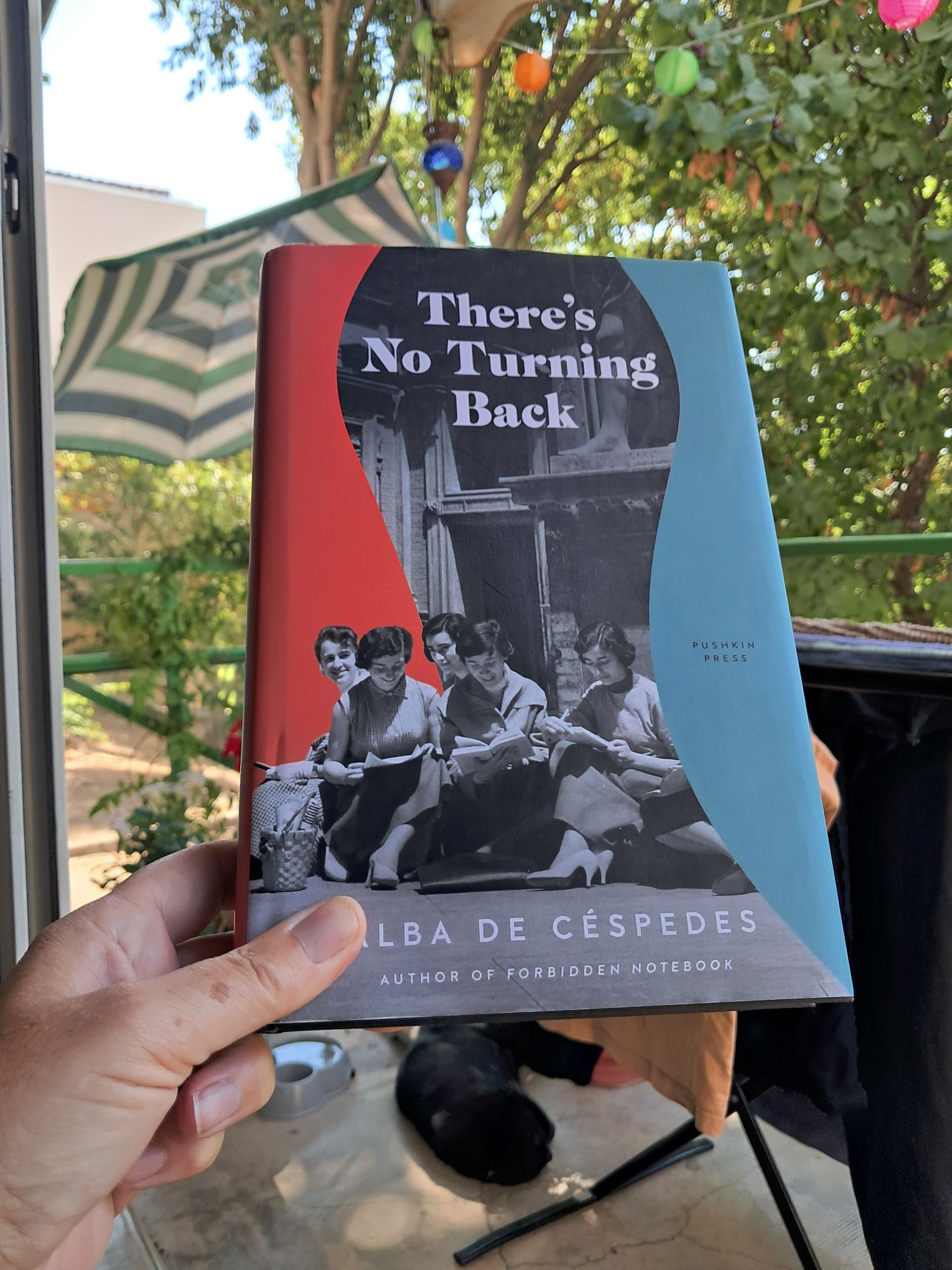
There’s No Turning Back by Alba de Céspedes tr. Ann Goldstein (2025)

Every novel I’ve read by Alba de Céspedes has been excellent and this controversial debut (at the time of its original publication in Italy, 1938) brims with the seeds of what was to come from her work, starting with this excellent, collective coming-of-age, of eight, twenty-something year old women in pre-war Rome.

I pre-ordered this novel, as she is a favourite author, of whose work I want to read everything, sharing now for WIT Month (Women in Translation).

Literature and Morality

Feminism Journal writing Womens Rights Italian Literature

In the informative translator’s note at the beginning of the book, Ann Goldstein shares some of the historical context within which the book became an immediate and immensely popular bestseller, despite the authorities finding the novel’s breaking of female stereotypes and suggestion of other possible pathways for women offensive.

“By the time the novel was published the fascist dictator Benito Mussolini had been in power for more than a decade. His government promoted the idea that the proper place for women was to be at home and to bear children; sposa e madre esemplare (exemplary wife and mother). While there is no overt mention of Mussolini or fascism in the novel, none of the young women conform to this female ideal. In fact, in their different ways they are challenging it, even if not intentionally or even consciously.”

Selected to win the prestigious Viareggio Literary Prize in 1939, a government order stopped it and attempted to block further editions from being published, claiming it went against ‘fascist morality’. As Margarita Diaz points out in a recent article ‘An Immoral Endeavour‘:

Vague accusations of ‘immorality’ have been, and continue to be, used by dominant institutions, governments and autocratic regimes to stifle free expression and to censor legions of books and artworks. 

Women at a Turning Point

Alba de Cespedes debut novel Theres No Rurning Back translated by Ann Goldstein from Italian

Set in Rome 1936-1938, the novel focuses on eight young women in higher education, most studying at university, who live together in convent boarding house in Rome. They have greater freedoms than school girls, with restrictions deemed appropriate for unmarried single women.

From different backgrounds they have different issues, desires and ideas about life, which they share with each other as they progress through the year and one by one prepare to leave the premises.

On the cusp of “no turning back”, concluding their theses, each must make a decision about what to do next and none of them are thinking, acting or passively accepting the route that tradition has dictated.

The mere consideration of other life avenues and the outward expression of those thoughts, the girls’ discussions with each other, in this safe and open, female community, demonstrate an important processing step in their being better informed, while equally often challenged by their peers, at this formative moment in their lives.

“In all her novels de Céspedes investigates women’s attempts to both deconstruct and construct their lives and gain a sense of themselves, as she investigated her own life.”

A Year In the Life

Photo by cottonbro studio Pexels.com

Throughout that year, the girls will learn more than just the subject of their thesis as they share and navigate the issues that arise, including their reactions to things some have kept secret. They attend mass and adhere to the curfew, then gather after lights out to talk about everything deemed pressing.

Their conversations and reflections often lead to scenes from the past, as the reader gains insight into each of the circumstances that lead each young woman to this place.

Xenia is the first to present her thesis and to leave and she does so under cover of night, severing her connection with the girls, choosing the least conventional path, allowing an older businessman to arrange a job for her and accommodation, introducing her to a different circle of associates. Her desires are revealed in one of the early exchanges with the girls:

“Some nights a kind of yearning grips me: I can’t close my eyes and I get worn out thinking how I’m caged in this cloister of nuns, while outside life is flowing, fortune passing by – who knows? – and I can’t take advantage of it. You have to jump into life head-long, grab it by the throat. I won’t ever go back to Veroli, anyway.”

No Two Paths

If Xenia’s failure and disappearance shakes the girls up, the fate of quiet Milly, who writes letters in braille to a blind organist rocks their world even more.

As soon as Papa found out about our meetings, he made me come to Rome. But I’m not unhappy here: I can play the harmonium and write to him with that device there, which is all holes, in the braille alphabet, made just for blind people. By now I can write well, and he reads my letters by running his fingers over them, like this, see?

Silvia is a high performing literature student, a favourite of the Professor, who asks her to do research on his behalf, which he presents to great acclaim, telling her she will go far.

Silvia had on her face the expression of servile gratitude typical of those who are accustomed to submission from birth. Who were her parents, after all? Scarcely more than peasants. Someone had always taken possession of their work without even saying “Thank you, well done.” Confused by that praise, Silvia would have liked to promise : “I won’t take my eyes off the books professor, I’ll even work at night”; but at that moment Belluzzi’s wife came in, carrying a cup of tea.

Mirroring and Reflecting

a woman holds a mirror a reflection
Photo by Tasha Kamrowski on Pexels.com

Emanuela has told everyone her parents are travelling in America, disappearing every Sunday to visit her five year old daughter she has told no-one about, just like her father had written to the Mother Superior of the boarding school she attends, saying his daughter was abroad.

Though she does not study, she is drawn into the literature group, who appreciate her vigilant, intuitive faculty:

which revealed and illuminated, in those who approached her, only the aspect of the self capable of inspiring a mutual sympathy. So each saw her own image reflected, as in a mirror; and although the mirror had many faces, it projected only the one that it animated. And this game of reflections was a continuous revelation for Emanuela, too, who saw rising from the depths of herself, and appearing on the surface, constantly new and until then unknown aspects of her personality. Illuminated from the outside, exposed by the contact with others, her true physiognomy emerged gradually, and in a surprising way, from the shadows.

Women as Masters of Themselves
Debut novel by Italian author Alba de Cespedes Theres No Turning Back, banned by Mussolini challenged female stereotypes in 1938 Italy

Augusta is enrolled in classes but doesn’t plan to sit the exams. She stays up late writing novels and sending them out. When Emanuela asks her how long she plans to stay, she replies:

Until I’ve done something. I go back to Sardinia only for a month or two, in summer. By now, one can’t go home anymore. Our parents shouldn’t send us to the city; afterward, even if we return, we’re bad daughters, bad wives. Who can forget being master of herself? And in our villages a woman who’s lived alone in the city is a fallen woman. Those who remained, who passed from the father’s authority to the husband’s, can’t forgive us for having had the key to our own room, going out and coming in when we want. And men can’t forgive us for having studied, for knowing as much as they do.

Vinca is from Spain and during her time with the girls, she learns from the newspaper that Spain is at war and that the young man she has been seeing will go and join the fight. These and subsequent events change her trajectory.

One by one, they have their experiences and they make their own decisions, no two the same, yet all of them having been through the process of living together and sharing their developing ideas, strengthening their positions and coming to some kind of resolution about how they will live their lives.

It’s another brilliant read by this fabulous author and one can just imagine how this book would have been devoured by many women in the era it was published, providing them insight and a form of company to their own thoughts, or provoking them in their solitude as they lived out those traditional paths and dreamed of something else.

Highly Recommended.

“Emanuela took her head in her hands. “I think that at a certain point you have to stop searching and accept yourself. Find the courage not to count on others anymore, to separate from childhood even at the cost of solitude;”
“It’s all a matter of courage, in life. If you have it, you do well to leave,” Augusta murmured, tapping the ashes from her cigarette.”

Further Reading

Cleveland Review of Books: An Immoral Endeavor: On Alba de Céspede’s “There’s No Turning Back” by Margarita Diaz, August 7, 2025

The Guardian: Resistance fighter, novelist – and Sartre’s favourite agony aunt: rediscovering Alba Céspedes by Lara Fiegel, Mar 2023

My reviews of Alba de Céspedes Forbidden Notebook and Her Side of The Story

Author, Alba de Céspedes

Alba de Céspedes (1911-97) was a bestselling Italian-Cuban novelist, poet and screenwriter.

The granddaughter of the first President of Cuba, de Céspedes was raised in Rome. Married at 15 and a mother by 16, she began her writing career after her divorce at the age of 20. She worked as a journalist throughout the 1930s while also taking an active part in the Italian partisan struggle, and was twice jailed for her anti-fascist activities.

After the fall of fascism, she founded the literary journal Mercurio and went on to become one of Italy’s most successful and most widely translated authors.

After the war, she accompanied her husband, a diplomat to the United States and the Soviet Union. She would later move to Paris, where she would publish her last two books in French and where she spent the rest of her life. She died in 1997.

The Little Virtues by Natalia Ginzburg tr. Dick Davis

essays on parenting italian literature women in translation memoir

The Little Virtues is a collection of 11 short essays by the Italian author Natalia Ginzburg, written between 1944 and 1960, originally published in 1962 as Le Piccole Virtú.

Some of the reflections were previously published in Italian newspapers and magazines. Being spread over twenty years, they span her life post-war from her late twenties until her mid 40’s, through motherhood, widowhood and her growth as a writer.

They capture reflections on life in different places she lived and visited, like the Italian countryside where she and her husband spent time while Italy was under fascist rule, to her visits to London, which she can’t help but see through a critical cultural lens and the more accepting memories of Rome and Turin.

In a way, these essays are more revealing of the character of Ginzburg than Family Lexicon (my review) her autobiography, in which she plays a lesser role to that of the greater family, one overshadowed by an opinionated father. The youngest in the family, a quiet observer and astute note-taker, Natalia once out of the shadow of that household, finds her voice and unique style, seen changing from the bucolic monotony of an Abruzzi winter, the last season of wonder before the terrible death of her husband at the age of 34 years in Rome, to her more confident final essay on those little virtues and the education of children.

An Italian Voice of Note Rediscovered

Natalia Ginzburg Italian literature Family Lexicon

Natalia Ginzburg wrote dozens of essays, plays, short stories and novels, including Voices in the EveningAll Our Yesterdays and the autobiographical Family Lexicon, for which she was awarded the prestigious Strega Prize in 1963.

Though popular in Italy, her work was under the radar in the UK, until Daunt Books reissued this 1962 collection of essays and her autobiography, and subsequently her novels.

Her work explored family relationships, politics and philosophy during and after the Fascist years, World War II. Modest and intensely reserved, Ginzburg never shied away from the traumas of history, whether writing about the Turin of her childhood, the Abruzzi countryside or contemporary Rome—approaching those traumas indirectly, through the mundane details and catastrophes of personal life.

She was involved in political activism throughout her life and served in the Italian parliament between 1983 to 1987. Animated by a profound sense of justice, she engaged with passion in various humanitarian issues, such as the lowering of the price of bread, support for Palestinian children, legal assistance for rape victims and reform of adoption laws.

She died in Rome in 1991 at the age of seventy-five.

Notes and Quotes From A Few Essays

I read this collection back in April, as a group read, always enjoying the knowledge that others are reading the same book at the same time and sharing their feedback. I had a bit of a lull in posting reviews as I was working on another writing project, but I kept a few notes and quotes, that I’ll share here, that give a flavour of the collection.

Winter in the Abruzzi (1944) and Worn Out Shoes (1945)

Photo by Chris F Pexels.com

It’s hard not to read these essays without considering the context, that time in Abruzzi before her husband made a prisoner of war by the Nazi’s, not knowing the beauty of that exile, these essays published in the wake of his death in February 1944. That significant absence in some way replaced by her dedication to writing and her three young children.

There is a kind of uniform monotony in the fate of man. Our lives unfold according to ancient, unchangeable laws, according to an invariable and ancient rhythm. Our dreams are never realised and as soon as we see them betrayed we realise that the intensest joys of our life have nothing to do with reality. No sooner do we see them betrayed than we are consumed with regret for the time when they glowed within us. And in this succession of hopes and regrets our life slips by.

On England, Eulogy & Lament (1960, 1961)

Eulogy and Lament (1961) is an interesting observation of cultural and geographic differences seen from the author’s Italian perspective. Some are poignant, like a tree in blossom on a street that reveals a precise plan versus the memory of a surprising random tree in Italy. Others tell of a sense of melancholy, sadness, conventionality, lack of surprise, desolation. A lack of the familiar, present in Italy, that kind of impression that one often hears from anyone visiting another country for the first time, a heightened sense of difference, of what is missing.

A timid person stays timid, an unsociable person stays unsociable. And over this initial timidity and unsociableness spreads the great, English melancholy, like an endless moor in which the eyes can find no landmark.

Photo by Efrem Efre Pexels.com

La Maison Volpé (1960): An abandoned place in London that doesn’t reveal its past, so the author imagines what it might have been and remembers other places that offer temptation, yet disappoint within. Of restaurants, food, lack of inspiration.

I have a feeling that when I remember London and the time I have spent here, those syllables will echo in my ear, and all London will be summed up for me in that Parisian name.

Human Relationships

Portrait of a Friend (1957) is a beautiful, sad, reflection and honour to their friend from Turin, the poet and translator Cesare Pavese, who took his own life in 1950.

And now it occurs to us that our city resembles the friend whom we have lost and who loved it; it is, as he was, industrious, stamped with a frown of stubborn, feverish activity; and it is simultaneously listless and inclined to spend its time idly dreaming. Wherever we go in the city that resembles him we feel that our friend lives again; on every corner and at every turning it seems that we could see his tall figure in its dark half-belted coat, his face hidden by the collar, his hat pulled down over his eyes.

He and I (1962): to me this reads as a portrait of an ill-fitted relationship. A collection of characteristics of two opposite people that shows their interests and lack of, and how they manage them. She relents, he insists. He travels, she follows. He gets what he wants, she compromises. A singular memory of a conversation long ago. An ironic portrayal of a second marriage that leaves a bitter taste.

My tidiness and untidiness are full of complicated feelings of regret and sadness. His untidiness is triumphant.

On Writing

My Vocation Contemplating “writing” as the one thing she is truly good at, she recalls how it developed from childhood observations and the earliest stories. The lack inherent in being happy when it comes to writing, how suffering brand mood affect the process. A contempt for the vocation when children enter her life, then the carving out of space and place for it. Transition from wanting to write like a man, the vocation as cruel master, one that has no sympathy.

My vocation has always rejected me, it does not want to know about me. Because this vocation is never a consolation or a way of passing the time. It is not a companion.

The Little Virtues (1960)

“As far as the education of children is concerned I think they should be taught not the little virtues but the great ones. Not thrift but generosity and an indifference to money; not caution but courage and a contempt for danger; not shrewdness but frankness and a love of truth; not tact but love for one’s neighbor and self-denial; not a desire for success but a desire to be and to know.”

Photo by Pixabay Pexels.com

This is how the essay opens and in it she takes on the little virtues and the great virtues and the effect of authoritarian parenting on the next generation of parents, the relationship to money that causes scarcity consciousness, an invitation to indifference, reward and punishment, homework and daydreaming, resisting hope and embracing what is, a balance between silence and words.

“And if we ourselves have a vocation, if we have not betrayed it, if over the years we have continued to love it, to serve it passionately, we are able to keep all sense of ownership out of our love for our children. But if on the other hand we do not have a vocation, or if we have abandoned it or betrayed it out of cynicism or a fear of life, or because of mistaken parental love, or because of some little virtue that exists within us, then we cling to our children as a shipwrecked mariner clings to a tree trunk.”

Overall, it is a remarkable collection that drops in on these passages of time throughout those two decades, showing us a little of how life was, what perceptions were held and charting the growth of an extraordinary writer who thought herself most ordinary.

Further Reading

My reviews of the novels The Dry Heart (1947), Valentino (1957), Sagittarius (1957).

Jacqui’s Review of The Little Virtues

Reading Women In Translation

August is the annual Women in Translation month, and I have one more novel by Natalia Ginzburg on my shelf, All Our Yesterdays, which I hope to read then.

Do you have a favourite Natalia Ginzburg or any sitting unread on your shelf to read in August? Let us know in the comments below.

Second-class Citizen by Buchi Emecheta

I read Buchi Emecheta’s Joys of Motherhood (1979) in 2019, it is such a great novel, one of my all time favorites, not yet reviewed here. I have been looking forward to reading more of her work since then, I picked up Second-class Citizen (1974) knowing it was likely to be equally good. She is known for her themes confronting girls and women, of motherhood, female independence and freedom through education.

A Girl Determined to Realise a Dream

Adah is a fabulous, determined character, a girl who when her father dies, her mother is inherited by his brother. Like many girl-orphans (fatherless), Adah was sent to live with her mother’s elder brother to work as a servant; any money her father left would be used for her brother Boy’s education.

Even if she was sent to school, it was very doubtful whether it would be wise to let her stay long. ‘A year or two would do, as long as she can write her name and count. Then she will learn how to sew.’ Adah had heard her mother say this many many times to her friends.

Determined to get an education herself, having already been punished for taking herself off to school without permission, the family decide to let her go, not for her own benefit, but because they recognise how it might benefit themselves. If Adah gets more schooling, the dowry that her future husband will have to pay them will be even bigger.

Adah wants more than just school, she wants a higher education, however she does not have the money to pay for the entry examination, let alone the other costs.

She was aware that nobody was interested in her since Pa died. Even if she had failed, she would have accepted it as one of the hurdles of life. But she did not fail. She not only passed the entrance examination, but she got a scholarship with full board.

My Struggles Become My Strength

The combination of hard work for the household and an education made Adah strongly responsible for herself and strategic in ensuring she stayed in education and succeeded enough to get a scholarship with full board. But to go even further with her studies, she needed a home, she would need to marry.

Her plan is to get to the UK but now she has a husband and in-laws and her good job not only supports them all, but makes many dependant on her and less inclined to be independent.

A New Motivation, I Do This Not Just for Myself

1960’s England is not what she expects, the challenges are even greater because now she has a woman’s body whose reproductive rights are not under her control and a partner who is no longer how he was in their home country, he seems invested in keeping her from shining.

He lifted his hand as if to slap her, but thought better of it. There would be plenty of time for that, if Adah was going to start telling him what to do. This scared Adah a little. He would not have dreamt of hitting her at home because his mother and father would not have allowed it. To them, Adah was like the goose that laid the golden eggs. It seemed that in England, Francis didn’t care whether she laid the golden egg or not. He was free at last from his parents, he was free to do what he liked, and not even hundreds of Adahs were going to curtail that new freedom. The ugly glare he gave Adah made that clear.

However, taking responsibility is what she knows best, she is determined to provide for her growing family and negotiate the mounting injustices she faces, in pursuit of achieving her dreams and caring for her children.

She was going to live, to survive, to exist through it all. Some day, help would come from somewhere.She had been groping for that help as if she were in the dark. Some day her fingers would touch something solid that would help her pull herself out. She was becoming aware of that Presence again – the Presence that had directed her through childhood. She went nearer to It in her prayers.

An inspirational story of the girl that never gives up, written by the woman who lived much of that experience, raising her own five children on her own in a foreign country and becoming a successful author.

Total inspiration and still relevant today. Highly recommended.

Further Reading

Review Guardian: Second-Class Citizen by Buchi Emecheta review – fresh and timeless by John Self, Oct 2021

Article: My mother, the pioneer: how Buchi Emecheta captured immigrant life in 1970s London by Sylvester Onwordi, 2021

Author, Buchi Emecheta

Buchi Emecheta OBE (1944 – 2017) was born in Lagos, Nigeria and moved to London with her student husband when she was eighteen. After her marriage broke up at the age of twenty-two, and while raising five children, she began writing and also obtained a degree in sociology from London University.

As well as writing numerous novels, she wrote plays for television and radio, and worked as a librarian, teacher, youth worker and sociologist, and community worker. She was one of Granta’s Best of Young British Novelists in 1983. Following her success as an author, Emecheta travelled widely as a visiting professor and lecturer.

She published over 20 books, including In the Ditch (1972), Second-Class Citizen (1974), The Bride Price (1976), The Slave Girl (1977) and The Joys of Motherhood (1979).

Her themes of child slavery, motherhood, female independence and freedom through education won her considerable critical acclaim. Emecheta once described her stories as “stories of the world…[where]… women face the universal problems of poverty and oppression, and the longer they stay, no matter where they have come from originally, the more the problems become identical.”

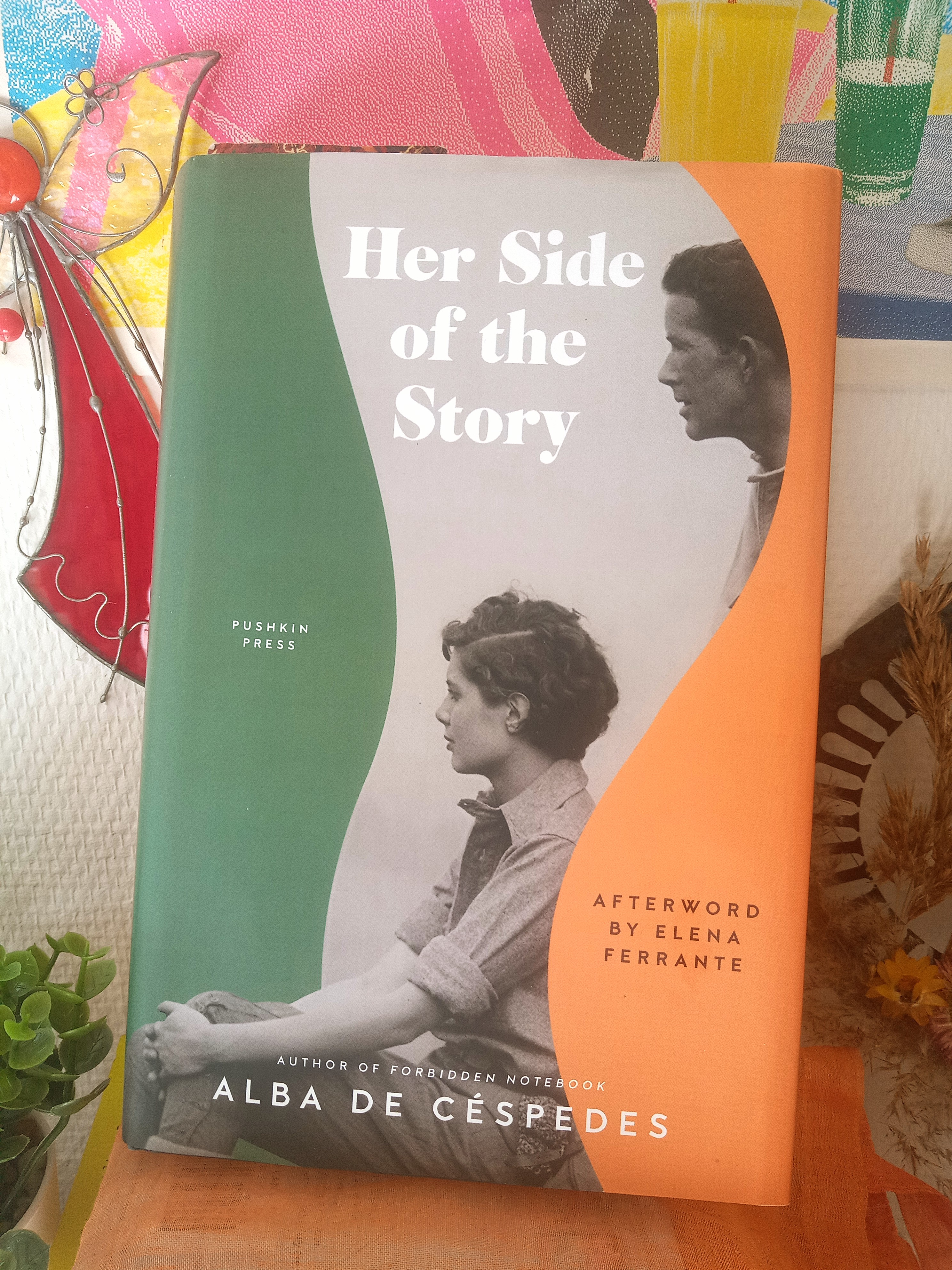
Her Side of the Story by Alba de Céspedes tr. Jill Foulston

Stunning.

I thought The Forbidden Notebook which I read in 2023 was excellent, but this novel is in a category of its own. This is probably the title in 2024 I was looking forward to the most and it exceeded my expectations.

Originally published in Italian in 1949 as Dalla parte de lei, this captivating new English translation by Jill Foulston was published by Pushkin Press in 2024.

Women’s Partisan Struggle in 1930’s -1940’s Italy

Alba de Céspedes (1911-1997) was a bestselling Italian-Cuban novelist, poet and screenwriter who worked as a journalist throughout the 1930’s while also taking an active part in the Italian partisan struggle and was twice jailed for her anti-fascist activities.

After the fall of fascism – Rome, considered the heart of fascism under Mussolini, was liberated in June 1944 and many felt the country had lost its basic values after 20 years of fascist government – Alba de Céspedes founded a literary journal called Mercurio, publishing many great names of Italian literature and politics, as well as Katherine Mansfield, Jean-Paul Satre, Ernest Hemingway.

Due to a lack of funding it would close in 1948, and in its final issue she published an essay by Natalia Ginzburg entitled ‘On Woman’, alongside a letter she was inspired to write in response to it. Certainly, she would have been working on the novel Her Side of The Story, at the time this essay (discussed below), was published.

Women Writing From the ‘Well’

Photo by ArtHouse Studio on Pexels.com

Ginzburg had written of an affliction unique to women – at a time when they were often confined to the home and not considered equal under the law – that she described as “a continuous falling down a deep dark well“, a terrible melancholy typical of feminine disposition that likely originated from the age-long tradition of subjection and subjugation.

In her open letter, de Céspedes confesses that she also writes from the ‘well’ Ginzburg theorises. Despite that, de Céspedes believed women’s freedom consisted of being able to go down those emotional and psychological wells, which were for her a strength, rather than a curse. ‘Every time we fall down a well’, de Céspedes wrote, ‘we descend to the deepest roots of our being human; when we come back to the surface, we carry such experiences with us that enable us to understand everything men never will — since they never fall into any well’.

In the same issue of Mercurio, de Céspedes published La donna magistrato’ (‘The Woman Magistrate’), an essay by Maria Bassino, one of the most important criminal defense lawyers at the time, addressing women’s rights to become magistrates. In her letter to Ginzburg, de Céspedes explained that those two essays were published together to denounce the injustice done to women when they were tried by magistrates who cannot understand women’s reasons to ‘kill, steal, and commit other humiliating actions’; referring to men who never experienced the depth of wells.

If we are not sure of the depth and character of the mid twentieth century well, then by the time we finish reading Her Side of The Story, we most certainly have a greater understanding of it.

The Review: Her Side of the Story

Photo via Pexels.com

An expansive coming of age tale of love and resistance, this feminist, social novel explores a young woman’s attempt to break free from society’s expectations and live life on her own terms. Amid great storytelling, it is a fearless condemnation of patriarchy and rejection of fascist ideals in a society on the cusp of witnessing social change for women.

Alessandra grows up in a bustling apartment block in 1930’s Rome with a shared courtyard, where everyone knows everyone, spending most of her time alone in the apartment in the care of Sista, while her father is at his office and her mother is out teaching piano lessons. She adores her quiet, delicate mother, who keeps to herself and treats her daughter like a friend, while despising a father she believes doesn’t deserve an elegant, cultured woman like her mother.

The women felt at ease in the courtyard, with the familiarity that unites people in a boarding school or a prison. That sort of confidence, however, sprang not so much from living under a common roof as from shared knowledge of the harsh lives they lived: though unaware of it, they felt bound by an affectionate tolerance born of difficulty, deprivation, and habit. Away from the male gaze, they were able to demonstrate who they really were, with no need to play out some tedious farce.

Alessandra looks back and recounts her childhood, adolescence and marriage, describing her experience of them all, her inner world view and how it was shaped by what she observed happening around her, everything she thought and how she responded to it all.

Though she spends much time alone, she rarely keeps her thoughts to herself, allowing the deepest parts of herself to be exposed, challenging what she does not agree with, determined to take charge of her life and live it according to her own desire, against convention.

A Rare and Faultless Admiration of Mother

The first section is focused on the mother-daughter relationship, on Alessandra’s blind faith in everything her mother is and does, including her obsession with the Pierce family, their friendship with Lydia and her daughter Fulvia upstairs and sessions with the medium Ottavia who visits the apartment block on Fridays. Invited to play at a private concert with the Pierce son Hervey joining on violin, the celebratory event witnessed by her husband, becomes a turning point.

The depictions of life in the apartments, the details of the women’s lives, the absent husbands, the affairs, the way daughter’s follow mother’s examples, the witnessing of each other’s lives, the door porter who sees and knows all, the desire for privacy and impossibility of it are all brilliantly depicted. Alessandra’s mother is a romantic with dignity, she is not interested in an affair, but is vulnerable to kind attention.

After a near expulsion from school for hitting a boy for his psychological cruelty towards another girl, she confesses what happened to her mother and worries about her father’s response.

“We can’t tell him everything. Men don’t understand these things Sandi. They don’t weigh every word or gesture; they look for concrete facts. And women are always in the wrong when they come up against concrete facts. It’s not their fault. We’re on two different planets; and each one rotates on its own axis – inevitably. There are a few brief encounters – seconds, perhaps – after which each person returns to shut him- or herself away in solitude.”

Alessandra spends a lot of time reflecting, examining the depths of her thoughts, actions and observations and how they may have come about. From her parents certainly, but she recognises something restless in herself, that seeks retribution.

I could reproach her for having subjected me to that climate of perpetual exaltation, which, above all, made me completely devoted to the myth of the Great Love and thus unintentionally led to the painful situation I find myself in today. I could reproach her, perhaps, if she hadn’t already paid for her ambitions. And now that I am forced to write about her and look into the most intimate and dramatic moments of our life together, it’s not really to accuse her of having made me what I am but to explain those of my actions which would otherwise be clear only to me.

Allesandra, sono io, I am Alessandra

Photo by Piotr Arnoldes on Pexels.com

It is Sandi’s story but it is also the story of many ordinary lives of girls and women, growing up in discordant families, with the weight of expectations, the allure and (false) promise of love, the desire to be educated, to participate in something greater than ‘the home‘, to be heard, respected and taken seriously.

“…Alba de Céspedes intended to act as the defender of women. Like Flaubert, she could say of her protagonist: Alessandra, sono io, I am Alessandra.

Rural Idealism Enforced by The Matriarch

In the second section, Alessandra is sent to live on a farm with her paternal grandmother Nonna, a grand matriarch of a traditional, religious family who surround her with examples of duties expected of her and demonstrate how they will act to facilitate them. She enjoys the natural environment and complies to a certain point, but insists on her right to further her studies, rejecting the suggestion of a well aligned matrimony.

Though this section was originally cut from the first English translation (1952) of the novel, it is restored here. The rural setting represents tradition and a connection to the land, the roots of family, hard work and lineage. Mussolini’s regime focused on rural regions to uphold goals of self-sufficiency, free Italy from “the slavery of foreign bread” and control the agricultural sector. Propaganda praised this lifestyle, much of it targeted at women and upheld by women. Nonna exemplifies and encourages the virtues of sacrifice for the greater good and giving up one’s selfish desires.

Bewildered, I observed these grave, taciturn people who had been strangers to me a few hours before, but who now embraced me within a mechanism so robust I sensed it could easily overwhelm a person.

War breaks out, she returns to Rome, to her studies, to employment, to living again with her father and meeting Francesco, the man she would truly love and believe she could have a different kind of life with. And it might be said that that is where her troubles really begin.

Love, Marriage, War – the struggle

There is so much that could be said about Alessandra’s wartime and matrimonial experience, that is better left for the reader to discover.

There is no stone left unturned in her dissection of the relationship she has with the older anti-fascist Professor, a charismatic man with a sense of justice who stands up for his beliefs, the only man she will ever truly love and her attempts to talk to him about the things that unsettle her, that she feels could be easily resolved, if only he took the time to listen. Once married, he is barely aware of or able to respond to her feelings, while she continues to try to make him understand, slowly unravelling in her persistent attempt.

The most misleading virtue of marriage is the ease with which one forgets, in the morning, everything that happened the night before. Encouraged by the clear colour of the sun’s first rays and the energy and rhythm of everyday gestures, I was always the first to turn back towards Francesco.

The novel tracks the attempt to rise above expectation and the subsequent decline into acceptance, focusing on the effect of this repression, the mental deterioration of generations of women for whom the burden of that ordinary life, of a woman’s limited lot, and the inaccessibility of how (here) she imagines it might have been, become too much to bear. She wants the reader to understand this very well, effectively making you live it alongside her.

Intense, compelling and set against that backdrop of wartime Rome and Italy coming out of a long repressed fascist era, I found it utterly riveting. Her Side of the Story is a powerful, intimate and insightful exploration of the female psyche, of the desire to be, and do, more than meet long outdated representations of women in families, society and relationships. Unputdownable, one of the best of 2024 for sure. Fans of Natalia Ginzburg and Elena Ferrante will likely enjoy this. Expect to feel unsettled.

There’s No Turning Back

Delighted to learn that her debut novel There’s No Turning Back translated by Ann Goldstein will be published in February 2025.

Highly Recommended.

Further Reading

Natalia Ginzburg’s essay ‘Discorso sulle donne‘On Women’ translated by Nicoletta Asciuto, The Fortnightly Review

Jacqui’s Review at JaquiWine’s Journal, April 2024

Chicago Review of Books: The Prescience of Alba De Céspedes’s “Her Side of The Story” by Margarita Diaz November 24, 2023

Author, Alba de Céspedes

Feminism Journal writing Womens Rights Italian Literature

Alba de Céspedes (1911-97) was a bestselling Italian-Cuban novelist, poet and screenwriter.

The granddaughter of the first President of Cuba, de Céspedes was raised in Rome. Married at 15 and a mother by 16, she began her writing career after her divorce at the age of 20. She worked as a journalist throughout the 1930s while also taking an active part in the Italian partisan struggle, and was twice jailed for her anti-fascist activities. After the fall of fascism, she founded the literary journal Mercurio and went on to become one of Italy’s most successful and most widely translated authors.

After the war, she accompanied her husband, a diplomat to the United States and the Soviet Union. She would later move to Paris, where she would publish her last two books in French and where she spent the rest of her life. She died in 1997.

The Years by Annie Ernaux tr. Alison L. Strayer

I have had Annie Ernaux’s English translation of The Years on my bookshelf for some time now, since it was shortlisted for the International Booker Prize in 2019. It was originally published in French in 2008 (Les Années) and is considered to be her chef-d’œuvre. It is a non-fiction work that spans the years 1941 to 2006 in France.

Neither memoir or autobiography, it is a unique compilation of memory, experiences, judgments, of political, cultural, personal and collective statements and images that represent a woman living through those years.

It is bookended by descriptions of things seen that are likely never to be seen again.

All the images will disappear:

the woman who squatted to urinate in broad daylight, behind the shack that served coffee at the edge of the ruins in Yvetot, after the war, who stood, skirts lifted, to pull up her underwear and then returned to the café

the tearful face of Alida Valli as she danced with Georges Wilson in the film The Long Absence

There is no call for literary devices or beautification of language or hiding the crude, raw human elements that some may grimace at.

When Ernaux won the Nobel Prize for Literature in 2022, she gave a speech entitled I Will Write to Avenge My People in which she described deciding on and finding her writing voice, that it would not be like that used by the esteemed writers she taught her students.

What came to me spontaneously was the clamour of a language which conveyed anger and derision, even crudeness; a language of excess, insurgent, often used by the humiliated and offended as their only response to the memory of others’ contempt, of shame and shame at feeling shame.

Raised by shopkeepers/cafe owners, she considered herself a class-defector through her education alongside the sons and daughters of bourgeoise families. She would find a way through the language she used to address that betrayal, to elude the gaze of the culturally privileged reader.

I adopted a neutral, objective kind of writing, ‘flat’ in the sense that it contained neither metaphors nor signs of emotion. The violence was no longer displayed; it came from the facts themselves and not the writing. Finding the words that contain both reality and the sensation provided by reality would become, and remain to this day, my ongoing concern in writing, no matter what the subject.

For Ernaux, class mobility is a violent, brutal process and she sees it as her duty to at least attempt, via her authorship, to make amends to those she remembers, has left behind and to not hide from her own perspective, actions, behaviours.

Shame Simple Passion The Years Annie Ernaux Nobel Prize Winner 2022

Knowing that The Years was considered her masterpiece, I decided to read some of her earlier short works, to engage with her style and thus appreciate this work all the more and that has certainly been the case. I began with the book she wrote of her father La Place (A Man’s Place), then of childhood Shame, and an affair Simple Passion. I do think it is a good idea to read some of these shorter works before taking on The Years.

In effect The Years is an attempt to collate and offer a faithful account of an entire generation, as it was viewed by one woman and the collective that she was part of. The narrative therefore is written from the perspective of ‘she‘ and ‘we‘, there is no ‘I‘. It is an observation of the times passing and the inclinations of people, for better or worse.

She would like to assemble these multiple images of herself, separate and discordant, thread them together with the story of her existence, starting with her birth during World War II up until the present day. Therefore, an existence that is singular but also merged with the movements of a generation.

We read and witness the impact of school, religion, the media, politics on a generation, alongside the cultural influences, the strikes, the films, the advertising, the village gossip and children’s cruelty.

Public or private, school was a place where immutable knowledge was imparted in silence and order, with respect for hierarchy and absolute submission, that is, to wear a smock, line up at the sound of the bell, stand when the headmistress or Mother Superior (but not a teaching assistant) entered the room, to equip oneself with regulation notebooks, pens and pencils, refrain from talking back when observations were made and from wearing trousers in the winter without a skirt over the top. Only teachers were allowed to ask questions. If we did not understand a word or explanation, the fault was ours. We were proud, as of a privilege, to be bound by strict rules and confinement. The uniform required of private institutions was visible proof of their perfection.

While some aspects will be universal, it is by its nature a collective and singular memory of a life in France. That will interest some and not others, but as someone who lives in France today, it is interesting to read of the familiar and also the references to the particular, the cultural, the influences.

Between what happens in the world and what happens to her, there is no point of convergence. They are two parallel series: one abstract, all information no sooner received than forgotten, the other all static shots.

Because it is clearly written over the many, many years, it comes across as being always in the now, as if she is time travelling into the various versions of the self over the years, looking and noting down the visual memories, remembering and accessing the perspective of the time they were in.

So her book’s form can only emerge from her complete immersion in the images from her memory in order to identify, with relative certainty, the specific signs of the times, the years to which the images belong, gradually linking them to others; to try to hear the words people spoke, what they said about events and things, skim it off the mass of floating speech, that hub bub that tirelessly ferries the wordings and rewordings of what we are and what we must be, think, believe, fear, and hope. All that the world had pressed upon her and her contemporaries she will reuse to reconstitute a common time, the one that made its way through the years of the distant past and glided all the way to the present. By retrieving the memory of collective memory in an individual memory, she will capture the lived dimension of History.

L'occupation Une femme Je ne suis pas sortie de ma nuit

I found it an absolutely compelling read, filling in a lot of gaps and knowledge regarding French history that I happily encounter in this kind of format.

Highly recommended if you are interested in French cultural and personal history from a unique literary perspective.

Have you read any works by Annie Ernaux?

I have a few more shown here that I intend to read in the original French version.

Further Reading

The Guardian, Interview: ‘If it’s not a risk… it’s nothing’: Nobel laureate Annie Ernaux on her unapologetic career by Alice Blackhurst

The Guardian: Annie Ernaux: the 2022 Nobel literature laureate’s greatest works

Author, Annie Ernaux

Annie Ernaux was born in Seine-Maritime, France, in September 1940 and currently lives in Paris, France. In October 2022 she was awarded the Nobel Prize in Literature.

Annie Ernaux grew up in Normandy and studied at Rouen University, before becoming a secondary school teacher. From 1977 to 2000, she was a professor at the Centre National d’Enseignement par Correspondance. Her books, in particular A Man’s Place and A Woman’s Story, have become contemporary classics in France. The Years, shortlisted for the International Booker Prize in 2019, won the Prix Renaudot in France in 2008 and the Premio Strega in Italy in 2016. In 2017 she was awarded the Marguerite Yourcenar Prize for her life’s work.

The Ballad of the Sad Café (1951) by Carson McCullers

I stumbled across Carson McCullers in our local French library one day, it was one of the titles on the very few shelves dedicated to books written in English. Back then, I realised my reading had exposed me to very little American fiction. I was keen to try a slim classic, even though it was a title I was unfamiliar with. The book was Reflections of a Golden Eye (1941), I remember that it was a strange, uncomfortable tale, full of dread, I knew nothing of the world it inhabited and felt incurious about that environment or its people.

I am wary of authors/books esteemed as classics, to then often encounter impenetrable language, however I came across McCullers again recently at an English book sale, this slim novella with its enticing title, which made me think of the indie cult-film Baghdad Cafe (1987) and the timeless classic soundtrack, Javetta Steele’s ‘Calling You’.

Another Sad Town Enlivened by a Café

So I read this out of curiosity and perhaps a misplaced nostalgia for another sad café, but had low expectations. It was absolutely riveting and so different to the memory of what I had read previously. I loved it!

The opening paragraph describes this lonesome, isolated town where nothing much happens and the climate is harsh. The building/house upon which the story is centred is no longer lively, boarded up and leaning to the point of almost collapse. It appears to have been half painted at one time.

On the second floor there is one window that is not boarded; sometimes in the late afternoon when the heat is at its worst a hand will slowly open the shutter and a face will look down on the town.

A Thumbnail Sketch Encapsulates All

In these first two pages, it is as if McCullers has launched a tasty morsel of bait on a fishing line. Everything that is to come is somehow referenced in these first couple of pages and it leaves the reader with an intriguing curiosity to know what has come about to have left this place and these people abandoned once again, from the liveliness we are sure to soon read about. For no café starts out being sad.

The owner of the place was Miss Amelia Evans. But the person most responsible for the success and gaiety of the place was a hunchback called Cousin Lymon. One other person had a part in the story of this café – he was the former husband of Miss Amelia, a terrible character who returned to the town after a long term in the penitentiary, caused ruin, and then went on his way again.

The characters are crafted with intriguing detail, they are each a little extraordinary in their own way and they act in unpredictable ways. Just like the residents of the town who come to Miss Amelia’s trade store, which eventually becomes a café, the reader too will wonder about the attraction and connection that exists between each of the characters. We come to know the characters by their habits and behaviours, but the thing that binds two characters together in their destinies becomes the mystery of the novella.

Miss Amelia was rich. In addition to the store she operated a still three miles back in the swamp, and ran out the best liquor in the county. She was a dark, tall woman with bones and muscles like a man. Her hair was cut short and brushed back from the forehead, and there was about her sunburned face a tense, haggard quality. She might have been a handsome woman if, even then, she was not slightly cross-eyed. There were those who would have courted her, but Miss Amelia cared nothing for the love of men and was a solitary person. Her marriage had been unlike any other marriage ever contracted in this county – it was a strange and dangerous marriage, lasting only for ten days, that left the whole town wondering and shocked. Except for this queer marriage Miss Amelia had lived her life alone. Often she spent whole nights back in her shed in the swamp, dressed in overalls and gum-boots, silently guarding the low fire of the still.

Insights Into Humanity

In between sketching out her unique characters and narrating the arrival of the two men in her life, McCullers presents the town members often as a group, the “they” voice, the ‘group-think’.

Some eight or ten men had convened on the porch of Miss Amelia’s store. They were silent and were indeed just waiting about.They themselves did not know what they were waiting for, but it was this: in times of tension, when some great action is impending, men gather and wait in this way. And after a time there will come a moment when all together they will act in unison, not from thought or from the will of any one man, but as though their instincts had merged together so that the decision belongs to no single one of them, but to the group as a whole. At such a time, no individual hesitates.

No gesture is without meaning, no look is innocent, no moment recounted is without meaning. A stranger arrives and the café is born.

To Be Loved or Beloved

The author occasionally interjects into the narrative, setting the story line up in advance, providing so-called explanations for some of their behaviour, as if giving the reader clues to the underlying mystery of the interconnection of its three main characters. One of those explanations is on the difference between the lover and the beloved.

…these two come from different countries. Often the beloved is only a stimulus for all the stored-up love which has lain quiet within the lover for a long time hitherto.

…And the curt truth is that, in a deep, secret way, the state of being beloved is intolerable to many.

The story builds to its tense conclusion and is both compelling and contemplative all the way to the end.

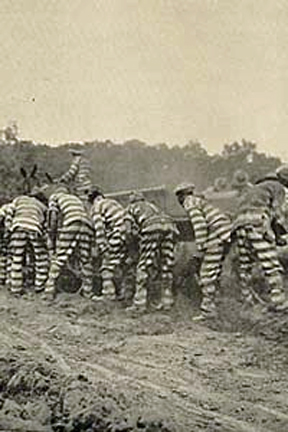
It begins and ends with the one thing that never seems to change, that signifies both life and repression, the sound of first one, rising to twelve men singing, wearing black and white prison suits, working on the distant Fork Falls highway.

The music will swell until at last it seems that the sound does not come from the twelve men on the gang, but from the earth itself, or the wide sky. It is music that causes the heart to broaden and the listener to grow cold with ecstasy and fright. Then slowly the music will sink down until at last there remains one lonely voice, then a great hoarse breath, the sun, the sound of the picks in the silence.

I loved imagining these larger than life characters, discovering the way they were interconnected and drawn to each other’s weakness, thereby exposing something about themselves. And figuring out the triangle of love, desire and revenge that existed between them, the inevitability of what will pass.

Author, Carson McCullers

Born Lula Carson Smith in Colombus, Carson McCullers (1917-1967) was an American novelist, short-story writer, playwright, essayist, and poet. Her first novel, The Heart Is a Lonely Hunter, explores the spiritual isolation of misfits and outcasts in a small town of the Southern United States. Her other novels have similar themes and most are set in the Deep South.

She wrote five novels, two plays, twenty short stories, more than two dozen nonfiction pieces, a book of children’s verse, a small number of poems, and an unfinished autobiography.

Carson McCullers is considered to be among the most significant American writers of the twentieth century. She is best known for her novels The Heart Is a Lonely Hunter (1940), The Ballad of the Sad Cafe (1951), Reflections in a Golden Eye (1941), and The Member of the Wedding (1946). At least four of her works have been made into films.

Kusamakura (1906) by Natsume Sōseki tr. Meredith McKinney (2008)

Reading Challenge Self-Sabotage

If I’d had another Yūko Tsushima book on my shelf, I would have chosen that to read in January (for Tony’s #JanuaryInJapan + Meredith’s Japanese Literature Challenge17). I should know better than to pick just any book, especially a classic, in order to be part of the group. I don’t do that well in groups, or with literary challenges, so this was my punishment or delight. It took me two weeks to finish, not because it takes very long to read (it’s only 146 pages long) but because it brought out my disinclination to read, however it did inspire me to write and share a story.

Japanese literature translated fiction literary fiction

During the time I should have been reading it, I spent a weekend looking after two dogs, few distractions I thought, comfortable reading spaces. I sat down to read it and thought of the irony that it is a book about an artist who takes a meandering walk up a forested hillside.

I had just come back from a walk on a forested hillside. On his walk he encounters certain characters whom he observes and listens to while pondering art. My walk was over but the effect of was too present to be able to read more of the artist’s journey. I turned to the blank end pages and wrote out my walk in two parts, a story of intuitive insight, intrigue and fear.

You can read The Not So Great Escape here.

A New Month, A New Mood

A week later, I (re)turned to Kusamakura and found his walk took him in a more interesting direction, engaging him more with characters he met, a young woman confronting her past, her brother his uncertain future, their father, his latter years.

The book is by turns introspective as the artist attempts to create, he has his painting equipment with him, though it is to words and poetry he finds expression, and to understand something about beauty and form. The first night at an inn, he writes a series of short poems and in the morning discovers additions, not of his hand.

I tilt my head in puzzlement as I read, at a loss to know whether the additions are intended as imitations, corrections, elegant poetic exchanges, foolishness or mockery.

He often finds himself alone in places where he would expect there to be people. There is a sense of isolation and temporary abandonment he is disturbed by. Though he does not seek company, he seems to prefer his aloneness in the presence of others. He writes of mists and clouds and dew, of becoming the things he sees and wonders how to recreate that feeling to embody in a way that makes sense to others.

Eventually he accompanies the young woman, her brother and father on another journey, out of the hillside towards the train station, the train upon which he projects his thoughts of the changing civilisation, fast approaching modernity, the compact carriage carrying humanity stripped of their traditional freedoms, it will take this young brother towards war.

We are being dragged yet deeper into the real world, which I define as the world that
contains trains.

Context Can Elevate the Experience

For me, reading about this book afterwards, a little about the life of the author and of the context of the era, written just as Japan was opening itself to the rest of the world and the significant, irreversible change that would bring, brings another layer of understanding to the text, one that is not as easy to comprehend without that context.

In a brief piece entitled My Kusamakura, Sōseki stated that his aim had been to write a “haiku-style novel”. Previous novels, he said, were works in the manner of of the senryū, the earthier version of haiku that looks at everyday human life with a wryly humorous eye. “But it seems to me,” he wrote, “that we should also have a haiku-style novel that lives through beauty.”

The novel has been previously translated by Alan Turney with the title The Three-Cornered World, however Meredith McKinney has stayed with the Japanses title Kusamakura which literally translates as grass-pillow, a traditional literary term for travel, a kind of poetic journey.

Further Reading

Kusamakura reviewed by Tony Malone: A Grass Pillow For My Head

Article: Tony Malone on The Translations of Natsume Sōseki

Author, Natsume Sōseki (1867-1916)

Natsume Kinnosuke (Sōseki was his nom de plume) was born in 1867, the final year of the old regime, into a family of minor bureaucrats whose fortunes declined rapidly with the onset of the Meiji era. A late and unwanted child in a large family, he was adopted the following year by a childless couple, then returned nine years later, when the couple divorced, to his parents (whom he believed to be his grandparents). This loveless and lonely childhood marked him with a sense of estrangement and dislocation that haunted him through his adult years and that echoed the dislocations and questioning of identity that were hallmarks of the Meiji-era Japan.

Considered the foremost novelist of this era, he was one of Japan’s most influential modern writers. He wrote 14 novels, as wall as haiku, poems, academic papers on literary theory, essays, and autobiographical sketches. He is best known for his novels Kokoro, Botchan, I Am a Cat and his unfinished work Light and Darkness

Major themes in Sōseki’s works include ordinary people fighting against economic hardship, the conflict between duty and desire, loyalty and group mentality versus freedom and individuality, personal isolation and estrangement, the rapid industrialization of Japan and its social consequences, contempt of Japan’s aping of Western culture, and a pessimistic view of human nature. 

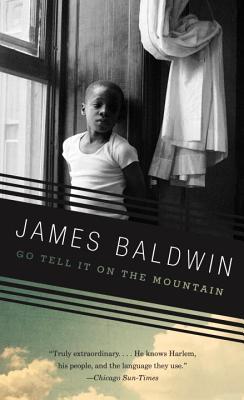
Go Tell It On The Mountain by James Baldwin

James Baldwin’s Go Tell It On The Mountain (1953) was his debut novel, a semi-autobiographical story (inspired by his own childhood in Harlem and his troubled relationship with his father), that narrates a day in the life of 14 year old John, who is the son of a fiery Pentecostal preacher Gabriel, and his second wife Elizabeth.

The Initiation

semi autobiographical novel

It is a coming-of-age story that depicts a range of thoughts, emotions and actions of this boy, while sharing the back stories of his family, culminating in a frenzied religious experience that appears to have set him on his true path.

The story is told in three parts, and though it follows the events of that one day, the three parts focus on the pasts of different characters connected to John’s family. 

Part One, The Seventh Day, is about John, it is his fourteenth birthday and he spends the day thinking about the expectations the family has of him to follow in his father’s footsteps and that he is no longer a child.

He begins to worry that he doesn’t have the same conviction as young Elisha, he feels not only unseen by his father, he feels his wrath and returns it full force in his mind – it enters his dream-life with even greater violence than the looks of disapproval he receives daily. 

The opening chapters are full of biblical language, religious fear and fervour, making it quite intense to begin with, though saved by the dialogue that brings us back to the present day.

“His father’s face, always awful, became more awful now; his father’s daily anger was transformed into prophetic wrath. His mother, her eyes raised to heaven, hands arced before her, moving, made real for John that patience, that endurance, that long suffering, which he had read of in the Bible and found so hard to imagine.”

An Act of Resistance

His mother gives him money and he uses it to attend the cinema. He begins to question his faith, and his father, noticing a rising desire for things he ought not to be thinking of:

Photo by Yuting Gao on Pexels.com
Broadway: the way that lead to death was broad, and many could be found thereon; but narrow was the way that lead to life eternal, and few there were who found it. But he did not long for the narrow way, where all his people walked; where the houses did not rise, piercing, as it seemed, the unchanging clouds, but huddled, flat, ignoble, close to the filthy ground, where the streets and the hallways and the rooms were dark, and where the unconquerable odor was of dust, and sweat, and urine, and homemade gin. In the narrow way, the way of the cross, there awaited him only humiliation forever; there awaited him, one day, a house like his father’s house, and a church like his father’s, and a job like his father’s, where he would grow old and black with hunger and toil.”

The Sins of the Father

Photo by Brett Sayles on Pexels.com

Part Two, The Prayer’s of the Saints is told in 3 parts entitled Florence’s Prayer, Gabriel’s Prayer and Elizabeth’s Prayer.

This section focuses on the past, on Gabriel’s upbringing and life, his sister Florence, her escape North and marriage, a young woman Gabriel worked with named Esther, whose life would be forever changed by their encounter. We learn of Elizabeth’s past, how she meets Richard and also travels North, their tragic story and her meeting Florence, a turning point in her life.

“And this became Florence’s deep ambition: to walk out one morning through the cabin door, never to return. Her father, whom she scarcely remembered, had departed that way one morning not many months after the birth of Gabriel.”

Everything we read here begins to explain the depth of feeling John has, often driven by events he is not aware of, including his own being, his true identity, that he does not yet know. All that has been withheld from him, the secrets people have kept, impact the lives of everyone in this extended family, often without their knowledge.

In the final part, The Threshing Floor, John has a religious experience with terrifying hallucinations, but it is an event that appears to have propelled him out of childhood and towards his calling.

Love/Hate of Parents, Escaping Reality, Awaiting the Calling

Photo by Valdemaras D. on Pexels.com

This is the third book written by Baldwin I have read and while quite different from the others, it is equally compelling. The two I have read I have linked to my reviews below, also highly recommended.

It personifies the common experience of a confused adolescent, whose situation is magnified by the love/hate he feels from one or other parent and the guilt he takes on for it, the emotional roller coaster of new exciting friendship, and the desire to escape into another reality.

The stories of the secondary characters are informative and revelatory, as they contributed to my growing understanding of the unease of the young man.

John’s narrative was convincingly portrayed to the point of it feeling like you were in his shoes and in his mind, the relentless worrying, his paranoid and angry emotions that seemed to take over him, until they culminate in his heightened ‘salvation’ experience.

These heights are a reference to the mountain, a symbol of the ascent and descent through he must pass to move closer to his God, to his own salvation, to his becoming a worthy man.

He thought of the mountaintop, where he longed to be, where the sun would cover him like a cloth of gold, would cover his head like a crown of fire, and in his hands he would hold a living rod.

Life Informs Art

In The Fire Next Time, Baldwin’s essay that first appeared in the New Yorker as Letter from a Region of My Mind, talked of his developing self-awareness as he entered adolescence and the choice he made to seek both refuge and revenge by going into the Church.

“Shortly after I joined the church, I became a preacher – a Young Minister – and I remained in the pulpit for more than three years. My youth quickly made me a much bigger drawing card than my father. I pushed this advantage ruthlessly, for it was the most effective means I had found of breaking his hold over me. That was the most frightening time of my life, and quite the most dishonest, and the resulting hysteria lent great passion to my sermons – for a while. I relished the attention and the relative immunity from punishment that my new status gave me, and I relished, above all, the sudden right to privacy.James Baldwin

Further Reading

If Beale Street Could Talk by James Baldwin

The Fire Next Time by James Baldwin

Thank you to Liz Dexter who blogs at Adventures in running, reading and working from home for the invitation to read this at the time time she was. You can read Liz’s review here.

A World of Love by Elizabeth Bowen

I read A World of Love by Elizabeth Bowen for Reading Ireland Month 2023, during the week of Classics at Cathy’s 746Books.

O’Brien versus Bowen, A Fair Comparison?

A World of Love Elisabeth BowenHaving just read and loved Edna O’Brien’s trilogy The Country Girls, written a mere 5 years later than this novella, I thought I would easily get through this. They lived in the same country and both wrote in the English language, however they were worlds apart in their use of language, their choice of protagonist and place.

There is a 30 year difference in age, but while O’Brien writes with lucidity and frankness (too frank for many, thus her work was initially banned) Bowen writes with unfathomable verbiage that obfuscates the narrative and left me wondering what this had been about.

A World of Love? I think not.

War Changes Everything

A young man who would have owned a grand Anglo-Irish house, inconveniently dies in World War I, leaving a fiance Lilia, who sadly has no status having not yet married him, and a cousin Antonia, who will inherit the mansion. Needing a farm worker to run the place and perhaps feeling sorry for Lilia, Antonia brings these two together, they marry and have two girls, Jane and Maud.

One summer 20-year-old Jane pokes around the attic and discovers a bundle of letters folded into an old dress. There are a few conversations that circle the letters, though rarely address them – which is a little like the tone of the novel, people speak and avoid all the issues.

The Importance of Community

Postcard Stories Jan Carson Ireland

Photo by Y. Koppens on Pexels.com

There is an annual festival, which should be a day of excitement, and for Jane it is, but it is the only community event the family ever participate in, they are isolated and out of touch with the everyday reality of other lives, living in the shadow of the past, of a future that never manifested.

Ultimately, we learn that this family, like the muslin dress and the letters folded away in it, are living a life suspended between the past and the present, one that Jane, who is in the peak of her youth, clearly wants to bust out of. Her finding the dress and the letters is a sign of much needed change, something that disrupts the stagnant air of an old house, arrested in time.

Times Pass, Youth Reinvents the Present

When Jane descends wearing the musty, antique dress, a symbol of the past, Antonia gestures for it to be taken away, while Jane insists the presence of the sachets suggest it was meant to be worn again.

‘No, on the contrary – no, it had had its funeral. Delicious hour for somebody, packing away her youth. Last looks at it, pangs, perhaps tears even. Then down with the lid!’

‘What, does youth really end with a bang, like that?’

‘It used to. Better if it still did.’

Antonia, as so often, spoke into nothing – for Jane, not awaiting the answer to her idle question, had got back up and gone to the looking-glass. There she stood, back turned to the bed, searching impersonally for the picture Antonia had failed to care to find or for the meaning of the picture, without which there could be no picture at all. ‘What egotists the dead seem to be,’ she said. ‘This summery lovely muslin not to be worn again, because she could not? Why not imagine me?’  She stepped back on to a flounce of the hem, which tore. ‘Who’d  she have been? she wondered, roping the fullness round her to see the damage.

Old fashioned manor house novel boarding house

Photo by Skitterphoto on Pexels.com

In the last two pages, there is the arrival of a guest at the airport, an indicator that change is afoot.

It has taken me a few days to sit with this novella and reflect on what it might have been about, to be able to write anything about it.

For me the characters were under developed, not much of note or intrigue happened, and though there was this theme of stagnation and the dying out of a breed versus the presence of youth that wants to break through all of that, there were too many unnecessary words used to describe that which does occur, that made for a frustrating reading experience.

The Rebel Protagonist

It reminded me a little of a similar feeling I had reading another Anglo-Irish novel set in a big house, Molly Keane’s Good Behaviour, it seems I don’t particularly enjoy reading novels about misanthropes sitting around in big manor houses.

I admit that classics I do enjoy, tend to feature more rebellious protagonists, like Colette’s Claudine at School, Claudine in Paris, Claudine Married and Claudine and Annie or Françoise Sagan’s Bonjour TristesseNella Larsen’s Passing and Quicksand, and Jane Bowles Two Serious Ladies and the excellent Fire in the Blood by Irène Némirovsky.

Do you have any favourite classics of a certain type?

Reading Ireland 2023

This week, its contemporary fiction for Reading Ireland and I’m planning to read Louise Kennedy’s Trespasses, which was the winner of the 2022 An Post Irish Book Awards Novel of The Year and was just longlisted for the Women’s Prize for Fiction 2023.

Irish Literature Classic Contemporary Nonfiction

Reading Ireland Month 2023, A Wish List

Looking ahead, March is Reading Ireland month over at Cathy746Books, so I’m putting together what is currently on my shelf and what is lurking in the depths of my kindle, which I seem to have been more reluctant to read from lately, so a month of focusing on Irish literature should help.

Irish Literature Classic Contemporary Nonfiction
Cathy has set out a program below for the five weeks that focuses on classics, contemporary works (where most of my titles sit), short stories and non fiction.

Eager Anticipation

I had been looking forward to reading Sara Baume’s Seven Steeples, having read her excellent nonfiction title Handiwork, and two other novels, Spill Simmer Falter Wither and A Line Made by Walking – however I couldn’t wait and read it earlier this month. Highly recommended literary fiction, with a strong tendency toward poetic prose.

Intro Week:    1 – 5 March

I’m going to try and read the Edna O’Brien trilogy The Country Girls in the first week, which I have in one volume, but I will post as the three separate books. Originally published in 1960, 1962 and 1964, they are a portrait of youth, marriage, friendship, love and loss and I’m very excited to read this author for the first time and to begin here. She is hailed as one of the great chroniclers of the female experience in the twentieth century.

I managed to acquire a hardback of her 1994 novel, House of Splendid Isolation, which would be great to read if time allows.

Irish Classics Week: 6 -12 March

I have the novella A World of Love (1954) by Elisabeth Bowen, which should be possible to read in week 2.

I’m putting Brian Moore into this category, I have 3 of his novels on my shelf, a continuation, having read five of his novels for the 100th centenary in 2021.  A previously neglected Irish author, he lived most of his adult life in Canada and the U.S., thus his literary output was created from the perspective of an outsider, looking back at his own culture, and occasionally at other cultures where he spent time, such as The Statement (1995), a political thriller set in France and The Magician’s Wife (1997), historical fiction set in France and Algeria, both of which take an aspect of French history that he found fascinating, turning them into compelling stories.

I have The Temptation of Eileen Hughes (1981), a Belfast love triangle, Black Robe (1985), a Jesuit missionary in North America in the 17th century, and The Mangan Inheritance (1979), a recently widowed man in Canada journeys to track down an Irish ancestor.

Contemporary Irish Week: 13 – 19 March

In this 3rd week, I shall attempt one or two of these novels from the kindle.

Trespasses by Louise Kennedy – this novel has garnered much praise since publication, set in Northern Ireland during the Troubles, a shattering novel about a young woman caught between allegiance to community and a dangerous passion.

Factory Girls by Michelle Gallen – I loved her novel Big Girl, Small Town and this latest has just been shortlisted for the Comedy Women in Print Award 2022/23 UK/Ireland. This is a definite, she makes me laugh out loud!

The Quiet Whispers Never Stop Olivia Fitzsimons – a dual narrative set in 1982 & 1994 Ireland, exploring the mother-daughter relationship; described as “A story of love, obsession and escape, an uncompromising, lyrical tour-de-force that marks the arrival of an extraordinary new voice in Irish fiction”.

Listening Still Anne Griffin – her debut When All is Said was a runaway international success, a book I enjoyed about a man who toasts 5 friends of importance to him. Her second book is about a young woman who can hear the last words of the dead, though it hasn’t made the same impact on readers; she has a new book due out on 27 Apr 2023 The Island of Longing about the disappearance of a daughter and a mother’s difficulty in accepting her loss, not knowing whether she is alive or dead. This latest is getting many 5 star reviews (from those reading an advance copy), one to watch.

A Traveller at the Gates of Wisdom John Boyne – an unknown man leads the reader through 2000 years of human and family history, slipping through time and space with slightly different identities, continuing on the same path, from Palestine in AD 1 to the year 2080 in a space colony. An ambitious and epic concept, a story that has had mixed reviews.

#ReadingIreland2023

Short Story Week: 20 – 26 March

I have this one collection that I shall try to get to read:

Dance Move by Wendy Erskine – stories set in Northern Ireland, where we meet characters looking to wrest control of their lives, only to find themselves defined by a moment in their past that marked them. In these stories – as in real life – the funny, the tender and the devastating go hand in hand. Full of warmth, the familiar and the strange, they are about what it means to live in the world, how far you can end up from where you came from, and what it means to look back.

Non- Fiction Week: 27 – 31 March

Cacophony of Bone Kerri ni dochartaighI don’t have any Irish nonfiction left unread on my shelf, but I have noted that creative nonfiction author Kerri ní Dochartaigh, whose debut Thin Places I read in 2021 and enjoyed immensely, has a follow up book due out in April 2023, Cacophony of Bones.

It maps the circle of a year – a journey from one place to another, field notes of a life – from one winter, to the next. It is a telling of a changed life, in a changed world – and it is about all that does not change, that which simply keeps on – living and breathing, nesting and dying – in spite of it all.

I would also recommend in this category, the excellent collection of essays The Passenger Ireland – one of my Top Reads in 2022

Literary Inspiration

Dublin One City One Read Irish LiteratureIf you are looking for inspiration, check out Cathy’s blog, where she shares a list of 100 Irish Novels from Gulliver’s Travels by Jonathan Swift (1726) to Here Are The Young Men by Rob Doyle (2014) and 100 Novels by Irish Women Writers from the Memoirs of Miss Sidney Bidulph by Frances Sheridan (1761) to Conversations with Friends by Sally Rooney (2017).

You can check out the One Dublin, One Book challenge – each year an invitation to read an Irish book in April. Last year, I joined in and read the excellent Nora, A Love Story of Nora and James Joyce by Nuala O’Connor.

In April 2023, they will be reading The Coroner’s Daughter by Andrew Hughes.

Alternatively, check out my posts:

My Year of Irish Literature – 2021 Highlights

My Top 5 Irish Fiction & Nonfiction Books

Have you read and enjoyed any of the titles here? Are you planning on reading any Irish literature in March? If so, what are you looking forward to reading? Do you have a favourite Irish author or book? Let me know in the comments below.

Happy Reading Ireland if you join in!