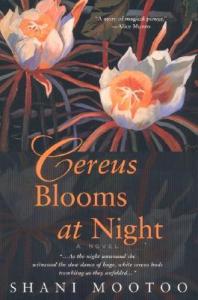
Cereus Blooms at Night by Shani Mootoo

 Cereus Blooms at Night is the partially told story of one woman’s life, beginning when she is admitted to an alms house, suspected of having murdered her father and slowly unravelling back to the turning points, the highs and lows which brought her to be in the state she is in on arrival.

cereusIt is a novel narrated in parts, each part focusing on a character(s) who were influential in her life, including the young man who never knew her until this day, the one who became her confidant, perhaps the first man she ever trusted, after all that had passed beforehand. Much of it is told as Mala slips into memories of herself as child, reliving it.

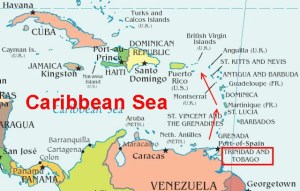
It is set on the fictional Caribbean island of Lantanacamara, in a town called Paradise, the Ramchandin patriarch arriving there from India, trading a life of indentured servitude for little more than the promise of a karmic upgrade for his son, Chandin, who would be taken under the wing of the Reverend in the hope of improving the family prospects.

The young male nurse, Tyler accepted his first job in the alms house and although well-trained and qualified, his employers had yet to extend their generosity towards giving him actual nursing duties. The arrival of the controversial patient Mala Ramchandin, provided him with the first opportunity to exercise his skills.

I hardly had opened my mouth to explain that Miss Ramchandin was too frail to inflict even a bad thought when Sister screamed at me for being insolent and blatantly disregarding her authority.

No one else wanted to go near her, she was bound and believed to be mad and dangerous. Tyler was delighted to be given the opportunity and responsibility and treated his patient with the same compassion he might have offered any patient given the chance. Sensing her distress, he acted to alleviate it regardless of instructions to do otherwise.

cereusAs Tyler gained her trust, Mala’s story is revealed to us through him and through the two visitors she received, who on her first day there, unable to see her, left a pot with a cutting of the fragrant night-blooming cereus plant, a gift that clearly delighted her, a symbol of fragrant, nurturing oblivion.

The novel is full of contrasts, moments of delight and anticipation alongside the growing recognition of impending horrors, abuse and neglect. It taunts the reader into a state of hope, as the potential for things to have been otherwise is so close at times, only for the illusion of escape to become shattered by the reality of a situation that holds tight to those who are caught in its web.

The novel is unique in its portrayal of characters whose sexual identity is unclear, exploring hybridity and sexual minorities within a cultural context, in an intriguing, accepting way.

By the time Ambrosia was five, her parents were embroiled in their marital problems to the exclusion of all else, including their child. They hardly noticed that their daughter was slowly transforming herself into their son.  Ambrose slept right through the month, undisturbed until the first Saturday of the next, and Elsie, hungry for a male in the house, went along with his (her) strong belief that he (she) was really and truly meant to be a boy. Else fully expected that he (she) would outgrow the foolishness soon enough.  But the child walked and ran and dressed and talked and tumbled and all but relieved himself so much like an authentic boy that Elsie soon apparently forgot she had ever given birth to a girl. And the father, in his few waking episodes, seemed not to remember that he had once fathered one.

Despite the harrowing nature of Mala’s experiences, the luminous storytelling and unique characters bring light to otherwise dark places, and show that perseverance and allowing space for love, can overcome all manner of tragedy.

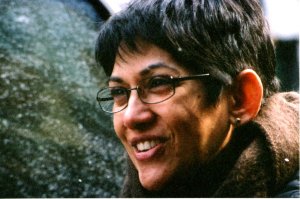
I came across the author Shani Mootoo in my search for other women authors, writing in the Caribbean tradition, authors who may have lived and been educated elsewhere, but whose writing evokes a clear connection to roots from elsewhere. Mootoo was born in Ireland, raised in Trinidad and moved to Canada as a young adult.

Trinidad and Tobago literature is rooted in the oral storytelling of African slaves, the European literary roots of the French creoles and the religious and folk tales of the Indian indentured immigrants.

A Brief History of Seven Killings by Marlon James #ManBookerPrize

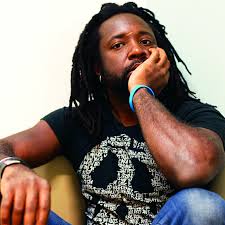
Brief HistoryMarlon James novel A Brief History of Seven Killings was the winner of the Man Booker Prize in 2015, a year that saw an exceptionally diverse array of novels long listed.

As a reminder, since it was nearly a year ago that this book won the prize, this was what Michael Wood, Chair of the judges, had to say about it:

‘This book is startling in its range of voices and registers, running from the patois of the street posse to The Book of Revelation. It is a representation of political times and places, from the CIA intervention in Jamaica to the early years of crack gangs in New York and Miami.

‘It is a crime novel that moves beyond the world of crime and takes us deep into a recent history we know far too little about. It moves at a terrific pace and will come to be seen as a classic of our times.’

It is a novel that was hailed as being exceptional in itself, much of it written in that Jamaican patois mentioned, via a litany of voices from the ganglands of the Jamaican ghetto.

I admit that it wasn’t exactly on my reading list, with its promise of violence, killing, drug related activities and dozens of characters, however the book was gifted to me by a visiting Professor, who had little to say about it, but was keen to know my thoughts. So I made it my #OneSummerChunkster and jumped right in, mind wide open.

It is difficult and almost seems inappropriate to rate this novel (I gave it 5 stars on Goodreads.com) in terms of appeal, as it is an incredibly written and unique work, with a huge amount of research that went into the writing and authenticity of its creation.

Marlon JamesI can’t say I loved it, it was a tough read in places and definitely not the kind of book I would normally choose nor the kind of film/TV series I would watch, but it is an awe-inspiring creation and for that I agree, it is indeed an amazing oeuvre and warrants the 5 stars, though as far as favourite books go or works I’d recommend, I hesitate and would say its not an experience I would choose to repeat often.

I was grateful for the list of characters up front, which I referred to often at the beginning of each chapter, as we are plunged straight into the multi-character narrative with its discordant musical tones, slice of life in the ghetto, the Singer (never referred to by name) not present, though always there in the greater awareness of them all. Life has little meaning and killing a mere rise above assault.

It must have been incredible to listen to the audio version as the individual character voices are so unique, it is the literary equivalent of reading a musical score for a symphony like you’ve never heard before, I am in awe that Marlon James succeeded in creating such a work, that balances so many threads of narrative, so many characters, the timeline, the Jamaican patois, the gangspeak, the violence, the framing of the story around the assassination attempt of that “Singer” who is never named, assumed to be Bob Marley. As Eileen Battersby, reviewer of The Irish Times put it so eloquently:

Reading Marlon’s prose is akin to injecting liquid fire into your brain.

It paints a dark, dangerous picture of ghetto life and the activities, interactions of drug dealers and their crews and the fear by those who are in any way touched or implicated in their actions. In a schizophrenic stream of consciousness narrative, gang members live their days in altered states of consciousness, paranoid, high, wanting to kill – in a frantic, dangerous other worldly horror.

Flicking between the narratives of CIA members, a young woman afraid of what she has witnessed, a journalist, all present leading up to the attempted shooting of the Singer. Surreal. It made me wonder at times if the author was in an altered state of consciousness while writing – it is some kind of trip!

I did have to push myself in parts to keep going, it’s brutal at times, and upon reaching halfway, I took the afternoon off to read The Rabbit House by Laura Alcoba.  But then the pace picked up again as Papa-Lo the don, and top members of a rival gang were about to be chucked into jail together in the hope they’d self destruct. James’s lulls never last and we are pulled back into the riveting storyline, following our favourites and steeling ourselves against spending time the company of those we know are going to detest.

Book of Night WomenI was left admiring the creation even if it wasn’t always a particularly enjoyable ride and as my comment made to another reader below shows, the beach was actually a great place to read it!

I feel like I’m reading a Jamaican symphony, a cacophony of words and sounds and emotions, not sure if it was the heat of the sun or the power of the book, but I had to keep putting it down to take a plunge into the cool ocean!

That said, I am intrigued and do intend to read Marlon James’s The Book of Night Women wondering how he handles a story with female characters.

Click Here to Buy A Novel by Marlon James at Book Depository!

A Season in Rihata by Maryse Condé (Guadeloupe) tr. Richard Philcox #WITMonth

Marysé Conde is a Guadeloupean writer I came across in 2015 when she was nominated for the Man Booker International Prize, at a time when it was a two yearly prize for a lifetime’s work.

It has now evolved into an annual prize split between the author and translator for a book translated into English that year and in 2016 it was awarded to Han Kang (South Korea) and Deborah Smith (translator) for the novel The Vegetarian.

Maryse Condé didn’t win the prize back in 2015, but was the author on the list who most appealed to me.

Since reading about her at that time, I followed her own recommendations in terms of what to read to be introduced to her work, starting with a collection of vignettes in Tales from the Heart: True Stories from my Childhood, then Victoire: My Mother’s Mother and finally, the grand masterpiece and novel she is most well-known for, especially in academic circles, as it is widely studied and recognised as an important work of historical fiction set in the African Kingdom during a significant period of change: Segu.

I’ve wanted to read more of her work, so tracked down a couple more books that have been translated into English and was fortunate enough to have listened to her speak at our local library earlier this year – though she lived in France for many years, she is now retired and has returned to her native Guadeloupe to live, though still active in literary circles.

A Season in Rihata – reviewSeason in Rihata

Zek and his Guadeloupean wife Marie-Hélène live in a small fictitious African town of Rihata, with their six children and another due any day. It is far from Paris where they met and lived in very different way and far removed from the kind of life Marie-Hélène’s remembers on the island home of her childhood.

Like all men of his ethnic group, Zek had been brought up with a kind of fear and contempt of woman – malevolent creatures whose dark instincts had to be mastered. Love had taken him by surprise. He had difficulty accepting the power Marie-Hélène held over him and was convinced that no other man except him had undergone such humiliation.

Neither are happy; Zek has never been able to get over the feeling of being looked down on by his father, even though he is long dead, and remains resentful of his younger brother Madou, who found favour without having to do anything and who was the cause of him having to relocate his family due to the unwanted attentions of his brother towards his wife.

Influenced by a father who made no pretence of his preferences, Madou had soon considered Zek as a person of limited ability and in all ways inferior; although this did not exclude a certain brotherly affection.

Now Madou is coming to Rihata, he is a political Minister coming to conduct negotiations, his presence causing many to feel uneasy, a disruption in the sleepy town where not much usually happens.

It is a novel of discontent, of the effects of selfish behaviour, which none are immune to or able to rise above. Contentedness is within their reach, but so is temptation and the effect of indulging it ricochets through all members of the extended family and the rulers of the country.

While it doesn’t reach the heights of her other work I’ve read, it’s a worthy contribution to her body of literature and I look forward to reading more.

To Buy A Novel by Maryse Condé Click here (Book Depository Affiliate Link)

The Bridge of Beyond by Simone Schwarz-Bart tr. Barbara Bray #WITMonth

Bridge of BeyondAbsolutely brilliant, astonishing, loved it, one of my Top Reads of 2016 for sure.

Originally published in 1972 as Pluie et vent sur Télumée Miracle, The Bridge of Beyond is acknowledged as one of the masterpieces of Caribbean literature. It was republished in English in 2013 as an NYRB Classic, with an introduction by Jamaica Kincaid, beautifully translated by Barbara Bray, described as ‘an intoxicating tale of love and wonder, mothers and daughters, spiritual values and the grim legacy of slavery’.

Telumee is the last in a line of proud Lougandor women on the French Antillean island of Guadeloupe. It is a novel best left to speak for itself, as the many quotes from the novel that follow here illustrate, a work infused throughout with a vital and vibrant female energy, a force that empowers them to forge ahead, no matter the circumstances, one that will permeate the reader, instilling courage and awe at the language that creates this positive, intoxicating feeling.

In the first part we learn about her people, her mother Victory,

“a laundress, wearing out her wrists on flat stones in the rivers, and her linen emerged like new from under the heavy waxed irons”

her father, his life cut short in a fatal stabbing,

“Angebert, had led a reserved and silent existence, effacing himself so completely
that no one ever knew who it was died that day. Sometimes I wonder about him, ask myself what anyone so kind and gentle was doing in this world at all.”

the man who pulled her mother out of her grief, and out of her daughter’s life,

“The fact is that a mere nothing, a thought, a whim, a particle of dust can change the course of a life. If Haut-Colbi had not stopped in the village my little story would have been different.”

and her grandmother Toussine, ‘Queen Without a Name’, to whom her mother sent her to live.

“My mother’s reverence for Toussine was such I came to regard her as some mythical being not of this world, so that for me she was legendary even while still alive.”

Simone Schwarz-Bart

Simone Schwarz-Bart

Telumee narrates the story of her life, in small details, in melodic, incantatory prose that lures the reader in, consuming her story with great pleasure. Every change of home, village, or great journey takes them across the Bridge of Beyond, a symbol of change and the unknown, the other side.

As she passes through various stages of life, she is guided but never pressured by her grandmother, remembering her stories, her songs, her advice.

“My little ember”, she’d whisper, “if you ever get on a horse, keep good hold of the reins so that it’s not the horse that rides you.” And as I clung to her, breathing in her nutmeg smell, Queen Without a Name would sigh, caress me, and go on, distinctly, as if to engrave the words on my mind: “Behind one pain, there is another. Sorrow is a wave without end. But the horse mustn’t ride you, you must ride it.”

She will fall in love, leave to work in the kitchen of wealthy white family, build her own home, experience both profound happiness and the depths of despair, brush up against madness and find its cure, and always the reassuring presence of her grandmother.

“Sometimes old thoughts arose in me, shooting up like whirls of dust raised from the road by a herd of wild horses galloping by. The Grandmother to try to whistle up a wind for me, saying we should soon be going away, for the air in Fond-Zombi didn’t agree with my lungs now.”

As Jamaica Kincaid articulates well in the introduction, The Bridge of Beyond is not a conventional novel, and it never tries to be. It is a fluid, unveiling of a life, and a way of life, lived somewhere between a past that is not forgotten, that time of slavery lamented in the songs and felt in the bones, and a present that is a struggle and a joy to live, alongside nature, the landscape, the community and their traditions.

The cultural traditions and historical events from which this work of art springs cannot be contained in a strict linear narrative. In fact, such a device might even lend a veneer of inevitability to them. For the narrative that began with a search for fresh water on an island one Sunday morning has no end – it circles back on itself, it begins again, it staggers sideways, it never lurches forward to a conclusion in which the world where it began is suddenly transformed into an ideal, new world. Schwarz-Bart’s prose awakens the senses and enlarges the imagination; it makes me anxious for my own sanity and yet at the same time certain of it; her sentences, rooted in Creole experience and filled with surprising insights and proverbs, resonate in my head and heart.” Jamaica Kincaid

It is one of the best books I have read in a long time, coming from a place of love and appreciation that reaches far back, acknowledging the gifts of all, that make up who we are. Outstanding.

Simone and André Schwarz-Bart

Simone and André Schwarz-Bart

Simone Schwarz-Bart was born in France(her parents were from Guadeloupe) in 1938, her father a solider, her mother a teacher. When war broke out, she and her mother returned to Guadeloupe. She studied in Paris, where she met her future husband, the writer André Schwarz-Bart.

They collaborating on more than one work of literature, including a six-volume encyclopaedia Hommage à la femme noire, (In Praise of Black Women), to honour the black heroines who were missing in the official historiography.

Click to Buy The Bridge of Beyond via Book Depository

(Affiliate Link)

WIT logo

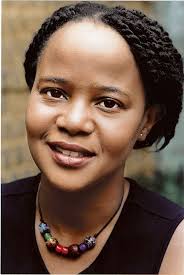
Brother, I’m Dying by Edwidge Danticat

Brother Im DyingI first read Haitian author, Edwidge Danticat last summer, her novel Breath, Eyes, Memory (review linked below) about a young girl living with her Aunt in Haiti, while her mother lived in New York, a little like the life of the author herself, much of which is revealed in this non-fiction title, Brother, I’m Dying where we learn more about her life, though the primary focus is on her father Mira and in particular, her Uncle Joseph.

After having read a number of books in the Caribbean tradition recently, it is both unique and a gesture of deep reverence to read about the special connection between a daughter and her two fathers, for she sees both these men, and rightfully so, as her fathers.

The novel opens on the day of two discoveries, the author learns she is pregnant with her first child and hears that her father has been diagnosed with a terminal illness. The pulmonary disorder had required him to take medicine (containing codeine) resulting in his taxi licence being revoked. The medicine did nothing to alleviate his symptoms, worse it lost him his job and his dignity.

The chapters alternate between their present life in America and the author’s early life in Haiti, recounting the lives of the two brothers. We come to understand the lives they create from the choices they made, how they reinvent themselves, the obstacles they face, whether it’s family, work, the establishment, or navigating the political and legal demands of the countries they inhabit.

Mira leaves Haiti to create a better life in America for his family, a departure the author has no memory of, though her Uncle Joseph’s adopted daughter Marie Micheline shared stories with her, in a tradition common to people like her, anecdotes of poignant memories for those that have been left, to serve as reassurance that they were and are loved.

“Unfortunately I wasn’t told many stories like that. What I did often hear about was the future, an undetermined time when my father would send for my mother, Bob and me.”

Life was difficult for her mother and she often left the children with her brother-in-law to ensure the children had a decent meal. Then two years after her father left, when she was four and Bob was two, her mother’s visa was approved and she too departed, alone.

The two children became very attached to their Aunt and Uncle, while they waited out the nine long years before they too could make their eventual transition to join their parents in New York. Finally happening when Edwidge was twelve years old, it would be an even greater emotional challenge, not least because they had two younger brothers born in the US, one of whom believed he was the rightful, elder child of the family.

Back in Haiti, Joseph’s voice had begun to quiver, it worried him so he travelled to a hospital where US doctors were visiting, learning of a suspected tumour that would block his airways and suffocate him if not removed. It could be extracted in the US, but so too with it, would be his voice, reduced to a bare whisper, a death-knell for a pastor.

Almost like a miracle, on a subsequent visit for a check-up, he is shown a contraption he can use to amplify his whispers and allow people to hear him.

“My father took my uncle’s hand and led him to a lamp in a corner of the room, so he could better see the machine and its interaction with my uncle’s neck. This was their first two-sided conversation in many years and they both seemed to want to move it past the technicalities to a point of near normalcy.”

Edwidge Danticat

Edwidge Danticat

The one thing that remains constant throughout their long separation, is their love and respect for each other, as witnessed and shared through the eyes of their daughter and niece.

Edwidge Danticat writes in such an honest and compassionate way, you can’t help but become drawn into their story and feel concern at the various dramatic points that arise, willing things to turn out for the best – except that’s not what happens in real life – in reality, not everything will turn out as we will it to, but the memories will remain and the experiences contribute to forming the characters that we become.

It is a credit to the author to have chosen to share something of her life, her early childhood, without elevating herself as the main character of interest, it is both a story and a tribute to the extended family and the men who tried to lead them to live in safety.

The brothers chose different paths, one deciding to leave, the other to stay and though they were separated for 30 years their relationship remained strong, seeing each other as often as they could and keeping this strong connection between all the extended members of the family and their birth country.

As Cristina García, author of Dreaming in Cuban (one of my Top 5 Fiction Reads of 2015) put it:

“Edwidge Danticat’s moving tale of two remarkable brothers – her own father  and her beloved Uncle Joseph, separated for thirty years – is as compelling and richly told as her fiction. Politically charged and sadly unforgettable, their stories will lodge themselves in your heart.”

Breath Eyes Memory

A wonderful book, an honest portrayal of lives, where joy and struggle go hand in hand, where fear is never far from the front gate and sadness its companion, yet full of hope and spiritedness as an eighty-one-year old man refuses to let thugs take all that he has, and even though he risks his life, he will continue to pursue with righteousness, what is necessary in his own country to ensure justice. Which only serves to make what follows so immensely tragic.

A 5 star must read for me.

Further Links:

Edwidge Danticat, my review of Breath, Eyes, Memory

Cristina García, my review of Dreaming in Cuban

Man Booker Prize Winner 2015

On Tuesday 13 October the Man Booker Prize for 2015 was announced.

This years winner was 44-year-old Marlon James from Jamaica (now living in Minneapolis, USA). He is the first writer from Jamaica to win the prize in its 47 year history.

His book A Brief History of Seven Killings is a fictional history, an imagined biography of the singer Bob Marley, and the events surrounding an attempted assassination in 1976. Crediting Charles Dickens as one of his former influences, here in his 686 page epic, James pulls together a band of characters:

from witnesses and FBI and CIA agents to killers, ghosts, beauty queens and Keith Richards’ drug dealer – to create a rich, polyphonic study of violence, politics and the musical legacy of Kingston of the 1970s

Michael Wood, Chair of the judges, commented:

‘This book is startling in its range of voices and registers, running from the patois of the street posse to The Book of Revelation. It is a representation of political times and places, from the CIA intervention in Jamaica to the early years of crack gangs in New York and Miami.

‘It is a crime novel that moves beyond the world of crime and takes us deep into a recent history we know far too little about. It moves at a terrific pace and will come to be seen as a classic of our times.’

It sounds like a riveting pageturner, with its cast of over 75 characters and voices. I haven’t read the book, but I’ve requested my local library buy it. Here is what a few reviewers have had to say:

Eileen Battersby, The Irish Times – Booker winner Marlon James tops Tarantino for body count

Reading Marlon’s prose is akin to injecting liquid fire into your brain.

Kei Miller, The Guardian – bloody conflicts in 70s Jamaica

tendency to inhabit the dark and gory places, and to shine a light on them

Michiko Kakutani, The New York Times – Jamaica via a Sea of Voices

raw, dense, violent, scalding, darkly comic, exhilarating and exhausting

Have you read it yet? Or planning to?


Breath, Eyes, Memory by Edwidge Danticat

Breath Eyes MemoryNarrated from the point of view of the grand-daughter Sophie Caco, who we meet while she is living with her unmarried Aunt, Tante Atie in a village in Haiti, we enter the difficult world of being female and being raised by women, in an environment where an innocent life, a contented child can turn into a tormented adult, ravaged by recurring dreams and nightmares.

“I know old people, they have great knowledge. I have been taught  never to contradict our elders. I am the oldest child. My place is here. I am supposed to march at the head of the old woman’s coffin. I am supposed to lead her funeral procession. But even if lightning should strike me now, I will say this: I am tired. I woke up one morning and I was old myself.”

Maryse Condé’s novel Victoire: My Mother’s Mother, a book that recounts the facts as she could gather them on the life of her grandmother, helps us understand the importance of memory in the context of a historical narrative of people’s lives. I find her comments important in relation to Edwidge Danticat’s work which also harvests the ‘rich landscape of memory’.

In an interview with Megan Doll, responding to a question about how she went about researching the life of a woman who had died before she was born:

“…people will tell you that in places like the Caribbean, West Africa and so on, we have two distinct elements. We have history which is written in books about the white people — how they came to Guadeloupe, how they colonized Guadeloupe, how they became the masters of Guadeloupe — and you have memory, which is the actual facts of the people of Guadeloupe and Martinique — the way they lived, the way they suffered, the way they enjoyed life. We are trained to rely more on our memories and the memories of people around us than on books. So I interviewed people, I asked questions to everybody who knew her or knew my mother or my father. It took me about three years to write Victoire. I wanted to find the history of my immediate family but at the same time the history of Guadeloupe – a period of time that I didn’t know, which was not too distant, after all, but was distant in terms of the behaviour of the people of Guadeloupe.”

Edwidge Danticat’s novel is a tale that encompasses four generations of women, where stories are passed on, secrets are sent away and a lantern observed in the distance will tell us whether a boy or girl has been born.

“There is always a place where women live near trees that, blowing in the wind, sound like music. These women tell stories to their children both to frighten and delight them. These women, they are fluttering lanterns on the hills, fireflies in the night, the faces that loom over you and recreate the same unspeakable acts that they themselves lived through. There is always a place where nightmares are passed on  through generations like heirlooms. Where women like cardinal birds return to look at their own faces in stagnant bodies of water.”

Sophie’s mother lives in New York, she knows little about her and relates to her Aunt more as a mother figure, she doesn’t know why her mother lives far away, nor is she curious about it, but when she turns twelve her mother sends a plane ticket, it is time for her to join her.

Her mother is a care worker and initially takes her with her to work, until school begins. She presses on her daughter the importance of education, the only escape, opportunity for a girl child to have choices. Sophie witnesses her mother’s violent nightmares, a fear she can not assuage, she learns the reason for her mother’s disturbing state of mind and discovers the ways mother’s ‘test’ their daughters.

Edwidge Danticat

Edwidge Danticat

Despite a protected adolescence, Sophie falls in love, she concocts a lie to put her mother off, but suffers the torment of suspicion and decides to rebel against it.

Eventually she returns to her Aunt and grandmother, to the familiar, the women who have known her from birth, to try to make sense of things.

It is a compelling story of a family, their traditions and superstitions, their aspirations and fears, the things they accept and those they run from. It also touches on the sadness and dissociation of the immigrant from their culture and roots, that in order to attain their desire, it is necessary to give up much of their identity.

“It is really hard for the new-generation girls,” she began. “You will have to choose between the really old-fashioned Haitians and the new-generation Haitians. The old-fashioned ones are not exactly prize fruits. They make you cook plantains and rice and beans and never let you feed them lasagna. The problem with the new generation is that a lot of them have lost their sense of obligation to the family’s honour. Rather than become doctors and engineers, they want to drive taxicabs to make quick cash.”

A simple read and an extraordinary book, the lives of these characters seep into the reader, these generations of women raising their daughters alone, living with their demons of the past, trying to ensure nothing of their own suffering passes on to the next generation.

Edwidge Danticat was born in Haiti in 1969, raised by her Aunt and joined her parents in America when she was twelve. Breath, Eyes, Memory was her first novel, she has written many award-winning short stories and novels including The Farming of Bones, The Dew Breaker and her most recent Claire of the Sea Light.

Victoire: My Mother’s Mother by Maryse Condé tr. Richard Philcox

Maryse Condé is the author I discovered on the Man Booker International long list, the author that stood out for me, even if she didn’t win the prize. Since discovering her, I have read and reviewed the book she recommended for those wishing to discover her work, Tales From the Heart: True Stories From my Childhoodvignettes of her life growing up as the youngest and 8th child of a civil servant (who had been a school principal when her mother married him) and school teacher in a black bourgeoise family.

I decide to follow this up with another tale Victoire: My Mother’s Mother, though publishers label it as fiction, it is based on the life and facts of her grandmother. Victoire was an illiterate, white skinned woman she never met, who worked as a highly reputable cook for a white Creole family, the Walbergs, a connection that her mother Jeanne, though raised, supported and educated by this family, appeared to reject.

VictoireMaryse Condé wrote this account in a desire to learn more of her family history, a quest that began by researching the life of Victoire Elodie Quidal, speaking to a lot of people and a project that would take three years to complete.

When she questioned her mother Jeanne, a woman with no discernible palate, incapable of boiling an egg, she was shocked to learn her grandmother had been a cook.

‘And she didn’t teach you anything, not even one recipe?’ She continued without answering the question. ‘She first worked in Grand Bourg for the Jovials, some relatives of ours. That ended badly. Very badly. Then …then she migrated to La Pointe and hired out her services to the Walbergs, a family of white Creoles, right up until she died.’

Maryse wanted answers, but that was as much as her mother would share, they never resumed the conversation, the years passed by, in a kind of chaos, however that conversation never left her curious mind and her grandmother began to seep into her imagination.

Sometimes I would wake up at night and see her sitting in a corner of the room, like a reproach, so different to what I had become.

‘What are you doing running around from Segu to Japan to South Africa? What’s the point of all these travels? Can’t you realise that the only journey that counts is discovering your inner self? That’s the only thing that matters. What are you waiting for to take an interest in me?’ she seemed to be telling me.

Victoire’s mother Eliette was a twin who died in childbirth at the age of fourteen. More than the shock of her pregnancy and sudden death, was the appearance of a child with clear eyes and pink skin. No one was aware of her having crossed paths with a white man, there were no whites in La Trielle where she lived except priests and at one point a garrison of soldiers, who’d been training in the area, before being despatched back to France.

Eliette’s mother Caldonia raised Victoire and became close to her, when most people were wary of her with her too white skin and transparent eyes. The only education she received was religious and at the age of 10, the Jovial’s requested she come and work for them in the kitchen. Given only the thankless tasks, she observed the others and began to acquire the culinary skills she would become so well-known for.

Obtaining a position as cook for the Dulieu-Beaufort family was a turning point in her life, perhaps even more so than finding herself pregnant at 16-years-old, for in this family she would meet her lifelong friend Anne-Marie, her same age, outraged at having been married off to Boniface Walberg, Victoire’s future employers and the beginning of a mysterious and enduring relationship, one that set people talking and would be seen by her daughter Jeanne (Maryse’s mother) with utmost disapproval.

Apart from a brief period when Victoire fell in love with another, causing a period of separation from her daughter, and a significant turning point in their relationship, she would stay loyal to the Walberg’s all her life. Though she could neither read or write, she accepted her life, despite suffering the disapproval of her unforgiving daughter Jeanne, who would obtain an excellent education and position, marry a man twenty years her senior, removing all risk of insecurity that she’d observed in her mother and previous generations, determined to avoid a similar fate.

In an interview with Megan Doll, in Bookslut Maryse Condé explains her desire to write about her grandmother:

Maryse Condé‘The story is, of course, about my grandmother but the real problem was my mother. I lost my mother when I was very young — fourteen and a half. And during the short time that I knew her I could never understand her. She was a very complex character. Some people — most people, the majority of people — disliked her. They believed she was too arrogant, too choleric. But we knew at home that she was the most sensitive person and I could not understand that contradiction between the way she looked and the way she actually was. So I tried to understand as I grew up and I discovered that it was because of a big problem with her own mother. She seems to have failed; she had the feeling that she was not a good, dutiful daughter. I had to understand the grandmother and the relationship between my mother, Jeanne, and her mother, Victoire, to understand who Jeanne was, why she was the way she was, and at the same time understand myself.’

Condé also finds a connection between her and Victoire through their creativity, her grandmother’s through her renowned cuisine, Condé’s through her writing. At times she almost appears to channel her grandmother, as she senses what she may have been thinking or why she reacted in a certain way,  connecting with this mysterious woman who was so different to the mother she knew, a woman equally misunderstood by the community around her.

This was the perfect follow-up to Tales of the Heart and an intriguing look into the impact of circumstances of birth of three generations of women, how the past constantly threatens and can mock one’s position in the present, somewhat explaining Jeanne’s instinct to distance herself from her illiterate mother while fulfilling her ambitions and then her guilt at having treated her mother badly, when she only wanted the best for her.

The two books I have read were translated from French into English.

Tales From The Heart, True Stories From My Childhood by Maryse Condé

I came across Maryse Condé recently via the Man Booker International Prize 2015 list of 10 nominated authors. She is third from the left in the picture below.

FinalistsNot a book prize as such, it is an award conferred on an author who has a significant body of published work, regardless of the original language it was written in, though some of it must have been translated into English.

It is from such long lists the gems are found I say, and having read about all 10 thanks to this excellent Interview: The Finalists Speak in The Guardian, I spotted my potential winner immediately. A winner in the sense that I intend to read a few of their books. The Indian writer Amitav Ghosh was the only author I’d read on this list.

One writer jumped out at me straight away and I pursued her works with little consideration for the pending award result. Maryse Condé didn’t win the prize, the Hungarian writer László Krasznahorkai did, a writer whose books intellectuals rave about, but who I’m not sure I’m ready for yet.

Tales Maryse CondéSo I took Maryse Condé’s advice and started by reading this slim volume of essays of her childhood in Guadeloupe, Tales From the Heart, True Stories From My Childhood.

She takes us right back to the beginning, to the day of her birth. Being the youngest of 8 children, the family possessed an extended collective memory and she was fortunate to have heard the story of her birth from other perspectives.

Her appearance was both a source of pride and shame for her then 43-year-old mother and 63-year-old father, proud that her body remained robust enough to support the creation of a child and shame that it publicly displayed evidence of their continued indulgence in carnal pleasures.

The first chapter Family Portrait describes her parents relationship with France:

“For them France was in no way the seat of colonial power. It was truly the Mother Country and Paris, the City of Light that lit up their lives.”

World War II wasn’t considered dark on account of all the dreadful atrocities that occurred:

“but because for seven long years they were deprived of what meant the most to them, their trips to France.”

She recounts an anecdote of a waiter in a café complimenting the family on their excellent French pronunciation, to which her parents felt indignant, considering themselves just as French as a Parisian waiter, even more so because of their higher education, manners and regular travel.

Not understanding why it mattered so, she asked her brother Sandrino:

“Could he explain my parents behaviour?” to which he replied “Papa and Maman are a pair of alienated individuals,”

a mysterious word that would rest a long time in her consciousness until she came to understand it. She realised that not only did they take no pride in their African ancestry, they knew nothing of it, however:

“They believed they were the most brilliant and most intelligent people alive, proof positive of the progress achieved by the Black Race.”

Maryse Condé

In their neighbourhood all the mothers in their circle held a profession and with it contempt for the manual work they believed had been the undoing of their own mothers. They employed a servant who, though she raised 6 children of her own would begin work at 5am to take care of the needs of the family.

We meet her best friend Yvelise, two girls who did everything together, their friendship almost destroyed by the unfortunate intervention of one of her teachers, causing a temporary rupture.

Maryse’s mother Jeanne, knew the life she didn’t wish to lead, nor her children either, she had succeeded in breaking the cycle endured by her mother and grandmother and a good education was key (and perhaps being married to a successful and much older husband). Jeanne was a school teacher, revered and feared in equal measure by those around her. Her eldest son Sandrino and her youngest child Maryse the only two children who weren’t afraid to stand up to her, the others too terrified to challenge her.

On her birthday, her favourite pupils recited compliments, gave her roses, her husband bought her jewellery and the day would culminate with a family play, a short piece of theatre written themselves, in her honour.

‘Beneath her flamboyant appearance, I imagine my mother must have been scared of life, that unbridled mare that had treated her mother and grandmother so roughly…Both of them had been abandoned with their “mountain of truth” and their two eyes to cry with.’

10-year-old Maryse asked if she could read one of her compositions for her mother’s birthday.

‘I had no idea what I wanted to write. I merely sensed that a personality such as my mother’s deserved a scribe.’

If a book of essays can reach a crescendo, this is the moment when we reach it. The moment when Maryse learns that not all lessons come from one’s parents and school teachers, some come from life itself and often when we least expect it.

In the chapter School Days , she is at school (lycée) in Paris when her French teacher asks her to present to the class a book from her island. It is a watershed moment.

‘This well intentioned proposition, however, plunged me into a deep quandary. It was, let us recall, the early fifties. Literature from the French Caribbean had not yet blossomed. Patrick Chamoiseau lay unformed in his mother’s womb and I had never heard the name Aime Césaire. Which writer from my island could I speak about? I resorted to my usual source: Sandrino.’

Sugar Cane Alley

Sugar Cane Alley

Sandrino introduces her to to a treasure. La Rue Case-Negres (Black Shack Alley) by Joseph Zobel and his hero José Hassan. It was made into an award-winning film titled Sugar Cane Alley.

It was her first introduction to a world no one up until that moment had ever mentioned; a world that highlighted slavery, the slave trade, colonial oppression, the exploitation of man by man and colour prejudice.

‘I was scared to reveal how José and I were worlds apart. In the eyes of this Communist teacher, in the eyes of the entire class, the real Caribbean was the one I was guilty of not knowing.’

These glimpses into the more significant and memorable aspects of childhood that shaped the author Maryse Condé are insightful, engaging and honest. Just as her consciousness is awakened, the vignettes finish and leave the reader desperate to know more.

I had intended to read this volume over time, but once I started reading I couldn’t stop, it is almost like reading a coming-of-age novella and at its conclusion, the writers fiction will begin. For Condé’s first novel Hérémakhonon is about a character raised in Guadeloupe, educated in Paris, who then travels to Africa in search of a recognisable past, just as she did.

‘Veronica has spent her childhood in Guadeloupe and, after a period as a student in Paris, wants to escape that island’s respectable black bourgeoisie, which she regards as secretly afraid of its own inferiority. She travels to an unnamed West African state and, while there, seeks an authentically African past with which she will be able to identify.’

Tales From The Heart is an excellent read and an intriguing introduction to the writer and her influences and will certainly make you want to read more of her work. I am very happy I have these three novels on the shelf to follow-up with only I am missing that debut novel which I really want to read now too! Very highly recommended.

Literary Works of Maryse Condé

My Other Reviews

Victoire, My Mother’s Mother 

Segu

The Story of the Cannibal Woman

A Season in Rihata

Click Here to Buy a book by Maryse Condé


The Autobiography of my Mother by Jamaica Kincaid

Jamaica Kincaid’s The Autobiography of my Mother is a book that was being discarded from our local English library that I pounced on when I discovered it in the collection of books that hadn’t been borrowed for years and therefore must make way for others.
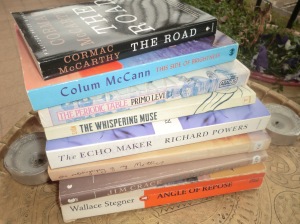
The 7 books I rescued from the Annual Library Sale!

The 7 books I rescued from the Annual Library Sale!

I already have two slim novellas by the same author that sit unread, but something about this novel, for it is fiction, despite the playful title, insisted it should be read at once. Not just a fabulous cover, which is repeated inside as chapter headings, each chapter reveals a section of the photo, until the last one revealing the entire portrait – but the comments from various publications and writers who sang its praise back in 1996 when it was first published.

“Writing in precise, lyrical prose that uses the repetition of images and words to build a musical rhythm, Jamaica Kincaid conjures up the world of Dominica in all its beauty and casual cruelty, a world in which the magical coexists with the mundane, a world in which the ghosts of colonialism still haunt the relationships between men and women. In doing so she has written a powerful and disturbing book.” NEW YORK TIMES

And let me say from the outset, I absolutely loved this book, its language, its voice, its poetry, the complexity of its narrator, who could be so distant yet simultaneously get so under your skin. There is a raw but brutal honesty to it, that disturbs and is to be admired at the same time, it is so full of contrasts and so compelling and beats its rhythm so loud, I almost can’t describe it.

Now that I have finished it, I want to read more by Kincaid and just now before writing this review I looked up a little about the author’s own life, and now I am even more intrigued, what an amazing story and experiences which are often at the heart of what she channels through her stories. A unique voice indeed.

So for those who, like me, knew little about this author, a little background before talking about the novel.

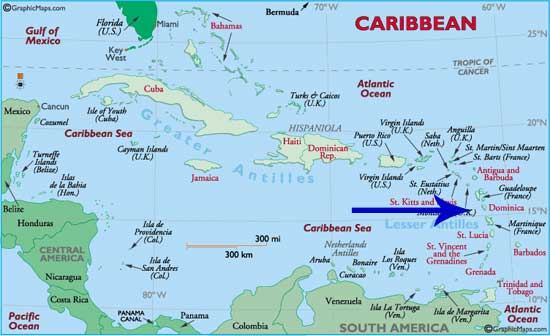
Jamaica Kincaid was born Elaine Potter Richardson in the capital city of St. John’s, Antigua in 1949.  Antigua is a small island in the West Indies (a region of the Caribbean basin), colonised by the British in 1632 that became independent in 1981.
Caribbean


Her mother was from Dominica and her biological father, a West Indian chauffeur, whom she didn’t meet until her thirties.  Kincaid was an only child until she was nine, when the first of her three brothers was born. Until then she’d had the sole attention of her mother, so life changed dramatically thereafter and at 17 she left for America, severing ties with her family and did not return to Antigua for 20 years, though it resonated deep within her creativity.

She still lives in the US today and teaches at Claremont McKenna College in Claremont, California. Her most recent novel See Now Then was published in 2013 after a 10 year absence, depicting in her original style the unravelling of an interracial marriage.
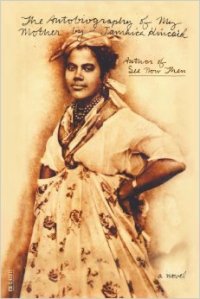
Autobiography MotherIn the autobiography of my mother, we encounter Xuela Claudette Richardson, who narrates her life looking back over seventy years, though the sense of her life reads as if it is being lived in the present, so vivid are the memories, so visceral the experiences. Her mother died in child birth and her father left her with his laundry woman until she was seven, when he remarried and came back for her.

She recalls the moment vividly through the senses and how it made her feel.

“I thanked Eunice for taking care of me. I did not mean it, I could not mean it, I did not know how to mean it, but I would mean it now. I did not say goodbye; in the world that I lived in then and the world that I live in now goodbyes do not exist, it is a small world. All my belongings were in a muslin knapsack and he placed them in a bag that was on the donkey he had been riding. He placed me on the donkey and sat behind me. And this was how we looked as my back was turned on the small house in which I spent the first seven years of my life…”

Through the narrator looking back over years and at events that she re-experiences as she recalls them, we see how it was then, that something, whether it is the lack of maternal love or the makeup of this character, nature or nurture, contributes to her way of being in the world in an emotionally detached way. She responds to instincts and observes acutely her own responses and is able to look back on them and describe and account for them, but there is a sense of something missing, that appears through the recurring dream of a mother climbing up and away from her and the questions she asks herself throughout her life.

“Who was my father? Not just who was he to me, his child – but who was he? He was a policeman, but not an ordinary policeman; he inspired more than the expected amount of fear for someone in his position…At the time I came to live with him, he has just mastered the mask that he wore as a face for the remainder of his life: the skin taut, the eyes small and drawn back as though deep inside his head, so that it wasn’t possible to get a clue to him from them, his lips parted in a smile. He seemed trustworthy.”

Yet nothing is ever as it seems and she depicts her father as dishonest and grows up in a culture and environment of distrust, discouraged from making friendships, made to see that no one can be trusted.

“We were not friends; such a thing was discouraged. We were never to trust each other. This was like a motto repeated to us by our parents; it was a part of my upbringing, like a form of good manners: You cannot trust these people, my father would say to me, the very words the other children’s parents were saying to them, perhaps even at the same time. That “these people” were ourselves, that this insistence on mistrust of others – that people who looked so very much like each other, who shared a common history of suffering and humiliation and enslavement, should be taught to mistrust each other, even as children, is no longer a mystery to me. The people we should naturally have mistrusted were beyond our influence completely; what we needed to defeat them, to rid ourselves of them, was something far more powerful than mistrust. To mistrust each other was just one of many feelings we had for each other, all of them the opposite of love, all of them standing in the place of love.”

Her father’s wife who is resentful toward Xuela and reminds her often that she can’t be her father’s daughter, soon bears two children, a boy and a girl. Though there is no love between them, Xuela doesn’t hate her, she has sympathy for her.

“Her tragedy was greater than mine; her mother did not love her, but her mother was alive, and every day she saw her mother and every day her mother let her know she was not loved. My mother was dead.”

At 15, her father removes her from his home and takes her to live with a business partner and his wife as a boarder. She develops a close friendship with the wife, Madame LaBatte, observing with the same acuity their relationship and way of living and enters womanhood herself, observing and experiencing changes in her own body and the effect it elicits in others.

She makes decisions about her own womanhood, about her body, about mothering. And she lives her life in accordance with those decisions. She marries, she discovers love and seems never to lose that ability to see through the illusions that surround all those things without sacrificing pleasure and contentedness.

“And this man I married was one of the victors, and so much a part of him was this situation, the situation of the conqueror, that only through a book of history could he be reminded of a time when he might have been something other, something like me, the vanquished, the defeated. When he looked at the night sky, it was closed off; so, too, was the midday sky, closed off; the seas were closed off, the ground on which he walked was closed off. He did not have a future, he had only the past, he lived in that way; it was not a past he was responsible for all by himself, it was a past he had inherited. He did not object to his inheritance; it was a good one, only it did not bring happiness; and his reply to such an assertion would be the correct one: What can bring happiness? At the moment the conqueror asks such a question, his defeat is secure.”

And at the end I ask, who is writing this story? Who is this mother who had no mother and no children? And in the dying pages, she will answer the question and we may realise we knew it all along.

the autobiography of my Mother plumbs the depths of maternal love and its lack, mother daughter relationships, self-love, absent fathers and the latent influences of enslavement and occupation, how they continue to distort reality even when they are no longer present.

I find it almost impossible to describe the reading experience, except that it left me asking “How did I not know about this book?” The voice is so unique and powerful and much more than an imagination, it is rooted in something strong and yet transparent and is utterly compelling.  Don’t read this for story, this is about writing and thus reading through the senses, Jamaica Kincaid creates prose that inhabits them all.

A 5 star read for me!

Click Here to Buy a Copy of The Autobiography of My Mother Now!