Fresh Dirt from the Grave by Giovanna Rivero tr. Isabel Adey

Fresh Dirt From the Grave is another Charco Press title, this time from Bolivia. It is a collection of six stories that unsettle the reader, navigating paths outside the norm, revealing aspects of characters, of circumstances and inclinations that pierce like a wound, while evoking expressions of love, justice and hope.

Described as where contemporary horrors and ancient terrors meet, these short stories by Bolivian author Giovanna Rivero are not my usual fare, however I chose to read it for #WITMonth and discover what the boundaries of Gothic really means.

There are six stories and the first few were tales of macabre revenge that reminded me of Yoko Ogawa’s excellent collection Revenge.

Overall an interesting, dark collection that brings out a quiet consideration in each of the protagonists as they grapple with their challenging situations and must either make a decision or give in to one made by an other.

blessed are the meek

A young woman is violated. Everyone around her seems to be denying the gravity of it. The family moves away, until the opportunity arrives to bury their grief, literally…

It shouldn’t have been her family that had to leave. But they were the ones who left.

fish, turtle, vulture

Photo A. Tuan on Pexels.com

A man survives 100 days at sea, the young apprentice companion with him does not.

Now he is meeting the mother of that young boy. She feeds him tortillas, asking him to repeat again what happened out there.

Atoning for his loss, he will atone for hers.

Tell me more, she says, pushing the plate of tortillas towards him as if she were paying him to tell the tale with that warm, fragrant dough.

it looks human when it rains

A Japanese widow in Bolivia teaches origami to women prisoners in a jail. She is curious about these so-called murderers, until she teaches them how to make a snake – and observes in the eyes of one woman, something terrifying.

She was surprised to find that she was not appalled by their crimes, their mistakes, their unbridled passions, the gross misjudgements that had led them there. Who was she to ponder their failings.

Her own past comes back to haunt her, a young woman lodger helps her in the garden, things that were buried resurface in her mind, in her life. A sense of injustice, a prickle of rage. The year of the snake had been the worst, the part she had tried to bury. Origami was a path, a light, because it never resorted to twists or curves to fix a form.

No one who had been so fortunate as to find themselves among the group of émigrés that embarked on the voyage to Brazil and Peru in 1957 before settling in Bolivia, in the eastern rainforest of Yapacani, had returned to Japan carrying the wilting flowers of the fiasco on their backs.

Socorro

“Those boy’s aren’t your husbands” says a deranged Aunt in the opening lines.

I didn’t know in that moment, what shook me more: the mad woman’s barbed remark or the cackle she unleashed as she spoke those words, which felt like a reprimand.

A woman, her husband and twin boys visit her mother and Aunt. She is an expert in mental health but being around her Aunt unsettles her in ways that her professional self finds hard to deal with. The moments of lucidity among the madness, reach in to her own hidden aspect and threaten to overwhelm her.

Donkey Skin

Two children orphaned overnight are sent to live with their French Aunt in Winnipeg, Canada. When they get to 17 years old, they plan an escape, and their world gets turned upside down again.

The only blood uncle we had left in Santa Cruz, Papa’s brother, said that children were always better off being raised near a female voice, and so without saying a word, he signed all the migration papers needed for Dani and me to leave Bolivia and his life for good. Being Bolivian is a mental illness, he told us in that good-humoured way of his, which made us forgive him for everything, even for handing us over like pets to Aunt Anita, who, when the time came to appear at the juvenile court, despite all those breath mints she slotted between her teeth, still couldn’t disguise the stench of whiskey.

Kindred Deer

A brown deer stands next to a dead tree Kindred Deer in Giovanna Rivero's Fresh Dirt from the grave attend a dead deer
Photo by Pixabay on Pexels.com

Intelligent but struggling financially, students sign up for medical trials that promise to cover their debts, but at what price.

The medicinal smell that rises from Joaquin’s body like an aura has taken over our bedroom. It’ll be gone in a few days, they told him.

They ignore the corpse of a dead animal outside their window, leaving it longer than they should to address. Like the strange mark on his back that shouldn’t be there, have they left that too late as well, will he pay the ultimate price?

Pay him double or I’m leaving, I say.

Author, Giovanna Rivero

Giovanna Rivero was born in the city of Montero, Santa Cruz, Bolivia in 1972 and is a writer of short stories and novels.

She holds a doctorate in Hispano-American literature. In 2004, she studied on the Iowa Writing Program and in 2006 was awarded a Fulbright scholarship, enabling her to take a masters in Latin American literature at the University of Florida. In 2014, she received her doctorate.​ In 2011, she was selected by the Guadalajara Book Fair as one of the 25 upcoming stars of Latin American literature.

She is the author of the books of short stories as well as children’s books. She has published four novels: Las camaleonas (2001), Tukzon (2008), Helena 2022 (2011) and 98 segundos sin sombra (2014). Her literary work, which moves between horror literature and science fiction, is regarded as a major contribution to the renewal of the Gothic and fantastic genres in Latin America.

Time of the Flies by Claudia Piñeiro tr. Frances Riddle

Women in Translation Month

15 years after killing her lover Ines is released from prison. A dark, intelligent mystery with a surprise collective voice

I read Claudia Piñeiro’s latest novel for #WITMonth. It is from the Charco Bundle 2024, a subscription where they send you nine titles, the best of contemporary Latin American fiction they are publishing throughout the year. It’s one of my absolute favourite things, an annual literary gift to me, surprise books that I haven’t chosen myself. And they are so good!

Also, it’s August. Women in Translation month. So I’m prioritising books in that category, another of my favourite things. World travel and storytelling through literature.

Claudia Piñeiro is fast becoming one of my favourite Latin American authors. This is her third book I have read. Elena Knows was Shortlisted for the International Booker Prize 2022; it was intriguing, but the next one, A Little Luck was even better. More engaging emotionally, full of suspense, an immersive read.

Review

Time of the Flies has it all. The more I consider it, I find it is literary brilliance.

A past crime, a slow burning mystery, a complicated mother daughter relationship, a developing friendship between women who are used to not trusting anyone, unwanted motherhood, a dilemma that might be an opportunity or a trap. A sociological commentary on the lives, loves, wrath and resentments of women and thought provoking references to other works of literature, from classic mythology to contemporary feminism.

Female Friendships, Fumigations and Investigations

Inés, the mother of Laura ( a role she is trying now to deny) has been released from prison 15 years after killing her husband’s lover. She has set up a pest fumigation and private investigation business with fellow friend and ex inmate Manca.

FFF (flies, females and fumigations) a business run by women for women. Non-toxic pest control.

The two friends and business partners work separately but they consult each other when a case requires it, although Inés knows more about autopsies, fingerprints, and criminal profiles than Manca does about cockroaches.

A new client makes Inés an offer that might be an opportunity or a trap, she considers whether to pursue the opportunity and Manca, her friend and business partner investigates the client and becomes suspicious when she finds there is a connection between this woman and someone Inés knows.

She curses her fate and whatever recommendation or flyer that landed her at Susan Bonar’s house in the first place to be confronted by a part of her past that she does not deny but prefers to forget.

The Collective Voice, And Medea

Then there is a collective voice of feminist disharmony that enters the narrative every few chapters to opinionate on what just happened, if there is an issue that women might have an opinion on.

It’s never a consensus, it illustrates the difficulty of any collective voice that doesn’t resonate together, and demonstrates the aspects being considered on a topic. Other voices are quoted that challenge:

“There are many kinds of feminism in the world, many different political stances within the social movement and different critiques of our culture.” Marta Lamas Acoso. I don’t agree. Me neither. I do.

Each of these chapters begins with an epigram from Medea by Euripides (a Greek tragedy/play from 431 BC), that sets the tone for the theme that will be discussed. Like our protagonist Inés, Medea too, took vengeance against her philandering husband Jason, by murdering his new wife and worse, her own two sons.

This quote below precedes a discussion on the issue of one woman killing another woman, whether that is femicide. Equally interesting quotes from Rebecca Solnit and Toni Morrison are also referred to in the text.

Medea by Euripides A Greek Tragedy, Time of the Flies Claudia Pineiro Collective voice of women feminist issues

Chorus:

‘Unhappy woman, 

Feu, feu [Ah, ah] unhappy for your miseries.

Where will you turn? To what host for shelter?’

Once you realise what the collective voice is doing, it provides a pause in the narrative and allows other voices to engage with the reader. In case you missed that a significant issue had just appeared in the text you’re going to be confronted with it here. It doesn’t distract from the story (well, yes it does initially), however the chapters are only a couple of pages long. It adds depth to the narrative making this more of a literary novel, it pushes the reader to consider the issues, which some readers may not appreciate, but it is likely they will remember.

What About Those Flies

Inés sees a fly. In her eye. It comes and goes, it is a part of her. The doctor has checked it out and explained it away, but for her, it is significant. She understands the brain’s suppression mechanism that will make it disappear.

If she had to define it, she’d say it’s the feeling that there’s something fluttering around her head that she can’t catch, that there’s something right in front of her eyes that she can’t see. But it’s definitely not a fly.

Flies ascend in the narrative, they have a champion in Inés and we will even come across numerous literary references to them, some that hold them more in esteem than others. They are also that niggle that she feels, something that wants attention that she is not seeing.

Even Manca made a contribution to my literary education. IN her efforts to encourage me to write, she gave me a novel (I don’t read novels Manca); Like Flies from Afar, by one Kike Ferrari. Manca doesn’t read either, not even the instructions on how to use her appliances, but she went to the bookstore and asked for ‘one about flies’, and the bookseller said: ‘The fly as a methaphor, right? I’ll bring you one of the best crime novels of the year.’

(…)
(…)
The novel has its central mystery that is slowly unravelled, while it explores the complexity of the mother daughter relationship, the effect of abandonment and absence and the promise that a new generation can bring to old wounds.
(…)
(…)
(…)

So, Those Ellipsis’s

Though it was a slow read for me, it really got me in its grip and there was so much to consider beyond the mystery, like the collective voice, which makes the reader consider issues from different points of view.

Then there are the ellipsis’s. The pause, things left out, the reader’s imagination engaged, what are they? Pause for thought indeed. Usually present when there is dialogue, they make the reader consider why they are there. Are parts of the dialogue unimportant? Are they an invitation to imagine what was said in between? Whatever the intention of the author, the effect is to awaken the reader to their presence and make you think about the why.

By the time I finished this, I absolutely loved it, for everything. For its central storytelling, its reflective invitation, the literary references, the collective voice and its ability to keep me entertained and interested and intrigued. A quirky, enticing, novel that praises flies and finds all these intriguing literary references to them. It is a cornucopia of elements amidst great storytelling.

Further Reading

Read an Extract of Time of the Flies by Claudia Piñeiro

Actualidad Literatura: The Time of the Flies <<El tiempo de las moscas>> reviewed by Juan Ortiz

Author, Claudia Piñeiro

Born in Burzaco, Buenos Aires in 1960, Claudia Piñeiro is a best-selling author, known internationally for her crime novels.

She has won numerous national and international prizes, including the Pepe Carvalho Prize, the LiBeraturpreis for Elena Knows and the prestigious Sor Juana Inés de la Cruz Prize for Las grietas de Jara (A Crack in the Wall). Many of her novels have been adapted for the big screen, including Elena Knows (Netflix).

Piñeiro is the third most translated Argentinean author after Jorge Luis Borges and Julio Cortázar. She’s also a playwright and scriptwriter (including popular Netflix series The Kingdom). Her novel Elena Knows was shortlisted for the 2022 International Booker Prize.

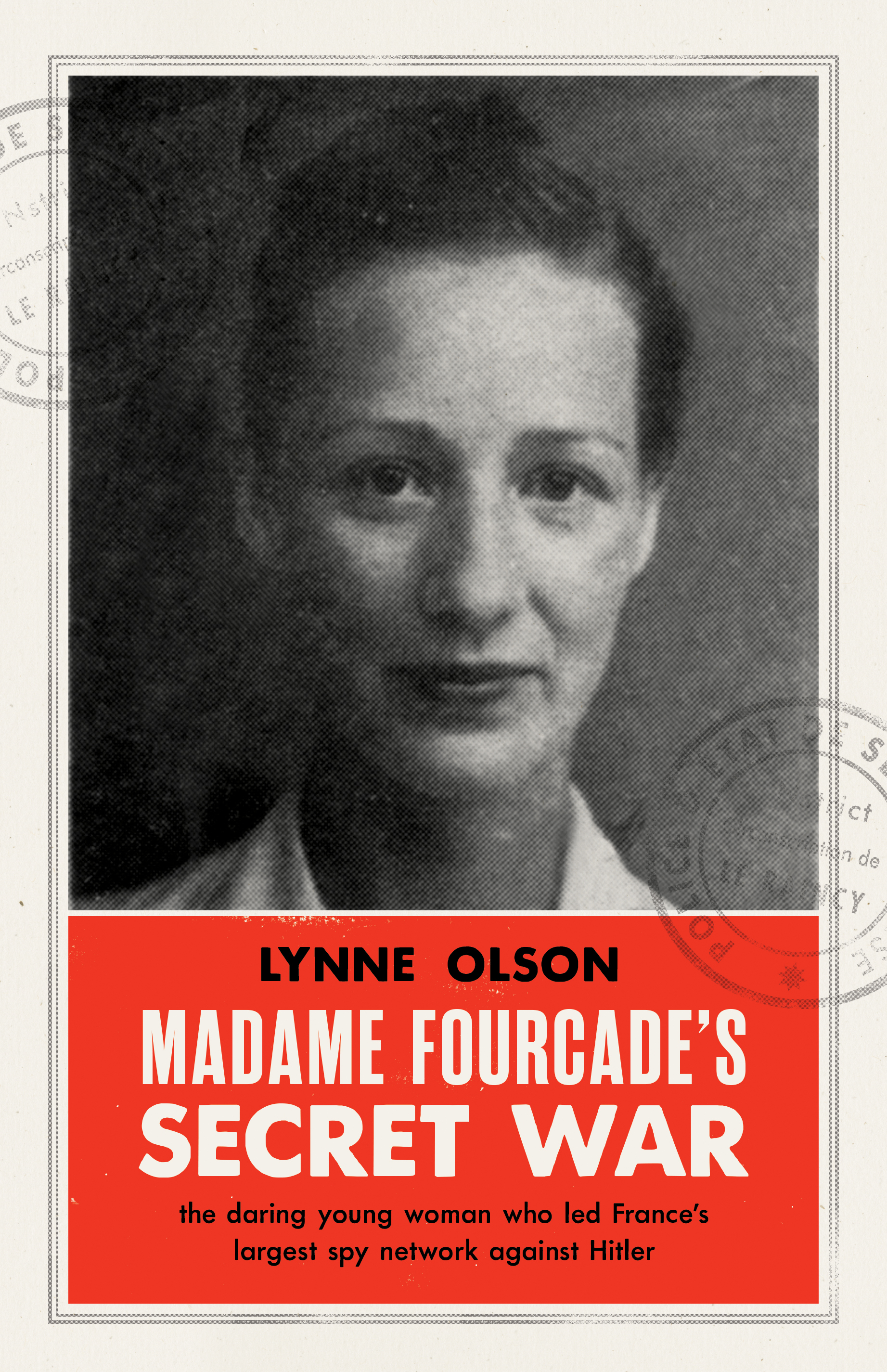
Madame Fourcade’s Secret War by Lynne Olson

The Daring Young Woman Who Led France’s Largest Spy Network Against Hitler

I became aware of this book thanks to a friend who is also interested in historical stories about women in France. I knew at once I had to read it.

While my friend was still reading it some months ago, I happened to go on a walk, following a route I have taken many times and noticed for the first time that Madame Fourcade’s name featured on one of the street signs. You can imagine my surprise and delight! She became even more of a talking point and I looked forward to getting a copy of the book (not that easy) to read.

I will say if you are interested in reading it, that the font size of the paperback version (which I read) is quite small compared to the hardback version (a copy of which I bought for a friend).

Famous French Women, A Rare Vision

Most of the street signs in France are the names of people that have featured in their recent history. However, it is very rare to come across the name of a woman. In our town Marie Curie has a street sign, but even then, she shares it with her husband. Marie Madeleine Fourcade not only has a sign all to herself, strategically placed at the top of a hill overlooking the town, but she was also the very first woman in France’s history to be given a funeral at Les Invalides, an important complex of buildings in Paris that celebrates France’s military glory.

Marie Madeleine’s father worked for a French shipping company in Shanghai. Her mother refused to stay behind in Paris, though agreed to return to Marseille for the birth of her daughter in 1909. Marie-Madeleine and her siblings grew up in Shanghai, with freedoms unheard of for the social and family circles they hailed from. Those freedoms, an early bilingual education and their return to Paris when she was 10 years old, set her up in many ways for the future role she would play, organising and ultimately leading an important French intelligence network.

As a young woman, she again lived abroad, in Morocco. She drove a car, learned to fly a plane and had a job. She rejected French society’s (and her husband’s) restrictive ideas about how women should behave. She had trained to become a concert pianist, worked at a commercial radio station and would forge her own future.

Access to Important Connections, Two Rivals

Street named after Marie Madeleine Fourcade, co founder and chef de resistance of the Alliance network 'Noah's Ark' codename hérrison, hedgehog during World War 2

Though never in the military herself, she was married briefly to a French military officer, as was her sister. She thus had opportunity to meet and observe some of the younger officers through her social connections, men who would later become important during the war years.

Two of the most prominent members of that younger group – Lieutenant Colonel Charles de Gaulle and Major Georges Loustaunau Lacau – took centre stage in the discussion on rue Vaneau, engaging in a debate that quickly escalated into a full-blown argument. It soon became obvious to Marie-Madeleine that the two officers viewed each other as rivals…

Both products of Saint-Cyr, France’s elite military academy Ecole Supérieure de Guerre, both fought and received multiple citations for bravery in WWI; they were brilliant, ambitious and egocentric. A rebellious streak put them at odds with Marshal Philippe Pétain (a French general who commanded the French Army in WW1 and would become head of what became known as the Régime de Vichy Vichy France). The rivalry between the pair would also keep them from being unified during the war years and likely impacted perceptions afterwards.

A Partnership, A Turning Point

After a discussion at one of the social events around March 1936, Loustaunau-Lacau contacted Marie-Madeleine and asked for her help in creating a journal that would argue the case for reform of the military and open the eyes of leaders to the imminent threat of Germany. The work would begin immediately.

“One of my Belgian friends has procured secret dossiers that expose the intentions of the German high command,” he said. “I need to get them quickly. Such documents must not travel by mail. You have a car. You must go to Brussels and collect them. I will pay all expenses.”

An Intelligence Network is Formed, Working Inside France

Caught up in this real life spy drama, Marie-Madeleine agreed – a decision that would radically change her life. From that moment, she wrote later, she and Loustaunau-Lacau began building an intelligence network against Nazi Germany.

Over the next two years, they would recruit informants in France, Switzerland, Belgium and Germany who passed on reports about the build up of the German armed forces. Loustaunau-Lacau adopted the codename Navarre, after Henri de Navarre, later King Henri IV of France. Given the risks they faced, that one of them might be captured or killed, Navarre insisted they share leadership of the network and when he was compromised, as promised Fourcade took the lead role.

At the same time, backbencher in the British House of Commons, Winston Churchill had created a similar private network and Charles de Gaulle decamped to London, setting up his Free French operation. Fourcade suggested they join with him.

Her mentor rejected the idea outright. In England, he said, they would be refugees, just like de Gaulle, dependent on the British for everything. At that point, almost no one in the British government, with the promising exception of Winston Churchill, took de Gaulle and his minuscule band of followers seriously.

They would resist from within.

Another Perspective of History

Founded in Vichy in Septemeber 1940 by Georges Loustaunau-Lacau and Marie-Madeleine Fourcade, the Crusade Intelligence Network (later called Alliance) moves it headquarters from Vichy to Pau in early 1941 and to Marseille later that year.

Madame Fourcade’s Secret War is a work of history, told in a compelling narrative voice, that not only focuses on the leadership role of this one extraordinary woman, but will likely expand most reader’s knowledge of what living in France under German occupation was like for the many, who vehemently opposed the way their government had capitulated to a hostile outside force, without much initial resistance.

Personally, the history I learned in school was quite different, as it was told from a very anglo-centric perspective, so the narratives stemmed from how this threat impacted the United Kingdom and their allies.

I never really understood what exactly happened within France in the lead up to the occupation, how it impacted their government and rendered the military ineffective. So many of the protections a country might normally expect when facing a hostile enemy were lacking; to go against the orders of a government (even if under occupation) was a betrayal.

Cinema Can Create Its Own Self Serving Narrative

Though there have been books and films about the war and the French resistance, little has been shown of the importance of the Alliance network and of Marie-Madeleine Fourcade’s achievements. Most of the attention has gone to stories of sabotage and escape lines, of battles and blitzes.

Saboteurs and other resistance fighters in France were certainly important after D-Day, but they did little to obstruct the Germans before then. Escape networks did heroic work in smuggling shot-down Allied airmen and others out of occupied Europe and back to freedom, but their actual contribution to victory was small.

I would certainly be interested in a cinematic development of Fourcade’s story, one that traverses France and shows a very different side to those who travelling around the country, making radio transmissions and secret flights across the channel, where they are hosted by memorable characters in this real life adventure.

Noah’s Ark and the Hedgehog

Les Invalides Paris, where Marie Madeleine Fourcade's funeral was held, the first woman in France to be commemorated there.
Les Invalides Paris

In the late 1960’s Fourcade would get her story down in a gripping memoir entitled Noah’s Ark, the name the German’s referred to their network as, after they would use codenames of animals, Fourcade’s was hérrison (hedgehog), a small animal that intelligently eluded predators.

Lynne Olson provides a thoroughly researched, immensely readable account of the creation of the Alliance, one of the original and most important resistance networks in France. From its foundation by Navarre and Fourcade to the establishment of thousands of recruits, the many dangerous activities they undertook, throughout the war, all that was able to be continued by Fourcade due to her continued leadership deserves to be more widely recognised and appreciated.

They Will Not Be Forgotten, The People

L'Arche de Noé Réseau Alliance 1940-1945 by Marie Madeleine Fourcade autobiogrpahy of her role as the leader of a French resistance during world war 2

The book is full of stories about the different people she recruited, the relationships and loyalties and daring escapades each of them went on, in order to bring their intelligence to the Alliance.

It is also, sadly, a homage to those who would be punished and killed for their roles, some, so close to the end of the war, it is excruciating to read. That Fourcade survived and was able to share her story and thus the courage and bravery and loyalty of others is a true gift to all humanity.

It’s the first time I have read an account that centres what was happening in France at this local level, with a more global scope, that renders the dangerous and delicate situation of those in the military, who were against the capitulation of their government. While in great danger to themselves, they were able to band together like-minded civilians and provide those on the outside with the information they needed to mount a significant and ultimately successful defence.

Highly Recommended!

Author, Lynne Olson

Lynne Olson is a New York Times bestselling author of nine books of history, most of which focus on World War II. Former U.S. Secretary of State Madeleine Albright has called her “our era’s foremost chronicler of World War II politics and diplomacy.”

Born in Hawaii, Lynne graduated magna cum laude from the University of Arizona. Before becoming a full-time author, she worked as a journalist, with the Associated Press as a national feature writer in New York, a foreign correspondent in AP’s Moscow bureau, and a political reporter in Washington. She left the AP to join the Washington bureau of the Baltimore Sun, where she covered national politics and eventually the White House.

Lynne’s latest book is Empress of the Nile: The Daredevil Woman Archaeologist Who Saved Egypt’s Ancient Temples From Extinction (2023).

Three of her earlier books were immediate New York Times bestsellers; Madame Fourcade’s Secret War: The Daring Young Woman Who Led France’s Largest Spy Network Against the Nazis (2019), Those Angry Days: Roosevelt, Lindbergh, and America’s Fight Over World War II (2013)and Citizens of London: The Americans Who Stood with Britain in Its Darkest, Finest Hour (2010)

Lynne lives in Washington, DC with her husband, Stanley Cloud, with whom she co-authored two books.

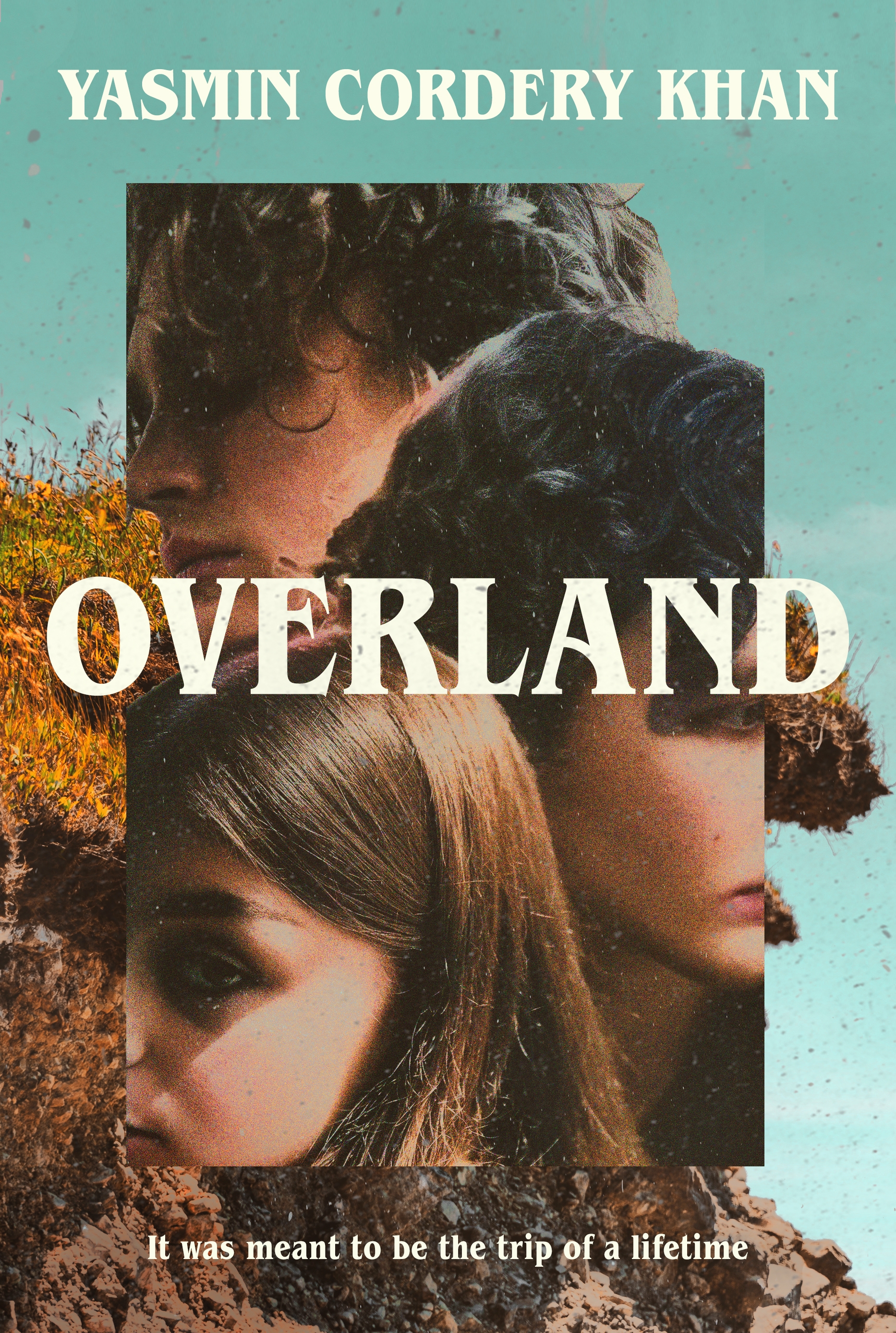
Overland (2024) by Yasmin Cordery Khan

The Overland, the Hippie Trail, the Big OE

I was interested to read this to observe some of this particular overland route that many young people took in the late 1960’s early 1970’s.

While for some it signified the hippie trail, for others, for example, those coming from New Zealand, it was a kind of right of passage, referred to as ‘the Big OE’, the ‘overseas experience’, which that culture accepts is something that every young person might do in their twenties, while still single, and eligible to get a working holiday visa in the UK to help fund their travels.

By the 1990’s when I did my OE, the overland route had changed, it was no longer advisable to take the route that those from the 1970’s had taken. My mini version of the overland, was to spend three months travelling through India, Nepal, Vietman and Thailand.

Employers expected many young in their twenties to leave to take up the two year visa opportunity and gain valuable experience from living in another country and travelling in other cultures. I remember my boss when I told him I was leaving telling me that he learnt more in first couple of weeks travelling in Asia than he had in the previous couple of years in his employment. It did make me wonder what happened in those couple of weeks!

Both of my birth parents travelled a similar route, from different starting points, and reading Overland made me want to know more about their experiences, because they were very different from what I read here.

Both had to find work in foreign countries to fund their travels, and set off on their own, without a vehicle or travelling mate, although as anyone travelling alone soon discovers, it doesn’t take long to connect with other like minded travellers.

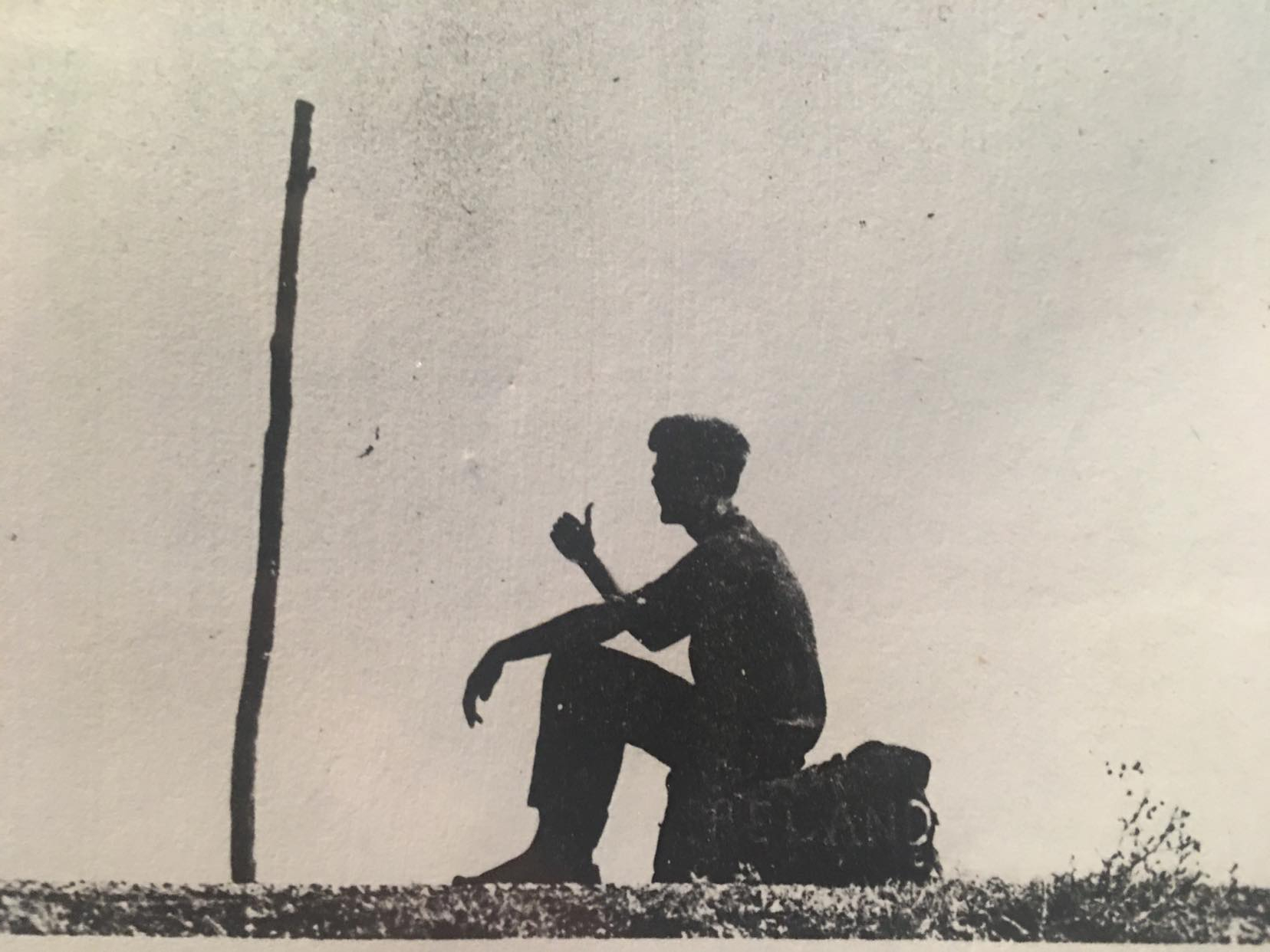
Recently my father found some old photos from that journey he set out on at the age of 18, one of which is depicted above, others show him working on a construction site in Kuwait, interacting with local workers. Not the same route followed as this overland novel depicts, much more of an intrepid journey.

Young Brits Abroad in a Land Rover

Three youth did an overland trip and on the first page of the novel, Joyce, who describes herself as a nobody, is looking back fifty years later after an otherwise uneventful life, recollecting the trip. There had been scandal and controversy at the time of their voyage and she had slipped under the radar. A recent visit to a car boot sale in the grounds of an old country house has awakened memories and now she is reliving the trip.

I saw Persia in the time of the Shah, and the sun set over Kabul and the sun rise at Taj Mahal. I was there too and this is my story.

Overland thus begins with an advertisement in a London newspaper in 1970.

Kathmandu by van, leave August

Share petrol and costs.

Joyce is just out of secretarial college and comes across the ad because she likes reading the miscellaneous section of the newspaper. She goes to Clapham to meet the two boys who are taking the Land Rover on the trip. Friends from boarding school Fred, whose aristocratic family own the vehicle, and Anton, son of an Egyptian Doctor and English mother, who has been supported by Fred’s family since a family tragedy.

From London to South Asia via Istanbul, Turkey, to Tehran, Iran to Kabul, Afghanistan to Pakistan, India, Nepal, Sri Lanka, Bangladesh to Thailand

The Aristocrat, The Son of an Immigrant, A Working Class Girl

It becomes clear that the three travellers are from different socio-economic backgrounds and being confined to a vehicle for a trip through foreign lands is going to bring out aspects of what each of them is either escaping or moving towards. When Anton asks Joyce why she wants to go, she can tell he’s looking for an intellectual response and sceptical of her motives. Reasons she keeps to herself (and from the reader) for a long while.

First impression: arrogant little twit. My face was burning with embarrassment at having been corrected, but he didn’t seem to notice. I might not have all your certificates, but I know about real life, I thought.

There’s No Place Like Home

The three of them go on the journey and have to overcome various challenges they confront in each country, whether cultural, mechanical or human. Over time their characters and back stories are revealed and in Fred’s case his father’s dark history, in one of the countries they will travel to. All of this plays into how they cope with the situations they encounter. And they come to consider their own destiny.

In a nutshell, if I could have articulated it, I’d have said that England was my destiny. Because by that point – although I liked those landscapes and those wild places that we drove through, don’t get me wrong – a realisation was growing in me, more and more, about the sheer beauty of the English countryside.

They will discover the consequences of acting or not acting on their instincts, who they can trust, who they should avoid and what to do when one of them starts experimenting in ways that threaten to derail them from their objective.

“We were all on pretty much the same route, there were only so many digs to stay in. So even though we were crossing the world, there was a small world on the overland, its own little bubble, the same faces and names and rumours recirculated and resurfaced.”

The Memory Trip

I enjoyed the novel for the way it depicted the journey and the places they stopped, mostly unfamiliar until they get to India, then it awakened my own overland journey, particularly the memory of taking the local night buses, with 3 people per seat (no headrest) and trucks/buses driving in the middle of the road in the dark of night. (We soon understood what “HORN PLEASE” on the back of the vehicle in front referred to). Yes, the all night loud music playing to keep the driver awake (ear plugs essential), stopping for sweet roadside chai, meeting young Indian astronomers on their way to view the total solar eclipse in Fatepar Sikri.

Ultimately, the overland is an opportunity to immerse in a culture, live for a period in a different way, encounter different ways of thinking and being, different perspectives, that much of this was missed in their journey taints the possibility of this experience having any meaning.

I enjoyed less the depiction of the dysfunctional character of Fred and the obsessive, slightly unreliable narrator Joyce. Anton was the more interesting character for me, due to his interest in the culture and languages and people, so without giving anything away, the ending was disappointing, but maybe that’s the message, about who in this life gets protected and who falls into the cracks.

So, there is the significance of the roles each of them played, their own histories, that of their families, the different social class they issued from and how that figured in the way they behaved and how they end up.

Alwynne, one of my Goodread’s friends articulates the themes succinctly here, in and extract from her review:

“Khan’s novel’s convincing, beautifully-observed and meticulously researched, making it hard sometimes to remember Joyce is a purely fictional creation. This isn’t a nostalgic glimpse at lost innocence, instead Khan’s narrative gradually constructs a damming portrait of a newly post-colonial world, casually racist, steeped in orientalist attitudes. A place where, for people like Joyce and Fred, nation, the myth of empire, class and identity are still tightly intertwined. Khan’s exploration of these connects to an oblique, underlying series of reflections on history, memory and the legacy of imperialist atrocities – and above all the failure to take responsibility or atone for the evils of the past. But despite the complexity of Khan’s themes, it’s highly readable. An absorbing, fluid piece.”

Highly Recommended.

Yasmin Cordery Khan, Author

Yasmin Cordery Khan is a novelist and historian. Her first book, The Great Partition: the Making of India and Pakistan (2007), won the Gladstone Prize for History from the Royal Historical Society. Her second book was The Raj At War: A People’s History of India’s Second World War (2015) followed by the novel Edgeware Road (2022).

She has written for the New Statesman and Guardian and appeared on BBC radio and television, and is an editor of History Workshop Journal and a trustee of the Charles Wallace India Trust. She lives in Oxfordshire.

Unearthing (2023) by Kyo Maclear

A Story of Tangled Love and Family Secrets

“But what is the point of writing if not to unearth things… Annie Ernaux

I chose to read Unearthing because it was the overall favourite read of 2023 of Shagafta who I follow on Substack and because it ties in to a theme I have been researching, exploring separation, kinship and the discovery of one’s identity.

Of Changing Seasons and Evolving Stories

Unearthing is a memoir of twenty four sekki (節気) or “small seasons” that offers a different way of thinking about the ever changing ground of our personal stories.

Three months after Kyo Maclear’s father dies, looking to know him at a deeper level and curious about his mother’s side of the family, she takes a DNA test.

When my father died and I was his grieving and wondering daughter, I thought of a word. The word, yugen, or what the Japanese call a state of “dim” or “deep” mystery, evokes the unsettled feeling I had at various points growing up as an only child. Our family was a tiny unit with strange ways. My parents acted like criminals on the lam – loading up moving vans, changing house every few years. I was four years old when we left England, shedding backstory and friends overnight. What made a family behave this way, like people drawn to erasure? Why were we always leaving like this, unceremoniously? I did not know. Growing up, I assumed that everyone was shaped and suffused by what they could not perceive clearly, the invisible and voiceless things imparted atmospherically within families.

Ask Your Father

Shocked, when she receives the results she learns that she is not biologically related to her father and that her mother refuses to speak on the subject.

She repeated it three times. Talk to your Dad. As if his death had been a hoax; her voice no longer blurry but brisk with fear.

Though her mother does not wish to talk about it, her daughter perseveres. She will weather this storm, waiting for it to calm, listening between the lines of conversation, picking up on the cues.

When one person leaves, the old order collapses. That’s why we were speaking to each other carefully. We were a shapeshifting family, in the midst of recomposing ourselves. What is grief, if not the act of persisting and reconstituting oneself? What is its difficulty, if not the pressure to appear, once more, fully formed?

Solving the Mystery of Your Life

Photo K. Kaboompics Pexels.com

Becoming a detective in her own life, Kyo assembles the story of her lineage, tied to the seasons and the making of a garden.

Digging was my way out. An impulse born of stubbornness and bred in me by a culture that loves stories of people discovering the truth of their paternity; that champions the idea that concealment is destructive and truth is freeing.

The way the Kyo Maclear takes her time unveiling the truth of her story, the various paths she follows, the thoroughness of her pursuit to know, makes this a thrilling read.

There is something about the long, slow seasons and the process of tending the soil, not trying to rush the end result that resonates in her writing, yet never slows the narrative.

Her observations of her mother, the nuanced noticing, are so well depicted, you can feel the resolution of the mystery getting warmer and warmer, as she regains her mother’s trust and nurtures her into revealing more.

Something

It was all being pulled from some shadowy room. The details she remembered. The broken chain of events. What she spoke arrived in fragments. But there was something else, a hitch and hesitance, that made me alert.

I did not yet understand the need to hold on to an invented story, even a falsified past, at all costs. I did not recognize her dissembling. Usually impervious, I thought she seemed out of sorts. Maybe a little distraught.

She does not want to tell me something, I thought.

Along the way larger questions arise: What exactly is kinship? What does it mean to be family? What gets planted and nurtured? What gets buried and forgotten? Can tending a garden heal anything?

I thought this memoir was brilliant, I highlighted so many thoughtful and thought provoking passages. I admired the way the revelations came slowly and the characters of her family were explored, her search for herself made her realise how little she knew of her own parents. They too, were a mystery to unravel and motivations to explore, before even embarking on the second exploration, the unknown aspect that her DNA revealed.

It also celebrates those that helped, guided and accepted her along the way, new relationships and a deeper understanding of aspects of the self, while never losing her essence.

Highly Recommended.

Kyo Maclear, Author

Kyo Maclear was born in London, England, and moved to Toronto at the age of four. She holds a doctorate from York University in Environmental Humanities.

Her most recent book, the hybrid memoir, Birds Art Life, was published in seven territories and became a Canadian #1 bestseller. It was a finalist for the Hilary Weston Writers’ Trust Prize for Nonfiction and winner of the Trillium Book Award.

Unearthing was an instant bestseller in Canada and winner of the Governor General’s Literary Award for Nonfiction. Her short fiction, essays, and art criticism have been published in Orion MagazineAsia Art PacificLitHubBrickThe MillionsThe GuardianLion’s Roar, The Globe and Mail (Toronto) and elsewhere. She has been a national arts reviewer for Canadian Art and a monthly arts columnist for Toronto Life. She is also a children’s author, editor, and teacher.

She lives in Tkaronto/Toronto, on the traditional territories of the Mississaugas of the New Credit, the Haudenosaunee, Métis, and the Huron-Wendat.

Tidal Waters by Velia Vidal (Colombia) tr. Annie McDermott

Women in Translation

Tidal Waters is my first August read for #WIT month. Reading Women in Translation.

What an original, good-hearted, open, vulnerable read. I’m not sure whether what I read was fictional or not, because much of what is described in the ‘letters to a close friend’ coincides with elements in the author bio inside the front cover of the book and the main character is Vel.

The Epistolary Novel

epistolary novel of letters, reading, literacy, poverty, Afro Colombian

An epistolary narrative, it is about the return to a place and finding new purpose, along with the motivation to pursue it and taking others with you – told through a correspondence that bears witness and though we don’t see the replies, we can tell that they encourage and support both the idea(s) and the woman pursuing it.

I don’t know if I mentioned this specifically, perhaps not in a letter, though maybe when we met up before I left to come and live here here for good, but part of what pushed me to make this radical life change was the need to feel that my existence had meaning, that I was spending each day doing something I cared about and could feel proud of at the end of my life. And that’s just what I found in being Seño Velia, the woman who has meetings with people about books, who tries to motivate children to love reading and books as much as she does, and who supports the teachers.

Finding Purpose and Motivation, In Community

The letters span 3 years from May 2015 and they track a significant change in Vel’s life as she decides to return to Choco (to the Afro-Colombian community she was raised in) to start a new venture to bring reading, literacy and a love of books to it. The correspondence exhibits the growth and expansion of her writing, the letter becomes a safe harbour and she tests it by taking her writing to another level, stretching into a more personal yet contained arena.

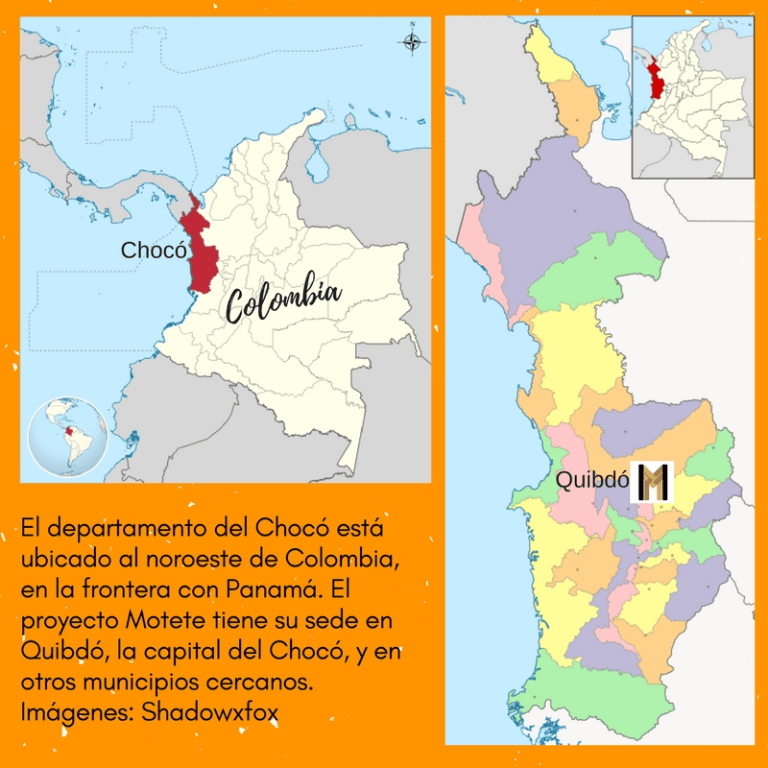
Tomorrow I start a diploma in reading promotion, and with it my project, Motete. We’ve chosen three areas of Quibdo where I’ll start running the workshops.

She is taking a risk starting a new venture, but believes in it and is surrounded by extended family and connections, which facilitate her ability to reach out even further into the community and invite everyone in, to be part of or benefit from her shared love of reading.

And so this project is coming together. This basket, this Motete, is filling up. The slogan for my project is ‘Contenidos que tejen’ – contents that weave – and every day I like it more. Every day I realise that these contents are weaving fulfillment and happiness within me…

The thing is, motetes have been used to carry food for the body: plaintains, bushmeat, fish. Our is to fill them with food for the soul: art, culture, books. And just as motetes are woven by hand, I thought these new contents would also form a fabric: the fabric of society, of community, the fabric of souls.

Letter Writing

Her unnamed friend that she writes to is someone she hasn’t known long, he occupies a space between the familiar and the unfamiliar that she claims as a freedom to express herself, to be vulnerable and open, someone who has mentored and shown her how to get funding. The range of things she will write to him of, span a wide spectrum.

We never see the replies but the continuation of her own correspondence displays her life, her dealing with health problems, the double bind of her wounding and love, of being raised by doting grandparents, while having complicated relationships with a teenage mother unable to mother her and an emotionally absent father. Her later sadness and depression, helped through therapy, tears and conversations, to ways of coping and healing. Her optimism for her venture, and the community connections she creates keep her going.

I grew a lot. I learned. But most of all I tried to weave a new way of relating to my father that hurt as little as possible.

The Sea, The Sea

One of the themes is the sea, the absence of sea, the way the river meets the sea and her relationship to it. She yearns for it when it has been absent for some time, just as she yearns for the letter writer and the relief that comes in the act of writing to him.

She describes herself in her current role as being like the sea at that place where it meets the river.

I’m like the Pacific Ocean, pressing at the river with its tides to make it flow the other way, or lapping at the land when its waters rise, when it feels like gaining inches of new ground. You need strong motivation to stick to this way of life, which isn’t exactly a fight against the world, but rather the certainty of forging your own path.

An Homage to Correspondence

I loved this slender book, it’s project and generosity, its intimate sharing and platform for expanding and learning and having the courage to venture into new areas. It made me think of an exquisite title I’d forgotten about, Leslie Marmon Silko’s slim book of correspondence The Delicacy and Strength of Lace: Letters Between Leslie Marmon Silko and James Wright.

That correspondence was written when Silko was 31 years old and Wright 51. They had planned to meet in the Spring of 1980, mentioned in letters of Oct/Nov of the previous year, not knowing he would be gone before then.

They discuss her novel, his poetry, language, his travels, her adventures with animals, their speaking engagements, their mutual challenges and experiences as university professors, and soon began to share more personal feelings, as she acknowledged the tough time she was having and he shared his own experience, expressing empathy.

Velia Vidal dedicates her book:

To my recipient,
simply for being there.

and when I read about her own projects in society, her love of the sea and shared readings and efforts to help move children and young adults out of poverty, it is all the more inspirational to read these letters, understanding the difference a letter can make, to see someone take a risk and pursue something that will help others from her community, while fulfilling her own dreams and aspirations.

Highly Recommended.

Velia Vidal, Author

Velia Vidal (Bahía Solano, Colombia, 1982) is a writer who loves the sea and shared readings. In 2021 she was a fellow at Villa Josepha Ahrenshoop, in Germany.

For her book Tidal Waters she won the Afro-Colombian Authors Publication Grant awarded by Colombia’s Ministry of Culture. She is the co-author of Oír somos río (2019) and its bilingual German-Spanish edition.

She is the founder and director of the Motete Educational and Cultural Corporation and the Reading and Writing Festival (FLECHO) in Chocó, one of the most isolated, complex and neglected regions in Colombia with the highest afro-descendant population density in the country.

Vidal graduated in Afro-Latin American Studies and has a Masters in Reading Education and Children’s Literature. She is also a journalist and specialist in social management and communication. In 2022 she was included in the list of 100 most influential and inspiring women in the world by the BBC.

She writes children’s literature, fiction and non-fiction, and poetry. Her work has been translated into German, English and Portuguese.