
Two Sherpas is a wonderful novel where not much happens, but we see inside the minds of two men, one a young man at the beginning of his adulthood and the other who has many more years of experience from which to reflect back on.
Contemplation From Above
 They stand at the edge of a crevice looking down on their client, a British climber.
Tourists… thinks the old Sherpa, who isn’t old or, properly speaking, a Sherpa. They always manage to do something, these people – these tourists, he thinks. Then says. With an ambiguous gesture he indicates the void, the ledge where the body of an Englishman lies prone and immobile, and he says:
‘These people…’
And so breaks the silence. If the deafening noise of the wind ravelling over the ridges of the Himalayas can be considered silence.
Over the course of the novel, what the to men say to each other could be written on one page, but instead, the pages contain their thoughts, their pasts, their aspirations, the current predicament.
A Little Known History
Some chapters, most of which are less than one page of text, rather than beginning with just a number, contain a title, for example between thee and five sits the following:
People From the East
Five hundred years prior, a nomadic people with a tradition of seasonal migration across the central Chinese province of Sichuan initiates a process of gradual westerly motion. In exile, they become pariahs: refugees who must seek their new station in the mountains. The locals baptise them according to their cardinal origins. People (pa) from the East (Shar): Sherpas.
These chapters inform us of various historical facts, information that creates context around the two men. We learn how these people came to be called sherpas and how that name was a convenient way to refer to men whom they could use to assist them, without having to acknowledge their humanity.
A chasm between Flavius and Marrullus
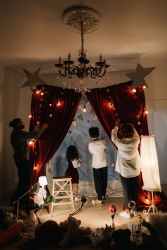
Photo by cottonbro studioPexels.com
The young Sherpa is in school and has plans for further study. He is taking a theatre workshop.
It should be understood that climbing licences are a common phenomenon in the Nepalese school system: the Ministry of Education periodically prints supplements so that students who earn their keep as mountain guides can keep up with their classmates.
He will soon play the role of Flavius in Shakespeare’s Julius Caesar. The omniscient narrator talks about Flavius and Marullus, co-conspirators against Caesar who are out of touch with the lives and perspectives of the common people, they don’t understand how commoners could support such a man, so they attempt to sabotage their ideas, they drive everyone away.
A Too Often Celebrated History
We also learn of the various expeditions to Mount Everest, of a western ambition to conquer, of casualties, of a hierarchy of importance, one that continues today, long after Caesar’s Roman rule. We read of the loss of lives of local people in avalanches, of suffering families.
The foreigners who reach the summit believe that they have outperformed the species and, at least for an instant, they see themselves as demigods…For them, for the tourists, we are pack animals, the older man would say. Creatures capable of doing with relative ease what for human beings constitutes a feat. They see us as mules, beings with bones structures suited to lugging great weights. They see it as perfectly logical for Sherpas to summit. They ought to think of us as Titans, deities with powers unattainable by mere mortals. But they don’t. When they reach the summit, they’re the ones who are the heroes. It is they who have achieved mountaineering glory, the – so called- miracle of besting, of overcoming themselves.
 In effect, the novel itself is like an ascent, a trek that stops periodically to look back, to observe both the reality of current conditions, of local lives, and the persistent effects of imperialism. And then it looks down into the crevice, taking its time to dig deeper into the subject, into the influences that might have caused this dissonance, this treatment of people, this naming of others.
It uses as a reference, European philosophical and theatrical references, plotting them side by side with facts relating to ‘people of the east’, and this present situation, where one from the west lies deep in a crevice, outside his territory, being observed by two from the east.
Silence is a theme that occurs throughout the novel, one we are reminded of, as it repeats in the text, in metaphor and in reality on the mountainside. It is this theme of silence that lead me to follow up reading this novel with Abdulrazak Gurnah’s excellent Admiring Silence (my review here), where he too uses it as a theme for dealing with the effect of prejudice of a colonial flavour.
Career Choices On the Edge
Throughout their time at the edge of the crevice, the younger man has considered and reconsidered his choice of future profession, his thoughts will take from contemplating engineering, to international relations, to playwright, to the line he must speak in the opening of the upcoming play.
“Home, you idle creatures, get you home!”
Two Sherpas is sheer brilliance, a book that had me hooked in anticipation from its opening pages. The intelligent juxtaposition of different literary elements, enthralling peaks that form a narrative, its thought provoking references, motivate the reader to consider their perspective of past events, of language, while maintaining a level of intrigue for the present dire situation. It’s a wake up call.
Cover Art
I want to highlight the simplicity and brilliance of the cover art by Pablo Font, each time I receive one of Charco Press’s books I like to linger on the cover design, this one is an apt depiction of the story. Mesmerising.
Highly Recommended, another great choice of Latin American literature, superbly translated by Jennifer Croft, thanks to Charco Press
Sebastián Martínez Daniell, Author
Sebastián Martínez Daniell was born in Buenos Aires in 1971. He has published 3 novels, Two Sherpas (2018) is his third novel, and is published in English by Charco Press in Feb 2023.
He is one of the co-founders of the independent publisher Entropía and is a literature lecturer at the National University of the Arts in Buenos Aires.
 This work of autofiction opens when the author with his elderly uncle is taken to a cemetery where the tomb of his great-great-grandmother lies, where he is shown proof of her close association with Gregorio Cartagena, a priest, the man who fathered all her children, whom she was never married to, a man who denied his children both his name and a relationship with their father.
 This novel is his way of exploring all that, of seeing how this new information informs him, how it makes apparent the patterns and threads of a lineage. Although much of the narrative by necessity has been ficitonlised, it reads like a work of creative nonfiction.
 If I have one criticism, it would be the way the women in the story have been depicted, they are made to be responsible and given agency in a way that might raise the eyebrows of some readers. In times gone by, when a woman fell pregnant, there were few options open to them and very little choice.




 I don’t have any Irish nonfiction left unread on my shelf, but I have noted that creative nonfiction author Kerri ní Dochartaigh, whose debut
  If you are looking for inspiration, check out Cathy’s blog, where she shares a list of
  Things They Lost is a coming-of-age tale of a young girl who is highly intuitive and sensitive to other spiritual dimensions. She has always been aware of the presence of entities that may not be apparent to others, although some of the women around her also have perceptive abilities.
 There but Not There, A Peculiar Absence
 Okwiri Oduor was born in Nairobi, Kenya. At the age of 25, she won the Caine Prize for African Writing 2014 for her story ‘My Father’s Head’. Later that year, she was named on the Hay Festival’s Africa39 list of 39 African writers under 40 who would define trends in African literature.
 Written in three parts, each is an immersion in that era and life, showing how swiftly families change when they cross into another culture, how foreign they become to their own, how important it is to heal the wounds of the past, to acknowledge, understand and have tolerance for differences; how fear passes down ancestral lines, how connection is important.
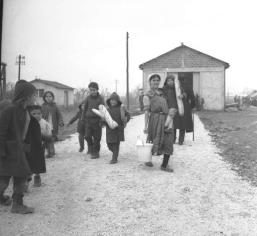 When they flee to France, they are initially housed in the ‘
 Alice Zeniter was born in 1986. She is the author of four novels; Sombre dimanche (2013) won the Prix du Livre Inter, the Prix des lecteurs de l’Express and the Prix de la Closerie des Lilas; Juste avant l’oubli (2015) won the Prix Renaudot des lycéens.


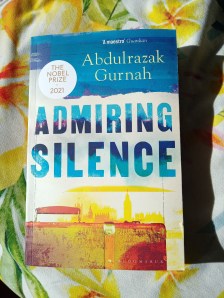 Some years later he is given a chance to study in England, by a family friend who is a strict disciplinarian, ensuring he succeeds in his studies. He discovers how much more difficult life can be when he becomes independent and no longer has the encouragement of his fellow countryman to push him.
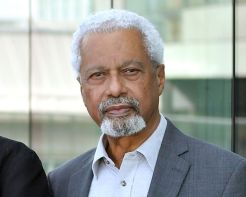 Abdulrazak Gurnah
 My first encounter was her nonfiction title Handiwork, one I highly recommend as a starting place to her work and style. This title is like a spring board into her fiction, an introduction to the visual artist, the poet, the keen observer and storyteller.
 Baume describes everything about them, about the house, its character, its creaks and groans, its smallest inhabitants, the habits of all those who dwell within its walls, inside its walls, outside its walls in her multiple adjective, poetic prose, that skips across the page to a rhythmic beat.
 First we meet the spider that lives behind the wing mirror of their van, who takes refuge behind the glass.
 Sara Baume’s debut novel, Spill Simmer Falter Wither won the Geoffrey Faber Memorial Prize and has been widely translated. Her second novel, A Line Made by Walking, was shortlisted for the Goldsmiths Prize and her 2020 bestselling non-fiction book, handiwork, was shortlisted for the Rathbones Folio Prize. Seven Steeples, was shortlisted for the Goldsmiths Prize and has just been longlisted for the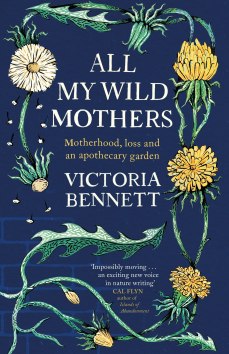


 Victoria Bennett was born in Oxfordshire in 1971. A poet and author, her writing has previously received a Northern Debut Award, a Northern Promise Award, the Andrew Waterhouse Award, and has been longlisted for the Penguin WriteNow programme and the inaugural Nan Shepherd Prize for under-represented voices.
 Word by Word