
In its original language the title was Anna, Hannah och Johanna. The title in English is misleading, as I read Hanna’s story and she continued to have one boy after the other, I wondered when she was going to have time to have those daughters, until I realised it was a generational reference.
 Hanna has one daughter, Johanna, a name that carries its own story and past, before she is even born, one of the reasons she is closer to her father in her early years. Johanna would also have one daughter Anna, it is she who begins to narrate this story, she visits her mother in hospital, desperate to get answers to questions she has left it too late to ask.
She had lost her memory four years ago, then only a few months later her words had disappeared. She could see and hear, but could name neither objects nor people, so they lost all meaning.
Anna knows she is being demanding like a child, willing her mother to understand and respond, reprimanded by the care staff for upsetting her, for although she can’t respond, she remains vulnerable to the joys and anxieties of those around her and powerless to prevent the dreams that carry her each night back to the world of her childhood, that place her daughter is now desperately trying to access.
Anna finds an old photograph of her grandmother Hanna and recognises similarities she’s not been aware of, she remembers her briefly and recalls asking her mother:
‘Why isn’t she a proper Gran? Whose lap you can sit on and who tells stories?
And her mother’s voice: ‘She’s old and tired, Anna. She’s had enough of children. And there was never any time for stories in her life?’
The discovery of the photo and the recognition it awakens in Anna gets her thinking about the lives of all the women in her family, that by tracing the past and understanding the circumstances and decisions they had to make, she might better be able to navigate her own life, rather than blaming the relationship she is in for her misery.
The narrative then shifts back to Hanna’s childhood, born in 1871, she was the eldest of a second group of children born, the first four died in the famine of the 1860’s.
What the mother learned from the previous deaths was never to get fond of the new child. And to fear dirt and bad air.
 The first half of the book is dedicated to Hanna and her life and this is where the novel is at its best, immersed in the struggle of Hanna’s early years, its tragic turning point and the situation she is forced to accept as a result. Circumstances that will become buried deep, that nevertheless leave their impression on how she is in the world and impact those daughters indirectly.
It is also in this section we learn how difficult life was for so many families on the border region between Norway and Sweden and the political discontent that existed at the time. People who had lived together peacefully, intermarried and seemed to be as one, as republican issues arose, discrimination added another layer to the challenges in their lives and became another reason for people to move on.
The mid-section comes back to reveal more of her grand-daughter Anna’s adult life, charmed by a man with womanizing tendencies, but of a generation that refuses to accept an unbearable situation, one where women are able to be financially independent and greater decision makers, though not necessarily fulfilled or happy with their lives.
Naturally I thought it was love driving me into Donald’s arms. In my generation, we were obsessed with a longing for a grand passion. Hanna, you would’ve understood nothing whatsoever about love of that kind. In your day, love hadn’t penetrated from the upper classes to the depths of peasantry.
Finally we learn more about Johanna’s life with her husband Arne, the good fortune that eventually came into her life, the trials that would follow, of a different nature than her mother’s, though not so far from her grandmother’s.
The second half of the book was less memorable, possibly because Hanna’s story created such a strong sense of place and life in that era was full of dramatic events which underpinned the development of all the characters around her. When the family moves to Gothenburg, to the city and its ways, when the automobile arrives and travels shortens distances, when life became modern, it tended to become more uniform, less distinct.

Marianne Fredriksson
Marianne Fredriksson in the opening pages of the novel reflects on something she learned at school, when Bible studies were still part of the curriculum, that the sins of the fathers are inflicted on children into the third and fourth generations. She felt that was terribly unjust, primitive and ridiculous, growing up, the first generation to be raised to be ‘independent’, those who were to take destiny into their own hands.
Then as knowledge developed and understanding of the importance of our social and psychological inheritance grew, those words began to acquire new meaning, and though there were none that spoke about the actions of mothers, here she found it to have more meaning.
We inherit patterns, behaviour and ways of reacting to a much greater extent than we like to admit. It has not been easy to adapt to; so much has been ‘forgotten’, disappearing into the subconscious when grandparents left farms and countryside where the family had lived for generations.
She goes on to say that ancient patterns are passed on from mothers to daughters, who have daughters… and that perhaps here too we might find some
explanation for why women have found it so difficult to stick up for themselves and make use of the rights an equal society has to offer.
It’s a book that considers the forces that influence us and asks what might have shaped us more, our personal and/or family history or the generation to which we belong. It gives us a little insight into the way of life and historical challenges of another part of the world.
 The Other Side of the Mountain by Erendiz Atasü is one of those books I came across in a blog post I read in 2017, a post entitled


 Antoine Laurain is one of my go to author’s when I’m in the mood for something short and light and of course, being a French author, there’s going to be the inevitable addition of the little French quirks, the things that one recognises from living here in France for more than 10 years.
 After a series of stressful events overwhelm him, he takes up the habit once more, relieved to find that the ‘urge’ has returned, but shocked to discover that the subsequent ‘pleasure’ that should follow it when he does light up has gone. Angered and determined to have that aspect returned to him, he makes a follow-up appointment with the hypnotist to reverse the procedure, which will lead him down a rocky road towards involvement in a worse crime, in pursuit of that elusive ‘pleasure’ he is determined to retrieve.

 He introduces us to the Luminous Healers, significant teachers and mentors he had during his time with the Native American shamans and puts historical references into a modern context. It is incredible that any of these beliefs and practices have survived after the destruction of the Indians by early settlers, which obliterated the spiritual traditions of most native groups. Native American shamans were reluctant to share their heritage with white people.
 I’ve been listening to Alberto Villoldo through some of his Hay House connections, in conversation with Intuitive, Colette Baron-Reid (see my review of her book

 I’m glad The Open Door was brought back into publication, it was a landmark work in woman’s writing in Arabic when it was first published in 1960, an important commentary on the challenges women and girls in so many societies face, a consequence of patriarchy; an effect that is being busted wide open today, forcing transparency, offering support, healing and with hope, gradual change in many countries today. It seems timely to revisit this, or to read it for the first time, as will likely be the case for many.
 About her novel, she had this to say:

 The narrating of family stories, taking us back as far as her great-grandfather Montazemolmolk with his harem of 52 wives, serves to provide context and an explanation for why certain family members might have behaved or lived in the way they did, helping us understand their motives and actions.

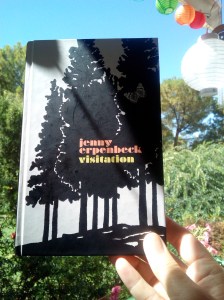 I’ve attempted to read Visitation about four times and never succeeded in getting past the first few chapters, but this year I persevered as I felt I hadn’t given it a fair chance.
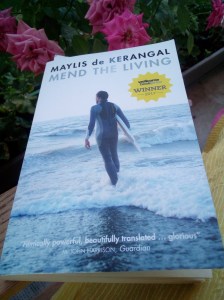 Although I’ve read reviews and seen this book appear often over the last year, and knew I really wanted to read it, I couldn’t remember what is was about or why.
 The British translation (by Jessica Moore) is entitled Mend the Living, broader in scope, it references the many who lie with compromised organs, who dwell in a twilight zone of half-lived lives, waiting to see if their match will come up, knowing when it does, it will likely be a sudden opportunity, to receive a healthy heart, liver, or kidney from a donor, taken violently from life.
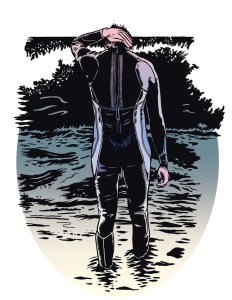 The translator Jessica Moore refers to her task in translating the authors work, as ‘grappling with Maylis’s labyrinthe phrases’, which can feel like what it must be like to be an amateur surfer facing the wave, trying and trying again, to find the one that fits, the wave and the rider, the words and the translator. She gives up trying to turn what the author meant into suitable phrases and leaves interpretation to the future, potential reader, us.



 Word by Word