Stet, an Editor’s Life Diana Athill

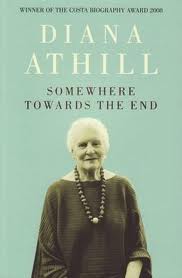
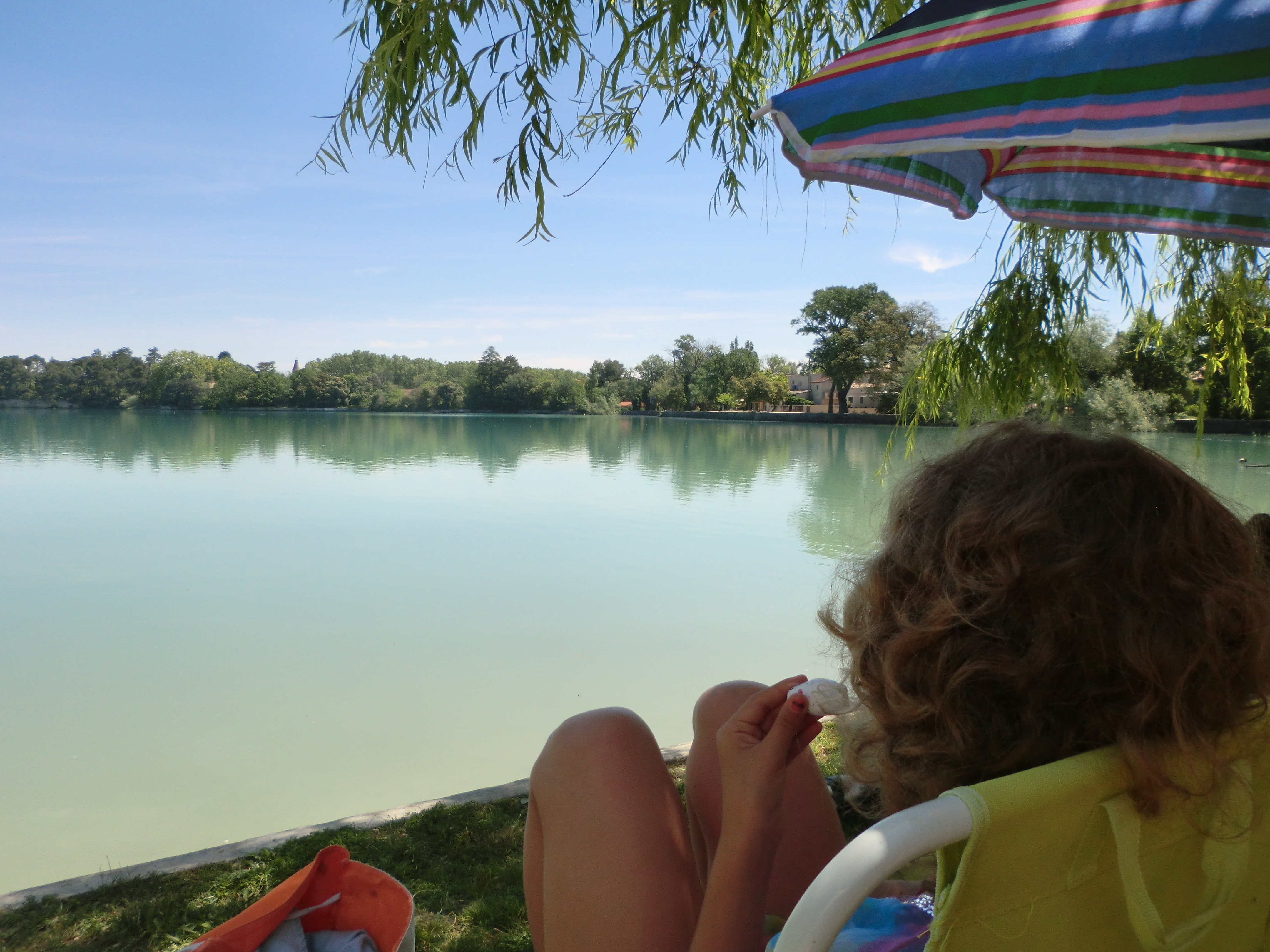
LakesideI read most of Diana Athill’s book in two afternoons, sitting under a willow tree beside the lake L’étang de la Bonde as the children swam continuously, refusing to get out until it was time to leave. Despite the fact that we were outdoors, I felt as if I had just spent two days in Athill’s living room, listening to her share this particular segment of her life, that as Editor at André Deutsch, the publishing house where she worked for four decades.

Stet is not a common word and I am perhaps only familiar with it because, back in the old days, when I was a 23-year-old Market Research Assistant without typing skills, I used to write reports and had a secretary to type them. I even had my own office with a door that could be closed. Using the word stet meant I’d changed my mind after I’d crossed something out, wanting it left in. The Concise Oxford Dictionary tells us :

Not the first of Athill’s memoirs, but the one I was attracted to, since it offers a glimpse inside an Editors office. I had already read and reviewed Betsy Lerner’s The Forest For the Trees, which this book made me recall, you could say they complement each other in a certain respect, though they are very different books, as one might expect when comparing the perspective of an English Editor to that of an American Editor. Both equally interesting and insightful in their own way.

In Part One, Athill shares how she fell into publishing as a career, knowing she would have to find a job, while her great-grandparents generation had made or married into money, her father’s generation had lost it and she talks about many aspects of the job, the decisions that were made, the dramas that were lived and worked through.

“The story began with my father telling me: ‘You will have to earn your living.’ He said it to me several times during my childhood (which began in 1917), and the way he said it implied that earning one’s living was not quite natural. I do not remember resenting the idea, but it was slightly alarming…Daughters would not, of course, have to earn their livings if they got married, but (this was never said) now that they would have to depend on love unaided by dowries, marriage could no longer be counted on with absolute confidence.”

Diana Athill

Diana Athill

The start to her career was disrupted by the onset of the Second World War, however she was fortunate to have a friend working in the recruitment office of the BBC and found an information/research position in the Overseas News Department. She and a friend lived in a small apartment in London and had a good social life, at one of the parties she met the young Hungarian intellect André Deutsch, the start of a lifelong friendship and she would eventually leave her job to join him as a shareholder and working Director when he decided to start his own publishing firm.

Not the easiest of employers, Athill shares some interesting insights about working for an often disagreeable and intolerant man whom she respected despite his deficiencies. She is also quick to point out her own flaws and it is perhaps the counterbalance of their personalities that made them such a successful pair and helped keep the publisher in business for as long as it was able. She also shares her continued love of literature, reading and writing.

Stet“They brought home to me the central reason why books have meant so much to me. It is not because of my pleasure in the art of writing, though that has been very great. It is because they have taken me so far beyond the narrow limits of my own experience and have so greatly enlarged my sense of the complexity of the life: of its consuming darkness, and also – thank God – of the light which continues to struggle through.”

In Part Two, she expounds on her relationship with a small selection of writers, providing a chapter each and very frank accounts of what transpires between Athill, the publishing house and the following authors: Mordecai Richler and Brian Moore, Jean Rhys, Alfred Chester, V.S.Naipul and Molly Keane. One is left with the impression that there was a lot more drama and pandering to personalities in the past than there can be in today’s less nurturing publisher – author relationships. Eye opening indeed!

As I mentioned in the Man Booker Prize longlist post, Diana Athill won the Costa Prize for her most recent memoir Somewhere Near the End in 2009, which she wrote in her nineties, a book which is sure to be equally enlightening and one I look forward to indulging, knowing as I did with this book, it is bound to offer delightful company for future afternoon reading.
CIMG4553

Man Booker Prize Longlist 2013

Man Booker 2013 logoToday judges announced the Man Booker Dozen that have made it onto the long list for 2013. Last year Hilary Mantel won it for the second time and with a sequel, Bring Up the Bodies, which is the 2nd book in the Thomas Cromwell trilogy.

StetI have just finished reading Diana Athill’s excellent book Stet, An Editor’s Life arguably the person with the longest active memory of the history of books and publishing today, she won the Costa Prize for her most recent memoir Somewhere Near the End in 2009, when she was 93 years old. Stet, she wrote at the sprightly age of 80 shortly after retiring.

In the book she mentions the launch of the Booker Prize, mentioning that in the sixties, it was becoming more and more costly and less profitable to publish books and to compete against the bigger publishing houses. It was becoming difficult to sustain a publishing house that appealed to the more literary reader. She describes the two kinds of reader that existed, still relevant today:

People who buy books, not counting useful how-to-do-it books are of two kinds. There are those who buy because they love books and what they can get from them, and those to whom books are one form of entertainment among several. The first group, which is by far the smaller, will go on reading, if not for ever, then for as long as one can forsee. The second group has to be courted. It is the second which makes the best-seller, impelled thereto by the buzz that a particular book is really something special; and it also makes publishers’ headaches, because it has become more and more resistant to courting.

The Booker Prize was instigated in 1969 with the second group in mind: make the quality of a book news by awarding it an impressive amount of money, and hoi polloi will prick up their ears.

WBN 2013It worked for the books named, but the underlying aim to convert more people to reading did not. Not much has changed. The latest attempt to convert the population into reader, we could say is World Book Night, where publishers print thousands of books for free and they are given out on one night in the year, to people who don’t really read. Has that worked? Unlikely I think.

But onto the prize for 2013, this year’s long listed titles and authors are:

Eleanor Catton, The Luminaries

Jim Crace, Harvest

Eve Harris, The Marrying of Chani Kaufman

Jhumpa Lahiri, The Lowland

ColmTóibín, The Testament of Mary

Colum McCann, TransAtlantic – my review here

Donal Ryan, The Spinning Heart – my review here

NoViolet Bulawayo, We Need New Names – my review here

Tash Aw, Five Star Billionaire

Richard House, The Kills

Alison MacLeod, Unexploded

Charlotte Mendelson, Almost English

Eve Harris, The Marrying of Chani Kaufman

Ruth Ozeki, A Tale for the Time Being

Congratulations to all those authors and good luck to anyone hoping to read the list, I’ve only read one and I do have The Spinning Heart, so I guess that will next.

The shortlist will be announced on 11 September and the winner on 16 October.

Time to get reading!

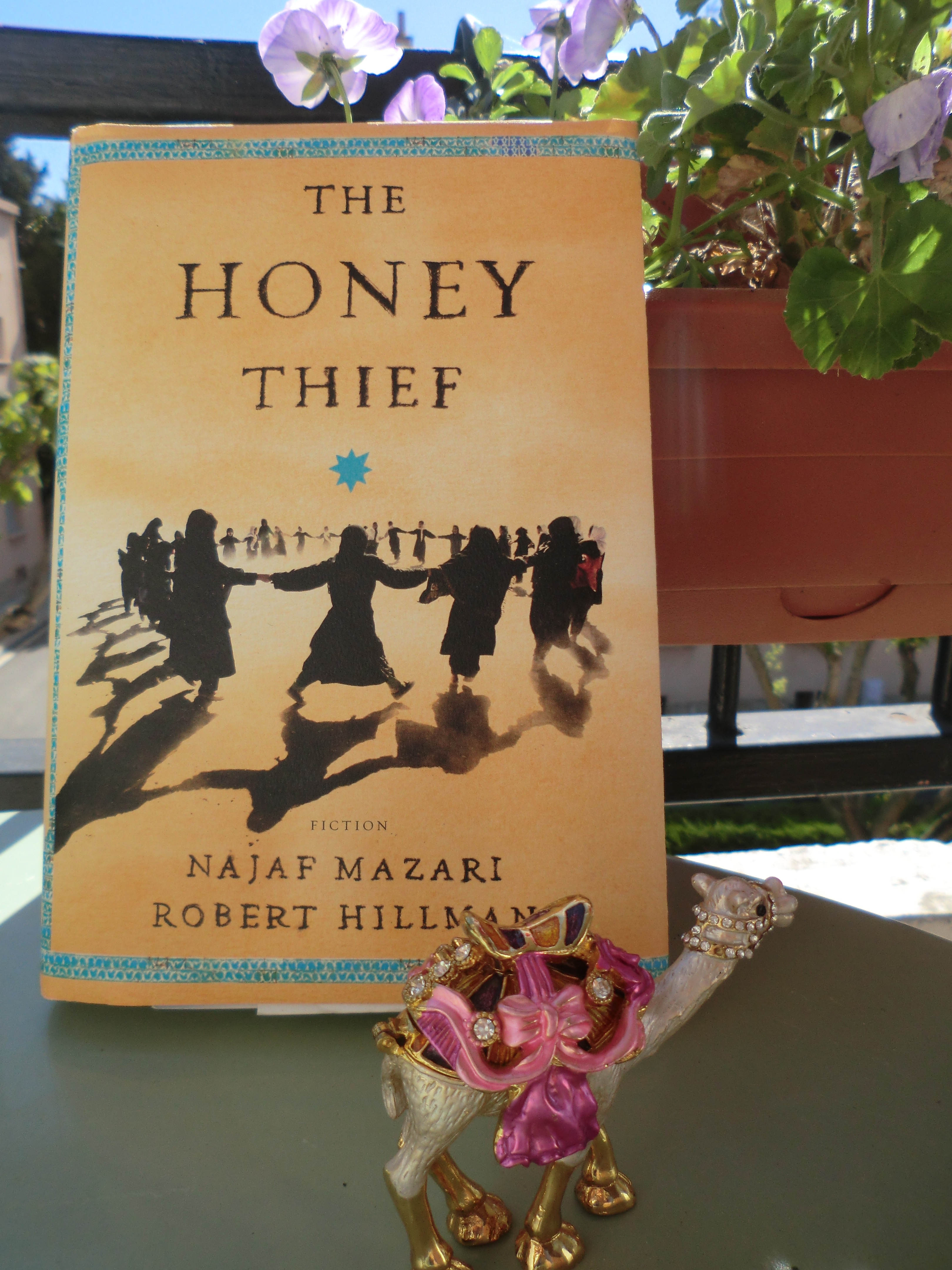
The Honey Thief Stories and Recipes by Najaf Mazari, Robert Hillman

I requested The Honey Thief to read because it appeared to offer a unique insight into a culture we know little about and about which we see and read far too much negative press.

The Honey ThiefThe book promised an alternative perspective, not because the author had lived an extra-ordinary life, but because as part of his upbringing he and others like him listened to these stories passed down and sometimes relived from one generation to the next. They are not about war, oppression, the Taliban, terrorists or western women living in a foreign culture, they are about sharing the wisdom and perspective of a people who have only experiences to share, wisdom to offer and guidance as their intent.

Sometimes stories are all that is left to be passed on to the younger generation and we are fortunate to be given this glimpse into these gifts of an ancient culture and tradition.

Ethnolinguistic map of Afghanistan ex wikipedia

Ethnolinguistic map of Afghanistan ex wikipedia

Najaf Mazari was born in Afghanistan, though he only refers to his homeland as that since he left it, because before anything he is Hazara, one of the many peoples of that vast and mountainous tract of land surrounded by six countries, Pakistan, China, Tajikistan, Uzbekistan, Turkmenistan and Iran and inhabited by more than 14 ethnic groups, separated socially and geographically.

Rather than an affinity with what we casually call Afghanistan, his loyalties are to his people and the area they have inhabited for at least 800 years, Hazarajat, although due to its’ long history of domination, they have often fled their spiritual home for the sanctuary of the mountains or other lands. But loyalty remains deep within them all, no matter where they find themselves.

Living as a refugee in Australia, Mazari with the aid of his friend Robert Hillman, shares these stories that are part of the fabric of Hazara life, stories of an oral tradition, keeping their bonds and culture alive, giving them courage and hope to continue to endure the many challenges that will face them, from family expectations to foreign visitors, to facing an enemy and offering forgiveness.

snow leopardThey know the mountains and rocks are loyal and must be respected, they read the wind and interpret the moon and understand that wars can last 100 years. We see their relationship to the mountains in the poignant story The Snow Leopard, where a visiting English photographer wishes to track and photograph the elusive creature. His first visit is unsuccessful, no one will guide him to those dangerous parts of the mountain where it is believed the snow leopard resides, as there is more than just the mountain to fear. On his second visit, he finds a guide and though unsuccessful, their journey is filled with insight, learning and a renewed respect for the mountain.

The stories share something of the way the Hazara see the world and the story The Honey Thief  brilliantly encapsulates their relationship with nature, animal life and shows how good can sometimes come from bad. The narrator shares with a boy how he became a beekeeper, caught red-handed stealing the honey, his captor observing that he wasn’t stung – thus finding his future apprentice.

Similarly this boy, whose grandfather is a wise man whom the villagers consult daily, discovers that even wise men have something to learn from young boys who like to ask lots of questions in The Wolf is the Most Intelligent of Creatures and learns that what might appear to be ill advice may in fact be the correct advice to give. This story, the very first, is sure to immediately challenge your own perceptions, something I adore in travel and delight in finding in a great tale.

Almost like fables and yet not, because all of these stories, while offering the seduction of a fable, are rooted in a realism that convinces the reader they tell of lives actually lived and not conjured up or given magical powers, a device that the common fable sometimes utilises.

The author Najaf Mazari

The narrator Najaf Mazari

And when the stories finish, we discover perhaps the greatest gift of all, one that can be referred back to and shared at home ourselves, a small collection of mouth-watering recipes with names and ingredients like Lamb Qorma, Sabzi Gosht, (lamb with spinach), Kofta Nakhod (beef & chickpeas), Boulanee (like Cornish pasties) and Chelo Nakhod (chicken & chickpea stew); surely living proof of the richness and diversity of their culinary culture and the trade that has passed between these boundaries of peoples for hundreds of years.

If you are interested in learning more, or considering reading the book, I highly recommend checking out these two excellent reviews:

  • Richard Marcus at BlogCritics – a beautiful, sensitive and concise review, how he packs so much into so few words, I’m still trying to figure out.
  • Elise Bauer at Simply Recipes – check out this short but flavoursome review and the recipe with pictures, she not only read the book, but cooked that first recipe with astounding success!

Note: This book was provided by the publisher Viking, a member of the Penguin Group US, in return for an honest review.

The Faraway Nearby by Rebecca Solnit

After spending a few months with me in London some years ago, a very good friend was about to return to New Zealand and was making some major changes in her life, both personal and in her career. She wasn’t entirely sure what job she wanted to do, but knew it would be in the great outdoors. She loved to travel and she loved nature. I organised a subscription to Wanderlust Travel magazine for her, an inspiration of amazing photography, fabulous ideas for out-of-the-way places to visit and best of all, a link to exciting jobs for those who love to travel across cultures, to be outdoors and meet people.

Milford-Track2

Life on the Milford Track

She completed a diploma, training in the skills required to become an outdoor guide and now works for the Department of Conversation as a guide on the Milford Track, this last season she was based in a lodge, only accessible by helicopter or a few days walk in. She is now living her dream job and it is indeed just like those jobs offered in the pages of that inspiring magazine.

Fast forward a few years and I come across a book called Wanderlust : A History of Walking by Rebecca Solnit. I was interested in it, though stronger was the feeling that I should send it into that remote wilderness to my friend, it seemed to describe where she had arrived at. So I did. I then forgot about the book until I saw the name Rebecca Solnit come up recently on NetGalley, she had a new book coming out The Faraway Nearby. Here is the book I will read I thought and requested it.

Some weeks later while in London one Saturday, I discovered The London Literature Festival was on and at 3.30pm, I could attend a talk by Rebecca Solnit speaking about her book The Faraway Nearby. Serendipity? I bought a ticket, a hardback copy of her book and went to listen to the author, curious, though I had never read a word of her writing.

FarawayThe book is good, but Rebecca Solnit’s ability to captivate an audience is spectacular. I’m almost sorry to admit it, but the live version was even better than the passive written version, which I really enjoyed, the reading experience enhanced significantly by the additional anecdotes and philosophical meanderings of Solnit in person, as she spoke without pause, the voice of a poet.

The talk was hosted by the literary critic Alex Clark, who suggested that the media coined her book not a memoir, but an anti-memoir. Part anti-memoir and part matremoir, it starts with her recounting the gift of 100 pounds of apricots from her mother, one of the few gifts she ever received from her mother and not disconnected from the fact that her mother is undergoing something of a personality change since her Alzheimer’s diagnosis. She lays them out on her bedroom floor, wanting to appreciate their abundance, but instead embraces a soon to be dissected anxiety.

“The fruit on my floor made me start to read fairy tales again. They are full of overwhelming piles and heaps that need to be contended with, the roomful of straw the poor girl in Rumpelstiltskin needs to spin into gold overnight, the thousand pearls scattered in the forest moss the youngest son needs to gather in order to win the princess, the mountain of sand to be moved by teaspoon. The heaps are only a subset of the category of impossible tasks that included quests, such as gathering a feather from the tail of the firebird who loves at the end of the world, riddles, and facing overwhelming adversaries.”


Nature essays, how stories create the narrative of our lives, philosophical meanderings, her chapters weave in and out of many subjects, flitting here and there, as she recounts pieces of a year that passed whilst her mother was regressing. She contemplates and then makes an escape to Iceland, mentions friendships and her passion for visual art, the occasional Buddhist legend, Frankenstein, Mary Shelley and her mother Mary Wollstonecraft, pain and leprosy likening her narrative to a Russian matryoshka doll, even going so far as to repeat chapter names in reverse, once she arrives at the hard core (the doll that has no doll).

“My story is a variation on one I’ve heard from many women over the years, of the mother who gave herself away to everyone or someone and then tried to get herself back from a daughter.”

ApricotsThere are many anecdotes, insights and great lines throughout the narrative, however Solnit stops short of going too deep into her subject, she observes the apricots and watches how they change, just as she does her mother, but stops short of looking too deep into the past, of really describing their relationship and how they were with each other, it is implied, not described.

I understand this reluctance, for that percentage of women out there who had the kind of relationship with their mother that Solnit did, there will be many nods of the head in recognition of what she says without having to go into detail. For the rest, it may seem superficial or even harsh, but they are the words of a mature 58-year-old women, who admits:

“If I had written about her earlier, the story would have had the aura of the courtroom, for I had been raised on the logic of argument and fact and being right, rather than the leap beyond that might be love.”

At the end of the talk, a few people asked questions and at the last minute, but too late I put up my hand, my question deemed to remain silent. Or so I thought. As everyone left the Purcell Room, a woman called Helena sitting next to me who was also visiting from the country for the day, asked me what I had been going to ask. And so I told her – and had a delightful conversation, just as interesting as it might have been, had I asked the author.

The question I wanted to ask was:

Did she believe that a challenging relationship could be a gift, that it could bring her something that she may not otherwise have developed in herself, had it been otherwise?

I suspect the answer is yes, that these relationships do give people something that can be used proactively, if self-awareness is developed to prevent regressing into the negative aspects or effects of those childhood and adulthood experiences. She may not have been able to fix her mother, but it may not be a coincidence that Rebecca Solnit is outspoken and active in terms of her support of nature, the environment, politics and art.

“I didn’t have much sympathy either; it was not that I refused to give it, but that there was none in my equipment yet, perhaps because I had experienced so little of it.”

Note: This book was an Advance Reader Copy provided by the publisher via NetGalley.

NW, life’s passage via the Kilburn High Road

The back cover of Zadie Smith’s novel NW, recently long-listed for the Women’s Prize for Fiction 2013 mentions This Is The Story Of A City, the north-west corner of city, however that’s not how I think of it. London is something else, as is The City of London.

NW is a community, a fluid changing community, one of London’s many pulses; for some it is a stepping stone to the next stage, for others it is home. It has been a thoroughfare into London since the days of the Romans and in more recent times, the resting place for Irish immigrants fleeing their country for one reason or another, sometimes dramatic, sometimes not. And following the Irish are the many other groups who found NW their starting point to a life in London, that city of promise and unending challenge. NW is the same, the faces that pass through it, indicative of the era we are living within.

NWNW the novel is experimental, its structure changes with each section and after starting the second part which focuses on Felix, I realised that the narrative voice was being used as a metaphor for the state of mind of the character, a brave step or a risk on the authors part by commencing with Leah, who thoughts are all over the place and is suffering from that anxiety of a young, married woman with a successful career and a husband who loves her, who doesn’t understand why she is not content, or why she can’t admit that she isn’t ready to start a family.

So we start with the staccato stream of conscious thoughts of a woman who would benefit from therapy and/or meditation to still that rampant inner chatter, planting the reader in the midst of prose that is challenging for some and uneasy for those listening to the audio version. Not when chapter 7 is shaped like a tree, though that is one of the least challenging pages, one of beauty in fact.

But once we get to Felix’s section, things calm down, Felix’s major life troubles are behind him, the reading is easy and the pace picks up.  Although he’s not entirely immune to temptation, he seems to have moved on from his more despondent days, he’s been clean for 2 years and plans to stay that way. To me, he is the only character who shows real signs of moving on, however he has not moved out of NW,  his mistake perhaps is in staying and trying to convert those around him.

The other female character Keisha, changes her name to Natalie when she becomes a lawyer, an attempt to outgrow her past; she marries and has two children. She and Leah have been friends since their school days and their connection provides the one strong thread throughout the novel. Natalie, like Leah has risen above her past, but can’t seem to resist undermining it, with her strange behaviour, in what was for me, one of the least believable parts of the novel, in part because the author keeps us from knowing exactly what Natalie is up to online and offline, before she gets caught and flips out. I was hoping she might be more influenced by the role model of  Theodora Lewis-Lane, who tries to advise her.

“The first lesson is: turn yourself down. One notch. Two. Because this is not neutral.”  She passed a hand over her neat frame from her head to her lap, like a scanner. “This is never neutral.”

NW6For me personally, it was in part a nostalgic read, Zadie Smith’s writing comes alive when she evokes place and it is a neighbourhood I lived in and around for many years, NW is the most complete and yet complex character of all, embracing so much diversity, inviting everyone in without prejudice and yet claiming some in the harshest terms possible. There are as many reasons to hate it as there are to love it and anyone who has lived there will likely never forget it.

NW is a melancholic novel about four characters trying to escape their past and leaves the reader with few signs of hope for the future, or at least that future is left for us to imagine. Those who focus on the uniqueness of the writing or who have some experience of /interest in these communities may enjoy it, while those looking for the traditional transformation of character, or any kind of escape may be disappointed.

Despondency is the norm and we will not be rescued from it, it merely lessens with time if we survive.

Revenge by Yoko Ogawa (Japan) – Eleven Dark Tales

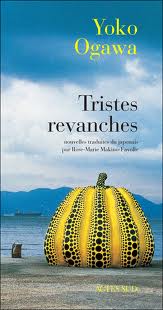
RevengeWow! Those of you who have been reading this blog long enough to remember my post on Why People Don’t Read Short Stories may remember that they are something I usually savour, rarely devouring an entire collection in one sitting, but Yoko Ogawa breaks the mould and her newly published book Revenge is full of hooks and devices that stopped me putting it aside and saw me instead ploughing on to read one after the after.

Like a curious sea creature taking the glistening bait, after reading the first story, I dove into the next, caught in the deft grip of Ogawa’s clever and haunting narration, each story carrying the slimmest thread into the next, sufficient to keep the reader interested and more than that, inquisitive to continue and see what she would come up with next.

I first read Yoko Ogawa last year, attracted by her slim collection of three stories contained within The Diving Pool and then her novella The Housekeeper + The Professor, they are very different books, so I was interested in how this collection would compare.

tristes revancesShe has written prolifically over the years and much of her work has been translated into French, very little thus far in English, though perhaps that will change as her short stories are increasingly appearing in contemporary English language publications. The Nobel Prize winning author Kenzaburō Ōe when speaking about her work said:

‘Yoko Ogawa is able to give expression to the most subtle workings of human psychology in prose that is gentle yet penetrating.’

Revenge is an apt title, there are traces of it in every story, calculated revenge, obsessive revenge, inexplicable revenge and cold-blooded revenge. Each story exists on its own, but I read it like a novel, not wanting to pause between titles and feeling right from the end of the first story a tightness in the solar plexus and realisation that I had been holding my breath.

It’s not just the story, it’s awe at how she can write in such an engaging way, where very little actually happens, but we begin to understand more about what is going on in the mind of the character from all the little details she gives, creating a growing image in our own minds, just before she delivers the final blow. And even when we don’t know much about a particular character, someone on the periphery perhaps, not important to the story, chances are we are about to find out more about them in the next story. And so we read on to find out if we guessed right or if she will insert some other connection.

I share this from the blurb, which encapsulates something of these stories in a more concise manner than I ever could:

An aspiring writer moves into a new apartment and discovers that her landlady has murdered her husband. Years later, the writer’s stepson reflects upon his stepmother and the strange stories she used to tell him. Meanwhile, a surgeon’s lover vows to kill him if he does not leave his wife. Before she can follow-through on her crime of passion, though, the surgeon will cross paths with another remarkable woman, a cabaret singer whose heart beats delicately outside of her body. But when the surgeon promises to repair her condition, he sparks the jealousy of another man who would like to preserve the heart in a custom tailored bag. Murderers and mourners, mothers and children, lovers and innocent bystanders—their fates converge in a darkly beautiful web that they are each powerless to escape.

Ogawa is certainly not the first writer to do this, to infuse stories with their subtle threads and connections, Alice Hoffman does it with Blackbird House, Colum McCann did it with Let The Great World Spin and I believe Cloud Atlas (which I have not read) has something that makes it too, more like vaguely connected stories than a novel.

jigsawRevenge isn’t a complicated kind of clever though, there’s no need to question or ponder too deeply over it, the links are clear, but it will leave you wondering how she does it, how she maps out those stories and creates those links. It’s like a jigsaw puzzle with multiple subjects, the letters R E V E N G E scratched across the surface.

Note: This book was an Advance Reader Copy (ARC) provided by the publisher via NetGalley.

Episode 10: The Move Down Under and a Shocking Diagnosis

Thinking that a move would give us more family time and offer a less stressful lifestyle, we left London behind and travelled half way around the planet to New Zealand, where most of my family still live today. I had been away for many years and hadn’t expected to return, however now that I was back, everything looked and felt familiar and it wasn’t long before we had moved into a house in the city and I had found a full-time job.

Not quite that large an island, Allia’s interpretation of somewhere very far away.
Putting New Zealand on the Map!

Initially we spent time staying at my parent’s home on the sheep farm they had lived for twenty years. It was wonderful to be there with Allia, for her to spend time around her grandparents and for them to get to know and love her.

Being a long way from the nearest town and a very windy road to get in and out, the forced isolation was a little more difficult for my husband to endure, but he was fascinated by the workings of the farm and in particular the shearing shed when it was in full working motion. Not so for me, years of spending school holidays working in that intense, stinking, hot and competitive environment (shearers get paid per sheep shorn, not by the hour) sweeping away wool, dags (sheep shit) and the occasional maggot were something I felt no nostalgia for at all.

It seemed to be good timing to have returned at this time as my mother was unwell, so I was able to go with her to her appointments and provide support. Good timing was an under-statement; she had lost a lot of weight and was having problems with her balance. She was only 59-years-old but seemed to have entered what looked like old age in an awful hurry.

Of course it wasn’t old age. By the time it was understood that it also wasn’t asthma or some diet related weight loss and she had been for a follow-up MRI scan, we found ourselves sitting in an office, opposite an oncologist who mumbled something that sounded like “three weeks”.

“Excuse me”, what did you say? I blurted out.

“The cancer is in the lungs, but it has spread to the kidneys and other organs and those lumps in the neck and brain are tumours. In the state that your mother is in now, I would say that three weeks is being optimistic.”

“But isn’t there anything we can do?”

“Yes, we can start chemotherapy to try to slow down the rapid advance of the cancer and the radiation treatment should be able to remove those tumours so you should actually start feeling better and get your balance back” he said looking at my mother.

We were both stunned. I wanted to protest and say hey that’s not fair, you can’t wait all this time knowing something isn’t quite right, you know it was more than three weeks that we have been worrying about this and we survived that, only to hand out a three-week life card as if you are prescribing community service. This is an unfair sentence being handed out for absolutely no crime!

Completely and utterly helpless, we sat and listened to what would happen in the next few days. I don’t recall much of what he said, but I remember my mother turning to me with that familiar, uncompromising look in her eye and saying, “I’m going to fight this.”

Yes, she would fight death as she had fought life; like every other great challenge that had faced her, she never gave up without a fight. But I looked at the thin frame of a woman she had become and knew that this was a fight she was not going to win. Not this time.

Next Up: in A Silent Education: Our Quiet Challenge in Provence

Episode 11: Adapting to a New Rhythm and Creating Lasting Memories

Previous Episodes

Episode 9: She Speaks the Language of Birds

Apart from mild surprise when reading my mother’s entries in the baby book she kept for me, which lists the number of words I could say at 12 months and various intervals beyond that, I never really noticed too much that Allia didn’t speak words that could be recognised. Because she talked non-stop. She communicated incessantly with much enthusiasm and wasn’t shy.

She spoke a language tongue that we referred to as bird-talk, it was long streams of dialogue that went up and down in intonation which I was just on the verge of understanding if I listened hard enough, I was sure. Like listening to Italian or Arabic, languages that incorporate much body language and expression which communicate mood, tension and excitement without the need to understand their words.  It was very much like listening to the French language on the television or the radio in my early days of living here – somewhat familiar sounds with that feeling that surely if I did listen hard enough, it was just a matter of time before something in my brain clicked and “poof” I would understand everything.

It wasn’t until her brother arrived on the scene a year later and started using recognisable words in his rambled dialogue very early on that the contrast became noticeable – I think he understood the bird-talk because they would chatter away to each other and to us without hesitation. I wondered then if something was perhaps amiss, I say perhaps, because I am against making comparisons between children, they develop at their own pace and depending on what they are working on developing, other aspects can lag behind.

When people started suggesting we video her speaking like this, I realised it really was a little out of the ordinary, it was almost as if she had her own language, something like a twin language – but no twin. Unlike today when making a piece of film footage is child’s play, I wasn’t comfortable filming her as a kind of spectacle, I was more concerned with just interacting with her and giving her the freedom to express herself, waiting for her language to become something like one of the three languages she was hearing at home.

Next Up: in A Silent Education: Our Quiet Challenge in Provence

Episode 10: The Move Down Under and a Shocking Diagnosis

Previous Episodes

Episode 8: Ten Months of Bliss and Facing a Return to Work

Once over that initial hurdle, Allia blossomed and apart from that long scar, there was nothing to indicate there had ever been a problem. She was a happy, contented baby who loved to smile and engage with those around her, especially the band of eight and nine-year-old girls who lived in our apartment building and were frequent visitors.

For the first ten months I was able to stay at home with her, working a little, practicing aromatherapy, however I knew it was going to be necessary to find another full-time job, living in London demands it, all the more so when there is an extra mouth to feed.

Until this precious little girl came into my life, I never really questioned working long hours or weekends and I had thrived on the opportunity to travel with work. Now, I couldn’t think of anything worse – to leave this child behind, absolutely not, she had extinguished my desire to seek out the unknown, I found myself dreaming of safer pastures, the more familiar.

For the first time in eight years of living in London, the city that I thought had become my second home, I thought the unthinkable – maybe it was time to return to New Zealand?

P.S. This is what Allia came up with when I said this episode was about us having 10 months of fun times hanging out together, going to the park etc, I just love this picture, although my husband says that first one isn’t true! But her imagination is brilliant. Enjoy.

Next Up: in A Silent Education: Our Quiet Challenge in Provence

Episode 9: She Speaks the Language of Birds

Previous Episodes

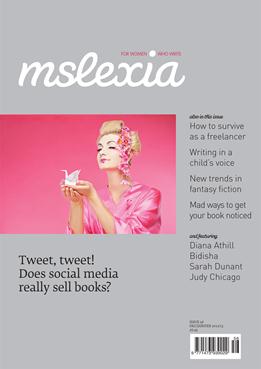
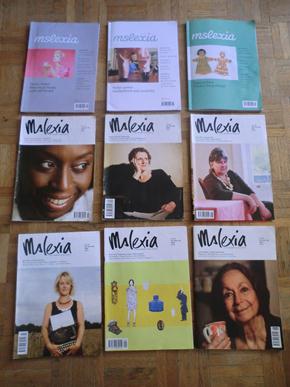
mslexia – for women who write

I’ve been subscribing to mslexia magazine for a few years now and since it is both a great stimulant to the writing process as well as an excellent source of reading recommendations and a directory of sorts, I thought I’d share a little about it.

Mostly I like it, because it doesn’t feel in any way elitist, this is a kind-hearted, generous resource, contributed to and read by ordinary women who like to write, including many who like me, don’t participate in this activity as a job, but manage to scribble away for a few hours each week – read this and you realise you are part of a large, like-minded community of women who believe in making the impossible possible.

It might be published in the United Kingdom, but it has a very international flavour and inclusive attitude, important when you live outside your country of birth and don’t write in the language of your country of residence and want to participate.

mslexia (ms = woman, lexia =words) is a quarterly publication with feature articles on some aspect of writing (and open to idea submissions), an interview with a published writer, featured short stories or poetry written to the issue theme, or winning entries from the regular competitions they run.

It was Issue 48 in Jan/Feb/Mar 2011 that introduced me to the writer Susan Hill, just as her short novel A Kind Man was being released and I’ve since read three more of her books.

In the latest edition there is a wonderful interview with Diana Athill, what an inspiring woman she is, winning the Costa biography award at 91 with her book Somewhere Towards the End and still writing from her North London residential retirement home.  She says it how it is and cites Jean Rhys’ for teaching her this, she mines her own experiences for a story, and cautions against being cruel to others, “you can be ruthless about yourself, but not when writing about friends” – you can read an extract from the interview here.

athill“I have never understood how many writers moan and groan about how awful writing is. Absolute nonsense.” Diana Athill

Recently, they have been conducting mini-surveys of readers which are then incorporated into the lead articles and some of the smaller snippets of information found throughout the magazine. It is extremely readable, which I put down to the fact that there is a reasonable portion of bite-sized articles, such as letters, extracts from posts, emails, tweets, along with fun and short, contemporary submissions from writers under the headings of rants, raves, a week of tweets, monologue, pen portrait, how I keep going, four lines that rhyme, a poetry or book review. Something for everyone.

Each quarter there is a themed New Writing section, always an excellent writing prompt whether you are interested to submit or not, short narrative or story up to 2,200 words, prose or sometimes poetry, the successful entries appearing in a future edition. I have seen many women being published for the first time through these exercises.

There is an annual poetry and short story competition and in 2012 there was a children’s novel competition for unpublished women novelists.

In addition to all the wonderful information it lays at your fingertips, one of the things I love the most are the short bio’s of contributors, here is one from the 2009 poetry competition in which Pat Simmon’s touching poem ‘Jack discovers impermanence’ was a winner:

PAT SIMMONS, 64, was head of communications for ‘Send a Cow’, an African agricultural organisation, but has since retired. The conviction that whatever she writes will be rubbish stilts her creative progress, but an encouraging family keep her inspired and motivated. Finding writing by hand shackling, she works directly onto her laptop, a practice to which she wishes to dedicate more time. She was Blagdon’s 2005 Apple Wassail Queen – your guess is as good as ours – and on a trip to Rwanda was re-christened Munyanika: ‘As valuable as a cow.’

It is available online, but this is one publication that I like to have the physical magazine to read, there are so many gems and I return to back issues often. Oh and lets not forget the back page, always a delight to conclude with, ‘the bedside table‘, introduces an artist, author, intellectual or well-known personality who shares what’s currently on their nightstand, like gossip for book-lovers.

The next deadline of 18 March 2013 is for Issue 58: The Women’s Short Story Competition for stories up to 2,200 words on any topic. There are prizes for 1st, 2nd and 3rd and three other finalists will also be published in that issue of Mslexia. You don’t have to be   a subscriber to enter, just a woman.  Stories are accepted from any nationality and country.

Happy Writing!