La Vasque Olympique, the Olympic Cauldron will return

couver un astre

A large helium balloon floats up into the sky in Paris during the Olympic Games

Recently I wrote about Sophie Fontanel’s Couver un Astre (reviewed here), a poignant reflection on the large balloon that was installed in Le Jardin des Tuileries during the Paris Olympics and Para-Olympics of summer 2024.

Her book describes the effect this installation on herself and the community around her, how its ascent sixty metres into the sky each evening, did something to uplift those who witnessed it, every night.

Back in September 2024, the idea was floated that the city of Paris wished that the installation could be kept in the public gardens after the Olympic Games, an idea that posed a series of technical, financial and heritage problems.

Everybody loves a balloon

The enthusiasm and wonder the balloon generated was quite unexpected by the city and the designer. Very few tickets were available to approach the balloon up close, something Sophie Fontanel ponders in her book.

Yesterday it was announced that this magnificent design by Mathieu Lehanneur will be reinstalled in the Tuileries Gardens, the public space that separates the pyramid of the Louvre, the place de la Concorde and the Champs-Élysées, for the next three summers until 2028.

So if you didn’t get to see this wonder last summer, from afar or up close, there will be another three summers of opportunity to witness something of what Sophie Fontanel writes about.

An executive order of a different kind

After a joint announcement was made by the Mayor of Paris, Anne Hidalgo and the President of the French Republic, Emmanuel Macron, he posted this message on social media.

“Elle reviendra chaque étè. De la Fête de la musique [21 juin] à la Fête du sport, jusqu’aux Jeux de Los Angeles”

“It will return each summer. From the Music festival to the Sport festival, until the Los Angeles Games.”

In a similar spirit to the Fête de la musique, after the games of 2024, the annual Fête du sport was created. Every year on September 14, sport demonstrations and competitions are held to increase awareness and improve participation in different sports.

Relive the Magic

la vasque olympique
Photo by Mathias Reding on Pexels.com

It is good to know that those difficulties were somehow overcome, and in a relatively short period of time, in order for the balloon to be ready for the summer of 2025.

The balloon will be accessible to the public from 10am until 7pm every day, and will again rise with the sunset into the Paris sky in the evenings.

Maybe now someone might translate this gem of a book into English, since the wonder of this uplifting balloon is going to be around for a few more summers.

Anyone planning to visit Paris in the next three years?

Couver Un Astre by Sophie Fontanel

How to even translate the meaning of this title. Couver means to cover, but that is insufficient to describe what Sophie Fontanel means when she writes ‘Couver un astre’.

While trying to understand the greater meaning, I came across a description that put it like a hen sitting on her eggs, protecting them, brooding, incubating.

A curious way to describe a large balloon don’t you agree? I would have to to read on and find out.

A Ball, A Ballon or An Olympic Cauldron

A large helium balloon floats up into the sky in Paris during the Olympic Games

She was referring to the large twenty-two metre diameter helium-filled balloon that the French designer Mathieu Lehanneur created for the Paris Olympics in July/August 2024. And more specifically, the attachment, adoration and psychological effect this ‘Boule’ had on her and much of the local population, as it sat in the Jardin des Tuileries and every evening rose up skywards and settled there like a full moon, then during the day descended.

It began to gather an almost cult-like following, crowds standing in the street or sitting at their apartment windows, waiting for the moment when the balloon would rise.

With a Huff and a Puff, and an I’m Out of Here

In her slim, contemplative non-fiction work, Sophie Fontanel described her cynicism at the arrival of the Olympic Games into Paris, all the unwanted infrastructure, inconvenience, people and disturbance. So much was she affronted, she left the city the opening ceremony week and went off to a Greek Island with her friends, while another friend, with quite the opposite attitude, quit Bretagne and came to Paris for a month specifically to witness and be a part of the historical moment.

She owns up to exaggerating her anticipated frustrations, but what she isn’t prepared for on her return, is the effect of a giant balloon, seen from the window of her apartment, a balloon that draws crowds as it rises every evening and descends every morning, quietly elevating the ‘joie de vivre’ of those who witness it.

Come Closer, Stand Still, Behold

The book is written during that summer, in sections relating to proximity of observation.

It begins with a series of 8 black and white photos over 4 pages that show the rise and descent of the magnificent creation, followed by:

A Prologue
De loin (From afar)
De près (Up Close)
De plus près (Closer)
De tout près (Up Very Close)
An Epilogue, by Mathieu Lehanneur

There is her contemplation and wonder of it, occasional conversations, both with friends and strangers, various encounters, concluding with that of the inventor/designer himself, who interacts on her social media post and asks his own contemplative question. A kind of invitation to respond, that manifests into an actual invitation to do what he suggests, to get closer and observe from yet another perspective, the magic of this phenomena.

《Et si vous veniez la voir de près? Histoire d’avoir un autre point de vue…》

What was this hypnotic effect of a lustrous balloon that made us not wish to turn away, that made those walking the rue ravioli lift their gaze. Some filmed it …

“Et puis, ils cessaient de le faire. Ce n’est pas que cela ne rendait pas, c’était que rien ne valait l’admiration simple.
De temps en temps, seuls les yeux compte.”
《Eh, c’est à nous, tout ça?》

And then they stopped. Not because it didn’t capture it, it was that nothing beats simple admiration. Sometimes only the eyes can appreciate.

《Hey, this is ours, all this?》

The magic of a gift of a balloon offered to the people. The incomprehension of the gift.

Sharing the Experience, An Invitation

Photo by Mathias Reding on Pexels.com

The author posted a few photos and messages on her Instagram account, having observed the balloon from her window. One day a message appears inviting her to come closer. Intrigued she does and so another wonderful aspect of the book, how sharing reflections and observing beauty and wonder can create connection and community.

I bought this as a gift for a couple of my French friends, who had been somewhat ambivalent about the then approaching season of the Olympics, who were pleasantly surprised by their own reaction when it did finally arrive and in many ways brought out the best in people.

It is a testament to the idea that magic can arrive through creativity and community, that the presence of a balloon can lift spirits, as most children know and many adults have forgotten.

I adored this little book and highly recommend it if you took any pleasure in the summer of 2024 Paris and wished to remember the good feeling it brought about in many.

For the moment it is published in French, hopefully it will get picked up and translated into English.

Sophie Fontanel, Author

Sophie Fontanel is an author and essayist living in Paris. She has been an editor at Elle France for more than a decade. She has written 18 books in the French language.

Mathieu Lehanneur, Designer

“This absolutely unique Cauldron represents all the spirit I wanted to give to the Olympic and Paralympic objects. Light, magical and unifying, it will be a beacon in the night and a sun within reach during the day. The fire that burns in it will be made of light and water, like a cool oasis in the heart of summer. I created the Torch, the Relay cauldron and the Olympic Cauldron as three chapters in the same story. The Cauldron is the epilogue and the ultimate symbol of that story. Light, magical and unifying…” ML

Daughters Beyond Command by Véronique Olmi tr. Alison Andersen

Daughters Beyond Command is a wide ranging chronicle of 1970’s France, seen through the eyes of the Malivieri Catholic family with three daughters, living in an apartment in Aix-en-Provence. It traverses issues of family, feminism, worker’s rights, class, animal rights, amid the rapid transformation of society in the 19070’s France.

Family saga set in France against social political context of May 68 to the May 81 election

While the story follows the changing lives and events, in particular of the daughters and the mother (we don’t learn too much about Bruno, the father), it also demonstrates the shifts in society and of generations that occur through the way these daughters seek their independence. It contrasts with the way their mother harbours secrets and makes other complicit when she does share what she would prefer to hide.

Regardless of their ages or circumstances, the country and the world is changing and attitudes and behaviours are shifting and everyone is forced to reckon with the changes as they impact them in different ways, raising consciousnesses and often unable to maintain previous ways of being .

Sabine, the eldest wants to work in theatre and acting and will do everything she can to pursue that dream in Paris. Fiercely independent, she has developed an irritation around comfort and conformity.

She watched as Maria set the table under Michelle’s authority. She looked at the framed photographs of her cousins who had not yet come home.Happy times on horseback, in cars, on boats. It was like a huge advertising campaign. It filled her with rage. There had to be something behind this publicity for the life she was being shown, both here and at home, in the silver frames of photographs, or poor people’s kitchens, behind the slogans like Moulinex Sets a Woman Free, the injunctions to promote progress, comfort, and the frenzied pursuit of happiness, luxury, and family life, there was something else. Which could be neither bought nor sold.

The second sister Hélène has been seduced by the trappings and comfort of this sophisticated Parisian family. Sabine can’t understand why she chooses to spend so much time with them, a family that lives in a way beyond anything they have ever experienced. Hélène spends most of her holidays with the family who don’t have daughters; the Uncle who has taken a particular interest in her. That regular proximity changes some of her habits, including the way she speaks.

It was a betrayal of the Malivieri clan, and Sabine was astonished that her sister could flaunt her bonds of dependence so naturally.

Hélène will also leave home early and pursue an education Paris, supported by her Uncle. She is less outspoken but equally passionate, affected by moral question around the protection and rights of animals.

As time passed, a breach had come between Hélène and her parents; adaptation upon her return required quickly taking stock of her loved ones. She saw her father, whose kindness and altruism for everything he could not lavish on his family financially. She saw her mother, hard-working and attentive, doggedly managing her household, and the rare moments she seemed to cast off her condition as a housewife, when she really seemed to be her true self, were when they visited Laurence on Saturday afternoons at her bastide.

Photo by Alotrobo on Pexels.com

The student riots of May ’68 had an impact on the nation and caused both fear and admiration in these adults trying to figure out how to parent their daughters, growing up surrounded by influences they could not control.

As the lives of the daughters changes, so too does the outside world. Simone de Beauvoir and Gisèle Halimi found the movement Choisir la cause des femmes (Choose the Cause of Women) in 1971 to decriminalise abortion in France, riot police storm the Lip watch factory that had been occupied by workers for three months, forcibly removing them; there is talk and images of the horrors of Vietnam, of the desire for freedom, respect for the proletariat, and the lyrics of the Bob Dylan song The Times Are A Changin’, the death of the President Georges Pompidou.

Sabine told her his name was Bob Dylan and that his song said, more or less, that the world was changing, you had to keep your eyes open,and the parents had better watch out, their sons and their daughters were beyond their command. It was a political song.

As time passes and events happen the sisters find a way to strengthen their bond despite their differences, separating from each other and then coming together in solidarity, while their parents seem stuck in time. Agnes, the mother is unable to stop changes happening to her, which will bring about a crisis, one the two older girls question but are again met with silence.

While the novel isn’t necessarily about resolving any of the issues presented, it encapsulates the impact of changing times on the various members of the family in a way that I found interesting, having lived in France for around 19 years, but not during the era mentioned. So much of the landscape was familiar, and some of the references, but many were not.

I appreciated the story for the depiction of what it might have been like to be part of an ordinary family growing up in this town in the 1970’s and learning about the significant events that challenged and affected people’s thinking, seen from the perspective of inside France. It is these changes in the background of the family lives and the adept writing that maintains the narrative pace.

It might be set in the 1970’s but it feels as relevant today in many respects as it did for that era of change.

Further Reading

My review of Véronique Olmi’s novella Beside the Sea (2015)

Listen to Bob Dylan’s The Times They Are A Changin

Kirkus Reviews: The personal is political for Olmi’s finely drawn characters.

Litro Magazine Review: Daughters Beyond Command by Monica Cadenas

Author, Véronique Olmi

Véronique Olmi was born in 1962 in Nice and now lives in Paris. She is an acclaimed French dramatist and her twelve plays have won numerous awards. Olmi won the Prix Alain-Fournier emerging artist award for her 2001 novella Bord de Mer (beside the Sea). It has since been translated into all major European languages.

So Much Blue by Percival Everett (2017)

This is my first read of American author Percival Everett, a prolific writer I have been aware of for a few years and wanted to read. So Much Blue is partly set in France so I chose to read that first. I loved it. It’s a multi-layered novel with different strands contributing to an eventual shift in the main protagonist.

A Triple Timeline Narrative

It starts out light and comical with a number of laugh out loud moments and as the story develops, the reflections grow deeper and the experiences become more risky, it becomes more serious.

There are three timelines and the narrative switches between the three, as all are important to the present situation, where the protagonist, artist Kevin Pace is painting a large 12 X 21 foot canvas in his shed and will not show it to anyone, not his wife Linda, his best friend Richard or his children. The painting harbours his secrets. In a rare interview Percival said:

“I’m interested in secrets: how important they are, and how much secrets contribute to the truth of something.”

House – Present Moment

The chapters entitled House are set in the present. Pace is fifty six years old, a recovering alcoholic and abstract artist, living with his wife Linda and their two children Will (12) and April (16). He is experiencing a kind of reckoning with himself. It has something to do with the locked shed where he works on a ‘maybe masterpiece’ he is creating, and events of the past that he is reconciling with. At the same time, right now, there is a situation with his daughter, which he is not managing very well.

I considered myself a significant and singular failure as both a husband and a father.

Paris – Ten Years Ago

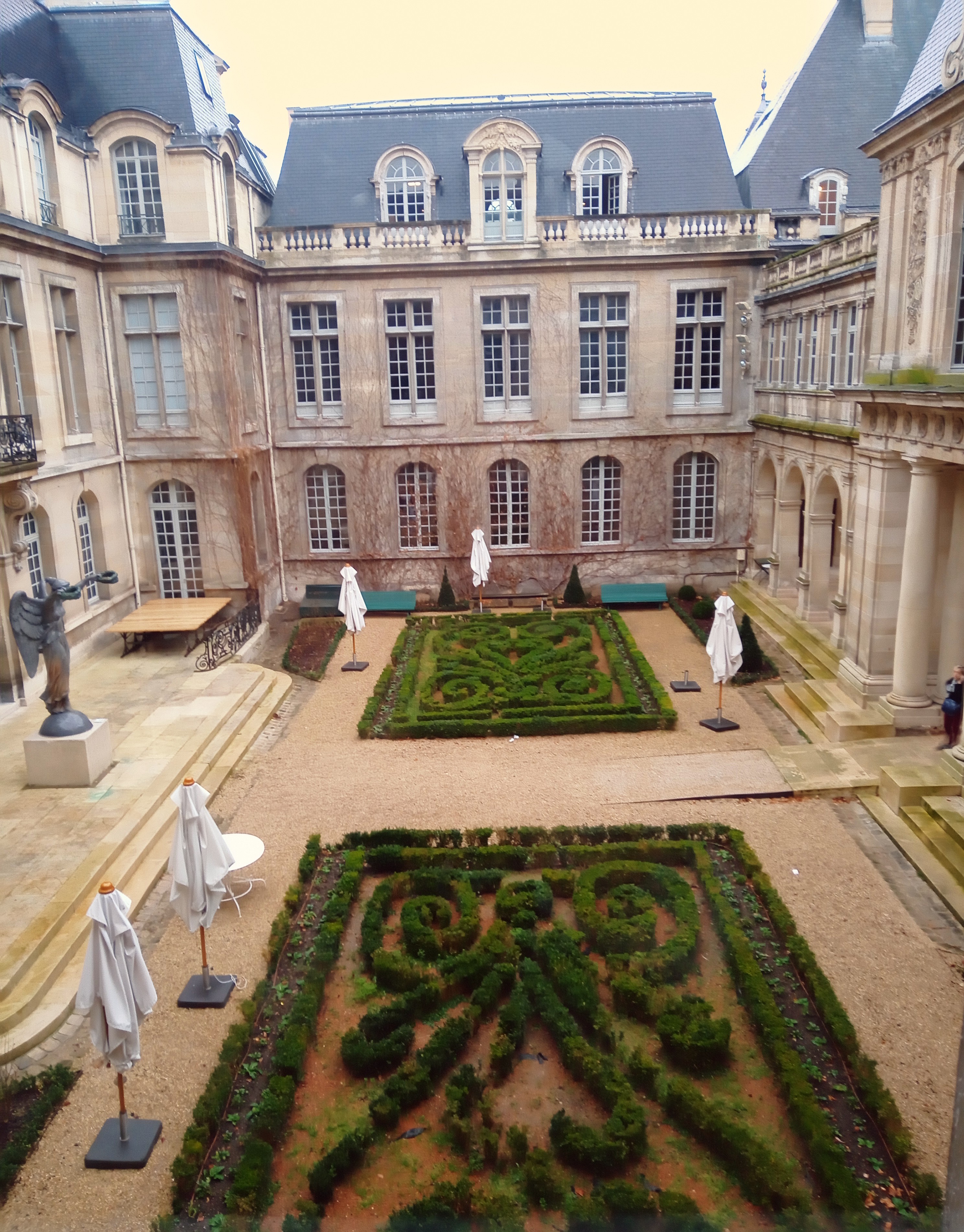
Musée Carnavalet Me Marais Paris History Madame Sévigné de Seve

To understand who he is and what is behind his painting, we read about two life changing experiences he went through, that have contributed to who he is today. The first, in the chapters entitled Paris took place ten years ago when he was 46 years old; a brief affair with a very young Parisian woman. Though it is one of his secrets and regrets, it was the first time he had experienced something and it contributes to his later understanding and growth.

It could have been argued that ten years earlier I had succumbed to a banal midlife crisis, but now I was falling victim to something far worse, a late-life revelation.

1979 – 30 years ago

The second experience was a covert trip to El Salvador in 1979 with his friend Richard, while they were still university students. They travelled there to look for Richard’s brother Tad, who was missing, believed to be involved in bad business. The two boys went there without knowledge that the country was on the brink of civil war and witnessed terrible things, that would haunt Kevin for years to come. The 1979 chapters are a wild ride and a shocking wake up call to the young men.

If only I had the excuse of misunderstanding why I was there, perhaps then some of the guilt would not exist, perhaps then I would not have blamed myself to this day, perhaps then I would not long for a piece of me that died that day. But my friend had come to me, depressed, fearful, lost, and he had asked for my help. I offered it willingly, if not completely innocently or selflessly. That was 30 years ago. It was May 1979.

Alcoholic or Workaholic

As an artist, he is interested in colour and its representation and so we too come to understand what that means to him. Though we are not able to see what he creates, we can imagine. Ultimately, the art is not enough and he must revisit some of the past in order to realise what he must do to make amends.

It was far more socially acceptable to be a workaholic, the obsessed artiste, than it was to be a drunk, but using an old neighbour’s phrase, I’m here to tell you that one addiction was as bad as the next.
The real sadness was that I drifted away from my life and children because of alcohol, but instead of finding the current back to them when I ceased, I camped out on an uncharted island in the middle of myself. Nonetheless, selfish as I was, things were better. I was more trustworthy. An absentminded artist is more forgivable than an alcoholic.

So Much Blue After the Reds, Browns and Ochres

I found reading it very vivid and could imagine the scenes so well. The character of Kevin is flawed but self-aware, he is aware of his failings and there will be transformation of sorts by the end.

I looked across the dining room at a small canvas of mine. There was no blue in it. It was often pointed out that I avoided blue. It was true. I was uncomfortable with the colour. I could never control it. It was nearly always a source of warmth in the underpainting, but it was never on the surface, never more than an idea on any work. Regardless that blue was so likeable, a colour that so many loved or liked – no one hated blue – I could not use it. The colour of trust, loyalty, a subject for philosophical discourse, the name of a musical form, blue was not mine. And by extension green was not mine. In fact, in Japanese and Korean, blue and green have the same name. As blue as the sky is, the colour came late to humans.

Brilliant. Look forward to reading more.

‘A picture is a secret about a secret’. Diane Arbus

Further Reading

NPR Review: So Much Blue is Everett’s Best Yet by Michael Schaub

New York Times: In ‘So Much Blue,’ a Married Painter Spills Secrets by Gerald Early

Percival Everett, Author

Percival Everett is the author of over thirty books, including So Much BlueTelephoneDr No and The Trees, which was shortlisted for the 2022 Booker Prize and won the 2022 Bollinger Everyman Wodehouse Prize.

He has received the Hurston/Wright Legacy Award and the PEN Center USA Award for Fiction, has been a Pulitzer Prize finalist, and is Distinguished Professor of English at the University of Southern California. His novel Erasure has now been adapted into the major film American Fiction.

His latest novel James (a reimagining of Mark Twain’s The Adventures of Huckleberry Finn, told from the perspective of the enslaved Jim) was published on 11 April 2024. He lives in Los Angeles.

Secret by Philippe Grimbert (France) tr. Polly McLean

Twenty years after his parents jumped from the window of their Parisian apartment to their deaths, Philippe Grimbert decided to write about the secret that had overwhelmed their lives. “I had been in mourning for those 20 years,” says the French psychoanalyst, “which is a lot more than Freud suggests is normal. The Guardian, April 2007

Secret, by Philippe Grimbert, translated from French by Polly McLean, is a haunting story of a boy who senses something held back from him from those around him, it is post-war Paris, he is an only child who imagines he has a make-believe brother, seeing things from his perspective as well as his own, even going so far as to fight with him.

He is aware of his mother’s silences, his father’s sadness, without knowing the reason why, yet knowing not to ask. They are athletic, good-looking parents, but they birthed him, a delicate child they must keep from the jaws of death.

I survived, thanks to the care of doctors and the love of my mother. I would like to think my father loved me too – overcoming his disappointment and finding in care, worry and protectiveness enough to stoke his feelings. But his first look left its trace on me, and I regularly glimpsed that flash of bitterness in his eyes.

Full of fear at school, one day after watching a particularly disturbing documentary about the Holocaust, he is overcome by emotion at the insulting comment of a boy in the class and starts a fight, an act completely out of character for him and yet he had felt an inner rage that compelled him to react violently.

The incident left me with a patch above one eye that I wore around school with great pride. But the injury brought me much more than ephemeral glory – it was the sign for which Louise had been waiting.

The neighbour Louise is the only person he tells the truth about why he got in the fight.

Louise was always my favourite, even though she wasn’t actually part of the family. Perhaps I felt a deeper complicity with her than with my blood relatives. Affectionate as they were, my uncles, aunts and grandparents seemed surrounded by an intangible barrier forbidding questions and warding off confidences. A secret club, bound together by an impossible grief.

He is surprised at how upset she becomes, not at his behaviour, but something else, something greater, the burden of which overwhelms her, something she too has known all these years, and believes now she must reveal to him.

The day after my fifteenth birthday, I finally learnt what I had always known.

He fills in the gaps of the story, imagining the narrative himself, he knows nearly all the characters, except those that have haunted him, but he seems to have known them too. However, he too guards the secret, knowing makes it easier on him, but it can’t change his relationship with his family.

To overcome the final hurdle, he needs to fill in the gaps, to find out the facts.

There remained a gap in my story, a chapter whose contents were not known even to my parents. I knew a way to un-stick its pages: I had heard about a place in Paris where I could find the information I was missing.

The narrator shares the same name as the author, and though he never knew the exact details of what happened before he was born, except by anecdote, he used fiction to explore and build a narrative that hopefully might have let some of the ghosts he had lived with for many years to rest.

Why, I ask him, did he write a novel that would involve fictionalising real events? “Because I had no choice. For me, in reconstituting this story that was so brief in terms of what I had been told, reconstituting it in all its duration, was all I could do. My sole tool was the novel. Perhaps someone else could have made a film, done a painting. Somebody else could have written a history, but I couldn’t. The only way I could pay homage was to write this book.”

The Guardian, April 2007

It’s a compelling, thought-provoking read and all the more so upon finishing when I realised there is indeed a strong link to the author’s own life. In addition to the secrets explored in the book, which I don’t want to give away as they are better left to explore in reading, they also let him grow up thinking he was Catholic, something that I think may have been quite common among survivors of WWII.

“I now think that what they did was an act of love rather than cowardice. They sought to protect themselves and me by doing these things. But discovering that I was really a Jew and not a Catholic made me into a neurotic and then into a shrink.”

The book has also been made into a dramatic French film.

Buy a Copy of Secret via Book Depository

The President’s Hat by Antoine Laurain

The President’s Hat is the first book of Antoine Laurain’s that was translated from French into English by Gallic Books. It appears that three translators were used for the different voices.

Daniel Mercier voiced by Louise Rogers Lalaurie

Fanny Marquant and Bernard Lavallière voiced by Emily Boyce

Pierre Aslan voiced by  Jane Aitken

In February, Gallic Books sent me a copy of his second translation The Red Notebook, which I devoured immediately and adored. Click on the link to read my review.

Thanks to that review where I indicated a wish to read The President’s Hat, Owen at The Carrot Cake Diaries sent me his copy and I returned the favour by sending him one my all time favourites, Martin Booth’s The Industry of Souls.

The President’s Hat is just as brilliant in its light-hearted uplifting way. It is the story of what happens to the people beginning with Daniel Mercier who encounter a black hat with the letters F M embossed in gold lettering inside the rim, when it is left on a restaurant seat by the former French President François Mitterand. Daniel is the first person seized by a compulsion to covet the hat and wear it until he too will leave it behind and the adventure moves on to the next person.

black hat

Each person who encounters the hat, is touched by it sufficiently to act in a way that will have a significant impact on their lives, thus taking the reader on an entertaining journey across France and into Venice in the eighties via gifted storytelling.

Although he appears only very briefly in the story, it is in a way a tribute to the man who was a popular President in the 1980’s, who ruled from 1981 to 1995 and in his last address to the people said:

“I believe in the forces of the spirit, and I won’t leave you.”

He died one year later.

mitterrand tranquille

Impossible to put down, uplifting and a joy to read, it is wonderful to come across one of those ‘turn-to’ authors when in need of a literary pick-me-up or just a fun read!

The Red Notebook by Antoine Laurain tr. Emily Boyce and Jane Aitken

The Red Notebook Antoine Laurain Paris Light Translated FicitonAntoine Laurain is the French author of five novels, including The President’s Hat, a novel that has found a popular and loyal following in the US and UK since being translated into English by Gallic Books.

Not serious literature, they’re the kind of books you reach for when you need something uplifting and entertaining. I reached for this one at the end of winter when in the grip of a terrible flu and found it the best medicine of all!

My Review Notebooks The Red Notebook Antoine Laurain

A Selection of Word by Word notebooks.

Intrigued and incensed in equal measure, as a notebook toting woman myself, I wanted to know more of this story centred around a character whose red notebook, containing handwritten thoughts and random PRIVATE jottings, has fallen into the hands of the curious bookseller, Monsieur Laurent Letellier.

Recognising it as a handbag of quality and not something intended to be thrown out, when Monsieur Letellier comes across the abandoned handbag on a Parisian street early one morning, he picks it up intending to hand it in at the police station, which he almost succeeds in doing, except, you know, French bureaucracy, it will require a one hour wait and he has a shop to open up, so plans to return later. Only later becomes much, much later and the police station is not where he will return it to.

mauve handbag The Red Notebook Antoine Laurain ParisThe bag belongs to Laure, a woman we meet in the opening pages as she clutches her handbag to her detriment, metres from her apartment, only to be shoved against a metal door frame, losing the bag anyway. Without keys, and despite it being 2am, she manages to check into the hotel opposite, promising to pay in the morning, by which time she will have fallen into a coma.

Once the bag comes home with the bookseller, it becomes a major temptation and much of the book is spent on various dilemmas arising as a consequence of his inaction, which in turn provoke memories of past events. The longer it stays with him, the more trouble it causes and the more intrigued he becomes by its owner, despite recognising his chances at redemption grow slimmer as each day passes.

Jardin du Luxembourg Antoine Laurain The Red Notebook

Early morning in the Luxembourg gardens, Paris

One of the items the bookseller discovers is a signed copy of Accident Nocturne by Patrick Modiano which leads him to track down the reclusive author, known to frequent Luxembourg Gardens most mornings. As a bookseller, he knows how rare book signings by this author are, so hopes the author may lead him to the woman.

The Modiano cameo intrigued me, particularly as he’d just won The 2014 Nobel Prize for Literature, was that the reason to mention him, I wondered? And then I read Helen’s Mad About The Books review of Dora Bruder and found an even better reason for the reference to this esteemed author.

Paris Soir Dora BruderIn Dora Bruder, Modiano tells how in 1988 he stumbled across an ad in the personal columns of the 1941 New Year’s Eve edition of Paris Soir. The ad had been placed by the parents of 15-year-old Jewish girl Dora Bruder, who had run away from the Catholic boarding school where she’d been living.

It set the author off on an obsessive quest to find out everything he could about Dora Bruder and why during the most dangerous period of the German occupation of Paris, she had run away from those protecting her. But that’s another story and book, so see Helen’s review below for more on that extraordinary tale.

The Red Notebook has little of the hardship and tragedy of Dora Bruder, it reads more like a book that could be made into an entertaining romantic comedy, it has all the ingredients, the streets and bookshops of Paris, an artists’ workshop, handbags and their intriguing taboo contents, a jealous girlfriend and a lippy adolescent daughter. Watch this space I say!

Personally, I found it wonderful to discover an author who can do uplifting, feel good stories that push the right buttons for booklovers without becoming sentimental or too romantic. Though the ending may not be realistic, it was fun getting there.

If you like a glimpse of local life in Paris, characters who observe bookshelves and mention what other characters are reading, people who write in notebooks, the short form novella and an uplifting story, that could turn into a beautiful film, then pick up a copy of The Red Notebook here.

Further Reading:

Review by Susan of A Life in Books  – The President’s Hat, Antoine Laurain

Review by Helen of Mad About the BooksDora Bruder, Patrick Modiano – translated into English by Joanna Kilmartin as The Search Warrant

Article by Antoine Laurain – On Patrick Modiano winning the 2014 Nobel Prize

Dora Bruder Patrick Modiano The Red Notebook Antoine Laurain

Note: This book was an ARC (Advance Reader Copy) kindly provided by the publisher, Gallic Books.


Mrs. Hemingway by Naomi Wood

Four wives and an addiction to marriage. Despite the difficulty he had remaining faithful, Hemingway didn’t like being single, he liked his women to be contracted to him and then to have his liberty.

Though not a huge fan of his work, being more of a Steinbeck admirer than Hemingway, his connection to France and that group of Americans referred to as the lost generation, those who stayed or returned to Europe after the war, has ensured another kind of following and spawned an entire collection of literature, that which reimagines the lives of the artists, writers, their wives, mistresses and hangers-on. So I am one of those who enjoys reading more about him, than reading his actual work.

Thus far, I enjoyed meeting Hadley Richardson, Hemingway’s first wife through Paula McLain’s novel The Paris Wife, Zelda Fitzgerald, F.Scott Fitzgerald’s wife in Therese Anne Fowler’s Z: A Novel of Zelda and Gertrude Stein and others in Hemingway’s A Moveable Feast. He even made an appearance in Francisco Haghenbeck’s The Secret Book of Frida Kahlo while she was hanging out in Paris with Salvador Dali, Georgia O’Keefe and the Surrealists.

Mrs HemingwayNaomi Wood joins the club of authors channelling the voices of expat writers wives who lived in Paris, fascinating not just because they were the wives of men who wrote famous stories, but because they are women who made the decision to abandon the comfortable and familiar, to leave their country and family behind.

Both Hadley Richardson and Zelda Fitzgerald arrived in the shadow of their husbands dreams, without any ambition other than to be a faithful and supportive wife. As such, they encountered innumerable challenges in trying to create a satisfactory home life in a foreign country.

All of Hemingway’s wives spent time living in Paris, both the city and the man the thread that bound them together. Of the four, Martha and Mary perhaps fared better, both working journalists living there on their own terms, with their own purpose outside of marriage.

The book is structured in four equal parts, each dedicated to one wife and starts by portending the end, scenes that evoke the sense of an ending while they also contain the feminine distraction that signals the introduction of the next potential marriage candidate. Not one of the wives will be immune to the repetitive Hemingway pattern. It is a pattern he repeats all his life until the brutal ends.

With each end, we witness the beginning and each wife is witness to the new arrival and a foreshadowing of her demise. The novel centres around how he entered and exited these relationships without dwelling on the mundane, the structure keeping up the pace and instilling a sense of anticipation in the reader, wanting to know what could have happened in between times to change things.

“Sitting beside this woman to whom Ernest as already dedicated a poem, Martha recognizes Mary suddenly for what she is: her ticket out of here. This morning she saw that Ernest won’t let her break things off if there’s any chance he’s going to be alone. What he fears is loneliness, and whatever brutish thoughts he has when he is left untended. Only is he is assured of another wife will he let his present wife go.”

Like a poem, there is symmetry to the four wives and while they all love their husband and support him, none can prevent his inclination towards self-destruction, his propensity for excess. It is an insightful book in the way it presents the four relationships, carefully chosen scenes depicting the emergence and decline of their relationship.

We witness the relationships come and go like waves rising out of the ocean, resplendent at their peak, despite containing the knowledge of their inevitable destiny, to crash, disappear and reform anew. Hemingway rode the waves for as long as he could, writing prolifically, often using his own experiences as his subject matter. Perhaps he finally made it to the foreshore and saw the metaphoric waves for what they are, water rising and falling until it inevitably reaches the shore and destroys itself.

Ernest Hemingway,1923 Source: Wikipedia

Ernest Hemingway,1923 Source: Wikipedia

A worthy addition to the collection of literature that imagines the lives of Hemingway, his wives and the lost generation.

14 July La Fête Nationale: A Salmagundi of French Literature

Prise de la Bastille by   Jean-Pierre Houël Source:Wikipedia

Prise de la Bastille by Jean-Pierre Houël
Source:Wikipedia

Today is a holiday here in France, marking the celebration of la fête nationale or as we know it in English Bastille Day, commemorating 14 July 1789 when the population fearing an attack by the royal military stormed the Bastille prison and released the many political prisoners in what became a symbol of the end to the rule of the monarchy and the beginning of independence.

There will be a military parade in the Avenue des Champs-Élysées in Paris and here in Aix-en-Provence and most towns in France there will be organised displays of fireworks to commemorate.

To celebrate the National Holiday, I am following the initiative of Marina Sofia at Finding Time To Write to highlight some recently read and upcoming French reads, now available in English, here is my salmagundi of French Literature!

Click on the title to read the review and read to the end to find the definition of that tasty word for the day Salmagundi:

Two French Books I am looking forward to reading:

Poisoning (3)

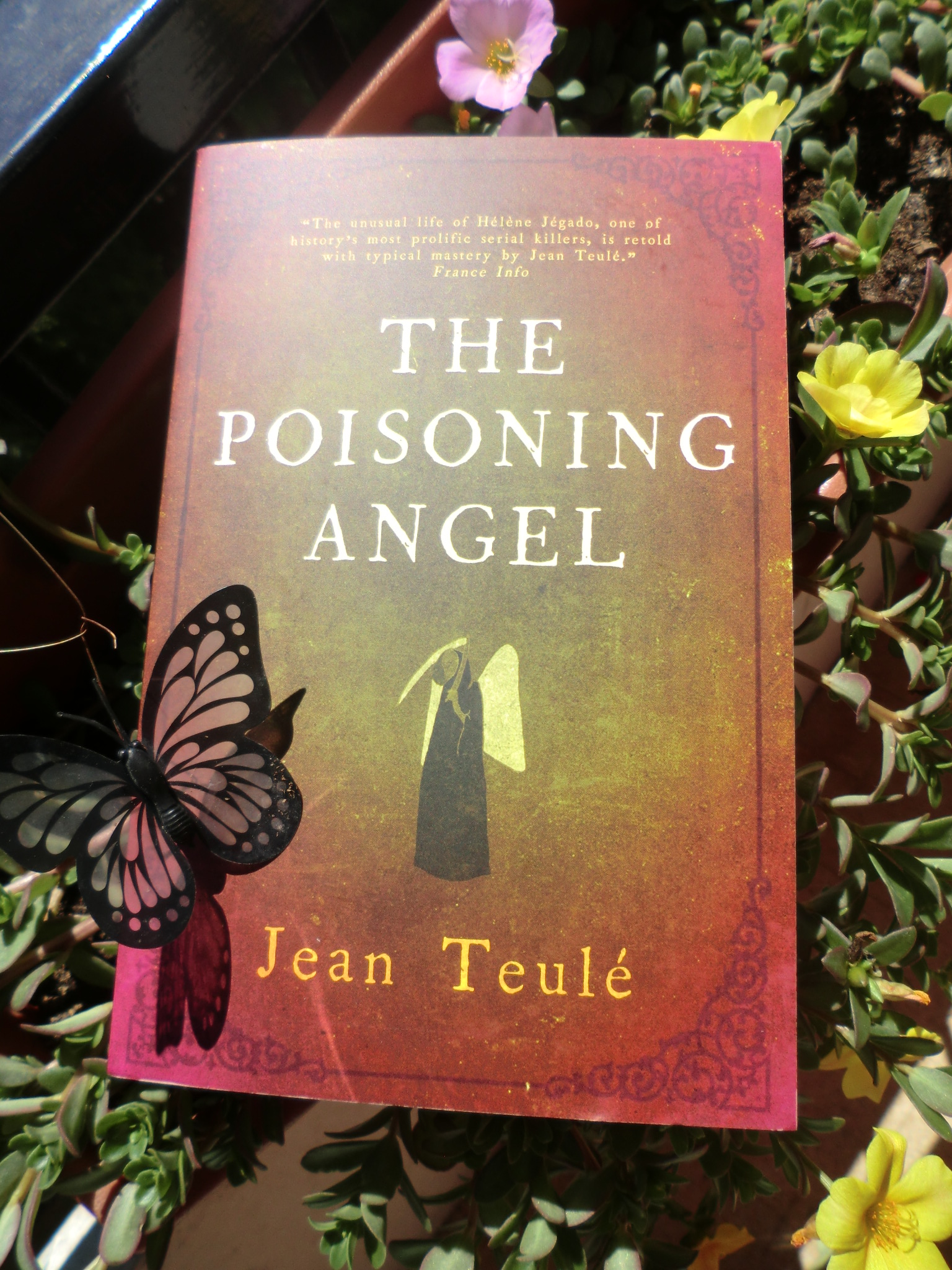
The Poisoning Angel by John Teule

translated by Melanie Florence

This book is actually to be published today 14 July 2014 and the author is a well-known name in French contemporary literature. In fact I have one of his books in French on the shelf already.

This one is based on a true but gruesome story of one of the most notorious serial poisoners that France has ever known and was described by the Sunday Telegraph as:

“a bawdy romp one minute, a gruesome tragedy the next. The writing is beautiful, witty, grisly and moving, and reeks of authenticity.”

Let’s hope all that comes off in translation.

Vatican Cellars

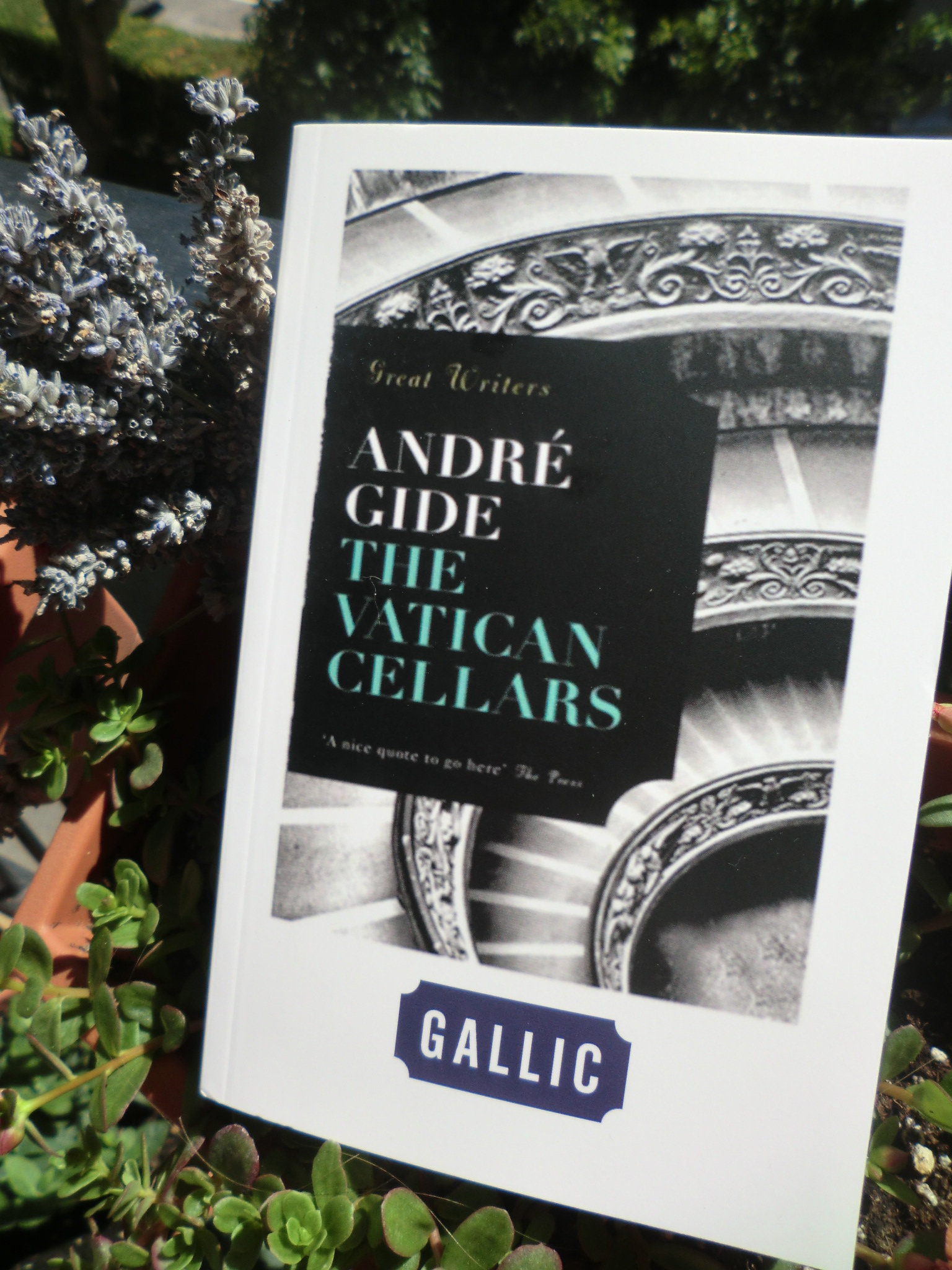
The Vatican Cellars by André Gide

translated by Julian Evans

This book will be published in August 2014 to mark the centenary of the book’s first publication. It is set in the 1890’s around a group of ingenious fraudsters who claim that the Pope has been imprisoned and a false Pope enthroned in his place.

I haven’t read anything by this author, but he sounds like he caused quite a sensation with this novel and others, as he took it upon himself to explore morality in his work and was a major influence on the writing of Jean-Paul Sartre and Albert Camus. He was awarded the Nobel Prize for Literature in 1947 and one year after he died (in 1951) his works were placed on the Vatican’s list of banned books.

Three French Books I Read This Year:

Nagasaki (2)

Nagasaki by Eric Faye

translated by Emily Boyce

A short novella, based on a true story of an event that happened in Japan, that will make you check your fridge contents and ensure you lock the door at night.

Foundling2

The Foundling Boy by Michel Deon

translated by Julian Evans

Coming of age story of a young boy left as a baby on a doorstep, who grows up and has an insatiable need to travel and experience the world. The sequel soon to be translated into English as well.

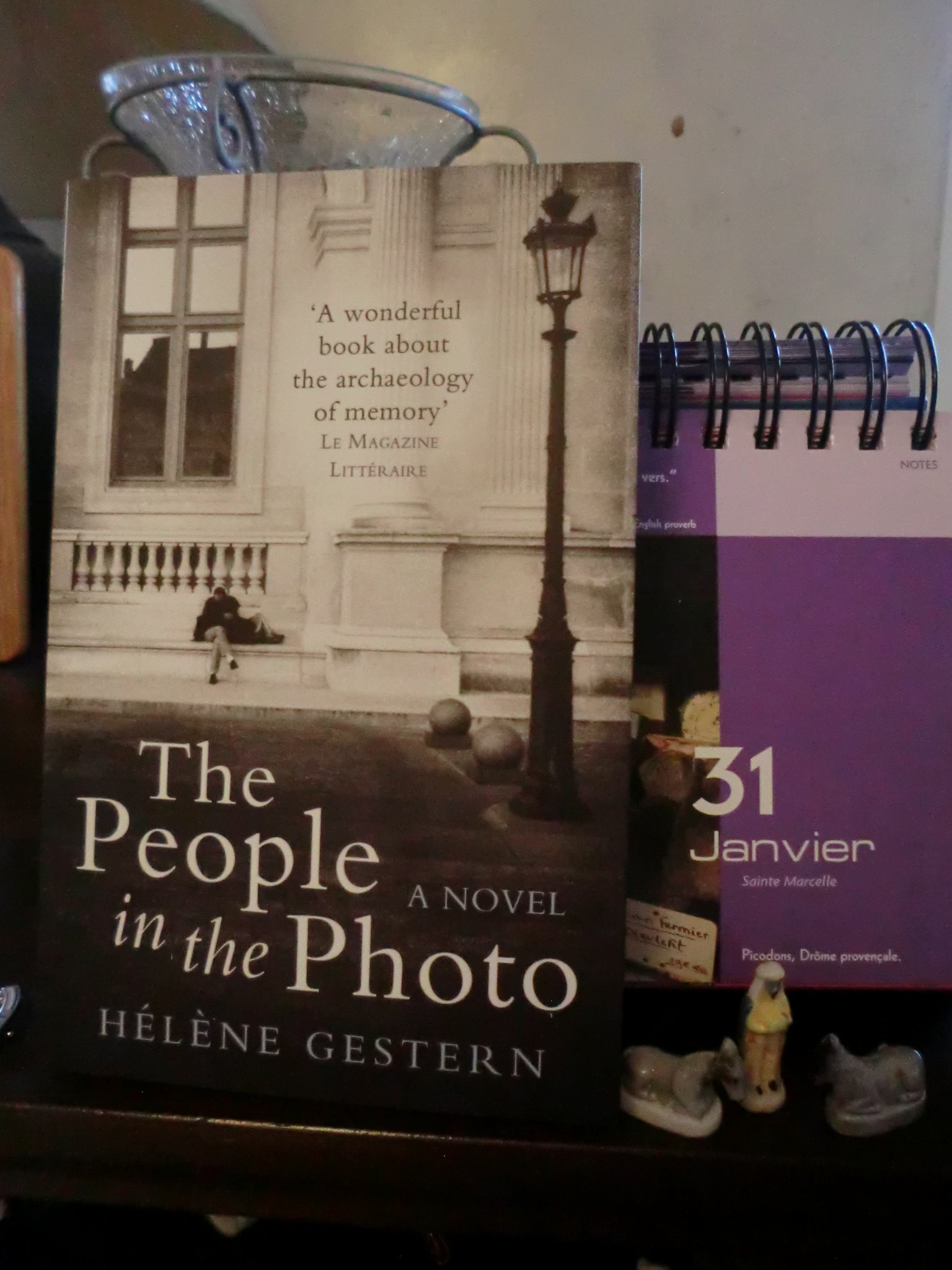
People in Photo

The People In the Photo by Hélène Gestern

translated by Emily Boyce,Ros Schwartz

A wonderful epistolary novel about a young woman searching for answers about events in her mother’s life before she was born, a photo provides a clue to those she knew.

Two Great Books Set in France:

All the Light

All the Light We Cannot See

by Anthony Doerr

Paris and Saint-Malo pre and during WWII following the lives of two children and their growth into adolescence, Marie-Laure who lost her sight at six and Werner who lost his parents and is raised in an orphanage. An excellent story that leads to the crossing of paths of these two characters and wonderfully evocative of place.

I Always Loved You

I Always Loved You

by Robin Oliveira

An insightful historical novel about the American painter Mary Cassatt, her life in late 1800’s Paris as she struggles to establish her name in the art world, enduring a life-long though fractious relationship with the impressionist painter and sculptor Edgar Degas.

Salmagundi:

  1. a mixed dish consisting usually of cubed poultry or fish, chopped meat, anchovies, eggs, onions, oil, etc., often served as a salad.
  2. any mixture or miscellany.

 Bonne Fête!


I Always Loved You – #Giveaway

Thanks to the generous team at the Penguin Group, US and today, the day of its publication I offer one lucky reader (you must be resident in the US – sorry) a copy of this fabulous book:

I  ALWAYS  LOVED  YOU

by

Robin Oliveira

I Always Loved You

Read my review here of this historical novel set in 1880’s Paris, which the publisher describes as:

A novelization of Mary Cassatt and Edgar Degas’s relationship in Belle Époque Paris. It captures the golden age of Impressionism and is peopled with many prominent figures of the movement including artists Édouard Manet and Berthe Morisot (the only other prominent female artist working in Paris at that time).

Robin Oliveira writes with grace and uncommon insight into the lives of artists and the passions and foibles of the human heart.

Leave a comment below if you wish to be in the draw to be held on 12 February!

This giveaway is now closed.